

The verdict
A mixed-report mid-size truck, strong on value and held back by space.
The 2026 Tacoma is the mid-size truck you buy for what happens after you own it: roughly 73% of its value survives five years, repairs run about $780 a year, and no rival comes close on either number. It's also the segment's off-road benchmark, with three distinct factory builds topping out in the ARB-equipped Trailhunter and FOX-damped TRD Pro. The trade-off is comfort and refinement — 33.7 inches of rear legroom is the tightest crew cab in the class, the 2.4-liter turbo four sounds coarse under load, and a typically equipped SR5 Double Cab 4x4 lands near $45,500 with little discounting available. Buy it if you value durability, resale and trail capability over a quiet cabin and a roomy back seat.
Jump to scoresStrengths
- Best-in-class resale and the lowest running costs in the segment
- The deepest off-road bench in any mid-size truck
- Toyota's reliability record and the segment's deepest support network
What holds it back
- The tightest back seat in the mid-size class
- The turbo four is coarse, and the driving position is still awkward
- Fuel economy and range trail what a downsized turbo should deliver
Top alternatives
Cars shoppers cross-shop with the Toyota Tacoma 1.87C-
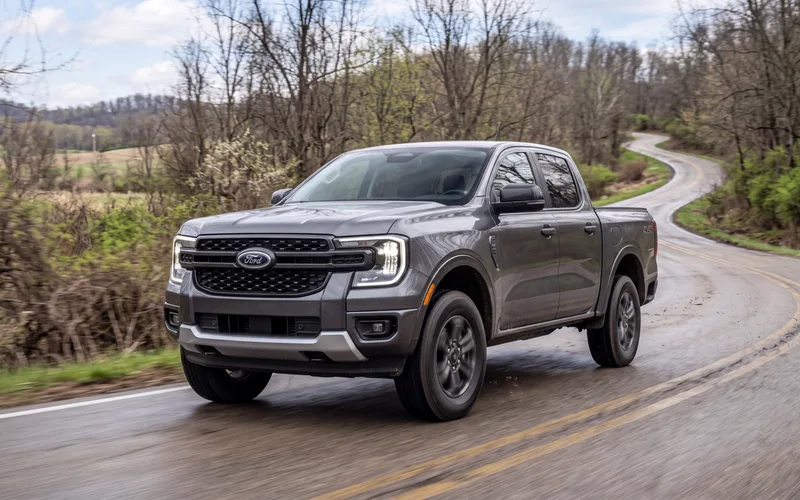 Ford RangerMid-Size TruckBetter at: Space and towing
It's the most direct cross-shop and simply more comfortable to live with — more front and rear room, a bigger bed, 7,700 pounds of towing and available hands-free BlueCruise.
Compare 1.99C-
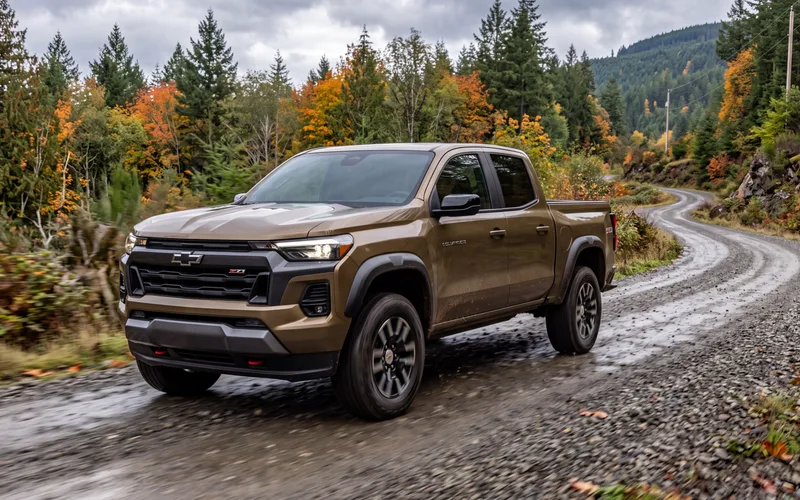 Chevrolet ColoradoMid-Size TruckBetter at: Towing and value
More capability and screen for the money, with real incentives available, if you can accept resale that trails the Tacoma by roughly 20 points at five years.
Compare 2.19C
2.19C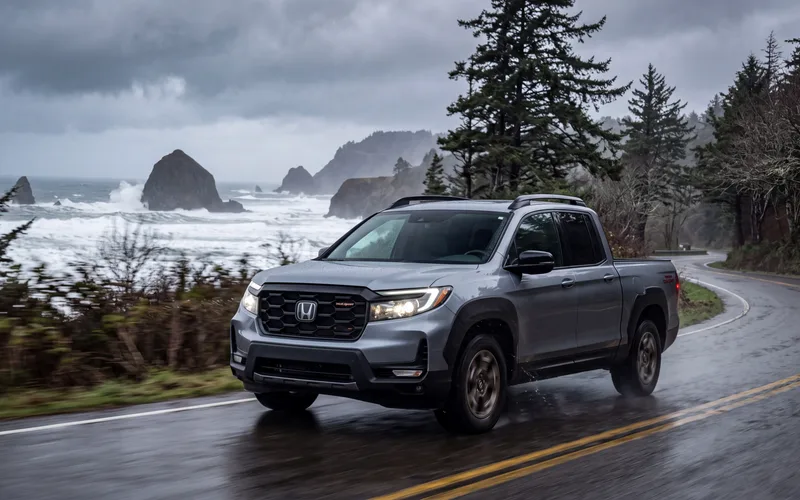 Honda RidgelineMid-Size TruckBetter at: Ride and family comfort
If the truck spends its life on pavement with family aboard, the Ridgeline's unibody ride, roomier back seat and IIHS Top Safety Pick make it the smarter buy.
CompareHow it's evolved
10 scored model years · 2017–2026
Subject scores by year
Hover or tap a score to see what moved it versus the year before. A corner mark flags a big swing.
| Year | Performance | Efficiency | Safety | Space | Cost | Reliability | Tech | Use-case | Driving | Value |
|---|---|---|---|---|---|---|---|---|---|---|
| 2026 | 47 | 50 | 62 | 43 | 73 | 75 | 64 | 63 | 64 | 76 |
| 2025 | 47 | 45 | 64 | 42 | 68 | 71 | 63 | 63 | 65 | 76 |
| 2024 | 46 | 46 | 67 | 42 | 67 | 75 | 63 | 63 | 64 | 76 |
| 2023 | 37 | 44 | 49 | 37 | 76 | 81 | 38 | 56 | 54 | 61 |
| 2022 | 38 | 44 | 49 | 37 | 77 | 83 | 42 | 57 | 55 | 58 |
| 2021 | 37 | 43 | 50 | 35 | 65 | 80 | 40 | 56 | 54 | 63 |
| 2020 | 39 | 43 | 54 | 36 | 74 | 81 | 40 | 55 | 53 | 65 |
| 2019 | 38 | 43 | 47 | 37 | 71 | 79 | 29 | 58 | 56 | 66 |
| 2018 | 37 | 43 | 51 | 38 | 70 | 75 | 27 | 58 | 55 | 67 |
| 2017 | 37 | 44 | 27 | 35 | 69 | 67 | 25 | 54 | 51 | 65 |
Compare two years
Best fit & conditions
Higher scores mean a better fit for that use case. Learn more about use-case fit →
Subject profile
Trims & configurations
8 trimsScores above reflect the volume trim. Per-trim specs and scores are rolling out — the full lineup:
Academic Probation · NHTSA safety recalls
No NHTSA safety recall is on record for the 2026 Toyota Tacoma. Other model years of the Tacoma have 20 — listed below.
20 recalls on other model years of the Tacoma (2017–2020, 2022–2025)
Sep 2, 2026Equipment: other: labelsThe load carrying capacity modification label may display inaccurate added weight values. As such, these vehicles fail to comply with the requirements of Federal Motor Vehicle Safety Standard number 110, "Tire Selection and Rims."
Defect
Toyota Motor Engineering & Manufacturing (Toyota) is recalling certain 2024 Toyota Tacoma Hybrid, 2025 Tundra Hybrid, Tundra, 2026 RAV4 Hybrid, 4Runner i-Force Max Hybrid, and 4Runner vehicles. The load carrying capacity modification label may display inaccurate added weight values. As such, these vehicles fail to comply with the requirements of Federal Motor Vehicle Safety Standard number 110, "Tire Selection and Rims."
Risk
A vehicle with an incorrect maximum capacity weight value may be overloaded, increasing the risk of a crash.
Remedy
Dealers will replace the load carrying capacity modification label, free of charge. Owner notification letters are expected to be mailed October 18, 2026. Owners may contact Toyota's customer service at 1-800-331-4331. Toyota's number for this recall is 26TA18.
NHTSA campaign 26V571000 ↗Manufacturer no. 26TA18135 vehicles potentially affected (all models in the campaign)Filed by Toyota Motor Engineering & ManufacturingFiled as TACOMA HYBRIDAug 6, 2026Suspension: front: shock absorber · Suspension: rear: shock absorberThe metal flange on the front and rear shock absorbers may corrode and fail, resulting in detachment of the external oil reservoir.
Defect
Toyota Motor Engineering & Manufacturing (Toyota) is recalling certain 2024 Tacoma Hybrid and 2024-2025 Tacoma vehicles. The metal flange on the front and rear shock absorbers may corrode and fail, resulting in detachment of the external oil reservoir.
Risk
An oil reservoir that detaches can create a road hazard, increasing the risk of a crash.
Remedy
Dealers will inspect and replace the front and rear shock absorber assemblies, as necessary, free of charge. Interim letters notifying owners of the safety risk were mailed September 30, 2026. Additional letters will be sent once the final remedy is available, anticipated in March 2027.Owners may contact Toyota's customer service at 1-800-331-4331. Toyota's numbers for this recall are 26TB14 and 26TA14.
NHTSA campaign 26V514000 ↗Manufacturer no. 26TB14/26TA1448,280 vehicles potentially affected (all models in the campaign)Filed by Toyota Motor Engineering & ManufacturingFiled as TACOMA, TACOMA HYBRIDMar 24, 2026Equipment: other: labelsThe load carrying capacity modification label may display inaccurate added weight values. As such, these vehicles fail to comply with the requirements of Federal Motor Vehicle Safety Standard number 110, "Tire Selection and Rims."
Defect
Toyota Motor Engineering & Manufacturing (Toyota) is recalling certain 2024-2025 Toyota Tundra, Tacoma Hybrid, Tacoma, RAV4 Hybrid, Land Cruiser Hybrid, Lexus GX550, 2024-2026 Tundra Hybrid, 2025 Sequoia Hybrid, Crown Signia, Grand Highlander, Lexus TX500 Hybrid, Lexus NX350 Hybrid, 2025-2026 Grand Highlander Hybrid, and Lexus TX350 vehicles. The load carrying capacity modification label may display inaccurate added weight values. As such, these vehicles fail to comply with the requirements of Federal Motor Vehicle Safety Standard number 110, "Tire Selection and Rims."
Risk
A vehicle with an incorrect maximum capacity weight value may be overloaded, which can increase the risk of a crash.
Remedy
Dealers will replace the load carrying capacity modification label, free of charge. Owner letters were mailed May 26, 2026. Owners may contact Toyota's customer service at 1-800-331-4331. Toyota's numbers for this recall are 26LB04, 26LA04, 26TB07, and 26TA07.
NHTSA campaign 26V179000 ↗Manufacturer no. See attached Part5738,230 vehicles potentially affected (all models in the campaign)Owners notified May 22, 2026Filed by Toyota Motor Engineering & ManufacturingFiled as TACOMA, TACOMA HYBRIDOct 1, 2025Power train: driveline: driveshaftThe front driveshaft constant-velocity (CV) joint may deform and break.
Defect
Toyota Motor Engineering & Manufacturing (Toyota) is recalling certain 2025 Tacoma and Tacoma Hybrid vehicles. The front driveshaft constant-velocity (CV) joint may deform and break.
Risk
A broken driveshaft can impair steering. Vehicles with full-time 4WD may experience a vehicle rollaway while parked without the parking brake applied. Both scenarios increase the risk of a crash.
Remedy
Dealers will inspect and replace both front driveshaft assemblies as necessary, free of charge. Owner letters were mailed August 11, 2026. Owners may contact Toyota's customer service at 1-800-331-4331. Toyota's numbers for this recall are 25TB11 and 25TA11.
NHTSA campaign 25V656000 ↗Manufacturer no. 25TB11 / 25TA115,960 vehicles potentially affected (all models in the campaign)Owners notified Aug 7, 2026Filed by Toyota Motor Engineering & ManufacturingFiled as TACOMA, TACOMA HYBRIDSep 11, 2025Electrical system: instrument cluster/panelDue to an error in the instrument panel software at vehicle startup, the instrument panel may fail to display vehicle speed, brake system, and tire pressure warning lights.
Defect
Toyota Motor Engineering & Manufacturing (Toyota) is recalling certain 2023-2024 Toyota Venza, 2023-2025 RAV4 Prime, RAV4, Highlander, GR Corolla, Crown, 2024-2025 Lexus TX, LS, Toyota Tacoma, Grand Highlander, and 2025 Lexus RX, Toyota Crown Signia, Camry, RAV 4 Plug-in Hybrid (PHEV), and 4 Runner vehicles. Due to an error in the instrument panel software at vehicle startup, the instrument panel may fail to display vehicle speed, brake system, and tire pressure warning lights.
Risk
An instrument panel display that does not show critical information can increase the risk of a crash or injury.
Remedy
Dealers will update the instrument panel software over-the-air (OTA) for non-PHEV vehicles, free of charge. For PHEV vehicles, dealers will inspect the instrument panel assembly, and either replace it, or update the software, free of charge. Owner letters were mailed December 5, 2025. Additional letters will be sent, anticipated in May 2026. This is a phased recall. Owners may contact Toyota's customer service at 1-800-331-4331. Toyota's numbers for this recall are 25TB08 and 25TA08. Lexus' numbers for this recall are 25LB05 and 25LA05.
NHTSA campaign 25V595000 ↗Manufacturer no. See Part 573 Report591,377 vehicles potentially affected (all models in the campaign)Owners notified Dec 5, 2025Filed by Toyota Motor Engineering & ManufacturingFiled as TACOMAFeb 6, 2025Service brakes, hydraulic: foundation components: hoses, lines/piping, and fittingsThe rear brake hoses can be damaged if mud and dirt builds up inside the rear wheels. This can result in a brake fluid leak.
Defect
Toyota Motor Engineering & Manufacturing (Toyota) is recalling certain 2024-2025 Tacoma 4-wheel drive vehicles. The rear brake hoses can be damaged if mud and dirt builds up inside the rear wheels. This can result in a brake fluid leak.
Risk
A brake fluid leak can reduce braking ability and increase the risk of a crash.
Remedy
Dealers will replace both rear brake hoses, free of charge. Owner letters were mailed August 1, 2025. Owners may contact Toyota's customer service at 1-800-331-4331. Toyota's numbers for this recall are 25TB04 and 25TA04.
NHTSA campaign 25V058000 ↗Manufacturer no. 25TB04 / 25TA04221,846 vehicles potentially affected (all models in the campaign)Owners notified Aug 1, 2025Filed by Toyota Motor Engineering & ManufacturingFiled as TACOMAJan 29, 2025Air bags: frontal: driver clockspring/spiral cassette · Steering: columnAn electrical connection inside the steering column's spiral cable assembly may be insufficiently welded, causing the connection to separate and deactivate the driver's air bag. As such, these vehicles fail to comply with the requirements of Federal Motor Vehicle Safety Standard number 208, "Occupant Crash Protection."
Defect
Toyota Motor Engineering & Manufacturing (Toyota) is recalling certain 2023 Toyota Corolla, Corolla Cross, Corolla Cross Hybrid, Highlander, Highlander Hybrid, Tacoma, Lexus RX350, 2023-2024 NX250, and NX350 vehicles that may have been incorrectly repaired under previous NHTSA recall number 23V-480. An electrical connection inside the steering column's spiral cable assembly may be insufficiently welded, causing the connection to separate and deactivate the driver's air bag. As such, these vehicles fail to comply with the requirements of Federal Motor Vehicle Safety Standard number 208, "Occupant Crash Protection."
Risk
A deactivated driver's air bag will not deploy as intended, increasing the risk of injury during a crash.
Remedy
Dealers will inspect and replace the spiral cable assembly as necessary, free of charge. Owner notification letters were mailed March 17, 2025. Owners may contact Toyota's customer service at 1-800-331-4331. Toyota's number for this recall is 25TA02. Lexus' number for this recall is 25LA02.
NHTSA campaign 25V040000 ↗Manufacturer no. 25TA02/25LA021,716 vehicles potentially affected (all models in the campaign)Owners notified Mar 17, 2025Filed by Toyota Motor Engineering & ManufacturingFiled as TACOMAJul 23, 2024Equipment: other: labelsThe load carrying capacity modification label may display inaccurate added weight values. As such, these vehicles fail to comply with the requirements of Federal Motor Vehicle Safety Standard number 110, "Tire Selection and Rims."
Defect
Gulf States Toyota, Inc. (GST) is recalling certain Toyota 2023 GR Supra, 2024 4 Runner, Corolla, Grand Highlander, Grand Highlander Hybrid, Land Cruiser Hybrid, Tacoma, Tacoma Hybrid, 2023-2024 BZ4X, Corolla Cross Hybrid, GR Corolla, GR86, Highlander, Highlander Hybrid, Prius, Prius Prime, Sequoia Hybrid, Tundra, Tundra Hybrid, Venza Hybrid, 2023-2025 Crown, and 2025 Camry Hybrid vehicles equipped with GST accessories. The load carrying capacity modification label may display inaccurate added weight values. As such, these vehicles fail to comply with the requirements of Federal Motor Vehicle Safety Standard number 110, "Tire Selection and Rims."
Risk
A vehicle with an incorrect maximum capacity weight value may be overloaded, which can increase the risk of a crash.
Remedy
GST will mail new labels to owners, free of charge. Owner notification letters were mailed September 16, 2024. Owners may contact GST customer service at 1-800-444-1074. GST's number for this recall is 24R2.
NHTSA campaign 24V548000 ↗Manufacturer no. 24R233,848 vehicles potentially affected (all models in the campaign)Owners notified Sep 16, 2024Filed by Gulf States Toyota, Inc.Filed as TACOMA, TACOMA HYBRIDFeb 27, 2024Power train: axle assemblyThe axle shaft sub-assembly may separate from the axle housing due to debris causing improperly secured fasteners.
Defect
Toyota Motor Engineering & Manufacturer (Toyota) is recalling certain 2022-2023 Tacoma vehicles. The axle shaft sub-assembly may separate from the axle housing due to debris causing improperly secured fasteners.
Risk
Axle shaft separation can cause a loss of vehicle stability and brake performance, increasing the risk of a crash.
Remedy
Dealers will inspect the rear axle assembly, tighten the axle retaining nuts as necessary, and repair or replace any damaged components, free of charge. Owner notification letters were mailed April 17, 2024. Owners may contact Toyota customer service at 1-800-331-4331. Toyota's numbers for this recall are 24TB05 and 24TA05.
NHTSA campaign 24V152000 ↗Manufacturer no. 24TB05 / 24TA05381,199 vehicles potentially affected (all models in the campaign)Owners notified Apr 17, 2024Filed by Toyota Motor Engineering & ManufacturingFiled as TACOMAJul 12, 2023Air bags: frontal: driver clockspring/spiral cassette · Steering: columnAn electrical connection inside the steering column's spiral cable assembly may be insufficiently welded, causing the connection to separate and deactivate the driver's air bag. As such, these vehicles fail to comply with the requirements of Federal Motor Vehicle Safety Standard number 208, "Occupant Crash Protection."
Defect
Toyota Motor Engineering & Manufacturing (Toyota) is recalling certain 2023 Corolla, Corolla Cross, Corolla Cross Hybrid, Highlander, Highlander Hybrid, Tacoma, 2023 Lexus RX350, RX350 Hybrid, RX500 Hybrid, 2023-2024 Lexus NX250, NX350, and NX350 Hybrid vehicles. An electrical connection inside the steering column's spiral cable assembly may be insufficiently welded, causing the connection to separate and deactivate the driver's air bag. As such, these vehicles fail to comply with the requirements of Federal Motor Vehicle Safety Standard number 208, "Occupant Crash Protection."
Risk
A deactivated driver's air bag that does not deploy as intended increases the risk of injury during a crash.
Remedy
Dealers will inspect and replace the spiral cable assembly, if necessary, free of charge. Owner notification letters were mailed September 8, 2023. Owners may contact Toyota's customer service at 1-800-331-4331. Toyota's number for this recall is 23TA08. Lexus' number for this recall is 23LA02.
NHTSA campaign 23V480000 ↗Manufacturer no. 23TA08/ 23LA02152,927 vehicles potentially affected (all models in the campaign)Owners notified Sep 8, 2023Filed by Toyota Motor Engineering & ManufacturingFiled as TACOMAJul 21, 2022Child seat: vehicle latch anchorOne or more of the individual welds in the upper child seat anchors may be insufficient. As such, these vehicles fail to comply with the requirements of Federal Motor Vehicle Safety Standard number 225, "Child Restraint Anchorage System."
Defect
Toyota Motor Engineering & Manufacturing (Toyota) is recalling certain 2022-2023 Tacoma vehicles. One or more of the individual welds in the upper child seat anchors may be insufficient. As such, these vehicles fail to comply with the requirements of Federal Motor Vehicle Safety Standard number 225, "Child Restraint Anchorage System."
Risk
An insufficient weld may prevent the child seat from being anchored properly, allowing the seat to move during a sudden stop or crash, increasing the risk of injury.
Remedy
Dealers will inspect the upper child seat anchors and reweld the child seat anchors, as necessary. Owner notification letters are expected to be mailed September 02, 2022. Owners may contact Toyota's customer service at 1-800-331-4331. Toyota's number for this recall is 22TB09/ 22TA09.
NHTSA campaign 22V520000 ↗Manufacturer no. 22TB09/ 22TA0975,316 vehicles potentially affected (all models in the campaign)Owners notified Sep 15, 2022Filed by Toyota Motor Engineering & ManufacturingFiled as TACOMAMay 6, 2022Equipment: other: labelsThe load carrying capacity modification labels may not be permanent and can fade, becoming illegible. As such, these vehicles fail to comply with the requirements of Federal Motor Vehicle Safety Standard number 110, "Tire Selection and Rims."
Defect
Gulf States Toyota, Inc. (GST) is recalling certain 2022 4Runner, Tacoma, Highlander, and Highlander Hybrid vehicles. The load carrying capacity modification labels may not be permanent and can fade, becoming illegible. As such, these vehicles fail to comply with the requirements of Federal Motor Vehicle Safety Standard number 110, "Tire Selection and Rims."
Risk
An illegible label may allow the vehicle to be overloaded, increasing the risk of a crash.
Remedy
GST will notify owners by mail, including a replacement load carrying capacity modification label for their vehicle and detailed replacement instructions, free of charge. Owner notification letters were mailed June 30, 2022. Owners may contact GST customer service at 1-800-444-1074. GST's number for this recall is 22R1.
NHTSA campaign 22V310000 ↗Manufacturer no. 22R1661 vehicles potentially affected (all models in the campaign)Owners notified Jun 30, 2022Filed by Gulf States Toyota, Inc.Filed as TACOMANov 4, 2020Fuel system, gasoline: delivery: fuel pumpThe low-pressure fuel pump inside the fuel tank may fail.
Defect
Toyota Motor Engineering & Manufacturing (Toyota) is recalling certain 2018-2019 4Runner, 2019-2020 Avalon, 2019 Corolla Hatchback, 2017-2019 Highlander, 2018-2020 Camry, 2020 Corolla, 2018-2019 Land Cruiser, 2017-2020 Tacoma, 2019-2020 RAV4, 2019-2020 Sequoia, 2017-2020 Sienna, 2019-2020 Tundra, 2018-2020 Lexus ES350, 2017 Lexus GS200t, 2017-2019 Lexus GS350, 2019 Lexus GS300, 2018-2020 Lexus LC500h, 2019-2020 Lexus LS500, 2018-2019 Lexus GX460, 2017 Lexus IS200t, 2019 Lexus IS300, 2019 Lexus IS350, 2018-2020 Lexus LC500, 2018 Lexus LS500, 2019 Lexus LS500h, 2018-2019 Lexus LX570, 2017 Lexus RC200t, 2019 Lexus RC300, RC350, 2017 and 2019-2020 Lexus RX350, 2018-2020 RX350L, 2019 Lexus UX200, 2018-2019 Lexus NX300 vehicles. The low-pressure fuel pump inside the fuel tank may fail.
Risk
If the fuel pump fails, the engine can stall while driving, increasing the risk of a crash.
Remedy
Toyota will notify owners, and dealers will replace the fuel pump assembly with an improved one, free of charge. Owners of specific models were notified that remedy parts were available starting January 21, 2021. Owners of other models will be notified as remedy parts become available. Remedy parts should be available for all affected vehicles by late March 2021. Owners may contact Toyota customer service at 1-888-270-9371 or Lexus customer service at 1-800-255-3987. Note: This recall is an expansion of recall 20V-012. Toyota's number for this recall is 20TA02. Lexus' number for this recall is 20LA01.
NHTSA campaign 20V682000 ↗Manufacturer no. 20TA02, 20LA011,525,742 vehicles potentially affected (all models in the campaign)Owners notified Jan 21, 2021Filed by Toyota Motor Engineering & ManufacturingFiled as TACOMAJan 13, 2020Fuel system, gasoline: delivery: fuel pumpToyota Motor Engineering & Manufacturing (Toyota) recalled certain 2018-2019 4Runner, Highlander, Camry, Land Cruiser, Sequoia, Sienna, Tacoma and Tundra, and Lexus RC 300, RC 350, GS 350, GX 460, IS 300, LC 500, LS 500, LX 570, RX 350L, and 2019 Toyota Avalon and Corolla, and certain Lexus NX 300, and ES 350 vehicles on January 13, 2020. On March 4, 2020, Toyota expanded the recall to include certain 2014-2015 Toyota 4Runner and Land Cruiser, 2018 Avalon, Corolla, 2014 FJ Cruiser, 2017 Sienna and Lexus 2018 ES 350, 2018-2019 GS 300, 2013-2014 GS350, 2014-2015 GX 460, IS 350 and LX 570, 2014 IS F, 2018-2019 IS 350, LC 500H and LS 500H, 2013-2015 LS 460, 2015 NX 200T and RC350, 2017 RC 200T and RX 350. Toyota also removed the 2018-2019 Toyota 4Runner and Land Cruiser and 2018-2019 Lexus GX 460 and LX 570 and 2019 NX300 from inclusion in this recall. On March 19, 2020, Toyota expanded the recall to include 2015 Lexus GS350 vehicles. The low-pressure fuel pump inside the fuel tank may fail.
Defect
Toyota Motor Engineering & Manufacturing (Toyota) recalled certain 2018-2019 4Runner, Highlander, Camry, Land Cruiser, Sequoia, Sienna, Tacoma and Tundra, and Lexus RC 300, RC 350, GS 350, GX 460, IS 300, LC 500, LS 500, LX 570, RX 350L, and 2019 Toyota Avalon and Corolla, and certain Lexus NX 300, and ES 350 vehicles on January 13, 2020. On March 4, 2020, Toyota expanded the recall to include certain 2014-2015 Toyota 4Runner and Land Cruiser, 2018 Avalon, Corolla, 2014 FJ Cruiser, 2017 Sienna and Lexus 2018 ES 350, 2018-2019 GS 300, 2013-2014 GS350, 2014-2015 GX 460, IS 350 and LX 570, 2014 IS F, 2018-2019 IS 350, LC 500H and LS 500H, 2013-2015 LS 460, 2015 NX 200T and RC350, 2017 RC 200T and RX 350. Toyota also removed the 2018-2019 Toyota 4Runner and Land Cruiser and 2018-2019 Lexus GX 460 and LX 570 and 2019 NX300 from inclusion in this recall. On March 19, 2020, Toyota expanded the recall to include 2015 Lexus GS350 vehicles. The low-pressure fuel pump inside the fuel tank may fail.
Risk
If the fuel pump fails, the engine can stall while driving, increasing the risk of a crash.
Remedy
Toyota will notify owners, and dealers will replace the fuel pump, free of charge. The recall began May 4, 2020. Owners may contact Toyota customer service at 1-888-270-9371 or Lexus customer service at 1-800-255-3987. Toyota's numbers for this recall are 20TB02 and 20TA02 for Toyota vehicles and 20LB01 and 20LA01 for Lexus vehicles.
NHTSA campaign 20V012000 ↗Manufacturer no. 20TB02/20TA02/20LB011,830,752 vehicles potentially affected (all models in the campaign)Owners notified May 1, 2020Filed by Toyota Motor Engineering & ManufacturingFiled as TACOMAMar 27, 2019Equipment: other: labelsThe text on the load capacity label may become illegible. As such, these vehicles fail to comply with the requirements of Federal Motor Vehicle Safety Standard (FMVSS) number 110, "Tire Selection and Rims."
Defect
Gulf States Toyota (GST) is recalling certain 2019 C-HR, 4Runner, Avalon, Avalon Hybrid, Camry, Camry Hybrid, Highlander, Land Cruiser, Prius, RAV4, Sequoia, Tacoma, Sienna, Tundra and Yaris vehicles. The text on the load capacity label may become illegible. As such, these vehicles fail to comply with the requirements of Federal Motor Vehicle Safety Standard (FMVSS) number 110, "Tire Selection and Rims."
Risk
If the driver cannot read the label, they may unknowingly overload the vehicle, increasing the risk of a crash.
Remedy
GST will notify owners, and dealers will provide corrected load carrying capacity modification labels, free of charge. The recall began May 24, 2019. Owners may contact GST customer service at 1-800-444-1074. GST's number for this recall is 19R1.
NHTSA campaign 19V244000 ↗Manufacturer no. 19R13,634 vehicles potentially affected (all models in the campaign)Owners notified May 24, 2019Filed by Gulf States Toyota, Inc.Filed as TACOMADec 13, 2018Service brakes, hydraulic: foundation components: master cylinderImproper machining of the brake master cylinder may result in internal damage of one of the seals, affecting brake performance.
Defect
Toyota Motor Engineering & Manufacturing (Toyota) is recalling certain 2018-2019 Toyota Tacoma vehicles. Improper machining of the brake master cylinder may result in internal damage of one of the seals, affecting brake performance.
Risk
Reduced brake performance can lengthen the distance needed to stop the vehicle, increasing the risk of a crash.
Remedy
Toyota will notify owners, and dealers will replace the brake master cylinder, free of charge. The recall began January 28, 2019. Owners may contact Toyota customer service at 1-888-270-9371. Toyota's numbers for this recall are J16/J06.
NHTSA campaign 18V888000 ↗Manufacturer no. J16/J0644,121 vehicles potentially affected (all models in the campaign)Owners notified Jan 28, 2019Filed by Toyota Motor Engineering & ManufacturingFiled as TACOMAApr 3, 2018Service brakes, hydraulic: power assist: vacuumDuring the manufacturing process, the oil galley in the rotor for the brake booster vacuum pump assembly may have been improperly machined possibly resulting in a sudden loss of brake assist.
Defect
Toyota Motor Engineering & Manufacturing (Toyota) is recalling certain 2018 Toyota Camry and Highlander vehicles, 2017 Toyota Sienna and Tacoma vehicles and 2017 Lexus RX350 vehicles. During the manufacturing process, the oil galley in the rotor for the brake booster vacuum pump assembly may have been improperly machined possibly resulting in a sudden loss of brake assist.
Risk
A sudden loss of braking assist can increase the risk of a crash.
Remedy
Toyota will notify owners, and dealers will replace the brake booster vacuum pump, free of charge. The recall began on May 9, 2018. Owners may contact Toyota customer service at 1-888-270-9371, or Lexus customer service at 1-800-255-3987. Toyota's numbers for this recall are J0K/JLD.
NHTSA campaign 18V211000 ↗Manufacturer no. J0K/JLD6,046 vehicles potentially affected (all models in the campaign)Owners notified May 9, 2018Filed by Toyota Motor Engineering & ManufacturingFiled as TACOMADec 20, 2017Equipment: other: labelsThese vehicles may have incorrect load carrying capacity modification labels. As such, these vehicles fail to comply with the requirements of Federal Motor Vehicle Safety Standard (FMVSS) number 110, "Tire Selection and Rims."
Defect
Toyota Motor Engineering & Manufacturing (Toyota) is recalling certain 2017-2018 Toyota 4Runner and Tundra, 2018 Toyota Highlander, RAV4 and Lexus GX460 and 2017 Toyota Sienna and Tacoma vehicles. These vehicles may have incorrect load carrying capacity modification labels. As such, these vehicles fail to comply with the requirements of Federal Motor Vehicle Safety Standard (FMVSS) number 110, "Tire Selection and Rims."
Risk
An incorrect load information label can result in the operator overloading the vehicle and increasing the risk of a crash.
Remedy
Toyota will notify owners and provide them with corrected labels, free of charge. The recall began on January 23, 2018. Owners may contact Toyota customer service at 1-800-331-4331. Toyota's numbers for this recall are H0Z for Toyota vehicles, and HLF for Lexus vehicles.
NHTSA campaign 17V831000 ↗Manufacturer no. Toyota H0Z Lexus HLF649 vehicles potentially affected (all models in the campaign)Owners notified Jan 23, 2018Filed by Toyota Motor Engineering & ManufacturingFiled as TACOMAJun 1, 2017EngineThe affected vehicles have a crank position sensor that may malfunction, potentially resulting in an engine stall.
Defect
Toyota Motor Engineering & Manufacturing (Toyota) is recalling certain 2016-2017 Tacoma vehicles equipped with a six-cylinder engine. The affected vehicles have a crank position sensor that may malfunction, potentially resulting in an engine stall.
Risk
An engine stall may increase the risk of a crash.
Remedy
Toyota will notify owners, and dealers will replace the crank position sensor with an improved design, free of charge. The recall began July 26, 2017. Owners may contact Toyota customer service at 1-800-331-4331. Toyota's number for this recall is H0H.
NHTSA campaign 17V356000 ↗Manufacturer no. H0H31,824 vehicles potentially affected (all models in the campaign)Owners notified Jul 26, 2017Filed by Toyota Motor Engineering & ManufacturingFiled as TACOMAApr 27, 2017Power train: driveline: differential unitOil may leak from the area where the rear differential carrier is assembled to rear axle housing.
Defect
Toyota Motor Engineering & Manufacturing (Toyota) is recalling certain 2016-2017 Tacoma vehicles. Oil may leak from the area where the rear differential carrier is assembled to rear axle housing.
Risk
If the vehicle is operated with an insufficient amount of oil in the rear differential, the differential may seize and cause a loss of control, increasing the risk of a crash.
Remedy
Toyota will notify owners, and dealers will inspect the rear differential for oil leakage. Based on the inspection, dealers will either tightening the fastening nuts or replace the fastening nuts and gasket. If the rear differential components are damaged, the rear differential carrier assembly will be replaced. The repairs will be performed free of charge. The recall June 19, 2017. Owners may contact Toyota customer service at 1-800-331-4331. Toyota's number for this recall is H0G.
NHTSA campaign 17V285000 ↗Manufacturer no. H0G227,732 vehicles potentially affected (all models in the campaign)Owners notified Jun 19, 2017Filed by Toyota Motor Engineering & ManufacturingFiled as TACOMA
Source: NHTSA Office of Defects Investigation recall database, model years 2017–2026. Recalls are listed by model year as the manufacturer filed them; whether a specific car is affected depends on its VIN — check a VIN at nhtsa.gov ↗. NHTSA model names matched to this page: TACOMA, TACOMA HYBRID.
Detailed scoring by subject
1Performance & PowertrainOne of the Tacoma's weakest categories.1.12D
The volume SR5/TRD Off-Road Double Cab runs the 2.4L i-FORCE turbo four in its 278 hp tune; the SR is detuned to 228 hp and the i-FORCE MAX hybrid tops the range at 326 hp combined. Against a truck band that reaches 800 hp (full-size and electric pickups), a 278 hp four-cylinder normalizes low.
The volume automatic 2.4L turbo makes 317 lb-ft; the SR tune makes 243 lb-ft and the i-FORCE MAX hybrid 465 lb-ft. The truck torque band runs to 800 lb-ft to accommodate HD-adjacent and electric pickups, so a mid-size four-cylinder sits well down the scale even though 317 lb-ft is competitive within the mid-size class.
Instrumented tests of the 278 hp four-wheel-drive Tacoma cluster around 6.8–7.0 seconds, with the i-FORCE MAX hybrid roughly six-tenths quicker at about 6.1 seconds. That is mid-pack for a mid-size truck but unremarkable against a band anchored by 2.5-second electric pickups.
The 2.4L turbo pulls strongly in the midrange and never feels short of thrust in a mid-size truck, but it is the most consistently criticized part of the fourth-gen Tacoma: reviewers describe a coarse, thrashy engine note under load and some off-boost lag from a standstill, a step back in character from the old 3.5L V6 even as it beats it on output. The hybrid adds low-end shove and covers the turbo lag, but its transitions between electric assist and engine are noticeable rather than seamless.
The standard 8-speed automatic is a clear improvement over the outgoing 6-speed — decisive, well-spaced ratios that keep the turbo four on boost, with only occasional low-speed hesitation noted in reviews. A 6-speed manual has been offered on TRD Sport and TRD Off-Road trims in this generation, which is a genuine differentiator in the segment, but its availability for 2026 specifically could not be confirmed in this run and is not assumed in the score.
Maximum conventional towing is 6,500 pounds when properly equipped, with hybrid configurations rated slightly lower at about 6,000 pounds. That is right at the mid-size norm and roughly matches Ranger and Colorado, but the truck band extends to 14,000 pounds to cover half-tons, so it normalizes toward the lower middle.
Best-case payload is 1,709 pounds on a lighter configuration; the heavy TRD Pro and Trailhunter trims that buyers actually cross-shop give up several hundred pounds to their suspension and armor. Against a truck band topping out at 3,400 pounds this lands low, and it trails the segment-leading mid-size payload ratings.
The Tacoma covers the core towing toolkit well: tow/haul mode, standard trailer sway control, an integrated trailer brake controller with the tow package, hitch guidance and panoramic camera views on upper trims, and Trailer Backup Guide with Straight Path Assist. What it lacks is the top tier of full-size truck tech — no onboard trailer scales, no full trailer-profile management system, and no steering-knob backup assist with the polish of Ford's Pro Trailer Backup Assist.
Four-wheel drive is available across essentially the entire lineup and standard on the off-road trims, using a proper part-time system with a two-speed transfer case and low range — plus an electronic locking rear differential, Multi-Terrain Select and Crawl Control on TRD Off-Road and above, and a full-time four-wheel-drive setup with a locking center differential on the Limited. Only the fact that lower trims start rear-wheel drive keeps this out of the very top band.
This is the Tacoma's strongest suit and among the deepest off-road benches in any segment: TRD Off-Road with Bilstein dampers, a rear locker and a disconnecting front stabilizer bar; TRD Pro with FOX QS3 dampers and 33-inch tires; and Trailhunter with Old Man Emu suspension, ARB-developed protection and steel rock rails from the factory. Ground clearance, skid plating, crawl control and terrain modes all clear the bar for genuine credibility, matched in the class only by the Gladiator and the ZR2/AT4X trucks.
Buyers get three meaningful states of tune — the 228 hp SR engine, the 278 hp volume turbo, and the 326 hp i-FORCE MAX hybrid — so an electrified option is genuinely available rather than theoretical, and a manual has featured in this generation. It stops short of the top band because everything is one 2.4-liter turbo four underneath: no V6, no diesel, no plug-in hybrid and no electric variant.
2Efficiency & RangeOne of the Tacoma's weakest categories.1.34D
Volume configuration is the SR5 Double Cab 4x4 with the 278 hp 2.4L i-FORCE turbo and 8-speed automatic, which returns roughly 21 MPG combined — typical for a body-on-frame mid-size 4x4 and far below the placeholder's implausible 33.5 MPG. Replaces placeholder data.
City economy is the weak point of the turbo-four 4x4 — the truck's mass and part-time 4WD hardware erase most of the downsizing benefit in stop-and-go use. The hybrid is the only configuration that meaningfully improves it.
The 8-speed automatic and tall top gears help on the highway, but a boxy body-on-frame truck with 4x4 running gear still caps out in the low 20s. Note the hybrid does not improve highway economy over the 2WD turbo.
Derived rather than published: the Tacoma's roughly 18.2-gallon tank at 21 MPG combined yields under 400 miles, which is short for a mid-size truck and well below the 597.9 mi the placeholder claimed. Tank capacity should be re-verified.
At EPA's standard 15,000 mi/yr assumption the 4x4 burns roughly 715 gallons of regular; at approximately $3.35/gal that is about $2,400. Running on regular rather than premium keeps this mid-pack despite mediocre economy.
Every Tacoma powertrain, including the i-FORCE MAX hybrid, runs on regular 87-octane unleaded with no premium requirement or recommendation, and the hybrid needs no plug or home charging infrastructure. Scored just below the top of the band only because outright consumption is high, so cheap fuel is doing the work rather than efficiency.
3SafetyMid-pack among this car's ten categories.2.21C
The fourth-generation (N400) Tacoma carries a 4-star NHTSA overall rating for the Double Cab, the typical result for a body-on-frame mid-size pickup and unchanged for 2026. Replaces the placeholder 4.2-star value.
The N400 Tacoma is not an IIHS Top Safety Pick: good original-protocol results are undercut by a sub-Good grade in the updated moderate overlap front test, where the mid-size pickup class as a whole struggled with second-row occupant protection. The placeholder 86 implied a TSP+ the truck does not hold.
Toyota Safety Sense 3.0 is standard on every 2026 Tacoma trim and includes full-speed-range adaptive cruise and lane centering — content that rivals gate behind option packages. Blind-spot monitoring is the only gap, standard from SR5 up but not on the base SR.
TSS 3.0's Pre-Collision System is a current-generation setup with low-light pedestrian, motorcyclist and intersection-turn detection, which should place it above the daytime-only systems common in the segment, but no verified IIHS front crash prevention grade for the N400 Tacoma was available.
Blind Spot Monitor with Rear Cross-Traffic Alert is standard from SR5 upward — covering the volume trims — but the system is alert-only with no braking or steering intervention, and no trailer-length coverage is offered on the Tacoma.
Lane Departure Alert with Steering Assist plus Lane Tracing Assist is standard on every trim, which is unusually generous for a mid-size truck, but Toyota's centering is a competent middle-of-the-road system rather than a class benchmark. The placeholder 86 overstated its refinement.
Full-Speed Range Dynamic Radar Cruise Control is standard on every automatic-equipped Tacoma and pairs with Lane Tracing Assist for a de-facto highway assist — better availability than most mid-size rivals, though the system brakes conservatively and resumes deliberately.
No hands-free highway driving is offered on the Tacoma at any trim or price. Toyota's hands-off Advanced Drive technology has stayed on selected Lexus and Toyota passenger models and has never reached the truck line, so the placeholder 59 was badly overstated.
The N400 Tacoma standardizes LED headlights with automatic high beams across the range, avoiding the Marginal-rated halogen units that drag down rivals, but no Good-rated IIHS headlight result is on record for the truck and beam quality varies by trim.
The fourth generation fixed the old Tacoma's knees-up, low-slung driving position, but a tall hood, high beltline and thick pillars still leave real blind zones, and the lifted TRD Pro and Trailhunter trims are worse. A Panoramic View Monitor is available only on upper trims.
The Double Cab has two full LATCH positions and usable rear doors, but the rear bench is upright and short on legroom, which complicates rear-facing seats and three-across installs. The XtraCab has no rear seat at all in this generation.
4Space & ComfortThe Tacoma's lowest-graded category.0.84F
The four-door Double Cab that accounts for the overwhelming majority of Tacoma sales seats five — two front buckets and a three-across rear bench. The two-door XtraCab in this generation drops the rear seat entirely in favor of a storage area, but it is a low-volume configuration and not the representative trim.
Front headroom of roughly 39.6 inches is mid-pack for the mid-size class — enough for tall drivers, but the Tacoma sits below the airy Gladiator (42.8 in) and roughly level with Ranger. Against a truck band that runs to 43 inches to accommodate full-size crew cabs, it normalizes to the lower third.
Front legroom of about 41.8 inches is the numeric expression of the Tacoma's most persistent ergonomic criticism: a low-mounted seat with limited fore-aft travel that leaves taller drivers in a knees-up, legs-out posture. The fourth generation improved the driving position over the third-gen truck but did not close the gap to Ranger (43.7 in) or Canyon (44.9 in).
At roughly 38.5 inches the Double Cab's rear headroom is adequate rather than generous, matching Canyon almost exactly and trailing Ranger by a bit over an inch. The upright backrest angle means headroom is not the binding constraint back there — legroom is.
This is the Tacoma's clearest packaging weakness. The fourth generation added roughly an inch over the notoriously cramped third-gen Double Cab and reclined the backrest slightly, but about 33.7 inches still leaves it last among mid-size crew cabs — nearly an inch behind Ranger and Canyon and well behind Gladiator. Adults fit for errands, not for a road trip.
The volume Double Cab pairs with the 5-foot composite bed at roughly 60.3 inches of floor length, in line with Ranger and Canyon short boxes. The Tacoma does retain a genuine advantage over those two in offering a 6-foot bed at all — but only on SR/SR5 Double Cab and XtraCab, not on the off-road trims (TRD Pro, Trailhunter) that are 5-foot only.
Toyota does not publish a headline bed cubic-foot figure for the Tacoma the way Ford and GM do, so this is derived from the 5-foot bed's floor length, width and depth and sits just below the Ranger and Canyon short boxes. The composite bed's integrated tie-down rail system and available bed power make the space more usable than the raw number implies.
Above-average without being a segment original. The fourth-gen cabin adds a deep center console, a usable dash shelf and large door bins, and the Double Cab's rear seat bottoms flip up to reveal a covered underseat storage tray — a genuinely useful feature for gear you do not want in the open bed. Outside, the composite bed's integrated tie-down rail system, damped tailgate and available in-bed 120V outlet (with a 2,400W AC inverter on i-FORCE MAX hybrid trims) cover most jobsite and campsite needs. It stops short of a headline innovation like the Ridgeline's lockable in-bed trunk or Ford's giga-console.
The front buckets themselves are well-shaped and better padded than the third-gen truck's, but comfort is undercut by the packaging: the low hip point and short seat travel put taller drivers in a knees-up position that gets tiring on long hauls, and the rear bench is upright and short on legroom. TRD Pro's IsoDynamic shock-absorbing front seats are a legitimate standout, but they are confined to one halo trim and do not describe the SR5/TRD Off-Road volume trims scored here.
The TNGA-F platform made the fourth-gen Tacoma noticeably more settled than its predecessor, with better body control and less head toss over broken pavement. It remains a leaf-sprung body-on-frame truck on most trims, though, and rides firm and a little busy unladen — particularly TRD Off-Road on all-terrain tires. The coil-sprung multi-link rear on TRD Pro and Trailhunter materially improves compliance but does not apply to the volume trims.
Wind and road noise are well managed for a mid-size truck at highway speed, but the 2.4L turbo four is the limiting factor — reviewers consistently describe a coarse, thrashy note under load that a V6 rival simply does not produce. Off-road trims on all-terrain tires add road roar. Quieter than a Gladiator by a wide margin, a step behind Ranger and Canyon.
Good breadth across an unusually deep trim ladder. Dual-zone automatic climate control, heated front seats and a heated steering wheel arrive at SR5 and above (some via package), with ventilated front seats on Limited, TRD Pro and Trailhunter and rear-seat vents on Double Cab. The base SR is sparsely equipped, and there is no separate rear climate zone — but a buyer who steps one trim up gets essentially everything that matters.
5Cost of OwnershipOne of the Tacoma's strongest categories.2.95B-
Entry SR opens the range well under the mid-size class average, but the Tacoma no longer undercuts rivals the way it once did — Ford's Ranger XL and the Chevrolet Colorado WT start within a few hundred dollars.
The Tacoma's sales center of gravity sits at SR5/TRD Off-Road Double Cab 4x4, well above the base price — a mid-$40,000s typical transaction that is mid-pack for the segment rather than a bargain.
Class-leading running costs are the Tacoma's signature: low scheduled-maintenance pricing, cheap and universally stocked parts, and two years of included service keep the first half of ownership unusually inexpensive.
Resale is the Tacoma's single strongest ownership argument: it is a perennial fixture at or near the top of five-year retention studies and KBB's Best Resale Value awards, and it materially undercuts the true cost of ownership versus every rival in the segment.
Toyota's basic coverage is the industry floor — matched by Ford and GM, but well short of the 5-year terms Hyundai and Kia bring to the compact-truck end of the market.
Powertrain coverage is bottom-of-band at 5 years, though i-FORCE MAX buyers get substantially longer protection on the hybrid-specific hardware.
ToyotaCare bundles two years of genuinely no-cost scheduled maintenance with two years of unlimited-mileage roadside assistance — a real multi-year included-service program that beats the roadside-only coverage Ford ships with the Ranger. It falls short of the top band only because 2 yr / 25,000 mi is shorter than the 3 yr / 36,000 mi plans offered elsewhere in the market.
$45,500 volume-trim price minus its estimated resale value after 5 years (73% retained, or about $33,215) leaves about $12,285 in depreciation. Add the projected $3,900 in 5-year maintenance and repairs, and owning this vehicle for 5 years costs about $16,185 in total.
6Reliability & QualityOne of the Tacoma's strongest categories.3.07B
Signals are genuinely mixed: Toyota's brand record is best-in-industry, but the fourth-generation Tacoma is still an early-life design that Consumer Reports launched below average on predicted reliability for 2024, and the 2.4L turbo four plus 8-speed automatic have drawn a steady stream of owner complaints about low-speed shift quality. Three model years of owner data have pulled the outlook back toward average rather than to the top tier.
Toyota is the benchmark: consistently top-two or top-three in Consumer Reports brand reliability rankings and reliably top-five in J.D. Power's Vehicle Dependability Study, with Lexus alongside it. This is the strongest brand-level input any mainstream truck in the segment gets.
The N400 generation has accumulated a meaningful cluster of recall campaigns in its first model years — normal for an all-new platform, but above what a mature nameplate carries — plus recurring TSB activity around transmission calibration and driveline noise. Nothing systemic on the scale of the V35A-FTS engine-failure campaign that hit Tundra, which is why this sits well above Tundra's mark.
The 2.4L T24A-FTS turbo four is now deployed broadly across Toyota's lineup (Highlander, Grand Highlander, Crown, Lexus NX/RX) with no systemic failure pattern attached to it, but it has nothing like the high-mileage track record of the 3.5L 2GR V6 and 2.7L 2TR-FE it replaced, and the i-FORCE MAX hybrid adds a motor-generator in the bellhousing that is newer still. Solid newer powertrain, not yet a proven one.
A large step up from the third generation — better switchgear, a properly modern dashboard architecture, and up to a 14-inch touchscreen — with materials chosen for ruggedness over richness. Reviewers consistently call it much improved and appropriate to a work-capable truck, but hard plastics dominate the lower cabin and it does not beat the Colorado/Canyon on outright soft-touch coverage.
Assembly out of Toyota's Mexican plants is consistent, with tight panel gaps and a solid structural feel that reviewers noted as a clear generational gain. Early-build cars drew scattered rattle and interior-trim complaints, and J.D. Power's initial-quality results for Toyota sit around industry average rather than at the top, which caps this short of the class-leading band.
Toyota runs one of the densest US dealer networks — roughly 1,200 franchised stores — so service is within reasonable reach almost everywhere, including the rural and mountain areas Tacoma buyers actually use the truck in. Service satisfaction is generally rated at or above average, with the usual caveat that high-demand trims can mean long waits.
The Tacoma is the volume leader in mid-size trucks and has the largest aftermarket in the segment by a wide margin — overlanding, suspension, armor, and wear parts are abundant and competitively priced from both OEM and third parties. Routine maintenance costs are among the lowest in the class; the offset is that turbo and hybrid-specific components are pricier than the outgoing V6's parts.
7Technology & InfotainmentMid-pack among this car's ten categories.2.31C+
The volume SR5/TRD Off-Road Double Cab ships with the base 8.0-inch Toyota Audio Multimedia head unit; the 14.0-inch screen is an option there and standard only on Limited, TRD Pro and Trailhunter. Scored on the standard unit for the volume trim per the same convention used for the Ranger (10.1 in) and Ridgeline (9 in), which puts it at the floor of the truck band — the smallest standard screen in the mid-size class. The placeholder 13.1 in described no Tacoma configuration.
Toyota Audio Multimedia is one of the better native truck systems: quick to boot and respond, a shallow menu tree with a persistent home row, and — unusually for 2026 — a full set of physical controls retained alongside it, including real HVAC knobs, volume and tune dials, and hard buttons for 4WD, terrain modes and the locker. It stops short of the top band because the app catalog is thin and the base 8-inch unit looks lost in the wide dash.
Wireless Apple CarPlay and wireless Android Auto are standard on every Tacoma trim including the base SR with the 8-inch screen — no package, no subscription, no trim gate. Held just below the ceiling only because wireless charging to keep the phone alive is not standard alongside it on the volume trims.
The cloud-backed 'Hey Toyota' assistant handles natural phrasing for climate, media, navigation and point-of-interest search and is a genuine step above the command-word systems still common in trucks. Native cloud navigation is the weak half: it runs on a Drive Connect subscription after the included trial, so most owners fall back to CarPlay maps — short of the Google Maps-native experience GM ships.
The available JBL Premium system is competitive with the Bose and B&O setups in rival mid-size trucks, and the removable JBL Flex portable Bluetooth speaker docked in the dash is a segment-unique feature that genuinely suits the truck's outdoor use case. The base six-speaker system on lower trims is merely adequate, which keeps this out of the high 80s.
The volume trims get a partial setup — a 7-inch digital display flanked by analog dials — with the 12.3-inch fully digital configurable cluster reserved for the top trims or an option package. That is textbook 'full digital on upper trims only' territory, and the placeholder 81 implied a standard full-digital cluster the truck does not have on the trims most people buy.
Toyota pushes over-the-air updates to the multimedia head unit and map data on Toyota Audio Multimedia vehicles, which clears the 'no meaningful OTA' floor, but there is no evidence of the regular whole-vehicle, feature-adding update cadence that Rivian, Tesla and Ford's Power-Up program deliver. The placeholder 85 credited the Tacoma with a capability tier it does not occupy.
The Toyota app covers the core set well — remote start and climate, lock/unlock, vehicle status, vehicle finder, guest driver alerts, plus an available Digital Key. The score sits mid-band because Toyota subscription-gates Remote Connect after the included trial, so remote start stops working unless the owner keeps paying, a sore point rivals like Ford and Ram handle more generously.
USB-C is used throughout with ports for both rows in the Double Cab, a 120V bed outlet is available, and the i-FORCE MAX hybrid adds a 2,400-watt onboard AC power system that turns the truck into a worksite or campsite generator — a real capability advantage over the non-electrified mid-size field. Qi wireless charging not being standard on the volume trims is what keeps it out of the top band.
Smart Key proximity entry with push-button start covers the volume trims, remote start is available through both the fob and the app, and Digital Key offers phone-as-key on equipped trucks. It lands mid-band rather than high because the base SR goes without, the app-based remote functions lapse to a subscription, and a pickup has no power liftgate convenience to earn credit for.
Backup camera plus front and rear parking sensors with Parking Support Brake are standard on the volume trims, and the available Panoramic View Monitor adds a genuinely useful Multi-Terrain Monitor mode for spotting obstacles off-road. But the 360-degree system is an upper-trim item, image resolution is unremarkable, and no automated parking is offered — the placeholder 87 implied class-leading hardware the Tacoma does not have on a mid-trim truck.
No head-up display is offered on any Tacoma trim, including the range-topping TRD Pro and Trailhunter. Toyota reserves its 10-inch HUD for the Tundra and Lexus models, so mid-size buyers who want one have to shop the Colorado or Canyon. The placeholder 74 described a feature the truck does not offer at any price.
8Use-Case FitMid-pack among this car's ten categories.2.27C
The Double Cab's 33.7 in of rear legroom is the smallest in the mid-size class, and the upright rear bench makes rear-facing seats a genuine squeeze even after the fourth generation added seatback recline. Conventional rear doors, two outboard LATCH positions and a flip-up rear seat for gear keep it workable rather than good.
Toyota Safety Sense 3.0 is standard on every trim including the base SR, which is exactly the trim families shop, but the crash-test record is only average for the class and Blind Spot Monitor still starts at SR5.
Four adults fit but the rear bench is tight and upright for multi-hour stints, rear amenities amount to little more than USB-C ports and vents, and family luggage rides in an open bed that needs a tonneau or cap to be weatherproof.
The 8-speed automatic shifts decisively and full-speed radar cruise with stop-and-go is standard on automatic trims, but off-the-line turbo lag, a coarse four-cylinder soundtrack and a jittery unladen leaf-sprung ride keep it a truck to drive rather than an effortless commuter.
Roughly 21 MPG combined in 4x4 form is ordinary mid-size-truck economy, and the i-FORCE MAX hybrid is tuned for output rather than economy so it adds only about 2 MPG. Regular unleaded, class-low repair costs and two years of included maintenance pull the per-mile figure back toward average.
A roughly 49-ft turning circle is poor even by body-on-frame mid-size standards, and the tall hood and high beltline hurt placement in tight spots. A standard rear camera and parking sensors from SR5 help, but the 360-degree Panoramic View Monitor is reserved for upper trims.
Payload up to 1,709 lbs and a well-designed composite bed make it a capable light-duty work truck, but the 6,500 lb maximum tow rating trails the Colorado, Canyon and Ranger at 7,700 lbs, and the off-road trims most buyers want give up several hundred pounds of payload.
No mid-size pickup has a stronger durability and longevity reputation, and the resale market prices that in. The score stops short of the top band because the fourth generation's turbocharged four and 8-speed automatic are a much newer combination than the 3.5L V6 they replaced and have not yet accumulated a long hard-use record.
The composite bed with its adjustable tie-down rail system, damped tailgate and available 120V bed outlet cover the basics well, and the i-FORCE MAX hybrid's 2,400W onboard power is a genuine jobsite tool. Toyota's own upfit catalog is thinner than Ford's, but the Tacoma aftermarket is the deepest in the segment.
Range of roughly 380 miles in 4x4 form means more fuel stops than most rivals, and a coarse engine at cruise plus the well-documented low seating position limit seat endurance. Lane Tracing Assist with full-speed radar cruise reduces highway fatigue, but there is no hands-free system at any trim.
This is the Tacoma's strongest use case and arguably the segment benchmark: three distinct factory off-road builds, a two-speed transfer case with low range, an electronic locking rear differential and a disconnecting front stabilizer bar, plus camp-friendly onboard power.
An open bed with an adjustable tie-down rail system, a flip-up rear seat with underseat storage and a deep rack and hitch ecosystem swallow bulky gear easily. It loses ground to rivals on raw bed volume and, unlike the Ridgeline, offers no lockable weatherproof cargo space without adding a tonneau or cap.
9Driving ExperienceMid-pack among this car's ten categories.2.33C+
The fourth-generation TNGA-F platform transformed the Tacoma's composure — body control, structural rigidity and mid-corner stability are all a clear step beyond the third-gen truck, and the coil-sprung multi-link trims (Limited, TRD Pro, Trailhunter) are genuinely settled. But the volume SR5/TRD Off-Road Double Cab that most buyers take is still a leaf-sprung body-on-frame pickup with tall sidewalls and modest grip, and the off-road trims trade cornering discipline for articulation.
The electric rack is a real improvement on the third-gen truck's vague setup — better on-center definition and consistent weighting mean it tracks straight on the highway without constant correction. It is still a numb truck rack with essentially no feedback about surface or grip, and the off-road trims' tall tires add slack off-center.
Stopping power is adequate and fade resistance is fine for a mid-size truck, but pedal feel is the weak link: the travel is long and soft, and on the i-FORCE MAX hybrid the regen-to-friction handoff is the most criticized part of the braking system — reviewers report inconsistent initial bite that makes smooth low-speed stops hard to modulate.
This is the fourth-gen Tacoma's most consistently criticized attribute. The 2.4L turbo four has real midrange muscle but a lumpy, non-linear tip-in, an abrupt stop/start restart, and occasional low-speed hesitation from the 8-speed automatic; the i-FORCE MAX hybrid adds clunky engine-on/engine-off transitions on top of that rather than smoothing them over.
The 2.4L turbo four is the single biggest refinement penalty in the truck. Under load it is coarse and thrashy with a persistent drone that the outgoing V6 never had, and it is the acoustic limiting factor in an otherwise well-isolated cabin. Vibration through the wheel and pedals at idle and on stop/start restart is also more noticeable than segment norm.
Estimated for the volume Double Cab 5-ft bed on its ~132-inch wheelbase — competitive for a mid-size crew cab, roughly matching Ranger and tighter than the Canyon/Colorado twins. The long-bed Double Cab adds well over a foot of wheelbase and the TRD Pro/Trailhunter's larger tires cut steering lock further.
The Tacoma's signature ergonomic flaw survives into the fourth generation in softened form: the seat still mounts low relative to the floor with limited fore-aft and height travel, leaving tall drivers in a knees-up posture with the wheel a touch far away. Everything else is good — commanding sightlines, high step-in, and a control layout that keeps real knobs for climate and volume alongside the large touchscreen.
The Tacoma has more character than its dynamics alone would suggest. A six-speed manual is still offered on TRD Sport and TRD Off-Road — a genuine rarity no mainstream mid-size rival matches — and the TRD Off-Road, TRD Pro and Trailhunter trims are legitimately entertaining off pavement with one of the deepest enthusiast and aftermarket followings of any vehicle in the class. The coarse engine note and workaday on-road manners keep it out of the top band.
10Value & Market PositionThe Tacoma's best-graded category.3.13B
Toyota standardizes the expensive things — Safety Sense 3.0 with full-speed adaptive cruise and lane centering on every trim, wireless CarPlay/Android Auto on every trim including the base SR, and LED headlights range-wide — content rivals still gate behind packages. It lands only mid-band because the screen and convenience content are behind the class: the volume SR5/TRD Off-Road ships an 8.0-inch head unit where the Colorado standardizes 11.3 inches and the Ranger 10.1, the 12.3-inch digital cluster is an upper-trim item, and no trim at any price offers a head-up display.
The Tacoma asks a real premium — roughly $45,500 for a typically equipped SR5 Double Cab 4x4 and about $66,000 for a TRD Pro — while its headline capability numbers (278 hp, 6,500 lb tow) only match rivals rather than beat them, so on pure content-for-price it trails the cheaper Frontier. What pulls it back to the good side of the band is capability breadth no rival matches at any price (segment-best off-road hardware, a 326 hp hybrid with 2,400 W of onboard AC power) plus best-in-class residuals, which make the premium substantially recoverable at resale. Fair value with a justified premium, not the segment bargain the placeholder 88 implied.
This is the widest configuration matrix in the segment and arguably in any US pickup class: eight trims from the work-spec SR through SR5, TRD PreRunner, TRD Sport, TRD Off-Road and Limited to the purpose-built Trailhunter and TRD Pro, two cab styles, two bed lengths, 4x2 and 4x4, three powertrain states of tune including a hybrid, and a six-speed manual still offered on TRD Sport and TRD Off-Road. Colorado fields one engine across six trims and the Ranger four trims; nothing in mid-size gives a buyer this many well-spaced places to land.
The Tacoma is not merely the mid-size sales leader, it outsells the next-best rival by roughly three to one and has led the segment for about two decades, with the fourth generation holding that position through its ramp. Volume on this scale is what sustains the segment's deepest aftermarket and parts supply, which in turn feeds back into demand.
The Tacoma is the nameplate that carries Toyota's truck halo in the US — a genuinely loyal, culturally entrenched following built on the brand's best-in-industry reliability record and the segment's strongest residuals, amplified by the overlanding scene and the TRD Pro/Trailhunter halo trims. It rates above the Tundra's already-strong brand mark because the Tacoma leads its class outright rather than trailing the domestics in it.
Scored on buyer benefit, this is the Tacoma's worst item and the placeholder had it backwards. Toyota spends among the lowest incentives per unit of any mainstream brand, and the combination of segment sales leadership, class-best residuals and constrained halo-trim supply means the Tacoma is the hardest mid-size truck to buy below sticker — TRD Pro and Trailhunter have routinely transacted at or above MSRP. By the third year of the generation there are modest APR and lease programs on volume SR5 stock, which keeps it just off the bottom band, but nothing approaching the GM or Nissan money on a Colorado or Frontier.
The fourth-generation N400 arrived for MY2024 on the current TNGA-F platform, making 2026 the third model year — early-to-mid cycle with current-generation hardware (turbo and hybrid powertrains, TSS 3.0, available 14-inch multimedia) and no redesign risk on the near horizon for a buyer. It sits just below the top band because 2026 is a carryover year and the lineup was already fully built out by 2025, when Trailhunter, TRD Pro and the i-FORCE MAX hybrid had all reached dealers.
Reviewers treat the fourth generation as a large and overdue step forward and it is the default recommendation in most mid-size buyer's guides on the strength of resale and brand record, but it is not the consistent comparison-test winner — the Colorado took MotorTrend's 2024 Truck of the Year, and on-road tests repeatedly dock the Tacoma for its coarse turbo four, low-set driving position and tight rear seat. It dominates any test with an off-road component and loses most that are decided on pavement refinement, which is squarely the well-reviewed-but-rarely-the-pick band.