
The verdict
A mixed-report compact suv, strong on efficiency and held back by performance.
The 2021 Venza is a quiet, well-screwed-together hybrid crossover built for a relaxing commute rather than a job to do — it earns a 5-star NHTSA rating, standard AWD, and an EPA-rated 39 MPG combined on every trim, but it can't tow a single pound and its 28.8 cu ft of cargo room (55.1 cu ft max) trails most compact SUVs. Toyota's reliability halo and dense dealer network make ownership low-drama, offset by a segment-standard 3-year/36,000-mile warranty and acceleration (7.6-7.8s to 60) that never feels urgent. It suits a buyer who wants a Lexus-adjacent cabin and low running costs more than one who needs to haul gear or tow a trailer.
Jump to scoresStrengths
- Excellent crash-test scores across the board
- A full driver-assist suite standard from the base trim
- Toyota's reliability and service-network halo
What holds it back
- Zero towing capacity and almost no work capability
- Cargo space near the bottom of the class
- Leisurely acceleration from a modest powertrain
Top alternatives
Cars shoppers cross-shop with the Toyota Venza 2.56C+
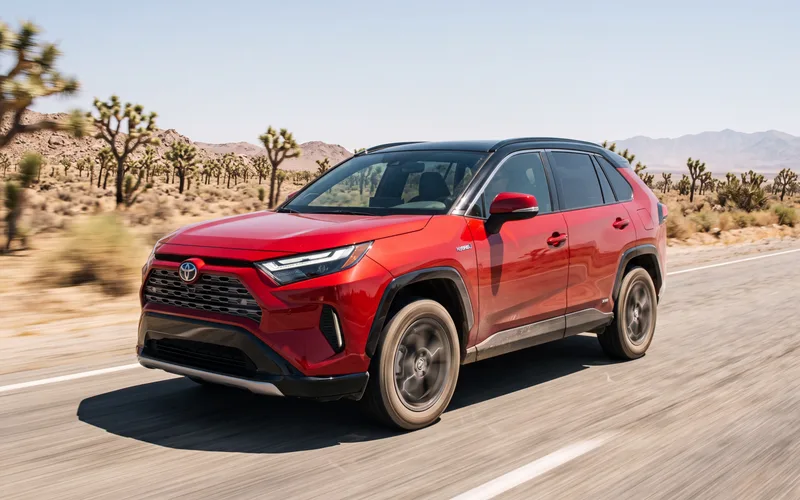 Toyota RAV4Compact SUVBetter at: Value and cargo
Same hybrid drivetrain and platform for about $4,600 less, with 41 MPG combined, 37.6 cu ft behind the rear seat instead of 28.8, and an actual tow rating.
Compare 2.13C
2.13C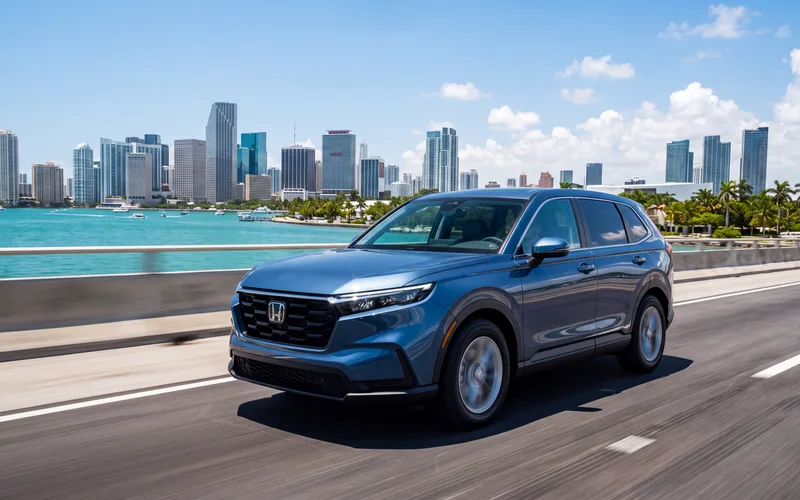 Honda CR-VCompact SUVBetter at: Cargo space
Roughly 76 cu ft of maximum cargo space against the Venza's 55.1, plus better rear visibility, for buyers who need the crossover to actually haul.
Compare 2.63C+
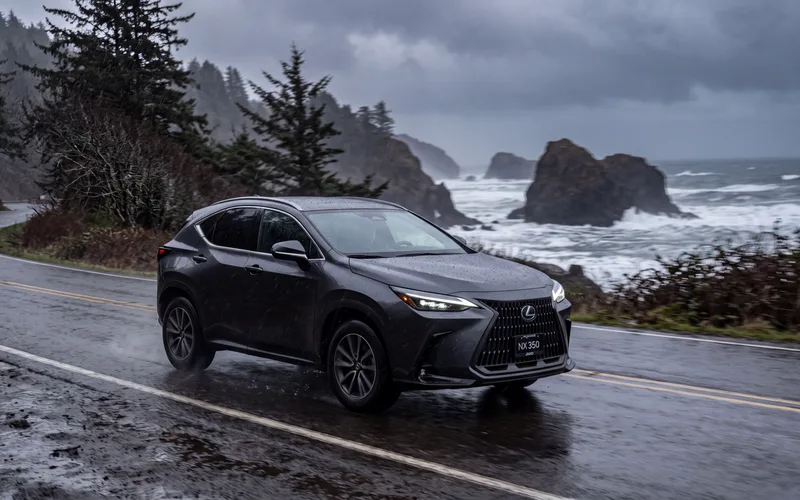 Lexus NXCompact Luxury SUVBetter at: Interior quality
For a modest step up from a loaded $44,460 Venza Limited you get the genuinely luxurious version of the same hybrid platform, with the dealer experience to match.
CompareSubject scores by year
Hover or tap a score to see what moved it versus the year before. A corner mark flags a big swing.
| Year | Performance | Efficiency | Safety | Space | Cost | Reliability | Tech | Use-case | Driving | Value |
|---|---|---|---|---|---|---|---|---|---|---|
| 2024 | 32 | 93 | 76 | 47 | 62 | 86 | 69 | 59 | 58 | 59 |
| 2023 | 32 | 93 | 77 | 47 | 62 | 85 | 67 | 58 | 58 | 57 |
| 2022 | 32 | 93 | 77 | 47 | 69 | 81 | 56 | 57 | 58 | 59 |
| 2021 | 30 | 93 | 77 | 46 | 70 | 80 | 55 | 56 | 58 | 61 |
Compare two years
Best fit & conditions
Higher scores mean a better fit for that use case. Learn more about use-case fit →
Subject profile
Detailed scoring by subject
1Performance & PowertrainThe Venza's lowest-graded category.0.00F
Second-generation Venza (launched for MY2021, per Wikipedia) is sold in the US only as a hybrid AWD; all three trims share one powertrain, so there is no volume-trim variance.
Toyota, like most hybrid makers, publishes gas-engine torque but not a combined system torque number; the figure reflects the 2.5L Dynamic Force engine shared with the RAV4 Hybrid's powertrain family.
Multiple instrumented tests cluster in the 7.1-7.8s range for the hybrid AWD powertrain; 7.6s (Edmunds) is representative of the volume XLE/Limited trims.
Reviewers consistently praise the Venza's hybrid system for smooth, quiet operation and seamless gas/electric handoffs, though it is not quick — refinement rather than punch is the character of the powertrain.
The Venza uses Toyota's electronically controlled CVT (e-CVT) as part of the hybrid system; delivery is seamless with no shift hunting, but some engine drone is noted under harder acceleration, typical of Toyota hybrid e-CVTs.
Unlike the mechanically related RAV4 Hybrid (rated to 1,750 lbs), Toyota does not publish a towing capacity for the Venza on any trim and does not recommend it for towing.
AWD is standard on every 2021 Venza trim (LE, XLE, Limited) via an electric rear motor rather than optional as on most rivals, but operation is basic on-demand torque split with no low range, terrain modes, or locking capability.
The Venza is a pavement-oriented crossover with modest ground clearance and no off-road hardware, skid plates, or dedicated off-road trim — its AWD system is tuned for wet/snowy pavement traction, not trail use.
The second-generation Venza is offered with exactly one powertrain across its entire US lineup — the 2.5L hybrid AWD system — with no conventional gas, turbo, or PHEV alternative.
2Efficiency & RangeThe Venza's best-graded category.4.00A+
2021 is the launch model year of the second-generation, Harrier-derived Venza, sold exclusively as an AWD hybrid (2.5L four with an electric rear axle) — EPA lists a single entry that covers LE, XLE and Limited alike, so the volume-trim figure is the whole lineup's figure. This matches Toyota's own launch claim of an 'improved 40 mpg' efficiency target for the redesign.
City is the stronger cycle for the Toyota Hybrid System powertrain, which can creep and idle on the electric motor; at 40 MPG it beats its own highway figure by 3 MPG, typical of a hybrid crossover's low-speed advantage.
37 MPG highway is strong for an all-wheel-drive premium compact SUV at launch, though the hybrid system's advantage narrows at steady speed where the electric side contributes least.
A 14.5-gallon tank combined with the 39 MPG combined rating gives roughly 566 miles of range between fills — long-legged for the segment and consistent with the Venza's positioning as a comfortable long-distance cruiser, unchanged from the launch specification for this generation.
EPA puts annual fuel cost at $1,600 at its standard 15,000-mile assumption — cheap in absolute terms, but the band is calibrated across all hybrids, and a 39 MPG SUV costs meaningfully more to run than a 50-plus MPG hybrid car or a small hybrid crossover.
Regular 87-octane unleaded, no premium requirement despite the Premium price class and Harrier-derived positioning, and as a conventional (non-plug-in) hybrid there is nothing to plug in — no home-charging install, no public-network dependency, no cold-weather charging penalty. Held just below the top of the band only because it still burns gasoline exclusively, with no E85 or electric-only mode.
3SafetyOne of the Venza's strongest categories.3.20B+
NHTSA rates the all-new-for-2021 second-generation Venza Hybrid 5 stars overall: 5 stars side (driver 5, passenger 5, pole 5), 4 stars frontal (driver 4, passenger 5) and 4 stars rollover with a 15.5% rollover probability and no dynamic tip. The XU80 Venza launched as an AWD-only hybrid in the US, so a single rating covers LE, XLE and Limited alike; forward collision warning and lane departure warning are both listed Standard.
In its launch year the Venza is an IIHS Top Safety Pick, but the award is headlight-gated: it applies only to trims with the LED projector headlights (XLE, Limited), not the base LE's LED reflector unit, which IIHS rates Marginal. Crashworthiness itself is clean — Good in both small overlap front tests, Good moderate overlap front, Good roof strength, Good head restraints/seats, Good original-protocol side test — with the sole discount being the newer, harder updated side-impact test, where the overall result comes back Acceptable and rear-passenger head protection specifically Marginal, which is what keeps this generation off TSP+ from the start.
All three 2021 launch trims — LE, XLE and Limited — carry Toyota Safety Sense 2.0 standard: Pre-Collision System with daytime/low-light pedestrian detection and daytime bicyclist detection, full-speed-range Dynamic Radar Cruise Control, Lane Departure Alert with Steering Assist, Lane Tracing Assist, Automatic High Beams and Road Sign Assist. Blind Spot Monitor with Rear Cross Traffic Alert is also standard on every trim, so all five features this criterion looks for (AEB, ACC, LKA, BSM, RCTA) are standard fleet-wide from day one. Front/rear parking assist with automated braking and the Bird's Eye View Camera with Perimeter Scan remain XLE/Limited (parking assist) and Limited-only (camera) rather than universal.
IIHS front crash prevention testing for the 2021 Venza returned Superior in vehicle-to-vehicle evaluation, avoiding collisions at both 12 and 25 mph test speeds, and Superior in daytime vehicle-to-pedestrian testing across crossing-child, crossing-adult and parallel-adult scenarios — the top grade in each test actually run. No nighttime pedestrian result is published for this launch model year, so the strong daytime/vehicle scores can't be corroborated after dark.
Blind Spot Monitor and Rear Cross Traffic Alert are standard on all three 2021 grades rather than optional on the base car, which is above par for the segment. Coverage stays alert-based rather than intervention-based on the base LE, though: front/rear parking assist with automated braking is XLE/Limited-only, there is no safe-exit alert, and the Bird's Eye View Camera with Perimeter Scan that would meaningfully extend low-speed coverage is Limited-exclusive.
Lane Departure Alert with Steering Assist and Lane Tracing Assist are standard on every 2021 grade, and launch-year reviewers described the lane-centering as holding its position 'without ping-ponging off lane markers,' working well on the freeway. It still requires steering-wheel torque to stay engaged and lacks the confident wide-radius centering of the segment's best systems.
Full-Speed Range Dynamic Radar Cruise Control is standard on every 2021 grade and works down to a full stop with stop-and-go resume; combined with Lane Tracing Assist it delivers competent single-lane highway assist described by launch reviewers as one of the more comprehensive, well-executed systems in the segment. There is no automatic lane-change, no navigation-linked curve slowdown and no predictive route behavior.
No hands-free highway driving system is offered on the 2021 Venza at any trim or price. DRCC and Lane Tracing Assist both require hands on the wheel, enforced by steering-torque sensing. Toyota's hands-free Teammate/Advanced Drive system was confined to the Lexus LS in the US and never reached the Venza across its run.
The 2021 launch lineup splits by trim: LED projector headlights on XLE and Limited earn an Acceptable IIHS rating, but the base LE's LED reflector headlights are rated Marginal — the trim lottery IIHS flagged by gating its Top Safety Pick award to the better-equipped trims from day one. Automatic High Beams are standard fleet-wide, which helps, but the volume XLE trim tops out at Acceptable rather than Good, and no adaptive/curve-following beam is offered on any trim.
The Venza's coupe-like tapered roofline is the defining visibility compromise from the launch model year: Consumer Reports' 2021 road test flags 'limited rear visibility' as a definite downside and notes the quasi-sporty styling impairs the outward view, even with Blind Spot Warning standard on every grade. The Bird's Eye View Camera with Perimeter Scan that meaningfully compensates for the tight rear sightlines is Limited-exclusive for 2021.
IIHS rates the 2021 Venza's child-seat anchors Good with extra LATCH positions available: two rear seating positions carry complete LATCH hardware and a third can borrow lower anchors from an adjacent position, so three child seats can be accommodated. It falls short of the top band only because there are no dedicated center lower anchors for a true 3-across LATCH install and the sloping roofline limits headroom for larger convertible seats.
4Space & ComfortOne of the Venza's weakest categories.1.09D
The all-new second-generation Venza (XU80, a rebadged Japanese-market Harrier) launched for 2021 as a strictly five-passenger two-row crossover across LE, XLE and Limited — the only three grades offered at launch.
Toyota's published figure for the 2021 launch year, unchanged across all three grades and carried through the rest of the generation.
Modest front stretch-out room for the class at launch — the Harrier-derived TNGA-K body trails the mechanically related RAV4 Hybrid despite a longer overall footprint.
A strong published figure for the segment; Consumer Reports' 2021 road test confirms enough rear headroom for most adults despite the fastback-style roofline.
Genuinely adult-usable second-row legroom at launch, though Consumer Reports flags very limited foot space under the front seats and seatbacks that could use more long-trip support.
No third row exists on any 2021 Venza grade — it launched as a five-seat two-row crossover, with three-row buyers directed to the Highlander. Scored in the low band per the item's rule rather than omitted.
A weak figure for the class and the Venza's clearest packaging penalty at launch — the chopped, coupe-like roofline costs cargo room against the mechanically related RAV4 Hybrid.
Seats-folded capacity sits at the very bottom of the SUV band — roughly 15 cu ft short of a RAV4 Hybrid and closer to a large hatchback than a mid-size crossover.
Style-first rather than clever at launch: a standard tonneau cover stows beneath the cargo deck and door pockets are bottle-capable, but the sculpted center console leaves little accessible small-item space — Consumer Reports specifically flags the plastic console as a constant knee intrusion.
Comfortable, well-shaped front seats praised by Consumer Reports; the volume XLE grade adds heated front seats and leatherette bolsters over the fabric-only base LE, and the reclining rear bench includes climate vents. Held below the top band by the knee-intrusion complaint and the limited front-seat foot space noted for rear passengers — full power passenger adjustment and ventilation don't arrive until the Limited.
Firm but well-damped and notably better isolated than a RAV4 Hybrid — the Harrier-derived TNGA-K tune trades a little compliance for body control and stays composed over broken pavement at launch.
Near-silent at low speed on electric power, but road noise is noticeable on coarse pavement and the four-cylinder is audible when it kicks on — quieter overall than the Venza's Toyota siblings per Consumer Reports.
Dual-zone automatic climate control is standard across every 2021 grade including the base LE, but heated front seats don't appear until XLE (base LE is fabric with no seat heating), and ventilated seats plus a heated steering wheel stay Limited-exclusive. No heated rear seats or a separate rear climate zone on any grade — a step behind the segment's best at launch.
5Cost of OwnershipGrades above the middle of the scale.2.72B-
Entry LE trim MSRP with destination charge included, per Toyota's own 2021 Venza pricing release.
XLE is the mid/volume trim in the 3-trim Venza lineup (LE/XLE/Limited); price is manufacturer-confirmed, trim-popularity assumption is not.
CarEdge's year-by-year projection totals under $2,000 through year 5, well below the SUV average, consistent with Toyota's reliability reputation.
iSeeCars aggregate depreciation study puts the Venza at 38% loss over 5 years, about 2.2 points better than the hybrid mid-size SUV class average of 40.2%.
Toyota's standard mainstream-brand basic warranty, the shortest common in the segment (Hyundai/Kia offer 5yr/60k or more).
Base powertrain coverage is the mainstream-brand standard, though hybrid-specific components and the HV battery get materially longer coverage on top of it.
ToyotaCare covers scheduled factory maintenance for only 2 years/25,000 miles plus 2 years of roadside assistance regardless of mileage — a basic, short-duration package with no charging credits or connected-service trials (not a plug-in vehicle).
$37,175 volume-trim price minus its estimated resale value after 5 years (62% retained, or about $23,049) leaves about $14,127 in depreciation. Add the projected $1,981 in 5-year maintenance and repairs, and owning this vehicle for 5 years costs about $16,108 in total.
6Reliability & QualityOne of the Venza's strongest categories.3.41B+
Consumer Reports' subscriber survey rates the 2021 Venza — the launch year of the all-new second generation — as more reliable than other cars from the same model year, and it inherits the well-proven 2.5L Dynamic Force/hybrid transaxle combo from the RAV4 Hybrid and Highlander Hybrid, but as a first-year rebadge of the Japanese-market Harrier it lacks its own multi-year track record.
Toyota ranked 4th among all automakers (98 PP100) in J.D. Power's 2021 U.S. Vehicle Dependability Study, behind only Lexus, Porsche and Kia, and earned five individual segment-leading model awards — a consistent top-tier standing for the brand.
As the launch model year, the 2021 Venza Hybrid was recalled for water intrusion into the rear turn-signal LED assemblies that can short-circuit and dim or disable the rear signals/hazards (NHTSA 22V033/22V239000), and separately for a Skid Control ECU software fault that can leave VSC disabled after a restart (Toyota campaign 22TA03, 2021–2022 Venza) — two distinct campaigns in its first model year, though neither involves fire, powertrain failure, or a systemic defect.
The AWD-only 2.5L Dynamic Force four-cylinder hybrid powertrain is shared with the RAV4 Hybrid and Highlander Hybrid, both of which have long high-mileage reliability records, but 2021 is the first model year this specific application has been sold in North America, so the Venza itself carries no independent long-term durability data yet.
Reviewers consistently describe the 2021 Venza's cabin as a deliberate step upmarket from the RAV4 toward Lexus-like presentation, citing soft-touch dash and door surfaces, contrast stitching, simulated wood/metallic trim, fabric-wrapped pillars, and SofTex simulated leather (standard on Limited) that reviewers compare favorably to entry Lexus models.
Launch-year road tests describe solid, consistent panel fit and assembly quality with no widespread rattle or misalignment complaints, in line with Toyota's typically strong initial-quality reputation even for an all-new model.
Toyota operates one of the largest and most geographically dense dealer networks in the US (over 1,200 dealers), with service satisfaction consistently rated above the industry average, and the Venza is serviced at any Toyota dealer nationwide.
As a Toyota, the Venza benefits from broad dealer parts distribution and moderate labor/parts pricing typical of the brand, but as a newly launched, lower-volume nameplate sharing few body panels with the higher-selling RAV4/Highlander, 2021 owners have less third-party aftermarket support and slower sourcing for Venza-specific trim and body parts than established stablemates.
7Technology & InfotainmentOne of the Venza's weakest categories.1.72C-
Volume trim (XLE) carries the standard 8-inch Audio Plus touchscreen at launch; the 12.3-inch Premium Audio w/ Dynamic Navigation and JBL is optional on XLE and standard only on the range-topping Limited.
The all-new Toyota Audio Multimedia system replacing Entune is a significant step up in responsiveness and graphics for the redesigned second-generation Venza, but reviewers flagged the touch-capacitive dash controls on XLE/Limited (no physical volume/tuning knob) as fiddly and distracting versus rivals with rotary controls.
Apple CarPlay and Android Auto are standard across all 2021 Venza trims but only via wired USB connection at launch — Toyota did not offer wireless projection on the redesigned Venza's multimedia system in its first model year.
Limited and optional-XLE trims get Toyota's cloud-based Dynamic Navigation with enhanced 2D landmark display, lane guidance and freeway exit display plus voice recognition; LE/base XLE lack embedded nav and lean on phone-projection voice assistants (Siri/Google Assistant) instead.
The available/Limited-standard JBL premium system (9 speakers incl. rear subwoofer, 12-channel 1,200-watt amp) was billed by Toyota as its most powerful audio system to date and is a genuine standout for the segment; the standard 6-speaker/4-channel system on LE/XLE is adequate but unremarkable.
The all-new 2021 Venza uses analog gauges with a color multi-information display insert — 4.2-inch MID on LE, 7-inch MID with Hybrid System Indicator on XLE/Limited — not a full reconfigurable digital cluster; that upgrade (12.3-inch full digital cluster on Limited) didn't arrive until the 2023 model year per Wikipedia.
The all-new Toyota Audio Multimedia system debuting on the 2021 Venza supports over-the-air software updates, but at launch this generation's OTA scope centers on the multimedia system's software/map data rather than whole-vehicle feature updates; the launch press materials do not detail OTA scope in depth.
Remote Connect (Toyota Remote Services trial) covers remote start, lock/unlock, vehicle status and driving alerts via the Toyota app, plus a 1-year Safety Connect trial — solid core functionality, but it converts to a paid subscription after the trial and lacks a digital-key feature.
The 2021 Venza offers roughly four USB-A ports (a media port plus charge-only ports) and available wireless smartphone charging on upper trims — a reasonable but not class-leading device-power package for a premium compact SUV, with no USB-C at launch.
Smart Key System on all five doors with push-button start is standard on XLE and Limited, and a hands-free power liftgate is standard across the lineup; LE trim gets a more basic remote/keyless setup without full five-door proximity entry.
A backup camera with projected path and dynamic gridlines is standard fleet-wide, with Blind Spot Monitor and Rear Cross Traffic Alert standard on all grades; XLE adds Front/Rear Parking Assist with Automated Braking, and the Bird's Eye View 360-degree camera with Perimeter Scan is standard only on the range-topping Limited.
A 10-inch color head-up display projecting speed, hybrid system status and select safety alerts is available at launch, but only as an option on the Limited trim — it is not standard even on the top trim, let alone the volume trim.
8Use-Case FitMid-pack among this car's ten categories.1.79C-
Car-like step-in height and wide rear door openings ease loading kids daily, and the 28.8 cu ft hold behind the 60/40 rear seat swallows a stroller without a fight. LATCH hardware gives full lower-anchor hookups only at the two outboard rear positions with the center seat borrowing anchors, and the low, tapered Harrier-derived roofline pinches headroom for a rear-facing convertible seat versus a boxier RAV4/CR-V.
As an all-new model, the 2021 Venza launched with Toyota Safety Sense 2.5 (not the outgoing TSS 2.0) standard on every grade — Pre-Collision System with Pedestrian Detection, full-speed Dynamic Radar Cruise Control, Lane Departure Alert with Steering Assist, Lane Tracing Assist, and standard Blind Spot Monitor plus Rear Cross-Traffic Alert on LE/XLE/Limited alike — a strong family-safety floor on the base trim. It earned IIHS Top Safety Pick, but the award is headlight-gated: LE's reflector-type LEDs rate Marginal while only XLE/Limited's projector LEDs rate Acceptable, keeping it out of Top Safety Pick+.
Extra sound deadening versus the mechanically related RAV4 Hybrid gives a quiet, composed highway ride that's kind to multi-hour family trips, and second-row space suits adults on a medium haul. It stops short of best-in-class family-hauler status: no third row, only 28.8 cu ft behind the rear seat, rear-seat amenities are unremarkable for a premium-priced compact SUV, and the optional Star Gaze panoramic glass roof (Limited only) is fixed, not opening.
The hybrid eCVT delivers seamless, shift-free power with silent EV-mode launches at parking-lot speeds, and standard Lane Tracing Assist plus full-speed adaptive cruise on every 2021 grade further cut stop-and-go effort versus rivals that gate these features to upper trims.
EPA-rated 40/37/39 mpg city/highway/combined is exceptional for a compact/premium crossover, identical across all three 2021 trims since every Venza shares the single hybrid AWD powertrain, and Toyota's hybrid system carries a well-established low-maintenance reputation (no plug, conventional service intervals).
A standard backup camera helps every grade, but at 186.6 in overall length the Venza is notably longer than compact-SUV rivals like the RAV4, and Front/Rear Parking Assist with automated braking plus the Bird's Eye View overhead camera are reserved for XLE/Limited (Bird's Eye View for Limited only) rather than standard across the line — so base LE buyers get the least urban-parking help on the vehicle's largest footprint.
Toyota publishes no towing rating for the 2021 Venza on any trim and offers no factory tow-prep package — unlike the mechanically related RAV4 Hybrid — and there is no truck bed or comparable open cargo area, so it has essentially no dedicated work capability beyond generic crossover cargo hauling.
The Toyota Hybrid System II drivetrain shares its core engineering with the RAV4 Hybrid and Toyota's broader hybrid fleet, which has a strong long-term reliability track record, so the mechanicals should hold up to routine hard use. Set against that, this is the model's launch year and it carries two early NHTSA recalls — rear turn-signal LED water intrusion (22V033) and a Skid Control ECU software fix so VSC properly re-enables after being disabled (22V239) — first-year teething that a mature model year wouldn't carry, and the lifestyle-crossover trim (soft-touch surfaces, no washable rubber cargo liner standard) still isn't built or marketed for fleet/work abuse.
No onboard power export, no bed or exposed cargo deck, and roof rails are standard only on XLE/Limited — and are removed entirely if a Limited buyer selects the optional Star Gaze panoramic roof, leaving that configuration with no roof-rack mounting at all. There is essentially no upfit ecosystem (racks, tie-down grids, aftermarket bed accessories) built around this model.
A quiet, well-insulated cabin, standard adaptive cruise and Lane Tracing Assist from launch, and 39 mpg combined stretching the tank toward roughly 550+ miles between fill-ups make this a strong highway tourer with low driver fatigue. It loses ground to true class leaders on outright range versus the smaller-but-more-efficient RAV4 Hybrid and lacks massaging/ventilated-seat comfort features some rivals offer at this price.
Standard Electronic On-Demand AWD (E-Four, a dedicated rear motor with no driveshaft) helps in light snow and gravel, but 7.677 in ground clearance with no skid plates, no hill-descent control and no terrain-select modes keeps this a pavement-first crossover. Roof rails aren't available on the base LE at all, and a Limited buyer who selects the panoramic Star Gaze roof loses roof rails entirely — a real ceiling on carrying kayaks or a rooftop box on the top trim.
60/40 split-folding rear seats and 55.1 cu ft of max cargo with them down (54.9 cu ft on a panoramic-roof Limited) cover normal road-trip luggage and moderate gear comfortably, and the low, wide liftgate opening eases loading bulky items. It's a step behind class benchmarks because the hybrid battery pack sits under the cargo floor, trimming underfloor storage versus a comparable gas-only compact SUV, there's no household power outlet for camp gear, and roof rails — useful for oversized gear — aren't available on the base LE and disappear on a panoramic-roof Limited.
9Driving ExperienceMid-pack among this car's ten categories.1.91C-
Secure and predictable in everyday use but comes apart at the limit: Consumer Reports' 2021 road test found handling "responsive in everyday driving" yet lacking confidence in the emergency-avoidance maneuver, and Car and Driver's instrumented test of the launch-year 2021 Venza Limited measured only 0.79 g on the skidpad on the low-rolling-resistance Ecopia tires every Venza wears — below the RAV4 Hybrid it shares a drivetrain with. The Drive's 2021 test likewise found the suspension turns soft the moment cornering gets aggressive, trading composure for ride comfort. Lands in the lower half of the 'secure but unremarkable' band.
The rack is accurate enough to place the car and light enough to make parking easy, but it is geared slower than the RAV4's and returns essentially nothing to the driver's hands — this is the second generation's defining steering trait from its 2021 launch. Multiple launch-year reviews independently reach for the word "numb."
Regenerative-to-friction blending is orderly enough for daily driving but not seamless, and measured stopping power on the 2021 test car was the weakest number on the vehicle: 179 ft from 70 mph is well off the pace for a ~3,850-lb crossover, a shortfall attributable to the eco-biased tires rather than the hardware (12-in vented front / 11-in rear discs). The Drive's 2021 review went further, calling the pedal "rather sticky and grabby" at first and noting it took several days to learn to brake smoothly without jerking passengers at stops — a launch-year calibration quirk consistent across the early reviews.
THS-II is the Venza's best dynamic trait at launch — electric-only starts, no starter-motor shudder, and seamless fill from the front and rear drive motors make it genuinely smooth in the commuting it was built for. It misses the top band on response, not smoothness: 7.6–7.8 s to 60 mph is unhurried, and asking for a highway pass pins the revs high and makes the engine announce itself. Matches this scorecard's own 1.1.4 powertrain refinement (78) and 1.1.5 transmission behavior (74).
Near-silent on electric power and better insulated than the RAV4 Hybrid it shares a drivetrain with — the Harrier-derived body carries extra sound deadening, and 2021 launch reviewers praised the cabin as unusually quiet at low speed. Under load it undoes that: the Atkinson four is buzzy, the eCVT holds revs so the drone is decoupled from road speed, and Car and Driver's instrumented test measured more vibration through the wheel and pedals than it liked — which is what keeps this at mid-band rather than above it.
The volume XLE and the Limited both need 37.4 ft curb-to-curb on their 19-inch wheels; only the base LE's 18s get down to about 36.1 ft. On the RAV4's 105.9-in wheelbase but six inches more overall length, that is unremarkable mid-pack maneuverability for a two-row crossover — unchanged across the second generation's model years.
The seat itself is right — well-shaped, supportive front chairs with 8-way power adjustment, a slightly elevated hip point with generous headroom, and good forward sightlines. What drags it down is everything around the seat: the plastic center console presses into the driver's right knee, the tapered roofline and high beltline leave poor side and rear visibility, and on the Limited (and XLE with the optional Premium Audio package) the flush capacitive touch controls can't be found by feel and don't always register. At launch, 2021's LE and XLE come standard with the smaller 8-in touchscreen rather than the 12.3-in unit (standard on Limited, optional on XLE) — the 2023 press-noted usability fix (physical volume buttons under a then-newly-standard 12.3-in XLE screen) hadn't landed yet, so this is the weakest ergonomics setup of the generation on the volume trim, though the console intrusion and visibility complaints persist across every year.
The Venza is a calm, quiet mile-eater and makes no attempt to be anything else at launch: one powertrain, no sport trim, a chassis tuned away from corners, and the only engine note on offer is a drone. The Drive's headline verdict on the 2021 model — "a bargain Lexus that should have been weirder" — captures a car engineered for relaxation over engagement.
10Value & Market PositionMid-pack among this car's ten categories.2.13C
The reintroduced 2021 Venza is well-equipped from the base LE: standard AWD, the 2.5L hybrid powertrain (no lesser engine to upsell from), Toyota Safety Sense 2.0 (adaptive cruise, lane tracing, auto high beams, pedestrian-detecting AEB), SofTex-trimmed seats, 8-inch touchscreen with Apple CarPlay/Android Auto, and a standard 9-speaker sound setup — content that costs extra on several rivals.
Strong feature set for the money but the Venza carries a real price premium over its mechanical twin, the RAV4 Hybrid, for extra styling, ride comfort and cabin hush rather than more capability — fair value, not a standout bargain.
Only three trims (LE, XLE, Limited), a single powertrain (2.5L hybrid AWD — no FWD or non-hybrid option, unlike the outgoing first-generation Venza which offered four- and six-cylinder engines), and limited option packages. Buyers who want a gas-only or FWD configuration have to look elsewhere in Toyota's lineup.
Reintroduction demand was strong out of the gate — Toyota reported roughly 45,000 orders in the Venza's first month against an initial ~3,100-unit estimate — and full calendar-year 2021 US sales landed around 66,000 units, a solid mid-pack result for the segment but well short of segment leaders like the RAV4.
Toyota's reliability and resale reputation lend the Venza a strong halo, and the hybrid-only positioning plays into the brand's efficiency image; it sits as a premium, slightly aspirational nameplate within Toyota's own SUV range rather than a mainstream volume model.
2021 launch-year demand combined with pandemic-era supply constraints meant the Venza commonly sold at or above MSRP with minimal dealer flexibility; scattered manufacturer offers existed (modest customer cash, subsidized APR/lease on the LE) but were inconsistent by region and did not offset short supply.
2021 is the first model year of an all-new second generation, reintroduced after a 2018–2020 hiatus on the TNGA-K platform shared with the RAV4/Highlander (a rebadged Japan-market Harrier) — as fresh as a model year gets, with no imminent redesign risk.
Generally favorable launch reviews praised its styling, hushed ride and standard hybrid/AWD/safety content, and it earned an IIHS Top Safety Pick (the second-tier award, held back only by standard headlight performance) — solid but not a class-topping honor like Top Safety Pick+, and it was not a frequent comparison-test winner over rivals like the RAV4 Hybrid or CR-V Hybrid.