
The verdict
A mixed-report compact suv, strong on efficiency and held back by performance.
The 2024 Venza is the quiet, plush, 39-MPG Toyota crossover for people who never haul anything bulky. Standard hybrid AWD, a near-Lexus cabin, a 5-star NHTSA rating and top-tier reliability come on every trim, and it holds about 62% of its value after five years. The catch is packaging and money: that chopped roofline leaves just 28.8 cu ft of cargo space behind the rear seat — nearly nine cubic feet less than the mechanically identical RAV4 Hybrid — while the volume XLE costs $40,525 delivered, and Toyota won't let you tow anything at all. It was also discontinued after this model year, replaced by the Crown Signia.
Jump to scoresStrengths
- Toyota hybrid reliability, with the warranty to match
- 39 MPG with all-wheel drive standard, on regular gas
- Safety gear standard on the cheapest trim
What holds it back
- Cargo space is the worst in the class
- It cannot tow — at all
- Slow, soft, and no fun at all
Top alternatives
Cars shoppers cross-shop with the Toyota Venza 2.56C+
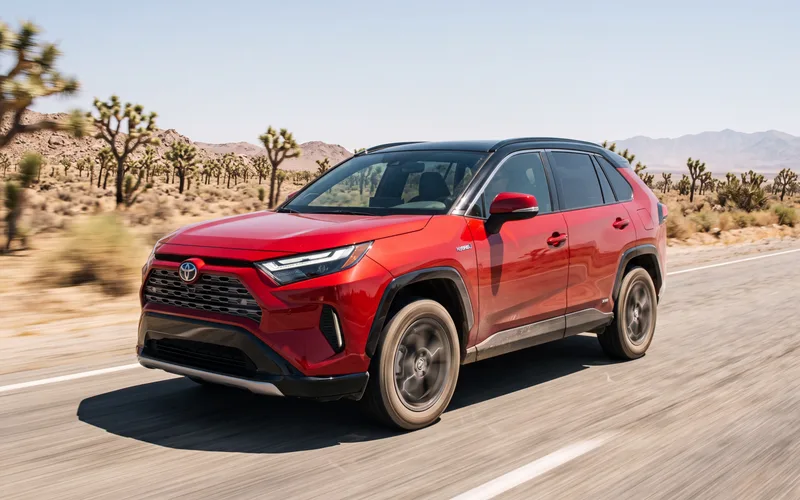 Toyota RAV4Compact SUVBetter at: Value and cargo
Same hybrid drivetrain and platform for about $4,600 less, with 41 MPG combined, 37.6 cu ft behind the rear seat instead of 28.8, and an actual tow rating.
Compare 2.13C
2.13C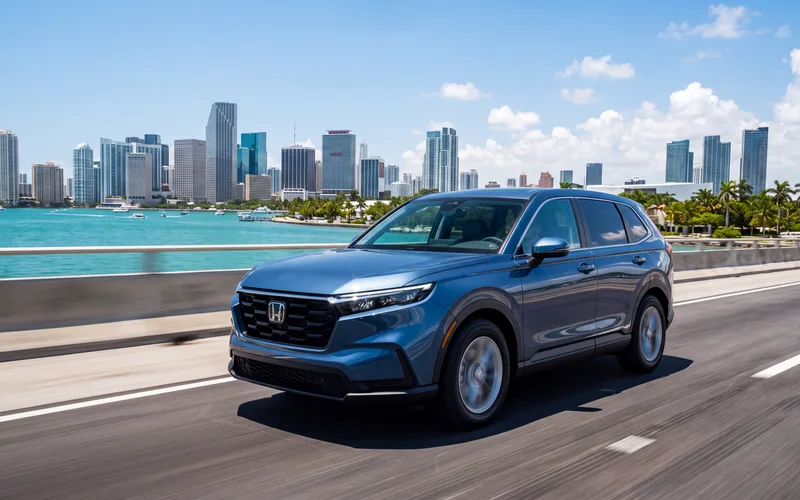 Honda CR-VCompact SUVBetter at: Cargo space
Roughly 76 cu ft of maximum cargo space against the Venza's 55.1, plus better rear visibility, for buyers who need the crossover to actually haul.
Compare 2.63C+
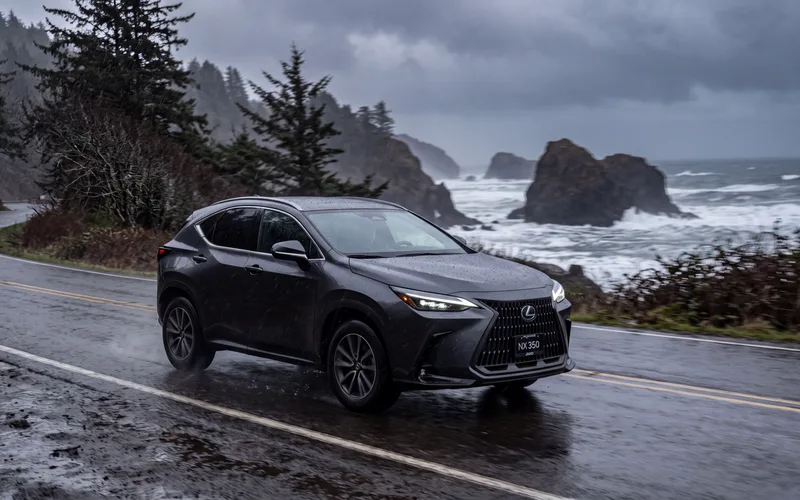 Lexus NXCompact Luxury SUVBetter at: Interior quality
For a modest step up from a loaded $44,460 Venza Limited you get the genuinely luxurious version of the same hybrid platform, with the dealer experience to match.
CompareSubject scores by year
Hover or tap a score to see what moved it versus the year before. A corner mark flags a big swing.
| Year | Performance | Efficiency | Safety | Space | Cost | Reliability | Tech | Use-case | Driving | Value |
|---|---|---|---|---|---|---|---|---|---|---|
| 2024 | 32 | 93 | 76 | 47 | 62 | 86 | 69 | 59 | 58 | 59 |
| 2023 | 32 | 93 | 77 | 47 | 62 | 85 | 67 | 58 | 58 | 57 |
| 2022 | 32 | 93 | 77 | 47 | 69 | 81 | 56 | 57 | 58 | 59 |
| 2021 | 30 | 93 | 77 | 46 | 70 | 80 | 55 | 56 | 58 | 61 |
Compare two years
Best fit & conditions
Higher scores mean a better fit for that use case. Learn more about use-case fit →
Subject profile
Academic Probation · NHTSA safety recalls
Oct 30, 2025Back over prevention: display functionPlease see the recall report for a complete list of models. A software error may cause the rearview camera to freeze or display a blank screen when the vehicle is in reverse. As such, these vehicles fail to comply with the requirements of Federal Motor Vehicle Safety Standard (FMVSS) number 111, "Rear Visibility."
Defect
Toyota Motor Engineering & Manufacturing (Toyota) is recalling certain 2022-2026 Toyota, Lexus, and Subaru Solterra vehicles equipped with a Panoramic View Monitor (PVM) system. Please see the recall report for a complete list of models. A software error may cause the rearview camera to freeze or display a blank screen when the vehicle is in reverse. As such, these vehicles fail to comply with the requirements of Federal Motor Vehicle Safety Standard (FMVSS) number 111, "Rear Visibility."
Risk
A rearview camera that fails to display an image can reduce the driver's view behind the vehicle, increasing the risk of a crash.
Remedy
Dealers will update the parking assist software, free of charge. Owner letters were mailed January 2, 2026. Owners may contact Toyota's customer service at 1-800-331-4331. Toyota's numbers for this recall are 25TB13 and 25LB06. Subaru's number for this recall is WRE25.
NHTSA campaign 25V744000 ↗Manufacturer no. 25TB13/25LB06/WRE251,024,407 vehicles potentially affected (all models in the campaign)Owners notified Dec 5, 2025Filed by Toyota Motor Engineering & ManufacturingFiled as VENZA HYBRIDSep 11, 2025Electrical system: instrument cluster/panelDue to an error in the instrument panel software at vehicle startup, the instrument panel may fail to display vehicle speed, brake system, and tire pressure warning lights.
Defect
Toyota Motor Engineering & Manufacturing (Toyota) is recalling certain 2023-2024 Toyota Venza, 2023-2025 RAV4 Prime, RAV4, Highlander, GR Corolla, Crown, 2024-2025 Lexus TX, LS, Toyota Tacoma, Grand Highlander, and 2025 Lexus RX, Toyota Crown Signia, Camry, RAV 4 Plug-in Hybrid (PHEV), and 4 Runner vehicles. Due to an error in the instrument panel software at vehicle startup, the instrument panel may fail to display vehicle speed, brake system, and tire pressure warning lights.
Risk
An instrument panel display that does not show critical information can increase the risk of a crash or injury.
Remedy
Dealers will update the instrument panel software over-the-air (OTA) for non-PHEV vehicles, free of charge. For PHEV vehicles, dealers will inspect the instrument panel assembly, and either replace it, or update the software, free of charge. Owner letters were mailed December 5, 2025. Additional letters will be sent, anticipated in May 2026. This is a phased recall. Owners may contact Toyota's customer service at 1-800-331-4331. Toyota's numbers for this recall are 25TB08 and 25TA08. Lexus' numbers for this recall are 25LB05 and 25LA05.
NHTSA campaign 25V595000 ↗Manufacturer no. See Part 573 Report591,377 vehicles potentially affected (all models in the campaign)Owners notified Dec 5, 2025Filed by Toyota Motor Engineering & ManufacturingFiled as REDUNDANT VENZA, VENZA HYBRIDJul 23, 2024Equipment: other: labelsThe load carrying capacity modification label may display inaccurate added weight values. As such, these vehicles fail to comply with the requirements of Federal Motor Vehicle Safety Standard number 110, "Tire Selection and Rims."
Defect
Gulf States Toyota, Inc. (GST) is recalling certain Toyota 2023 GR Supra, 2024 4 Runner, Corolla, Grand Highlander, Grand Highlander Hybrid, Land Cruiser Hybrid, Tacoma, Tacoma Hybrid, 2023-2024 BZ4X, Corolla Cross Hybrid, GR Corolla, GR86, Highlander, Highlander Hybrid, Prius, Prius Prime, Sequoia Hybrid, Tundra, Tundra Hybrid, Venza Hybrid, 2023-2025 Crown, and 2025 Camry Hybrid vehicles equipped with GST accessories. The load carrying capacity modification label may display inaccurate added weight values. As such, these vehicles fail to comply with the requirements of Federal Motor Vehicle Safety Standard number 110, "Tire Selection and Rims."
Risk
A vehicle with an incorrect maximum capacity weight value may be overloaded, which can increase the risk of a crash.
Remedy
GST will mail new labels to owners, free of charge. Owner notification letters were mailed September 16, 2024. Owners may contact GST customer service at 1-800-444-1074. GST's number for this recall is 24R2.
NHTSA campaign 24V548000 ↗Manufacturer no. 24R233,848 vehicles potentially affected (all models in the campaign)Owners notified Sep 16, 2024Filed by Gulf States Toyota, Inc.Filed as VENZA HYBRID
2 recalls on other model years of the Venza (2021–2022)
Apr 13, 2022Electronic stability control (esc): control module: softwareThe Skid Control ECU software may not turn on the Vehicle Stability Control (VSC) system when the vehicle is restarted after the driver has disabled the VSC system. As such, these vehicles fail to comply with the requirements of Federal Motor Vehicle Safety Standard number 126, "Electronic Stability Control Systems."
Defect
Toyota Engineering & Manufacturing (Toyota) is recalling certain 2022 Lexus LX 600, Lexus NX 350h, Lexus NX 450h+, Toytoa RAV4 Hybrid, 2021-2022 Lexus LS 500h, Toyota Mirai, RAV4 PRIME, Sienna, Venza, and 2020-2022 Toyota Highlander Hybrid vehicles. The Skid Control ECU software may not turn on the Vehicle Stability Control (VSC) system when the vehicle is restarted after the driver has disabled the VSC system. As such, these vehicles fail to comply with the requirements of Federal Motor Vehicle Safety Standard number 126, "Electronic Stability Control Systems."
Risk
Driving with a deactivated stability control system increases the risk of a crash.
Remedy
Dealers will update the Skid Control ECU software, free of charge. Owner notification letters were mailed May 27, 2022. Owners may contact Toyota customer service at 1-800-331-4331. Toyota's number for this recall is 22TA03. Lexus' number for this recall is 22LA01.
NHTSA campaign 22V239000 ↗Manufacturer no. 22TA03, 22LA01458,110 vehicles potentially affected (all models in the campaign)Owners notified May 27, 2022Filed by Toyota Motor Engineering & ManufacturingFiled as REDUNDANT VENZA, VENZA HYBRIDJan 26, 2022Exterior lighting: hazard flashing warning lights · Exterior lighting: turn signal: bulbsWater may enter the rear turn signal LED lights, allowing condensation to form on the circuit board, and causing a short circuit. As such, these vehicles fail to comply with the requirements of Federal Motor Vehicle Safety Standard number 108, "Lamps, Reflective Devices, and Associated Equipment."
Defect
Toyota Motor Engineering & Manufacturing (Toyota) is recalling certain 2021 Venza Hybrid vehicles. Water may enter the rear turn signal LED lights, allowing condensation to form on the circuit board, and causing a short circuit. As such, these vehicles fail to comply with the requirements of Federal Motor Vehicle Safety Standard number 108, "Lamps, Reflective Devices, and Associated Equipment."
Risk
A short circuit can cause dimming or failure of the rear turn signals and hazard lights, reducing the vehicle's visibility to other drivers and increasing the risk of a crash.
Remedy
Dealers will replace both rear turn signal LED bulbs and replace the rear turn signal light assembly as necessary, free of charge. Interim owner notification letters, informing owners of the safety risk, were mailed March 18, 2022. Remedy parts are expected to be available by June 30, 2022. Owners may contact Toyota customer service at 1-800-331-4331. Toyota's number for this recall is 22TB01/22TA01.
NHTSA campaign 22V033000 ↗Manufacturer no. 22TB01/22TA0141,544 vehicles potentially affected (all models in the campaign)Owners notified Jun 30, 2022Filed by Toyota Motor Engineering & ManufacturingFiled as VENZA HYBRID
Source: NHTSA Office of Defects Investigation recall database, model years 2021–2024. Recalls are listed by model year as the manufacturer filed them; whether a specific car is affected depends on its VIN — check a VIN at nhtsa.gov ↗. NHTSA model names matched to this page: REDUNDANT VENZA, VENZA HYBRID.
Detailed scoring by subject
1Performance & PowertrainThe Venza's lowest-graded category.0.09F
The 2024 Venza is offered in a single powertrain — the 2.5L A25A-FXS Atkinson four paired with front and rear electric motors — rated by Toyota at 219 net system horsepower across every trim, so the volume XLE figure is the model-range figure.
As with other Toyota Hybrid System II vehicles, only engine torque is published; the electric motors contribute additional off-the-line torque that is not rated as a combined number.
Edmunds instrumented the Venza hybrid AWD at 7.6 seconds to 60 mph, a figure consistent across the 2021–2024 carry-over run since the powertrain is unchanged; adequate rather than quick for a premium-priced crossover.
THS-II delivery is seamless in normal driving — electric launch, no shift shock, no turbo lag — and the Harrier-derived body is more heavily insulated than the RAV4's, so hybrid transitions are largely inaudible; the familiar Atkinson four still flares to high revs and turns coarse under hard throttle, which keeps it out of the top band.
The planetary eCVT has no gears to hunt through and never shifts harshly, which is its strength; the penalty is the classic decoupled engine-speed drone when accelerating hard, and there is no meaningful manual mode.
Unlike the mechanically related RAV4 Hybrid (1,750–3,500 lbs), the US-market Venza carries no towing rating at all; the owner's manual advises against towing, so the correct value is 0 rather than a low positive number.
Electronic On-Demand AWD (E-Four, a dedicated rear electric motor with no driveshaft) is standard on every 2024 trim — there is no FWD Venza — which earns solid credit; it is basic in operation, with up to ~80% rear torque distribution but no low range, no locking differentials and no terrain-mode selector.
Explicitly pavement-oriented: 7.8 inches of ground clearance, road-biased all-season tires, no skid plates, no hill-descent or terrain modes, no off-road trim, and a rear axle driven only by an electric motor that cuts assist as the battery depletes on sustained low-traction climbs.
One powertrain, take it or leave it — the 219-hp hybrid AWD is the only configuration in the US, with no gas-only, no PHEV, no larger engine and not even a FWD option. It scores above the floor only because that single powertrain is an electrified one.
2Efficiency & RangeThe Venza's best-graded category.4.00A+
The 2024 Venza is a single-powertrain, AWD-only hybrid (2.5L four with an electric rear axle), and EPA lists exactly one entry for the model year — 39 MPG combined applies to LE, XLE and Limited alike, so the volume XLE figure is the whole lineup's figure.
City is the Venza's stronger cycle, as expected of a Toyota Hybrid System vehicle that can creep and idle on the motor; at 40 MPG it beats its own highway rating by 3 MPG.
37 MPG highway is strong for an all-wheel-drive premium compact SUV, though the hybrid's advantage narrows at steady speed where the electric side contributes least.
A modest 14.5-gallon tank is offset by the 39 MPG combined rating to give roughly 566 miles between fills — long-legged for the segment, and the reason the Venza was pitched as a comfortable long-distance cruiser. Derived rather than published: EPA populates its range field only for plug-in vehicles, and Toyota's own spec pages refused automated fetches.
EPA puts annual fuel cost at $1,600 at its standard 15,000-mile assumption — cheap in absolute terms, but the band is calibrated across all hybrids, and a 39 MPG SUV costs meaningfully more to run than a 50-plus MPG hybrid car or a small hybrid crossover.
Regular 87-octane unleaded, no premium requirement despite the Premium price class and the Harrier-derived positioning, and as a conventional hybrid there is nothing to plug in — no home-charging install, no public-network dependency, no cold-weather charging penalty. Held just below the top of the band only because it still burns gasoline exclusively, with no E85 or electric-mode option.
3SafetyOne of the Venza's strongest categories.3.13B
NHTSA rates the 2024 Venza 5 stars overall, with 5 stars in the side crash test and 4 stars in both the frontal crash and rollover evaluations. The second-generation (XU80) Venza is AWD-only, so one rating covers the whole lineup.
The 2024 Venza is an IIHS Top Safety Pick — but not TSP+, and the underlying results are mixed: Good in small overlap front (driver and passenger) and Good in the original moderate overlap test, yet only Marginal in the updated moderate overlap (rear-occupant) test and Acceptable in the updated side test. Seat-belt reminders rate Good. The Marginal rear-occupant result is the ceiling on this item and is a known weakness across Toyota's 2023–2024 hybrid crossovers.
Every 2024 Venza — LE, XLE, Nightshade and Limited — carries Toyota Safety Sense 2.5+ (Pre-Collision System with pedestrian/cyclist and intersection-turn detection, Emergency Steering Assist, Full-Speed Range Dynamic Radar Cruise Control, Lane Departure Alert with Steering Assist, Lane Tracing Assist, Automatic High Beams, Road Sign Assist) PLUS Blind Spot Monitor and Rear Cross Traffic Alert standard from the base LE up. All five of the suite items this criterion looks for are standard on every trim; the Venza loses a little ground only to newer TSS 3.0/4.0 lineups that add Safe Exit Assist and an emergency driving stop system.
The Venza earns IIHS's top rating of Good in the updated vehicle-to-pedestrian front crash prevention evaluation, which includes nighttime trials — the exact scenario most rivals lose points on. The TSS 2.5+ Pre-Collision System also adds intersection-turn detection for oncoming vehicles and crossing pedestrians, and Emergency Steering Assist to stabilize an evasive maneuver. Held below the top of the band because IIHS did not publish a separate vehicle-to-vehicle FCP grade for the 2024 car.
Blind Spot Monitor and Rear Cross Traffic Alert are standard on all four 2024 trims rather than optional on the base car, which is above par for a 2024 Toyota. Coverage is alert-based; rear automatic braking is listed by IIHS as optional rather than standard, and there is no safe-exit alert or trailer-aware mode. Limited adds Panoramic View Monitor with Perimeter Scan for a camera assist at low speed.
Lane Departure Alert with Steering Assist and Lane Tracing Assist are standard on every trim, and reviewers testing the second-generation Venza found the lane-keeping system worked well on freeways and behaved better than the same generation of hardware in other Toyotas. It still requires hands-on-wheel torque and lacks the confident, wide-radius centering of Honda Sensing 360 or Hyundai HDA 2.
Full-Speed Range Dynamic Radar Cruise Control is standard on every trim and operates down to a stop with stop-and-go resume; paired with Lane Tracing Assist it delivers competent single-lane highway assist that testers rated well in freeway use. It lacks lane-change-on-signal, navigation-linked curve slowdown, or any predictive behavior found in higher-end rivals.
No hands-free highway driving system is offered on the 2024 Venza at any trim. DRCC and Lane Tracing Assist both require hands on the wheel, enforced by steering-torque sensing. Toyota's hands-free Teammate system was confined to the Lexus LS and never reached the Venza, which was discontinued after this model year.
LED projector headlights with automatic high beams are standard on every 2024 Venza trim, so there is no trim lottery — but IIHS rates them only Acceptable, not Good, across the range. Consistent-but-second-tier illumination puts this squarely mid-band; the standard auto high beams and standard-on-XLE LED fog lamps are the offsetting positives.
The Venza's coupe-like tapered roofline is the defining compromise: forward and forward-quarter sightlines are expansive, but Consumer Reports calls the side and rear views poor, and the shallow rear glass and thick C-pillars leave a real blind zone. Compensation is uneven by trim — the volume XLE gets only a backup camera plus standard BSM/RCTA, while the digital rearview mirror and Panoramic View Monitor that actually fix the problem are Limited-only.
IIHS rates the Venza's child-seat anchors Good for ease of use, and Cars.com found the two sets of lower anchors exposed and easy to reach. Infant, rear-facing convertible and forward-facing convertible seats all installed easily, and a booster fit without removing a head restraint. Held short of the top band by real compromises: LATCH is outboard-only with no center anchors (so no 3-across LATCH), the three top tethers sit in upholstery slits that need digging, a rear-facing convertible requires sliding the front passenger seat forward, and the low-anchored belt buckles are hard for kids to grab.
4Space & ComfortOne of the Venza's weakest categories.1.14D
The second-generation Venza (XU80, a rebadged Japanese-market Harrier) is a strictly five-passenger two-row crossover across LE, XLE, Nightshade and Limited — 2024 was a carry-over final model year with no configuration change.
Toyota's published figure for all 2024 grades; the Star Gaze fixed panoramic glass roof (Limited/Nightshade) is a fixed pane rather than a sliding moonroof, so Toyota does not publish a reduced figure for it.
Modest front legroom for a compact/mid-size crossover — the Venza's cabin is built on the Harrier's car-like package, and front stretch-out room trails a RAV4 despite the longer body.
The published 39.0 in is strong for the segment, but reviewers consistently note the fastback roofline makes the rear feel tighter than the number suggests for tall adults.
Genuinely adult-usable second-row legroom — Consumer Reports lists a roomy rear seat among the Venza's assets — even though total cargo and rear cabin volume trail class leaders.
No third row exists on any 2024 Venza grade — it is a five-seat two-row crossover, so there is nothing to use. Scored in the low band per the item's rule rather than omitted.
A weak figure for the class and the Venza's clearest packaging penalty — the chopped, coupe-like roofline costs nearly nine cubic feet against the mechanically related RAV4 Hybrid's 37.5–37.6 cu ft.
Seats-folded capacity sits at the very bottom of the SUV band — roughly 15 cu ft short of a RAV4 Hybrid (69.8–70.4 cu ft) and closer to a large hatchback than to a mid-size crossover.
Adequate but style-first: bottle-capable door pockets, four cupholders, a standard tonneau cover that stows beneath the cargo deck, and a usable glovebox, but the sculpted console offers little small-item space and its sliding armrest latch is a documented failure point on 2021–2024 cars.
Well-cushioned, supportive front seats with Lexus-grade trim (SofTex standard from XLE up, perforated leather and 8-way power passenger seat on Limited) and a rear bench reviewers call roomy; marked down only because the driver's seat is 8-way with no thigh extension and the low roofline compromises rear headroom for tall passengers.
Firm but well-damped and better isolated than a RAV4 Hybrid — the Harrier-derived TNGA-K tune trades a little compliance for body control and is composed over broken pavement without float.
Near-silent at low speed on electric power with extensive floor silencer padding and acoustic measures, but the four-cylinder drones audibly when it fires under load and coarse pavement generates noticeable tire roar — quieter than a RAV4, short of a Lexus NX/RX.
The volume XLE gets three-level heated front seats, dual-zone automatic climate with occupancy-sensing S-FLOW and rear vents standard; ventilated front seats, heated steering wheel, head-up display and the electrochromic Star Gaze panoramic roof are Limited-grade (or Limited/Nightshade) items, and there are no heated rear seats or separate rear climate zone.
5Cost of OwnershipMid-pack among this car's ten categories.2.19C
The XU80 Venza is hybrid-and-AWD-only, so the $36,315 delivered entry point buys standard electrified all-wheel drive rather than a stripped front-drive base car — but it is still roughly $6,000 above where a RAV4 opens and lands in the upper-middle of the SUV band. Toyota raised MSRP $300 across the board for 2024, the nameplate's final US model year, with no other content change.
XLE is the Venza's volume grade — it adds the 12.3-inch touchscreen, SofTex upholstery, heated front seats and 19-inch wheels that define the car's premium-crossover pitch, and the LE below it is a thin seller. At $40,525 delivered the representative Venza costs about what a Highlander XLE does while offering one row less, which is the core of its value problem even before its Crown Signia replacement was announced.
The A25A-FXS hybrid drivetrain has no belt, no starter and no conventional transmission, and regenerative braking spares the pads, so scheduled work is light — but Venza service is priced against a premium crossover with 19- and 20-inch tires, which is why it lands slightly above the Corolla Cross and just under the Highlander. Sources diverge by nearly 3x because Edmunds prices dealer-retail service while CarEdge and RepairPal reflect what owners actually spend.
Two independent residual models land on the same number, and it is the strongest line in the Venza's cost ledger: Toyota hybrid equity and steady demand for efficient two-row crossovers hold it well clear of the 49% five-year loss typical of SUVs. Discontinuation after 2024 has so far tightened used supply rather than softened values.
Toyota's standard 36-month/36,000-mile basic coverage, the floor of the band and unchanged for 2024 — a notable gap against the Hyundai Tucson Hybrid and Kia Sportage Hybrid the Venza is cross-shopped against, which both give 5 yr / 60,000 mi.
The headline term is Toyota's standard 5 years/60,000 miles — bottom of the band, half of Hyundai/Kia's 10 yr / 100,000 mi — but on a hybrid-only vehicle it understates the real exposure, since the electrified hardware every Venza carries is covered 8 yr / 100,000 mi and the traction battery 10 yr / 150,000 mi as standard rather than as a step-up option.
ToyotaCare covers every factory-scheduled service for 2 yr / 25,000 mi plus 2 years of unlimited-mileage roadside assistance — real money on the first four services and worth slightly more here than on a cheaper Toyota, because the hybrid's light service schedule means the included window absorbs most of what the car actually needs. Still mid-band: a short mileage cap, connected services on trial subscriptions only, and no charging or fuel credit apply to a hybrid.
$40,525 volume-trim price minus its estimated resale value after 5 years (62% retained, or about $25,126) leaves about $15,400 in depreciation. Add the projected $5,600 in 5-year maintenance and repairs, and owning this vehicle for 5 years costs about $21,000 in total.
6Reliability & QualityOne of the Venza's strongest categories.3.84A
Both major predictors put the 2024 Venza well above average: Consumer Reports rates predicted reliability 72/100 ("much more reliable than other cars from the same model year") and J.D. Power scores it 81/100, inside its "Great" band. It is the fourth and final year of a carry-over XU80 generation built on fully amortized RAV4 Hybrid hardware, which removes the first-year-redesign risk that dogged the 2021 launch year.
Toyota ranked highest among mass-market brands in the J.D. Power 2024 U.S. Vehicle Dependability Study at 147 PP100 against a 190 PP100 industry average, and took more model-level segment awards than any other automaker group alongside Lexus. Consumer Reports' 2024 brand rankings placed Toyota third (62/100) behind Subaru and Lexus — a slip from its usual first or second, driven by the Tacoma, Tundra and bZ4X rather than by the hybrid crossovers.
The 2024 Venza carries exactly one NHTSA recall — 25V595000, an instrument-panel software fault fixed by an over-the-air update and shared across roughly fifteen Toyota and Lexus nameplates, so it reflects a corporate software build rather than anything specific to this vehicle. Across the entire XU80 generation (2021-2024) only two campaigns exist, both software, with no powertrain, fire or structural action; NHTSA logs 23 complaints for MY2024 scattered over tires, lighting, brakes and electrical with no dominant failure mode.
The Venza's only drivetrain is the 2.5-liter Atkinson four with THS II and a lithium-ion pack, 219 system hp, plus a rear electric motor for the standard E-Four AWD — the same architecture as the RAV4 Hybrid, Camry Hybrid and Lexus NX 350h and the highest-mileage hybrid family in production. The power-split planetary eCVT has no clutch packs, belts or torque converter to wear, and the hybrid battery carries a transferable 10-year/150,000-mile warranty on top of 8 years/100,000 miles on hybrid components.
Reviewers consistently place the Venza's cabin a clear step above the rest of the Toyota range — padded and stitched surfaces where a RAV4 uses hard plastic, with several outlets saying it could pass for an entry-level Lexus, and the Limited adding a 12.3-inch touchscreen, digital cluster, JBL audio and the dimmable Star Gaze roof. It stops short of class-leading for its premium price, though: hard plastics remain in the lower-touch zones, and a Lexus NX on the same platform is plainly richer for not much more money.
Assembly is Japanese — the second-generation Venza is a rebadged XU80 Harrier built at Takaoka in Toyota City rather than in North America — and it reached 2024 in the fourth year of an unchanged body, so tooling and process were long settled. Reviewers describe fit and finish as solid, and the NHTSA complaint file shows no rattle, squeak or panel-alignment pattern; the isolated build-quality reports that do exist are minor trim items such as failed hatch struts, loose roof trim and condensation in a rear LED lamp.
Toyota runs roughly 1,200 US dealerships, one of the two or three densest mass-market networks in the country, so hybrid-trained service is reachable almost anywhere including rural markets. Every 2024 Venza includes ToyotaCare, two years or 25,000 miles of scheduled maintenance plus two years of roadside assistance; individual dealer service satisfaction in J.D. Power's CSI work is good rather than segment-leading, which is what keeps this out of the high 80s.
Mechanically the Venza is a RAV4 Hybrid — same TNGA-K platform, same A25A-FXS engine, same THS II transaxle and E-Four rear motor — so wear parts, filters, brakes and hybrid service parts are commodity items shared with America's best-selling SUV, and independent shops know the drivetrain well. The discount is smaller on the body: Venza-specific sheetmetal, lamps and interior trim are low-volume and Japan-sourced, and with the nameplate discontinued after 2024 those pieces will stay dealer-order rather than aftermarket.
7Technology & InfotainmentMid-pack among this car's ten categories.2.64C+
The volume XLE grade carries the 12.3-inch Toyota Audio Multimedia touchscreen as standard equipment, matching the Nightshade and Limited; only the base LE drops to the 8-inch unit. 2024 was a carry-over final model year, so the screen hardware is unchanged from the 2023 introduction of the new multimedia system.
The Venza runs the Texas-developed Toyota Audio Multimedia system, which reviewers rate among the best mainstream infotainment on sale: crisp graphics, a snappy on-device processor after the move away from cloud-dependent operation, and a genuinely simple home/widget structure. Critically for daily use it keeps a row of physical knobs and buttons for volume and climate below the screen rather than burying them in menus; the main gripes are the persistent left-side widget rail eating usable screen width and how much of the good stuff sits behind Drive Connect.
Wireless Apple CarPlay and wireless Android Auto are standard on every 2024 Venza grade — LE, XLE, Nightshade and Limited — with no subscription attached and no wired-only base trim, which is still not universal in the compact-SUV class. Held just short of the top of the band only because the wireless connection shares the single Qi pad for power on longer drives and Toyota does not offer a second projection-capable display.
The "Hey Toyota" assistant is a genuine natural-language system that handles audio, climate, navigation destinations and vehicle queries with on-device recognition, so it works without signal — a real step up from the old Entune voice menu. Native navigation is the weak half: it is cloud-based only with no embedded offline map database, requires an active Drive Connect subscription (one-year trial on XLE and up, nothing on LE), and reverts to no built-in nav at all when the trial lapses, which pushes most owners onto CarPlay.
Base audio is a six-speaker system with a four-channel amplifier — adequate but plainly the cheap end for a crossover asking premium money. The upgrade is a nine-speaker JBL Premium setup, an $800 option on XLE and standard on Limited; it is a clear improvement and well-liked, but nine speakers is a modest premium tier next to the 12–17-speaker Bose, Harman Kardon and Mark Levinson systems rivals and the platform-sharing Lexus NX offer.
The volume XLE keeps a conventional gauge binnacle with a 7-inch color Multi-Information Display in the middle rather than a full-width digital panel. The 12.3-inch fully digital cluster — with the Casual, Smart, Tough and Sporty visual modes added for 2023 — is a Limited-grade item only, so two of the four grades and the trim most buyers take go without it.
Toyota Audio Multimedia is over-the-air updatable, so the Venza receives infotainment software and map updates without a dealer visit, and Toyota has demonstrated the channel reaches beyond the head unit — recall 25V595000 on this exact model year was remedied by an OTA instrument-panel software update. What it is not is a Tesla- or Rivian-style whole-vehicle pipeline: updates are quality and bug fixes for select systems rather than new features or powertrain and chassis calibrations, which caps this in the infotainment-only band.
The Toyota app covers the core set — remote engine start with climate precondition, remote lock/unlock, vehicle finder, guest-driver monitoring and service reminders — and it is reliable, but almost all of it sits behind Toyota's Remote Connect subscription once the one-year trial ends, and Toyota has moved to selling Remote Connect only inside a bundled plan rather than standalone. The Venza is also absent from Toyota's 2024 Digital Key list, so there is no phone-as-key, and the LE grade is not offered Remote Connect at all.
For 2023–2024 the Venza moved to a modern port set: one USB Type-A media port plus two USB Type-C in the front console, two more USB-C charge ports for the second row, and a fourth-generation Qi wireless charging pad standard on every grade rather than gated to upper trims. It falls short of the top band because there is no 120V household outlet or onboard power anywhere in the lineup and no rear-seat wireless or high-wattage USB-C PD provision.
Smart Key proximity entry with push-button start is standard on the XLE and above, and a hands-free power liftgate with kick or approach activation is standard across the whole 2024 lineup — an unusually generous fitment for the class, where a power tailgate is often a mid-trim upsell. It stops short of the top band because there is no phone-as-key or Digital Key option on the Venza, and app-based remote start is subscription-dependent after the first year.
The volume XLE is well covered for a mainstream crossover: rear camera standard, front and rear parking sensors with automatic braking standard from XLE up, and blind-spot monitor with rear cross-traffic alert standard on every grade. The genuinely useful hardware is Limited-only, though — the Panoramic View Monitor with Perimeter Scan and the digital rearview mirror are both exclusive to the top grade — and no 2024 Venza offers any automated or remote parking function.
A large 10-inch color head-up display is offered, and it is a good one — among the bigger projections in the segment — but it is standard-and-only on the $43,000 Limited grade with no way to option it onto the LE, XLE or Nightshade. That places it squarely in the "HUD limited to top trims" band for a buyer shopping the volume configuration.
8Use-Case FitMid-pack among this car's ten categories.1.94C-
LATCH hardware rates Good and the wide-opening rear doors plus standard hands-free power liftgate make daily kid duty easy, but 28.8 cu ft behind the second row is small for the class and the fixed, non-sliding rear bench offers no flexibility for rear-facing seats.
The trim families actually buy is the one that already has everything: TSS 2.5+, blind-spot monitor and rear cross-traffic alert are standard on the $34,920 base LE, backed by a 5-star NHTSA overall and a 2024 IIHS Top Safety Pick. Only Acceptable headlights and optional rear automatic braking keep it out of the top band.
Rear passengers get dedicated climate vents, USB-C charging and plush seats, but the Harrier-derived tapered roofline costs rear headroom for taller teens and adults, and 28.8 cu ft with all five seats occupied is the tightest luggage hold among mainstream two-row hybrid crossovers.
This is the Venza's core mission: the hybrid pulls away silently on electric power in stop-and-go traffic, the eCVT never hunts for a gear, and full-speed-range radar cruise with lane tracing is standard on every trim. Only the poor over-the-shoulder visibility keeps it from the very top.
39 MPG combined on regular unleaded with standard AWD is among the cheapest ways to commute in any SUV that isn't plugged in, and the EPA puts the five-year running cost $3,000 below the average new vehicle. Toyota's regenerative braking also stretches pad and rotor life well past the segment norm.
A 36.1 ft curb-to-curb turning circle is tidy for a 186.6-inch crossover, but the sloping roof and high rear deck make the back of the car hard to place, and the Panoramic View Monitor and digital rearview mirror that would fix it are Limited-grade only — LE and XLE buyers get just a backup camera.
Toyota publishes no tow rating for the second-generation US Venza and does not recommend towing with it at all, which removes the single most important work metric outright. What remains is 55.1 cu ft of carpeted cargo floor behind a unibody hybrid with no work-oriented configuration.
The A25A-FXS hybrid drivetrain and eCVT are the same proven, long-lived hardware as the RAV4 Hybrid, so the mechanicals should endure — but the Venza was sold as a premium lifestyle crossover with SofTex and soft-touch surfaces, has no cloth or rubber-floor work trim, and has essentially no fleet or commercial track record.
There is no 120V AC outlet, no factory hitch, and no upfit ecosystem — roof rails are absent on the LE and unavailable at all when the panoramic roof is fitted, and the factory crossbars carry only 100 lb. Provisions amount to cargo-area tie-down hooks and USB power.
A 14.5-gallon tank at 39 MPG gives roughly 560 miles between stops, and standard full-speed adaptive cruise with lane centering plus supportive front seats make it a low-effort mile-eater. Highway engine and tire noise, which reviewers single out, is what holds it below the top band.
Standard electronic on-demand AWD and 7.8 inches of clearance cover dirt roads and trailheads, but with no tow rating there is no factory hitch for a bike rack or small trailer, roof rails are trim-restricted, and the street tires and lack of any off-road mode or skid protection cap it well short of an adventure enabler.
The 60/40 seatbacks fold nearly flat and the hands-free liftgate is standard, but 55.1 cu ft maximum is far behind the RAV4's 69.8 and the CR-V's ~76 in the same showroom, and with no hitch and trim-limited roof rails there is nowhere to put overflow gear outside the car.
9Driving ExperienceOne of the Venza's weakest categories.1.93C-
Secure and predictable but deliberately soft: Car and Driver measured only 0.79 g on the skidpad — below the RAV4 Hybrid (0.84 g) and CR-V (0.82 g) — on the low-rolling-resistance Bridgestone Ecopia tires every Venza wears, and found the slower steering and softer springs made it feel larger and lazier than the RAV4 it is built on. Body motions go unchecked on undulating pavement, so it lands in the lower half of the 'secure but unremarkable' band rather than anywhere near agile.
Accurate enough to place the car and consistently weighted, but light, geared slower than the RAV4's rack, and short on feedback — reviewers describe it as inoffensive rather than communicative, and it is one of the reasons the Venza feels bigger than it is.
Stopping power is the weakest measured trait: 179 ft from 70 mph (~131 ft 60–0 equivalent) is well off the pace for a 3,879-lb crossover, a shortfall Car and Driver pinned on the eco-biased tires rather than the hardware (12.0-in vented front / 11.1-in rear discs). Regenerative-to-friction blending is Toyota's usual competent calibration and everyday stops are drama-free, but the pedal is soft underfoot and reviewers report squishy feel.
THS-II is the Venza's best dynamic trait — electric launch, no shift shock, no starter-motor stop/start shudder, and seamless torque fill from the front motors and the separate rear drive motor make it genuinely smooth in the commuting it was designed for. It falls short of the top band on response rather than smoothness: 7.6 s to 60 mph is unhurried, and the engine-on transition under load can announce itself.
Near-silent on electric power and quieter at a cruise than the RAV4 it shares a platform with — the Harrier-derived body carries extra sound deadening and reviewers reach for Lexus comparisons. Ask for full throttle and it comes apart: the Atkinson four is buzzy and drones with engine speed decoupled from road speed, and Car and Driver specifically faulted vibration reaching the steering wheel and pedals, which is what keeps it from mid-band and up.
The volume XLE and the Limited both turn in 37.4 ft curb-to-curb on their 19-inch wheels; only the base LE's smaller 18s get down to 36.1 ft. On the RAV4's 105.9-in wheelbase but six inches more overall length, that is unremarkable mid-pack maneuverability for a two-row crossover.
The seat itself is right — well-shaped, supportive SofTex chairs with 8-way power adjustment for the driver, a commanding-but-car-like hip point, easy ingress, and good forward sightlines. What drags it down is everything around the seat: the coupe-ish roofline and high beltline leave poor rear visibility, the center console pushes into the driver's right knee, and on the XLE and Limited the climate and menu controls are still flush touch-capacitive panels that cannot be found by feel. The 2023 update returned physical volume buttons under the 12.3-in screen but left the climate sensors in place for 2024.
The Venza is a calm, quiet mile-eater and makes no attempt to be anything else — there is no sport trim, no second powertrain, no chassis with any appetite for a corner, and the one engine note on offer is a drone. Testers who went looking for character on purpose came back empty: 'milquetoast personality' from Car and Driver, 4/10 for Performance & Handling from Motor1, and a flat 'anything but fun to drive' from Capital One after running the Sport mode on a canyon road.
10Value & Market PositionMid-pack among this car's ten categories.1.95C-
There is no stripped-out Venza: the $36,315-delivered LE includes the hybrid powertrain, electronic on-demand AWD, Toyota Safety Sense 2.5+ with Blind Spot Monitor and Rear Cross-Traffic Alert, an 8-inch Toyota Audio Multimedia screen with wireless CarPlay/Android Auto, wireless charging, five USB ports, dual-zone automatic climate, an 8-way power driver's seat, a hands-free power liftgate, proximity key and 18-inch alloys — content rivals gate behind mid-trims. It stops short of the top band because the LE keeps fabric seats and six speakers, and the 12.3-inch touchscreen, SofTex, heated seats and LED fog lamps all wait for the XLE, while the digital cluster, head-up display, JBL audio and Star Gaze roof are Limited/optional only.
The Venza's own showroom undercuts it. Autoblog frames the car as either a ritzier RAV4 Hybrid or a cheaper Lexus NX 350h on the same TNGA-K platform and essentially the same hybrid system — but the RAV4 Hybrid starts around $4,600 less, returns 41 MPG combined against the Venza's 39, and carries 37.6 cu ft behind its rear seat versus the Venza's 28.8, so the premium buys quietness, a plush interior and a tapered roofline while giving back economy and utility. Genuine offsetting value comes from better-than-class resale (38.0% five-year depreciation vs a 40.2% hybrid mid-size average) and Toyota running costs, which keeps this mid-band rather than poor.
Close to take-it-or-leave-it by design: one powertrain (2.5L hybrid, 219 hp), AWD only with no FWD or gas alternative, five seats only, and a narrow $36,315–$44,460 delivered ladder of four grades — of which the Nightshade is an appearance treatment on the XLE rather than a distinct step. That buys simplicity and no trim lottery on safety kit, but a buyer cannot trade drivetrain for price, cannot get a cheaper non-hybrid entry point, and has only two functional rungs (LE, XLE) below the loaded Limited.
A niche seller finishing a short run. US volume did tick up 7.3% in 2024 to 32,086 — helped by final-year clearance rather than fresh demand — but that is roughly half the second generation's 61,988-unit 2021 debut year and a small fraction of the compact/mid-size hybrid crossovers it shopped against, and Toyota confirmed the nameplate ended after 2024 in favor of the Crown Signia. Market acceptance was never strong enough to sustain the model.
The badge does the heavy lifting: Toyota's reliability-and-resale halo is a real purchase driver, and the Venza's above-class residuals reflect it. The nameplate itself is the drag — a Harrier rebadge with no US identity, now discontinued for the second time in a decade, which leaves it without the Highlander's or RAV4's own equity and adds an orphaned-model tinge for buyers who care about parts, dealer familiarity and eventual resale story.
Scored on buyer benefit, this is the 2024 Venza's strongest value dimension. A slow-selling, low-volume model in its announced final year gave dealers every reason to move metal: Toyota published cash back plus stackable Military and College rebates and regional subvented APR/lease programs, and run-out stock lingered on lots well into 2025 — a combination that produced real negotiating room on a brand that normally offers little. Confidence is LOW because factory offers are region- and date-specific and the run-out programs varied sharply by market.
Worst case for a buyer on this axis: 2024 is the fourth and final US model year of the XU80 generation, an explicit carry-over from 2023 with no equipment or powertrain changes, and the replacement was already known — the Crown Signia arrived for 2025. The hardware is not primitive (TNGA-K platform, the 12.3-inch Toyota Audio Multimedia screen and digital cluster added for 2023), which keeps it off the floor, but redesign risk here is not a risk, it is a certainty already announced.
Textbook well-reviewed-but-never-the-pick. Reviewers consistently praise the near-Lexus cabin, quietness, ride and 39 MPG, then dock the 28.8 cu ft cargo hold, the sloped-roof rear visibility and the value case against a cheaper, roomier RAV4 Hybrid — U.S. News scores it 8.1/10 while saying the cargo hold holds it back in the hybrid SUV class, and The Car Connection gives 7.2/10. Its one real honor is an IIHS Top Safety Pick for the 2023–24 car; it won no comparison tests, no 10Best or NACTOY recognition, and did not appear on the 2024 IIHS award list.