
The verdict
A mixed-report compact luxury suv, strong on safety and held back by efficiency.
The 2025 RDX is the compact luxury SUV for someone who cares more about how a car drives and holds up than about badge prestige or a slick screen. Acura made its torque-vectoring SH-AWD all-wheel drive standard on every trim for 2025 — a $2,000-plus option at BMW and Audi — and packed the full AcuraWatch driver-assist suite, a panoramic roof and heated power sport seats into a $46,050 starting price, then backed it with Honda mechanicals that cost about $497 a year to maintain. The catches are real and worth test-driving: the 10.2-inch display is not a touchscreen at all (you work it through a console touchpad reviewers call frustrating), 23 MPG combined on recommended premium fuel runs about $3,300 a year, and there is no hybrid, PHEV or EV version at any price. Buy it for the chassis, the standard equipment and the low running costs; skip it if the infotainment or the fuel bill would grate every day.
Jump to scoresStrengths
- Standard all-wheel drive and a chassis that actually rewards you
- Luxury badge, Honda running costs
- Nothing important is locked behind a package
What holds it back
- The infotainment has no touchscreen — and the alternative is disliked
- Thirsty for a compact SUV, and it wants premium
- One engine, no electrified option, aging platform
Top alternatives
Cars shoppers cross-shop with the Acura RDX 2.63C+
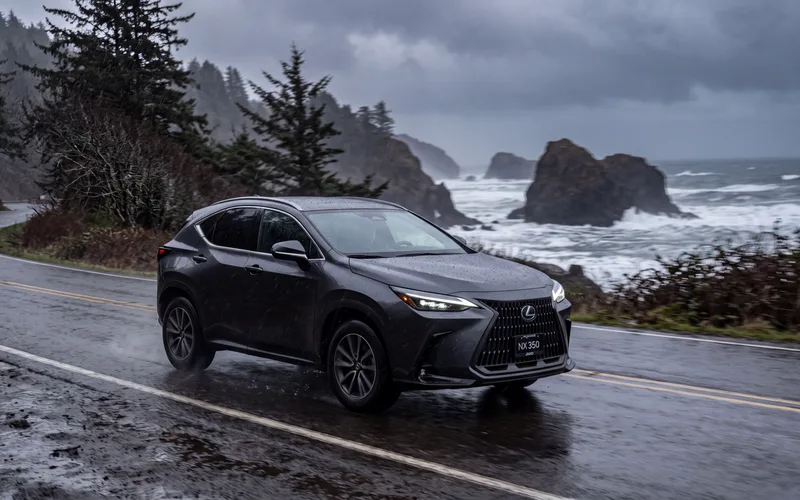 Lexus NXCompact Luxury SUVBetter at: Efficiency
Hybrid and plug-in versions turn the RDX's worst number — 23 MPG on premium — into roughly 39 MPG on regular, with a real touchscreen and stronger resale.
Compare 2.69C+
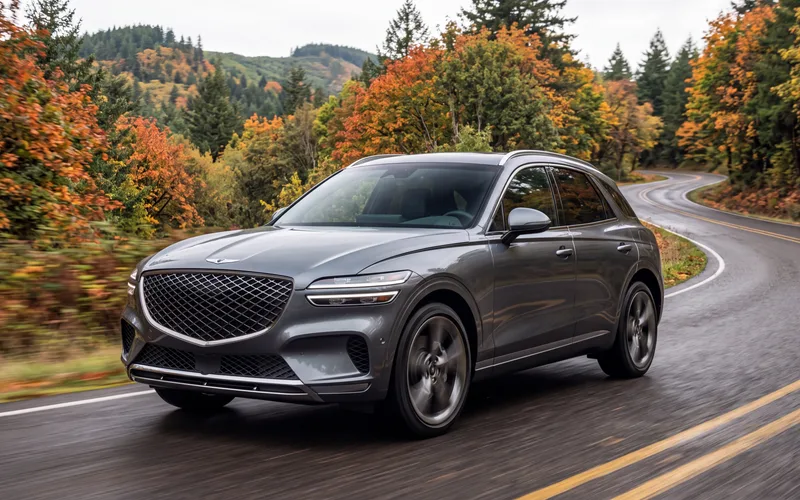 Genesis GV70Compact Luxury SUVBetter at: Interior & warranty
A newer, more luxurious cabin, an optional V6, a head-up display, and a 10-year/100,000-mile powertrain warranty against Acura's 6/70,000.
Compare 2.81B-
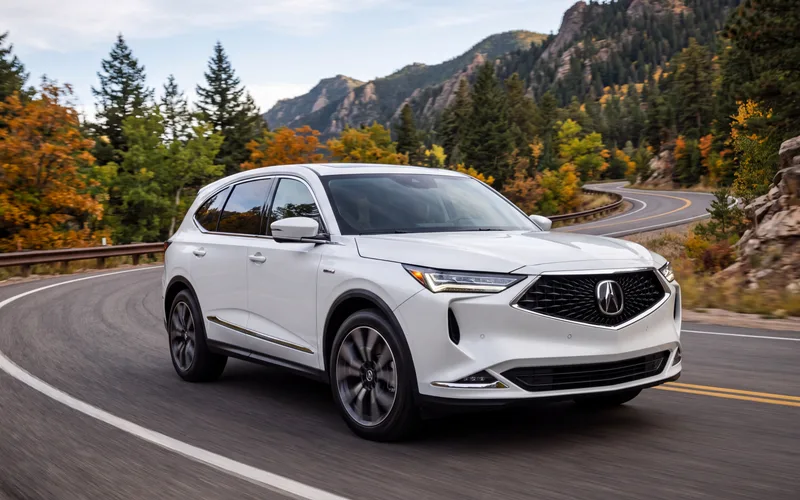 Acura MDXMid-Size Luxury SUVBetter at: Space & infotainment
Same SH-AWD character with a third row, a V6, and the 12.3-inch touchscreen that finally replaced the touchpad the RDX still uses.
CompareHow it's evolved
3 scored model years · 2024–2026
Subject scores by year
Hover or tap a score to see what moved it versus the year before. A corner mark flags a big swing.
| Year | Performance | Efficiency | Safety | Space | Cost | Reliability | Tech | Use-case | Driving | Value |
|---|---|---|---|---|---|---|---|---|---|---|
| 2026 | 40 | 41 | 80 | 53 | 52 | 77 | 61 | 63 | 71 | 72 |
| 2025 | 40 | 37 | 76 | 52 | 58 | 75 | 62 | 59 | 70 | 70 |
| 2024 | 41 | 36 | 79 | 51 | 58 | 79 | 63 | 61 | 70 | 72 |
Compare two years
Best fit & conditions
Higher scores mean a better fit for that use case. Learn more about use-case fit →
Subject profile
Detailed scoring by subject
1Performance & PowertrainOne of the RDX's weakest categories.0.64F
One engine across the entire 2025 lineup — the 2.0L DOHC VTEC Turbo I4 — so every trim from base RDX to A-Spec Advance makes the same 272 hp; no output change in the 2025 refresh.
Peak torque is flat across a wide 1,600–4,500 rpm plateau, which is why reviewers describe the RDX as feeling stronger in everyday driving than its 272 hp suggests.
Instrumented results for the SH-AWD 2.0T cluster in the low-to-mid 6-second range: Car and Driver recorded 6.2 s for an A-Spec, MotorTrend 6.7 s, and Acura dealer spec sheets quote 6.7 s; 6.5 s is the representative figure for the volume trim.
The 2.0T pulls hard once boost arrives and is quiet at cruise, but reviewers consistently flag off-boost hesitation from a standstill and a coarse, buzzy note when extended — competent rather than luxury-grade against BMW's B48 or Audi's EA888.
The 10-speed automatic is smooth under light throttle, holds gears sensibly in Sport, and comes with paddle shifters, but reviews repeatedly cite gear-hunting in the tall upper ratios and a lazy response to sudden kickdown requests.
Acura rates the RDX at 1,500 lbs when properly equipped with the accessory trailer hitch and ball — enough for a small utility trailer or two jet skis, and low even by compact-luxury-SUV standards where 3,500–4,400 lbs is common.
For 2025 Acura's Super Handling All-Wheel Drive is standard on every trim — front-wheel drive was dropped after 2023 — and it is a genuinely sophisticated torque-vectoring system that can route up to 70% of torque rearward and 100% of that to either rear wheel. Held below the top band only because there is no low range or terrain-mode suite.
8.2 in of ground clearance is respectable for the class and SH-AWD plus Snow mode make it sure-footed on unplowed roads, but there is no off-road trim, no skid plates, no locker, no low range and no terrain modes beyond Snow — this is a pavement crossover with foul-weather traction.
A single 2.0T gas engine and one transmission across all five trims — no hybrid, PHEV or EV RDX exists. Direct rivals all offer at least one electrified choice: Lexus NX (gas/hybrid/PHEV), Volvo XC60 (mild-hybrid/PHEV), Audi Q5 (gas/PHEV), BMW X3 (gas/PHEV).
2Efficiency & RangeThe RDX's lowest-graded category.0.42F
Every 2025 RDX is SH-AWD with the 2.0T and 10-speed auto, so combined economy is 23 MPG across the range — the A-Spec's wider 20-in tires cost 1 MPG on the highway but the combined figure rounds to the same number.
21 MPG city for the turbo-four with idle stop and standard SH-AWD; there is no FWD variant for 2025 to soften the figure, so this is the number every buyer gets.
27 MPG highway on the 19-in-wheel trims; the A-Spec and A-Spec Advance drop to 26 MPG on 255/45R20 tires. The 2.0T has no cylinder deactivation, so highway economy is mid-pack for the segment.
A 17.1-gallon tank at the EPA's 23 MPG combined yields just under 400 miles — adequate but short of the 450+ mile figures the segment's hybrids and larger-tanked rivals post.
The EPA's own annual-cost estimate is $3,300 — high for a compact SUV because 23 MPG combined is paired with premium-grade pricing. This is the figure the premium-fuel recommendation actually costs an owner.
91-octane premium is recommended rather than required — the owner's manual permits 87 octane with reduced performance and possible knock — so the RDX sits in the middle band: no charging or special fuel needs, but the recommended grade carries a real per-gallon penalty reflected in the $3,300/yr EPA cost.
3SafetyThe RDX's best-graded category.3.18B
NHTSA rates the 2025 RDX 5 stars overall — the same result the third-generation car has carried since 2019, and the 2025 refresh was styling, console and infotainment only, leaving the ACE body structure untouched.
Every IIHS crash test the RDX has actually been run in returns Good — small overlap front driver and passenger, and the updated side test — but it has never been run in the updated moderate overlap front (rear-occupant) test, which is a hard requirement for a 2025 award. The RDX consequently earned no 2025 Top Safety Pick; the badge on its IIHS page is the 2024 award.
AcuraWatch is standard on all five 2025 trims and covers the entire checklist — AEB, adaptive cruise, lane keeping, blind spot and rear cross-traffic — with nothing paywalled to an upper trim. That is unusually complete for the segment, where BMW and Audi still charge for adaptive cruise.
IIHS rates the RDX's Collision Mitigation Braking System only Acceptable in pedestrian front crash prevention, and the test detail shows why: it is strong in daylight and on high beams but repeatedly fails to slow at all for a parallel adult at night on low beams — the scenario that matters most.
Blind Spot Information and Rear Cross Traffic Monitor are standard on every 2025 trim rather than bundled into a package, which is the segment's main differentiator — but both are warning-only, with no active steering or braking intervention and no safe-exit alert.
LKAS provides genuine lane centering at highway speed and Traffic Jam Assist adds low-speed centering below 45 mph, and reviewers describe it as fatigue-reducing rather than intrusive — but it is a generation behind the smoothness of Genesis HDA 2 or Volvo Pilot Assist and still wanders on worn markings.
Full-speed-range adaptive cruise with Low Speed Follow is standard on the base trim — not a cost option as at BMW and Audi — brakes and resumes smoothly in traffic, and pairs with Traffic Jam Assist for coordinated steering in stop-and-go. It stops short of the top band because the ACC-plus-LKAS pairing is not a cohesive named highway-assist mode.
No hands-free highway system is offered on the 2025 RDX at any trim or price — Acura sells nothing comparable to Super Cruise, BlueCruise or BMW's Highway Assistant, and AcuraWatch including Traffic Jam Assist requires hands on the wheel throughout.
IIHS rates the JewelEye LED projector headlights Good on all trims — no trim-dependent downgrade, which is the usual failure mode in this segment. Held below the top of the band because they are not curve-adaptive and the low beams alone were inadequate on the gradual left curve, with the Good rating leaning on high-beam assist credit.
The RDX's high beltline, fastback roofline and thick rear pillars pinch over-the-shoulder and rear-quarter sightlines, and the camera compensation is incomplete on the volume trim: a multi-view rear camera is standard, but the surround-view system is restricted to the two Advance trims and reviewers criticize its stitching.
IIHS rates the RDX's child-seat anchors Good with credit for extra LATCH positions — anchors are not buried in the seat bight, need little force, and the tethers are easy to find. Two complete positions plus a borrowable center means two seats fit easily; three across is tight in a compact two-row cabin, which is what keeps it off the very top of the band.
4Space & ComfortOne of the RDX's weakest categories.1.49D
The RDX is a strictly two-row, five-seat compact luxury SUV — every 2025 trim from base through A-Spec Advance seats five, with no third-row or captain's-chair option.
Acura publishes 40.0 in of front headroom, and because the panoramic roof is standard on every 2025 trim this is the as-delivered figure rather than a no-sunroof best case.
42.0 in of front legroom on a 108.3-in wheelbase — mid-pack for the compact luxury SUV set and enough for tall drivers, helped by a tilt-and-telescopic column standard on every trim.
38.0 in of second-row headroom is adequate for adults up to roughly six feet, though the RDX's fastback roofline and the standard panoramic glass cost it the airiness of a boxier rival.
38.0 in of rear legroom is a genuine strength in the compact luxury class — ahead of the Audi Q5 and Mercedes GLC — and reviewers single out the stadium-style second row as generous for the segment.
There is no third row in the RDX at any trim or price — buyers who need seven seats are pushed up to the MDX. Scored in the bottom band because the item measures a feature this vehicle simply does not have.
29.5 cu ft behind the second row by the plain SAE J1100 measure — near the top of the compact luxury class, ahead of the Q5 (25.8) and GLC (21.9) — and 31.1 cu ft once the deep underfloor compartment is counted. The band, which spans compact through full-size SUVs, is what keeps the normalized score low.
Acura publishes two figures for cargo behind the folded first row — 58.9 cu ft by plain SAE J1100 and 79.8 cu ft including the underfloor bin — and states in its own footnote that the larger number 'compares more accurately with most competitive measurements.' The 79.8 figure is used here per that guidance and is what Acura.com and Edmunds list; Car and Driver quotes the 58.9 figure instead.
Storage is the 2025 refresh's single most substantive interior change: the center console was redesigned with more capacity, larger cupholders and easier access to the wireless charging pad, on top of an already-deep underfloor cargo bin and generous door pockets. That is a class strength rather than a token update.
Every 2025 RDX gets 12-way power front sport seats with power lumbar and heating as standard; A-Spec and Advance add ventilation, and the Advance packages move to 16-way seats with power thigh extension and power bolsters. Reviewers rate them supportive over long stints, though the sport-oriented cushions are firm and the rear bench is flat by comparison.
Amplitude-reactive dampers are standard and the Advance packages add a full Adaptive Damper System, giving the RDX composed body control with better compliance than its sporting reputation implies — reviewers report it handling 'winter-ravaged roads' well. Held back because the A-Spec trims' 255/45R20 tires reintroduce a firm edge over sharp impacts, and true adaptive damping is restricted to the two priciest trims.
An acoustic glass windshield and Active Sound Control are standard on every trim, with acoustic front side glass added from the Technology package and acoustic rear side glass on the Advance packages. Highway refinement is a segment strength, but the layered rollout means base buyers get the least glass treatment and the 20-in A-Spec tires add road roar on coarse pavement.
Heated front seats, a panoramic roof and automatic climate control with humidity control are standard on all five trims, which is generous at the entry price. But the climate system is only dual-zone — not tri-zone — with no dedicated rear controls, and three features buyers in this class expect (heated steering wheel, heated rear outboard seats, key-fob remote engine start) are locked to the Advance and A-Spec Advance trims at the very top of the range.
5Cost of OwnershipMid-pack among this car's ten categories.1.93C-
MY2025 RDX opens at $44,700 plus $1,350 destination. Notably, SH-AWD became standard across the entire 2025 lineup — front-wheel drive was dropped — so the entry price now buys all-wheel drive that rivals still charge $2,000–2,600 extra for.
The Technology Package is the volume configuration and the one reviewers name as the value sweet spot — it adds real leather, ELS premium audio, wireless charging and front/rear parking sensors over the base car. With SH-AWD now standard on every 2025 trim there is no drivetrain reason to step further up the range.
The RDX is unusually cheap to keep for a luxury SUV — it is mechanically a Honda CR-V relative with a long-proven 2.0T and 10-speed automatic, and both independent estimators put it well under the compact-luxury average. The figure here takes CarEdge's $3,252 projection and adds roughly $950 for tires and brake wear, which CarEdge's line item excludes but Edmunds-style TCO includes.
The RDX holds value better than its compact-luxury class average on the strength of Acura reliability and Honda mechanicals. The two major estimators bracket the figure — iSeeCars measures 56.4% from actual five-year-old resale transactions, CarEdge projects 62.3% — and 57% sits near the empirically grounded end of that range.
Acura's new-vehicle limited warranty runs 4 years / 50,000 miles, including the 12-volt battery — mid-pack for a luxury brand, matching BMW/Mercedes/Audi on years and beating them on mileage, but trailing Genesis and Jaguar at 5 years / 60,000 miles.
Powertrain coverage is 6 years / 70,000 miles — longer than most German luxury rivals but far short of the 10-year / 100,000-mile terms Hyundai, Kia and Genesis publish, and short in absolute terms against the framework band.
Acura cut complimentary maintenance for model year 2025: where MY2023–24 buyers got A1/B1 service for 2 years / 24,000 miles, the 2025 RDX includes only the first scheduled service within 12 months / 12,000 miles. Roadside assistance still runs the full 4-year / 50,000-mile warranty term, but the package now sits behind Genesis, Volvo and Jaguar and barely ahead of Lexus.
$48,650 volume-trim price minus its estimated resale value after 5 years (57% retained, or about $27,730) leaves about $20,920 in depreciation. Add the projected $4,200 in 5-year maintenance and repairs, and owning this vehicle for 5 years costs about $25,120 in total.
6Reliability & QualityOne of the RDX's strongest categories.3.07B
Signals are good but not uniform. Consumer Reports rates the 2025 RDX about average for its model year while naming it one of the two strongest Acuras in the 2025 survey, and J.D. Power scores it 81/100 ("Great"); against that, the 2025 build drew a fleet-wide electric-power-steering recall and an early-life complaint rate roughly double the segment norm, concentrated almost entirely in steering.
The two major trackers genuinely disagree about Acura, so this lands mid-pack rather than top-tier. Consumer Reports put Acura 5th of 22 brands in its 2025 rankings, ahead of Audi, BMW, Mazda, Kia and Hyundai; J.D. Power's dependability studies put Acura well below the industry average in both 2025 and 2026, driven largely by infotainment complaints on three-year-old cars rather than mechanical failures.
Only one recall has been issued against the 2025 RDX, but it is a safety-critical one that covers essentially the entire model-year production: 17,334 vehicles for loss of power-steering assist. The remedy is a software reflash rather than hardware replacement and no injuries were reported, which keeps this out of the bottom band, but 84 warranty claims before the campaign and an average failure mileage under 3,000 miles make it more than routine recall activity.
The 2.0L VTEC turbo (K20C4, 272 hp / 280 lb-ft) carries over untouched for 2025 and belongs to the K-series family shared with the Civic Si and Type R — one of the most-scrutinized modern Honda fours, with a 200,000-mile expectation and no systemic failure mode. The Honda 10-speed automatic has been in service since 2018 across the MDX/RDX/Odyssey/Passport. Known gripes are driveability-grade rather than structural: direct-injection oil dilution on short cold-climate trips and harsh cold 1-2/2-3 upshifts.
Reviewers consistently call the RDX cabin upscale and well-crafted for its roughly $46-56K window — open-pore wood and Milano leather on the upper trims, aluminum accents, broad soft-touch coverage. The 2025 refresh adds material content rather than removing it: full leather upholstery on A-Spec Advance, extra ambient lighting on the redesigned center console, and lit door speaker cones behind acid-etched grilles. It still trails top-trim X3/GLC/Macan on outright richness.
This is the RDX's strongest reliability-adjacent credential: it ranked highest in its segment in the J.D. Power 2025 U.S. Initial Quality Study, which measures owner-reported problems in the first 90 days — exactly what this item asks about. Built at Honda's East Liberty, Ohio plant, it draws no systemic complaints about panel gaps, rattles or trim alignment; the 2025 car's early problems were software (EPS calibration), not assembly.
Roughly 274 US Acura dealers give solid metropolitan coverage but noticeably thinner rural reach than mainstream Honda. Service satisfaction measures above the premium-brand average without approaching the leaders — Acura sits in the small group of premium brands scoring above par, but well behind Porsche and Lexus.
Extensive parts-sharing with the Honda mainstream lineup (K20C engine family, Honda 10-speed automatic, related platform architecture) keeps commodity parts cheap and abundant, and independent cost data puts the RDX at the top of its luxury class for repair economics. It falls short of the top band because SH-AWD hardware and Acura-specific trim price above Honda equivalents and the enthusiast aftermarket is modest.
7Technology & InfotainmentMid-pack among this car's ten categories.2.16C
The 10.2-inch HD dual-content center display is standard on all trims and is the only size offered — there is no larger screen further up the range. Crucially it is not touch-sensitive at all: input comes from the console-mounted True Touchpad Interface, so the diagonal overstates how directly usable the display is.
The True Touchpad Interface is the RDX's most consistently criticized feature: it uses absolute mapping (finger position on the pad corresponds to icon position on screen) and there is no touchscreen alternative at any trim. Reviewers call it 'hard to use and very frustrating' and 'among the worst experienced,' though the display itself is crisp, physical climate and volume controls survive, and 2025 added a wide-screen mode for phone projection. Owner reviews split — some acclimate within days — which keeps this mid-band rather than lower.
Wireless Apple CarPlay and wireless Android Auto are both standard on every 2025 trim including the base car — nothing is paywalled to an upper package, which is not true of several German rivals. The 2025 refresh added a wide-screen display mode for projection. Held just below the ceiling only because the wireless charging pad that makes untethered projection practical does not appear until the Technology package.
Natural Language Voice Recognition and Alexa Built-In are standard across the range, which is a real advantage over rivals that gate assistants behind subscriptions. But the Acura Navigation System with 3D View is not offered on the base trim at all, and the built-in maps are dated enough that most owners default to CarPlay or Android Auto — the classic 'functional but bypassed' case.
Audio is the RDX's standout technology feature. Even the base car gets a 9-speaker Acura Premium system; the Technology package brings 12-speaker ELS Studio, and A-Spec and both Advance trims get the 16-speaker ELS Studio 3D — a Panasonic/Elliot Scheiner system that reviewers routinely rank among the best factory audio at any price, let alone in a compact luxury SUV.
The RDX offers only a 7-inch color Multi-Information Display set between conventional gauge elements — a partial-digital cluster, standard on all trims but never upgradeable to the full-width configurable displays that BMW, Audi, Mercedes and Genesis all field in this class. Landing mid-band: consistent across the range, but a generation behind the segment.
Acura's over-the-air capability on the RDX is limited to infotainment, navigation-map and telematics-control-unit software — the same scope used to push cellular-network migrations to earlier third-generation cars. There is no whole-vehicle OTA that adds features or updates powertrain, chassis or ADAS software the way Tesla, Rivian, Ford and GM now do, so this sits at the top of the 'infotainment/maps only' band.
AcuraLink Connected Services is standard hardware on every trim and the app covers the core set — remote start/stop, remote lock/unlock, find-my-car, geofence and security alerts, plus an Alexa skill. Two things hold it mid-band: the useful remote tier is subscription-gated after the trial, and there is no phone-as-key/digital key of the kind BMW, Genesis and Hyundai now ship. Key-fob remote engine start is itself restricted to the Advance trims.
Port provision is competent but thin at the entry point: the base car gets one 3.0A USB-C plus one 2.5A USB-A up front and a single 12-volt outlet, with the two rear-seat 3.0A USB-C ports, the wireless charging pad and (on Advance only) a cargo-area 12-volt outlet all arriving further up the range. No household AC outlet is offered at any trim. The 2025 console redesign did at least make the wireless pad easier to reach.
Keyless Access with Acura Personalized Settings, pushbutton ignition, Walk Away Auto Lock and a remote-linked power tailgate are all standard, which covers the everyday convenience set well. It stops short of the top band because the base car's Walk Away Auto Lock only covers the front doors and tailgate, hands-free (kick-sensor) tailgate access and key-fob remote start are Advance-only, and there is no phone-as-key.
A multi-view rear camera with dynamic guidelines is standard on every trim, and the Technology package adds eight parking sensors (four front, four rear) plus a rear camera washer. The surround-view camera, however, is confined to the two Advance trims — a real gap given the RDX's thick rear pillars and pinched over-the-shoulder sightlines — and no automated parking assist is offered at any price.
Acura fits a large, well-regarded 10.5-inch head-up display — but only on the Advance and A-Spec Advance packages at the very top of the 2025 range, so the volume Technology and A-Spec buyers cannot get one at any cost. That is textbook 'HUD limited to top trims,' with the generous screen size lifting it above the middle of that band.
8Use-Case FitMid-pack among this car's ten categories.1.97C-
IIHS rates the RDX's LATCH hardware Good+ — anchors sit clear of the seat bight, need little force and the tethers are easy to find — and the wide rear door openings, easy fold-down 60/40 seatbacks and 29.5 cu ft of cargo swallow a stroller without folding seats. Two complete LATCH positions plus a borrowable center works for two seats; three across is a squeeze, and there is no third row to fall back on as a family grows.
The RDX's core family case is strong: NHTSA 5 stars overall, and the full AcuraWatch suite — AEB/CMBS, full-speed adaptive cruise with low-speed follow, lane keeping, road departure mitigation, blind spot and rear cross-traffic — is standard on the base trim rather than bundled into a package the way BMW and Audi still do. What keeps it out of the top band is real: IIHS rates the pedestrian front crash prevention only Acceptable (it repeatedly fails to slow for an adult at night on low beams), the car has never been run in the updated moderate-overlap rear-occupant test, and no rear-seat-reminder alert is listed.
A quiet cabin, 38.0 in of rear legroom on a stadium-style bench, a standard panoramic roof and 29.5 cu ft of cargo with everyone aboard make the RDX a comfortable four-up tourer. Rear amenities are where it thins out: climate control is dual-zone with no rear controls, the two rear USB-C ports require the Technology package, heated rear seats are Advance-only, and there is no rear-seat entertainment or window shade offering.
The 2.0T's 280 lb-ft plateau from 1,600 rpm makes the RDX effortless in traffic, and standard full-speed adaptive cruise with low-speed follow plus Traffic Jam Assist genuinely reduce commute fatigue. Two frictions keep it from the top band: reviewers consistently flag off-boost hesitation from a standstill and gear-hunting in the 10-speed's tall upper ratios, and the touchpad interface makes any on-the-move infotainment task harder than a touchscreen would.
This is the RDX's weakest commuting attribute. Standard SH-AWD across the whole 2025 range means there is no thrifty front-drive version to fall back on, so every buyer gets 21/27/23 MPG, and Acura recommends 91-octane premium — the EPA puts annual fuel cost at about $3,300. The one offset is genuinely cheap consumables and service for a luxury badge, since the car is mechanically Honda underneath, which lifts it above the bottom band.
At 187.4 in long and 74.8 in wide with a 38.9 ft curb-to-curb turning circle, the RDX is average rather than nimble for a compact SUV. Camera support is uneven across the range: a multi-view rear camera is standard, but the eight parking sensors need the Technology package and the surround-view camera is Advance-only — a meaningful gap because the fastback roofline and thick rear pillars already pinch over-the-shoulder visibility.
The RDX is not a work vehicle in any meaningful sense: 1,500 lbs of towing with the accessory hitch is a small utility trailer or a pair of jet skis, well under the 3,500–4,400 lbs common in the segment, and there is no bed, no payload rating published for work use and no heavy-duty variant. It is a unibody luxury crossover carrying a car-derived 2.0T.
The mechanical package is a genuine strength — the 2.0L VTEC Turbo and 10-speed automatic are long-proven Honda hardware with a 100,000-mile no-scheduled-tune-up interval and a good reliability record, which is why the RDX is cheap to keep. But everything above the driveline is luxury-oriented: leatherette and Milano leather trim, no rubber-floor or vinyl work interior, and no fleet or commercial presence to draw a durability reputation from.
Work-oriented provisions are minimal: cargo tie-downs and a 12-volt outlet in the cargo area (Advance trims only), plus a dealer-accessory hitch and roof rails. There is no onboard AC power or inverter at any trim, no washable interior surfaces and no upfit ecosystem — the accessory catalog is aimed at bike and ski carriers, not trades.
The RDX is a good mile-eater: supportive 12-way (16-way on Advance) heated front seats, acoustic windshield and Active Sound Control for a quiet cruise, and standard full-speed adaptive cruise plus lane keeping to take the edge off long highway stints. It falls short of the top band on endurance — a 17.1-gallon tank at 23 MPG combined gives roughly 390 miles of range on premium fuel, and there is no hands-free highway system at any trim.
For 2025 Acura made Super Handling All-Wheel Drive standard on every trim — front-drive was dropped — and SH-AWD's torque vectoring plus a Snow mode in the Integrated Dynamics System makes the RDX genuinely sure-footed on gravel and unplowed roads, with 8.2 in of ground clearance. But it stops there: no low range, no locker, no terrain modes beyond Snow, street all-season tires, and a 1,500 lb tow rating that rules out most trailered toys.
Cargo flexibility is one of the RDX's clearest wins over its German rivals: easy fold-down 60/40 seatbacks open up 79.8 cu ft (58.9 by plain SAE), the deep underfloor bin hides valuables and adds 1.6 cu ft behind the second row, and the power tailgate is standard with hands-free access on Advance. Accessory roof rails and a hitch cover bikes and boxes. Short of the very top only because the seat fold is 60/40 rather than 40/20/40 and there is no front trunk or slide/recline second row.
9Driving ExperienceOne of the RDX's strongest categories.2.77B-
Handling is the RDX's signature strength. Super Handling All-Wheel Drive is standard on every 2025 trim and genuinely torque-vectors — up to 70% of torque rearward and all of that to a single rear wheel — and it works through a multi-link rear end, thick 30/23 mm anti-roll bars and Agile Handling Assist brake vectoring. Reviewers describe it as feeling 'light on its toes' and driving 'more like a grownup hot hatch than a compact crossover,' with several rating it the best-handling vehicle in the class. Held below the ceiling because the 4,014 lb curb weight and 57/43 nose-heavy balance are still detectable at the limit.
A dual-pinion variable-ratio electric rack geared at a quick 12.0:1 gives the RDX unusually direct, accurate steering for the class, and reviewers praise the weighting in Normal and Sport. It misses the top band for a specific and repeatedly cited fault: in Comfort mode the assistance goes too light and the modest feedback the system does offer washes out.
The RDX brakes from a well-sized set of four-wheel discs — 12.4 in ventilated front, 12.2 in solid rear — with Brake Assist, EBD and an electric parking brake with automatic hold, and Agile Handling Assist adds corner-braking stability. Pedal feel is firm and consistent in reviews with no fade complaints, but there are no published instrumented stops for the third-generation car that separate it from the class, so it sits solidly above average rather than at the top.
Once on boost the 2.0T is strong and linear — 280 lb-ft holds flat from 1,600 to 4,500 rpm and reviewers call the acceleration 'swift and effortless' — but the calibration has two well-documented soft spots: a hesitation off boost from a standstill, and a 10-speed automatic that hunts among its tall upper ratios and is slow to answer a sudden kickdown. Idle Stop is standard and restarts are unremarkable rather than seamless.
At cruise the 2.0T is well isolated and Active Sound Control is standard, so the RDX is a quiet highway companion. Under extension, though, the turbo four turns coarse and buzzy — reviewers consistently note it lacks the sweetness of BMW's B48 or Audi's EA888, and no amount of piped-in sound enhancement disguises a four-cylinder in a car priced against sixes.
38.9 ft curb-to-curb is mid-pack for a compact SUV — the quick 12.0:1 steering ratio means fewer turns lock-to-lock, but the 108.3-in wheelbase keeps the actual circle from being tight in a parking structure.
Adjustability is good — 12-way power seats with power lumbar standard, 16-way with power thigh extension and bolsters on Advance, plus a standard tilt-and-telescopic column — and Acura kept physical controls for climate and volume. Two things pull it down: the fastback roofline, high beltline and thick rear pillars pinch over-the-shoulder sightlines, and the console-mounted True Touchpad forces the driver's hand and eyes away from the road for tasks a touchscreen or rotary controller handles more directly.
The RDX is one of the few compact luxury SUVs enthusiasts actually recommend for how it drives: SH-AWD rotates the car on throttle, Sport mode sharpens steering, throttle and shift logic, paddle shifters are standard, and reviewers reach for hot-hatch comparisons. It is not a top-band score because the powertrain's soundtrack and off-boost lag blunt the experience the chassis sets up.
10Value & Market PositionGrades above the middle of the scale.2.77B-
The 2025 RDX made SH-AWD torque-vectoring all-wheel drive standard on every trim — a $2,000–2,600 option on most rivals — on top of an entry car that already includes the full AcuraWatch driver-assist suite, panoramic moonroof, heated power sport seats, 19-inch alloys, LED lighting and wireless CarPlay/Android Auto. Base BMW X3, Audi Q5 and Mercedes GLC all paywall driver-assist content the RDX gives away at $46,050.
272 hp, standard torque-vectoring AWD and a full ADAS suite for $46k is among the strongest content-per-dollar propositions in compact luxury, and the RDX undercuts a comparably equipped X3, Q5, GLC or GV70 by several thousand dollars. What holds it short of a top score is what the money does not buy: an eight-year-old platform, a single 2.0T powertrain with no electrified option, and a non-touch 10.2-inch display operated by a widely criticized touchpad.
Five well-spaced package levels span $46,050 to $55,800, but underneath them the 2025 RDX is a single configuration: one 2.0T engine, one 10-speed automatic, and — new for 2025 — one drivetrain, since dropping FWD removed the last configuration choice buyers had. No hybrid, PHEV or EV variant and no Type S flagship, against Lexus NX (350/350h/450h+), Mercedes GLC (300/PHEV), Volvo XC60 (mild-hybrid/PHEV) and Genesis GV70 (2.5T/3.5T/Electrified).
The RDX remains Acura's volume leader but is on a clear downward trajectory — 35,824 US units in 2024 and 32,945 in 2025, an 8% year-over-year decline and roughly half its 2018 peak. That places it mid-to-lower-pack in a segment where the Lexus NX, BMW X3, Audi Q5 and Mercedes GLC each move well over 50,000 units, and reflects an aging generation nearing replacement.
Acura is a credible second-tier luxury brand — respected for engineering, quality and value with a loyal repeat-buyer base — but without the aspirational halo of BMW, Mercedes, Audi or Porsche, or the prestige Lexus carries. Roughly level with Volvo and Genesis, ahead of Lincoln and Infiniti; the brand supports resale without lifting it.
Buyers do well here: Acura Financial Services posted subvented 4.99% APR for 60 months and leases from roughly $449/month on the 2025 RDX, layered with an Allegiance loyalty offer worth up to $2,500, and dealers negotiate meaningfully off MSRP. Softening sales and a known replacement coming make the RDX considerably easier to buy under sticker than a Lexus NX or Genesis GV70.
2025 is the seventh model year of a third generation launched for MY2019, and the changes are cosmetic: a frameless Diamond Pentagon grille, a redesigned center console, a wide-screen infotainment mode and Alexa Built-in — Edmunds headlined its first look "A New Bumper and Not Much Else." The 2022 mid-cycle refresh was the substantive one, and the generation is in fact retired after MY2026, so 2025 buyers were shopping a car within two years of replacement.
The 2025 RDX collected two genuine credentials — highest-ranked Compact Premium SUV in the J.D. Power 2025 Initial Quality Study and an IIHS Top Safety Pick — and reviewers consistently recommend it as the segment's sporty value pick, more engaging than a Lexus NX and cheaper than an X3. It still is not a comparison-test winner: the touchpad infotainment, the dated platform and 0–60 in 7.1 seconds (a second behind a GLC 300) keep it off the podium, and it has no 10Best or NACTOY hardware.