

The verdict
A struggling subcompact luxury suv, strong on technology and held back by ownership.
The 2026 Alfa Romeo Tonale is the enthusiast pick of the subcompact luxury SUV set — a 285 hp PHEV with standard Q4 all-wheel drive, 6.0-second 0-60 pace, sharp Italian steering, and a genuinely playful chassis that outshines every German rival for driver engagement. It also lands well-equipped for the money, with a full ADAS suite, wireless CarPlay/Android Auto, and a 12.3-inch digital cluster standard. But you pay for that character with the segment's tightest back seat (30.9 in of rear legroom), class-trailing 22.9 cu ft of cargo, Consumer Reports' worst-in-class predicted reliability, and resale that iSeeCars pegs among the worst of any brand — this is a heart-over-head buy, not a rational one.
Jump to scoresStrengths
- Genuinely fun to drive — the enthusiast pick of the segment
- Well-equipped for the money with strong standard tech
- Standard AWD and PHEV commuting efficiency
What holds it back
- Class-trailing rear seat and cargo hold
- Alarming resale and maintenance cost outlook
- Consumer Reports' worst-in-class predicted reliability
Top alternatives
Cars shoppers cross-shop with the Alfa Romeo Tonale 2.65C+
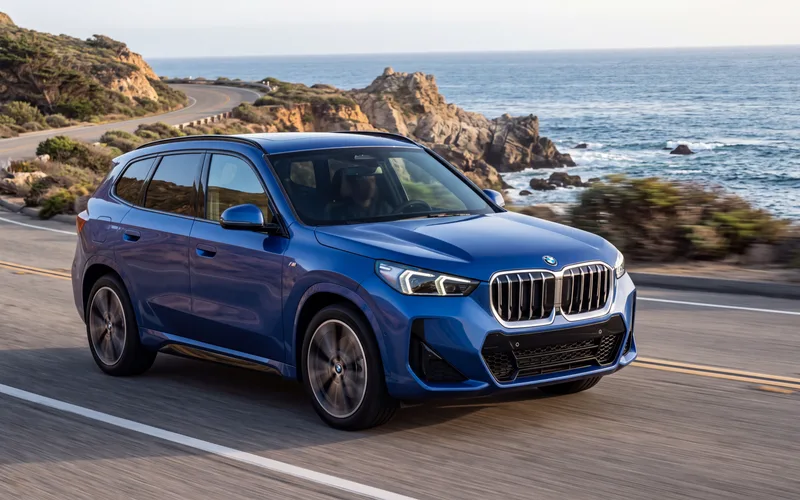 BMW X1Subcompact Luxury SUV
The X1 xDrive28i (and plug-in xDrive30e) beat the Tonale on refinement, rear-seat space, cargo (25.7 cu ft), and long-term reliability, and offer a head-up display the Alfa can't match.
Compare 2.43C+
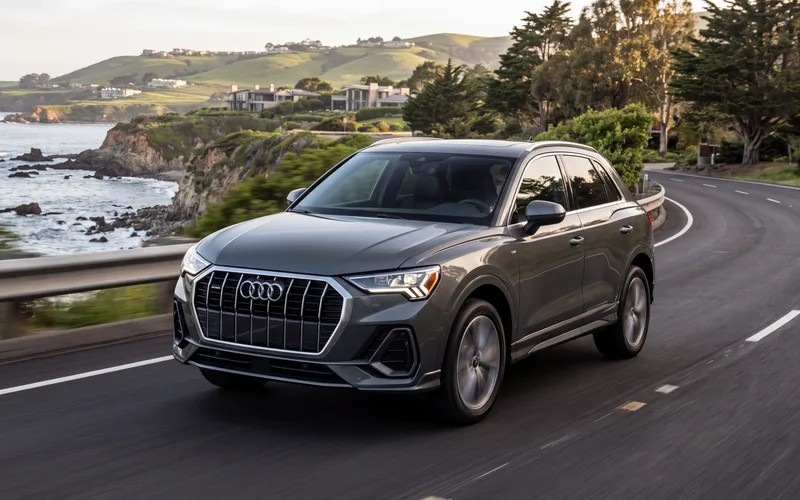 Audi Q3Subcompact Luxury SUV
The Q3 is more polished inside, has a roomier back seat, and holds resale far better than the Tonale, but it's also gas-only, softer to drive, and increasingly showing its age against newer rivals.
Compare 2.19C
2.19C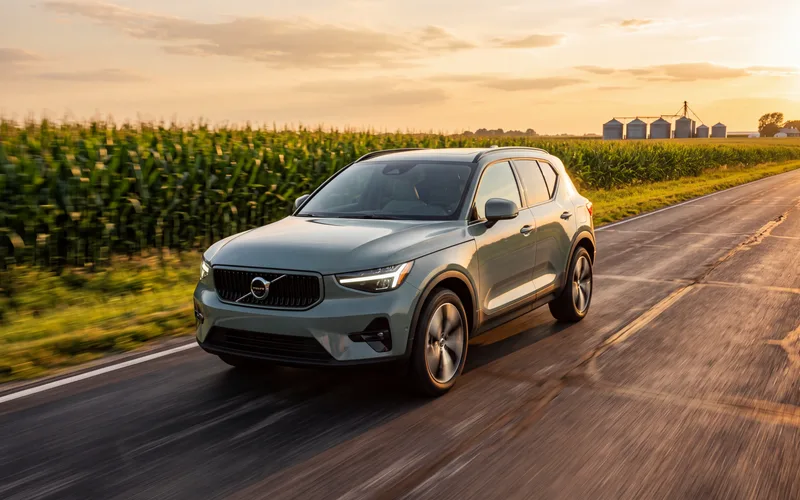 Volvo XC40Subcompact Luxury SUV
The XC40 (and electric EX40) counter with a roomier cabin, Volvo's stellar safety reputation and TSP awards, better predicted reliability, and complimentary maintenance visits.
CompareSubject scores by year
Hover or tap a score to see what moved it versus the year before. A corner mark flags a big swing.
| Year | Performance | Efficiency | Safety | Space | Cost | Reliability | Tech | Use-case | Driving | Value |
|---|---|---|---|---|---|---|---|---|---|---|
| 2026 | 43 | 41 | 63 | 36 | 34 | 43 | 69 | 51 | 68 | 57 |
| 2025 | 44 | 42 | 52 | 44 | 53 | 53 | 71 | 60 | 73 | 72 |
| 2024 | 45 | 37 | 67 | 41 | 45 | 44 | 67 | 60 | 69 | 72 |
Compare two years
Best fit & conditions
Higher scores mean a better fit for that use case. Learn more about use-case fit →
Subject profile
Academic Probation · NHTSA safety recalls
Aug 6, 2026Seat belts: front: retractorThe rear outboard seat belts may become twisted and fail to retract properly.
Defect
Chrysler (FCA US, LLC) is recalling certain 2023-2025 Dodge Hornet and 2023-2026 Alfa Romeo Tonale vehicles. The rear outboard seat belts may become twisted and fail to retract properly.
Risk
A seat belt that does not retract may fail to restrain properly an occupant as intended, increasing the risk of injury.
Remedy
Dealers will replace the retractors and pillar trim, as necessary, free of charge. Interim notification letters, notifying owners of the safety risk, were mailed September 17, 2026. A second notice will be sent once the final remedy is available. Owners may contact Chrysler customer service at 800-853-1403. Chrysler's number for this recall is 84D. Vehicle Identification Numbers (VINs) involved in this recall became searchable on NHTSA.gov on August 15, 2026.
NHTSA campaign 26V510000 ↗Manufacturer no. 84D48,777 vehicles potentially affected (all models in the campaign)Filed by Chrysler (FCA US, LLC)Filed as TONALE
7 recalls on other model years of the Tonale (2024–2025)
Dec 9, 2025Service brakes, hydraulic: pedals and linkagesThe brake pedal may collapse and cause a loss of brake function.
Defect
Chrysler (FCA US, LLC) is recalling certain 2024 Dodge Hornet and Alfa Romeo Tonale Plug-In Hybrid Electric (PHEV) vehicles. The brake pedal may collapse and cause a loss of brake function.
Risk
A loss of brake function increases the risk of a crash.
Remedy
Dealers will reinforce the brake pedal arm, free of charge. Owner notification letters were mailed January 13, 2026. Owners may contact FCA Customer Service at 1-800-853-1403. FCA's number for this recall is D0C. Vehicle Identification Numbers (VINs) involved in this recall will be searchable on NHTSA.gov beginning December 16, 2025. This recall is an expansion of previous NHTSA recall number 24V752.
NHTSA campaign 25V846000 ↗Manufacturer no. D0C5,974 vehicles potentially affected (all models in the campaign)Owners notified Jan 13, 2026Filed by Chrysler (FCA US, LLC)Filed as TONALE PHEVApr 15, 2025Back over prevention: sensing system: cameraThe display module may not show the rearview camera image. As such, these vehicles fail to comply with the requirements of Federal Motor Vehicle Safety Standard (FMVSS) number 111, "Rear Visibility."
Defect
Chrysler (FCA US, LLC) is recalling certain 2023-2025 Alfa Romeo Tonale and Dodge Hornet vehicles. The display module may not show the rearview camera image. As such, these vehicles fail to comply with the requirements of Federal Motor Vehicle Safety Standard (FMVSS) number 111, "Rear Visibility."
Risk
A rearview image that does not display reduces the driver's view of what is behind the vehicle, increasing the risk of a crash.
Remedy
Dealers will update the software or replace the display as necessary free of charge. Owner notification letters were mailed beginning May 13, 2025. Owners may contact Chrysler customer service at 800-853-1403. Chrysler's numbers for this recall are 13C and 38C.
NHTSA campaign 25V246000 ↗Manufacturer no. 13C, 38C48,527 vehicles potentially affected (all models in the campaign)Owners notified May 13, 2025Filed by Chrysler (FCA US, LLC)Filed as TONALE, TONALE PHEVOct 9, 2024Service brakes, hydraulic: pedals and linkagesThe brake pedal may collapse and cause a loss of brake function.
Defect
Chrysler (FCA US, LLC) is recalling certain 2024-2025 Dodge Hornet and Alfa Romeo Tonale vehicles. The brake pedal may collapse and cause a loss of brake function.
Risk
A loss of brake function increases the risk of a crash.
Remedy
Dealers will reinforce the brake pedal arm, free of charge. Owner notification letters were mailed October 17, 2024. Owners may contact FCA Customer Service at 1-800-853-1403. FCA's number for this recall is B7B.
NHTSA campaign 24V752000 ↗Manufacturer no. B7B21,069 vehicles potentially affected (all models in the campaign)Owners notified Oct 17, 2024Filed by Chrysler (FCA US, LLC)Filed as TONALE, TONALE PHEVMar 19, 2024Equipment: other: labelsThe manufacturer label is missing the tire rim and tire size information. As such, these vehicles fail to comply with the requirements of Federal Motor Vehicle Safety Standard number 110, "Tire Selection and Rims."
Defect
Chrysler (FCA US, LLC) is recalling certain 2024 Dodge Hornet and Alfa Romeo Tonale vehicles. The manufacturer label is missing the tire rim and tire size information. As such, these vehicles fail to comply with the requirements of Federal Motor Vehicle Safety Standard number 110, "Tire Selection and Rims."
Risk
Missing rim and tire size information could lead to an incorrect wheel being installed, increasing the risk of a crash.
Remedy
Dealers will apply a corrected label, free of charge. Owner notification letters were mailed April 4, 2024. Owners may contact FCA customer service at 1-800-853-1403. FCA's number for this recall is 32B.
NHTSA campaign 24V209000 ↗Manufacturer no. 32B1,201 vehicles potentially affected (all models in the campaign)Owners notified Apr 4, 2024Filed by Chrysler (FCA US, LLC) (Stellantis)Filed as TONALE PHEVMar 5, 2024Equipment: other: labelsThe maximum vehicle capacity weight value on the tire placard label is incorrect. As such, these vehicles fail to comply with the requirements of Federal Motor Vehicle Safety Standard number 110, "Tire Selection and Rims."
Defect
Chrysler (FCA US, LLC) is recalling certain 2023-2024 Dodge Hornet and Alfa Romeo Tonale vehicles. The maximum vehicle capacity weight value on the tire placard label is incorrect. As such, these vehicles fail to comply with the requirements of Federal Motor Vehicle Safety Standard number 110, "Tire Selection and Rims."
Risk
A vehicle with an incorrect maximum capacity weight value may be overloaded, which can increase the risk of a crash.
Remedy
Dealers will add an overlay label to the tire placard information, free of charge. Owner notification letters were mailed March 28, 2024. Owners may contact FCA US, LLC customer service at 1-800-853-1403. FCA US, LLC's number for this recall is 28B.
NHTSA campaign 24V175000 ↗Manufacturer no. 28B36,094 vehicles potentially affected (all models in the campaign)Owners notified Mar 28, 2024Filed by Chrysler (FCA US, LLC) (Stellantis)Filed as TONALE PHEVOct 17, 2023Back over prevention: warnings: external/pedestrian alertThe pedestrian alert siren may be missing or disconnected and fail to alert pedestrians when the vehicle is in reverse. As such, these vehicles fail to comply with the requirements of Federal Motor Vehicle Safety Standard number 141, "Minimum Sound Requirements for Hybrid and Electric Vehicles."
Defect
Chrysler (FCA US, LLC) is recalling certain 2023-2024 Dodge Hornet and Alfa Romeo Tonale Plug-In Hybrid vehicles. The pedestrian alert siren may be missing or disconnected and fail to alert pedestrians when the vehicle is in reverse. As such, these vehicles fail to comply with the requirements of Federal Motor Vehicle Safety Standard number 141, "Minimum Sound Requirements for Hybrid and Electric Vehicles."
Risk
Failure to alert pedestrians when backing up increases the risk of injury.
Remedy
Dealers will inspect the rear pedestrian siren connection and, if necessary, secure and/or replace the connector or siren, free of charge. Owner notification letters were mailed November 14, 2023. Owners may contact FCA US, LLC customer service at 1-800-853-1403. Chrysler's number for this recall is B5A.
NHTSA campaign 23V696000 ↗Manufacturer no. B5A4,661 vehicles potentially affected (all models in the campaign)Owners notified Nov 14, 2023Filed by Chrysler (FCA US, LLC)Filed as TONALE PHEVSep 7, 2023Electrical system: 12v/24v/48v battery: cables · Electrical system: propulsion system: cables: fastener/connectorThe 12-volt battery positive cable and/or high voltage connector cable may not be tightened properly, which can overheat the electrical connections and result in a fire while parked or driving.
Defect
Chrysler (FCA US, LLC) is recalling certain 2023-2024 Alfa Romeo Tonale and 2023-2024 Dodge Hornet plug-in hybrid electric vehicles. The 12-volt battery positive cable and/or high voltage connector cable may not be tightened properly, which can overheat the electrical connections and result in a fire while parked or driving.
Risk
A fire while parked or driving can increase the risk of injury.
Remedy
Owners are advised to park outside and away from structures until the recall repair is complete. Dealers will inspect and tighten the cable connections as necessary, free of charge. Owner notification letters were mailed September 28, 2023. Owners may contact FCA US, LLC customer service at 1-800-853-1403. FCA US, LLC's number for this recall is 98A.
NHTSA campaign 23V623000 ↗Manufacturer no. 98A4,129 vehicles potentially affected (all models in the campaign)Owners notified Sep 28, 2023Filed by Chrysler (FCA US, LLC)Filed as TONALE PHEV
Source: NHTSA Office of Defects Investigation recall database, model years 2024–2026. Recalls are listed by model year as the manufacturer filed them; whether a specific car is affected depends on its VIN — check a VIN at nhtsa.gov ↗. NHTSA model names matched to this page: TONALE, TONALE PHEV.
Detailed scoring by subject
1Performance & PowertrainGrades near the bottom of the scale.0.88F
US-market 2026 Tonale is PHEV-only (Q4 through-the-road AWD); 1.3L turbo I4 plus rear electric motor deliver 285 hp combined across Sprint/Ti/Veloce trims.
Peak combined torque from the PHEV system as quoted by Alfa Romeo; electric motor contributes heavy low-end torque via the rear axle.
Alfa Romeo quotes 6.0 s to 60 mph; independent instrumented tests have measured 6.2–6.4 s depending on trim and conditions.
Reviewers consistently note occasionally coarse behavior from the 1.3L turbo, hesitant hybrid handoffs at low speeds, and rear-axle motor engagement that can feel abrupt; strong when the electric motor dominates, less polished under mixed load.
Aisin-sourced 6-speed automatic on the gas side is behind class norms — reviewers report slow kickdowns and occasional lurchy shifts, though paddle shifters and DNA modes sharpen response in Dynamic.
Alfa Romeo does not aggressively market Tonale towing capability in the US; European PHEV rating is roughly 1,300 kg braked (~2,900 lbs), and the US owner's literature references a modest ~2,000 lb ceiling typical for the subcompact luxury SUV segment.
Q4 all-wheel drive is standard on every US 2026 Tonale trim via a dedicated rear electric motor (through-the-road eAWD); DNA drive-mode selector adjusts split, and the setup allows on-demand EV-only propulsion.
Ground clearance around 6.7 in and no dedicated off-road hardware (no low range, no lockers, no skid plates); DNA mode adds a light 'Advanced Efficiency' setting but no genuine terrain program — squarely pavement-oriented.
For 2026 the US Tonale is offered with a single powertrain — the 285 hp PHEV Q4. The mild-hybrid gas-only variant was dropped after MY2024, leaving no gas, HEV, or BEV alternatives within the range.
2Efficiency & RangeOne of the Tonale's weakest categories.0.71F
Alfa Romeo dropped the plug-in hybrid for 2026, leaving one US powertrain: the 2.0L turbo I4 (268 hp / 295 lb-ft) with 9-speed automatic and standard Q4 AWD. EPA rates it 24 MPG combined, identical across all three trims. The value is re-confirmed unchanged from the prior pass; the score moves only because it now normalizes against the current gas-SUV band.
EPA city rating for the 2026 gas-only 2.0T Q4 AWD powertrain, unchanged across trims. Figure re-confirmed against the EPA record; the score shift is a normalization recompute, not a change to the vehicle.
EPA highway rating for the 2026 gas-only 2.0T Q4 AWD powertrain. Re-confirmed unchanged; the score movement reflects the current gas-SUV band rather than a new figure.
EPA publishes 324 miles of total range on the 13.5-gallon tank — the shortest in Alfa Romeo's 2026 lineup (Giulia 413, Stelvio 406) and weak for a subcompact luxury SUV, since the small tank is not offset by strong economy. With the PHEV gone there is no electric range to add.
Corrected from the prior estimate of $2,700, which had been derived by hand on a premium-fuel assumption that is wrong for this engine. EPA's own published figure is $2,550/yr, and it is the cheapest of the four 2026 Alfa Romeos to fuel despite the worst range, because it is the only one that runs on regular.
The prior score of 30 rested on a false premise — the 2.0T does not require premium. Alfa Romeo's own 2026 Tonale owner's manual specifies regular 87 octane ((R+M)/2) as the requirement and lists 91-or-higher only as optional for 'optimal performance', the standard Stellantis note for this GME-T4 engine; EPA classifies the vehicle as Regular Gasoline and prices it accordingly. That is a genuine running-cost advantage over the premium-required German rivals (BMW X1, Mercedes GLA) and over Alfa's own Giulia and Stelvio. Held below the regular-only leaders (CR-V 90, Trailblazer 88) because there is no E85 capability, no hybrid variant, and the manual still nudges toward premium for full output.
3SafetyOne of the Tonale's strongest categories.2.28C
NHTSA has not published an overall star rating for the Tonale in the current generation; estimate carried over from the closely related Dodge Hornet built on the same Stellantis Small Wide platform, which returned a 4-star overall rating.
Tonale has not earned a Top Safety Pick or TSP+ award; IIHS coverage of the model is partial, and shared-platform Hornet results show Good in moderate overlap front and updated side but Acceptable in the updated small-overlap test — implying similar mid-pack crashworthiness.
Alfa Romeo Active Driving Assist is standard on every Tonale trim (Ti and Veloce): full-speed forward collision warning with AEB, adaptive cruise with stop-and-go, lane keep assist, blind-spot monitoring, rear cross-path detection, drowsy driver detection, traffic sign recognition, and 360° surround-view camera — a genuinely comprehensive standard suite for the segment.
Tonale has not been separately tested by IIHS for front crash prevention; the shared Stellantis AEB hardware on the Hornet earned only Acceptable in pedestrian daytime testing, indicating adequate but not class-leading pedestrian and night discrimination.
Blind-spot monitoring and rear cross-path detection are standard on both trims as alert-only systems; no active steering intervention and no trailer-aware coverage (not relevant for this subcompact PHEV segment).
Lane departure warning and lane keep assist are standard, and Active Driving Assist adds lane centering; reviewers describe the centering as usable but prone to ping-ponging and slower to correct than German luxury rivals, a common trait of the Stellantis system.
Full-speed-range adaptive cruise with stop-and-go is standard on both Tonale trims and pairs with lane centering as Active Driving Assist; reviewers rate ACC behavior competent with smooth gap keeping, though highway-assist integration lacks the polish of BMW/Mercedes systems.
Alfa Romeo offers no hands-free highway driving system on the Tonale — Stellantis has not deployed a BlueCruise/Super Cruise-equivalent product on this platform for 2026; Active Driving Assist is a hands-on Level 2 system only.
Standard adaptive full-LED headlights with automatic high beams; adaptive matrix LED headlights standard on Veloce trim. IIHS has not separately rated Tonale headlights, but shared-family systems typically earn Acceptable rather than Good.
Compact dimensions and a relatively upright greenhouse give reasonable forward and side sightlines; the sloping rear roofline and thick C-pillars limit over-the-shoulder views, but a 360° surround-view camera is standard on both trims and compensates well in parking.
Standard LATCH lower anchors on the two outboard rear positions plus three top-tether anchors; the Tonale's compact rear cabin makes three-across installation tight and the lower anchors are somewhat buried in the seat crease, similar to platform-mate Hornet.
4Space & ComfortOne of the Tonale's weakest categories.0.38F
Tonale is a two-row subcompact luxury SUV; no third-row option exists in any trim.
Volume US trims (Ti, Veloce) come with the panoramic roof standard, which trims front headroom to 38.6 in per Alfa Romeo USA.
Manufacturer spec for the Tonale carried over unchanged from 2024–2026.
Manufacturer spec for the Tonale carried over unchanged from 2024–2026.
Tonale's short 103.8-in wheelbase yields notably tight rear legroom that reviewers consistently criticize as class-trailing.
Two-row-only subcompact luxury SUV — no third-row option in any Tonale trim.
Below the segment normalization floor for SUVs (25 cu ft); reviewers note the Tonale trails most subcompact-luxury rivals on cargo.
Max cargo with the second row folded is below the SUV normalization floor (55 cu ft); the PHEV battery under the rear seat area constrains total cargo further vs. some rivals.
Adequate but unremarkable: modest center console bin, small door pockets, wireless charging pad on upper trims, no standout storage innovations.
Well-bolstered sport front seats are widely praised for shape and support; leather standard on Ti/Veloce with 8-way power and heat. Rear bench criticized as tight and flat for adults.
Sport-tuned suspension favors handling over compliance; ride is firm and can be busy on broken pavement, especially on Veloce's 20-in wheels. Dual-Stage Valve dampers help but do not deliver a plush ride.
Average isolation for the segment: PHEV EV mode is quiet, but reviewers report noticeable road/wind noise at highway speed and some coarse engine intrusion under load.
Dual-zone auto climate, heated front seats and heated wheel standard on volume Ti/Veloce trims; ventilated seats not offered. Remote pre-conditioning via the Alfa Connect app is a PHEV plus. No rear-zone climate.
5Cost of OwnershipThe Tonale's lowest-graded category.0.25F
2026 US Tonale lineup is PHEV-only; entry Sprint PHEV carries forward at approximately $47,995 plus $1,595 destination, in line with 2025 pricing and Alfa Romeo's modest annual bumps. Above the subcompact-luxury SUV median given the segment (band 25000-65000).
Ti is the volume trim for Tonale PHEV, priced around $50,995 + $1,595 destination. Elevated for a subcompact luxury crossover but standard leatherette, 19s, and adaptive cruise are included.
Alfa Romeo consistently ranks among the most expensive brands to service (Consumer Reports, RepairPal), and the PHEV drivetrain adds high-voltage complexity. Projected 5-yr M&R lands near the top of the subcompact-luxury SUV band (3000-9500).
Alfa Romeo has repeatedly finished among the worst brands for depreciation (iSeeCars 5-yr studies), and PHEV crossovers depreciate faster than gas peers due to battery-age concerns. Bottom decile of the SUV band (40-70%).
Alfa Romeo standard 4-year/50,000-mile new-vehicle limited warranty, a year longer than the typical 3/36 luxury baseline. Mid-band for the segment.
PHEV battery and high-voltage drivetrain are covered 8 years / 100,000 miles per federal minimum; the ICE-side powertrain warranty is the shorter 4 years / 50,000 miles that matches the basic warranty. Framework instruction favors the EV/drivetrain figure for hybrids.
Includes 4-year/50,000-mile 24-hour roadside assistance and a connected-services trial through Alfa Connect, but no scheduled complimentary maintenance visits (unlike BMW Ultimate Care, Volvo Complimentary Maintenance, or Jaguar EliteCare first services). Meaningful only if the roadside coverage gets used.
$52,590 volume-trim price minus its estimated resale value after 5 years (42% retained, or about $22,088) leaves about $30,502 in depreciation. Add the projected $8,700 in 5-year maintenance and repairs, and owning this vehicle for 5 years costs about $39,202 in total.
6Reliability & QualityGrades near the bottom of the scale.0.87F
Consumer Reports has rated Tonale predicted reliability at the bottom of the scale (1/5) since launch, citing owner-reported problems with the PHEV powertrain, in-car electronics, and body integrity. J.D. Power dependability data for Alfa likewise trails the industry, and the 2026 carries the same architecture with no reported reliability engineering fixes.
Alfa Romeo has finished last or in the bottom two of the Consumer Reports annual auto brand reliability rankings for multiple consecutive years, and sits at the bottom quartile of J.D. Power's Vehicle Dependability Study. The brand's small US volume also limits improvement momentum.
The Tonale PHEV (and its Hornet R/T twin) has been subject to several NHTSA recalls since 2023 covering high-voltage battery/BMS issues, rearview camera image loss, and airbag/software items, plus a temporary stop-sale early in the launch. Not catastrophic or fire-prone at the level of the worst battery recalls, but noticeably more active than the segment norm.
The 1.3L turbo four + 90 kW rear e-motor + 15.5 kWh battery PHEV setup is a relatively new Stellantis powertrain family with limited long-term US fleet data; the small displacement turbo runs at high specific output and the Hornet R/T sibling has generated early owner complaints about drivability and PHEV system faults. No proven high-mileage track record yet, and no red-flag failure pattern comparable to notorious problem engines.
Reviewers consistently praise the Tonale's design (leather-wrapped tiller, aluminum column-mounted paddles, contrast stitching, available Alcantara) but flag hard, scratchy plastics on the lower dash, doors, and center console that fall short of BMW X1, Volvo XC40, and Audi Q3 for a luxury-priced entry.
Assembly at Pomigliano is generally solid on the outside but owner reports and reviews note scattered rattles, uneven interior panel gaps, and infotainment/electronics glitches. Alfa Romeo has trailed the industry in J.D. Power Initial Quality Study for several years running.
Alfa Romeo operates roughly 150 US dealer points (mostly co-located inside FIAT/Maserati/Chrysler-Dodge-Jeep-Ram stores), so many mid-size metros are an hour-plus from an authorized service bay. J.D. Power dealer service satisfaction scores for Alfa also trail luxury norms.
Parts are largely dealer-only and priced at European-luxury levels; back-order times for body, electrical, and PHEV-specific components have been widely reported since launch, and the aftermarket for Alfa is minimal versus BMW/Mercedes. RepairPal-style operating costs for Alfa trend well above segment average.
7Technology & InfotainmentThe Tonale's best-graded category.2.69C+
10.25-inch center touchscreen is standard across all 2026 Tonale trims; no larger optional display.
Uconnect 5 is one of the better mainstream infotainment systems — responsive, clean menus, and useful physical shortcut buttons/rotary knob — but reviewers note aging graphics and some deep-menu clutter versus best-in-class German rivals.
Wireless Apple CarPlay and wireless Android Auto are standard on all Tonale trims, integrated well with the Uconnect 5 head unit.
Uconnect 5 includes cloud-connected native navigation with TomTom maps and traffic, plus improved natural-language voice, but most owners default to CarPlay/Android Auto for navigation and dictation.
Base 8-speaker audio is adequate; an optional Harman Kardon 14-speaker/470-watt premium system delivers strong performance and is well-regarded in reviews, though it lags Burmester/B&O offerings in premium German rivals.
12.3-inch full-digital TFT instrument cluster is standard on every trim with configurable Evolved/Relax/Heritage layouts, matching or beating segment leaders.
Uconnect 5 supports over-the-air updates for infotainment, maps, and select ADAS modules, but Stellantis has not pushed feature-adding whole-vehicle OTAs at the cadence of Tesla, Ford, or GM.
Alfa Connect Services app offers remote start, lock/unlock, vehicle locate, PHEV charging status/scheduling and stolen-vehicle assist; core functions are usable but require paid subscription after the trial and there's no phone-as-key.
USB-C and USB-A ports front and rear plus a standard wireless charging pad on Ti/Veloce cover the essentials; no household AC outlet and only one wireless pad limits it versus best-in-class.
Proximity Keyless Entry-N-Go with push-button start is standard on all trims, along with app-based remote start and hands-free power liftgate on Ti/Veloce; no digital/phone-as-key.
Rear-view camera with dynamic gridlines and front + rear ParkSense sensors are standard; a surround-view (360-degree) camera and Active Park Assist are available on Ti and Veloce.
The Tonale does not offer a head-up display on any trim — a notable omission versus BMW X1, Audi Q3, and Volvo XC40 in the subcompact luxury SUV set.
8Use-Case FitGrades below the middle of the scale.1.42D
Subcompact packaging works against family duty: 30.9 in of rear legroom is class-trailing (reviewers call the back seat cramped), rear doors are modest, and the two outboard LATCH anchors are buried in the seat crease per the platform-mate Hornet. Three-across seats are effectively impossible; a rear-facing convertible seat forces the front passenger far forward.
Active Driving Assist (AEB, ACC stop-and-go, LKA, BSM, RCPD, 360 camera) is standard across Ti and Veloce, and rear-seat reminder is included per FMVSS; but no IIHS Top Safety Pick, Acceptable-only small-overlap on the shared platform, and no hands-free option temper the family safety proposition.
Rear amenities and space are thin: no rear-zone climate, no rear entertainment, 22.9 cu ft behind row two is the smallest in class, and the firm sport-tuned ride on 19/20-in wheels punishes broken pavement for hours-long stints. Well-bolstered front seats and a quiet EV mode help the front row but do not fix the rear-passenger squeeze.
Compact footprint, standard 360 camera on volume trims and quiet PHEV EV-mode crawl make city traffic pleasant; but reviewers consistently flag hesitant hybrid handoffs at low speed, occasional lurch from the Aisin 6-speed on the gas side, and a firm ride that reads as busy in stop-and-go.
The Tonale PHEV covers roughly 30 mi of EPA electric range — enough to run the average US commute on grid power and reserve premium fuel for weekends; charged overnight on a 240V outlet, per-mile energy cost is a small fraction of gas 2.0T rivals. Premium-fuel requirement when the battery is depleted keeps this from a class-leading score.
Sub-179-in overall length, a 40.6-ft turning circle and standard 360-degree surround-view camera on Ti/Veloce make the Tonale genuinely easy to thread through cities and slot into tight garages; the sloping rear glass is the only real visibility knock and the camera masks it.
Roughly 2,000 lb tow ceiling (US) and just 22.9 cu ft behind row two mean this is a light-duty lifestyle hauler at best — no meaningful payload headroom for jobsite loads and no bed to speak of.
Luxury-first interior materials on volume trims, a PHEV drivetrain that adds high-voltage complexity, and Alfa's near-bottom Consumer Reports reliability history make this a poor pick for abuse; no fleet or commercial presence to draw on.
No onboard AC outlet, no vehicle-to-load capability, minimal cargo tie-downs and effectively no aftermarket upfit ecosystem for a low-volume Italian PHEV; roof rails and a modest hitch accessory are the extent of it.
Combined PHEV range of roughly 360 mi from a small 11.7-gal tank is only mid-pack, sport-bolstered front seats are comfortable for adults, and full-speed ACC with lane centering handles interstate slogs — but a firm ride, mid-70s dBA highway noise and no hands-free option keep it from class-tourer status.
Standard Q4 through-the-road eAWD and available roof rails cover graded gravel and bike-rack duty, but 6.7 in of ground clearance, no low range/lockers/skid plates, a modest ~2,000 lb tow rating and no vehicle-to-load outlet cap any real overlanding or toy-hauling ambitions.
60/40 folding rear bench, roof rails and a hitch accessory cover the basics, but 22.9 / 50.5 cu ft cargo volumes are among the smallest in the subcompact luxury SUV set and the PHEV battery pack under the rear floor eats the underfloor storage rivals use for hidden gear.
9Driving ExperienceOne of the Tonale's strongest categories.2.60C+
Alfa's core competency: sport-tuned suspension with Dual-Stage Valve dampers, quick 13.6:1 steering ratio, and modest curb weight-to-track ratio give the Tonale genuinely engaging cornering composure for the subcompact luxury SUV segment — a driver's-choice pick against the softer Q3, GLA, and XT4.
Fast 13.6:1 rack (borrowed in ratio from the Giulia/Stelvio playbook) delivers quick, direct turn-in and above-average feedback for an electric-assist system in a small SUV; on-center feel is a bit light but weight builds naturally through corners.
Veloce trim adds 4-piston Brembo front calipers and short stopping distances; however, the PHEV's brake-by-wire pedal blends friction and regen with inconsistent feel that reviewers describe as grabby or wooden at low speeds — a common PHEV shortcoming.
Well-documented weakness: 1.3L turbo I4 + Aisin 6-speed torque converter + rear e-motor handoffs are inconsistent, with occasional lurchy engine starts, hesitant kickdowns, and abrupt eAWD engagement at low speeds. EV-only propulsion is smooth, but blended operation is behind PHEV rivals.
Small-displacement 1.3L turbo becomes coarse and vocal under hard acceleration and highway climbs; e-motor mode is quiet but the gas engine's raspy character intrudes more than segment norms. Vibration through pedals is minor.
Alfa Romeo Europe publishes a ~11.7 m (~38.4 ft) turning diameter for the Tonale; US spec sheets do not consistently list turning circle but the platform geometry carries over.
Low, sporty hip point with 8-way power seat and reach/rake wheel adjustment suits enthusiast drivers; deep cowl and thick A-pillars pinch forward sightlines, and the column-mounted paddles plus small hard buttons on the steering wheel spoke draw mixed reviews from testers with larger hands.
The Tonale is the enthusiast pick of the subcompact luxury SUV class — quick 6.0 s 0–60, sharp steering, playful chassis balance, and DNA drive-mode selector (with Dynamic sharpening throttle/steering) deliver genuine long-way-home appeal despite the drivetrain's rough edges.
10Value & Market PositionMid-pack among this car's ten categories.1.86C-
Sprint PHEV opens at $49,590 with 10.25-inch touchscreen, 12.3-inch digital cluster, wireless Apple CarPlay/Android Auto, dual-zone climate, and full-speed adaptive cruise. Volume Ti at $52,590 adds leatherette, 19-inch wheels, wireless charging, and 360 camera — competitive kit for the price but not class-leading against a loaded BMW X1 xDrive28i or Volvo XC40 in similar money.
PHEV-only US lineup starts near $50k versus gas BMW X1 xDrive28i (~$42k), Audi Q3 (~$40k), and Mercedes GLA (~$44k); AWD and 285 hp electrified drivetrain are standard, but the Tonale shares Stellantis Small Wide underpinnings with the Jeep Compass, and reviewers consistently flag price vs. content vs. rivals as a weakness.
US lineup collapsed to PHEV-only Sprint / Ti / Veloce for 2025 and carries over for 2026 — no mild-hybrid gas option, no FWD/AWD choice, single 1.3T-plus-eMotor drivetrain. Three closely-spaced trims across a ~$6,500 range is narrow versus the seven-plus configurations offered by X1, Q3, or XC40.
Tonale is a bottom-tier seller in a segment led by BMW X1 (~40k/yr) and Mercedes GLA/GLB (~25k+ each). Alfa Romeo total US brand volume has cratered under 10,000 units annually since 2023 with Tonale accounting for the majority — a slow seller with no positive trajectory.
Italian heritage, Quadrifoglio halo, and distinctive styling give Alfa genuine aspirational appeal, but persistent reliability perception (near bottom of Consumer Reports and J.D. Power brand rankings), a tiny US dealer network, and speculation about the brand's US future drag on image and consideration.
Slow sell-through drives aggressive incentives — Stellantis regularly runs $4-6k cash-back offers on Tonale PHEV, competitive lease specials via CDPR captive finance, and dealers frequently transact well below MSRP. The commercial-lease EV tax credit workaround also applies to PHEV lessees, adding effective $7,500 in some deals.
Tonale launched globally as a 2022MY and reached US as a 2024MY, so the current generation is ~4 years old with no scheduled redesign. Mid-cycle position with the 2025 PHEV-only pivot serving as a light refresh, but platform tech and infotainment now trail newer competitors like the 2024+ BMW X1/iX1.
Reviews cluster in mixed-positive territory — praise for styling, cabin design, and steering feel, criticism of PHEV drivetrain refinement, ride/handling compromise, weight, and value versus Compass-based platform. No major North American awards (no NACTOY finalist, no 10Best, no MT SUV of the Year); rarely wins comparison tests it enters.