

The verdict
A struggling subcompact luxury suv, strong on driving and held back by efficiency.
Overall 1.74 (C-) across 10 graded subjects. Its strongest is driving experience at 2.93 (B-), its weakest efficiency & range at 0.76 (F). 4 of 10 subjects grade at C− or better.
Jump to scoresStrengths
- Driving Experience
- Value & Market Position
- Technology & Infotainment
What holds it back
- Efficiency & Range
- Space & Comfort
- Performance & Powertrain
Top alternatives
Cars shoppers cross-shop with the Alfa Romeo Tonale 2.65C+
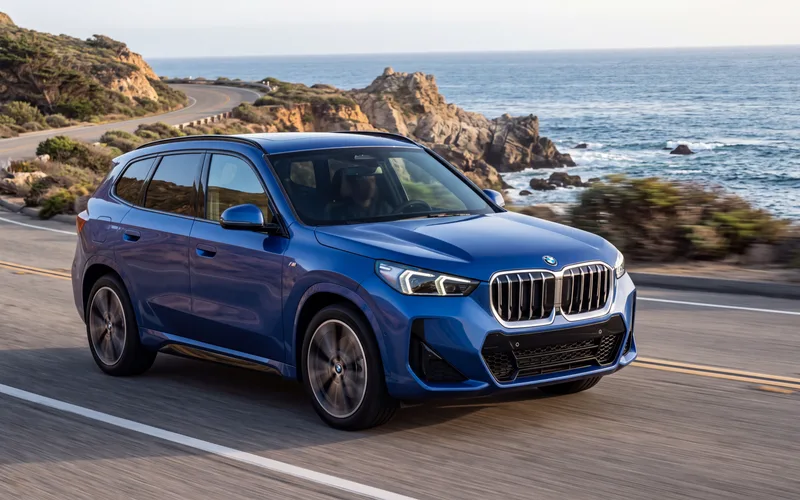 BMW X1Subcompact Luxury SUV
The X1 xDrive28i (and plug-in xDrive30e) beat the Tonale on refinement, rear-seat space, cargo (25.7 cu ft), and long-term reliability, and offer a head-up display the Alfa can't match.
Compare 2.43C+
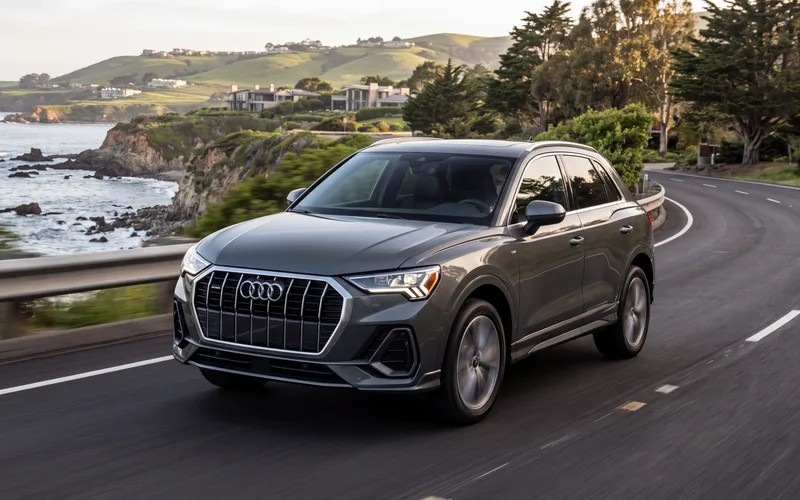 Audi Q3Subcompact Luxury SUV
The Q3 is more polished inside, has a roomier back seat, and holds resale far better than the Tonale, but it's also gas-only, softer to drive, and increasingly showing its age against newer rivals.
Compare 2.19C
2.19C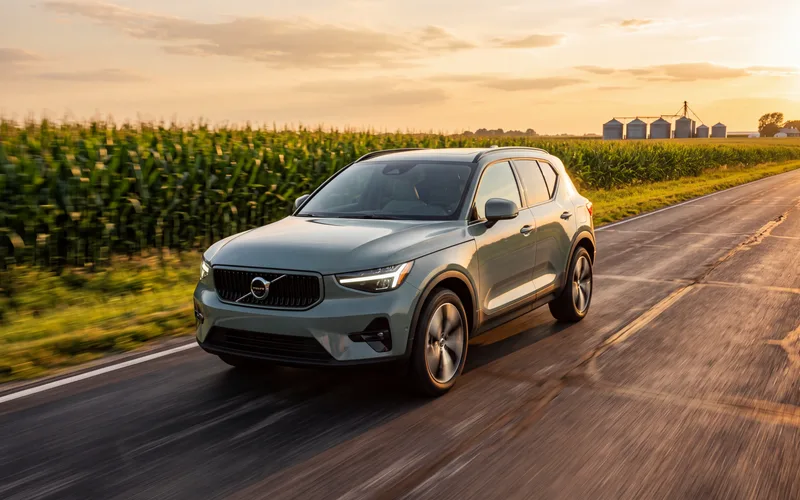 Volvo XC40Subcompact Luxury SUV
The XC40 (and electric EX40) counter with a roomier cabin, Volvo's stellar safety reputation and TSP awards, better predicted reliability, and complimentary maintenance visits.
CompareSubject scores by year
Hover or tap a score to see what moved it versus the year before. A corner mark flags a big swing.
| Year | Performance | Efficiency | Safety | Space | Cost | Reliability | Tech | Use-case | Driving | Value |
|---|---|---|---|---|---|---|---|---|---|---|
| 2026 | 43 | 41 | 63 | 36 | 34 | 43 | 69 | 51 | 68 | 57 |
| 2025 | 44 | 42 | 52 | 44 | 53 | 53 | 71 | 60 | 73 | 72 |
| 2024 | 45 | 37 | 67 | 41 | 45 | 44 | 67 | 60 | 69 | 72 |
Compare two years
Best fit & conditions
Higher scores mean a better fit for that use case. Learn more about use-case fit →
Subject profile
Detailed scoring by subject
1Performance & PowertrainOne of the Tonale's weakest categories.0.92F
The single core gas Tonale uses the new-for-2025 2.0-liter turbo four with 268 hp. The separately available PHEV is the range maximum at 285 hp.
The gas Tonale's turbo four provides a healthy 295 lb-ft, routed through a nine-speed automatic.
Car and Driver's instrumented 5.6-second run is substantially quicker than Alfa Romeo's conservative estimate and strong for a small luxury SUV.
Strong passing response and a broad torque curve help once moving, but twitchy tip-in and brief turbo lag make smooth launches difficult. Those conspicuous low-speed rough edges place it below the rubric's generally-smooth band.
The nine-speed selects passing gears promptly at speed, but delayed engagement and jerky behavior during low-speed maneuvers are frequent enough to make it notably unrefined.
The U.S. owner's manual rating is used because this is a U.S. buying guide; it is modest even for a small luxury SUV.
Q4 AWD is standard with the gas engine and can send up to half of available torque rearward. DNA drive modes add useful adaptability, though there is no low range or locking differential.
Standard AWD offers all-weather traction, but the Tonale is pavement-oriented and lacks low range, lockers, skid-plate hardware, meaningful extra clearance, or a dedicated off-road trim.
Buyers can choose two meaningfully different AWD powertrains: the new 268-hp gas turbo or the 285-hp plug-in hybrid. That covers conventional and electrified needs, but there is no third option or full EV.
2Efficiency & RangeThe Tonale's lowest-graded category.0.76F
The gas AWD Tonale's 24 MPG combined is mid-band for gas SUVs and distinctly less efficient than the PHEV alternative.
The EPA city result is 21 MPG for the 2.0-liter AWD configuration.
Its 29 MPG highway rating is respectable for a turbo AWD gas SUV, though not class-leading.
A 13.5-gallon tank yields 324 miles of rated total range, close to the bottom of the SUV normalization band.
At the EPA's standard 15,000-mile assumption, the current annual estimate is relatively costly for a subcompact SUV because of the 24 MPG rating.
The 2.0-liter engine is designed to run satisfactorily on widely available 87-octane regular gasoline. Premium is optional for optimal performance under demanding conditions, not required.
3SafetyGrades below the middle of the scale.1.52D
NHTSA has not published an overall NCAP star rating for the 2025 Tonale, so no stars are credited rather than estimating from another vehicle or model year.
The current-generation Tonale has no published IIHS crashworthiness evaluation and no Top Safety Pick award. Its untested status prevents credit for Good results, but there is no published IIHS evidence of a specific structural weakness.
The volume gas Tonale includes the full core suite as standard: full-speed forward-collision mitigation, adaptive cruise, lane keeping, active blind-spot assist, and rear cross-path detection. Lane centering and the surround-view camera require the optional Active Assist Package.
Full-speed AEB is standard and includes pedestrian/cyclist detection, but no Tonale-specific IIHS vehicle-to-vehicle or day/night pedestrian prevention result is available. Capability is credible, while unverified nighttime performance keeps it below the top band.
Blind-spot monitoring, rear cross-path detection, and active blind-spot steering assistance are standard, exceeding alert-only systems. The documentation does not establish rear automatic braking or safe-exit alert coverage.
Standard LaneSense can steer against an unintended departure, but sustained lane centering is package-dependent. Edmunds found the tested system's short hands-on timeout so intrusive that it substantially reduced real-world usefulness.
Adaptive Cruise Control-Plus is standard and the optional Active Driving Assist integrates lane centering for Level 2 travel. The system is capable in stop-and-go use, but lane-assist behavior and the optional status of centering limit refinement.
No hands-free highway system is offered. Active Driving Assist is a hands-on Level 2 aid that monitors steering-wheel input rather than permitting hands-free operation.
Adaptive, auto-leveling LED headlamps and automatic high beams are standard across both 2025 powertrains, an unusually complete specification. No IIHS headlight measurement is published, so beam reach and glare control cannot earn Good-rated credit.
Natural visibility is generally acceptable, but larger blind spots become evident in tight quarters. A four-camera surround view compensates effectively but is optional on the volume gas trim.
The two-row Tonale provides standard child-seat anchors and a useful 38 inches of rear legroom, making two outboard seats workable. Its compact cabin is less generous than key rivals, and no IIHS LATCH ease-of-use rating supports a higher score.
4Space & ComfortOne of the Tonale's weakest categories.0.90F
The sole core gas configuration is a two-row five-seater.
Official dimensions show adequate but not generous front headroom for an SUV.
The gas model's official front legroom is mid-pack for the SUV normalization range.
Second-row headroom is respectable for the Tonale's small footprint.
The official 38 inches is useful for a subcompact luxury SUV, though overall passenger space trails roomier rivals.
The Tonale has only two rows, so it provides no third-row utility.
The lighter gas model has more cargo room than the PHEV, but its volume sits near the bottom of the broad SUV scale.
Maximum volume falls just below the SUV normalization floor, reflecting the Tonale's compact dimensions.
Everyday storage is competitive rather than innovative, supported by a 40/20/40 rear seat, four cargo tie-downs, armrest media hub, and front 12-volt outlet.
Standard eight-way power front seats with four-way lumbar and heating give strong adjustability, but reviewers note firm/narrow cushions and limited headroom for very tall drivers.
The standard sport suspension is controlled but firm; the more sophisticated dual-mode suspension costs extra with the Veloce package.
Highway isolation is generally acceptable for the class, though the turbo four becomes audible under load and does not reach class-leading luxury quietness.
The core gas model is unusually well equipped with heated front seats and wheel, dual-zone climate, air-quality filtration and power front seats; ventilation and hands-free liftgate require the Premium package.
5Cost of OwnershipGrades below the middle of the scale.1.53D
The newly added gas Tonale uses the single Core trim and standard Q4 AWD, making this both the entry price and the relevant gas-powertrain starting point.
Alfa consolidated the lineup to one Core version with packages, so there is no higher gas trim that better represents volume; the unoptioned Core is the appropriate representative configuration.
The Tonale-specific industry projection is low for a luxury SUV, though its short U.S. history makes any five-year repair estimate less settled than for mature nameplates.
Projected retention is well below the SUV normalization floor and reflects Alfa Romeo's weak residual history and the Tonale's heavy new-car discounting.
Coverage matches the common premium-brand term and is better than mainstream 3-year/36,000-mile coverage.
The 2025 warranty booklet does not provide a separate longer powertrain warranty, leaving the gas Tonale's powertrain under the 4-year/50,000-mile basic term.
Four years of unlimited-mile roadside assistance is useful, but official 2025 documents do not promise a multi-year complimentary scheduled-maintenance plan. This is a basic luxury ownership benefit rather than a class-leading package.
$36,495 volume-trim price minus its estimated resale value after 5 years (32.9% retained, or about $12,007) leaves about $24,488 in depreciation. Add the projected $2,984 in 5-year maintenance and repairs, and owning this vehicle for 5 years costs about $27,472 in total.
6Reliability & QualityGrades below the middle of the scale.1.52D
The Tonale was still too new and too low-volume for a robust model-specific prediction: Consumer Reports lists the 2025 model's overall reliability as unavailable, while the short generation history includes two safety recalls. The gas version is new for 2025, so PHEV experience cannot simply be carried over to it.
Alfa Romeo placed just below the industry average in J.D. Power's latest applicable three-year dependability study, a meaningful improvement over its historic reputation but not a consistently top-tier record. Consumer Reports lacked enough Alfa data to include the brand in its 2025 reliability ranking.
Two recalls apply to the 2025 model: a rearview-camera display failure and a brake pedal that may collapse. The camera repair is routine software/display work, but possible loss of braking is unusually severe for such a young generation and keeps this score below average.
The volume configuration's 2.0-liter turbo and nine-speed automatic avoid the PHEV's added battery and hybrid hardware, and the GME engine family is used broadly across Stellantis products. However, this exact gas Tonale combination debuted for 2025 and has not accumulated a meaningful long-term record in this model.
The core gas trim has soft-touch dashboard and upper-door surfaces plus a leather steering wheel, but standard cloth seats and conspicuous hard plastics leave it short of class-leading luxury-SUV richness. Leather, ventilation, and ambient lighting require the Premium Package.
Independent testing describes the Tonale as well made, and there is no strong pattern of panel-gap or structural assembly criticism. Its perceived-quality weaknesses center more on material selection and software polish than basic assembly consistency.
Alfa's authorized U.S. network is sparse for a daily-use luxury SUV, especially outside major markets. The official directory lists dealerships in only 32 states, creating materially longer travel and fewer service alternatives than established luxury rivals offer.
Stellantis-family engine, transmission, and Dodge Hornet platform sharing should help supply of common mechanical parts, but Tonale-specific body, trim, and electronic components have a shallow aftermarket and depend on the sparse Alfa network. Luxury-brand labor and limited independent expertise make post-warranty repairs likelier to be costly or slow.
7Technology & InfotainmentOne of the Tonale's strongest categories.2.81B-
The sole core trim uses the same 10.25-inch display; no larger factory screen is listed.
Uconnect 5 offers a familiar, customizable layout and a useful rotary controller, though reports of occasional glitches keep it short of the leading tier.
Both wireless Apple CarPlay and wireless Android Auto are standard on the one core gas trim.
Standard 3D GPS navigation, voice recognition and Alexa natural-voice integration make the native system more capable than most owners strictly need.
The base six-speaker system is ordinary, but an optional Harman Kardon premium system supplies a credible luxury upgrade.
A large, full-color configurable 12.3-inch TFT cluster is standard across the lineup.
Alfa Connect and Uconnect 5 support meaningful OTA capability, but Alfa does not document Tesla-like whole-vehicle feature deployment.
Three included years of Alfa Connect services and remote-start connectivity cover core remote needs, but no phone-as-key is specified.
Wireless charging and front USB-A/B/C plus an armrest media hub are standard; the official US sheet does not establish abundant fast USB-C or AC power across both rows.
Passive entry, keyless go and remote start are standard, while the hands-free liftgate is optional; phone-as-key is not listed.
Front/rear sensors and a dynamic-grid rear camera are standard; surround view is optional and automated parking is restricted to the PHEV.
No head-up display is offered in the official feature list or packages for the 2025 gas Tonale.
8Use-Case FitMid-pack among this car's ten categories.2.07C
Standard LATCH, rear child locks, rear-seat reminder, a 40/20/40 seat and 27 cubic feet of occupied-seat cargo make family duty workable, though the compact cabin limits bulky gear.
The core trim includes a broad ADAS set—adaptive cruise, lane keeping, blind-spot monitoring, rear cross-path detection, forward collision warning and driver attention alert—but no verified US NCAP/IIHS top award was found.
Heated power seats, dual-zone climate and useful rear legroom help four-person travel, but modest cargo space, firm seating and limited rear amenities constrain long family trips.
Compact dimensions, standard AWD, adaptive cruise and strong turbo response ease routine use, offset by low-speed powertrain refinement issues.
At 21/29/24 mpg and with premium fuel specified for full rated output, the gas Tonale is costly to commute in relative to efficient small SUVs.
The 178.3-inch length is city-friendly and front/rear parking sensors are standard; a merely average 37.95-foot circle and optional surround camera prevent a benchmark score.
A 3,307-pound tow rating and 1,345-pound stated payload can handle light tasks, but the small enclosed cargo bay and luxury-SUV format are not work-focused.
The new-for-2025 gas configuration lacks a long fleet record and its upscale cabin is not designed for repeated jobsite abuse.
Four cargo tie-downs and roof/hitch potential provide basic utility, but there is no bed, onboard AC power, washable cabin, or documented work-upfit ecosystem.
Standard adaptive cruise and supportive power-seat adjustment reduce fatigue, but a 324-mile official range, firm ride and average refinement limit touring ability.
Standard AWD, hill-descent control, a 3,307-pound tow rating and 6.1 inches of clearance suit maintained gravel and light recreation, not serious trails.
A standard 40/20/40 rear seat, tie-downs and 54.7 cubic feet maximum provide flexible small-SUV hauling, though outright capacity is limited.
9Driving ExperienceThe Tonale's best-graded category.2.93B-
The lighter gas model has eager, composed handling and feels more agile than the PHEV, with optional dual-mode damping for drivers wanting more control.
A very quick 2.28-turn rack and communicative response distinguish the gas Tonale, though feedback does not consistently reach sports-car standards.
Four-wheel discs and an integrated brake system provide conventional, predictable gas-model braking; Brembo four-piston hardware requires the Veloce package.
The 268-hp turbo is responsive and quick, but its nine-speed calibration shows refinement issues at low speeds.
The conventional turbo powertrain avoids hybrid transition artifacts but becomes audible and less polished under load than class leaders.
The official circle is manageable but only mid-range for an SUV of this size.
A driver-focused layout, eight-way seat and lumbar adjustment, telescoping wheel and physical rotary controller work well, though the tight footwell and tall-driver headroom are compromises.
Strong acceleration, lightened gas-model weight, quick steering and eager handling give the Tonale real character despite some powertrain roughness.
10Value & Market PositionOne of the Tonale's strongest categories.2.86B-
At $36,495 including destination, the Core gas model includes AWD, 268 hp, heated front seats and steering wheel, power front seats, navigation, wireless phone integration and charging, adaptive cruise, blind-spot monitoring, and full LED lighting. Leather, premium audio, a moonroof and higher-level active assistance remain optional.
The new gas model undercuts the premium competition while providing standard AWD and substantially more power than most base rivals. Cabin refinement and option-driven luxury content keep it just short of true class-leading value.
The scored gas powertrain is effectively take-it-or-leave-it: one Core trim, standard AWD and three principal packages. Packages add useful specialization, but there is no conventional trim ladder or drivetrain choice.
The Tonale remains a niche U.S. seller and its trajectory worsened after the 2025 gas variant arrived. Volume fell 29% in 2025 from an already modest 2024 result.
Alfa Romeo has genuine enthusiast cachet, distinctive Italian design and motorsport heritage, giving the Tonale more emotional identity than many small crossovers. A tiny U.S. dealer footprint, reliability concerns and weak resale prevent the badge from matching the strongest luxury brands.
Meaningful transaction-price discounts are common, creating excellent immediate buyer benefit, although the scale of discounting also signals weak demand and harms resale.
The 2025 U.S. model is only the second year of the generation that began here for 2024, and the gas powertrain itself is new for 2025. The body and cabin carry over, but there is little redesign risk for a buyer of this model year.
Reviewers consistently praise the gas Tonale's style, quick acceleration and lively handling, but criticize its weight, low-speed powertrain refinement, limited headroom and less polished luxury experience. It has some overseas reader and design awards but no major U.S. class-winning accolade.