

The verdict
A mixed-report mid-size luxury sedan, strong on safety and held back by ownership.
The 2019 A6 is the launch year of Audi's C8 generation and, for eleven of its twelve months, a V6-only car: 335 hp, 369 lb-ft, standard quattro, a five-star NHTSA rating and an IIHS Top Safety Pick+, wrapped in a cabin reviewers called the best in the class. It is also the most expensive year of the generation to buy and the most troubled one to own — Consumer Reports rates it 'much less reliable than other cars from the same model year,' seven NHTSA recalls include a fire risk and a sudden-power-loss campaign, and RepairPal logs $1,056 a year in repairs. Seven years on, that pain is priced in: cars that stickered near $65,000 now list around $22,700, so the interior and the safety credentials are cheap to buy but the 48-volt starter-generator and dual-clutch repair bills are not. Buy one only with the belt-starter-generator class-action coverage confirmed, a full service history, and money set aside.
Jump to scoresStrengths
- A cabin that still beats cars costing three times as much
- Five stars from NHTSA and a Top Safety Pick+ from IIHS
- The V6 that only this model year came with
What holds it back
- The worst reliability year of the generation, by a clear margin
- Depreciation that took roughly $38,000 out of the car
- Seven recalls, including fire and sudden power loss
Top alternatives
Cars shoppers cross-shop with the Audi A6 3.21B+
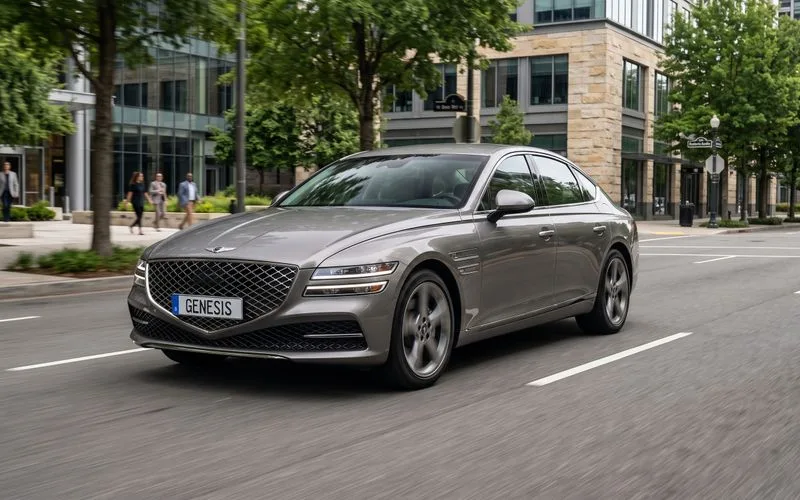 Genesis G80Mid-Size Luxury SedanBetter at: Ownership value
Delivers comparable size, power and cabin richness for thousands less, with a longer warranty, included maintenance and better resale — directly fixing the A6's worst category.
Compare 3.27B+
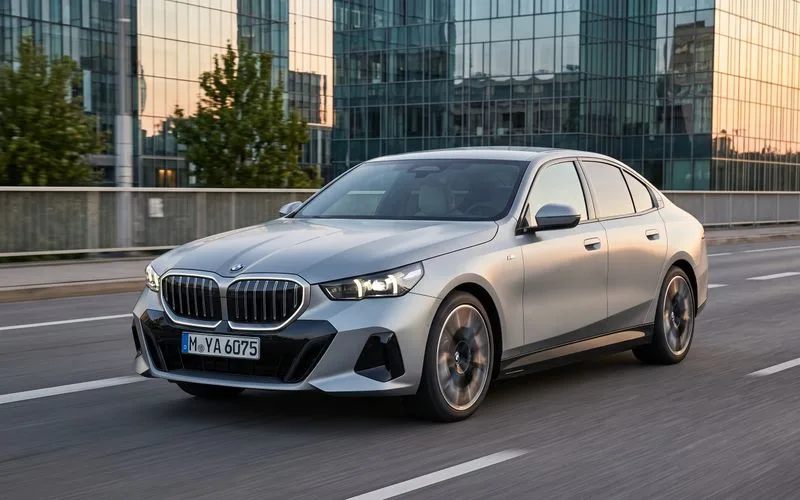 BMW 5 SeriesMid-Size Luxury SedanBetter at: Powertrain choice
Offers gas, plug-in hybrid and full-electric versions of the same car plus a sharper chassis and roomier back seat, if you want choice rather than one V6.
Compare 3.11B
3.11B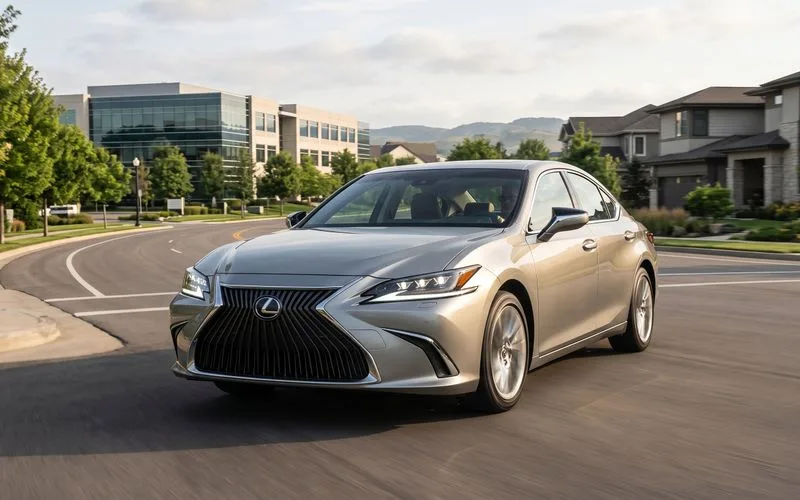 Lexus ESMid-Size Luxury SedanBetter at: Running costs
Trades the Audi's speed and tech for hybrid economy, top-tier reliability and much stronger residuals — the sensible-money pick in the segment.
CompareHow it's evolved
10 scored model years · 2017–2026
Subject scores by year
Hover or tap a score to see what moved it versus the year before. A corner mark flags a big swing.
| Year | Performance | Efficiency | Safety | Space | Cost | Reliability | Tech | Use-case | Driving | Value |
|---|---|---|---|---|---|---|---|---|---|---|
| 2026 | 71 | 29 | 83 | 71 | 32 | 67 | 81 | 55 | 70 | 76 |
| 2025 | 55 | 36 | 71 | 67 | 22 | 63 | 71 | 53 | 67 | 68 |
| 2024 | 56 | 37 | 75 | 67 | 22 | 62 | 72 | 52 | 68 | 68 |
| 2023 | 56 | 39 | 76 | 67 | 18 | 67 | 69 | 52 | 67 | 67 |
| 2022 | 56 | 35 | 75 | 67 | 20 | 62 | 68 | 51 | 66 | 65 |
| 2021 | 54 | 36 | 76 | 67 | 19 | 56 | 62 | 51 | 66 | 68 |
| 2020 | 54 | 40 | 75 | 66 | 18 | 57 | 67 | 50 | 68 | 73 |
| 2019 | 66 | 30 | 75 | 66 | 13 | 51 | 67 | 49 | 71 | 69 |
| 2018 | 55 | 36 | 59 | 64 | 22 | 68 | 49 | 48 | 66 | 70 |
| 2017 | 55 | 33 | 60 | 65 | 21 | 67 | 49 | 48 | 67 | 70 |
Compare two years
Best fit & conditions
Higher scores mean a better fit for that use case. Learn more about use-case fit →
Subject profile
Academic Probation · NHTSA safety recalls
Mar 4, 2026Lane departure: softwareDue to a software error, the lane departure warning system may be deactivated.
Defect
Volkswagen Group of America, Inc. (Audi) is recalling certain 2019 Audi Q8, Audi A7, and Audi A6 vehicles previously repaired under recall number 25V900. Due to a software error, the lane departure warning system may be deactivated.
Risk
The driver may be unaware that the lane departure warning system is deactivated and rely on a system that is not functional, increasing the risk of a crash.
Remedy
Dealers will update the software, free of charge. Owner notification letters were mailed March 13, 2026. Owners may contact Audi customer service at 1-800-253-2834. Audi's number for this recall is 90TW. Vehicle Identification Numbers (VINs) involved in this recall became searchable on NHTSA.gov on March 6, 2026.
NHTSA campaign 26V125000 ↗Manufacturer no. 90TW1,620 vehicles potentially affected (all models in the campaign)Owners notified Mar 13, 2026Filed by Volkswagen Group of America, Inc.Filed as A6Dec 19, 2025Back over prevention: sensing system: cameraPlease see the recall report for a complete list of models. A software error may prevent the rearview camera image from displaying as intended. As such, these vehicles fail to comply with the requirements of Federal Motor Vehicle Safety Standard number 111, "Rear Visibility."
Defect
Volkswagen Group of America, Inc. (Audi) is recalling certain 2019-2026 vehicles. Please see the recall report for a complete list of models. A software error may prevent the rearview camera image from displaying as intended. As such, these vehicles fail to comply with the requirements of Federal Motor Vehicle Safety Standard number 111, "Rear Visibility."
Risk
A rearview image that does not display reduces the driver's view behind the vehicle, increasing the risk of a crash.
Remedy
Dealers will update the software, free of charge. Owner notification letters were mailed January 14, 2026. Owners may contact Audi customer service at 1-800-253-2834. Audi's number for this recall is 90TV. Vehicle Identification Numbers (VINs) involved in this recall became searchable on NHTSA.gov on December 23, 2025.
NHTSA campaign 25V900000 ↗Manufacturer no. 90TV356,894 vehicles potentially affected (all models in the campaign)Owners notified Jan 14, 2026Filed by Volkswagen Group of America, Inc.Filed as A6, A6 ALLROAD, RS 6 AVANT, S6Aug 25, 2023Service brakes, hydraulic: fluidAn incorrectly labeled brake fluid cap may have been installed, which can result in the use of the wrong type of brake fluid.
Defect
Volkswagen Group of America, Inc. (Audi) is recalling certain 2021 Audi S7, S6 Sedan, RS7, RS6 Avant, A6 Allroad, 2019-2021 A7, and A6 Sedan vehicles. An incorrectly labeled brake fluid cap may have been installed, which can result in the use of the wrong type of brake fluid.
Risk
Incorrect brake fluid can reduce braking ability and increase the risk of a crash.
Remedy
Dealers will inspect the brake fluid reservoir cap and, if necessary, replace it, free of charge. Owner notification letters are expected to be mailed October 17, 2023. Owners may contact Audi's customer service at 1-800-253-2834. Volkswagen's number for this recall is 47T9.
NHTSA campaign 23V601000 ↗Manufacturer no. 47T97,499 vehicles potentially affected (all models in the campaign)Owners notified Sep 25, 2023Filed by Volkswagen Group of America, Inc.Filed as A6, A6 ALLROAD, RS 6 AVANT, S6Nov 21, 2022Electrical systemLiquid spilled in the rear seat may penetrate and cause the gateway control module to shut down.
Defect
Volkswagen Group of America, Inc. (Audi) is recalling certain 2020-2022 Audi S7, S6 Sedan, A6 Allroad, 2021-2022 RS7, RS6 Avant, 2019-2022 A7, and A6 Sedan vehicles. Liquid spilled in the rear seat may penetrate and cause the gateway control module to shut down.
Risk
A gateway control module shutdown will suddenly reduce engine power, increasing the risk of a crash.
Remedy
Dealers will install a protective cover, free of charge. Owner notification letters are expected to be mailed January 20, 2023. Owners may contact Audi's customer service at 1-800-253-2834. Audi's number for this recall is 90V2.
NHTSA campaign 22V861000 ↗Manufacturer no. 90V250,883 vehicles potentially affected (all models in the campaign)Owners notified Jan 19, 2023Filed by Volkswagen Group of America, Inc.Filed as A6, A6 ALLROAD, RS 6 AVANT, S6Mar 14, 2022Electrical system: instrument panel: fuel gauge: fuel level float/sensor/sending unitThe fuel level sender may stick, causing an inaccurate fuel level reading to be displayed on the instrument cluster.
Defect
Volkswagen Group of America, Inc. (Audi) is recalling certain 2021-2022 RS6 Avant and RS7, 2020-2022 A6 Allroad, S6 Sedan, and S7, and 2019-2022 A6 Sedan and A7 vehicles. The fuel level sender may stick, causing an inaccurate fuel level reading to be displayed on the instrument cluster.
Risk
An inaccurate fuel reading may cause an engine stall due to lack of fuel, increasing the risk of a crash.
Remedy
Dealers will install a new sensor in the tank, free of charge. Owner notification letters were mailed February 17, 2023. Owners may contact Audi customer service at 1-800-253-2834. Audi's number for this recall is 20DN.
NHTSA campaign 22V155000 ↗Manufacturer no. 20DN47,238 vehicles potentially affected (all models in the campaign)Owners notified Feb 17, 2023Filed by Volkswagen Group of America, Inc.Filed as A6, A6 ALLROAD, RS 6 AVANT, S6Mar 10, 2021Air bagsThe score line on the passenger air bag may not have been manufactured correctly.
Defect
Volkswagen Group of America, Inc. (Audi) is recalling certain 2021 Audi RS6 Avant, RS7, 2020-2021 A6 Allroad, S6 Sedan, S7, 2019-2021 A6 Sedan, and A7 vehicles. The score line on the passenger air bag may not have been manufactured correctly.
Risk
An incorrectly manufactured air bag may not deploy properly, and could also eject plastic debris into the passenger compartment, increasing the risk of injury during a crash.
Remedy
Audi will notify owners, and dealers will inspect the passenger air bag score line, and repair it as necessary, free of charge. The recall begin March 26, 2021. Owners may contact Audi customer service at 1-800-253-2834. Audi's number for this recall is 70i2.
NHTSA campaign 21V159000 ↗Manufacturer no. 70i23,421 vehicles potentially affected (all models in the campaign)Owners notified Mar 26, 2021Filed by Volkswagen Group of America, Inc.Filed as A6, A6 ALLROAD, RS 6 AVANT, S6Mar 19, 2020Electrical system: starter assemblyMoisture may enter the starter generator and cause an electrical short circuit.
Defect
Volkswagen Group of America, Inc. (Volkswagen) is recalling certain 2019-2020 Audi A6 vehicles equipped with mild-hybrid technology and 2.0TFSI engines. Moisture may enter the starter generator and cause an electrical short circuit.
Risk
A short circuit in the starter generator increases the risk of a fire.
Remedy
Volkswagen will notify owners, and dealers will replace the starter generator, free of charge. The recall began by May 22, 2020. Owners may contact Volkswagen customer service at 1-800-893-5298. Volkswagen's number for this recall is 27H2.
NHTSA campaign 20V153000 ↗Manufacturer no. 27H25,471 vehicles potentially affected (all models in the campaign)Owners notified May 22, 2020Filed by Volkswagen Group of America, Inc.Filed as A6
16 recalls on other model years of the A6 (2017–2018, 2020–2022, 2025)
Dec 19, 2025Seat belts: rear/other: retractorThe automatic locking retractor may fail to engage when a child seat is installed using the seat belt. As such, these vehicles fail to comply with the requirements of Federal Motor Vehicle Safety Standard (FMVSS) numbers 208, "Occupant Crash Protection" and 209, "Seat Belt Assemblies."
Defect
Volkswagen Group of America, Inc. (Audi) is recalling certain 2025 SQ6 E-Tron, SQ6 Sportback E-Tron, Q6 Sportback E-Tron, A6, A5, A6 Sportback E-Tron, Q6 E-Tron, S5, and S6 Sportback E-Tron vehicles. The automatic locking retractor may fail to engage when a child seat is installed using the seat belt. As such, these vehicles fail to comply with the requirements of Federal Motor Vehicle Safety Standard (FMVSS) numbers 208, "Occupant Crash Protection" and 209, "Seat Belt Assemblies."
Risk
An improperly secured child seat can increase risk of injury during a crash.
Remedy
Dealers will inspect and replace the right and left rear seat belt assembly as necessary, free of charge. Owner notification letters were mailed February 16, 2026. Owners may contact Audi customer service at 1-800-253-2834. Audi's number for this recall is 69D8. Vehicle Identification Numbers (VINs) involved in this recall became searchable on NHTSA.gov on December 23, 2025.
NHTSA campaign 25V899000 ↗Manufacturer no. 69D827,768 vehicles potentially affected (all models in the campaign)Owners notified Feb 16, 2026Filed by Volkswagen Group of America, Inc.Filed as A6Mar 31, 2025Electrical system: instrument cluster/panel · Electrical system: softwareDue to a software error, the instrument panel display may fail.
Defect
Volkswagen Group of America, Inc. (Audi) is recalling certain 2021 SQ8, A6 SEDAN, A7, A8, Q7, Q8, RS6 Avant, RS7, RSQ8, S6 SEDAN, S7, S8, A6 Allroad, and SQ7 vehicles. Due to a software error, the instrument panel display may fail.
Risk
An instrument panel display that fails to show critical safety information, such as the speedometer or warning lights, increases the risk of a crash.
Remedy
Dealers will update the instrument panel module software, free of charge. Owner notification letters were mailed April 24, 2025. Owners may contact Audi customer service at 1-800-253-2834. Audi's number for this recall is 90VC.
NHTSA campaign 25V201000 ↗Manufacturer no. 90VC44,387 vehicles potentially affected (all models in the campaign)Owners notified Apr 24, 2025Filed by Volkswagen Group of America, Inc.Filed as A6, A6 ALLROAD, RS 6 AVANT, S6Oct 26, 2022Back over prevention: display function · Equipment: electrical: infotainment: video (touch)screen/monitor/unitThe infotainment main unit may become damaged internally when the vehicle is shut off, resulting in an inoperative rearview camera display the next time the vehicle is started. As such, these vehicles fail to comply with the requirements of Federal Motor Vehicle Safety Standard number 111, "Rear Visibility."
Defect
Volkswagen Group of America, Inc. (Audi) is recalling certain 2021-2022 AUDI A8, A6 Allroad, E-TRON Quattro, 2022 S3, RSQ8, RS7, RS6 Avant, Q8, Q7, Q3, E-TRON Sportback Quattro, S5 Cabriolet, E-TRON GT, S5 Sportback, A7, A6, A5 Sportback, A5 Cabriolet, A4, A4 Allroad, A3, S8, SQ7, SQ8, S6, and S4 vehicles. The infotainment main unit may become damaged internally when the vehicle is shut off, resulting in an inoperative rearview camera display the next time the vehicle is started. As such, these vehicles fail to comply with the requirements of Federal Motor Vehicle Safety Standard number 111, "Rear Visibility."
Risk
An inoperative rearview camera display reduces the driver's rear visibility, increasing the risk of a crash.
Remedy
Dealers will replace the infotainment main unit, free of charge. Owner notification letters were mailed June 6, 2022. Owners may contact Audi's customer service at 1-800-253-2834. Audi's number for this recall is 91Ei.
NHTSA campaign 22V806000 ↗Manufacturer no. 91Ei6,076 vehicles potentially affected (all models in the campaign)Owners notified Jun 6, 2023Filed by Volkswagen Group of America, Inc.Filed as A6, A6 ALLROAD, RS 6 AVANT, S6Oct 5, 2022Back over prevention: display functionDue to a software issue, a blank or black screen may be displayed instead of the rearview camera image when the vehicle is placed in reverse gear. As such, these vehicles fail to comply with the requirements of Federal Motor Vehicle Safety Standard number 111, "Rear Visibility."
Defect
Volkswagen Group of America, Inc. (Volkswagen) is recalling certain 2021 Audi A8, RS7, RS6 Avant, RS5 Sportback, RS5 Coupe, Q8, Q7, Q5 Sportback, S4 Sedan, Q5, A7, A6, A6 Allroad, A5 Sportback, A5 Coupe, A5 Cabrioleet, A4 Sedan, A4 Allroad, E-Tron Sportback Quattro, SQ7, S5 Cabriolet, E-Tron Quattro, SQ8, SQ5 Sportback, SQ5, S8, S7, S6 Sedan, S5 Sportback, S5 Coupe, 2022 E-Tron GT, and 2021-2022 RSQ8 vehicles. Due to a software issue, a blank or black screen may be displayed instead of the rearview camera image when the vehicle is placed in reverse gear. As such, these vehicles fail to comply with the requirements of Federal Motor Vehicle Safety Standard number 111, "Rear Visibility."
Risk
A blank rearview camera display can reduce the driver's rear visibility, increasing the risk of a crash.
Remedy
Dealers will update the infotainment unit software, free of charge. Owner notification letters were mailed October 25, 2022. Owners may contact Audi's customer service at 1-800-253-2834. Volkswagen's number for this recall is 91DZ.
NHTSA campaign 22V742000 ↗Manufacturer no. 91DZ170,296 vehicles potentially affected (all models in the campaign)Owners notified Oct 25, 2022Filed by Volkswagen Group of America, Inc.Filed as A6, RS 6 AVANT, S6May 23, 2022Engine and engine cooling: engine: engine control module (ecu/ecm)The semiconductor inside the engine control unit may short-circuit and cause an engine stall.
Defect
Volkswagen Group of America, Inc. (Audi) is recalling certain 2022 Audi A6 Sedan, A4 Sedan, Q5, and Q5 Sportback vehicles. The semiconductor inside the engine control unit may short-circuit and cause an engine stall.
Risk
An engine stall can increase the risk of a crash.
Remedy
Dealers will replace the engine control unit, free of charge. Owner notification letters were mailed July 18, 2022. Owners may contact Audi customer service at 1-800-253-2834. Audi's number for this recall is 24iH.
NHTSA campaign 22V368000 ↗Manufacturer no. 24iH72 vehicles potentially affected (all models in the campaign)Owners notified Jul 18, 2022Filed by Volkswagen Group of America, Inc.Filed as A6Mar 23, 2022Engine and engine cooling: engine: gasoline: turbo/superchargerThe turbocharger oil supply strainer can become blocked, causing wear to the bearings due to lack of lubrication.
Defect
Volkswagen Group of America, Inc. (Audi) is recalling certain 2013-2017 A8, S6 Sedan, S7, S8, and 2014-2017 RS7 vehicles. The turbocharger oil supply strainer can become blocked, causing wear to the bearings due to lack of lubrication.
Risk
Worn bearings can cause the turbine wheel to contact the turbocharger housing or cause the shaft to break, causing an engine stall and increasing the risk of a crash.
Remedy
Dealers will replace the oil strainer and perform an oil change, free of charge. Owner notification letters were mailed August 4, 2022. Owners may contact Audi customer service at 1-800-253-2834. Audi's number for this recall is 21H7.
NHTSA campaign 22V178000 ↗Manufacturer no. 21H726,093 vehicles potentially affected (all models in the campaign)Owners notified Aug 4, 2022Filed by Volkswagen Group of America, Inc.Filed as S6Jan 26, 2022Suspension: rear: axle: non-powered axle assembly · TiresThe rear axle alignment may not have been inspected after the repairs for Recall 21V-295 (42L1) were performed.
Defect
Volkswagen Group of America, Inc. (Audi) is recalling certain 2019-2021 Audi A5 Sportback, RS5 Coupe, RS5 Sportback, S5 Sportback, 2020-2021 A4 Allroad, A4 Sedan, A5 Cabriolet, A5 Coupe, A6 Allroad, A6 Sedan, A7, A8, Q5, S4 Sedan, S5 Coupe, S5 Cabriolet, S6 Sedan, S7, S8, SQ5, 2021 Q5 Sportback, Q7, Q8, RS6 Avant, RS7, RSQ8, SQ5 Sportback, SQ7, and SQ8 vehicles. The rear axle alignment may not have been inspected after the repairs for Recall 21V-295 (42L1) were performed.
Risk
Rear axle misalignment may cause premature or uneven tire wear, increasing the risk of a crash.
Remedy
Dealers will inspect the rear axle, adjust the alignment as necessary, and replace any prematurely or unevenly worn tires, free of charge. Owner notification letters were mailed March 3, 2022. Owners may contact Audi customer service at 1-800-253-2834. Audi's number for this recall is 42L5.
NHTSA campaign 22V034000 ↗Manufacturer no. 42L531,058 vehicles potentially affected (all models in the campaign)Owners notified Mar 3, 2022Filed by Volkswagen Group of America, Inc.Filed as A6, A6 ALLROAD, RS 6 AVANT, S6Oct 20, 2021Back over prevention: sensing system: cameraA software error may prevent the rear-view image from initially displaying when the vehicle begins to reverse. As such, these vehicles fail to comply with the requirements of Federal Motor Vehicle Safety Standard number 111, "Rear Visibility."
Defect
Volkswagen Group of America, Inc. (Audi) is recalling certain 2021 Audi A8 and S8, 2022 Audi A5 Sportback, A4 Sedan, E-Tron GT, Q3, Q5, RS6 Avant, A3 Sedan, S5 Sportback, Q5 Sportback, Q7, Q8, RSQ8, SQ7, SQ8, and S3 Sedan vehicles. A software error may prevent the rear-view image from initially displaying when the vehicle begins to reverse. As such, these vehicles fail to comply with the requirements of Federal Motor Vehicle Safety Standard number 111, "Rear Visibility."
Risk
A rear-view camera that does not display an image reduces the driver's rear view, increasing the risk of a crash.
Remedy
Dealers will update the infotainment unit parameters, free of charge. Owner notification letters were mailed November 9, 2021. Owners may contact Audi customer service at 1-800-253-2834. Audi's number for this recall is 91CR.
NHTSA campaign 21V825000 ↗Manufacturer no. 91CR2,857 vehicles potentially affected (all models in the campaign)Owners notified Nov 9, 2021Filed by Volkswagen Group of America, Inc.Filed as RS 6 AVANTAug 5, 2021Seat belts · Seat belts: rear/other: retractorThe rear seat belt automatic locking retractors may deactivate early, which can prevent the child restraint system from securing properly. As such, these vehicles fail to comply with the requirements of Federal Motor Vehicle Safety Standard number 208, "Occupant Crash Protection."
Defect
Volkswagen Group of America, Inc. (Volkswagen) is recalling certain 2021 Volkswagen ID4, Audi A4 Allroad, A4 Sedan, A5 Cabriolet, A5 Coupe, A5 Sportback, A6 Allroad, A6 Sedan, A7, A8, E-Tron Quattro, E-Tron Sportback Quattro, Q3, Q5, Q5 Sportback, Q7, Q8, RS5 Sportback, RS5 Coupe, RS6 Avant, RS7, RSQ8, S4 Sedan, S5 Cabriolet, S5 Coupe, S5 Sportback, S6 Sedan, S7, S8, SQ5, SQ5 Sportback, SQ7, SQ8, and 2021-2022 S3 Sedan vehicles. The rear seat belt automatic locking retractors may deactivate early, which can prevent the child restraint system from securing properly. As such, these vehicles fail to comply with the requirements of Federal Motor Vehicle Safety Standard number 208, "Occupant Crash Protection."
Risk
An unsecured child restraint system can increase the risk of injury during a crash.
Remedy
Dealers will inspect, and replace as necessary, the middle-rear seat belt assemblies, free of charge. Owner notification letters were mailed August 27, 2021. Owners may contact Volkswagen customer service at 1-800-893-5298 and Audi customer service at 1-800-253-2834. Volkswagen's numbers for this recall are 69CR (VW) and 69CS (Audi).
NHTSA campaign 21V606000 ↗Manufacturer no. 69CR, 69CS45,496 vehicles potentially affected (all models in the campaign)Owners notified Aug 27, 2021Filed by Volkswagen Group of America, Inc.Filed as A6, A6 ALLROAD, RS 6 AVANT, S6May 12, 2021EngineCracks may develop on the surface of the engine cylinder bore.
Defect
Volkswagen Group of America, Inc. (Audi) is recalling certain 2021 Audi SQ7, RSQ8, RS7, RS6 AVANT, and SQ8 vehicles. Cracks may develop on the surface of the engine cylinder bore.
Risk
Cracks may cause engine damage and a stall or an oil leak, increasing the risk of a crash or fire.
Remedy
Dealers will replace the engine, free of charge. Owner notification letters were mailed July 9, 2021. Owners may contact Audi customer service at 1-800-253-2834. Audi's number for this recall is 10G9.
NHTSA campaign 21V339000 ↗Manufacturer no. 10G915 vehicles potentially affected (all models in the campaign)Owners notified Jul 9, 2021Filed by Volkswagen Group of America, Inc.Filed as RS 6 AVANTApr 26, 2021Suspension: rear: axle: non-powered axle assemblyThe lock nut on the trailing arm of the rear axle may break due to stress corrosion.
Defect
Volkswagen Group of America, Inc. (Audi) is recalling certain 2021 Q7, Q8, Q5 Sportback, SQ5 Sportback, RS6 Avant, RS7, RS Q8, 2020-2021 Audi S6 sedan, Q5, A8, S8, A7, A6 Allroad, A5 Cabriolet, A4 sedan, A4 Allroad, SQ5, S7, A6 sedan, S5 coupe, S4 sedan, S5 Cabriolet, A5 coupe, 2019-2021 RS5 coupe, A5 Sportback, S5 Sportback, RS5 Sportback vehicles. The lock nut on the trailing arm of the rear axle may break due to stress corrosion.
Risk
A broken lock nut may misalign the rear axle, causing a loss of control and increasing the risk of a crash.
Remedy
Dealers will replace the lock nuts and, if necessary, the associated bolts, free of charge. Owner notification letters were mailed June 4, 2021. Owners may contact Audi customer service at 1-800-253-2834. Audi's number for this recall is 42L1.
NHTSA campaign 21V295000 ↗Manufacturer no. 42L140,993 vehicles potentially affected (all models in the campaign)Owners notified Jun 4, 2021Filed by Volkswagen Group of America, Inc.Filed as A6, RS 6 AVANT, S6Dec 2, 2020Air bags: sensor: side impact · Electrical systemThe electrical connector can detach from the door crash sensor in either of the front doors.
Defect
Volkswagen Group of America, Inc. (Audi) is recalling certain 2021 Audi A6 Allroad, Q7, RS6 and RS7 vehicles. The electrical connector can detach from the door crash sensor in either of the front doors.
Risk
A detached connector can delay the activation of the restraint systems, including the side air bag, curtain air bag and/or seat-belt pretensioners during a side impact crash, increasing the risk of injury.
Remedy
Audi will notify owners, and dealers will inspect, and as necessary, replace the crash sensors in both front doors, free of charge. The recall began December 23, 2020. Owners may contact Audi customer service at 1-800-253-2834. Audi's number for this recall is 69BM.
NHTSA campaign 20V749000 ↗Manufacturer no. 69BM166 vehicles potentially affected (all models in the campaign)Owners notified Dec 23, 2020Filed by Volkswagen Group of America, Inc.Filed as A6, RS 6 AVANTMay 13, 2020Air bags: frontal: passenger side: inflator moduleThe passenger air bag may not properly deploy through the instrument panel tear seam.
Defect
Volkswagen Group of America, Inc. (Volkswagen) is recalling certain 2020 Audi A6, A6 Allroad and A7 vehicles. The passenger air bag may not properly deploy through the instrument panel tear seam.
Risk
In the event of a crash, the passenger air bag may not properly deploy and inflate, and small plastic parts may enter the cabin, increasing the risk of injury.
Remedy
Audi will notify owners, and dealers will replace the instrument panels, free of charge. The recall began June 24, 2020. Owners may contact Audi customer service at 1-800-822-2834. Volkswagen's number for this recall is 70H6.
NHTSA campaign 20V274000 ↗Manufacturer no. 70H6153 vehicles potentially affected (all models in the campaign)Owners notified Jun 24, 2020Filed by Volkswagen Group of America, Inc.Filed as A6Jan 16, 2019Fuel system, gasoline: fuel injection system: fuel railThe left and right fuel rails may leak fuel.
Defect
Volkswagen Group of America, Inc. (Audi) is recalling certain 2016-2018 Q7, A6 and A7 vehicles, and 2015-2018 Audi A8 vehicles. The left and right fuel rails may leak fuel.
Risk
A fuel leak in the presence of an ignition source can increase risk of a fire.
Remedy
Audi has notified owners, and dealers will replace the left and right fuel rail, free of charge. The recall began February 28, 2019. Owners may contact Audi customer service at 1-800-253-2834. Audi's number for this recall is 24DP.
NHTSA campaign 19V035000 ↗Manufacturer no. 24DP74,881 vehicles potentially affected (all models in the campaign)Owners notified Feb 28, 2019Filed by Volkswagen Group of America, Inc.Filed as A6Jun 4, 2018Air bags: sensor: occupant classificationStress or wear of the body-sensing mat within the front passenger seat may cause the Passenger Occupant Detection System (PODS) control module to malfunction.
Defect
Volkswagen Group of America, Inc. (Volkswagen) is recalling certain 2013-2018 Audi S6 and S7, 2012-2018 A7 and A6 Sedan, and 2014-2018 RS7 vehicles equipped with basic seats (with or without heating). Stress or wear of the body-sensing mat within the front passenger seat may cause the Passenger Occupant Detection System (PODS) control module to malfunction.
Risk
If the PODS module malfunctions, the front passenger air bag may not deploy properly in the event of a crash, increasing the risk of injury.
Remedy
Volkswagen will notify owners, and dealers will install a PODS system repair kit, free of charge. The recall began November 29, 2018. Owners may contact Audi customer service at 1-800-253-2834. Volkswagen's number for this recall is 74D5.
NHTSA campaign 18V370000 ↗Manufacturer no. 74D5139,249 vehicles potentially affected (all models in the campaign)Owners notified Nov 29, 2018Filed by Volkswagen Group of America, Inc.Filed as A6, S6Dec 29, 2016Air bags: frontal: driver side: inflator module · Air bags: frontal: passenger side: inflator module · Air bags: side/window · Seat belts: pretensionerAdditionally, certain 2017 Audi Q7, A4 Sedan, A4 Allroad, and 2018 Audi Q5 vehicles are being recalled because the seat belt pretensioners may not activate properly.
Defect
Volkswagen Group of America, Inc. (Volkswagen) is recalling certain model year 2017 Audi A7, A4, A6, Volkswagen Golf and Tiguan vehicles and 2016 Volkswagen e-Golf vehicles for driver frontal air bags, passenger frontal air bags or head air bags that may not deploy properly. Additionally, certain 2017 Audi Q7, A4 Sedan, A4 Allroad, and 2018 Audi Q5 vehicles are being recalled because the seat belt pretensioners may not activate properly.
Risk
In the event of a crash, if the air bags and/or the seat belt pretensioners do not inflate or function properly, the vehicle occupants have an increased risk of injury.
Remedy
Volkswagen and Audi will notify owners, and dealers will replace the affected air bags and seat belt pretensioners, free of charge. The recall began April 2017. Owners may contact Volkswagen customer service at 1-800-893-5298 or Audi customer service at 1-800-253-2834.
NHTSA campaign 16V955000 ↗Manufacturer no. VW: 69P4; Audi 69P25,947 vehicles potentially affected (all models in the campaign)Owners notified Feb 28, 2017Filed by Volkswagen Group of America, Inc.Filed as A6
Source: NHTSA Office of Defects Investigation recall database, model years 2017–2026. Recalls are listed by model year as the manufacturer filed them; whether a specific car is affected depends on its VIN — check a VIN at nhtsa.gov ↗. NHTSA model names matched to this page: A6, A6 ALLROAD, RS 6 AVANT, S6.
Detailed scoring by subject
1Performance & PowertrainMid-pack among this car's ten categories.2.49C+
2019 is the launch year of the C8 generation in the US, and the A6 arrived in August 2018 with a single engine: the all-new 3.0-liter turbocharged V6 at 335 hp, backed by a 48-volt mild-hybrid system. A 248-hp 2.0T was not announced until July 2019, so for nearly the whole model year the V6 was the only A6 sold and is unambiguously the volume configuration — a strong output for a mid-size luxury sedan.
369 lb-ft available from roughly 1,370 rpm gives the A6 effortless part-throttle response and strong roll-on acceleration, and is a genuinely competitive figure among mid-size luxury sedans rather than a merely adequate one.
Standard quattro traction and the dual-clutch's clean launch get the V6 A6 to 60 mph in a manufacturer-quoted 5.1 seconds, and instrumented testing beats that — MotorWeek recorded 4.7 seconds and a 13.3-second quarter mile. The manufacturer figure is used as the conservative value per the manufacturer-outranks rule; either places the car firmly in the quick half of the segment.
Reviewers of the launch-year V6 consistently describe it as seamlessly smooth and effectively lag-free, with the 48V mild hybrid smoothing stop-start restarts and brief engine-off coasting — this is the engine that earns the segment's refinement praise rather than merely meeting it. It sits below the ceiling because the same 48V system's restarts and the low-speed drivability of the C8 range drew owner complaints from the outset.
The seven-speed S tronic dual-clutch is decisive once underway — reviewers call its upshifts and downshifts prompt and smooth and it does not hunt — but low-speed manners are the known weak point of this DL382 unit across the C8 range, with owners reporting hesitation from a standstill, jerky 1–2 shifts and shudder during parking maneuvers from the launch year on. Good at speed, imperfect in traffic, which is squarely the middle band.
Every US 2019 A6 is a quattro — there is no front- or rear-drive version at any trim, so all-wheel drive is standard rather than an upcharge, using Audi's permanent quattro with a self-locking centre differential and wheel-selective torque control, with an optional sport rear differential on the dynamic package. No low range or terrain modes, which is correct for a sedan but keeps it short of the ceiling.
For most of the model year US buyers had exactly one choice — the 335-hp 3.0T V6 — with the 248-hp 2.0T only joining in July 2019, giving two mild-hybrid gas engines by year end and nothing electrified. Audi's V6 TDI diesels had been withdrawn from the US after the emissions investigation, the A6 55 TFSI e plug-in was a European-only launch, and there was no S6 for 2019, so a US shopper had no hybrid, plug-in or performance-variant path at all.
2Efficiency & RangeOne of the A6's weakest categories.0.00F
EPA rates the launch-year A6 with the 3.0L turbo V6 at 25 MPG combined — a creditable number for a 335-hp, standard-AWD luxury sedan, and helped by the 48V mild hybrid's engine-off coasting, but unremarkable against the gas-sedan field as a whole because the MHEV cannot move the car on electricity.
22 MPG in town is respectable for a roughly 4,100-lb permanent-AWD sedan with a turbo six, and the 48V system extends stop-start beyond a conventional setup, but it is the A6's weakest EPA figure relative to its band and well short of what a full hybrid returns in the same stop-and-go conditions.
29 MPG highway reflects the C8's slippery bodywork and a tall top gear in the seven-speed dual-clutch, and is the strongest of the V6's three EPA figures in absolute terms — but the sedan highway band runs to 45 MPG, so a big turbocharged six still lands low against the class.
EPA publishes a 482-mile total range on the A6's 19.3-gallon tank — genuine touring capability that suits the C8's highway-cruiser character and partly offsets the premium-fuel bill on long trips, though short of the 600-mile figures the most efficient sedans in the band manage.
EPA puts the running cost at $3,050 a year on its standard 15,000-mile, 55/45 city-highway assumptions — near the top of the sedan cost band. Decent MPG cannot rescue the figure because it is computed at premium-grade pricing, which is exactly where a mid-size luxury sedan loses ground to mainstream cars returning similar economy on regular.
Both 2019 US A6 engines require premium unleaded (91 AKI) rather than merely recommending it, adding roughly 40–60¢ per gallon over regular for the life of the car. With no diesel, flex-fuel, hybrid or plug-in A6 offered in the US for 2019, there is no configuration a buyer can choose that lowers the energy bill.
3SafetyThe A6's best-graded category.3.06B
NHTSA tested the 2019 A6 sedan directly in the first US model year of the C8 generation and returned a 5-star overall rating, with 5 stars in the side barrier, side pole and rollover evaluations. Only the frontal composite falls short, at 4 stars, held down by a 4-star passenger-front result against a 5-star driver-front.
The 2019 A6 sedan launched as a full IIHS TOP SAFETY PICK+ with Good in all six crashworthiness evaluations — including the passenger-side small overlap test that the plus award specifically requires. The award is headlight-conditional, applying only to cars built with the matrix-design LED units, which keeps it just short of the top of the band.
Audi pre sense city — AEB with pedestrian and cyclist detection to 52 mph — plus a rearview camera are standard on every 2019 A6, but the rest of the suite is stratified: Audi side assist (blind-spot), rear cross-traffic assist, vehicle exit warning and pre sense rear are standard only from Premium Plus up, and adaptive cruise is optional on every trim including the $67,100 Prestige. A 2019 Camry or Accord at a third the price shipped full-speed adaptive cruise and lane keeping as standard, so the A6 sits mid-band on breadth despite its price.
Audi pre sense city earned IIHS Superior in both front crash prevention tests that existed for the 2019 model year — vehicle-to-vehicle and daytime vehicle-to-pedestrian — which is the best result available at the time and standard equipment on every trim. It stops short of the top of the band only because IIHS had no nighttime pedestrian protocol in 2019, so that capability is unproven rather than demonstrated.
The Audi side assist bundle is unusually complete in content — mirror-mounted blind-spot LEDs active above 9 mph, rear cross-traffic assist, and a vehicle exit warning that delays the door handles when traffic or a cyclist is approaching from behind — but it is alert-and-restraint only, with no steering intervention, and the base Premium has to option it. Standard fitment from Premium Plus upward covers the volume trim.
Lane departure warning came standard on the 2019 A6 2.0-liter, but genuine intervention — Audi active lane assist, and the lane centering that rides along with adaptive cruise assist — sits inside the $2,750 Driver Assistance package on every trim. Reviewers describe the centering itself as a smooth, confident nudge back toward the middle of the lane rather than a ping-ponging system, so the quality is well above the paywall it sits behind.
Audi's adaptive cruise assist was among the better-integrated highway systems of its generation — full-speed-range operation from 0 to about 95 mph with stop-and-go traffic jam assist and combined longitudinal plus lateral control, and it drew consistently positive reviewer commentary at launch. The score is held down by availability rather than behavior: it is a package option even on Prestige, so a large share of 2019 A6s on the road have plain cruise control.
No hands-free highway driving was offered on the 2019 A6 in any form. Audi's adaptive cruise assist and traffic jam assist are explicitly hands-on systems requiring continuous steering-wheel contact, and Audi never sold a Super Cruise or BlueCruise equivalent in the US on this generation.
IIHS rates the 2019 A6's matrix-design LED headlights Good on Premium Plus and Prestige, which is what earns the car its TOP SAFETY PICK+, and high beam assist is standard across the range. The base Premium's standard LED units rate only Marginal, so a buyer at the entry price gets meaningfully worse forward visibility than the award implies — the classic headlight-tiering trap of this era.
Typical modern executive-sedan sightlines: a clear forward view over a low cowl and slim A-pillars, but a high beltline, rising rear glass and thick C-pillars that leave real over-the-shoulder blind zones. Camera compensation is good where fitted — a rearview camera is standard and a four-camera top view system with virtual 360-degree surround view is available — but the 360 system is not standard on the volume trim.
IIHS rates the A6's LATCH hardware Good for ease of use — two full sets of lower anchors in the outboard rear positions plus a third tether anchor for the center seat, with anchors that are easy to find rather than buried in the seat bight. Rear door openings are wide and legroom is generous for the class, but the sedan's width and a raised center position make three seats across a genuine struggle.
4Space & ComfortMid-pack among this car's ten categories.2.45C+
The C8 A6 launched in the US as a conventional five-seater — two in front and a three-place rear bench with a 40/20/40 split backrest — and no four-seat executive rear package was offered here in the launch year. That is the top of the sedan band.
38.0 inches lands exactly mid-band for a sedan — adequate for tall drivers without being generous. Because the panoramic sunroof is standard equipment from the base Premium up, this single published figure already reflects the roof every US car carries.
41.3 inches is near the bottom of the sedan band and the weakest interior dimension on the car — the C8's 115.1-inch wheelbase is spent on the rear compartment rather than the front. No launch reviewer described the front seats as tight, but the published number trails roomier mid-size rivals.
At 38.1 inches the rear has a hair more headroom than the front, an unusual result for a sedan with this tapering roofline and a strong figure against the segment band. It is the A6's best passenger-space measurement.
37.4 inches is comfortably mid-band and genuinely usable for two adults on a long trip — the packaging gain the C8 made over the outgoing C7 went largely into the rear compartment — but it does not approach the space of a long-wheelbase full-size luxury sedan.
13.7 cubic feet is below par for a mid-size sedan and the clearest practicality shortfall on the launch-year A6 — a 2019 BMW 5 Series carries roughly five cubic feet more. The aperture is wide and the floor flat, but the band measures raw volume.
Everyday oddment space is competent but unremarkable: a covered centre console bin housing the USB-C ports and the Audi phone box wireless charging pad, useful door bins, and a rear centre armrest with cupholders. Nothing is innovative — no underfloor trunk compartment, no household outlet, and the sloped console carrying the lower haptic screen consumes space a conventional layout would use for an open tray.
Front seats drew consistent praise at launch for long-haul support and an excellent driving position, and heated power-adjustable leather front seats with driver memory are standard from the base Premium up. The rear bench seats two adults comfortably on 37.4 inches of legroom, which places the car at the foot of the top band rather than inside it — and the extra lumbar adjustment and ventilation live in option packages.
US cars ride on steel coil springs — the adaptive air suspension Europe could order was not a 2019 US specification — with adaptive damping the fix for sharper impacts, and reviewers testing so-equipped cars on 21-inch summer tyres still called the ride poised and free of harshness. Upper-mid band rather than segment-leading, because the base setup on a car that also offers a 20 mm-lower sport suspension is merely composed.
Wind and road-noise suppression was a repeated strength in launch coverage of this generation, helped by the 48-volt mild-hybrid system shutting the V6 down during coasting so the cabin falls silent at a cruise. It stops short of the top band on the volume trim because the dual-pane acoustic glazing that makes the car genuinely hushed is Prestige-level content.
Scored below the later C8 A6 model years on purpose: for 2019 the volume Premium Plus covers only the basics as standard — tri-zone automatic climate control and heated power front seats — while the heated steering wheel and heated rear seats sit in the V6 Cold Weather package and ventilated front seats plus quad-zone climate sit in the Warm Weather package. Two of the four features that define the top band cost extra on the trim most buyers took.
5Cost of OwnershipThe A6's lowest-graded category.0.00F
2019 is the US launch year of the C8 generation and the A6 arrived V6-only, so for nearly the whole model year the cheapest A6 a buyer could order was the 335-hp 55 TFSI Premium at $58,900 before Audi's $995 destination charge — the highest floor the C8 ever had in the US. The 248-hp 2.0T 45 TFSI announced in July 2019 dropped the nominal entry price to $55,095, and that is the model year's true base MSRP, but it was a late-year addition rather than the price most 2019 shoppers saw. Either figure sits above the ceiling of the $22k-$55k sedan normalization band, so this scores zero — the band grades all sedans on one absolute scale rather than against luxury peers.
Premium Plus is the volume A6 trim and, for 2019, the 335-hp V6 55 TFSI is unambiguously the volume engine — the four-cylinder did not reach dealers until the last weeks of the model year. Premium Plus is where the 12.3-inch Audi virtual cockpit, the larger 10.1-inch upper MMI display, Audi side assist and the IIHS-Good matrix LED headlights live, none of which the base Premium gets. Adding metallic paint and one typical package to the $63,695 delivered sticker puts real 2019 orders near $65,000, which is about $4,000 above the equivalent 2020 and 2021 cars because those years' volume configuration had shifted to the cheaper 45 TFSI four.
Set marginally below every later C8 A6 scorecard for two reasons that pull in the same direction: the 2019 car's five-year window (2019-2024) opened earliest, before the sharpest parts and dealer-labor inflation, and MY2019 is the last year Audi covered the first 10,000-mile scheduled service at no charge, so the owner's first out-of-pocket visit comes at 20,000 miles rather than 10,000. Working the other way, this is a first-model-year car on an all-new platform — the DL382 dual-clutch's low-speed behavior and MMI touch-response glitches generated complaints from launch, and Audi extended CV-joint coverage on some 2019 A6s to 5 yr/60,000 mi — but most of that lands inside the 4 yr/50,000 mi warranty, leaving only year five exposed.
The 2019 A6 is a completed observation rather than a forecast, and it is the worst-retaining year of the C8 in percentage terms for a structural reason: the launch-year car had the highest sticker of the generation (V6-only, ≈$65,000 typically equipped) and depreciated to the same dollar figure as the cheaper 2020 and 2021 cars, so the same residual divides by a bigger number. Seven-year-old 2019 A6s now list around $22,700 nationally, implying roughly $27,000 at the 2024 five-year mark on an asking-price basis and less on trade — about 41% of the volume-trim sticker.
Audi's 4 yr/50,000 mi bumper-to-bumper matched BMW and Mercedes for 2019 and beats the 3 yr/36,000 mi mainstream standard, but trails Genesis and Jaguar at 5 yr/60,000 mi. Mid-band for the segment and unchanged across the C8 run.
The 2019 A6's window sticker lists drivetrain coverage at exactly the same 4 yr/50,000 mi as the bumper-to-bumper term, so the 3.0T V6, its 48-volt mild-hybrid hardware, the seven-speed S tronic and the quattro driveline are covered for no longer than the trim panels. That falls below the floor of the 5-10 year band this item normalizes against and is a fraction of the 10-year powertrain coverage from Hyundai, Kia and Genesis — the A6's weakest ownership metric, and the one place where a first-model-year car on a brand-new platform would most want extra cover.
Better than every later C8 A6 and the reason this item clears the 50-point line where the 2020 and 2021 cars do not: MY2019 is the last Audi model year in which the first scheduled maintenance service — 10,000 miles or 12 months — was covered at no additional charge, which is exactly why the Audi Care plan sold against 2017-2019 cars starts at 20,000 miles while the MY2020-onward plan starts at 10,000. Alongside it sit 4 years of unlimited-mileage Audi 24-Hour Roadside Assistance, Audi connect CARE safety and emergency services, and a 6-month Audi connect PRIME and PLUS trial. It stays in the middle band rather than the top because one free oil service is not a maintenance program: from 20,000 miles on the owner pays dealer rates or buys Audi Care, well behind the multi-year included maintenance Genesis, Volvo, Jaguar and BMW offered in this segment for 2019.
$65,000 volume-trim price minus its estimated resale value after 5 years (41% retained, or about $26,650) leaves about $38,350 in depreciation. Add the projected $7,900 in 5-year maintenance and repairs, and owning this vehicle for 5 years costs about $46,250 in total.
6Reliability & QualityGrades below the middle of the scale.1.43D
This is the one C8 model year Consumer Reports rates outright badly: the 2019 A6 is 'much less reliable than other cars from the same model year,' CR's bottom verbal band, against 'about average' for both the 2020 and 2022 cars. That is the launch-year penalty made explicit — an all-new platform, an all-new dual-screen MMI and a new 48-volt electrical architecture all arriving at once, with CR's own first-drive noting that the more extensive the redesign, the higher the reliability risk. Owner-reported repairs behind that verdict are not small ones. Scored in the below-average band and below every later C8 A6, though above the segment floor because the trouble is concentrated in the electrical/infotainment systems rather than spread across the whole car.
The dependability study that actually surveys this model year is the J.D. Power 2022 VDS, which polled owners of 2019 model-year vehicles at three years old and put Audi at 232 PP100 against a 192 industry average and a 204 premium-brand average — well into the bottom third, with the entire premium leaderboard (Genesis 155, Lexus 159, Porsche 162, Cadillac 168, Lincoln 180) far ahead. Nothing since has reversed it: Audi was 273 PP100 in the 2025 VDS against a 202 average, worse than both Mercedes-Benz (243) and BMW (189), finished last of all brands in the 2025 IQS, and was the largest single-year faller in CR's 2026 brand report card. Consistently bottom-third is the 0–49 band.
Seven NHTSA campaigns over seven years, and as with the 2020 car the severity matters more than the count — a starter-generator short circuit carrying an explicit fire risk, a passenger airbag whose tear-seam score line was manufactured incorrectly, and a gateway control module that shuts down and suddenly cuts engine power if a drink is spilled in the back seat. Two of those are very large campaigns (50,883 and 47,238 vehicles). Layered on top is Audi service campaign 27BQ for belt-starter-generator transistor failure on 2019–2020 cars and a nationwide class-action settlement that extended BSG coverage to ten years. Fire, airbag and sudden-power-loss campaigns on one generation is the 'major or repeated recalls' band, not routine activity; it sits marginally above the 2020 car only because that year carries nine campaigns including the rear-axle trailing-arm series.
The 2019 volume trim is the only C8 A6 configuration whose whole drivetrain is exposed to the generation's signature defect. For nearly the entire model year the A6 was V6-only, so the representative car is the 335-hp EA839 3.0 TFSI with a liquid-cooled 48-volt belt starter generator in place of an alternator — the component named in the consolidated New Jersey class action covering 2019–2023 A6s, which Audi settled by extending coverage to ten years, and which on early C8 cars fails with complete electrical shutdowns, stalls and no-restarts. That is a materially worse position than the 2020 card's volume 45 TFSI, whose EA888 four and 12-volt setup have a long benign VW Group record. Behind it sit two more known wear items: the EA839's water pump and timing-chain cold-start rattle, and the DL382 seven-speed S tronic's mechatronic unit, which Audi fills for life but which specialists recommend servicing anyway. Scored just below the mixed-history line rather than deep in the bottom band, because none of this is a block-or-gearbox failure pattern and the BSG is now warranty-covered to ten years.
The C8 cabin is the A6's outright strength, and 2019 is the year it arrived and set the segment benchmark — supple leather, high-grade plastics, real wood and metal, described by reviewers as excellent to both eye and touch and a match or better for BMW and Mercedes at the price. Class-leading for the money, which is the top band. The only recurring criticism is the extent of piano-black trim used to blend the two screens into the dash, a fingerprint magnet rather than a cheapness complaint.
Panel work and assembly consistency read as a strength — Edmunds specifically records that exterior panel gaps are all consistent, and owners of the redesigned car single out fit and finish. What holds it well out of the top band is that this is the first year off the line for an all-new car, and the launch-year faults that surfaced are assembly-traceable rather than design ones: Audi issued a TSB for 2019 A6/A7 cars whose MMI display went black because the center-console wiring harness was pinched during assembly, and CarPlay pairing and media-interface dropouts took years of software updates to settle. J.D. Power's own data quantifies the penalty — redesigned vehicles average 241 PP100 against 196 for carry-over designs — and Audi's initial-quality standing is weak in absolute terms. Scored above the brand baseline because most of that deficit is screens and software rather than panel gaps, but below the 2020 car, which was building the same body a year further down the learning curve.
Audi runs the smallest US network of the German three — roughly 314 stores against BMW's 370 and Mercedes-Benz's 387 — so metro coverage is fine but rural owners travel further. That matters more for a 2019 car than a new one: seven years out and long past the four-year warranty, this generation's characteristic failures are 48-volt BSG and MMI faults needing Audi diagnostics and dealer coding, and the BSG class-action remedy is explicitly a dealer repair, so the owner cannot simply take it to an independent European specialist. Service satisfaction is adequate rather than a selling point — Audi does not appear near the top of the premium CSI rankings. Marginally below the newer C8 A6 scorecards for that out-of-warranty dependence.
The most exposed year of the C8 on this measure, because a 2019 car is furthest outside its four-year warranty and its known failures are all expensive dealer-channel items. RepairPal puts the 2019 A6 quattro — the only configuration sold here — at $1,056 a year against $652 for all vehicles, with repairs more frequent than normal, and CR's own owner reports for this model year run to a $6,000–$8,000 48-volt system failure, a ~$4,000 transfer case clutch and a $4,000 water pump. Component protection on the MMI/radio control unit means replacement modules need dealer coding, which shuts out much of the independent and used-part supply that would otherwise soften the bill. The one genuine mitigation is the class-action settlement's 10-year BSG coverage — which for a 2019 car runs out around 2028–2029.
7Technology & InfotainmentMid-pack among this car's ten categories.2.50C+
The volume 55 TFSI Premium Plus carries the 10.1-inch upper MMI touch response screen; the base Premium drops to 8.8 inches. Every 2019 A6 also gets an 8.6-inch lower display for climate and text entry, but the band measures the single centre-screen diagonal, where 10.1 inches was competitive at launch and mid-pack against the band's 15.5-inch ceiling.
MMI touch response arrived in 2019 as one of the more advanced systems in the segment — sharply rendered, quick, with drag-and-drop shortcuts, handwriting recognition with whole-word input, and a haptic click Audi engineered into both panels so a press registers without looking. It stays out of the top band because deleting nearly every physical control means climate and audio adjustments demand a deliberate glance away from the road, and reviewers flagged a steep initial learning curve across the deep menu tree.
Audi smartphone interface delivers both Apple CarPlay and Android Auto as standard on every 2019 A6 trim, which is the right side of the middle band. Wireless projection is the reason it does not go higher: a US reviewer confirmed wireless CarPlay working on the mechanically identical 2019 A7 head unit, but Audi does not document it as a US A6 feature across trims, and Android Auto is a cable connection either way.
The strongest software feature on the launch car: a natural-language voice assistant that understands conversational destination and comfort commands, which on a vehicle with no physical shortcut keys is genuinely load-bearing rather than a novelty. MMI navigation is standard on every trim, with Google Earth imagery, 3D city maps and cloud-assisted routing over Audi connect's 4G LTE.
The volume Premium Plus ships a 16-speaker Bang & Olufsen 3D premium system as standard rather than as an option — 15-channel amplification and 705 watts, among the better factory systems of its generation. Only the base Premium goes without, which keeps this in the top band.
Audi virtual cockpit — a 12.3-inch reconfigurable cluster at 1,920 x 720 with classic and full-screen Google Earth map modes — is standard on the volume Premium Plus and was among the best digital clusters on sale in 2019. Held just below the ceiling because the base Premium keeps a conventional gauge pack unless the option is bought.
The A6's head unit takes over-the-air navigation map updates through an active Audi connect subscription — a real capability but a narrow one, and one that was still bedding in during this launch model year. There is no whole-vehicle over-the-air software updating on a 2019 Audi: control-module software still requires a dealer visit, which puts this squarely in the maps-only middle band.
Audi connect CARE covers the core remote set through myAudi — lock/unlock behind a PIN, vehicle status report, stolen vehicle locator and emergency call — with app-based remote start reaching US A6 owners during the 2019 model year rather than at launch. It sits mid-band because the richer connected services are paid Audi connect PRIME/PLUS subscriptions after the six-month trial, there is no phone-as-key on this car, and the app itself has a long-standing owner reputation for sluggishness.
The C8 was early to standardise on USB-C — two ports in the front console armrest, with a rear pair on cars carrying the rear-seat convenience content — and the Audi phone box wireless charging pad, which also couples the phone to the roof antenna, is standard on the volume Premium Plus. Short of the top band: no household AC outlet, and in 2019 a USB-C-only cabin meant re-cabling every device a buyer already owned.
Keyless remote entry is standard from the base Premium and the volume Premium Plus adds Audi advanced key with push-button start plus hands-free trunk release, with remote start available through myAudi from spring 2019. Upper-middle rather than top band because there is no phone-as-key or digital key on this car at any trim or price.
Front and rear parking sensors are standard on every 2019 A6 and the top view camera system with a virtual 360-degree overhead view is standard from Premium Plus up — that is, on the volume trim — with Audi's park assist automated parking available above it. Only the base Premium's rear-camera-only setup keeps this out of the very top of the band.
Audi's colour head-up display with junction-zoom navigation guidance is a good unit, but on the 2019 A6 it is standard only on the range-topping Prestige and otherwise reachable on Premium Plus through an option package — it cannot be ordered at all on the base Premium. That is exactly the middle band's limited-to-top-trims case.
8Use-Case FitOne of the A6's weakest categories.1.29D
The hardware is good — IIHS rates the A6's LATCH system Good for ease of use, the rear doors open wide on a 115.1-inch wheelbase, and 37.4 inches of rear legroom leaves room behind a rear-facing seat. Logistics hold it mid-band: only the two outboard positions carry lower anchors, three abreast is a squeeze on 56.5 inches of rear shoulder room, and a 13.7-cubic-foot trunk is small for a stroller plus a week's gear.
The crash credentials are excellent for a launch-year car — NHTSA five stars overall and an IIHS TOP SAFETY PICK+ with Good in all six crashworthiness tests plus Superior front crash prevention. It sits below the top band because the aids families lean on are stratified across an expensive trim ladder: AEB with pedestrian detection is standard, but blind-spot monitoring with rear cross-traffic and the adaptive cruise with lane centering are package content on a car whose cheapest version stickered near $60,000 for most of the model year.
Four people travel very well in an A6: a quiet cabin, seats praised for long-haul support, tri-zone climate with rear vents standard, and 482 miles of EPA range between fuel stops. Luggage is what caps it rather than comfort — 13.7 cubic feet is subpar for the class with four aboard — and rear amenities are thin, with heated rear seats and quad-zone climate both locked in option packages and no rear entertainment offered.
As a commuter the A6 is quiet, comfortable and surefooted, and the launch-year V6 has enough torque from 1,370 rpm that traffic never asks it to work — the 48-volt system also disguises stop-start restarts. It stays mid-band because the seven-speed S tronic dual-clutch is the known low-speed weak point of the C8 range, with owners reporting hesitation from a standstill and shudder at parking speeds from the first model year.
Scored below the four-cylinder C8 years because for almost all of 2019 the V6 was the only A6 sold, and it is the expensive one to commute in: 25 MPG combined, premium fuel required rather than merely recommended, and an EPA annual bill of $3,050. Add luxury-priced tyres, brakes and dealer servicing and the cost per commuting mile is well into the below-average band.
The A6 parks better than its 194.4-inch length suggests — a roughly 36-foot curb-to-curb turning circle is genuinely tight for a mid-size sedan, and the volume Premium Plus adds a top view camera to the front and rear sensors standard on every trim. Footprint keeps it mid-band: this is a long, wide car with a high beltline and thick C-pillars in a tight urban garage.
A low-slung executive sedan with no work capability to measure: Audi publishes no US tow rating for the A6 sedan, there is no bed, no payload figure marketed to buyers, and the 13.7-cubic-foot trunk is the entire cargo proposition. The 335-hp V6 moves the car itself briskly and nothing else.
Nothing about the A6 is built for abuse. Standard leather trim, 4.2 inches of ground clearance, a dual-clutch transmission and a 48-volt electrical architecture all describe a chauffeured executive life, and this being the first model year of an all-new generation means none of it had proven itself under hard use. German luxury repair rates punish work-duty ownership further.
Essentially no work-oriented provisions: no onboard AC power, no bed or tie-down system beyond a trunk net, no roof rails on the sedan body, no factory hitch and no upfit ecosystem. A 40/20/40 pass-through to the rear seat for long items is the extent of it.
This is the A6's best mission and the launch-year V6 suits it better than the four-cylinder that followed: 482 miles of EPA range, effortless torque for passing, seats reviewers praise for long-haul support, a quiet cabin and composed high-speed body control. It sits at the foot of the top band rather than higher because the adaptive cruise assist that reduces highway fatigue is a $2,750 option on the volume trim and cannot be had on the base Premium.
Standard quattro is a real asset on a snowy or gravel road and separates the A6 from the rear-drive base cars its 2019 rivals still sold, but everything else argues against adventure duty: 4.2 inches of ground clearance, no US tow rating for bikes or a small trailer, no factory roof rails, and low-profile tyres on 19-inch wheels as standard. Fine on a maintained forest road, out of its depth past one.
A 13.7-cubic-foot trunk with a 40/20/40 split-folding rear seatback and centre pass-through handles four people's suitcases and lets skis through, but that is the ceiling — a fixed sedan aperture, no underfloor storage, no roof rails and no hitch mean bulky gear simply does not fit. For 2019 there was not even an allroad in the US lineup to send that buyer to.
9Driving ExperienceOne of the A6's strongest categories.2.79B-
The all-new C8 chassis — a redesigned five-link suspension at both ends with permanent quattro and, on the volume car, adaptive damping over steel springs — is composed and holds surprisingly high cornering limits for a 194-inch, 4,100-pound sedan. It is competent rather than thrilling in the segment's own terms, and the dynamic all-wheel steering that genuinely sharpens it is an option most 2019 buyers did not tick.
Audi's progressive rack is accurate and quick off centre with well-judged weighting that firms usefully in Dynamic, and launch reviewers were more positive about it than they had been about previous Audis. Feedback is still the shortfall — precise without telling the driver much about what the front tyres are doing — which is the middle band's precise-but-numb case.
No US instrumented stopping distance for the 2019 A6 surfaced in this research, so this is judged on hardware and reviewer sentiment: ventilated discs sized for a roughly 4,100-pound car, no launch reports of fade or long stops, and a pedal no reviewer singles out. Held in the upper-middle band rather than higher because the 48-volt system's coasting recuperation adds a blending layer and nothing corroborates the pedal feel with data.
The 3.0-litre turbo V6 itself is close to impeccable — reviewers describe it as seamlessly smooth with essentially imperceptible lag and power available in any gear, and the 48-volt system disguises restarts and manages engine-off coasting cleanly. The seven-speed S tronic is what pulls this out of the top band: the DL382 dual-clutch is a documented source of hesitation from a standstill and shudder at parking speeds across the C8 range from this first model year onward.
Scored above the four-cylinder C8 model years because the launch-year A6 was V6-only for practical purposes: the 3.0T is quiet and well isolated at a cruise, and sounds appropriately expensive rather than merely inoffensive when worked. It falls short of the top band because Audi deliberately mutes it — this is a smooth-and-distant six rather than a characterful one, and no reviewer describes its voice as a reason to buy.
36.4 feet is a good result for a 194.4-inch sedan on a 115.1-inch wheelbase and better than the sedan band's midpoint, making the A6 easier to turn around than its footprint implies. The optional dynamic all-wheel steering cuts it further, but the volume trim is measured without it.
Wide seat and wheel adjustment range, a driving position reviewers consistently praise, and a clear forward view over a low cowl. Control ergonomics keep it out of the top band: with essentially every physical switch replaced by the two haptic screens, routine climate and audio changes require a deliberate look away from the road, and the extra lumbar adjustment is package content.
The launch-year V6 gives the A6 more character than the four-cylinder cars that followed — 335 hp, 369 lb-ft from 1,370 rpm, and a Audi-quoted 5.1 seconds to 60 mph that instrumented testing beat by nearly half a second. It still lands in the pleasant-but-forgettable band rather than above it: muted engine note, numb steering, a chassis tuned for composure, and no S6 in the 2019 US lineup to prove an enthusiast intent.
10Value & Market PositionOne of the A6's strongest categories.2.66C+
The 2019 A6 Premium is well furnished on the things you touch — quattro AWD standard where the 2019 BMW 530i and Mercedes E 300 still listed rear-drive base cars, the 335-hp V6 as the only engine for most of the year, leather with contrast stitching, heated eight-way power front seats with lumbar, three-zone climate, panoramic sunroof, LED headlights, the dual-screen MMI touch response cabin with voice-activated navigation, and Apple CarPlay/Android Auto. It scores below the equivalent 2020 car because the same content cost $4,000 more with no four-cylinder entry available, and because more of the headline kit sits behind trims: the 12.3-inch Audi virtual cockpit and the larger 10.1-inch upper MMI screen start at Premium Plus, blind-spot monitoring and wireless charging start at Premium Plus, the base Premium's LED headlights rate only Marginal at IIHS, and adaptive cruise is a $2,750 package option on every trim — including the $68,095 Prestige.
Strong on performance per dollar, weak on entry price. A $59,895 A6 Premium delivered 335 hp, 369 lb-ft and standard quattro when a BMW 540i xDrive or Mercedes E 450 4Matic with comparable output cost several thousand more and a rear-drive 530i cost less but gave up 87 hp and an axle — that is real content for the money. But 2019 is the most expensive year of the C8's US run to get into: there was no four-cylinder until July, so the price of admission was the V6, and the Genesis G80 3.3T handed over more standard equipment for meaningfully less. Discounting was available but not the COVID-era money the 2020 car enjoyed. Held to the middle band on that combination.
The narrowest the C8 A6 ever was in the US. For most of the model year a buyer chose between three trims of one car — 55 TFSI Premium, Premium Plus and Prestige, all V6, all quattro — spanning roughly $60k to $68k delivered, with two 45 TFSI trims joining only in July 2019. There was no S6, no A6 allroad and no US Avant for 2019 (all arrived for 2020), the V6 TDI diesels had been withdrawn after the emissions investigation, and the A6 55 TFSI e plug-in was a European-only car. Three well-spaced trims is a reasonable ladder, but with no engine choice, no drivetrain choice and no body-style choice for eleven of twelve months it is a much thinner menu than the six-configuration 2020 lineup.
The best US year the C8 A6 ever had, and by trajectory a genuine riser: 17,807 units in 2019, up 68.6% as the all-new generation replaced a run-out C7. That is the argument for scoring this well above every later model year. What keeps it out of the upper band is the absolute number — the A6 sold fewer than half as many cars as the BMW 5 Series or the Mercedes E/CLS-Class in the same year, so even at its peak it was a distant third in its own segment, and the surge proved to be a launch-year spike rather than a new level, falling back to 10,535 in 2020 and 6,715 by 2022.
The four rings carry genuine aspirational pull in the US — design-led, tech-forward, with quattro as a real brand asset rather than a marketing word — and the A6 sits nearer the flagship end of the range than the A4. The all-new 2019 car leaned hard on that image and reviewers rewarded the execution, calling the exterior styling and the cabin outright standouts even when they criticized how it drove. Held below the top band because Audi still trailed BMW and Mercedes on US luxury volume and outright cachet in 2019, and on the resale support that follows it — which is exactly where this particular nameplate struggles.
Better buying than a launch year usually allows, but nowhere near the 2020 car's pandemic fire sale. Documented 2019 transactions ran roughly 10% under sticker before conditional money and close to 15% with Audi loyalty stacked on — real negotiability on a brand-new generation, helped by the fact that Audi was pushing volume into a segment two German rivals dominated. Scored on buyer benefit as the item directs, that is a solidly good outcome; it stops short of the top band because the discounts were dealer-side negotiation plus a loyalty rebate rather than the broad five-figure factory cash and 0% APR that appeared on this nameplate a year later.
As fresh as a car gets. 2019 is the first US model year of the all-new C8 generation — new platform, new 3.0 TFSI V6 replacing the supercharged unit, a 48-volt mild-hybrid system standard across the range, and the dual-touchscreen MMI touch response cabin that replaced the rotary controller. A 2019 buyer had zero redesign risk: the C8 facelift was five model years away and the C9 successor six. The only reason this is not at the ceiling is the launch-year flip side — the 2.0T entry engine, the S6 and the allroad all arrived the following year, so a 2019 car is the generation before it was complete.
Well reviewed and demonstrably safe, but a middling finisher rather than a class winner — and reviewed slightly more harshly in its own model year than the 2020 car was in its. Its unambiguous win is safety: IIHS named the 2019 A6 a TOP SAFETY PICK+ with Good in all six crashworthiness evaluations and Superior in both front crash prevention tests. Against that, U.S. News scored it 7.8/10 and ranked it only seventh among 2019 luxury midsize cars, and Cars.com published a review headlined 'New and Unimproved' criticizing a firm ride, a reluctant transmission and touch-sensitive controls that gave false feedback about half the time. No 10Best, no NACTOY, and the 5 Series and E-Class kept winning the comparison tests.