
The verdict
A struggling subcompact luxury suv, strong on reliability and held back by technology.
The 2017 Q3 is the cheapest way into an Audi SUV — $32,750 delivered for a leather-lined, panoramic-roofed crossover that IIHS rated Good in all five crash tests — and it still feels solidly built nine years on. But it was already old when it was new: a platform dating to 2011, a 200-hp four that needs 8.0 seconds to reach 60 mph on premium fuel, 16.7 cubic feet of cargo space, and no automatic emergency braking, adaptive cruise or lane keeping available at any price. It is a genuinely easy car to live with in a city and a genuinely poor one to load up, road-trip in, or ask for anything modern. Buy it for the badge, the build quality and the parking-space footprint; look elsewhere if you want safety tech, space or speed for the money.
Jump to scoresStrengths
- Built like an Audi should be
- The cheapest door into a luxury SUV
- Excellent crash structure
What holds it back
- Cargo and rear seat are the smallest in the class
- Infotainment is two generations behind
- No crash-avoidance tech at any price
Top alternatives
Cars shoppers cross-shop with the Audi Q3 2.65C+
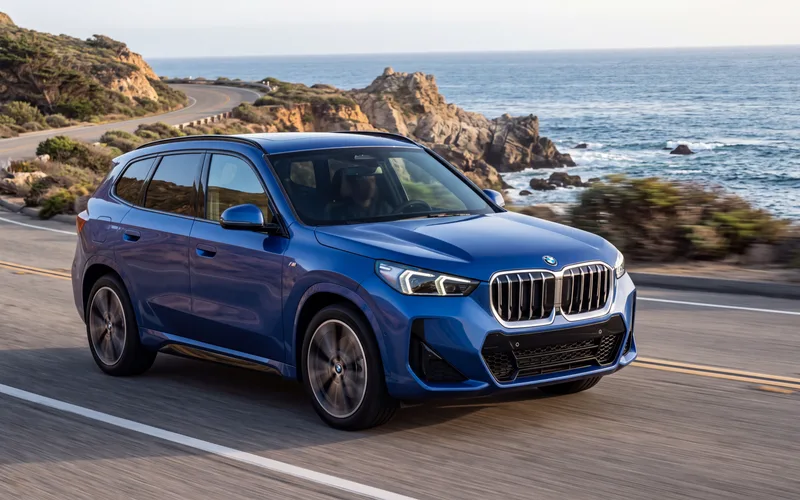 BMW X1Subcompact Luxury SUVBetter at: Cargo space
Same money and badge tier, but with 57.2 cu ft of max cargo, a roomier rear seat and a 3,500-lb tow rating instead of 1,500.
Compare 2.74B-
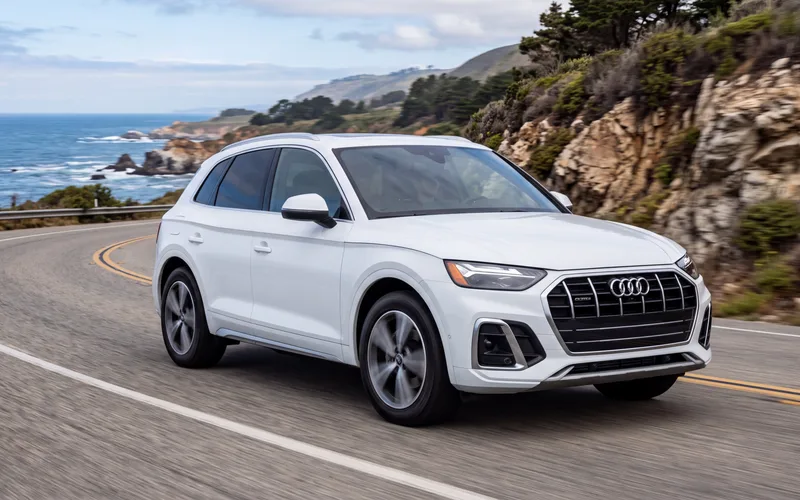 Audi Q5Compact Luxury SUVBetter at: Interior room
The natural step up in the same showroom if the Q3's 23.7 cu ft cargo hold and tight back seat are the dealbreaker.
Compare 2.28C
2.28C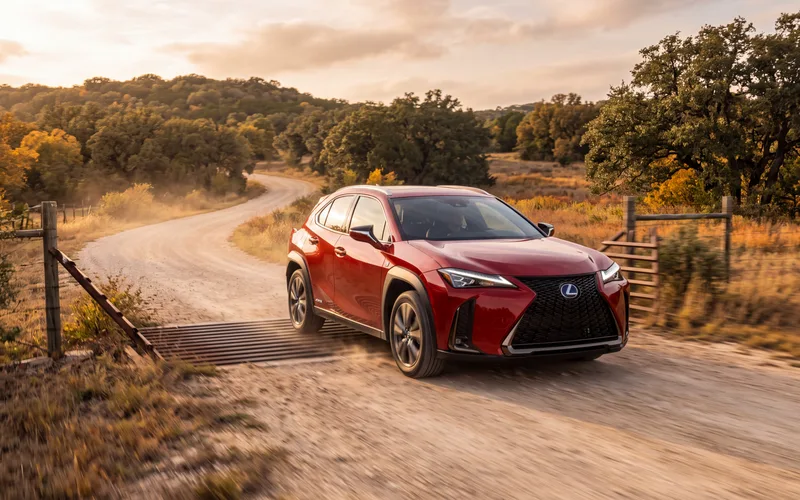 Lexus UXSubcompact Luxury SUVBetter at: Running costs
A hybrid on regular fuel and Lexus service costs cut the Q3's $2,400/yr fuel bill and $7,604 five-year upkeep sharply.
CompareHow it's evolved
10 scored model years · 2017–2026
Subject scores by year
Hover or tap a score to see what moved it versus the year before. A corner mark flags a big swing.
| Year | Performance | Efficiency | Safety | Space | Cost | Reliability | Tech | Use-case | Driving | Value |
|---|---|---|---|---|---|---|---|---|---|---|
| 2026 | 45 | 49 | 79 | 42 | 60 | 68 | 82 | 59 | 71 | 78 |
| 2025 | 34 | 34 | 70 | 41 | 45 | 73 | 64 | 53 | 65 | 63 |
| 2024 | 39 | 40 | 73 | 42 | 49 | 66 | 58 | 52 | 64 | 73 |
| 2023 | 37 | 44 | 68 | 41 | 46 | 72 | 57 | 53 | 63 | 68 |
| 2022 | 37 | 44 | 65 | 40 | 50 | 61 | 57 | 53 | 63 | 65 |
| 2021 | 37 | 40 | 61 | 41 | 48 | 61 | 55 | 50 | 61 | 72 |
| 2020 | 36 | 34 | 63 | 40 | 51 | 53 | 56 | 50 | 60 | 76 |
| 2019 | 35 | 34 | 63 | 39 | 54 | 59 | 56 | 49 | 58 | 75 |
| 2018 | 28 | 34 | 44 | 32 | 58 | 60 | 31 | 45 | 60 | 61 |
| 2017 | 28 | 34 | 34 | 29 | 59 | 60 | 26 | 42 | 56 | 58 |
Compare two years
Best fit & conditions
Higher scores mean a better fit for that use case. Learn more about use-case fit →
Subject profile
Academic Probation · NHTSA safety recalls
May 23, 2019Exterior lighting: turn signalAn inoperable front turn signal may not illuminate an indicator, failing to alert the driver to the issue. As such, these vehicles fail to comply with the requirements of Federal Motor Vehicle Safety Standard (FMVSS) number 108, "Lamps, Reflective Devices, and Associated Equipment."
Defect
Volkswagen Group of America, Inc. (Audi) is recalling certain 2016-2018 Audi Q3 vehicles equipped with LED headlights. An inoperable front turn signal may not illuminate an indicator, failing to alert the driver to the issue. As such, these vehicles fail to comply with the requirements of Federal Motor Vehicle Safety Standard (FMVSS) number 108, "Lamps, Reflective Devices, and Associated Equipment."
Risk
Without an indicator informing the driver of an inoperable turn signal, the driver may turn or change lanes without a signal, increasing the risk of crash.
Remedy
Audi will notify owners, and dealers will update the body control module (BCM), free of charge. The recall began June 21, 2019. Owners may contact Audi customer service at 1-800-253-2834. Audi's number for this recall is 97DK.
NHTSA campaign 19V385000 ↗Manufacturer no. 97DK23,241 vehicles potentially affected (all models in the campaign)Owners notified Jun 21, 2019Filed by Volkswagen Group of America, Inc.Filed as Q3Jun 26, 2017Exterior lighting: brake lights · Forward collision avoidance: crash imminent brakingIf the parking brake is used during emergency braking, the brake lights on the vehicle will not activate. As such, these vehicles fail to comply with Federal Motor Vehicle Safety Standard (FMVSS) number 108, "Lamps, Reflective Devices, and Associated Equipment."
Defect
Volkswagen Group of America, Inc. (Volkswagen) is recalling certain 2016-2017 Audi Q3 vehicles. If the parking brake is used during emergency braking, the brake lights on the vehicle will not activate. As such, these vehicles fail to comply with Federal Motor Vehicle Safety Standard (FMVSS) number 108, "Lamps, Reflective Devices, and Associated Equipment."
Risk
A vehicle approaching from behind may not have any warning that the vehicle is stopping, increasing the risk of a crash.
Remedy
Audi will notify owners, and dealers will update the vehicle software, free of charge. The recall began July 31, 2017. Owners may contact Audi customer service at 1-800-253-2834. Volkswagen's number for this recall is 45G6.
NHTSA campaign 17V400000 ↗Manufacturer no. 45G624,754 vehicles potentially affected (all models in the campaign)Owners notified Jul 31, 2017Filed by Volkswagen Group of America, Inc.Filed as Q3Sep 6, 2016Electrical system: software · Exterior lightingThe affected vehicles may have been programmed with new software that inadvertently makes the side marker lights inoperative in conjunction with the parking lights or the headlights. As such, these vehicles fail to comply with the requirements of Federal Motor Vehicle Safety Standard (FMVSS) number 108, "Lamps, Reflective Devices, and Associated Equipment."
Defect
Volkswagen Group of America, Inc. (Volkswagen) is recalling certain model year 2016 TT roadster, A3 cabriolet, A3 sedan and A3 e-tron, 2016-2017 TT coupe, 2017 A4 sedan and Q7 and 2015-2017 Q3 vehicles. The affected vehicles may have been programmed with new software that inadvertently makes the side marker lights inoperative in conjunction with the parking lights or the headlights. As such, these vehicles fail to comply with the requirements of Federal Motor Vehicle Safety Standard (FMVSS) number 108, "Lamps, Reflective Devices, and Associated Equipment."
Risk
If the side marker lights do not illuminate, the vehicle may be less visible at night, increasing the risk of a crash.
Remedy
Audi will notify owners, and dealers will upload revised software to correct the issue, free of charge. This recall began November 2016. Owners may contact Audi customer service at 1-800-253-2834. Volkswagen's number for this recall is 97CB.
NHTSA campaign 16V642000 ↗Manufacturer no. 97CB79,895 vehicles potentially affected (all models in the campaign)Owners notified Nov 1, 2016Filed by Volkswagen Group of America, Inc.Filed as Q3
15 recalls on other model years of the Q3 (2019–2026)
Sep 11, 2026SteeringOne of the bolts that attaches the steering rack to the subframe may corrode and break. If this happens, the steering rack housing can break.
Defect
Volkswagen Group of America, Inc. (Volkswagen) is recalling certain 2018 Tiguan, 2018-2019 Atlas, and 2019-2021 Audi Q3 vehicles. One of the bolts that attaches the steering rack to the subframe may corrode and break. If this happens, the steering rack housing can break.
Risk
A broken steering rack housing can result in a loss of steering control, increasing the risk of a crash.
Remedy
Dealers will replace the right-side steering rack mounting bolt, free of charge. Owner notification letters are expected to be mailed November 10, 2026. Owners may contact Volkswagen customer service at 1-800-893-5298. Volkswagen's numbers for this recall are 48LG and 48VT. Vehicle Identification Numbers (VINs) involved in this recall became searchable on NHTSA.gov on September 16, 2026.
NHTSA campaign 26V590000 ↗Manufacturer no. 48LG, 48VT208,724 vehicles potentially affected (all models in the campaign)Filed by Volkswagen Group of America, Inc.Filed as Q3Apr 1, 2026Visibility: sun/moon roof assemblyIncorrect software may allow remote sunroof closing from a distance that prevents the operator from clearly seeing the sunroof. As such, these vehicles fail to comply with the requirements of Federal Motor Vehicle Safety Standard number 118, "Power-Operated Window Systems."
Defect
Volkswagen Group of America, Inc. (Audi) is recalling certain 2026 Q3 vehicles. Incorrect software may allow remote sunroof closing from a distance that prevents the operator from clearly seeing the sunroof. As such, these vehicles fail to comply with the requirements of Federal Motor Vehicle Safety Standard number 118, "Power-Operated Window Systems."
Risk
Closing the sunroof without the ability to see it can increase the risk of injury to occupants.
Remedy
Dealers will update the sunroof control module software and the owner's manual, free of charge. Owner notification letters were mailed April 22, 2026. Owners may contact Audi customer service at 1-800-253-2834. Audi's number for this recall is 57KS. Vehicle Identification Numbers (VINs) involved in this recall became searchable on NHTSA.gov on April 7, 2026.
NHTSA campaign 26V209000 ↗Manufacturer no. 57KS6,077 vehicles potentially affected (all models in the campaign)Owners notified Apr 22, 2026Filed by Volkswagen Group of America, Inc.Filed as Q3Feb 12, 2025Back over prevention: softwareAn error may occur in the camera control unit at vehicle startup, resulting in the rearview camera image not displaying as intended. As such, these vehicles fail to comply with the requirements of Federal Motor Vehicle Safety Standard number 111, "Rear Visibility."
Defect
Volkswagen Group of America, Inc. (Volkswagen) is recalling certain 2022-2024 Tiguan, 2023 Arteon, and 2024-2025 Audi Q3 vehicles. An error may occur in the camera control unit at vehicle startup, resulting in the rearview camera image not displaying as intended. As such, these vehicles fail to comply with the requirements of Federal Motor Vehicle Safety Standard number 111, "Rear Visibility."
Risk
A rearview camera that does not display an image can reduce the driver's rear view, increasing the risk of a crash.
Remedy
Dealers will update the camera control unit software, free of charge. Owner notification letters were mailed to Audi owners April 3, 2024, and Volkswagen owners November 18, 2025.Volkswagen owners will receive a second notice once remedy parts become available. Owners may contact Volkswagen customer service at 1-800-893-5298 or Audi customer service at 1-800-253-2834. Volkswagen's numbers for this recall are (Volkswagen) 91NY and (Audi) 90AV.
NHTSA campaign 25V082000 ↗Manufacturer no. VW: 91NY, Audi: 90AV29,569 vehicles potentially affected (all models in the campaign)Owners notified Apr 3, 2025Filed by Volkswagen Group of America, Inc.Filed as Q3Apr 3, 2024Air bags: sensor: occupant classification: front passengerAn electrical connection in the front passenger seat for the occupant detection system (ODS) control module may loosen and deactivate the front passenger air bag.
Defect
Volkswagen Group of America, Inc. (Volkswagen) is recalling certain 2023 Audi S5 Cabriolet, A4 Allroad, Q5 Sportback, A3 Sedan, S5 Sportback, SQ7, TT Coupe, TT Roadster, RS5 Sportback, 2024 A8, E-Tron Quattro, E-Tron Sportback Quattro, Q8, RSQ8, 2023-2024 Q3, Q5, and Q7 vehicles. An electrical connection in the front passenger seat for the occupant detection system (ODS) control module may loosen and deactivate the front passenger air bag.
Risk
A deactivated front passenger air bag will not deploy during a crash, increasing the risk of injury.
Remedy
Dealers will replace the passenger seat occupant detection system control module, free of charge. Owner notification letters were mailed on May 8, 2024. Owners may contact Audi customer service at 1-800-253-2834. Volkswagen's number for this recall is 69GU.
NHTSA campaign 24V251000 ↗Manufacturer no. 69GU91 vehicles potentially affected (all models in the campaign)Owners notified May 8, 2024Filed by Volkswagen Group of America, Inc.Filed as Q3Oct 31, 2022Tires: pressure monitoring and regulating systemsThe tire pressure monitoring system may not detect an air pressure loss in adequate time when deflating occurs among all four tires simultaneously. As such, these vehicles fail to comply with the requirements of Federal Motor Vehicle Safety Standard number 138, "Tire Pressure Monitoring Systems."
Defect
Volkswagen Group of America, Inc. (Volkswagen) is recalling certain 2019 Volkswagen Tiguan LWB, Golf Sportswagen A7, Golf Alltrack, Golf R GP, Audi Q3, Audi A3 Cabriolet, 2019-2020 Jetta NF, Jetta GLI, Golf GTI, Atlas, Golf A7, Audi A3, 2020-2021 Atlas Cross Sport, and 2021 Atlas FL vehicles. The tire pressure monitoring system may not detect an air pressure loss in adequate time when deflating occurs among all four tires simultaneously. As such, these vehicles fail to comply with the requirements of Federal Motor Vehicle Safety Standard number 138, "Tire Pressure Monitoring Systems."
Risk
An undetected sudden loss of pressure in all four tires increases the risk of a crash.
Remedy
Dealers will update the TPMS software, free of charge. Owner notification letters were mailed November 18, 2022. Owners may contact Volkswagen's customer service at 1-800-893-5298 or AudiÂs customer service at 1-800-253-2834. Volkswagen's numbers for this recall are (Audi) 45J7, and (VW) 45J6 and 45J8.
NHTSA campaign 22V815000 ↗Manufacturer no. AU:45J7,VW:45J6,45J8296,044 vehicles potentially affected (all models in the campaign)Owners notified Nov 18, 2022Filed by Volkswagen Group of America, Inc.Filed as Q3Oct 26, 2022Back over prevention: display function · Equipment: electrical: infotainment: video (touch)screen/monitor/unitThe infotainment main unit may become damaged internally when the vehicle is shut off, resulting in an inoperative rearview camera display the next time the vehicle is started. As such, these vehicles fail to comply with the requirements of Federal Motor Vehicle Safety Standard number 111, "Rear Visibility."
Defect
Volkswagen Group of America, Inc. (Audi) is recalling certain 2021-2022 AUDI A8, A6 Allroad, E-TRON Quattro, 2022 S3, RSQ8, RS7, RS6 Avant, Q8, Q7, Q3, E-TRON Sportback Quattro, S5 Cabriolet, E-TRON GT, S5 Sportback, A7, A6, A5 Sportback, A5 Cabriolet, A4, A4 Allroad, A3, S8, SQ7, SQ8, S6, and S4 vehicles. The infotainment main unit may become damaged internally when the vehicle is shut off, resulting in an inoperative rearview camera display the next time the vehicle is started. As such, these vehicles fail to comply with the requirements of Federal Motor Vehicle Safety Standard number 111, "Rear Visibility."
Risk
An inoperative rearview camera display reduces the driver's rear visibility, increasing the risk of a crash.
Remedy
Dealers will replace the infotainment main unit, free of charge. Owner notification letters were mailed June 6, 2022. Owners may contact Audi's customer service at 1-800-253-2834. Audi's number for this recall is 91Ei.
NHTSA campaign 22V806000 ↗Manufacturer no. 91Ei6,076 vehicles potentially affected (all models in the campaign)Owners notified Jun 6, 2023Filed by Volkswagen Group of America, Inc.Filed as Q3Sep 19, 2022Visibility: glass, side/rearA window manufacturing error may allow the rear window to crack or break.
Defect
Volkswagen Group of America, Inc. (Volkswagen) is recalling certain 2022 Audi Q3 vehicles. A window manufacturing error may allow the rear window to crack or break.
Risk
A broken rear window may result in loose pieces of glass and increase the risk of injury.
Remedy
Dealers will check the manufacturing date of the vehicle's rear window and replace it as necessary, free of charge. Owner notification letters were mailed October 11, 2022. Owners may contact Audi 's customer service at 1-800-253-2834. Volkswagen's number for this recall is 64H4.
NHTSA campaign 22V701000 ↗Manufacturer no. 64H44 vehicles potentially affected (all models in the campaign)Owners notified Oct 11, 2022Filed by Volkswagen Group of America, Inc.Filed as Q3Sep 8, 2022Fuel system, gasoline: storageThe vent pipe within the fuel tank may have been damaged during fuel tank assembly.
Defect
Volkswagen Group of America, Inc. (Volkswagen) is recalling certain 2021-2022 Audi Q3 vehicles. The vent pipe within the fuel tank may have been damaged during fuel tank assembly.
Risk
A damaged vent pipe may allow fuel to spill out of the filler neck when the fuel cap is opened, increasing the risk of an injury.
Remedy
Dealers will inspect the internal vent pipe for damage and replace the charcoal canister and the fuel tank, if necessary, free of charge. Owner notification letters were mailed November 1, 2022. Owners may contact Audi's customer service at 1-800-253-2834. Volkswagen's number for this recall is 20DS.
NHTSA campaign 22V673000 ↗Manufacturer no. 20DS13,004 vehicles potentially affected (all models in the campaign)Owners notified Nov 1, 2022Filed by Volkswagen Group of America, Inc.Filed as Q3Feb 7, 2022Back over prevention: sensing system: cameraA software error may prevent the rearview image from initially displaying when the vehicle begins to reverse. As such, these vehicles fail to comply with the requirements of Federal Motor Vehicle Safety Standard number 111, "Rear Visibility."
Defect
Volkswagen Group of America, Inc. (Audi) is recalling certain 2022 Audi Q3 vehicles that failed to receive the software update under Recall 21V-825 (91CR). A software error may prevent the rearview image from initially displaying when the vehicle begins to reverse. As such, these vehicles fail to comply with the requirements of Federal Motor Vehicle Safety Standard number 111, "Rear Visibility."
Risk
A rearview camera that does not display an image reduces the driver's rear view, increasing the risk of a crash.
Remedy
Dealers will update the infotainment unit parameters, free of charge. Owner notification letters were mailed March 3, 2022. Owners may contact Audi customer service at 1-800-253-2834. Audi's number for this recall is 91DF.
NHTSA campaign 22V064000 ↗Manufacturer no. 91DF665 vehicles potentially affected (all models in the campaign)Owners notified Mar 3, 2022Filed by Volkswagen Group of America, Inc.Filed as Q3Oct 20, 2021Back over prevention: sensing system: cameraA software error may prevent the rear-view image from initially displaying when the vehicle begins to reverse. As such, these vehicles fail to comply with the requirements of Federal Motor Vehicle Safety Standard number 111, "Rear Visibility."
Defect
Volkswagen Group of America, Inc. (Audi) is recalling certain 2021 Audi A8 and S8, 2022 Audi A5 Sportback, A4 Sedan, E-Tron GT, Q3, Q5, RS6 Avant, A3 Sedan, S5 Sportback, Q5 Sportback, Q7, Q8, RSQ8, SQ7, SQ8, and S3 Sedan vehicles. A software error may prevent the rear-view image from initially displaying when the vehicle begins to reverse. As such, these vehicles fail to comply with the requirements of Federal Motor Vehicle Safety Standard number 111, "Rear Visibility."
Risk
A rear-view camera that does not display an image reduces the driver's rear view, increasing the risk of a crash.
Remedy
Dealers will update the infotainment unit parameters, free of charge. Owner notification letters were mailed November 9, 2021. Owners may contact Audi customer service at 1-800-253-2834. Audi's number for this recall is 91CR.
NHTSA campaign 21V825000 ↗Manufacturer no. 91CR2,857 vehicles potentially affected (all models in the campaign)Owners notified Nov 9, 2021Filed by Volkswagen Group of America, Inc.Filed as Q3Aug 5, 2021Seat belts · Seat belts: rear/other: retractorThe rear seat belt automatic locking retractors may deactivate early, which can prevent the child restraint system from securing properly. As such, these vehicles fail to comply with the requirements of Federal Motor Vehicle Safety Standard number 208, "Occupant Crash Protection."
Defect
Volkswagen Group of America, Inc. (Volkswagen) is recalling certain 2021 Volkswagen ID4, Audi A4 Allroad, A4 Sedan, A5 Cabriolet, A5 Coupe, A5 Sportback, A6 Allroad, A6 Sedan, A7, A8, E-Tron Quattro, E-Tron Sportback Quattro, Q3, Q5, Q5 Sportback, Q7, Q8, RS5 Sportback, RS5 Coupe, RS6 Avant, RS7, RSQ8, S4 Sedan, S5 Cabriolet, S5 Coupe, S5 Sportback, S6 Sedan, S7, S8, SQ5, SQ5 Sportback, SQ7, SQ8, and 2021-2022 S3 Sedan vehicles. The rear seat belt automatic locking retractors may deactivate early, which can prevent the child restraint system from securing properly. As such, these vehicles fail to comply with the requirements of Federal Motor Vehicle Safety Standard number 208, "Occupant Crash Protection."
Risk
An unsecured child restraint system can increase the risk of injury during a crash.
Remedy
Dealers will inspect, and replace as necessary, the middle-rear seat belt assemblies, free of charge. Owner notification letters were mailed August 27, 2021. Owners may contact Volkswagen customer service at 1-800-893-5298 and Audi customer service at 1-800-253-2834. Volkswagen's numbers for this recall are 69CR (VW) and 69CS (Audi).
NHTSA campaign 21V606000 ↗Manufacturer no. 69CR, 69CS45,496 vehicles potentially affected (all models in the campaign)Owners notified Aug 27, 2021Filed by Volkswagen Group of America, Inc.Filed as Q3Jan 27, 2021Steering: critical fastenersVolkswagen Group of America, Inc. (Audi) is recalling one 2019 Audi Q3 vehicle. Production deviation in the belt pully can prevent the circlip from properly engaging the steering rack.
Defect
Volkswagen Group of America, Inc. (Audi) is recalling one 2019 Audi Q3 vehicle. Production deviation in the belt pully can prevent the circlip from properly engaging the steering rack.
Risk
The circlip can detach and catch on surrounding components, causing the steering system to lock and increasing the risk of a crash.
Remedy
Audi will notify the owner, and a dealer will replace the steering rack, free of charge. The recall was completed February 28, 2021. Owners may contact Audi customer service at 1-800-253-2834. Audi's number for this recall is 48P7.
NHTSA campaign 21V027000 ↗Manufacturer no. 48P71 vehicles potentially affected (all models in the campaign)Owners notified Feb 28, 2021Filed by Volkswagen Group of America, Inc.Filed as Q3Dec 16, 2020Service brakes, hydraulic: pedals and linkagesThe brake pedal plate can bend or detach under the pressure applied during sudden stopping.
Defect
Volkswagen Group of America, Inc. (Volkswagen) is recalling certain 2020 Audi Q3 vehicles. The brake pedal plate can bend or detach under the pressure applied during sudden stopping.
Risk
A bent or detached brake pedal plate decreases the contact area for the driver's foot and increases the risk of a crash.
Remedy
Audi will notify owners, and dealers will inspect the weld between the brake pedal and the brake pedal plate and, as necessary, replace the entire brake pedal, free of charge. The recall began January 12, 2021. Owners may contact Audi customer service at 1-800-253-2834. Volkswagen's number for this recall is 46i7.
NHTSA campaign 20V786000 ↗Manufacturer no. 46i7313 vehicles potentially affected (all models in the campaign)Owners notified Jan 12, 2021Filed by Volkswagen Group of America, Inc.Filed as Q3Oct 19, 2020Seats · Seats: critical fastenersVolkswagen Group of America, Inc. (Audi) is recalling one 2020 Audi Q3 vehicle. The driver's seat frame may have incorrectly been bolted to the seat rail.
Defect
Volkswagen Group of America, Inc. (Audi) is recalling one 2020 Audi Q3 vehicle. The driver's seat frame may have incorrectly been bolted to the seat rail.
Risk
The incorrect bolt connection could fail, increasing the risk of injury in the event of a crash.
Remedy
Audi will notify owners, and dealers will inspect the bolt connection and, as necessary, replace the seat structure, free of charge. The recall began November 10, 2020. Owners may contact Audi customer service at 1-800-253-2834. Audi's number for this recall is 72L4.
NHTSA campaign 20V644000 ↗Manufacturer no. 72L41 vehicles potentially affected (all models in the campaign)Owners notified Nov 10, 2020Filed by Volkswagen Group of America, Inc.Filed as Q3May 13, 2020Air bags: frontal: passenger side: inflator moduleThe passenger air bag may not properly deploy through the instrument panel tear seam.
Defect
Volkswagen Group of America, Inc. (Volkswagen) is recalling certain 2019 Audi Q3 vehicles. The passenger air bag may not properly deploy through the instrument panel tear seam.
Risk
In the event of a crash, the passenger air bag may not properly deploy and inflate, and small plastic parts may enter the cabin, increasing the risk of injury.
Remedy
Audi will notify owners, and dealers will inspect the instrument panel and replace it, if necessary, free of charge. The recall began June 10, 2020. Owners may contact Audi customer service at 1-800-822-2834. Volkswagen's number for this recall is 70H7.
NHTSA campaign 20V273000 ↗Manufacturer no. 70H73,024 vehicles potentially affected (all models in the campaign)Owners notified Jun 10, 2020Filed by Volkswagen Group of America, Inc.Filed as Q3
Source: NHTSA Office of Defects Investigation recall database, model years 2017–2026. Recalls are listed by model year as the manufacturer filed them; whether a specific car is affected depends on its VIN — check a VIN at nhtsa.gov ↗. NHTSA model names matched to this page: Q3.
Detailed scoring by subject
1Performance & PowertrainOne of the Q3's weakest categories.0.00F
One engine for the whole 2017 US range: a 2.0-litre turbo four making 200 hp, unchanged through the Typ 8U's facelifted years. That is the low end of the SUV field in absolute terms and modest even against subcompact luxury rivals, several of which were already offering 240 hp.
207 lb-ft arriving from 1,700 rpm is what makes the Q3 feel adequate around town despite the modest peak power, but the absolute figure is well down on the segment and there is no second, torquier engine to step up to.
Eight seconds to 60 mph is slow for anything wearing four rings, and reviewers said so — the Q3 is the rare Audi where acceleration is the complaint rather than the selling point. The quattro model carries roughly 200 lbs of extra hardware without extra power to move it.
The engine itself is the good part — reviewers consistently describe it as smooth and quiet, never intruding with noise or vibration — but the delivery is merely adequate: there is turbo lag off idle and nothing in reserve once the modest peak arrives. Refined, not responsive, which lands it mid-band.
A six-speed Tiptronic torque-converter automatic in 2017, when rivals — and Audi's own newer models — had moved to eight speeds or dual-clutch units. Reviewers found the shifts smooth but slow, and the wide ratio spacing does the 200-hp engine no favours; paddle shifters were confined to the Sport Plus package on Prestige.
Audi does not market the Typ 8U Q3 as a tow vehicle in the United States and publishes no US rating; the 2,200-lb braked figure is the factory rating quoted for the same 2.0 TFSI car in markets where Audi does rate it. Either way it is near the bottom of the SUV band — enough for a small utility trailer or a pair of bikes, nothing more.
quattro is optional on every 2017 trim — Premium, Premium Plus and Prestige — for about $2,100, so no buyer is locked out of it, but it is an option rather than standard equipment and the hardware is a basic Haldex-type on-demand coupling: no low range, no locking differentials, no terrain modes. Widely available with basic operation is squarely the middle band.
A pavement crossover with no off-road pretensions: roughly 6.7 inches of ground clearance, no skid plates, no locking differentials, no hill-descent or terrain-mode selector, and no off-road-oriented trim anywhere in the range. The optional quattro helps on a wet or snowy road and that is the limit of it.
One engine, one output, one transmission. The 2017 US Q3 offered no second gas tune, no diesel, no hybrid and no plug-in — the only powertrain decision a buyer made was front-wheel drive or quattro, which is a drivetrain choice, not a powertrain one. Europe's 1.4 TFSI, the TDI diesels and the RS Q3 all stayed out of the US.
2Efficiency & RangeGrades near the bottom of the scale.0.20F
23 MPG combined puts the 2017 Q3 a shade below the middle of the gas SUV field: a 2.0-litre turbo four with no stop-start, no cylinder deactivation and a six-speed automatic, in a body that is small but not light. Unusually, EPA rates the front-drive and quattro versions identically, so there is no economy penalty for taking all-wheel drive.
20 MPG in town is where the absence of stop-start and the six-speed's tall, widely spaced ratios cost the Q3 most — a hybrid-equipped rival of the era does half again better in the same traffic.
28 MPG at a cruise is the Q3's best showing and lands it right on the middle of the SUV highway band — the small turbo engine is at its most efficient loafing in top gear, which is the one place the six-speed is no handicap.
A 16.9-gallon tank — generous for a vehicle this size — is what rescues the range figure from the mediocre economy, giving roughly 389 miles between fills and comfortably better than the 350-odd miles the smaller-tanked later Q3 manages. It still sits in the lower half of the SUV range band.
$3,300 a year is near the top of the SUV cost band and the single worst figure on this scorecard — it is 23 MPG bought with premium fuel, which is what separates the Q3 from a mainstream crossover returning the same economy on 87 octane. EPA reckons it costs $5,500 more to fuel over five years than the average new vehicle.
Premium is required, not merely suggested: EPA certified and rated the 2017 Q3 on premium gasoline, and the annual-cost figure above is priced accordingly. That is a standing surcharge on every tank for the life of the car, and it drops this item into the bottom band — notably, the later F3-generation Q3 was EPA-rated on regular, so this is a genuine year-specific penalty rather than a brand-wide one.
3SafetyGrades near the bottom of the scale.0.25F
NHTSA never crash-tested the facelifted Typ 8U Q3 in any US model year, so no overall star rating exists for 2017 or for the generation to fall back on. Estimated at 4 stars — the dataset's convention for an untested vehicle — which the Q3's clean sweep of Good IIHS crashworthiness results supports rather than contradicts.
The structure is genuinely excellent — Good in all five crashworthiness tests IIHS ran, including the demanding driver-side small overlap. What it never earned is an award: 2017 Top Safety Pick required an available front crash prevention system, and the Q3 had none to offer, with Poor headlights closing the door on TSP+ as well. Top of the no-award band on crash results alone; the two reasons it missed the award are scored in 3.2.2 and 3.3.1.
Measured against the five systems this item asks about — AEB, adaptive cruise, lane keeping, blind-spot, rear cross-traffic — the 2017 Q3 has none of them standard and cannot be optioned with three of them at all. Standard safety content stops at stability and traction control, front side and side curtain airbags, a rearview camera and front and rear parking sensors, which was competitive several years earlier but not in 2017.
There is nothing to rate. Audi pre sense was not offered on the US Q3 for 2017 at any trim or option level, so IIHS lists front crash prevention as unavailable rather than assigning it a Basic/Advanced/Superior tier. This is the single largest reason the car sits at the bottom of the segment on safety despite its crash structure.
The one modern driver aid the Q3 does offer. Audi side assist is alert-only — mirror-mounted indicators, no steering or braking intervention — and it is not standard on the volume Premium or Premium Plus trims, arriving only with the Technology package or standard on the top Prestige. Rear cross-traffic warning is bundled with it rather than sold separately.
No lane assistance of any kind on the US-market 2017 Q3 — not lane departure warning, not lane keep assist, not centering. Audi active lane assist did not reach this nameplate in the US until the 2019 redesign. The European facelift's option list is broader than what Audi of America actually sold, so the Wikipedia facelift description should not be read as US availability.
Conventional fixed-speed cruise control only. Radar-based adaptive cruise needs the same forward sensor as the pre sense braking the Q3 does not have, and IIHS confirms no forward-looking crash-prevention hardware was available on this car — so no ACC, no stop-and-go, and no highway assist of any description. Later Q3 material describing adaptive cruise assist refers to the 2019-on F3 generation, not this one.
No hands-free highway driving system on the 2017 Q3 or anywhere in Audi's 2017 US lineup — the car has no adaptive cruise or lane centering to build one on.
IIHS rated the Q3's headlights Poor — and rated both available systems, so there is no trim you can buy your way to better lighting with. The tested low beams left visibility inadequate on the left side of the road, with curve performance flagged on both variants. A Poor rating on every variant is the floor of this item.
The Q3's short, upright, boxy body is easy to place — a tall greenhouse, a low cowl and compact overhangs give honest forward and quarter sightlines, and the rear window is usefully square. Thick rear pillars and a rising beltline still leave over-the-shoulder blind zones, and there is no 360-degree camera to fill them, but front and rear parking sensors plus the rearview camera are standard on every trim rather than optional.
IIHS rates the Q3's LATCH hardware Acceptable — workable anchors that take some digging rather than easy-access ones. The bigger constraint is the car itself: this is a subcompact crossover with a short rear bench and modest door apertures, so two seats fit but three-across is not realistic and a rear-facing seat squeezes the front passenger.
4Space & ComfortOne of the Q3's weakest categories.0.00F
Five seats across Premium, Premium Plus and Prestige, with no third row or captain's-chair option anywhere in the range — the segment norm for a subcompact luxury crossover, and the floor of the SUV band this item is scored against.
37.0 inches sits exactly on the bottom of the SUV band, and there is no sunroof-delete option to reclaim any of it — the panoramic glass roof is standard equipment on the base Premium trim upward, so the published US figure is the figure every buyer gets.
40.0 inches lands on the very bottom of the SUV band — adequate for legs, but the Q3's real front-seat problem is width rather than length, and reviewers who sat in it said so repeatedly.
The one interior dimension where the Q3 is genuinely competitive: 37.4 inches is mid-band for an SUV and slightly better than the front measurement, because the tall, upright, boxy Typ 8U body does not taper the roofline the way its sportier successors and rivals do.
31.1 inches is near the floor of the SUV band and the single most-criticised thing about this car — the rear bench does not slide or recline to buy any of it back, so what the tape measure says is what the passenger gets. This is the direct consequence of a 103-inch wheelbase.
There is no third row. The Q3 is a two-row subcompact crossover on a 103-inch wheelbase — a third row was never offered in any market or model year of the Typ 8U, and at 172.8 inches overall there is nowhere to put one.
16.7 cubic feet is below the bottom of the SUV band and class-trailing by a wide margin — reviewers put it roughly ten cubic feet behind a BMW X1 of the same era. The load bay itself is well shaped, with flat sides and a low lip, but there is simply very little of it.
Folding the bench roughly triples the space but still leaves the Q3 short of the bottom of the SUV band — 48.2 cubic feet is hatchback territory, and it is the price of a subcompact footprint that is 172.8 inches long and only 62.6 inches tall.
Conventional and cramped rather than clever: a small centre console bin, modest door pockets, a covered cubby ahead of the shifter and an underfloor tray in the load bay, with 12-volt outlets front and rear. Nothing here is badly designed, but the narrow cabin caps every bin's size and there is no fold-flat front passenger seat, no configurable console and no onboard power.
Good front seats let down by the row behind and by the posture the car imposes. Eight-way power, heated leather seats with four-way lumbar are standard on every 2017 trim and testers found them supportive over distance; the rear bench is fine for kids but short on legroom for adults, and more than one reviewer disliked the perched, oddly offset driving position.
Firm and well controlled on the standard 18-inch wheels, but the 103-inch wheelbase gives it a short-stroke, choppy gait over broken surfaces that reviewers on larger wheels found genuinely uncomfortable. Composed rather than cosseting — mid-band, with a clear penalty for the optional 19s.
Sources split on this one, which puts it squarely mid-band. Consumer Reports rated the Q3 a quiet car that filters road and wind noise well at speed; a harder-driven quattro test found persistent tire hum and excessive wind noise around the A-pillars. The 2.0T itself is never the offender — it stays subdued at a cruise.
Strong on the basics and empty above them. Dual-zone automatic climate control, heated eight-way power front seats, leather and a panoramic sunroof are all standard on the cheapest 2017 trim — but there are no ventilated seats, no heated steering wheel, no heated rear seats, no rear climate controls or rear vents, and no remote start or pre-conditioning at any price.
5Cost of OwnershipOne of the Q3's strongest categories.1.95C-
2017 is the year Audi slotted a new, lower-priced Premium trim beneath the Premium Plus, giving the first-generation (Typ 8U) Q3 its cheapest US entry point and one of the lowest opening prices in the subcompact luxury SUV class. Cheap for the segment, but a front-drive base car whose all-wheel drive — the reason most US buyers shop Audi — costs $2,100 extra.
The volume configuration is the mid Premium Plus with quattro rather than the new front-drive Premium: quattro takes the great majority of US Audi SUV sales, and Premium Plus is where the power liftgate, heated power-folding mirrors and the option sheet that makes the car feel premium actually live. The base Premium exists mostly to advertise a $32,750 headline; the Prestige at $42,250 is a low-volume top trim.
Published estimates spread widely, so this is a triangulated mid-range figure: Audi dealer labor and parts rates apply from the first service, Audi Care is a plan the buyer purchases rather than included coverage, and the 4-year/50,000-mile warranty runs out inside the five-year window leaving the last year fully out of pocket. Set slightly below the second-generation car because the 2017 Q3's five-year window ran at 2017–2022 rates and its six-speed torque-converter automatic is a simpler, cheaper unit than the dual-clutch and eight-speed boxes elsewhere in the Audi range.
The 2017 car's five-year mark landed in calendar 2022, at the top of the post-pandemic used-price bubble, which lifted its retention above what an Audi subcompact SUV normally holds — but the bubble was brief and the correction that followed was steep, so this sits only modestly above the nameplate's long-run rate rather than at the inflated peak. Retention is a percentage, not a verdict on cost: 45% of a $38,400 car is still roughly $17,300 gone.
Audi's standard 4-year/50,000-mile term matched BMW and Mercedes-Benz for 2017 and beat the 4-year/50,000-mile-class norm only on the corrosion side — mid-pack among luxury rivals and well short of Genesis, Hyundai and Kia at 5 years/60,000 miles.
Audi does not break powertrain coverage out into a longer term the way most brands do, so the EA888 2.0-liter turbo four, the six-speed automatic and the quattro driveline are covered no longer than the trim panels — 4 years/50,000 miles, below the 5-year floor of the scoring band and among the shortest powertrain terms in the industry.
A 2017 Audi buyer got four years of unlimited-mileage 24-Hour Roadside Assistance running with the warranty, a short Audi connect 4G LTE trial on Prestige cars, and — by the boundaries of Audi's own plan — coverage of the first 10,000-mile scheduled service, since the MY2017–2019 Audi Care package is sold as 20k/30k/40k/50k. That is one visit, not a program: every service after it is at dealer rates unless Audi Care is bought separately, which leaves the Q3 well behind BMW, which bundled 4 yr/50,000 mi of free scheduled maintenance on its 2017 cars, and far below Audi's own Signature Care (3 yr/30,000 mi included) introduced only for model year 2026.
$38,400 volume-trim price minus its estimated resale value after 5 years (55% retained, or about $21,120) leaves about $17,280 in depreciation. Add the projected $6,500 in 5-year maintenance and repairs, and owning this vehicle for 5 years costs about $23,780 in total.
6Reliability & QualityThe Q3's best-graded category.2.01C
2017 is a pure carry-over year in the middle of the facelifted first-generation (Typ 8U) run, so it is a thoroughly debugged design rather than a launch-year car, and the field data is light: NHTSA logs only 7 complaints for the entire model year with no cluster in any one system. J.D. Power rates it above average and Consumer Reports calls it about average for its model year — a slightly better pairing than the 2018 car got from CR — but neither source puts it in top-tier territory, and the known EA888 consumables list (below) caps how far the mid-band judgment can go.
Audi sits in the bottom third of the major dependability studies: 27th of 31 brands at 244 PP100 in the 2026 J.D. Power VDS against a 204 PP100 industry average, last place in the 2025 Initial Quality Study, and 28th of 32 at RepairPal. Consumer Reports is kinder, placing Audi upper-middle among brands, which keeps this out of the very bottom band.
Three NHTSA campaigns against the 2017 Q3 — more than the single recall on the 2018 car — but every one is an FMVSS 108 lighting-compliance issue remedied by a free dealer software flash, and there is no powertrain, fire, airbag or structural campaign anywhere in the model year. Solidly typical recall activity with nothing systemic; held below the top band by the count plus the service-bulletin side, where sunroof-drain blockage drew an Audi TSB and direct-injection carbon cleaning is a recurring 2.0 TFSI shop item.
The 200-hp 2.0T is a high-volume EA888 four in an older, lower-output Volkswagen-specification tune, driving a conventional six-speed Tiptronic torque-converter automatic rather than a dry-clutch DSG — a real durability advantage over the twin-clutch alternative, and VW/Audi specialists regard the 2015–2018 Q3 as one of the more dependable cars the group built in that era. Held mid-band by a well-documented consumables list: timing-chain-tensioner wear (preventive replacement advised at 80–100k miles), plastic-impeller water pump and thermostat-housing coolant leaks around 60–100k miles, PCV-valve failure causing oil consumption and rough idle, and intake-valve carbon buildup inherent to port-less direct injection.
Reviewers rate the cabin as convincingly Audi — sharp gauges, metal accents, sturdy plastics and first-rate-feeling surfaces — but by 2017 this is a cabin designed in 2011 and lightly facelifted for 2015, without Virtual Cockpit or MMI touch, and hard low-touch plastics on the door pulls and lower console are noted against a luxury price. Competitive rather than class-leading for a subcompact luxury SUV.
Assembly is the strongest part of this car's quality story, helped by a body that had been in production since 2011 and two years past its facelift: reviewers describe tiny panel gaps and a quiet, solidly crafted cabin. Short of the top band only because Audi's initial-quality standing as a brand is poor and owner reports of MMI freezes, Bluetooth dropouts and parking-sensor faults persist across the generation.
Audi retails through 300-plus franchised dealers covering all 50 states — adequate nationwide coverage for a luxury brand, though far thinner than a mainstream network, so rural owners travel for warranty work. Service satisfaction is mid-pack among premium brands in J.D. Power's CSI study, well behind the Porsche/Lexus leaders. A nine-year-old 8U is long past its 4-year/50,000-mile warranty, so every visit to that network is now paid work.
Running costs sit above even luxury-segment norms: RepairPal puts Q3 annual maintenance at roughly $915 (about $956 for the quattro) against $859 for the average luxury compact SUV and $987 brand-wide for Audi. The 8U's PQ35-family mechanicals are shared broadly with Volkswagen, which gives it a genuine independent-specialist base and good aftermarket supply for wear items and the known cooling-system parts; electronics, control modules and body panels stay dealer-priced, and with the warranty long expired every one of those bills lands on the owner.
7Technology & InfotainmentThe Q3's lowest-graded category.0.00F
The 2017 Q3 carries a 6.5-inch colour display that motors up out of the dash top, growing to 7 inches only on cars fitted with MMI Navigation plus. Both sit below the bottom of the SUV band, and the more relevant fact is that neither responds to touch at all — this is MMI 3G, driven entirely by the console rotary controller and its surrounding hard keys.
MMI 3G's rotary-controller logic is coherent once learned and it is not a laggy system, but by 2017 it looked and felt a generation behind — low-resolution 2D map graphics, a small pop-up screen, and a control layout reviewers found awkward rather than intuitive, with the climate stack and MMI keys competing for the same low console real estate.
Not offered in any form — not wireless, not wired, not as a dealer-installed option. Audi's smartphone-projection rollout reached the MIB2 platform in the A4, Q7 and A3 but never came back to the Typ 8U Q3's MMI 3G hardware, so the 2017 car ends its life without CarPlay or Android Auto. Bluetooth phone and audio streaming is the entire phone story.
The native system is competent but optional on the trims most people bought, and it is the only navigation the car can have since there is no phone projection to fall back on. MMI Navigation plus brings hard-drive maps with 3D rendering, a 7-inch display and command-word voice control; on Premium and Premium Plus without it, the Q3 has no built-in navigation at all and the voice system handles little beyond phone and radio.
The strongest part of the Q3's technology case, and the one area where the standard equipment is genuinely generous: a 10-speaker system with satellite radio and a CD player is standard on the base Premium, and the 14-speaker Bose surround system on Prestige is a real upgrade rather than a badge. It is a good system in a small, reasonably quiet cabin.
Analogue only. The 2017 Q3 keeps conventional speedometer and tachometer dials with a small monochrome-or-colour driver information display between them; Audi's Virtual Cockpit had launched on the TT, Q7 and A4 by this point but was never fitted to the Typ 8U Q3 in any market or model year.
None, of any kind. MMI 3G/3G+ in the 2017 Q3 takes its map and software updates from a physical DVD bought from the dealer or parts counter; there is no mechanism for the vehicle to update itself, and no module beyond infotainment is remotely serviceable.
Effectively nothing a phone can do to this car from outside it. The 2017 Q3 has no factory remote start, no remote lock/unlock, no vehicle locator and no digital key; the MMI connect app of the era pairs to nav-equipped cars for online media and destination transfer, not for remote vehicle control, and even that thin layer rode on the 3G network Audi shut down in 2022.
Sparse by any standard and dated even for 2017: a single USB port in the console under the MMI display, the Audi music interface with its proprietary adapter cable bundled into the Convenience package, and 12-volt sockets. No USB-C anywhere, no second-row charging point, no wireless charging pad — Audi's phone box was never fitted to this car — and no household outlet.
Middling because the convenience hardware is real but optional. Audi advanced key with keyless start and hands-free tailgate release comes only in the extra-cost Convenience package, so the volume car is a conventional turn-key or key-in-slot start; a programmable power liftgate is standard from Premium Plus up. There is no remote start and no phone-as-key at any price.
Exactly the segment baseline and nothing above it: a rearview camera and rear parking sensors are standard on every 2017 trim, which is what makes the Q3 genuinely easy to park given its size. There is no surround-view camera, no automated parking assist and no top-down view offered on any trim or package.
Not offered. No head-up display was available on the Typ 8U Q3 in the United States at any trim, package or model year — the feature does not reach the Q3 nameplate until later generations.
8Use-Case FitGrades near the bottom of the scale.0.80F
Workable for one child, tight for two. The rear doors open usefully wide on a short body and the seating height makes lifting a toddler in easy, but 31.1 inches of fixed rear legroom means a rear-facing seat pushes the front passenger forward, IIHS rates the LATCH hardware only Acceptable, and 16.7 cubic feet behind the bench is a genuine constraint once a stroller goes in.
Excellent crash structure undermined by an almost total absence of crash avoidance. The Q3 earns Good in all five IIHS crashworthiness tests including driver-side small overlap, but front crash prevention is not available at any price, headlights rate Poor on both available systems, and blind-spot alert — the sole driver aid offered — is reserved for the Prestige trim, well above where family buyers shop.
Fine for two adults, compromised for four plus luggage. Front seats are supportive over distance and the cabin is reasonably hushed, but the back is snug on legroom, there are no rear vents, rear charging points or rear amenities of any kind, and with four aboard the 16.7-cubic-foot boot will not take a weekend's worth of bags.
This is what the Q3 is actually for. It is small, light-controlled and easy to place, the 2.0T pulls cleanly from 1,700 rpm so town driving never feels strained, and visibility out of the upright greenhouse is honest. Two things hold it out of the top band: a six-speed automatic that is slow to kick down, and a driving position several testers found awkwardly offset.
An expensive way to cover commuting miles. 23 MPG combined is unremarkable for a 200-hp subcompact crossover — there is no stop-start and no cylinder deactivation on the US car — and the EPA rates it on premium gasoline, which is what pushes the annual fuel bill to $3,300. Audi-badged consumables and service intervals add to it.
The Q3's best single attribute. At 172.8 inches long it is shorter than most compact sedans, the turning circle is a tight 38.8 feet, and a rearview camera plus rear parking sensors are standard on every trim — reviewers singled out tight-space parking as a reason to buy one. Only the absence of a surround-view camera keeps it out of the very top band.
Not a work vehicle in any sense. Audi publishes no US tow rating at all for the Typ 8U Q3, the European figure for the same 2.0 TFSI drivetrain is 2,200 lbs braked with the factory hitch, and the load bay is 16.7 cubic feet with a carpeted floor. There is no bed, no meaningful payload headroom on a 4,707-lb GVWR, and a 200-hp four with a six-speed is not a powertrain for working under load.
A luxury crossover with a soft-trimmed cabin and no fleet history to lean on. The Typ 8U platform is long-serving and its 2.0 TFSI is a well-understood VW-group unit, but that engine family's carbon-buildup, oil-consumption and turbocharger wear reputation is the opposite of reassuring under hard use, and leather-and-carpet interiors with no washable-surface option do not survive jobsite duty.
The provisions are consumer accessories, not work equipment: standard roof rails will take an Audi crossbar and carrier system, there are cargo tie-down points and a 12-volt socket in the load bay, and a dealer hitch exists. Beyond that, nothing — no onboard AC power, no upfit ecosystem, no washable surfaces, and a load floor too small to stage tools on.
A competent tourer for two with one clear modern gap. The front seats hold up over hours, the cabin is reasonably quiet at a cruise, and a 16.9-gallon tank against 28 MPG highway gives roughly 470 highway miles between fills — genuinely good. What is missing is fatigue relief: no adaptive cruise control, no lane keeping and no lane centering were available on this car at any price, so every mile is driven manually.
Gravel-road competent and nothing beyond. quattro is optional on every trim rather than standard, and with winter tyres testers found it genuinely sure-footed — but ground clearance is roughly 6.7 inches, there are no skid plates, no locking differentials, no hill-descent control and no terrain modes, and the ~2,200-lb tow ceiling rules out most trailered toys. Roof rails are standard, which covers bikes and a box.
The shape is good and the volume is not. A 60/40-split bench folds to a usefully flat floor with square sides and a low lift-over, there is an underfloor tray, standard roof rails take a carrier, and a hitch is available — but 16.7 cubic feet seated and 48.2 folded is class-trailing by roughly ten cubic feet, so bulky gear is a real squeeze rather than a minor one.
9Driving ExperienceMid-pack among this car's ten categories.1.76C-
Secure and tidy rather than engaging. The short wheelbase, low-ish roof for a crossover and available quattro give the Q3 grip and confidence — testers called the handling responsive and viceless — but body control and turn-in are a clear step behind a BMW X1 of the same era, and nobody came away describing it as sporting.
Accurate and consistently weighted, with none of the artificial lightness that afflicts some of its rivals — but the electromechanical rack passes almost nothing back from the front tyres. Precise enough to place the car exactly where you want it and numb enough that you never enjoy doing so.
Unremarkable in the good sense — no reviewer of the 2017 Q3 flagged the brakes as either a strength or a weakness, which for a 3,494-lb crossover on conventional discs with no regen blending to muddy the pedal usually means firm, predictable and adequately sized. Scored mid-band on the absence of both praise and complaint rather than on instrumented data.
The engine is smooth and always willing from low revs, and with no stop-start system there is no restart shudder to tolerate — but the six-speed Tiptronic is the weak link, slow to kick down when asked for a sudden overtake even though the shifts themselves are clean. Well-calibrated at a steady pace, lazy when hurried.
Subdued at a cruise and inoffensive when pressed — the 2.0 TFSI is well isolated and never sends vibration through the wheel or pedals — but it is audible under load and has no character worth hearing, so this is competence rather than pleasure. One harder-driven test called out engine noise alongside its tyre and wind complaints.
A 38.8-foot circle is respectably tight and, combined with a 172.8-inch body and standard rear parking sensors, is a large part of why reviewers praise the Q3 in cities. It sits mid-band for an SUV rather than at the sharp end — the 103-inch wheelbase helps, but there is no rear-axle steering or unusually generous lock to exploit it further.
The Q3's weakest driving trait, and unusually for an Audi it is the ergonomics rather than the hardware. Adjustment range is fine — eight-way power seats with four-way lumbar and a tilt-and-telescoping wheel are standard — and outward visibility from the upright greenhouse is genuinely good, but multiple testers found the seat perched too high, the pedals set close and offset, and the MMI and climate controls awkwardly placed.
Pleasant, competent and entirely forgettable. Eight seconds to 60 mph, a six-speed that resists being hurried, numb steering and an awkward driving position leave nothing for an enthusiast to enjoy — this is the rare Audi where reviewers actively steered buyers toward a rival for driving pleasure.
10Value & Market PositionOne of the Q3's strongest categories.1.87C-
2017 is the year Audi improved this: the new entry Premium made leather, 12-way power front seats, a panoramic sunroof, xenon headlights with LED daytime running lamps, LED taillights and a rear camera standard at $32,750, and the Premium Plus added a programmable power liftgate and heated power-folding mirrors. What keeps it mid-band is what the money still didn't buy — MMI navigation, Audi connect 4G LTE, Bose audio and blind-spot monitoring were Prestige-only, quattro cost $2,100 on every trim, and no version of the 2017 Q3 offered forward collision warning or automatic emergency braking at any price, unusual for a luxury car that year.
This is the Q3's weakest suit in 2017 and the point nearly every reviewer landed on: 200 hp against the BMW X1's 228, 23 mpg combined on premium fuel against the X1's better numbers, a small back seat and modest cargo hold, and an interior and infotainment already a generation behind Audi's own newer cars — for a car that reaches into the low $40,000s once optioned. The badge, the build quality and quattro are real value; the hardware per dollar is not.
Six US configurations for 2017 — Premium, Premium Plus and Prestige, each in front-drive or quattro — spanning $32,750 to $42,250, which is decent spacing and, unlike the 2019 replacement, gives buyers a genuinely cheaper front-drive door in as well as a fully-loaded top. The ceiling on the score is that all six share one drivetrain: a single 200-hp 2.0 TFSI and a six-speed automatic, with no diesel, no RS Q3 and no hybrid offered in the US, so the ladder is a content ladder rather than a capability one.
2017 was the best year the first-generation Q3 ever had in the US — 20,633 deliveries, a nameplate record at the time and up on 2016 — so market acceptance was genuinely solid and rising right through this model year. It is scored mid-band rather than high because the Q3 still trailed the BMW X1 by a third in the same segment, and because 2017 turned out to be the peak: volume fell to 17,019 in 2018 and 14,828 in 2019 as the generation ran out.
The four rings were a genuine asset in 2017 — Audi was in the middle of a long run of record US sales, and the Q3's fit, finish and material quality were the part of the car reviewers reliably praised, which is exactly the brand equity a shopper is paying for here. Marked below a true halo brand because Audi still trailed BMW and Mercedes-Benz on US volume, and because the Volkswagen Group diesel scandal was live through this period and touched the brand's reputation.
Scored on buyer benefit, this is one of the 2017 Q3's better columns: an openly aging model in its penultimate year, with a replacement already public, sold with real factory support — national lease programs on all three trims, an owner-loyalty bonus, and dealers willing to discount a car they knew was about to be superseded. The cap on the score is that the money mostly came through subvented leases rather than large cash-on-the-hood rebates, so a cash buyer saw less of it than a lessee did.
This is the item that most defines the 2017 Q3. The Typ 8U had been in production since 2011 on the old PQ35 architecture, its single facelift landed for 2015, and by 2017 it was six years into its life with a redesign visibly imminent — the second-generation car was unveiled in July 2018 and reached US dealers as a 2019. A 2017 buyer was therefore purchasing the oldest platform in the segment with maximum replacement risk, and reviewers said so out loud.
Reception was genuinely split rather than bad: KBB rated it 4.5/5 and ranked it second among 2017 luxury subcompact SUVs, and owner scores were high (4.9/5), but U.S. News put it at 7.8/10 and 'toward the back of the class,' and The Truth About Cars was scathing. There is no award to point to — the 2017 Q3 posted Good IIHS scores in every crashworthiness test yet took no Top Safety Pick, because its headlights rated Poor on every trim tested and front crash prevention was not offered at all, and NHTSA had not published a full NCAP rating for it.