

The verdict
A struggling mid-size luxury suv, strong on value and held back by ownership.
The 2018 Q7 is one of the nicest places to sit in any three-row SUV of its era — a genuinely quiet, beautifully finished cabin, standard quattro and seven seats for $50,875 delivered, and a Car and Driver class win two years running. Eight years on, the case is much harder: the supercharged 3.0T V6 that most of these cars carry is the subject of an oil-consumption class-action investigation with owners reporting destroyed engines between 60,000 and 100,000 miles, RepairPal pegs annual upkeep at $1,185, and the volume 2.0T Premium can't be ordered with blind-spot monitoring or adaptive cruise at any price. Buy the four-cylinder, budget for repairs, and get a pre-purchase inspection — or buy a mainstream three-row and keep the difference.
Jump to scoresStrengths
- A cabin that still embarrasses newer rivals
- Drives smaller and better than it measures
- Best-in-class child-seat hardware
What holds it back
- The V6 engine can destroy itself — and Audi never recalled it
- Repairs are expensive and there's no cheap way around them
- Thirsty, on premium fuel, whichever engine you pick
Top alternatives
Cars shoppers cross-shop with the Audi Q7 2.41C+
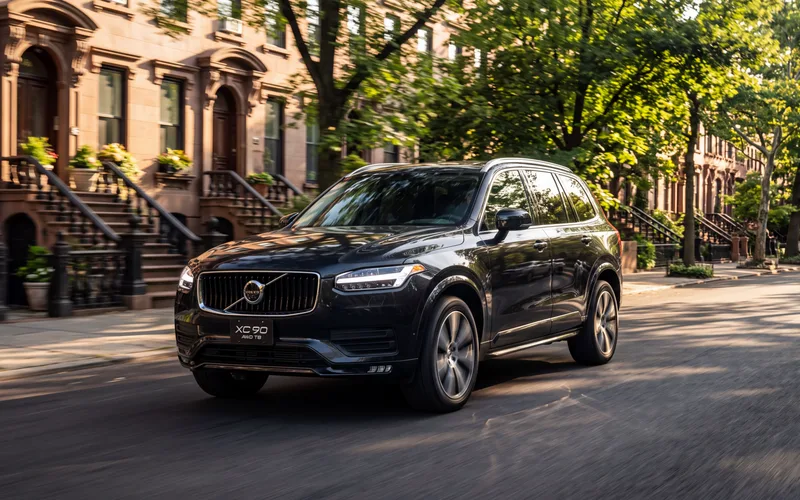 Volvo XC90Mid-Size Luxury SUVBetter at: Efficiency
The most direct three-row luxury alternative, with the full safety suite standard and a plug-in hybrid option that fixes the Q7's biggest running-cost weakness.
Compare 3.07B
3.07B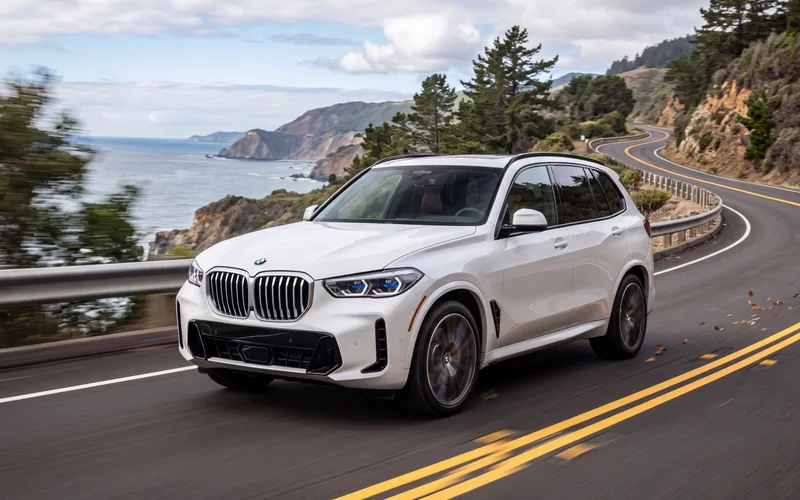 BMW X5Mid-Size Luxury SUVBetter at: Driving dynamics
The obvious German cross-shop if you'd trade the Q7's third row for sharper handling and a newer infotainment generation.
Compare 2.88B-
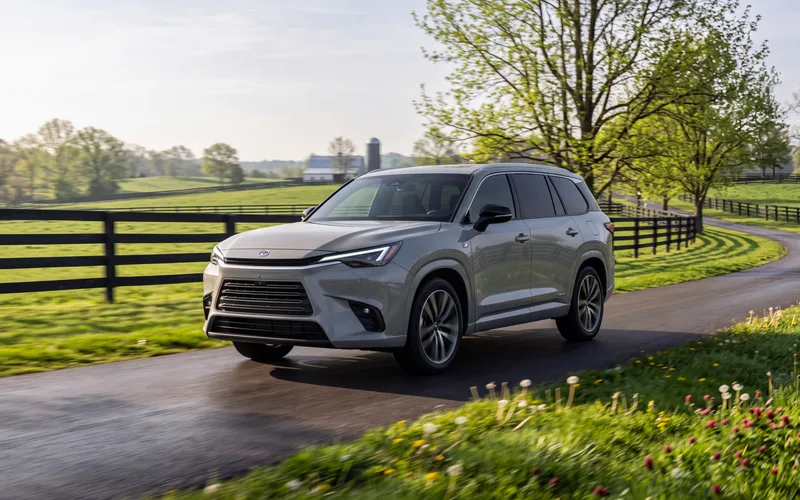 Lexus TXMid-Size Luxury SUVBetter at: Ownership cost
Costs far less to own thanks to hybrid powertrains, stronger resale and Lexus reliability, with a genuinely usable third row and more cargo space.
CompareHow it's evolved
10 scored model years · 2017–2026
Subject scores by year
Hover or tap a score to see what moved it versus the year before. A corner mark flags a big swing.
| Year | Performance | Efficiency | Safety | Space | Cost | Reliability | Tech | Use-case | Driving | Value |
|---|---|---|---|---|---|---|---|---|---|---|
| 2026 | 60 | 30 | 75 | 64 | 28 | 72 | 76 | 69 | 72 | 73 |
| 2025 | 60 | 41 | 80 | 64 | 22 | 67 | 72 | 62 | 70 | 67 |
| 2024 | 60 | 35 | 82 | 63 | 20 | 60 | 73 | 64 | 69 | 68 |
| 2023 | 60 | 35 | 78 | 62 | 20 | 67 | 69 | 62 | 69 | 68 |
| 2022 | 59 | 40 | 72 | 62 | 21 | 62 | 66 | 61 | 69 | 64 |
| 2021 | 59 | 34 | 71 | 63 | 25 | 50 | 68 | 60 | 71 | 69 |
| 2020 | 59 | 34 | 68 | 62 | 25 | 52 | 65 | 60 | 68 | 68 |
| 2019 | 57 | 35 | 65 | 62 | 29 | 60 | 55 | 57 | 67 | 72 |
| 2018 | 58 | 35 | 60 | 60 | 32 | 49 | 50 | 57 | 67 | 73 |
| 2017 | 66 | 35 | 64 | 60 | 31 | 50 | 53 | 59 | 72 | 73 |
Compare two years
Best fit & conditions
Higher scores mean a better fit for that use case. Learn more about use-case fit →
Subject profile
Academic Probation · NHTSA safety recalls
Oct 27, 2020Structure: body: roof and pillarsThe padding on the vehicle's C-pillar may not absorb enough impact in the event of a crash.
Defect
Volkswagen Group of America, Inc. (Audi) is recalling certain 2018-2020 Audi Q7 vehicles. The padding on the vehicle's C-pillar may not absorb enough impact in the event of a crash.
Risk
In the event of a crash, an unbelted occupant's head may impact the vehicle's C-pillar padding, increasing the risk of injury.
Remedy
Audi will notify owners, and dealers will replace the deformation element on the C-pillars, free of charge. The recall began November 17, 2020. Owners may contact Audi customer service at 1-800-253-2834. Audi's number for this recall is 70H8.
NHTSA campaign 20V658000 ↗Manufacturer no. 70H894,144 vehicles potentially affected (all models in the campaign)Owners notified Nov 17, 2020Filed by Volkswagen Group of America, Inc.Filed as Q7Mar 16, 2020SteeringThe bolt connecting the steering shaft to the steering gear may loosen, possibly resulting in a loss of steering control.
Defect
Volkswagen Group of America, Inc. (Volkswagen) is recalling certain 2019 Audi Q8 and 2017-2019 Audi Q7 vehicles. The bolt connecting the steering shaft to the steering gear may loosen, possibly resulting in a loss of steering control.
Risk
A sudden loss of loss of steering control may increase the risk of a crash.
Remedy
Volkswagen will notify owners, and Audi dealers will inspect and, if necessary, replace the steering shaft bolt, as necessary, free of charge. The recall began March 31, 2020. Owners may contact Audi customer service at 1-800-253-2834. Volkswagen's number for this recall is 36A1.
NHTSA campaign 20V149000 ↗Manufacturer no. 36A1229 vehicles potentially affected (all models in the campaign)Owners notified Mar 31, 2020Filed by Volkswagen Group of America, Inc.Filed as Q7Jan 16, 2019Fuel system, gasoline: fuel injection system: fuel railThe left and right fuel rails may leak fuel.
Defect
Volkswagen Group of America, Inc. (Audi) is recalling certain 2016-2018 Q7, A6 and A7 vehicles, and 2015-2018 Audi A8 vehicles. The left and right fuel rails may leak fuel.
Risk
A fuel leak in the presence of an ignition source can increase risk of a fire.
Remedy
Audi has notified owners, and dealers will replace the left and right fuel rail, free of charge. The recall began February 28, 2019. Owners may contact Audi customer service at 1-800-253-2834. Audi's number for this recall is 24DP.
NHTSA campaign 19V035000 ↗Manufacturer no. 24DP74,881 vehicles potentially affected (all models in the campaign)Owners notified Feb 28, 2019Filed by Volkswagen Group of America, Inc.Filed as Q7
24 recalls on other model years of the Q7 (2017, 2019–2026)
Dec 19, 2025Back over prevention: sensing system: cameraPlease see the recall report for a complete list of models. A software error may prevent the rearview camera image from displaying as intended. As such, these vehicles fail to comply with the requirements of Federal Motor Vehicle Safety Standard number 111, "Rear Visibility."
Defect
Volkswagen Group of America, Inc. (Audi) is recalling certain 2019-2026 vehicles. Please see the recall report for a complete list of models. A software error may prevent the rearview camera image from displaying as intended. As such, these vehicles fail to comply with the requirements of Federal Motor Vehicle Safety Standard number 111, "Rear Visibility."
Risk
A rearview image that does not display reduces the driver's view behind the vehicle, increasing the risk of a crash.
Remedy
Dealers will update the software, free of charge. Owner notification letters were mailed January 14, 2026. Owners may contact Audi customer service at 1-800-253-2834. Audi's number for this recall is 90TV. Vehicle Identification Numbers (VINs) involved in this recall became searchable on NHTSA.gov on December 23, 2025.
NHTSA campaign 25V900000 ↗Manufacturer no. 90TV356,894 vehicles potentially affected (all models in the campaign)Owners notified Jan 14, 2026Filed by Volkswagen Group of America, Inc.Filed as Q7, SQ7Nov 12, 2025Seat belts: front: anchorageThe driver and front passenger seat belt buckles may be missing a rivet that secures the buckle to the seat belt stalk.
Defect
Volkswagen Group of America, Inc. (Volkswagen) is recalling certain 2025 Audi RS Q8, Audi Q8, Audi Q7, and Audi SQ8 vehicles. The driver and front passenger seat belt buckles may be missing a rivet that secures the buckle to the seat belt stalk.
Risk
A seat belt that is missing a rivet may not properly restrain an occupant during a crash, increasing the risk of injury.
Remedy
Dealers will replace both front seat belt buckles, free of charge. Owner notification letters were mailed December 3, 2025. Owners may contact Audi at 1-800-253-2834. Audi's number for this recall is 692K. Vehicle Identification Numbers (VINs) involved in this recall became searchable on NHTSA.gov on November 14, 2025.
NHTSA campaign 25V777000 ↗Manufacturer no. 692K61 vehicles potentially affected (all models in the campaign)Owners notified Dec 3, 2025Filed by Volkswagen Group of America, Inc.Filed as Q7Sep 24, 2025Fuel system, gasoline: delivery: fuel pumpVolkswagen Group of America, Inc. (Volkswagen) is recalling one Audi SQ7 vehicles. The fasteners securing the high pressure fuel pump may not be tightened properly, resulting in a fuel leak.
Defect
Volkswagen Group of America, Inc. (Volkswagen) is recalling one Audi SQ7 vehicles. The fasteners securing the high pressure fuel pump may not be tightened properly, resulting in a fuel leak.
Risk
A fuel leak in the presence of an ignition source increases the risk of a fire.
Remedy
Dealers will inspect and tighten the screw connections and replace the high pressure fuel pump and fuel lines as necessary, free of charge. The one affected vehicle was repaired. Owners may contact Volkswagen customer service at 800-893-5298. Volkswagen's number for this recall is 23HD. Vehicle Identification Numbers (VINs) involved in this recall will be searchable on NHTSA.gov beginning September 26, 2025.
NHTSA campaign 25V637000 ↗Manufacturer no. 23HD1 vehicles potentially affected (all models in the campaign)Filed by Volkswagen Group of America, Inc.Filed as SQ7Mar 31, 2025Electrical system: instrument cluster/panel · Electrical system: softwareDue to a software error, the instrument panel display may fail.
Defect
Volkswagen Group of America, Inc. (Audi) is recalling certain 2021 SQ8, A6 SEDAN, A7, A8, Q7, Q8, RS6 Avant, RS7, RSQ8, S6 SEDAN, S7, S8, A6 Allroad, and SQ7 vehicles. Due to a software error, the instrument panel display may fail.
Risk
An instrument panel display that fails to show critical safety information, such as the speedometer or warning lights, increases the risk of a crash.
Remedy
Dealers will update the instrument panel module software, free of charge. Owner notification letters were mailed April 24, 2025. Owners may contact Audi customer service at 1-800-253-2834. Audi's number for this recall is 90VC.
NHTSA campaign 25V201000 ↗Manufacturer no. 90VC44,387 vehicles potentially affected (all models in the campaign)Owners notified Apr 24, 2025Filed by Volkswagen Group of America, Inc.Filed as Q7, SQ7Apr 3, 2024Air bags: sensor: occupant classification: front passengerAn electrical connection in the front passenger seat for the occupant detection system (ODS) control module may loosen and deactivate the front passenger air bag.
Defect
Volkswagen Group of America, Inc. (Volkswagen) is recalling certain 2023 Audi S5 Cabriolet, A4 Allroad, Q5 Sportback, A3 Sedan, S5 Sportback, SQ7, TT Coupe, TT Roadster, RS5 Sportback, 2024 A8, E-Tron Quattro, E-Tron Sportback Quattro, Q8, RSQ8, 2023-2024 Q3, Q5, and Q7 vehicles. An electrical connection in the front passenger seat for the occupant detection system (ODS) control module may loosen and deactivate the front passenger air bag.
Risk
A deactivated front passenger air bag will not deploy during a crash, increasing the risk of injury.
Remedy
Dealers will replace the passenger seat occupant detection system control module, free of charge. Owner notification letters were mailed on May 8, 2024. Owners may contact Audi customer service at 1-800-253-2834. Volkswagen's number for this recall is 69GU.
NHTSA campaign 24V251000 ↗Manufacturer no. 69GU91 vehicles potentially affected (all models in the campaign)Owners notified May 8, 2024Filed by Volkswagen Group of America, Inc.Filed as Q7, SQ7Dec 20, 2023Air bags: side/windowThe driver's seat side air bag may have been improperly mounted to the seatback frame. As such, these vehicles fail to comply with the requirements of Federal Motor Vehicle Safety Standard number 214, "Side Impact Protection."
Defect
Volkswagen Group of America, Inc. (Audi) is recalling certain 2023-2024 SQ8, RSQ8, Q8, Q7, and 2024 SQ7 vehicles. The driver's seat side air bag may have been improperly mounted to the seatback frame. As such, these vehicles fail to comply with the requirements of Federal Motor Vehicle Safety Standard number 214, "Side Impact Protection."
Risk
An improperly mounted air bag may not restrain an occupant as intended, increasing the risk of injury during a crash.
Remedy
Dealers will inspect and reinstall the air bag as necessary, free of charge. Owner notification letters were mailed January 17, 2024. Owners may contact Audi customer service at 1-800-253-2834. Audi's number for this recall is 69GA.
NHTSA campaign 23V868000 ↗Manufacturer no. 69GA1,001 vehicles potentially affected (all models in the campaign)Owners notified Jan 17, 2024Filed by Volkswagen Group of America, Inc.Filed as Q7, SQ7Mar 29, 2023Forward collision avoidance: sensing system: cameraIncompatibility between the front camera control software and the heating element used for the front camera on the windshield may cause the heating element to overheat.
Defect
Volkswagen Group of America, Inc. (Audi) is recalling certain 2020 Q7 vehicles. Incompatibility between the front camera control software and the heating element used for the front camera on the windshield may cause the heating element to overheat.
Risk
An overheated heating element can increase the risk of a fire.
Remedy
Dealers will update the control software and replace the heater element for the front camera, free of charge. Owner notification letters are expected to be mailed May 26, 2023. Owners may contact Audi's customer service at 1-800-253-2834. Audi's number for this recall is 90N7.
NHTSA campaign 23V212000 ↗Manufacturer no. 90N719 vehicles potentially affected (all models in the campaign)Owners notified May 10, 2023Filed by Volkswagen Group of America, Inc.Filed as Q7Oct 26, 2022Back over prevention: display function · Equipment: electrical: infotainment: video (touch)screen/monitor/unitThe infotainment main unit may become damaged internally when the vehicle is shut off, resulting in an inoperative rearview camera display the next time the vehicle is started. As such, these vehicles fail to comply with the requirements of Federal Motor Vehicle Safety Standard number 111, "Rear Visibility."
Defect
Volkswagen Group of America, Inc. (Audi) is recalling certain 2021-2022 AUDI A8, A6 Allroad, E-TRON Quattro, 2022 S3, RSQ8, RS7, RS6 Avant, Q8, Q7, Q3, E-TRON Sportback Quattro, S5 Cabriolet, E-TRON GT, S5 Sportback, A7, A6, A5 Sportback, A5 Cabriolet, A4, A4 Allroad, A3, S8, SQ7, SQ8, S6, and S4 vehicles. The infotainment main unit may become damaged internally when the vehicle is shut off, resulting in an inoperative rearview camera display the next time the vehicle is started. As such, these vehicles fail to comply with the requirements of Federal Motor Vehicle Safety Standard number 111, "Rear Visibility."
Risk
An inoperative rearview camera display reduces the driver's rear visibility, increasing the risk of a crash.
Remedy
Dealers will replace the infotainment main unit, free of charge. Owner notification letters were mailed June 6, 2022. Owners may contact Audi's customer service at 1-800-253-2834. Audi's number for this recall is 91Ei.
NHTSA campaign 22V806000 ↗Manufacturer no. 91Ei6,076 vehicles potentially affected (all models in the campaign)Owners notified Jun 6, 2023Filed by Volkswagen Group of America, Inc.Filed as Q7, SQ7Oct 5, 2022Back over prevention: display functionDue to a software issue, a blank or black screen may be displayed instead of the rearview camera image when the vehicle is placed in reverse gear. As such, these vehicles fail to comply with the requirements of Federal Motor Vehicle Safety Standard number 111, "Rear Visibility."
Defect
Volkswagen Group of America, Inc. (Volkswagen) is recalling certain 2021 Audi A8, RS7, RS6 Avant, RS5 Sportback, RS5 Coupe, Q8, Q7, Q5 Sportback, S4 Sedan, Q5, A7, A6, A6 Allroad, A5 Sportback, A5 Coupe, A5 Cabrioleet, A4 Sedan, A4 Allroad, E-Tron Sportback Quattro, SQ7, S5 Cabriolet, E-Tron Quattro, SQ8, SQ5 Sportback, SQ5, S8, S7, S6 Sedan, S5 Sportback, S5 Coupe, 2022 E-Tron GT, and 2021-2022 RSQ8 vehicles. Due to a software issue, a blank or black screen may be displayed instead of the rearview camera image when the vehicle is placed in reverse gear. As such, these vehicles fail to comply with the requirements of Federal Motor Vehicle Safety Standard number 111, "Rear Visibility."
Risk
A blank rearview camera display can reduce the driver's rear visibility, increasing the risk of a crash.
Remedy
Dealers will update the infotainment unit software, free of charge. Owner notification letters were mailed October 25, 2022. Owners may contact Audi's customer service at 1-800-253-2834. Volkswagen's number for this recall is 91DZ.
NHTSA campaign 22V742000 ↗Manufacturer no. 91DZ170,296 vehicles potentially affected (all models in the campaign)Owners notified Oct 25, 2022Filed by Volkswagen Group of America, Inc.Filed as Q7, SQ7Jul 20, 2022Fuel system, gasoline: delivery: fuel pumpA component inside the fuel pump may break, causing the fuel pump to fail.
Defect
Volkswagen Group of America, Inc. (Volkswagen) is recalling certain 2019-2021 Audi Q8, and 2020-2021 Audi Q7 vehicles. A component inside the fuel pump may break, causing the fuel pump to fail.
Risk
Fuel pump failure can cause an engine stall, increasing the risk of a crash.
Remedy
Dealers will replace the fuel pump, free of charge. Owner notification letters were mailed December 22, 2022. Owners may contact Audi's customer service at 1-800-253-2834. Audi's number for this recall is 20DR.
NHTSA campaign 22V516000 ↗Manufacturer no. 20DR49,443 vehicles potentially affected (all models in the campaign)Owners notified Dec 22, 2022Filed by Volkswagen Group of America, Inc.Filed as Q7Jan 26, 2022Suspension: rear: axle: non-powered axle assembly · TiresThe rear axle alignment may not have been inspected after the repairs for Recall 21V-295 (42L1) were performed.
Defect
Volkswagen Group of America, Inc. (Audi) is recalling certain 2019-2021 Audi A5 Sportback, RS5 Coupe, RS5 Sportback, S5 Sportback, 2020-2021 A4 Allroad, A4 Sedan, A5 Cabriolet, A5 Coupe, A6 Allroad, A6 Sedan, A7, A8, Q5, S4 Sedan, S5 Coupe, S5 Cabriolet, S6 Sedan, S7, S8, SQ5, 2021 Q5 Sportback, Q7, Q8, RS6 Avant, RS7, RSQ8, SQ5 Sportback, SQ7, and SQ8 vehicles. The rear axle alignment may not have been inspected after the repairs for Recall 21V-295 (42L1) were performed.
Risk
Rear axle misalignment may cause premature or uneven tire wear, increasing the risk of a crash.
Remedy
Dealers will inspect the rear axle, adjust the alignment as necessary, and replace any prematurely or unevenly worn tires, free of charge. Owner notification letters were mailed March 3, 2022. Owners may contact Audi customer service at 1-800-253-2834. Audi's number for this recall is 42L5.
NHTSA campaign 22V034000 ↗Manufacturer no. 42L531,058 vehicles potentially affected (all models in the campaign)Owners notified Mar 3, 2022Filed by Volkswagen Group of America, Inc.Filed as Q7, SQ7Oct 20, 2021Back over prevention: sensing system: cameraA software error may prevent the rear-view image from initially displaying when the vehicle begins to reverse. As such, these vehicles fail to comply with the requirements of Federal Motor Vehicle Safety Standard number 111, "Rear Visibility."
Defect
Volkswagen Group of America, Inc. (Audi) is recalling certain 2021 Audi A8 and S8, 2022 Audi A5 Sportback, A4 Sedan, E-Tron GT, Q3, Q5, RS6 Avant, A3 Sedan, S5 Sportback, Q5 Sportback, Q7, Q8, RSQ8, SQ7, SQ8, and S3 Sedan vehicles. A software error may prevent the rear-view image from initially displaying when the vehicle begins to reverse. As such, these vehicles fail to comply with the requirements of Federal Motor Vehicle Safety Standard number 111, "Rear Visibility."
Risk
A rear-view camera that does not display an image reduces the driver's rear view, increasing the risk of a crash.
Remedy
Dealers will update the infotainment unit parameters, free of charge. Owner notification letters were mailed November 9, 2021. Owners may contact Audi customer service at 1-800-253-2834. Audi's number for this recall is 91CR.
NHTSA campaign 21V825000 ↗Manufacturer no. 91CR2,857 vehicles potentially affected (all models in the campaign)Owners notified Nov 9, 2021Filed by Volkswagen Group of America, Inc.Filed as Q7, SQ7Aug 5, 2021Seat belts · Seat belts: rear/other: retractorThe rear seat belt automatic locking retractors may deactivate early, which can prevent the child restraint system from securing properly. As such, these vehicles fail to comply with the requirements of Federal Motor Vehicle Safety Standard number 208, "Occupant Crash Protection."
Defect
Volkswagen Group of America, Inc. (Volkswagen) is recalling certain 2021 Volkswagen ID4, Audi A4 Allroad, A4 Sedan, A5 Cabriolet, A5 Coupe, A5 Sportback, A6 Allroad, A6 Sedan, A7, A8, E-Tron Quattro, E-Tron Sportback Quattro, Q3, Q5, Q5 Sportback, Q7, Q8, RS5 Sportback, RS5 Coupe, RS6 Avant, RS7, RSQ8, S4 Sedan, S5 Cabriolet, S5 Coupe, S5 Sportback, S6 Sedan, S7, S8, SQ5, SQ5 Sportback, SQ7, SQ8, and 2021-2022 S3 Sedan vehicles. The rear seat belt automatic locking retractors may deactivate early, which can prevent the child restraint system from securing properly. As such, these vehicles fail to comply with the requirements of Federal Motor Vehicle Safety Standard number 208, "Occupant Crash Protection."
Risk
An unsecured child restraint system can increase the risk of injury during a crash.
Remedy
Dealers will inspect, and replace as necessary, the middle-rear seat belt assemblies, free of charge. Owner notification letters were mailed August 27, 2021. Owners may contact Volkswagen customer service at 1-800-893-5298 and Audi customer service at 1-800-253-2834. Volkswagen's numbers for this recall are 69CR (VW) and 69CS (Audi).
NHTSA campaign 21V606000 ↗Manufacturer no. 69CR, 69CS45,496 vehicles potentially affected (all models in the campaign)Owners notified Aug 27, 2021Filed by Volkswagen Group of America, Inc.Filed as Q7, SQ7May 12, 2021EngineCracks may develop on the surface of the engine cylinder bore.
Defect
Volkswagen Group of America, Inc. (Audi) is recalling certain 2021 Audi SQ7, RSQ8, RS7, RS6 AVANT, and SQ8 vehicles. Cracks may develop on the surface of the engine cylinder bore.
Risk
Cracks may cause engine damage and a stall or an oil leak, increasing the risk of a crash or fire.
Remedy
Dealers will replace the engine, free of charge. Owner notification letters were mailed July 9, 2021. Owners may contact Audi customer service at 1-800-253-2834. Audi's number for this recall is 10G9.
NHTSA campaign 21V339000 ↗Manufacturer no. 10G915 vehicles potentially affected (all models in the campaign)Owners notified Jul 9, 2021Filed by Volkswagen Group of America, Inc.Filed as SQ7Apr 26, 2021Suspension: rear: axle: non-powered axle assemblyThe lock nut on the trailing arm of the rear axle may break due to stress corrosion.
Defect
Volkswagen Group of America, Inc. (Audi) is recalling certain 2021 Q7, Q8, Q5 Sportback, SQ5 Sportback, RS6 Avant, RS7, RS Q8, 2020-2021 Audi S6 sedan, Q5, A8, S8, A7, A6 Allroad, A5 Cabriolet, A4 sedan, A4 Allroad, SQ5, S7, A6 sedan, S5 coupe, S4 sedan, S5 Cabriolet, A5 coupe, 2019-2021 RS5 coupe, A5 Sportback, S5 Sportback, RS5 Sportback vehicles. The lock nut on the trailing arm of the rear axle may break due to stress corrosion.
Risk
A broken lock nut may misalign the rear axle, causing a loss of control and increasing the risk of a crash.
Remedy
Dealers will replace the lock nuts and, if necessary, the associated bolts, free of charge. Owner notification letters were mailed June 4, 2021. Owners may contact Audi customer service at 1-800-253-2834. Audi's number for this recall is 42L1.
NHTSA campaign 21V295000 ↗Manufacturer no. 42L140,993 vehicles potentially affected (all models in the campaign)Owners notified Jun 4, 2021Filed by Volkswagen Group of America, Inc.Filed as Q7Feb 17, 2021Air bags: air bag/restraint control module: software · Air bags: frontalThe air bag control module may deploy the second stage of the front passenger air bag too quickly after the first stage when the seat is occupied by an unbelted child. As such, these vehicles fail to comply with the requirements of Federal Motor Vehicle Safety Standard (FMVSS) number 208, "Occupant Crash Protection."
Defect
Volkswagen Group of America, Inc. (Audi) is recalling certain 2020-2021 Audi Q7 vehicles. The air bag control module may deploy the second stage of the front passenger air bag too quickly after the first stage when the seat is occupied by an unbelted child. As such, these vehicles fail to comply with the requirements of Federal Motor Vehicle Safety Standard (FMVSS) number 208, "Occupant Crash Protection."
Risk
During a crash necessitating the deployment of the passenger air bag, the second stage may deploy too quickly when a child is in the front passenger seat, increasing the risk of injury.
Remedy
Audi will notify owners, and dealers will update the air bag control module, free of charge. The recall began March 5, 2021. Owners can contact Audi customer service at 1-800-253-2834. Audi's number for this recall is 69BV.
NHTSA campaign 21V078000 ↗Manufacturer no. 69BV26,967 vehicles potentially affected (all models in the campaign)Owners notified Mar 5, 2021Filed by Volkswagen Group of America, Inc.Filed as Q7Dec 2, 2020Air bags: sensor: side impact · Electrical systemThe electrical connector can detach from the door crash sensor in either of the front doors.
Defect
Volkswagen Group of America, Inc. (Audi) is recalling certain 2021 Audi A6 Allroad, Q7, RS6 and RS7 vehicles. The electrical connector can detach from the door crash sensor in either of the front doors.
Risk
A detached connector can delay the activation of the restraint systems, including the side air bag, curtain air bag and/or seat-belt pretensioners during a side impact crash, increasing the risk of injury.
Remedy
Audi will notify owners, and dealers will inspect, and as necessary, replace the crash sensors in both front doors, free of charge. The recall began December 23, 2020. Owners may contact Audi customer service at 1-800-253-2834. Audi's number for this recall is 69BM.
NHTSA campaign 20V749000 ↗Manufacturer no. 69BM166 vehicles potentially affected (all models in the campaign)Owners notified Dec 23, 2020Filed by Volkswagen Group of America, Inc.Filed as Q7Feb 19, 2020Air bags: side/windowIn the event of a crash, the side curtain air bags may not properly inflate.
Defect
Volkswagen Group of America, Inc. (Volkswagen) is recalling certain 2019 Audi Q7 vehicles. In the event of a crash, the side curtain air bags may not properly inflate.
Risk
An air bag that does not properly inflate in the event of a crash can increase the risk of injury.
Remedy
Volkswagen will notify owners, and dealers will replace the side curtain air bags, free of charge. The recall began March 19, 2020. Owners may contact Volkswagen customer service at 1-800-893-5298. Volkswagen's number for this recall is 69AJ.
NHTSA campaign 20V093000 ↗Manufacturer no. 69AJ383 vehicles potentially affected (all models in the campaign)Owners notified Mar 19, 2020Filed by Volkswagen Group of America, Inc.Filed as Q7Feb 20, 2019Suspension: front: shock absorberThe front shock absorber forks may develop cracks allowing the shock absorbers to loosen.
Defect
Volkswagen Group of America, Inc. (Audi) is recalling certain 2019 Q7, Q8, S5 Cabriolet, and S5 Sportback vehicles. The front shock absorber forks may develop cracks allowing the shock absorbers to loosen.
Risk
Loose shock absorbers may impair vehicle steering, increasing the risk of crash.
Remedy
Audi has notified owners, and dealers will replace the shock absorber forks, free of charge. The recall began March 18, 2019. Owners may contact Audi customer service at 1-800-253-2834. Audi's number for this recall is 40O4.
NHTSA campaign 19V114000 ↗Manufacturer no. 40O4/40O634 vehicles potentially affected (all models in the campaign)Owners notified Mar 18, 2019Filed by Volkswagen Group of America, Inc.Filed as Q7Dec 29, 2016Air bags: frontal: driver side: inflator module · Air bags: frontal: passenger side: inflator module · Air bags: side/window · Seat belts: pretensionerAdditionally, certain 2017 Audi Q7, A4 Sedan, A4 Allroad, and 2018 Audi Q5 vehicles are being recalled because the seat belt pretensioners may not activate properly.
Defect
Volkswagen Group of America, Inc. (Volkswagen) is recalling certain model year 2017 Audi A7, A4, A6, Volkswagen Golf and Tiguan vehicles and 2016 Volkswagen e-Golf vehicles for driver frontal air bags, passenger frontal air bags or head air bags that may not deploy properly. Additionally, certain 2017 Audi Q7, A4 Sedan, A4 Allroad, and 2018 Audi Q5 vehicles are being recalled because the seat belt pretensioners may not activate properly.
Risk
In the event of a crash, if the air bags and/or the seat belt pretensioners do not inflate or function properly, the vehicle occupants have an increased risk of injury.
Remedy
Volkswagen and Audi will notify owners, and dealers will replace the affected air bags and seat belt pretensioners, free of charge. The recall began April 2017. Owners may contact Volkswagen customer service at 1-800-893-5298 or Audi customer service at 1-800-253-2834.
NHTSA campaign 16V955000 ↗Manufacturer no. VW: 69P4; Audi 69P25,947 vehicles potentially affected (all models in the campaign)Owners notified Feb 28, 2017Filed by Volkswagen Group of America, Inc.Filed as Q7Sep 8, 2016Steering: electric power assist systemIn the affected vehicles, the electric power steering assist control unit may short circuit resulting in a loss of power steering assist.
Defect
Volkswagen Group of America, Inc. (Volkswagen) is recalling certain model year 2017 Audi Q7 vehicles manufactured November 11, 2015, to November 23, 2015. In the affected vehicles, the electric power steering assist control unit may short circuit resulting in a loss of power steering assist.
Risk
With a loss of power steering assist, extra steering effort will be required, especially at lower speeds, increasing the risk of a crash.
Remedy
Audi will notify owners, and dealers will replace the steering rack, free of charge. The recall began November 2016. Owners may contact Audi customer service at 1-800-822-2834. Volkswagen's number for this recall is 48M5.
NHTSA campaign 16V648000 ↗Manufacturer no. 48M58 vehicles potentially affected (all models in the campaign)Owners notified Nov 1, 2016Filed by Volkswagen Group of America, Inc.Filed as Q7Sep 6, 2016Electrical system: software · Exterior lightingThe affected vehicles may have been programmed with new software that inadvertently makes the side marker lights inoperative in conjunction with the parking lights or the headlights. As such, these vehicles fail to comply with the requirements of Federal Motor Vehicle Safety Standard (FMVSS) number 108, "Lamps, Reflective Devices, and Associated Equipment."
Defect
Volkswagen Group of America, Inc. (Volkswagen) is recalling certain model year 2016 TT roadster, A3 cabriolet, A3 sedan and A3 e-tron, 2016-2017 TT coupe, 2017 A4 sedan and Q7 and 2015-2017 Q3 vehicles. The affected vehicles may have been programmed with new software that inadvertently makes the side marker lights inoperative in conjunction with the parking lights or the headlights. As such, these vehicles fail to comply with the requirements of Federal Motor Vehicle Safety Standard (FMVSS) number 108, "Lamps, Reflective Devices, and Associated Equipment."
Risk
If the side marker lights do not illuminate, the vehicle may be less visible at night, increasing the risk of a crash.
Remedy
Audi will notify owners, and dealers will upload revised software to correct the issue, free of charge. This recall began November 2016. Owners may contact Audi customer service at 1-800-253-2834. Volkswagen's number for this recall is 97CB.
NHTSA campaign 16V642000 ↗Manufacturer no. 97CB79,895 vehicles potentially affected (all models in the campaign)Owners notified Nov 1, 2016Filed by Volkswagen Group of America, Inc.Filed as Q7Sep 6, 2016Seats: mid/rear assemblyIn the affected vehicles, the third row seat back may move forward under load, such as in a frontal collision. As such, the vehicles do not conform to Federal Motor Vehicle Safety Standard (FMVSS) number 207, "Seating Systems."
Defect
Volkswagen Group of America, Inc. (Volkswagen) is recalling certain model year 2017 Audi Q7 vehicles manufactured August 30, 2015, to July 10, 2016. In the affected vehicles, the third row seat back may move forward under load, such as in a frontal collision. As such, the vehicles do not conform to Federal Motor Vehicle Safety Standard (FMVSS) number 207, "Seating Systems."
Risk
If the third row seat does not remain in its adjusted position, there may be an increased risk of injury to an occupant in the event of a crash.
Remedy
Audi will notify owners, and dealers will install an additional support bracket to the seat, free of charge. The recall is expected to begin in November 2016. Owners may contact Audi customer service at 1-800-253-2834. Volkswagen's number for this recall is 72F8.
NHTSA campaign 16V641000 ↗Manufacturer no. 72F819,205 vehicles potentially affected (all models in the campaign)Owners notified Nov 1, 2016Filed by Volkswagen Group of America, Inc.Filed as Q7Jul 8, 2016Air bags: frontal: sensor/control module-inactiveDue to a software issue within the air bag control module, the frontal air bags may deploy with more force than required in certain crashes. As such, these vehicles fail to comply with the requirements of Federal Motor Vehicle Safety Standard (FMVSS) number 208, "Occupant Crash Protection."
Defect
Volkswagen Group of America, Inc. (Volkswagen) is recalling certain 2017 Audi Q7 vehicles manufactured August 30, 2015, to May 8, 2016. Due to a software issue within the air bag control module, the frontal air bags may deploy with more force than required in certain crashes. As such, these vehicles fail to comply with the requirements of Federal Motor Vehicle Safety Standard (FMVSS) number 208, "Occupant Crash Protection."
Risk
Air bags that deploy with excessive force may increase the risk of injury.
Remedy
Volkswagen will notify owners, and dealers will update the air bag control module software, free of charge. The recall began September 2016. Owners may contact Audi customer service at 1-800-253-2834. Volkswagen's number for this recall is 69O3.
NHTSA campaign 16V519000 ↗Manufacturer no. 69O314,535 vehicles potentially affected (all models in the campaign)Owners notified Sep 6, 2016Filed by Volkswagen Group of America, Inc.Filed as Q7
Source: NHTSA Office of Defects Investigation recall database, model years 2017–2026. Recalls are listed by model year as the manufacturer filed them; whether a specific car is affected depends on its VIN — check a VIN at nhtsa.gov ↗. NHTSA model names matched to this page: Q7, SQ7.
Detailed scoring by subject
1Performance & PowertrainMid-pack among this car's ten categories.1.91C-
2018 is a carry-over year in the second-generation (Typ 4M) Q7 launched for MY2017 — the US lineup is unchanged mechanically, with the entry 2.0L TFSI four making 252 hp and the supercharged 3.0L V6 making 333 hp. Modest output for a mid-size luxury SUV asked to move roughly 4,700 lbs.
Peak torque of the volume 2.0T, delivered on a broad turbo plateau through the eight-speed. Mid-pack for the segment; the supercharged V6 adds 52 lb-ft but does not transform the figure.
Instrumented tests of the 252-hp 2.0T quattro return 7.0 s, essentially matching Audi's own 7.1 s claim. Unhurried rather than quick for a mid-size luxury SUV — the supercharged V6 is well over a second faster.
The EA888 2.0T is quiet and smooth in normal driving with only mild off-idle lag, but reviewers consistently note it is working hard to move a ~4,700 lb three-row SUV and sounds strained when pushed. The optional supercharged V6 is the more refined answer — a supercharger gives immediate, lag-free response the later turbo V6 trades away.
Every 2018 Q7, four-cylinder and V6 alike, uses the ZF-sourced eight-speed Tiptronic automatic — a widely praised unit that shifts smoothly, picks sensible gears and rarely hunts, with paddle shifters standard across the range.
Maximum properly-equipped braked-trailer rating in any configuration, per this item's definition — the supercharged 3.0T V6 with the factory tow package (hitch plus 7-pin), near the top of the mid-size luxury SUV field. The volume 2.0T is capped at 4,400 lbs.
quattro permanent all-wheel drive is standard on every 2018 Q7 trim and engine, using a self-locking centre differential with a 40:60 default front/rear split that can send up to 70% forward or 85% rearward without ESP intervention. Sophisticated and always present — but with no low range it stops short of the top band.
A road-biased luxury crossover: no low range, no lockers, no skid plates and no off-road trim. Its one real provision is the optional adaptive air suspension, whose offroad and lift modes raise ride height (up to roughly 245 mm) — useful on a rutted trailhead road, not a substitute for hardware.
Only two gasoline powertrains are offered in the US for 2018 — the 2.0T four (Premium, Premium Plus) and the supercharged 3.0T V6 (all three trims). Nothing electrified, no diesel after the TDI's US withdrawal, and the SQ7 did not reach the US until the 2020 model year, so the range is narrower than the three-engine lineup later years carry.
2Efficiency & RangeOne of the Q7's weakest categories.0.30F
EPA combined figure for the volume 2.0T quattro. Unusually, the supercharged V6 carries the identical 21 MPG combined rating for 2018, so there is no economy penalty for stepping up. Every 2018 Q7 is quattro-only with no hybrid assistance, and 21 combined is well below the segment's electrified rivals.
EPA city rating for the volume 2.0T quattro. Stop-start is fitted to the four-cylinder, but roughly 4,700 lbs and full-time quattro leave it unremarkable in town and far behind hybrid three-row rivals.
EPA highway rating for the volume 2.0T quattro — the strongest of the Q7's three EPA numbers, helped by the eight-speed's tall top gears, and notably better than the facelifted 2020–2022 cars managed at 23 MPG.
A large 22.5-gallon tank turns middling economy into genuinely long legs: 21 MPG combined over a full tank works out to roughly 472 miles, above average for the segment even though the vehicle itself is thirsty. The 3.0T covers the same distance on the same tank.
EPA's annual fuel cost at 15,000 mi/yr. Twenty-one combined MPG plus a premium-fuel requirement puts even the four-cylinder at the very top of the SUV cost band — this is the Q7's weakest number by a wide margin.
Both 2018 engines are rated on premium unleaded by the EPA, and Audi's guidance is 91 AKI recommended — the engines will run on regular with reduced output rather than refusing it — so this sits in the middle band rather than the bottom. There is no flex-fuel or alternative-energy option, and premium adds meaningfully to the already-high running cost.
3SafetyOne of the Q7's strongest categories.2.07C
The 2018 Q7 was fully tested by NHTSA and carries a published overall rating of its own: 5 stars, built from 4 stars frontal (4 driver, 4 passenger), a clean 5 stars in every side measure (barrier front and rear, pole) and 4 stars rollover at 15.7% risk with no tip in the dynamic test.
Crashworthiness is a clean sweep of Good — driver- and passenger-side small overlap front, moderate overlap front, roof strength, head restraints, and side in both the original and the later updated test, which IIHS applies across the 2017–20 Typ 4M. It wins no Top Safety Pick of any tier, though, because neither available headlight configuration rates better than Marginal, so it sits at the top of the no-award band rather than in the award band.
The volume 2.0T Premium gets Audi pre sense basic and pre sense city (AEB) plus a rear view camera and front and rear acoustic parking sensors as standard — genuinely useful content, and standard AEB was not universal in this class for 2018. But four of the five features this item names are not merely optional on Premium, they cannot be ordered on it at all: blind-spot monitoring, rear cross-traffic assist, lane departure warning/active lane assist and adaptive cruise control are absent from Premium's standard list, from both of the only two packages it offers, and from its stand-alone options. That is the bottom band by definition, and a step behind the 2019 car, where a Convenience package at least put side assist and rear cross-traffic within reach of a Premium buyer.
Both the standard and the optional system earn Superior in IIHS vehicle-to-vehicle front crash prevention, avoiding the 12 mph collision outright. Neither avoids the 25 mph crash, though — impact speed is cut by 23 mph (standard) and 21 mph (optional) — and IIHS ran no pedestrian test on the 2018 Q7 at all, so both the daytime and nighttime pedestrian performance the top band asks for are unverified. Strong but not top-band.
The bundle is a good one where it exists — Audi side assist arrives together with pre sense rear, rear cross-traffic assist and a vehicle exit assist, it is standard rather than optional from Premium Plus upward, and reviewers single out the unusually legible warning LEDs in the mirror housings. None of it, however, can be put on the volume Premium at any price for 2018, and no trailer-aware coverage is offered on an SUV rated to tow. Absent on the trim being scored, so it lands in the bottom band despite the quality of the system one trim up.
Weak on both axes for 2018. On availability, nothing lane-related is standard on any trim: Audi active lane assist exists only inside the $2,400 Driver Assistance package, orderable on Premium Plus and Prestige and unavailable on the volume Premium, and NHTSA records lane departure warning as merely Optional. On behavior, reviewers of this generation describe it as crude rather than confident — jerky corrections, frequent unavailability when it loses the markings or meets a moderately tight bend, and a sense of contesting the wheel with the car. Above roughly 40 mph there is no centering at all, only nudges.
The system itself is good — genuine full-speed-range adaptive cruise with stop-and-go, praised by testers for holding speed and gaps well and for cutting fatigue on long drives. Two things hold the score down. First, it is not integrated highway assist: traffic jam assist adds steering only below about 40 mph, so above that speed the driver gets adaptive cruise plus lane-keeping nudges rather than the single combined system Audi introduced later. Second and more decisively, a volume-trim buyer is left with conventional cruise control, because ACC lives only in the $2,400 Driver Assistance package that Premium cannot order — and for 2018 that package is optional even on Prestige, which is the specific respect in which this year trails 2019.
No hands-free highway driving system was offered on the 2018 Q7, or on any Audi sold in the United States. The Q7's traffic jam assist is a hands-on, driver-supervised Level 2 function that requires continuous steering input; Audi's only hands-off product of the era, Traffic Jam Pilot, was an A8 system that never reached the US market and was abandoned worldwide in 2020.
The weakest part of the 2018 Q7's safety case and the reason it wins no IIHS award. Only two configurations were rated and the better of the two is merely Marginal, earned by cars carrying the Driver Assistance package because its high-beam assistant partially offsets low beams that give inadequate straightaway visibility. Everything without that package — including every volume Premium, whose xenon plus lamps come with no high-beam assist and which cannot order the package at all — falls into the Poor configuration. Even the Prestige's standard full LED units drop to Poor unless the package is added, which is why this year rates a shade below 2019.
Solid rather than exceptional, and better served on the volume trim than most of this scorecard's other ADAS items. The tall upright glasshouse and standard panoramic roof give an open, airy cabin and sound basic sightlines, and unusually for the base trim the Premium gets both a rear view camera and front and rear acoustic parking sensors as standard. Camera compensation stops there, though: the top view 360-degree system is a Vision-package item on Premium Plus and standard only on Prestige, so a Premium buyer parking a vehicle this large gets audible sensors and a single rear camera, and has no blind-spot warning to cover the over-the-shoulder view.
IIHS rates the Q7's LATCH ease of use Good and flags it for extra anchor positions — all five rear seating positions across the second and third rows carry complete child-seat attachment hardware, which is unusual and makes multi-seat installs genuinely easy. Audi's own equipment listing confirms the same count independently. What keeps it short of the top of the band is third-row access, which needs a tumble of the second row, and third-row space that is tight for a rear-facing seat.
4Space & ComfortMid-pack among this car's ten categories.2.06C
Audi's own 2018 technical specifications table lists seating capacity as 7 for both the 2.0T and the 3.0T, and a power 50/50 split-folding third row appears in the base Q7 Premium standard equipment list — so the entry-level four-cylinder is a seven-seater with no third-row cost option.
Audi's 2018 spec table publishes 38.4 inches of front headroom, which is mid-pack for a mid-size SUV — the panoramic sunroof that is standard on every 2018 Q7 costs the front occupants roughly an inch of the roofline. Note that Audi restated this figure as 39.9 in for the 2019 brochure without changing the car; the 2018 number is used here because it is the 2018 source of record.
Adequate rather than expansive: the 117.9-inch wheelbase is spent packaging three rows inside 199.6 inches of body, so the front footwell lands in the lower half of the SUV band despite the vehicle's size.
The Typ 4M's upright roofline gives the second row 38.8 inches of headroom — strong for the segment — and it does so while still fitting a third row under the same roof.
The second row is genuinely adult-sized at 38.8 inches, and because the 35/30/35 bench slides fore/aft and reclines, a family can bias space toward whichever row is occupied — the third row's 29.2 inches is what gives way when it slides back.
A real, power-folding third row is standard on every 2018 trim — something the two-row X5 and GLE of the same year could not offer at all — and IIHS credits the Q7 with two complete pairs of LATCH anchors back there, so it is genuinely usable for child seats. But 29.2 in of legroom and 35.9 in of headroom keep it in kid-and-short-trip territory, with reviewers describing a knees-up posture that adults tolerate only briefly.
37.5 cu ft with the third row folded is modest against mainstream three-row SUVs, and the 14.8 cu ft that survives with all seven seats up is the figure that actually bites on a family trip. Audi restated these measurements downward to 14.2/35.7/69.6 for the 2019 brochure without changing the body; the 2018 figures are used here.
71.6 cu ft maximum sits below the three-row SUV norm — the Q7 spends its interior volume on a third row rather than a long load bay, and a Volvo XC90 or a mainstream three-row swallows more with the seats down.
Competent and entirely conventional: ten beverage holders, a deep covered centre console bin, usable door pockets, an underfloor cargo well, tie-downs, a stainless cargo sill and a near-flat load floor when both rear rows drop. Nothing innovative, and 2018 is a step behind even the 2019 car — the Audi phone box wireless charger is not offered on the US Q7 at all this year, so device stowage is a bin with two USB-A ports in it.
Heated eight-way power front seats with four-way power lumbar, driver memory and leather seating surfaces are standard on the base 2018 Premium, and reviewers consistently praise the front and second-row seats over long stints. It stops short of the top band on two counts: ventilated twelve-way seats need the Premium Plus Ventilation package or the 3.0T-only Prestige, the 18-way massaging contour seats are Prestige Luxury-package content, and the volume Premium's steering column is manual tilt/telescope for 2018 — power adjustment does not start until Premium Plus.
The steel-spring setup every 2.0T runs is steady and planted and filters bumps well, and the volume Premium's 18-inch wheels on tall 255/60 all-seasons give it more sidewall to work with than the 20s and 21s further up the range. Reviewers note an underlying firmness rather than outright plushness, and the ceiling is hard: for 2018 the Audi adaptive air suspension is listed 'Not available' on the 2.0T, so the softest version of this chassis cannot be ordered by the volume buyer.
Isolation is this generation's signature strength — reviewers describe the Q7 as extremely quiet, and Car and Driver measured 64 dBA at a 70-mph cruise in the same-generation car, a strong figure for a 199.6-inch SUV. It is not quite a class-leading acoustic tour de force, but conversation at highway pace is effortless.
A strong standard baseline for 2018: three-zone automatic climate control, a panoramic sunroof with power sunshade, ambient LED interior lighting and heated eight-way power front seats all on the base Premium, with a heated steering wheel and heated rear seats available on any trim through the Cold Weather package. It sits below the top band because four-zone climate with diffuser vent and ventilated front seats require the Premium Plus Warm Weather/Ventilation packages or the 3.0T-only Prestige, and there is no remote start or remote pre-conditioning anywhere in the US lineup.
5Cost of OwnershipThe Q7's lowest-graded category.0.10F
The cheapest 2018 Q7 is the 2.0T Premium at $49,900 plus Audi's $975 destination charge, so the entry three-row Q7 opens just under $51,000 delivered — about $3,700 cheaper than the equivalent 2019 car, because Audi raised the entry price sharply for 2019.
Premium Plus is Audi's volume trim and the 252-hp 2.0T is the volume powertrain scored elsewhere in this scorecard: $53,900 MSRP + $975 destination = $54,875, and most cars left the lot with the Vision, Cold Weather or Driver Assistance package on top, which is where the ≈$56,500 figure comes from. Stepping to the supercharged 3.0T V6 in the same trim adds about $6,500.
The published estimates straddle a wide range and the truth sits between them: CarEdge's five-year projection is dominated by the years the 4yr/50,000-mile warranty is still running, while RepairPal records $1,185 average annual repair cost for the 2018 Q7 with above-average shop visits, and KBB's five-year breakout for this generation runs to roughly $7,400 maintenance plus $1,600 repairs. A blended ≈$7,000 matches the 2019 car, which is right — the 2018 is mechanically the same 2.0T/quattro package and Audi included no scheduled maintenance in either year.
The Q7 nameplate's long-run figure is 42–43% retained, well behind the 49.8% the luxury mid-size SUV class averages, but the 2018 car hit its five-year mark in 2023 with used luxury SUV prices still well above trend, so ≈45% is the fair mark for this specific model year. Depreciation remains by far the largest line in owning this vehicle.
Audi's New Vehicle Limited Warranty for 2018 is the German-luxury standard 4yr/50,000-mile term — a year longer than the 3yr/36,000-mile mainstream norm, but far short of the 5yr/60,000 and 10yr/100,000 coverage Hyundai, Genesis and Kia were already offering in 2018.
Like BMW, Mercedes-Benz and Volvo, Audi published no powertrain coverage that outlasts the 4yr/50,000-mile New Vehicle Limited Warranty, so protection on the turbo four (or supercharged 3.0T) and the quattro driveline ends at the same point as the bumper-to-bumper term — below the 5-year floor of the scoring band.
Audi included no scheduled maintenance at all on a 2018 Q7 — Audi Care is a prepaid plan the buyer buys separately ($699–$1,179), and the included-maintenance Audi Signature Care program only begins with MY2026 vehicles. What comes with the car is four years of roadside assistance running alongside the warranty, Audi connect CARE (automatic crash notification, online roadside call), and a six-month Audi connect PRIME/PLUS trial. That is basic-roadside-plus-a-trial territory and puts the Q7 behind the 2018 BMW X5's 4yr/50,000-mile included maintenance and Volvo's three years of included service.
$56,500 volume-trim price minus its estimated resale value after 5 years (45% retained, or about $25,425) leaves about $31,075 in depreciation. Add the projected $7,000 in 5-year maintenance and repairs, and owning this vehicle for 5 years costs about $38,075 in total.
6Reliability & QualityOne of the Q7's weakest categories.1.28D
Every consumer-facing predictor lands on the wrong side of average and none of them disagree. Consumer Reports states outright that the 2018 Q7 "is less reliable than other cars from the same model year" — the exact inverse of the sentence it gives the 2019 car, and the single clearest reason this year scores well below it despite being one model year apart on the same pre-facelift Typ 4M. J.D. Power's predicted reliability via U.S. News is 2.5/5 (below average) and RepairPal independently lands on 2.5/5.0. The field data is what pushes this into the low band rather than merely below it: NHTSA holds 141 complaints for the 2018 model year against 58 for the 2019 Q7 — 2.4x on the same nameplate one year apart — and ENGINE is the largest single component at 28, dominated by an excessive-oil-consumption pattern that ends in burnt exhaust valves and destroyed engines between 60,000 and 100,000 miles. Not lower because the failures are identifiable and concentrated in the 3.0T rather than diffuse across the car, and because the era-correct brand dependability read for this cohort (2021 VDS) is the mildest one on Audi's record.
Audi's standing swings hard depending on which window you read, and for this cohort the era-correct measurement is the kindest one on the brand's record. The 2021 Vehicle Dependability Study surveys three-year-old 2018 model-year vehicles — precisely this car's owners — and put Audi at 127 PP100 against a 121 PP100 industry average that was the best J.D. Power had ever recorded. That is modestly below par, not bottom-third. The initial-quality read on the same cohort is worse but not damning: Audi finished 24th of 31 brands in the 2018 IQS against a 93 PP100 average. Everything measured since is worse — 252 PP100 and among the bottom four brands in the 2023 VDS, last of all brands in the 2025 IQS, 273 PP100 in the 2025 VDS against BMW's 189 — so the trajectory gives no reason to round up. Scored mid-pack because a buyer of this specific model year is choosing a cohort that measured near average; this is a brand property, so it is scored on the era rather than on the Q7's own record, and matches the same-year Q5 and Q3 for that reason.
The campaign list is genuinely light — three NHTSA recalls, fewer than the 2019 car's four and half the same-year Q5's six — but two of the three are crash- or fire-relevant rather than administrative, and the TSB half of this item is where the real problem sits. 19V035 covers left and right fuel rails that may leak fuel, with NHTSA's own consequence text naming increased fire risk, and 20V149 covers a steering shaft-to-gear bolt that may loosen and cause loss of steering control; only the C-pillar impact padding campaign is a discrete low-severity defect. Worse than any of them is the defect that never became a recall: excessive oil consumption on the 3.0T supercharged V6 is the subject of an active class-action investigation naming the 2017–2019 Q7 specifically, it destroys engines, and Audi has issued no campaign — owners report the company "offered 40% assistance" while declining to recognise the defect. On top of that the brake squeal that dominates owner complaints from as little as 3,000 miles was answered with two service bulletins carrying different coverage windows rather than a fix, and CarComplaints records brakes as the most frequently revised TSB category for this vehicle. Low band because a systemic uncorrected powertrain defect is what that band describes; held near its ceiling because the actual campaign count is below segment normal.
The two engines offered in 2018 have opposite records and the scorecard has to carry both. The volume 2.0T is the EA888 Gen 3 (252 hp) behind a ZF 8HP eight-speed Tiptronic and quattro — a very high-volume VW Group combination whose Gen 3 revision resolved the earlier oil-consumption and timing-chain-tensioner failures, and the ZF 8HP is about as proven as a modern automatic gets. The optional 3.0T supercharged EA837 V6 (333 hp), offered on every trim and the engine most of this fleet actually carries, is the problem: it is the named subject of an active class-action investigation for excessive oil consumption covering the 2017–2019 Q7, and the owner record shows exactly the progression the filing describes — a quart every 700 to 2,000 miles, then fouled plugs and injectors, then burnt exhaust valves and scored cylinder walls, then a destroyed engine, repeatedly between 60,000 and 100,000 miles on cars with dealer service histories. Consumer Reports independently lists cylinder-head failure, excessive oil consumption and PCV malfunction leading to oil burning among this year's trouble spots. Peripheral wear is expensive too, with water pump and thermostat failures common well under 60,000 miles and the PCV valve buried under the supercharger. Scored below the mid band because a documented engine-destroying defect on the majority powertrain is what the low band describes; held this high because the volume 2.0T drivetrain is genuinely sound and no powertrain recall was ever issued against this model year.
The cabin is this scorecard's one unambiguous strength and the reason a pre-facelift Q7 is still cross-shopped against the class benchmark eight years on. Reviewers were close to unanimous: Edmunds calls the materials excellent and in some cases better than more expensive rivals, Car and Driver describes wood and leather against high-resolution displays giving "a private-jet sort of vibe," and Consumer Reports describes an interior of leather, matte wood, brushed aluminum and piano-black accents evoking understated quality, with buttons and controls sharing a consistent click and feel. Class-leading band, and level with the 2019 car since nothing about the interior changed between them; not higher because the lower trims still carry plain surfaces in the third-row and lower-console zones, and because 2018 predates the standard-leather-across-the-range spec of the much later facelift.
Static assembly is a strength and reviewers say so — Car and Driver rates Audi's fit, finish and attention to detail as excellent, and panel work and door closings draw no pattern of criticism. The in-service half is what pulls this to mid-band, and the complaints cluster on components that left the factory wrong rather than on rattles: original-equipment run-flat tires chunking and delaminating at the outer edges between 6,500 and 24,000 miles on multiple owners' cars, severe enough to draw its own bulletin; brake squeal from as little as 3,000 miles that two TSBs did not resolve; rear coil springs fracturing with visible corrosion at the lower mounts and dislocated retention plates; and front side-marker fault messages appearing on lights that still work. Initial quality agrees in direction — Audi finished 24th of 31 in the 2018 IQS against a 93 PP100 average. Scored slightly below the 2019 car, whose IQS placement was marginally better relative to the field and whose owner-quality complaint volume is a fraction of this year's; held above the same-year Q5 because nothing here rises to that car's brake-casting and body-seam manufacturing defects.
Audi runs roughly 314 franchised US dealers across all 50 states — adequate national coverage for a luxury brand, but the smallest network of the German three against about 370 BMW and 387 Mercedes-Benz stores, so metro owners are well served while rural owners travel materially further for warranty and specialist work. Service satisfaction is mid-pack among premium brands rather than a differentiator, and network quality matters more than usual for this car because its signature failures are dealer-diagnosis jobs on engine internals and sealed headlamp assemblies. The 2018 fleet is long outside its 4-year/50,000-mile warranty, so this is entirely paid work now, and the complaint record shows repeated friction on exactly that: dealers declining to perform the published brake-squeal bulletin, Audi of America offering partial assistance while refusing to recognise the oil-consumption defect, and owners told a documented fault is normal. Scored level with the same-year Q5 and Q3 because the network is a brand property, not a model one.
Supply is the good half: the Q7 sits on MLB Evo and shares its EA888 engine, ZF 8HP transmission and much of its electrical architecture with a very large VW Group pool, so mechanical parts are abundant and the European specialist aftermarket covers the car thoroughly. Cost is the bad half and it is worse than luxury-segment normal rather than merely expensive — RepairPal puts Q7 upkeep at $1,185 a year against $1,127 for luxury full-size SUVs and $652 across all vehicles, with unscheduled shop visits running well above the segment rate, and TrueDelta records 31% of this model's expensive repairs exceeding $2,500. Scored below the 2019 car because an eight-year-old 2018 is fully out of warranty while carrying the heaviest repair exposure of the generation: the engine work this year actually needs runs $8,033 for exhaust valves and cylinder-head cleaning to $12,000–$26,000 for replacement, and none of it has an aftermarket answer. Beneath that sits a tier of dealer-channel items with no cheap alternative — a sealed headlamp assembly quoted at $2,000 to $7,000 to cure a side-marker fault message, rear springs at $1,500–$2,400, water pump at $961–$1,355, and a PCV valve buried under the supercharger at roughly $2,500. Owners also report being excluded by VIN from campaigns covering their exact symptom and left with the bill.
7Technology & InfotainmentGrades below the middle of the scale.1.33D
This is the single biggest technology difference between the 2018 Q7 and the 2019 car: for 2018 the base Premium ships MMI Radio plus behind a 7.0-inch display, and the 8.3-inch retractable MMI navigation screen is package or upper-trim content. From 2019 Audi made the 8.3-inch screen standard across the range, so the volume 2018 buyer is looking at the smallest display in the mid-size SUV band.
The rotary MMI controller with hard shortcut keys is genuinely good to use on the move because it needs no aiming at a screen, and the menu logic is clean. But the volume 2018 Premium gets the cut-down version of it — a fixed 7.0-inch display with MMI Radio plus and no MMI all-in-touch handwriting pad, which only arrives with the navigation package — and by 2018 that combination looked thin against rivals' larger touchscreens.
Wired only, and not standard where it matters. Audi smartphone interface with Apple CarPlay and Google Android Auto is standard on Premium Plus and Prestige for 2018, but a base Premium buyer has to add the MMI Navigation plus package to get it at all. Wireless projection does not reach the Q7 until the 2020 facelift.
MMI Navigation plus with voice control is a good system for its era — Audi connect PRIME adds Google Earth imagery, online POI search and INRIX XD real-time traffic on a six-month trial — but for 2018 it is not standard on the volume trim: the base Premium has no built-in navigation until the MMI Navigation plus package is added. The voice assistant itself is the command-based MIB2 one, reliable for destinations and media but not conversational.
A strong three-step ladder, and 2018 is the year the middle rung improved: a ten-speaker Audi sound system on the base Premium, the Bose 3D Surround system with 19 speakers, a 15-channel amplifier and 558 watts newly standard on Premium Plus, and the Bang & Olufsen 3D Advanced system with 23 speakers, a 23-channel BeoCore amplifier and 1,920 watts at the top. The only real limit is that the B&O is a Prestige-only stand-alone option, so a 2.0T buyer tops out at the Bose.
The 12.3-inch Audi virtual cockpit is excellent — crisp, configurable between Classic and Infotainment modes, and able to throw full-width navigation across the binnacle — but for 2018 it is Prestige standard equipment or Premium Plus Vision-package content. Both the Premium and the Premium Plus ship with a conventional cluster and a 7.0-inch colour driver information display between the dials, which is squarely the 'full digital on upper trims only' case; note the Prestige is a 3.0T-only trim, so no 2.0T buyer gets it as standard.
There is no meaningful over-the-air update channel on the pre-facelift MIB2 Q7. Audi connect streams live content — INRIX traffic, Google Earth tiles, POI and news — over the built-in modem, but that is connected services rather than software delivery: the stored navigation database is updated from SD card or at the dealer, and every control-unit or feature update needs a service visit.
The myAudi app covers the core set through Audi connect PRIME — remote lock/unlock, vehicle status, car finder and send-destination-to-nav, with a 4G LTE hotspot through connect PLUS — but on the volume 2018 Premium none of it exists until the MMI Navigation plus package is ordered, it arrives on a six-month trial and becomes a paid subscription after that, there is no digital key, and no remote engine start is offered on the US Q7. Owner reports of slow refreshes and login trouble were common on this generation of the app.
Thin for a seven-seater, and thinner than the 2019 car. Device power is the two USB-A ports of the Audi music interface inside the front centre-console armrest, with 12V outlets serving the second row and cargo area — there are no USB ports in the second or third rows and no USB-C anywhere. Factory wireless charging simply does not exist on the 2018 US Q7: the Audi phone box appears in no trim, package or option list, only as a dealer-installed accessory pad.
One of 2018's genuine upgrades: Audi advanced key — keyless entry, push-button start/stop and a hands-free tailgate that both opens and closes on a foot wave — became standard across the entire lineup for 2018 after being an option on the 2017 car, so even the base Premium has the full set. What keeps it out of the top band is the absence of any phone-as-key and of remote engine start.
The volume Premium gets Parking system plus with a rear view camera and front and rear acoustic sensors as standard, which is useful coverage for a 199.6-inch vehicle. It scores below the 2019 car because for 2018 the 360-degree top view camera is not standard on Premium Plus either — it is Prestige standard equipment or Premium Plus Vision-package content — and no automated park-steering assist appears in any 2018 US package.
A colour head-up display with navigation and driver-assistance information exists, but only as Prestige standard equipment — and for 2018 the Prestige is offered exclusively with the supercharged 3.0T V6. A buyer of the volume 2.0T cannot order a HUD in any trim or package.
8Use-Case FitMid-pack among this car's ten categories.1.81C-
Unusually good child-seat logistics for a luxury three-row: IIHS rates the 2018 Q7's LATCH ease of use Good+ — its top grade — with all five rear seating positions carrying complete hardware, three pairs in the second row and two in the third, so three-across installs are genuinely workable. Wide rear door apertures, a 35/30/35 second row that slides and reclines, and a power-folding third row help daily loading; the limit is the 14.8 cu ft left behind the third row, which a stroller plus a week's gear will overwhelm.
The crash side of the case is excellent — a full NHTSA 5-star overall rating for 2018 and Good in every IIHS crashworthiness test, with standard Audi pre sense city earning Superior in front crash prevention. The trim families actually buy is where it collapses, and 2018 is worse than 2019: on the base Premium, Audi side assist blind-spot monitoring and rear cross traffic assist are not available at all (they start at Premium Plus, and no Convenience package exists for the Premium this year), the Driver Assistance package with adaptive cruise and lane assist is likewise Premium Plus and up, headlights rate only Marginal and Poor so the Q7 wins no IIHS award, and there is no rear-occupant reminder.
Strong fundamentals for five: a quiet cabin, standard three-zone climate with rear vents, a sliding and reclining second row, a panoramic sunroof, ten beverage holders and roughly 470 miles between fills from the 22.5-gallon tank. It is held well short of the top band by rear amenities — there are no USB ports behind the front seats at all, only 12V outlets, rear entertainment exists only as a dealer-accessory twin-tablet system rather than factory content, and with all seven seats occupied just 14.8 cu ft of luggage space survives.
Effortless in traffic: the 252-hp 2.0T makes its 273 lb-ft from 1,600 rpm and the ZF-sourced eight-speed Tiptronic shifts smoothly and picks sensible gears, steering effort goes feather-light at parking speeds, and standard front and rear acoustic sensors with a rear camera make placement easy. Two things stop it going higher — adaptive cruise control with stop-and-go and traffic jam assist is simply not orderable on the volume Premium for 2018, so stop-and-go is all manual, and the standard engine stop/start restarts with a noticeable shudder.
An expensive commute even by luxury-SUV standards. EPA rates the 2.0T quattro at 19/25/21 on premium fuel — identical to the supercharged V6, so the four-cylinder buys no economy — and 96 owners on Fuelly average 19.1 MPG in the real world, roughly $3,700 a year at 15,000 miles. Luxury-brand consumables, 255/60 or larger tires and out-of-warranty Audi service rates push the per-mile number further up.
A big vehicle in a city: 199.6 inches long, 77.5 wide without mirrors and 87.1 with them, turning in a 40.7-foot curb-to-curb circle — the BBC once singled the Q7 out as a model too large to fit a standard parking space. Standard front and rear acoustic sensors plus a rear camera help, but on the volume Premium the 360-degree top view camera and the all-wheel steering that would tighten the circle are both unavailable, and all-wheel steering is listed 'Not available' on the 2.0T at any trim.
Real towing for a luxury crossover — 7,700 lbs with the supercharged V6 and the factory towing package — but the volume 2.0T is rated at only 4,400 lbs even with the same optional package, and the hitch is a stand-alone extra on every trim rather than standard anywhere. There is no bed, no payload story worth quoting, and a 71.6 cu ft maximum hold means bulky materials go on the roof or not at all.
A luxury vehicle with no fleet or work reputation. Leather seating surfaces and wood inlays are standard rather than optional, both engines require premium fuel, the tires run from 255/60 18s to 285/40 21 summer performance rubber, and post-warranty Audi repair rates make hard use expensive. The EA888 2.0T and the eight-speed Tiptronic underneath are high-volume, well-proven VW Group hardware — that is the only part of the case that supports abuse.
Almost nothing work-oriented. Standard aluminum roof rails with ESC integration, a stainless cargo sill, cargo tie-downs, an optional trailer hitch, optional running boards and the Audi Genuine Accessories rack ecosystem — bike, ski, kayak and rooftop cargo carriers — are the full extent of it. There is no onboard AC power, no washable surfaces, no upfitter provisions and no commercial ecosystem of any kind.
Close to the Q7's strongest mission: a cabin measured at 64 dBA at a 70-mph cruise, heated eight-way power front seats standard, a settled steel-spring highway ride and roughly 470 miles between fills from the 22.5-gallon tank. The 2018 car falls short of the 80s because the fatigue-reduction half of the item is missing on the volume trim — adaptive cruise with stop-and-go and active lane assist cannot be ordered on the Premium at all, so the driver works the pedals for the whole leg — and the Premium's steering column is manual tilt/telescope, which limits fine-tuning the driving position over a long day.
quattro permanent all-wheel drive with a self-locking centre differential is standard on every 2018 Q7, ESC includes an Offroad mode and Audi drive select adds an offroad profile as standard, roof rails and the factory rack ecosystem handle bikes, boards and boxes, and an optional hitch adds 4,400 lbs of trailer capacity on the volume engine. But this is a road-biased crossover: no low range, no lockers, no skid plates, no off-road trim — and the adaptive air suspension with its lift settings is listed 'Not available' on the 2.0T, so the volume Q7 sits at a fixed roughly-8-inch ride height with no AC power for camping.
Flexible if not cavernous: a power 50/50 split-folding third row standard on every trim, a tumble-folding 35/30/35 second row that also slides and reclines, a near-flat 71.6 cu ft load bay when both rows drop, an underfloor cargo well, standard roof rails and a broad factory rack catalogue including a 10.5 cu ft cargo carrier. The ceiling is the raw number — 71.6 cu ft maximum and 37.5 behind the second row is mid-pack at best for a 199.6-inch three-row SUV.
9Driving ExperienceOne of the Q7's strongest categories.2.52C+
More composed than a 4,707-lb three-row SUV has any right to be — five-link independent suspension at both ends, a multi-material lightweight body and standard quattro give it confident mid-corner grip and well-restrained body lean, and Edmunds calls it surprisingly agile and nimble for a big three-row. It sits below the sharp end of the class because the volume 2.0T is the softest configuration Audi sold: 18-inch wheels on 255/60 all-seasons, and both the adaptive air suspension and the all-wheel steering that make this chassis genuinely agile are listed 'Not available' with the four-cylinder.
The electromechanical rack is well judged across the speed range — Edmunds describes effort as feather-light in parking lots and firm on the highway, so the Q7 tracks straight at speed and places precisely. At 15.8:1 it is slower than the segment's sportiest, and the assist filters out most genuine surface feedback: precise rather than communicative.
Big ventilated discs at both ends — 14.8 in front, 13.8 in rear — give the Q7 genuinely short instrumented stops for the class, 112 feet from 60 mph, with a firm confidence-inspiring pedal, very little nosedive and no regen blending to muddy the feel on the non-electrified 2.0T. The deduction is an ownership annoyance rather than a performance one: persistent brake squeal on this generation drew enough owner complaints to become the subject of a California class-action suit.
The 252-hp EA888 2.0T and the eight-speed Tiptronic are a well-matched pair: clean tip-in, unobtrusive well-timed shifts, sensible gear selection and no hunting, with 273 lb-ft available from 1,600 rpm so the four never feels like it is straining at normal loads. Mild off-idle turbo lag and the standard stop/start system's noticeable restart shudder are what keep it out of the top band.
Near-inaudible when cruising, with good isolation through the wheel and pedals — Car and Driver measured 64 dBA at 70 mph in the same-generation car. The deduction is character rather than volume: worked hard, the 252-hp four in a 4,707-lb body sounds thrummy and strained in a way the supercharged V6 never does.
A 40.7-foot circle is poor for the SUV band and a direct consequence of the 117.9-inch wheelbase — the Q7 needs real room for a U-turn. All-wheel steering would help, but for 2018 it is listed 'Not available' on the 2.0T at any trim.
A commanding and well-adjustable position even on the base trim: heated eight-way power front seats with four-way power lumbar and driver memory, power-folding heated mirrors with memory, a three-spoke multifunction wheel with paddles, and an upright glasshouse with a small forward quarter window that opens up the A-pillar. The rotary MMI controller keeps infotainment inputs at hand level rather than out on a screen. It lands below the 2019 car because the 2018 Premium's steering column is manual tilt/telescope — power adjustment with memory does not start until Premium Plus.
Competent and satisfying rather than entertaining. The Q7 rewards with polish, quiet and effortless pace, not character — and the volume 2.0T is the least interesting version of it, at 252 hp and 7.1 seconds to 60 with no air suspension, no all-wheel steering and no sport differential available at any trim. The supercharged V6's 5.7 seconds is a different car, but that is not the one most buyers took.
10Value & Market PositionThe Q7's best-graded category.2.96B-
At $50,875 the 2018 Premium covers the luxury basics — quattro AWD, seven seats, leather, three-zone climate, panoramic sunroof, heated power front seats with memory, power liftgate, front and rear parking sensors with rear camera, roof rails, and Audi pre sense city forward collision warning with automatic braking. But the headline content is held back further than on the 2019 car: navigation is an add-on rather than standard (Audi made MMI Navigation plus standard on Premium only for 2019), and Virtual Cockpit, LED headlights, the top-view camera and Bose surround all wait for Premium Plus, with adaptive cruise and active lane assist inside a package above that. The base car's xenon headlights are the specific reason IIHS withheld a Top Safety Pick.
Better value than the 2019 car for the same machinery, because Audi hadn't yet pushed the entry price past $54,000 — $50,875 delivered buys a quattro three-row luxury SUV that reviewers rated the best-riding and best-finished in its class. Against it: 252 hp and a 4,400-lb tow rating from the volume 2.0T, a kid-sized third row, and a resale curve worse than the class. For it: quattro and seven seats are standard on every Q7 at a price where rivals charge for the third row, and Car and Driver rated it the best mid-size luxury SUV on the market two years running.
Two engines and three content tiers give a genuine ladder from $50,875 to roughly $66,000 delivered — 2.0T in Premium and Premium Plus, supercharged 3.0T V6 in Premium, Premium Plus and Prestige — so a buyer can spend $15,000 apart and still be in a Q7. The limits are structural rather than in the ladder: every Q7 is a seven-seat quattro with a second-row bench, so there is no drivetrain choice, no six-seat captain's-chairs option, and no way to skip the third row.
2018 is the second-best year in the nameplate's US history — 37,417 units, off only 2.4% from the all-time 38,346 peak set the year before and ahead of every year since. For a $51,000-plus three-row luxury SUV that is strong, sustained volume, and the model was still at the top of its curve rather than drifting down as it would from 2019 on.
Audi in 2018 was at its US high-water mark, an aspirational German premium badge with strong design equity and a loyal quattro following, and the Q7 was the model carrying the four rings into the family three-row space. It sits a step below Mercedes-Benz and BMW in outright US image, and the Q7's below-class residuals show the badge does not fully convert into resale strength.
Scored for buyer benefit. The 2018 Q7 discounted respectably but with less factory support behind it than the 2019 car: Edmunds forum buyers documented dealers working toward roughly 6% off MSRP on Premium Plus and Prestige cars — one reported $4,356 off a $68,600 sticker — with $1,000 Audi Financial loyalty cash and $500 for non-AFS Audi owners, but posters noted no specific lease support on the model. Real, repeatable money on a car in demand, rather than the stacked lease cash and dealer market allowances that appeared a year later.
Freshest point of the generation's US life. 2018 is the second US model year of the second-generation Typ 4M, unveiled at Detroit in January 2015 and on sale here from 2017, with the first facelift still two years away — so the platform, the Virtual Cockpit option and the driver-assist hardware were all current, and a buyer faced no imminent-replacement risk. The marks against it are content rather than age: the retractable single-screen MMI with rotary controller (superseded by dual touchscreens in the 2020 refresh) and xenon headlights on the base car.
The Q7's strongest card. Car and Driver named it Best Mid-Size Luxury SUV in the 2018 10Best Trucks & SUVs awards — the second consecutive year — and Kelley Blue Book gave it a 4.7/5 expert rating and ranked it #1 among 2018 luxury mid-size SUVs, with U.S. News scoring it 8.0/10 and #3 in the class and naming it a Best Luxury 3-Row SUV for Families finalist. Reviewers were near-unanimous on ride quality, cabin materials and chassis polish. The one blemish is hardware, not opinion: crashworthiness is a clean sweep of Good but no headlight configuration rates above Marginal, so IIHS gave it no Top Safety Pick of any tier.