

The verdict
A struggling sports car, strong on driving and held back by use-case.
The 2017 Audi TT is a beautifully built, genuinely quick little coupe that trades practicality and safety technology for style and driving pleasure. For $44,450 delivered you got standard quattro all-wheel drive, a 220-hp turbo four good for 5.3 seconds to 60 mph, and a cabin — anchored by the 12.3-inch Virtual Cockpit that replaced the center screen entirely — that still embarrasses cars costing far more. The catch is what it does not have: no automatic emergency braking, no lane departure warning and no adaptive cruise at any price, no crash-test results from NHTSA or IIHS, a rear seat with no head restraints, and Audi service bills running about 15% above the luxury-compact average. Buy it as a two-seat weekend car that happens to have a hatchback, not as the only car in the driveway.
Jump to scoresStrengths
- Sharp, confident chassis that finally shook the TT's old reputation
- A cabin that outclasses everything at the price
- Holds its value better than almost any Audi
What holds it back
- No modern driver-assist safety features — at any price
- No independent crash-test results exist
- The rear seat is storage, not seating
Top alternatives
Cars shoppers cross-shop with the Audi TT 2.81B-
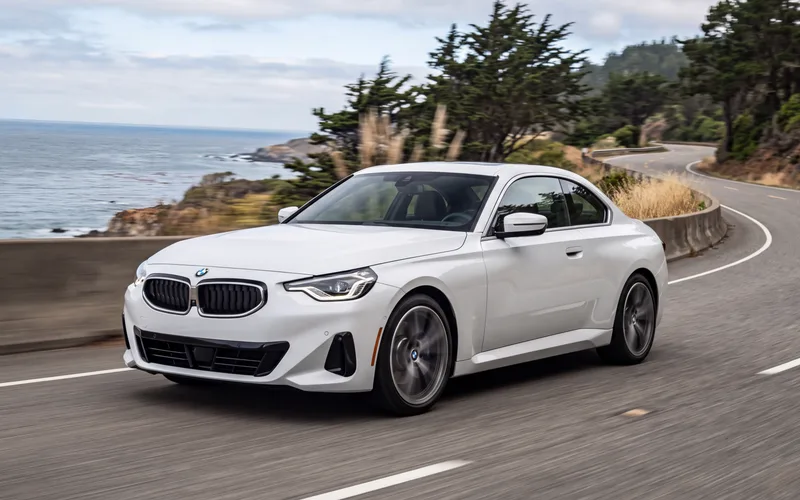 BMW 2 SeriesLuxury CoupeBetter at: Everyday practicality
Delivers the same premium two-door feel with rear seats you can actually use, better fuel economy, and a current warranty and incentive program behind it.
Compare 2.30C+
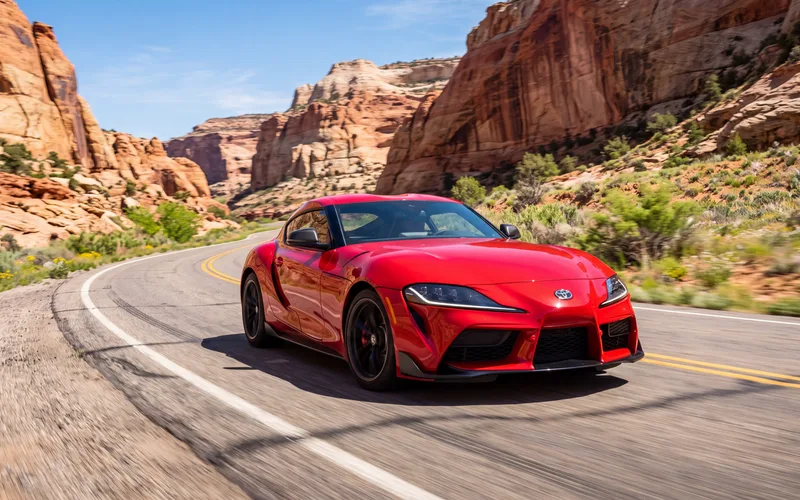 Toyota GR SupraSports CarBetter at: Performance per dollar
For roughly the same $52–55k, the 3.0 brings 382 hp and a straight-six instead of 228 hp and a four — a far quicker car for the money.
Compare 2.01C
2.01C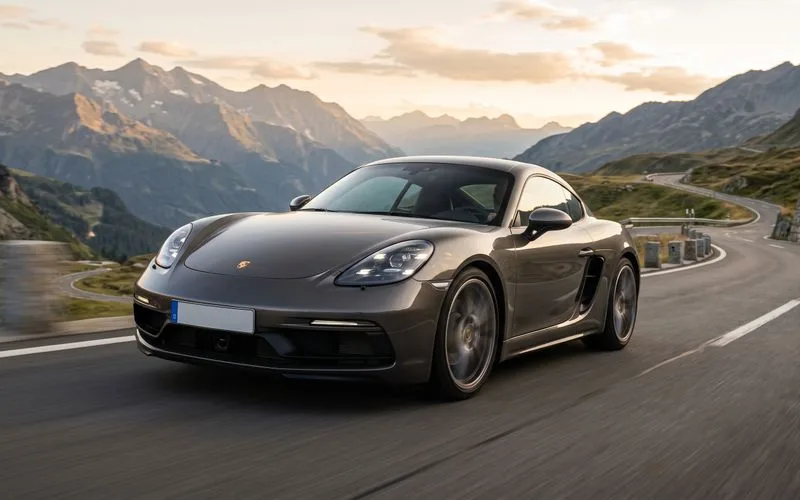 Porsche 718 CaymanSports CarBetter at: Driving engagement
If the reason you want a small coupe is how it drives, the Cayman's steering feel and mid-engine balance are what the TT is repeatedly criticized for lacking.
CompareHow it's evolved
7 scored model years · 2017–2023
Subject scores by year
Hover or tap a score to see what moved it versus the year before. A corner mark flags a big swing.
| Year | Performance | Efficiency | Safety | Space | Cost | Reliability | Tech | Use-case | Driving | Value |
|---|---|---|---|---|---|---|---|---|---|---|
| 2023 | 56 | 27 | 58 | 45 | 28 | 75 | 64 | 44 | 75 | 54 |
| 2022 | 57 | 33 | 31 | 45 | 35 | 73 | 53 | 32 | 71 | 54 |
| 2021 | 58 | 34 | 33 | 46 | 44 | 72 | 57 | 42 | 74 | 59 |
| 2020 | 57 | 34 | 32 | 46 | 46 | 75 | 51 | 34 | 75 | 63 |
| 2019 | 57 | 34 | 33 | 46 | 48 | 72 | 50 | 34 | 75 | 65 |
| 2018 | 56 | 34 | 33 | 45 | 52 | 71 | 48 | 33 | 73 | 62 |
| 2017 | 55 | 33 | 32 | 38 | 51 | 62 | 50 | 30 | 75 | 66 |
Compare two years
Best fit & conditions
Higher scores mean a better fit for that use case. Learn more about use-case fit →
Subject profile
Academic Probation · NHTSA safety recalls
Feb 12, 2020Fuel system, gasoline: storage: tank assemblyIn the event of a crash, the fuel tank may become damaged by the fuel tank heat shield bracket .
Defect
Volkswagen Group of America, Inc. (Volkswagen) is recalling certain 2016-2019 Audi TT Roadster Quattro and TT Coupe Quattro vehicles. In the event of a crash, the fuel tank may become damaged by the fuel tank heat shield bracket .
Risk
A damaged fuel tank may leak fuel, increasing the risk of a fire.
Remedy
Volkswagen will notify owners, and dealers will install a protective cap on the fuel tank heat shield bracket, free of charge. The recall began March 19, 2020. Owners may contact Volkswagen customer service at 1-800-893-5298. Volkswagen's number for this recall is 20BX.
NHTSA campaign 20V076000 ↗Manufacturer no. 20BX8,572 vehicles potentially affected (all models in the campaign)Owners notified Mar 19, 2020Filed by Volkswagen Group of America, Inc.Filed as TTJan 11, 2019Air bags: frontal: driver side: inflator moduleUpon deployment of the driver's frontal air bag, excessive internal pressure may cause the inflator to explode.
Defect
Volkswagen Group of America, Inc. (Volkswagen) is recalling certain 2015 Passat, 2015-2016 Eos, 2015-2017 CC, 2016-2017 TT Roadster, TT Coupe, 2017 Audi R8 Coupe, and R8 Spyder vehicles. Upon deployment of the driver's frontal air bag, excessive internal pressure may cause the inflator to explode.
Risk
In the event of a crash necessitating deployment of the driver's frontal air bag, the inflator could explode with metal fragments striking the vehicle occupants potentially resulting in serious injury or death.
Remedy
Volkswagen will notify owners, and dealers will replace the driver's frontal air bag inflator with an alternative inflator, free of charge. The recall began March 4, 2019. Volkswagen owners may contact Volkswagen customer service at 1-800-893-5298; Audi owners may contact Audi at 1-800-253-2834. Volkswagen's number for this recall is 69S8 (Audi) and 69Y5 (Volkswagen).
NHTSA campaign 19V014000 ↗Manufacturer no. 69S8/69Y5119,394 vehicles potentially affected (all models in the campaign)Owners notified Mar 4, 2019Filed by Volkswagen Group of America, Inc.Filed as TT ROADSTERSep 6, 2016Electrical system: software · Exterior lightingThe affected vehicles may have been programmed with new software that inadvertently makes the side marker lights inoperative in conjunction with the parking lights or the headlights. As such, these vehicles fail to comply with the requirements of Federal Motor Vehicle Safety Standard (FMVSS) number 108, "Lamps, Reflective Devices, and Associated Equipment."
Defect
Volkswagen Group of America, Inc. (Volkswagen) is recalling certain model year 2016 TT roadster, A3 cabriolet, A3 sedan and A3 e-tron, 2016-2017 TT coupe, 2017 A4 sedan and Q7 and 2015-2017 Q3 vehicles. The affected vehicles may have been programmed with new software that inadvertently makes the side marker lights inoperative in conjunction with the parking lights or the headlights. As such, these vehicles fail to comply with the requirements of Federal Motor Vehicle Safety Standard (FMVSS) number 108, "Lamps, Reflective Devices, and Associated Equipment."
Risk
If the side marker lights do not illuminate, the vehicle may be less visible at night, increasing the risk of a crash.
Remedy
Audi will notify owners, and dealers will upload revised software to correct the issue, free of charge. This recall began November 2016. Owners may contact Audi customer service at 1-800-253-2834. Volkswagen's number for this recall is 97CB.
NHTSA campaign 16V642000 ↗Manufacturer no. 97CB79,895 vehicles potentially affected (all models in the campaign)Owners notified Nov 1, 2016Filed by Volkswagen Group of America, Inc.Filed as TT ROADSTER
2 recalls on other model years of the TT (2018, 2023)
Apr 3, 2024Air bags: sensor: occupant classification: front passengerAn electrical connection in the front passenger seat for the occupant detection system (ODS) control module may loosen and deactivate the front passenger air bag.
Defect
Volkswagen Group of America, Inc. (Volkswagen) is recalling certain 2023 Audi S5 Cabriolet, A4 Allroad, Q5 Sportback, A3 Sedan, S5 Sportback, SQ7, TT Coupe, TT Roadster, RS5 Sportback, 2024 A8, E-Tron Quattro, E-Tron Sportback Quattro, Q8, RSQ8, 2023-2024 Q3, Q5, and Q7 vehicles. An electrical connection in the front passenger seat for the occupant detection system (ODS) control module may loosen and deactivate the front passenger air bag.
Risk
A deactivated front passenger air bag will not deploy during a crash, increasing the risk of injury.
Remedy
Dealers will replace the passenger seat occupant detection system control module, free of charge. Owner notification letters were mailed on May 8, 2024. Owners may contact Audi customer service at 1-800-253-2834. Volkswagen's number for this recall is 69GU.
NHTSA campaign 24V251000 ↗Manufacturer no. 69GU91 vehicles potentially affected (all models in the campaign)Owners notified May 8, 2024Filed by Volkswagen Group of America, Inc.Filed as TTDec 5, 2018Fuel system, gasoline: delivery: hoses, lines/piping, and fittingsThe fuel hose quick connector may detach from the fuel supply line in the engine bay, resulting in a fuel leak.
Defect
Volkswagen Group of America, Inc. (Volkswagen) is recalling certain 2018 Audi TT Roadster, TT Coupe, A3 Sedan and A3 Cabriolet vehicles. The fuel hose quick connector may detach from the fuel supply line in the engine bay, resulting in a fuel leak.
Risk
A fuel leak in the engine compartment can increase the risk of a fire.
Remedy
Volkswagen will notify owners, and dealers will secure the fuel line connection, as necessary, free of charge. The recall began January 11, 2019. Owners may contact Audi customer service at 1-800-253-2834. Volkswagen's number for this recall is 20BK.
NHTSA campaign 18V863000 ↗Manufacturer no. 20BK1,104 vehicles potentially affected (all models in the campaign)Owners notified Jan 11, 2019Filed by Volkswagen Group of America, Inc.Filed as TT ROADSTER
Source: NHTSA Office of Defects Investigation recall database, model years 2017–2023. Recalls are listed by model year as the manufacturer filed them; whether a specific car is affected depends on its VIN — check a VIN at nhtsa.gov ↗. NHTSA model names matched to this page: TT, TT ROADSTER.
Detailed scoring by subject
1Performance & PowertrainGrades below the middle of the scale.1.67D
2017 is a carry-over year of the pre-facelift third-generation (8S) TT — the US volume car is the 2.0 TFSI quattro at 220 hp, before the 2019 facelift lifted it to 228 hp. That is modest output in a coupe band whose top end is occupied by V8 sports cars, even though the TT is light enough to feel quicker than the number suggests.
The EA888 2.0T's 258 lb-ft arrives on a low, flat plateau, which is what makes the car feel stronger in traffic than 220 hp implies; European 2.0 TFSI literature quotes the same engine as 370 Nm, but the US rating describes the car sold here.
Standard quattro traction and a launch-capable dual-clutch make the base TT quicker off the line than its output suggests, and published US figures cluster at 5.3 s for the coupe. No US instrumented test of the 220 hp car was located, so this is a manufacturer-quoted figure corroborated by secondhand sources rather than a measured one.
The 2.0T is one of the better turbo fours — smooth on boost, unusually throaty for a four, and flexible thanks to the low torque plateau — but reviewers of the 2017 car consistently flag lag below roughly 2,500 rpm and softened throttle response in the default drive-select modes, a real gap against the sixes and eights elsewhere in this segment.
The six-speed S tronic dual-clutch — the only US gearbox for 2017, with no manual offered — shifts fast and decisively and does not hunt, and Sport mode holds lower gears sensibly. It sits below the facelifted car's seven-speed (which added a taller top gear and shorter lower ratios in 2019) and carries the usual dual-clutch low-speed take-up hesitation, so it lands at the bottom of the top band.
Every 2017 TT sold in the US is a quattro — AWD is standard, not optional, on both TT and TTS — but it is the transverse-layout electronically controlled Haldex multi-plate on-demand system with brake-based torque vectoring and drive-select tuning, not a locking or low-range setup, so it earns the bottom of the top band rather than the middle.
The 2017 US lineup is effectively one engine in two states of tune — the 220 hp 2.0 TFSI and the 292 hp version in the TTS — with no TT RS (it arrived here as a 2018 model), no manual gearbox, and no hybrid, plug-in, diesel or electric option anywhere in the range. That is narrower than the facelift years, which added the 394 hp five-cylinder as a genuinely distinct third powertrain.
2Efficiency & RangeOne of the TT's weakest categories.0.16F
26 MPG combined is respectable for a permanently all-wheel-drive sports coupe and reflects the TT's light MQB structure and small-displacement turbo four, but it is unremarkable against a coupe band running to 42 MPG that is populated by lighter, front-drive, non-performance cars.
23 MPG in town is decent for a full-time all-wheel-drive turbo coupe — stop-start and the dual-clutch's ability to stay off boost help — but it sits well below the front-drive and hybrid-assisted coupes at the top of the band.
30 MPG highway is the TT's best efficiency showing, helped by a small frontal area and low mass, but the quattro hardware, performance calibration and the pre-facelift six-speed's shorter top gear keep it under a third of the way up a band that reaches 45 MPG — the 2019 facelift's seventh gear later lifted this to 31.
It is the small 14.2-gallon tank rather than the economy that limits the TT — 369 miles is short for a car marketed partly as a grand tourer and lands near the bottom of a coupe band that reaches 650 miles.
EPA's $2,350 a year is mid-pack for a coupe — the small-displacement engine offsets some of the modest 26 MPG combined — but Audi's recommendation of 91 octane for full output raises the per-gallon price an owner actually pays above the regular-grade basis EPA uses.
Audi recommends 91-octane premium to reach the rated 220 hp / 258 lb-ft, but the 2.0T tolerates 87 octane with reduced output rather than requiring it — EPA classifies the 2017 TT Coupe quattro's fuel as regular gasoline. That flexibility earns the middle band, not the top.
3SafetyOne of the TT's weakest categories.0.08F
NHTSA has never crash-tested the third-generation (8S) TT and 2017 is no exception — every subscore in the agency's own record returns "Not Rated," which reflects the nameplate's very low US sales volume rather than a tested weakness. Inferred at 4.0 stars from the MQB architecture the TT shares with the A3 and Golf, which test well; this is an estimate, not a published rating.
IIHS publishes no crashworthiness results for the Mk3 TT in any model year, and 2017 — a carry-over year that added only a rearview camera and power-folding mirrors — did nothing to bring the car into the test program. There is neither a good result nor a bad one on record. Held just above the failing band because no structural concerns are known and the MQB platform earns Good moderate-overlap results on higher-volume siblings, but a car with zero published US crash data cannot approach the 80+ band.
Of the five systems this item measures, four cannot be bought on a 2017 US TT at any price: forward collision warning, AEB, lane departure warning/lane keep assist and adaptive cruise control were never offered on the Mk3 TT, and the fifth — Audi side assist blind-spot monitoring — sits inside the extra-cost Technology package rather than being standard on the volume trim. The 2017 model year did add real content (rearview camera and auto-dimming power-folding mirrors became standard) but none of it is active safety. Standard driver-assistance equipment amounts to the new rearview camera plus rear parking sensors, which is the deep end of the "significant safety features unavailable" band rather than merely features locked to upper trims.
There is no AEB to evaluate — the 2017 US-market TT cannot be ordered with automatic emergency braking or forward collision warning on any trim, so there is no vehicle-to-vehicle or pedestrian capability day or night, and nothing for IIHS front crash prevention testing to measure. Scored at the floor because the capability is absent rather than merely weak.
Audi side assist is the one modern driver aid the 2017 TT offers and it can be ordered on the volume trim — but only inside the extra-cost Technology package, it is alert-only with no steering or braking intervention, and rear cross-traffic alert and safe-exit warning are not offered on the TT at all. Half of what this item measures simply does not exist on the car, which pulls it just under the "available on most trims, alert-only" band.
No lane departure warning, lane keep assist or lane centering is offered on the 2017 US TT — Audi active lane assist was never certified onto the US Mk3 TT — so there is no behavior to judge for smoothness or ping-ponging. Confidence is HIGH here because NHTSA's own equipment record and the Cars.com review state the omission explicitly rather than merely failing to list it.
The 2017 TT has conventional fixed-speed cruise control only. Adaptive cruise control was never offered on the US Mk3 TT — not standard, not optional — and with no ACC there is no highway assist function to combine it with steering. This is exactly the "basic cruise only" case, scored a little above the floor because ordinary cruise control is at least standard.
No hands-free highway driving system of any kind is offered on the 2017 TT. Audi never deployed a Super Cruise/BlueCruise equivalent on this nameplate, and with neither adaptive cruise nor lane centering underneath it the prerequisites for hands-off operation do not exist on the car — nor did any manufacturer sell a hands-free highway system in this class in 2017.
Full-LED headlights are standard on every 2017 TT rather than reserved for upper trims — a genuine advantage over rivals still fitting halogen or xenon units at the base price. What keeps it out of the top band: the matrix/adaptive LED function was a European feature that FMVSS 108 did not permit in the US until the 2022 adaptive-driving-beam rule change, so no adaptive high beam functioned on the US car, and IIHS has published no headlight rating for the TT to confirm real-world reach.
Better forward and over-the-shoulder than the low-slung shape suggests — reviewers credit the small triangular rear quarter windows and relatively thin pillars with keeping the over-the-shoulder blind zone unusually small for a sports coupe — but the shallow rear window and high tail still make rearward vision poor. Compensation is partial and newly so: the rearview camera only became standard for 2017, rear parking sensors are standard while front sensors cost extra, no 360-degree camera is offered on the TT, and the blind-spot monitor that would cover the remaining gap is an option.
The coupe's 2+2 rear bench carries LATCH anchors — more than the strict two-seat roadster body offers — and a forward-facing seat will physically attach. Everything else about the job is hostile: there are no rear doors, so every installation and every buckling-in happens through a tumbled front seat and a narrow aperture; rear legroom is too small for a rear-facing seat to clear an adult front occupant; and the 2017 car's rear seats lack head restraints entirely, so reviewers advise a high-back booster for whiplash protection rather than the car's own structure. Practical for occasional use with one small child, not for routine family duty.
4Space & ComfortGrades near the bottom of the scale.0.52F
The 2017 TT Coupe is a nominal 2+2 — four belted places, but the rear pair is a token bench with no head restraints. Four seats is the floor of the coupe band, so the count earns nothing even though the car technically carries the segment minimum.
37.1 in is a low-roof sports-coupe figure that sits in the bottom third of the coupe band, and the TT has no sunroof option in the US to erode it further. Taller drivers report clearing the roof but sitting close to it.
41.1 in is modest on paper, but the TT's low, narrow center tunnel and long seat travel make the front cabin feel roomier than the number — reviewers single out the knee room and adjustment range as better than the footprint suggests.
33.8 in under the TT's fastback roofline is enough for small children only, and the sloping glass means anyone taller is pressed into the rear window. It lands in the lower third of the coupe band.
28.9 in is a genuine 2+2 figure — usable only with the front seats slid well forward — but it is not the worst in a coupe band that bottoms out at 22 in, so it scores mid-pack rather than at the floor. Reviewers describe the space as fit for kids, dogs or bags rather than adults.
12.0 cu ft is respectable for a sports coupe and it is far more usable than the number implies because the TT is a liftback with a wide opening and 50/50 folding rear seatbacks. It still sits below the midpoint of a coupe band stretched by grand tourers.
Cabin stowage is thin even by sports-coupe standards — a shallow console bin, a glovebox and a single exposed cupholder, with the minimalist dash deliberately offering nowhere to put anything. The folding rear seatbacks and liftback tailgate are the only real practicality features, and they are cargo-bay tricks rather than in-cabin ones.
The front seats are a genuine strength — heated eight-way power chairs in leather and Alcantara with a long adjustment range and, in S sport form, deep bolstering that reviewers praise for support. The score is capped in the middle band because the item covers rear-seat comfort too, and the TT's rear pair has no head restraints and is unusable for adults on any trip length.
The base TT rides on a fixed sport suspension over standard 18-inch summer tires and is consistently described as firm, with constant surface turbulence on undulating highway; magnetic ride adaptive damping is an extra-cost fix rather than standard equipment. Body control is excellent, which keeps it out of the bottom band, but reviewers rate ride refinement behind comparably priced rivals.
Road and wind noise are the most repeated criticism of the third-generation TT — a short-wheelbase aluminum-intensive body on performance rubber, with little sound deadening behind the two-place rear shelf. Multiple US reviews flag the noise level as inappropriate for the price.
The volume TT does the basics well and standard — heated eight-way power front seats and automatic climate control operated through the TT's signature in-vent control dials, plus auto-dimming heated power-folding mirrors and rain/light sensors. There are no ventilated seats, no heated steering wheel, no rear climate provision and no remote preconditioning, so it earns the middle band rather than the top.
5Cost of OwnershipGrades below the middle of the scale.1.43D
2017 is the second US model year of the third-generation (8S) TT and the cheapest year of the nameplate's Mk3 run — $43,500 plus $950 destination, roughly $1,400 below the 2019 facelift car and about $8,000 below the final 2023 price. Cheap for the TT, still expensive against a coupe band whose floor is a mainstream $22,000 car.
The US 2017 TT was sold as one 2.0 TFSI quattro Coupe rather than a Premium/Prestige ladder, so the base car IS the volume trim and only options move the sticker. The near-universal add was the $2,950 Technology package — navigation, Audi connect 4G LTE, side assist blind-spot monitoring and the newly available Apple CarPlay/Android Auto — which alone lifts a typical window sticker to $47,400 before wheels or paint.
A premium German 2.0T with a six-speed dual-clutch and quattro hardware, serviced on 10,000-mile intervals at dealer labor rates and with no complimentary maintenance of any kind. The 4-year/50,000-mile warranty absorbs most repair exposure through year four, so the burden is scheduled service plus a fifth year fully on the owner; set slightly below the later Mk3 years because the 2017 car's five-year window ran at 2017–2022 parts and labor rates.
The TT holds value unusually well for a premium coupe — a low-mileage lifestyle car in short supply — and the 2017 car's five-year mark landed in 2022, at the peak of the inflated post-pandemic used market, which is why it retains more than the 2019–2023 cars do. Strong retention is not the same as cheap to own: 38% of a ~$47,800 car is still roughly $18,200 of depreciation.
Audi's New Vehicle Limited Warranty ran 4 years / 50,000 miles on the 2017 TT — mid-pack among luxury brands, matching BMW and Mercedes-Benz of the era and unchanged across the model's entire US life.
Audi does not break powertrain coverage out into a longer term the way most brands do, so the 2.0T, the six-speed S tronic and the quattro hardware are covered only to 4 years / 50,000 miles — below the 5-year floor of the scoring band and one of the shortest powertrain terms in the industry.
A 2017 Audi came with no complimentary scheduled maintenance at all — Audi Care was a prepaid plan the buyer bought separately, and Audi's included-maintenance program (Audi Signature Care, 3 yr / 30,000 mi) does not arrive until model year 2026. What is included is four years of 24-hour roadside assistance running with the warranty plus a short Audi connect 4G data trial on Technology-package cars, which lifts this just off the floor of the bottom band but leaves it well behind BMW, which bundled 4 yr / 50,000 mi of free scheduled maintenance on 2017 cars.
$47,800 volume-trim price minus its estimated resale value after 5 years (62% retained, or about $29,636) leaves about $18,164 in depreciation. Add the projected $6,800 in 5-year maintenance and repairs, and owning this vehicle for 5 years costs about $24,964 in total.
6Reliability & QualityOne of the TT's strongest categories.2.17C
J.D. Power gives the 2017 TT a below-average 2.5/5 predicted reliability, and Consumer Reports carries no statistically valid predicted-reliability rating for the TT because US sales volume is too low to hit its ~200-400 sample threshold — so the only quantified signal available is a negative one.
Audi's two main dependability yardsticks disagree in this era: Consumer Reports had Audi as a top-3 luxury brand (roughly #7 of 22 overall), while J.D. Power's Vehicle Dependability Study kept Audi mid-pack at best and it has since fallen to the bottom of both VDS and IQS. Mixed signals put the brand in the middle of the 50-79 band, not the top of it.
Three NHTSA campaigns touch the 2017 TT — two of them safety-significant (an airbag inflator that can rupture and a fuel-tank puncture/fire risk) — but none is a repeated or systemic powertrain defect, and the count itself is typical for a six-year-old low-volume model.
The 2017 TT's 2.0 TFSI (EA888 Gen 3, 220 hp/258 lb-ft) and six-speed wet-clutch S tronic are the highest-volume powertrain pair in the VW Group, which means a deep high-mileage track record and cheap diagnostic knowledge — but Gen 3 carries well-documented weak points (turbo wastegate actuator, water pump, direct-injection intake-valve carbon) that keep it out of the proven-bulletproof band.
The Mk3 TT cabin is a class benchmark and was the car's headline achievement: the 12.3-inch Virtual Cockpit removed the center screen entirely, climate controls moved into the jet-turbine vents, and reviewers consistently rate the leather/Alcantara and switchgear as A6-grade rather than compact-sports-car grade.
Assembly is tight and structurally solid — reviewers find the panel work and switch action faultless — with only scattered owner reports of interior trim rattles, easily marked seat bolsters and a Virtual Cockpit that can be slow to boot (a software fix), which keeps it just below the top of the band.
Audi's US franchise network is roughly 300 stores — dense enough in metro areas but thin across rural and small-market America compared with a mainstream brand — while service satisfaction in this era was genuinely best-in-class, so coverage is the limiter rather than quality.
Running costs are the TT's weakest ownership dimension: RepairPal puts annual repair and maintenance about 15% above the luxury-compact average and roughly 40% above the all-vehicle average, with above-normal repair severity and European-luxury parts pricing. The one mitigation is that the EA888/MQB hardware is shared with the Golf GTI and A3, so mechanical parts and aftermarket support are far better than a bespoke sports car's.
7Technology & InfotainmentGrades below the middle of the scale.1.33D
The third-generation TT is the car Audi built around deleting the center stack — there is no dashtop display, so the measured value is a real zero rather than missing data. The 12.3-inch driver display that replaces it is credited under item 7.1.6, not here.
The Nvidia-driven virtual cockpit is fast, sharp and fluid, and the MMI rotary controller with its capacitive touchpad plus steering-wheel toggles keeps the driver's hands and eyes in one place — genuinely ahead of most 2017 systems. It loses the top band for structural reasons the reviews keep returning to: the wheel rim and spokes can obscure the display, there is a learning curve, and the passenger cannot see or operate anything.
Phone projection exists but is wired only and is not standard — Audi smartphone interface (CarPlay and Android Auto over USB) arrives with the $2,950 Technology package, so a base 2017 TT leaves the showroom without it. Wireless projection was not offered on this generation at all.
MMI Navigation plus with Audi connect is genuinely good for 2017 — Google Earth imagery and Street View rendered full-width across the virtual cockpit, plus INRIX traffic — and its map-behind-the-gauges presentation is the car's best party trick. But it is a Technology-package option rather than standard, and the voice system is fixed-command rather than natural language.
The optional Bang & Olufsen system — 12 speakers and 680 watts — is a strong premium upgrade for a small cabin and is well regarded by reviewers. The standard 9-speaker, 155-watt MMI radio is merely adequate, which keeps the item out of the top band.
This is the car that introduced Audi virtual cockpit, and it is standard on every 2017 TT: a 12.3-inch, 1,440 x 540 panel running at 60 fps on Nvidia hardware, switchable between classic-gauge and infotainment-dominant layouts. Nothing else in the segment in 2017 offered a configurable full-digital cluster of this quality as standard equipment.
There is no whole-vehicle over-the-air updating on this generation — vehicle software is a dealer operation. The only OTA path is navigation map refresh over the Audi connect data link, and that requires the optional Technology package and an active subscription, so most 2017 TTs have no OTA capability at all.
With Audi connect fitted, the myAudi app covers the core remote set — lock/unlock, vehicle status, stolen-vehicle locator and send-to-car destinations — but it is gated behind the Technology package and lapses to a paid subscription after the six-month trial, and there is no factory remote start or digital key on the 2017 TT. A base car has effectively no app functionality.
Two USB-A ports and an aux jack ahead of the shifter is the whole provision — no USB-C anywhere, no household outlet, and the Audi phone box inductive charger was a European fitment rather than a US TT option. A 2+2 needs no rear-row ports, which keeps it out of the bottom band, but the front-row hardware was already dated in 2017.
Audi advanced key gives proximity entry with push-button start and stop, backed by an extended-range remote with remote trunk release, panic function and HomeLink — the full conventional keyless set for its era. It stops short of the top band because there is no phone-as-key, no hands-free tailgate and no remote engine start.
A rearview camera became standard on the TT for 2017 and acoustic parking sensors auto-engage below 6 mph, which covers the basics — but there is no surround-view camera, no automated parking, front sensors need the Technology package, and the camera feed lands in the cluster where the wheel spokes can block it.
No head-up display was offered on the third-generation TT at any trim level — Audi's stated design argument was that the virtual cockpit already puts navigation and speed in the driver's forward sightline, making a projection unit redundant. That is a coherent rationale, but the item measures HUD availability and there is none.
8Use-Case FitThe TT's lowest-graded category.0.00F
A 2+2 with 28.9 in of rear legroom, no rear head restraints and two long doors is close to the worst case for daily kid logistics — a rear-facing seat will not fit behind an adult driver, and reviewers note toddlers need high-back boosters here specifically for whiplash protection. The liftback tailgate and 50/50 folding seatbacks salvage a little stroller practicality.
The 2017 TT has essentially no active-safety net for family duty: no automatic emergency braking, no forward collision warning, no lane keeping and no adaptive cruise at any price, with blind-spot monitoring only via the Technology package. It also carries no NHTSA or IIHS crash ratings, so buyers have no independent crashworthiness evidence to weigh.
Four-up long distance is not a proposition this car supports — the rear pair is unusable beyond short hops, there are no rear vents, ports or amenities of any kind, and 12 cu ft of luggage space disappears fast once the back seat is occupied. Front-seat comfort is good, but the item measures the whole cabin.
The TT is compact, light-controlled and standard quattro, with a dual-clutch automatic and an excellent driving position, so it is far less demanding than most sports cars in traffic. What holds it to the middle band is documented low-speed calibration: pronounced accelerator lag, a dual-clutch reluctant to downshift, and a firm, noisy ride that adds fatigue on a broken commute.
26 MPG combined is respectable for a 220 hp all-wheel-drive sports coupe, but the TT mandates premium fuel and carries Audi service and summer-tire consumables, so the real cost per commuting mile lands well above a mainstream commuter's. Roughly $2,350 a year in fuel alone at EPA assumptions.
At 164.4 in long on a 98.6 in wheelbase with a 34.78 ft curb-to-curb turning circle plus standard rearview camera and acoustic parking sensors, the TT threads and parks easily — a genuine strength of the car. The thick C-pillars and shallow rear glass are the one caveat, and the camera image lives in the cluster where the wheel can block it.
The TT has no US tow rating, no bed, no meaningful payload margin and 12 cu ft of enclosed cargo space in a low-slung two-door. It is not a work vehicle by any reading of the item.
This is a luxury sports coupe with leather-and-Alcantara trim, standard summer performance tires and low ground clearance — nothing about it is specified for abuse, and there is no fleet or trade presence to draw a durability reputation from. The MQB-derived 2.0T underneath is proven, which is all that lifts it off the floor.
There is no onboard power beyond a 12-volt socket, no tie-down system, no roof rails, no hitch and no upfit ecosystem — the cargo bay is a carpeted liftback well behind two seats. Nothing in the equipment list addresses work use.
Roughly 370 miles of range on a 14.5-gallon tank and genuinely good, long-adjustment front seats make the TT a workable two-up tourer, but the firm suspension, loud tire roar and complete absence of adaptive cruise or lane centering make it a tiring one over a full day. Cruise control is the only fatigue aid on offer.
Standard quattro all-wheel drive is real and does make the TT credible on a wet gravel road or in a snowbelt winter once the summer tires are swapped, which lifts it above pavement-bound rivals. Everything else works against it: sports-car ride height, standard summer performance tires, no roof rails or rack provision, and no tow rating for toys.
The TT is a liftback, not a trunked coupe, and that matters — a wide tailgate opening over 12 cu ft, with 50/50 folding rear seatbacks that turn the 2+2 into a deep load bay for skis or luggage. Absolute volume is still small and there are no roof rails, hitch or underfloor storage, so bulky gear is a squeeze.
9Driving ExperienceThe TT's best-graded category.3.08B
The MQB-platform TT finally shed the nose-heavy reputation of the earlier cars: reviewers describe sharp turn-in, minimal understeer, a longer wheelbase that added stability, and enough adjustability that a lift will rotate the tail. It sits below the segment's rear-drive benchmarks because the transverse-engine quattro layout still meters engagement more than a 911 or a Cayman does.
The electromechanical progressive-ratio rack is accurate and naturally weighted, and reviewers credit it with real feedback and clean, direct responses off center — good by 2017 electric-rack standards. It is not the last word in communication in a segment that includes hydraulic-feel benchmarks, so it lands just below the top band.
103 feet from 60 mph in instrumented testing is a strong result and reflects a light car on standard summer performance rubber with 12.3-inch ventilated front discs. Pedal feel draws no complaints in the reviews; the base TT's solid rear discs and lack of a track-brake option keep it just below the top of the band.
Once boosted, the EA888 2.0T is one of the smoother turbo fours and the six-speed S tronic shifts crisply, but the 2017 calibration is the recurring complaint: noticeable lag below about 2,500 rpm, a soft default throttle map, and a transmission that resists kicking down until the pedal is near the floor unless Dynamic mode is selected.
The 2.0T is unusually vocal and pleasant for a four-cylinder, with a genuine bark on upshifts in Dynamic mode and no drone at cruise, and the dual-clutch transmits little vibration through the controls. It scores in the upper-middle rather than the top band because it remains a four-cylinder note in a class where fives, sixes and eights set the standard, and the drivetrain sound competes with heavy tire roar.
34.78 ft is near the tight end of the coupe band and is a direct manufacturer figure — a short 98.6-inch wheelbase and a 14.6:1 initial steering ratio make the TT genuinely easy to turn around in a city street.
The low, enveloping driver's seat has long travel and a tilt-and-telescoping wheel, and the design deliberately puts everything — gauges, maps, media — in the driver's forward sightline with duplicate controls on the wheel. The offsetting criticisms are consistent: the wheel rim can obscure the display, the center armrest sits too low, some console controls are awkwardly placed, and ingress and egress are a low-slung coupe's.
It is a quick, grippy, tossable car with a good soundtrack and a cabin people enjoy sitting in, and the drive-select modes give it two distinct personalities. It stops short of the enthusiast top band because the criticism that follows the TT — style ahead of substance, all-wheel-drive security ahead of involvement — still attaches to the 220 hp car, and the default-mode throttle calibration blunts the first impression.
10Value & Market PositionOne of the TT's strongest categories.2.49C+
At $44,450 delivered every 2017 TT included quattro all-wheel drive, the 12.3-inch Audi virtual cockpit as the only screen in the car, LED headlights and taillights, leather/Alcantara upholstery, 12-way heated power sport seats, a flat-bottom sport steering wheel, an automatic rear spoiler, dual-zone climate, 18-inch wheels and a nine-speaker HD/satellite audio system — plus a back-up camera and auto-dimming power-folding mirrors newly standard for 2017. Held out of the top band because the content that mattered most was extra-cost or absent: navigation, Audi connect, blind-spot monitoring and CarPlay all sat inside the $2,950 Technology package, and automatic emergency braking and adaptive cruise were not offered at any price.
2017 is the strongest value year of the Mk3's US run — $44,450 bought standard quattro, a cabin reviewers rated best in class, the full digital cockpit and a low-five-second car, undercutting a 2017 Porsche 718 Cayman by more than $10,000 and matching a BMW M240i xDrive on price. Kept out of the top band because the M240i gives 115 more horsepower for similar money and the Cayman remains the better driver's car, so the TT wins on interior and content rather than on outright performance per dollar.
The narrowest lineup of the Mk3's US run: two models rather than three, since the TT RS did not reach the US until model year 2018 — so a 2017 buyer chose between the $44,450 TT and the $53,450 TTS, in coupe or (TT only) roadster form. Within the volume car there is exactly one trim, one gearbox and one drivetrain — the 2.0 TFSI quattro with the six-speed dual clutch, with no manual and no front-drive variant as sold in Europe — leaving only the Technology package, wheels, seats and appearance items to configure.
Audi sold 2,294 TTs in the US in 2017 across both bodies and both models — down a quarter from the Mk3's 3,044-unit launch-year peak in 2016, but still roughly 1.8× what the nameplate managed in any later year. This is the second-best year of the generation and the last before US volume collapsed into four low figures, so it scores above the rest of the run while remaining a niche halo model in absolute terms.
Audi sat firmly in the aspirational German premium tier alongside BMW and Mercedes-Benz in 2017, and the TT nameplate carries its own halo — its Bauhaus-influenced design is the reason the car is remembered, and the Mk3 was the model that introduced Virtual Cockpit to the brand. The badge is a clear asset to this model rather than a drag on it.
A second-year car still selling in the low thousands nationally had less need for support than the wound-down later years, and Audi Financial Services carried it on subvented lease programs rather than cash-on-the-hood clearance. Buyers had ordinary negotiating room on standing inventory — real, but modest, and the fresh-generation TT was not being discounted hard in 2017.
The freshest position any year of the TT's US run holds: 2017 is the second model year of the third-generation (8S) car that arrived for 2016 on the then-new MQB platform, with the segment's first all-digital instrument cluster and no redesign on the horizon. It is a light carry-over year rather than a change year — a back-up camera, power-folding mirrors, CarPlay/Android Auto and the Black Optic package — but a buyer in 2017 was buying current hardware with the 2019 facelift still two years out.
Well regarded without ever being the pick of the class, and rated slightly better in 2017 than in later years: US News placed it #7 among 2017 luxury sports cars and Edmunds gave it an A, judging it favorable against the Cayman, 2 Series and SLC. The recurring criticisms that kept it out of comparison-test wins were consistent across outlets — below-average predicted reliability, rear seats that are storage rather than seating, and steering less communicative than a Porsche's — and the car collected no 10Best, NACTOY or Top Safety Pick honors.