

The verdict
A struggling sports car, strong on driving and held back by safety.
The 2019 Audi TT is the mid-life refresh of the third-generation car, and it is the best version of the volume TT: 228 hp from the 2.0-liter turbo, a new seven-speed dual-clutch, standard quattro all-wheel drive, and the 12.3-inch Virtual Cockpit moved onto the base car's standard list — all for $45,895 delivered. Buy it for the cabin, which reviewers rated among the best in any sports car, and for the fact that it is a genuinely easy car to live with year-round. Understand what you are giving up: there is no automatic emergency braking, no adaptive cruise and no lane keeping at any price, the rear seats are luggage space with seatbelts, and a 14.5-gallon tank means stopping every 377 miles. It is a stylish, well-built premium coupe first and a hard-core driver's car a distant second.
Jump to scoresStrengths
- A cabin that still embarrasses cars costing twice as much
- Quick, secure and beautifully set up to drive
- Standard quattro, so it works in the winter
What holds it back
- No automatic emergency braking, no adaptive cruise, no lane keeping — at any price
- The rear seats are storage, not seating
- Infotainment is unusual, and the good parts cost $3,500
Top alternatives
Cars shoppers cross-shop with the Audi TT 2.81B-
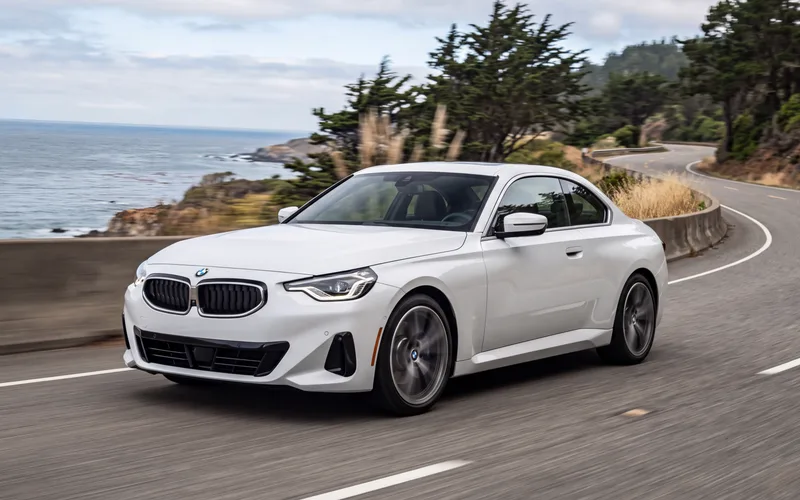 BMW 2 SeriesLuxury CoupeBetter at: Everyday practicality
Delivers the same premium two-door feel with rear seats you can actually use, better fuel economy, and a current warranty and incentive program behind it.
Compare 2.30C+
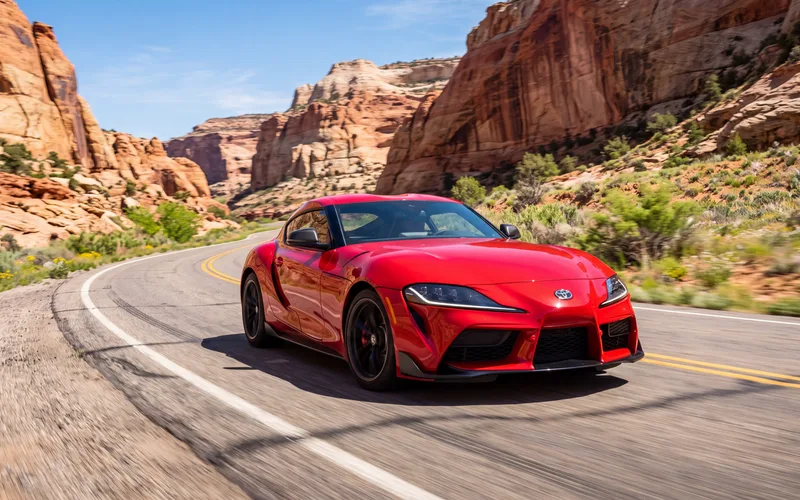 Toyota GR SupraSports CarBetter at: Performance per dollar
For roughly the same $52–55k, the 3.0 brings 382 hp and a straight-six instead of 228 hp and a four — a far quicker car for the money.
Compare 2.01C
2.01C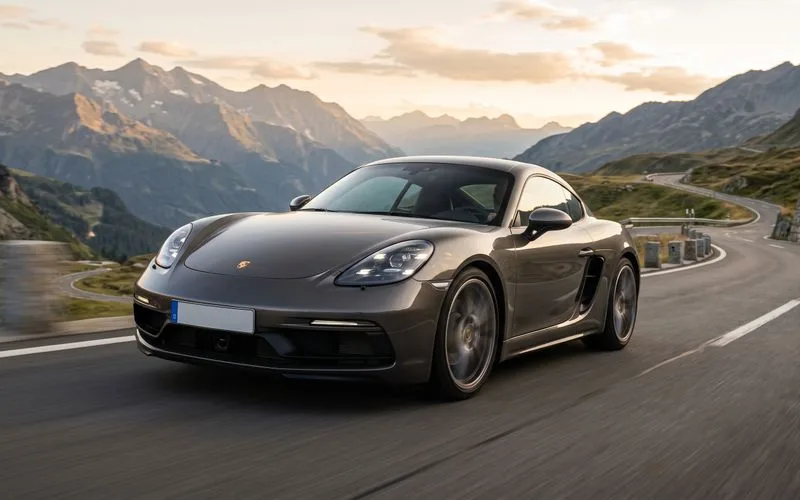 Porsche 718 CaymanSports CarBetter at: Driving engagement
If the reason you want a small coupe is how it drives, the Cayman's steering feel and mid-engine balance are what the TT is repeatedly criticized for lacking.
CompareHow it's evolved
7 scored model years · 2017–2023
Subject scores by year
Hover or tap a score to see what moved it versus the year before. A corner mark flags a big swing.
| Year | Performance | Efficiency | Safety | Space | Cost | Reliability | Tech | Use-case | Driving | Value |
|---|---|---|---|---|---|---|---|---|---|---|
| 2023 | 56 | 27 | 58 | 45 | 28 | 75 | 64 | 44 | 75 | 54 |
| 2022 | 57 | 33 | 31 | 45 | 35 | 73 | 53 | 32 | 71 | 54 |
| 2021 | 58 | 34 | 33 | 46 | 44 | 72 | 57 | 42 | 74 | 59 |
| 2020 | 57 | 34 | 32 | 46 | 46 | 75 | 51 | 34 | 75 | 63 |
| 2019 | 57 | 34 | 33 | 46 | 48 | 72 | 50 | 34 | 75 | 65 |
| 2018 | 56 | 34 | 33 | 45 | 52 | 71 | 48 | 33 | 73 | 62 |
| 2017 | 55 | 33 | 32 | 38 | 51 | 62 | 50 | 30 | 75 | 66 |
Compare two years
Best fit & conditions
Higher scores mean a better fit for that use case. Learn more about use-case fit →
Subject profile
Academic Probation · NHTSA safety recalls
Feb 12, 2020Fuel system, gasoline: storage: tank assemblyIn the event of a crash, the fuel tank may become damaged by the fuel tank heat shield bracket .
Defect
Volkswagen Group of America, Inc. (Volkswagen) is recalling certain 2016-2019 Audi TT Roadster Quattro and TT Coupe Quattro vehicles. In the event of a crash, the fuel tank may become damaged by the fuel tank heat shield bracket .
Risk
A damaged fuel tank may leak fuel, increasing the risk of a fire.
Remedy
Volkswagen will notify owners, and dealers will install a protective cap on the fuel tank heat shield bracket, free of charge. The recall began March 19, 2020. Owners may contact Volkswagen customer service at 1-800-893-5298. Volkswagen's number for this recall is 20BX.
NHTSA campaign 20V076000 ↗Manufacturer no. 20BX8,572 vehicles potentially affected (all models in the campaign)Owners notified Mar 19, 2020Filed by Volkswagen Group of America, Inc.Filed as TT
4 recalls on other model years of the TT (2017–2018, 2023)
Apr 3, 2024Air bags: sensor: occupant classification: front passengerAn electrical connection in the front passenger seat for the occupant detection system (ODS) control module may loosen and deactivate the front passenger air bag.
Defect
Volkswagen Group of America, Inc. (Volkswagen) is recalling certain 2023 Audi S5 Cabriolet, A4 Allroad, Q5 Sportback, A3 Sedan, S5 Sportback, SQ7, TT Coupe, TT Roadster, RS5 Sportback, 2024 A8, E-Tron Quattro, E-Tron Sportback Quattro, Q8, RSQ8, 2023-2024 Q3, Q5, and Q7 vehicles. An electrical connection in the front passenger seat for the occupant detection system (ODS) control module may loosen and deactivate the front passenger air bag.
Risk
A deactivated front passenger air bag will not deploy during a crash, increasing the risk of injury.
Remedy
Dealers will replace the passenger seat occupant detection system control module, free of charge. Owner notification letters were mailed on May 8, 2024. Owners may contact Audi customer service at 1-800-253-2834. Volkswagen's number for this recall is 69GU.
NHTSA campaign 24V251000 ↗Manufacturer no. 69GU91 vehicles potentially affected (all models in the campaign)Owners notified May 8, 2024Filed by Volkswagen Group of America, Inc.Filed as TTJan 11, 2019Air bags: frontal: driver side: inflator moduleUpon deployment of the driver's frontal air bag, excessive internal pressure may cause the inflator to explode.
Defect
Volkswagen Group of America, Inc. (Volkswagen) is recalling certain 2015 Passat, 2015-2016 Eos, 2015-2017 CC, 2016-2017 TT Roadster, TT Coupe, 2017 Audi R8 Coupe, and R8 Spyder vehicles. Upon deployment of the driver's frontal air bag, excessive internal pressure may cause the inflator to explode.
Risk
In the event of a crash necessitating deployment of the driver's frontal air bag, the inflator could explode with metal fragments striking the vehicle occupants potentially resulting in serious injury or death.
Remedy
Volkswagen will notify owners, and dealers will replace the driver's frontal air bag inflator with an alternative inflator, free of charge. The recall began March 4, 2019. Volkswagen owners may contact Volkswagen customer service at 1-800-893-5298; Audi owners may contact Audi at 1-800-253-2834. Volkswagen's number for this recall is 69S8 (Audi) and 69Y5 (Volkswagen).
NHTSA campaign 19V014000 ↗Manufacturer no. 69S8/69Y5119,394 vehicles potentially affected (all models in the campaign)Owners notified Mar 4, 2019Filed by Volkswagen Group of America, Inc.Filed as TT ROADSTERDec 5, 2018Fuel system, gasoline: delivery: hoses, lines/piping, and fittingsThe fuel hose quick connector may detach from the fuel supply line in the engine bay, resulting in a fuel leak.
Defect
Volkswagen Group of America, Inc. (Volkswagen) is recalling certain 2018 Audi TT Roadster, TT Coupe, A3 Sedan and A3 Cabriolet vehicles. The fuel hose quick connector may detach from the fuel supply line in the engine bay, resulting in a fuel leak.
Risk
A fuel leak in the engine compartment can increase the risk of a fire.
Remedy
Volkswagen will notify owners, and dealers will secure the fuel line connection, as necessary, free of charge. The recall began January 11, 2019. Owners may contact Audi customer service at 1-800-253-2834. Volkswagen's number for this recall is 20BK.
NHTSA campaign 18V863000 ↗Manufacturer no. 20BK1,104 vehicles potentially affected (all models in the campaign)Owners notified Jan 11, 2019Filed by Volkswagen Group of America, Inc.Filed as TT ROADSTERSep 6, 2016Electrical system: software · Exterior lightingThe affected vehicles may have been programmed with new software that inadvertently makes the side marker lights inoperative in conjunction with the parking lights or the headlights. As such, these vehicles fail to comply with the requirements of Federal Motor Vehicle Safety Standard (FMVSS) number 108, "Lamps, Reflective Devices, and Associated Equipment."
Defect
Volkswagen Group of America, Inc. (Volkswagen) is recalling certain model year 2016 TT roadster, A3 cabriolet, A3 sedan and A3 e-tron, 2016-2017 TT coupe, 2017 A4 sedan and Q7 and 2015-2017 Q3 vehicles. The affected vehicles may have been programmed with new software that inadvertently makes the side marker lights inoperative in conjunction with the parking lights or the headlights. As such, these vehicles fail to comply with the requirements of Federal Motor Vehicle Safety Standard (FMVSS) number 108, "Lamps, Reflective Devices, and Associated Equipment."
Risk
If the side marker lights do not illuminate, the vehicle may be less visible at night, increasing the risk of a crash.
Remedy
Audi will notify owners, and dealers will upload revised software to correct the issue, free of charge. This recall began November 2016. Owners may contact Audi customer service at 1-800-253-2834. Volkswagen's number for this recall is 97CB.
NHTSA campaign 16V642000 ↗Manufacturer no. 97CB79,895 vehicles potentially affected (all models in the campaign)Owners notified Nov 1, 2016Filed by Volkswagen Group of America, Inc.Filed as TT ROADSTER
Source: NHTSA Office of Defects Investigation recall database, model years 2017–2023. Recalls are listed by model year as the manufacturer filed them; whether a specific car is affected depends on its VIN — check a VIN at nhtsa.gov ↗. NHTSA model names matched to this page: TT, TT ROADSTER.
Detailed scoring by subject
1Performance & PowertrainMid-pack among this car's ten categories.1.86C-
2019 is the facelift year of the third-generation (8S) TT and a change year, not a carry-over: the US volume car was renamed 45 TFSI quattro and its EA888 2.0L TFSI went from 220 hp to 228 hp. That is a light car's worth of power, but 228 hp still sits low in a coupe band whose top end is occupied by V8 sports cars.
US cars are rated at 258 lb-ft, on a plateau starting at 1,750 rpm that makes the car feel stronger in traffic than its horsepower suggests; European 45 TFSI literature quotes the same engine as 370 Nm (273 lb-ft), but the US rating is the one that describes the car sold here.
Standard quattro traction plus the new-for-2019 seven-speed dual-clutch with shorter lower gears makes the base TT quicker off the line than 228 hp implies, and published figures cluster between 5.2 and 5.5 s. No US instrumented test of the 228 hp facelift car was located, so this is a manufacturer claim corroborated by secondhand quotes rather than a measured number.
The EA888 2.0T is smooth and strong once on boost, with a torque plateau from 1,750 rpm that makes the car effortless in normal driving, but reviewers of the 2019 car consistently flag a pocket of lag off idle in the softer drive-select modes and an engine note that is workmanlike rather than exotic — a real gap against the six- and eight-cylinder coupes in this segment.
2019 replaced the six-speed S tronic with a new seven-speed dual-clutch whose shorter lower gears sharpen acceleration without hurting cruising economy; shifts are rapid and decisive with no hunting. It is held just short of the top band by the low-speed creep and take-up hesitation characteristic of a dual clutch in traffic, and by the absence of any manual gearbox in the US lineup.
Every 2019 TT sold in the US is a quattro — AWD is standard rather than optional across TT, TTS and TT RS — but it is the transverse-layout, electronically controlled multi-plate on-demand system with brake-based torque vectoring and drive-select tuning, not a locking or low-range setup, so it earns the bottom of the top band rather than the middle of it.
Three genuinely distinct gasoline engines span the 2019 range — the 228 hp 2.0T, the 288 hp higher-output 2.0T in the TTS and the 394 hp 2.5L turbo five in the TT RS — but there is no hybrid, plug-in or electric option anywhere in the line, and no naturally aspirated or diesel alternative in the US.
2Efficiency & RangeOne of the TT's weakest categories.0.23F
26 MPG combined is decent for a permanently all-wheel-drive sports coupe and reflects the TT's light MQB structure and small-displacement turbo four, but it is unremarkable against a coupe band that runs to 42 MPG and is populated by lighter, front-drive, non-performance cars.
23 MPG in town is respectable for a full-time all-wheel-drive turbo coupe — stop-start and the new seven-speed's taller top ratios help — but it sits well below the front-drive and hybrid-assisted coupes at the top of the band.
31 MPG highway is the TT's best efficiency showing, helped by low frontal area and the tall seventh gear added for 2019, but the quattro hardware and performance calibration keep it a third of the way up a band that tops out at 45 MPG.
The TT's small 14.5-gallon tank, not its economy, is what limits range — 377 miles is short for a car marketed partly as a grand tourer and lands near the bottom of a coupe band that reaches 650 miles.
EPA's estimate of $2,350 a year is mid-pack for a coupe — the small-displacement engine offsets some of the modest 26 MPG combined, but Audi's recommendation of 91 octane raises the effective per-gallon price an owner actually pays.
Audi recommends 91-octane premium to reach the rated 228 hp / 258 lb-ft, but the base 2.0T tolerates 87 octane with reduced output rather than requiring it — EPA classifies the TT Coupe quattro's fuel as regular gasoline, unlike the TT RS, which is premium-required. That flexibility earns the middle band, not the top.
3SafetyThe TT's lowest-graded category.0.13F
NHTSA never crash-tested the third-generation (8S) TT, and the 2019 facelift year is no exception — every subscore returns "Not Rated," a reflection of the nameplate's very low US sales volume rather than a tested weakness. Inferred at 4.0 stars from the MQB architecture shared with the A3/Golf, which test well; this is an estimate, not a published rating.
IIHS has published no crashworthiness ratings for the Mk3 TT in any year, and the 2019 facelift — which changed the grille, lights and transmission, not the structure — did not bring the car into the test program. There is neither a good result nor a bad one on record. Held just above the failing band because no structural concerns are known and the MQB platform rates Good in moderate-overlap testing on higher-volume siblings, but a car with zero published crash data cannot reach the 80+ band.
The 2019 facelift added standard content (wireless charging, seven-speed S tronic, LED lighting, honeycomb grille) but no active-safety hardware: forward collision warning, AEB, lane departure warning/lane keep assist and adaptive cruise control are not offered at any price on the US TT, and Audi side assist (blind-spot monitoring) sits inside the extra-cost Technology package rather than being standard on the volume trim. Standard driver-assistance equipment is the federally mandated rearview camera plus front and rear parking sensors — this is the deep end of the "significant safety features unavailable" band, not merely features locked to upper trims.
There is no AEB to evaluate — the 2019 US-market TT cannot be ordered with automatic emergency braking or forward collision warning on any trim, so there is no vehicle-to-vehicle or pedestrian capability, day or night, and nothing for IIHS front crash prevention testing to measure. Scored at the floor because the capability is absent rather than merely weak.
Audi side assist is the one modern driver aid the 2019 TT offers and it is orderable on the volume trim — but only inside the extra-cost Technology package, it is alert-only with no steering or braking intervention, and rear cross-traffic alert and safe-exit warning are not offered on the TT at all. Half of what this item measures does not exist on the car, which pulls it just under the "available on most trims, alert-only" band.
No lane departure warning, lane keep assist or lane centering is offered on the 2019 US TT — Audi active lane assist was never certified onto the US Mk3 TT, so there is no behavior to judge for smoothness or ping-ponging. Confidence is MEDIUM rather than HIGH only because scattered aggregator listings claim lane assistance; NHTSA's own equipment record and the US reviews contradict them.
The 2019 TT has conventional fixed-speed cruise control only. Adaptive cruise control was never offered on the US Mk3 TT — not standard, not optional — and with no ACC there is no highway assist function combining it with steering. This is exactly the "basic cruise only" case, scored a little above the floor because ordinary cruise control is at least standard.
No hands-free highway driving system of any kind is offered on the 2019 TT. Audi never deployed a Super Cruise/BlueCruise equivalent on this nameplate, and with neither adaptive cruise nor lane centering underneath it the prerequisites for hands-off operation do not exist on the car.
Automatic LED headlights are standard on every 2019 TT rather than reserved for upper trims — a real advantage over rivals still fitting halogens at the base price. What keeps it out of the top band: the facelift's headline Matrix LED units were a European feature, since FMVSS 108 did not permit adaptive driving beam in the US until the 2022 rule change (US-spec Audis of this era shipped with the adaptive function disabled where the hardware was present at all), so no adaptive or automatic high beam functioned on the US car, and IIHS has published no headlight rating for the TT to confirm real-world reach.
Better than the low-slung shape suggests in front — reviewers single out the TT's relatively thin front and rear pillars and low cowl as making it an unusually easy sports coupe to see out of — but the shallow rear window and high tail still compromise rearward and over-the-shoulder checks. Compensation is partial: a rearview camera plus front and rear parking sensors are standard, but no 360-degree camera is offered and the blind-spot monitor that would cover the over-the-shoulder gap costs extra.
The coupe's 2+2 rear bench carries two sets of LATCH anchors — more than a strict two-seat roadster offers — and a forward-facing seat will physically attach. Everything else about the job is hostile: there are no rear doors, so every installation and every buckling-in happens through a tumbled front seat and a narrow aperture, and rear legroom is small enough that a rear-facing seat will not clear an adult front occupant. Practical for occasional use with one small child, not for routine family duty.
4Space & ComfortGrades below the middle of the scale.1.03D
The 2019 TT Coupe is a nominal four-seater in a 2+2 layout, which lands at the very bottom of the coupe band (4-5 seats); the two rear positions are token seats reviewers treat as extra luggage space rather than accommodation.
37.1 inches is adequate but unremarkable within the coupe band (36-40 in) — the low roofline is offset by an equally low hip point, so the car accommodates tall drivers better than the raw figure implies. The 2019 facelift changed bumpers and grille, not the greenhouse, so the Mk3 dimension carries forward.
41.1 inches sits in the lower third of the coupe band (40-44 in); the front cabin is snug, but the seat rails travel far enough back that reviewers report no complaints from six-footers.
33.8 inches is near the bottom of the coupe band (32-38 in): the fastback roof collapses over the rear bench, and anyone taller than a small child sits with their head against the glass.
28.9 inches lands in the lower-middle of the wide coupe band (22-37 in) — better than a strict 2+2 supercar, but nowhere near usable for an adult, and a rear-facing child seat will not clear a normally-positioned front occupant.
12.0 cu ft seats-up is mid-band for a coupe (4-26 cu ft), but the figure undersells the car: the TT is a liftback rather than a trunk-lid coupe, and dropping the 50/50 rear seatbacks opens a flat 25.1 cu ft hold reachable through a wide hatch.
Small-item storage is merely adequate — a shallow console bin, narrow door pockets, two cupholders — but the TT earns credit above the sports-coupe norm for two genuine packaging tricks: the hatchback opening and the 50/50 folding +2 bench that turns the back of the cabin into a usable load deck. New for 2019, the Audi phone box with wireless charging and signal booster became standard, which fills most of the console cubby but adds function to it.
The front seats are a strength and standard equipment is generous for a $45,895 car — 12-way power-adjustable heated sport seats in full leather on the single 45 TFSI quattro trim, with leather/Alcantara and S sport seat upgrades above it — and reviewers describe the cabin as comfortable and reasonably roomy despite the small footprint. Held out of the top band because this item also weighs rear-seat comfort, and the TT's +2 bench is not usable by an adult for any duration.
On its standard 18-inch wheels and passive sport suspension the volume 2019 TT rides firmly but without harshness — reviewers call the balance between body control and suppleness a nice one. It misses the upper band because Audi's magnetic ride adaptive dampers are not fitted to the 45 TFSI quattro (they belong to the TTS), and the S line competition package's 19-inch wheels make the car noticeably busier.
Highway isolation is a clear step above mainstream sports cars — the Gyor-built structure is tight and reviewers treat the quiet cabin as part of the TT's grand-touring credibility — but tire roar on low-profile performance rubber keeps it short of luxury-GT benchmarks, and no acoustic glass or active noise cancellation appears on the 2019 US equipment list.
2019 is the year this item improved: the facelift made heated mirrors, light and rain sensors, a multifunction steering wheel, Audi drive select and the wireless-charging phone box standard, on top of automatic climate control, heated 12-way power leather seats and ambient LED lighting already fitted to the single trim. It falls short of the top band because ventilated seats, a heated steering wheel and remote pre-conditioning were never offered on the TT at any price, and there is no rear climate provision.
5Cost of OwnershipGrades below the middle of the scale.1.22D
2019 is the facelift year of the third-generation (8S) TT, and the US car arrived renamed 45 TFSI quattro at $44,900 plus $995 destination — about $600 below where Audi set the 2020 car and roughly $6,000 below the nameplate's final 2023 price. Well equipped for the money, but still expensive against a coupe band whose floor is a mainstream $22,000 car.
The US 2019 TT was sold as a single 45 TFSI quattro Coupe rather than a Premium/Prestige ladder, so the base car IS the volume trim and the only variable is options. Typical builds added the S line appearance, the Technology package (navigation, CarPlay/Android Auto, blind-spot monitor) and Bang & Olufsen audio, lifting window stickers roughly $3,000 over the $45,895 delivered base.
A premium German 2.0T with a dual-clutch gearbox and quattro hardware, serviced on 10,000-mile intervals at dealer labor rates. The 4-year/50,000-mile warranty absorbs most repair exposure through year four, but the fifth year and the 60k/70k service items fall entirely on the owner, putting the total in the upper-middle of the coupe band.
The TT holds value unusually well for a premium coupe — a low-mileage lifestyle car in short supply — and the 2019 car's five-year mark landed in 2024, while used values were still elevated. Strong retention is not the same as cheap to own, though: 40% of a ~$49,000 car is still roughly $19,600 of depreciation.
Audi's New Vehicle Limited Warranty ran 4 years / 50,000 miles on the 2019 TT — mid-pack among luxury brands, matching BMW and Mercedes-Benz of the era and unchanged across the model's US life.
Audi does not break powertrain coverage out into a longer term the way most brands do, so the 2.0T, the seven-speed S tronic and the quattro hardware are covered only to 4 years / 50,000 miles — below the 5-year floor of the scoring band and one of the shortest powertrain terms in the industry.
A 2019 Audi came with no complimentary scheduled maintenance at all — Audi Care was a prepaid plan the buyer purchased separately, and Audi's included-maintenance program (Audi Signature Care, 3 yr / 30,000 mi) does not arrive until model year 2026. What is included is 24-hour roadside assistance for the four-year warranty period plus short Audi connect service trials, which lifts this off the floor of the bottom band but leaves it well behind BMW, which still bundled multi-year included maintenance on 2019 cars.
$49,000 volume-trim price minus its estimated resale value after 5 years (60% retained, or about $29,400) leaves about $19,600 in depreciation. Add the projected $7,000 in 5-year maintenance and repairs, and owning this vehicle for 5 years costs about $26,600 in total.
6Reliability & QualityOne of the TT's strongest categories.2.87B-
The 2019 TT posts a clean field record — one recall and zero owner complaints on file — and J.D. Power rates it slightly above average, but Consumer Reports has no reliability rating for the model year at all (sample too small), and 2019 is the Mk3 facelift year rather than a settled carry-over, which removes the free pass a mid-cycle year gets.
Audi sits in the bottom tier of every J.D. Power dependability study bracketing this cohort — 30th of 32 for 2020 vehicles and 29th of 30 for 2021 vehicles — and the 2022 VDS that surveys 2019-model-year owners specifically put the brand below both the 192 PP100 industry average and the 204 PP100 premium average. Consumer Reports keeps Audi nearer mid-pack, so the signal is bad rather than unanimous.
One NHTSA recall against the model year, with a fire consequence but a trivial remedy (a protective cap on the fuel-tank heat shield bracket) and a crash precondition, and no owner complaints of any kind filed. Mk3 TSB patterns are minor — Virtual Cockpit software lag, brake squeal, coil packs — with nothing systemic.
The volume 45 TFSI quattro runs the EA888 Gen 3 2.0T — a high-volume VW Group engine with a strong high-mileage record but well-known intake-valve carbon buildup and water-pump/thermostat replacement in the 60–100k window. 2019 is the first US model year for the 7-speed S tronic in the TT, replacing the 6-speed dual-clutch, so the transmission has less of a track record here than the engine does.
The TT cabin is the segment benchmark, and the 2019 facelift strengthened it by making the 12.3-inch Virtual Cockpit, Audi drive select and the multifunction steering wheel standard on the base car. Turbine HVAC vents with integrated climate controls, soft-touch dash surfaces and high-grade switchgear carry through the range.
Győr assembly gives the TT tight panel gaps and a solid structure, and by 2019 the Mk3 was four years into production with tooling long settled — the facelift changed bumpers, grille and lighting rather than the body structure. No owner complaints of any kind were filed with NHTSA for the model year; the one recurring gripe is seat bolsters wearing early, a materials issue rather than an assembly one.
Audi runs a bit over 300 independently owned US dealers — good metro coverage but thin outside it next to mainstream brands — and service satisfaction sits mid-pack among luxury marques rather than with the leaders, missing the top five of the CSI study fielded on this era's owners.
Running costs are the TT's weakest ownership dimension: German luxury parts pricing, many dealer-only components, and premium labor rates for dual-clutch, turbo and quattro work. The enthusiast aftermarket is genuinely deep but skews to performance parts rather than cheap maintenance items and does not offset the repair bills.
7Technology & InfotainmentGrades below the middle of the scale.1.35D
The TT shares the R8's screen-free architecture: the center stack carries three turbine vents with integrated climate dials and no display at all, so the center-touchscreen spec is a real, gradeable zero. Every MMI function is drawn on the 12.3-inch Virtual Cockpit and driven by the console rotary/touchpad controller — that screen is credited under 7.1.6, not here.
MMI on the 2019 TT is quick and legible, and the physical HVAC dials built into the turbine vents remain one of the most-praised interior details of the decade — real buttons for the functions that matter. The compromise is structural rather than fixable: with everything on the driver's cluster, a front passenger cannot see or operate navigation or media, and the rotary/touchpad controller is a slower route to a destination entry than a touchscreen.
Phone projection on the 2019 US TT is neither standard nor wireless: Apple CarPlay and Android Auto arrive only inside the $3,500 Technology package as the wired Audi smartphone interface, and the projected UI then appears on the driver's cluster rather than a shared center screen. A buyer of the $44,900 base car gets Bluetooth audio and nothing else — and 2019's package costs $700 more than the 2020 equivalent.
MMI Navigation plus with natural-language voice control and Google Earth map tiles was genuinely good for 2019 and looks superb rendered full-screen in the Virtual Cockpit — but it is optional, bundled into the $3,500 Technology package, so the volume configuration as delivered has no built-in navigation at all, only MMI voice/handwriting recognition and basic voice dialing.
Both ends of the range are strong for a compact coupe: a nine-speaker Audi sound system with satellite radio is standard rather than a four-speaker afterthought, and the optional Bang & Olufsen 680-watt 12-speaker system is a genuinely excellent premium upgrade. Just short of the top band because the B&O system is reachable only through the $3,500 package.
The 12.3-inch Audi Virtual Cockpit is standard on every 2019 TT — the facelift explicitly moved it into the base car's standard list — and it is the display that made the feature famous: sharp, configurable between classic-gauge and infotainment modes, with a full-screen map view. Four years into the generation it remains the class benchmark for a driver-facing digital cluster.
There is no meaningful over-the-air capability. The TT's MIB-generation MMI predates Audi's E3 electronics architecture by several years; map data is refreshed by dealer service or SD card, and no feature-adding software update was ever pushed to the car. Scored just above the floor because Audi connect — when the Technology package is fitted — does deliver live traffic and POI data over the air.
Connected services on the 2019 TT are doubly gated: the embedded modem arrives only with the $3,500 Technology package, and the myAudi remote functions it enables (vehicle status, lock/unlock, horn and lights, destination send) lapse to a paid Audi connect subscription after the trial. There is no digital key, and no remote engine start was offered on the US TT — the 2019 facelift's connectivity addition was a phone-box signal booster, not app capability.
Better than the segment stereotype, and 2019 is the year it improved: the Audi phone box with Qi wireless charging and a signal booster became standard equipment, alongside illuminated USB ports, SD card readers and a 12V socket. What holds it mid-band is that the USB ports are legacy USB-A rather than USB-C, there are no rear-seat ports at all, and no household AC outlet is offered.
Audi advanced key — proximity entry with push-button start — is standard on the single 2019 trim rather than packaged, which is the core of this item and unusual at the price. It stops short of the upper band because remote engine start was not offered on the US TT in any form, and phone-as-key did not exist on the Mk3 generation.
Exactly the mid-band case: Audi parking system plus — front and rear sensors — plus a rearview camera are standard on every 2019 TT, which genuinely helps given the shallow rear glass. But Audi's surround-view camera was never offered on the TT, unlike similarly priced A4/A5 models, so there is no top-view image and no automated parking at any price.
No head-up display was offered on the TT in any model year or trim, and the 2019 facelift did not add one. Audi's rationale is that the driver-only Virtual Cockpit already sits in the sightline — defensible, but it does not change the answer this item asks: the feature is unavailable at any price.
8Use-Case FitOne of the TT's weakest categories.0.20F
The 2+2 bench does carry LATCH anchors and a forward-facing seat will physically attach, which is more than the Roadster offers — but there are no rear doors, so every installation and every buckling-in happens through a tumbled front seat and a narrow aperture, and 28.9 inches of rear legroom will not clear a rear-facing seat behind an adult. Daily family logistics are not realistically on offer.
This is the 2019 TT's weakest dimension for a family buyer and it is not a trim-level problem: forward collision warning, automatic emergency braking and adaptive cruise control cannot be ordered at any price, blind-spot monitoring (Audi side assist) costs extra inside the $3,500 Technology package, and neither NHTSA nor IIHS has published a crash rating for the car. There is no rear-occupant alert.
A multi-hour trip with four aboard is not a scenario the TT supports. The +2 seats sit low in the coupe band on both headroom and legroom, there are no rear vents, rear USB ports, rear armrest or entertainment of any kind, and with the rear bench occupied only the 12 cu ft hold remains for luggage.
The TT is a notably civilized sports coupe in traffic: the EA888 2.0T and the new-for-2019 seven-speed S tronic are smooth and effortless in normal driving, the car is short and light at 3,164 lb, and standard heated power seats and automatic climate make the commute pleasant. What keeps it out of the upper band is a pocket of lag off the line in the softer drive modes, a firm passive suspension on broken city pavement, and low-slung ingress and egress that get old daily.
26 MPG combined from an all-wheel-drive turbo coupe is respectable rather than cheap, and the surrounding costs are the problem: Audi recommends 91-octane premium to reach the rated 228 hp, EPA puts annual fuel at about $2,350, and the German consumables behind it — dealer-labor S tronic service, quattro hardware, low-profile performance tires — sit well above mainstream commuter costs.
Genuinely easy to place in a city: 165 inches long on a 98.6-inch wheelbase, a 36.1-foot curb-to-curb turning circle, and — unusually for the price — front and rear parking sensors plus a rearview camera standard on the single trim. Short of the top band only because the shallow rear window and thick C-pillars make over-the-shoulder checks poor, and no surround-view camera is offered to compensate.
The 2019 TT carries no US tow rating, has no payload provision beyond four occupants and 12 cu ft, and offers no bed, hitch or work-oriented configuration. Nothing about the car is meaningfully work-capable.
The underlying EA888 2.0T and MQB structure are high-volume, well-proven VW Group hardware, and a 2019 iSeeCars study named the TT the sports car most likely to exceed 150,000 miles — but that is longevity in gentle private ownership, not toughness under abuse. Full leather trim, sports-car ground clearance and dealer-only components make it entirely unsuited to fleet or jobsite duty.
There is essentially nothing here to score: no onboard AC power, no bed or tie-down system, no roof rails or rack provision, no hitch, and no upfit ecosystem. The cargo hold has a carpeted floor and a parcel shelf.
As a two-up tourer the 2019 TT is competent — supportive heated 12-way power sport seats, a well-isolated cabin at speed, and a refined 2.0T made taller-geared by the new seventh ratio. Two things hold it to the middle of the band: a 14.5-gallon tank gives only about 377 miles between stops despite decent economy, and adaptive cruise control is not available at any price, so the driver-fatigue reduction every rival in this peer group offers is simply absent.
Standard quattro all-wheel drive is real capability and makes the TT credible on a snowy road or a gravel approach — better than the rear-drive coupes it competes against. Everything else argues the other way: sports-car ground clearance, low-profile performance tires, no roof rails or rack provision, no tow rating for a bike or kayak trailer, and no onboard power for camping.
The liftback body is the TT's quiet practical advantage over trunk-lid rivals: a wide hatch opening and 50/50 folding rear seatbacks turn 12 cu ft into a flat 25.1 cu ft hold that swallows skis, a bike wheel or a weekend's luggage for two. Still mid-band because the aperture is low, there is no underfloor storage of consequence, and no roof rails or hitch exist to carry anything outside the car.
9Driving ExperienceThe TT's best-graded category.3.06B
A short 98.6-inch wheelbase, a 3,164-pound curb weight and standard quattro produce very high grip and unflappable composure — reviewers credit the all-wheel-drive system with holding the intended line and delivering superb poise through turns. It sits in the upper-middle rather than the top of the band because the transverse layout gives the car a nose-led, understeer-biased balance at the limit, and the same reviewers ask for a more playful chassis.
This is the TT's most consistently criticized dynamic trait and the reason it does not rank with the segment's best drivers' cars: the electric rack is quick, accurate and well weighted off-center, but it transmits almost nothing about the road surface or how much grip is left. Squarely the 'precise enough but numb' case.
Reviewers report a firm, linear pedal and composed stops with no fade complaints in street use, helped by the car's low mass and standard four-wheel discs with ABS and ESC. Held to the middle-upper band because no instrumented 60-0 figure for the 228-hp 45 TFSI quattro could be verified — the published stopping distances in circulation belong to the TTS and TT RS.
2019 is a change year here and it improved the car: the EA888 2.0T rose to 228 hp / 258 lb-ft and gained a new seven-speed S tronic dual-clutch whose shortened lower gears sharpen response without hurting cruising economy. Shifts are rapid and decisive with no hunting. It falls just short of the top band for two calibration quirks — a pocket of turbo lag off idle in the softer drive modes, and the low-speed take-up hesitation characteristic of a dual clutch in stop-and-go traffic.
The 2.0T is well isolated and inoffensive — smooth at cruise, with no vibration through the wheel or pedals and a modest, partly enhanced exhaust note under load. It is refined rather than characterful, which is the honest gap against the five-cylinder TT RS or a flat-six Cayman in the same peer group.
36.1 feet is a good result within the 34-40 ft coupe band, a direct consequence of the short 98.6-inch wheelbase, and it makes the TT easy to turn around on a city street or thread through a parking structure.
One of the best-executed cockpits of its era, and 2019 sharpened it: a low, properly sports-car seating position with 12-way power adjustment, the now-standard Virtual Cockpit placing every readout directly in the sightline, a new standard multifunction steering wheel, and — the detail reviewers keep returning to — climate controls built into the turbine vents so temperature and fan never require a menu. The deduction is rearward visibility, compromised by the shallow rear glass and thick C-pillars.
Quick, secure, beautifully finished and genuinely enjoyable on a good road — Edmunds frames the 2019 TT as a practical way to have an emotional driving experience. But the volume car is a stylish premium coupe first and a driver's tool second: with numb steering, an all-wheel-drive safety net and a chassis reviewers wish were more playful, enthusiasts are routinely pointed toward the TTS, the TT RS or a Cayman.
10Value & Market PositionOne of the TT's strongest categories.2.39C+
2019 is the year the TT's standard list got materially better: the facelift made the 12.3-inch Audi virtual cockpit, Audi drive select, a multifunction steering wheel, light and rain sensors and heated mirrors standard, on top of the quattro all-wheel drive, LED headlights and taillights, heated power sport seats, leather/Alcantara, dual-zone automatic climate, automatic rear spoiler and 18-inch wheels already included at $45,895. Held out of the top band because active-safety content was thin — blind-spot monitoring, navigation and CarPlay all sat inside the extra-cost Technology package, and AEB and adaptive cruise were not offered at any price.
For $45,895 the 2019 TT delivered a cabin reviewers rated best-in-class, standard quattro, the new seven-speed dual-clutch and a 5.2-second car — undercutting a Porsche 718 Cayman by more than $10,000 and beating it on standard content. Against a BMW M240i xDrive at similar money it gives away roughly 100 hp, and reviewers consistently judged it the less rewarding drive of the two. Fair value rather than a bargain.
The 2019 lineup spans three distinct performance tiers from $45.9k to $67.9k (TT, TTS, TT RS) in both Coupe and Roadster bodies, which is real breadth. Within the volume car, though, there is exactly one trim, one gearbox and one drivetrain: US buyers got the 45 TFSI quattro with the seven-speed dual clutch and nothing else — no manual and no front-drive 40 TFSI as offered in Europe — leaving only appearance and audio packages to configure.
Audi sold 1,285 TTs in the US in 2019 across every variant and both bodies — flat-to-slightly-up on 1,244 in 2018, so the facelift at least stopped the slide, but still less than a quarter of the Mk3's ~5,600-unit 2016 peak. This is a niche halo model whose US volume had already collapsed, and it fell again to 830 units in 2020.
Audi sat firmly in the aspirational German premium tier alongside BMW and Mercedes-Benz in 2019, and the TT nameplate carries its own halo — its Bauhaus-influenced design is the reason the car is remembered, and the Mk3 was the model that introduced Virtual Cockpit to the brand. The badge is a clear asset to this model rather than a drag on it.
The 2019 TT was in active production and selling in four figures nationally, which is exactly the condition under which Audi Financial Services supports a model with subvented lease and APR programs and dealers discount to clear standing inventory. Buyers had real negotiating room — including cash-on-the-hood dealer allowances and 0% financing on TTS stock — without the car being dumped at desperation pricing.
2019 is the TT's facelift year, not a carry-over — the mid-cycle refresh brought a new honeycomb grille and revised bumpers and lights, more standard tech, an output bump to 228 hp and a new seven-speed dual-clutch replacing the six-speed. That is genuinely fresh for a buyer, and it is the strongest freshness position any year of the Mk3's US run holds after 2016. It stops short of the top band because the underlying 8S platform dated to the 2016 model year and was not renewed.
Reviewers respected the 2019 TT without ever making it the pick of the class: US News scored it 8.0/10 but placed it 9th among luxury sports cars, and Edmunds named it one of its Best Luxury Cars for the year. The recurring criticisms — a base engine short on power for the money, rear seats that are storage rather than seating, and steering less communicative than a Cayman's — are what kept it out of comparison-test wins.