

The verdict
A mixed-report sports car, strong on driving and held back by efficiency.
The 2023 Audi TT is the last of a design icon — a compact, all-wheel-drive coupe with one of the best-built cabins at any price and a 228-hp turbo four that hits 60 mph in 5.2 seconds. Its hatchback tailgate (12.0 cu ft, 26.5 with the token rear seats folded) makes it far more usable than a typical sports coupe, and reliability outlook is the strongest part of its record. The catch is money: roughly $52,395 to start, 26 MPG combined on required premium, a 4-year/50,000-mile warranty with no separate powertrain coverage, and about $37,650 gone over five years to depreciation and upkeep. Buy it because you love how it looks and feels, not because it's the sharpest or most sensible coupe for the money.
Jump to scoresStrengths
- A cabin that still beats cars costing twice as much
- Refined, quick, and effortless to drive fast
- Better long-term odds than the Audi badge suggests
What holds it back
- Five-year ownership costs land near the worst in the class
- Thirsty for what it delivers, and premium fuel is required
- The back seats are storage, not seating
Top alternatives
Cars shoppers cross-shop with the Audi TT 2.81B-
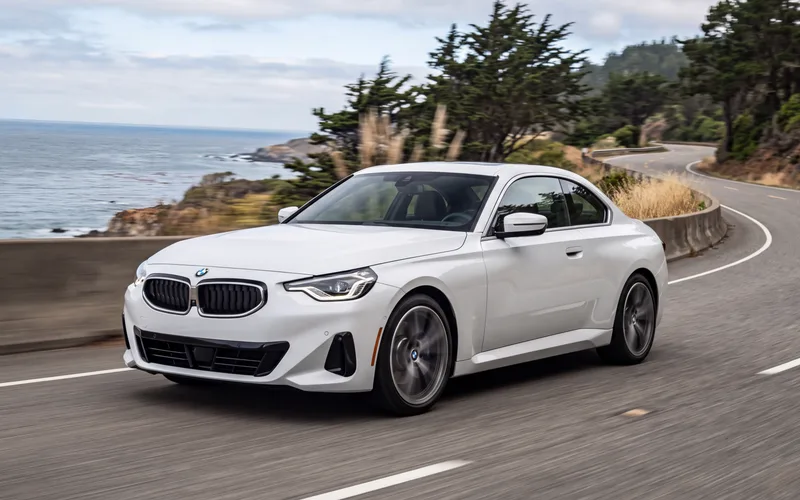 BMW 2 SeriesLuxury CoupeBetter at: Everyday practicality
Delivers the same premium two-door feel with rear seats you can actually use, better fuel economy, and a current warranty and incentive program behind it.
Compare 2.30C+
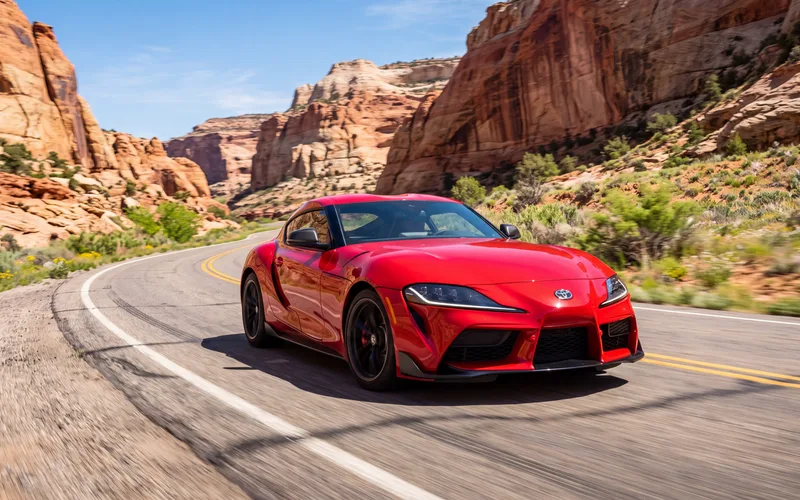 Toyota GR SupraSports CarBetter at: Performance per dollar
For roughly the same $52–55k, the 3.0 brings 382 hp and a straight-six instead of 228 hp and a four — a far quicker car for the money.
Compare 2.01C
2.01C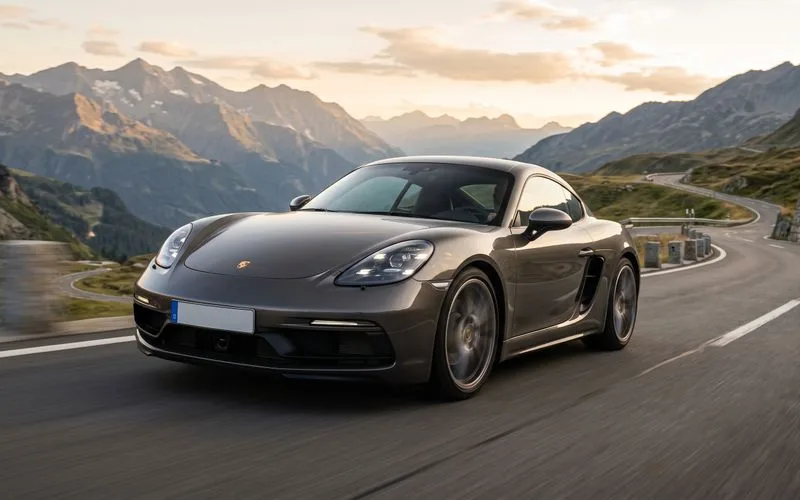 Porsche 718 CaymanSports CarBetter at: Driving engagement
If the reason you want a small coupe is how it drives, the Cayman's steering feel and mid-engine balance are what the TT is repeatedly criticized for lacking.
CompareHow it's evolved
7 scored model years · 2017–2023
Subject scores by year
Hover or tap a score to see what moved it versus the year before. A corner mark flags a big swing.
| Year | Performance | Efficiency | Safety | Space | Cost | Reliability | Tech | Use-case | Driving | Value |
|---|---|---|---|---|---|---|---|---|---|---|
| 2023 | 56 | 27 | 58 | 45 | 28 | 75 | 64 | 44 | 75 | 54 |
| 2022 | 57 | 33 | 31 | 45 | 35 | 73 | 53 | 32 | 71 | 54 |
| 2021 | 58 | 34 | 33 | 46 | 44 | 72 | 57 | 42 | 74 | 59 |
| 2020 | 57 | 34 | 32 | 46 | 46 | 75 | 51 | 34 | 75 | 63 |
| 2019 | 57 | 34 | 33 | 46 | 48 | 72 | 50 | 34 | 75 | 65 |
| 2018 | 56 | 34 | 33 | 45 | 52 | 71 | 48 | 33 | 73 | 62 |
| 2017 | 55 | 33 | 32 | 38 | 51 | 62 | 50 | 30 | 75 | 66 |
Compare two years
Best fit & conditions
Higher scores mean a better fit for that use case. Learn more about use-case fit →
Subject profile
Academic Probation · NHTSA safety recalls
Apr 3, 2024Air bags: sensor: occupant classification: front passengerAn electrical connection in the front passenger seat for the occupant detection system (ODS) control module may loosen and deactivate the front passenger air bag.
Defect
Volkswagen Group of America, Inc. (Volkswagen) is recalling certain 2023 Audi S5 Cabriolet, A4 Allroad, Q5 Sportback, A3 Sedan, S5 Sportback, SQ7, TT Coupe, TT Roadster, RS5 Sportback, 2024 A8, E-Tron Quattro, E-Tron Sportback Quattro, Q8, RSQ8, 2023-2024 Q3, Q5, and Q7 vehicles. An electrical connection in the front passenger seat for the occupant detection system (ODS) control module may loosen and deactivate the front passenger air bag.
Risk
A deactivated front passenger air bag will not deploy during a crash, increasing the risk of injury.
Remedy
Dealers will replace the passenger seat occupant detection system control module, free of charge. Owner notification letters were mailed on May 8, 2024. Owners may contact Audi customer service at 1-800-253-2834. Volkswagen's number for this recall is 69GU.
NHTSA campaign 24V251000 ↗Manufacturer no. 69GU91 vehicles potentially affected (all models in the campaign)Owners notified May 8, 2024Filed by Volkswagen Group of America, Inc.Filed as TT
4 recalls on other model years of the TT (2017–2019)
Feb 12, 2020Fuel system, gasoline: storage: tank assemblyIn the event of a crash, the fuel tank may become damaged by the fuel tank heat shield bracket .
Defect
Volkswagen Group of America, Inc. (Volkswagen) is recalling certain 2016-2019 Audi TT Roadster Quattro and TT Coupe Quattro vehicles. In the event of a crash, the fuel tank may become damaged by the fuel tank heat shield bracket .
Risk
A damaged fuel tank may leak fuel, increasing the risk of a fire.
Remedy
Volkswagen will notify owners, and dealers will install a protective cap on the fuel tank heat shield bracket, free of charge. The recall began March 19, 2020. Owners may contact Volkswagen customer service at 1-800-893-5298. Volkswagen's number for this recall is 20BX.
NHTSA campaign 20V076000 ↗Manufacturer no. 20BX8,572 vehicles potentially affected (all models in the campaign)Owners notified Mar 19, 2020Filed by Volkswagen Group of America, Inc.Filed as TTJan 11, 2019Air bags: frontal: driver side: inflator moduleUpon deployment of the driver's frontal air bag, excessive internal pressure may cause the inflator to explode.
Defect
Volkswagen Group of America, Inc. (Volkswagen) is recalling certain 2015 Passat, 2015-2016 Eos, 2015-2017 CC, 2016-2017 TT Roadster, TT Coupe, 2017 Audi R8 Coupe, and R8 Spyder vehicles. Upon deployment of the driver's frontal air bag, excessive internal pressure may cause the inflator to explode.
Risk
In the event of a crash necessitating deployment of the driver's frontal air bag, the inflator could explode with metal fragments striking the vehicle occupants potentially resulting in serious injury or death.
Remedy
Volkswagen will notify owners, and dealers will replace the driver's frontal air bag inflator with an alternative inflator, free of charge. The recall began March 4, 2019. Volkswagen owners may contact Volkswagen customer service at 1-800-893-5298; Audi owners may contact Audi at 1-800-253-2834. Volkswagen's number for this recall is 69S8 (Audi) and 69Y5 (Volkswagen).
NHTSA campaign 19V014000 ↗Manufacturer no. 69S8/69Y5119,394 vehicles potentially affected (all models in the campaign)Owners notified Mar 4, 2019Filed by Volkswagen Group of America, Inc.Filed as TT ROADSTERDec 5, 2018Fuel system, gasoline: delivery: hoses, lines/piping, and fittingsThe fuel hose quick connector may detach from the fuel supply line in the engine bay, resulting in a fuel leak.
Defect
Volkswagen Group of America, Inc. (Volkswagen) is recalling certain 2018 Audi TT Roadster, TT Coupe, A3 Sedan and A3 Cabriolet vehicles. The fuel hose quick connector may detach from the fuel supply line in the engine bay, resulting in a fuel leak.
Risk
A fuel leak in the engine compartment can increase the risk of a fire.
Remedy
Volkswagen will notify owners, and dealers will secure the fuel line connection, as necessary, free of charge. The recall began January 11, 2019. Owners may contact Audi customer service at 1-800-253-2834. Volkswagen's number for this recall is 20BK.
NHTSA campaign 18V863000 ↗Manufacturer no. 20BK1,104 vehicles potentially affected (all models in the campaign)Owners notified Jan 11, 2019Filed by Volkswagen Group of America, Inc.Filed as TT ROADSTERSep 6, 2016Electrical system: software · Exterior lightingThe affected vehicles may have been programmed with new software that inadvertently makes the side marker lights inoperative in conjunction with the parking lights or the headlights. As such, these vehicles fail to comply with the requirements of Federal Motor Vehicle Safety Standard (FMVSS) number 108, "Lamps, Reflective Devices, and Associated Equipment."
Defect
Volkswagen Group of America, Inc. (Volkswagen) is recalling certain model year 2016 TT roadster, A3 cabriolet, A3 sedan and A3 e-tron, 2016-2017 TT coupe, 2017 A4 sedan and Q7 and 2015-2017 Q3 vehicles. The affected vehicles may have been programmed with new software that inadvertently makes the side marker lights inoperative in conjunction with the parking lights or the headlights. As such, these vehicles fail to comply with the requirements of Federal Motor Vehicle Safety Standard (FMVSS) number 108, "Lamps, Reflective Devices, and Associated Equipment."
Risk
If the side marker lights do not illuminate, the vehicle may be less visible at night, increasing the risk of a crash.
Remedy
Audi will notify owners, and dealers will upload revised software to correct the issue, free of charge. This recall began November 2016. Owners may contact Audi customer service at 1-800-253-2834. Volkswagen's number for this recall is 97CB.
NHTSA campaign 16V642000 ↗Manufacturer no. 97CB79,895 vehicles potentially affected (all models in the campaign)Owners notified Nov 1, 2016Filed by Volkswagen Group of America, Inc.Filed as TT ROADSTER
Source: NHTSA Office of Defects Investigation recall database, model years 2017–2023. Recalls are listed by model year as the manufacturer filed them; whether a specific car is affected depends on its VIN — check a VIN at nhtsa.gov ↗. NHTSA model names matched to this page: TT, TT ROADSTER.
Detailed scoring by subject
1Performance & PowertrainMid-pack among this car's ten categories.1.75C-
US-market TT was discontinued after 2023; a 2026 model is treated as a carry-forward of the final 2.0T 45 TFSI quattro spec (228 hp). TTS variant offered 288 hp.
Peak torque of the 2.0T in the final US-market spec, carried forward for the hypothetical 2026 lineup.
Manufacturer 0–60 mph claim for the final US TT 45 TFSI quattro coupe with 7-speed S tronic and standard AWD; independent tests hover within a tenth or two.
The EA888 2.0T is a well-developed turbo four with strong low-end response and minimal turbo lag; reviewers routinely praise the TT's linear, torquey delivery.
Audi's 7-speed S tronic dual-clutch is one of the sharper DCTs in the segment — snappy upshifts, quick paddle response, and rare hunting in Auto. Slight low-speed shudder is the usual complaint.
Quattro AWD is standard on every US-market TT coupe, using a Haldex-based system tuned for on-road grip. No low range or off-road terrain modes — a performance AWD rather than a capability AWD.
US TT lineup is gas-only: a single 2.0T tune in the base TT plus a hotter tune in TTS. No hybrid, PHEV, or EV, and the TT RS was pulled from the US market before the final model year.
2Efficiency & RangeThe TT's lowest-graded category.0.00F
TT was discontinued after 2023 MY with no direct successor; carry-forward from final EPA rating for the volume 45 TFSI Quattro (2.0T, 7-spd S tronic DCT, AWD). Compact turbo coupe on premium fuel — well below segment leaders.
EPA city rating from final 2023 model year, carried forward as best-available estimate. Turbo 2.0L with AWD and DCT — typical city penalty for a premium-fuel compact sport coupe.
EPA highway rating from final 2023 MY carried forward. Small-displacement turbo and tall top gear help highway, but AWD drag keeps it near the bottom of the coupe band.
Calculated from EPA combined MPG and factory tank capacity. Small tank on a small sports coupe — usable but well short of grand-tourer range.
EPA annual fuel cost from final 2023 model year with premium-fuel assumption; 26 MPG combined × 15,000 mi at recent premium prices puts it near the top of the coupe cost band.
Audi specifies premium unleaded (91 AKI/95 RON) as required — not merely recommended — for the 2.0T TFSI engine across all TT trims. No flex-fuel, diesel, or home-charging alternative available.
3SafetyMid-pack among this car's ten categories.1.90C-
NHTSA does not publish an overall star rating for the Audi TT (Mk3 generation, 2016–2023 in US; not re-tested for the discontinued nameplate). Inferred at 4.0 stars from small premium sports coupe segment norms.
The Audi TT has no current IIHS Top Safety Pick award and lacks a full set of published crashworthiness ratings for the Mk3 generation. Scoring reflects Audi's generally solid structural engineering (moderate overlap tests on other Audis rated Good) but the absence of formal awards and current test data.
Audi pre sense basic (AEB) is standard, but core items — adaptive cruise, active lane assist, Audi side assist (BSM), rear cross-traffic — remain bundled in the optional Driver Assistance Package on the volume TT trim, not standard across the range. Comprehensive suite is only truly complete on Prestige/S line packages.
Audi pre sense front with automatic emergency braking is standard, but IIHS has not published front crash prevention (vehicle-to-vehicle or pedestrian) test results for the TT. Assumed adequate daytime performance based on shared Audi platform testing; nighttime/pedestrian performance unknown.
Audi side assist (blind-spot monitor) and rear cross-traffic assist are optional as part of the Driver Assistance Package on the TT — not standard on the base/volume trim. Alert-only when equipped, no active steering intervention.
Audi active lane assist is available (Driver Assistance Package) and reviewers have historically praised its smoothness on other Audi models. It performs lane keeping rather than true hands-off centering, and is not standard on the TT's volume trim.
Audi adaptive cruise assist (full-speed range with stop-and-go on automatic-transmission variants) is a refined system when equipped, well-regarded across the Audi lineup. Drawback for the TT: it is optional (Driver Assistance Package), not standard.
The Audi TT does not offer any hands-free highway driving system. Audi has not deployed a Super Cruise/BlueCruise-equivalent on the TT nameplate; hands-off operation is not supported.
LED headlights are standard; Matrix LED headlights with adaptive/auto high beam are available on higher trims. IIHS has not specifically rated the TT's headlights recently, but Audi's Matrix LED units generally rate well when tested on other models.
Low-slung sports coupe with a small rear window, thick C-pillars, and limited rearward and over-the-shoulder sightlines — common reviewer complaint on the Mk3 TT. Rear parking sensors and rearview camera provide standard compensation but no 360-degree camera option to fully offset the blind zones.
The TT's 2+2 rear seat is a token bench with minimal legroom and a very tight rear opening (no rear doors — must tumble front seats forward). LATCH anchors are present but functionally very difficult to use; rear-facing seats will not fit behind adult front occupants. Fitting more than one car seat is impractical.
4Space & ComfortGrades below the middle of the scale.1.03D
The Audi TT is a 2+2 coupe with a nominal four-seat capacity; the two rear positions are token seats suitable only for small children or additional cargo. Carried over from Mk3 (final generation, production ended after 2023 model year).
Manufacturer-published front headroom for the Mk3 TT US-market coupe. Sunroof-equipped trims give up roughly a half inch. Carried forward from the final-generation TT.
Manufacturer-published front legroom for the Mk3 TT US-market coupe. Adequate for taller drivers although the low seating position and snug cabin feel tighter than the raw figure suggests.
Rear headroom well below the coupe segment normalization floor (35 in). Sloping fastback roofline severely limits upright seating for any passenger taller than a small child.
Rear legroom is well below the coupe segment normalization floor (32 in) and among the tightest in the segment; rear seats are effectively usable only for small children or additional cargo space.
Trunk volume behind the rear seats is 12.0 cu ft per Audi. The hatchback layout expands to roughly 26.5 cu ft with the vestigial rear seats folded, which is unusually practical for a sports coupe — but the pipeline scores the seats-up figure only.
Storage is adequate for a compact sports coupe: modest center console bin, small door pockets, cupholders, and the hatchback layout (rare in the segment) that lets the folded 2+2 seat back double as a cargo shelf. No standout innovations beyond the packaging trick of the liftback.
The TT's sport seats are well-bolstered and comfortable for long stints, with power adjustment and available diamond-stitched Nappa leather on S line/Prestige trims. Reviewers consistently praise the front seats; the rear bench is not evaluated here since it is functionally unusable for adults.
The TT's Sport-tuned suspension delivers composed body control but a firm, at-times busy ride over broken pavement, particularly on S line trims with 19- or 20-inch wheels. Magnetic ride (adaptive dampers) improves compliance when equipped but is not standard on the volume trim.
Cabin isolation is respectable for a compact sports coupe — noticeably quieter than mainstream sports cars (BRZ/GR86/Mustang) at highway speed thanks to solid Audi build quality — but wind and tire noise on the standard performance tires prevent it from matching luxury GT benchmarks.
Rich standard feature set for a compact luxury coupe: dual-zone automatic climate control, heated front sport seats, and the Virtual Cockpit digital instrument display are standard on the volume trim. Ventilated seats and heated steering wheel are notable omissions; both are unavailable on the TT even on top trims.
5Cost of OwnershipOne of the TT's weakest categories.0.00F
US TT was discontinued after 2023; a 2026 model is treated as a carry-forward of the final 2023 pricing on the base 45 TFSI quattro Coupe. Premium band puts the base TT near the top of the coupe pricing band.
The base 45 TFSI quattro Coupe with the commonly ordered Premium Plus / S line / driver assistance options was the volume trim in the final US years; option-loaded builds typically transacted around $54–57k.
Premium German 2.0T DCT AWD platform with dealer-only service and short intervals — Edmunds True Cost to Own and CarEdge class data put 5-yr maintenance + repair for the final TT at the upper end of the luxury coupe band, well above mainstream sports coupes.
Historically middling for premium coupes; the fact that the TT nameplate is discontinued provides mild collector-interest support but also weakens dealer trade-in appetite. Projections cluster in the mid-40s.
Audi's standard new-vehicle limited warranty is 4 yr / 50,000 mi, unchanged for the final US TT.
Unlike most brands, Audi's powertrain coverage runs concurrent with the basic warranty at 4 yr / 50,000 mi — one of the shortest powertrain terms in the industry.
Audi dropped its previously standard 1-year/10,000-mile complimentary Audi Care service; new US Audis now include only 4 years of 24/7 roadside assistance and short connected-service trials. Audi Care itself is a paid prepaid-maintenance plan. That puts the TT at the low end of the luxury-coupe complimentary-perks range.
$55,000 volume-trim price minus its estimated resale value after 5 years (47% retained, or about $25,850) leaves about $29,150 in depreciation. Add the projected $8,500 in 5-year maintenance and repairs, and owning this vehicle for 5 years costs about $37,650 in total.
6Reliability & QualityOne of the TT's strongest categories.3.09B
TT has historically been one of Audi's more reliable models with fewer complaints than the brand average, though as an aging platform without fresh CR/JDP data specific to a 2026 iteration, predictions carry uncertainty.
Audi consistently lands mid-to-lower-mid in Consumer Reports brand rankings and J.D. Power VDS — typically around industry average, below Lexus/BMW and well below Toyota/Porsche in dependability.
TT-specific recall footprint has been lighter than mainstream Audi models — a handful of recalls per model year covering fuel pump, airbag (Takata), and coolant pump items, without systemic drivetrain or fire concerns.
EA888 Gen 3 2.0T is a proven, high-volume VW Group engine capable of 200k+ miles with maintenance, though known for carbon buildup on intake valves and water pump/thermostat replacements in the 60-100k range; DQ250/DQ381 DSG has a strong record when serviced.
The TT's cabin is a benchmark — turbine-inspired HVAC vents, Virtual Cockpit (which debuted here), premium leather, aluminum trim, and near-total elimination of center-stack clutter. Widely cited as best-in-class for a compact sports coupe.
Audi's Ingolstadt/Győr assembly (TT built in Győr, Hungary) is known for tight panel gaps, solid door thunk, and low rattle/squeak complaints. Initial quality typically strong for the brand.
Audi USA operates ~300 dealers nationwide — adequate coverage in metro areas but noticeably sparser than mainstream brands in rural regions. Service satisfaction scores are middle-of-pack among luxury brands.
Luxury German parts pricing with many components dealer-only; specialized DSG service, turbo work, and Quattro components carry premium labor rates. Aftermarket exists (enthusiast community strong) but doesn't offset dealer-level costs for common repairs.
7Technology & InfotainmentOne of the TT's strongest categories.2.29C
The TT is Audi's outlier — there is no center touchscreen. All infotainment is rendered on the 12.3-inch Virtual Cockpit digital cluster, operated via an MMI touch wheel and steering-wheel controls. Reported as the primary display area since no dedicated center touchscreen exists in the design.
MMI on the TT is fast and cleanly laid out with responsive graphics in the Virtual Cockpit and physical HVAC controls integrated into the round vents — a widely-praised interior detail. The driver-only display and lack of a passenger-accessible screen feel increasingly dated against 2026 rivals with dual-display setups.
Late Mk3 TT models added wireless Apple CarPlay; Android Auto remained wired via USB. Projected UI appears in the Virtual Cockpit rather than a center screen, which some phone-projection users find restrictive.
Audi's MMI Navigation Plus with natural voice control (and Google POI/satellite tiles via Audi connect) is capable and looks good in the Virtual Cockpit, but the voice engine is a generation behind BMW iDrive 9 and MBUX by 2026. Many owners bypass it for CarPlay/AA maps.
Optional Bang & Olufsen 12-speaker 680W system is genuinely excellent and consistently praised in reviews; the standard Audi Sound System is adequate for a sports coupe cabin.
The 12.3-inch Audi Virtual Cockpit is the star of the interior — sharp graphics, driver-configurable views (including a full-screen Google Maps mode), and it doubles as the infotainment display. Was industry-defining at launch and still holds up visually.
The TT's MIB-generation MMI platform predates Audi's move to meaningful whole-vehicle OTA (which arrived with Q6 e-tron and the E3 electronics architecture). Map updates are dealer-installed or via SD/USB — no significant feature-adding OTAs.
myAudi app covers remote lock/unlock, vehicle status, horn/lights, and service scheduling. Remote start requires an active Audi connect PLUS subscription after the trial expires. No digital-key support on TT.
Two front USB ports (USB-C on later Mk3 model years) and a 12V outlet. No wireless phone charging pad on the TT. No rear ports since the +2 seats are vestigial. Adequate for a two-seater but well behind mainstream 2026 competitors.
Audi Advanced Key (proximity entry + push-button start) is standard or bundled early in the trim ladder; remote start via the myAudi app requires the connect subscription. No phone-as-key.
Rear-view camera standard; front and rear parking sensors and Park Assist (semi-automated parallel/perpendicular parking) available on upper trims. Audi's 360-degree top-view camera is not offered on the TT — a downgrade vs. same-price Audi sedans.
The TT has never offered a head-up display — Audi's design rationale being that the driver-only Virtual Cockpit already sits in the sightline. In a 2026 luxury coupe where rivals from BMW and Mercedes offer sharp color HUDs, its absence reads as a gap.
8Use-Case FitOne of the TT's weakest categories.0.94F
Two-door 2+2 coupe with only 29.8 in of rear legroom and 33.1 in of rear headroom — both below the segment floor and roughly 3 in tighter than the BMW 2 Series. LATCH is provided at the outboard rear positions, but loading a car seat requires folding a front seat forward and stooping under a fastback roofline. Regularly frustrating for daily family logistics.
Standard Audi pre sense front (auto emergency braking) plus lane-departure warning; adaptive cruise, blind-spot (Audi side assist), and rear cross-traffic remain optional on the volume trim. Low-volume nameplate — no current-generation IIHS Top Safety Pick or full NHTSA 5-star crash rating published for the Mk3 TT, and the model is discontinued so no fresh evaluations are coming.
Rear seats are functionally unusable for anyone beyond small children; no rear climate vents or rear-passenger amenities. The hatchback layout gives 12 cu ft with rear seats up (26.5 folded) — better than a conventional coupe trunk, but insufficient once the vestigial back seats are occupied. Fine as a 2-up weekend car; poor for a family of four over multiple hours.
Compact footprint, comfortable sport seats, standard Quattro AWD, and a responsive 2.0T make it an easy daily. The 7-speed S tronic DCT is snappy at speed but exhibits occasional low-speed shudder in stop-and-go, and adaptive cruise/lane keep are only available with optional Driver Assistance packages rather than standard. Older Virtual Cockpit-only infotainment (no center touchscreen) means all controls run through the steering wheel and MMI dial.
26 MPG combined on required premium fuel puts EPA annual fuel cost at ~$2,750 — noticeably worse than the BMW 230i (29 MPG combined). Audi Care covers only initial scheduled maintenance and consumables (premium fuel, low-profile performance tires, DCT service) run above mainstream commuter cars.
One of the smallest luxury coupes on sale at 164.5 in long and 72.1 in wide, with a tight ~36.4 ft turning circle that threads urban traffic and parking garages easily. Standard rear-view camera and available park assist help; fastback C-pillars create modest over-shoulder blind spots.
Not rated for towing in the US market, no bed, no meaningful payload. The hatchback layout expands cargo to 26.5 cu ft with the 2+2 rear seats folded — marginally better than a conventional coupe trunk for hauling a bicycle wheelset or a few boxes, but no work-capable in any real sense.
Luxury-oriented interior with leather/Alcantara surfaces, low-profile performance tires, and no wash-out cargo area. EA888 2.0T is durable in normal service, but the TT was never marketed for hard-use or fleet duty and has no work-oriented reputation.
No 120V outlet, no roof-rack system, no factory hitch, no cargo tie-downs beyond the small hatch bag hooks. Zero work-oriented provisions or upfit ecosystem.
Excellent front sport seats, standard Quattro AWD for weather confidence, and cabin isolation strong for a compact sports coupe. Range is limited to ~377 mi from a 14.5-gal tank at 26 MPG, ride is firm on optional 19-inch S line wheels, and driver-assist tech (adaptive cruise, lane assist) is optional rather than standard — capping the mile-eater ceiling.
Standard Quattro AWD (an advantage over most rear-drive luxury coupes) makes it usable in snow and on light gravel, but ~5 in of ground clearance, no roof rails, no factory hitch, and low-profile performance tires keep it pavement-bound. Fine for a ski trip; not an adventure enabler.
Hatchback layout with folding 2+2 rear seats is a rare structural advantage in the sports-coupe segment: 12 cu ft behind the seats expands to 26.5 cu ft with them folded — enough to swallow two sets of skis, a mounted road bike, or a full airport-run of luggage. Downsides: no roof rails, no factory hitch, low load floor with a shallow aperture.
9Driving ExperienceThe TT's best-graded category.3.12B
Quattro AWD delivers strong all-weather grip and the compact platform is nimble in tight corners, but reviews consistently describe handling as composed and secure rather than engaging — understeers earlier than a Cayman or GR86 at the limit.
Electric rack is precise and quick off-center but the trademark Audi criticism applies: light weighting and minimal feedback about road surface or grip state. Progressive Steering option sharpens response without adding real feel.
Strong, linear pedal with good initial bite; instrumented 70–0 mph stops in the ~160-ft range for the volume TT. Fade resistance is excellent on street use; only pushed hard on track do the standard rotors show heat.
The 2.0L TFSI paired with the 7-speed S tronic dual-clutch is one of the standout drivetrains in the segment — near-instant shifts, minimal turbo lag off-boost, smooth low-speed manners once creep engages.
The 2.0T is well-isolated with only a modest and somewhat synthesized exhaust note piped through the audio system. Refined at cruise; not characterful under load compared to a flat-six Cayman or the naturally aspirated GR86.
Audi published spec for the Mk3 TT is 11.0 m curb-to-curb, competitive for a compact coupe on the ~98.6-in wheelbase.
Excellent low-slung seating position, generous seat and wheel travel for a compact coupe, and the Virtual Cockpit places all key info in the driver's line of sight without a center screen. Rearward visibility is compromised by the tapered greenhouse, standard for the class.
Quick, refined, and stylish — genuinely enjoyable in daily use — but the volume TT is more of a premium boutique coupe than a driver's tool. Enthusiast reviews consistently steer buyers toward the TTS/RS trims (or a Cayman) for real involvement.
10Value & Market PositionGrades below the middle of the scale.1.63D
Final-generation TT included Virtual Cockpit, LED headlights, leather, and dual-zone climate as standard, competitive for a premium coupe near $52k; Bang & Olufsen audio, adaptive suspension, and driver assists were still cost extras, and rivals like the Toyota Supra bundled more content at a lower base.
At a ~$52k base (2.0T) and ~$58k TTS in its final US year, the TT offered iconic design and a premium cabin but trailed the Supra 3.0 (~$55k, straight-six, 382 hp) on horsepower-per-dollar and the Cayman on driving purity, landing mid-pack on bang-for-buck among segment rivals.
Lineup remained narrow — TT 2.0T, TTS, and TT RS in Coupe (Roadster dropped in the US earlier), with limited option packages and no manual gearbox — a reasonable but constrained ladder next to the broader Cayman and Mustang ranges.
US TT volume collapsed from ~5,600 units (2016) to under 1,000 by 2022, and Audi ended US TT sales after the 2023 Final Edition — the model has no meaningful current-market sales footprint, dragging this score well below any coupe in the calibration set.
Audi retains strong aspirational premium status alongside BMW and Mercedes-Benz, and the TT itself carries a genuine cult following thanks to its Bauhaus-inspired design lineage — the badge halo remains a positive even as the model itself winds down.
With the TT out of active US production and no current-generation replacement, meaningful factory incentives are unlikely; residual dealer stock (where any remains) may see markdowns, but buyers cannot count on standard financing programs or lease specials that apply to in-production models.
The Mk3 (8S) TT launched for 2015 and ended US production after 2023; treating it as a 2026 offering makes it an 11-year-old, out-of-production platform with no confirmed successor — freshness is essentially the worst in the segment.
Across its Mk3 run the TT drew consistently positive reviews for design, interior tech (the debut of Virtual Cockpit), and refinement, but rarely won sports-coupe comparison tests against the Porsche 718 Cayman or beat pure driver's cars on dynamics — a respected but non-dominant critical record.