

The verdict
A mixed-report luxury coupe, strong on reliability and held back by efficiency.
The 2020 BMW 430i Convertible is the last of the folding-hardtop 4 Series, and that roof is the whole argument for it: raised, it's a quiet, well-sealed coupe with 13.0 cu ft of trunk and no scuttle shake; lowered, it's a rear-drive BMW with 248 hp and a class-benchmark 8-speed automatic. It was the run-out year of a 2014-vintage platform — BMW revealed the replacement in June 2020, mid-selling-season — which shows up as an 8.8-inch iDrive screen, no Android Auto, an analog gauge cluster, and steep depreciation to roughly 48% of its $54,095 sticker at five years. Running costs are the other catch: premium fuel only, about $2,800 a year at EPA's assumptions, and $1,081/yr in average upkeep before the hardtop's motors ever need attention. Buy it used as a comfortable, well-built four-season drop-top — not as a new-car value play or a family car.
Jump to scoresStrengths
- The retractable hardtop makes it a convertible you can use year-round
- Better-than-expected reliability for a German luxury two-door
- Composed, confident rear-drive chassis with the best automatic of its era
What holds it back
- Expensive to own, and depreciation is the biggest line item
- Premium fuel only, and the fuel bill shows it
- No independent crash ratings, and the driver aids are dated
Top alternatives
Cars shoppers cross-shop with the BMW 4 Series Convertible 2.67C+
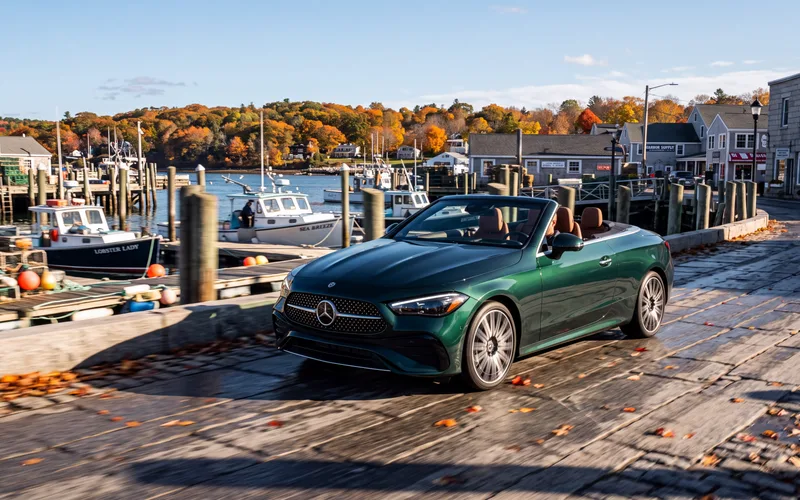 Mercedes-Benz CLE ConvertibleLuxury CoupeBetter at: Interior richness
The closest match on size, seating and price, with a plusher cabin and more standard driver assistance for the money.
Compare 2.48C+
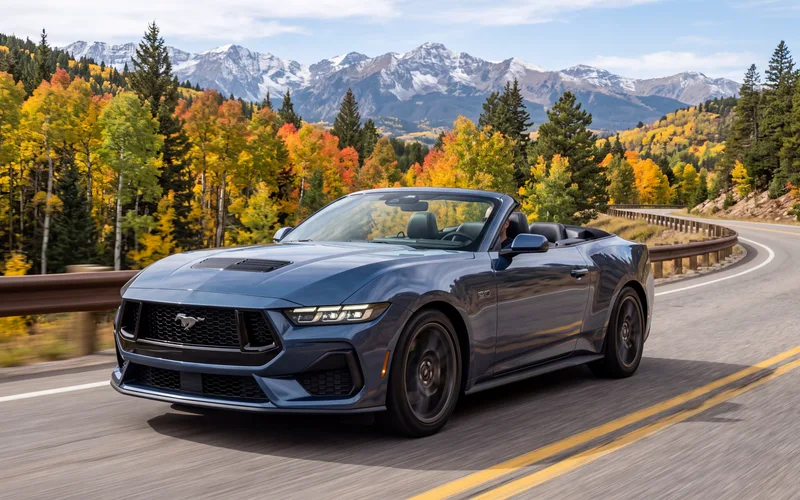 Ford Mustang ConvertibleSports CarBetter at: Price
Delivers four-seat open-air driving and V8 muscle for far less up front and far less to run afterward.
Compare 1.92C-
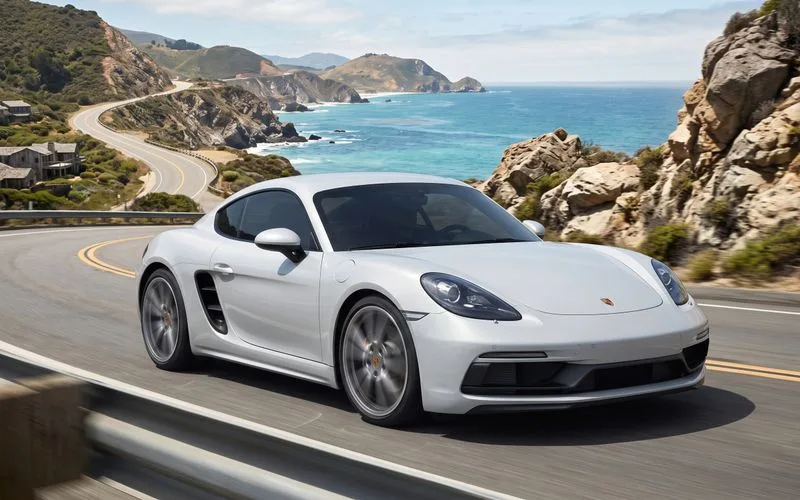 Porsche 718 BoxsterSports CarBetter at: Handling
For a buyer who cares more about how the car drives than about the back seat, it's the sharper, better-balanced machine.
CompareHow it's evolved
10 scored model years · 2017–2026
Subject scores by year
Hover or tap a score to see what moved it versus the year before. A corner mark flags a big swing.
| Year | Performance | Efficiency | Safety | Space | Cost | Reliability | Tech | Use-case | Driving | Value |
|---|---|---|---|---|---|---|---|---|---|---|
| 2026 | 58 | 33 | 73 | 62 | 15 | 78 | 82 | 45 | 76 | 73 |
| 2025 | 59 | 36 | 64 | 64 | 23 | 77 | 79 | 36 | 72 | 74 |
| 2024 | 57 | 37 | 72 | 64 | 18 | 73 | 80 | 44 | 76 | 67 |
| 2023 | 58 | 33 | 69 | 63 | 35 | 72 | 76 | 42 | 76 | 67 |
| 2022 | 58 | 33 | 69 | 63 | 39 | 75 | 76 | 42 | 76 | 67 |
| 2021 | 56 | 33 | 69 | 63 | 39 | 69 | 72 | 42 | 75 | 66 |
| 2020 | 54 | 33 | 49 | 65 | 36 | 73 | 55 | 38 | 72 | 60 |
| 2019 | 55 | 34 | 43 | 65 | 33 | 70 | 56 | 37 | 72 | 61 |
| 2018 | 55 | 34 | 44 | 65 | 31 | 74 | 50 | 37 | 70 | 65 |
| 2017 | 54 | 36 | 39 | 65 | 42 | 71 | 46 | 37 | 72 | 67 |
Compare two years
Best fit & conditions
Higher scores mean a better fit for that use case. Learn more about use-case fit →
Subject profile
Academic Probation · NHTSA safety recalls
No NHTSA safety recall is on record for the 2020 BMW 4 Series Convertible. Other model years of the 4 Series Convertible have 2 — listed below.
2 recalls on other model years of the 4 Series Convertible (2021–2023)
Sep 23, 2025Electrical system: starter assembly: relayThe engine starter relay may corrode, causing the relay to overheat and short circuit.
Defect
BMW of North America, LLC (BMW) is recalling certain 2019-2021 BMW 330i, 2019-2022 BMW Z4, 2020-2022 BMW 530i, X3, X4, Toyota Supra, 2021-2022 BMW 430i, 430i Convertible, and 2022 BMW 230i vehicles. The engine starter relay may corrode, causing the relay to overheat and short circuit.
Risk
A short circuit in the starter relay may increase the risk of a fire.
Remedy
Owners are advised to park their vehicles outside and away from structures until the remedy is complete. Dealers will replace the engine starter, free of charge. Owner notification letters were mailed February 6, 2026. Owners may contact BMW customer service at 1-800-525-7417. Vehicle Identification Numbers (VINs) involved in this recall became searchable on NHTSA.gov November 14, 2025.
NHTSA campaign 25V636000 ↗199,674 vehicles potentially affected (all models in the campaign)Owners notified Feb 6, 2026Filed by BMW of North America, LLCFiled as 430I CONVERTIBLEDec 6, 2023Power train: automatic transmission: control module (tcm/pcm/tecm)The weld seam of the integrated transmission control unit's cover may not have been manufactured properly, which could allow automatic transmission oil to leak into the transmission control unit.
Defect
BMW of North America, LLC (BMW) is recalling certain 2023 Toyota GR Supra, 3 Series Sedan (330i xDrive, M340i xDrive, M3), 5 Series Sedan (530i, 530i xDrive, M5), 4 Series Gran Coupe (430i, 430i xDrive), 4 Series Coupe (430i, 430i xDrive, M440i xDrive), 4 Series Convertible (430i, 430i xDrive, M440i xDrive), 8 Series Coupe (840i, M850i xDrive, M8), 8 Series Convertible (840i, M850i xDrive, M8), 8 Series Gran Coupe (850i xDrive, M8), X3 SAV (X3 xDrive30i, X3M), X4 SAV (X4 xDrive30i), X5 SAV (X5 xDrive40i, X5 M50i, X5M), X6 SAV (X6 xDrive40i, X6 M50i, X6M), and Z4 sDrive30i, Z4 M40i vehicles. The weld seam of the integrated transmission control unit's cover may not have been manufactured properly, which could allow automatic transmission oil to leak into the transmission control unit.
Risk
Transmission oil that leaks into the control unit can lead to a seizure of the transmission gears, causing a sudden loss of drive power and increasing the risk of a crash.
Remedy
Dealers will replace the transmission mechatronics module and the automatic transmission fluid, as necessary, free of charge. Owner notification letters were mailed January 26, 2024. Owners may contact BMW customer service at 1-800-525-7417.
NHTSA campaign 23V821000 ↗Manufacturer no. Toyota - 23TA14552 vehicles potentially affected (all models in the campaign)Owners notified Jan 26, 2024Filed by BMW of North America, LLCFiled as 4 SERIES
Source: NHTSA Office of Defects Investigation recall database, model years 2017–2026. Recalls are listed by model year as the manufacturer filed them; whether a specific car is affected depends on its VIN — check a VIN at nhtsa.gov ↗. NHTSA model names matched to this page: 4 SERIES, 430I CONVERTIBLE.
Detailed scoring by subject
1Performance & PowertrainGrades below the middle of the scale.1.62D
The volume 430i Convertible carries BMW's B48 2.0L TwinPower Turbo inline-4 at 248 hp @ 5,200 rpm. 2020 is the final model year of the first-generation F33 — a pure carry-over year, with the G23 second generation launching in June 2020 as a 2021 model — so the output is unchanged from 2017–2019.
The B48 delivers its 258 lb-ft plateau from just 1,450 rpm, which is why the 430i feels stronger in traffic than its 248 hp implies. The figure is well behind the 3.0L sixes above it in the range but competitive for a four-cylinder luxury convertible.
The F33's retractable hardtop and reinforced structure push curb weight past 3,900 lb, costing roughly half a second against the equivalent 430i Coupe. Published figures for the four-cylinder Convertible cluster at 6.1 s; BMW's own US spec sheet for MY2020 could not be retrieved (bmwusa.com timed out), so this is corroborated secondhand rather than manufacturer-quoted.
The B48 2.0T is smooth and effectively lag-free thanks to its low-rpm torque plateau, and pairs cleanly with the automatic, but it is acoustically ordinary next to BMW's B58 six and has no 48V mild-hybrid assist in 2020, so auto stop-start restarts are noticeable. Refined rather than characterful — a step below the 440i and M4 in the same body.
The 430i and 440i Convertible are automatic-only for 2020, using ZF's 8-speed Sport Automatic — widely regarded as the best conventional automatic of its era, with quick, decisive shifts and sensible Sport-mode logic. Only the M4 Convertible offers an alternative (6-speed manual or 7-speed DCT); the no-cost 6-speed manual on the 430i/440i was a Coupe-body option, not a Convertible one.
xDrive is a paid option (roughly $2,000) on both the 430i and 440i Convertible, so all-wheel drive is available across the mainstream range but standard on none of it, and the M4 Convertible was rear-drive only in the F83 generation. The system is a road-biased, rear-weighted setup with no low range, locker or terrain modes.
Three distinct gasoline engines span 248 to 444 hp — B48 2.0T, B58 3.0T and the M-division S55 twin-turbo 3.0T — with xDrive on the two mainstream ones, which is real spread. But the Convertible is gas-only in 2020: no hybrid, PHEV, EV or (in the US) diesel variant anywhere in the body style, so the choice is tune and cylinder count, not technology.
2Efficiency & RangeThe 4 Series Convertible's lowest-graded category.0.18F
EPA combined rating for the volume 2020 430i Convertible with the B48 2.0T and 8-speed automatic, rear-wheel drive. Reasonable for a ~3,900 lb hardtop convertible, but it is a premium-fuel figure and only mid-pack when normalized against gas vehicles generally.
EPA city rating for the 430i Convertible. Auto stop-start is standard, but with no 48V mild-hybrid assist in this generation the four-cylinder recovers nothing in stop-and-go traffic, and the F33's mass shows up most here.
The strongest of the 430i's three EPA figures, helped by tall top-gear ratios in the ZF 8-speed and the hardtop's closed-roof aerodynamics — this is the number that makes the car a genuinely economical long-distance cruiser with the roof up.
Computed from the F33's 15.8-gallon tank and the EPA combined 27 MPG of the 430i RWD, since EPA publishes no direct range figure for gasoline vehicles. Real-world range falls with top-down driving and Sport mode.
EPA's published annual fuel cost for the 2020 430i Convertible at standard assumptions. The mandatory premium grade, more than the 27 MPG itself, is what pushes this to the expensive end of the band — EPA scores the car $3,000 worse than an average new vehicle over five years.
Every 2020 4 Series Convertible variant requires premium unleaded — EPA lists 'Premium Gasoline' for the 430i, 430i xDrive, 440i, 440i xDrive and both M4 Convertibles alike. There is no regular-fuel trim, no flex-fuel option and no plug-in alternative in the range.
3SafetyGrades below the middle of the scale.1.28D
NHTSA lists the 2020 4 Series Convertible (C RWD and C AWD) in its database but every rating line returns "Not Rated" — no frontal, side, or rollover test was run on this low-volume two-door. Estimate held mid-band: the F33 shares its structure with the F30 3 Series (which did earn a 5-star NHTSA overall as a sedan), but a convertible's roofless body is not covered by that result.
IIHS never crash-tested the F32/F33 4 Series in any body style, so there is no Top Safety Pick award and no individual Good ratings to point to — 2020 is the final year of a structure introduced for 2014. No known crashworthiness concerns and a well-regarded related platform keep it off the floor, but an untested end-of-generation convertible cannot claim the mostly-Good band on inference.
For 2020 BMW made Active Driving Assistant (option 5AS) standard on the 4 Series: frontal collision warning with brake prefill, city collision mitigation with partial braking, pedestrian warning with partial braking, and lane departure warning, alongside a standard rearview camera and front/rear park distance control. Blind-spot detection, surround-view cameras, speed limit info and adaptive cruise all remain extra-cost, which holds the volume 430i Convertible to the middle band.
The 4 Series has no IIHS front crash prevention rating in this generation, so nothing confirms real-world performance. The F32-era Active Driving Assistant delivers city-speed collision mitigation with partial braking and daytime pedestrian warning — a competent but pre-2020-architecture system without the nighttime pedestrian capability that the top band requires.
Active Blind Spot Detection is not standard — it arrives only with the optional Driver Assistance Plus package (which also adds surround-view/side-view cameras and speed limit info), and the F33 offers no rear cross-traffic alert at all. Alert-only coverage that most volume-trim cars leave the lot without lands in the bottom band.
The standard system is lane departure warning only — a steering-wheel vibration alert with no corrective steering. Active Lane Keeping Assistant with side collision avoidance exists only bundled with the optional active cruise hardware, and the F32-generation implementation predates the lane-centering-quality benchmarks reviewers judge by today.
The 430i Convertible ships with dynamic (non-adaptive) cruise control; Active Cruise Control with Stop & Go is a paid option. When fitted, BMW's radar ACC is smooth and handles full-speed-range stop-and-go well, but there is no integrated highway assist mode on this generation and the volume car typically does not have it.
No hands-free highway system is offered in any 2020 4 Series configuration. BMW's Highway Assistant arrived years later and only on newer platforms with the required camera and mapping hardware; the F33's most capable option requires hands on the wheel at all times.
Full-LED headlights are standard across the 2020 range after the 2018 LCI, with Adaptive Full LED headlights (cornering function and automatic high beams) optional. IIHS never rated 4 Series headlights, so nothing confirms Good performance, and the base non-adaptive units are competent rather than class-leading.
Roof down, sightlines are excellent in every direction — the convertible's structural advantage. With the three-piece retractable hardtop raised, the thick rear quarters and shallow backlight create real over-the-shoulder blind zones, and the compensating hardware (blind-spot detection, surround-view cameras) is optional; only the rearview camera and front/rear parking sensors are standard.
The F33 is a strict 2+2 with LATCH anchors in its two rear buckets and no rear doors — every installation means tilting and sliding a front seat and reaching over a high sill, and the low roofline makes leaning in awkward with the top up. Two seats is the hard ceiling, the wind deflector cannot be used with rear passengers, and rear legroom behind a tall driver is tight for a rear-facing seat.
4Space & ComfortOne of the 4 Series Convertible's strongest categories.2.42C+
The F33 Convertible is a strict four-seater with a fixed 2+2 rear bench, unchanged for 2020 (the final year of the first generation). Four is the floor of the convertible normalization band, though it is one more seat than the two-seat roadsters it competes against.
Measured with the three-piece retractable hardtop raised, front headroom is 40.4 in — generous for a two-door convertible and at the top of the segment band, helped by the hardtop's more upright roof profile versus a folding fabric top.
42.2 in of front legroom sits mid-band — adequate for tall drivers with the standard multi-way front seats, and identical to the F32 Coupe since the two share the same front structure and 110.6 in wheelbase.
37.1 in of rear headroom with the hardtop raised is unusually good for a convertible 2+2 and near the top of the segment band — the retractable hardtop preserves a taller rear roofline than a stowed soft top allows. Top down the measurement is moot.
33.1 in of rear legroom is well above the 29.2 in a Mustang Convertible offers and roughly a segment norm for a 2+2 — genuinely usable for children or a short adult trip, but tight behind a tall driver, and reviewers consistently flag the rear seat as the car's practical limit.
13.0 cu ft with the roof up (370 L) is among the largest trunks in the convertible class and near the top of the band; the trade-off is that stowing the three-piece hardtop cuts it to 7.8 cu ft (220 L), so open-air motoring and luggage compete directly.
Storage is adequate but conventional: a modest covered center console bin, small door pockets, a glovebox and rear-seat side nets, plus a through-load/ski hatch behind the rear seats on cars with the optional through-loading system. There is no underfloor storage, no onboard power, and the tonneau cover that must be deployed before lowering the roof is itself an extra step that eats trunk space rather than saving it.
The front seats draw consistent praise for long-haul support, with 4-way power lumbar available in the Convenience Package and Sport seats offered with the Sport/M Sport lines; reviewers describe the car as pleasant to drive or ride in for hours. Rear seat comfort is the limiter — the two rear buckets are firm and short-trip only, so the item cannot reach the top band.
The standard suspension is composed and well-damped, absorbing broken pavement without crashing, and the hardtop convertible's reinforced structure means essentially no scuttle shake. It falls short of plush because the run-flat tires transmit sharp impacts and Sport mode's firmer damping degrades comfort noticeably.
The insulated three-piece steel hardtop with a noise-absorbing headliner makes this one of the quietest convertibles of its era — reviewers call it well isolated and free of the wind roar typical of fabric tops — and the powered wind deflector keeps top-down buffeting low. Road noise from the run-flat tires is the main intrusion, so it is quiet for a drop-top rather than quiet outright.
Dual-zone automatic climate control is standard and the system is effective enough to make top-down driving workable in cold weather, but the comfort content buyers care about is optional: heated front seats and power lumbar come in the Convenience Package, the heated steering wheel is a separate charge, and there are no ventilated seats. On a $54,000 car that is mid-band, not generous.
5Cost of OwnershipOne of the 4 Series Convertible's weakest categories.0.36F
The final-year F33 430i Convertible opened at $53,100 plus BMW's $995 destination charge, well above the $55,000 ceiling of the convertible normalization band before a single option is added. 2020 is a carry-over runout year for the first generation, so pricing moved little from 2019.
The all-wheel-drive 430i xDrive is the volume US configuration at $55,100 + $995 destination, and BMW's à-la-carte structure means real transactions land a couple of thousand higher once the $1,100 Convenience Package (heated seats, blind-spot detection, lumbar) and metallic paint are added — content most buyers of a four-season convertible specify.
Published 4 Series class estimates put five-year maintenance near $3,000 and repairs near $3,100, and RepairPal's $1,081/yr average for the line corroborates that order of magnitude; the figure is nudged up here because the F33's power retractable hardtop is a heavy, multi-motor mechanism the coupe-based class data does not price in. BMW Ultimate Care covers the first 3 years/36,000 miles of scheduled service, so most of the spend lands in years 4–5.
KBB's live valuation puts the 2020 430i Convertible at roughly $22,000–$23,150 today at six years old, having shed 41% of its value in the last three years alone; interpolating back to the five-year mark gives about $26,000, or 48% of the delivered base price. The runout-generation timing hurt — a 2020 buyer's car was one model year from being visibly superseded by the G23.
BMW's New Vehicle Limited Warranty covered all 2020 models bumper-to-bumper for 4 years or 50,000 miles — a year longer than the mainstream 3/36 standard, and the norm across the German luxury field.
BMW offers no powertrain coverage beyond its bumper-to-bumper term — the engine and drivetrain are protected for the same 4 years/50,000 miles, short of the 5-year floor the segment band starts at and far short of the 10-year terms some rivals publish.
BMW Ultimate Care bundles 3 years/36,000 miles of complimentary scheduled maintenance — oil and filter service, brake fluid, cabin filter and inspections — with 4 years of unlimited-mileage roadside assistance and ConnectedDrive service trials. That is at the strong end of the luxury field, where several rivals include only a first service, and 2020 added a real perk when BMW cancelled its $80/yr Apple CarPlay subscription outright in December 2019.
$58,000 volume-trim price minus its estimated resale value after 5 years (48% retained, or about $27,840) leaves about $30,160 in depreciation. Add the projected $6,400 in 5-year maintenance and repairs, and owning this vehicle for 5 years costs about $36,560 in total.
6Reliability & QualityThe 4 Series Convertible's best-graded category.2.97B-
2020 is the seventh and final model year of the F33 convertible, a thoroughly sorted platform, and both major predictors land above average: J.D. Power gives it 81/100 predicted reliability (their "Great" band) and Consumer Reports rates it more reliable than the average 2020 car. Held below 80 because CR's trouble-spot grid for this model year is entirely NA — the survey sample is too thin to confirm where problems do or don't cluster — and the retractable hardtop is a documented weak point.
BMW is the strongest of the German luxury marques on dependability and Consumer Reports' most reliable European brand — 5th overall in CR reliability and 1st among luxury brands in the 2026 brand report card. J.D. Power's dependability study is more middling (9th overall, 3rd luxury, 190 PP100 in 2024 and 189 in 2025 against Lexus's 140), so it is a strong mid-pack-to-upper brand rather than a consistent top-5 across both studies.
Two NHTSA recalls for the 2020 4 Series — normal activity for a low-volume luxury model, including NHTSA 20V-666 covering improperly folded driver and passenger knee airbag modules on 2019-2020 430i cars. Nothing systemic on powertrain or fire risk, but the F33's TSB and owner-complaint pattern is dominated by the folding hardtop (rear window motor failures) and B46 oil leaks, which keeps this from the clean-record band.
The volume 430i pairs the B46 2.0L twin-scroll turbo four — the SULEV-emissions sibling of the B48, mechanically identical and widely regarded as substantially more robust than the N20 it replaced — with the ZF 8HP automatic, one of the most proven transmissions in service. Held mid-band by the family's well-known plastic oil filter housing gasket and valve cover gasket leaks (often addressed before ~60k miles) and scattered turbo and oil-consumption reports.
Edmunds found high-quality leather on seats and wheel and soft-touch surfaces across most frequent-contact areas, with hard plastic only where knees meet the center console — good for a mid-$50k luxury convertible. Not class-leading, because by 2020 the F33 cabin was seven years old and reviewers described the design as conservative and dated next to the Audi A5.
Assembly is a strength of a run-out-year car: Edmunds' 430i test vehicle was free of squeaks and rattles, and the three-piece retractable hardtop gives coupe-like sealing and refinement when raised, which is a harder structural target than a soft top. Scored at the bottom of the top band rather than higher because initial-quality data for this specific low-volume body style is thin.
Roughly 370 US BMW dealers is dense by luxury standards and covers every metro market, though thinner than a mainstream brand in rural areas. Service satisfaction is genuinely good — third among premium brands in J.D. Power's Customer Service Index — and BMW's factory maintenance program gave 2020 cars covered service for the first three years.
Parts supply and the enthusiast aftermarket for a BMW 4 Series are excellent, but cost is the problem: RepairPal puts 4 Series upkeep at $1,081/yr, above the $968 BMW average and well above the industry norm, with $140-180 dealer oil changes. Convertible-specific hardware makes it worse — the retractable hardtop's motors, actuators and rear-window mechanism are dealer-priced assemblies with labor-heavy access through the trunk.
7Technology & InfotainmentMid-pack among this car's ten categories.1.72C-
Navigation is standard on the 2020 4 Series, which brings the 8.8-inch iDrive display rather than the 6.5-inch base screen used earlier in the generation. It is a small screen by 2020 standards — the F33's hardware dates to the 2014 launch and no larger option exists in this body.
iDrive 6 (NBT EVO) remains one of the best-executed systems of its generation: a fast tile-based interface driven by the console rotary controller with handwriting pad, programmable shortcut buttons, and touchscreen input, backed by real physical climate and audio controls. It loses points only for looking dated next to the iDrive 7 systems arriving in BMW's newer platforms that same year.
Wireless Apple CarPlay is standard and — after BMW's December 2019 reversal — carries no subscription fee on 2020 model-year cars, which is better than the wired-only projection most rivals offered. Android Auto is simply absent: BMW did not add it until mid-2020 and only on iDrive 7 vehicles, which the F33 is not, so half of phone owners get nothing.
BMW Navigation is standard for 2020 with real-time traffic and over-the-air map updates, and it is genuinely good native mapping. Voice control is the pre-iDrive-7 command-word system — reliable for addresses and phone contacts but not conversational, since BMW's natural-language Intelligent Personal Assistant never came to this platform.
The volume 430i Convertible ships with BMW's HiFi system, which is competent, and the 16-speaker 600-watt Harman Kardon surround system is a well-regarded option (standard on the 440i). Convertible acoustics work against any system with the roof down, but BMW tunes volume compensation to the roof position.
The volume 430i Convertible uses conventional analog dials with a small color info display between them — the fully digital, reconfigurable cluster arrived on the 4 Series only with the G23 second generation for 2021. Some sources list a dynamic digital cluster among available options, but it is not the equipment the volume car leaves the lot with.
The F33's NBT EVO head unit supports over-the-air map updates through BMW ConnectedDrive, but nothing beyond that — BMW's Remote Software Upgrade, which pushes whole-vehicle feature updates, launched with iDrive 7 on the newer platforms and was never extended to this generation. Anything else requires a dealer visit.
The BMW Connected app covers the core remote set — lock/unlock, vehicle locator, vehicle status, send-to-car destinations and remote services — with ConnectedDrive services included for the first years of ownership. But there is no remote engine start on this generation, no digital key (BMW's iPhone key launched in mid-2020 on newer hardware), and functions become subscription-gated once the included term lapses.
Device power is the car's weakest technology area: USB-A only (a data port in the center console plus a charge-only outlet), nothing for rear passengers, no USB-C anywhere, and no household outlet. Wireless charging is available bundled with the enhanced Bluetooth/Wi-Fi hotspot option rather than standard.
Push-button start is standard, but proximity entry (Comfort Access, which on the convertible also allows top operation from the key fob) is an extra-cost item rather than standard equipment, and there is no remote engine start and no phone-as-key on this platform. Ordinary convenience for a luxury car of this price.
A rearview camera plus front and rear park distance control are standard, which covers the everyday case; the surround-view/top-view and side-view cameras and the self-parking Parking Assistant come only in the Executive Package. Solidly the middle band — good coverage, best hardware costs extra.
BMW's full-color head-up display is available on the volume 430i Convertible as part of the option packages and is one of the better implementations of its era — large, crisp and legible with speed, navigation and speed-limit data. It is optional rather than standard, which holds it to the middle band.
8Use-Case FitOne of the 4 Series Convertible's weakest categories.0.54F
A two-door 2+2 with no rear doors makes every child-seat installation a matter of tilting and sliding a front seat and reaching over a high sill, and with the hardtop raised the low roof opening makes leaning in awkward. Two rear positions is the hard ceiling, and the stroller that fits the 13 cu ft trunk stops fitting once the roof is stowed.
For 2020 BMW made Active Driving Assistant standard (forward collision warning with city braking, pedestrian warning, lane departure warning), but blind-spot detection and adaptive cruise remain paid options and there is no rear cross-traffic alert. Compounding it, neither NHTSA nor IIHS ever tested this body, so a family buyer has no independent crash credentials to lean on.
Better than most convertibles for a family — 33.1 in of rear legroom and 37.1 in of rear headroom with the top up genuinely seat two children, and the quiet insulated hardtop helps on long stints. But there are no rear amenities to speak of (no rear vents or USB ports), and four people's luggage does not fit alongside a stowed roof.
The 248-hp B48 with 258 lb-ft from 1,450 rpm and the ZF 8-speed make low-speed traffic effortless, the ride is well damped, and the roof drops in about 20 seconds at up to roughly 10 mph so the open-air option costs nothing at a stoplight. The recurring complaints are the intrusive auto stop/start and top-up rearward visibility.
27 MPG combined is respectable for a 4,000-lb convertible, but every mile is on required premium fuel and EPA puts annual cost at about $2,800 — and the run-flat tires this car rides on are an expensive, frequently replaced consumable. Average-at-best commuting economics.
A compact 182.7 in footprint and roughly 37 ft turning circle make city work manageable, and front and rear parking sensors plus a rearview camera are standard. Working against it: thick rear quarters and a shallow backlight with the hardtop up, with the surround-view cameras that would fix it locked in the Executive Package.
There is no work case here at all: no US tow rating, no bed, no meaningful payload headroom, and a trunk that shrinks to 7.8 cu ft the moment the roof is stowed. A luxury two-door convertible is the opposite of a work tool.
The B48/ZF8 driveline is durable enough in ordinary use and the F3x platform is well proven, but nothing else about the car suits abuse — leather and soft-touch surfaces throughout, run-flat tires, low ground clearance, and a complex three-piece powered hardtop with seals and hydraulics that is an expensive failure point rather than a fleet asset.
No onboard power, no bed or tie-down system, no factory hitch, no roof rack possibility on a retractable hardtop, and no washable surfaces or upfit ecosystem of any kind. There is nothing in the F33's provisions aimed at work.
This is the car's strongest mission after commuting: a well-isolated hardtop cabin, front seats reviewers call good for hours, a composed highway ride and roughly 427 miles from the 15.8-gallon tank at 27 MPG. It stops short of the top band because the adaptive cruise that reduces highway fatigue is an option the volume car often lacks, and rear-seat occupants will want out well before the fuel does.
xDrive all-wheel drive is available for about $2,000 and makes the car usable in bad weather, which is the whole of its outdoor credential. Ground clearance is minimal, the tires are low-profile run-flats, there is no tow or roof-rack capability, and nothing about the packaging supports camping or gear.
13.0 cu ft is a genuinely useful convertible trunk and the optional through-loading hatch lets long items pass into the cabin, but the trunk opening is shallow and awkward, the roof-stowing tonneau cuts capacity to 7.8 cu ft, and there is no seat-fold flexibility, roof rail or hitch to fall back on for bulky gear.
9Driving ExperienceOne of the 4 Series Convertible's strongest categories.2.85B-
Quick steering, a 50:50 rear-drive layout and a stiff reinforced structure give the F33 secure, composed cornering with no scuttle shake, and the optional M Sport suspension tightens it further. It cannot reach the top band because roughly 4,000 lb of curb weight and the convertible's higher center of mass blunt the agility the F32 Coupe has on the same platform.
The electric rack is accurate and quick off center with sharp turn-in, and weighting is natural in Comfort mode. Reviewers are consistent that it is numb by BMW's own historical standard — precise enough but short on the feedback that separates good steering from great.
Ventilated discs at all four corners with BMW's well-tuned pedal give firm, progressive response and repeatable stops from highway speed, and the run-flat tires on their stiff sidewalls at least contribute short, stable stopping distances. No instrumented figure for the 2020 Convertible specifically, and the M Sport Brakes option was withdrawn on the F33 for 2020.
The B48 2.0-liter turbo's 258 lb-ft plateau from 1,450 rpm makes it feel effectively lag-free, and the ZF 8-speed is the benchmark conventional automatic of the era — quick, decisive and sensibly calibrated. The one persistent complaint is the auto stop/start restart, which is noticeable in a car with no 48V mild-hybrid smoothing.
The four-cylinder is smooth and well isolated, and with the top down the engine note is pleasantly audible rather than intrusive. It is acoustically ordinary next to the B58 six in the 440i — competent and inoffensive rather than a reason to drop the roof.
BMW's European figure for the F33 430i Cabrio is 11.3 m curb-to-curb, which converts to 37.1 ft and matches the 37 ft Cars.com publishes for the 2020 car; mid-band for the segment. One aggregator lists 38.7 ft, which appears to be a wall-to-wall rather than curb-to-curb measurement.
A low, adjustable seating position with a wide range of seat and wheel travel, plus iDrive's rotary controller and retained physical climate and audio keys, makes the cabin easy to work in without looking away from the road. It falls short of the top band on sightlines: with the hardtop raised the thick rear quarters create real over-the-shoulder blind zones, and the low sills make ingress and egress a drop rather than a step.
Roof down on a good road the 430i Convertible is genuinely enjoyable — rear drive, a willing turbo four and an open sky. But the tuning is deliberately grand-touring: reviewers describe it as too stable and too easy to drive quickly, delivering pace without much involvement, and the four-cylinder soundtrack does not compensate.
10Value & Market PositionMid-pack among this car's ten categories.2.03C
By its seventh and final year the F33 had accumulated a respectable standard list — power retractable hardtop, 10-way power sport seats, dual-zone automatic climate, LED headlights, keyless entry and push-button start, and an 8.8-inch iDrive screen with navigation and (from December 2019) fee-free Apple CarPlay. It is still recognisably German à-la-carte, though: heated seats and blind-spot detection sit behind the $1,100 Convenience Package, and adaptive dampers, parking cameras and adaptive LED headlights are all paid extras on a $54,000 car.
Fair rather than generous: $54,095 buys a 248-hp four-cylinder and a folding hardtop, and a Mustang GT Convertible delivers roughly double the horsepower for around $10,000 less. Inside the luxury drop-top set the 4 Series priced level with the Audi A5 Cabriolet and Mercedes C-Class Cabriolet and out-drove both, and the outgoing generation's runout discounting improved the real-world equation — but the iDrive 6.0 hardware and 2014-vintage platform were a generation behind what a 2020 buyer could see arriving.
Six factory configurations of the convertible body alone — 430i and 430i xDrive with the 248-hp four, 440i and 440i xDrive with the 320-hp six, and rear-drive M4 Convertible in standard and Competition tune — spanning roughly $54,000 to $85,000, with rear- or all-wheel drive at both mainstream power levels and a deep package catalogue above that.
2020 was the worst year in the nameplate's history: 9,495 US deliveries, down 55.7% year over year and less than a third of the 2018 peak. Some of that is the pandemic, but BMW brand sales fell only 17.5% over the same period — the 4 Series fell three times as hard because dealers were clearing an openly superseded generation, and volume rebounded to 22,937 the moment the G22/G23 arrived in 2021.
BMW is a top-tier aspirational badge with a loyal following, and the roundel does real work for a car sold largely on image. The F33 in particular has aged into a well-regarded shape — it is the last 4 Series with a conventional kidney grille and the last with a folding hardtop, both of which read as advantages in hindsight against the polarizing G23 that replaced it.
The best year in the generation to buy one. A runout model year with a publicly revealed replacement, sold into a collapsing pandemic market, meant genuine dealer flexibility on top of BMW Financial Services' subvented lease programs and stackable loyalty, military and college-grad bonuses — buyer benefit without the desperation pricing that would signal a broken product.
The weakest possible position on this measure: 2020 is the seventh and final model year of the F32/F33 generation launched for 2014, two years past its 2018 LCI facelift, and BMW revealed the all-new G22/G23 in June 2020 — during the 2020 car's own selling season — for an October 2020 launch. A 2020 buyer knew the car was superseded before delivery, and it still ran iDrive 6.0 while the replacement shipped Operating System 7 and Live Cockpit Professional.
Well-reviewed but never the class pick, and by 2020 reviewers were plainly waiting for the replacement. Critics rated the chassis, build quality and drop-top refinement highly and owner satisfaction was strong, but the consensus verdict was that the aging F33 held no clear advantage over the Audi A5 Cabriolet or Mercedes C-Class Cabriolet, and the generation collected no 10Best or NACTOY honors.