

The verdict
A mixed-report luxury coupe, strong on technology and held back by ownership.
The 2025 BMW 430i Convertible is the rare drop-top you can actually live with every day: four seats, 13.6 cu ft of trunk with the roof up, 28 MPG combined, and a mid-cycle refresh that brought a 14.9-inch curved touchscreen and 48-volt mild-hybrid assist. The driving is smooth and composed rather than thrilling — 5.9 seconds to 60 mph from a four-cylinder that makes no interesting noise — and the real sting is money. It opens at $59,695, about $9,000 more than the mechanically identical Coupe, demands premium fuel to the tune of $2,700 a year, and works out to roughly $43,000 in depreciation and upkeep over five years. Buy it for open-air comfort and BMW polish, not for value or performance.
Jump to scoresStrengths
- Genuinely current cabin technology, standard
- The most usable package in the segment
- Smooth, well-sorted drivetrain
What holds it back
- Expensive to buy and brutally expensive to own
- No work or outdoor capability at all
- Premium fuel makes a decent MPG figure cost real money
Top alternatives
Cars shoppers cross-shop with the BMW 4 Series Convertible 2.67C+
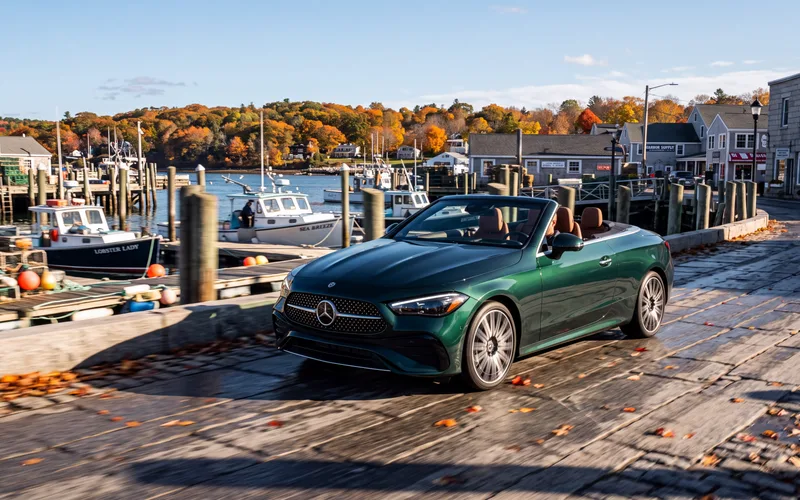 Mercedes-Benz CLE ConvertibleLuxury CoupeBetter at: Interior richness
The closest match on size, seating and price, with a plusher cabin and more standard driver assistance for the money.
Compare 2.48C+
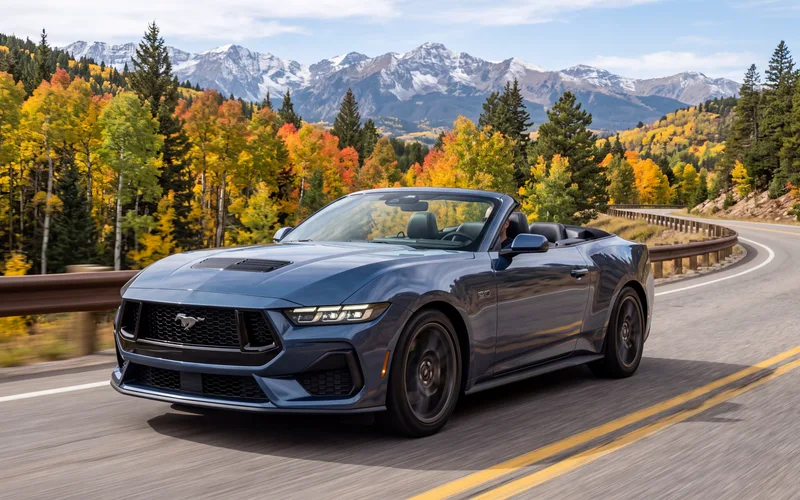 Ford Mustang ConvertibleSports CarBetter at: Price
Delivers four-seat open-air driving and V8 muscle for far less up front and far less to run afterward.
Compare 1.92C-
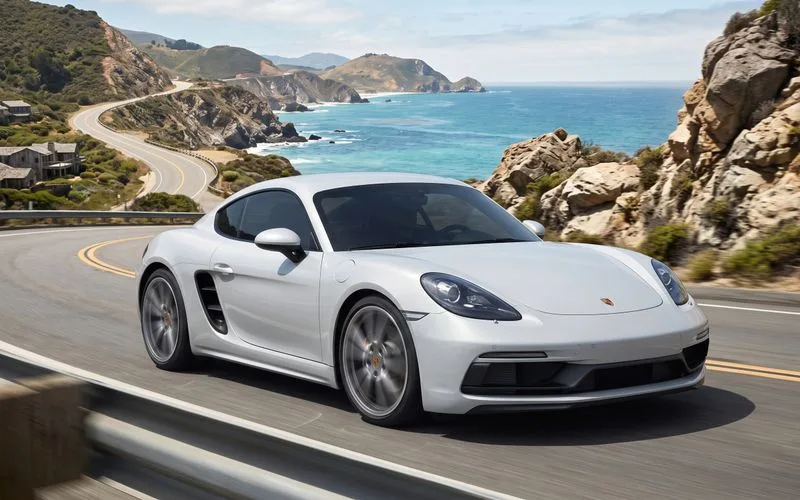 Porsche 718 BoxsterSports CarBetter at: Handling
For a buyer who cares more about how the car drives than about the back seat, it's the sharper, better-balanced machine.
CompareHow it's evolved
10 scored model years · 2017–2026
Subject scores by year
Hover or tap a score to see what moved it versus the year before. A corner mark flags a big swing.
| Year | Performance | Efficiency | Safety | Space | Cost | Reliability | Tech | Use-case | Driving | Value |
|---|---|---|---|---|---|---|---|---|---|---|
| 2026 | 58 | 33 | 73 | 62 | 15 | 78 | 82 | 45 | 76 | 73 |
| 2025 | 59 | 36 | 64 | 64 | 23 | 77 | 79 | 36 | 72 | 74 |
| 2024 | 57 | 37 | 72 | 64 | 18 | 73 | 80 | 44 | 76 | 67 |
| 2023 | 58 | 33 | 69 | 63 | 35 | 72 | 76 | 42 | 76 | 67 |
| 2022 | 58 | 33 | 69 | 63 | 39 | 75 | 76 | 42 | 76 | 67 |
| 2021 | 56 | 33 | 69 | 63 | 39 | 69 | 72 | 42 | 75 | 66 |
| 2020 | 54 | 33 | 49 | 65 | 36 | 73 | 55 | 38 | 72 | 60 |
| 2019 | 55 | 34 | 43 | 65 | 33 | 70 | 56 | 37 | 72 | 61 |
| 2018 | 55 | 34 | 44 | 65 | 31 | 74 | 50 | 37 | 70 | 65 |
| 2017 | 54 | 36 | 39 | 65 | 42 | 71 | 46 | 37 | 72 | 67 |
Compare two years
Best fit & conditions
Higher scores mean a better fit for that use case. Learn more about use-case fit →
Subject profile
Detailed scoring by subject
1Performance & PowertrainMid-pack among this car's ten categories.1.98C-
The volume 430i xDrive Convertible uses BMW's B48 2.0L TwinPower Turbo inline-4 with 48V mild-hybrid assist rated at 255 hp, unchanged through the 2025 LCI facelift of the G23 generation. The range steps up through the B58 inline-six in the M440i xDrive and tops out with the S58 twin-turbo six in the M4 Competition xDrive Convertible.
The 430i's B48 peaks at 295 lb-ft from about 1,550 rpm, giving strong low-end response despite the modest displacement — the same figure the 4 Series Coupe carries, since the Convertible shares the powertrain unchanged.
BMW's claimed 0–60 for the volume 430i xDrive Convertible is 5.9 seconds, roughly 0.4 s behind the equivalent Coupe because of the soft-top mechanism and the chassis reinforcement that push curb weight past 4,100 lb. Quick enough to feel brisk, but well short of the six-cylinder variants above it.
The B48 2.0T is smooth and effectively lag-free, with the 48V mild-hybrid system masking stop-start restarts and filling low-rpm response; the B58 six in the M440i is a benchmark for linearity. The one caveat specific to the Convertible is that the four-cylinder's ordinary engine note is more exposed with the top down than it is in the Coupe.
Every 2025 4 Series Convertible uses the ZF 8-speed Sport Automatic, widely regarded as the best conventional automatic on sale — quick, decisive shifts, sensible ratio selection, and a genuinely responsive manual mode. Unlike the Coupe there is no manual-gearbox option anywhere in the Convertible range, as the M4 Convertible is built only as the Competition xDrive automatic.
xDrive is a straightforward option on the 430i, standard on the M440i xDrive, and the only configuration offered on the M4 Competition xDrive Convertible — so all-wheel drive is available across essentially the whole range rather than restricted to top trims. It is a rear-biased on-road system with torque distribution control, but there is no low range or terrain-mode hardware.
Three distinct gasoline powertrains span the range — 255 hp 2.0L turbo I4, 386 hp 3.0L turbo I6, and 523 hp twin-turbo I6 — which covers the mainstream spread, but there is no hybrid, PHEV or EV option anywhere in the Convertible line and no manual or base-M4 variant to broaden it further.
2Efficiency & RangeOne of the 4 Series Convertible's weakest categories.0.37F
EPA combined rating for the 2025 430i xDrive Convertible with the B48 2.0L turbo and 48V mild hybrid. Respectable for a 4,100-lb premium convertible, though the soft-top body costs about 2 MPG combined versus the equivalent 4 Series Coupe.
EPA city rating for the volume 430i xDrive Convertible. The 48V mild-hybrid system's smooth auto stop-start helps in traffic, but the added driveline losses of xDrive cost 3 MPG in town against the rear-drive car.
EPA highway rating for the 430i xDrive Convertible — a genuinely strong cruising figure that makes the car an easy long-distance companion with the top up; expect noticeably less top-down at speed.
Computed from the G23's 15.6-gallon fuel tank and the EPA combined 28 MPG for the volume 430i xDrive Convertible. Adequate rather than notable — the small tank a two-door package imposes offsets the good economy.
EPA's published annual fuel cost for the 2025 430i xDrive Convertible at standard assumptions. The figure is driven up less by consumption than by the premium-fuel requirement — EPA also flags roughly $2,500 more spent on fuel than an average new vehicle over five years.
Every 2025 4 Series Convertible variant requires premium unleaded — EPA lists the fuel type as 'Premium Gasoline' for the 430i, 430i xDrive and M440i xDrive alike. There is no regular-fuel trim and no plug-in alternative anywhere in the range, so the fuel-cost penalty is unavoidable.
3SafetyMid-pack among this car's ten categories.2.29C
NHTSA's Safety Ratings database lists the 2025 BMW lineup with no published star ratings for any body style, and the G23 4 Series Convertible has never been NCAP-tested; nor has the G20 3 Series it shares its structure with (the last tested 3 Series was the previous F30 generation). With no test data for this generation, the estimate sits at the mid-point of the convertible band rather than assuming the 5-star result an untested car has not earned.
The IIHS publishes no ratings page for the 4 Series Convertible — convertibles are excluded from the roof-strength protocol, so the car cannot qualify for Top Safety Pick or TSP+ regardless of how it would perform. The closest evidence is the structurally related 2025 3 Series sedan: Good in both driver- and passenger-side small overlap front and Acceptable in the updated moderate overlap front. That is solid but not exemplary, and the open-roof body cannot be assumed to reproduce it.
Active Driving Assistant is standard on every 2025 4 Series Convertible trim (430i through M440i xDrive): frontal collision warning with city collision mitigation and pedestrian-capable automatic emergency braking, Active Blind Spot Detection, lane departure warning, rear cross-traffic alert, speed limit info, plus a rearview camera and park distance control. Blind-spot and cross-traffic coverage standard is genuinely above segment norm; the deduction is that adaptive cruise and any lane centering sit behind the extra-cost Driving Assistance Professional Package on the volume 430i.
The IIHS has run neither its vehicle-to-vehicle nor its pedestrian front crash prevention protocol on the 4 Series Convertible, and the 2025 3 Series page carries no front crash prevention result either, so there is no rated performance to point to. The hardware is BMW's current camera-plus-radar setup with pedestrian and cyclist detection standard, which places it credibly mid-pack; the score reflects capable equipment without a verified test result rather than proven performance.
Active Blind Spot Detection and rear cross-traffic alert are standard on every trim, not optional — and BMW's blind-spot system adds a steering-wheel vibration warning rather than a mirror light alone. This matters more on this body than most: with the fabric roof raised the rear three-quarter view is largely gone, so the electronics are covering a real structural blind zone. Short of full marks because intervention is warning-based, with no rear automatic braking on the volume 430i.
Lane departure warning is standard, but Active Lane Keeping Assistant with side collision avoidance and the Steering and Lane Control Assistant that provides actual centering only arrive with the Driving Assistance Professional Package. Reviewers of the shared G20/G22 hardware describe the centering as smooth and well-damped with little ping-ponging when fitted, so the equipment is good — it just isn't on the car as it leaves the base configuration.
With the Driving Assistance Professional Package the car gets Active Cruise Control with Stop & Go — full-speed-range, holding to a standstill in congestion and pulling away automatically after short stops — plus Traffic Jam Assistant layered on top. BMW's calibration (progressive braking, natural gap keeping, quick resume) is among the better systems in the class. Held below the 80s because it is a paid option on the volume 430i rather than standard equipment, unlike the Mercedes CLE Convertible's more inclusive bundle.
Hands-free driving exists here but only in its narrowest form: the Extended Traffic Jam Assistant bundled into Driving Assistance Professional permits hands-off operation up to roughly 40 mph on mapped limited-access divided highways with driver eye monitoring. BMW's full Highway Assistant — hands-free to 85 mph — is not offered on the G2x 3/4 Series platform for 2025; it is reserved for the 5/i5, 7/i7 and larger SUVs. So the car beats the segment's many no-hands-free rivals but delivers far less than Super Cruise or BlueCruise.
The 2025 LCI refresh brought redesigned standard LED headlights using a single LED module for low and high beam with arrow-shaped LED signature elements — new hardware for this model year, not a carry-over. Adaptive LED headlights with cornering function and high-beam assist remain a package upgrade on the 430i. The IIHS has published no headlight rating for this body style, so the score reflects credible current-generation LED equipment on the volume trim with the better units trim-locked, not a verified Good result.
Two very different cars: roof down, sightlines are essentially unobstructed in every direction; roof up, the fabric top's thick rear quarters and small heated glass rear window produce one of the larger rear three-quarter blind zones in the segment. Standard rearview camera and park distance control compensate at low speed, and the surround-view camera helps further, but that is a $700 Parking Assistance Package option rather than standard. Scored for the top-up case buyers live with most of the year.
There are two rear seats with LATCH anchors — better than the strict two-seat roadsters in this segment — but installation means tumbling and sliding a front seat forward and working a seat through a single long door, with the folded roof mechanism limiting overhead clearance. Rear-facing seats also force the front seat well forward. Workable for one child seat, awkward for two, and no three-across possibility.
4Space & ComfortMid-pack among this car's ten categories.2.31C+
The G23 Convertible is a strict 2+2 with four belted positions — one more than the two-seat roadsters that dominate this segment, but the minimum of the 4–5 seat band the framework applies to convertibles.
Front headroom is the outright strength of the package — 40.6 in with the top up, well beyond the 4 Series Coupe, because the Convertible carries no sunroof cassette or fixed headliner structure. Tall drivers fit here who do not fit in the Coupe.
Front legroom is mid-band for the class — generous enough that reviewers call front-seat accommodation roomy, but short of the longest-travel sports convertibles because the 2+2 layout has to leave something behind the front seats.
36.1 in of rear headroom is respectable for a four-seat drop-top and one of the reasons the 4 Series Convertible is usable where two-seat rivals are not, though the fabric top's tapering rear section still puts an adult's head close to the roof.
32.5 in is genuinely tight — reviewers report adults only fit back there once the front seats are slid forward — but it is real rear seating, which places it above the segment's roadsters even as it trails a proper four-seat sedan by a wide margin.
The G23's fabric top folds far more compactly than the retractable hardtop the F33 used, leaving 385 L (13.6 cu ft) with the roof raised — near the top of the convertible band and the practical high point of this car. Even with the roof stowed, 300 L (10.6 cu ft) still swallows two carry-ons.
Standard BMW fare and no more: a shallow center console bin, two cupholders, modest door pockets and a small glovebox, with the roof cassette taking the space a coupe would give to a parcel shelf. There is a through-load hatch behind the rear armrest for long items, but nothing that qualifies as a storage innovation, and the useful trunk capacity moves with the roof's position rather than being fixed.
Power sport seats are standard for 2025 and are well-shaped and supportive over long stints in perforated SensaTec or Vernasca leather, with adjustable bolsters and thigh extension available. Two things hold the score short of the top band: heated front seats sit inside the Premium Package rather than being standard on a $60,000 car, and the rear bench is a short-trip proposition by dimension.
Testers report a composed ride with notably little body flex for a soft-top — the G23's reinforced CLAR structure keeps cowl shake to a minimum and the car hides the roughly 230 lb it carries over the Coupe. The deduction is for the firmness that comes with the M Sport suspension most volume cars are built with, and for run-flat-shod secondary ride over sharp urban edges.
The multi-layer insulated fabric top is one of the better ones on sale — one 2025 tester rated the top-up hush as feeling similar to the Coupe — but a soft top still admits more wind roar around the header and quarters at highway speed than any fixed roof, and the top-down case is loud by definition. Good for the body style, not quiet in absolute terms.
The hardware catalogue is rich and includes convertible-specific kit — dual-zone automatic climate is standard, and a neck-warmer vent, wind deflector, heated front seats, heated steering wheel and Comfort Access with remote engine start are all available. What costs it the top band is packaging rather than availability: on the volume 430i xDrive, heated seats and the heated wheel arrive only via the Premium and Convenience Packages, and ventilated seats are not offered at all on the four-cylinder car.
5Cost of OwnershipThe 4 Series Convertible's lowest-graded category.0.00F
BMW's own MY2025 launch pricing puts the entry 430i Convertible at $58,700 plus $995 destination. That is roughly $9,000 above the equivalent 430i Coupe — the soft-top mechanism, structural reinforcement and rollover protection are the body-style tax — and it sits far above the convertible band's $55,000 ceiling.
The volume build is the all-wheel-drive 430i xDrive Convertible ($61,695 all-in) with the two most-selected option groups: the M Sport Package ($2,450) and the Premium Package (~$2,600, adding heated seats, head-up display, Comfort Access and heated steering wheel). Listed 2025 430i xDrive Convertible inventory runs from the low $67,000s to the low $73,000s once leather and wheel upgrades are added.
Kelley Blue Book's 5-year cost-to-own for the 2025 4 Series projects $2,988 maintenance plus $3,113 repairs, but that is a nameplate-level figure dominated by the coupe and Gran Coupe. The Convertible layers on soft-top-specific exposure — top hydraulics, frame sensors, unique window regulators and rear-window seals — none of it covered once the 3-year Ultimate Care period lapses, so roughly $1,500 is added over the KBB baseline.
Independent trackers put the 4 Series nameplate in the low-50s for 5-year retention, but the Convertible trails its coupe sibling: the used market for open-top luxury cars is seasonal and thin, and the heavily-optioned MSRPs these cars leave the lot with do not hold. Applying that discount to the nameplate figure lands mid-40s, which is mid-band for the segment and well behind the Z4's stronger residuals.
BMW's New Vehicle Limited Warranty runs 4 years or 50,000 miles, whichever comes first — a year longer than the mainstream 3/36 standard and identical to Audi and Mercedes-Benz basic coverage. Mid-band, neither an advantage nor a liability within German luxury.
BMW publishes no standalone powertrain warranty; the B48 turbo four and ZF eight-speed are covered only for the same 4 years / 50,000 miles as the rest of the car. That is below the segment band's 5-year floor and far behind Hyundai/Kia/Genesis at 10 years / 100,000 miles, which is the real weak point of BMW ownership on paper.
BMW Ultimate Care covers all factory-scheduled maintenance for 3 years / 36,000 miles — oil, filters, fluids, brake pads and discs, spark plugs and wiper blades — which is materially more generous than what Audi and Mercedes-Benz include at the same duration, and it is paired with 4 years of unlimited-mileage roadside assistance plus ConnectedDrive/TeleService trials. Held short of the top band because the maintenance term ends a year before the warranty does and there are no fuel or charging credits on a gas car.
$66,700 volume-trim price minus its estimated resale value after 5 years (47% retained, or about $31,349) leaves about $35,351 in depreciation. Add the projected $7,600 in 5-year maintenance and repairs, and owning this vehicle for 5 years costs about $42,951 in total.
6Reliability & QualityOne of the 4 Series Convertible's strongest categories.3.22B+
2025 is the G23 LCI change year, not a carry-over: both engines gained 48V mild-hybrid assist and the cabin moved to the Curved Display with iDrive 8.5, so there is genuine first-year-of-refresh exposure — and the model year's only recall lands on exactly that new starter-generator hardware. Against that, the load-bearing mechanicals (B48/B58, ZF 8HP) carry over unchanged, Consumer Reports rates every BMW at average-or-better predicted reliability, and early field data is quiet. Sits a few points under the equivalent Coupe for the powered fabric roof's extra motors, seals and sensors.
BMW's recent multi-year standing is consistently better than average without being top-5 in dependability specifically: it beats the industry average in the three-year J.D. Power dependability study, beats Audi and Mercedes in initial quality while taking more model-level IQS awards than any other brand, and is Consumer Reports' highest-rated European make. Solid upper-middle, which is where the guidance puts a brand that is neither a perennial top-5 dependability name nor a bottom-third one.
The 2025 4 Series Convertible has drawn exactly one campaign — a marked improvement on the same nameplate's earlier years, because its build window falls outside the starter-fire recalls that swept the 2021–2024 cars. That one campaign is not trivial, though: 25V202 covers the new-for-2025 mild-hybrid starter-generator with a stall-and-fire consequence, and the interim owner letter went out in May 2025 before a remedy was available. Typical recall activity with nothing systemic, docked for a fire-risk action on brand-new hardware.
The volume 430i's B48 2.0T and the M440i's B58 3.0T inline-six both have strong high-mileage reputations — the B58 is durable enough that Toyota bought it for the GR Supra — and both pair with the ZF 8HP, the benchmark conventional automatic. Marked down from the family's standalone reputation because 2025 grafts a 48V integrated starter-generator onto both engines and that specific new component drew a fire-risk recall within months of launch.
The LCI lifts the cabin a step: standard sport seats, redesigned steering wheels, a Sensatec-trimmed display housing, ambient lighting run through the vent seam, and the Curved Display replacing the split-screen setup, over SensaTec standard with Vernasca or Individual Merino leather optional. Reviewers of the 2025 430i Convertible describe soft-touch surfaces and meticulous material selection, though it still reads a shade less plush than the Mercedes CLE Cabriolet and keeps harder plastics in the low-touch zones.
Munich assembly delivers tight panel gaps and a solid structure by open-top standards, and BMW's initial-quality showing is better than industry average and the best of the German three. The ceiling is the body style rather than the workmanship: a fabric roof brings cowl shake on poor surfaces and wind-noise and rattle paths the fixed-roof Coupe does not have, and the 2025 refresh moves climate functions onto the touchscreen, which is a durability-neutral but complaint-generating change in initial-quality surveys.
Roughly 350 BMW centers across all 50 states give dense metro and suburban coverage with the usual luxury-brand thinness in rural areas, and service satisfaction is genuinely strong — third among premium brands, behind only Porsche and Lexus. The offsets are some of the industry's highest hourly labor rates and the fact that soft-top work is dealer territory at most independents, which narrows the practical options for the one repair unique to this body style.
Parts flow well through BMW's US supply chain and the enthusiast aftermarket (FCP Euro, ECS Tuning, Turner) is deep, but out-of-warranty running cost is far above the industry norm and this body style adds the most expensive failure point in the range. Run-flats, dealer-only diagnostics and premium OEM pricing are compounded by the powered soft-top's motors, hydraulics, cables and seals once coverage lapses.
7Technology & InfotainmentThe 4 Series Convertible's best-graded category.3.39B+
The MY2025 LCI is the change year that brought the BMW Curved Display to the 4 Series Convertible — a single glass panel pairing a 12.3-inch cluster with a 14.9-inch touchscreen, replacing the pre-facelift 10.25-inch control display. It is standard on the 430i, not an upgrade.
iDrive 8.5 with QuickSelect is fast, sharply rendered and better organized than the OS 8.0 it replaces, and BMW is one of the few brands to keep a physical rotary controller alongside the touchscreen — a real advantage in a car driven with the roof down. Against that, the LCI moved temperature and fan control out of physical buttons and onto the display, and testers describe the interface as initially overwhelming.
Wireless Apple CarPlay and wireless Android Auto are both standard on every 2025 4 Series Convertible trim, with no wired-only base configuration and no subscription attached — the strongest possible position on this item, and one a tester confirmed works flawlessly in practice.
BMW Maps is standard cloud-based navigation with live traffic, and the 2025 car adds Augmented View, which overlays turn arrows onto a live camera feed at ambiguous intersections. The BMW Intelligent Personal Assistant handles conversational commands including climate and seat heating, which matters more here than usual now that those controls live on the touchscreen.
The standard HiFi system is competent but ordinary, and the meaningful upgrade — the 464-watt, 16-speaker Harman Kardon Surround Sound system — sits inside the extra-cost Premium Package rather than being available as a cheap standalone. There is no Bowers & Wilkins tier on the 430i, and open-air listening blunts whatever system is fitted at speed.
A 12.3-inch fully digital cluster is standard on every trim as the left half of the Curved Display — crisp, bright enough to read with the roof down, and reconfigurable through the driving modes. It loses a few points on BMW's own terms: the OS 8.5 layout puts the tachometer and speedometer in unconventional side positions that reviewers find less legible at a glance than the analog-style dials of older BMWs.
BMW Remote Software Upgrade delivers whole-vehicle over-the-air updates — infotainment, driver-assistance and vehicle-function software, plus new features added after delivery — pushed to the My BMW app and installed by the car. The standard Personal eSIM and 5G connection on the 2025 car mean it does not depend on the owner's phone hotspot.
The My BMW app is a polished, well-reviewed piece of software covering lock/unlock, vehicle locate, climate pre-conditioning, service scheduling and BMW Digital Key sharing to a phone or watch. The deduction is that remote engine start is tied to Comfort Access, which is an option on the volume 430i, and BMW's connected-services tiers renew on subscription after the included term.
Provision is thin by 2025 standards: a pair of front USB-C ports and a 12V outlet, with wireless phone charging bundled into an optional package rather than standard, and no dedicated rear-seat charging for the two people the 2+2 carries. A tester also reported the wireless pad repeatedly overheating and cutting out — a real-use failure, not a spec-sheet quibble.
Push-button start is standard and BMW Digital Key lets a compatible phone act as the key, which is the modern half of this item. The traditional half is worse than the price suggests: proximity Comfort Access entry — the ability to unlock by touching the handle — is an option on the volume 430i xDrive rather than standard equipment, and remote engine start rides along with it.
A rearview camera and front and rear Park Distance Control are standard, which covers the everyday case and is genuinely needed given how large the top-up rear blind zone is. Surround View with 3D view and Parking Assistant Plus — the automated parking and the camera set that actually solves the visibility problem — are confined to the optional Parking Assistance Package.
The BMW Head-Up Display is a large, crisp, full-color unit that adds Augmented View navigation cues when paired with Live Cockpit Professional — good hardware. It is not standard anywhere in the range, though, and on the volume 430i it can only be had by buying up into the Premium Package, so most cars on the road without one.
8Use-Case FitOne of the 4 Series Convertible's weakest categories.0.39F
Two doors, 32.5 in of rear legroom and a high sill mean every child seat has to be threaded past a tumbled front seat, and the two rear positions are sculpted buckets rather than a bench. It scores above the segment's two-seat roadsters purely because LATCH anchors exist at all; against any four-door it is a daily frustration.
Active Driving Assistant is standard on every trim — pedestrian-capable AEB, blind-spot detection, rear cross-traffic alert and lane departure warning — which is a better standard baseline than much of the segment. What holds it back for family use is the absence of any published crash data (NHTSA has not tested the car and IIHS excludes convertibles from its roof-strength protocol, so no Top Safety Pick is possible), plus adaptive cruise and lane centering sitting behind the extra-cost Driving Assistance Professional Package.
A four-hour trip works for two adults and fails for four: rear occupants get 32.5 in of legroom, no rear vents, no rear USB power and no rear amenities of any kind. The 13.6 cu ft trunk is genuinely good for a convertible and would hold a family's soft bags, but it drops to 10.6 cu ft the moment anyone lowers the roof.
As a commuter the drivetrain is the strong part — the B48 with 48V mild-hybrid assist and the ZF eight-speed make low-speed progress seamless and mask stop/start restarts, and the seats and controls are low-fatigue. The friction is visibility: with the roof up the fabric quarters create one of the larger rear three-quarter blind zones in the class, so lane changes lean on the standard blind-spot system rather than on a look over the shoulder.
28 MPG combined is respectable for a 4,145-lb luxury convertible, but every variant requires premium fuel and EPA puts annual fuel spend at $2,700 — about $2,500 more than an average new vehicle over five years. Add BMW-tier consumables (run-flat tires, out-of-warranty service rates) and the per-mile commuting cost is high in absolute terms even though the economy figure is not bad.
The footprint is modest at 187.9 in long, but the volume 430i xDrive turns in 39.4 ft curb-to-curb — near the wide end of the convertible band and a full 2 ft worse than the rear-drive car — and the roof-up blind zone compounds it. Standard rearview camera and park distance control keep it manageable; the surround-view cameras that would actually fix it are an option.
There is no work case here at all: no US tow rating, no bed, no payload provision beyond four occupants and a 13.6 cu ft trunk, and no roof rack possible on a fabric top. The item is scored in the low band because the vehicle lacks what it measures, not because it performs the task badly.
The mechanical parts underneath are durable — the B48 and the ZF eight-speed both have strong high-mileage reputations — but nothing about the vehicle tolerates work abuse: leather and SensaTec trim, a fabric roof vulnerable to jobsite damage, low ground clearance and no fleet presence whatsoever.
No onboard AC power, no tie-down points beyond trunk-net anchors, no washable surfaces, no hitch offered in the US and no upfit ecosystem — the accessory catalogue for this car runs to spoilers and floor mats. Scored low because the provisions genuinely do not exist.
This is the car's second-best mission after commuting: roughly 437 miles between fills, supportive standard sport seats, an insulated top that testers say holds highway noise close to Coupe levels, and 33 MPG highway. It stops short of the top band because adaptive cruise with Stop & Go is an extra-cost option rather than standard equipment, and because only two of the four seats are viable for a full day.
xDrive all-wheel drive is standard on the volume trim and makes the car usable on gravel and in bad weather, which is the whole of its outdoor credential. Everything else argues against it: low ground clearance, summer-biased run-flats on the M Sport builds, no roof rails on a fabric top, no hitch for a bike rack, no onboard power for camping and no fold-flat load space.
Volume is respectable for the body style — 13.6 cu ft top-up is near the top of the convertible band and takes two large cases — but the shape is the problem: a shallow letterbox trunk aperture, a roof cassette that steals 3 cu ft whenever the top drops, no folding rear seats and only a narrow ski-style pass-through for long items. Normal luggage fits; bulky gear does not.
9Driving ExperienceGrades above the middle of the scale.2.88B-
The G23 shares the CLAR platform, near-50/50 balance and M Sport suspension of the Coupe, and testers report it hides its extra mass well with unusually little body flex for a soft-top — the reinforced structure keeps cowl shake to a minimum. It sits below the segment's best because the roughly 230 lb of roof mechanism and bracing over the Coupe, carried high, blunt turn-in, and because the volume 430i is tuned as a GT rather than a canyon car.
Accurate, consistently weighted and quick enough to place the car confidently in a fast bend — but reviewers of this specific 2025 car are direct that the electric rack transmits very little of the road surface, and that it falls short of BMW's own historical standard. Precise but numb, which is the middle band by definition.
Firm, progressive pedal with strong initial bite and good fade resistance carried over from the Coupe, and the 48V system's regenerative blending is imperceptible in normal use. The 200-plus pounds of extra mass over the fixed-roof car cost a modest amount of stopping distance, which is why this sits just short of the top band rather than in it.
The 2025 LCI added 48V mild-hybrid assist to the B48, and the combination with the ZF eight-speed is close to a benchmark: 295 lb-ft from 1,550 rpm means effectively no turbo lag, shifts are quick and imperceptible in normal driving, and the mild-hybrid system smooths the stop/start restarts that used to be the weak point of this drivetrain.
The four-cylinder is well isolated and inoffensive at cruise, with no coarseness through the controls. What keeps it out of the upper band is character rather than refinement: with the roof down the B48's ordinary four-cylinder note is fully exposed, and it gives the volume 430i none of the aural reward the M440i's inline-six delivers in the same body.
All-wheel drive costs this car two full feet of turning circle — the driven front axle limits steering lock — putting the volume 430i xDrive at 39.4 ft, near the wide end of the convertible band. It is the clearest everyday-usability weakness in the car, and buyers who skip xDrive get a materially tighter 37.4 ft.
The driving position itself is excellent — low, adjustable through a wide range on standard power sport seats, with 40.6 in of headroom that suits tall drivers better than the Coupe does. Two things pull it down: the roof-up rear three-quarter blind zone is among the largest in the segment, and iDrive 8.5 moved temperature and fan control onto the touchscreen, which is a harder reach than a physical dial in a car often driven with the wind in the cabin.
Open-air driving is its own reward and the chassis is willing enough to make the long way home worthwhile — reviewers call the 4 Series engaging and describe the 430i as hitting a sweet spot of style, poise and adequate pace. It is not a segment leader on this item because the four-cylinder makes no interesting noise, the steering hands back little, and 5.9 seconds to 60 mph places it well short of the six-cylinder cars above it.
10Value & Market PositionOne of the 4 Series Convertible's strongest categories.3.00B
The MY2025 LCI made the 430i Convertible's standard kit genuinely current — the curved 12.3" + 14.9" display running iDrive 8.5 with QuickSelect and Augmented View navigation, wireless Apple CarPlay/Android Auto, redesigned single-module LED headlights, Active Driving Assistant, power sport seats, dual-zone climate and the power soft-top are all included. It stops short of generous because heated seats, head-up display, heated steering wheel and Harman Kardon audio still sit inside the Premium Package on a car that opens at nearly $60,000.
At $59,695 the 430i Convertible is one of the cheaper routes into a four-seat luxury droptop with a proper insulated fabric top, undercutting the Mercedes CLE Cabriolet by several thousand dollars on like-for-like content, and the 2025 update adds 48V mild-hybrid assist and iDrive 8.5 without a matching price jump. Against that, the Convertible asks roughly $9,000 more than the mechanically identical Coupe, and the M440i xDrive Convertible's $75,245 makes the six-cylinder version an expensive proposition next to what a Ford Mustang or Z4 M40i delivers per dollar.
Four factory configurations span $58,700 to $74,250 — 430i, 430i xDrive, M440i and M440i xDrive — with the M4 Competition xDrive Convertible sitting above as a separate model, so both engines are available with either drive layout and the ladder is well spaced. Configurability is capped by the absence of any manual gearbox and any plug-in or electrified variant beyond the 48V mild hybrid that is now standard.
US 4 Series sales rebounded 40.6% in calendar 2025 to 31,876 units after the 22,673 changeover-year trough, so the LCI landed well even if the nameplate remains below its 41,571-unit 2022 peak. The Convertible is a small fraction of that total, but the premium droptop field keeps thinning around it — Audi has withdrawn the A5 Cabriolet from the US — which leaves the 4 Series as one of the two remaining volume choices alongside the CLE Cabriolet.
BMW sits in the top tier of US luxury brand desirability with a deep enthusiast following, and the open-top line borrows halo from the M4 Competition xDrive Convertible directly above it. The G22/G23 generation's oversized vertical kidney grille remains genuinely divisive — reviewers still lead with it — which shaves a little off an otherwise strong aspirational position.
BMW Financial Services ran subsidized lease programs on the 2025 430i and M440i Convertible through the model year alongside a $1,000 customer incentive and a $1,000 college-grad offer, and dealer discounting off MSRP is normal rather than exceptional. Useful buyer benefit, but the stackable credits top out near $2,000 on a $67,000 car — nothing like mainstream-brand rebate money, and no sign of desperation pricing either.
2025 is the LCI year itself, which puts this model year at the freshness peak of the G23 generation: 48V mild-hybrid assist added to both engines, iDrive 8.5 on the curved display with Augmented View, redesigned single-module LED headlights and laser-accented taillights, and new Cape York Green and Vegas Red paint. The generation launched for MY2021, so the underlying platform is mid-life, but a buyer in 2025 is getting the newest version of it with no replacement in sight.
The 2025 car reviews well without winning its class — CarBuzz scored it 8.5/10 and reviewers praise the chassis balance, the B58 six in the M440i and the calm the insulated soft top brings at speed, while consistently docking it for the added weight over the Coupe, some cowl shake and steering that is competent rather than the old BMW benchmark. No 10Best or NACTOY hardware for the non-M variants, and What Car? explicitly stops short of naming it the class pick.