

The verdict
A mixed-report luxury coupe, strong on driving and held back by efficiency.
The 2021 4 Series Convertible is the first year of BMW's redesigned drop-top, and the big change — a fabric roof replacing the old folding hardtop — turned out to be the right one: it drops in 18 seconds at up to 31 mph, seals up quietly enough that testers called the closed cabin extraordinarily quiet, and leaves 13.6 cu ft of trunk, which is genuinely a lot for a convertible. The volume 430i's 255-hp turbo four gets to 60 mph in 5.9 seconds and returns 27 MPG combined, so it is a relaxed cruiser rather than a fast car, and the M440i's 382-hp six is where the noise and speed live. What it costs is the real story: $54,095 new, premium fuel at an EPA-estimated $2,800 a year, roughly half its value gone in five years, and a warranty that expired at 4 years/50,000 miles. Buy it used as a stylish weekend cruiser for two, budget for out-of-warranty BMW repair rates, and check that the five open recalls — including a body-specific airbag defect and a starter fire risk — have been done.
Jump to scoresStrengths
- Drives like a BMW, not like a convertible afterthought
- A usable trunk and a cabin you can hold a conversation in
- Smooth, durable drivetrain with the best automatic in the business
What holds it back
- Expensive to buy and brutal to own
- Premium fuel only, and the bill shows it
- Zero work or outdoor capability, and thin all-weather cover in 2021
Top alternatives
Cars shoppers cross-shop with the BMW 4 Series Convertible 2.67C+
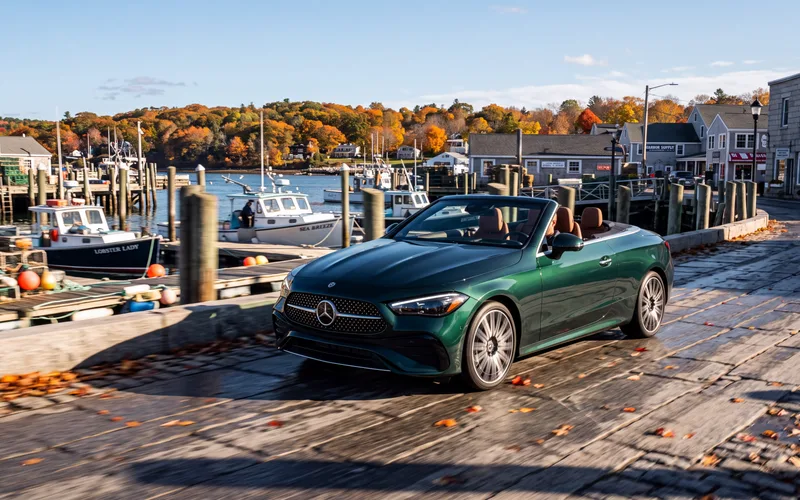 Mercedes-Benz CLE ConvertibleLuxury CoupeBetter at: Interior richness
The closest match on size, seating and price, with a plusher cabin and more standard driver assistance for the money.
Compare 2.48C+
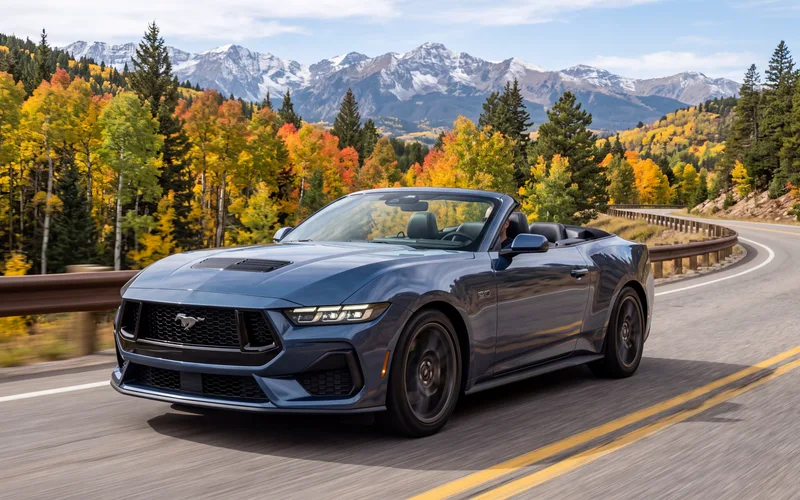 Ford Mustang ConvertibleSports CarBetter at: Price
Delivers four-seat open-air driving and V8 muscle for far less up front and far less to run afterward.
Compare 1.92C-
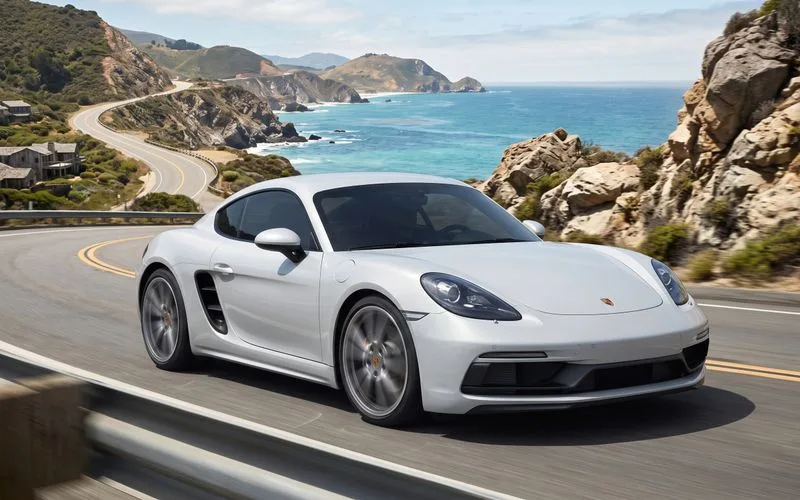 Porsche 718 BoxsterSports CarBetter at: Handling
For a buyer who cares more about how the car drives than about the back seat, it's the sharper, better-balanced machine.
CompareHow it's evolved
10 scored model years · 2017–2026
Subject scores by year
Hover or tap a score to see what moved it versus the year before. A corner mark flags a big swing.
| Year | Performance | Efficiency | Safety | Space | Cost | Reliability | Tech | Use-case | Driving | Value |
|---|---|---|---|---|---|---|---|---|---|---|
| 2026 | 58 | 33 | 73 | 62 | 15 | 78 | 82 | 45 | 76 | 73 |
| 2025 | 59 | 36 | 64 | 64 | 23 | 77 | 79 | 36 | 72 | 74 |
| 2024 | 57 | 37 | 72 | 64 | 18 | 73 | 80 | 44 | 76 | 67 |
| 2023 | 58 | 33 | 69 | 63 | 35 | 72 | 76 | 42 | 76 | 67 |
| 2022 | 58 | 33 | 69 | 63 | 39 | 75 | 76 | 42 | 76 | 67 |
| 2021 | 56 | 33 | 69 | 63 | 39 | 69 | 72 | 42 | 75 | 66 |
| 2020 | 54 | 33 | 49 | 65 | 36 | 73 | 55 | 38 | 72 | 60 |
| 2019 | 55 | 34 | 43 | 65 | 33 | 70 | 56 | 37 | 72 | 61 |
| 2018 | 55 | 34 | 44 | 65 | 31 | 74 | 50 | 37 | 70 | 65 |
| 2017 | 54 | 36 | 39 | 65 | 42 | 71 | 46 | 37 | 72 | 67 |
Compare two years
Best fit & conditions
Higher scores mean a better fit for that use case. Learn more about use-case fit →
Subject profile
Detailed scoring by subject
1Performance & PowertrainMid-pack among this car's ten categories.1.75C-
2021 is the launch year of the second-generation G23 Convertible, and the volume 430i uses BMW's B46 2.0L TwinPower Turbo inline-4 at 255 hp. The 2021 Convertible range topped out at the 382 hp B58-powered M440i — there was no M4 Convertible this model year, so the ceiling is well below later years.
The 430i's B46 holds peak torque from 1,550 rpm, which is why the car feels stronger in traffic than its 255 hp headline suggests. Identical output to the 2021 4 Series Coupe — the Convertible carries the same engines, not a detuned version.
BMW's own claimed 0–60 for the rear-drive 430i Convertible, which at 3,918 lb carries roughly 300 lb of extra structure and roof mechanism over the Coupe. Comfortably quick for a cruiser but a long way behind the six-cylinder M440i above it.
The B46 2.0T is smooth and essentially lag-free with a broad torque plateau from 1,550 rpm, and reviewers consistently praise its linearity — but it sounds ordinary next to BMW's sixes, and unlike the M440i the 430i has no 48V mild-hybrid assist, so auto stop-start restarts are more noticeable.
Every 2021 4 Series Convertible uses the ZF-based 8-speed Sport Automatic, widely regarded as the best conventional automatic on sale — decisive, quick and smooth, with sensible Sport-mode logic and no gear hunting. No manual gearbox is offered in the Convertible body at any trim.
xDrive is offered on both 2021 Convertible trims as a $2,000 option, but only from the July 2021 second wave — the March launch cars were rear-drive only, and the EPA certified just the RWD 430i and M440i Convertibles for MY2021. It is a road-oriented, rear-biased system with no low range, locker or terrain modes.
Just two gas engines in the 2021 Convertible — the B46 2.0T at 255 hp and the B58 3.0T at 382 hp with 48V mild-hybrid assist — with no M4 Convertible yet (it arrived for 2022), no diesel, no hybrid, PHEV or EV option and no manual. The choice is a state of tune, not a technology.
2Efficiency & RangeThe 4 Series Convertible's lowest-graded category.0.16F
EPA combined rating for the rear-drive 430i Convertible with the B46 2.0T and 8-speed automatic — the volume trim and the only four-cylinder Convertible the EPA certified for 2021. Reasonable for a 3,918 lb premium convertible on premium fuel, but only mid-pack once the fuel grade is priced in.
EPA city rating for the 2021 430i Convertible. Auto stop-start is standard, but the 430i gets none of the 48V mild-hybrid assist that the M440i uses to smooth and recover stop-start losses, so the city figure sits close to the six-cylinder's.
EPA highway rating for the 430i Convertible and the strongest of its three figures, helped by tall top-gear cruising ratios in the 8-speed. This is the number that makes the car a genuinely economical long-distance cruiser with the roof up.
Computed from the G23 Convertible's 15.6-gallon tank and the EPA combined 27 MPG of the volume 430i, since the EPA publishes no direct range figure for gasoline vehicles. Real-world range falls with top-down driving and Sport mode.
EPA's published annual fuel cost for the 2021 430i Convertible at standard assumptions. The premium-fuel requirement, more than the 27 MPG, is what pushes this toward the expensive end of the band — the car burns an estimated 11.0 barrels of petroleum a year.
Both 2021 4 Series Convertible variants require premium unleaded — the EPA lists fuel type 'Premium Gasoline' for the 430i and M440i alike. There is no regular-fuel trim, no flex-fuel option and no plug-in alternative anywhere in the 2021 Convertible range.
3SafetyMid-pack among this car's ten categories.2.65C+
NHTSA lists the 2021 4 Series Convertible in both RWD and AWD form but returns "Not Rated" on every subtest — convertibles are routinely excluded from the NCAP battery. The estimate is anchored on two independent results: the structurally shared G20 3 Series Sedan was fully tested for this exact model year and swept 5 stars, and Euro NCAP tested the G23 convertible body itself to a 5-star result with 96% adult occupant protection. Half a star is withheld because no US agency has verified the folding-roof body's own side or rollover behavior.
IIHS publishes no ratings page for either 2021 4 Series two-door body (both 404), and convertibles are ineligible for the roof-strength test and therefore for any Top Safety Pick regardless of how they would perform. The indirect evidence is unusually good for this model year: the 2021 3 Series sedan on the same architecture rated Good on every crashworthiness test — driver- and passenger-side small overlap front, moderate overlap front, side, roof strength, head restraints — and took a Top Safety Pick award, while Euro NCAP put the actual convertible body at 96% adult occupant with maximum points in the side barrier test. Strong pedigree, but not one published US crashworthiness result on this body, so it stays mid-band.
Active Driving Assistant is standard on every 2021 430i Convertible: frontal collision and pedestrian warning with braking, Active Blind Spot Detection, lane departure warning with steering correction, rear cross-traffic alert, rear collision preparation, automatic high beams and speed limit information. That is four of the five features the top band asks for, standard on the volume trim in the first year of the G23. The miss is adaptive cruise control, which along with true lane centering sits behind the $1,700 Driving Assistance Professional Package.
This is the best-evidenced AEB result of any 4 Series Convertible model year, from two directions. The 2021 3 Series running the same standard camera-and-radar stack rated Superior for vehicle-to-vehicle at IIHS with both the standard and the optional system, and Superior for daytime pedestrian detection with the standard system. Euro NCAP tested the convertible body itself and scored 5.3/6 for AEB pedestrian and 5.1/6 for AEB cyclist, 93% for vulnerable road users overall. Held out of the top band only because IIHS had no nighttime pedestrian protocol in 2021, so night performance is genuinely unverified rather than merely unrated.
Active Blind Spot Detection, rear cross-traffic alert and rear collision preparation are all standard on the volume 430i Convertible from launch — no trim walk, which is what this item chiefly rewards, and front cross-traffic alert is available in the Professional package. The coverage carries more weight on this body than most: the G23 traded the previous generation's retractable hardtop for a fabric top, and reviewers of the 2021 car single out the blind-spot and cross-traffic warnings as especially useful with the roof raised. Short of full marks because intervention is warning-based on the volume trim, with no safe-exit alert or rear automatic braking.
Lane departure warning with steering correction is standard, but the Active Lane Keeping Assistant with side collision avoidance and the Steering and Lane Control Assistant that provides real centering both require the $1,700 Driving Assistance Professional Package. Unlike later model years there is a measured result here rather than reviewer impressions, and it is unflattering: Euro NCAP scored the G23's lane support 1.8 of 4 points — a marginal result, with the assistance not operating below 70 km/h — which is the single weakest published ADAS finding on this car and the main reason its safety-assist percentage lagged its crash scores.
Active Cruise Control with Stop & Go is full-speed-range, brings the car to a standstill in congestion and pulls away again, and BMW pairs it with Extended Traffic Jam Assist into a coherent highway package — calibration on the G2x cars (progressive braking, natural gap keeping, prompt resume) is among the better systems in the class. What holds it below the top band is availability: on the volume 430i Convertible the whole capability is a $1,700 option rather than standard equipment, so a typical used 2021 example may not have it at all.
Hands-free driving is genuinely available on this car in its launch year, but only in its narrowest form: Extended Traffic Jam Assist, bundled in the Driving Assistance Professional Package, releases the hands-on requirement below roughly 40 mph on mapped limited-access divided highways while an infrared camera monitors the driver's eyes. BMW's full Highway Assistant, hands-free to 85 mph, was not offered on the G2x 3/4 Series platform in 2021. That beats the many convertible rivals with no hands-free capability at all, but sits far short of Super Cruise or BlueCruise road coverage.
The volume 430i Convertible ships with the G23's new slim LED headlights and automatic high beams; the curve-adaptive Icon Adaptive LED Headlights with Laserlight are reachable only through the $4,400 Executive Package. IIHS has never rated headlights on this body, and the closest year-exact evidence is unhelpful to it: on the 2021 3 Series sharing BMW's lighting strategy, IIHS rated the base trim's headlights Poor and the Convenience-package units Marginal, with Good reserved for the Executive package — which is why that car's Top Safety Pick applies only to Executive-equipped examples. Scored at the bottom of the mid band: the 4 Series' standard housing is a different, newer design that was never rated Poor itself, but the good lights are firmly paywalled.
Two different cars in one. Roof down, sightlines are essentially unobstructed. Roof up — how the car is driven most of the year — the G23's new fabric top, which replaced the previous generation's retractable hardtop for 2021, leaves thick rear quarters and a small flush-fitting glass backlight, and reviewers reach for the blind-spot warnings precisely because the over-the-shoulder view is gone. A reversing camera and park distance control are standard, but the 3D surround-view system that would properly compensate sits in the optional Parking Assistance Package.
The anchor hardware itself is fine — two rear outboard LATCH positions in a genuine four-seat cabin, and the platform's sedan sibling rates Good for LATCH ease of use on the same design. Access is the penalty, and it is structural: a two-door body means tumbling and sliding a heavy front seat for every installation, the single long door is the only way in, and the folded roof mechanism cuts the overhead clearance needed to lift a seat over the seatback. Rear width rules out three-across, and a rear-facing seat pushes the front seat well forward. Workable for one child seat, awkward for two.
4Space & ComfortMid-pack among this car's ten categories.2.27C
The G23 Convertible launched for 2021 as a strict four-seater — the folding-roof structure deletes the center rear position the 4 Series Coupe carries, so the Coupe is rated for five and the Convertible for four. This is the launch configuration of the second generation, not a carry-over from the F33.
40.6 in of front headroom with the roof up is at the top of the convertible band and unusually generous — the G23's multi-layer fabric roof stacks thinner over the occupants' heads than the F33's folding hardtop did. Tall drivers are genuinely accommodated with the roof closed.
BMW publishes 41.8 in of front legroom on the Convertible's 112.2-in wheelbase — mid-band for the segment and enough for tall drivers, though the long hood and low cowl mean the space is fore-aft rather than airy.
36.1 in of rear headroom with the top up is a decent paper figure for an open-top 2+2, helped by the thin fabric roof, but the roof stack sits directly behind the rear seatbacks and the backrests are near-vertical, so a taller passenger cannot use all of it.
At 32.5 in the Convertible gives up about an inch and a half of rear legroom to the Coupe, and launch-year testers were consistent that the back seat suits adults for short hops only — usable for children, tedious for anyone tall on a longer run.
By convertible standards this is a genuinely large hold and the clearest practical win of the switch from the F33's folding hardtop — BMW USA publishes 13.6 cu ft roof up and 10.6 cu ft with the roof folded behind the tonneau partition (the European 385 L / 300 L figures convert exactly). Confidence is MEDIUM rather than HIGH only because BMW's own 2021 launch material quotes a differently-measured 9.0 cu ft top-down figure, up 1.2 cu ft on the outgoing hardtop car; the roof-up 13.6 cu ft is the figure used consistently across this nameplate's model years.
Standard BMW fare and nothing clever: a small covered console, modest door bins, two front cupholders, a shallow glovebox and a through-loading hatch behind the rear bench for skis or long items. The roof mechanism costs the Coupe's larger fold-down utility, wireless charging is an extra-cost item rather than standard on the launch-year 430i, and the wind deflector is a separate two-piece mesh panel that has to be stowed somewhere when it is not fitted.
Power front sport seats are standard on the 2021 car and are the cabin's comfort highlight — supportive over long stints with a wide adjustment range — though reviewers flagged the heavy bolstering as restrictive for larger occupants. The score stays below the fixed-roof Coupe's because the two upright rear seats contribute almost nothing to the car's comfort case.
Well-damped and composed for an open-top car in its launch year — the soft top is 40% lighter than the outgoing hardtop, which keeps the center of gravity low and reduces the mass the suspension has to control, and testers found the Comfort setting compliant across broken pavement. It still works harder than the Coupe over rough surfaces, and the M Sport suspension most cars are ordered with is firm, if never harsh.
The multi-layer acoustic fabric roof was the launch year's biggest surprise — testers described the closed cabin as 'extraordinarily quiet' and effectively hardtop-like, and BMW's aerodynamic shaping of the folded stack plus the standard wind deflector keeps top-down buffeting minimal at the front seats. It is still a soft top, so it cannot seal like the Coupe over coarse pavement, and roof down the item can only be credited so far.
The ceiling is high and specific to this body: BMW offered a $500 front neck warmer that blows warm air from the headrest vents, which genuinely extends the top-down season, alongside heated and ventilated front seats, a heated wheel and dual-zone automatic climate. What holds the score down is that almost none of it is standard on the volume 430i — heated seats, heated wheel and ambient lighting live in the Premium and Convenience Packages, so the car as delivered is thinly equipped for open-air use.
5Cost of OwnershipOne of the 4 Series Convertible's weakest categories.0.55F
BMW's own launch pricing put the entry 2021 430i Convertible at $53,100 plus a $995 destination charge, which lands the delivered base price essentially at the top of the convertible normalization band before any option is added.
The all-wheel-drive 430i xDrive is the volume configuration at $55,100 + $995 destination, and BMW's à-la-carte structure means real 2021 builds cluster a few thousand above that once the Convenience Package and metallic paint are added.
Published 4 Series class estimates put five-year scheduled maintenance near $3,000 and repairs near $3,200; BMW Ultimate Care covers the first 3 years/36,000 miles of scheduled service, so nearly all of that spend falls in years four and five.
This is measured rather than projected — the 2021 car is now exactly five years old, and a 430i Convertible trades privately around $28,600–$30,900, which is roughly half of what a typically-equipped example cost new.
BMW's New Vehicle Limited Warranty covered all 2021 models bumper-to-bumper for 4 years or 50,000 miles — a year beyond the mainstream 3/36 standard, and mid-pack among luxury rivals.
BMW publishes no powertrain warranty longer than its bumper-to-bumper coverage, so the engine and drivetrain are protected only for the same 4 years/50,000 miles — short of the 5-year floor the segment band begins at.
BMW Ultimate Care gave 2021 buyers 3 years/36,000 miles of complimentary scheduled maintenance alongside 4 years of unlimited-mileage roadside assistance and ConnectedDrive trials — at the strong end of a luxury field where several rivals include only a first service — with the caveat that for model year 2021 and older the coverage is not transferable to a second owner.
$59,000 volume-trim price minus its estimated resale value after 5 years (51% retained, or about $30,090) leaves about $28,910 in depreciation. Add the projected $6,200 in 5-year maintenance and repairs, and owning this vehicle for 5 years costs about $35,110 in total.
6Reliability & QualityOne of the 4 Series Convertible's strongest categories.2.70B-
2021 is the FIRST model year of the G23 generation — new body, new electronics and an all-new fabric soft top replacing the F33's folding hardtop — so it carries launch-year risk the carry-over years do not. The signals split: J.D. Power gives the 2021 4 Series an 87/100 predicted-reliability score ('Great'), while Consumer Reports rates it only Average and explicitly flags redesign years as higher-risk, and the independent Auto Reliability Index scores the 4 Series family 58/100 on a complaint profile led by electrical faults, airbag deployment failures and powertrain issues. Averaging those, with the powered soft top's extra failure surface (motors, hydraulics, window and latch sensors) on top, lands this a few points under the 2023 Convertible.
BMW's standing around 2021 was genuinely strong for a German premium brand: it placed 2nd overall behind Mazda in Consumer Reports' 2021 Brand Report Card and 5th among all brands for predicted reliability, and in the J.D. Power 2022 Vehicle Dependability Study it posted 187 PP100 against a 192 industry average — 15th of the field, but ahead of Mercedes-Benz (195) and far ahead of Audi (232). Upper-middle rather than consistently top-5 in dependability specifically, since the CR position is an overall score that road-test results help carry.
Recall activity is above the segment norm and starts in the launch year with a defect specific to this exact body: 21V176, filed March 2021 on 1,850 units, covers only the 2021 430i and M440i Convertible and concerns a head-thorax airbag that may not deploy in a side impact — the worst kind of fault to find on a car whose occupants sit under fabric. Since then the 2021 Convertible has picked up a seat-belt retractor campaign, a seat-belt-warning software campaign, and two separate engine-starter overheating campaigns, the second (26V056, Jan 2026) an outright fire risk covering 2021–2024 Convertibles. Each remedy individually is a component replacement, and the starter fault is a shared supplier issue spanning BMW and the Toyota Supra rather than a 4 Series design flaw — but five campaigns including a body-specific airbag defect and a fire risk puts this below the 'typical activity' band.
The volume 430i Convertible runs the 255 hp B46 2.0L turbo — the US-market member of the B46/B48 family in its post-2019 revised form, which addressed the earlier timing-chain and cooling concerns — and the M440i above it uses the B58 3.0L inline-six, which has one of the best high-mileage reputations of any modern BMW engine and which Toyota chose for the GR Supra. Both pair with the ZF 8HP, the benchmark conventional automatic. Held short of the high 80s because two NHTSA campaigns target the starter on this exact powertrain, the later one for fire risk, and because this launch-year car is now outside its 4-year/50,000-mile warranty.
The launch-year G23 cabin is the same one that carries through the pre-LCI generation: SensaTec standard with optional Vernasca leather, aluminum or open-pore wood trim, a digital cluster paired with a center touchscreen, and a clean horizontal design that reviewers rate as properly premium for a low-$60K luxury convertible. The usual harder plastics sit lower in the cabin and the console surfaces scuff, and the design reads handsome rather than distinctive — competitive with the class rather than clear of it.
German assembly gives tight, consistent panel gaps and a structure that reviewers describe as well made, and the new soft top is quieter than the switch away from the folding hardtop led people to expect. Two things hold it below the 2023 car: this is the first year of both the generation and BMW's first fabric roof since 2006, and a fabric-roof body inherently adds rattle and wind-noise sources the Coupe does not have, with G23 owners reporting warranty-fixed top-up rattles and window-sensor faults that stop the roof closing fully. Good for the class, a clear step behind the 4 Series Coupe.
Roughly 340–350 BMW centers across all 50 states give strong metro and suburban coverage with thinner rural reach, and service satisfaction sits in the upper part of the luxury field — J.D. Power's Customer Service Index put BMW 4th among luxury brands in this period, behind Lexus, Cadillac and Porsche but ahead of the other German makes. Offsetting that are some of the industry's highest hourly labor rates, and convertible-top service is dealer territory at most stores, which narrows the practical options further on this body.
Parts flow well through BMW's US supply chain and the enthusiast aftermarket (FCP Euro, ECS Tuning, Turner) is large, but running cost out of warranty is well above the industry norm — RepairPal puts BMW ownership near $968/yr against a ~$652 all-brand average, with 0.9 unscheduled shop visits per year versus 0.4 fleet-wide, and ranks the brand 30th of 32 for reliability at 2.5/5. Run-flats, expensive brake service and dealer-only diagnostics are compounded on this body by the powered soft-top assembly, whose motors, hydraulics and sensors are a costly failure point — and a 2021 car is now past both the 4-year/50,000-mile warranty and its included maintenance, so those costs land on the owner.
7Technology & InfotainmentOne of the 4 Series Convertible's strongest categories.2.87B-
The 2021 launch car ships with an 8.8-in center Control Display running iDrive 7 — small by 2021 luxury standards and the single weakest part of the cabin's technology case. The 10.25-in screen that later became the pre-LCI G23's familiar fitment was an option here, arriving only with Live Cockpit Professional.
iDrive 7 was among the quickest and most logically organized systems on sale in 2021, and this generation still keeps the rotary iDrive controller, physical climate controls and shortcut buttons on the console — which matters far more in a convertible, where poking a touchscreen at speed with the roof down is awkward. The small standard screen, rather than the software, is what caps the score.
Both wireless Apple CarPlay and wireless Android Auto are standard on every 2021 4 Series Convertible trim — no wire, no trim walk and, by this model year, no subscription. In 2021 that combination was still ahead of most luxury rivals, several of which were wired-only or Apple-only.
Navigation is standard rather than optional on the 2021 car, and BMW Maps' cloud-based routing with real-time traffic was new and genuinely good, backed by the conversational BMW Intelligent Personal Assistant. Voice earns its keep in this body specifically — with the roof down, wind noise makes speaking to the car the better input method than reaching for a screen.
The standard 205-watt, 10-speaker HiFi system is competent, and the optional Harman Kardon Surround Sound (464 W, 16 speakers) is a worthwhile step that includes tuning for open-top conditions — a real consideration in a convertible. No Bowers & Wilkins tier is offered on the 4 Series, so the ceiling sits below the best of the luxury class.
This is where the launch-year car dates itself most clearly: the standard 430i cluster is a conventional binnacle with a 5.1-in color information display between the dials, and the 12.3-in fully digital cluster with drive-mode layouts and map view requires the optional Live Cockpit Professional. Good quality, but partial digital on the volume configuration.
BMW Remote Software Upgrade was live on iDrive 7 cars by 2021 and delivers periodic over-the-air updates to infotainment, maps and selected vehicle functions through the embedded modem or the My BMW app — broader than the maps-only updates most 2021 rivals managed, but well short of the whole-vehicle, feature-adding cadence Tesla was shipping.
The My BMW app covers remote lock/unlock, climate pre-conditioning, vehicle finder and service scheduling, and BMW Digital Key lets a compatible iPhone act as the key — genuinely rare at this price in 2021. Remote engine start is bundled into the Premium Package rather than being an app-only entitlement, and core ConnectedDrive services run free for the first years before subscriptions apply.
Adequate rather than generous: USB-C ports up front plus a 12 V outlet cover the basics, wireless charging is an extra-cost item rather than standard on the launch-year 430i, there is no household outlet, and the 2+2 rear compartment has essentially no device provision of its own.
Push-button start is standard, but Comfort Access proximity entry sits inside the Convenience Package on the volume 430i — which in a convertible also costs the buyer the fob-operated roof convenience that comes with it. Digital Key phone-as-key and Premium-Package remote engine start push the ceiling high; the car as delivered is not fully keyless.
A reversing camera and Park Distance Control come standard, and the optional Parking Assistance Package adds Surround View with 3D visualization plus automated parallel and perpendicular parking. These aids matter more here than on the Coupe — with the fabric top raised the rear-quarter blind zone is substantial — but the 360-degree camera that would best offset it is an extra-cost item on the volume car.
A full-color head-up display projecting speed, navigation and driver-assist status is available on the 430i through the Premium Package and within the option groups above it. Broadly attainable and well executed, but not volume-trim standard, which keeps it out of the top band.
8Use-Case FitOne of the 4 Series Convertible's weakest categories.0.81F
The hardware is present — two rear outboard LATCH positions in a genuine four-seat cabin — but the two-door body makes every use of it a chore: a front seat has to be tumbled and the seat threaded past it through a single long aperture and over a high sill, with 32.5 in of rear legroom to work in. Stroller duty falls to a 13.6 cu ft trunk with an awkward, shallow aperture.
Active Driving Assistant is standard on the volume 2021 430i Convertible — forward collision warning with city AEB and pedestrian detection, Active Blind Spot Detection, lane departure warning with steering correction, and rear cross-traffic alert — which is a better standard baseline than most 2021 luxury rivals offered. What holds it back for family duty is the absence of any crash data: NHTSA returns 'Not Rated' on every subtest and IIHS publishes no ratings page for this body, and convertibles are ineligible for Top Safety Pick regardless of performance.
The trunk is the surprise strength — 13.6 cu ft roof up is enough for four people's soft bags, which most convertibles cannot claim — but the back seat cannot carry the family it would be packing for. Near-vertical backrests, 32.5 in of legroom, no rear vents and no rear device power make anything past a short hop a hardship for the two people in the back.
As a daily driver the 430i is genuinely low-effort: the B46 2.0T holds peak torque from 1,550 rpm so the ZF eight-speed never hunts in traffic, the standard power sport seats are excellent, the closed cabin is unusually quiet for a soft top, and the roof cycles in 18 seconds at up to 31 mph so an unexpected shower does not require pulling over. The fatigue penalty is visibility, not effort.
27 MPG combined is respectable for a 3,918 lb luxury convertible and the 33 MPG highway figure makes the commute itself cheap enough. The costs around it are what pull the score to mid-band: premium fuel is required rather than recommended, putting EPA's annual bill at $2,800, and run-flat performance tyres are an expensive consumable.
A 187.9-in length, 72.9-in width and a 37.4 ft curb-to-curb turning circle make the rear-drive 430i easy to place in city traffic and undramatic in multi-storey ramps, and a reversing camera plus Park Distance Control are standard. The offsetting problem is the raised fabric roof's substantial rear-quarter blind zone, and Surround View costs extra.
There is no work case here at all: no US towing rating, no factory hitch, no bed, no published payload beyond four occupants, and a 13.6 cu ft carpeted trunk that shrinks to 10.6 cu ft the moment the roof is stowed. The load capacity is luggage space and nothing more.
The mechanical parts underneath are sound — the B46 2.0T and the ZF eight-speed both have strong service records in the 3 Series — but nothing about the vehicle tolerates abuse. SensaTec or Vernasca leather and carpeted surfaces rather than washable ones, low ground clearance, run-flat performance tyres, and a fabric roof that is far more vulnerable than a steel one. There is no fleet reputation because no fleet buys it.
No 120 V outlet, no bed or tie-down system beyond trunk-net anchors, no factory hitch in the US, no washable surfaces, and no roof rack possible on a fabric-roof body. The only load provision worth naming is the through-loading hatch behind the rear seats for skis.
This is the mission the car is actually built for. Excellent, widely adjustable front sport seats, a top-up cabin testers call extraordinarily quiet, a well-controlled ride in Comfort, roughly 420 miles between fills from the 15.6-gallon tank at 27 MPG, and a real 13.6 cu ft trunk for two people's luggage. The limits are the pair of nearly unusable rear seats and the fact that the most useful fatigue-reducing assists — Active Lane Keeping and Extended Traffic Jam Assist — sit in the optional Driving Assistance Professional Package.
The open-air experience itself is the only genuine outdoor credential, and even the all-weather hedge is thin in this launch year — xDrive did not reach the Convertible until the July 2021 second wave, so the car that was actually on sale for most of 2021 was rear-drive only. Beyond that: low ground clearance, run-flat performance tyres, no factory hitch for bike or kayak carriers, and no roof to mount a rack to.
Volume is a real strength for the body style — 13.6 cu ft roof up is near the top of the convertible band and the folding rear seat with a through-load hatch takes skis or long items. Shape and roof-down penalty are the problem: the aperture is shallow and L-shaped around the roof mechanism, capacity drops to 10.6 cu ft once the top is stowed, and with no roof rails and no hitch there is no way to carry anything outside the car.
9Driving ExperienceThe 4 Series Convertible's best-graded category.3.09B
The CLAR chassis survives the roof-ectomy unusually well in this launch year: testers found the car crisp and planted through corners with no complaint about the scuttle shake that normally afflicts new soft-tops, helped by the fabric roof being 40% lighter than the F33's folding hardtop and stacking lower for a reduced center of gravity. Optional Adaptive M suspension sharpens body control further, though the 3,918 lb curb weight keeps it a step behind the Coupe.
Accurate, consistently weighted and quick enough to place the car confidently, and the M Sport Variable Sport Steering is direct with better feedback than most electric racks manage. Feedback is still the weak link — reviewers of this exact car describe a 'slightly distanced' feel through the rim, which is the recurring criticism of BMW's modern EPS rather than anything specific to the convertible body.
Firm, linear pedal with strong initial bite carried over from the Coupe, with M Sport brakes available on the options list for repeated hard use. The instrumented evidence is from the closely-related G22 rather than this body — Car and Driver stopped an M440i xDrive from 70 mph in 149 ft — and the Convertible's roughly 300 lb of extra structure costs it some of that.
The B46 2.0T paired with the ZF-based 8-speed Sport Automatic is among the best-calibrated conventional drivetrains of its era — clean tip-in, 295 lb-ft available from 1,550 rpm so there is no perceptible turbo lag, and shifts you have to look for to notice. The one blemish specific to the volume 430i is that it gets none of the M440i's 48-volt mild-hybrid assist, so auto stop-start restarts are more obvious.
The four is well isolated and inoffensive at cruise with no coarseness through the controls, and BMW's acoustic work on the new soft top means the closed cabin does not amplify it. What keeps it out of the upper band is character rather than refinement: in a car whose entire premise is open-air motoring, the 430i's engine note is the one thing the roof-down experience does nothing for — the reason reviewers steer enthusiasts toward the B58-powered M440i.
BMW publishes an 18.7 ft turning radius — 37.4 ft curb-to-curb — for the rear-drive 2021 Convertible, which is respectable given the 112.2-in wheelbase and long hood, and tight enough that U-turns and parking ramps are undramatic. The July-2021 xDrive models turn wider because the driven front axle limits steering lock.
Low, properly sporting seating with a wide adjustment range on the standard power sport seats, generous wheel reach and rake, and 40.6 in of headroom that suits tall drivers better than most drop-tops. iDrive 7 keeps its rotary controller and physical climate controls, so the frequently-used functions do not migrate into a touchscreen. Two deductions: heavy seat bolstering that larger occupants find restrictive, and a substantial rear-quarter blind zone with the fabric roof raised.
A rear-drive chassis this composed plus a roof that drops in 18 seconds at up to 31 mph and a cabin calm enough to hold a conversation top-down make this a genuinely easy car to take the long way home — reviewers came away enthusiastic and specifically noted it encourages longer drives. What stops it short of the top band is the 430i's characterless four-cylinder soundtrack in a car sold on sensation, and a launch year in which the styling argument overshadowed the driving one.
10Value & Market PositionMid-pack among this car's ten categories.2.49C+
The $54,095 430i Convertible arrived with more standard driver assistance than most 2021 luxury rivals — blind-spot detection and rear cross-traffic alert were included rather than optional — alongside iDrive 7 with navigation, both CarPlay and Android Auto, power sport seats and LED headlights; but heated seats and Comfort Access sat in the Convenience Package, Live Cockpit Pro in the Premium Package, and adaptive cruise in Driving Assistance Professional.
Fair rather than generous: $54,095 buys a 255-hp four-cylinder good for 5.9 seconds to 60 and a fabric roof, and a Mustang Convertible delivers far more performance per dollar — but against the Audi A5 Cabriolet and Mercedes C-Class Cabriolet at similar money the 4 Series is consistently rated the better-driving car, and the M440i undercuts AMG and RS pricing for a genuine 382-hp six.
Four factory configurations of the convertible — 430i and 430i xDrive with the 255-hp four, M440i and M440i xDrive with the 382-hp mild-hybrid six — spanning roughly $54,100 to $67,000 with a deep options catalogue, but narrower in practice than later years because xDrive did not reach dealers until July 2021 and the M4 Competition Convertible was not yet available for this model year.
A respectable launch year for one of the better-selling luxury two-doors, but volume was held down on both sides — the semiconductor shortage capped supply and the body styles came to market in stages, with the convertible only on sale from March — leaving 2021 well below the roughly 37,000 units the line would reach a year later.
BMW remained a top-tier aspirational badge with a loyal following and strong residual support through a 20.8% sales year, and the roundel does real work for a car sold largely on image — though 2021 was the peak of the backlash against the G22/G23's oversized kidney grille, which is a model-design argument rather than a drag on the brand itself.
2021 was the worst buyer's market on record for discounts: industry incentives fell to an all-time low and the great majority of new vehicles transacted at or above sticker, so a 4 Series Convertible buyer got essentially no negotiating room beyond BMW Financial's subvented lease programs and the stackable loyalty, military and college-grad bonuses.
As fresh as it gets — 2021 is the first model year of the all-new G23 generation, with a new body, a new 18-second soft top replacing the outgoing retractable hardtop, iDrive 7 with navigation and a 48-volt mild-hybrid six in the M440i; the LCI refresh was still four model years away, so a 2021 buyer faced no near-term redesign risk.
Well received as a driver's car but genuinely divided on the whole: reviewers praised the chassis, ride-handling balance and the lighter, more practical soft top, while the grille drew sustained ridicule and the 255-hp four in the volume trim struck several as merely adequate — the generation took no 10Best or NACTOY honors, and the recurring verdict was that it drives better than it looks.