
The verdict
An honor-roll full-size luxury sedan, strong on technology and held back by ownership.
The 2026 BMW i7 is a rolling first-class cabin — 44.4 inches of rear legroom, an optional 31.3-inch 8K theater screen, near-silent electric power, and an interior that reviewers regularly compare to Rolls-Royce. It drives beautifully for a 5,900-pound limousine and its technology is among the best on sale. What you pay for that is brutal: roughly $122,500 as typically equipped, about 38% of it left after five years, and a 311-mile EPA range with 195 kW charging that both trail the Lucid Air and Tesla Model S by a wide margin. Buy it if the back seat is the point and depreciation is somebody else's problem; lease rather than buy if you can.
Jump to scoresStrengths
- A back seat nothing else in the class beats
- Interior craftsmanship and tech that justify the badge
- Effortless, silent power
What holds it back
- The depreciation is punishing
- Range and charging speed are a generation behind the competition
- Thirsty for an EV — 38 kWh per 100 miles
Top alternatives
Cars shoppers cross-shop with the BMW i7 3.30B+
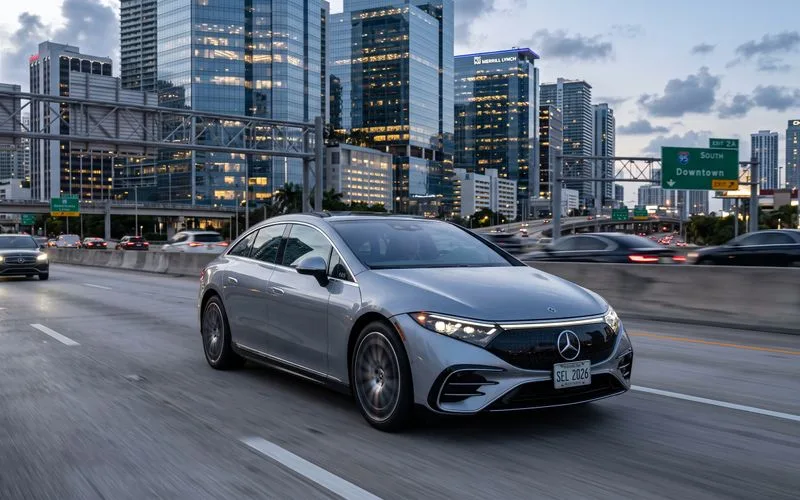 Mercedes-Benz EQS SedanFull-Size Luxury SedanBetter at: Range
The most direct cross-shop — same money, same silent flagship-EV brief, with roughly 350 miles of range against the i7's 311.
Compare 3.09B
3.09B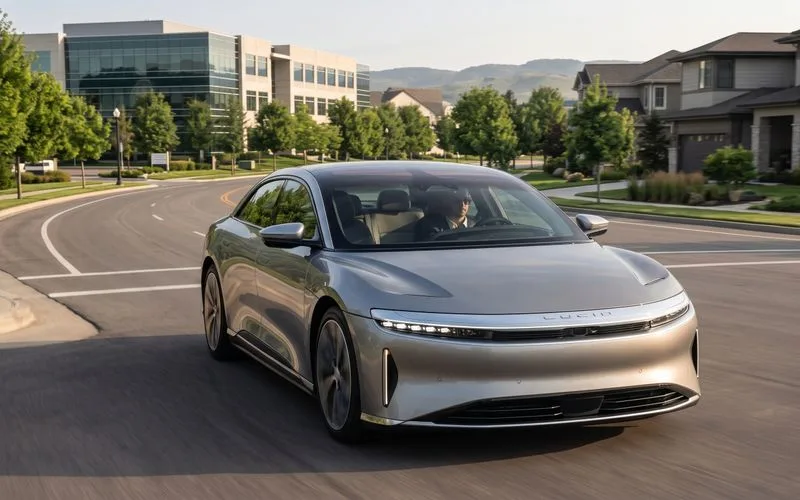 Lucid AirFull-Size Luxury SedanBetter at: Range and charging
Around $110K buys roughly 410 miles, much faster 800-volt charging, and a frunk — everything the i7 gives up.
Compare 3.51A-
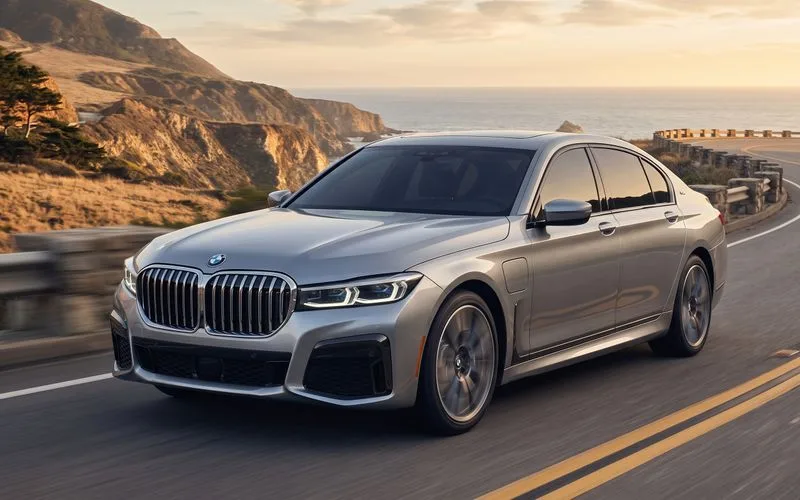 BMW 7 SeriesFull-Size Luxury SedanBetter at: Long-trip range
The identical car with a gas engine, roughly 620 miles of highway reach, a bigger trunk, and no charging logistics.
CompareSubject scores by year
Hover or tap a score to see what moved it versus the year before. A corner mark flags a big swing.
| Year | Performance | Efficiency | Safety | Space | Cost | Reliability | Tech | Use-case | Driving | Value |
|---|---|---|---|---|---|---|---|---|---|---|
| 2026 | 85 | 65 | 82 | 88 | 19 | 73 | 89 | 60 | 76 | 75 |
| 2025 | 85 | 65 | 81 | 87 | 20 | 73 | 89 | 54 | 73 | 76 |
| 2024 | 85 | 65 | 79 | 87 | 20 | 69 | 87 | 55 | 74 | 76 |
| 2023 | 84 | 65 | 63 | 86 | 20 | 66 | 88 | 59 | 76 | 75 |
Compare two years
Best fit & conditions
Higher scores mean a better fit for that use case. Learn more about use-case fit →
Subject profile
Academic Probation · NHTSA safety recalls
No NHTSA safety recall is on record for the 2026 BMW i7. Other model years of the i7 have 15 — listed below.
15 recalls on other model years of the i7 (2023–2025)
Jul 1, 2026Electronic stability control (esc) · Service brakes, hydraulic: power assist: electric: control moduleThe integrated brake (IB) system may malfunction and result in a loss of power brake assist or cause the Antilock Brake (ABS) and Dynamic Stability Control (DSC) systems to not function properly.
Defect
BMW of North America, LLC (BMW) is recalling certain 2025 Mini Cooper S, Mini Countryman S All4, X2, 2024 Rolls-Royce Spectre, 2023-2025 i7, 7 Series, X7, 2024-2025 i5, 5 Series, 2023-2024 XM, X1, 2024-2025 X6, and X5 vehicles. The integrated brake (IB) system may malfunction and result in a loss of power brake assist or cause the Antilock Brake (ABS) and Dynamic Stability Control (DSC) systems to not function properly.
Risk
A loss of power brake assist can extend the distance required to stop the vehicle. Additionally, malfunctioning ABS and/or DSC systems can cause a loss of vehicle control. Either of these scenarios can increase the risk of a crash.
Remedy
The Integrated brake system will be inspected and, if necessary, replaced, free of charge. Owner notification letters are expected to be mailed August 21, 2026. Owners may contact BMW customer service at 1-800-525-7417 or Rolls-Royce customer service at 1-877-877-3735. Vehicle Identification Numbers (VINs) involved in this recall will become searchable on NHTSA.gov beginning August 21, 2026. Vehicles previously repaired under recall 24V739 or 24V104 will need to have the new remedy completed.
NHTSA campaign 26V422000 ↗428 vehicles potentially affected (all models in the campaign)Owners notified Aug 25, 2026Filed by BMW of North America, LLCFiled as I7Feb 19, 2026Electrical system: wiringThe electrical wiring harness for the air conditioning system may become damaged during replacement of the cabin air filter.
Defect
BMW of North America, LLC (BMW) is recalling certain 2025 M5 Sportswagon, 2025-2026 M5, 2024-2025 750e xDrive, 2025-2026 550e xDrive, 2023-2025 I7, 2023-2025 7 Series, 2024-2026 i5, and 5 Series vehicles. The electrical wiring harness for the air conditioning system may become damaged during replacement of the cabin air filter.
Risk
A damaged wiring harness can short-circuit, increasing the risk of a fire.
Remedy
Dealers will inspect and replace the air conditioning systemâs electrical wiring harness and add a retaining strap/bracket to the harness, as necessary, free of charge. Owner notification letters were mailed April 16, 2026. Owners may contact BMW customer service at 1-800-525-7417. Vehicle Identification Numbers (VINs) involved in this recall will be searchable on NHTSA.gov beginning April 13, 2026.
NHTSA campaign 26V096000 ↗58,713 vehicles potentially affected (all models in the campaign)Owners notified Apr 16, 2026Filed by BMW of North America, LLCFiled as I7 EDRIVE50, I7 XDRIVE60Jul 23, 2025Electrical system: propulsion system: traction motor: controller: softwareThe electric drive motor software may shut down the high-voltage system, causing a loss of drive power.
Defect
BMW of North America, LLC (BMW) is recalling certain 2022-2025 i4, 2022-2024 IX, 2023-2024 I7, and 2024 I5 vehicles. The electric drive motor software may shut down the high-voltage system, causing a loss of drive power.
Risk
A loss of drive power increases the risk of a crash.
Remedy
The electric drive motor software will be updated over-the-air (OTA) or by a dealer, free of charge. Owner notification letters are expected to be mailed August 5, 2025. Owners may contact BMW customer service at 1-800-525-7417.
NHTSA campaign 25V395000 ↗71,286 vehicles potentially affected (all models in the campaign)Owners notified Aug 8, 2025Filed by BMW of North America, LLCFiled as I7Jul 16, 2025Electrical system: propulsion system: traction batteryThe high-voltage battery cell modules may not have been assembled properly, resulting in stress on the module frame and possible module failure.
Defect
BMW of North America, LLC (BMW) is recalling certain 2022-2025 IX, 2023-2024 I7, and 2022-2023 i4 vehicles. The high-voltage battery cell modules may not have been assembled properly, resulting in stress on the module frame and possible module failure.
Risk
Battery module failure may lead to a shutdown of the high-voltage system which can result in a loss of drive power, increasing the risk of a crash. In addition, module failure increases the risk of a fire.
Remedy
Dealers will replace specific high-voltage battery cell modules, free of charge. Interim owner notification letters explaining the safety risk were mailed September 11, 2025. Another notice will be sent once the remedy becomes available, anticipated December 31, 2025Owners may contact BMW customer service at 1-800-525-7417.
NHTSA campaign 25V470000 ↗136 vehicles potentially affected (all models in the campaign)Owners notified Dec 2, 2025Filed by BMW of North America, LLCFiled as I7Oct 2, 2024Electronic stability control (esc) · Service brakes, hydraulic: power assist: electric: control modulePlease see the recall report for a complete list of models and model years. The integrated brake (IB) system may malfunction and result in a loss of power brake assist or cause the Antilock Brake (ABS) and Dynamic Stability Control (DSC) systems to not function properly.
Defect
BMW of North America, LLC. (BMW) is recalling certain 2023-2024 X1, X5, X6, X7, XM, 530i, i5, 740i, 760i, i7, and 750e vehicles. Please see the recall report for a complete list of models and model years. The integrated brake (IB) system may malfunction and result in a loss of power brake assist or cause the Antilock Brake (ABS) and Dynamic Stability Control (DSC) systems to not function properly.
Risk
A loss of power brake assist can extend the distance required to stop the vehicle. Additionally, malfunctioning ABS and/or DSC systems can cause a loss of vehicle control. Either of these scenarios can increase the risk of a crash.
Remedy
Dealers will replace the integrated brake module, free of charge. Interim owner notification letters notifying owners of the safety risk are expected to be mailed November 22, 2024. Second letters will be mailed once the parts are available. Owners may contact BMW customer service at 1-800-525-7417. Vehicles in this recall were previously repaired under recall number 24V-104 and will need to have the new remedy completed.
NHTSA campaign 24V739000 ↗11,579 vehicles potentially affected (all models in the campaign)Owners notified Nov 27, 2024Filed by BMW of North America, LLCFiled as I7 EDRIVE50, I7 M70, I7 M70 XDRIVE, I7 XDRIVE60Sep 25, 2024Steering: linkages: knuckle: spindle: armThe steering spindle may break requiring a greater steering effort to control the vehicle.
Defect
BMW of North America (BMW) is recalling certain 2024-2025 530i xDrive, 540i xDrive, 2024-2025 i5 eDrive40, i5 M60 xDrive, 2025 i5 xDrive40, 2024 740i xDrive, 760i xDrive, 750e xDrive, i7 eDrive50, i7 xDrive60, and i7 M70 xDrive vehicles. The steering spindle may break requiring a greater steering effort to control the vehicle.
Risk
A sudden increase in required steering effort increases the risk of a crash.
Remedy
Dealers will replace the steering spindle's double universal joint, free of charge. Owner notification letters were mailed November 22, 2024. Owners may contact BMW Customer Service at 1-800-525-7417.
NHTSA campaign 24V714000 ↗982 vehicles potentially affected (all models in the campaign)Owners notified Nov 22, 2024Filed by BMW of North America, LLCFiled as I7 EDRIVE50, I7 M70 XDRIVE, I7 XDRIVE60Sep 18, 2024Electronic stability control (esc): control module · Service brakes, hydraulic: antilock/traction control/electronic limited slip: control unit/modulePlease refer to the recall report for the complete list of models. The welds in the servomotor of the integrated brake control module may break, causing a loss of power brake assist and rear brake function. In addition, the Antilock Brake System (ABS) and Dynamic Stability Control (DSC) system may not function.
Defect
BMW of North America (BMW) is recalling certain 2023-2024 X1, 2024-2025 X5, 2025 X6, 2023-2025 X7, 740i, 760i, 2024 XM, 530i, 540i, i7, 750e, X2, 2024-2025 i5, 2024 Rolls Royce Spectre, 2025 MINI Countryman S ALL4, JCW Countryman ALL4, and 2025 MINI Hardtop 2 Door (Cooper, Cooper S) vehicles. Please refer to the recall report for the complete list of models. The welds in the servomotor of the integrated brake control module may break, causing a loss of power brake assist and rear brake function. In addition, the Antilock Brake System (ABS) and Dynamic Stability Control (DSC) system may not function.
Risk
A loss of brake power assist or rear brake function can result in extended stopping distance. A loss of ABS or DSC can cause a loss of vehicle handling and control. Either of these scenarios can increase the risk of a crash.
Remedy
Dealers will replace the integrated brake system, free of charge. Owner notification letters were mailed November 13, 2024. Owners can contact BMW Customer Service at 1-800-525-7417.
NHTSA campaign 24V697000 ↗309 vehicles potentially affected (all models in the campaign)Owners notified Nov 13, 2024Filed by BMW of North America, LLCFiled as I7Feb 12, 2024Electronic stability control (esc) · Service brakes, hydraulic: power assist: electric: control modulePlease see the recall report for a complete list of models and model years. The integrated brake (IB) system may malfunction and result in a loss of power brake assist or cause the Antilock Brake (ABS) and Dynamic Stability Control (DSC) systems to not function properly.
Defect
BMW of North America, LLC. (BMW) is recalling certain 2023-2025 BMW, MINI, and Rolls-Royce vehicles. Please see the recall report for a complete list of models and model years. The integrated brake (IB) system may malfunction and result in a loss of power brake assist or cause the Antilock Brake (ABS) and Dynamic Stability Control (DSC) systems to not function properly.
Risk
A loss of power brake assist can extend the distance required to stop the vehicle. Additionally, malfunctioning ABS and/or DSC systems can cause a loss of vehicle control. Either of these scenarios can increase the risk of a crash.
Remedy
Dealers will replace the integrated brake system, free of charge. Owner notification letters were mailed between June and December 2024. Owners may contact BMW customer service at 1-800-525-7417 or Rolls Royce customer service at 1-877-877-3735.
NHTSA campaign 24V104000 ↗266,716 vehicles potentially affected (all models in the campaign)Owners notified Jun 28, 2024Filed by BMW of North America, LLCFiled as I7, I7 M70, I7 M70 XDRIVEOct 18, 2023Electrical system: adas: driver monitoring: camera/sensorThe ground connection to the steering wheel may not have been attached correctly, resulting in an inoperative hands-on detection system.
Defect
BMW of North America, LLC (BMW) is recalling certain 2023-2024 740i, 740i xDrive, 760i xDrive, i7 eDrive50, i7 xDrive60, i7 M70, 2024 750e xDrive, 530i, 530i xDrive, i5 eDrive40, and i5 M60 vehicles. The ground connection to the steering wheel may not have been attached correctly, resulting in an inoperative hands-on detection system.
Risk
An inoperative hands-on detection system may fail to detect when the driver's hands are not on the steering wheel and therefore not engage the emergency stopping assistant system, increasing the risk of a crash.
Remedy
Dealers will inspect and reattach the ground connection as necessary, free of charge. Owner notification letters were mailed December 8, 2023. Owners may contact BMW customer service at 1-800-525-7417.
NHTSA campaign 23V700000 ↗12,296 vehicles potentially affected (all models in the campaign)Owners notified Dec 8, 2023Filed by BMW of North America, LLCFiled as I7, I7 M70, I7 M70 XDRIVESep 20, 2023Visibility/wiperThe windshield wipers may fail during certain weather conditions.
Defect
BMW of North America, LLC (BMW) is recalling certain 2023 740i, 760i xDrive and i7 xDrive60 vehicles. The windshield wipers may fail during certain weather conditions.
Risk
Windshield wiper failure can reduce visibility, increasing the risk of a crash.
Remedy
Dealers will inspect and replace the windshield wiper system, as necessary, free of charge. Owner notification letters were mailed November 15, 2023. Owners may contact BMW customer service at 1-800-525-7417.
NHTSA campaign 23V644000 ↗3,820 vehicles potentially affected (all models in the campaign)Owners notified Nov 15, 2023Filed by BMW of North America, LLCFiled as I7Jul 12, 2023Electrical systemThe Interaction Bar, located on the dashboard, may not activate the windshield defrosting/defogging system and/or the hazard warning lights. In addition, those control buttons may not illuminate when pressed. As such, these vehicles fail to comply with the requirements of Federal Motor Vehicle Safety Standard number 103, "Windshield Defrosting and Defogging Systems", and 108, "Lamps, Reflective Devices, and Associated Equipment."
Defect
BMW of North America, LLC (BMW) is recalling certain 2023 740i, 760i xDrive and i7 xDrive60 vehicles equipped with an Interaction Bar. The Interaction Bar, located on the dashboard, may not activate the windshield defrosting/defogging system and/or the hazard warning lights. In addition, those control buttons may not illuminate when pressed. As such, these vehicles fail to comply with the requirements of Federal Motor Vehicle Safety Standard number 103, "Windshield Defrosting and Defogging Systems", and 108, "Lamps, Reflective Devices, and Associated Equipment."
Risk
The inability to operate the defrost or hazard warning lights can increase the risk of a crash or injury.
Remedy
Dealers will replace the Interaction Bar, free of charge. Owner notification letters were mailed September 6, 2023. Owners may contact BMW customer service at 1-800-525-7417.
NHTSA campaign 23V479000 ↗384 vehicles potentially affected (all models in the campaign)Owners notified Sep 6, 2023Filed by BMW of North America, LLCFiled as I7Jun 8, 2023SeatsThe front seat length adjustment system may not have been welded properly.
Defect
BMW of North America, LLC (BMW) is recalling certain 2023 740i, 760i xDrive, and i7 xDrive60 vehicles. The front seat length adjustment system may not have been welded properly.
Risk
An improperly welded front seat may not properly restrain an occupant, increasing the risk of injury in a crash.
Remedy
Dealers will inspect the front seats and if necessary, replace the seat front structure including the seat length adjustment system, free of charge. Owner notification letters were mailed August 3, 2023. Owners may contact BMW customer service at 1-800-525-7417.
NHTSA campaign 23V414000 ↗318 vehicles potentially affected (all models in the campaign)Owners notified Aug 3, 2023Filed by BMW of North America, LLCFiled as I7Feb 3, 2023Air bags · SeatsIn certain seat monitoring conditions, the front passenger seat electronic control unit (ECU) software may not recognize the seat position, and disable the front passenger air bag, knee air bag, and active headrest.
Defect
BMW of North America, LLC (BMW) is recalling certain 2023 760i xDrive and i7 xDrive60 vehicles equipped with the Executive Lounge Seating Package. In certain seat monitoring conditions, the front passenger seat electronic control unit (ECU) software may not recognize the seat position, and disable the front passenger air bag, knee air bag, and active headrest.
Risk
A disabled front passenger air bag, knee air bag, or active headrest will not deploy as intended in a crash, increasing the risk of injury.
Remedy
Dealers will reprogram the front passenger seat electronic control unit software, free of charge. Owner notification letters were mailed March 10, 2023. Owners may contact BMW customer service at 1-800-525-7417.
NHTSA campaign 23V050000 ↗397 vehicles potentially affected (all models in the campaign)Owners notified Mar 10, 2023Filed by BMW of North America, LLCFiled as I7Dec 20, 2022Electrical system: propulsion system: traction battery thermal: management: softwareThe high voltage battery electronic control unit (ECU) software may cause an interruption of electrical power.
Defect
BMW of North America, LLC (BMW) is recalling certain 2022-2023 iX xDrive40, iX xDrive50, iX M60, i4 eDrive35, i4 eDrive40, i4 M50, and 2023 i7 xDrive60 vehicles. The high voltage battery electronic control unit (ECU) software may cause an interruption of electrical power.
Risk
An interruption of electrical power may result in a sudden loss of drive power, increasing the risk of a crash.
Remedy
Dealers will update the high voltage battery ECU software, free of charge. Owner notification letters are expected to be mailed February 10, 2023. Owners may contact BMW customer service at 1-800-525-7417.
NHTSA campaign 22V944000 ↗14,086 vehicles potentially affected (all models in the campaign)Owners notified Feb 3, 2023Filed by BMW of North America, LLCFiled as I7Nov 21, 2022Electrical systemThe telematics control unit may not transmit the vehicle location information to emergency responders.
Defect
BMW of North America, LLC (BMW) is recalling certain 2023 BMW 740i, 760i xDrive, and i7 xDrive60 vehicles. The telematics control unit may not transmit the vehicle location information to emergency responders.
Risk
Emergency response may be delayed without the vehicle location information, increasing the risk of injury.
Remedy
Dealers will update the telematics control unit software, free of charge. Owner notification letters were mailed January 17, 2023. Owners may contact BMW customer service at 1-800-525-7417.
NHTSA campaign 22V860000 ↗169 vehicles potentially affected (all models in the campaign)Owners notified Jan 17, 2023Filed by BMW of North America, LLCFiled as I7
Source: NHTSA Office of Defects Investigation recall database, model years 2023–2026. Recalls are listed by model year as the manufacturer filed them; whether a specific car is affected depends on its VIN — check a VIN at nhtsa.gov ↗. NHTSA model names matched to this page: I7, I7 EDRIVE50, I7 M70, I7 M70 XDRIVE, I7 XDRIVE60.
Detailed scoring by subject
1Performance & PowertrainOne of the i7's strongest categories.3.77A
Volume trim xDrive60 uses dual-motor AWD producing 536 hp combined. Base eDrive50 delivers 449 hp; the M70 tops the range at ~650 hp.
Volume xDrive60 delivers 549 lb-ft immediately from a standstill. M70 climbs into the ~700–748 lb-ft range in launch modes.
BMW-quoted 4.5-second 0–60 for the xDrive60, corroborated by instrumented tests. Range spans 5.3 s (eDrive50) to 3.5 s (M70).
Dual-motor EV delivery is instant, silent, and completely lag-free; reviewers uniformly praise the i7 as one of the smoothest luxury powertrains on sale.
Single-speed direct-drive transmission on both axles — no shifts, no hunting, no drone; power delivery is continuous and imperceptibly modulated.
AWD (xDrive) is available on two of three trims (xDrive60 and M70) with sophisticated dual-motor torque distribution; base eDrive50 is RWD, so AWD is common but not standard.
EV-only lineup with three distinct power levels (449 / 536 / ~650 hp), but no gas, hybrid, or PHEV alternatives — buyers who want ICE go to the 7 Series instead.
2Efficiency & RangeOne of the i7's weakest categories.2.40C+
2026 is a carry-over year for the G70 i7 — the facelift was unveiled 22 April 2026 for the 2027 model year, so the pre-LCI 105.7 kWh / 101.7 kWh usable pack and its EPA ratings return unchanged. At 38 kWh/100 mi the ~5,900 lb flagship sits near the bottom of the EV band despite a slippery 0.24 Cd body; mass, not aero, is the limit.
Unusually for an EV the i7 rates lower in the city than on the highway — three-tonne curb weight costs more in stop-and-go than adaptive recuperation recovers, and 85 MPGe lands at the very bottom of the EV-sedan city band. The prior scorecard's 90 MPGe city was a stale figure for this nameplate.
The i7's best EPA cycle: a 0.24 drag coefficient — the lowest in the G70 range, versus 0.26 for the combustion cars that need engine cooling — makes steady-state cruising the configuration where the big sedan is most efficient. Mid-band for EV sedans. The prior scorecard's 84 MPGe understated it and had the city/highway relationship inverted.
The 101.7 kWh usable pack returns 311 EPA miles in the volume xDrive60 — mid-pack for an EV sedan and well behind the full-size luxury benchmarks (Lucid Air ~410 mi, Model S ~400 mi, EQS ~350 mi), because BMW spent the G70's mass budget on chassis and cabin rather than cells. The prior scorecard's 318 mi was not the EPA figure for this trim.
A 400-volt architecture caps the pre-facelift i7 at 195 kW, squarely mid-band and roughly half what 800V rivals accept — the Taycan and Air peak in the 270–350 kW range on the same class of charger. The MY2027 facelift lifts this to 250 kW, which the 2026 car does not get.
BMW's own quoted 10–80% time on a suitable DC charger. Below mid-band: a 101.7 kWh pack behind a 195 kW ceiling averages only ~130–140 kW across the window, so a road-trip stop runs a full half-hour-plus rather than the ~20 minutes an 800V competitor advertises. Where sources disagree the manufacturer figure is used — Wikipedia's 28 minutes matches the MY2027 facelift, not this car.
EPA energy cost at national-average electricity rates. A fraction of what the premium-fuel 760i or an S-Class costs to run, but graded within the EV class it is only mid-band — 38 kWh/100 mi is a lot of electricity per mile, and the prior scorecard's $800 was optimistic for this trim.
Pure BEV: no fuel-grade decision, and cheap overnight home charging on an ordinary 240V circuit — 11 kW AC standard (22 kW optional) fills the 101.7 kWh pack in about 11 hours, with a Flexible Fast Charger for 120V/240V outlets included. Two things keep it below the i5's mark rather than at the top of the band: the 2026 i7 still ships a CCS1 inlet and reaches Superchargers only through an adapter (BMW's own arrived in Q2 2026; native NACS waits for the MY2027 facelift), and at 38 kWh/100 mi a public DC session for this pack is an expensive way to buy miles.
3SafetyGrades near the top of the scale.3.61A-
NHTSA has not published overall crash-test results for the current-generation (G70, MY2023+) i7 / 7 Series; a 4.5-star estimate is applied consistent with full-size luxury sedan norms and BMW's structural results in comparable programs.
Current-gen i7 is not on the IIHS Top Safety Pick or TSP+ list; IIHS has not completed a comprehensive test set on the G70 platform. BMW's recent flagships have generally earned Good crashworthiness scores where tested, but the lack of a completed award-eligible test slate and typical Acceptable/Marginal headlight ratings on volume trims keep it out of TSP contention.
The 2026 i7 makes BMW's Active Driving Assistant standard across all trims (eDrive50, xDrive60, M70 xDrive): forward collision warning with automatic emergency braking (pedestrian/cyclist), lane departure warning with lane keeping, blind-spot detection, rear cross-traffic alert and braking, and Active Cruise Control with Stop & Go. Only Highway Assistant/hands-free is optional via the Driving Assistance Professional Package.
BMW's front collision warning with city collision mitigation is generally reviewed as smooth and effective in daylight vehicle-to-vehicle scenarios and includes pedestrian and cyclist detection with day/night operation. No published IIHS Superior/Advanced front-crash-prevention rating exists for the current i7, so credit lands mid-upper band.
Active Blind Spot Detection with steering intervention and Rear Cross-Traffic Alert with autonomous braking are standard on all 2026 i7 trims, plus Safe Exit warning for opening doors into cyclists. Coverage is class-leading for a full-size luxury sedan.
Standard Lane Departure Warning with Lane Keeping Assistant plus Steering and Lane Control Assistant provides confident lane centering with minimal ping-ponging in reviewer testing; BMW's system remains one of the smoother implementations in the luxury EV segment.
Standard Active Cruise Control with Stop & Go handles full speed range with smooth braking and quick resume. When paired with the Driving Assistance Professional Package, the combined Highway Assistant provides refined highway centering and following behavior consistently praised by reviewers.
The 2026 i7 offers BMW Highway Assistant as part of the Driving Assistance Professional Package — hands-free lane centering on approximately 130,000 miles of mapped divided highways in the US and Canada at speeds up to 85 mph, with driver-attention camera. Coverage is competitive with Ford BlueCruise; slightly behind GM Super Cruise in total mapped mileage but ahead in top speed.
Adaptive LED headlights with automatic high beam are standard across all 2026 i7 trims. BMW Iconic Glow illuminated kidney grille and available Swarovski-crystal split-headlight design use adaptive LED tech with excellent low-beam reach and glare-free auto high beam. No IIHS Good rating on file, but hardware and reviewer feedback are consistently strong.
Thick D-pillars and a high beltline typical of the G70 design limit natural rearward and rear-quarter visibility, but a standard rearview camera and available Parking Assistant Professional with Surround View, 3D View, and Remote Theater View camera provide comprehensive electronic compensation. Reviewers note visibility is average for the class with strong camera support.
The i7 has generous rear-seat legroom and wide rear-door openings that make loading rear-facing seats easy, and LATCH anchors are present in both outboard rear positions. Anchors are covered/recessed which requires some digging, and the deeply bolstered rear seats can complicate three-across installation on the executive-lounge configuration.
4Space & ComfortOne of the i7's strongest categories.3.98A+
Standard 3-across rear bench seats five; a 4-seat Executive Lounge Seating package with individual reclining rear buckets is optional, same as ICE 7 Series.
Front headroom sits above the sedan band even with the optional glass roof; the G70 platform is shared with the ICE 7 Series and prioritizes cabin volume.
Ample front legroom for the driver but only mid-band by sedan norms — the LWB platform funnels most of its length gain into the second row rather than the front.
Rear headroom sits near the top of the sedan band despite the low, tapered roofline — the flat EV floor helps preserve the seat H-point.
Class-leading rear legroom — the US i7 is sold only in long-wheelbase form, giving limo-grade second-row space directly comparable to EQS Sedan and S-Class LWB.
Trunk volume matches the ICE 7 Series because the battery lives under the floor rather than intruding on cargo space; there is no frunk, unlike Lucid Air or Tesla Model S.
Competitive everyday storage — deep center console, wireless charging tray, generous door bins — but no genuine standout innovation. Unlike Lucid Air, Tesla Model S, or EQS Sedan, the i7 lacks a front trunk, which costs it against direct EV rivals in this criterion.
Comfort/Multi-Contour front seats with massage widely available; the optional Executive Lounge rear seat reclines up to 42.5° with a power ottoman — repeatedly cited as one of the most comfortable rear seats in any production sedan, EV or otherwise.
Standard two-axle air suspension with electronically controlled dampers plus available Integral Active Steering and Executive Drive Pro active roll stabilization deliver a plush, well-controlled ride. The 5,900+ lb curb weight helps low-speed isolation but slightly hurts secondary ride vs. lighter S-Class variants.
Silent EV powertrain plus acoustic laminated glass and heavy sound insulation give the i7 a library-quiet cabin — noticeably quieter than the ICE 7 Series and effectively tied with EQS Sedan and Lucid Air at highway speed.
Rich comfort loadout: standard 4-zone climate, heated front seats, heated steering wheel; optional ventilated/massaging front and rear seats, heated armrests, Bowers & Wilkins Diamond audio, and the 31.3-inch 8K Theatre Screen for rear passengers. EV pre-conditioning via the My BMW app is an added advantage over the ICE 7 Series.
5Cost of OwnershipThe i7's lowest-graded category.0.00F
Base 2026 i7 xDrive60 carries MY25 pricing near $106,695 with a modest MY26 adjustment. Vastly above the sedan normalization ceiling of $55K, so the normalized score floors.
Volume trim is the xDrive60 configured with common option packages (Executive, Sky Lounge roof, Driving Assist Pro) that most buyers select. Runs $115K-$130K in practice.
Luxury EV: no oil changes/emissions work vs 7 Series ICE, but BMW dealer labor rates and 21"/22" tire wear push repair costs up. First 3 yr / 36k mi routine maintenance is complimentary.
Full-size luxury EVs depreciate steeply; i7 shares the 7 Series' historically weak residuals, compounded by EV price cuts, tech obsolescence, and battery-age discounting on the used market.
Standard BMW New Vehicle Limited Warranty, unchanged for MY26.
For EVs the meaningful powertrain figure is the high-voltage battery warranty at 8 yr / 100k mi; the electric drive unit itself is covered under the 4-yr / 50k-mi drivetrain term.
BMW Ultimate Care covers 3 yr / 36,000 mi of scheduled maintenance, plus 4 yr unlimited-mile roadside assistance and connected-service trials. i7 buyers have historically received Electrify America complimentary DC-fast-charging credits (~3 yr for MY23-25; MY26 terms similar). Solid package but not class-leading vs Lexus/Genesis multi-year offerings.
$122,500 volume-trim price minus its estimated resale value after 5 years (38% retained, or about $46,550) leaves about $75,950 in depreciation. Add the projected $7,200 in 5-year maintenance and repairs, and owning this vehicle for 5 years costs about $83,150 in total.
6Reliability & QualityGrades above the middle of the scale.2.98B-
Consumer Reports and J.D. Power have historically rated the BMW 7 Series/i7 near average, with complexity concerns from the extensive electronics (rear theater screen, air suspension, integral rear-wheel steering) tempering predicted reliability despite the EV drivetrain's mechanical simplicity.
BMW consistently lands mid-pack in Consumer Reports brand rankings and slightly below industry average in J.D. Power VDS — reliable enough but not a top-tier reliability brand like Lexus or Toyota.
Since its 2023 launch the i7 has seen a handful of recalls (rear-view camera software, seatbelt tensioner, high-voltage battery pack on limited units) — typical for a first-generation luxury EV rather than systemic.
The i7's fifth-generation eDrive motors and 101.7 kWh Samsung SDI battery are shared with the iX and have accumulated three years of field data without a major durability black eye, though long-term high-mileage evidence is still limited.
The i7's cabin sets a class benchmark: crystal iDrive controls, cashmere-wool headliner option, Merino leather, open-pore woods, illuminated interaction bar, and the optional 31.3-inch Theatre Screen — regularly cited by Car and Driver, MotorTrend, and Edmunds as among the finest interiors sold today.
Built at BMW's Dingolfing plant — the same flagship facility that assembles the 7 Series and 8 Series — the i7 shows tight, consistent panel gaps and low incidence of rattles or trim complaints in launch-year reviews.
BMW operates roughly 350 US dealers with broad geographic coverage, and BMW's Ultimate Care complimentary maintenance (3 years/36,000 miles) plus dealer service satisfaction generally rank above the luxury average.
The i7 is a low-volume flagship EV with dealer-only high-voltage parts, expensive tires and brake components, minimal aftermarket support, and body-shop repair costs among the highest in the segment — RepairPal ranks BMW near the bottom for average annual repair costs.
7Technology & InfotainmentThe i7's best-graded category.4.00A+
The i7 uses the same BMW Curved Display as the G70 7 Series: a 14.9-inch central touchscreen paired with a 12.3-inch digital cluster under a single curved glass panel, standard across xDrive60 and M70 xDrive.
iDrive 8.5 with QuickSelect runs on fast hardware with sharp graphics and responsive touch, and the physical rotary controller is retained — reviewers still flag deep menus and touch-only HVAC controls.
Wireless Apple CarPlay and wireless Android Auto are standard on every 2026 i7 trim, integrated with the curved display.
BMW Intelligent Personal Assistant supports natural-language commands, and native nav adds EV-specific route planning with charging stop integration, real-time charger availability, and AR video guidance — a genuinely useful package.
Standard Harman Kardon Surround Sound (17 speakers) is strong; the optional Bowers & Wilkins Diamond Surround (1,965W, 36 speakers with headliner and headrest exciters) is among the very best factory audio systems available in any car.
Standard 12.3-inch full-digital cluster within the curved display; crisp and configurable via My Modes, though layout customization trails Audi Virtual Cockpit and Mercedes MBUX.
BMW Remote Software Upgrade ships whole-vehicle OTA updates roughly three times a year covering infotainment, driving assistance, and feature additions (Digital Key sharing, Remote Parking, ChatGPT voice); broad scope though cadence trails Tesla and Lucid.
My BMW app is polished with remote climate/lock/locate, EV charging control, Digital Key Plus (with cross-platform sharing), and new Remote Parking via app; Remote Engine Start requires the ConnectedDrive subscription after the trial.
Multiple USB-C ports front and rear, standard wireless charging pad, and 12V outlets; the optional Executive Lounge Rear Seating Package adds a 31.3-inch Theater Screen (8K) with HDMI input, rear-door touch remotes, and additional USB-C — a class-leading rear-cabin power/media suite, though no household AC outlet.
Comfort Access proximity entry is standard, Digital Key Plus (UWB) supports iPhone and select Android devices with hands-free unlock, and automatic soft-close doors (with Executive Package) can open/close via touch or app.
Parking Assistant Professional is standard on the i7: high-resolution 360-degree surround view, Reversing Assistant that records the last 50m of travel, and Remote Parking Assistant to move the car from outside via the phone.
Large full-color Head-Up Display is standard on all 2026 i7 trims, projecting nav, speed, driver-assist status, EV range, and media info; among the largest and clearest HUDs in the segment.
8Use-Case FitOne of the i7's weakest categories.2.07C
Wide-opening rear doors on the LWB G70 body, 44.4 in of rear legroom, and standard LATCH on outboard rear seats make daily kid loading easy; the ~17.7 cu ft trunk (smaller than the ICE 7 Series's 19.2) and contoured/reclining executive-style rear seats make rear-facing car-seat fit less accommodating than a plain bench.
Standard Active Driving Assistant (FCW + AEB with pedestrian/cyclist detection, LDW/LKA, blind-spot with steering intervention, rear-cross-traffic with autonomous braking, ACC with Stop & Go) on every i7 trim plus available Driving Assistance Professional with Highway Assistant hands-off; neither IIHS nor NHTSA has published crash tests for the current G70 i7.
Segment benchmark for rear-passenger indulgence: 44.4 in rear legroom, optional Executive Lounge with fully reclining rear seat and 31.3-inch 8K Theater Screen, quad-zone climate, panoramic Sky Lounge LED roof, standard two-axle air suspension, and near-silent EV drivetrain make multi-hour trips exceptional; ~17.7 cu ft trunk is slightly smaller than the ICE 7 Series but still swallows four-passenger luggage.
Dual-motor EV delivers instant, silent, lag-free power with adjustable regen for one-pedal-style driving in traffic; standard adaptive cruise, available Highway Assistant hands-off freeway driving, massaging front seats, and exceptional low-speed refinement make commuting genuinely relaxing — the imposing 212.2 in footprint is the only friction.
EPA 87 MPGe combined for the xDrive60 volume trim translates to roughly $0.05–0.07 per mile on home electricity — a fraction of the ICE 7 Series's ~$0.28/mi on required premium — and BMW's 3-year/36k-mile complimentary maintenance covers routine service; the offset is expensive 21" tire wear on the ~5,900 lb curb weight, luxury-tier insurance (~$3,600/yr), and no federal EV credit at a $107K+ price.
212.2 in long, 76.8 in wide, and ~5,900 lb is a genuinely large city car, but standard Integral Active Steering (rear-wheel steering up to 3.5°) tightens the turning circle to about 40 ft and Parking Assistant Plus with 360° cameras and Reversing Assistant handle tight garages; visibility is limited by the tall belt line but cameras compensate.
Not rated to tow anything in the US, no bed, no meaningful payload beyond passengers and luggage, and the ~5,900 lb curb weight further shrinks the payload margin vs the ICE 7 Series; a luxury EV sedan is fundamentally not a work tool.
Delicate crystal/wood/metal interior finishes, low front fascia, and air suspension are easily damaged by trade abuse; add HV battery service, ~$3,000+ tire sets on 21"/22" wheels, and BMW dealer labor rates and this becomes an even worse cost proposition under hard use than the ICE 7 Series.
No bed, no factory tie-downs, no upfit ecosystem, no 120V AC outlets or V2L in cargo area, no washable interior surfaces; the velour-trimmed sedan trunk is the antithesis of a work vehicle.
Cabin comfort is class-topping — acoustic laminated glass, standard two-axle air suspension, massaging front seats, and Highway Assistant meaningfully cut fatigue — but the 318 mi EPA range (296 mi with M Sport 21" wheels) is far short of the ICE 7 Series's ~620 mi highway reach, and 195 kW peak DC fast charging (~34 min 10–80%) still adds meaningful stops on long trips.
xDrive AWD is standard on the volume xDrive60 and M70 trims and the two-axle air suspension can raise the car briefly for gravel/snow, but ground clearance is only about 5.6 in, no roof rails or factory hitch are offered in the US, and the ~5,900 lb curb weight limits soft-surface confidence — genuinely pavement-oriented despite standard AWD.
~17.7 cu ft trunk is competitive with full-size luxury sedan peers but a step below the ICE 7 Series's 19.2; ski pass-through and 40/20/40 folding rear seats come only via optional package, and there is no factory hitch, no roof rails, and no frunk — bulky gear like skis, long lumber, or bike racks require aftermarket solutions.
9Driving ExperienceGrades above the middle of the scale.3.19B
Surprisingly composed for a ~6,000 lb full-size EV thanks to two-axle air suspension, adaptive dampers, and available integral rear-axle steering; still not a driver's car but among the better-handling limos, tracking with the Lucid Air and above the 7 Series/EQS on chassis composure.
Variable-ratio EPS is accurate and well-weighted in Sport, but reviewers consistently describe it as isolated and light on genuine road feedback — typical modern BMW EPS behavior.
Large brakes plus well-blended adaptive regen (D/B modes) haul the mass down without drama; pedal is firm and consistent though the sheer weight shows up in longer-than-average sedan stops.
Dual-motor EV with instantaneous, seamless response and no shift interruptions; tip-in calibration is refined in Comfort and urgent in Sport with no driveline shudder.
Near-silent under load with only faint motor whine at full throttle; laminated glass and active sound insulation deliver one of the quietest cabins in the class, matched by S-Class/EQS.
Long-wheelbase full-size flagship; Integral Active Steering shrinks the turning circle meaningfully but it still sits at the top end of the sedan band.
Wide seat and wheel adjustment range with excellent forward sightlines and comfortable ingress, but iDrive 8.5's touch-first climate and secondary controls draw persistent criticism for buried functions.
Volume xDrive60 trim is capable and quick (0-60 ~4.5 s) with a clear luxury-limo character rather than genuine enthusiast appeal; the M70 variant is the enjoyable one, but the mainstream i7 rewards comfort more than back-road antics.
10Value & Market PositionGrades above the middle of the scale.3.10B
eDrive50/xDrive60 arrive with the 14.9-inch curved iDrive 8.5 display, Panoramic Sky Lounge LED roof, 4-zone climate, Merino leather, Harman Kardon audio, ambient crystal iDrive controls, BMW Driving Assistant Professional (adaptive cruise, lane keeping, active blind-spot), heated/massage front seats, and 20-inch wheels — very generous at the flagship base price. Bowers & Wilkins Diamond audio, rear Executive Lounge, ventilated seats, and the 31.3-inch Theater Screen remain option-package fare.
At roughly $107K (eDrive50), $121K (xDrive60), and $170K (M70), the i7 delivers exquisite interior craftsmanship and BMW brand cachet, but Lucid Air Grand Touring at ~$110K offers 400+ miles of range and Tesla Model S Plaid undercuts on performance-per-dollar; Mercedes EQS Sedan is directly competitive but not obviously beaten — value is fair, not a standout.
Three trims — eDrive50 (RWD), xDrive60 (dual-motor AWD, ~536 hp), and M70 xDrive (~650 hp) — cover a reasonable performance spread, and BMW Individual, M Sport Package, and Executive Package add option flexibility; no short-wheelbase alternative for the US and fewer powertrain choices than the ICE 7 Series lineup.
The full-size luxury EV sedan is a very narrow segment and i7 US volume trails the combined 7 Series ICE mix and Mercedes EQS Sedan; annual US i7 registrations sit in the low thousands, with polarizing split-headlight styling further capping mainstream acceptance.
BMW remains a top-tier global luxury brand and the i7 inherits full flagship halo status from the 7 Series lineage, supporting strong ownership pride and cross-shop consideration despite styling controversy.
BMW Financial Services routinely passes the $7,500 federal commercial-EV lease credit through as capitalized cost reduction on the i7, and softer full-size luxury EV demand means dealers negotiate meaningfully below MSRP on inventory units — real-world lease payments materially undercut MSRP-implied cost.
The G70-generation 7 Series/i7 launched for MY2023, making 2026 the fourth year on the platform with no LCI mid-cycle refresh announced yet — current but past freshness peak, with a refresh expected in the next cycle. EV powertrain and iDrive 8.5 remain competitive.
Reviewers praise the whisper-quiet cabin, rear-seat luxury, ride refinement, and interior tech but criticize the ~5,900-lb curb weight, polarizing split-headlight styling, and ~318-mi EPA range that trails Lucid Air significantly; the i7 earns respect and occasional Editors' Choice nods but rarely wins direct comparison tests against EQS Sedan or Lucid Air.