

The verdict
A mixed-report compact luxury suv, strong on technology and held back by ownership.
The all-new 2025 X3 is still the best-driving compact luxury SUV, and it now backs that up with the biggest standard screens in the class (a 14.9-inch touchscreen paired with a 12.3-inch cluster), 29 MPG combined and a 499-mile range from the volume 30 xDrive. What the redesign gave up is the polish inside and the peace of mind outside: reviewers were near-unanimous about hard plastics at a $50,675 starting price that typically options up past $57,000, and the launch-year G45 drew nine NHTSA recalls covering brakes, steering and a 48-volt cable with a stated fire risk. Buy it for the chassis, the tech and the road-trip manners; go in knowing the five-year cost lands near $39,600 and the warranty stops at four years with no separate powertrain term. Wait for a later build if you can — BMW quietly began revising the switchgear on cars built after mid-2025.
Jump to scoresStrengths
- Class-leading standard screens and infotainment
- Still the driver's pick in the segment
- Long-haul range and a genuinely quiet cabin
What holds it back
- Expensive to own, and the warranty runs out first
- Nine recalls in one model year, on things that matter
- Interior materials undershoot the price
Top alternatives
Cars shoppers cross-shop with the BMW X3 2.69C+
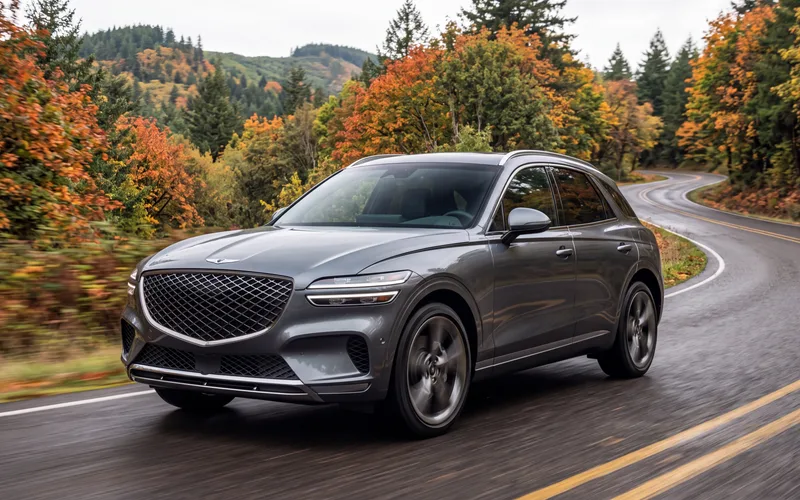 Genesis GV70Compact Luxury SUVBetter at: Value
Delivers comparable performance and a richer standard interior for thousands less, with a 10-year/100,000-mile powertrain warranty against BMW's 4-year/50,000-mile coverage.
Compare 2.72B-
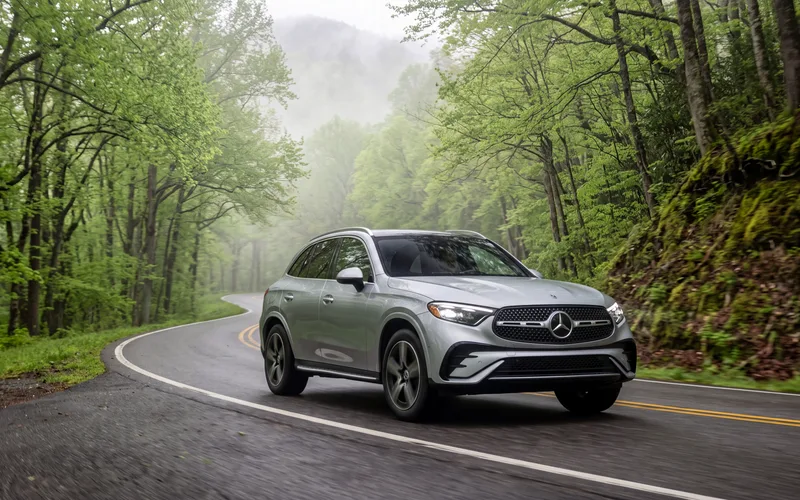 Mercedes-Benz GLCCompact Luxury SUVBetter at: Interior quality
The direct German rival with the nicer cabin — its materials and switchgear still feel a step above the redesigned X3's plastics and fabric trim.
Compare 2.63C+
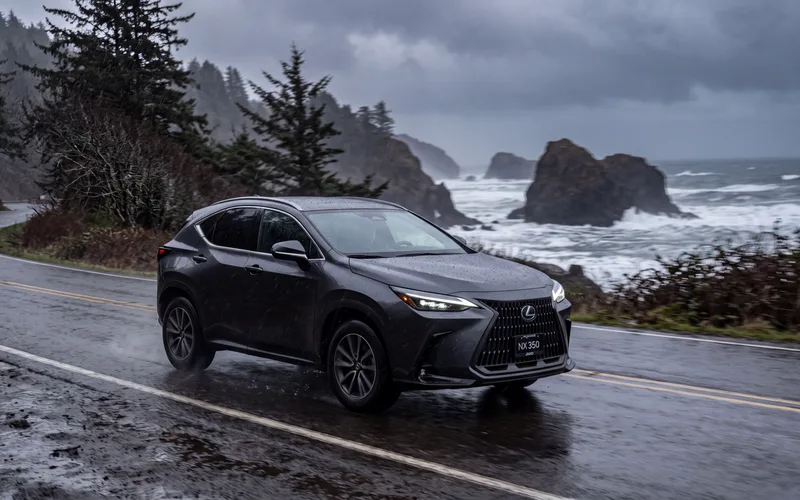 Lexus NXCompact Luxury SUVBetter at: Ownership cost
Far cheaper to run and repair, with hybrid efficiency on regular fuel instead of the X3's required 91 octane and $2,400-a-year EPA fuel estimate.
CompareHow it's evolved
10 scored model years · 2017–2026
Subject scores by year
Hover or tap a score to see what moved it versus the year before. A corner mark flags a big swing.
| Year | Performance | Efficiency | Safety | Space | Cost | Reliability | Tech | Use-case | Driving | Value |
|---|---|---|---|---|---|---|---|---|---|---|
| 2026 | 59 | 66 | 78 | 50 | 45 | 76 | 85 | 74 | 77 | 76 |
| 2025 | 57 | 66 | 71 | 48 | 36 | 59 | 83 | 61 | 73 | 77 |
| 2024 | 50 | 39 | 76 | 48 | 45 | 74 | 76 | 59 | 74 | 68 |
| 2023 | 51 | 41 | 77 | 46 | 44 | 73 | 77 | 56 | 74 | 71 |
| 2022 | 51 | 41 | 75 | 47 | 46 | 69 | 74 | 56 | 74 | 69 |
| 2021 | 53 | 46 | 71 | 47 | 45 | 65 | 66 | 56 | 74 | 66 |
| 2020 | 53 | 51 | 68 | 46 | 46 | 67 | 70 | 59 | 73 | 71 |
| 2019 | 52 | 47 | 67 | 46 | 47 | 63 | 58 | 58 | 73 | 70 |
| 2018 | 52 | 46 | 64 | 46 | 49 | 60 | 52 | 55 | 74 | 71 |
| 2017 | 46 | 41 | 51 | 45 | 48 | 66 | 45 | 54 | 68 | 65 |
Compare two years
Best fit & conditions
Higher scores mean a better fit for that use case. Learn more about use-case fit →
Subject profile
Trims & configurations
2 trimsScores above reflect the volume trim. Per-trim specs and scores are rolling out — the full lineup:
Academic Probation · NHTSA safety recalls
Aug 12, 2026Steering: linkages: knuckle: spindle: armThe steering spindle may have been incorrectly attached to the steering column.
Defect
BMW of North America, LLC (BMW) is recalling certain 2024-2026 X3 sDrive30i, X3 30 xDrive, and X3 M50 xDrive vehicles. The steering spindle may have been incorrectly attached to the steering column.
Risk
An incorrectly attached steering spindle can lead to a loss of steering control, increasing the risk of a crash.
Remedy
Dealers will inspect the steering connection and replace hardware or replace the spindle and column, as necessary, free of charge. Owner notification letters are expected to be mailed October 2, 2026. Owners may contact BMW customer service at 1-800-525-7417. Vehicle Identification Numbers (VINs) involved in this recall will become searchable on NHTSA.gov beginning October 2, 2026.
NHTSA campaign 26V524000 ↗13 vehicles potentially affected (all models in the campaign)Filed by BMW of North America, LLCFiled as X3Dec 11, 2025Steering: linkages: drag: power assist system · Steering: steering control moduleWhile the vehicle is stationary, unexpected steering wheel movement (rotation) may occur.
Defect
BMW of North America, LLC is recalling certain 2025-2026 X3 vehicles. While the vehicle is stationary, unexpected steering wheel movement (rotation) may occur.
Risk
Unintended steering wheel movement while the vehicle is stationary increases the risk of an injury and on the road, a crash.
Remedy
The steering system software will be updated, free of charge, either over-the-air (OTA) or by a dealer. Owner notification letters were mailed February 6, 2026. Owners may contact BMW customer service at 1-800-525-7417. Vehicle Identification Numbers (VINs) involved in this recall will be searchable on NHTSA.gov beginning February 2, 2026.
NHTSA campaign 25V857000 ↗36,922 vehicles potentially affected (all models in the campaign)Owners notified Feb 6, 2026Filed by BMW of North America, LLCFiled as X3Apr 16, 2025Service brakes, hydraulic: foundation components: discThe front brake discs may have been damaged during transport before they were installed on the vehicle.
Defect
BMW of North America, LLC (BMW) is recalling certain 2025 X3 30 xDrive vehicles. The front brake discs may have been damaged during transport before they were installed on the vehicle.
Risk
Damaged front brakes may not function properly, increasing the risk of a crash.
Remedy
Dealers will replace the front brake discs and brake pads, free of charge. Owner notification letters are expected to be mailed June 6, 2025. Owners may contact BMW customer service at 1-800-525-7417.
NHTSA campaign 25V247000 ↗26 vehicles potentially affected (all models in the campaign)Owners notified Jun 5, 2025Filed by BMW of North America, LLCFiled as X3Apr 1, 2025Electrical system: alternator/generator/regulator · Electrical system: starter assemblyThe electrical connection between the starter-generator and battery may come loose.
Defect
BMW of North America, LLC (BMW) is recalling certain 2025 330i, 330i xDrive, 530i, 530i xDrive, 4 Series Coupe (430i, 430i xDrive), 4 Series Convertible (430i, 430i xDrive), 4 Series Gran Coupe (430i, 430i xDrive) and X3 30 xDrive vehicles. The electrical connection between the starter-generator and battery may come loose.
Risk
A loose starter-generator connection can result in an engine stall, increasing the risk of a crash. In addition, the wiring may overheat, increasing the risk of a fire.
Remedy
Dealers will inspect and replace the starter-generator and positive battery cable as necessary, free of charge. Interim owner letters notifying owners of the safety risk were mailed May 28, 2025. Second letters will be sent once the remedy is available. Owners may contact BMW customer service at 1-800-525-7417.
NHTSA campaign 25V202000 ↗4,557 vehicles potentially affected (all models in the campaign)Owners notified Aug 8, 2025Filed by BMW of North America, LLCFiled as X3Mar 12, 2025Electronic stability control (esc) · Service brakes, hydraulic: antilock/traction control/electronic limited slip · Service brakes, hydraulic: foundation components: hoses, lines/piping, and fittingsThe rear brake hoses may leak, causing a loss of rear brake function, and a loss of the Antilock Brake System (ABS) and the Dynamic Stability Control (DSC) system.
Defect
BMW of North America, LLC (BMW) is recalling certain 2025 X3 30 xDrive and X3 M50 xDrive vehicles. The rear brake hoses may leak, causing a loss of rear brake function, and a loss of the Antilock Brake System (ABS) and the Dynamic Stability Control (DSC) system.
Risk
A loss of rear brake function increases the risk of a crash.
Remedy
Dealers will replace the rear brake hoses, free of charge. Owner notification letters were mailed May 9, 2025. Owners may contact BMW customer service at 800-525-7417.
NHTSA campaign 25V154000 ↗192 vehicles potentially affected (all models in the campaign)Owners notified May 9, 2025Filed by BMW of North America, LLCFiled as X3Feb 21, 2025Electrical system: 12v/24v/48v battery: cablesThe connection between the positive battery cable and the starter-generator may have been improperly tightened and overheat.
Defect
BMW of North America, LLC (BMW) is recalling certain 2025 X3 30 xDrive vehicles. The connection between the positive battery cable and the starter-generator may have been improperly tightened and overheat.
Risk
An overheated battery cable connection can cause an engine stall and increase the risk of a crash. In addition, an overheated battery cable increases the risk of a fire.
Remedy
Dealers will inspect and tighten the connection between the positive battery cable and the starter-generator, or replace the positive battery cable and starter-generator if necessary, free of charge. Owner notification letters were mailed June 5, 2025. Owners may contact BMW customer service at 800-525-7417.
NHTSA campaign 25V109000 ↗114 vehicles potentially affected (all models in the campaign)Owners notified Jun 5, 2025Filed by BMW of North America, LLCFiled as X3Dec 5, 2024Suspension: front: wheel bearingThe front wheel left-side swivel bearing may crack, causing a loss of vehicle handling and control.
Defect
BMW of North America, LLC (BMW) is recalling certain 2025 X3 30 vehicles. The front wheel left-side swivel bearing may crack, causing a loss of vehicle handling and control.
Risk
A loss of vehicle handling and control increases the risk of a crash.
Remedy
Dealers will replace the front left-side swivel bearing, free of charge. One owner was contacted December 12, 2024. Owners may contact BMW customer service at 1-800-525-7417.
NHTSA campaign 24V909000 ↗2 vehicles potentially affected (all models in the campaign)Owners notified Dec 12, 2024Filed by BMW of North America, LLCFiled as X3Nov 12, 2024Air bags: side/window: curtainThe gas generator in the right-side head curtain air bag may have been assembled incorrectly.
Defect
BMW of North America, LLC (BMW) is recalling certain 2025 X3 30 xDrive vehicles. The gas generator in the right-side head curtain air bag may have been assembled incorrectly.
Risk
An incorrectly assembled air bag can result in delayed activation or improper deployment of the head curtain air bag, increasing the risk of injury in a crash.
Remedy
Dealers will inspect and replace the right-side head curtain air bag, if necessary, free of charge. The vehicles have not been sold from dealer inventory and therefore no owner letters will be mailed. Owners may contact BMW customer service at 1-800-525-7417.
NHTSA campaign 24V856000 ↗2 vehicles potentially affected (all models in the campaign)Owners notified Nov 13, 2024Filed by BMW of North America, LLCFiled as X3Oct 17, 2024Air bags: passenger side frontal: cushionThe front passenger air bag fabric may have been damaged during transport between suppliers.
Defect
BMW of North America, LLC (BMW) is recalling certain 2025 X3 xDrive30i and X3 M50i vehicles. The front passenger air bag fabric may have been damaged during transport between suppliers.
Risk
A damaged air bag may not inflate properly, increasing the risk of injury in a crash.
Remedy
Dealers will replace the front passenger air bag, free of charge. None of the affected vehicles have been sold yet and therefore no owner notification letters will be mailed. Owners may contact BMW customer service at 1-800-525-7417.
NHTSA campaign 24V772000 ↗7 vehicles potentially affected (all models in the campaign)Owners notified Oct 31, 2024Filed by BMW of North America, LLCFiled as X3
37 recalls on other model years of the X3 (2017–2024)
Jan 30, 2026Electrical system: starter assemblyPlease see the recall report for a complete list of all models. The engine starter may overheat and catch fire due to wear on an internal component.
Defect
BMW of North America, LLC (BMW) is recalling certain 2021-2023 Toyota Supra, 2022-2023 2 Series Coupe, 2021-2024 5 Series (xDrive), 2021-2022 Z4, 2022-2024 4 Series (Gran Coupe), 2021-2024 4 Series (Convertible and xDrive Convertible), 2021-2023 4 Series (Coupe), 2021-2024 3 Series, 2021-2023 X4, 2021-2024 X3 vehicles. Please see the recall report for a complete list of all models. The engine starter may overheat and catch fire due to wear on an internal component.
Risk
Fire increases the risk of injury.
Remedy
Dealers will replace the engine starter, free of charge. Owner notification letters were mailed July 21, 2026. Owners may contact BMW customer service at 1-800-525-7417 or Toyota's customer service at 1-800-331-4331. Vehicle Identification Numbers (VINs) involved in this recall will be searchable on NHTSA.gov beginning March 24, 2026.
NHTSA campaign 26V056000 ↗87,394 vehicles potentially affected (all models in the campaign)Owners notified Mar 27, 2026Filed by BMW of North America, LLCFiled as X3Sep 23, 2025Electrical system: starter assembly: relayThe engine starter relay may corrode, causing the relay to overheat and short circuit.
Defect
BMW of North America, LLC (BMW) is recalling certain 2019-2021 BMW 330i, 2019-2022 BMW Z4, 2020-2022 BMW 530i, X3, X4, Toyota Supra, 2021-2022 BMW 430i, 430i Convertible, and 2022 BMW 230i vehicles. The engine starter relay may corrode, causing the relay to overheat and short circuit.
Risk
A short circuit in the starter relay may increase the risk of a fire.
Remedy
Owners are advised to park their vehicles outside and away from structures until the remedy is complete. Dealers will replace the engine starter, free of charge. Owner notification letters were mailed February 6, 2026. Owners may contact BMW customer service at 1-800-525-7417. Vehicle Identification Numbers (VINs) involved in this recall became searchable on NHTSA.gov November 14, 2025.
NHTSA campaign 25V636000 ↗199,674 vehicles potentially affected (all models in the campaign)Owners notified Feb 6, 2026Filed by BMW of North America, LLCFiled as X3Feb 20, 2025Latches/locks/linkages: doors: lockThe second-row seat side door locking modules may not function properly and allow the doors to be unlocked with a single motion. As such, these vehicles fail to comply with the requirements of Federal Motor Vehicle Safety Standard (FMVSS) number 206, "Door Locks and Door Retention Components."
Defect
BMW of North America, LLC (BMW) is recalling certain 2022-2024 X3 sDrive30i and X3 xDrive30i vehicles. The second-row seat side door locking modules may not function properly and allow the doors to be unlocked with a single motion. As such, these vehicles fail to comply with the requirements of Federal Motor Vehicle Safety Standard (FMVSS) number 206, "Door Locks and Door Retention Components."
Risk
Doors that can be inadvertently unlocked and unlatched may open unexpectedly, increasing the risk of injury to rear seat occupants.
Remedy
Dealers will replace the second-row seat side door locking modules, free of charge. A letter informing owners of the safety risk was mailed on April 21, 2025. Owners may contact BMW customer service at 800-525-7417.
NHTSA campaign 25V106000 ↗40,736 vehicles potentially affected (all models in the campaign)Owners notified Jun 13, 2025Filed by BMW of North America, LLCFiled as X3Oct 15, 2024StructureThe attachment for the rear cargo rail may become damaged in a rear crash and result in the cargo rail detaching.
Defect
BMW of North America, LLC (BMW) is recalling certain 2018-2022 X3 sDrive30i, X3 xDrive30i, X3 M40i, and X3 M vehicles. The attachment for the rear cargo rail may become damaged in a rear crash and result in the cargo rail detaching.
Risk
Interior rear cargo rail detachment during a crash can increase the risk of injury.
Remedy
Dealers will replace the rear cargo rail attachment bolts, free of charge. Owner notification letters were mailed December 12, 2024. Owners may contact BMW customer service at 1-800-525-7417. Vehicles in this recall were previously remedied for this issue under recall number 24V-534 and will need to have the new repair completed.
NHTSA campaign 24V764000 ↗8,725 vehicles potentially affected (all models in the campaign)Owners notified Dec 12, 2024Filed by BMW of North America, LLCFiled as X3Aug 13, 2024Electrical system: wiring: connectors/plugs/receptacles · Engine and engine cooling: cooling system: pumpAn improperly sealed electrical connector on the water pump may be exposed to water and short circuit.
Defect
BMW of North America, LLC. (BMW) is recalling certain 2012-2015 X1 sDrive28i, X1 xDrive28i, 2012-2016 Z4 sDrive28i, 528i, 528i xDrive, 328i, 328xi, 2016-2018 X5 xdrive 40e, 2014-2016 228i, 228xi, 428i, 428i xDrive, 328xi Gran Turismo, 2013-2017 X3 sDrive28i, X3 xDrive28i, 2015-2018 X4 xDrive28i, 2015-2016 428xi vehicles. An improperly sealed electrical connector on the water pump may be exposed to water and short circuit.
Risk
An electrical short increases the risk of a fire.
Remedy
Dealers will inspect and replace the water pump and plug connector as necessary, and install a protective shield, free of charge. Owner notification letters were mailed on March 28, 2025. Owners may contact BMW customer service at 1-800-525-7417.
NHTSA campaign 24V608000 ↗720,796 vehicles potentially affected (all models in the campaign)Owners notified Mar 28, 2025Filed by BMW of North America, LLCFiled as X3Jul 17, 2024StructureThe attachment for the interior cargo rail may become damaged in a rear crash and result in the cargo rail detaching.
Defect
BMW of North America, LLC (BMW) is recalling certain 2018-2023 X3 sDrive30i, X3 xDrive30i, X3 M40i, and X3 M vehicles. The attachment for the interior cargo rail may become damaged in a rear crash and result in the cargo rail detaching.
Risk
Interior cargo rail detachment during a rear crash can increase the risk of injury.
Remedy
Dealers will replace the rear cargo rail attachment bolts, free of charge. Owner notification letters were mailed January 2, 2024. Owners may contact BMW customer service at 1-800-525-7417.
NHTSA campaign 24V534000 ↗282,387 vehicles potentially affected (all models in the campaign)Owners notified Jan 2, 2025Filed by BMW of North America, LLCFiled as X3Dec 6, 2023Power train: automatic transmission: control module (tcm/pcm/tecm)The weld seam of the integrated transmission control unit's cover may not have been manufactured properly, which could allow automatic transmission oil to leak into the transmission control unit.
Defect
BMW of North America, LLC (BMW) is recalling certain 2023 Toyota GR Supra, 3 Series Sedan (330i xDrive, M340i xDrive, M3), 5 Series Sedan (530i, 530i xDrive, M5), 4 Series Gran Coupe (430i, 430i xDrive), 4 Series Coupe (430i, 430i xDrive, M440i xDrive), 4 Series Convertible (430i, 430i xDrive, M440i xDrive), 8 Series Coupe (840i, M850i xDrive, M8), 8 Series Convertible (840i, M850i xDrive, M8), 8 Series Gran Coupe (850i xDrive, M8), X3 SAV (X3 xDrive30i, X3M), X4 SAV (X4 xDrive30i), X5 SAV (X5 xDrive40i, X5 M50i, X5M), X6 SAV (X6 xDrive40i, X6 M50i, X6M), and Z4 sDrive30i, Z4 M40i vehicles. The weld seam of the integrated transmission control unit's cover may not have been manufactured properly, which could allow automatic transmission oil to leak into the transmission control unit.
Risk
Transmission oil that leaks into the control unit can lead to a seizure of the transmission gears, causing a sudden loss of drive power and increasing the risk of a crash.
Remedy
Dealers will replace the transmission mechatronics module and the automatic transmission fluid, as necessary, free of charge. Owner notification letters were mailed January 26, 2024. Owners may contact BMW customer service at 1-800-525-7417.
NHTSA campaign 23V821000 ↗Manufacturer no. Toyota - 23TA14552 vehicles potentially affected (all models in the campaign)Owners notified Jan 26, 2024Filed by BMW of North America, LLCFiled as X3Nov 16, 2023SteeringThe steering gear may not have been tightened properly, which can allow it to loosen.
Defect
BMW of North America, LLC (BMW) is recalling certain 2024 2 Series Coupe (230i), 330i, X3 sDrive30i, X3 xDrive30i, X3 M40i, and X4 xDrive30i, X4 M40i vehicles. The steering gear may not have been tightened properly, which can allow it to loosen.
Risk
A loose steering gear can cause a loss of vehicle control, increasing the risk of a crash.
Remedy
Dealers will replace the steering gear, free of charge. Owner notification letters were mailed January 11, 2024. Owners may contact BMW customer service at 1-800-525-7417.
NHTSA campaign 23V770000 ↗201 vehicles potentially affected (all models in the campaign)Owners notified Jan 11, 2024Filed by BMW of North America, LLCFiled as X3Mar 29, 2023SeatsThe seat frame may not have been welded properly to the seat rails.
Defect
BMW of North America, LLC (BMW) is recalling certain 2019-2021 330i, 330i xDrive, M340i xDrive, 2020-2021 X3 sDrive30i, X3 xDrive30i, X3 M40i, X3M, 2021 X3 xDrive30e, X4 xDrive30i, and X4M vehicles. The seat frame may not have been welded properly to the seat rails.
Risk
An improperly welded seat frame may not properly restrain the occupant during a crash, increasing the risk of injury.
Remedy
Dealers will replace the seat frame and back rest, free of charge. Owner notification letters were mailed May 22, 2023. Owners may contact BMW customer service at 1-800-525-7417.
NHTSA campaign 23V211000 ↗51 vehicles potentially affected (all models in the campaign)Owners notified May 22, 2023Filed by BMW of North America, LLCFiled as X3Jul 20, 2022Fuel system, gasoline: fuel injection system: fuel railThe high-pressure fuel rail may crack and result in a fuel leak within the engine compartment.
Defect
BMW of North America, LLC (BMW) is recalling certain 2022 X1 xDrive 28i, X3 xDrive30i, and 228i Gran Coupe vehicles. The high-pressure fuel rail may crack and result in a fuel leak within the engine compartment.
Risk
A fuel leak in the presence of an ignition source increases the risk of a fire.
Remedy
Dealers will replace the high-pressure fuel rail, free of charge. Owner notification letters were mailed September 19, 2022. Owners may contact BMW customer service at 1-800-525-7417.
NHTSA campaign 22V513000 ↗5 vehicles potentially affected (all models in the campaign)Owners notified Sep 19, 2022Filed by BMW of North America, LLCFiled as X3Feb 9, 2022Power train: automatic transmissionThe mechatronics unit inside the transmission may not have been assembled properly, which could result in an internal leak.
Defect
BMW of North America, LLC (BMW) is recalling certain 2022 330i, 530i, X3 xDrive30i, and X4 xDrive30i vehicles. The mechatronics unit inside the transmission may not have been assembled properly, which could result in an internal leak.
Risk
An internal transmission leak can result in a vehicle rollaway, increasing the risk of a crash or injury.
Remedy
Dealers will replace the transmission mechatronics unit, free of charge. All of the vehicle population for this recall have been repaired. Owner notification letters were not mailed. Owners may contact BMW customer service at 1-800-525-7417.
NHTSA campaign 22V070000 ↗4 vehicles potentially affected (all models in the campaign)Owners notified Apr 4, 2022Filed by BMW of North America, LLCFiled as X3Nov 19, 2021Fuel system, dieselThe EGR cooler may leak internally, causing coolant to mix with diesel engine soot, which could result in smoldering particles and a melting intake manifold.
Defect
BMW of North America, LLC (BMW) is recalling certain 2013-2018 328d, 328d xDrive, 2014-2018 328d Sports Wagon, 328d xDrive Sports Wagon, 2014-2016 535d, 535d xDrive, 2015 740Ld xDrive, 2015-2017 X3 xDrive28d SAV, and 2014-2017 X5 xDrive35d SAV diesel vehicles equipped with an Exhaust Gas Recirculation (EGR) module with an integrated cooler. The EGR cooler may leak internally, causing coolant to mix with diesel engine soot, which could result in smoldering particles and a melting intake manifold.
Risk
A melting intake manifold increases the risk of a fire.
Remedy
Dealers will replace the EGR cooler and inspect the intake manifold, replacing it as necessary, free of charge. This recall includes all vehicles previously recalled under 18V-755. Vehicles previously recalled under 18V-755 will need to have the new remedy performed for this recall. An interim owner notification letter was mailed on January 18, 2022. The remedy is expected to be available in June 2022. Owner notification letters were mailed on July 6, 2022. Owners may contact BMW customer service at 1-800-525-7417.
NHTSA campaign 21V907000 ↗50,404 vehicles potentially affected (all models in the campaign)Owners notified Jul 6, 2022Filed by BMW of North America, LLCFiled as X3Aug 2, 2021EngineDuring engine start, the engine management software may cause loss of braking assist. Full mechanical braking (without assist) remains available.
Defect
BMW of North America, LLC (BMW) is recalling certain 2020 M340i, M340i xDrive, 540i, 540i xDrive, X3 M40i, 2020-2021 X4 M40i, 745Le xDrive, 2019-2021 Z4 M40i, and 2020-2021 Toyota Supra vehicles. During engine start, the engine management software may cause loss of braking assist. Full mechanical braking (without assist) remains available.
Risk
Loss of braking assist can increase the risk of a crash.
Remedy
Dealers will update the engine management software, free of charge. Owner notification letters were mailed on September 17, 2021. Owners may contact BMW customer service at 1-800-525-7417.
NHTSA campaign 21V598000 ↗50,024 vehicles potentially affected (all models in the campaign)Owners notified Sep 17, 2021Filed by BMW of North America, LLCFiled as X3Jul 29, 2021Fuel system, diesel: delivery: fuel pumpThe high-pressure fuel pump may fail.
Defect
BMW of North America, LLC (BMW) is recalling certain 2014-2018 328d, 328d xDrive, X5 xDrive35d, 2014-2016 535d, 535d xDrive, 2015 740Ld xDrive, and 2015-2017 X3 xDrive28d vehicles. The high-pressure fuel pump may fail.
Risk
Fuel pump failure can cause an engine stall while driving, increasing the risk of a crash.
Remedy
Dealers will replace the high-pressure fuel pump, free of charge. Owner notification letters were mailed on January 14, 2022. Owners may contact BMW customer service at 1-800-525-7417.
NHTSA campaign 21V586000 ↗11,216 vehicles potentially affected (all models in the campaign)Owners notified Jan 14, 2022Filed by BMW of North America, LLCFiled as X3Jul 8, 2021Air bags: frontal · Air bags: sensor: occupant classification: front passengerThe front passenger seat occupant classification system may have been improperly assembled, which could result in the misclassification of the seat as unoccupied, and deactivate the front air bag.
Defect
BMW of North America, LLC (BMW) is recalling certain 2018-2019 X3 sDrive30i, X3 xDrive30i, X3 M40i and 2019 X4 xDrive30i, and X4 M40i vehicles. The front passenger seat occupant classification system may have been improperly assembled, which could result in the misclassification of the seat as unoccupied, and deactivate the front air bag.
Risk
A deactivated front air bag will not deploy in the event of a crash, increasing the risk of injury.
Remedy
Dealers will replace the seat foam, which includes the occupant classification system, free of charge. Owner notification letters were mailed on September 3, 2021. Owners may contact BMW customer service at 1-800-525-7417.
NHTSA campaign 21V521000 ↗138 vehicles potentially affected (all models in the campaign)Owners notified Sep 3, 2021Filed by BMW of North America, LLCFiled as X3Mar 24, 2021Fuel system, gasoline: storage: tank assemblyThe inlet check valve weld may fail, allowing the filling pipe to separate from the fuel tank.
Defect
BMW of North America, LLC (BMW) is recalling certain 2021 X3 sDrive30i, X3 xDrive30i, X3 M40i, X3M, and X4, and 2021 X4 xDrive30i vehicles. The inlet check valve weld may fail, allowing the filling pipe to separate from the fuel tank.
Risk
Fuel may leak through the failed weld, increasing the risk of a fire.
Remedy
BMW will notify owners, and dealers will replace the fuel tank, free of charge. The recall is scheduled to begin May 17, 2021. Owners were also contacted by telephone. To date, all repairs have been done. No further owner notification letters will be sent. Owners may contact BMW customer service at 1-800-525-7417.
NHTSA campaign 21V199000 ↗17 vehicles potentially affected (all models in the campaign)Owners notified May 10, 2021Filed by BMW of North America, LLCFiled as X3Feb 19, 2021Back over prevention: sensing system: camera · Back over prevention: softwareWhen shifting into Reverse, a small portion of the rearview image may be obscured, or the screen may not illuminate. As such, these vehicles fail to comply with the requirements of Federal Motor Vehicle Safety Standard (FMVSS) number 111, "Rear Visibility."
Defect
BMW of North America, LLC (BMW) is recalling certain 2019-2021 X3 sDrive30i, X3 xDrive30i, X3 M40i, X3M, X4 xDrive30i, X4 M40i, M550i, X4M, X5 sDrive40i, X5 xDrive40i, X5 xDrive50i, X5M, X5 M50i, X7 xDrive40i, X7 xDrive50i, X7 M50i, Alpina XB7, 330i, 330i xDrive, M340i, M340i xDrive, and 8 Series Coupe, Convertible and Grand Coupe, 840i, 840i xDrive, M850i xDrive, M8, 2020-2021 530e, 530e xDrive, 330e, 330e xDrive, 745Le, 745Le xDrive, X5 xDrive45e, X3 xDrive30e, X6 sDrive40i, X6 xDrive40i, X6 xDrive50i, X6 M50i, X6M, 530i, 530i xDrive, 540i, 540i xDrive, M550i xDrive, M5, 740i, 740Li, 740Li xDrive, M760i Drive, M760Li xDrive, 750Li xDrive Alpina, Alpina B7 xDrive, and 2021 4 Series Coupe 430i, 430i xDrive, M440i xDrive vehicles. When shifting into Reverse, a small portion of the rearview image may be obscured, or the screen may not illuminate. As such, these vehicles fail to comply with the requirements of Federal Motor Vehicle Safety Standard (FMVSS) number 111, "Rear Visibility."
Risk
If the driver relies on only the rearview camera image, the missing or reduced rearview image view can increase the risk of a crash or injury.
Remedy
BMW will notify owners, and dealers will inspect the rearview camera software and update it if necessary, free of charge. The recall began April 16, 2021. Owners may contact BMW customer service at 1-800-525-7417.
NHTSA campaign 21V096000 ↗13,858 vehicles potentially affected (all models in the campaign)Owners notified Apr 16, 2021Filed by BMW of North America, LLCFiled as X3Sep 30, 2020Electrical system: propulsion system: traction batteryDebris may have entered one or more of the hybrid battery cells during their production.
Defect
BMW of North America, LLC (BMW) is recalling certain 2020-2021 530e, 530e xDrive, 530e iPerformance and X3 xDrive30e and MINI Cooper Countryman All4 SE, 2020 BMW i8, and 2021 330e, 330e xDrive, 745Le xDrive and X5 xDrive45e vehicles. Debris may have entered one or more of the hybrid battery cells during their production.
Risk
The debris could result in a short-circuit, increasing the risk of fire or injury.
Remedy
BMW will inspect and, if necessary, replace the battery module free of charge. The remedy is currently being developed. Until the remedy is completed, drivers are instructed to not charge their vehicles. Drivers are instructed to not drive in manual mode, sport mode, and to not use the shift paddles. Owners were notified of the safety risk October 23, 2020. The recall began November 24, 2020. Owners may contact BMW customer service at 1-800-525-7417.
NHTSA campaign 20V601000 ↗4,509 vehicles potentially affected (all models in the campaign)Owners notified Nov 24, 2020Filed by BMW of North America, LLCFiled as X3Sep 30, 2020Back over prevention: sensing system: cameraA small portion of the rearview image may be slightly obscured. As such, these vehicles fail to comply with the requirements of Federal Motor Vehicle Safety Standard number 111, "Rear Visibility."
Defect
BMW of North America, LLC (BMW) is recalling certain 2020-2021 X3 sDrive 30i, X3 xDrive 30i, X3M 40i, X3 xDrive 30e, X4 xDrive 30i, X4M 40i, 530i, 540i, 540i xDrive, M550i xDrive, M5, 550e, 550e xDrive, and 550e iPerformance vehicles. A small portion of the rearview image may be slightly obscured. As such, these vehicles fail to comply with the requirements of Federal Motor Vehicle Safety Standard number 111, "Rear Visibility."
Risk
If the driver relies on only the rearview camera image, the reduced rearview image view can increase the risk of a crash or injury.
Remedy
BMW will notify owners, and dealers will inspect and, if necessary, program the rearview camera with updated software. The recall began November 18, 2020. Owners may contact BMW customer service at 1-800-525-7417.
NHTSA campaign 20V598000 ↗312 vehicles potentially affected (all models in the campaign)Owners notified Nov 18, 2020Filed by BMW of North America, LLCFiled as X3Aug 18, 2020Electrical system: 12v/24v/48v battery · Electrical system: propulsion system: traction batteryLoose welding beads may form a conductive path between the hybrid battery cells which could lead to a short-circuit.
Defect
BMW of North America, LLC (BMW) is recalling certain 2021 330e and X5 xDrive45e, 2020-2021 X3 xDrive30e, and 2020 MINI Countryman SE ALL4 vehicles. Loose welding beads may form a conductive path between the hybrid battery cells which could lead to a short-circuit.
Risk
A short-circuited hybrid battery may increase the risk of a fire.
Remedy
BMW will notify owners, and dealers will inspect and, if necessary, replace the battery modules, free of charge. BMW issued owners an interim notification on October 16, 2020. Although potentially affected BMW owners received interim owner notification letters, all potentially affected BMW owner vehicles have been remedied; therefore, BMW Final owner notification letters will not be necessary. Owners may contact BMW customer service at 1-800-525-7417.
NHTSA campaign 20V490000 ↗713 vehicles potentially affected (all models in the campaign)Owners notified Oct 12, 2020Filed by BMW of North America, LLCFiled as X3Jul 29, 2020Back over prevention: sensing system: camera · Electrical system: softwareThese vehicles were not programmed with rearview camera software during assembly, therefore, when the transmission is shifted to reverse, a rearview image is not displayed. As such, these vehicles fail to comply with the requirements of Federal Motor Vehicle Safety Standard number 111, "Rearview Mirrors."
Defect
BMW of North America, LLC (BMW) is recalling certain 2020 X3 sDrive40i, X3 xDrive40i and X3M40i vehicles. These vehicles were not programmed with rearview camera software during assembly, therefore, when the transmission is shifted to reverse, a rearview image is not displayed. As such, these vehicles fail to comply with the requirements of Federal Motor Vehicle Safety Standard number 111, "Rearview Mirrors."
Risk
An inoperative rearview camera display can increase the risk of a crash when reversing.
Remedy
BMW will notify owners, and dealers will program the affected vehicles with rearview camera software, free of charge. The recall began August 14, 2020. All vehicles have been remedied as of November 9, 2020. Owners may contact BMW customer service at 1-800-525-7417.
NHTSA campaign 20V443000 ↗5 vehicles potentially affected (all models in the campaign)Owners notified Aug 14, 2020Filed by BMW of North America, LLCFiled as X3Jun 15, 2020Steering: linkages: tie rod assemblyIn certain driving conditions, such as high temperatures and rough road surfaces, a steering gear tie rod may become damaged, possibly resulting in a fractured tie rod.
Defect
BMW of North America, LLC (BMW) is recalling certain 2019 Z4 sDrive30i, 2019-2020 330i xDrive, M340i and M340i xDrive, 2020 X3M and X4M, and Toyota Supra vehicles. In certain driving conditions, such as high temperatures and rough road surfaces, a steering gear tie rod may become damaged, possibly resulting in a fractured tie rod.
Risk
A damaged or fractured tie rod may affect vehicle handling and control, increasing the risk of a crash.
Remedy
BMW and Toyota will notify owners, and dealers will replace the steering gear tie rods, free of charge. The recall began August 14, 2020. Owners may contact BMW customer service at 1-800-525-7417 or Toyota customer service at 1-888-270-9371.
NHTSA campaign 20V355000 ↗Manufacturer no. Toyota: 20TA092,779 vehicles potentially affected (all models in the campaign)Owners notified Aug 14, 2020Filed by BMW of North America, LLCFiled as X3Mar 19, 2020Air bags · Seat belts: front: buckle assembly · Seat belts: front: warning light/devices · Seat belts: pretensionerThe sensors in the front seat belt buckles may inaccurately detect a belted occupant as unbelted, possibly causing the air bag and seat belt pretensioners to deploy improperly in the event of a crash.
Defect
BMW of North America, LLC (BMW) is recalling certain 2020 X3 xDrive30e, X4 xDrive30i, X4 M40i, X4M, 330i, 330i xDrive, M340i, 840i Gran Coupe, 840i xDrive Gran Coupe, M850i xDrive Gran Coupe, M8 Gran Coupe, X3 sDrive30i, X3 xDrive30i, X3 M40i, X3M, and 840i xDrive Convertible vehicles. The sensors in the front seat belt buckles may inaccurately detect a belted occupant as unbelted, possibly causing the air bag and seat belt pretensioners to deploy improperly in the event of a crash.
Risk
If the air bag and/or seat belt pretensioners deploy improperly in the event of a crash, there is an increased risk of injury to the driver and front passenger.
Remedy
BMW will notify owners, and dealers will inspect and replace the front seat belt buckles, as necessary, free of charge. The recall began May 18, 2020. Owners may contact BMW customer service at 1-800-525-7417.
NHTSA campaign 20V164000 ↗3,316 vehicles potentially affected (all models in the campaign)Owners notified May 18, 2020Filed by BMW of North America, LLCFiled as X3Mar 18, 2020Air bags: frontal: passenger side: inflator module · Electrical system: instrument cluster/panelThe instrument panel casing may not have been tightened properly to the passenger air bag.
Defect
BMW of North America, LLC (BMW) is recalling certain 2019-2020 X4 xDrive30i and X4 M40i, and 2018-2020 X3 sDrive30i, X3 xDrive30i, X3 M40i, and X3M vehicles. The instrument panel casing may not have been tightened properly to the passenger air bag.
Risk
In the event of a crash necessitating air bag deployment, the air bag could damage the instrument panel and cause small pieces of the panel to strike the driver or other occupants, increasing the risk of injury.
Remedy
BMW will notify owners, and dealers will replace the instrument panel casing, free of charge. The recall began May 15, 2020. Owners may contact BMW customer service at 1-800-525-7417.
NHTSA campaign 20V152000 ↗15 vehicles potentially affected (all models in the campaign)Owners notified May 15, 2020Filed by BMW of North America, LLCFiled as X3Oct 16, 2019Steering: rack and pinion: pinion shaftThe steering rack pinion teeth may break under load, resulting in a loss of steering control.
Defect
BMW of North America, LLC (BMW) is recalling certain 2020 BMW X3 M40i and X4 M40i vehicles. The steering rack pinion teeth may break under load, resulting in a loss of steering control.
Risk
A loss of steering control increases risk of a crash.
Remedy
BMW has notified owners, and dealers will replace the steering gear, free of charge. The recall began October 9, 2019. Owners may contact BMW customer service at 1-800-525-7417.
NHTSA campaign 19V738000 ↗20 vehicles potentially affected (all models in the campaign)Owners notified Oct 9, 2019Filed by BMW of North America, LLCFiled as X3Sep 27, 2019Back over prevention: sensing system: cameraThe back-up camera and display settings can be adjusted such that the rear view image is no longer visible and the system will retain that setting the next time the vehicle is placed in reverse. As such, these vehicles fail to comply with the requirements of Federal Motor Vehicle Safety Standard (FMVSS) number 111, "Rearview Mirrors."
Defect
BMW of North America, LLC (BMW) is recalling certain 2018 540d, 2018-2020 530i, 530i xDrive, 540i, 540i xDrive, M550i xDrive, M5, 530e, 530e xDrive, X3 sDrive, X3 xDrive, X3 M40i, X3 M, and 2019-2020 X4 xDrive, X4 M40i, X4 M, X7 xDrive, X7 M50i, 740Li, 740Li xDrive, 750Li, 750Li xDrive, 8 Series Convertible and Coupe 840i, 840i xDrive, M850i xDrive, X5 sDrive, X5 xDrive, X5 M50i, X6 xDrive, X6 M50i, 330i, 330i xDrive, M340i, M340i xDrive, Z4 sDrive, Z4 M40i, 740Le xDrive and 745Le xDrive, 2018-2019 640i xDrive Gran Turismo and Rolls-Royce Phantom, 2019 M850i xDrive Gran Coupe and Rolls-Royce Cullinan and 2020 Toyota Supra vehicles. The back-up camera and display settings can be adjusted such that the rear view image is no longer visible and the system will retain that setting the next time the vehicle is placed in reverse. As such, these vehicles fail to comply with the requirements of Federal Motor Vehicle Safety Standard (FMVSS) number 111, "Rearview Mirrors."
Risk
The lack of an image in the back-up camera display increases the risk of a crash.
Remedy
BMW will notify owners, and dealers will update the back-up camera software, free of charge. The recall began November 8, 2019. Owners may contact BMW customer service at 1-800-525-7417 or Rolls-Royce at 1-877-877-3735. Toyota owners may contact Toyota customer service at 1-888-270-9371.
NHTSA campaign 19V684000 ↗257,473 vehicles potentially affected (all models in the campaign)Owners notified Nov 8, 2019Filed by BMW of North America, LLCFiled as X3Sep 25, 2019Steering · Suspension: frontThe front axle swivel bearings may not have been properly heat treated during manufacturing, reducing their strength and possibly causing them to break.
Defect
BMW of North America, LLC (BMW) is recalling certain 2020 X3 sDrive30i, X3 xDrive30i, and X3 M40i vehicles, X4 xDrive30i, and X4 M40i vehicles. The front axle swivel bearings may not have been properly heat treated during manufacturing, reducing their strength and possibly causing them to break.
Risk
Broken swivel bearings can cause a loss of vehicle control, increasing the risk of a crash.
Remedy
BMW has notified owners and instructed them to not drive their vehicles. Dealers will replace the front axle swivel bearings, free of charge. Owners may contact BMW customer service at 1-800-525-7417.
NHTSA campaign 19V678000 ↗368 vehicles potentially affected (all models in the campaign)Owners notified Sep 19, 2019Filed by BMW of North America, LLCFiled as X3Jul 31, 2019SeatsThe front seatback frames may have been improperly welded, allowing the seatback to unexpectedly fold forward or rearward.
Defect
BMW of North America, LLC (BMW) is recalling certain 2018-2019 X3 sDrive30i, xDrive30i and M40i and 2019 X4 xDrive30i and M40i vehicles. The front seatback frames may have been improperly welded, allowing the seatback to unexpectedly fold forward or rearward.
Risk
In the event of a crash, there is an increased risk of injury if the seatback folds forward or rearward.
Remedy
BMW will notify owners, and dealers will replace the front seats, free of charge. The recall began September 27, 2019. Owners may contact BMW customer service 1-800-525-7417.
NHTSA campaign 19V563000 ↗20 vehicles potentially affected (all models in the campaign)Owners notified Sep 27, 2019Filed by BMW of North America, LLCFiled as X3Apr 10, 2019Air bags: frontal: passenger side: inflator module · Electrical system: instrument cluster/panelThe instrument panel assembly may have been improperly manufactured, possibly affecting the deployment of the passenger's frontal air bag.
Defect
BMW of North America, LLC (BMW) is recalling certain 2019 X3 sDrive30i, X3 xDrive30i, X3 M40i, and X4 M40i vehicles. The instrument panel assembly may have been improperly manufactured, possibly affecting the deployment of the passenger's frontal air bag.
Risk
If the front passenger air bag does not deploy properly in the event of a crash, the occupant has an increased risk of injury.
Remedy
BMW will notify owners, and dealers will replace the instrument panel assembly, free of charge. The recall began June 3, 2019. Owners may contact BMW customer service at 1-800-525-7417.
NHTSA campaign 19V291000 ↗50 vehicles potentially affected (all models in the campaign)Owners notified Jun 3, 2019Filed by BMW of North America, LLCFiled as X3Oct 25, 2018Engine and engine cooling: exhaust system: emission control: gas recirculation valve (egr valve)If the EGR cooler leaks internally, the coolant can mix with diesel engine soot. The high EGR temperatures may result in these particles possibly smoldering and melting the intake manifold.
Defect
BMW of North America, LLC (BMW) is recalling certain 2013-2018 BMW 328d and 328d xDrive, 2014-2018 328d Sports Wagon and 328d xDrive Sports Wagon, 2014-2016 535d and 535d xDrive, 2015 740Ld xDrive, 2015-2017 X3 xDrive28d SAV and 2014-2017 X5 xDrive35d SAV vehicles equipped with an Exhaust Gas Recirculation (EGR) module with an integrated cooler. If the EGR cooler leaks internally, the coolant can mix with diesel engine soot. The high EGR temperatures may result in these particles possibly smoldering and melting the intake manifold.
Risk
The melting intake manifold can increase the risk of a fire.
Remedy
BMW will notify owners, and dealers will inspect and replace the EGR cooler as necessary. If a leak has already occurred, the engine intake manifold will also be replaced. These repairs will be made free of charge. The recall began May 13, 2019. Owners may contact BMW customer service at 1-800-525-7417.
NHTSA campaign 18V755000 ↗44,368 vehicles potentially affected (all models in the campaign)Owners notified May 13, 2019Filed by BMW of North America, LLCFiled as X3Jul 6, 2018Service brakes, hydraulic: foundation components: disc: caliperThe rear brake caliper pistons on these vehicles may have an insufficient coating, potentially reducing rear brake performance.
Defect
BMW of North America, LLC (BMW) is recalling certain 2018-2019 BMW X3 sDrive30i, X3 xDrive30i, X3 M40i and certain 2019 X4 xDrive30i and X4 M40i vehicles. The rear brake caliper pistons on these vehicles may have an insufficient coating, potentially reducing rear brake performance.
Risk
A reduction of braking performance can increase the risk of a crash.
Remedy
BMW will notify owners, and dealers will bleed the rear brake circuit, free of charge. The recall began August 31, 2018. Owners may contact BMW customer service at 1-800-525-7417.
NHTSA campaign 18V453000 ↗5,594 vehicles potentially affected (all models in the campaign)Owners notified Aug 31, 2018Filed by BMW of North America, LLCFiled as X3Jun 21, 2018Exterior lighting: turn signalThe rear turn signals on the outboard side panel will illuminate red, while the inboard turn signals simultaneously illuminate amber. As such, these vehicles fail to comply with the requirements of Federal Motor Vehicle Safety Standard (FMVSS) number 108, "Lamps, Reflective Devices, and Associated Equipment."
Defect
BMW of North America, LLC (BMW) is recalling certain 2018 BMW X3 xDrive30i and X3 M40i vehicles. The rear turn signals on the outboard side panel will illuminate red, while the inboard turn signals simultaneously illuminate amber. As such, these vehicles fail to comply with the requirements of Federal Motor Vehicle Safety Standard (FMVSS) number 108, "Lamps, Reflective Devices, and Associated Equipment."
Risk
Turn signals that flash multiple colors may confuse other drivers, increasing the risk of a crash.
Remedy
BMW will notify owners, and dealers will inspect the rear turn signal lights, and replace if necessary, free of charge. The recall began August 20, 2018. Owners may contact BMW customer service at 1-800-525-7417.
NHTSA campaign 18V431000 ↗5 vehicles potentially affected (all models in the campaign)Owners notified Aug 20, 2018Filed by BMW of North America, LLCFiled as X3Jun 6, 2018Lane departure: lane keep: steering assistThe steering wheel may be incompatible with the lane keeping assistant function and may not detect if the driver's hands are off the wheel.
Defect
BMW of North America, LLC (BMW) is recalling certain 2018-2019 BMW X3 xDrive30i, X3 sDrive30i, and X3 M40i vehicles equipped with the "Active Lane Keeping Assistant" option. The steering wheel may be incompatible with the lane keeping assistant function and may not detect if the driver's hands are off the wheel.
Risk
If the sensors do not properly detect the driver's hands are off the wheel, the driver may not be alerted by one or more warning signals, increasing the risk of a crash.
Remedy
BMW will notify owners, and dealers will inspect the steering wheel, replacing it if necessary, free of charge. The recall began on July 19, 2018. Owners may contact BMW customer service at 1-800-525-7417.
NHTSA campaign 18V374000 ↗51 vehicles potentially affected (all models in the campaign)Owners notified Jul 19, 2018Filed by BMW of North America, LLCFiled as X3Mar 7, 2018Structure: bodyThe rear spoiler may not have been properly attached during assembly, or may be missing screws, possibly causing the spoiler to detach while driving.
Defect
BMW of North America, LLC (BMW) is recalling certain 2018 BMW X3 xDrive30i and X3 M40i vehicles. The rear spoiler may not have been properly attached during assembly, or may be missing screws, possibly causing the spoiler to detach while driving.
Risk
If the spoiler detaches while driving, it can become a road hazard, increasing the risk of a crash.
Remedy
BMW will notify owners, and dealers will inspect the spoiler, correcting its attachment as necessary, free of charge. The recall is expected to begin May 1, 2018. Owners may contact BMW customer service at 1-800-525-7417.
NHTSA campaign 18V154000 ↗17,008 vehicles potentially affected (all models in the campaign)Owners notified Apr 27, 2018Filed by BMW of North America, LLCFiled as X3Nov 15, 2017Electrical system: instrument cluster/panelThese vehicles may have an error in the software for the instrument panel, causing the display to not properly illuminate. As such, these vehicles fail to comply with the requirements of Federal Motor Vehicle Safety Standard (FMVSS) number 101, "Control and Displays."
Defect
BMW of North America, LLC (BMW) is recalling certain 2018 230i, 230i xDrive, M240i, M240i xDrive, M2, and X3 xDrive 30i SAV vehicles. These vehicles may have an error in the software for the instrument panel, causing the display to not properly illuminate. As such, these vehicles fail to comply with the requirements of Federal Motor Vehicle Safety Standard (FMVSS) number 101, "Control and Displays."
Risk
If the display does not illuminate during start up or does not illuminate various control and warning symbols while driving, it can increase the risk of a crash.
Remedy
BMW will notify owners, and dealers will update the instrument cluster display software, free of charge. The recall is expected to begin January 8, 2018. Owners may contact BMW customer service at 1-800-525-7417.
NHTSA campaign 17V719000 ↗3,188 vehicles potentially affected (all models in the campaign)Owners notified Jan 12, 2018Filed by BMW of North America, LLCFiled as X3Oct 3, 2016Steering: electric power assist systemBMW of North America, LLC (BMW) is recalling one model year 2017 BMW X3 xDrive 28i vehicle manufactured on June 7, 2016. This vehicle has electronic power steering (EPS), and the contact pins on the EPS control unit may not have been welded properly resulting in increased resistance.
Defect
BMW of North America, LLC (BMW) is recalling one model year 2017 BMW X3 xDrive 28i vehicle manufactured on June 7, 2016. This vehicle has electronic power steering (EPS), and the contact pins on the EPS control unit may not have been welded properly resulting in increased resistance.
Risk
An increase in pin contact resistance can increase the risk of a fire, even while the vehicle is parked and ignition is off.
Remedy
The vehicle was repaired at the dealership before sale. Therefore, an owner notification notice will not be issued for this campaign. Owners may contact BMW customer service at 1-800-525-7417.
NHTSA campaign 16V704000 ↗103 vehicles potentially affected (all models in the campaign)Owners notified Oct 11, 2016Filed by BMW of North America, LLCFiled as X3May 23, 2016Child seat: latch strapThe affected vehicles have lower anchor bars for securing child restraint seats that may become damaged when using the European-ISOFIX-type, rigid-style connector, child restraint system.
Defect
BMW of North America, LLC (BMW) is recalling certain model year 2011-2017, X3 sDrive28i, X3 xDrive28i and X3 xDrive35i, vehicles manufactured July 2, 2010 to April 14, 2016, 2015-2017 X3 xDrive28d vehicles manufactured March 10, 2014 to March 31, 2016, and 2015-2017 x4 xDrive28i, X4 xDrive35i and X4 xDriveM40i vehicles manufactured March3, 2014 to April 15, 2016. The affected vehicles have lower anchor bars for securing child restraint seats that may become damaged when using the European-ISOFIX-type, rigid-style connector, child restraint system.
Risk
Damaged lower anchor bars may increase the child's risk of injury in the event of a crash.
Remedy
BMW will notify owners, and dealers will weld a reinforcing bracket to the lower anchor bars and the vehicle body, free of charge. The recall began on July 13, 2016. Owners may contact BMW customer service at 1-800-525-7417.
NHTSA campaign 16V333000 ↗188,668 vehicles potentially affected (all models in the campaign)Owners notified Jul 13, 2016Filed by BMW of North America, LLCFiled as X3
Source: NHTSA Office of Defects Investigation recall database, model years 2017–2026. Recalls are listed by model year as the manufacturer filed them; whether a specific car is affected depends on its VIN — check a VIN at nhtsa.gov ↗. NHTSA model names matched to this page: X3.
Detailed scoring by subject
1Performance & PowertrainOne of the X3's weakest categories.1.82C-
2025 is the launch year of the fourth-generation G45 X3; the volume 30 xDrive carries the B48 2.0L turbo I4 with standard 48V mild hybrid at 255 hp, while the M50 xDrive tops the two-trim US range at 393 hp from the B58 turbo I6.
The volume 30 xDrive produces 295 lb-ft from the mild-hybrid 2.0T; the M50 xDrive's inline-six produces 428 lb-ft.
BMW quotes 6.0 s to 60 mph for the volume 30 xDrive. The M50 xDrive is quoted at 4.4 s and beat it at the test track, running 4.0 s and a 12.6 s quarter mile.
The mild-hybrid 2.0T is smooth and responsive with the 48V system filling in low-rpm lag, and the M50's I6 is a segment benchmark for linear, creamy delivery. Reviewers of the launch-year 30 xDrive found it competent rather than characterful, which keeps it out of the top band.
Both 2025 trims use the ZF 8-speed Steptronic automatic, a long-standing class benchmark for shift speed and timing that never hunts and sharpens cleanly in Sport without harshness.
Maximum rating in any 2025 configuration is 4,850 lbs on the M50 xDrive with the factory trailer hitch; the volume 30 xDrive is rated at 4,001 lbs. Mid-pack for a compact luxury SUV.
xDrive all-wheel drive is standard on both 2025 trims — there is no FWD or RWD X3 in the US — and the M50 adds an M Sport rear differential for active torque vectoring.
Pavement-first crossover: roughly 8 in of ground clearance, xDrive traction management and hill descent control, but no low range, lockers, skid plates or dedicated off-road trim. Light gravel and snow duty only, on par with a Q5 or GLC.
The 2025 US lineup is just two trims and two gas engines — the 2.0T I4 and the 3.0T I6, both with 48V mild hybrid. The previous generation's xDrive30e plug-in hybrid did not carry into the G45 for 2025 in the US (it returns for 2026), and there is no BEV X3 (that role belongs to the separate iX3).
2Efficiency & RangeMid-pack among this car's ten categories.2.48C+
EPA rates the volume 30 xDrive at 29 MPG combined, helped by the new G45's standard 48V mild-hybrid system on the 2.0L turbo I4. The six-cylinder M50 xDrive drops to 27 combined.
EPA city rating of 27 MPG for the volume 30 xDrive — strong for an all-wheel-drive luxury compact SUV, with the 48V system's recuperation and smoother stop-start helping in traffic.
EPA highway rating of 33 MPG for the 30 xDrive, near the top of the compact luxury SUV field for a standard-AWD gas model.
EPA publishes a 499-mile total range for the 30 xDrive — a 17.2-gallon tank at 29 MPG combined. The M50 xDrive falls to 464 miles.
EPA estimates $2,600 a year for the 30 xDrive at 15,000 mi/yr and 55/45 city/highway. Despite good MPG the figure lands below the SUV median because EPA prices it on premium fuel.
BMW specifies 91 AKI premium for both 2025 engines, and EPA's label designates the X3 as 'Premium Gasoline Recommended' rather than required — the manual permits 87 AKI at reduced output. No regular-grade, diesel, flex-fuel or plug-in option existed in the 2025 US lineup, so owners will realistically buy premium every fill.
3SafetyGrades above the middle of the scale.2.84B-
NHTSA tested the all-new G45 X3 as a 2025 SUV AWD and gave it 4 stars overall. Side impact is a clean 5 stars (barrier and pole), but a 4-star frontal result (driver 4 / passenger 4) and a 4-star rollover rating hold the overall below the 5 stars most compact luxury SUVs post.
The redesigned 2025 X3 is an IIHS Top Safety Pick+ with Good results in every crashworthiness test IIHS ran on it — small overlap front driver and passenger, the updated moderate overlap front, and the updated side test. Two things keep it off a top-of-band score: the award applies only to vehicles built after April 2025, so a large share of MY2025 cars on the road do not carry it, and seat belt reminders rate Marginal.
Every 2025 X3 ships with the Active Driving Assistant suite — forward collision warning with AEB including pedestrian and cyclist detection, Active Blind Spot Detection, rear cross-traffic warning, reverse AEB, lane departure warning, Lane Keeping Assistant, automatic high beams and Speed Limit Info — and Parking Assistant with a rear camera became standard with the G45 redesign. The one real gap is adaptive cruise control, which is not standard on the volume 30 xDrive: it arrives only with the Premium Package or the $1,700 Driving Assistance Professional package.
The standard Driving Assistant system earns Good in both IIHS front crash prevention evaluations — the harder updated vehicle-to-vehicle 2.0 test and the pedestrian test, which includes nighttime scenarios. IIHS recorded collisions avoided outright across the 31-43 mph vehicle-to-vehicle runs and across both crossing-child and crossing-adult pedestrian speeds.
Active Blind Spot Detection — BMW's version with steering-wheel haptic warning and corrective intervention rather than a passive mirror lamp — is standard on every trim, alongside standard rear cross-traffic warning and reverse automatic emergency braking. That is a fuller standard package than several luxury rivals that gate blind-spot monitoring behind a package. The Surround View 3D camera that would round it out is a paid Parking Assistant Professional item.
Lane departure warning and Lane Keeping Assistant are standard, and BMW's Steering Assistant lane centering is among the better Level 2 implementations when fitted — reviewers describe it holding the lane centre confidently and tracking most highway curves without ping-ponging. But true centering is not standard: it comes with the Premium Package or the $1,700 Driving Assistance Professional package, so a base-configured 30 xDrive has warning and nudge only.
Active Cruise Control with Stop & Go is a full-speed-range system that will brake the X3 to a standstill and resume, and with Driving Assistance Professional it combines with Steering Assistant and automatic lane change into a well-integrated highway assist. The behaviour is genuinely good; what holds the score down is that none of it is standard equipment on a $51k luxury SUV — it is a Premium Package or $1,700 Pro package add.
Hands-free driving exists on the 2025 X3 but only in its narrowest form: the Driving Assistance Professional package's Traffic Jam Assistant permits hands-off operation on limited-access highways at roughly 40 mph (60 km/h) and below. BMW's full Highway Assistant — hands-free to 85 mph — is not offered on the 2025 X3; it reached the model only for 2026, and on the 2025 lineup it is confined to the larger platforms such as the X5. Real capability, but confined to congestion and behind a $1,700 option.
IIHS rates the X3's LED projector headlights only Acceptable, on both the base variant and the post-April-2025 M Sport Professional / Corner Light variant, with glare cited on the standard unit. Worse, the M Sport Professional variant fitted to earlier-built 2025 cars is rated Poor for excessive low-beam glare and inadequate high-beam reach on sharp right curves — so the volume car is mid-pack and one common option box can make it the weakest link in the whole scorecard.
The G45's low, slim display panel and shallow dash top give a better forward view than much of the segment, and the rear seat is noted for good outward sightlines. Against that, reviewers flag the thick bases of the A-pillars and the large door mirrors combining into junction blind spots, and the standard camera help is a rear view only — the Surround View 3D system that would cover the quarters is bundled into the optional Parking Assistant Professional.
The redesigned X3's rear bench is roomier than the outgoing car's — good headroom, real foot space under the front seats — and the two outboard positions carry full LATCH hardware behind wide-opening rear doors, so a rear-facing seat installs without a fight. It falls short of the top band because IIHS has not rated the G45's anchors for ease of use, BMW directs the centre position to the seat belt rather than borrowing inner anchors, and the fixed upright seatback limits recline adjustment for a sleeping child.
4Space & ComfortOne of the X3's weakest categories.1.23D
The fourth-generation G45 X3 is a strictly two-row, five-seat compact luxury SUV in the US — there is no third-row option on either the 30 xDrive or the M50 xDrive.
Published front headroom for the 2025 X3 is 40.5 inches, comfortably above the compact-SUV norm despite the G45's lower, more raked roofline.
At 40.2 inches the X3's front legroom sits at the bottom of the SUV normalization band — adequate in practice for the class, but the G45 gained its extra interior space in the second row and cargo bay rather than up front.
Second-row headroom of 38.2 inches lands mid-band for an SUV; reviewers of the redesigned car specifically noted good rear headroom and real foot space under the front seats.
36.3 inches of rear legroom is squarely competitive for a compact luxury SUV and an improvement on the outgoing G01, but it is nowhere near the mid-size SUVs that top this band.
There is no third row. The X3 is a two-row, five-seat SAV in every 2025 US configuration; buyers needing seven seats are pushed up to the X5 or X7.
BMW publishes 31.5 cubic feet behind the rear seats — a genuine gain over the previous generation and among the better figures in the compact luxury class, but small against a normalization band that spans the whole SUV field up to full-size three-row haulers.
Maximum cargo volume is 67.1 cubic feet with the split-folding rear bench down — competitive for a compact luxury SUV but modest against larger two- and three-row SUVs.
The G45's redesigned console puts the toggle shifter and iDrive controller between the cupholders and frees up a covered bin with a wireless charging tray plus useful door pockets, but there is no standout innovation — no underfloor cargo trickery, no onboard AC power — and the volume of aftermarket console organizers marketed for the car points to owners finding the stock trays shallow.
Newly designed electrically adjustable, heated sport seats are standard on every 2025 X3, and reviewers of the four-cylinder car described them as considerably more plush than the outgoing generation's, with the rear bench gaining real foot space under the front seats.
BMW tuned the G45 toward refinement over sharpness: body roll is present but controlled and the standard passive dampers stay supple over most surfaces. The demerit is the optional 20-inch wheels, which reviewers found compromise comfort on genuinely poor pavement.
Highway isolation is a genuine strength — reviewers report almost no road or engine noise reaching the cabin. Two small deductions: piped-in synthetic engine sound in Sport mode, and G45 owner reports of occasional creaks and rattles.
Heated power sport seats and automatic climate control with rear vents are standard, and remote pre-conditioning runs through the My BMW app at no charge. Points come off because the heated steering wheel and panoramic roof are bundled into the $3,400 Premium Package rather than standard, and ventilated seats are a further extra-cost option.
5Cost of OwnershipThe X3's lowest-graded category.0.35F
The all-new G45 X3 launched for 2025 with a single entry variant in the US, the 255-hp 30 xDrive, at $50,675 with destination — a premium-priced entry point even by compact-luxury-SUV standards.
The 30 xDrive is the volume configuration, but BMW's a-la-carte structure means most stocked examples add the Premium ($3,400) and M Sport ($2,200) packages plus metallic paint, landing near $57,500.
Estimates diverge widely but all sit at the expensive end of the SUV band: German luxury parts and labor rates dominate once the 3-year Ultimate Care period lapses in year four.
Industry residual estimates cluster in the low-to-mid 40s to around 50 percent, weak in absolute terms — typical of a German luxury SUV where heavy first-owner option content evaporates on the used market.
BMW's New Vehicle Limited Warranty runs 4 years or 50,000 miles, a year longer than the mainstream 3/36 standard but short of the 5-year luxury outliers.
BMW does not break powertrain out into a longer term; the engine, transmission and drive axles expire with the bumper-to-bumper coverage at 4 years/50,000 miles, well short of the 5–10 year powertrain norm.
BMW Ultimate Care covers factory-scheduled maintenance for 3 years/36,000 miles and roadside assistance runs 4 years with unlimited mileage — among the more generous luxury offerings, where Audi, Mercedes and Lexus typically stop at one year. It is scored below the top band because wear items (brake pads, wipers) require the paid Ultimate Care+ upgrade.
$57,500 volume-trim price minus its estimated resale value after 5 years (45% retained, or about $25,875) leaves about $31,625 in depreciation. Add the projected $8,000 in 5-year maintenance and repairs, and owning this vehicle for 5 years costs about $39,625 in total.
6Reliability & QualityMid-pack among this car's ten categories.1.94C-
2025 is the launch year of the all-new G45 generation, and both the prediction and the early field data reflect that: Consumer Reports forecasts only about-average reliability and explicitly discounts redesigns as unproven, while the 2025 X3 has already drawn nine NHTSA recalls and an owner-complaint pattern clustered on electrical, steering and forward-collision-avoidance systems. That is below the X1's more-reliable-than-average CR verdict and well below the X5's, and it lands just under the SUV segment median.
BMW is comfortably the strongest German luxury brand on long-term dependability — 189 PP100 in the 2025 J.D. Power VDS against Mercedes-Benz's 243 and Audi's 273, and 5th of 32 for reliability on Consumer Reports' 2025 brand report card — but the standing is not uniformly top-five: BMW placed 9th in the VDS and its 2025 Initial Quality result of 196 PP100 sits just below the 192 industry average, so this is upper-mid-pack rather than the consistent top-tier the 80+ band describes.
Nine NHTSA campaigns against a single model year is far beyond typical launch activity, and the severity is the problem rather than the count: brakes twice (leaking rear hoses causing loss of rear braking plus ABS and DSC, and damaged front discs), steering twice (unexpected steering-wheel rotation while stationary, and a steering spindle incorrectly attached to the steering column), the 48V starter-generator connection twice with an explicit fire risk, plus two airbag campaigns and a front swivel bearing that can crack and cost the driver handling and control. Repeated safety-system recalls on brakes and steering with a fire-risk electrical campaign alongside is squarely in the low band.
The volume X3 30 xDrive pairs the B48 2.0-liter turbo four with the ZF 8HP torque-converter automatic — both proven high-mileage families, and a materially safer combination than the seven-speed DCT the U11 X1 uses. What holds it out of the top band is the newly integrated 48V starter-generator, which drew two separate recalls in this model year for a loose or overheating battery-cable connection, plus the B48's known aging pattern of timing-chain tensioner wear, oil consumption and cracking plastic thermostat/coolant housings.
Cabin materials are the G45's most consistently criticized aspect and the criticism is close to unanimous: reviewers describe extensive hard plastic on the door cards, center console and switch surrounds at a near-$58,000 as-tested price, capacitive touch panels replacing solid switchgear, and plastic paddle shifters that flex under pressure. BMW itself conceded the point and began revising the switchgear on cars built later in summer 2025 — an admission that the launch-spec interior undershot the segment, which is why this scores below the cheaper X1 rather than above it.
The evidence genuinely splits. Edmunds' long-term X3 covered 15,000 miles without 'a single squeak or rattle,' but G45 owner forums carry a recurring front-door/B-pillar rattle that has taken repeat dealer visits (door clips replaced, pillar seals relubricated by a regional service rep) plus first-year reports of broken trim and torn seat stitching. With BMW's 196 PP100 in the 2025 IQS sitting below the 192 industry average and this being Spartanburg's first year building the G45, 'generally solid with scattered complaints' is the honest read.
Roughly 350 BMW centers give dense US coverage — thinner than a mainstream brand in rural areas but far better than most of the luxury field — and BMW ranks third among premium brands in J.D. Power's Customer Service Index, behind only Porsche and Lexus. Three years or 36,000 miles of complimentary scheduled maintenance comes standard, which removes cost friction from routine service during the warranty period.
Parts move readily through the dealer network and BMW has one of the deepest independent-specialist and aftermarket ecosystems in the industry, but the cost and frequency are poor: RepairPal puts X3 ownership at $1,034 a year against $652 across all vehicles, rates it 2.5/5.0 and ranks it 10th of 11 luxury compact SUVs, with 0.8 unscheduled shop visits a year versus 0.4 fleet-wide. The G45's integrated brake hardware, 48V starter-generator and capacitive control panels are dealer-level repairs once the four-year warranty lapses.
7Technology & InfotainmentThe X3's best-graded category.3.64A-
The BMW Curved Display is standard on every 2025 X3 and pairs a 14.9-inch center touchscreen with a 12.3-inch instrument cluster — among the largest standard screens in the compact luxury SUV class.
The X3 was the first BMW to launch with iDrive 9 and QuickSelect, and reviewers found it fast, deeply customizable and easier to learn than iDrive 8 once the layout clicks. It falls short of the top band because climate control moved into the screen and the surviving haptic panels — notably the door lock touch icons — were criticized as flimsy.
Wireless Apple CarPlay and wireless Android Auto are standard on both 2025 trims with no subscription, backed by a standard wireless charging pad — the ideal configuration for this item.
BMW Maps cloud-based navigation and the BMW Intelligent Personal Assistant are both standard, and the assistant handles conversational climate, navigation and vehicle commands well enough that owners actually use it rather than defaulting to phone projection. The optional Augmented View adds live camera guidance to turn instructions.
The standard system with SiriusXM is solid rather than special, and the step-up Harman Kardon surround system (16 speakers, roughly 600 W) is a genuinely good premium upgrade. It stops short of the top band because BMW does not offer the Bowers & Wilkins Diamond system on the X3 — that stays reserved for larger models.
A 12.3-inch fully digital instrument cluster is standard on every 2025 X3 as half of the Curved Display, is crisp, and reconfigures with the My Modes drive profiles. The layout is more style-led than information-dense, which is the only real criticism.
BMW Remote Software Upgrade is included at no charge on Operating System 9 cars like the 2025 X3 and delivers whole-vehicle updates — new features and functional improvements, not just maps — scheduled from the car or the My BMW app.
The My BMW app is one of the more polished in the industry: remote lock/unlock, remote climate and engine start, vehicle finder, remote 3D view, and BMW Digital Key Plus with UWB so an iPhone, Apple Watch or Samsung phone unlocks and starts the car and can be shared with other drivers.
Wireless phone charging is standard and USB-C ports are fitted front and rear, which covers the essentials well. There is no 110 V household outlet and no onboard-power feature, so it stays out of the top band.
Comfort Access proximity entry with push-button start is standard, remote start runs through the app, and BMW Digital Key Plus makes a phone or watch the key with shareable access. A hands-free power tailgate is available rather than universally standard, which keeps it just below the ceiling.
A rear-view camera, front and rear park distance control, Parking Assistant and the Backup Assistant that retraces the last 50 yards are all standard. Surround View with remote 3D view and Parking Assistant Professional with Maneuver Assistant — which records and replays complex maneuvers — cost extra in the Parking Assistance Package, so the best hardware is not on the base car.
A large, crisp full-color BMW Head-Up Display is available on the volume 30 xDrive, but only bundled into the $3,400 Premium Package alongside the heated wheel and panoramic roof — available on the trim people buy, at a real price, which is the middle of this item's range.
8Use-Case FitMid-pack among this car's ten categories.2.10C
Wide rear doors, a 40/20/40 split-folding bench and 31.5 cu ft behind the second row make daily kid-and-stroller duty straightforward, and the two outboard LATCH positions are usable. It is still a compact SUV — 36.3 in of rear legroom means a rear-facing seat pushes hard on the front passenger, and three car seats abreast is a squeeze.
The credentials are strong — IIHS Top Safety Pick+ with Good in every crashworthiness test, and the Active Driving Assistant suite (AEB with pedestrian and cyclist detection, active blind spot detection, lane keeping) standard on the base car. Two things hold it back: a 4-star NHTSA overall on a 4-star frontal result, and the fact that the 'family-friendly price point' here starts above $50,000.
A quiet cabin, plush standard sport seats, rear vents and 31.5 cu ft of luggage space with everyone aboard cover a family of four well over long distances. Against the segment's best it lacks rear-seat amenities — no rear entertainment, no rear-seat screens or dedicated rear device power beyond USB-C — and the second row is compact-class sized.
The 48V mild-hybrid 2.0T pulls from 1,600 rpm and smooths engine stop/start, the ZF 8-speed never hunts, and Active Cruise Control with Stop & Go plus standard lane keeping cut commute fatigue substantially. Reviewers describe it as a relaxing, low-effort place to sit in traffic.
29 MPG combined is genuinely good for a standard-AWD luxury SUV, but the running cost is set by the fuel it drinks and the shop it visits: BMW specifies 91-octane premium, EPA puts annual fuel at about $2,600, and out-of-warranty German service rates make consumables anything but cheap.
At 187.2 inches long the X3 threads city streets fine and forward visibility over the low dash is better than most of the segment, but the 40.0-foot turning circle is wide for a compact SUV, and the surround-view camera that would offset it is an extra-cost package rather than standard.
The volume 30 xDrive tows 4,001 lbs properly equipped, which covers a small utility trailer or a pair of jet skis, but there is no bed, no meaningful payload headroom and no work-oriented drivetrain calibration. This is a luxury commuter that can pull a light trailer, not a work vehicle.
The B48 four and ZF 8HP automatic underneath are proven high-mileage hardware, but everything around them argues against work duty: a luxury interior with no wear-friendly trim options, no fleet presence, launch-year teething evidenced by nine NHTSA campaigns against the 2025 model year, and expensive parts when something does break.
Provisions are essentially nil: cargo-floor tie-down points and a carpeted load bay, no onboard AC power, no washable surfaces, and an accessory ecosystem aimed at bike and ski carriers rather than ladder racks or upfits. Even the trailer hitch is most commonly an aftermarket Class III add-on.
This is the X3's strongest mission: an EPA-rated 499 miles of range from the 17.2-gallon tank, a cabin reviewers call nearly silent at speed, plush standard sport seats, and full-speed adaptive cruise with lane centering that genuinely reduces fatigue on interstate stints.
Standard xDrive all-wheel drive, 8.5 inches of ground clearance, hill descent control and a 4,001-lb tow rating make gravel forest roads, trailheads and a small camper or boat entirely realistic. What is missing is any genuine off-road hardware — no low range, no lockers, no skid plates or terrain modes — so it stops at the end of the maintained road.
31.5 cu ft expanding to 67.1 with a 40/20/40 bench that lets skis or lumber pass through the center while four people still sit, plus roof rails and BMW's own box and carrier range, cover most gear scenarios. Absolute volume is compact-class though, and there is no frunk or significant underfloor storage.
9Driving ExperienceOne of the X3's strongest categories.2.94B-
The X3 remains the dynamic benchmark of the compact luxury SUV class: body roll is present but well checked in the volume 30 xDrive, and the M50 xDrive posted 0.90 g on the skidpad. Reviewers rate the chassis the best part of the car even as they criticize its cabin.
Accurate and consistently weighted, with quick enough response to place the car precisely, but the feedback is synthesized — reviewers of the G45 specifically flag that genuine road feel through the rim is minimal, a step back from what the badge used to promise.
Instrumented stopping power is strong — 159 feet from 70 mph for the heavier M50 xDrive, with 324 feet from 100 mph showing fade resistance — and the pedal is firm and progressive. A recurring G45 owner complaint about a slight jerk or skip at low-speed brake release, tied to the mild-hybrid regeneration blend, keeps it out of the top band.
The 48V mild-hybrid system does exactly what it should: it fills low-rpm lag, makes 295 lb-ft available from 1,600 rpm and masks the engine stop/start restart that used to be the B48's worst manner. Paired with the ZF 8-speed — a long-standing class benchmark for shift timing — the drivetrain calibration is close to flawless in daily use.
The four-cylinder is well isolated and essentially inaudible cruising, but it has no sonic character of its own under load, and BMW's answer — synthetic engine sound piped in through the speakers in Sport mode — was called out by reviewers rather than praised. The M50's inline-six is a different and much better story.
BMW publishes a 40.0-foot turning circle for the 2025 X3 — wide for a vehicle of this footprint and a real annoyance in parking structures and three-point turns, since the G45 offers no rear-axle steering.
Standard power sport seats with a wide adjustment range, a flat-bottomed wheel with generous reach and rake, and a low dash top that gives an unusually good forward view for the segment. The demerit is deliberate: climate control and much else migrated into the touchscreen, and the surviving haptic panels were criticized as flimsy.
The chassis is willing and the X3 is still one of the more engaging ways to drive a compact luxury SUV, but in the 255-hp volume trim the experience is competent rather than exciting — synthetic steering, a characterless four-cylinder soundtrack and a suspension tuned toward refinement. The enthusiast verdict on this exact trim was to spend more on the M50.
10Value & Market PositionOne of the X3's strongest categories.3.24B+
The G45 redesign made the BMW Curved Display (12.3-inch cluster + 14.9-inch touchscreen, iDrive 9), heated power sport seats, navigation, wireless CarPlay/Android Auto, wireless charging, 12-speaker audio and dual-zone climate standard on the 30 xDrive — a real step up from the 2024 car. It still lands mid-pack rather than high because BMW charges separately for basics rivals bundle: a heated steering wheel is $200, ventilated seats $500, and the Premium and Driving Assistant Professional packages run $3,400 and $1,700.
For $50,675 the X3 delivers 255 hp with a 48-volt mild hybrid, standard xDrive AWD, the segment's largest standard screens and class-leading chassis polish, and it beat a more expensive Audi Q5 and a similarly-equipped Mercedes GLC in Edmunds' three-way test. Against the wider field it is only fair value rather than a bargain: a representative example runs to $57,500-plus, and a Genesis GV70 arrives with more content for less.
The US 2025 lineup is just two variants — 30 xDrive and M50 xDrive — with no rear-drive, no diesel and no plug-in hybrid offered that year, a narrower ladder than the outgoing G01. BMW deliberately replaced trim hierarchy with a-la-carte packages and BMW Individual, which restores much of the configurability but leaves a wide, unfilled $14,600 gap between the two powertrains.
The redesigned X3's first full sales year produced 76,546 US deliveries, up 11.3 percent, making it BMW's single best-selling model and the leader of the compact luxury SUV segment. A double-digit gain in a launch year is about as strong a market signal as the segment offers.
BMW remains one of the most aspirational mainstream-luxury badges in the US with strong owner loyalty and the driving-brand halo the X3 trades on directly, though the 2025 car's more cost-conscious cabin materials drew reviewer criticism that slightly tempers the premium image.
Despite being a hot launch-year product, the X3 carried real captive-finance support — subvented APR, loyalty credits and strong lease residuals — so buyers are not paying over sticker. Cash off the hood is modest rather than generous, which is the healthy middle of this item's inverted scale.
2025 is model-year one of the fourth-generation G45, unveiled 19 June 2024 with a new body, new interior architecture, iDrive 9 and reworked 48-volt mild-hybrid powertrains. There is no redesign risk for a buyer, and the only tech caveat is that BMW positions it as a waypoint ahead of the Neue Klasse switchover.
The new X3 was a World Car of the Year finalist and won Edmunds' head-to-head against the Audi Q5 and Mercedes GLC, with reviewers consistently rating it the best-driving car in the class. It falls short of the top band because it did not take a marquee US award such as 10Best or MotorTrend SUV of the Year, and the interior downgrade is a recurring complaint.