
The verdict
A struggling mid-size luxury suv, strong on reliability and held back by ownership.
The 2019 X6 is the last of BMW's second-generation fastback SUV, and it is a style purchase first and foremost. The mechanicals are genuinely good — a silky 300-hp turbo six with the class-benchmark eight-speed automatic, a quiet well-built cabin, 6,000 lbs of towing and about 448 miles between fills — and 2019 finally made automatic emergency braking, lane departure warning, blind-spot detection and Apple CarPlay standard. But the sloping roof costs you dearly: 26.6 cu ft of cargo space (about 16 cu ft less than the X5 it's built alongside), 37.2 in of rear headroom, a rear window like a mail slot, and a 42-ft turning circle. Add 20 MPG on required premium, a $3,800-a-year EPA fuel bill and roughly 42% resale after five years, and this is a car to buy used, cheap, and with your eyes open.
Jump to scoresStrengths
- The engine and transmission are the best part of the car
- A quiet, properly finished cabin
- iDrive 6.0 still holds up
What holds it back
- Ownership cost is the worst thing about it
- The cargo hold is the price of the roofline
- 20 MPG on required premium fuel
Top alternatives
Cars shoppers cross-shop with the BMW X6 3.07B
3.07B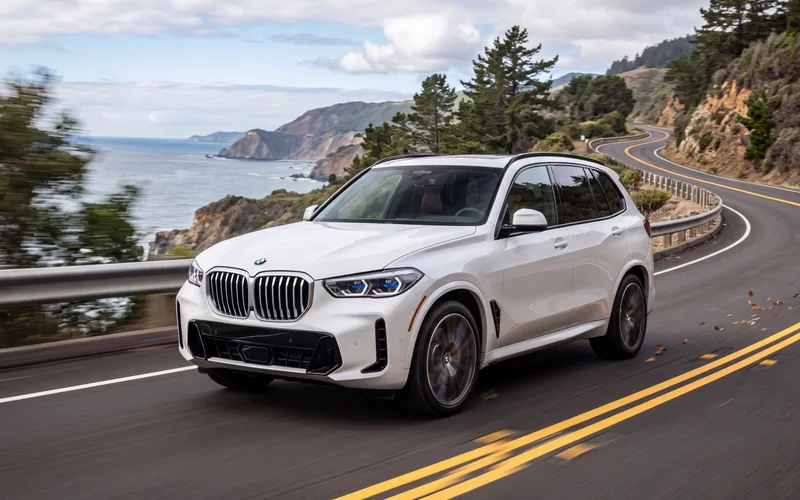 BMW X5Mid-Size Luxury SUVBetter at: Practicality
Identical mechanicals for less money with 6.5 more cu ft of cargo, more rear headroom, an optional third row, and a plug-in hybrid option the X6 doesn't offer.
Compare 2.81B-
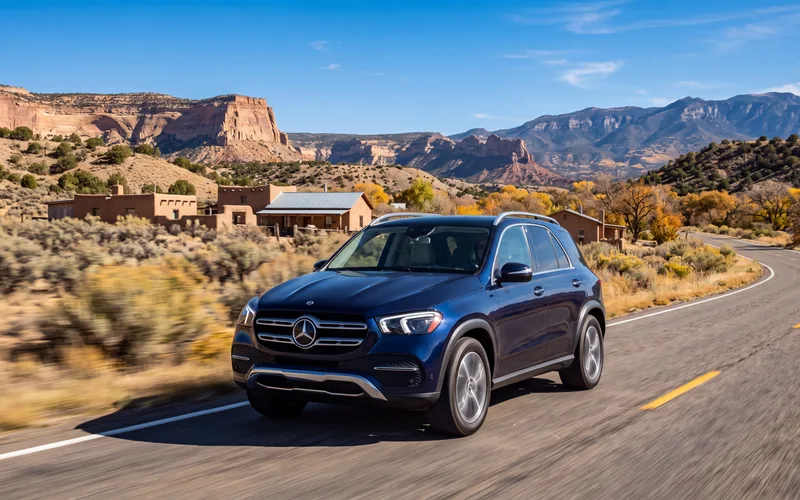 Mercedes-Benz GLEMid-Size Luxury SUVBetter at: Comfort
Roomier back seat (40.2 in of legroom), a plusher ride, and a more generous ownership package if you want luxury rather than a sport coupe silhouette.
Compare 2.65C+
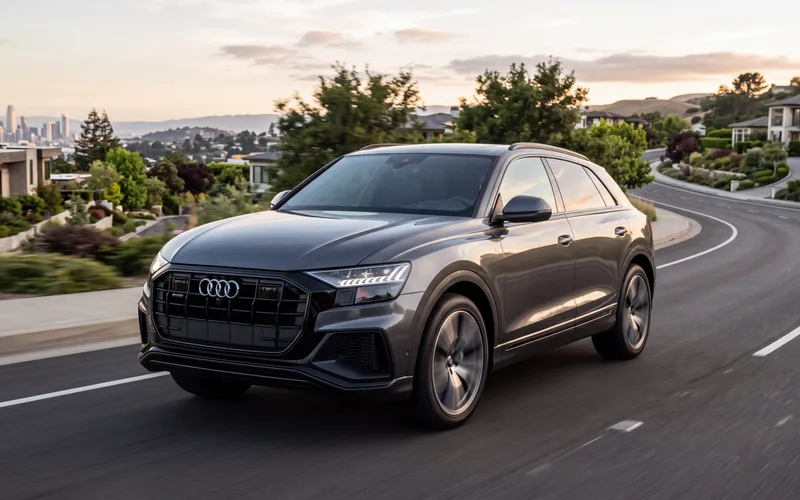 Audi Q8Mid-Size Luxury SUVBetter at: Value
The same style-first coupe-SUV idea with more equipment per dollar and a less cramped cabin, if you like the shape but not the X6's price-to-content math.
CompareHow it's evolved
10 scored model years · 2017–2026
Subject scores by year
Hover or tap a score to see what moved it versus the year before. A corner mark flags a big swing.
| Year | Performance | Efficiency | Safety | Space | Cost | Reliability | Tech | Use-case | Driving | Value |
|---|---|---|---|---|---|---|---|---|---|---|
| 2026 | 69 | 41 | 72 | 47 | 9 | 79 | 85 | 68 | 77 | 69 |
| 2025 | 69 | 49 | 70 | 41 | 16 | 74 | 83 | 52 | 75 | 65 |
| 2024 | 71 | 49 | 70 | 44 | 19 | 73 | 83 | 63 | 76 | 66 |
| 2023 | 67 | 45 | 66 | 42 | 26 | 73 | 80 | 55 | 74 | 57 |
| 2022 | 66 | 45 | 65 | 42 | 33 | 77 | 79 | 55 | 74 | 56 |
| 2021 | 66 | 45 | 64 | 41 | 26 | 69 | 81 | 55 | 74 | 61 |
| 2020 | 66 | 37 | 64 | 42 | 25 | 70 | 77 | 54 | 73 | 68 |
| 2019 | 56 | 28 | 61 | 42 | 18 | 65 | 60 | 47 | 62 | 55 |
| 2018 | 56 | 28 | 52 | 42 | 19 | 67 | 56 | 46 | 62 | 57 |
| 2017 | 56 | 28 | 41 | 41 | 19 | 72 | 54 | 45 | 69 | 60 |
Compare two years
Best fit & conditions
Higher scores mean a better fit for that use case. Learn more about use-case fit →
Subject profile
Detailed scoring by subject
1Performance & PowertrainMid-pack among this car's ten categories.1.75C-
2019 is the final model year of the second-generation F16 and a powertrain carry-over year — the volume xDrive35i keeps the N55 3.0L single-turbo TwinPower inline-six at 300 hp. Adequate for a 4,705 lb luxury SUV but the lowest entry-point output in the mid-size luxury field, and 35 hp behind the B58-powered G05 X5 xDrive40i already on sale alongside it.
The N55 delivers its full 300 lb-ft from just above idle on a wide plateau, so the 35i pulls harder in traffic than the number suggests — but the figure itself sits only mid-band for the segment and is unchanged from 2018.
BMW's claim for the xDrive35i is 6.0 seconds and independent testing comfortably beats it at 5.7–5.8 — genuinely quick in absolute terms, but only mid-pack for a luxury SUV that sells itself on being the sporting choice.
The N55 is a smooth, quiet single-turbo six with torque available from ~1,200 rpm, and reviewers of the 2019 car call the engine and transmission 'smooth operators'. But by 2019 it is a generation-old engine — the B58 that replaced it elsewhere in the range is crisper at the top end — and there is no 48V assist, so stop-start restarts remain noticeably coarse.
Every 2019 X6 uses the eight-speed Steptronic (ZF 8HP) torque-converter automatic — the segment benchmark for shift smoothness and gear-selection logic, with well-judged kickdowns, no hunting, and Sport/Sport+ modes that hold gears sensibly.
With BMW's factory hitch the 2019 X6 is rated at 6,000 lbs — strong for a fastback-roofed coupe-SUV and well above the mid-size luxury norm, though 1,200 lbs short of the G06 that replaced it for 2020.
xDrive is standard on three of the four 2019 trims and is a genuinely sophisticated rear-biased, electronically variable split with Dynamic Performance Control torque vectoring across the rear axle — but BMW still sold the base sDrive35i as rear-drive only in the F16's final year, and there is no low range or terrain-mode system anywhere in the lineup.
The X6 is the most pavement-committed shape BMW builds on an SUV platform: roughly 8.3 in of ground clearance, a chopped fastback tail, run-flat performance tires on 19–21 in wheels, no skid plates, no locking differentials, no low range, and no off-road trim or drive modes anywhere in the 2019 range.
Three gasoline engines and nothing else for US buyers in 2019 — turbo I6 (35i), twin-turbo V8 (50i) and the M-tuned S63 (X6 M). No hybrid, no plug-in, no EV, no 48V layer, and the European xDrive30d/40d diesels are not sold here. The F16 reached the end of its run without ever offering an electrified option.
2Efficiency & RangeOne of the X6's weakest categories.0.00F
EPA combined rating for the volume xDrive35i is 20 MPG from the carried-over N55 3.0L turbo six with standard xDrive — poor even by 2019 gas-SUV standards, and well behind the G06 xDrive40i that replaced it for 2020.
EPA city rating for the xDrive35i, unchanged for 2019. Engine stop-start is standard but there is no hybrid assist of any kind, so 4,705 lb of all-wheel-drive luxury SUV on run-flat performance tires shows up plainly in stop-and-go driving.
EPA highway rating for the xDrive35i — the sloping Sports Activity Coupe roofline buys no measurable EPA advantage over the boxier X5, and for 2019 the rear-drive sDrive35i lost the one-MPG highway edge it held in 2018, so both 35i models now rate 24.
The large 22.4-gallon tank is what rescues this category: it turns mediocre economy into roughly 448 miles between fills, above the gas-SUV midpoint and by far the strongest item here.
EPA's published annual cost for the xDrive35i at 15,000 mi/yr on premium fuel sits above the top of the gas-SUV band, so this item bottoms out. Twenty combined MPG and a premium-only requirement compound each other — the same 20 MPG on regular would cost meaningfully less.
Every 2019 X6 powertrain requires premium unleaded (91 AKI) — no regular-fuel option, no diesel, no hybrid and no plug-in pathway in the US, so there is no configuration a buyer can choose to escape the fuel-cost premium.
3SafetyOne of the X6's strongest categories.2.09C
NHTSA holds records for both 2019 X6 drivelines but never crash-tested either — overall, frontal, side barrier, side pole and rollover all read "Not Rated", with rollover possibility returned as 0.0 and a blank dynamic tip result. The estimate is a carry-across rather than a segment guess: 2019 is the final year of the F16, structurally unchanged, and the F16 is built alongside the F15 X5 in Greer, South Carolina on the same platform and crash structure. NHTSA tested that F15 X5 in both 2017 and 2018 and rated it 5 stars overall both times (5 frontal, 5 side, 5 side pole, 4 rollover). Note that the 2019 X5 is the all-new G05 on a different platform and scored 4 stars — it is the wrong twin for this car, and the F15's repeated 5-star result is the right one. The sports activity coupe roofline changes the greenhouse, not the load paths. But there is no tested figure behind this number, which is why confidence is LOW.
The F16 X6 has no IIHS crashworthiness record of any kind — there is no 2019 X6 ratings page — and in its final model year it loses even the transferred result it might have leaned on: the X5 twin's ratings are explicitly footnoted "Rating applies to 2014-18 models", so they stop one year short of this car, and the 2019 X5 page is the new G05, a different vehicle. What the F15 record held was thin anyway: only moderate overlap front and side were ever rated on that generation, both Good, and the frontal result was assigned from a test BMW itself conducted rather than one IIHS ran; small overlap front driver and passenger, roof strength and head restraints were never evaluated, and no F15/F16 year ever held a Top Safety Pick. Untested on the tests that most separate modern designs, with no award and, for 2019, not even a transfer.
2019 is the year the F16 stops being embarrassing on this item. BMW's own MY2019 X6 pricing guide marks 5AS Active Driving Assistant, ZN3 Frontal Collision Warning w/ City Collision Mitigation, ZN4 Lane Departure Warning, 5AG Active Blind Spot Detection and 8TH Speed Limit Info as STD on all three models — sDrive35i, xDrive35i and xDrive50i alike — alongside the 3AG rear view camera and 508 front-and-rear Park Distance Control. A plainly-specified 2019 X6 therefore leaves the lot with AEB, pedestrian braking, lane departure warning and blind-spot coverage, none of which any 2018 X6 had without the $1,700 ZDA package. Two things keep it out of the top band and one keeps it out of the 80s: adaptive cruise is still the $1,200 ZDB option, and lane keeping or centering is not merely optional but unavailable at any price on this chassis, so the suite is broad rather than complete.
The forward-sensing hardware is unchanged from 2018 — 5AS Active Driving Assistant with City Collision Mitigation, braking automatically for vehicles and for pedestrians and cyclists up to roughly 35 mph, with ZN0 Extended Collision Mitigation in the optional ZDB package — and on the F15 X5 IIHS graded that hardware Superior with the Driving Assistance Plus system and Advanced with the plain one. What changed for 2019 is who gets it: standard on every trim rather than locked behind a package that itself required Premium or M Sport, so the car most buyers took home now brakes for them. It stays mid-band because IIHS never ran front crash prevention on any X6 of this generation, and those ratings are system-and-vehicle specific rather than transferred the way the frontal crashworthiness ones are, so even the vehicle-to-vehicle figure is inference; and because no vehicle-to-pedestrian evaluation exists for this generation, day or night, so the pedestrian function is a manufacturer claim with no independent measurement behind it.
5AG Active Blind Spot Detection is STD on all three 2019 models — the single most valuable safety change of the year on this particular body, because the slit rear window and heavy D-pillars mean the electronics are covering sightlines the glass simply does not, and in 2018 a plainly-specified car had no blind-spot coverage at all. What holds it to the middle of the band is that the coverage is alert-only and narrow: an illuminated triangle in the exterior mirror escalating to a steering-wheel vibration if the turn signal is used, with no steering or braking intervention, no safe-exit warning and no trailer-aware function. Cross-traffic is the open question — BMW's MY2019 X6 pricing guide lists no rear cross-traffic alert option code anywhere, standard or optional, and while general descriptions of BMW's 2019 Active Driving Assistant sometimes bundle RCTA, those describe the newer G-chassis definition rather than this F-chassis car, so no cross-traffic credit is given here.
The F16 X6 never received active lane keeping or lane centering, and its final model year does not change that: ZN4 Lane Departure Warning is the only lane-related option code in BMW's entire MY2019 X6 pricing guide, and it is the sole lane function offered at any price. The car vibrates the steering wheel and does nothing else — no corrective steering, no braking nudge, nothing to hand the wheel to on a highway. The one genuine improvement is that the warning is now standard on every trim rather than package content, so a base car at least gets told; that is worth a step up from 2018 but not out of the low band, since the item measures keeping and centering and this car has neither. Active lane keeping reaches this pairing with the 2019 G05 X5 and the 2020 G06 X6, not here.
Active Cruise Control with Stop & Go is a genuine full-speed-range radar system that will bring the X6 to a halt in traffic and pull away again, and it is the strongest piece of the car's assistance set — offered on all three models. It improves on 2018 in one concrete way: the $1,200 ZDB package is no longer an option on an option. Where the 2018 car required ZDA ($1,700) first, which itself required Premium or M Sport, the 2019 ZDB needs only Convenience ($1,150) or M Sport, so full-range ACC is materially cheaper and simpler to actually order. It stays out of the top band because it is still an extra-cost option rather than standard equipment on a $65,850 SUV, and because there is no lane centering for it to combine with — "highway assist" in the modern sense does not exist on this chassis, and the driver steers throughout.
No hands-free driving of any kind on the 2019 X6. The F16 has no lane centering at all, which is the prerequisite, so there is nothing to go hands-off with. BMW's Extended Traffic Jam Assistant, its first US hands-free system, does debut for 2019 — but on the G-chassis cars, the 3 Series, 8 Series, G05 X5 and X7, and it reaches the X6 only with the 2020 G06 redesign. The X6 spends its final F16 year as the one BMW SUV excluded from the brand's newest safety technology.
Unchanged from 2018 and decent for the era, uniform across the range: Xenon headlights (522) with adaptive curve-following light control (524) and LED fog lights (5A1) are standard on all three models, so no buyer is left with a bad base lamp, while Adaptive Full LED Lights and automatic high beams require the $1,900 ZLP Lighting package or the $2,050 ZPX Executive package. IIHS never rated an X6 headlight of this generation, but it did rate the mechanically identical X5 variants — both the HID projector with curve-adaptive and the LED reflector with curve-adaptive and high-beam assist came back Acceptable. Mid-band: solid standard hardware, an Acceptable-grade result inferred from the twin rather than measured on this car, and auto high beams behind a package on a $65,850 vehicle.
This is the price of the sports activity coupe body and the X6's clearest safety deficit against the X5 it is otherwise mechanically identical to. Forward views are fine — plenty of glass, tall seating position — but the sloping roofline leaves very thick rear pillars and a shallow slit of a rear window, and reviewers single out over-the-shoulder and rearward visibility as a real weakness. Compensation is a little better than 2018 in two small ways: the rear view camera and front-and-rear Park Distance Control remain standard on every trim, and the Side and Top View camera system that covers the D-pillar blind zones is now reachable through a $700 standalone ZPK Parking Assistance package rather than only as Premium or Executive content. It is still an option on a car whose shape makes it close to a necessity, which is what holds this below the middle of the band.
Unchanged for the final F16 year. The X6 carries the F15 X5's rear bench and child-seat hardware — two outboard positions with complete lower anchors and tethers, the centre position tether-and-belt only — and IIHS rates that hardware Marginal for ease of use on the X5, its second-lowest grade, with lower anchors buried too deep in the seat bight to find easily. The coupe body then makes it worse rather than better: reviewers describe rear-seat entry as "an exercise in flexibility", with a door that does not open far enough and an opening too sloped at the roof, which is precisely the geometry that fights a bulky rear-facing seat. Five seats only, no third row on any trim. Difficult anchors in tight rear quarters.
4Space & ComfortOne of the X6's weakest categories.0.78F
2019 is the fifth and final model year of the second-generation F16 and a carry-over year for packaging — the X6 remains a strict two-row, five-seat vehicle in the US, with a 40/20/40-split rear bench on every model including the volume xDrive35i.
Every US 2019 X6 leaves the factory with the two-way power glass moonroof as standard equipment, so the with-moonroof figure is the one every buyer actually gets; it lands mid-band because the sports-activity-coupe roof sweep begins behind the B-pillar and costs the front occupants little.
40.3 in sits at the very bottom of the SUV band and is unchanged for the F16's final year — the 115.5-in wheelbase is spent on the long rear overhang and the fastback profile rather than on front-occupant stretch-out room.
37.2 in is well below the mid-size SUV norm and is the defining cost of the coupe roofline; reviewers of the 2019 car single it out as the reason to buy the X5 instead, and BMW's own metric spec corroborates the US figure exactly.
Rear legroom is merely average for the segment and unchanged for 2019 — adequate for two adults, though the narrow, hard centre position and the roof slope above it mean the fifth seat is token space rather than a usable one.
No third row is offered on any 2019 X6 at any price — the F16 ends its run as a five-seat, two-row vehicle only, with no seven-seat configuration of the kind BMW sold on the X5 it shares a platform with.
26.6 cu ft sits essentially at the floor of the SUV band and is remarkably small for a 193.8-in vehicle — the raked tailgate removes usable height rather than floor area, and it is the single most-criticised trait of the 2019 car.
Even with everything folded the X6 gives up roughly 16 cu ft to the mechanically identical X5, leaving it near the bottom of the mid-size SUV range in its final model year.
The storage package, extra 12-V sockets, an underfloor cargo well, the 40/20/40 fold and a standard power tailgate cover the everyday basics competently, and for 2019 wireless charging finally arrives inside a single no-prerequisite package rather than as an option-on-an-option — but there is no standout innovation and the steeply raked tailgate limits how the space behind can actually be used.
Three-stage heated 14-way power front seats with four-way power lumbar are standard on the volume xDrive35i and draw consistent long-haul praise, with ventilated and multi-contour seats available above them; the rear bench is comfortable for two but compromised by headroom and an unusable centre position.
Body control is genuinely good and reviewers of the 2019 car call the ride smoother than the X6's sporting posture suggests, but the volume xDrive35i rides on steel springs and run-flat tires unless the buyer finds the $4,500 Dynamic Handling Package with adaptive dampers and rear air suspension, and broken pavement exposes that.
The cabin is well isolated from wind and exterior noise at highway speed and reviewers of the final F16 raise no complaint about intrusion; the standard 19-in run-flats are the main source of road roar, and the optional 20- and 21-in performance run-flats make it worse.
Dual-zone automatic climate, heated power front seats, a power moonroof and ambient lighting are standard on the volume trim, and 2019 makes the upgrades materially easier to reach than 2018 did: four-zone climate now travels in the standalone $1,150 Convenience Package and the heated wheel plus heated rear seats come as one Cold Weather bundle rather than $190 and $350 lines each requiring a big package first. Ventilated seats and rear sunshades remain package content on a $65,850 SUV, which is what keeps it below the top band.
5Cost of OwnershipThe X6's lowest-graded category.0.00F
2019 is the fifth and final model year of the second-generation F16, and the entry car remains the rear-drive sDrive35i at $63,545 with BMW's $995 destination and handling — essentially flat on 2018's $63,695 despite Apple CarPlay and a full active-safety suite becoming standard content for 2019.
The all-wheel-drive xDrive35i is the volume 2019 X6 at $65,850 with destination, but the standard car is deliberately under-equipped: the $1,700 Premium Package alone is where Parking Assistant, surround-view cameras, head-up display, wireless charging and the Wi-Fi hotspot live, and real 2019 window stickers land in the low-to-mid seventies once M Sport, 21-inch wheels and the driver-assistance options are added.
Independent nameplate estimates cluster near $6,000–$6,200 over five years, but the 2019 car is the run-out F16 on the older N55 inline-six (N63TU V8 above it) rather than the newer B58, wears staggered run-flat performance tires on 19–21-inch wheels, and gets only 3 years/36,000 miles of included maintenance — so years four and five fall entirely on the owner, which argues for the upper end of the published range.
This is observed rather than projected: the 2019 X6 passed its five-year mark in 2024, and KBB's own trajectory — currently $23,400 resale after depreciating $10,112, or 30%, over the preceding three years — implies roughly $30,000 at the five-year point against a $72,000 typically-equipped transaction price, or about 42%. The nameplate-wide iSeeCars figure is far kinder, but it is dominated by the newer G06 and by the inflated 2021–22 used market; the specific problem for the 2019 car is that the G06 was unveiled in July 2019 and on sale that November, so this year's stock was residual-dated against a car that already existed.
BMW's New Vehicle Limited Warranty on 2019 models runs 4 years or 50,000 miles, a year longer than the 3/36 most mainstream brands offered and level with Mercedes-Benz and Audi — mid-band rather than class-leading, and unchanged from 2018.
BMW provided no extended powertrain schedule on 2019 models: the N55 inline-six or N63TU V8, the eight-speed Steptronic, the transfer case and the drivetrain are all covered only by the same 4-year/50,000-mile New Vehicle Limited Warranty — well short of the 5–10-year powertrain terms that are the segment norm and where the normalization band starts.
BMW Ultimate Care covers scheduled maintenance for 3 years/36,000 miles and roadside assistance runs the full 4-year warranty term with unlimited mileage — genuinely multi-year coverage most rivals do not match — and 2019 adds a connected-service sweetener the 2018 car lacked, with Apple CarPlay standard including a one-year trial. It stays out of the top band for the same reasons as 2018: Ultimate Care is the shortened plan BMW substituted for the old 4-year/50,000-mile Maintenance Program from MY2017, it is strictly non-transferable to a second owner, and BMW is alone among major brands in charging a subscription for CarPlay once that first year lapses.
$72,000 volume-trim price minus its estimated resale value after 5 years (42% retained, or about $30,240) leaves about $41,760 in depreciation. Add the projected $6,900 in 5-year maintenance and repairs, and owning this vehicle for 5 years costs about $48,660 in total.
6Reliability & QualityThe X6's best-graded category.2.42C+
Neither headline source rates this car, exactly as with the 2018: Consumer Reports returns "No Detailed Data Available" for the 2019 X6 on sample-size grounds, and J.D. Power publishes no Quality & Reliability score for the nameplate through its first two generations. So the only defensible read is again the platform's own record — 2019 is the fifth and final F16 year on fully carried-over hardware (N55 inline-six, ZF eight-speed, Spartanburg line), which is the most sorted point of any generation and is what holds this near the segment median. Two things pull it a shade below the 2018 car rather than above it: the brand backdrop got materially worse inside this model year (Consumer Reports dropped BMW seven places to 17th in November 2019), and while NHTSA's complaint file is still tiny at five entries, its character is worse than 2018's — an engine-bay fire an hour after an overheat, a parking brake that engaged itself at speed, a side airbag that ruptured and burned the occupant in a crash. Five complaints is a volume artifact on a niche body style and cannot carry much weight either way, but nothing in the 2019 record argues for crediting this car above its platform-mates.
BMW's standing at the time this car was sold is squarely mid-pack, and 2019 is the year the decade's high point ended — Consumer Reports dropped the brand seven places to 17th in its November 2019 survey, singling out the freshly redesigned 3 Series and X5 as Well-Below-Average, a year after ranking it 3rd overall. The model-year-specific dependability signal is the J.D. Power 2022 study, which surveyed original owners of these exact 2019 cars at three years: BMW posted 187 PP100 against a 192 industry average — above the line, but only barely, and well behind Genesis (155) and Porsche (162) among premium brands. Initial quality that year was the same story: mid-pack, ahead of Audi and Mercedes-Benz, nowhere near the Korean leaders. Mid-band with a mild upward lean, and a full seven points below where the 2018 car sits.
Four NHTSA campaigns list a 2019 X6 — the same count as 2018 — but the delivered-defect load is slightly lighter and the supplier-quality signal slightly worse, which nets out to roughly flat. Lighter, because the most serious campaign never reached a customer: BMW caught the improperly hardened rear upper control arm pivot bolts while every affected car was still on a dealer lot, so no owner letters were mailed, and a second campaign is a pure FMVSS 111 back-up-camera software fix shared across most of the brand's range. Worse, because this is the second control-arm hardening defect in three months on the run-out F16 (front lower left in June 2018, rear upper in September 2018), on top of the wheel bolts that "may not have been properly tightened" spanning 2018–2019 and the generation-wide LATCH anchor-bar campaign covering 2015–2019. Nothing here is powertrain, fire or airbag, and four campaigns on a nine-year-old luxury SUV is a modest load — but repeat chassis-fastener defects from two different failure modes keep it just below the segment median, and far above the G06's much heavier recall record.
The volume xDrive35i carries the N55 3.0L single-turbo inline-six (300 hp / 300 lb-ft) and the ZF eight-speed to the very end of F16 production — the B58 did not reach this body until the 2020 G06 — so a 2019 car is the final and most sorted application of a combination with a good high-mileage record. The N55 fixed the N54's chronic high-pressure-fuel-pump and injector failures with a single twin-scroll turbo and Valvetronic, is strong internally, and a maintained example routinely passes 150,000 miles; the ZF 8HP's durability is an industry-wide given. It stays out of the top band for the same reason as every other F16 year: the documented weak points are the hardware around the block rather than the block itself, and the electric water pump in particular fails between roughly 60,000 and 90,000 miles, often with no warning. The single NHTSA fire complaint on this model year is that exact sequence — overheat, then an engine-bay fire an hour after the car was parked — which is one data point rather than a pattern, but it is the pattern-shaped one.
Reviewers were still unanimous in 2019 that this cabin is finished to a high standard — soft-touch where it counts, high-grade leather, a wide catalogue of wood, aluminum and leather grades, and a very quiet interior. What holds it further out of the top band than in previous years is context rather than any change to the car: the G05 X5 arrived for 2019 with a materially richer cabin, so a shopper walking a BMW showroom could compare the X6's fifth-year interior directly against its own platform-mate's brand-new one, and the X6 asks roughly $5,000 more for the older dashboard architecture. The upper leather and trim grades remain cost options rather than standard fitment at a price north of $63,500.
The 2018 car had one hard, model-year-specific result in its favour — top-ranked Midsize Premium SUV in that year's Initial Quality Study — and the 2019 car does not: the 2019 IQS segment award went to the Lexus RX, BMW's segment wins that year were the 2 Series, X4 and MINI Cooper, and the brand itself sat mid-pack against a 93 PP100 industry average. Everything else is unchanged and good: reviewers report consistent panel gaps, no squeaks or rattles and a notably quiet, solid-feeling cabin, and Spartanburg assembly gives the body a well-sorted structure in the generation's final year. Against that sit the assembly- and supplier-origin campaigns this item exists to catch — wheel bolts that may not have been properly tightened, rear upper control arm bolts that may not have been properly hardened, and rear LATCH anchor bars needing a welded reinforcing bracket. Solid finish quality that has lost its one objective accolade, so a little above the segment median and clearly below the top band.
Roughly 350 BMW centers across all 50 states is dense coverage by luxury standards — better reach than Genesis, Volvo or Land Rover and comparable to Mercedes-Benz — and because the X6 is an X5 under a different roofline, every one of them services it as routine work rather than as a specialty car despite its niche volume. Independent-specialist coverage of the F15/F16 platform is unusually deep for a German luxury SUV, which matters far more on a car this age than dealer count does. Service satisfaction is good rather than class-leading: BMW places third among premium brands in the customer service index and does not appear in the premium SUV top three at all.
Sourcing is not the problem — the X6 is an X5 beneath the sheetmetal, so engines, transmissions, suspension and cooling components come from a high-volume parts pool with deep aftermarket and independent-shop support, and that is what keeps this off the floor of the band. Cost is, and the 2019 car sits at the worst point of the curve. RepairPal puts it at $1,206 a year with reliability 2.0 out of 5.0 and 16th of 19 luxury full-size SUVs, with repair frequency and severity both rated much higher than average; the 4-year/50,000-mile warranty — BMW publishes no longer powertrain term — lapsed on every 2019 car back in 2023; and this exact mileage window is where the electric water pump, valve cover and oil filter housing gaskets, plastic coolant hoses, staggered run-flat performance tires on 19–21-inch wheels and dealer-level electrical diagnostics all come due together. The SAC-specific body panels, rear glass and quarter panels are low-volume pieces on a nameplate that sold a fraction of the X5's US units.
7Technology & InfotainmentMid-pack among this car's ten categories.2.05C
Navigation is standard on all three 2019 X6 models and brings BMW's 10.2-in display, driven by touch, the iDrive rotary controller and its handwriting touchpad; the F16 ends its run one generation behind the 12.3-in cluster-plus-screen layout the G06 introduced for 2020.
iDrive 6.0 on the 2019 X6 is fast, logically organised and offers three redundant inputs — touchscreen, rotary controller with handwriting touchpad and programmable shortcut keys — a combination that was regarded as among the best in the industry at the time and still reads well against 2019 rivals that had gone touch-only.
This is the biggest single technology change of the 2019 model year: Apple CarPlay moves from a $300 factory option to standard equipment on every trim, and BMW's implementation is wireless because the brand never offered wired projection. Two things cap it well short of the top band — the standard entitlement is only a one-year trial before BMW's subscription starts, and Android Auto is not offered on the X6 at any price in 2019, since BMW did not add it to any model until 2020.
Native navigation with 3D maps and real-time traffic is standard on every 2019 trim and is genuinely good, but the voice system on this F-chassis car is command-driven rather than natural-language — competent for destination entry and calls, and nothing like the conversational assistant BMW launched alongside Operating System 7 on the G-chassis cars that same year.
The standard system on the volume xDrive35i is a competent nine-speaker, 205-watt setup with HD radio, and the ladder above it is unusually deep for the segment — a 16-speaker, 600-watt Harman Kardon surround system (standard on the xDrive50i, optional on the sixes) and a Bang & Olufsen system above that.
The volume xDrive35i buyer gets conventional analog gauges with a small information display. BMW's 6WB Dynamic Digital Instrument Cluster does exist for the F16 and appears on the upper trim column, but it is package-gated rather than orderable on its own, and even that unit keeps physical fuel and oil-temperature needles behind the screen glass rather than being a true full-digital display.
The F16 predates BMW's Remote Software Upgrade, which arrived with the Operating System 7 G-chassis cars in this same 2019 model year — the X6 can pull map and ConnectedDrive service updates over the air, but any vehicle software change requires a dealer visit, and it ends production without ever gaining the capability.
Remote Services is standard on every 2019 X6, so the BMW Connected app covers remote lock/unlock, vehicle finder, send-to-car destinations and remote ventilation, with BMW Assist eCall alongside it — solid core functionality for the era, but there is no digital key on this chassis and the services run on a ConnectedDrive subscription term.
Enhanced USB and Bluetooth plus extra 12-V sockets are standard, and 2019 improves the accessibility of the rest — wireless charging and a WiFi hotspot are now content of the single $1,700 Premium Package rather than a $400 option that first required another package. Every port on the car is still USB-A, there is no household outlet, and the rear rows are thin on charging points.
Push-button start and a power tailgate are standard, and Comfort Access proximity entry became easier to buy for 2019 — it is content of the standalone $1,150 Convenience Package rather than sitting inside the larger Premium or M Sport bundles. It is still an extra-cost item on a $65,850 SUV, hands-free tailgate operation is package content, and phone-as-key never existed on the F16.
A rear-view camera and front-and-rear Park Distance Control are standard on every 2019 X6, and surround view with side and top cameras plus the semi-automated Parking Assistant is reachable either through a $700 standalone package or inside the $1,700 Premium Package. Given how badly the coupe roofline compromises the view out, standard 360-degree coverage would have been the right answer, and it is not offered.
BMW's full-colour head-up display remains one of the better units of its era and 2019 is the year it becomes genuinely orderable on a volume X6: it is content of the single $1,700 Premium Package, where the 2018 car buried it in a $1,700 Driving Assistance Package that itself required Premium or M Sport first. Still optional rather than standard, which keeps it out of the top band.
8Use-Case FitGrades below the middle of the scale.1.14D
The 40/20/40 bench and a power tailgate help, but the geometry fights family logistics at every step: only two positions carry full LATCH hardware and IIHS rates that hardware Marginal on the X5 twin, the rear door opening is sloped at the roof and does not swing far enough for a bulky rear-facing seat, and 26.6 cu ft is tight for a stroller plus a week's gear. For the final F16 year the transferred LATCH rating no longer even applies — the X5's ratings are footnoted to 2014–18 models.
This is where 2019 genuinely improves on every earlier F16: BMW made Active Driving Assistant standard on all three models, so a plainly-specified X6 now leaves the lot with forward collision warning, low-speed automatic emergency braking with pedestrian detection, lane departure warning and blind-spot detection — none of which a 2018 buyer got without a $1,700 package that itself required another package. What holds it mid-band is that the generation carries no NHTSA overall rating and no IIHS crashworthiness evaluation at all, and adaptive cruise remains a $1,200 option.
A quiet, well-isolated cabin and comfortable heated front seats make long days easy for the adults up front, and the 2019 package restructure puts four-zone climate into a standalone $1,150 bundle and the heated wheel plus heated rear seats into one Cold Weather bundle. The back half of the car is still the problem: headroom is squeezed by the roofline, the centre position is unusable for an adult, and luggage room with four aboard is modest.
The carried-over N55 turbo six and ZF eight-speed are smooth and effortless in traffic with full torque from around 1,200 rpm, and the ride is well damped — but this is a 4,705 lb, 193.8-in vehicle whose over-the-shoulder view is among the worst in the segment, and that takes back a good part of the ease.
20 MPG combined on required premium fuel puts the EPA's annual bill at $3,800, unchanged for the F16's last year, and the standard run-flat tires — with 20- and 21-in performance run-flats on the options list — are an expensive consumable stacked on top of that.
A 42-ft turning circle on a 193.8-in body is genuinely awkward in tight urban work and rearward sightlines are among the worst in the segment. Standard front-and-rear parking sensors and a rear camera mitigate it, and surround view plus Parking Assistant are cheaper to reach in 2019 through the $700 standalone package — but they mitigate the shape rather than fix it.
6,000 lb of towing with the factory hitch is respectable for a crossover and 1,110 lb of payload is usable, but with no bed, 26.6 cu ft of awkwardly shaped cargo space under a raked tailgate and a leather-lined cabin, the 2019 X6 is a light-duty tool at best.
The F16 shares a proven Spartanburg-built platform with the X5, but standard Dakota leather, run-flat tires on large low-profile wheels and luxury-grade service costs make it unsuited to hard use, and the nameplate has no fleet or work-duty reputation of any kind to draw on.
Trailer hitch prewiring and extra 12-V sockets are the extent of the work provisions on the 2019 car — no bed, no onboard AC power, no factory roof rails on US-market X6s, and no upfit ecosystem beyond aftermarket hitch-mounted carriers.
A quiet cabin, all-day front seats, a smooth turbo six and roughly 448 miles between fills make this a strong highway tourer, and 2019 adds standard lane departure warning and collision warning plus a materially cheaper path to full-range adaptive cruise — the $1,200 Driving Assistance Plus package now needs only Convenience or M Sport, where the 2018 equivalent required a $1,700 package that itself required another. Lane centering does not exist on this chassis at any price, so the driver steers throughout.
xDrive is standard on the volume trim and 6,000 lb of towing covers a boat or a pair of dirt bikes, but roughly 8.3 in of clearance, performance-biased run-flat tires, a 220 lb roof load limit with no factory rails to use it, and no off-road package, low range or terrain modes anywhere in the 2019 lineup keep the X6 close to the pavement.
The 40/20/40 rear fold, power tailgate and underfloor storage are useful, but 26.6 cu ft behind the seats and 59.7 cu ft maximum sit near the bottom of the mid-size SUV range, the steeply raked tailgate blocks tall items outright, and without factory roof rails there is no easy way to put gear on top.
9Driving ExperienceOne of the X6's strongest categories.2.21C
Stiff, stable and able to carry real speed through corners with confidence, and better than the mid-size luxury SUV norm — but 0.84 g on the skidpad is only fair for a car that sells itself on being the sporting choice, and reviewers of the 2019 model note the handling lacks the directness of smaller BMWs unless the $4,500 Dynamic Handling Package is fitted.
Accurate enough to place a 4,700 lb vehicle precisely, but the electric rack tells the driver almost nothing — 2019 reviewers make this the most consistent single criticism of the car, describing it as numb just off-centre and too light in Comfort mode, improving only in Sport.
Pedal feel and modulation are excellent and the brakes resist fade in normal use, but 172 ft from 70 mph is a mediocre instrumented result for a luxury SUV and there was minor pedal fade after repeated stops; the hardware is unchanged for 2019.
The carried-over N55 turbo inline-six and ZF eight-speed remain one of the era's better pairings — 300 lb-ft available from around 1,200 rpm, crisp tip-in and quick, unobtrusive shifts, and 2019 reviewers still call the pair smooth operators. The absence of any 48V assist means the standard stop-start restart is the roughest moment in the drive.
The turbocharged straight-six is inherently well balanced and stays smooth and pleasantly muted under load, with no droning or coarseness reported by 2019 reviewers; it simply lacks the character of the twin-turbo V8 above it in the range.
42 ft is at the very worst end of the mid-size SUV range and is a real everyday penalty — U-turns and multi-storey car parks take an extra bite that most rivals do not need, and it is unchanged for the F16's final year.
Fourteen-way power front seats with memory, a power-adjustable steering column and a high, commanding seating position suit a wide range of drivers, and iDrive's controller falls naturally to hand — but the coupe roofline and thick D-pillars badly compromise the view over the shoulder, and getting into the back is genuinely awkward.
Genuinely quick with a characterful straight-six and composed enough to surprise on a good road, and reviewers agree it feels more like a sporting sedan than an SUV — but 4,705 lb, steering that says nothing and a tall centre of gravity mean the 2019 car gets admired rather than enjoyed, and its own reviewers point at the M50i and X6 M for the version worth wanting.
10Value & Market PositionGrades below the middle of the scale.1.66D
2019 is the year the F16 finally stops being embarrassing here: forward collision warning with pedestrian detection, low-speed automatic emergency braking, lane departure warning and blind-spot detection all became standard, and Apple CarPlay joined them — content that cost extra on every earlier X6. Stacked on the carry-over luxury list (Dakota leather, 14-way heated power front seats, panoramic roof, navigation on a 10.2-inch display, adaptive xenons, power tailgate, front and rear Park Distance Control) that is a genuinely competitive base car for $63,545. What keeps it mid-band is what still isn't included: no Android Auto at all, CarPlay reverts to a paid subscription after a year, adaptive cruise remains optional, and head-up display, surround-view cameras, wireless charging and Wi-Fi are locked behind the $1,700 Premium Package.
The X6's structural problem got materially worse for 2019, because the sibling it has always been measured against changed generations and it did not. The 2019 X5 is the all-new G05 — newer B58 six, iDrive 7, twin 12.3-inch displays, available air suspension, third-row option — and starts at $61,695 with destination, while the 2019 X6 xDrive35i asks $65,850 for the previous-generation F16 on the superseded 300-hp N55 with iDrive 5 and analogue gauges. A buyer pays roughly $4,000 more to get an outgoing car with less cargo room, less rear headroom, worse rearward visibility and no third row. The added standard safety kit is real value, but it does not close a one-generation gap.
Four variants spanning $63,545 to $106,695 and 300 to 567 hp, with rear- or all-wheel drive on the six and BMW's deep package catalogue behind them — a wide ladder in price and power terms, unchanged from 2018. What is missing is configuration variety rather than trim variety: the fastback body admits no third row (which the X5 offers), and unlike the X5 there is no plug-in hybrid and, in the US, no diesel, so every 2019 X6 is a five-seat gas SUV on an eight-speed automatic.
4,240 US sales in 2019 — down 38% on 2018's 6,862 and the lowest figure of the entire F16 generation, which opened at 7,906 in 2015. That is a run-out collapse rather than a rejection of the concept: with the G06 unveiled in July and on sale in November, buyers had every reason to wait, and volume promptly recovered to 7,313 in 2020 and 9,591 in 2021 on the new car. The item measures market acceptance of what was actually on sale in 2019, though, and by that test this was the nameplate at its thinnest.
BMW remains one of the most aspirational mass-luxury badges in the US, and the X6 has an image argument the X5 does not: it invented the sports activity coupé in 2008 and every rival fastback SUV — the Mercedes GLE Coupé that arrived to chase it, and later the Audi Q8 and Porsche Cayenne Coupé — followed it. Polarizing styling and BMW's out-of-warranty running-cost reputation are what keep it out of the top band, and neither changed for 2019.
Every structural condition for a buyer's market was present in the F16's final year — a five-year-old design being cleared against a replacement that was unveiled mid-model-year, volume down 38%, and a brand already among the industry's heaviest discounters — and the captive incentives bear it out, with over $5,000 of lease cash and loyalty money plus a stackable $1,000 BMW CCA rebate on a single deal. Marked down from a top-band score, and MEDIUM rather than HIGH, because the same buyer reports that dealer discounting was the hard part: it took a month of shopping to find a store willing to cut price, so the value came from BMW Financial's programs rather than from easy negotiability.
This is as stale as the nameplate ever got. 2019 is the fifth and final model year of the F16, which launched for 2015 and never received a full LCI facelift, and its replacement was not merely imminent but public: the G06 was unveiled on 3 July 2019, inside the model year, and reached showrooms that November. The platform tech was a generation behind by then — iDrive 5 on a 10.2-inch screen with analogue gauges, the superseded N55 six rather than the B58, no lane centering of any kind — and the mechanically related X5 had already changed generations a year earlier, so the comparison was on dealer lots.
Reviewers moved the X6 down in its final year rather than up: U.S. News dropped it to 7.0/10 and last in its class ranking, against 7.5/10 and mid-pack for the 2018 car, and the criticism is consistent across outlets — the powertrains and chassis are praised, the roofline is blamed for space, access and visibility, and the badge for running costs. It won no significant US award, and because neither NHTSA nor IIHS ever crash-tested the F16 X6 there is no safety honor to point to either, unlike the mechanically related X5.