
The verdict
A mixed-report mid-size luxury suv, strong on technology and held back by ownership.
The 2025 BMW X6 is a BMW X5 with a fastback roofline, about $6,500 more expensive, and roughly 15 cubic feet less cargo room — and whether that trade makes sense depends almost entirely on how much you love the way it looks. What you get in exchange is genuinely good: a 375-hp mild-hybrid inline-six that runs to 60 mph in 5.2 seconds, a standard 14.9-inch curved display with wireless CarPlay, 7,200 lbs of towing, and a chassis that stays composed for something weighing 5,200 lbs. What you give up is rear-seat space (37.5 in of headroom, 35.7 in of legroom), rear visibility through a slit-like back window, and a lot of money over five years — roughly $50,700 in depreciation and upkeep on an $81,000 build. Buy it for the styling and the drive; if you want the same car to be practical, the X5 is sitting right next to it on the lot.
Jump to scoresStrengths
- Standard cabin tech that leads the class
- A superb engine and transmission pairing
- Drives far better than a 5,200-lb SUV should
What holds it back
- It costs an extraordinary amount to own
- The roofline eats the cargo bay and the back seat
- Expensive to fuel, with no way out of it
Top alternatives
Cars shoppers cross-shop with the BMW X6 3.07B
3.07B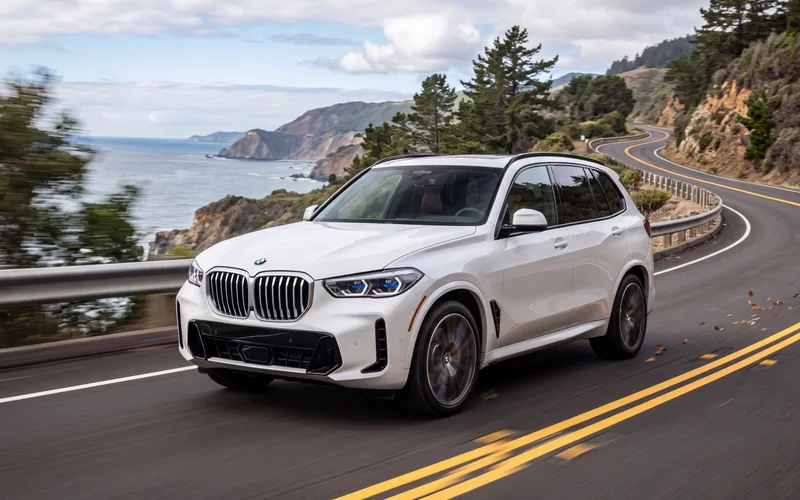 BMW X5Mid-Size Luxury SUVBetter at: Practicality
Identical mechanicals for less money with 6.5 more cu ft of cargo, more rear headroom, an optional third row, and a plug-in hybrid option the X6 doesn't offer.
Compare 2.81B-
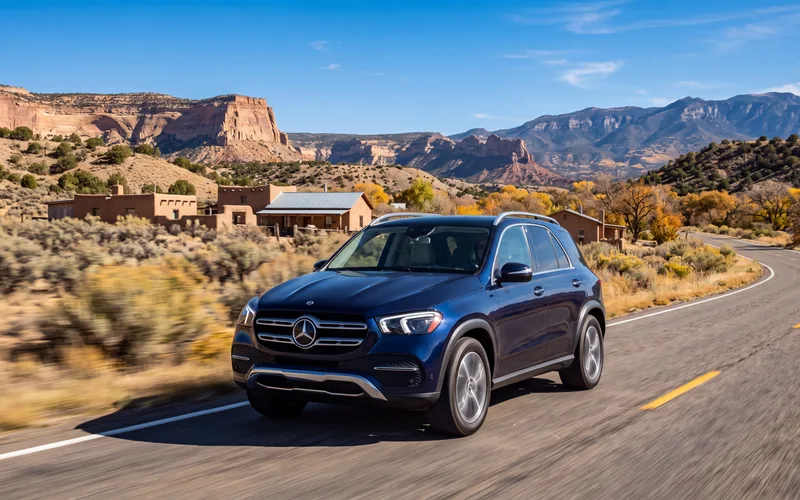 Mercedes-Benz GLEMid-Size Luxury SUVBetter at: Comfort
Roomier back seat (40.2 in of legroom), a plusher ride, and a more generous ownership package if you want luxury rather than a sport coupe silhouette.
Compare 2.65C+
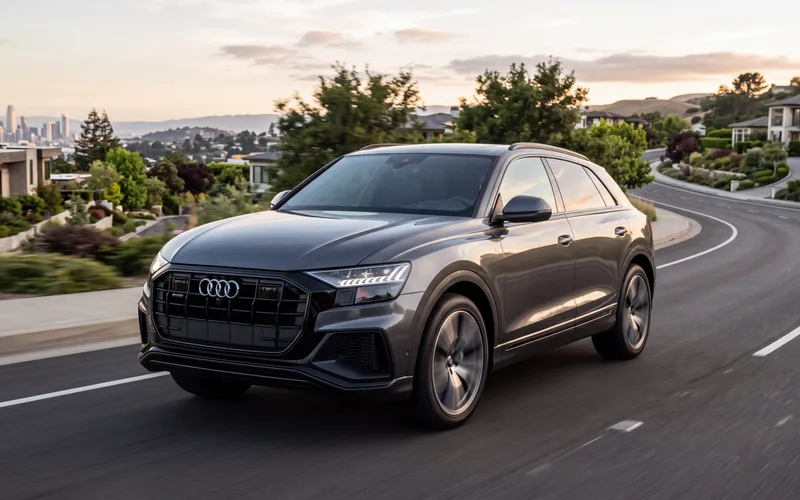 Audi Q8Mid-Size Luxury SUVBetter at: Value
The same style-first coupe-SUV idea with more equipment per dollar and a less cramped cabin, if you like the shape but not the X6's price-to-content math.
CompareHow it's evolved
10 scored model years · 2017–2026
Subject scores by year
Hover or tap a score to see what moved it versus the year before. A corner mark flags a big swing.
| Year | Performance | Efficiency | Safety | Space | Cost | Reliability | Tech | Use-case | Driving | Value |
|---|---|---|---|---|---|---|---|---|---|---|
| 2026 | 69 | 41 | 72 | 47 | 9 | 79 | 85 | 68 | 77 | 69 |
| 2025 | 69 | 49 | 70 | 41 | 16 | 74 | 83 | 52 | 75 | 65 |
| 2024 | 71 | 49 | 70 | 44 | 19 | 73 | 83 | 63 | 76 | 66 |
| 2023 | 67 | 45 | 66 | 42 | 26 | 73 | 80 | 55 | 74 | 57 |
| 2022 | 66 | 45 | 65 | 42 | 33 | 77 | 79 | 55 | 74 | 56 |
| 2021 | 66 | 45 | 64 | 41 | 26 | 69 | 81 | 55 | 74 | 61 |
| 2020 | 66 | 37 | 64 | 42 | 25 | 70 | 77 | 54 | 73 | 68 |
| 2019 | 56 | 28 | 61 | 42 | 18 | 65 | 60 | 47 | 62 | 55 |
| 2018 | 56 | 28 | 52 | 42 | 19 | 67 | 56 | 46 | 62 | 57 |
| 2017 | 56 | 28 | 41 | 41 | 19 | 72 | 54 | 45 | 69 | 60 |
Compare two years
Best fit & conditions
Higher scores mean a better fit for that use case. Learn more about use-case fit →
Subject profile
Detailed scoring by subject
1Performance & PowertrainMid-pack among this car's ten categories.2.65C+
The volume trim for 2025 is the xDrive40i, running the post-LCI B58 3.0L turbocharged inline-six with 48V mild-hybrid assist at 375 hp — the same output introduced with the 2024 LCI and carried into 2025 unchanged.
xDrive40i peak torque is 398 lb-ft (540 N·m) from the mild-hybrid B58, a 66 lb-ft gain over the pre-LCI 332 lb-ft figure. Both V8 trims share 553 lb-ft.
BMW's US claim for the 2025 xDrive40i is 5.2 seconds to 60 mph; the V8 trims are substantially quicker, with the X6 M Competition at 3.7 seconds.
The B58 inline-six with 48V mild hybrid is among the smoothest six-cylinders on sale — near-zero turbo lag, linear delivery, and the 48V system masking stop-start restarts. The mild-hybrid boost also fills the bottom end that the pre-LCI engine gave up.
Every 2025 X6 uses the ZF 8HP eight-speed torque-converter automatic — the segment benchmark for shift smoothness and gear-selection logic, with responsive paddle-shift manual control and no hunting.
With the optional trailer hitch package the 2025 X6 is rated at 7,200 lbs — near the top of the mid-size luxury SUV field despite the fastback body.
xDrive all-wheel drive is standard on all three 2025 trims, rear-biased with fully variable electronic torque distribution, and the X6 M adds M xDrive with a 4WD Sport mode. There is no low range and no terrain-mode suite, which caps it below the top band.
The X6 is a Sports Activity Coupe built exclusively for pavement: roughly 8.2 in of ground clearance, no locking differentials, no off-road drive modes or skid plates, no off-road trim, and wide low-profile performance rubber on most configurations.
US buyers get gasoline only for 2025 — B58 turbo I6 (xDrive40i), S68 twin-turbo V8 (M60i), and the M-tuned S68 (X6 M Competition). All carry 48V mild hybrids, but that is not a driver-selectable electrified option: unlike the X5 there is no PHEV, no diesel and no EV variant.
2Efficiency & RangeOne of the X6's weakest categories.1.24D
EPA combined rating for the volume xDrive40i is 24 MPG on the mild-hybrid 3.0L turbo I6 with standard AWD — respectable for a 375 hp luxury SUV, though the V8 trims fall away sharply.
EPA city rating for the xDrive40i. The 48V mild-hybrid system with engine stop-start does real work here — city economy is the stronger half of the X6's EPA figures relative to the gas SUV field.
EPA highway rating for the xDrive40i. Curb weight near 5,200 lbs and standard all-wheel drive keep it mid-pack despite the aerodynamically favourable fastback roofline.
The large 21.9-gallon tank paired with the 24 MPG EPA combined rating gives roughly 526 miles between fills — a genuine strength and the item that most lifts this category. V8 trims drop to roughly 415 mi (M60i) and 330 mi (X6 M).
EPA's published annual cost for the xDrive40i at 15,000 mi/yr and standard premium-fuel pricing. The premium-only requirement is what pushes this well above what a comparably efficient regular-fuel SUV would cost to run.
Every 2025 X6 powertrain requires premium unleaded (91 AKI) — no regular-fuel option, no flex-fuel, no diesel and no plug-in pathway, so there is no way to buy out of the fuel-cost premium.
3SafetyGrades above the middle of the scale.2.74B-
NHTSA has never crash-tested the G06 X6: the 2025 model year returns no entry at all in the agency's database, and the 2024 entry that does exist is 'Not Rated' in every category. The estimate carries over the 4-star overall result of the 2025 X5, which shares the X6's platform, structure and Spartanburg assembly line — it is an inference, not a measured NCAP result.
The X6 earns no IIHS award. It has Good ratings in small overlap front driver and passenger — but those are transferred from the X5 (tested using a 2019 X5 as the proxy vehicle), and IIHS explicitly does NOT extend the X5's updated moderate overlap front or side 2.0 results to the X6. Those two tests are the current award prerequisites, so the X6 sits outside the TSP list its own platform-mate tops at TSP+.
Active Driving Assistant is standard on every 2025 X6 — forward collision warning with automatic braking and pedestrian detection, Active Blind Spot Detection, lane departure warning, cross-traffic warning with rear automatic braking, and speed limit information. Adaptive cruise and lane centering are not standard: both require the $2,500 Driving Assistance Professional Package, a real gap on a mid-$70k luxury SUV.
Standard front crash prevention earns Good in the IIHS updated vehicle-to-vehicle test — the 2.0 protocol with higher-speed and medium-truck scenarios — and Good in the pedestrian test, which includes the nighttime crossing scenarios. Top result in both, and IIHS states the ratings apply across the 2024–26 model years.
Active Blind Spot Detection is standard and adds a steering-wheel vibration warning to the mirror lamp, and rear cross-traffic warning with rear automatic braking is standard rather than alert-only. The Driving Assistance Professional Package layers on front cross-traffic alert and active side-collision avoidance steering. On a vehicle whose roofline creates the blind zones it does, having this standard matters more than usual.
Lane departure warning is standard but lane departure prevention is not — active lane keeping and steering assist arrive only with the Driving Assistance Professional Package. Reviewers of the shared G05/G06 system judge the centering about average for the class, wandering between markers where lane paint is faint.
Active Cruise Control with Stop & Go is full-speed-range and cleanly integrated with Highway Assistant, and the 2024 LCI brought the current-generation assistance stack to the X6. The deduction is entirely for packaging — none of it is standard on a $76k SUV, requiring the $2,500 Driving Assistance Professional Package.
Highway Assistant provides genuine hands-off driving up to 85 mph on mapped controlled-access highways, with Active Lane Change confirmed by a glance in the side mirror. Mapped-road coverage is narrower than GM's Super Cruise network and the capability is locked behind a $2,500 option, which caps the score below the top band.
IIHS rates the 2025 X6's headlights Acceptable. The grade is at least consistent — full LED headlights with high-beam assist are standard on every trim, so there is no Marginal volume-trim variant hiding beneath a Good range-topper — but no Good-rated setup is offered anywhere in the lineup.
Rear visibility is the X6's structural compromise, not a detail: the sloping coupe roofline, tapering rear side glass, very thick D-pillars and a slit-like rear window leave large blind zones for lane changes and parking. Standard blind-spot detection, rear cross-traffic alert and the rear camera mitigate rather than fix it, and the surround-view camera system that would properly compensate is an option.
Two sets of lower anchors serve the outboard rear seats of the five-seat cabin with top tethers above, and rear legroom is generous — but there are no lower anchors for the center position, and the chopped roofline shrinks the door aperture and rear headroom, so lifting a bulky rear-facing seat past the C-pillar is more awkward than in the X5. IIHS publishes a LATCH ease-of-use rating for the X5 (Good) but not for the X6, so the shared hardware is assumed without a verified grade.
4Space & ComfortOne of the X6's weakest categories.0.74F
Every 2025 X6 is a strict two-row five-seater; unlike the mechanically identical X5, BMW has never offered a third row in the fastback body, and the center rear position is compromised by the driveline tunnel.
39.3 inches up front, measured with the standard two-panel panoramic moonroof fitted — there is no non-sunroof configuration to quote separately. Mid-pack for a mid-size SUV, and the front row is where the coupe roofline costs least.
40.4 inches sits at the bottom of the mid-size SUV band — the X6's 117.1-inch wheelbase is spent on styling rather than cabin length, and the low seating position and long center console constrain the footwell.
37.5 inches in the second row is the direct price of the Sports Activity Coupe roofline — roughly an inch and a half less than the X5 built on the same floorpan in the same Spartanburg plant. Adults over six feet brush the headliner.
35.7 inches is well short of the mid-size SUV norm and nearly two inches down on the X5, so the X6 gives up passenger space in both dimensions rather than trading headroom for legroom.
There is no third row and none has ever been offered in the X6 — the tapering roofline leaves no headroom aft of the second row, and buyers needing seven seats are pointed to the X5 or X7. Scored in the low band as a genuine absence, not a quality judgment.
27.4 cubic feet behind the rear seats is near the floor of the mid-size SUV band — the sloping hatch truncates the load bay vertically, so the figure is respectable in floor area but poor in usable volume for tall items.
59.6 cubic feet with the rear bench folded is roughly 15 cubic feet short of what a conventional-roof mid-size SUV of the same footprint delivers; the shape is long and low rather than boxy, which limits what actually fits.
Competitive everyday storage without any standout idea: a large covered center console, a usefully deep cubby below the dash that doubles as the standard wireless charging tray, door bins sized for large bottles, 40/20/40 folding seatbacks with a ski pass-through, and underfloor storage beneath the cargo load floor. There is no household outlet, no frunk and no fold-flat load floor.
Front seats are a genuine strength — standard power sport seats with memory draw consistent praise for support, and a 20-way multicontour seat with massage is optional. The rear bench is the limiter: acceptable cushioning but tight headroom, modest legroom and a center position reviewers advise leaving empty.
Adaptive M suspension with electronically controlled dampers is standard and gives excellent body control and low-speed compliance, but the X6's sport-biased tune has notably less travel than the X5's and reviewers report a stiff-legged, unsettled ride over broken pavement and at motorway speed. Two-axle air suspension is optional and materially improves it.
Strongly insulated for the class — reviewers report essentially no wind noise and little road roar at cruise, with the inline-six near-silent when loafing. The deduction is for tire slap that comes through on coarse surfaces, an unavoidable consequence of the 21- and 22-inch low-profile wheels most X6s leave the dealer on.
Heated front sport seats, dual-zone automatic climate control, power-folding heated mirrors and the panoramic moonroof are standard, which is solid. But on a $74,500 SUV the heated steering wheel, ventilated and massaging front seats, heated rear seats, heated armrests and four-zone climate all sit behind the Climate Comfort Package or trim upgrades, and remote start arrives only with the $1,900 Premium Package.
5Cost of OwnershipThe X6's lowest-graded category.0.00F
The 2025 X6 has no rear-drive entry point — the all-wheel-drive xDrive40i is both the base and the volume trim, at $74,500 plus BMW's $1,175 destination and handling charge. As with the X5, BMW adjusted MY2025 pricing during the run, so KBB and Car and Driver both list $76,275 delivered for later-build cars; the launch figure is used as the value.
The xDrive40i is the US volume trim at $75,675 delivered, but the X6 is bought as a style purchase and is optioned accordingly — Premium Package, M Sport appearance items, 21-inch wheels, Harman Kardon audio and the $2,500 Driving Assistance Professional Package commonly push a representative build to about $81,000.
CarEdge projects $6,199 in combined maintenance and repair across the first five years, essentially identical to the platform-shared X5's $6,116 — above the mid-size SUV norm on German parts and labor rates, though BMW Ultimate Care absorbs the scheduled items for the first three years.
The three industry estimates disagree unusually widely on the X6, so 45% is a blend rather than a single source: iSeeCars measures 50.3% depreciation from actual used-market prices (≈50% retained), CarEdge models 44% depreciation (≈56% retained) but off an inflated $89,642 base price, and KBB — the only projection scoped to the 2025 xDrive40i specifically — implies just 36% retained. Even the optimistic readings leave the X6 depreciating faster than SUVs generally.
BMW's New Vehicle Limited Warranty runs 4 years or 50,000 miles across the range, a year longer than the 3/36 typical of mainstream brands and level with Mercedes-Benz and Audi — mid-pack for the luxury class and well short of Genesis's 5/60.
BMW publishes no longer powertrain warranty: the B58 inline-six, ZF eight-speed and xDrive hardware are covered by the same 4-year/50,000-mile limited warranty as the rest of the car, putting the X6 at the floor of a band calibrated against the 5–10 year powertrain terms common elsewhere in the industry.
BMW Ultimate Care covers all factory-scheduled maintenance for 3 years/36,000 miles at no cost, layered with 4 years of unlimited-mileage roadside assistance and BMW ConnectedDrive with Remote Software Upgrades — a genuine multi-year included-maintenance program with meaningful perks, and it absorbs most of the projected first-three-years service spend above. It stops short of the top band because Ultimate Care covers only the core scheduled items (engine oil and filter, brake fluid, cabin microfilter, vehicle check) and wear items such as brake pads and wiper blades require the paid Ultimate Care+ upgrade.
$81,000 volume-trim price minus its estimated resale value after 5 years (45% retained, or about $36,450) leaves about $44,550 in depreciation. Add the projected $6,199 in 5-year maintenance and repairs, and owning this vehicle for 5 years costs about $50,749 in total.
6Reliability & QualityOne of the X6's strongest categories.3.04B
Consumer Reports expects the 2025 X6 to be more reliable than the average new car, but explicitly has no model-specific data for it — the prediction is extrapolated from other BMW models, so it is a weaker signal than the sibling X5's own survey history. Owner-reported repair frequency for the nameplate is worse than the class norm, and four NHTSA recalls (three of them the same brake-system family) keep it out of the top band.
BMW's recent dependability standing is genuinely strong rather than mid-pack: Consumer Reports' 2025 Brand Report Card put BMW 5th of 32 for reliability (2nd overall, top luxury brand) with every model rated average or better, and J.D. Power's 2025 VDS placed BMW 9th at 189 PP100 against a 202 industry average, ahead of Mercedes-Benz and Audi.
Four NHTSA recalls on the 2025 X6, and three of them are the same integrated-brake-system defect: 24V104 and 24V697 for servomotor welds that break and cost power brake assist, rear braking and ABS/DSC, then 26V422 for vehicles whose earlier remedy was performed incorrectly. A repeat safety-system campaign plus a front seat belt/SRS detection recall is worse than typical segment activity, though there is no fire or engine-failure campaign on this model year.
The volume xDrive40i uses the B58 3.0L TwinPower Turbo inline-six with 48V mild hybrid and the ZF 8HP eight-speed — the most durable pairing in BMW's current lineup, with a well-documented high-mileage record and none of the N63 V8's history (the V8 appears only on the M60i and X6 M). The mild-hybrid integration has been in service since 2020 with no systemic failure pattern.
The 2025 X6 carries over the G06 LCI cabin introduced for 2024 — Curved Display, leather upholstery, real metal or wood trim and broad soft-touch coverage — which reviewers place at the top of the mid-size luxury SUV set alongside the X5 and Mercedes GLE Coupe.
Built alongside the X5 in Spartanburg, South Carolina, and reviewers describe the structure as solid and free of creaks and squeaks with a suitably luxurious level of finish. The objective initial-quality data is only par, though: BMW posted 196 PP100 in the 2025 J.D. Power IQS against a 192 industry average, which is what holds this short of the top band.
BMW runs roughly 345 US dealerships — dense in metros and most secondary markets, thinner in rural areas than a mainstream brand but far better covered than Jaguar, Alfa Romeo or Genesis. Service satisfaction sits near the luxury-brand average, and BMW Ultimate Care includes 3 years/36,000 miles of scheduled maintenance as standard.
Mechanical parts flow readily through the dealer network and a deep European aftermarket (FCP Euro, ECS, Turner) because the X6 shares nearly everything under the skin with the far higher-volume X5 — but running one out of warranty is expensive, repairs are more frequent than the class norm, and the coupe-specific bodywork and rear glass are low-volume dealer items.
7Technology & InfotainmentThe X6's best-graded category.3.63A-
The 2024 LCI made the BMW Curved Display standard across the X6 range, so even the base xDrive40i gets the full 14.9-inch control display — there is no smaller screen anywhere in the lineup and no larger one to option up to.
iDrive 8.5 on the curved display is quick, sharply rendered and — critically — still paired with the physical iDrive rotary controller, so the touchscreen is a choice rather than the only route to a function. It falls short of the top band because 8.5 moved climate control and several vehicle settings into screen menus, and the widget-driven home layout takes acclimatization.
Both wireless Apple CarPlay and wireless Android Auto are standard on every 2025 X6 trim, at no cost and with no subscription — BMW dropped its short-lived CarPlay subscription years ago. Wireless charging is standard alongside them, so the phone never needs a cable.
BMW Maps is cloud-based with live traffic and dynamic route recalculation and is among the better native systems in the class, and the BMW Intelligent Personal Assistant handles natural-language requests for navigation, climate and vehicle functions rather than fixed command strings. Short of the top band because the assistant still misfires on complex chained requests and many owners default to CarPlay maps anyway.
The ceiling is genuinely high: the Bowers & Wilkins Diamond surround system is one of the best factory audio installations sold in any vehicle, and the mid-tier Harman Kardon is a well-regarded $875 upgrade. The base HiFi system is competent rather than special, which is what keeps this out of the low 90s.
A 12.3-inch full-digital cluster is standard on the base xDrive40i as part of the Curved Display, crisply rendered and mode-linked so the display changes with Sport/Comfort/Efficient. It sits below the top band because BMW's OS 8 cluster is less user-configurable than Audi's Virtual Cockpit and its angular tachometer layout is a persistent reviewer complaint.
BMW Remote Software Upgrade is true whole-vehicle OTA, not maps-only — BMW has pushed feature-adding releases to millions of iDrive 7/8 cars, and the X6's OS 8.5 continues to receive scheduled version drops that change infotainment, driver-assistance and comfort functions. Held below the top band because release cadence is a few times a year rather than continuous and some upgrades are sold as add-on functions.
The My BMW app is a polished, well-rated implementation covering lock/unlock, vehicle locate, remote climate, status and trip data, and BMW Digital Key Plus supports UWB phone-as-key with passive unlock on iPhone and compatible Android devices. Two deductions: remote engine start requires the $1,900 Premium Package hardware on the volume trim, and several connected functions are subscription-renewable after the trial.
Standard wireless charging in the dash cubby plus USB-C ports in both rows and a 5G hotspot cover the everyday cases well. It stops short of the top band because there is no household AC outlet anywhere in the vehicle and the rear-row port count is modest for a five-seat luxury SUV.
Comfort Access keyless entry with push-button start and a hands-free power liftgate is standard on the xDrive40i, and Digital Key Plus turns a compatible phone or Apple Watch into the key with passive unlock. Just short of the top band because remote engine start is packaged rather than standard.
A rear camera with Parking Assistant and front/rear sensors is standard, and the $900 Parking Assistance Package adds a high-resolution surround-view system with 3D view, Parking Assistant Professional self-parking and the Drive Recorder — an unusually cheap option for what it delivers. The score is capped because on a vehicle with the X6's rear blind zones the 360-degree camera is arguably essential equipment and is not standard.
BMW's full-color HUD is one of the larger and clearer units in the segment and is genuinely available on the volume xDrive40i — either stand-alone at $1,100 or bundled in the $1,900 Premium Package — rather than being reserved for the V8 trims. It is not standard, which keeps it out of the 80s.
8Use-Case FitGrades below the middle of the scale.1.50D
Workable but repeatedly awkward: two outboard LATCH positions with no center anchors, a rear door aperture pinched by the descending roofline so a bulky rear-facing seat has to be threaded rather than dropped in, and 37.5 in of rear headroom that a high-back booster eats into. The 27.4 cu ft load bay swallows a stroller easily enough and the power liftgate helps, but the X5 does all of this better for the same money.
Good bones with real gaps at the point of purchase. Active Driving Assistant — forward collision warning with pedestrian braking, blind-spot detection, lane departure warning, rear cross-traffic with automatic braking — is standard, and IIHS rates front crash prevention Good in both the vehicle-to-vehicle 2.0 and pedestrian tests. But adaptive cruise and lane centering cost $2,500, the surround-view camera another $900, headlights rate only Acceptable, and the X6 holds no IIHS award while NHTSA has never crash-tested it.
For four adults it is a fine long-haul car — quiet, comfortable front seats, ~526 miles of range and plenty of luggage room with the rear seats up. It loses ground on the second row specifically: no rear-seat entertainment is offered on the X6 at all, heated rear seats and four-zone climate are extra-cost, and rear headroom and legroom are the tightest numbers in the mid-size luxury class.
The drivetrain is the easy part — the B58 with 48V assist and the ZF eight-speed are seamless in traffic, the mild-hybrid masks stop-start restarts, and the driving position and forward sightlines are excellent. What keeps it out of the 80s is everything behind the driver: the standard Adaptive M suspension is firm over urban patchwork, and the rear blind zones make every merge a mirror-and-camera exercise.
24 MPG combined is respectable for 375 hp and standard AWD, but every drop of it is 91-octane premium with no regular-fuel, hybrid, PHEV or diesel escape route, and EPA puts the annual bill at $3,150. Consumables compound it: 21- and 22-inch performance tires and BMW-spec brake service are expensive per mile, and there is no plug to take the edge off a daily commute.
Large and hard to place: 195.0 inches long, 87.1 inches wide across the mirrors, and a rear window that shows almost nothing. The 39.4-foot turning circle is unremarkable for the footprint. Parking sensors and a rear camera are standard and the $900 Parking Assistance Package's surround view and self-parking genuinely rescue it — but that is an option, not the volume-trim reality.
The 7,200-lb tow rating with the factory hitch package is real capability — enough for a two-horse trailer or a decent boat, and the 398 lb-ft mild-hybrid six pulls it without strain. Everything else argues against work duty: no bed, no meaningful payload headroom, a sloped tailgate that limits what fits, and a cabin trimmed for a country club rather than a jobsite.
The B58 and ZF 8HP are proven, hard-wearing hardware, but the vehicle wrapped around them is not built to be abused: leather and open-pore trim rather than washable surfaces, air suspension and adaptive dampers as wear items, low-profile performance rubber that curb damage destroys, and no fleet or commercial presence to draw a durability reputation from.
Essentially nothing here. No household AC outlet or onboard power export, a handful of cargo tie-down eyes and a cargo net at best, no bed or bed-access features, no upfitter ecosystem, and carpeted surfaces throughout. A trailer hitch and aftermarket roof crossbars are the only work-adjacent provisions.
This is the X6's strongest mission. Roughly 526 miles from the 21.9-gallon tank, a cabin reviewers call effectively free of wind and road noise, front seats with optional massage, and Highway Assistant offering genuine hands-off cruising to 85 mph on mapped highways. Held out of the top band because the assistance stack costs $2,500 and the firm ride nags on poor interstate concrete.
Standard rear-biased xDrive AWD and a 7,200-lb tow rating will get a trailer or a pair of bikes to a trailhead, and 8.1 inches of clearance handles a graded forest road. Beyond that it is pavement equipment: no low range, no locking differential, no terrain modes, no skid plates, no off-road trim, wide low-profile tires, and no factory roof-rail or accessory adventure program.
The floor area is generous and the 40/20/40 seatbacks, ski pass-through, underfloor bin and available hitch cover normal luggage and long items well. The constraint is vertical, and it is structural: 59.6 cu ft maximum in a bay that slopes away toward the tailgate means bulky boxed gear, tall dog crates and upright bikes simply do not fit the way they do in an X5.
9Driving ExperienceOne of the X6's strongest categories.3.12B
Genuinely composed for a 5,200-lb SUV: Adaptive M suspension with electronically controlled dampers is standard on every trim, body roll is minimal, and the wide track and rear-biased xDrive give it a stable, willing feel through corners that few mid-size luxury SUVs match. Integral Active Steering (rear-axle steering) is optional and sharpens it further. It stops short of the top band because mass and ride height still make themselves felt on direction changes.
Precise but insulated — the rack is quick, accurately geared and builds weight naturally as speed rises, so placing the car is easy, but reviewers consistently describe the feedback itself as numb. That is the standard modern BMW SUV compromise rather than a fault.
96 feet from 60 mph is a strong instrumented result for a vehicle of this weight and class, and the test noted both a firm pedal and great stability under panic braking — pedal feel is the harder half to get right and the X6 has it. The M Sport brakes fitted with the standard M Sport Package are well matched to the mass.
About as good as an internal-combustion drivetrain gets: the B58 inline-six is inherently balanced, the 48V mild-hybrid fills the bottom of the torque curve and covers the stop-start restart so the engine rejoins almost imperceptibly, and the ZF eight-speed shifts without a discernible interruption. Tip-in is linear rather than snatchy in every drive mode.
The straight-six is near-silent at cruise and produces a clean, pleasant note when extended, with no vibration reaching the wheel or pedals. Marked down only for BMW's use of synthesized engine sound through the speakers in Sport mode, which some reviewers and owners find at odds with an otherwise honest powertrain.
39.4 feet is unremarkable for the class and a direct consequence of the 117.1-inch wheelbase and wide front tires — three-point turns in parking structures are routine. The optional rear-axle steering trims it meaningfully but is not fitted to the volume configuration.
Front of the cabin is excellent — wide-ranging power seat and column adjustment with memory, a commanding forward sightline, and the retained iDrive rotary controller keeping core functions off the touchscreen. What drags it down is what the driver cannot see: the slit rear window and thick D-pillars make over-the-shoulder checks nearly useless, and iDrive 8.5 buried climate adjustment in the display.
There is real appeal here — a great engine, 5.2 seconds to 60, minimal roll and a chassis that rewards a quick back road more than its shape suggests. But it is enjoyment at arm's length: the steering does not talk back, the mass is always present, and the firm ride taxes the driver on the way to the good roads. Pleasant and quick rather than something an enthusiast seeks out.
10Value & Market PositionMid-pack among this car's ten categories.2.42C+
The post-LCI X6 arrives well-equipped: the full Curved Display (12.3-in cluster + 14.9-in touchscreen) with iDrive 8.5, wireless Apple CarPlay/Android Auto, panoramic sunroof, heated power front seats, Comfort Access with remote start, wireless charging, LED headlights and Active Driving Assistant are all standard — and against its actual rivals, a Porsche Cayenne Coupe or Mercedes GLE Coupe, that is a competitive base spec at a competitive entry price. It sits mid-band because BMW still gates a lot behind packages that some rivals include: ventilated seats, head-up display, Harman Kardon audio, real leather and the $2,500 Driving Assistance Professional Package all cost extra.
At $75,675 delivered the X6 buys a 375-hp mild-hybrid inline-six and the X5's chassis and cabin tech, which is fair money next to a GLE 450 Coupe or Audi Q8 — but it is roughly $6,500 more than a mechanically identical X5 xDrive40i and gives up cargo volume and rear headroom for the roofline, so a buyer who isn't paying for the styling gets demonstrably more car for less. Weak resale compounds it: reviewers rank the X6 well behind the X5 on the value question, and it lands at fair-value rather than bargain.
Three trims spanning about $75,000 to $133,000 — xDrive40i, M60i and X6 M Competition — with a deep BMW Individual paint, upholstery and package catalog behind them. Reasonable choice with real gaps, though: all-wheel drive is the only layout (no rear-drive entry point as the X5 offers), and there is no plug-in hybrid or electric X6, so the X5's xDrive50e has no counterpart here.
12,000 US sales in 2025 is niche volume next to the X5's 76,246, but the coupe-SUV niche is small by definition and the X6 is its established leader and originator — and the trajectory is genuinely strong, up 26.6% year over year in the sixth season of the generation while BMW's other coupe-SUV, the X4, fell 40.8%.
BMW is a genuinely aspirational premium brand with a strong performance halo and a loyal repeat-buyer base, and the badge adds desirability to the X6 rather than subtracting from it — the styling is polarizing, but that is the model's own character, not the brand's. The reputation for costly out-of-warranty repairs is the one drag, and it shows up in resale rather than in showroom appeal.
Buyers do well on price — 2025 X6s transact roughly 9–12% below sticker and KBB's Fair Purchase Price sits about $6,200 under MSRP on the xDrive40i — plus College Grad, Military and Mobility bonuses. It falls short of the top band because the discount comes almost entirely from dealer negotiation rather than factory support: BMW runs no cash-back rebate or subvented finance program on the X6, and the weak residual makes its lease offers poor value, unlike the X5's heavily subvented lease and 0.9% APR programs.
2025 is a near carry-over year in the sixth season of the G06 generation, which was unveiled in July 2019 and went on sale for MY2020 — but the MY2024 LCI one year earlier restyled the front and rear, brought the Curved Display with iDrive 8.5 and the 48V mild-hybrid B58, so the tech is current even though the platform is not, and 2025 added Highway Assistant hands-free driving with eye-activated lane change to the options list. Replacement risk was real for a 2025 buyer: the X5's fifth-generation G65 successor was unveiled 30 June 2026 and an X6 equivalent follows it.
The X6 reviews well on the hardware it shares with the X5 — strong dynamics, a superb inline-six, a high-quality cabin, and a 4.7-star KBB expert rating that puts it among KBB's best luxury mid-size SUVs. But it is not a comparison-test winner and does not collect awards: U.S. News ranks it #15 in the class at 8.4/10, reviewers uniformly deduct for the cargo space and rear headroom the roofline costs and for the dense infotainment menus, Edmunds scored the X6 M just 6.4/10 on ride quality grounds, and unlike the X5 it holds no Car and Driver Editors' Choice and no IIHS Top Safety Pick (IIHS has published no moderate-overlap, side or roof-strength ratings for it).