
The verdict
A struggling full-size luxury suv, strong on performance and held back by ownership.
The 2018 Cadillac Escalade is a status-symbol full-size luxury SUV that backs up its presence with genuine towing muscle (8,300 lbs) and a cavernous 94.2 cu ft of max cargo space, wrapped in a lineup so loaded that even the base trim reads as stuffed with features. But the math behind the badge is rough: 17 mpg combined on required premium fuel runs about $4,450 a year at the pump, the ~$89,000 volume-trim price sheds over half its value in five years, and the CUE touchscreen was a well-documented sore spot even when new. It's the right call for a buyer who wants the biggest, most recognizable name in the segment and can absorb the running costs — not for anyone cross-shopping on efficiency, third-row comfort, or infotainment polish.
Jump to scoresStrengths
- Serious towing and torque for a luxury SUV
- Cavernous cargo capacity
- Segment-leading demand and generous standard content
What holds it back
- Thirsty V8 that demands premium fuel
- Steep ownership costs and weak resale
- CUE infotainment feels dated and glitchy
Top alternatives
Cars shoppers cross-shop with the Cadillac Escalade 3.12B
3.12B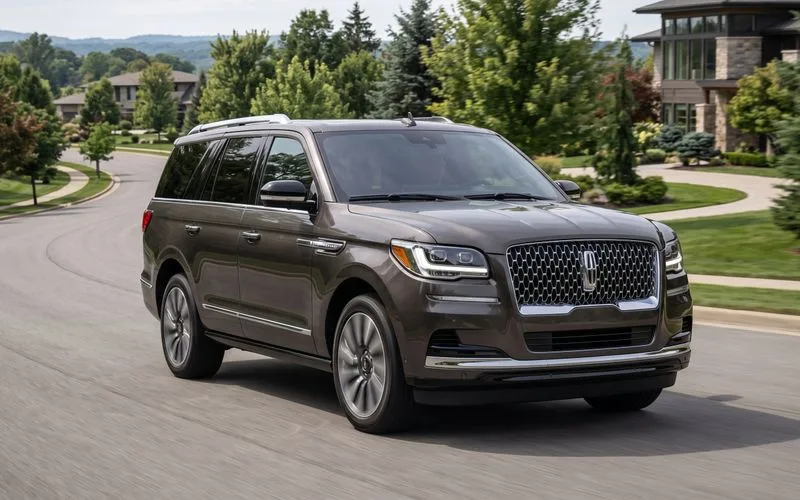 Lincoln NavigatorFull-Size Luxury SUVBetter at: Comfort and deals
The freshly redesigned Navigator matches the Escalade's luxury and beats it on fuel (17 MPG on regular-tolerant fuel), seat comfort and crash-test credentials — and it's usually the better-incentivized buy.
Compare 2.87B-
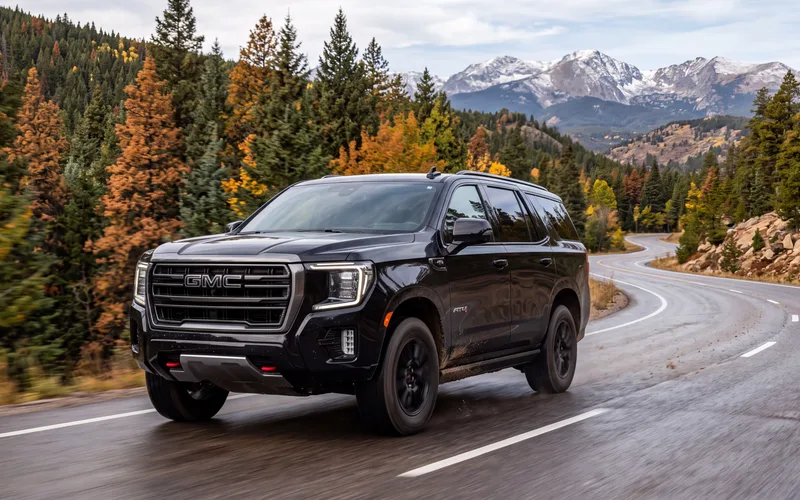 GMC YukonFull-Size SUVBetter at: Value
Same platform, same available 6.2L V8, ~$30,000 less, and a volume 5.3L V8 that runs on regular — most of the Escalade's substance without the six-figure ownership math.
Compare 2.96B-
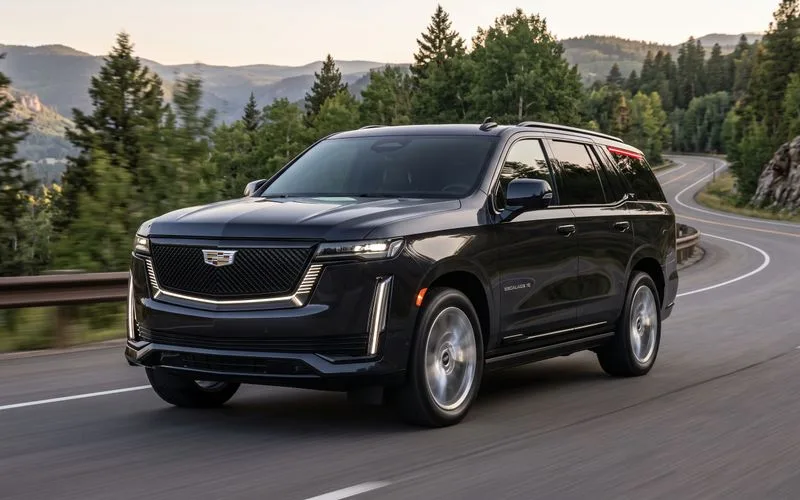 Cadillac Escalade IQFull-Size Luxury SUVBetter at: Running costs
Same Escalade presence and cabin without the $3,800-a-year fuel bill, plus four-wheel steering that makes a 227-inch SUV genuinely easier to park.
CompareHow it's evolved
10 scored model years · 2017–2026
Subject scores by year
Hover or tap a score to see what moved it versus the year before. A corner mark flags a big swing.
| Year | Performance | Efficiency | Safety | Space | Cost | Reliability | Tech | Use-case | Driving | Value |
|---|---|---|---|---|---|---|---|---|---|---|
| 2026 | 75 | 13 | 72 | 89 | 14 | 67 | 87 | 73 | 69 | 79 |
| 2025 | 72 | 12 | 78 | 88 | 15 | 60 | 87 | 70 | 67 | 76 |
| 2024 | 72 | 11 | 66 | 88 | 14 | 55 | 84 | 67 | 65 | 72 |
| 2023 | 73 | 11 | 63 | 88 | 13 | 56 | 85 | 65 | 64 | 70 |
| 2022 | 69 | 12 | 58 | 84 | 14 | 53 | 83 | 59 | 59 | 68 |
| 2021 | 70 | 12 | 58 | 88 | 36 | 58 | 78 | 56 | 61 | 75 |
| 2020 | 68 | 22 | 51 | 76 | 18 | 65 | 52 | 54 | 59 | 61 |
| 2019 | 66 | 20 | 48 | 73 | 11 | 63 | 47 | 53 | 55 | 53 |
| 2018 | 66 | 20 | 48 | 66 | 17 | 57 | 48 | 54 | 49 | 62 |
| 2017 | 67 | 21 | 47 | 63 | 15 | 49 | 49 | 51 | 48 | 61 |
Compare two years
Best fit & conditions
Higher scores mean a better fit for that use case. Learn more about use-case fit →
Subject profile
Academic Probation · NHTSA safety recalls
Oct 1, 2020Service brakes, hydraulic: power assist: vacuumThe output of the mechanical vacuum pump can decrease over time, decreasing the amount of vacuum/power brake assist.
Defect
General Motors LLC (GM) is recalling certain 2018 Cadillac Escalade, Chevrolet Silverado 1500 and Tahoe, GMC Sierra 1500 and Yukon vehicles equipped with either a 5.3L or 6.2L V8 engine. The output of the mechanical vacuum pump can decrease over time, decreasing the amount of vacuum/power brake assist.
Risk
A decrease in brake assist can increase the brake pedal effort and distance required to stop the vehicle, increasing the risk of a crash.
Remedy
GM will notify owners, and dealers will reprogram the Electronic Brake Control Module, free of charge. The recall began November 11, 2020. Owners may contact GM customer service at 1-866-522-9559, Cadillac customer service at 1-800-458-8006 or Chevrolet customer service at 1-800-630-2438. GM's number for this recall is N202300860.
NHTSA campaign 20V603000 ↗Manufacturer no. N20230086014,620 vehicles potentially affected (all models in the campaign)Owners notified Nov 11, 2020Filed by General Motors LLCFiled as ESCALADESep 26, 2018Seat belts: rear/otherCertain second-row or third-row rear seatbelts retractor assemblies may not automatically lock when the seatbelt is fully pulled out of the retractor, possibly preventing a child seat from being properly secured. As such, these vehicles fail to comply with the requirements of Federal Motor Vehicle Safety Standard (FMVSS) number 208, "Occupant Crash Protection."
Defect
General Motors LLC (GM) is recalling certain 2018-2019 Cadillac CT6, Escalade ESV, Chevrolet Suburban, Volt, and GMC Yukon XL vehicles. Certain second-row or third-row rear seatbelts retractor assemblies may not automatically lock when the seatbelt is fully pulled out of the retractor, possibly preventing a child seat from being properly secured. As such, these vehicles fail to comply with the requirements of Federal Motor Vehicle Safety Standard (FMVSS) number 208, "Occupant Crash Protection."
Risk
If the child seat is not properly secured in the event of a crash, it can increase the risk of injury.
Remedy
GM will notify owners, and dealers will inspect the rear seatbelt retractors and replace them if necessary, free of charge. The recall began November 7, 2018. Owners may contact Cadillac customer service at 1-800-458-8006, Chevrolet customer service at 1-800-222-1020 or GMC customer service at 1-800-462-8782. GM's number for this recall is 18315.
NHTSA campaign 18V673000 ↗Manufacturer no. 1831515,800 vehicles potentially affected (all models in the campaign)Owners notified Nov 7, 2018Filed by General Motors LLCFiled as ESCALADE ESV
23 recalls on other model years of the Escalade (2017, 2020–2026)
May 14, 2026Wheels: hubIncorrect bolts may have been installed on the left and right front wheel hubs, which can result in the bolts loosening or deforming over time.
Defect
General Motors, LLC is recalling certain 2025â2026 Cadillac Escalade, Escalade ESV, Chevrolet Suburban 1500, Tahoe, GMC Yukon, and Yukon XL vehicles with 24-inch wheels. Incorrect bolts may have been installed on the left and right front wheel hubs, which can result in the bolts loosening or deforming over time.
Risk
A bolt that loosens or breaks during vehicle operation can result in loss of vehicle control, increasing the risk of a crash.
Remedy
Dealers will replace the front left and right wheel hub bolts, free of charge. Owner notification letters were mailed June 18, 2026. Owners may contact GMC customer service at 1-800-462-8782, Chevrolet customer service at 1-800-222-1020 or Cadillac customer service at 1-800-333-4223. GM's number for this recall is N262554630. Vehicle Identification Numbers (VINs) involved in this recall became searchable on NHTSA.gov on May 14, 2026.
NHTSA campaign 26V304000 ↗Manufacturer no. N2625546302,457 vehicles potentially affected (all models in the campaign)Owners notified Jun 18, 2026Filed by General Motors, LLCFiled as ESCALADE, ESCALADE ESVMay 7, 2026Power train: transfer case (4-wheel drive)A component missing from the drivetrain transfer case may cause the front and/or rear wheels to lock up without warning to the driver.
Defect
General Motors, LLC (GM) is recalling certain 2026 Cadillac Escalade and Escalade ESV, Chevrolet Silverado 1500, Suburban, and Tahoe, and GMC Sierra 1500, Yukon, and Yukon XL vehicles with four-wheel (4WD) or all-wheel drive (AWD), and certain 2015-2020 Suburban, Escalade, Escalade ESV, Yukon, Yukon XL, and Tahoe vehicles. A component missing from the drivetrain transfer case may cause the front and/or rear wheels to lock up without warning to the driver.
Risk
Front or rear wheel lockup increases the risk of a crash.
Remedy
Owners are advised not to drive their vehicle until the remedy is completed. Dealers will inspect and, if necessary, replace the transfer case assembly, free of charge. Owner notification letters were mailed May 18, 2026. Owners may contact GMC customer service at 1-800-462-8782, Chevrolet customer service at 1-800-222-1020 or Cadillac customer service at 1-800-333-4223. GM's number for this recall is N262557620. Vehicle Identification Numbers (VINs) involved in this recall became searchable on NHTSA.gov on May 7, 2026.
NHTSA campaign 26V289000 ↗Manufacturer no. N26255762066 vehicles potentially affected (all models in the campaign)Owners notified May 18, 2026Filed by General Motors, LLCFiled as ESCALADE, ESCALADE ESVFeb 26, 2026Equipment: other: owners/service/other manualGeneral Motors has decided that certain 2027 Chevrolet Bolt EV, 2025-2026 Cadillac OPTIQ, Chevrolet Colorado, Equinox EV, GMC Canyon, 2026 Buick Enclave, Envision, Cadillac CT5, Escalade, Escalade ESV, Escalade IQ, Escalade IQL, LYRIQ, VISTIQ, Chevrolet Blazer EV, Corvette Convertible, Corvette Coupe, Corvette Convertible E-Ray, Equinox, Silverado 1500, 2500, 3500, Silverado EV, Suburban 1500, Tahoe, Traverse, GMC Acadia, Hummer EV Pickup, Hummer EV SUV, Sierra 1500, 2500, 3500, Sierra EV, Terrain, Yukon, and Yukon XL vehicles. The radio may not have been set to the correct status to download the electronic owner's manual during production. As such, these vehicles fail to comply with the requirements of Federal Motor Vehicle Safety Standard number 208, âOccupant Protection.â
Defect
General Motors has decided that certain 2027 Chevrolet Bolt EV, 2025-2026 Cadillac OPTIQ, Chevrolet Colorado, Equinox EV, GMC Canyon, 2026 Buick Enclave, Envision, Cadillac CT5, Escalade, Escalade ESV, Escalade IQ, Escalade IQL, LYRIQ, VISTIQ, Chevrolet Blazer EV, Corvette Convertible, Corvette Coupe, Corvette Convertible E-Ray, Equinox, Silverado 1500, 2500, 3500, Silverado EV, Suburban 1500, Tahoe, Traverse, GMC Acadia, Hummer EV Pickup, Hummer EV SUV, Sierra 1500, 2500, 3500, Sierra EV, Terrain, Yukon, and Yukon XL vehicles. The radio may not have been set to the correct status to download the electronic owner's manual during production. As such, these vehicles fail to comply with the requirements of Federal Motor Vehicle Safety Standard number 208, âOccupant Protection.â
Risk
Without an owner's manual to consult, owners may not know how to safely use and operate the vehicle, increasing the risk of injury in a crash.
Remedy
Dealers will reset the vehicle radio, which will facilitate automatic download of the electronic ownerâs manual, free of charge. Owner notification letters were mailed April 16, 2026. Owners may contact GM customer service at 1-866-467-9700, Chevrolet customer service at 1-800-222-1020 or Cadillac customer service at 1-800-333-4223. The manufacturer's number for this recall is N252540430. Vehicle Identification Numbers (VINs) involved in this recall became searchable on NHTSA.gov on February 26, 2026.
NHTSA campaign 26V114000 ↗Manufacturer no. N2525404305,861 vehicles potentially affected (all models in the campaign)Owners notified Apr 16, 2026Filed by General Motors, LLCFiled as ESCALADE, ESCALADE ESVFeb 13, 2026Power train: automatic transmission: control module: software · Power train: automatic transmission: fluid/lubricant: valves/valve bodyThe transmission control valve may fail and lock up the rear wheels.
Defect
General Motors, LLC (GM) is recalling certain 2022 Chevrolet Tahoe, Chevrolet Suburban, GMC Yukon, GMC Yukon XL, Cadillac Escalade, and Cadillac Escalade ESV vehicles equipped with 10 Speed Transmission with ETRS (Electronic Transmission Range Select). The transmission control valve may fail and lock up the rear wheels.
Risk
Rear wheels that lock up while driving increase the risk of a crash.
Remedy
Dealers will install new transmission control module (TCM) software, free of charge. Owner notification letters were mailed April 7, 2026. Owners may contact GM customer service at 1-888-988-7267, Cadillac customer service at 1-800-458-8006, GMC customer service at GMC 1-800-462-8782 or Chevrolet customer service at 1-800-222-1020. GM's number for this recall is N252536750. Vehicle Identification Numbers (VINs) involved in this recall became searchable on NHTSA.gov on February 12, 2026.
NHTSA campaign 26V085000 ↗Manufacturer no. N25253675043,743 vehicles potentially affected (all models in the campaign)Owners notified Apr 7, 2026Filed by General Motors, LLCFiled as ESCALADE, ESCALADE ESVSep 18, 2025Fuel system, diesel: storage: tank assemblyThe original fuel tank may have been replaced with an incorrect fuel tank, which can allow fuel to leak in a rollover crash.
Defect
General Motors, LLC (GM) is recalling certain 2021 Cadillac Escalade, 2021, 2023-2024 Chevrolet Tahoe, and 2022 and 2024 GMC Yukon vehicles equipped with a 6-cylinder diesel engine. The original fuel tank may have been replaced with an incorrect fuel tank, which can allow fuel to leak in a rollover crash.
Risk
A fuel leak in the presence of an ignition source increases the risk of a vehicle fire.
Remedy
Dealers will inspect for the correct fuel tank and replace it, if necessary, free of charge. Owner notification letters were mailed November 5, 2025. Owners may contact Cadillac customer service at 1-800-333-4223, Chevrolet customer service at 1-800-222-1020, or GMC customer service at 1-800-462-8782. GM's number for this recall is N252512770. Vehicle Identification Numbers (VINs) involved in this recall became searchable on NHTSA.gov on September 18, 2025.
NHTSA campaign 25V619000 ↗Manufacturer no. N25251277012 vehicles potentially affected (all models in the campaign)Owners notified Nov 5, 2025Filed by General Motors, LLCFiled as ESCALADEApr 24, 2025Engine and engine cooling: engine: hard parts internal/mechanicalThe connecting rod and/or crankshaft engine components may have manufacturing defects that can lead to engine damage and engine failure.
Defect
General Motors LLC (GM) is recalling certain 2021-2024 Cadillac Escalade and Escalade ESV, Chevrolet Silverado 1500, Suburban, and Tahoe, GMC Sierra 1500, Yukon, and Yukon XL vehicles equipped with a 6.2L V8 gas engine. The connecting rod and/or crankshaft engine components may have manufacturing defects that can lead to engine damage and engine failure.
Risk
Engine failure increases the risk of a crash.
Remedy
Dealers will inspect the engine, and as necessary, repair or replace the engine. For vehicles that pass inspection, dealers will add higher viscosity oil, install 6 oil fill cap, replace the oil filter, and update the owner's manual. Repairs will be performed free of charge. Owner notification letters were mailed June 18, 2025. Owners may contact Cadillac customer service at 1-800-333-4223, Chevrolet customer service at 1-800-222-1020, or GMC customer service at 1-800-462-8782. GM's number for this recall is N252494000.
NHTSA campaign 25V274000 ↗Manufacturer no. N252494000597,571 vehicles potentially affected (all models in the campaign)Owners notified Jun 18, 2025Filed by General Motors, LLCFiled as ESCALADE, ESCALADE ESVOct 24, 2024Power train: automatic transmission: control module: software · Power train: automatic transmission: fluid/lubricant: valves/valve bodyThe transmission control valve may fail and cause the rear wheels to lock-up.
Defect
General Motors, LLC (GM) is recalling certain 2020-2022 Chevrolet Silverado 1500, 2500, 3500, GMC Sierra 1500, 2500, 3500, 2021 Cadillac Escalade, Escalade ESV, Chevrolet Tahoe, Suburban, GMC Yukon, and Yukon XL vehicles equipped with diesel engines. The transmission control valve may fail and cause the rear wheels to lock-up.
Risk
Rear wheel lock-up can increase the risk of a crash.
Remedy
Dealers will install new transmission control module software, free of charge. GM will provide a special coverage program to cover the repair of transmissions that are identified by the remedy software as containing a defective control valve. Owner notification letters were mailed December 12, 2024. Owners may contact GM customer service at 1-888-988-7267, Cadillac customer service at 1-800-458-8006, GMC customer service at GMC 1-800-462-8782 or Chevrolet customer service at 1-800-222-1020. GM's number for this recall is N242454440.
NHTSA campaign 24V797000 ↗Manufacturer no. N242454440463,295 vehicles potentially affected (all models in the campaign)Owners notified Dec 12, 2024Filed by General Motors, LLCFiled as ESCALADE, ESCALADE ESVSep 12, 2024Service brakes, hydraulic: brake fluid low warning: lamp · Service brakes, hydraulic: power assist: electric: control module: softwareThe electronic brake control module software may fail to display a warning light when a loss of brake fluid occurs. As such, these vehicles fail to comply with the requirements of Federal Vehicle Safety Standard number 135, "Light Vehicle Brake Systems."
Defect
General Motors, LLC (GM) is recalling certain 2023 Chevrolet Silverado 1500, GMC Sierra 1500, 2023-2024 Chevrolet Tahoe, Suburban, GMC Yukon, Yukon XL, Cadillac Escalade, and Escalade ESV vehicles. The electronic brake control module software may fail to display a warning light when a loss of brake fluid occurs. As such, these vehicles fail to comply with the requirements of Federal Vehicle Safety Standard number 135, "Light Vehicle Brake Systems."
Risk
Without a warning light, the vehicle may be driven with low brake fluid, which can reduce braking performance and increase the risk of a crash.
Remedy
The Electronic Brake Control Module (eBCM) software will be updated through an over-the-air (OTA) update or by a dealer, free of charge. Owner notification letters were mailed October 25, 2024. Owners can contact GMC customer service at 1-800-462-8782, Chevrolet customer service at 1-800-222-1020, or Cadillac customer service at 1-800-458-8006. GM's number for this recall is N242447990.
NHTSA campaign 24V674000 ↗Manufacturer no. N242447990449,671 vehicles potentially affected (all models in the campaign)Owners notified Oct 25, 2024Filed by General Motors, LLCFiled as ESCALADE, ESCALADE ESVSep 20, 2023Suspension: rearThe rear suspension outer control arm bolts may not have been properly heat-treated, which can cause the bolts to break.
Defect
General Motors, LLC (GM) is recalling certain 2023 Cadillac Escalade, Escalade ESV, Chevrolet Suburban, Chevrolet Tahoe, GMC Yukon, and Yukon XL vehicles. The rear suspension outer control arm bolts may not have been properly heat-treated, which can cause the bolts to break.
Risk
A broken suspension bolt can result in misalignment of the rear wheel, increasing the risk of a crash.
Remedy
Dealers will replace both rear suspension outer control arm bolts, free of charge. Owner notification letters were mailed November 14, 2023. Owners may contact Chevrolet customer service at 1-800-222-1020; Cadillac customer service at 1-800-458-8006; and GMC customer service at 1-800-462-8782. GM's number for this recall is N232415910.
NHTSA campaign 23V642000 ↗Manufacturer no. N232415910189 vehicles potentially affected (all models in the campaign)Owners notified Nov 14, 2023Filed by General Motors, LLCFiled as ESCALADE, ESCALADE ESVDec 8, 2022Exterior lighting: lighting control module: softwareThe daytime running lights (DRLs) may not deactivate when the headlights are on. As such, these vehicles fail to comply with the requirements of Federal Motor Vehicle Safety Standard number 108, "Lamps, Reflective Devices, and Associated Equipment."
Defect
General Motors, LLC (GM) is recalling certain 2020-2023 Cadillac CT4 and CT5; 2021-2023 Buick Envision; and 2022-2023 Cadillac Escalade and Escalade ESV, Chevrolet Silverado 1500, Suburban, Tahoe, GMC Sierra 1500, Yukon, and Yukon XL vehicles. The daytime running lights (DRLs) may not deactivate when the headlights are on. As such, these vehicles fail to comply with the requirements of Federal Motor Vehicle Safety Standard number 108, "Lamps, Reflective Devices, and Associated Equipment."
Risk
DRLs that do not deactivate as intended may result in a glare, reducing visibility, and increasing the risk of a crash.
Remedy
The body control module software will be updated by a dealer, or through an over-the-air (OTA) update, free of charge. Owner notification letters were mailed January 23, 2023. Owners may contact GMC customer service at 1-888-988-7267, Chevrolet customer service at 1-800-222-1020, or Cadillac customer service at 1-800-458-8006. GM's number for this recall is N222386380. This recall expands previous recall number 22V-827.
NHTSA campaign 22V903000 ↗Manufacturer no. N222386380740,108 vehicles potentially affected (all models in the campaign)Owners notified Jan 23, 2023Filed by General Motors, LLCFiled as ESCALADE, ESCALADE ESVNov 3, 2022Exterior lighting: lighting control module: softwareThe daytime running lights (DRLs) may not deactivate when the headlights are on. As such, these vehicles fail to comply with the requirements of Federal Motor Vehicle Safety Standard number 108, "Lamps, Reflective Devices, and Associated Equipment."
Defect
General Motors, LLC (GM) is recalling certain 2021 Yukon, Yukon XL, Chevrolet Tahoe, Chevrolet Suburban, Cadillac Escalade, and Cadillac Escalade ESV vehicles. The daytime running lights (DRLs) may not deactivate when the headlights are on. As such, these vehicles fail to comply with the requirements of Federal Motor Vehicle Safety Standard number 108, "Lamps, Reflective Devices, and Associated Equipment."
Risk
Daytime Running Lights that do not deactivate as intended may cause a glare, reducing visibility and increasing the risk of a crash.
Remedy
Dealers will provide an over-the-air (OTA) update for the Body Control Module software, free of charge. Owner notification letters were mailed December 15, 2022. Owners may contact GM customer service at 1-888-988-7267, Chevrolet customer service at 1-800-222-1020, or Cadillac customer service at 1-800-458-8006. GM's number for this recall is N222382220.
NHTSA campaign 22V827000 ↗Manufacturer no. N222382220338,735 vehicles potentially affected (all models in the campaign)Owners notified Dec 15, 2022Filed by General Motors, LLCFiled as ESCALADE, ESCALADE ESVAug 11, 2022Seat belts: critical fastenersThe rivet that retains the buckle to the mounting bracket in the left or right side third-row seat belt buckle assembly may have been improperly formed.
Defect
General Motors, LLC (M) is recalling certain 2021-2022 Cadillac Escalade, Escalade ESV, Chevrolet Suburban, Tahoe, GMC Yukon, and Yukon XL vehicles equipped with third-row seats. The rivet that retains the buckle to the mounting bracket in the left or right side third-row seat belt buckle assembly may have been improperly formed.
Risk
A seat belt with a deformed rivet may not properly restrain an occupant, increasing the risk of injury during a crash.
Remedy
Dealers will inspect the rivet head formation on both the left and right side third-row seat belt buckle assemblies and replace seat belt buckle assemblies, as necessary, free of charge. Interim owner notification letters informing owners of the safety risk were mailed September 28, 2022. Owner notification letters were mailed on November 1, 2022. Owners may contact Chevrolet customer service at 1-800-222-1020; Cadillac customer service at 1-800-458-8006; and GMC customer service at 1-800-462-8782. GM's number for this recall is N222372380.
NHTSA campaign 22V617000 ↗Manufacturer no. N222372380484,155 vehicles potentially affected (all models in the campaign)Owners notified Nov 1, 2022Filed by General Motors, LLCFiled as ESCALADE, ESCALADE ESVJan 27, 2022Power train: driveline: driveshaftThe rear wheel driveshaft assemblies may have internal components that were not heat-treated properly, possibly resulting in driveshaft failure.
Defect
General Motors, LLC (GM) is recalling certain 2021 GMC Yukon, Yukon XL, Cadillac Escalade, Escalade ESV, Chevrolet Suburban, and Chevrolet Tahoe vehicles. The rear wheel driveshaft assemblies may have internal components that were not heat-treated properly, possibly resulting in driveshaft failure.
Risk
Driveshaft failure can cause a sudden loss of drive power, increasing the risk of a crash.
Remedy
Dealers will replace the left and/or right rear driveshaft assemblies, free of charge. Owner notification letters were mailed on March 14, 2022. Owners may contact Chevrolet customer service at 1-800-222-1020; Cadillac customer service at 1-800-458-8006 or GMC customer service at 1-800-462-8782. GM's number for this recall is N212351030.
NHTSA campaign 22V036000 ↗Manufacturer no. N2123510301,789 vehicles potentially affected (all models in the campaign)Owners notified Mar 14, 2022Filed by General Motors, LLCFiled as ESCALADE, ESCALADE ESVSep 23, 2021Fuel system, gasoline: delivery: fuel pump: control/drive moduleThe fuel pump power control module may cause the fuel pump to fail or operate intermittently, which can interrupt fuel flow to the engine, and cause an unexpected engine stall.
Defect
General Motors, LLC (GM) is recalling certain 2021 Cadillac Escalade, Escalade ESV, Chevrolet Suburban, Tahoe, GMC Yukon, and Yukon XL vehicles. The fuel pump power control module may cause the fuel pump to fail or operate intermittently, which can interrupt fuel flow to the engine, and cause an unexpected engine stall.
Risk
An engine stall increases the risk of a crash.
Remedy
Dealers will replace the fuel pump power control module, free of charge. Owner notification letters were mailed on October 14, 2021. Owners may contact Chevrolet customer service at 1-800-222-1020; Cadillac customer service at 1-800-458-8006; or GMC customer service at 1-800-462-8782. GM's number for this recall is N212332040.
NHTSA campaign 21V739000 ↗Manufacturer no. N21233204014,939 vehicles potentially affected (all models in the campaign)Owners notified Oct 14, 2021Filed by General Motors, LLCFiled as ESCALADE, ESCALADE ESV, ESCALADE NAJun 17, 2021Steering: steering control moduleA software issue may cause a loss of power steering assist at startup or while driving.
Defect
General Motors, LLC (GM) is recalling certain 2021 Cadillac Escalade, Escalade ESV, Chevrolet Suburban, Chevrolet Tahoe, GMC Yukon, and Yukon XL vehicles. A software issue may cause a loss of power steering assist at startup or while driving.
Risk
Increased steering effort, particularly at lower speeds, increases the risk of a crash.
Remedy
The power steering module software will be updated by a dealer, or through an over-the-air (OTA) update, free of charge. Owner notification letters were mailed July 13, 2021. Owners may contact Chevrolet customer service at 1-800-222-1020; Cadillac customer service at 1-800-458-8006; or GMC customer service at 1-800-462-8782. GM's number for this recall is N212333900.
NHTSA campaign 21V455000 ↗Manufacturer no. N21233390026,847 vehicles potentially affected (all models in the campaign)Owners notified Jul 13, 2021Filed by General Motors, LLCFiled as ESCALADE ESV, ESCALADE NAJun 10, 2021Air bags: srs malfunction warning lamp/light · Electrical system: softwareThe communications gateway module incorrectly processes a loss of communication with the sensing diagnostic module (SDM), causing the air bag malfunction indicator light to inconsistently illuminate.
Defect
General Motors, LLC (GM) is recalling certain 2021 Buick Envision, Cadillac CT4, CT5, Escalade, Escalade ESV, Chevrolet Tahoe, Corvette, Suburban, GMC Yukon, Yukon XL vehicles. The communications gateway module incorrectly processes a loss of communication with the sensing diagnostic module (SDM), causing the air bag malfunction indicator light to inconsistently illuminate.
Risk
The air bag malfunction indicator light may fail to warn the driver of a problem with the air bag, increasing the risk of injury.
Remedy
The communications gateway module software will be updated by a dealer, or through an over-the-air (OTA) update, free of charge. Owner notification letters were mailed on July 1, 2021. Owners may contact Buick customer service at 1-800-521-7300, Cadillac customer service at 1-800-458-8006, Chevrolet customer service at 1-800-222-1020, or GMC customer service at 1-800-462-8782. GM's number for this recall is N212338110.
NHTSA campaign 21V421000 ↗Manufacturer no. N212338110285,622 vehicles potentially affected (all models in the campaign)Owners notified Jul 1, 2021Filed by General Motors, LLCFiled as ESCALADE, ESCALADE ESVMar 18, 2021Seat belts · Seat belts: rear/otherThe third-row outboard seat belts may have been entrapped or misrouted behind the outboard seat-folding mechanism, which could result in damaged seat belts.
Defect
General Motors, LLC (GM) is recalling certain 2021 Cadillac Escalade, Escalade ESV, GMC Yukon, Yukon XL, Chevrolet Suburban, and Tahoe vehicles with third-row seating. The third-row outboard seat belts may have been entrapped or misrouted behind the outboard seat-folding mechanism, which could result in damaged seat belts.
Risk
A damaged seat belt can break during a crash, increasing the risk of injury to the occupant.
Remedy
GM will notify owners, and dealers will inspect the third-row outboard seat belts, replacing any damaged seat belts, and rerouting them if necessary, free of charge. The recall began on April 21, 2021. Owners may contact Chevrolet customer service at 1-800-222-1020, GMC customer service at 1-800-462-8782, and Cadillac customer service at 1-800-458-8006. GM's number for this recall is N202313000.
NHTSA campaign 21V190000 ↗Manufacturer no. N20231300094,641 vehicles potentially affected (all models in the campaign)Owners notified Apr 21, 2021Filed by General Motors, LLCFiled as ESCALADE, ESCALADE ESVFeb 25, 2021TiresThe affected tires were cured for too long during production.
Defect
General Motors LLC (GM) is recalling certain 2020 Buick Enclave, Cadillac XT4, XT5, Escalade, Escalade ESV, Chevrolet Suburban, Tahoe, Traverse, GMC Yukon, Yukon XL, 2018-2021 Chevrolet Express, GMC Savana, 2019-2020 Chevrolet Blazer, Silverado 1500, GMC Acadia, Sierra 1500, and certain Continental tires sold to the aftermarket for various model year 2018-2021 vehicles. The affected tires were cured for too long during production.
Risk
Over cured tires may develop a break in the sidewall resulting in sudden air loss or a belt edge separation which could lead to a tread/belt loss. Either condition can cause a loss of vehicle control, increasing the risk of a crash.
Remedy
GM will notify owners, and dealers will inspect the tires, replacing them as necessary, free of charge. The recall began March 22, 2021. Owners may contact GMC customer service at 1-888-988-7267, Buick customer service at 1-866-608-8080, Chevrolet customer service at 1-800-222-1020 or Cadillac customer service at 1-800-458-8006. GM's number for this recall is N212329050.
NHTSA campaign 21V115000 ↗Manufacturer no. N21232905033,838 vehicles potentially affected (all models in the campaign)Owners notified Mar 22, 2021Filed by General Motors, LLCFiled as ESCALADE, ESCALADE ESVDec 23, 2020Seat belts · Seat belts: critical fastenersIncorrect bolts may have been used at one or more fastening locations to secure the seat belts to the vehicle. If an incorrect bolt was used, the seat belt may not be properly attached to the vehicle.
Defect
General Motors, LLC (GM) is recalling certain 2020 Chevrolet Bolt EV and 2021 GMC Canyon and Sierra 1500, 2500 and 3500, Yukon, Yukon XL, Cadillac Escalade and Escalade ESV and Chevrolet Blazer, Camaro, Colorado, Equinox, Silverado 1500, 2500 and 3500, Suburban and Tahoe vehicles. Incorrect bolts may have been used at one or more fastening locations to secure the seat belts to the vehicle. If an incorrect bolt was used, the seat belt may not be properly attached to the vehicle.
Risk
If a seat belt assembly is not properly attached to the vehicle, the seat belt may not properly restrain an occupant in the event of a crash, increasing the risk of injury.
Remedy
GM will notify owners, and dealers will replace the suspect bolts, free of charge. The recall began January 29, 2021. Owners may contact GMC customer service at 1-800-462-8785, Cadillac customer service at 1-800-458-8006, or Chevrolet customer service at 1-800-222-1020. GM's number for this recall is N202322230.
NHTSA campaign 20V811000 ↗Manufacturer no. N202322230470 vehicles potentially affected (all models in the campaign)Owners notified Jan 29, 2021Filed by General Motors, LLCFiled as ESCALADE ESV, ESCALADE NADec 17, 2020Electrical system: instrument cluster/panelThe front passenger seat belt and airbag status telltale lights located in the overhead console in these vehicles may be set to "night mode" when the vehicle is started using remote start or when the vehicle is turned off and re-started after approximately ten minutes without opening the door. In daytime, if night mode is active, the telltale lights may not be visible, and fail to comply with the requirements of Federal Motor Vehicle Safety Standard numbers 101, "Control and Displays" and 208, "Occupant Crash Protection."
Defect
General Motors, LLC (GM) is recalling certain 2021 Cadillac Escalade and Escalade ESV vehicles. The front passenger seat belt and airbag status telltale lights located in the overhead console in these vehicles may be set to "night mode" when the vehicle is started using remote start or when the vehicle is turned off and re-started after approximately ten minutes without opening the door. In daytime, if night mode is active, the telltale lights may not be visible, and fail to comply with the requirements of Federal Motor Vehicle Safety Standard numbers 101, "Control and Displays" and 208, "Occupant Crash Protection."
Risk
If the telltale lights are not visible, the driver and front passenger may not know that the front passenger is unbuckled or has a deactivated air bag, increasing the risk of passenger injury in a crash.
Remedy
The body control module (BCM) software will be updated by a dealer, or through an over-the-air (OTA) update, free of charge. The recall began February 1, 2021. Owners may contact Cadillac customer service at 1-800-458-8006. GM's number for this recall is N202319980.
NHTSA campaign 20V790000 ↗Manufacturer no. N2023199803,203 vehicles potentially affected (all models in the campaign)Owners notified Feb 1, 2021Filed by General Motors, LLCFiled as ESCALADE NANov 21, 2019Fuel system, gasoline: delivery: fuel pumpThe fuel pump may be missing a pressure regulator, allowing for over-pressurization of the fuel system.
Defect
General Motors LLC (GM) is recalling certain 2020 Cadillac Escalade, Escalade ESV, Chevrolet Camaro, Silverado 1500, Suburban, Tahoe, GMC Sierra 1500, Yukon, and Yukon XL vehicles. The fuel pump may be missing a pressure regulator, allowing for over-pressurization of the fuel system.
Risk
Over-pressurization can crack the fuel pump and cause leaks, increasing the risk of a fire in the presence of an ignition source.
Remedy
GM will notify owners, and dealers will replace the fuel pump, free of charge. The recall began December 18, 2019. Owners may contact Cadillac customer service at 1-800-333-4223, Chevrolet customer service at 1-800-222-1020, or GMC customer service at 1-888-988-7267. GM's number for this recall is N192283991.
NHTSA campaign 19V837000 ↗Manufacturer no. N192283991502 vehicles potentially affected (all models in the campaign)Owners notified Dec 18, 2019Filed by General Motors LLCFiled as ESCALADE, ESCALADE ESVSep 6, 2019Service brakes, hydraulic: power assist: vacuumThe amount of vacuum created by the vacuum pump may decrease over time.
Defect
General Motors LLC (GM) is recalling certain 2015-2017 Cadillac Escalade, 2014-2018 Chevrolet Silverado, GMC Sierra, 2015-2018 Chevrolet Suburban, Tahoe, GMC Yukon vehicles. The amount of vacuum created by the vacuum pump may decrease over time.
Risk
As the vacuum level drops, the brake assist decreases, increasing braking effort, extending the distance required to stop the vehicle, thereby increasing the risk of a crash.
Remedy
GM will notify owners, and dealers will reprogram the Electronic Brake Control Module, free of charge. The recall began October 8, 2019. Owners may contact Chevrolet customer service at 1-800-630-2438, Cadillac customer service at 1-800-458-8006 or GMC customer service at 1-800-462-8782. GM's number for this recall is N192268490.
NHTSA campaign 19V645000 ↗Manufacturer no. N1922684903,456,719 vehicles potentially affected (all models in the campaign)Owners notified Oct 8, 2019Filed by General Motors LLCFiled as ESCALADESep 8, 2016Air bags: frontal · Air bags: frontal: sensor/control module-inactive · Seat belts: pretensionerIn the affected vehicles, certain driving conditions may cause the air bag sensing and diagnostic module (SDM) software to activate a diagnostic test. During this test, deployment of the frontal air bags and the seat belt pretensioners would not occur in the event of a crash.
Defect
General Motors LLC (GM) is recalling certain model year 2015-2017 Chevrolet Silverado 2500 HD, 3500 HD, Tahoe, Suburban, GMC Sierra 2500 HD and 3500 HD, GMC Yukon, GMC Yukon XL, Cadillac Escalade and Cadillac Escalade ESV vehicles and 2014-2017 Chevrolet Corvette, Silverado 1500, Trax, Caprice Police Pursuit Vehicle, GMC Sierra 1500, Buick Encore, and 2014-2016 Buick Lacrosse, Chevrolet Spark EV and SS vehicles. In the affected vehicles, certain driving conditions may cause the air bag sensing and diagnostic module (SDM) software to activate a diagnostic test. During this test, deployment of the frontal air bags and the seat belt pretensioners would not occur in the event of a crash.
Risk
A failure of the front air bags or seat belt pretensioners to deploy in the event of a crash necessitating deployment increases the risk of injury to the driver and front passenger.
Remedy
GM will notify owners, and dealers will reflash the SDM software. Vehicles that have had a previous air bag deployment will have the SDM replaced. These repairs will be performed free of charge. The recall began on October 13, 2016. Owners may contact Buick customer service at 1-800-521-7300, Cadillac customer service at 1-800-458-8006, Chevrolet customer service at 1-800-222-1020, or GMC customer service at 1-800-462-8782. GM's number for this recall is 16007.
NHTSA campaign 16V651000 ↗Manufacturer no. 160073,640,162 vehicles potentially affected (all models in the campaign)Owners notified Oct 13, 2016Filed by General Motors LLCFiled as ESCALADE, ESCALADE ESV
Source: NHTSA Office of Defects Investigation recall database, model years 2017–2026. Recalls are listed by model year as the manufacturer filed them; whether a specific car is affected depends on its VIN — check a VIN at nhtsa.gov ↗. NHTSA model names matched to this page: ESCALADE, ESCALADE ESV, ESCALADE NA.
Detailed scoring by subject
1Performance & PowertrainThe Escalade's best-graded category.2.45C+
Standard and only powertrain across all 2018 Escalade trims (Luxury, Premium Luxury, Platinum) is the 6.2L L86 V8, unchanged from 2017.
Peak torque for the 6.2L V8, the sole engine offered in 2018.
Instrumented figure for the 6.2L V8 RWD Escalade with the new-for-2018 10-speed automatic; 4WD models run marginally slower due to added weight.
The 6.2L V8 is smooth and torquey with a strong soundtrack under load, and GM's Active Fuel Management cylinder deactivation cuts in and out with little detectable transition harshness; the new 10-speed pairs well with it.
The all-new 10-speed automatic (10L80) replacing the 8-speed for 2018 shifts crisply with a wide ratio spread, keeping the V8 in its sweet spot with minimal hunting; first application of this transmission in a luxury SUV.
Best-case tow rating with the RWD 6.2L V8 and factory tow package; 4WD models rate slightly lower due to added driveline weight.
Cadillac's Autotrac active on-demand 4WD is optional across all trims (Luxury, Premium Luxury, Platinum) alongside standard RWD, but it is a road-biased AWD-style system with no low-range transfer case or locking differentials.
8 inches of ground clearance, street-oriented all-season tires, and no skid plates, low range, or locking differentials — the Escalade is a pavement-focused luxury SUV with no dedicated off-road trim.
2018 offers a single powertrain — the 6.2L V8, newly paired with a 10-speed automatic — across every trim and both RWD/4WD configurations; the 3.0L Duramax diesel option did not arrive until the 2021 model year.
2Efficiency & RangeOne of the Escalade's weakest categories.0.00F
EPA combined rating for the 6.2L V8 paired with the new-for-2018 10-speed automatic, the only powertrain offered; identical for RWD and 4WD.
EPA city rating, identical across RWD and 4WD configurations.
EPA highway rating for the volume RWD configuration; the new 10-speed automatic's wider ratio spread lifted highway MPG ~5% versus the outgoing 8-speed. 4WD models are rated 2 MPG lower on the highway cycle.
EPA-reported total range on a full 26-gallon tank at the combined fuel economy rating; identical for RWD and 4WD.
EPA's standard annual fuel cost estimate at 15,000 miles/year, using premium gasoline pricing assumptions; well above the segment norm for a full-size SUV.
Premium gasoline is required (not merely recommended) across all 2018 Escalade trims, adding real cost on top of already low MPG.
3SafetyOne of the Escalade's weakest categories.1.18D
NHTSA's 2018 Escalade AWD vehicle-detail page shows a 4-star overall composite built from a 4-star frontal result, 5-star side result, and 3-star rollover result — the rollover mark is typical for a tall body-on-frame SUV. The longer-wheelbase ESV variant tested 5 stars frontal/side with the same 3-star rollover.
IIHS did not crash test the 2018 Escalade — its ratings page carries no moderate/small-overlap front, side, roof-strength or head-restraint results and no Top Safety Pick/TSP+ award. Front crash prevention (vehicle-to-vehicle) shows both available systems meeting only the forward-collision-warning requirement, with autobrake listed 'Not tested'; pedestrian front crash prevention is not addressed.
The base 2018 Escalade trim ships without forward collision alert, automatic braking, lane keep assist or blind-spot monitoring. The volume Luxury trim adds the Driver Awareness Package as standard, bundling forward collision warning, low-speed forward automatic emergency braking, lane keep assist with lane departure warning, blind-spot monitoring, rear cross-traffic alert, lane change alert and IntelliBeam auto high-beam headlights — a comprehensive core suite at the volume trim, but adaptive cruise control still requires stepping up to Premium Luxury.
IIHS lists both available AEB implementations (base's optional low-speed forward automatic braking and the Driver Awareness Package's forward automatic braking with FCW) as meeting only the forward-collision-warning requirement, with 'autobrake not tested' for either. Without an independently verified Superior/Advanced result, and with the base-trim system explicitly low-speed-only, this is an unverified, speed-limited system rather than a proven strong performer.
Blind-spot monitoring, rear cross-traffic alert and lane change alert are standard from the Luxury trim up as part of the Driver Awareness Package, but absent on the base trim, and coverage is alert-only with no active steering/braking intervention or trailer-aware mode documented.
The Driver Awareness Package's lane keep assist (standard Luxury+) is this GM generation's warning-plus-steering-nudge implementation with driver-seat vibration alerts — functional lane departure correction but not true lane-centering, which arrived on Cadillacs only with Super Cruise, not offered on this generation's Escalade.
Adaptive cruise control is not available on the volume Luxury trim for 2018 — Edmunds confirms it is standard only from Premium Luxury up, paired there with a more advanced forward/reverse automatic braking collision-mitigation system — so the representative configuration ships with conventional cruise only and no combined highway-assist behavior.
Cadillac's Super Cruise hands-free system was exclusive to the CT6 sedan through this era and was not offered on the Escalade in any trim for 2018 — it did not reach the Escalade lineup until the redesigned 2021 model.
IIHS published no headlight rating for the 2018 Escalade, so no independent Good/Acceptable/Marginal grade exists. HID headlamps are standard with IntelliBeam adaptive auto high-beam available via the Driver Awareness Package on Luxury trim and up — a mid-pack setup for the segment absent a verified test result.
Reviewers of this generation note visibility is compromised by the Escalade's styling and thick pillars typical of its size and height. A standard surround-view camera system helps compensate for low-speed maneuvering blind zones, offsetting some of the sightline limitations.
Second-row captain's chairs carry two full LATCH positions (lower anchors plus top tether each), but the third row has tether-anchor points only with no lower LATCH anchors, so a car seat installed there needs the seatbelt plus tether rather than a full LATCH install — a real compromise for families seating multiple child seats across three rows, offset somewhat by wide door openings and generous interior space.
4Space & ComfortOne of the Escalade's strongest categories.2.44C+
Standard three-row full-size SUV seating; volume trims (Premium Luxury/Platinum) run 2nd-row captain's chairs for 7, base Luxury offers an 8-passenger bench.
Manufacturer-published interior dimension for the 2018 Escalade standard-wheelbase model.
Manufacturer-published interior dimension; exceeds the typical SUV band due to the Escalade's large full-size footprint.
Manufacturer-published 2nd-row headroom for the 2018 Escalade.
Manufacturer-published 2nd-row legroom for the 2018 Escalade.
Third row is genuinely tight for adults — 24.8 in of legroom is well below segment norms — and reviewers direct it at kids only, though power second-row tumble seats ease access.
Manufacturer-published cargo volume behind the second row with the third row folded, for the standard-wheelbase (non-ESV) 2018 Escalade.
Manufacturer-published maximum cargo volume with 2nd and 3rd rows folded flat, standard-wheelbase model.
Competitive but unremarkable console/door storage for the class; the standout 'giga console' and flat-floor redesign didn't arrive until the 2021 generation.
Front seats are well-cushioned and widely praised, with heated/ventilated and (Platinum) massaging front seats; some reviewers note the 2nd-row captain's chairs are firmer than ideal for long stints.
Standard Magnetic Ride Control keeps body motions controlled, but reviewers consistently flag the ride as stiff on the large factory wheels, keeping it mid-pack rather than plush.
Reasonably hushed at cruise for a body-on-frame SUV, though the naturally-aspirated V8 is audible under load and there's no active noise cancellation on this generation.
Heated/ventilated front seats, heated 2nd row, heated steering wheel and tri-zone climate control are available from Premium Luxury up, with massaging front seats added on Platinum.
5Cost of OwnershipThe Escalade's lowest-graded category.0.00F
Entry-trim MSRP for the standard-wheelbase, RWD base Escalade, including destination charge.
Premium Luxury 4WD is the volume configuration for the Escalade — the mid-upper trim buyers gravitate to for Magnetic Ride Control, upgraded leather, and full driver-assist suite without Platinum's price premium.
Industry estimate for combined scheduled maintenance and expected repair costs over the first 5 years; not 2018-specific but consistent with full-size Cadillac SUV class data.
Full-size luxury SUV depreciation estimates for the Escalade cluster around 55–61% loss over 5 years, slightly worse than the luxury large-SUV category average of ~54%.
Standard Cadillac bumper-to-bumper coverage for the 2018 model year.
Standard Cadillac powertrain coverage for the 2018 model year, shorter than several rivals' 6yr/70k-plus or 10-year offers from mainstream brands' luxury divisions.
All 2018 Cadillacs including the Escalade carry Cadillac Premium Care Maintenance — 3 years/36,000 miles of complimentary oil changes, tire rotations and multi-point inspections — plus OnStar-based roadside assistance and connected-service trials for the same window, a meaningful multi-year benefit even if shorter than the 4yr/50k coverage offered on 2011–2016 Cadillacs.
$88,990 volume-trim price minus its estimated resale value after 5 years (42% retained, or about $37,376) leaves about $51,614 in depreciation. Add the projected $4,803 in 5-year maintenance and repairs, and owning this vehicle for 5 years costs about $56,417 in total.
6Reliability & QualityMid-pack among this car's ten categories.1.82C-
J.D. Power rated the 2018 Escalade's predicted reliability about average (3/5), while Consumer Reports' subscriber-survey data on this generation has run below the segment average — consistent, mixed-not-strong signals rather than a top-tier prediction.
Cadillac has been a mid-pack-to-below-average dependability brand across CR and J.D. Power studies through the 2010s, though it has posted stronger J.D. Power VDS finishes in more recent years — a track record of mixed rather than consistently strong dependability at the time this generation was sold.
The 2018 Escalade carries a single NHTSA recall (vacuum brake-assist pump reprogram on 5.3L/6.2L trucks), which is light for the segment, but it also generated real service-bulletin activity — a 10-speed transmission recalibration for delayed/harsh shifts and recurring CUE touchscreen bubbling/cracking complaints — so it lands in the typical, non-systemic band rather than a clean-record top score.
The 5.3L/6.2L Gen V V8 family is a proven, high-mileage architecture shared across GM's full-size trucks and SUVs, but it carries a well-documented Active Fuel Management lifter-failure risk (commonly surfacing ~120k miles, now the subject of class-action litigation) that keeps it from a clean bill of health; 2018 also introduced a new 10-speed automatic that needed a shift-calibration fix out of the gate.
Reviewers were split: the Platinum trim's leather-intensive cabin and soft-touch surfaces were praised as stellar, but Car and Driver flagged 'questionable interior quality' and 'superficial' feel on lower trims for a vehicle priced well into luxury territory — competitive but not class-leading for the price.
Cadillac engineered tight panel tolerances and triple-sealed doors for this generation, and body/chassis assembly draws few complaints, but the CUE touchscreen's design and installation flaws (bubbling, cracking, unresponsiveness) were a recurring, generation-wide fit-and-finish black mark that keeps this from a strong score.
Cadillac fields a nationwide network of roughly 900 dealers with dedicated luxury-brand service facilities, and J.D. Power customer-service-index rankings for Cadillac have been solidly mid-to-upper-pack in the years around this generation — dense coverage with a decent, not class-leading, service reputation.
Parts commonality with the high-volume Tahoe/Suburban/Yukon platform keeps mechanical parts widely available and repair frequency low, and RepairPal's $1,007 average annual cost undercuts the luxury full-size SUV average of $1,127 — but RepairPal's own 2.5/5 reliability rating (6th of 19 in class) and above-average 20% severe-repair probability temper the score below a strong band.
7Technology & InfotainmentGrades below the middle of the scale.1.19D
The CUE center display is a fixed 8-inch touchscreen across the 2018 Escalade lineup; no larger screen was offered on any trim this model year.
CUE's capacitive-touch controls were widely criticized as laggy and glitch-prone for this generation, and the hardware was later the subject of a class-action lawsuit over screen defects.
Apple CarPlay and Android Auto were available on the 2018 Escalade but only via wired USB connection — wireless projection wasn't offered on GM's CUE-generation hardware.
CUE's built-in navigation and voice recognition are functional and standard on nav-equipped trims, but reviewers generally found them less fluid than phone-projection alternatives.
Bose Centerpoint surround audio is standard, stepping up to a 16-speaker Bose Panaray premium system on upper trims — consistently praised in period reviews.
A 12.3-inch reconfigurable digital driver display is standard across the lineup, letting the driver customize gauge layout — a strong offering for MY2018.
This generation of GM infotainment predates whole-vehicle OTA software updates; CUE map/software updates were typically applied via USB drive or dealer visit, not pushed remotely.
OnStar RemoteLink / myCadillac app covers remote start, lock/unlock, vehicle locate and diagnostics, but core remote functions require an active OnStar subscription.
USB ports front and rear plus 12V outlets cover the basics, and a wireless charging pad is included, but there's no USB-C (predates its automotive rollout) and coverage across all three rows is inconsistent.
Proximity keyless entry, push-button start and a hands-free power liftgate are available across most trims, though there's no phone-as-key digital key feature.
Surround Vision 360-degree camera, front/rear parking sensors and a glare-free rearview camera mirror are all available, a strong parking-aid package for the segment at the time.
An adjustable, dimmable color head-up display showing speed, navigation and posted speed limits is available on Luxury/Premium Luxury and Platinum trims, though not on the base Luxury trim's lowest configuration.
8Use-Case FitGrades below the middle of the scale.1.61D
Wide door openings and a roomy 2nd row make car-seat installation and daily loading straightforward, but the tight third row limits it once a family needs all three rows for kids and gear simultaneously.
Forward collision warning, automatic emergency braking, lane departure warning and blind-spot monitoring are available, but only standard from the Premium Luxury trim up, not on the base Luxury trim families are most likely to buy; NHTSA's overall rating is a middling 4 stars with no full IIHS test suite completed.
Captain's chairs, rear-seat entertainment screens and tri-zone climate make multi-hour trips comfortable for four to six occupants, though the cramped third row and only mid-pack cargo-behind-3rd-row space (51.6 cu ft) cap it for a full house with luggage.
Magnetic Ride Control and a commanding seating position ease daily driving, but the vehicle's sheer size and 'clumsy handling' noted by contemporary reviewers add fatigue in tight traffic.
EPA-rated 14/21/17 mpg city/highway/combined for the 6.2L V8 is well below segment norms, making per-mile commuting costs high for a daily driver.
A 39-foot curb-to-curb turning circle and full-size footprint make tight urban parking and maneuvering a chore, though the available Surround Vision camera meaningfully offsets the poor sightlines.
Up to 8,300 lbs of towing capacity is solid for a luxury SUV, but the Escalade is fundamentally positioned as a luxury hauler rather than a dedicated work tool, with cargo space and access geared toward comfort over utility.
Shares its GM full-size SUV platform, V8 and drivetrain with the fleet-proven Suburban/Tahoe, giving it a solid mechanical durability pedigree, though the CUE touchscreen's well-documented reliability issues (delamination, unresponsiveness) are a real ownership downside.
Luxury-trimmed leather interior, Nappa upholstery and low ground clearance discourage rough jobsite use, and there's little in the way of a dedicated upfit/rack ecosystem compared to work-oriented trucks and SUVs.
Comfortable highway cruiser with available adaptive cruise control, forward/rear collision warning and a head-up display to ease long stints, with a roughly 400-mile highway range on a 26-gallon tank at 21 mpg highway offsetting so-so fuel economy.
Available 4WD with a low-range-less transfer case and decent tow capacity handle gravel roads and trailer duty, but this is a pavement-oriented luxury SUV with no genuine off-road hardware or terrain modes.
Power-folding second and third rows plus a class-competitive 94.2 cu ft of maximum cargo space give it strong gear-hauling flexibility, though roof rails/rack capacity are modest for genuine adventure gear.
9Driving ExperienceGrades below the middle of the scale.1.29D
Standard Magnetic Ride Control keeps the body relatively level, but contemporary reviewers found the Escalade's cornering composure clumsy relative to other full-size SUVs of the era.
Light, isolated steering typical of GM's full-size SUV platform of this era prioritizes low-effort maneuvering over driver feedback.
Reviewers specifically called out mediocre braking performance for this generation despite the vehicle's substantial curb weight.
The 6.2L V8 pairs with a new-for-2018 10-speed automatic that shifts smoothly in most conditions, though early production units of this transmission generation drew some owner complaints of hesitation at low speeds.
The naturally-aspirated V8 has a pleasant, non-intrusive exhaust note under load and stays quiet at cruise, typical of GM's small-block V8s in this class.
Manufacturer-published curb-to-curb turning diameter for the standard-wheelbase 2018 Escalade; near the top of the SUV band, reflecting its full-size footprint.
A commanding, SUV-typical seating position with wide adjustment range and generally logical control placement, though the vehicle's size creates some blind spots that camera systems help offset.
The Escalade is positioned and reviewed as a comfortable, prestige-driven cruiser rather than an engaging drive; enthusiast press does not recommend it on dynamic merit.
10Value & Market PositionOne of the Escalade's strongest categories.2.18C
Even the base 2018 Escalade ships with leather seating, Magnetic Ride Control, a full CUE infotainment suite, OnStar, surround-vision camera and forward-collision alert standard — content rivals often reserve for upper trims. Contemporary reviews specifically flagged it as 'stuffed with standard features.'
Despite generous standard content, reviewers were pointed about what the roughly $88k volume-trim price actually buys: a pickup-truck-based chassis, carryover interior switchgear and a choppy ride quality that undercut the badge and price tag, putting the content-to-quality ratio only around segment-average rather than a standout.
Four trims (base, Luxury, Premium Luxury, Platinum) each offered in RWD or 4WD, plus the long-wheelbase ESV body style, gives a reasonably wide spread from ~$75k to ~$97k — solid but not class-widest, since there's no true work-spec or hybrid variant.
The Escalade remained the best-selling full-size luxury SUV in the US through 2018, growing sales (Q2 2018 up ~0.8% YoY, H1 2018 up 4%) even as the overall full-size luxury SUV segment contracted nearly 4%.
The Escalade nameplate carries outsized cultural cachet as a status symbol independent of Cadillac's more mixed sedan-line brand image — a halo that keeps demand strong and supports resale relative to how critically the vehicle itself is reviewed.
As the segment's sales leader, the Escalade historically transacted close to MSRP with comparatively thin incentives versus slower-selling rivals — good for resale, but it means limited buyer negotiating room.
2018 sits mid-cycle in the fourth generation (2015–2020): a 2017 exterior refresh (grille, headlights) and a new-for-2018 10-speed transmission and interior console update keep it current, but the platform and interior architecture predate the redesign that arrived for 2021.
Mainstream buff-book reception was lukewarm-to-critical — reviewers praised the presence and towing capability but consistently dinged ride quality, interior material quality versus the price, and fuel economy, and it did not collect major comparison-test wins or NACTOY-caliber awards for 2018.