

The verdict
A strong full-size luxury suv, strong on technology and held back by ownership.
The 2026 Navigator is one of the most comfortable and best-equipped cabins you can buy at any price — 24-way massaging front seats, a 48-inch dashboard-wide display, standard hands-free BlueCruise, and a third row adults will actually sit in for hours. It also tows 8,700 lbs and posts a 5-star NHTSA rating, so it works as hard as it pampers. The catch is running cost: 17 MPG combined, roughly $3,650 a year in fuel, a $104,590 volume-trim sticker, and a resale record that gives back close to 60% of that in five years. Buy it for the interior and the road trips, not for the math.
Jump to scoresStrengths
- A cabin that outclasses almost everything at the price
- Hands-free highway driving standard on every trim
- A third row and cargo hold built for real families
What holds it back
- Depreciation is brutal
- 17 MPG and no alternative powertrain
- One engine, few configurations
Top alternatives
Cars shoppers cross-shop with the Lincoln Navigator 3.16B
3.16B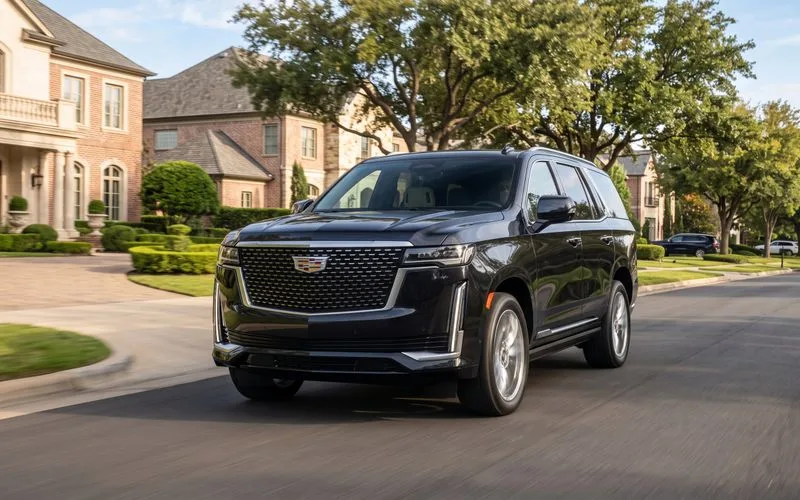 Cadillac EscaladeFull-Size Luxury SUVBetter at: Resale value
The direct rival holds its value far better and offers a much broader lineup, including a V8 and the supercharged Escalade-V.
Compare 2.92B-
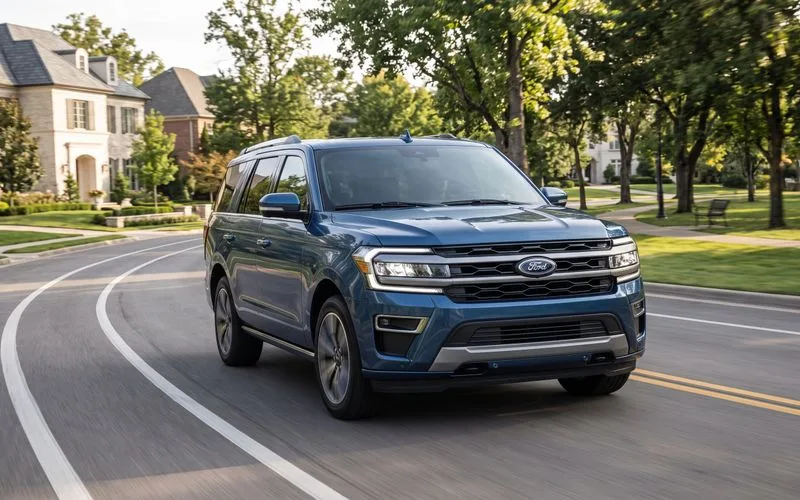 Ford ExpeditionFull-Size SUVBetter at: Value per dollar
Same platform, engine and third-row space for tens of thousands less, if you can live without the Lincoln materials and massage seats.
Compare 2.72B-
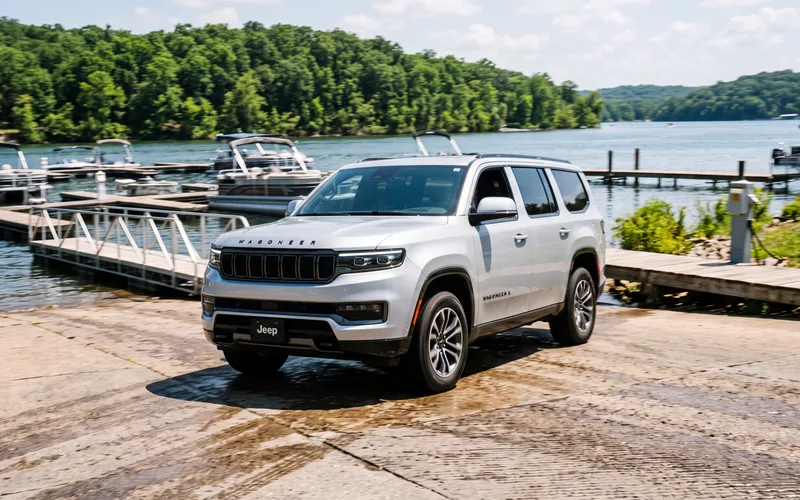 Jeep WagoneerFull-Size SUVBetter at: Price
Comparable size, seating and towing at a lower price, with a more rugged character than the Navigator's plush cruiser brief.
CompareHow it's evolved
10 scored model years · 2017–2026
Subject scores by year
Hover or tap a score to see what moved it versus the year before. A corner mark flags a big swing.
| Year | Performance | Efficiency | Safety | Space | Cost | Reliability | Tech | Use-case | Driving | Value |
|---|---|---|---|---|---|---|---|---|---|---|
| 2026 | 76 | 20 | 85 | 70 | 14 | 69 | 86 | 72 | 70 | 73 |
| 2025 | 74 | 20 | 79 | 82 | 16 | 60 | 82 | 71 | 65 | 73 |
| 2024 | 73 | 25 | 76 | 83 | 15 | 58 | 85 | 68 | 63 | 72 |
| 2023 | 74 | 25 | 75 | 84 | 15 | 60 | 85 | 69 | 65 | 74 |
| 2022 | 73 | 25 | 73 | 84 | 15 | 57 | 83 | 66 | 62 | 73 |
| 2021 | 73 | 19 | 66 | 82 | 15 | 54 | 70 | 65 | 60 | 70 |
| 2020 | 72 | 24 | 65 | 82 | 15 | 53 | 70 | 65 | 60 | 75 |
| 2019 | 73 | 24 | 61 | 84 | 15 | 60 | 68 | 64 | 60 | 74 |
| 2018 | 73 | 24 | 56 | 84 | 15 | 56 | 67 | 63 | 60 | 75 |
| 2017 | 63 | 25 | 42 | 74 | 14 | 54 | 45 | 58 | 53 | 58 |
Compare two years
Best fit & conditions
Higher scores mean a better fit for that use case. Learn more about use-case fit →
Subject profile
Academic Probation · NHTSA safety recalls
Mar 3, 2026Seats: front assembly: power adjustThe obstacle detection software for the driver seat may malfunction at low speeds, resulting in the seat reversing unexpectedly while driving.
Defect
Ford Motor Company (Ford) is recalling certain 2026 Lincoln Navigator vehicles. The obstacle detection software for the driver seat may malfunction at low speeds, resulting in the seat reversing unexpectedly while driving.
Risk
Unexpected movement of the driverâs seat may affect the driverâs ability to control the vehicle, increasing the risk of a crash.
Remedy
The seat control module software will be updated by a dealer, or through an over-the-air (OTA) update, free of charge. Owner notification letters were mailed March 13, 2026. Owners may contact Ford customer service at 1-866-436-7332. Ford's number for this recall is 26S11. Vehicle Identification Numbers (VINs) involved in this recall became searchable on NHTSA.gov on March 5, 2026.
NHTSA campaign 26V120000 ↗Manufacturer no. 26S111,189 vehicles potentially affected (all models in the campaign)Owners notified Mar 13, 2026Filed by Ford Motor CompanyFiled as NAVIGATORFeb 20, 2026Electrical system: integrated trailer brake control · Exterior lighting: tail lightsWhen towing a trailer, the integrated trailer module (ITRM) may lose communication with the vehicle, possibly causing a loss of brake and turn signal lights, or a loss of brake function. As such, these vehicles fail to comply with the requirements of Federal Motor Vehicle Safety Standard number 108, " Lamps, Reflective Devices, and Associated Equipment."
Defect
Ford Motor Company (Ford) is recalling certain 2021-2026 F-150, 2022-2026 F-250 SD, F-350 SD, F-450 SD, F-550 SD, Maverick, 2024-2026 Ranger, 2023-2026 F-600 SD, 2022-2027 Lincoln Navigator, Expedition, and 2026 E-Transit vehicles. When towing a trailer, the integrated trailer module (ITRM) may lose communication with the vehicle, possibly causing a loss of brake and turn signal lights, or a loss of brake function. As such, these vehicles fail to comply with the requirements of Federal Motor Vehicle Safety Standard number 108, " Lamps, Reflective Devices, and Associated Equipment."
Risk
Trailer lights or brakes that do not function can reduce the driverâs ability to control the trailer and decrease the trailers visibility to other road users, increasing the risk of a crash.
Remedy
The integrated trailer module software will be updated by a dealer, or through an over-the-air (OTA) update, free of charge. Owner notification letters were mailed March 25, 2026. Owners may contact Ford customer service at 1-866-436-7332. Ford's number for this recall is 26C10. Vehicle Identification Numbers (VINs) involved in this recall will be searchable on NHTSA.gov beginning March 17, 2026.
NHTSA campaign 26V104000 ↗Manufacturer no. 26C104,381,878 vehicles potentially affected (all models in the campaign)Owners notified Mar 25, 2026Filed by Ford Motor CompanyFiled as NAVIGATOR
44 recalls on other model years of the Navigator (2017–2025)
Jun 24, 2026Power train: automatic transmissionThe transmission park pawl may engage while the vehicle is in motion, resulting in park system damage.
Defect
Ford Motor Company (Ford) is recalling certain 2018-2021 Navigator, Expedition, 2020-2021 Explorer, Lincoln Aviator, and 2021 F-150 vehicles. The transmission park pawl may engage while the vehicle is in motion, resulting in park system damage.
Risk
Park system damage may result in a vehicle rollaway, increasing the risk of a crash.
Remedy
Dealers will update the powertrain control module software, and inspect and replace any damaged transmission components as necessary, free of charge. Interim letters, notifying owners of the safety risk, were mailed July 10, 2026. Additional letters will be sent once the remedy is available, anticipated in April 2027. Owners may contact Ford customer service at 1-866-436-7332. Ford's number for this recall is 26S48. Vehicle Identification Numbers (VINs) involved in this recall became searchable on NHTSA.gov on June 26, 2026.
NHTSA campaign 26V402000 ↗Manufacturer no. 26S48741,195 vehicles potentially affected (all models in the campaign)Filed by Ford Motor CompanyFiled as NAVIGATORJun 9, 2026Electrical system: instrument cluster/panelAt vehicle start-up, the Instrument Panel Cluster Assembly (IPC) may not function, showing a blank display. As a result, these vehicles fail to comply with Federal Motor Vehicle Safety Standard (FMVSS) number 101, "Controls and Displays."
Defect
Ford Motor Company (Ford) is recalling certain 2019 Ford Mustang, Lincoln Nautilus, and Lincoln Navigator vehicles previously repaired incorrectly under recall number 19V076. At vehicle start-up, the Instrument Panel Cluster Assembly (IPC) may not function, showing a blank display. As a result, these vehicles fail to comply with Federal Motor Vehicle Safety Standard (FMVSS) number 101, "Controls and Displays."
Risk
A blank instrument cluster that fails to display critical safety information, such as vehicle speed or safety system warnings, increases the risk of a crash.
Remedy
Dealers will reprogram the Instrument Panel Cluster Assembly (IPC) software, free of charge. Owner notification letters were mailed July 13, 2026. Owners may contact customer service at 1-866-436-7332. Ford's number for this recall is 26C27. Vehicle Identification Numbers (VINs) involved in this recall will become searchable on NHTSA.gov on July 6, 2026.
NHTSA campaign 26V372000 ↗Manufacturer no. 26C272,349 vehicles potentially affected (all models in the campaign)Owners notified Jul 13, 2026Filed by Ford Motor CompanyFiled as NAVIGATORMay 27, 2026Seat belts: pretensionerThe seat belt pretensioner in the driver and/or front passenger seat may inadvertently lock the seat belt, which will not allow the belt to retract or extend.
Defect
Ford Motor Company (Ford) is recalling certain 2018-2022 Expedition and Lincoln Navigator vehicles. The seat belt pretensioner in the driver and/or front passenger seat may inadvertently lock the seat belt, which will not allow the belt to retract or extend.
Risk
Seat belts that do not retract or extend can fail to restrain an occupant as intended, increasing the risk of injury in a crash.
Remedy
Dealers will inspect and replace the seat belt retractors as necessary, free of charge. Interim letters, notifying owners of the safety risk, were mailed June 8, 2026. Additional letters will be sent once the remedy is available, anticipated in August 2026. Owners may contact Ford customer service at 1-866-436-7332. Ford's number for this recall is 26S34. This recall replaces and expands previous NHTSA recalls 24V099 and 25V197. Vehicles previously inspected or repaired under the prior recalls will need the new repair completed.
NHTSA campaign 26V344000 ↗Manufacturer no. 26S34419,967 vehicles potentially affected (all models in the campaign)Filed by Ford Motor CompanyFiled as NAVIGATORMar 31, 2026Visibility: windshield wiper/washer: linkagesThe windshield wiper arms may break, causing the wipers to fail.
Defect
Ford Motor Company (Ford) is recalling certain 2021-2023 Lincoln Navigator, Expedition, and 2022-2023 F-250 SD, F-350 SD, F-450 SD, F-550 SD, and F-600 SD vehicles. The windshield wiper arms may break, causing the wipers to fail.
Risk
Windshield wiper failure can reduce visibility, increasing the risk of a crash.
Remedy
Dealers will inspect and replace the wiper arms, as necessary, free of charge. Owner notification letters were mailed August 5, 2026. Owners may contact Ford customer service at 1-866-436-7332. Ford's number for this recall is 26S24.Vehicle Identification Numbers (VINs) involved in this recall became searchable on NHTSA.gov on April 1, 2026.
NHTSA campaign 26V204000 ↗Manufacturer no. 26S24422,613 vehicles potentially affected (all models in the campaign)Owners notified Aug 5, 2026Filed by Ford Motor CompanyFiled as NAVIGATORMar 18, 2026Back over prevention: software · Electrical system: adasThe Image Processing Module A (IPMA) may experience multiple unexpected resets, resulting in loss of the rearview camera image and advanced driver assistance (ADAS) features, including pre-collision assist, lane-keeping assist, and blind-spot monitoring.
Defect
Ford Motor Company (Ford) is recalling certain 2022-2025 Lincoln Navigator, 2024-2025 Lincoln Nautilus, 2025 Lincoln Aviator and Explorer vehicles. The Image Processing Module A (IPMA) may experience multiple unexpected resets, resulting in loss of the rearview camera image and advanced driver assistance (ADAS) features, including pre-collision assist, lane-keeping assist, and blind-spot monitoring.
Risk
Loss of the rearview camera image and certain driver assistance features, can reduce the driverâs ability to detect hazards, increasing the risk of a crash.
Remedy
The Image Processing Module A software will be updated by a dealer, or through an over-the-air (OTA) update, free of charge. This is a Phased campaign. Phase 1 will include 2025 Aviator, 2025 Explorer, 2025 Nautilus notified owners on 4/13/2026. Phase 2 will include 2025 Navigator will notify owners on or about 4/20/2026. Phase 3 will include 2022-2024 Navigator will notify owners on or about 6/8/2026. Phase 4 will include 2024 Nautilus will notify owners on or about 6/22/2026. Owner notification letters were mailed April 13, 2026. Owners may contact Ford customer service at 1-866-436-7332. Ford's number for this recall is 26S21. Vehicle Identification Numbers (VINs) involved in this recall will be searchable on NHTSA.gov beginning March 25, 2026.
NHTSA campaign 26V165000 ↗Manufacturer no. 26S21254,640 vehicles potentially affected (all models in the campaign)Owners notified Apr 13, 2026Filed by Ford Motor CompanyFiled as NAVIGATORDec 1, 2025Exterior lightingThe rear lightbar may have cracks in the outer lens or weld track that allow moisture to accumulate, which can result in inoperative or flickering reverse lights. As such, these vehicles fail to comply with the requirements of Federal Motor Vehicle Safety Standard number 108, "Lamps, Reflective Devices, and Associated Equipment."
Defect
Ford Motor Company (Ford) is recalling certain 2025 Lincoln Navigator vehicles. The rear lightbar may have cracks in the outer lens or weld track that allow moisture to accumulate, which can result in inoperative or flickering reverse lights. As such, these vehicles fail to comply with the requirements of Federal Motor Vehicle Safety Standard number 108, "Lamps, Reflective Devices, and Associated Equipment."
Risk
Inoperative or flickering reverse lights may not alert other drivers that the vehicle is reversing, increasing the risk of injury or crash.
Remedy
Dealers will replace the rear lightbar, free of charge. Owner notification letters were mailed January 14, 2026. Owners may contact Ford customer service at 1-866-436-7332. Ford's number for this recall is 25C66. Vehicle Identification Numbers (VINs) involved in this recall became searchable on NHTSA.gov on December 3, 2025.
NHTSA campaign 25V831000 ↗Manufacturer no. 25C661,195 vehicles potentially affected (all models in the campaign)Owners notified Jan 14, 2026Filed by Ford Motor CompanyFiled as NAVIGATORDec 1, 2025Service brakes, hydraulic: power assist: electric: control moduleThe Electronic Brake Booster (EBB) module may malfunction while driving or when the driver is utilizing an Advanced Driver Assistance System (ADAS) feature, resulting in a loss of power brake assist.
Defect
Ford Motor Company (Ford) is recalling certain 2025 Lincoln Navigator, F-150, Expedition, Bronco, and Ranger vehicles. The Electronic Brake Booster (EBB) module may malfunction while driving or when the driver is utilizing an Advanced Driver Assistance System (ADAS) feature, resulting in a loss of power brake assist.
Risk
An unexpected loss of power brake assist while driving can extend stopping distance and increase the risk of a crash. Additionally, a loss of power brake assist while ADAS features are engaged can result in the vehicle not braking as expected, increasing the risk of a crash.
Remedy
Dealers will replace the electronic brake booster, free of charge. Owner notification letters were mailed February 26, 2026. Owners may contact Ford customer service at 1-866-436-7332. Ford's number for this recall is 25SD4. Vehicle Identification Numbers (VINs) involved in this recall became searchable on NHTSA.gov on December 3, 2025.
NHTSA campaign 25V823000 ↗Manufacturer no. 25SD4679 vehicles potentially affected (all models in the campaign)Owners notified Feb 26, 2026Filed by Ford Motor CompanyFiled as NAVIGATOROct 24, 2025Visibility: sun/moon roof assemblyThe moonroof wind deflector clips may be inadequately attached to the moonroof frame, which can result in the wind deflector detaching from the vehicle.
Defect
Ford Motor Company (Ford) is recalling certain 2021-2022 Expedition, Lincoln Navigator, 2021-2023 F-150, 2022 F-250 SD, F-350 SD, and F-450 SD vehicles. The moonroof wind deflector clips may be inadequately attached to the moonroof frame, which can result in the wind deflector detaching from the vehicle.
Risk
A detached wind deflector can become a road hazard and increase the risk of a crash.
Remedy
Dealers will inspect and repair the moonroof wind deflector as necessary, free of charge. Owner notification letters were mailed November 10, 2025. Owners may contact Ford customer service at 1-866-436-7332. Ford's number for this recall is 25SB7. Vehicle Identification Numbers (VINs) involved in this recall will be searchable on NHTSA.gov beginning October 30, 2025.
NHTSA campaign 25V729000 ↗Manufacturer no. 25SB7174,853 vehicles potentially affected (all models in the campaign)Owners notified Nov 10, 2025Filed by Ford Motor CompanyFiled as NAVIGATORSep 19, 2025EngineA short circuit within the battery junction box can cause an engine fire while driving or parked.
Defect
Ford Motor Company (Ford) is recalling certain 2020 Expedition and Lincoln Navigator vehicles. A short circuit within the battery junction box can cause an engine fire while driving or parked.
Risk
A vehicle fire increases the risk of injury.
Remedy
Owners are advised to park their vehicles outside and away from structures and other vehicles, until the remedy is performed. Dealers will inspect and replace the battery junction box, as necessary, and remove a ground wire. On models equipped with standard-duty radiator fan motors, dealers will also install an auxiliary electrical box with a wire jumper. Repairs will be performed free of charge. Owner notification letters were mailed October 3, 2025. Owners may contact Ford customer service at 1-866-436-7332. Ford's numbers for this recall are 22S36 and 22S48. Vehicle Identification Numbers (VINs) involved in this recall became searchable on NHTSA.gov on September 23, 2025.
NHTSA campaign 25V628000 ↗Manufacturer no. 22S36/22S484,632 vehicles potentially affected (all models in the campaign)Owners notified Oct 3, 2025Filed by Ford Motor CompanyFiled as NAVIGATORSep 3, 2025Back over prevention: sensing system: cameraThe rearview camera may display a distorted, inverted, or blank image when the vehicle is in reverse.
Defect
Ford Motor Company (Ford) is recalling certain 2015-2019 Lincoln MKC, Mustang, F-350 SD, F-250 SD, F-450 SD, 2015-2017 Lincoln Navigator, Expedition, 2015-2018 Edge, Transit Connect, 2016-2019 F-550 SD, Transit, 2017-2019 Econoline, and 2019 Ranger vehicles. The rearview camera may display a distorted, inverted, or blank image when the vehicle is in reverse.
Risk
A rearview camera that displays an inverted, distorted, or blank image can reduce the driverâs view behind the vehicle, increasing the risk of a crash.
Remedy
Dealers will inspect and replace the rearview camera as necessary, free of charge. Owner notification letters were mailed January 13, 2026. Ford owners will receive letters in phases, beginning January 2026 and June 2026. Owners may contact Ford customer service at 1-866-436-7332. Ford's number for this recall is 25S89. This recall expands previous NHTSA recall number 25V270. Vehicle Identification Numbers (VINs) involved in this recall will be searchable on NHTSA.gov beginning September 8, 2025.
NHTSA campaign 25V572000 ↗Manufacturer no. 25S891,456,417 vehicles potentially affected (all models in the campaign)Owners notified Jan 13, 2026Filed by Ford Motor CompanyFiled as NAVIGATORJul 25, 2025Service brakes, hydraulic: power assist: electric: control module: softwareThe Electronic Brake Booster (EBB) module may malfunction while driving or when the driver is utilizing an Advanced Driver Assistance System (ADAS) feature, resulting in a loss of power brake assist.
Defect
Ford Motor Company (Ford) is recalling certain 2025 Lincoln Navigator, F-150, Expedition, Bronco, and Ranger vehicles. The Electronic Brake Booster (EBB) module may malfunction while driving or when the driver is utilizing an Advanced Driver Assistance System (ADAS) feature, resulting in a loss of power brake assist.
Risk
An unexpected loss of power brake assist while driving can extend stopping distance and increase the risk of a crash. Additionally, a loss of power brake assist while ADAS features are engaged can result in the vehicle not braking as expected, increasing the risk of a crash.
Remedy
The EBB module software will be updated over-the-air (OTA) or by a dealer, free of charge. Owner notification letters were mailed on August 22, 2025. Owners may contact Ford customer service at 1-866-436-7332. Ford's number for this recall is 25S77.
NHTSA campaign 25V488000 ↗Manufacturer no. 25S77312,120 vehicles potentially affected (all models in the campaign)Owners notified Aug 22, 2025Filed by Ford Motor CompanyFiled as NAVIGATORJul 7, 2025Fuel system, gasoline: delivery: fuel pumpThe low-pressure fuel pump may fail, which can result in an engine stall while driving.
Defect
Ford Motor Company (Ford) is recalling certain 2021-2023 Bronco, Explorer, Lincoln Aviator, F-250 SD, F-350 SD, F-450 SD, F-550 SD, 2021-2022 Lincoln Navigator, Mustang, F-150, and 2022 Expedition vehicles. The low-pressure fuel pump may fail, which can result in an engine stall while driving.
Risk
An engine stall increases the risk of a crash.
Remedy
Dealers will replace the low pressure fuel pump on super duty vehicles and update the powertrain control module (PCM) software on all other affected vehicles, free of charge. Owner notification letters were mailed July 27, 2026. Owners may contact Ford customer service at 1-866-436-7332. Ford's number for this recall is 25S75.
NHTSA campaign 25V455000 ↗Manufacturer no. 25S75850,318 vehicles potentially affected (all models in the campaign)Owners notified Jul 27, 2026Filed by Ford Motor CompanyFiled as NAVIGATORJun 27, 2025Back over prevention: softwareA software error may cause the rearview camera to display a blank image, or the image may remain on the display after the backing event has ended.
Defect
Ford Motor Company (Ford) is recalling certain 2018-2022 Transit Connect, 2019-2020 MKZ, MKX, Edge, Continental, F-150, Nautilus, Fusion, 2019-2023 Ranger, Mustang, 2020-2021 EcoSport, Expedition, Navigator, 2020-2022 Escape, F-250 SD, Corsair, 2020-2023 Aviator, Transit, 2020-2024 Explorer, 2021-2024 Bronco Sport, and 2022-2024 Maverick vehicles. A software error may cause the rearview camera to display a blank image, or the image may remain on the display after the backing event has ended.
Risk
A rearview camera that displays a blank image can reduce the driver's view behind the vehicle. A rearview image that continues to be displayed after the vehicle is shifted out of reverse may distract the driver. Both of these situations can increase the risk of a crash.
Remedy
Dealers will update the rearview camera software, free of charge. Owner notification letters were mailed September 4, 2025. Owners may contact Ford customer service at 1-866-436-7332. Ford's number for this recall is 25S72.
NHTSA campaign 25V442000 ↗Manufacturer no. 25S72200,237 vehicles potentially affected (all models in the campaign)Owners notified Sep 4, 2025Filed by Ford Motor CompanyFiled as NAVIGATORJun 27, 2025Air bags: frontalThe passenger side air bag may have been manufactured incorrectly, which can cause the air bag to deploy with excessive force during a crash.
Defect
Ford Motor Company (Ford) is recalling certain 2025 Navigator and Expedition vehicles. The passenger side air bag may have been manufactured incorrectly, which can cause the air bag to deploy with excessive force during a crash.
Risk
An air bag that deploys with excessive force can increase the risk of injury during a crash.
Remedy
Dealers will replace the passenger side air bags, free of charge. Owner notification letters were mailed August 8, 2025. Owners may contact Ford Customer Service at 1-866-436-7332. Ford's number for this recall is 25S51.
NHTSA campaign 25V439000 ↗Manufacturer no. 25S51171 vehicles potentially affected (all models in the campaign)Owners notified Aug 8, 2025Filed by Ford Motor CompanyFiled as NAVIGATORJun 13, 2025Exterior lighting: lighting control module: softwareThe headlight control module software may cause the side marker and daytime running lights to fail. As such, these vehicles fail to comply with the requirements of Federal Motor Vehicle Safety Standard number 108, "Lamps, Reflective Devices, and Associated Equipment."
Defect
Ford Motor Company (Ford) is recalling certain 2022 Lincoln Navigator vehicles previously repaired under Recall 22V455 (22C14). The headlight control module software may cause the side marker and daytime running lights to fail. As such, these vehicles fail to comply with the requirements of Federal Motor Vehicle Safety Standard number 108, "Lamps, Reflective Devices, and Associated Equipment."
Risk
A loss of exterior lighting can reduce visibility and increase the risk of a crash.
Remedy
Dealers will update the headlight control module software, free of charge. Owner notification letters were mailed July 16, 2025. Owners may contact Ford customer service at 1-866-436-7332. Ford's number for this recall is 25C28.
NHTSA campaign 25V403000 ↗Manufacturer no. 25C2848 vehicles potentially affected (all models in the campaign)Owners notified Jul 16, 2025Filed by Ford Motor CompanyFiled as NAVIGATORMay 23, 2025Electrical system: body control module: softwareThe Pre-Collision Assist features, such as forward collision warning and automatic emergency braking, are not functional due to a software error.
Defect
Ford Motor Company (Ford) is recalling certain 2020 Expedition and Navigator vehicles that were repaired incorrectly under recall 20V262. The Pre-Collision Assist features, such as forward collision warning and automatic emergency braking, are not functional due to a software error.
Risk
Inoperative pre-collision assist features that fail to perform as expected can increase the risk of a crash or injury.
Remedy
Dealers will update the body control module software, free of charge. Owner notification letters were mailed June 25, 2025. Owners may contact Ford customer service at 1-866-436-7332. Ford's number for this recall is 25S56.
NHTSA campaign 25V346000 ↗Manufacturer no. 25S56556 vehicles potentially affected (all models in the campaign)Owners notified Jun 25, 2025Filed by Ford Motor CompanyFiled as NAVIGATORMay 23, 2025Seat belts: pretensionerThe seat belt pretensioner in the driver and/or front passenger seat may inadvertently lock the seat belt, which will not allow the belt to retract or extend.
Defect
Ford Motor Company (Ford) is recalling certain 2018-2020 Expedition and Lincoln Navigator vehicles. The seat belt pretensioner in the driver and/or front passenger seat may inadvertently lock the seat belt, which will not allow the belt to retract or extend.
Risk
Seat belts that do not retract or extend can fail to restrain an occupant as intended, increasing the risk of injury in a crash.
Remedy
Dealers will replace the seat belt retractors as necessary, free of charge. Owner notification letters were mailed October 22, 2025. Owners may contact Ford customer service at 1-866-436-7332. Ford's number for this recall is 25S31. Some vehicles in this recall that were previously inspected under recall 24V-099 and did not have parts replaced will need to have this new recall remedy completed.
NHTSA campaign 25V197000 ↗Manufacturer no. 25S31112,951 vehicles potentially affected (all models in the campaign)Owners notified Oct 22, 2025Filed by Ford Motor CompanyFiled as NAVIGATORMay 9, 2025Back over prevention: softwareA software error may cause the rearview camera image to delay, freeze, or not display when the vehicle is in reverse.
Defect
Ford Motor Company (Ford) is recalling certain 2021-2024 Bronco, F-150, 2021-2024 Edge, 2022-2025 Escape, F-250, F-350, F-450, F-550, F-600, 2022-2024 Expedition, 2022-2025 Transit, 2021-2023 Mach-E, 2024 Ranger, Mustang, 2021-2023 Lincoln Nautilus, 2022-2024 Navigator, and 2023-2024 Corsair vehicles. A software error may cause the rearview camera image to delay, freeze, or not display when the vehicle is in reverse.
Risk
A frozen or missing rearview camera image can reduce the driver's view behind the vehicle, increasing the risk of a crash.
Remedy
The accessory protocol interface module (APIM) software will be updated by a dealer or through an over-the-air update, free of charge. This will be a phased campaign, with the remedy becoming available in different phases based on model and model years. Interim letters notifying owners of the safety risk were mailed on June 26, 2025. Additional letters will be mailed once the final remedy is available on each phase. Owner notification letters were sent on October 8, 2025. Owners may contact Ford customer service at 1-866-436-7332. Ford's number for this recall is 25S49.
NHTSA campaign 25V315000 ↗Manufacturer no. 25S491,076,138 vehicles potentially affected (all models in the campaign)Owners notified Oct 8, 2025Filed by Ford Motor CompanyFiled as NAVIGATORMay 9, 2025Service brakes, hydraulic: foundation components: hoses, lines/piping, and fittingsThe front brake lines may contact the engine air cleaner outlet pipe and become damaged, possibly resulting in a brake fluid leak and reduced brake function.
Defect
Ford Motor Company (Ford) is recalling certain 2022-2024 Navigator and Expedition vehicles. The front brake lines may contact the engine air cleaner outlet pipe and become damaged, possibly resulting in a brake fluid leak and reduced brake function.
Risk
A loss of brake function increases the risk of a crash.
Remedy
Dealers will inspect the front brake line and replace the brake line or air cleaner outlet pipe, as necessary, free of charge. Owner notification letters were mailed May 29, 2025. Owners may contact Ford customer service at 1-866-436-7332. Ford's number for this recall is 25S47.
NHTSA campaign 25V314000 ↗Manufacturer no. 25S47273,789 vehicles potentially affected (all models in the campaign)Owners notified May 30, 2025Filed by Ford Motor CompanyFiled as NAVIGATORApr 11, 2025Service brakes, hydraulic: foundation components: master cylinder · Service brakes, hydraulic: power assistThe brake master cylinder may allow brake fluid to leak from the front wheel circuit into the brake booster.
Defect
Ford Motor Company (Ford) is recalling certain 2017-2018 F-150, Expedition, and Lincoln Navigator vehicles. The brake master cylinder may allow brake fluid to leak from the front wheel circuit into the brake booster.
Risk
A brake fluid leak can cause reduced brake function and extend the distance required to stop, increasing the risk of a crash.
Remedy
Dealers will replace the brake master cylinder. If the master cylinder is leaking, the brake booster will also be replaced. Repairs will be performed free of charge. Owner notification letters were mailed September 25, 2025. Owners may contact Ford customer service at 1-866-436-7332. Ford's number for this recall is 25S37. This recall is an expansion of NHTSA recall number 22V-150.
NHTSA campaign 25V236000 ↗Manufacturer no. 25S37123,611 vehicles potentially affected (all models in the campaign)Owners notified Sep 25, 2025Filed by Ford Motor CompanyFiled as NAVIGATORMar 28, 2025Engine and engine cooling: engine: oil/lubricationThe engine may have a misaligned engine cup plug, which can result in a rapid oil leak.
Defect
Ford Motor Company (Ford) is recalling certain 2024-2025 F-150, Expedition, and 2024 Lincoln Navigator vehicles equipped with 3.5L GTDI engines. The engine may have a misaligned engine cup plug, which can result in a rapid oil leak.
Risk
A rapid oil leak can result in an engine stall, increasing the risk of a crash. In addition, an oil leak in the presence of an ignition source such as hot engine or exhaust components, can increase the risk of a fire.
Remedy
Dealers will inspect the engine cup plug alignment, and replace the plug if necessary, free of charge. Owner notification letters were mailed May 22, 2025. Owners may contact Ford customer service at 1-866-436-7332. Ford's number for this recall is 25S30.
NHTSA campaign 25V198000 ↗Manufacturer no. 25S304,356 vehicles potentially affected (all models in the campaign)Owners notified May 23, 2025Filed by Ford Motor CompanyFiled as NAVIGATORFeb 28, 2025Electrical system: integrated trailer brake controlDue to a software error, a towed trailer equipped with an electric or electric-over hydraulic brake system may not brake.
Defect
Ford Motor Company (Ford) is recalling certain 2021-2022 F-150, 2022 Maverick, Expedition, Lincoln Navigator, F-250, F-350, F-450, and F-550 vehicles previously repaired incorrectly under recall number 22V-193. Due to a software error, a towed trailer equipped with an electric or electric-over hydraulic brake system may not brake.
Risk
Loss of trailer brake functionality can extend the distance required to stop, increasing the risk of a crash.
Remedy
Dealers will update the integrated trailer brake control module software, free of charge. Owner notification letters were mailed April 11, 2025. Owners may contact Ford customer service at 1-866-436-7332. Ford's number for this recall is 25S18.
NHTSA campaign 25V132000 ↗Manufacturer no. 25S1510,952 vehicles potentially affected (all models in the campaign)Owners notified Apr 11, 2025Filed by Ford Motor CompanyFiled as NAVIGATORFeb 14, 2025Visibility: rearview mirrors/devices: exteriorThe LED logo lights on the exterior mirrors may short circuit.
Defect
Ford Motor Company (Ford) is recalling certain 2015-2017 Lincoln Navigator vehicles. The LED logo lights on the exterior mirrors may short circuit.
Risk
An electrical short circuit in the exterior mirror increases the risk of fire.
Remedy
Dealers will disconnect the LED light wires, free of charge. Owner notification letters were mailed March 27, 2025. Owners may contact Ford customer service at 866-436-7332. Ford's number for this recall is 25S08.
NHTSA campaign 25V091000 ↗Manufacturer no. 25S0835,328 vehicles potentially affected (all models in the campaign)Owners notified Mar 27, 2025Filed by Ford Motor CompanyFiled as NAVIGATORDec 20, 2024Engine and engine cooling: engine: oil/lubricationThe engines may have a misaligned engine cup plug, which can result in a rapid oil leak.
Defect
Ford Motor Company (Ford) is recalling certain 2024-2025 F-150, 2024 Expedition and 2024 Lincoln Navigator vehicles equipped with a 3.5L GTDI engine. The engines may have a misaligned engine cup plug, which can result in a rapid oil leak.
Risk
A rapid oil leak can result in an engine stall, increasing the risk of a crash. In addition, an oil leak in the presence of an ignition source such as hot engine or exhaust components, can increase the risk of a fire.
Remedy
Dealers will inspect the engine cup plug alignment, and replace the plug if necessary, free of charge. Owner notification letters were mailed on May 23, 2024. Owners may contact Ford customer service at 1-866-436-7332. Ford's number for this recall is 24S70.
NHTSA campaign 24V851000 ↗Manufacturer no. 24S702,490 vehicles potentially affected (all models in the campaign)Owners notified May 23, 2025Filed by Ford Motor CompanyFiled as NAVIGATORNov 8, 2024Equipment: other: labelsThe air bag warning label may be missing from the dashboard. As such, these vehicles fail to comply with the requirement Federal Motor Vehicle Safety Standard number 208, "Occupant Crash Protection."
Defect
Ford Motor Company (Ford) is recalling certain 2020-2025 Explorer, Lincoln Aviator, 2020-2024 Escape, Lincoln Corsair, 2018-2024 F-150, Expedition and Lincoln Navigator vehicles. The air bag warning label may be missing from the dashboard. As such, these vehicles fail to comply with the requirement Federal Motor Vehicle Safety Standard number 208, "Occupant Crash Protection."
Risk
Without a label that shows the proper restraint usage guidelines, the occupants may have an increased risk of injury in the event of a crash.
Remedy
Ford will mail owners the warning labels, free of charge. Owner notification letters were mailed December 19, 2024. Owners may call Ford customer service at 1-866-436-7332. Ford's number for this recall is 24C39.
NHTSA campaign 24V852000 ↗Manufacturer no. 24C3927,678 vehicles potentially affected (all models in the campaign)Owners notified Dec 19, 2024Filed by Ford Motor CompanyFiled as NAVIGATORFeb 9, 2024Seat belts: pretensionerThe seat belt pretensioner in the driver and/or front passenger seat may inadvertently deploy and lock the seat belt, which will not allow the belt to retract or extend.
Defect
Ford Motor Company (Ford) is recalling certain 2018-2020 Expedition and Lincoln Navigator vehicles. The seat belt pretensioner in the driver and/or front passenger seat may inadvertently deploy and lock the seat belt, which will not allow the belt to retract or extend.
Risk
Seat belts that do not retract or extend may fail to restrain an occupant as intended, increasing the risk of injury in a crash.
Remedy
Dealers will replace the seat belt retractors, as necessary. Additionally, dealers will install an HVAC drain tube elbow if it is missing. Repairs will be performed free of charge. Owner notification letters were mailed on July 8, 2024. Owners may contact Ford customer service at 1-866-436-7332. Ford's number for this recall is 24S06.
NHTSA campaign 24V099000 ↗Manufacturer no. 24S0677,574 vehicles potentially affected (all models in the campaign)Owners notified Jul 8, 2024Filed by Ford Motor CompanyFiled as NAVIGATORAug 25, 2023Back over prevention: sensing system: cameraThe rearview camera, or 360-degree view camera if equipped, may not display a rearview image when the vehicle is placed in reverse.
Defect
Ford Motor Company (Ford) is recalling certain 2020-2023 Lincoln Aviator, 2018-2021 Lincoln Navigator, 2022-2023 Ford Transit, and 2021 Ford Bronco vehicles. The rearview camera, or 360-degree view camera if equipped, may not display a rearview image when the vehicle is placed in reverse.
Risk
Loss of the rearview camera image can reduce the driver's rear visibility, increasing the risk of a crash.
Remedy
Dealers will replace the rearview camera, and update the software and wiring as necessary, free of charge. Owner notification letters were mailed November 20, 2023 to Lincoln owners. Ford vehicle owners notification letters were mailed March 4, 2024. Ford remedy parts are anticipated 2nd Quarter 2024. Ford's number for this recall is 23S48.
NHTSA campaign 23V598000 ↗Manufacturer no. 23S48177,402 vehicles potentially affected (all models in the campaign)Owners notified Nov 20, 2023Filed by Ford Motor CompanyFiled as NAVIGATORJun 9, 2023Equipment: other: owners/service/other manualThe owner's manual does not include instructions for adjusting or removing certain head restraints. As such, these vehicles fail to comply with the requirements of Federal Motor Vehicle Safety Standard number 202, "Head Restraints."
Defect
Ford Motor Company (Ford) is recalling certain 2018-2023 Expedition and Lincoln Navigator vehicles equipped with third-row seating; and 2019-2023 F-Super Duty F-250, F-350, F-450, and F-550 SuperCab vehicles. The owner's manual does not include instructions for adjusting or removing certain head restraints. As such, these vehicles fail to comply with the requirements of Federal Motor Vehicle Safety Standard number 202, "Head Restraints."
Risk
Without instructions, the head restraints may be improperly adjusted, increasing the risk of injury in the event of a crash.
Remedy
Ford will mail the Owner's Manual addendums that describe how to adjust and remove the head restraints for the center seating positions, free of charge. Owner notification letters were mailed July 21, 2023. Owners may contact Ford customer service at 1-866-436-7332. Ford's number for this recall is 23C20.
NHTSA campaign 23V420000 ↗Manufacturer no. 23C20691,133 vehicles potentially affected (all models in the campaign)Owners notified Jul 21, 2023Filed by Ford Motor CompanyFiled as NAVIGATORFeb 24, 2023Power train: axle assemblyThe front axle pinion may not have been heat-treated, which can cause it to fracture.
Defect
Ford Motor Company (Ford) is recalling certain 2023 F-150, Expedition, and Lincoln Navigator vehicles. The front axle pinion may not have been heat-treated, which can cause it to fracture.
Risk
A fractured pinion can result in a loss of 4-wheel drive and may cause the front wheels to lock up, increasng the risk of a crash.
Remedy
Dealers will replace the front axle pinion gear set. If there is a broken front axle pinion, the entire axle assembly will be replaced. Repairs will be performed free of charge. Owner notification letters were mailed April 21, 2023. Owners may contact Ford customer service at 1-866-436-7332. Ford's number for this recall is 23S07.
NHTSA campaign 23V128000 ↗Manufacturer no. 23S07240 vehicles potentially affected (all models in the campaign)Owners notified Apr 21, 2023Filed by Ford Motor CompanyFiled as NAVIGATORAug 26, 2022Electrical system: wiring: interior/under dash · Visibility: defroster/defogger/hvac system: fan/motorThe front blower motor located behind the glove box may fail.
Defect
Ford Motor Company (Ford) is recalling certain 2015-2017 Ford Expedition and Lincoln Navigator vehicles. The front blower motor located behind the glove box may fail.
Risk
Front blower motor failure can increase the risk of a vehicle interior fire.
Remedy
Dealers will replace the front blower motor assembly, free of charge. Owner notification letters were mailed August 4, 2023. Remedy parts are expected to become available in the second quarter of 2023. Owners may contact Ford customer service at 1-866-436-7332. Ford's number for this recall is 22S56.
NHTSA campaign 22V648000 ↗Manufacturer no. 22S56198,482 vehicles potentially affected (all models in the campaign)Owners notified Aug 4, 2023Filed by Ford Motor CompanyFiled as NAVIGATORJun 24, 2022Exterior lighting: lighting control module: softwareThe headlight control module software may cause the side marker and daytime running lights to fail. As such, these vehicles fail to comply with the requirements of Federal Motor Vehicle Safety Standard number 108, "Lamps, Reflective Devices, and Associated Equipment."
Defect
Ford Motor Company (Ford) is recalling certain 2022 Lincoln Navigator vehicles. The headlight control module software may cause the side marker and daytime running lights to fail. As such, these vehicles fail to comply with the requirements of Federal Motor Vehicle Safety Standard number 108, "Lamps, Reflective Devices, and Associated Equipment."
Risk
A loss of exterior lighting can reduce visibility and increase the risk of a crash.
Remedy
Dealers will update the headlight control module software and recalibrate the headlights, free of charge. Owner notification letters were mailed July 13, 2022. Owners may contact Ford customer service at 1-866-436-7332. Ford's number for this recall is 22C14.
NHTSA campaign 22V455000 ↗Manufacturer no. 22C14965 vehicles potentially affected (all models in the campaign)Owners notified Jul 13, 2022Filed by Ford Motor CompanyFiled as NAVIGATORMay 17, 2022EngineAn engine compartment fire may occur while driving or parked, even with the ignition in the "Off" position.
Defect
Ford Motor Company (Ford) is recalling certain 2021 Expedition and Lincoln Navigator vehicles. An engine compartment fire may occur while driving or parked, even with the ignition in the "Off" position.
Risk
A vehicle fire increases the risk of injury.
Remedy
Owners are advised to park their vehicles outside and away from structures and other vehicles, until the remedy is performed. Dealers will inspect and replace the battery junction box, as necessary, and remove a ground wire. On models equipped with standard-duty radiator fan motors, dealers will also install an auxiliary electrical box with a wire jumper. Repairs will be performed free of charge. Interim owner notification letters informing owners of the safety risk were mailed May 25, 2022. Owners will receive a second letter once the remedy is available. Currently the remedy is available for vehicles equipped with heavy-duty radiator fan motors, and those letters were mailed July 21, 2022. Owners may contact Ford customer service at 1-866-436-7332. Ford's number for this recall is 22S36.
NHTSA campaign 22V346000 ↗Manufacturer no. 22S3666,221 vehicles potentially affected (all models in the campaign)Owners notified Jul 21, 2022Filed by Ford Motor CompanyFiled as NAVIGATORApr 14, 2022Visibility: windshield wiper/washer: linkagesThe windshield wiper arms may break, causing the windshield wipers to fail.
Defect
Ford Motor Company (Ford) is recalling certain 2020-2021 F-150, Expedition, 2020-2022 Super Duty F-250, F-350, F-450, F-550, and 2020-2021 Lincoln Navigator vehicles. The windshield wiper arms may break, causing the windshield wipers to fail.
Risk
Inoperative windshield wipers can reduce visibility in certain driving conditions, increasing the risk of a crash.
Remedy
Dealers will replace both front windshield wiper arms, free of charge. Interim owner notification letters, informing owners of the safety risk, were mailed on May 24, 2022. Remedy parts are expected to be available 3rd Quarter 2022. Owner notification letters were mailed on October 21, 2022. Owners may contact Ford customer service at 1-866-436-7332. Ford's number for this recall is 22S26.
NHTSA campaign 22V250000 ↗Manufacturer no. 22S26652,996 vehicles potentially affected (all models in the campaign)Owners notified Oct 21, 2022Filed by Ford Motor CompanyFiled as NAVIGATORMar 25, 2022Electrical system: integrated trailer brake controlDue to a software error, a towed trailer equipped with an electric or electric-over hydraulic brake system may not brake.
Defect
Ford Motor Company (Ford) is recalling certain 2021-2022 F-150, 2022 Maverick, Expedition, Lincoln Navigator, F-250, F-350, F-450, and F-550 vehicles. Due to a software error, a towed trailer equipped with an electric or electric-over hydraulic brake system may not brake.
Risk
Loss of trailer brake functionality could result in extended stopping distance, increasing the risk of a crash.
Remedy
Dealers will update the integrated trailer brake control module software, free of charge. Owner notification letters were mailed April 22, 2022. Owners may contact Ford customer service at 1-866-436-7332. Ford's number for this recall is 22S17.
NHTSA campaign 22V193000 ↗Manufacturer no. 22S17391,836 vehicles potentially affected (all models in the campaign)Owners notified Apr 22, 2022Filed by Ford Motor CompanyFiled as NAVIGATORMar 11, 2022Service brakes, hydraulic: foundation components: master cylinder · Service brakes, hydraulic: power assistThe brake master cylinder may allow brake fluid to leak from the front wheel circuit into the brake booster.
Defect
Ford Motor Company (Ford) is recalling certain 2016-2017 Ford Expedition, Lincoln Navigator, and 2016-2018 F-150 vehicles equipped with 3.5L Ecoboost engines. The brake master cylinder may allow brake fluid to leak from the front wheel circuit into the brake booster.
Risk
A loss of brake fluid may result in a change in brake pedal travel, increased pedal effort and reduced front brake function, requiring greater effort and distance to stop the vehicle. These conditions can increase the risk of a crash.
Remedy
Dealers will replace the brake master cylinder. If the master cylinder is leaking, the brake booster will also be replaced. Repairs will be performed free of charge. An interim owner notification letter notifying customers of the safety defect were mailed on April 29, 2022. Owner notification letters were mailed April 29, 2022. This recall is an expansion of NHTSA recall number 20V-332. Owners may contact Ford customer service at 1-866-436-7332. Ford's number for this recall is 22S11.
NHTSA campaign 22V150000 ↗Manufacturer no. 22S11195,864 vehicles potentially affected (all models in the campaign)Owners notified Apr 29, 2022Filed by Ford Motor CompanyFiled as NAVIGATOROct 15, 2021Air bags: sensor: side impact · Air bags: side/windowThe front-door side impact pressure sensor modules may have been damaged during supplier assembly, which can cause the side impact air bags to not deploy properly in a crash. As such, these vehicles fail to comply with the requirements of Federal Motor Vehicle Safety Standard number 214, "Side Impact Protection."
Defect
Ford Motor Company (Ford) is recalling certain 2022 Super Duty F-250, F-350, 2021 F-150, Expedition, and Lincoln Navigator vehicles. The front-door side impact pressure sensor modules may have been damaged during supplier assembly, which can cause the side impact air bags to not deploy properly in a crash. As such, these vehicles fail to comply with the requirements of Federal Motor Vehicle Safety Standard number 214, "Side Impact Protection."
Risk
An air bag that does not deploy properly during a crash increases the risk of injury.
Remedy
Dealers will replace the driver and passenger front door side impact sensors, free of charge. Owner notification letters were mailed November 3, 2021. Owners may contact Ford customer service at 1-866-436-7332. Ford's number for this recall is 21C26.
NHTSA campaign 21V805000 ↗Manufacturer no. 21C26777 vehicles potentially affected (all models in the campaign)Owners notified Nov 3, 2021Filed by Ford Motor CompanyFiled as NAVIGATORJun 23, 2020Seats: mid/rear assemblyThe attachment bracket for the driver's side second-row seat headrest may not have been sufficiently welded to the seat frame. As such, these vehicles fail to comply with Federal Motor Vehicle Safety Standard number 202, "Head Restraints."
Defect
Ford Motor Company (Ford) is recalling certain 2020 Ford Expedition and Lincoln Navigator vehicles. The attachment bracket for the driver's side second-row seat headrest may not have been sufficiently welded to the seat frame. As such, these vehicles fail to comply with Federal Motor Vehicle Safety Standard number 202, "Head Restraints."
Risk
An improperly welded headrest bracket may have reduced strength and may not adequately restrain an occupant in a crash, increasing the risk of injury.
Remedy
Ford will notify owners, and dealers will inspect the seat structure and replace it as needed, free of charge. This recall began July 8, 2020. Owners may contact Ford customer service at 1-866-436-7332. Ford's number for this recall is 20C12.
NHTSA campaign 20V366000 ↗Manufacturer no. 20C122,620 vehicles potentially affected (all models in the campaign)Owners notified Jul 8, 2020Filed by Ford Motor CompanyFiled as NAVIGATORMay 8, 2020Electrical system: instrument cluster/panel · Forward collision avoidance · Forward collision avoidance: automatic emergency brakingVehicles built with the optional radar-plus-camera Pre-Collision Assist system are not affected. Due to incorrect coding of interfacing modules, the Pre-Collision Assist feature is not enabled, and the driver cannot access the menu functions necessary to enable the Pre-Collision Assist feature.
Defect
Ford Motor Company (Ford) is recalling certain 2020 Ford Expedition and Lincoln Navigator vehicles equipped with camera-only Pre-Collision Assist feature. Vehicles built with the optional radar-plus-camera Pre-Collision Assist system are not affected. Due to incorrect coding of interfacing modules, the Pre-Collision Assist feature is not enabled, and the driver cannot access the menu functions necessary to enable the Pre-Collision Assist feature.
Risk
If the driver is unaware that the Pre-Collision Assist feature is not enabled, they may rely on a system that is not functional, increasing the risk of a crash or injury.
Remedy
Ford will notify owners, and dealers will reprogram software for the Body Control Module, Antilock Braking System, Instrument Panel Cluster and Headlamp Control Modules, and reset the Tire Pressure Monitor System, free of charge. The recall began May 26, 2020. Owners may contact Ford customer service at 1-866-436-7332. Ford's number for this recall is 20S20.
NHTSA campaign 20V262000 ↗Manufacturer no. 20S2025,081 vehicles potentially affected (all models in the campaign)Owners notified May 26, 2020Filed by Ford Motor CompanyFiled as NAVIGATOROct 28, 2019Suspension: rearThe rear suspension toe link fasteners may not have been properly tightened to the frame, possibly allowing separation from the frame.
Defect
Ford Motor Company (Ford) is recalling certain 2019 Expedition and Lincoln Navigator vehicles. The rear suspension toe link fasteners may not have been properly tightened to the frame, possibly allowing separation from the frame.
Risk
A disconnected toe link can cause a sudden change to vehicle handling, increasing the risk of a crash.
Remedy
Ford has notified owners, and dealers will inspect and tighten the rear toe link fasteners, check and adjust the rear toe alignment, and inspect the rear tires for abnormal tire wear, replacing them if necessary. Repairs will be performed free of charge. The recall began November 14, 2019. Owners may contact Ford customer service at 1-866-436-7332. Ford's number for this recall is 19S36.
NHTSA campaign 19V773000 ↗Manufacturer no. 19S3618 vehicles potentially affected (all models in the campaign)Owners notified Nov 14, 2019Filed by Ford Motor CompanyFiled as NAVIGATORFeb 11, 2019Electrical system: instrument cluster/panelAt vehicle start-up, the Instrument Panel Cluster Assembly (IPC) may not function, showing a blank display. As a result, these vehicles fail to comply with Federal Motor Vehicle Safety Standard (FMVSS) number 101, "Controls and Displays."
Defect
Ford Motor Company (Ford) is recalling certain 2019 Ford Mustang, Lincoln Nautilus, and Lincoln Navigator vehicles. At vehicle start-up, the Instrument Panel Cluster Assembly (IPC) may not function, showing a blank display. As a result, these vehicles fail to comply with Federal Motor Vehicle Safety Standard (FMVSS) number 101, "Controls and Displays."
Risk
A blank instrument cluster will not show important information like vehicle speed, fuel or temperature level, or safety system warnings. Driving with an inoperative cluster can increase the risk of a crash.
Remedy
Ford has notified owners, and dealers will reprogram the Instrument Panel Cluster Assembly (IPC), free of charge. The recall began March 8, 2019. Owners may contact customer service at 1-866-436-7332. Ford's number for this recall is 19C03.
NHTSA campaign 19V076000 ↗Manufacturer no. 19C034,212 vehicles potentially affected (all models in the campaign)Owners notified Mar 8, 2019Filed by Ford Motor CompanyFiled as NAVIGATORNov 14, 2018Seats: mid/rear assemblyThe second row center seat track assemblies may be missing one or both of the J-Channel reinforcement brackets, possibly allowing the seat to move in the event of a crash.
Defect
Ford Motor Company (Ford) is recalling certain 2018 Lincoln Navigator, and Ford Expedition vehicles. The second row center seat track assemblies may be missing one or both of the J-Channel reinforcement brackets, possibly allowing the seat to move in the event of a crash.
Risk
In the event of a crash, a seat that moves may not properly restrain the seat occupant, increasing their risk of injury.
Remedy
Ford will notify owners, and dealers will inspect the second row center seat for any missing J-channel reinforcement brackets, replacing the center seat frame assembly as necessary, free of charge. An interim owner notification was sent on December 21, 2018. A second letter will be mailed once the remedy is available. Owners may contact Ford customer service at 1-866-436-7332. Ford's number for this recall is 18S37
NHTSA campaign 18V805000 ↗Manufacturer no. 18S3734,946 vehicles potentially affected (all models in the campaign)Owners notified Feb 15, 2019Filed by Ford Motor CompanyFiled as NAVIGATORJun 12, 2018Fuel system, gasoline: delivery: fuel pumpThese vehicles have high pressure fuel pump assemblies with welds that can fracture, which may cause an oil or fuel leak.
Defect
Ford Motor Company (Ford) is recalling certain 2018 Ford Expedition, F-150, and Lincoln Navigator vehicles equipped with 3.5L GTDI V6 engines. These vehicles have high pressure fuel pump assemblies with welds that can fracture, which may cause an oil or fuel leak.
Risk
A fuel leak in the presence of an ignition source may increase the risk of a fire.
Remedy
Ford will notify owners, and dealers will replace the high pressure fuel pump and associated components, free of charge. The recall began July 17, 2018. Owners may contact Ford customer service at 1-866-436-7332. Ford's number for this recall is 18S17.
NHTSA campaign 18V392000 ↗Manufacturer no. 18S175,645 vehicles potentially affected (all models in the campaign)Owners notified Jul 17, 2018Filed by Ford Motor CompanyFiled as NAVIGATORApr 4, 2018Power train: automatic transmissionA roll pin may not have been installed in the transmission, potentially causing a loss of the "Park" function.
Defect
Ford Motor Company (Ford) is recalling certain 2017-2018 Ford F-150 and 2018 Ford Expedition and Mustang and Lincoln Navigator vehicles equipped with 10-speed automatic transmissions. A roll pin may not have been installed in the transmission, potentially causing a loss of the "Park" function.
Risk
Despite the transmission shift lever being placed in 'Park' and the instrument panel display indicating 'Park,' the vehicle may roll away after it has been exited if the parking brake has not been applied, increasing the risk of injury or a crash.
Remedy
Ford will notify owners, and dealers will inspect the transmission to make sure it has the roll pin, installing one if it is missing, free of charge. The recall began on April 13, 2018. Owners may contact Ford customer service at 1-866-436-7332. Ford's number for this recall is 18S09.
NHTSA campaign 18V213000 ↗Manufacturer no. 18S09142 vehicles potentially affected (all models in the campaign)Owners notified Apr 13, 2018Filed by Ford Motor CompanyFiled as NAVIGATORJan 16, 2018Visibility: power window devices and controlsThe second row window control modules may intermittently stop the movement of the power window. If something, such as a finger, is pinched by the window glass, the stopped window control module may prevent the window from automatically reversing. As such, these vehicles fail to comply with the requirements of Federal Motor Vehicle Safety Standard (FMVSS) number 118, "Power-Operated Window Systems."
Defect
Ford Motor Company (Ford) is recalling certain 2018 Ford Expedition and Lincoln Navigator vehicles. The second row window control modules may intermittently stop the movement of the power window. If something, such as a finger, is pinched by the window glass, the stopped window control module may prevent the window from automatically reversing. As such, these vehicles fail to comply with the requirements of Federal Motor Vehicle Safety Standard (FMVSS) number 118, "Power-Operated Window Systems."
Risk
If the window does not automatically reverse when an obstruction is found, it can increase the risk of injury.
Remedy
Ford will notify owners, and dealers will inspect the second row window electronic control modules, and replace them as necessary based on their build date codes, free of charge. The recall began on February 16, 2018. Owners may contact Ford customer service at 1-866-436-7332. Ford's number for this recall is 18C01.
NHTSA campaign 18V058000 ↗Manufacturer no. 18C01361 vehicles potentially affected (all models in the campaign)Owners notified Feb 16, 2018Filed by Ford Motor CompanyFiled as NAVIGATOR
Source: NHTSA Office of Defects Investigation recall database, model years 2017–2026. Recalls are listed by model year as the manufacturer filed them; whether a specific car is affected depends on its VIN — check a VIN at nhtsa.gov ↗. NHTSA model names matched to this page: NAVIGATOR.
Detailed scoring by subject
1Performance & PowertrainOne of the Navigator's strongest categories.3.17B
Every 2026 Navigator uses the twin-turbocharged 3.5L V6 rated at 440 hp; no upgraded engine option across the range.
Peak 510 lb-ft from the standard twin-turbo V6 — near the top of the full-size luxury SUV set.
Car and Driver clocked the mechanically identical 2025 Navigator at 5.1 s to 60 mph; the 2026 carries over the same 440-hp powertrain and 10-speed automatic.
Reviewers praise the twin-turbo V6 for brisk, smooth acceleration and immediate highway passing power, though it lacks the ultra-hushed character of a V8 rival.
The 10-speed automatic is generally smooth but reviewers report it is 'sometimes reluctant to downshift' and shifts lack the silky refinement expected at this price.
Best-in-class max tow of 8,700 lbs with the available Heavy-Duty Trailer Tow Package, which adds a two-speed transfer case, trailer brake controller, Slow Climb mode, and upgraded radiator.
Selectable four-wheel drive is standard on every 2026 Navigator, with driver-selectable Normal/Snow/Sand/Tow-Haul modes and an available two-speed transfer case with low range via the HD Trailer Tow Package.
Capable light-duty off-road via Snow/Sand terrain modes, available low-range gearing, and adaptive air suspension that can raise ride height — but no dedicated off-road trim, locking differentials, or serious underbody armor.
Single powertrain across the entire range — the 3.5L twin-turbo V6 with 10-speed automatic and 4WD. No hybrid, PHEV, EV, or V8 option (contrast the Escalade's gas V8, diesel, EV IQ, and V-Series variants).
2Efficiency & RangeOne of the Navigator's weakest categories.0.00F
The 2026 Navigator's sole powertrain — the 3.5L twin-turbo V6 with standard 4WD — returns just 17 MPG combined, below the SUV band's lower anchor.
15 MPG city from the twin-turbo V6 / 10-speed / standard-4WD combination sits below the SUV band floor.
22 MPG highway on the standard-wheelbase trim; the extended Navigator L dips to roughly 20 MPG highway.
Standard-wheelbase Navigator carries 23.6 gallons; at 17 MPG combined that yields roughly 400 miles of mixed-driving range. The extended L trim's 27.8-gal tank pushes total range higher.
EPA estimates $3,650/yr in fuel — roughly $806 above the luxury-SUV average and above the SUV normalization band's high anchor, driving the score to the floor.
The 3.5L EcoBoost V6 runs safely on regular unleaded but Lincoln recommends premium (91+ octane) to achieve rated 440 hp / 510 lb-ft. Premium recommended-not-required puts this squarely in the 50–79 band; the EPA cost figure above already reflects premium pricing.
3SafetyOne of the Navigator's strongest categories.3.81A
NHTSA lists the 2026 Navigator with a 5-star overall crash rating on the redesigned 5th-generation platform introduced for 2025.
IIHS has not yet published a full crashworthiness or TSP evaluation on the redesigned 5th-generation Navigator; the model is absent from the 2026 IIHS Top Safety Pick list, though the shared T6 body-on-frame platform (Expedition) is engineered to modern IIHS updated-moderate-overlap and updated-side standards. Award-level performance is unproven until IIHS tests it.
Every 2026 Navigator includes Lincoln Co-Pilot360 2.0 as standard — pre-collision assist with AEB and pedestrian/cyclist detection, adaptive cruise with stop-and-go, lane keeping and lane-centering, blind-spot monitoring, rear cross-traffic alert, evasive steering assist and auto high beams — plus BlueCruise 1.5 hands-free driving standard on all trims. That is one of the broadest standard safety suites in the full-size luxury SUV segment.
Pre-Collision Assist with AEB, pedestrian and cyclist detection is standard, and reversing brake assist is included. IIHS front-crash-prevention testing on this new generation is not yet published, but prior-generation Navigator and platform-mate Expedition consistently earned Superior daytime pedestrian AEB ratings; nighttime pedestrian performance for the new sensor stack is inferred pending IIHS results.
Blind Spot Information System with Cross-Traffic Alert is standard on every trim, backed by a standard 360-degree camera and front/rear parking sensors. Trailer-tow blind-spot coverage extends BLIS when towing. Alert-plus-camera rather than active braking intervention keeps this from a top score.
Lane-centering is standard as part of Co-Pilot360 2.0 and is the same mature stack used by BlueCruise 1.5, which adds In-Lane Repositioning (subtle offsets away from adjacent vehicles) and hands-free lane changes. Reviewers describe centering behavior as smooth and confident on the redesigned Navigator.
Standard full-speed-range adaptive cruise with stop-and-go, Intelligent Speed Assist and lane-centering integrates with BlueCruise 1.5 for a refined highway experience across the lineup. Reviewers call the combined system intuitive with smoother transitions than prior BlueCruise generations.
BlueCruise 1.5 is standard on every 2026 Navigator with a four-year complimentary subscription and works across roughly 130,000+ miles of prequalified North American divided highways — approximately 97% of controlled-access roads in the U.S. Hands-free Lane Change Assist adds a genuine capability upgrade over rivals whose systems remain hands-on or trim-locked.
Adaptive Pixel Projector LED headlights with auto high beam are standard on Reserve (the volume trim) and Black Label, using individually addressable pixels for glare-free high-beam and cornering illumination. Base Premiere gets standard adaptive LED lighting but not the full pixel system. IIHS hasn't rated the redesigned Navigator's headlights yet.
Reviewers give the Navigator a commanding driving position with generous side glass and good forward sightlines, aided by the standard 360-degree camera and front/rear parking sensors. Wide B-pillars can obscure blind-spot checks and rearward view suffers when the third row is loaded, offset by standard BLIS and camera coverage.
Two outboard sets of LATCH lower anchors in the second row (captain's chairs or bench) and two more in the third row give parents flexibility to install multiple seats across two rows. Anchors are easy to reach behind the seat cushions, wide rear doors ease loading, and the second-row center position lacks LATCH lowers (belt-only). Third row is spacious enough for a booster.
4Space & ComfortGrades above the middle of the scale.2.71B-
Standard configuration uses second-row captain's chairs (7-passenger); an available bench seat raises capacity to 8. Volume trim = 7.
Redesigned-generation Navigator (2025+) publishes 38.3 in of front headroom; panoramic Vista Roof and lower seat cushion height reduce the number versus the prior body-on-frame Navigator.
43.5 in of front legroom is generous for the full-size luxury SUV class and near the top of the segment band.
Second-row headroom is 37.9 in — mid-pack for full-size SUVs; the standard panoramic Vista Roof reduces headroom relative to fixed-roof configurations.
40.9 in of second-row legroom is near the segment maximum — comparable to Escalade and Expedition, well ahead of most three-row luxury crossovers.
Third row is genuinely adult-usable with 36.5 in of legroom, 37.4 in of headroom, dedicated air vents, USB ports, cupholders, power-fold, and available heated seats. Reviewers routinely call it one of the best in the segment for adult comfort on long trips, on par with Expedition/Escalade third rows.
For a three-row SUV the spec is space behind the rearmost (third) row on the volume standard-wheelbase trim: 22.9 cu ft. Modest for the segment because Lincoln prioritizes third-row space; the extended L variant improves this to 37.4 cu ft.
Cavernous maximum cargo capacity — 107.0 cu ft with rear rows folded on the standard wheelbase, above the segment normalization ceiling of 100 cu ft. The Navigator L extends this to 121.6 cu ft.
Competitive full-size storage: large center console, deep door bins, second-row power-fold captain's chairs with a rear 5.8-in touchscreen console, split-fold third row (60/40 on Premiere, 40/20/40 PowerFold on Reserve). Lacks a standout gimmick like the Escalade's underfloor cargo or the Expedition's fold-flat rear window.
Available 24-way Perfect Position front seats with heating, ventilation, and five-mode massage are class-leading. Second-row Power Tailored captain's chairs add heating, ventilation, and massage — a feature rare even in this segment — and the third row can be heated. Widely praised for long-haul comfort front to back.
Adaptive suspension delivers a composed, comfortable ride at highway speed, but reviewers note some low-speed rocking and body motion that hold it back from segment leaders like Range Rover and Escalade at their best. 24-inch wheels on upper trims can compromise compliance further.
Enhanced Active Noise Control plus acoustic laminated side glass produce a hushed cabin at speed; wind and powertrain noise are well suppressed. Reviewers do call out some road-noise intrusion on optional 24-inch wheels, so it stops short of library-silent Range Rover / EQS SUV territory.
Tri-zone automatic climate with dedicated rear controls, heated/ventilated/massaging front and available second-row seats, heated third-row cushions, heated steering wheel, remote pre-conditioning via the Lincoln Way app, and a 5.8-in rear-console touchscreen give this Navigator one of the deepest comfort-feature stacks in the class.
5Cost of OwnershipThe Navigator's lowest-graded category.0.00F
For 2026 Lincoln re-introduces the Premiere as the base Navigator trim, cutting entry MSRP by roughly $8,000 versus the outgoing 2025 base; Premiere lists at $91,995 plus $2,595 destination for a delivered $94,590. Even after the cut the Navigator sits well above the full-size luxury SUV normalization band ceiling.
Reserve remains the volume Navigator trim, adding 24-way Perfect Position front seats, panoramic glass roof, 28-speaker Revel Ultima 3D audio, and BlueCruise hands-free driving; Reserve lists at $101,995 plus $2,595 destination.
Twin-turbo 3.5L V6 with 10-speed automatic and standard 4x4 keeps service costs moderate for the segment; CarEdge projects ~$4,380 over 5 years on a fully redesigned platform, so a $5,500 estimate captures both scheduled service and modest first-owner repairs on the new-generation Navigator.
Navigator is a chronic hard-depreciator: iSeeCars and Ford Authority both show 5-year value loss of 55–60% on the outgoing generation, worse than the luxury large SUV average of ~54%. The 2026 refresh may soften this modestly but resale trails Escalade and Range Rover significantly.
Lincoln's New Vehicle Limited Warranty is 4 years / 50,000 miles bumper-to-bumper, unchanged for the 2026 Navigator. Middle-of-the-pack for luxury; trails Genesis and Jaguar but beats mainstream 3/36.
Lincoln covers the 3.5L twin-turbo V6, 10-speed automatic, and 4x4 hardware for 6 years / 70,000 miles. Standard for German luxury peers but well behind Genesis (10 yr / 100,000 mi).
Standard Premiere and Reserve Navigators do NOT include factory scheduled maintenance — that perk lives inside Black Label (4 yr / 50,000 mi Premium Maintenance plus complimentary anytime car washes and 24/7 Lincoln Concierge). Every Navigator does include 4 yr / 50,000 mi 24/7 Roadside Assistance, Lincoln Pickup & Delivery service (loaner Lincoln, home/office pickup) through the warranty period, and a Lincoln Connect connected-services trial. Missing free scheduled service caps this below Genesis and Volvo, but the concierge polish beats a pure roadside-only package.
$104,590 volume-trim price minus its estimated resale value after 5 years (42% retained, or about $43,928) leaves about $60,662 in depreciation. Add the projected $5,500 in 5-year maintenance and repairs, and owning this vehicle for 5 years costs about $66,162 in total.
6Reliability & QualityOne of the Navigator's weakest categories.2.64C+
The 2026 Navigator is the second year of the fifth-generation redesign (launched Jan 2025 at Kentucky Truck Plant), so predicted reliability is still forming. RepairPal rates 3.0/5 (average for luxury full-size SUVs), Auto Reliability Index scores 2026 at 71/100 (up from 64/100 in 2025), and Consumer Reports has not yet issued a full predicted-reliability score on the new generation. Owner-complaint volume for 2026 is low so far, but the redesigned model's 13.2" Google Built-In stack, new BlueCruise integration, and reworked seat electronics (already recalled) argue against a top-tier score.
Lincoln climbed six spots to 19th in the J.D. Power 2025 US Vehicle Dependability Study and sits 18th of 29 brands in the 2026 study — well below industry average and far behind Lexus, Buick, and Cadillac (4th in 2026). Consumer Reports' brand rankings continue to place Lincoln outside the top 10 luxury marques for multi-year dependability.
The fifth-generation 2025/2026 Navigator is early in its recall cycle: NHTSA lists 2 open campaigns on 2026 (driver-seat obstacle-detection software causing seat reversal at low speed on ~1,189 Kentucky-built units, plus the multi-year 2022–2027 ITRM trailer-module comms recall affecting brake/turn signals when towing). 2025 saw 6 campaigns as the launch year — typical first-year volume rather than systemic. Meaningfully cleaner than the recall-heavy prior-gen Navigator and Aviator.
The 3.5L twin-turbo EcoBoost V6 (440 hp / 510 lb-ft) paired with the 10R80 10-speed automatic is one of the most-deployed powertrains in Ford's lineup — shared with F-150 High Output, Expedition, and prior Navigators — so long-term durability data is deep and generally solid. Early-life 10R80 harsh-shift TSBs have been calibrated out. No hybrid or electrified variant to add unproven complexity.
The redesigned Navigator cabin is a class standout: Enlighten Opul leather, genuine open-pore Khaya wood on Reserve and Black Label, real metal switchgear, and the 28-speaker Revel Ultima 3D audio in Reserve+. Reviewers consistently place it among the classiest in the premium large SUV segment and above the outgoing car and the smaller Aviator. Only the Range Rover and top-trim Escalade decisively out-luxe it on material richness.
Kentucky Truck Plant assembly on the redesigned platform is generally tight, but J.D. Power's 2025 IQS shows Lincoln trails Cadillac by ~6 problems per 100 vehicles and sits below the luxury-brand average. Early 2025-model owner reports flagged phantom braking and a spontaneous sunroof fracture — low volume but concerning for a $95K+ SUV. The 2026 driver-seat software recall (limited to ~1,189 units) is another early-production quality miss.
Roughly 600 US Lincoln dealers, most co-located with high-volume Ford stores — genuinely dense nationwide coverage, well ahead of Genesis, Alfa Romeo, or Rivian. Every Navigator includes Lincoln Pickup & Delivery service (a Lincoln loaner delivered to home or office and your car returned washed) through the 4 yr / 50,000 mi warranty. Service satisfaction scores land around the luxury-industry average — behind Lexus, Cadillac, and Porsche, but ahead of most European rivals.
Deep parts commonality with F-150 (3.5L EcoBoost, 10R80 10-speed, chassis hardware) and Expedition keeps wear-item and common-repair costs reasonable for a $100K+ luxury SUV — better than Escalade on shared-part economies and much better than Range Rover / GLS on European sourcing. The Navigator-specific air suspension, 24-way Perfect Position seats, and BlueCruise ADAS hardware pull costs back up out-of-warranty, and Lincoln-badged trim carries a premium.
7Technology & InfotainmentThe Navigator's best-graded category.3.83A
The 2026 Navigator's dedicated center touchscreen measures 11.1 inches on all trims (Reserve and Black Label). Sitting below it, the class-defining 48-inch coast-to-coast panoramic display spans the dashboard for cluster/passenger info but is not the primary touch input — 11.1 in is a modest number relative to full-size luxury rivals with 14–15-in center screens.
Lincoln Digital Experience built on Google Automotive Services runs quickly on modern hardware — native Google apps, low latency, clean visual hierarchy. Reviewers praise the two-screen layout and consistently call the system fast and modern; a handful of physical/haptic controls remain for HVAC. Sits with the better luxury systems, though not quite at BMW iDrive 9 / Mercedes MBUX Hyperscreen polish.
Wireless Apple CarPlay and wireless Android Auto are standard on both Reserve and Black Label trims for 2026, alongside the native Google apps suite — a best-in-class configuration since owners can use either projection or Google Maps/Assistant natively.
Google Assistant handles natural-language voice control and Google Maps is the built-in navigation with live traffic and EV-quality POI data. This is the gold-standard voice/nav combo — genuinely usable without falling back to phone projection, though a 3-year Connected Services trial is required to keep it live.
Revel audio is standard on Reserve; Black Label ships the Revel Ultima 3D 28-speaker system — widely regarded as one of the best factory audio systems in the segment, alongside Burmester 4D and Bowers & Wilkins Diamond. Range from 'excellent' to 'exceptional' across trims.
The full-digital gauge cluster is embedded in the 48-inch coast-to-coast panoramic display — the largest and most configurable presentation in any current full-size SUV. Crisp graphics, extensive layout options, and driver-focused info alongside the passenger-side area on the same panel; standard on every trim.
Ford Power-Up over-the-air updates deliver whole-vehicle software updates covering infotainment, driver-assist features (BlueCruise), and select vehicle systems. Cadence and scope are proven at Ford but not as aggressive as Tesla/Rivian/Lucid; new features have been pushed to the redesigned Navigator since launch.
The Lincoln Way app provides remote start, lock/unlock, locate, service scheduling, and Phone As A Key. It's polished and free with the included connected-services trial. Lacks a few power-user features (e.g. Tesla-level cabin overheat control or Rivian's driver-profile sync), but core remote functionality is reliable.
Standard wireless charging pad, multiple USB-C ports across all three rows (both A and C on the front), 12V outlets, and a 110V/150W household outlet. Full-size cabin gets abundant device power — matches or beats most peers.
Intelligent Access with push-button start, hands-free foot-activated power liftgate/tailgate, and Phone As A Key (up to four phones) are all standard on Reserve and Black Label — a complete convenience-access set with no trim gating.
360-degree camera with split-view, active park assist (parallel/perpendicular auto-park), front/rear parking sensors, and trailer coverage cameras are standard or widely available. High-resolution imagery on the 11.1-in touchscreen makes maneuvering the 210-in-long Navigator manageable.
Color head-up display is standard on Black Label and available in the equipment group on Reserve — informative and clear, with speed, nav prompts, and driver-assist icons. Not on every trim, but the two-trim Navigator lineup means most buyers can get it easily.
8Use-Case FitGrades above the middle of the scale.2.91B-
Big square door openings, standard hands-free power liftgate, power-deployable running boards on Reserve+ (helpful for kids climbing into a full-size SUV) and standard second-row captain's chairs give a wide walk-through to a genuinely adult-usable third row. Two outboard LATCH anchor sets in row 2 plus two more in row 3 support multi-child households, and the 5.8-in rear-console touchscreen lets parents manage climate/audio from the front. Height and 210-in length make daily curbside loading a bit of a project versus a smaller three-row luxury crossover.
Every 2026 Navigator ships Lincoln Co-Pilot360 2.0 (AEB with pedestrian/cyclist detection, blind-spot, rear cross-traffic, lane centering, evasive steering, adaptive cruise with stop-and-go), BlueCruise 1.5 hands-free driving, 360-degree camera, rear-occupant alert, and a 5-star NHTSA overall rating on the 5th-generation platform. IIHS has not yet published a full crashworthiness verdict on the redesigned Navigator, and the $95K+ entry price means these credentials come at a not-remotely-affordable price point.
Segment-benchmark all-row comfort: tri-zone auto climate with dedicated rear controls, standard heated/ventilated front seats, available heated/ventilated/massaging second-row captain's chairs, heated third-row cushions, panoramic Vista Roof, and a rear-console 5.8-in touchscreen for row-2 climate/audio. Third row publishes 36.5 in legroom and 37.4 in headroom with power fold and USB ports. Cargo behind row 3 is a modest 22.9 cu ft on the standard wheelbase (37.4 cu ft on Navigator L), but the extended L variant fully resolves that constraint for long trips.
Adaptive air suspension, a 440-hp twin-turbo V6, quiet cabin, 24-way Perfect Position front seats, and standard BlueCruise 1.5 hands-free driving make highway and stop-and-go commuting genuinely restful. Working against it: 210 in of length, ~6,000 lb curb weight, and low-speed body motion that reviewers repeatedly flag — commuting a Navigator through tight urban streets and crowded parking is more chore than delight even before you consider the truck-heavy footprint.
EPA rates the sole gas 3.5L twin-turbo V6 with standard 4WD at 15 city / 22 hwy / 17 combined MPG, with an estimated $3,650/yr fuel bill (~$806 above the luxury-SUV average) on Lincoln's recommended-premium fuel. No hybrid, PHEV, or EV option — Navigator has no lever to pull to compete with an Escalade IQ, Range Rover PHEV, EQS SUV, or Rivian R1S on per-mile running cost.
At 210+ inches long on the standard wheelbase (222+ in on Navigator L) with a wide track and near-40-ft turning circle, Navigator is one of the most physically demanding vehicles to park in the US market. Standard 360-degree camera with split-view, front/rear parking sensors, and Active Park Assist 2.0 (auto parallel/perpendicular) meaningfully reduce the pain, but no amount of tech makes a full-size body-on-frame SUV genuinely urban-friendly. Wide B-pillars and third-row headrest sightlines don't help.
Best-in-class-for-luxury 8,700-lb max tow with the Heavy-Duty Trailer Tow Package (two-speed transfer case, trailer brake controller, Slow Climb mode, upgraded radiator), plus a stout 440 hp / 510 lb-ft twin-turbo V6 and a body-on-frame chassis pulled straight from Expedition. Enough capacity to pull a large boat, RV, or car trailer without stressing the drivetrain. Limitations for real 'work' duty: only ~1,600 lb payload, no cargo bed, luxury interior with delicate materials, and 24-inch wheel options that trade capability for style.
Under the skin the Navigator inherits Expedition's proven T6 body-on-frame chassis, the 10R80 10-speed automatic, and the 3.5L EcoBoost — a powertrain deployed by the million in F-150 High Output and Expedition fleet service, so mechanical durability is broadly known-good. Where it loses ground to a true work vehicle: quilted Enlighten Opul leather, real open-pore Khaya wood, and 22–24-in wheels make abuse costly, and Lincoln IQS scores trail Cadillac's; a 2026 driver-seat obstacle-detection recall (though limited to ~1,189 units) hints at early-production quality risk.
The tow half is well-served: standard trailer brake controller (with HD package), trailer coverage cameras, Pro Trailer Backup Assist, hitch-view guidance, 110V/150W household outlet, front/2nd/3rd-row USB-C and USB-A. But this is fundamentally a luxury living room on a truck frame — no washable surfaces, no cargo-bed access, no meaningful factory upfit ecosystem (Ford Pro's fleet menu targets Expedition/Explorer/F-150, not Navigator), and no trailering ecosystem comparable to a Suburban or Yukon that fleets actually order. Real jobsite duty rounds down.
One of the best mile-eaters in the segment: 24-way Perfect Position front seats with heating/ventilation/five-mode massage, heated/ventilated/massaging second-row captain's chairs (available), Enhanced Active Noise Control with acoustic laminated glass for a genuinely hushed cabin, adaptive air suspension, and standard BlueCruise 1.5 hands-free driving across ~130,000 miles of prequalified highway. 23.6-gal tank at 17 MPG combined yields ~401 mi range on the standard wheelbase; Navigator L's 27.8-gal tank stretches that to ~473 mi. A gas V6 range that's competitive with anything short of a diesel, plus segment-elite seat and cabin comfort.
Standard 4WD, selectable Normal/Snow/Sand/Tow-Haul terrain modes, adaptive air suspension that can raise ride height, optional low-range gearing via the HD Trailer Tow Package, 8,700-lb tow for boats and RVs, roof rails, and a 110V outlet for camp gear make this a competent gravel-road/tow-toy hauler. It's not off-road-capable in a Wrangler/4Runner sense — no locking differentials, no dedicated off-road trim, no meaningful underbody armor, and 22–24-inch wheels compromise real terrain use.
Class-leading maximum cargo (107.0 cu ft with rows folded on standard, 121.6 cu ft on Navigator L), roof rails standard, standard hitch with 8,700-lb tow, 40/20/40 PowerFold third row on Reserve, and a large underfloor cargo well. The catch is space behind the third row: 22.9 cu ft on the standard wheelbase is modest for the segment — buyers who need a full-family cargo load out of the box will want Navigator L (37.4 cu ft) or the Expedition Max. No standout gimmick like Escalade's underfloor cargo or Expedition's fold-flat rear window.
9Driving ExperienceGrades above the middle of the scale.2.72B-
Fully redesigned 5th-gen platform (introduced for 2025, continuing 2026) with standard independent rear suspension and available adaptive dampers gives the Navigator noticeably better composure than the outgoing model — reviewers describe body control that belies its ~6,050-lb heft — but it's still a body-on-frame land yacht with priorities firmly on ride over agility. Slots just below the Escalade (72.6) and clearly behind unibody rivals like the X7 (73.7).
Electric power steering is precise and light-effort in classic Lincoln fashion — easy in parking lots and low-workload on the highway — but essentially devoid of feedback. Acceptable for the mission, unremarkable against rivals with more communicative racks.
Large four-wheel discs sized for ~6,050 lb curb weight plus available towing loads deliver adequate stopping with a soft, luxury-tuned pedal. No fade complaints in first-year reviews; no headline-grabbing instrumented stopping distances either.
Standard 3.5L twin-turbo V6 EcoBoost (440 hp / 510 lb-ft) with 10-speed automatic is one of Ford's most mature drivetrains — smooth stop-start, well-calibrated tip-in, and abundant low-end torque mask the mass. Occasional 10-speed gear-hunt on grades is the only recurring quibble.
Aggressive active noise cancellation, dual-pane acoustic laminated side glass, and thick underbody insulation reduce V6 noise to a distant thrum in cruise; a subdued growl surfaces at WOT. Vibration through wheel/pedals is very well isolated — a category strength.
Curb-to-curb turning diameter for the 122.5-in-wheelbase standard Navigator; the extended-wheelbase Navigator L is meaningfully larger (~44 ft). Big by luxury-SUV standards but expected for a full-size body-on-frame with a long dash-to-axle.
Segment-leading interior: available 24-way Perfect Position massage seats, commanding SUV vantage, tall greenhouse and thin A-pillars for excellent forward visibility, plus a full-width 48-in Panoramic Display for at-a-glance data. Touchscreen-forward HVAC/climate controls are the main ergonomic compromise.
Character is 'effortless luxury cruiser,' not driver's SUV. The abundant torque and hushed refinement make big-mile drives pleasant, but no reviewer calls the Navigator engaging — the deliberate positioning is opposite the sportier Escalade V or BMW X7 M60i.
10Value & Market PositionGrades above the middle of the scale.2.97B-
New 2026 Premiere base trim ($94,590 delivered) covers the essentials — 12.4-in digital cluster, 48-in Panoramic Display, tri-zone climate, LED lighting, keyless entry, and a full Lincoln Co-Pilot360 driver-assist suite — but headline items (BlueCruise hands-free, 24-way Perfect Position seats, 28-speaker Revel Ultima 3D audio, panoramic glass roof) live behind the Reserve step-up. Volume Reserve is properly loaded for the segment; base coverage is competitive rather than class-leading versus the Cadillac Escalade Luxury.
2026's new Premiere base trim cuts entry price by roughly $8,000, improving the content-for-price story, and the segment-defining 48-in Panoramic Display comes at every trim. Still, at ~$104,590 for the volume Reserve, the Navigator asks Escalade money without matching Cadillac's outright powertrain range (no Sport, no V-series analog) — fair value with genuine standouts but not a bargain.
Three core trims — Premiere (new for 2026), Reserve, Black Label — plus the extended-wheelbase Navigator L available on Reserve and above. Reasonable spread from mid-$90K to mid-$120K, but nothing like the Escalade's six-way lineup (Luxury, Premium Luxury, Sport, Premium Luxury Platinum, Sport Platinum, Escalade-V). One powertrain, no performance or hybrid variant.
Navigator is a steady but distant #2 in the full-size luxury segment behind the Cadillac Escalade — historically ~15,000-18,000 US units/year versus Escalade's ~40,000+. The 5th-gen redesign has improved momentum but has not closed the sales gap; still a mid-pack luxury full-size performer, not a segment leader.
Lincoln has re-established itself as a genuine US luxury brand with a coherent design language ('Quiet Flight') and Black Label experience program, but it still ranks below Cadillac in domestic flagship SUV mindshare and well behind Range Rover, Mercedes, and BMW for aspirational full-size luxury. Neutral-to-favorable brand image without the halo that lifts residuals or waiting-list demand.
Lincoln typically offers meaningful incentives — cash allowances, competitive lease specials via Lincoln AFS, and dealer negotiability — reflecting the brand's demand position rather than desperation. The 2026 model year already builds in a $8K entry-price cut with the new Premiere trim, giving buyers real headline savings without haggling. Better buyer benefit than the Escalade, which tends to hold near MSRP.
The 5th-generation Navigator launched for the 2025 model year on a heavily updated body-on-frame platform, so 2026 is only the second year of an all-new design — 48-in Panoramic Display, redesigned interior, active noise control, standard 4-corner air suspension on Reserve+, and BlueCruise integration. 2026 adds the new Premiere base trim with an $8K price cut, adding freshness on top of a freshly-launched generation. No replacement on the horizon.
The redesigned Navigator has been well-received — MotorTrend, Car and Driver, and Edmunds praise the segment-leading cabin, 48-in Panoramic Display, active noise cancellation, and refined V6/10-speed powertrain, generally scoring it in the 7-8/10 range and calling it the most compelling non-Escalade choice. It has not, however, been a NACTOY finalist or a repeat comparison-test winner; enthusiast press still hands the trophy to Escalade or Escalade-V for outright dynamics and to Range Rover for old-money prestige.