
The verdict
A struggling full-size suv, strong on space and held back by efficiency.
The 2018 Suburban is the full-size SUV you buy when you genuinely need the space: 121.7 cu ft of cargo with the rear rows folded, seating for eight (nine with the front bench), and up to 8,300 lbs of towing from the standard 355-hp 5.3L V8. The cabin is quiet, roomy and better finished than its price suggests, and a 31-gallon tank stretches even 18 MPG into roughly 558 miles between fills. The problems are real, though: this model year is rated below average for reliability by both J.D. Power and Consumer Reports, the 5.3L's cylinder-deactivation hardware has a documented lifter-failure pattern, and the driver-assist list is thin — no adaptive cruise on the volume LT, no blind-spot monitoring without an option package, and 15 MPG in town. Buy it for the hauling; budget for the fuel and get a pre-purchase inspection on the engine and transmission.
Jump to scoresStrengths
- Cargo and passenger space nothing else in the price range matches
- Serious towing, standard on every trim
- A 31-gallon tank buys real highway range on cheap gas
What holds it back
- Fuel costs are the price of admission
- Depreciation and warranty math both work against you
- Driver-assist features are a generation behind
Top alternatives
Cars shoppers cross-shop with the Chevrolet Suburban 2.79B-
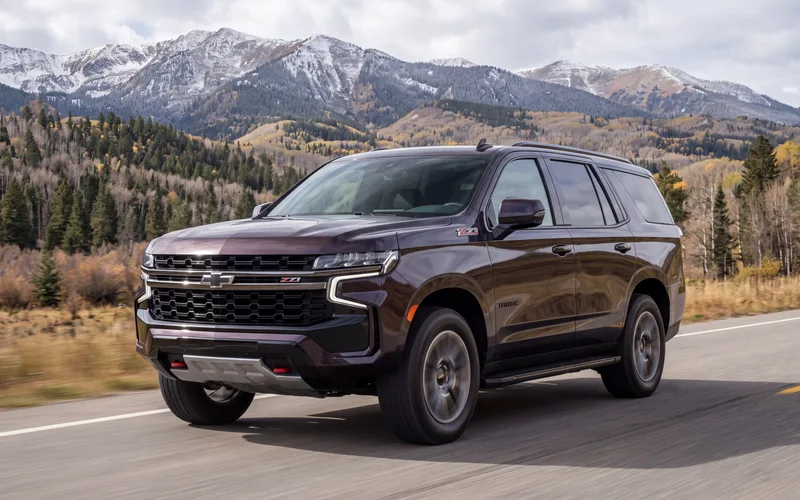 Chevrolet TahoeFull-Size SUVBetter at: Value & maneuverability
Identical vehicle 15 inches shorter for about $3,000 less — the right call unless you truly need the extra 16 cu ft behind the third row.
Compare 2.92B-
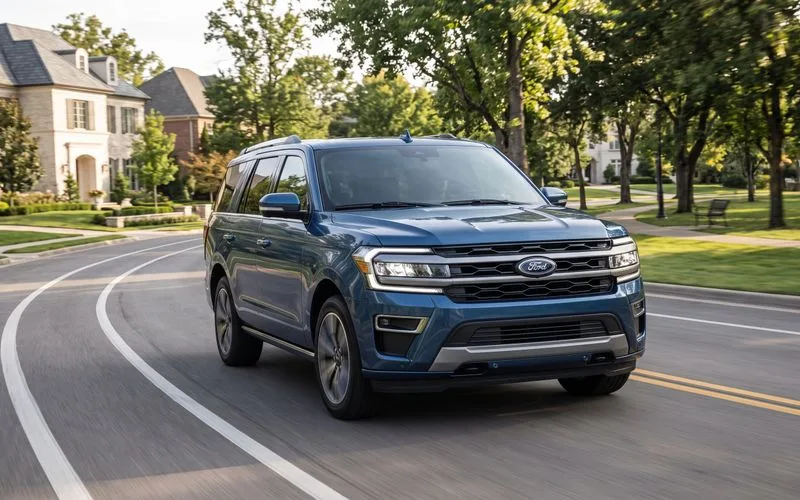 Ford ExpeditionFull-Size SUVBetter at: Towing & performance
Tows 9,600 lbs, is quicker and returns better mileage, and won the segment's most recent comparison test.
Compare 2.87B-
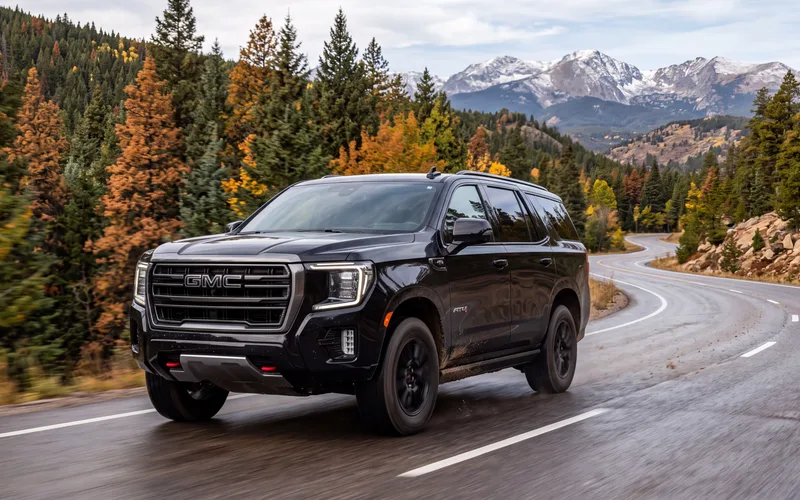 GMC YukonFull-Size SUVBetter at: Interior quality
The same T1XX SUV with a materially nicer cabin and Denali-grade comfort features the Suburban can't be optioned with.
CompareHow it's evolved
10 scored model years · 2017–2026
Subject scores by year
Hover or tap a score to see what moved it versus the year before. A corner mark flags a big swing.
| Year | Performance | Efficiency | Safety | Space | Cost | Reliability | Tech | Use-case | Driving | Value |
|---|---|---|---|---|---|---|---|---|---|---|
| 2026 | 67 | 31 | 65 | 88 | 30 | 62 | 83 | 74 | 58 | 75 |
| 2025 | 65 | 21 | 69 | 88 | 22 | 61 | 83 | 73 | 60 | 74 |
| 2024 | 65 | 22 | 56 | 88 | 26 | 60 | 75 | 72 | 58 | 67 |
| 2023 | 65 | 22 | 54 | 88 | 31 | 60 | 75 | 72 | 59 | 67 |
| 2022 | 65 | 22 | 49 | 88 | 33 | 57 | 74 | 70 | 59 | 68 |
| 2021 | 65 | 25 | 46 | 90 | 35 | 57 | 65 | 69 | 60 | 73 |
| 2020 | 63 | 26 | 40 | 80 | 37 | 52 | 47 | 57 | 55 | 59 |
| 2019 | 62 | 26 | 40 | 74 | 25 | 63 | 50 | 59 | 52 | 59 |
| 2018 | 61 | 37 | 39 | 74 | 40 | 52 | 46 | 59 | 53 | 60 |
| 2017 | 61 | 38 | 38 | 81 | 38 | 54 | 36 | 57 | 50 | 63 |
Compare two years
Best fit & conditions
Higher scores mean a better fit for that use case. Learn more about use-case fit →
Subject profile
Detailed scoring by subject
1Performance & PowertrainOne of the Suburban's strongest categories.2.11C
5.3L V8 is the standard engine across LS/LT/Premier trims for 2018; the 6.2L is a rare special-edition option, not the volume configuration.
Peak torque of the standard 5.3L EcoTec3 V8, the volume powertrain for 2018.
Edmunds instrumented 0-60 test for a 5.3L 4WD Suburban of this generation; a 2WD model would be marginally quicker but this is representative of the volume 4WD configuration.
Reviewers consistently praised the naturally-aspirated 5.3L V8 for smooth, quiet, seamless delivery with no turbo lag, though outright throttle response is unremarkable next to smaller turbocharged rivals.
The 6L80 6-speed automatic paired with the 5.3L shifts smoothly in normal driving but was already behind rivals' 8- and 10-speed units by 2018, with less refined gear spacing and occasional busyness under load or towing.
Best-case conventional towing figure when properly equipped with the Max Trailering Package and 3.42 axle, consistent with this generation's published GM towing charts.
Autotrac 4WD (with selectable 2WD/Auto/4Hi/4Lo including true low range) is optional across LS/LT/Premier trims — broadly available with genuinely useful hardware, though it's a conventional part-time/full-time system without torque vectoring or terrain-specific electronic modes.
2018 introduced the Z71 Off-Road Package (LT trim): all-terrain tires, underbody skid plates, off-road suspension tuning, hill descent control and the 2-speed transfer case. It's genuine light-duty capability, but ground clearance stays modest (~7.9-8 in.) and there's no dedicated high-clearance/locking-diff hardcore off-road trim.
The 2018 Suburban 1500 is effectively a single-powertrain vehicle: the 5.3L V8 is standard across the range, with the 6.2L V8 restricted to a limited-run RST Performance Package special edition. No hybrid, turbo-four, or diesel option exists for this generation's Suburban 1500.
2Efficiency & RangeThe Suburban's lowest-graded category.0.43F
EPA rates the volume 5.3L 4WD Suburban at 18 MPG combined — near the floor of the gas-SUV band for a ~5,600 lb body-on-frame V8 with cylinder deactivation but no automatic stop/start and only six transmission ratios. The 2WD version does marginally better at 19 MPG.
City economy is the Suburban's weakest case at 15 MPG for the volume 4WD configuration. With no automatic stop/start in 2018, the V8 idles through every light and cylinder deactivation offers little help getting a vehicle this heavy moving from rest.
Steady-state cruising is where cylinder deactivation earns its keep: the 4WD 5.3L manages 22 MPG highway, four points above its city figure and near the bottom of the gas-SUV highway band.
The 31.0-gallon fuel tank standard across the 2018 Suburban lineup is what rescues this powertrain: bottom-of-band economy still buys roughly 558 miles between fills in the volume 4WD configuration, well above the SUV band median.
At EPA's standard assumptions the volume 4WD 5.3L burns enough regular unleaded to land beyond the top of the SUV cost band, though it undercuts the same drivetrain in later, heavier model years.
The volume 5.3L V8 runs on 87-octane regular and is additionally E85 flex-fuel capable, so the mainstream buyer never pays a grade premium. The optional 6.2L V8 wants premium, but in 2018 it was bundled only with the Premier trim's RST Performance Package — a narrow exposure, not a Premier-wide requirement.
3SafetyOne of the Suburban's weakest categories.0.55F
NHTSA tested the 2018 Suburban 1500 and awarded 4 stars overall, with a perfect 5 stars in side-impact and 4 stars frontal, offset by a below-average 3-star rollover result typical of tall body-on-frame SUVs.
IIHS did not perform full crashworthiness testing (moderate overlap, side, roof strength) on the 2018 Suburban, so it earned no Top Safety Pick award and carries no independent Good/Acceptable ratings to point to; NHTSA's 3-star rollover result is the only red flag on record.
The volume LT trim comes with the Enhanced Driver Alert Package standard, bundling forward collision alert, lane keep assist with lane departure warning, low-speed automatic braking, automatic high beams and a safety alert seat, but blind-spot monitoring and rear cross-traffic alert remain bundled into an optional Luxury package rather than standard equipment.
The standard system on LT is low-speed automatic front braking only (a crash-mitigation backstop tied to the forward collision alert, not a full-speed AEB system), IIHS notes the vehicle's front crash prevention meets forward collision warning requirements but had not tested autobrake, and there is no pedestrian detection.
Blind-spot monitoring and rear cross-traffic alert are alert-only (no active braking intervention) and are not standard on the volume LT trim, instead sold as part of an optional Luxury package; they are standard only on the top Premier trim.
Lane keep assist with lane departure warning is standard on LT via the Enhanced Driver Alert Package, but this generation's system is a corrective-nudge warning system rather than true lane centering, and contemporary reviews of this GM full-size SUV platform describe it as basic.
Adaptive cruise control was not offered on the volume LT trim and owner/forum reports describe it as rare to find even on the top Premier trim for this generation of Suburban/Tahoe/Yukon, with no combined highway-assist feature at all.
No hands-free highway driving system was available on any 2018 Chevrolet Suburban trim; GM's Super Cruise launched only on the 2018 Cadillac CT6 and had not been extended to trucks/SUVs.
IIHS did not publish a specific headlight test result for the 2018 Suburban, but its 2018-model-year headlight study found roughly two-thirds of tested trims across the industry rated Marginal or Poor, and this generation's full-size GM SUVs (Tahoe/Suburban/Yukon) were not among the standouts; no adaptive headlight technology was offered.
Reviewers credit the Suburban's tall seating position and generous glass area for good general outward visibility, offset by a tall hood that cuts forward sightlines and exterior mirrors reviewers called undersized for the vehicle's size; a rearview camera and rear parking sensors are standard to help compensate.
IIHS rated the 2018 Suburban's LATCH ease-of-use Marginal overall: only 2 of 5 rear seating positions carry complete lower-anchor-and-tether hardware, with the remaining 3 positions offering tether anchors only, making multi-car-seat installs more difficult despite the vehicle's generous cabin space.
4Space & ComfortThe Suburban's best-graded category.3.04B
Standard three-row seating for eight is the volume LT configuration; optional 2nd-row bucket seats on LT/Premier drop capacity to 7, and the front bench option raises it to 9.
Front headroom sits at the top of the full-size SUV band, consistent with the tall K2XL body-on-frame architecture carried over unchanged for the 2018 mid-cycle refresh.
Front legroom exceeds the top of the full-size SUV band.
Second-row headroom is comfortably above segment median.
Second-row legroom is well above the mid-point of the SUV band thanks to the Suburban's stretched wheelbase versus the Tahoe.
Third row (38.5 in headroom, 34.5 in legroom) fits two adults but reviewers describe the cushions as thin and flat, and only suited to shorter trips — kid-friendly but not adult-comfortable on long hauls; Premier adds power-folding but not more room.
Behind-third-row cargo volume is toward the low end of the full-size SUV band — the Suburban's third row eats into what would otherwise be class-leading cargo space, though the Suburban is still notably larger than the Tahoe here.
Maximum cargo volume with all rear seats folded exceeds the top of the full-size SUV band, reflecting the Suburban's segment-leading overall length.
Competitive but unremarkable everyday storage for this generation — a lidded front console, available wireless charging pad on Premier, and rear ventilation ducts, but nothing like the redesigned giga-console GM introduced in the following (2021) generation.
Front and second-row seats are widely praised as supportive and comfortable, with reviewers likening the cabin to a luxury SUV, but the third row is repeatedly called thin and flat, holding the overall score back from the top band.
Ride is composed on smooth roads and steadier on Premier's Magnetic Ride Control suspension, but reviewers note minor road imperfections cause rear-cabin shimmy/shake on the standard suspension — solid but not segment-leading.
Reviewers repeatedly single out the cabin as exceptionally quiet at idle, low speed, and highway cruising, crediting new triple-perimeter door seals, with only light wind noise intruding — a genuine strength for the nameplate.
Heated front seats and tri-zone automatic climate control are available from the mid LT trim up, with ventilated front seats, heated second row, and rear climate ducts with fan control reserved for the top Premier trim — solid but not standard fleet-wide.
5Cost of OwnershipOne of the Suburban's weakest categories.0.65F
2018 Suburban LS RWD is the entry point of a three-trim (LS/LT/Premier) lineup, all sharing the carryover 5.3L V8/6-speed automatic for the 2018 model year (no powertrain change from 2017).
LT was the best-selling 2018 Suburban trim, sitting roughly $4,000-4,200 above LS with added convenience/tech content; 4WD adds roughly $3,000 over the RWD price shown.
RepairPal's annual maintenance-cost estimate for the 2018 Suburban ($690/yr) projected across 5 years; full-size body-on-frame GM SUVs generally track toward the lower end of the segment band for projected upkeep versus more complex unibody/luxury rivals.
iSeeCars/CarEdge depreciation-curve data for the Suburban nameplate puts 5-year depreciation at roughly 56% (44% retention); full-size body-on-frame SUVs of this generation hold value only moderately better than the segment's worst decliners.
Standard GM new-vehicle bumper-to-bumper coverage for the 2018 model year, whichever of time or mileage comes first — unchanged from surrounding model years.
Standard GM new-vehicle powertrain coverage (engine, transmission, transfer case, drive systems) for the 2018 model year, whichever of time or mileage comes first.
For the 2018 model year, GM's Chevy Complete Care program was still in full effect, covering 2 years/24,000 miles of scheduled maintenance (four visits: oil change, tire rotation, 27-point inspection) — genuinely multi-year, ahead of the scaled-back single-visit program GM moved to a couple of years later. Owners also get a complimentary OnStar trial and roadside assistance tied to the powertrain warranty period.
$55,300 volume-trim price minus its estimated resale value after 5 years (44% retained, or about $24,332) leaves about $30,968 in depreciation. Add the projected $3,450 in 5-year maintenance and repairs, and owning this vehicle for 5 years costs about $34,418 in total.
6Reliability & QualityGrades below the middle of the scale.1.52D
Both major predictors flag the 2018 Suburban as a below-average bet: J.D. Power's predicted reliability score is 2.5/5, and Consumer Reports' owner-reported data rates it 'less reliable than other cars from the same model year,' with documented transmission, electronics, and suspension trouble spots.
Chevrolet landed mid-pack in J.D. Power's 2018 U.S. Vehicle Dependability Study (124 PP100, tied with Hyundai), well behind top performers like Lexus (90 PP100) but not a bottom-tier brand — it also won several segment dependability awards that year.
The 2018 model year carries 4 NHTSA recall campaigns, including a second/third-row seatbelt retractor recall (risk of a child seat not locking in place, NHTSA 18V-673) and a power brake assist/vacuum issue (NHTSA 19V-645) — more than a token count and touching both occupant-restraint and braking systems, though none rose to a fire or systemic-failure scale.
The 5.3L EcoTec3 V8 (L83) with Active Fuel Management is a well-documented case of mixed long-term durability: owner communities and repair data show a real pattern of AFM lifter/cam collapse and elevated oil consumption (a quart per 1,000-2,000 miles in some cases), plus owner reports of transmission failures near 100,000 miles requiring full replacement. The base architecture can reach high mileage with diligent maintenance, but the AFM-related failure pattern is a known red flag for this generation.
Contemporary reviews describe the 2018 Suburban's cabin as a strong step up for the segment — soft-touch surfaces, quality trim materials, and in-dash electronics that reviewers compared favorably to luxury large SUVs, especially on Premier/high trims.
Assembly quality reviews are mixed rather than uniformly strong: some outlets praised tight, upscale fit and finish, while others and CR's owner-reported data flag electrical-accessory faults (power liftgate actuator failures, display freezes) and occasional rattles/aging-related noises that a fully solid build wouldn't show this early in ownership.
Chevrolet runs the largest dealer network of any brand in the US, giving Suburban owners dense, nationwide access to sales and service, including in rural markets where full-size SUVs and trucks sell heavily.
Parts commonality across the high-volume GM full-size SUV/truck family (Suburban/Tahoe/Yukon/Silverado/Sierra) keeps routine parts cheap and universally stocked, and the aftermarket is huge — but the Suburban's higher-content trims add costly failure points (magnetic-ride suspension components, complex transmissions) that have driven owner-reported repair bills into the thousands, keeping this from being a cheap vehicle to fix when something major goes wrong.
7Technology & InfotainmentGrades below the middle of the scale.1.09D
The 2018 Suburban is the fourth year of the K2XX/11th generation (2015-2020) and carries a single 8-inch diagonal color MyLink touchscreen across the entire lineup; no larger display was available at any trim or option level.
MyLink (IO5/IO6) keeps a sensible tile menu and retains physical volume/tuning knobs and hard buttons below the screen, but by 2018 its graphics and touch response were a generation behind newer rivals and reviewers regularly noted lag.
Apple CarPlay and Android Auto are standard on every 2018 Suburban trim, but wired-only over USB — GM did not offer factory wireless phone projection on this platform until the 2021 redesign, so this sits at the floor of the wired-standard band.
MyLink's voice control is a fixed command-and-response set rather than natural language, and factory navigation (the IO6 head unit) is optional on the volume LT trim and unavailable on LS — only Premier gets it as standard, pushing most owners to phone-projected maps.
Unusually for this era, Bose premium audio is standard on the volume LT trim (9 speakers), with a 10-speaker Bose Centerpoint surround system on Premier; only the base LS makes do with the ordinary 6-speaker setup.
The cluster is conventional analog speedometer and tachometer with a color Driver Information Center between them — 4.2-inch standard, with an 8-inch multicolor DIC (RPO UHS) on higher configurations. There is no reconfigurable full-digital cluster on this generation.
OnStar 4G LTE provides connectivity for services and a Wi-Fi hotspot, but the MyLink generation has no over-the-air software update path — infotainment and map updates are applied by USB stick or at a dealer.
The myChevrolet app with OnStar RemoteLink covers the core set — remote start, remote lock/unlock, vehicle locate and diagnostics — but the functions lapse behind a paid OnStar plan once the trial ends, and there is no digital key.
Port count is generous — five USB ports plus a standard household-style 110V outlet on the rear of the center console — but all USB is legacy Type-A, and for 2018 GM specifically deleted wireless phone charging from the LT's Luxury and Texas Edition packages, leaving the inductive pad to Premier.
Remote start is standard all the way down to LS, and Premier bundles proximity keyless entry, push-button start and a hands-free power liftgate as standard — but on the volume LT trim Keyless Open/Keyless Start are optional rather than standard, and no phone-as-key exists on this generation.
A rear vision camera is standard across the lineup and rear park assist is standard with front park assist on higher trims, but no 360-degree camera was offered at any price on this generation — a real gap against rivals already fitting surround view.
A color head-up display is offered, but only as an option on the range-topping Premier — it cannot be had on LS or on the volume LT trim.
8Use-Case FitMid-pack among this car's ten categories.1.99C-
Wide door openings, a tall roofline and 45.3 in of front legroom make loading kids and gear physically easy, a power liftgate is standard on the volume LT for arms-full loading, and 121.7 cu ft of max cargo (76.7 cu ft with only the 3rd row folded) swallows strollers without a fight. The hardware still drags it down: IIHS rates this generation's LATCH ease-of-use Marginal overall, with only 2 of 5 rear seating positions carrying complete lower-anchor-and-tether hardware and the remaining 3 offering a tether anchor only, which makes a multi-car-seat household's install meaningfully harder than the cabin's size suggests, and power-folding rear seats are reserved for Premier.
GM's Rear Seat Reminder — the rear-occupant alert this item specifically asks about — is standard on the 2018 Suburban, and the volume LT gets a real standard suite via the Enhanced Driver Alert Package (forward collision alert, lane keep assist/lane departure warning, low-speed automatic braking, auto high beams, safety alert seat). Everything else is a gap: blind-spot monitoring and rear cross-traffic alert are bundled into an optional Luxury package on LT rather than standard, adaptive cruise isn't offered on LT at all, NHTSA's own testing nets only a 4-star overall with a 3-star rollover, and IIHS ran no crashworthiness tests on this generation, leaving families with no independent crash data to lean on.
Better equipped for a family road trip than a first pass suggests: tri-zone automatic climate control is standard from the base LS up, a household-style 110V outlet on the rear of the center console keeps devices alive across all three rows, a Blu-ray rear-seat entertainment system is available on LT via the Sun/Entertainment/Destinations package, and 9-speaker Bose audio is standard on LT. The front two rows are genuinely long-haul comfortable and the cabin is repeatedly singled out for quietness, crediting new triple-perimeter door seals. The third row keeps this out of the top band: 34.5 in of legroom and 38.5 in of headroom mean two adults fit, but the cushions are thin and flat, fine for kids or a short trip rather than an all-day drive.
The naturally aspirated 5.3L is smooth and lag-free at low speed, and ride quality on smooth roads is composed. Held back by a carryover 6-speed automatic already a generation behind rivals' 8- and 10-speed units, reviewer-noted rear-cabin shimmy over broken pavement, and a near-total absence of driver-assist tech to ease daily fatigue: adaptive cruise isn't offered on the volume LT trim and is rare even on Premier, and there is no hands-free driving system at any price for 2018.
This is an expensive vehicle to commute in by any modern standard. The volume 5.3L 4WD returns just 15 MPG city and 18 MPG combined — no automatic stop/start to save fuel at every light — translating to about $3,450 a year in fuel at EPA's standard assumptions. Consumables are at least cheap: the 5.3L runs on regular octane and is E85 flex-fuel capable, and GM's parts network keeps routine service affordable, but the core running cost sits well below segment norms on every efficiency metric measured.
A 224.3 in long, 80.5 in wide body on a 130 in wheelbase is genuinely cumbersome in tight city driving and parking garages, a tall hood 'cuts forward visibility,' and mirrors are called 'much too small for a vehicle of this size.' A rearview camera and rear park assist are standard and front park sensors can be had on LT (bundled into the Z71 Off-Road Package) or on Premier — but a 360-degree surround-view camera was not offered at any price on this generation, so there is no escape hatch on the top trim either, and no automated parking assist exists at any trim.
8,300 lbs of maximum tow rating (2WD, 5.3L, 3.42 axle with the Max Trailering Package) and 121.7 cu ft of max cargo cover the great majority of travel trailers, boats and utility trailers a buyer will actually own. Standard trailering hardware means even a base LS is ready to hook up without dealer add-ons. It falls short of the top band because that peak figure requires the right axle and package combination (a plainer 4WD build manages 8,000 lbs, and the standard 3.08 axle drops to 6,000-6,300 lbs), the integrated trailer brake controller is a separate JL1 option rather than part of the ordinary trailering package, and an enclosed carpeted cargo area can't take the abuse a pickup bed shrugs off.
The Suburban carries decades of fleet, government and livery use behind this body-on-frame architecture and small-block V8 family, backed by Chevrolet's roughly 2,800-dealer US network for parts and service. But this specific model year's own reliability record is a genuine red flag rather than merely average: Consumer Reports rates it 'less reliable than other cars from the same model year' with transmission flagged as a major trouble spot (owner-reported failures near 100,000 miles running $8,000+ to replace), and the 5.3L's Active Fuel Management system carries a well-documented lifter-failure and elevated oil-consumption pattern on this generation. That combination — not just an unproven-but-fine chassis — keeps it out of the middle-of-the-road band.
Better provisioned for work than a first pass suggests: a household-style 110V outlet is standard on the rear of the center console alongside five USB ports, roof rails are standard from LS with roof rack crossbars on LT, a power liftgate is standard on LT, standard trailering hardware is fitted across trims, and the Z71 Off-Road Package adds tow hooks, rocker-sill steps and rubber floor mats for a wipe-down cargo area. GM's full-size platform also has a mature upfit and livery-conversion ecosystem behind it. It stops short of the top band because USB is all legacy Type-A, storage is a conventional lidded console rather than a dedicated cargo-management system, and no factory work-grade vinyl interior is offered on any trim.
A 31-gallon tank paired with this model year's 18 MPG combined rating gives roughly 558 miles between fills on the volume 4WD configuration — a genuine long-haul strength — the cabin is a real standout for quietness at speed, and tri-zone climate plus a 110V household outlet keep a full load of occupants comfortable and charged. What keeps it from the top band is the driver-assist gap: no adaptive cruise on the volume trim (rare even on Premier), no hands-free driving at any price, and a third row that isn't suited to all-day endurance even though the front two rows are.
Stronger on the camping-and-gear half of this item than previously credited: a standard 110V household outlet runs a cooler or charges gear at a campsite, roof rails are standard (crossbars on LT) for a box or rooftop tent, both rear rows fold flat to 121.7 cu ft, and 8,300 lbs of towing covers most toy trailers. The Z71 Off-Road Package, new for 2018 on LT, makes a credible light-duty case with all-terrain tires, underbody skid plates, tow hooks, off-road suspension tuning, hill descent control and a 2-speed transfer case with low range. It stops at mid-band because ground clearance stays modest (~7.9-8 in), there's no locking differential offered on any 2018 trim, and both 4WD and Z71 are options rather than something every 2018 Suburban carries.
121.7 cu ft with both rear rows folded — and 76.7 cu ft with just the third row folded — are strong figures even for this pre-redesign generation, so bulky gear and full luggage loads both fit without a roof box. Roof rails are standard from LS with crossbars on LT for the times you want one anyway, a power liftgate is standard on LT, and standard trailering hardware makes a hitch-mounted cargo carrier or bike rack an easy addition. It sits below a redesigned Suburban's ceiling because this generation lacks power-folding rear seats on the volume trim and the underfloor storage GM introduced with the 2021+ redesign, and behind-the-third-row cargo (39.3 cu ft) is toward the low end of the full-size SUV band since the third row itself eats into what would otherwise be class-leading space.
9Driving ExperienceGrades below the middle of the scale.1.58D
Secure and composed for a nearly three-ton body-on-frame SUV with no excessive body lean, but the volume LT trim rides on the standard steel-sprung setup (independent front, coil-sprung solid rear axle) that Consumer Reports found stiff and jiggly at low speed — Magnetic Ride Control, which reviewers say materially improves both ride and handling, is standard only on Premier and optional on LT, so the representative configuration does without it. Scored below the 67.9 SUV median: the feeling of bulk is the dominant impression.
The electric-assist rack is accurate enough to place the vehicle confidently, but it is overly light, slow to react and offers almost no road feedback — bottom of the 'precise enough but numb' band, and in line with how the 2019 and 2020 Suburbans score on the same hardware.
Now scored against a real instrumented figure rather than a sibling estimate: Edmunds measured 60-0 mph in 131 ft, explicitly longer than some rivals, with good stability in panic stops and a solid, confidence-inspiring pedal. Adequate stopping power with long distances places it mid-band; the 2018 model year also draws more NHTSA brake complaints than any other single system.
For 2018 the Suburban was 5.3L/6-speed only — the 6.2L V8 and 10L80 10-speed were exclusive to the Tahoe RST Performance Package that year and did not reach the Suburban until 2019 — so the volume configuration is a smooth, predictable small-block V8 tied to a transmission already a generation behind rivals' 8- and 10-speeds. The measured 7.2-second 0-60 is genuinely respectable for 5,900 lb, which offsets Consumer Reports' impression that it feels flat-footed.
Acoustic isolation is a real strength — Consumer Reports calls the cabin luxury-car quiet — but the score is pulled down from the previous pass because the 2018 Suburban falls inside the 2015-2020 range named in the aluminum-driveshaft 'Chevy Shake' class action, a highway-speed vibration complaint. It is scored less harshly than the 2020 car: the suit's second alleged cause is GM's 8L90/8L45 automatics, which the 2018 Suburban does not use (6L80 six-speed), and NHTSA drivetrain complaints for this model year are modest at eight.
Wide even by full-size-SUV standards and beyond the top of the SUV normalization band, a direct consequence of the 130.0-inch wheelbase — 14 inches longer than the Tahoe's — traded for the extra third-row and cargo length.
Commanding above-traffic seating with a well-organized dash, legible gauges, a configurable driver information centre and an available head-up display; the column shifter reads as old-fashioned next to rivals' rotary or push-button units but is retained to keep the front bench seat viable, and sightlines past the tall rear body remain the weak point.
Reduced to match how the 2019 and 2020 cars score and to reflect the volume trim rather than the press car: CarPro's enthusiasm ('rides and drives great,' 'terrific') was for an RST with Magnetic Ride and a Borla exhaust, while a standard-suspension LT combines numb light steering, a stiff jiggly low-speed ride and a powertrain reviewers call flat-footed. Competent and unintimidating family transport, not something driven for pleasure.
10Value & Market PositionOne of the Suburban's strongest categories.2.07C
Base LS ($50,200 2WD / $53,200 4WD) is better equipped than its price-peers' base trims on infotainment and convenience — 8-inch MyLink touchscreen with Apple CarPlay/Android Auto, Wi-Fi hotspot, five USB ports, tri-zone automatic climate, remote start, rear camera and rear park assist, Teen Driver, 18-in alloys, plus LED daytime running lamps newly standard for 2018 — but every active-safety feature costs a trim step: forward-collision alert and lane-keep assist need the LT, and blind-spot monitoring needs the Premier, a real gap on a $50K vehicle.
Huge interior volume, ~8,300 lb towing on the volume 5.3L trim and genuine 8-9 passenger capacity are a lot of hardware per dollar against premium-badged full-size SUVs, and the LS undercuts them by a wide margin — but the $50K-$65K MSRP spread sits above mainstream rivals like the Nissan Armada, and 2018 is the year the redesigned Ford Expedition arrived with an aluminum body, independent rear suspension, a 375-hp turbo V6 and a 10-speed automatic at comparable money, leaving the Suburban fair value rather than a standout.
Three core trims (LS, LT, Premier), each in 2WD or 4WD, with 8- or 9-passenger seating configs, a 1FL fleet trim and a 3500HD commercial variant, plus the newly available RST appearance package on LT/Premier (22-in gloss-black wheels and trim) with an optional Brembo six-piston front brake and Borla exhaust package. Decent spread from work-grade to loaded, but there is exactly one powertrain — the 5.3L V8 with the six-speed automatic — at every trim, where the Expedition offered a five-step ladder up to Platinum.
2018 was the Suburban's best year of the eleventh generation: 60,633 US units, up 7.3% from 2017's 56,516, placing it second among full-size SUV nameplates behind its own short-wheelbase sibling (Tahoe, 104,153) and comfortably ahead of the newly redesigned Ford Expedition (54,661). A strong, rising seller near the top of its segment, though not the outright leader.
Chevrolet is a broadly trusted mainstream brand with neutral-to-positive perception rather than an aspirational one, but the Suburban nameplate itself carries genuine equity — the longest continuously produced automobile nameplate, and the default choice for large families, tow/haul buyers and fleet/livery operators — which lifts it modestly above plain brand neutrality without conferring a luxury halo.
Dealer discounting off a $50K-$65K sticker was routine, but 2018 was the nameplate's strongest sales year of the generation and GM's full-size SUVs are its highest-margin vehicles, so incentive spend on them ran leaner than on the rest of the lineup — occasional modest rebates and finance offers rather than the deep clearance money that appeared in the run-out years before the 2021 redesign.
2018 is the fourth model year of the 2015-2020 eleventh generation — past initial freshness, three years ahead of the 2021 redesign, and squarely mid-cycle. Its 2018 changes were a content update (RST appearance package, standard LED daytime running lamps, Tire Fill Alert) rather than a styling or platform refresh, and the year's direct rival, the Expedition, was brand new.
Solidly but not enthusiastically reviewed: U.S. News scored it 7.5/10 and ranked it #5 in 2018 Affordable Large SUVs, explicitly putting it in 'the back half of our large SUV rankings' on subpar predicted reliability, and reviewers consistently paired praise for cargo room, towing and nine-passenger capacity with criticism of the truck-based ride, the high cargo floor and parking-lot bulk. No major 2018 awards, and it was not the pick of head-to-head comparisons against the redesigned Expedition.