
The verdict
A capable full-size suv, strong on space and held back by efficiency.
The 2026 Tahoe is the default answer for families who genuinely need eight seats, 122.9 cu ft of cargo room and an 8,400-lb tow rating in one vehicle — and it now backs that up with the biggest screen in the class (17.7 in, standard on every trim) and available Super Cruise hands-free driving. What you pay for that capability is steep: $61,495 to start, roughly $67,000 for the volume LT, and 17 mpg combined that works out to about $2,900 a year in fuel. Reliability is average at best — GM's Dynamic Fuel Management V8 has a well-documented lifter problem and the warranty is a segment-floor 3/36 — but resale is among the strongest in the class at ~57% after five years. If you need this much truck, the Tahoe is the sensible, cheapest way into GM's full-size SUV family; if you're buying it for image or because a three-row crossover feels small, you'll overpay in fuel and parking headaches.
Jump to scoresStrengths
- Cavernous, genuinely usable interior space
- Class-leading screen and tech that's standard, not optional
- Serious towing and work capability
What holds it back
- Fuel economy is at the very bottom of the class
- Expensive to buy, before you option anything
- Warranty coverage is the worst thing about owning one
Top alternatives
Cars shoppers cross-shop with the Chevrolet Tahoe 2.92B-
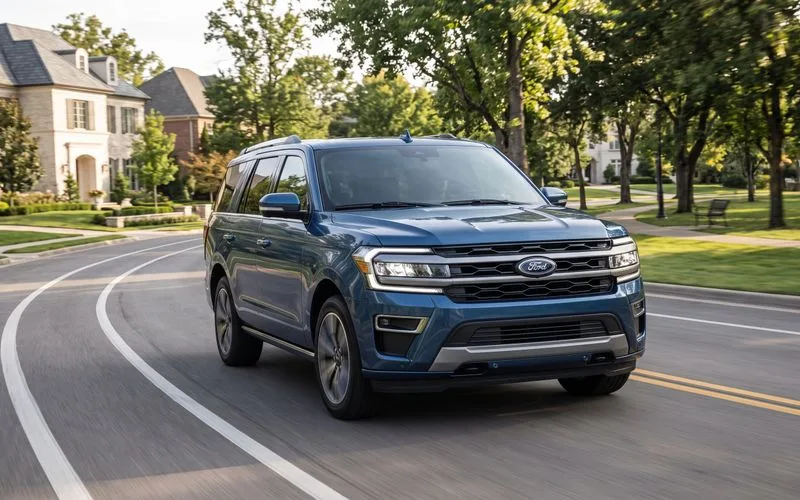 Ford ExpeditionFull-Size SUVBetter at: Towing & power
More power (400 hp), more towing (9,600 lbs) and better fuel economy (19 mpg combined) after a full 2025 redesign that won recent comparison tests outright.
Compare 2.76B-
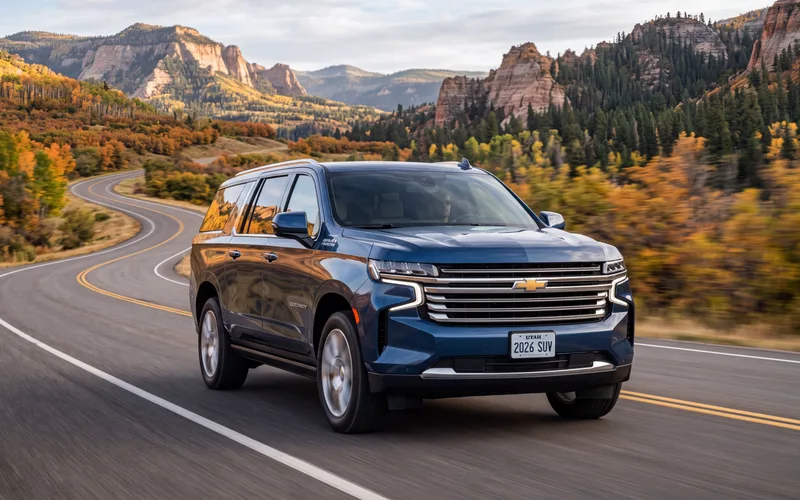 Chevrolet SuburbanFull-Size SUVBetter at: Cargo space
The same Tahoe with a longer wheelbase — 144.7 cu ft of cargo and a genuinely adult-friendly third row for a modest price bump.
Compare 2.63C+
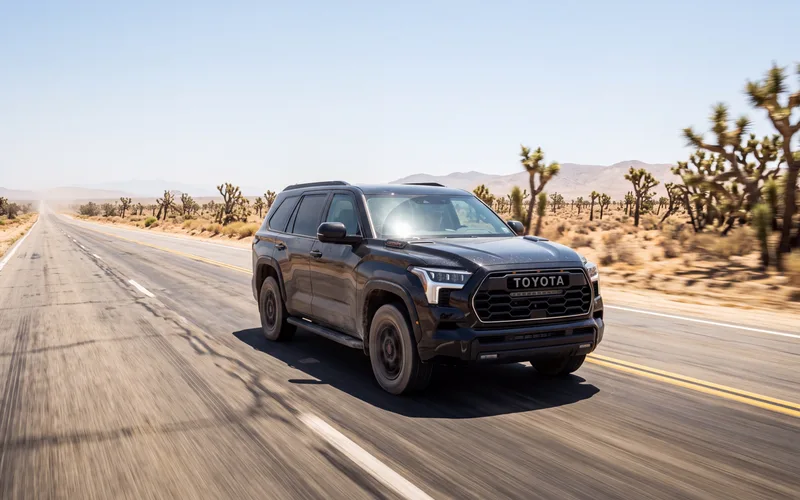 Toyota SequoiaFull-Size SUVBetter at: Efficiency
Its hybrid V6 fixes the Tahoe's worst trait — fuel consumption — and brings Toyota's stronger reliability and powertrain durability record.
CompareHow it's evolved
10 scored model years · 2017–2026
Subject scores by year
Hover or tap a score to see what moved it versus the year before. A corner mark flags a big swing.
| Year | Performance | Efficiency | Safety | Space | Cost | Reliability | Tech | Use-case | Driving | Value |
|---|---|---|---|---|---|---|---|---|---|---|
| 2026 | 67 | 25 | 65 | 86 | 34 | 62 | 83 | 74 | 63 | 76 |
| 2025 | 68 | 20 | 68 | 87 | 29 | 61 | 82 | 72 | 65 | 77 |
| 2024 | 67 | 20 | 59 | 85 | 31 | 60 | 72 | 73 | 64 | 73 |
| 2023 | 67 | 20 | 62 | 85 | 34 | 57 | 73 | 72 | 62 | 72 |
| 2022 | 67 | 20 | 57 | 84 | 34 | 55 | 72 | 70 | 61 | 71 |
| 2021 | 65 | 24 | 56 | 85 | 39 | 52 | 68 | 70 | 62 | 74 |
| 2020 | 64 | 23 | 43 | 71 | 32 | 58 | 47 | 56 | 59 | 60 |
| 2019 | 64 | 23 | 43 | 71 | 33 | 57 | 47 | 56 | 59 | 61 |
| 2018 | 64 | 29 | 41 | 71 | 23 | 55 | 46 | 56 | 58 | 63 |
| 2017 | 62 | 30 | 42 | 71 | 35 | 56 | 46 | 56 | 58 | 63 |
Compare two years
Best fit & conditions
Higher scores mean a better fit for that use case. Learn more about use-case fit →
Subject profile
Trims & configurations
6 trimsScores above reflect the volume trim. Per-trim specs and scores are rolling out — the full lineup:
Academic Probation · NHTSA safety recalls
May 14, 2026Wheels: hubIncorrect bolts may have been installed on the left and right front wheel hubs, which can result in the bolts loosening or deforming over time.
Defect
General Motors, LLC is recalling certain 2025â2026 Cadillac Escalade, Escalade ESV, Chevrolet Suburban 1500, Tahoe, GMC Yukon, and Yukon XL vehicles with 24-inch wheels. Incorrect bolts may have been installed on the left and right front wheel hubs, which can result in the bolts loosening or deforming over time.
Risk
A bolt that loosens or breaks during vehicle operation can result in loss of vehicle control, increasing the risk of a crash.
Remedy
Dealers will replace the front left and right wheel hub bolts, free of charge. Owner notification letters were mailed June 18, 2026. Owners may contact GMC customer service at 1-800-462-8782, Chevrolet customer service at 1-800-222-1020 or Cadillac customer service at 1-800-333-4223. GM's number for this recall is N262554630. Vehicle Identification Numbers (VINs) involved in this recall became searchable on NHTSA.gov on May 14, 2026.
NHTSA campaign 26V304000 ↗Manufacturer no. N2625546302,457 vehicles potentially affected (all models in the campaign)Owners notified Jun 18, 2026Filed by General Motors, LLCFiled as TAHOEMay 7, 2026Power train: transfer case (4-wheel drive)A component missing from the drivetrain transfer case may cause the front and/or rear wheels to lock up without warning to the driver.
Defect
General Motors, LLC (GM) is recalling certain 2026 Cadillac Escalade and Escalade ESV, Chevrolet Silverado 1500, Suburban, and Tahoe, and GMC Sierra 1500, Yukon, and Yukon XL vehicles with four-wheel (4WD) or all-wheel drive (AWD), and certain 2015-2020 Suburban, Escalade, Escalade ESV, Yukon, Yukon XL, and Tahoe vehicles. A component missing from the drivetrain transfer case may cause the front and/or rear wheels to lock up without warning to the driver.
Risk
Front or rear wheel lockup increases the risk of a crash.
Remedy
Owners are advised not to drive their vehicle until the remedy is completed. Dealers will inspect and, if necessary, replace the transfer case assembly, free of charge. Owner notification letters were mailed May 18, 2026. Owners may contact GMC customer service at 1-800-462-8782, Chevrolet customer service at 1-800-222-1020 or Cadillac customer service at 1-800-333-4223. GM's number for this recall is N262557620. Vehicle Identification Numbers (VINs) involved in this recall became searchable on NHTSA.gov on May 7, 2026.
NHTSA campaign 26V289000 ↗Manufacturer no. N26255762066 vehicles potentially affected (all models in the campaign)Owners notified May 18, 2026Filed by General Motors, LLCFiled as TAHOEFeb 26, 2026Equipment: other: owners/service/other manualGeneral Motors has decided that certain 2027 Chevrolet Bolt EV, 2025-2026 Cadillac OPTIQ, Chevrolet Colorado, Equinox EV, GMC Canyon, 2026 Buick Enclave, Envision, Cadillac CT5, Escalade, Escalade ESV, Escalade IQ, Escalade IQL, LYRIQ, VISTIQ, Chevrolet Blazer EV, Corvette Convertible, Corvette Coupe, Corvette Convertible E-Ray, Equinox, Silverado 1500, 2500, 3500, Silverado EV, Suburban 1500, Tahoe, Traverse, GMC Acadia, Hummer EV Pickup, Hummer EV SUV, Sierra 1500, 2500, 3500, Sierra EV, Terrain, Yukon, and Yukon XL vehicles. The radio may not have been set to the correct status to download the electronic owner's manual during production. As such, these vehicles fail to comply with the requirements of Federal Motor Vehicle Safety Standard number 208, âOccupant Protection.â
Defect
General Motors has decided that certain 2027 Chevrolet Bolt EV, 2025-2026 Cadillac OPTIQ, Chevrolet Colorado, Equinox EV, GMC Canyon, 2026 Buick Enclave, Envision, Cadillac CT5, Escalade, Escalade ESV, Escalade IQ, Escalade IQL, LYRIQ, VISTIQ, Chevrolet Blazer EV, Corvette Convertible, Corvette Coupe, Corvette Convertible E-Ray, Equinox, Silverado 1500, 2500, 3500, Silverado EV, Suburban 1500, Tahoe, Traverse, GMC Acadia, Hummer EV Pickup, Hummer EV SUV, Sierra 1500, 2500, 3500, Sierra EV, Terrain, Yukon, and Yukon XL vehicles. The radio may not have been set to the correct status to download the electronic owner's manual during production. As such, these vehicles fail to comply with the requirements of Federal Motor Vehicle Safety Standard number 208, âOccupant Protection.â
Risk
Without an owner's manual to consult, owners may not know how to safely use and operate the vehicle, increasing the risk of injury in a crash.
Remedy
Dealers will reset the vehicle radio, which will facilitate automatic download of the electronic ownerâs manual, free of charge. Owner notification letters were mailed April 16, 2026. Owners may contact GM customer service at 1-866-467-9700, Chevrolet customer service at 1-800-222-1020 or Cadillac customer service at 1-800-333-4223. The manufacturer's number for this recall is N252540430. Vehicle Identification Numbers (VINs) involved in this recall became searchable on NHTSA.gov on February 26, 2026.
NHTSA campaign 26V114000 ↗Manufacturer no. N2525404305,861 vehicles potentially affected (all models in the campaign)Owners notified Apr 16, 2026Filed by General Motors, LLCFiled as TAHOE
26 recalls on other model years of the Tahoe (2017–2024)
Feb 13, 2026Power train: automatic transmission: control module: software · Power train: automatic transmission: fluid/lubricant: valves/valve bodyThe transmission control valve may fail and lock up the rear wheels.
Defect
General Motors, LLC (GM) is recalling certain 2022 Chevrolet Tahoe, Chevrolet Suburban, GMC Yukon, GMC Yukon XL, Cadillac Escalade, and Cadillac Escalade ESV vehicles equipped with 10 Speed Transmission with ETRS (Electronic Transmission Range Select). The transmission control valve may fail and lock up the rear wheels.
Risk
Rear wheels that lock up while driving increase the risk of a crash.
Remedy
Dealers will install new transmission control module (TCM) software, free of charge. Owner notification letters were mailed April 7, 2026. Owners may contact GM customer service at 1-888-988-7267, Cadillac customer service at 1-800-458-8006, GMC customer service at GMC 1-800-462-8782 or Chevrolet customer service at 1-800-222-1020. GM's number for this recall is N252536750. Vehicle Identification Numbers (VINs) involved in this recall became searchable on NHTSA.gov on February 12, 2026.
NHTSA campaign 26V085000 ↗Manufacturer no. N25253675043,743 vehicles potentially affected (all models in the campaign)Owners notified Apr 7, 2026Filed by General Motors, LLCFiled as TAHOESep 18, 2025Fuel system, diesel: storage: tank assemblyThe original fuel tank may have been replaced with an incorrect fuel tank, which can allow fuel to leak in a rollover crash.
Defect
General Motors, LLC (GM) is recalling certain 2021 Cadillac Escalade, 2021, 2023-2024 Chevrolet Tahoe, and 2022 and 2024 GMC Yukon vehicles equipped with a 6-cylinder diesel engine. The original fuel tank may have been replaced with an incorrect fuel tank, which can allow fuel to leak in a rollover crash.
Risk
A fuel leak in the presence of an ignition source increases the risk of a vehicle fire.
Remedy
Dealers will inspect for the correct fuel tank and replace it, if necessary, free of charge. Owner notification letters were mailed November 5, 2025. Owners may contact Cadillac customer service at 1-800-333-4223, Chevrolet customer service at 1-800-222-1020, or GMC customer service at 1-800-462-8782. GM's number for this recall is N252512770. Vehicle Identification Numbers (VINs) involved in this recall became searchable on NHTSA.gov on September 18, 2025.
NHTSA campaign 25V619000 ↗Manufacturer no. N25251277012 vehicles potentially affected (all models in the campaign)Owners notified Nov 5, 2025Filed by General Motors, LLCFiled as TAHOEApr 24, 2025Engine and engine cooling: engine: hard parts internal/mechanicalThe connecting rod and/or crankshaft engine components may have manufacturing defects that can lead to engine damage and engine failure.
Defect
General Motors LLC (GM) is recalling certain 2021-2024 Cadillac Escalade and Escalade ESV, Chevrolet Silverado 1500, Suburban, and Tahoe, GMC Sierra 1500, Yukon, and Yukon XL vehicles equipped with a 6.2L V8 gas engine. The connecting rod and/or crankshaft engine components may have manufacturing defects that can lead to engine damage and engine failure.
Risk
Engine failure increases the risk of a crash.
Remedy
Dealers will inspect the engine, and as necessary, repair or replace the engine. For vehicles that pass inspection, dealers will add higher viscosity oil, install 6 oil fill cap, replace the oil filter, and update the owner's manual. Repairs will be performed free of charge. Owner notification letters were mailed June 18, 2025. Owners may contact Cadillac customer service at 1-800-333-4223, Chevrolet customer service at 1-800-222-1020, or GMC customer service at 1-800-462-8782. GM's number for this recall is N252494000.
NHTSA campaign 25V274000 ↗Manufacturer no. N252494000597,571 vehicles potentially affected (all models in the campaign)Owners notified Jun 18, 2025Filed by General Motors, LLCFiled as TAHOEOct 24, 2024Power train: automatic transmission: control module: software · Power train: automatic transmission: fluid/lubricant: valves/valve bodyThe transmission control valve may fail and cause the rear wheels to lock-up.
Defect
General Motors, LLC (GM) is recalling certain 2020-2022 Chevrolet Silverado 1500, 2500, 3500, GMC Sierra 1500, 2500, 3500, 2021 Cadillac Escalade, Escalade ESV, Chevrolet Tahoe, Suburban, GMC Yukon, and Yukon XL vehicles equipped with diesel engines. The transmission control valve may fail and cause the rear wheels to lock-up.
Risk
Rear wheel lock-up can increase the risk of a crash.
Remedy
Dealers will install new transmission control module software, free of charge. GM will provide a special coverage program to cover the repair of transmissions that are identified by the remedy software as containing a defective control valve. Owner notification letters were mailed December 12, 2024. Owners may contact GM customer service at 1-888-988-7267, Cadillac customer service at 1-800-458-8006, GMC customer service at GMC 1-800-462-8782 or Chevrolet customer service at 1-800-222-1020. GM's number for this recall is N242454440.
NHTSA campaign 24V797000 ↗Manufacturer no. N242454440463,295 vehicles potentially affected (all models in the campaign)Owners notified Dec 12, 2024Filed by General Motors, LLCFiled as TAHOESep 12, 2024Service brakes, hydraulic: brake fluid low warning: lamp · Service brakes, hydraulic: power assist: electric: control module: softwareThe electronic brake control module software may fail to display a warning light when a loss of brake fluid occurs. As such, these vehicles fail to comply with the requirements of Federal Vehicle Safety Standard number 135, "Light Vehicle Brake Systems."
Defect
General Motors, LLC (GM) is recalling certain 2023 Chevrolet Silverado 1500, GMC Sierra 1500, 2023-2024 Chevrolet Tahoe, Suburban, GMC Yukon, Yukon XL, Cadillac Escalade, and Escalade ESV vehicles. The electronic brake control module software may fail to display a warning light when a loss of brake fluid occurs. As such, these vehicles fail to comply with the requirements of Federal Vehicle Safety Standard number 135, "Light Vehicle Brake Systems."
Risk
Without a warning light, the vehicle may be driven with low brake fluid, which can reduce braking performance and increase the risk of a crash.
Remedy
The Electronic Brake Control Module (eBCM) software will be updated through an over-the-air (OTA) update or by a dealer, free of charge. Owner notification letters were mailed October 25, 2024. Owners can contact GMC customer service at 1-800-462-8782, Chevrolet customer service at 1-800-222-1020, or Cadillac customer service at 1-800-458-8006. GM's number for this recall is N242447990.
NHTSA campaign 24V674000 ↗Manufacturer no. N242447990449,671 vehicles potentially affected (all models in the campaign)Owners notified Oct 25, 2024Filed by General Motors, LLCFiled as TAHOESep 20, 2023Suspension: rearThe rear suspension outer control arm bolts may not have been properly heat-treated, which can cause the bolts to break.
Defect
General Motors, LLC (GM) is recalling certain 2023 Cadillac Escalade, Escalade ESV, Chevrolet Suburban, Chevrolet Tahoe, GMC Yukon, and Yukon XL vehicles. The rear suspension outer control arm bolts may not have been properly heat-treated, which can cause the bolts to break.
Risk
A broken suspension bolt can result in misalignment of the rear wheel, increasing the risk of a crash.
Remedy
Dealers will replace both rear suspension outer control arm bolts, free of charge. Owner notification letters were mailed November 14, 2023. Owners may contact Chevrolet customer service at 1-800-222-1020; Cadillac customer service at 1-800-458-8006; and GMC customer service at 1-800-462-8782. GM's number for this recall is N232415910.
NHTSA campaign 23V642000 ↗Manufacturer no. N232415910189 vehicles potentially affected (all models in the campaign)Owners notified Nov 14, 2023Filed by General Motors, LLCFiled as TAHOEDec 8, 2022Exterior lighting: lighting control module: softwareThe daytime running lights (DRLs) may not deactivate when the headlights are on. As such, these vehicles fail to comply with the requirements of Federal Motor Vehicle Safety Standard number 108, "Lamps, Reflective Devices, and Associated Equipment."
Defect
General Motors, LLC (GM) is recalling certain 2020-2023 Cadillac CT4 and CT5; 2021-2023 Buick Envision; and 2022-2023 Cadillac Escalade and Escalade ESV, Chevrolet Silverado 1500, Suburban, Tahoe, GMC Sierra 1500, Yukon, and Yukon XL vehicles. The daytime running lights (DRLs) may not deactivate when the headlights are on. As such, these vehicles fail to comply with the requirements of Federal Motor Vehicle Safety Standard number 108, "Lamps, Reflective Devices, and Associated Equipment."
Risk
DRLs that do not deactivate as intended may result in a glare, reducing visibility, and increasing the risk of a crash.
Remedy
The body control module software will be updated by a dealer, or through an over-the-air (OTA) update, free of charge. Owner notification letters were mailed January 23, 2023. Owners may contact GMC customer service at 1-888-988-7267, Chevrolet customer service at 1-800-222-1020, or Cadillac customer service at 1-800-458-8006. GM's number for this recall is N222386380. This recall expands previous recall number 22V-827.
NHTSA campaign 22V903000 ↗Manufacturer no. N222386380740,108 vehicles potentially affected (all models in the campaign)Owners notified Jan 23, 2023Filed by General Motors, LLCFiled as TAHOENov 3, 2022Exterior lighting: lighting control module: softwareThe daytime running lights (DRLs) may not deactivate when the headlights are on. As such, these vehicles fail to comply with the requirements of Federal Motor Vehicle Safety Standard number 108, "Lamps, Reflective Devices, and Associated Equipment."
Defect
General Motors, LLC (GM) is recalling certain 2021 Yukon, Yukon XL, Chevrolet Tahoe, Chevrolet Suburban, Cadillac Escalade, and Cadillac Escalade ESV vehicles. The daytime running lights (DRLs) may not deactivate when the headlights are on. As such, these vehicles fail to comply with the requirements of Federal Motor Vehicle Safety Standard number 108, "Lamps, Reflective Devices, and Associated Equipment."
Risk
Daytime Running Lights that do not deactivate as intended may cause a glare, reducing visibility and increasing the risk of a crash.
Remedy
Dealers will provide an over-the-air (OTA) update for the Body Control Module software, free of charge. Owner notification letters were mailed December 15, 2022. Owners may contact GM customer service at 1-888-988-7267, Chevrolet customer service at 1-800-222-1020, or Cadillac customer service at 1-800-458-8006. GM's number for this recall is N222382220.
NHTSA campaign 22V827000 ↗Manufacturer no. N222382220338,735 vehicles potentially affected (all models in the campaign)Owners notified Dec 15, 2022Filed by General Motors, LLCFiled as TAHOEAug 11, 2022Seat belts: critical fastenersThe rivet that retains the buckle to the mounting bracket in the left or right side third-row seat belt buckle assembly may have been improperly formed.
Defect
General Motors, LLC (M) is recalling certain 2021-2022 Cadillac Escalade, Escalade ESV, Chevrolet Suburban, Tahoe, GMC Yukon, and Yukon XL vehicles equipped with third-row seats. The rivet that retains the buckle to the mounting bracket in the left or right side third-row seat belt buckle assembly may have been improperly formed.
Risk
A seat belt with a deformed rivet may not properly restrain an occupant, increasing the risk of injury during a crash.
Remedy
Dealers will inspect the rivet head formation on both the left and right side third-row seat belt buckle assemblies and replace seat belt buckle assemblies, as necessary, free of charge. Interim owner notification letters informing owners of the safety risk were mailed September 28, 2022. Owner notification letters were mailed on November 1, 2022. Owners may contact Chevrolet customer service at 1-800-222-1020; Cadillac customer service at 1-800-458-8006; and GMC customer service at 1-800-462-8782. GM's number for this recall is N222372380.
NHTSA campaign 22V617000 ↗Manufacturer no. N222372380484,155 vehicles potentially affected (all models in the campaign)Owners notified Nov 1, 2022Filed by General Motors, LLCFiled as TAHOEJan 27, 2022Power train: driveline: driveshaftThe rear wheel driveshaft assemblies may have internal components that were not heat-treated properly, possibly resulting in driveshaft failure.
Defect
General Motors, LLC (GM) is recalling certain 2021 GMC Yukon, Yukon XL, Cadillac Escalade, Escalade ESV, Chevrolet Suburban, and Chevrolet Tahoe vehicles. The rear wheel driveshaft assemblies may have internal components that were not heat-treated properly, possibly resulting in driveshaft failure.
Risk
Driveshaft failure can cause a sudden loss of drive power, increasing the risk of a crash.
Remedy
Dealers will replace the left and/or right rear driveshaft assemblies, free of charge. Owner notification letters were mailed on March 14, 2022. Owners may contact Chevrolet customer service at 1-800-222-1020; Cadillac customer service at 1-800-458-8006 or GMC customer service at 1-800-462-8782. GM's number for this recall is N212351030.
NHTSA campaign 22V036000 ↗Manufacturer no. N2123510301,789 vehicles potentially affected (all models in the campaign)Owners notified Mar 14, 2022Filed by General Motors, LLCFiled as TAHOESep 23, 2021Fuel system, gasoline: delivery: fuel pump: control/drive moduleThe fuel pump power control module may cause the fuel pump to fail or operate intermittently, which can interrupt fuel flow to the engine, and cause an unexpected engine stall.
Defect
General Motors, LLC (GM) is recalling certain 2021 Cadillac Escalade, Escalade ESV, Chevrolet Suburban, Tahoe, GMC Yukon, and Yukon XL vehicles. The fuel pump power control module may cause the fuel pump to fail or operate intermittently, which can interrupt fuel flow to the engine, and cause an unexpected engine stall.
Risk
An engine stall increases the risk of a crash.
Remedy
Dealers will replace the fuel pump power control module, free of charge. Owner notification letters were mailed on October 14, 2021. Owners may contact Chevrolet customer service at 1-800-222-1020; Cadillac customer service at 1-800-458-8006; or GMC customer service at 1-800-462-8782. GM's number for this recall is N212332040.
NHTSA campaign 21V739000 ↗Manufacturer no. N21233204014,939 vehicles potentially affected (all models in the campaign)Owners notified Oct 14, 2021Filed by General Motors, LLCFiled as TAHOEJul 29, 2021Service brakes, hydraulic: power assist: electric: control module: softwareDealer service technicians may have calibrated the brake system incorrectly, affecting Electronic Stability Control (ESC) , traction control, Anti-Lock Brake System (ABS), and braking while towing a trailer.
Defect
General Motors, LLC (GM) is recalling certain 2021 Chevrolet Tahoe and GMC Yukon vehicles. Dealer service technicians may have calibrated the brake system incorrectly, affecting Electronic Stability Control (ESC) , traction control, Anti-Lock Brake System (ABS), and braking while towing a trailer.
Risk
Overall braking performance may be compromised, increasing the risk of a crash.
Remedy
Dealers will recalibrate the brake system control module, free of charge. Owner notification letters were mailed on August 27, 2021. Owners may contact Chevrolet customer service at 1-800-222-1202; GMC customer service at 1-800-462-8782. GM's number for this recall is N212340970.
NHTSA campaign 21V579000 ↗Manufacturer no. N2123409702 vehicles potentially affected (all models in the campaign)Owners notified Aug 27, 2021Filed by General Motors, LLCFiled as TAHOEJun 17, 2021Steering: steering control moduleA software issue may cause a loss of power steering assist at startup or while driving.
Defect
General Motors, LLC (GM) is recalling certain 2021 Cadillac Escalade, Escalade ESV, Chevrolet Suburban, Chevrolet Tahoe, GMC Yukon, and Yukon XL vehicles. A software issue may cause a loss of power steering assist at startup or while driving.
Risk
Increased steering effort, particularly at lower speeds, increases the risk of a crash.
Remedy
The power steering module software will be updated by a dealer, or through an over-the-air (OTA) update, free of charge. Owner notification letters were mailed July 13, 2021. Owners may contact Chevrolet customer service at 1-800-222-1020; Cadillac customer service at 1-800-458-8006; or GMC customer service at 1-800-462-8782. GM's number for this recall is N212333900.
NHTSA campaign 21V455000 ↗Manufacturer no. N21233390026,847 vehicles potentially affected (all models in the campaign)Owners notified Jul 13, 2021Filed by General Motors, LLCFiled as TAHOEJun 10, 2021Air bags: srs malfunction warning lamp/light · Electrical system: softwareThe communications gateway module incorrectly processes a loss of communication with the sensing diagnostic module (SDM), causing the air bag malfunction indicator light to inconsistently illuminate.
Defect
General Motors, LLC (GM) is recalling certain 2021 Buick Envision, Cadillac CT4, CT5, Escalade, Escalade ESV, Chevrolet Tahoe, Corvette, Suburban, GMC Yukon, Yukon XL vehicles. The communications gateway module incorrectly processes a loss of communication with the sensing diagnostic module (SDM), causing the air bag malfunction indicator light to inconsistently illuminate.
Risk
The air bag malfunction indicator light may fail to warn the driver of a problem with the air bag, increasing the risk of injury.
Remedy
The communications gateway module software will be updated by a dealer, or through an over-the-air (OTA) update, free of charge. Owner notification letters were mailed on July 1, 2021. Owners may contact Buick customer service at 1-800-521-7300, Cadillac customer service at 1-800-458-8006, Chevrolet customer service at 1-800-222-1020, or GMC customer service at 1-800-462-8782. GM's number for this recall is N212338110.
NHTSA campaign 21V421000 ↗Manufacturer no. N212338110285,622 vehicles potentially affected (all models in the campaign)Owners notified Jul 1, 2021Filed by General Motors, LLCFiled as TAHOEMar 25, 2021Seat belts: rear/otherThe second-row center seat belt latch may be trapped beneath the trim bezel and therefore inaccessible. As such, these vehicles fail to comply with the requirements of Federal Motor Vehicle Safety Standard number 208. "Occupant Crash Protection."
Defect
General Motors, LLC (GM) is recalling certain 2021 Chevrolet Tahoe vehicles. The second-row center seat belt latch may be trapped beneath the trim bezel and therefore inaccessible. As such, these vehicles fail to comply with the requirements of Federal Motor Vehicle Safety Standard number 208. "Occupant Crash Protection."
Risk
A passenger in the second-row center will be unable to wear a seat belt, increasing the risk of injury in the event of a crash.
Remedy
GM will notify owners, and dealers will remove the trim bezel, correctly position the seat belt latch plate, and reinstall the trim bezel, free of charge. The recall began April 14, 2021. Owners may contact Chevrolet customer service at 1-800-222-1020. GM's number for this recall is N212329320.
NHTSA campaign 21V210000 ↗Manufacturer no. N2123293205 vehicles potentially affected (all models in the campaign)Owners notified Apr 14, 2021Filed by General Motors, LLCFiled as TAHOEMar 18, 2021Seat belts · Seat belts: rear/otherThe third-row outboard seat belts may have been entrapped or misrouted behind the outboard seat-folding mechanism, which could result in damaged seat belts.
Defect
General Motors, LLC (GM) is recalling certain 2021 Cadillac Escalade, Escalade ESV, GMC Yukon, Yukon XL, Chevrolet Suburban, and Tahoe vehicles with third-row seating. The third-row outboard seat belts may have been entrapped or misrouted behind the outboard seat-folding mechanism, which could result in damaged seat belts.
Risk
A damaged seat belt can break during a crash, increasing the risk of injury to the occupant.
Remedy
GM will notify owners, and dealers will inspect the third-row outboard seat belts, replacing any damaged seat belts, and rerouting them if necessary, free of charge. The recall began on April 21, 2021. Owners may contact Chevrolet customer service at 1-800-222-1020, GMC customer service at 1-800-462-8782, and Cadillac customer service at 1-800-458-8006. GM's number for this recall is N202313000.
NHTSA campaign 21V190000 ↗Manufacturer no. N20231300094,641 vehicles potentially affected (all models in the campaign)Owners notified Apr 21, 2021Filed by General Motors, LLCFiled as TAHOEFeb 25, 2021TiresThe affected tires were cured for too long during production.
Defect
General Motors LLC (GM) is recalling certain 2020 Buick Enclave, Cadillac XT4, XT5, Escalade, Escalade ESV, Chevrolet Suburban, Tahoe, Traverse, GMC Yukon, Yukon XL, 2018-2021 Chevrolet Express, GMC Savana, 2019-2020 Chevrolet Blazer, Silverado 1500, GMC Acadia, Sierra 1500, and certain Continental tires sold to the aftermarket for various model year 2018-2021 vehicles. The affected tires were cured for too long during production.
Risk
Over cured tires may develop a break in the sidewall resulting in sudden air loss or a belt edge separation which could lead to a tread/belt loss. Either condition can cause a loss of vehicle control, increasing the risk of a crash.
Remedy
GM will notify owners, and dealers will inspect the tires, replacing them as necessary, free of charge. The recall began March 22, 2021. Owners may contact GMC customer service at 1-888-988-7267, Buick customer service at 1-866-608-8080, Chevrolet customer service at 1-800-222-1020 or Cadillac customer service at 1-800-458-8006. GM's number for this recall is N212329050.
NHTSA campaign 21V115000 ↗Manufacturer no. N21232905033,838 vehicles potentially affected (all models in the campaign)Owners notified Mar 22, 2021Filed by General Motors, LLCFiled as TAHOEFeb 11, 2021Fuel system, gasoline: storage: tank assemblyThe fuel tank assemblies may be missing adhesive between two layers of the fuel tank shell which may result in a fuel leak.
Defect
General Motors, LLC (GM) is recalling certain 2021 Chevrolet Tahoe and GMC Yukon vehicles. The fuel tank assemblies may be missing adhesive between two layers of the fuel tank shell which may result in a fuel leak.
Risk
A fuel leak in the presence of an ignition source increases the risk of a fire.
Remedy
GM will notify owners, and dealers will replace the fuel tank, free of charge. The recall began March 6, 2021. Owners may contact Chevrolet customer service at 1-800-222-1020, and GMC customer service at 1-800-462-8782. GM's number for this recall is N212327720.
NHTSA campaign 21V064000 ↗Manufacturer no. N21232772018 vehicles potentially affected (all models in the campaign)Owners notified Mar 6, 2021Filed by General Motors, LLCFiled as TAHOEDec 23, 2020Seat belts · Seat belts: critical fastenersIncorrect bolts may have been used at one or more fastening locations to secure the seat belts to the vehicle. If an incorrect bolt was used, the seat belt may not be properly attached to the vehicle.
Defect
General Motors, LLC (GM) is recalling certain 2020 Chevrolet Bolt EV and 2021 GMC Canyon and Sierra 1500, 2500 and 3500, Yukon, Yukon XL, Cadillac Escalade and Escalade ESV and Chevrolet Blazer, Camaro, Colorado, Equinox, Silverado 1500, 2500 and 3500, Suburban and Tahoe vehicles. Incorrect bolts may have been used at one or more fastening locations to secure the seat belts to the vehicle. If an incorrect bolt was used, the seat belt may not be properly attached to the vehicle.
Risk
If a seat belt assembly is not properly attached to the vehicle, the seat belt may not properly restrain an occupant in the event of a crash, increasing the risk of injury.
Remedy
GM will notify owners, and dealers will replace the suspect bolts, free of charge. The recall began January 29, 2021. Owners may contact GMC customer service at 1-800-462-8785, Cadillac customer service at 1-800-458-8006, or Chevrolet customer service at 1-800-222-1020. GM's number for this recall is N202322230.
NHTSA campaign 20V811000 ↗Manufacturer no. N202322230470 vehicles potentially affected (all models in the campaign)Owners notified Jan 29, 2021Filed by General Motors, LLCFiled as TAHOEDec 17, 2020Seat belts · Seat belts: critical fastenersThe seat belt brackets may not be secured to the seat frame in the front-row center seating position.
Defect
General Motors, LLC (GM) is recalling certain 2019-2021 Chevrolet Silverado 1500 and GMC Sierra 1500, 2021 Chevrolet Suburban and Tahoe and GMC Yukon XL and 2020-2021 Chevrolet Silverado 2500 and 3500 and GMC Sierra 2500 and 3500 vehicles. The seat belt brackets may not be secured to the seat frame in the front-row center seating position.
Risk
If a seat-belt bracket is not secured, the seat belt may not properly restrain an occupant in the front-row center seat position, increasing the risk of injury in a crash.
Remedy
GM will notify owners, and dealers will inspect left-side and right-side front-row center seat-belt bracket attachments and reassemble it correctly as necessary, free of charge. The recall began January 26, 2021. Owners may contact GMC customer service at 1-800-462-8782, Chevrolet customer service at 1-800-222-1020. GM's number for this recall is N202314670.
NHTSA campaign 20V792000 ↗Manufacturer no. N202314670624,216 vehicles potentially affected (all models in the campaign)Owners notified Jan 26, 2021Filed by General Motors, LLCFiled as TAHOENov 25, 2020Seats · Seats: critical fastenersDuring general assembly, a repair involved removal of one or both front seats. The attachment bolts for the front seats may not have been properly reinstalled after the repair was completed.
Defect
General Motors LLC (GM) is recalling certain 2021 Chevrolet Suburban and Tahoe and GMC Yukon and Yukon XL vehicles. During general assembly, a repair involved removal of one or both front seats. The attachment bolts for the front seats may not have been properly reinstalled after the repair was completed.
Risk
If an occupied front seat has loose or missing attachment bolts, it may move during a crash, increasing the risk of injury to the seated occupant.
Remedy
GM will notify owners, and dealers will inspect the seat attachments for both front seats and install attachment bolts as needed, free of charge. The recall began December 21, 2020. Owners may contact Chevrolet customer service at 1-800-222-1020, and GMC customer service at 1-888-988-7267. GM's number for this recall is N202312720.
NHTSA campaign 20V735000 ↗Manufacturer no. N20231272094 vehicles potentially affected (all models in the campaign)Owners notified Dec 21, 2020Filed by General Motors LLCFiled as TAHOEOct 1, 2020Service brakes, hydraulic: power assist: vacuumThe output of the mechanical vacuum pump can decrease over time, decreasing the amount of vacuum/power brake assist.
Defect
General Motors LLC (GM) is recalling certain 2018 Cadillac Escalade, Chevrolet Silverado 1500 and Tahoe, GMC Sierra 1500 and Yukon vehicles equipped with either a 5.3L or 6.2L V8 engine. The output of the mechanical vacuum pump can decrease over time, decreasing the amount of vacuum/power brake assist.
Risk
A decrease in brake assist can increase the brake pedal effort and distance required to stop the vehicle, increasing the risk of a crash.
Remedy
GM will notify owners, and dealers will reprogram the Electronic Brake Control Module, free of charge. The recall began November 11, 2020. Owners may contact GM customer service at 1-866-522-9559, Cadillac customer service at 1-800-458-8006 or Chevrolet customer service at 1-800-630-2438. GM's number for this recall is N202300860.
NHTSA campaign 20V603000 ↗Manufacturer no. N20230086014,620 vehicles potentially affected (all models in the campaign)Owners notified Nov 11, 2020Filed by General Motors LLCFiled as TAHOENov 21, 2019Fuel system, gasoline: delivery: fuel pumpThe fuel pump may be missing a pressure regulator, allowing for over-pressurization of the fuel system.
Defect
General Motors LLC (GM) is recalling certain 2020 Cadillac Escalade, Escalade ESV, Chevrolet Camaro, Silverado 1500, Suburban, Tahoe, GMC Sierra 1500, Yukon, and Yukon XL vehicles. The fuel pump may be missing a pressure regulator, allowing for over-pressurization of the fuel system.
Risk
Over-pressurization can crack the fuel pump and cause leaks, increasing the risk of a fire in the presence of an ignition source.
Remedy
GM will notify owners, and dealers will replace the fuel pump, free of charge. The recall began December 18, 2019. Owners may contact Cadillac customer service at 1-800-333-4223, Chevrolet customer service at 1-800-222-1020, or GMC customer service at 1-888-988-7267. GM's number for this recall is N192283991.
NHTSA campaign 19V837000 ↗Manufacturer no. N192283991502 vehicles potentially affected (all models in the campaign)Owners notified Dec 18, 2019Filed by General Motors LLCFiled as TAHOEOct 24, 2019Electronic stability control (esc) · Service brakes · Service brakes, hydraulic: antilock/traction control/electronic limited slip: wheel speed sensor/tone ringIf a wheel-speed sensor fails, while the vehicle is traveling between 41 and 60 mph in four-wheel or automatic mode, the Electronic-Brake Control Module (EBCM) software may activate the driveline-protection system.
Defect
General Motors LLC (GM) is recalling certain 2015-2020 Chevrolet Suburban, Tahoe, and GMC Yukon, and 2014-2018 Chevrolet Silverado 1500 and GMC Sierra 1500 vehicles equipped with a 5.3-liter engine, a 3.08-ratio rear axle and four-wheel drive. If a wheel-speed sensor fails, while the vehicle is traveling between 41 and 60 mph in four-wheel or automatic mode, the Electronic-Brake Control Module (EBCM) software may activate the driveline-protection system.
Risk
Unintended activation of the driveline-protection system will cause unintended braking on the wheel on the opposite side of the failed sensor, causing the vehicle to pull to one side unexpectedly, increasing the risk of a crash.
Remedy
GM will notify owners, and dealers will reprogram the EBCM, free of charge. The recall began December 11, 2019. Owners may contact Chevrolet customer service at 1-800-630-2438 or GMC customer service at 1-800-462-8782. GM's number for this recall is N192261050.
NHTSA campaign 19V761000 ↗Manufacturer no. N192261050652,967 vehicles potentially affected (all models in the campaign)Owners notified Dec 11, 2019Filed by General Motors LLCFiled as TAHOESep 6, 2019Service brakes, hydraulic: power assist: vacuumThe amount of vacuum created by the vacuum pump may decrease over time.
Defect
General Motors LLC (GM) is recalling certain 2015-2017 Cadillac Escalade, 2014-2018 Chevrolet Silverado, GMC Sierra, 2015-2018 Chevrolet Suburban, Tahoe, GMC Yukon vehicles. The amount of vacuum created by the vacuum pump may decrease over time.
Risk
As the vacuum level drops, the brake assist decreases, increasing braking effort, extending the distance required to stop the vehicle, thereby increasing the risk of a crash.
Remedy
GM will notify owners, and dealers will reprogram the Electronic Brake Control Module, free of charge. The recall began October 8, 2019. Owners may contact Chevrolet customer service at 1-800-630-2438, Cadillac customer service at 1-800-458-8006 or GMC customer service at 1-800-462-8782. GM's number for this recall is N192268490.
NHTSA campaign 19V645000 ↗Manufacturer no. N1922684903,456,719 vehicles potentially affected (all models in the campaign)Owners notified Oct 8, 2019Filed by General Motors LLCFiled as TAHOESep 8, 2016Air bags: frontal · Air bags: frontal: sensor/control module-inactive · Seat belts: pretensionerIn the affected vehicles, certain driving conditions may cause the air bag sensing and diagnostic module (SDM) software to activate a diagnostic test. During this test, deployment of the frontal air bags and the seat belt pretensioners would not occur in the event of a crash.
Defect
General Motors LLC (GM) is recalling certain model year 2015-2017 Chevrolet Silverado 2500 HD, 3500 HD, Tahoe, Suburban, GMC Sierra 2500 HD and 3500 HD, GMC Yukon, GMC Yukon XL, Cadillac Escalade and Cadillac Escalade ESV vehicles and 2014-2017 Chevrolet Corvette, Silverado 1500, Trax, Caprice Police Pursuit Vehicle, GMC Sierra 1500, Buick Encore, and 2014-2016 Buick Lacrosse, Chevrolet Spark EV and SS vehicles. In the affected vehicles, certain driving conditions may cause the air bag sensing and diagnostic module (SDM) software to activate a diagnostic test. During this test, deployment of the frontal air bags and the seat belt pretensioners would not occur in the event of a crash.
Risk
A failure of the front air bags or seat belt pretensioners to deploy in the event of a crash necessitating deployment increases the risk of injury to the driver and front passenger.
Remedy
GM will notify owners, and dealers will reflash the SDM software. Vehicles that have had a previous air bag deployment will have the SDM replaced. These repairs will be performed free of charge. The recall began on October 13, 2016. Owners may contact Buick customer service at 1-800-521-7300, Cadillac customer service at 1-800-458-8006, Chevrolet customer service at 1-800-222-1020, or GMC customer service at 1-800-462-8782. GM's number for this recall is 16007.
NHTSA campaign 16V651000 ↗Manufacturer no. 160073,640,162 vehicles potentially affected (all models in the campaign)Owners notified Oct 13, 2016Filed by General Motors LLCFiled as TAHOE
Source: NHTSA Office of Defects Investigation recall database, model years 2017–2026. Recalls are listed by model year as the manufacturer filed them; whether a specific car is affected depends on its VIN — check a VIN at nhtsa.gov ↗. NHTSA model names matched to this page: TAHOE.
Detailed scoring by subject
1Performance & PowertrainMid-pack among this car's ten categories.2.56C+
The volume LT trim carries the 5.3L L84 EcoTec3 V8 rated 355 hp @ 5,600 rpm, unchanged for 2026. The lineup tops out at 420 hp with the 6.2L L87 V8 (RST, Premier, High Country) and bottoms at 305 hp with the 3.0L LZ0 Duramax turbodiesel I6.
The 5.3L V8 peaks at 383 lb-ft @ 4,100 rpm. The Duramax I6 leads the lineup at 495 lb-ft from just 1,500 rpm — the strongest low-end torque available in a Tahoe — with the 6.2L V8 at 460 lb-ft. Solid mid-band torque for the volume engine, with genuinely deep options above it.
Instrumented tests of the 5.3L V8 / 10L80 Tahoe cluster in the 6.6–7.0 s range depending on drive configuration; 6.8 s is a fair mid-point for the volume 4WD LT. The 6.2L V8 drops that to the high 5s, while the Duramax trades outright acceleration for low-rpm pull. Mid-pack acceleration for a roughly 5,600 lb body-on-frame full-size SUV — comfortably behind the twin-turbo Expedition and Wagoneer.
GM's small-block V8s deliver the effortless, immediate low-rpm torque of a naturally aspirated pushrod engine with zero turbo lag, and Dynamic Fuel Management cylinder deactivation is largely imperceptible in normal driving. The Duramax I6 is unusually quiet and smooth for a diesel. Held below the 80+ tier by audible coarseness from the V8s under hard throttle and occasional DFM re-activation shudder at light load — the same behavior noted on the identical Yukon.
The 10L80 10-speed automatic — shared with Silverado, Sierra and Yukon — shifts smoothly, kicks down decisively, and holds gears sensibly in tow/haul mode. The recurring criticism is mild hunting between the closely-spaced upper ratios at part-throttle highway cruise; there are no harsh or clumsy shifts to speak of.
8,400 lb maximum conventional tow rating when properly equipped with the Max Trailering Package on a 2WD configuration, with 4WD versions rating roughly 200 lbs lower. That is at the top of the mainstream full-size SUV field and exceeds the 8,000-lb SUV normalization ceiling, so the item scores out at 100. Only Expedition (9,600 lbs) and Wagoneer clear it meaningfully.
Four-wheel drive is optional on every trim and standard on the Z71, using a two-speed transfer case with a genuine 4-Lo range; the Autotrac auto-4WD mode on upper trims gives set-and-forget all-weather traction. Sophisticated and broadly available, but short of the top tier because no electronic locking differential is offered anywhere in the lineup.
The Z71 trim gives the Tahoe real light-to-moderate off-road credibility: standard 4WD with 4-Lo, skid plates, all-terrain tires, hill descent control, an off-road drive mode, and a unique high-clearance front fascia that improves the approach angle. Available Air Ride Adaptive Suspension adds lift on demand. It stops well short of dedicated off-roaders — no locking differentials, no standard factory suspension lift, and a long wheelbase that limits breakover on real trails. Rated a touch below the Yukon AT4, which packages more off-road hardware as standard.
Three genuinely distinct powertrains — 5.3L V8, 6.2L V8, and 3.0L Duramax turbodiesel I6 — cover mainstream, maximum-power, and long-haul-efficiency buyers, which is broader than most rivals offer. Capped in the middle band because there is no hybrid, PHEV, or EV Tahoe; GM routes full-size electric demand to the Escalade IQ instead. Note: the registry lists this vehicle as gas-only, but the Duramax diesel is a factory option and is counted here.
2Efficiency & RangeThe Tahoe's lowest-graded category.0.00F
The volume 5.3L V8 4WD returns 17 MPG combined, carried over unchanged from the 2025 mid-cycle refresh — a 5,600-lb body-on-frame V8 with no hybrid assist lands below the SUV band's 18 MPG floor. Only the 3.0L Duramax diesel clears the floor meaningfully at 22 MPG.
City economy is the Tahoe's weakest efficiency metric: Dynamic Fuel Management cylinder deactivation helps at light load but cannot offset 5,600 lb of curb weight with no electrified assist, leaving it below the 16 MPG SUV band floor.
The 10-speed automatic and cylinder deactivation make highway cruising the Tahoe's best gas case, but the figure sits exactly on the SUV band floor — the large frontal area and mass cap it at the bottom of the class.
A big 24-gallon tank rescues what poor MPG gives away, producing a genuinely mid-pack cruising range despite bottom-of-class economy. The Duramax diesel is the standout, pushing past 520 miles between fills.
At EPA's 15,000 mi/yr assumption the volume 5.3L 4WD burns roughly 880 gallons a year, landing near $2,900 and close to the expensive end of the SUV band. The 6.2L is worse on required premium; the diesel is cheapest to run despite higher pump prices.
The volume 5.3L V8 runs on 87-octane regular and the Duramax uses ubiquitous #2 diesel, so the mainstream buyer never pays a fuel-grade premium. Only the 6.2L V8 on High Country and upper RST configurations calls for 91-octane premium, making requirements mixed rather than uniformly cheap.
3SafetyMid-pack among this car's ten categories.2.42C+
NHTSA has not published a fresh overall rating for the 2025-refreshed Tahoe; the current fifth-generation (T1XX) Tahoe carried a 4-star overall result, with strong frontal performance offset by the 3-star rollover typical of tall body-on-frame SUVs.
IIHS does not comprehensively rate the full-size body-on-frame SUV class, and the Tahoe holds no Top Safety Pick or TSP+ award; without a complete set of Good results under the updated moderate-overlap and side protocols it cannot be credited above the middle band.
Chevy Safety Assist is standard on every trim — Automatic Emergency Braking, Front Pedestrian Braking, Forward Collision Alert, Lane Keep Assist with Lane Departure Warning, Following Distance Indicator and IntelliBeam auto high beams. Blind Zone Steering Assist, Rear Cross Traffic Alert and Adaptive Cruise Control are not standard on the base LS and are bundled on higher trims, which caps the score below the top band.
GM's current AEB with front pedestrian braking is competent in daytime vehicle-to-vehicle scenarios based on results from tested GM siblings, but there is no published IIHS front-crash-prevention rating for the refreshed Tahoe and nighttime pedestrian performance is unverified.
Blind Zone Steering Assist and Rear Cross Traffic Alert are widely available and standard from the mid trims upward, but remain alert-based rather than actively braking; trailer-aware blind-spot coverage comes with the advanced trailering content on upper trims.
Standard Lane Keep Assist with Lane Departure Warning is a corrective nudge system rather than true lane centering; smooth, sustained centering only arrives when Super Cruise is engaged on mapped highways, so buyers on non-Super Cruise trims get basic intervention only.
Full-speed-range Adaptive Cruise Control handles stop-and-go traffic smoothly and is standard on the mid and upper trims most Tahoe buyers choose; where Super Cruise is fitted, the highway-assist integration is among the best-executed in the class.
Super Cruise is available across the Tahoe's mid- and upper-trim range with mature hands-free operation, automated lane change and hitched-trailer support on GM's 750,000+ mapped miles of North American divided highways — one of the most capable and broadly mapped systems on sale.
LED headlamps with IntelliBeam automatic high beams are standard across the range and upper trims add an enhanced LED signature, but the Tahoe does not carry a current IIHS Good headlight rating to confirm beam performance across trims.
A commanding seating position and large glass area give an excellent forward view, but the tall hood and thick D-pillars create genuine blind zones; HD Surround Vision and the Rear Camera Mirror compensate well on the trims that offer them, less so on the base configuration.
Wide rear-door openings, a tall roofline and easily reached outboard second-row LATCH anchors make installation straightforward; the optional second-row bench allows three seats across, and tilt-and-slide captain's chairs keep third-row access workable with a seat installed.
4Space & ComfortThe Tahoe's best-graded category.3.85A+
Standard-wheelbase full-size 3-row SUV seats up to 8 with the 2nd-row bench; captain's chairs drop capacity to 7. Corrected from placeholder 5.4 seats.
The tall, upright greenhouse of the T1XX-based full-size SUV puts front headroom at the top of the SUV normalization band; the optional panoramic roof costs about 1.8 in. Corrected from placeholder 39.3 in.
Front legroom sits at the very top of the SUV band — seat travel accommodates tall drivers with room to spare. Corrected from placeholder 43.3 in.
Solid mid-band 2nd-row headroom for a full-size SUV; a panoramic roof — commonly optioned on Premier and High Country — takes it down to 37.1 in. Score unchanged from the placeholder, which happened to land on the correct figure.
The independent rear suspension introduced in the 2021 T1XX redesign — carried through the 2025 refresh into 2026 — freed up limousine-grade 2nd-row legroom that tops the SUV normalization band. Corrected from placeholder 37.6 in.
34.9 in of 3rd-row legroom and 38.2 in of headroom make the way-back genuinely usable for teens and average-height adults on short-to-medium trips, with a power-fold/slide 2nd row easing access on LT and above. Still a step behind Expedition and Wagoneer for adult comfort back there, so it lands mid-band rather than top.
Behind-2nd-row volume is near the top of the SUV band and well ahead of the short-wheelbase Expedition; the 25.5 cu ft behind the raised 3rd row still swallows a family's weekly luggage. Corrected from placeholder 53.7 cu ft.
With both rear rows folded the Tahoe exceeds the top of the SUV normalization band — maximum cargo capacity is a defining strength of the body-on-frame full-size class. Corrected from placeholder 84.2 cu ft.
Deep multi-tier center console, large door pockets, an under-floor bin behind the 3rd row, USB-C ports across all three rows and wireless charging from LT up add up to a very practical package — but there is no headline innovation on the order of Ford's onboard AC power or a front trunk, so it stays in the competitive-not-standout band.
Broad, well-cushioned front buckets with 10/12-way power adjustment on volume trims and comfortable 2nd-row captain's chairs earn consistent praise for long-haul use; the Tahoe offers no massaging seats (unlike Yukon Denali and Escalade) and base LS cloth cushions are noticeably flatter, which caps it below the segment leaders.
The independent rear suspension gives the Tahoe a markedly more settled ride than solid-axle body-on-frame rivals, but the volume LT rides on conventional steel springs and is composed rather than plush; the Magnetic Ride Control and Air Ride Adaptive Suspension that deliver real compliance are reserved for upper trims.
Active noise cancellation, acoustic-laminated front glass and heavy body insulation keep highway drone well suppressed and the 5.3L V8 stays distant under light load; some wind rustle around the large mirrors at 75+ mph and a bit more road roar than a Yukon Denali keep it just short of the class best.
Tri-zone automatic climate control is standard, heated front seats and a heated steering wheel arrive on LT, and ventilated fronts plus heated 2nd-row seats come on Premier and High Country — comprehensive for the class, though the absence of massaging seats and the later trim-walk placement of ventilation keep it below Escalade and Navigator.
5Cost of OwnershipOne of the Tahoe's weakest categories.0.24F
The entry LS 2WD opens just above $61K with destination for 2026, a modest step up from the 2025 LS 2WD's ~$60,190 following the 2025 refresh. That undercuts the mechanically identical GMC Yukon by roughly $4,500 but still sits near the top of the SUV price band.
LT is the Tahoe volume trim and lands near $67K as typically equipped with destination — LT 2WD in the mid-$60Ks, LT 4WD around $68K. That is at the very top of the SUV volume-price band, though still meaningfully cheaper than a Yukon Denali or a Wagoneer Series III.
The mature 5.3L small-block V8 and 10L80 10-speed are shared with Silverado 1500, Suburban and Yukon, so parts are cheap and every dealer is competent on the drivetrain — a real advantage over lower-volume rivals. Known AFM/DFM lifter and torque-converter shudder exposure, plus big-SUV consumables (up to 22-inch tires, large brakes), hold it above the segment midpoint.
Tahoe is one of the strongest residual performers in the segment: body-on-frame full-size SUVs with V8 towing capability stay in demand, and Tahoe's lower entry price means a higher percentage retained than the Denali-heavy Yukon. Materially ahead of Expedition and Wagoneer, and the single biggest positive in this category.
GM's segment-floor 3/36 basic coverage, unchanged for 2026 and no better than what Chevrolet offers on a $25K Trax despite Tahoe's $61K–$85K price ladder.
Standard GM 5/60 powertrain coverage sits at the bottom of the band — half the 10-year/100,000-mile terms from Hyundai/Kia, and thin reassurance given the V8's documented lifter history.
Chevrolet's owner-benefits package is the standard GM set: one complimentary scheduled maintenance visit in the first year, 5-year/60,000-mile OnStar Guardian Safety Suite (automatic crash response, roadside assistance), 3-year/36,000-mile courtesy transportation, and short OnStar Premium / Connected Services trials. Real but thin — a single free service visit trails ToyotaCare's 2 years and offers nothing like Wagoneer Client Services. Scored to match the mechanically identical Yukon.
$67,000 volume-trim price minus its estimated resale value after 5 years (57% retained, or about $38,190) leaves about $28,810 in depreciation. Add the projected $6,800 in 5-year maintenance and repairs, and owning this vehicle for 5 years costs about $35,610 in total.
6Reliability & QualityOne of the Tahoe's weakest categories.2.20C
The fifth-generation (T1XX) Tahoe has drawn at-or-below-average predicted reliability from Consumer Reports for most of its 2021-onward run, with owner complaints concentrated on 5.3L V8 Dynamic Fuel Management lifter failures, 10-speed torque-converter shudder, and infotainment/electrical software faults. 2026 is a settled second year of the 2025 refresh, so launch-year risk on the new 17.7-inch display and reworked interior electronics has largely worked through — but none of the underlying powertrain concerns changed. Lands mid-band: ahead of the Ford Expedition, well behind the Toyota Sequoia.
Chevrolet's multi-year dependability signals are split: J.D. Power's Vehicle Dependability Study generally puts Chevrolet at or slightly above the industry-average PP100, while Consumer Reports' brand rankings place it in the lower third of mainstream brands, dragged down by troubled EV and small-crossover launches elsewhere in the lineup. That mixed record is mid-pack, and a couple of points under the GMC badge that sells the same SUV on a narrower truck-and-SUV lineup.
Recall exposure is platform-wide and identical to the Suburban/Yukon/Escalade, and it is substantial: the serious 6.2L L87 V8 connecting-rod/crankshaft campaign that GM expanded in 2025 named the Tahoe directly, on top of generation-level campaigns for brake systems, seat-belt anchors, and ABS/electronic software. The 2026 build year sits outside that engine campaign's 2021-2024 population and the volume 5.3L V8 is unaffected by it, which keeps this in the 'typical activity for a domestic full-size SUV' band rather than the failing band — but long-running TSBs for 10-speed shift shudder and DFM lifter noise prevent anything better.
A genuine mixed bag. The small-block 5.3L/6.2L architecture is a proven, easily-serviced family with decades of high-mileage service, and the 3.0L Duramax inline-six has built the best durability record in the lineup — but the Dynamic Fuel Management versions of both V8s have well-documented collapsed-lifter and camshaft-wear failures, and the 6.2L L87 carries the crankshaft/connecting-rod defect behind the 2025 recall. Unlike the Silverado, the Tahoe has no non-DFM four-cylinder alternative: its volume engine is the DFM 5.3L L84. The Hydra-Matic 10L80 is proven but has persistent shudder bulletins. Nothing here matches the Sequoia's powertrain for worry-free longevity.
The 2025 refresh, carried into 2026, substantially improved a cabin that had been the fifth-generation Tahoe's weakest point — a reworked dashboard architecture, much larger center and driver displays, and better switchgear and leather on upper trims, with High Country adding open-pore wood. But Chevrolet deliberately reserves the genuinely premium materials for the Escalade and the Yukon Denali, and the volume LT still shows extensive hard plastics on the door tops, lower dash, and second-row surfaces. Competitive for a full-size SUV at the price, not class-leading, and a clear step below its own GM stablemates.
Shares Arlington, Texas assembly with the Suburban, Yukon, and Escalade and posts the same result: panel gaps and trim alignment are competitive for the segment, and 2026 benefits from a settled second year of refreshed production — but the generation carries persistent scattered complaints about interior rattles, third-row and cargo-area trim alignment, and infotainment glitches. Solid rather than tight, and short of Toyota's benchmark for the class.
Chevrolet runs one of the two largest franchised dealer networks in the United States at roughly 2,900-3,000 locations, so a Tahoe owner is rarely far from factory service — materially better coverage than the Buick-GMC channel that supports the mechanically identical Yukon, and effectively unmatched in rural and small-market America where full-size SUVs sell heavily. The only thing holding it below the top band is service satisfaction, which J.D. Power customer-service data puts around the industry average rather than at the top of the charts.
The Tahoe sits on the highest-volume parts channel in the American market: it shares the T1XX architecture, small-block V8s, and 10L80 transmission with the Suburban, Yukon, Escalade, and the Silverado/Sierra pickups, so OEM supply is deep, the aftermarket is enormous, and its powertrain is the single most familiar one in independent shops. Mainstream Chevrolet trim also means body and interior parts cost less than Denali- or Escalade-tier equivalents. What pulls it below the Silverado is full-size-SUV consumables: 20-22-inch tires, large brakes, and the Magnetic Ride/air-leveling hardware on upper trims are genuinely expensive to replace.
7Technology & InfotainmentOne of the Tahoe's strongest categories.3.65A-
The 2025 mid-cycle refresh replaced the previous 10.2-inch unit with a 17.7-inch diagonal freeform center touchscreen running Google built-in, standard from base LS through High Country, and it carries into 2026 unchanged. This is the largest center display in the mainstream full-size SUV class, ahead of the platform-mate Yukon's 16.8-inch unit.
GM's Google built-in system on the refreshed Tahoe is quick to boot, cleanly laid out, and keeps a physical volume knob plus hard keys for climate, which reviewers consistently credit. It falls short of an outright class benchmark only because the very large panel puts some secondary functions a menu layer deeper than the switchgear-rich Expedition.
Wireless Apple CarPlay and wireless Android Auto are standard on every 2026 Tahoe trim, layered over Google built-in — GM's decision to drop phone projection applies only to its EVs, not the gas-powered full-size SUVs.
Google Assistant handles natural-language commands for navigation, climate and media, and Google Maps is the embedded native navigation with live traffic — one of the few factory nav systems owners actually prefer to phone projection. Points come off only for the connected-services subscription that eventually gates the cloud features.
A Bose premium system is standard on the volume LT and above, and the High Country steps up to the Bose Performance Series setup that reviewers rate as genuinely strong in a large, quiet cabin. It is very good rather than reference-grade next to the Yukon Denali Ultimate and Expedition Platinum's top systems.
The refresh brought an 11-inch diagonal reconfigurable full-digital driver display standard across the range, with multiple layouts and map/camera integration. Crisp and configurable, though the layout choices are fewer than in the German luxury full-size SUVs.
The Tahoe rides on GM's Vehicle Intelligence Platform electrical architecture, which supports true whole-vehicle over-the-air updates to infotainment, driver-assist and vehicle-module software rather than maps only. GM ships these less frequently and with fewer feature additions than Tesla or Rivian.
The myChevrolet app covers remote start, lock/unlock, vehicle locate, fuel and tire status, and diagnostics, and GM offers a phone-as-key digital key on the refreshed T1 SUVs. Remote commands remain subscription-gated after the trial, which keeps this short of the best-in-class apps.
USB-C data/charge ports are distributed across all three rows, wireless phone charging is standard from LT upward, and a 120V household outlet is available — appropriate provisioning for a seven- to nine-passenger family hauler.
Passive keyless entry, push-button start and remote start are standard on the volume trims, with a hands-free power liftgate and digital key available. Short of a 90 because the hands-free liftgate is not standard on the lower trims.
HD Surround Vision with multiple high-resolution camera views is widely available, joined by front and rear park assist, a Rear Camera Mirror, and trailering camera views — a genuinely useful package for parking a 210-inch-plus SUV.
A color head-up display is offered on the Tahoe but is restricted to upper trims and option packages rather than fitted to the volume LT, so most buyers will not have it.
8Use-Case FitGrades above the middle of the scale.2.99B-
Tall, wide rear door apertures and a 42.0 in second row make car-seat installation and daily kid-loading unusually easy, with outboard LATCH anchors that are simple to reach and a standard 60/40 bench that allows three across. Power-release/slide second-row seating from LT up keeps third-row access workable even with a seat installed, and 25.5 cu ft behind the raised third row swallows a stroller without folding anything. Held out of the 80s only because the high floor means small children need the assist step to climb in unaided.
Chevy Safety Assist is standard on every trim — automatic emergency braking with front pedestrian braking, forward collision alert, lane keep assist with lane departure warning, following distance indicator, IntelliBeam auto high beams — plus a rear seat reminder. The gap is what costs extra: Blind Zone Steering Assist, rear cross-traffic alert and adaptive cruise control are not standard on the base LS and arrive as trim/package content, and the fifth-gen Tahoe carries a 4-star NHTSA overall (rollover-limited) with no IIHS Top Safety Pick. Rated a notch under the Yukon, whose GMC Pro Safety Plus bundles blind-spot and cross-traffic coverage lineup-wide.
The independent rear suspension adopted in the 2021 redesign gives the Tahoe a third row adults can actually sit in for hours — 34.9 in of legroom and 38.2 in of headroom — while 72.6 cu ft behind the second row means luggage for seven does not require a roof box. Tri-zone automatic climate is standard, USB-C ports reach all three rows, heated second-row seats come on Premier and High Country, and the 17.7-inch Google built-in screen keeps navigation and media simple on a long haul. Just short of the Yukon because no Tahoe trim offers massaging seats and the volume LT rides on conventional steel springs rather than Air Ride.
The 5.3L V8 paired with the 10L80 10-speed is smooth and lag-free from a standstill, the IRS chassis absorbs broken pavement far better than solid-axle rivals, and Super Cruise — available across the mid and upper trims — genuinely removes workload from a commute that includes mapped highway. What keeps it out of the 80s is size: at roughly 210.7 in long with a blocky hood and thick D-pillars, the driver is always actively managing the vehicle's footprint in traffic.
The volume 5.3L V8 4WD is EPA-rated 15/20/17 mpg and the annual fuel bill runs near $2,900 at 15,000 mi/yr — behind the Expedition's twin-turbo V6 (17/23/19) and far behind the hybrid Sequoia. The mitigations are real but modest: 87-octane regular on the volume engine, a drivetrain shared with the Silverado 1500 so parts and labor are cheap everywhere, and a Duramax diesel option at 22 mpg combined for buyers who commute far enough to justify it. Full-size tires, brakes and insurance keep per-mile cost high regardless.
A roughly 210.7 in length on a 120.9 in wheelbase with a ~39–40 ft turning circle makes the Tahoe a genuine problem in structured garages and on-street parallel spots — it overhangs a standard US parking stall. Camera help is better than most of the class: an HD rear vision camera is standard, and HD Surround Vision, front and rear park assist and a rear camera mirror are widely available. The tech makes it manageable rather than easy; the previous placeholder score badly overrated urban usability for a vehicle this size.
An 8,400 lb maximum conventional tow rating properly equipped (roughly 8,200 lbs in 4WD) and about 1,700 lbs of payload cover most travel trailers, car haulers and family boats, and the available Max Trailering Package brings an integrated brake controller, trailering camera views and hitch guidance. 122.9 cu ft of lockable, weather-proof cargo is more useful than an open bed for tools and materials. It stops short of the top band because a Silverado 1500 does the heavy work better and the Expedition tows 9,600 lbs.
The Tahoe is the definitive fleet full-size SUV — the Police Pursuit Vehicle and Special Service Vehicle variants put this exact body-on-frame T1XX chassis, 5.3L V8 and 10L80 transmission through police, fire, government and livery duty at mileages no private owner approaches, and the drivetrain is shared with the Silverado 1500. Volume trims ride on conventional steel springs, avoiding the Air Ride hardware that becomes a long-term cost item on Yukon Denali and Escalade. Documented AFM/DFM lifter and torque-converter shudder exposure is the one real blemish, keeping it below the 90s.
The upfit ecosystem is the Tahoe's strength here — the PPV/SSV fleet variants are supported by a deep third-party industry of consoles, partitions, equipment mounts, lighting and roof-rack hardware that no other full-size SUV can match, alongside standard roof rails, factory trailering with a 7-pin connector, cargo tie-downs and an available 120V household outlet. It sits below the Yukon because Chevrolet does not offer the Multi-Pro Power Tailgate, and the passenger-oriented interior trim is not the wipe-down surface a purpose-built work vehicle provides.
A 24-gallon tank at 20 highway mpg gives roughly 410–480 miles between stops on the V8 and past 520 miles on the Duramax diesel, and the cabin is genuinely quiet — active noise cancellation and acoustic-laminated front glass are standard. Broad seats, tri-zone climate and available Super Cruise hands-free driving on GM's 750,000+ mapped miles make it one of the better interstate tools in the class. Capped below the leaders because no Tahoe offers massaging seats, ventilation waits until Premier, and the volume LT's steel-spring suspension is composed rather than plush over expansion joints.
The Z71 makes this a credible basecamp vehicle: standard 4WD with a two-speed transfer case and real 4-Lo, skid plates, all-terrain tires, hill descent control, an off-road drive mode and a high-clearance front fascia that improves the approach angle, with Air Ride Adaptive Suspension available on Premier and High Country for on-demand lift. Add an 8,400 lb tow rating for boats and toy haulers, standard roof rails and an available 120V outlet. Below the Yukon AT4 because Chevrolet does not fit a factory 2-inch lift, and nowhere near a Wrangler or 4Runner — no locking differentials and a 120.9 in wheelbase limits breakover on real trails.
122.9 cu ft with both rear rows folded flat, 72.6 cu ft behind the second row and 25.5 cu ft behind a raised third row is near the top of anything sold without a commercial van badge, and it comes with a wide, square load floor, an under-floor cargo bin, power-folding third row on upper trims, standard roof rails and a factory hitch. Held under the Yukon's mark only by the absence of the six-position Multi-Pro Power Tailgate; buyers who need more can step to the Suburban's 144.7 cu ft.
9Driving ExperienceMid-pack among this car's ten categories.2.23C
The fifth-gen (2021+) Tahoe's independent rear suspension is the platform's big dynamic win — body motions are far better controlled than the live-axle generation it replaced, and it corners more securely than a standard-suspension Expedition. But the volume LT trim runs plain coil springs with passive dampers: Magnetic Ride Control and Air Ride Adaptive Suspension are reserved for Z71/RST/Premier/High Country, so the representative configuration is composed and predictable rather than agile at roughly 5,600 lb. Scored just below the Yukon Denali (67), which gets MRC as standard equipment.
Shares the T1XX variable-effort electric power steering rack with the Yukon and Suburban: accurate, appropriately weighted for the mass, and easy to place on the highway, but essentially devoid of on-center feedback. Reviewer consensus has consistently flagged numb steering as this platform's weakest dynamic trait. Rated a point below the Yukon Denali, which pairs the same rack with slightly richer on-center tuning and a better wheel.
Large four-wheel ventilated discs with a firm, progressive pedal cope adequately with the mass, and a base LT is a few hundred pounds lighter than a loaded Denali. Current-generation T1XX full-size SUVs return instrumented 60-0 mph stops in roughly the 130-140 ft range — mid-pack for the class and clearly better than the 2026 Expedition, whose panic stops were called disappointingly long. Fade appears under sustained downhill or towing duty.
The volume LT's 5.3L V8 (355 hp / 383 lb-ft) with the 10-speed automatic is smooth and linear off idle with largely imperceptible shifts, but it is the ordinary engine in the range — adequate rather than effortless in a 5,600-lb SUV, and Dynamic Fuel Management cylinder deactivation is more noticeable here than in better-insulated trims. The optional 6.2L V8 (420 hp / 460 lb-ft) and 3.0L Duramax I6 diesel (305 hp / 495 lb-ft) are both meaningfully more refined, which is why the 6.2L-equipped Yukon Denali rates 74.
The small-block V8 has a pleasant subdued burble under load and is quiet at a cruise, but the LT does not get the acoustic-laminated side glass and added sound deadening that make the Yukon Denali (75) notably hushed, and low-frequency DFM drone is more audible as a result. Still inoffensive, and better isolated than truck-based rivals with coarser forced-induction engines.
GM publishes a 39.0 ft curb-to-curb turning diameter for the standard-wheelbase Tahoe; the figure varies by a few tenths with wheel and tire size, and the platform-twin Yukon is published at 39.4 ft. Mid-pack within the SUV band and a real advantage over the Expedition (41.0 ft) and Grand Wagoneer (40.6 ft), though still a big vehicle in a parking structure.
Commanding forward sightlines, a tall hip point, and easy ingress are longstanding Tahoe strengths, and the 2025 refresh's 17.7-in center touchscreen and 11-in driver display kept physical climate and volume controls rather than burying them. The volume LT gives up the Denali's 16-way seat, power tilt/telescoping column, and power-adjustable pedals, which narrows the fit range for very short and very tall drivers; thick D-pillars limit rearward visibility. Comfortably above the 2026 Expedition (45), whose oblong wheel and capacitive controls drew heavy criticism.
V8 rumble and relaxed, effortless highway cruising give the Tahoe genuine road-trip appeal, but it is a 5,600-lb body-on-frame family hauler with numb steering and passive dampers on the volume trim — nobody takes the long way home in one, and enthusiasts do not recommend it as a driver's vehicle. The prior placeholder score of 80 was far out of calibration with the segment, where even the plusher Yukon Denali rates 62 and the Grand Wagoneer 58.
10Value & Market PositionOne of the Tahoe's strongest categories.3.13B
The 2025 refresh carried into 2026 makes the 17.7-inch touchscreen, 11-inch digital cluster and Chevy Safety Assist standard on every trim including the base LS, which is genuinely generous screen and driver-assist content for the segment. Against that, the LS is the sparsest entry in the GM full-size family — cloth seating, no wireless charging, no Bose — for a price north of $61K, so buyers effectively have to step to LT for the expected content.
The Tahoe is the value entry into GM's T1 full-size SUV family: the same platform, independent rear suspension, 8,400-lb tow rating and cabin architecture as the Yukon and Escalade for meaningfully less money, and the segment's largest standard touchscreen at every price point. It falls short of a standout because the volume 5.3L V8's 355 hp trails the Expedition's 400-hp twin-turbo V6 at similar money, and interior materials on LS/LT read cheap for a $61-67K vehicle.
Six trims spanning fleet-grade LS to leather-and-wood High Country, three distinct engines including a torque-rich turbodiesel, and 2WD or 4WD on nearly every trim give the Tahoe one of the widest configuration ladders in the class. The only real gap is that the long-wheelbase version is sold as the separate Suburban nameplate rather than as a Tahoe body style.
The Tahoe is the outright US sales leader of the traditional full-size SUV segment and has been for years, running roughly 100K units annually — comfortably more than the Expedition and roughly double the Yukon or Sequoia. Volume that stable across a six-year-old generation is strong evidence of market acceptance, though police and fleet demand does inflate the raw figure.
Chevrolet is a broadly neutral mainstream brand whose reliability reputation sits in the lower third of the industry, but the Tahoe nameplate itself carries unusually strong individual equity — a fixture of police, government and family fleets with repeat KBB Best Resale Value recognition and ~57% five-year retention. The nameplate lifts the score above the brand baseline without reaching the aspirational band.
Full-size SUVs are GM's highest-margin volume product and the Tahoe generally transacts at or near MSRP, so there is little cash on the hood. Buyers do benefit from the Tahoe's sheer inventory depth and from GM Financial's seasonal APR and lease programs, which make it a somewhat easier negotiation than the lower-volume Yukon.
The fifth-generation Tahoe launched for 2021 and took a substantial mid-cycle refresh for 2025 — new front-end styling, a redesigned dashboard with the 17.7-inch screen and Google built-in on GM's VIP electrical architecture, and a reworked Duramax diesel — which carries into 2026 essentially unchanged. That leaves a current-feeling vehicle with no imminent replacement risk, held just below the top of the band because the underlying platform dates to 2021.
Reviewers consistently rate the Tahoe well — third-row and cargo space transformed by the independent rear suspension, a class-leading screen after the refresh, and a comfortable ride — and it collects resale and cost-to-own recognition. But it has not been the pick of the class in recent multi-car comparisons, where the redesigned Expedition took the win, and interior materials plus V8 fuel economy are the recurring knocks.