
The verdict
A struggling full-size suv, strong on space and held back by ownership.
The 2019 Suburban is the last stretch of the old-school, body-on-frame full-size SUV before the 2021 redesign changed everything, and it still does the big jobs brilliantly: 121.7 cu ft of cargo space, seating for eight or nine, 8,300 lbs of towing and a cabin reviewers called "eerily quiet." What you pay for that is brutal running cost — 16 MPG combined, roughly $3,900 a year in fuel, and the worst depreciation quartile of any 2019 SUV, with a $58,800 LT shedding about $36,000 in five years. The safety tech is the other catch: 4 stars from NHTSA, no IIHS crash testing at all on this generation, low-speed-only automatic braking and no pedestrian detection at any price. Buy it used, with the depreciation already absorbed by someone else, and it is a lot of vehicle for the money; buy it expecting modern driver aids or reasonable fuel bills and you will be disappointed.
Jump to scoresStrengths
- Cargo space nothing else in the segment matches
- Eight or nine seats with genuine room in the first two rows
- Tows 8,300 lbs and comes hitch-ready from the factory
What holds it back
- Fuel costs roughly $3,900 a year
- Depreciation is the worst part of owning one new
- Driver-assist tech is thin and mostly locked behind the top trim
Top alternatives
Cars shoppers cross-shop with the Chevrolet Suburban 2.79B-
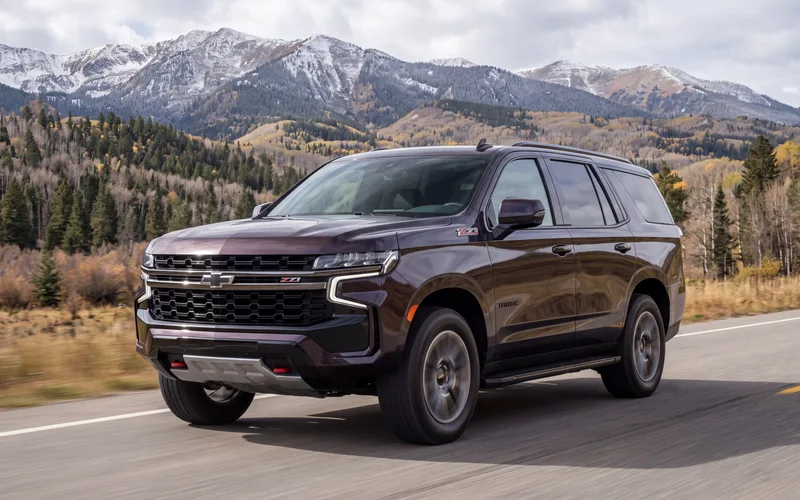 Chevrolet TahoeFull-Size SUVBetter at: Value & maneuverability
Identical vehicle 15 inches shorter for about $3,000 less — the right call unless you truly need the extra 16 cu ft behind the third row.
Compare 2.92B-
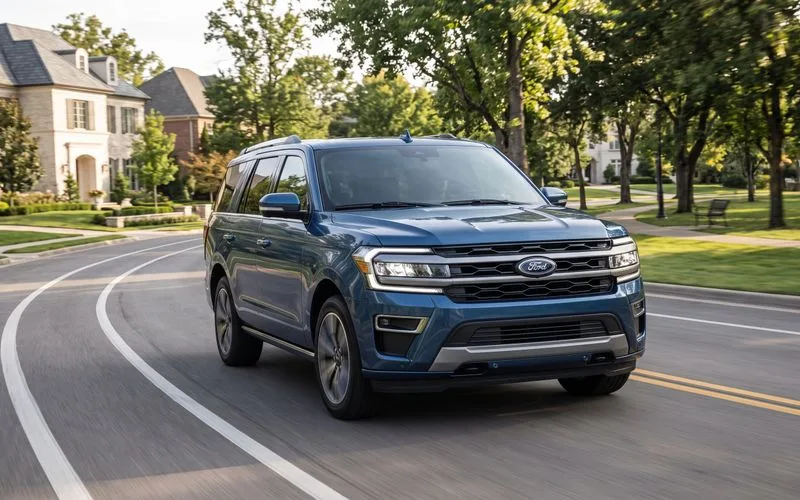 Ford ExpeditionFull-Size SUVBetter at: Towing & performance
Tows 9,600 lbs, is quicker and returns better mileage, and won the segment's most recent comparison test.
Compare 2.87B-
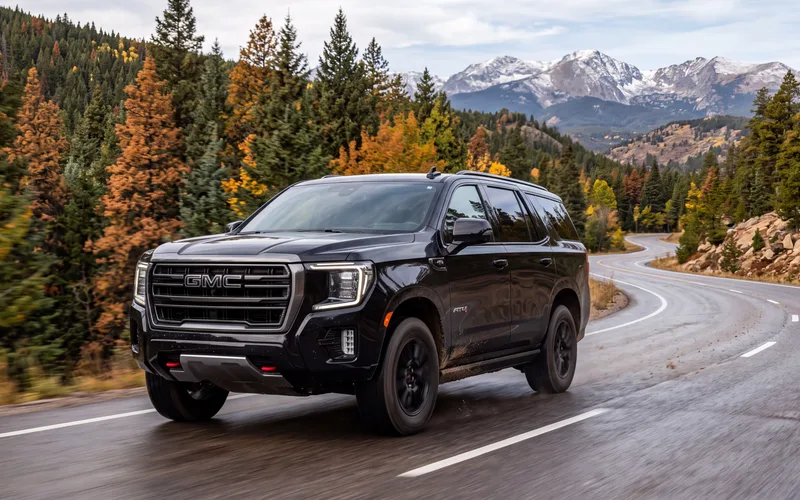 GMC YukonFull-Size SUVBetter at: Interior quality
The same T1XX SUV with a materially nicer cabin and Denali-grade comfort features the Suburban can't be optioned with.
CompareHow it's evolved
10 scored model years · 2017–2026
Subject scores by year
Hover or tap a score to see what moved it versus the year before. A corner mark flags a big swing.
| Year | Performance | Efficiency | Safety | Space | Cost | Reliability | Tech | Use-case | Driving | Value |
|---|---|---|---|---|---|---|---|---|---|---|
| 2026 | 67 | 31 | 65 | 88 | 30 | 62 | 83 | 74 | 58 | 75 |
| 2025 | 65 | 21 | 69 | 88 | 22 | 61 | 83 | 73 | 60 | 74 |
| 2024 | 65 | 22 | 56 | 88 | 26 | 60 | 75 | 72 | 58 | 67 |
| 2023 | 65 | 22 | 54 | 88 | 31 | 60 | 75 | 72 | 59 | 67 |
| 2022 | 65 | 22 | 49 | 88 | 33 | 57 | 74 | 70 | 59 | 68 |
| 2021 | 65 | 25 | 46 | 90 | 35 | 57 | 65 | 69 | 60 | 73 |
| 2020 | 63 | 26 | 40 | 80 | 37 | 52 | 47 | 57 | 55 | 59 |
| 2019 | 62 | 26 | 40 | 74 | 25 | 63 | 50 | 59 | 52 | 59 |
| 2018 | 61 | 37 | 39 | 74 | 40 | 52 | 46 | 59 | 53 | 60 |
| 2017 | 61 | 38 | 38 | 81 | 38 | 54 | 36 | 57 | 50 | 63 |
Compare two years
Best fit & conditions
Higher scores mean a better fit for that use case. Learn more about use-case fit →
Subject profile
Detailed scoring by subject
1Performance & PowertrainOne of the Suburban's strongest categories.2.21C
2019 sits inside the eleventh-generation (K2UC) Suburban that began in 2015, and it is a genuine change year: the 6.2L L86 V8 became available on the Suburban for the first time via the RST Performance Package, badged by Chevrolet as the most powerful Suburban ever built. That package requires the Premier trim (the visual-only RST appearance package is available on LT, but not the performance drivetrain), so the volume LS/LT trims still run the carry-over 5.3L L83 EcoTec3 V8 at 355 hp — most 2019 Suburbans sold are mid-pack for output in the full-size class despite the new range-topper.
The 5.3L peaks at 383 lb-ft, moving a body-on-frame SUV north of 5,600 lbs — sufficient rather than plentiful for the volume trim. The new 6.2L option reaches 460 lb-ft, but that engine is confined to the Premier-only RST Performance Package rather than being broadly available.
The standard 5.3L Suburban runs to 60 mph in roughly 7.5 seconds — mid-pack for a full-size SUV and the figure that applies to the volume LS/LT configuration most buyers choose. The new 6.2L RST is meaningfully quicker, with independent estimates clustering in the low-6-second range, but it is a low-volume performance package, not the representative trim.
The naturally aspirated, direct-injection 5.3L responds immediately with no turbo lag and pulls cleanly from low rpm, well suited to the Suburban's mass. Held below the top tier because Active Fuel Management's 8-to-4 cylinder deactivation is audible/felt at light throttle and the engine sounds coarse when worked hard — unchanged from prior K2UC-generation Suburbans since the volume powertrain is a carry-over for 2019.
The volume 5.3L Suburban is still paired with GM's 6L80 six-speed automatic in 2019 — smooth in ordinary driving but with wide ratio spacing that leaves it a beat slow to kick down versus 10-speed rivals. 2019 is notable for introducing GM's 10-speed automatic to the Suburban lineup for the first time, but only behind the new Premier-only 6.2L RST Performance Package, not the standard powertrain most buyers get.
8,300 lbs properly equipped — 2WD with the 5.3L V8 and the Max Trailering Package — clears the 8,000 lb SUV band ceiling, so the item maxes out. The new Premier-only 6.2L RST Performance Package actually tows slightly less (8,100 lbs) than the 5.3L's max-package rating, since it trades some trailering-focused hardware for performance suspension.
Four-wheel drive is optional on every 2019 trim — LS, LT and Premier alike — through a two-speed transfer case with a real 4-Lo range, plus Autotrac automatic mode for set-and-forget all-weather traction. Short of the top tier because no locking differential or torque-vectoring rear axle is offered anywhere in the lineup.
The Z71 Off-Road Package gives the 2019 Suburban genuine light-duty credibility — Z71-specific skid plates, taller all-terrain tires, a two-speed transfer case, Hill Descent Control, black tubular side steps and recovery hooks. It stays mid-band because the 130-inch wheelbase and roughly 8 inches of ground clearance limit breakover angle and trail maneuverability, there is no locker or factory lift, and Z71 remains a package rather than a purpose-built trim.
Two engines, both naturally aspirated gas V8s of the same corporate architecture, and the larger one is gated to a Premier-only performance package (RST Performance) — there is no efficiency-oriented, diesel or electrified choice anywhere in the 2019 range. 2019 is the model year the 6.2L option debuted on the Suburban, but the access restriction (Premier trim only) is identical to the following carry-over year.
2Efficiency & RangeOne of the Suburban's weakest categories.0.00F
The 2019 Suburban carries over the eleventh-generation K2XX-platform powertrains unchanged: the volume 5.3L EcoTec3 V8 4WD is EPA-rated at 16 MPG combined, the floor of the gas-SUV band, since a ~5,650 lb body-on-frame SUV with only cylinder deactivation and a 6-speed automatic (no stop/start until the 2021 redesign) gets little help fighting its own mass.
City driving is the Suburban's weakest case, sitting at the very bottom of the SUV band at 14 MPG for the volume 4WD 5.3L. Stop-and-go traffic gives cylinder deactivation nothing to work with and there is no automatic engine stop/start to cut idle consumption in 2019.
Steady-state cruising is where cylinder deactivation helps most, lifting the 4WD 5.3L to 21 MPG highway, a point above the SUV band floor. The 6.2L 2WD Premier's 10-speed makes it the range's highway-economy leader at 23 MPG despite the larger displacement.
The 31.0-gallon tank is standard across the 2019 lineup and is what keeps this powertrain competitive: bottom-of-band city/highway economy still stretches to roughly 496 miles between fills in the volume 4WD configuration, and near 560 miles in 2WD trim — range is the one line in this category where the Suburban beats the segment median.
At EPA's standard 15,000 mi/yr assumption the volume 4WD 5.3L costs $3,900/yr on regular fuel, beyond the top of the SUV cost band even without the Premier's premium-fuel 6.2L. The 6.2L adds meaningfully more since it also demands the pricier grade.
The volume 5.3L V8 runs on 87-octane regular, with an E85 flex-fuel variant available on the same drivetrain, so the mainstream 2019 buyer never pays a grade premium. Requirements are mixed rather than uniformly cheap only because the Premier trim's 6.2L V8 calls for premium fuel — a top-trim-only exposure.
3SafetyOne of the Suburban's weakest categories.0.67F
NHTSA tested both 2019 Suburban drivelines and rated each 4 stars overall: 5 stars in every side-impact measure except the 4-star pole test, 4 stars in both frontal seats, and the 3-star rollover result a 224-inch body-on-frame SUV cannot avoid. The agency's own equipment record for this car lists forward collision warning and lane departure warning as Optional rather than Standard, the defining ADAS fact of this generation.
IIHS never ran a single crashworthiness test on the eleventh-generation Suburban. Its 2018, 2019 and 2020 rating pages carry no small overlap, moderate overlap, side, roof strength or head restraint result — only a LATCH evaluation and an untested front-crash-prevention entry — and the equivalent 2019 Tahoe page is the same. That leaves the whole generation with no independent structural evidence and no award, and the closest related evidence points the wrong way: the nearest K2XX-architecture vehicle IIHS did test, the 2016-18 Silverado 1500 crew cab, rated only Marginal in driver-side small overlap even after GM reinforced the frame and door-hinge pillar welds for 2016. Untested with a known concern on the nearest related structure is the low band, not the middle one.
On the volume LT the Enhanced Driver Alert content is standard, so Forward Collision Alert, Low Speed Forward Automatic Braking, Lane Keep Assist with Lane Departure Warning, Safety Alert Seat and IntelliBeam all come fitted — a real core suite. Everything above that core is gated: Lane Change Alert with Side Blind Zone Alert and Rear Cross Traffic Alert are standard only on Premier and optional on LT, Adaptive Cruise Control is a Premier-only extra-cost option additionally tied to Head-Up Display, the base LS gets none of the driver-alert content unless the package is ordered ($695), and pedestrian detection is not offered at any price on any trim. A suite whose collision intervention works only at low speed, cannot see pedestrians, and leaves blind-spot coverage and adaptive cruise to the top trim sits in the low band by current standards even though the LT itself is not bare.
This is the weakest point in the category. The 2019 Suburban's autobrake is Low Speed Forward Automatic Braking — a city-speed system, not the full-speed-range automatic emergency braking the redesigned 2021 car would get — and IIHS records pedestrian front crash prevention as flatly 'Not available' on this vehicle, so there is no day or night pedestrian capability to rate. The Institute never evaluated the autobrake itself: its front-crash-prevention entry credits the optional system with meeting the forward collision warning requirement and states outright that autobrake was not tested. On a roughly 5,800 lb SUV, an intervention that only operates at low speed and cannot detect a person is basic by any current measure.
Lane Change Alert with Side Blind Zone Alert and Rear Cross Traffic Alert are warning-only — a mirror icon and a Safety Alert Seat buzz, with no steering or braking intervention and no trailer-aware coverage. Sourcing for the exact LT/Premier split is slightly less crisp for the 2019 model year specifically than for 2020, but every source agrees the content is standard on Premier and either optional or absent below it, and IIHS's 'applies to 2016-20' language confirms the hardware and its availability pattern did not change within this generation. On a vehicle 224 inches long with substantial bodywork outside the mirrors, alert-only coverage gated above the volume trim is a middling result.
Lane Keep Assist with Lane Departure Warning is standard on the volume LT and on Premier, optional on the LS via the Driver Alert Package, and it is a corrective nudge triggered at the lane marking rather than sustained centering. No lane centering and no highway-assist layer is available on the 2019 Suburban at any trim or price — a Premier buyer gets exactly the same nudge system the LT does.
GM's radar Adaptive Cruise Control is a competent long-haul system on the trims that can have it, but on the 2019 Suburban almost nobody could: it is extra-cost, unavailable below the top Premier trim, and bundled with a Head-Up Display prerequisite, so the volume LT cannot be ordered with adaptive cruise at any price. There is no highway-assist layer above it either, so even a fully specified Premier gets adaptive cruise working alone rather than an integrated system.
No hands-free driving is offered on the 2019 Suburban at any trim or price. Super Cruise existed inside GM for 2019, but only on the Cadillac CT6 — it did not reach a Chevrolet full-size SUV until the 2024 model year, five years after this car was built.
IIHS never rated the eleventh-generation Suburban's headlights in any model year, so there is no direct measurement — but the surrounding evidence is consistently poor. The nearest K2XX-architecture vehicle the Institute did evaluate, the 2016-18 Silverado 1500 crew cab, rated Poor, and the Institute's later verdict on the successor generation's lamps was Poor as well for excessive glare and weak right-side low-beam reach, so the concern spans both sides of this car in time. Volume trims run halogen projector low beams (H11 low / 9005 high), and IntelliBeam automates the high beams on LT and Premier without doing anything to the beam pattern a rating actually measures.
The high hip point, upright glasshouse and deep side windows give a genuinely commanding forward and lateral view, and the greenhouse on this generation is airier than the 2021 redesign that followed. Against that, 224.4 inches of body — about twenty more than a Tahoe, nearly all of it behind the rear axle — puts a large volume of sheetmetal where the driver has no sightline, and the D-pillars are thick. Camera compensation is thinner than on later years: rear park assist and a rear vision camera are standard from LT up and Premier adds front sensors, but HD Surround Vision and the Rear Camera Mirror are extra-cost, so a volume LT reverses on a single camera and a bumper beeper.
The space is excellent and the hardware is not. IIHS rates this interior's child-seat anchors Marginal: only two rear positions carry complete LATCH hardware, with three further positions offering a tether anchor alone, and although the lower anchors themselves are shallow and easy to work around, every tether anchor sits in a hard-to-find location on the seatback with other hardware nearby that can be confused for it. What pulls the score back to workable is sheer room — wide rear door openings, a tall roofline, three rows and enough length behind the axle that a rear-facing seat fits without pushing the front seats forward — so multiple seats go in easily once you have found the right anchors.
4Space & ComfortThe Suburban's best-graded category.3.04B
Standard three-row seating for eight is the volume LT configuration; captain's chairs on top-trim Premier drop capacity to 7.
Front headroom sits at the top of the full-size SUV band, consistent with the tall K2XL body-on-frame architecture carried over unchanged for 2019.
Front legroom exceeds the top of the full-size SUV band.
Second-row headroom is comfortably above segment median.
Second-row legroom is well above the mid-point of the SUV band thanks to the Suburban's stretched wheelbase versus the Tahoe.
Third row (38.5 in headroom, 34.5 in legroom) fits two adults but reviewers describe it as thin, flat, and only suited to shorter trips — kid-friendly but not adult-comfortable on long hauls.
Behind-third-row cargo volume is toward the low end of the full-size SUV band — the Suburban's third row eats into what would otherwise be class-leading cargo space, though the Suburban is still notably larger than the Tahoe here.
Maximum cargo volume with all rear seats folded exceeds the top of the full-size SUV band, reflecting the Suburban's segment-leading overall length.
Competitive but unremarkable everyday storage for this generation — a lidded front console with an available 110V outlet and optional wireless charging pad, but nothing like the redesigned giga-console GM introduced in the following (2021) generation.
Front and second-row seats are widely praised as supportive and comfortable, with reviewers likening the cabin to a luxury SUV, but the third row is repeatedly called thin and flat, holding the overall score back from the top band.
Ride is composed on smooth roads and steadier on Premier's adaptive suspension, but reviewers note road ripples cause rear-cabin shimmy/shake and handling is ponderous — solid but not segment-leading.
Reviewers repeatedly single out the cabin as exceptionally quiet at idle, low speed, and highway cruising, with only light wind noise intruding — a genuine strength for the nameplate.
Heated front seats and tri-zone automatic climate control are available from the mid LT trim up, with ventilated front seats, heated second row, heated steering wheel, and rear climate ducts reserved for the top Premier trim — solid but not standard fleet-wide.
5Cost of OwnershipThe Suburban's lowest-graded category.0.00F
Entry LS trim, 2WD, is the cheapest 2019 configuration; 4WD adds roughly $3,000 across the lineup.
LT is the best-selling mid-level trim for the Suburban lineup, and most buyers of this segment add the 4WD option.
CarEdge's generic 5-year maintenance-and-repair estimate for the Suburban ($3,307) understates this generation's known issues; RepairPal separately puts the average annual repair cost at $944 (poor, worse than segment) with above-average frequency/severity of repairs, driven by well-documented 6L80 transmission and AFM/oil-consumption complaints on the 2015-2020 generation's 5.3L V8. Blended estimate splits the difference upward from the CarEdge floor.
The outgoing 2015-2020-generation Suburban depreciated unusually fast once the fully redesigned 2021 generation arrived; KBB places the 2019 model in the worst quartile for depreciation among 2019 SUVs, having already lost 44% of its value in just its first 3 years.
Standard GM basic warranty for the 2019 model year — at the low end of the segment band.
Standard GM powertrain warranty — at the low end of the segment band versus rivals offering 10-year coverage.
Chevrolet's 2019-model-year Complete Care program covers two scheduled maintenance visits (oil/filter change plus tire rotation) within the first 24 months/24,000 miles, roadside assistance for 5 years/60,000 miles tied to the powertrain warranty, and a complimentary OnStar trial — a short but multi-visit included-maintenance period plus standard roadside, slightly better than a single-visit plan but short of a multi-year maintenance plan or standout perks.
$58,800 volume-trim price minus its estimated resale value after 5 years (38% retained, or about $22,344) leaves about $36,456 in depreciation. Add the projected $4,700 in 5-year maintenance and repairs, and owning this vehicle for 5 years costs about $41,156 in total.
6Reliability & QualityOne of the Suburban's strongest categories.2.28C
Consumer Reports rated the 2019 Suburban's predicted reliability around 3/5 (average), consistent with a large, complex body-on-frame SUV carrying a mature but AFM-equipped V8 into its fifth model year on the K2 platform.
Chevrolet placed 4th among all brands in J.D. Power's 2019 Vehicle Dependability Study at 115 problems per 100 vehicles, just behind Lexus (106), Porsche and Toyota (108) — a top-five, above-average brand dependability standing.
The 2019 Suburban carries two notable NHTSA recalls: a 4WD/5.3L driveline-protection software issue (NHTSA 19V-761) that could cause unintended one-side braking, and a 2018-2019 rear seatbelt retractor recall that could fail to lock for a child seat — both safety-relevant but remedied by reprogramming/inspection rather than hardware failure, so activity is above the cleanest peers but not systemic.
The 5.3L EcoTec3 V8 and 6-speed/8-speed automatics are a well-proven, high-mileage-capable GM truck powertrain family, but the Active Fuel Management cylinder-deactivation system is a documented source of lifter failure and oil consumption on this generation, so the reputation is mixed rather than clean.
Edmunds' contemporary review found cabin materials and ergonomics 'up to class standards' with a solid, positive feel, though the base LS/LT trims still carry more hard plastic in lower touch zones typical of a full-size body-on-frame SUV at this price.
No pattern of assembly complaints (panel gaps, rattles) surfaced for this generation in owner reviews or press coverage beyond the mechanical AFM/recall items already captured elsewhere; consistent with a mature, high-volume GM full-size platform in its fifth production year.
Chevrolet operates one of the largest dealer networks in the United States, with dealers in nearly every market, giving Suburban owners exceptionally dense access to warranty and service work nationwide.
GM full-size truck/SUV parts and a huge aftermarket make components cheap and easy to source, but RepairPal puts the Suburban's average annual repair cost at $944 versus a $784 full-size-SUV average, with higher-than-average repair frequency and severity, netting out to a middling result.
7Technology & InfotainmentGrades below the middle of the scale.1.36D
2019 is a carry-over year of the eleventh-generation (K2XX, 2015-2020) Suburban; the Chevrolet Infotainment System uses a single 8-inch diagonal color touch-screen on every trim, and no larger display was offered before the 2021 redesign.
Raised on re-score: reviewers were more positive than previously credited, praising the system as straightforward, intuitive and easy to use with real knobs and hard buttons retained alongside the screen (plus a motorized display that slides up to reveal hidden storage), while consistently flagging occasional lag on touch and voice inputs. The result is a competent but visibly dated system a full generation behind the newer full-size SUV rivals it is calibrated against.
Apple CarPlay and Android Auto are standard across the lineup but wired-only over USB; GM offered no factory wireless projection on this generation, which arrived with the 2021 redesign. Bottom of the wired-standard band because there is no wireless option at any trim or price.
Corrected on re-score: the prior entry stated navigation was not standard on any trim, which the official catalog contradicts — embedded GPS navigation is standard equipment on Premier and optional on LT via the Sun, Entertainment and Destinations Package (not offered on LS). Voice control remains a basic command-and-response set rather than natural language, and reviewers noted it lags, so most owners still default to phone-projected maps.
Raised slightly on re-score after confirming branded audio is standard rather than optional on the two upper trims: LS runs a 6-speaker AM/FM/HD Radio setup, LT makes the Bose 9-speaker RichBass system standard, and Premier makes the Bose Centerpoint Surround Sound 10-speaker system standard. Strong availability for the segment, held short of the top band by the plain base system.
Corrected on re-score: the prior entry said no full-digital reconfigurable cluster was offered on this generation, but the catalog lists an Enhanced Driver Information Center with an 8-inch multi-color reconfigurable display. It is bundled only in the Premier Plus Edition on the top trim, so the fleet reality is the standard analog gauges flanking a 4.2-inch color DIC — partial digital standard, full digital on one expensive package.
No over-the-air vehicle software updates. The 2019 Suburban runs GM's Global A electrical architecture; OTA capability arrived with the Global B / Vehicle Intelligence Platform architecture that launched on the 2020 Cadillac CT5 and C8 Corvette. Connected Access provides diagnostics and the touchscreen can download apps over 4G, but firmware and maps are updated by USB or at the dealer.
The myChevrolet app covers the core remote set — start/stop the engine, lock/unlock, send destinations to the nav system, vehicle diagnostics, parking reminders — and built-in 4G LTE Wi-Fi for up to seven devices is standard on every trim. Held mid-band because the remote functions require a paid Remote Access Plan after the trial and there is no digital/phone key.
Corrected materially on re-score: the prior entry said no household AC outlet was offered and treated wireless charging as a rarely-fitted option, both wrong. A 110-volt outlet is standard on every trim as part of 11 charging locations on LS, 12 on Premier and as many as 14 so equipped, with 5 USB ports standard (7 with the rear-seat entertainment system) and a wireless charging pad standard on Premier. Kept out of the top band because every port is USB-A — no USB-C anywhere on this generation.
Corrected on re-score: Remote Keyless Entry and a remote vehicle starter system are standard on every trim including the base LS, not restricted to LT/Premier as previously recorded. Passive Keyless Open and Start is standard on Premier, which also gets a hands-free programmable power liftgate (LT gets a programmable power liftgate). Short of the top band only because proximity entry is not standard lineup-wide and there is no phone-as-key.
Corrected downward on re-score: the prior entry credited an HD Surround Vision 360-degree camera on Premier, but no surround-view system appears anywhere in the 2019 standard/available matrix — HD Surround Vision arrived with the 2021 redesign. What the Suburban actually has is a rear vision camera and Rear Park Assist standard on every trim, upgraded to Front and Rear Park Assist on Premier, with no 360 view and no automated parking.
Trimmed on re-score after confirming how narrow the option is: the color head-up display is not a stand-alone Premier option but is bundled inside the Premier Plus Edition, which also forces the 6.2L V8, the 10-speed automatic and 22-inch wheels. Available only on the top trim, and only through the most expensive package on it.
8Use-Case FitMid-pack among this car's ten categories.1.95C-
Wide door openings, a tall roofline and three full rows make it physically easy to wrangle kids and gear, and there's enough length behind the front seats that a rear-facing infant seat fits without pushing the front seats forward. The hardware undercuts that: IIHS rates the LATCH anchors Marginal on this generation — only 2 rear positions carry complete lower-and-tether hardware, 3 more get a tether anchor only, and the tether anchors themselves sit in a 'hard-to-find location' with other hardware nearby that can be confused for the anchor. Stroller-friendly cargo is solid (76.7 cu ft with only the 3rd row folded) but this is the plainer pre-redesign package, which the calibration table shows later/newer designs scoring notably higher on the same item.
The volume LT gets a real core suite standard (Low Speed Forward Automatic Braking, Lane Keep Assist with Lane Departure Warning, Safety Alert Seat, IntelliBeam), but everything a family actually leans on daily sits above that: blind-spot and rear cross-traffic alert are Premier-standard/LT-optional, adaptive cruise is Premier-only and additionally requires the Head-Up Display, and pedestrian detection isn't offered on any trim at any price. NHTSA's own equipment record lists forward collision warning and lane departure warning as merely Optional (reflecting the base LS), and the car nets only a 4-star overall NHTSA rating with a 3-star rollover result and zero IIHS crashworthiness testing across this entire generation. A family shopping the volume trim gets a decent floor and has to pay extra for the features that would move the needle.
The front two rows are genuinely long-haul comfortable — 45.3 in of front legroom and seats reviewers liken to a luxury SUV's — and the cabin stands out even within this generation for quietness, with reviewers repeatedly singling it out as 'exceedingly quiet at idle and low speeds' with only light wind noise at highway speed. The third row is where it falls short of the top band: real legroom (34.5 in) and headroom (38.5 in) mean two adults physically fit, but the cushions are widely described as thin and flat, workable for kids or a short trip rather than hours on the interstate. Climate and comfort content is also trim-gated — heated seats start at LT, but heated/ventilated seats, heated 2nd row and a heated wheel are reserved for Premier.
The naturally aspirated 5.3L is smooth and lag-free at low speed and the high seating position gives good sightlines for a vehicle this size, and ride quality on smooth roads is composed (steadier still on Premier's adaptive suspension). Held back because the volume trim is saddled with the outgoing 6-speed automatic — a beat slower to kick down than 10-speed rivals, a gap 2019 only closes on the Premier-only RST performance package — and reviewers note road ripples cause rear-cabin shimmy over broken pavement. Nothing on this model year reduces daily fatigue either: no adaptive cruise below Premier (and even then it needs the HUD option), and no hands-free driving at any price.
This is a genuinely expensive vehicle to commute in. The volume 5.3L 4WD returns just 14 MPG city — the worst-case commuting number since there's no automatic stop/start in 2019 to save fuel at every light — and 16 MPG combined, translating to roughly $3,900 a year in fuel at EPA's standard assumptions. Consumables are at least cheap thanks to regular-octane fuel (with an E85 flex-fuel option on the same drivetrain) and GM's broad parts network, but the core running cost is at the bottom of the SUV band on every efficiency metric measured.
At 224.4 in long, the Suburban is genuinely oversized for city driving and tight garages, and this model year has thinner camera/sensor coverage than later cars: a rearview camera is standard, but front park sensors and HD Surround Vision are extra-cost and reserved for the top Premier trim, so the volume LT reverses on rear park assist and a rear vision camera alone. There's no automated parking assist of any kind at any trim.
8,300 lbs maximum tow rating (2WD, 5.3L, properly equipped) and 121.7 cu ft of max cargo volume cover the great majority of travel trailers, boats and utility trailers a buyer will actually own — closer to a van's load bay than a typical SUV's. Standard trailering hardware (7-way sealed connector, 2-inch receiver, 7-wire harness) means even a base LS arrives ready to hook up without dealer add-ons. It falls short of the top band because the new-for-2019 Premier-only 6.2L RST Performance Package actually tows slightly less (8,100 lbs) than the volume 5.3L's max-package rating, there's no integrated trailer brake controller on lower trims, and an enclosed carpeted cargo area can't take the abuse a pickup bed shrugs off.
The Suburban has decades of fleet, government and livery use behind this exact body-on-frame architecture and small-block V8 family, backed by Chevrolet's roughly 3,000-dealer US network — the largest of any brand — for parts and service. Chevrolet itself ranked 4th of all brands in J.D. Power's 2019 dependability study, and this vehicle-year's own reliability research reads more favorably than the following model year's: Consumer Reports pegs predicted reliability at an average 3/5 rather than a poor score, and powertrain durability reputation lands mid-band rather than weak. It stops short of the top tier because the Active Fuel Management 5.3L still carries a well-documented lifter-failure and oil-consumption pattern on this generation, and RepairPal's annual repair cost sits above the full-size-SUV average.
Standard trailering hardware and a large, flat-folding cargo area give a fleet buyer a usable base, and GM's full-size platform has a mature upfit and livery-conversion ecosystem behind it (consoles, partitions, equipment mounts). It's a lighter package than later Suburbans, though: onboard power is limited to an optional 110V outlet, the wireless charging pad offered as an option was criticized as undersized, and there's no washable work-grade interior offered on any trim — this generation predates the two-outlet setup and dedicated Cargo Management System GM added with the 2021+ redesign.
A 31-gallon tank is this model year's genuine long-haul strength — roughly 496 miles between fills even at bottom-of-class economy on the volume 4WD trim, and near 558 miles in 2WD — and the cabin is a real standout for quietness at speed, repeatedly singled out by reviewers even against other full-size SUVs. What holds it back from the top band is the same driver-assist gap seen elsewhere: no adaptive cruise below Premier (and even then bundled with the HUD requirement), no hands-free driving at any trim, and a third row that isn't suited to all-day endurance even though the front two rows are.
The Z71 Off-Road Package makes a credible case for light-duty adventure use — Z71-specific skid plates, taller all-terrain tires, a two-speed active transfer case, Hill Descent Control, tubular side steps and recovery hooks — and 8,300 lbs of towing plus 121.7 cu ft of max cargo covers most trailers, kayaks and gear a family would bring along. It stops at mid-band because the 130-inch wheelbase and roughly 8 in of ground clearance limit breakover angle and true off-road maneuverability, there's no locking differential offered on any 2019 trim, and Z71 is an options package rather than a dedicated off-road trim, so most Suburbans on the road in 2019 don't have any of this equipment.
121.7 cu ft with both rear rows folded — and 76.7 cu ft with just the third row folded — are segment-leading figures even for this pre-redesign generation, so bulky gear and full luggage loads both fit without a roof box. The standard trailering receiver adds a hitch-mounted cargo carrier or bike rack as an easy option. It sits below a redesigned Suburban's ceiling here because this generation lacks power-folding rear seats (manual fold only on the volume trim) and the more elaborate underfloor storage GM introduced with the 2021+ redesign, and behind-the-third-row cargo (39.3 cu ft) is toward the low end of the full-size SUV band since the third row itself eats into what would otherwise be class-leading space — flexibility here is more manual effort than one-touch convenience.
9Driving ExperienceGrades below the middle of the scale.1.50D
Body-on-frame full-size SUV on the K2XX platform; reviewers describe handling as sound and composed with minimal body lean for its size, but the vehicle's bulk is constantly evident and the base suspension (Magnetic Ride Control is optional, not standard on the volume LT trim) doesn't sharpen it much further.
Reviews are split — some call the effort predictable but overly light with little feedback, others describe the rack as tight and direct — a mixed but unremarkable result typical of this generation's electric power steering tune on a heavy body-on-frame platform.
The volume LT trim uses the standard brake package (the upgraded Brembo 6-piston front calipers are exclusive to the RST Performance/Premier Plus package on the 6.2L), which is adequate for a ~5,600-lb SUV but not a strong point; no independent instrumented 60-0 mph figure was found for this model year.
The standard 5.3L V8 pairs with an older 6-speed automatic (the 10-speed is reserved for the 6.2L RST/Premier Plus), and Consumer Reports found the powertrain adequate but unremarkable — smooth enough day to day but with no urgency, occasionally feeling flat-footed under load.
Cabin isolation is a genuine strength for this generation — reviewers single out the quietness of the interior as class-competitive, even luxury-like, with the V8 well-muted under normal driving.
Long-wheelbase (130 in) full-size SUV; curb-to-curb turning diameter sits well above the SUV normalization band, reflecting its size and low maneuverability in tight spaces.
Commanding, truck-like seating position with good outward visibility and a modernized cockpit layout for the generation, but reviewers flagged the high-effort, long-reach column shifter and foot-operated parking brake as dated ergonomic holdovers.
The volume 5.3L/6-speed configuration is appliance-like transportation rather than something drivers seek out for enjoyment — reviewers reserved the 'surprisingly fun' and 'hot hatch verve' praise specifically for the 6.2L RST, which is not the representative trim.
10Value & Market PositionMid-pack among this car's ten categories.2.00C
Base LS ($50,800 2WD / $53,800 4WD) includes 17-in alloys, tri-zone climate, power front seats, leather-wrapped wheel, OnStar and Bluetooth — solid but unremarkable for the price; driver-assist tech (blind-spot warning, adaptive features) and leather trim don't appear until LT/Premier, so parity with crossover-based full-size rivals costs a step up the range rather than coming at base.
Class-leading cabin and cargo room plus up to ~8,300 lb towing (4WD) undercut some crossover-based rivals on capability-per-dollar, but the $50.8K-$68.5K 1500 range (and $80.6K-$85.7K on the 3500 HD) is squarely premium pricing, so it reads as fair value rather than a standout bargain.
Three trims (LS, LT, Premier) each in 2WD/4WD, plus a heavy-duty 3500 line and an optional RST Performance Package (6.2L V8/10-speed) — a workable spread from fleet-grade to loaded, but with a wide equipment/price gap between LT and Premier and no true mid-luxury step between them.
Steady mid-pack seller among full-size SUVs on its own (roughly 10-12K units per quarter in 2019), well behind its Tahoe sibling in volume, but the Suburban/Tahoe pair still dominated the segment overall — the nameplate's decades-long standing keeps it a default fleet and family choice even without explosive growth.
Chevrolet is a mainstream, not aspirational, brand, but the Suburban itself carries real heritage as the longest-produced nameplate in the industry and has a loyal fleet/family/tow-buyer following that outweighs generic Chevy brand equity.
Full-size SUVs from domestic brands typically carry meaningful cash and financing incentives late in a generation's life cycle, and the Suburban was two years from its 2021 redesign by MY2019, which usually loosens deals rather than tightens them — no MY2019-specific incentive figures were found to confirm the exact size.
This generation launched for MY2015 and received a mid-cycle styling/tech refresh for MY2018 that carried into 2019 (plus the new-for-2019 RST Performance Package), but the platform is already four years old with a full redesign confirmed for MY2021 — current, not cutting-edge, with a known replacement on the horizon.
Reviewers praised the 2019 Suburban's cabin space, towing and V8 capability but consistently marked it down for a stiffer ride and clumsier maneuverability than crossover-based full-size rivals — well-regarded within the body-on-frame class but not a frequent outright comparison-test winner, and it picked up no major MY2019 industry award.