
The verdict
A struggling subcompact suv, strong on value and held back by performance.
The 2026 Trax is the cheapest way to get a genuinely roomy new SUV: $23,495 delivered for the LS, $24,995 for the volume LT, with 38.7 inches of rear legroom and 25.6 cu ft of cargo behind the back seat — numbers that embarrass cars costing several thousand more. What you give up is anything resembling capability or urgency: one 137-hp three-cylinder, front-wheel drive only at every price, no tow rating, and 9.1 seconds to 60 mph. Two things deserve a hard look before you sign — IIHS rates the automatic braking Poor for car-to-car detection and the headlights Marginal, and GM's 1.2L turbo triple is the subject of a March 2026 class action over connecting-rod failures with no recall issued. If you commute, haul kids and groceries, and never need to pull a trailer or climb a snowy driveway, it's an enormous amount of car for the money; if any of those caveats matter to you, the money is better spent elsewhere.
Jump to scoresStrengths
- One of the cheapest new SUVs you can buy
- Back-seat and cargo space that beats its price class
- Real infotainment standard, even on the base car
What holds it back
- 137 horsepower, and no way to get more
- No all-wheel drive, no towing, at any price
- An engine with an open failure pattern and thin warranty backing
Top alternatives
Cars shoppers cross-shop with the Chevrolet Trax 1.47D
1.47D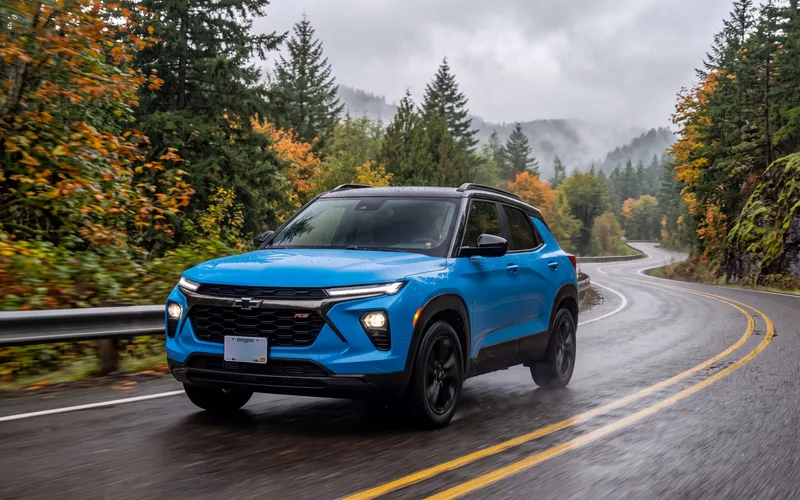 Chevrolet TrailblazerSubcompact SUVBetter at: AWD & towing
Same dealer and a small step up in price, but it adds the all-wheel drive and tow rating the Trax refuses to offer at any trim.
Compare 1.54D
1.54D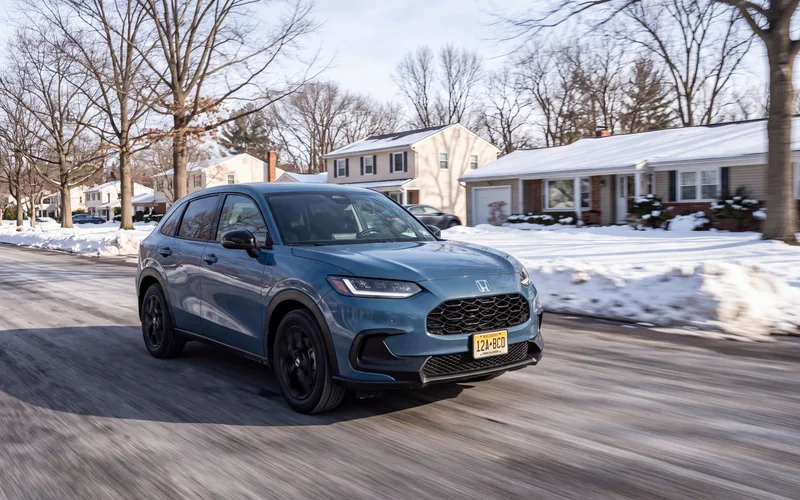 Honda HR-VSubcompact SUVBetter at: Safety & resale
Costs a couple thousand more but delivers far better crash-avoidance ratings and holds its value where the Trax sheds 47% in five years.
Compare 1.52D
1.52D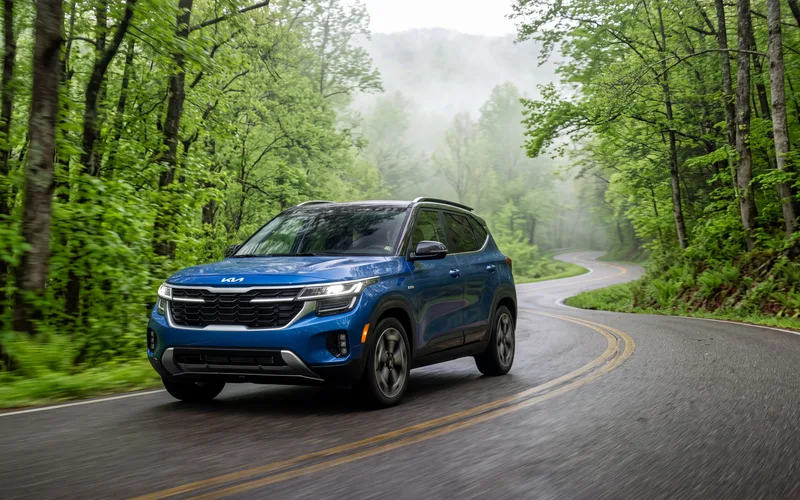 Kia SeltosSubcompact SUVBetter at: Warranty coverage
A 10-year/100,000-mile powertrain warranty plus available AWD directly answers the two things buyers worry about most in the Trax.
CompareHow it's evolved
9 scored model years · 2017–2026
Subject scores by year
Hover or tap a score to see what moved it versus the year before. A corner mark flags a big swing.
| Year | Performance | Efficiency | Safety | Space | Cost | Reliability | Tech | Use-case | Driving | Value |
|---|---|---|---|---|---|---|---|---|---|---|
| 2026 | 14 | 70 | 46 | 38 | 66 | 61 | 57 | 53 | 59 | 75 |
| 2025 | 14 | 66 | 46 | 39 | 66 | 60 | 56 | 53 | 58 | 76 |
| 2024 | 14 | 66 | 46 | 39 | 66 | 58 | 54 | 52 | 58 | 75 |
| 2022 | 19 | 56 | 37 | 32 | 68 | 64 | 34 | 40 | 52 | 38 |
| 2021 | 19 | 56 | 37 | 32 | 66 | 66 | 34 | 40 | 52 | 39 |
| 2020 | 17 | 60 | 39 | 33 | 64 | 66 | 36 | 41 | 51 | 51 |
| 2019 | 16 | 60 | 39 | 33 | 64 | 61 | 36 | 40 | 51 | 51 |
| 2018 | 16 | 61 | 39 | 33 | 67 | 60 | 36 | 40 | 50 | 51 |
| 2017 | 17 | 61 | 39 | 33 | 68 | 59 | 36 | 40 | 49 | 52 |
Compare two years
Best fit & conditions
Higher scores mean a better fit for that use case. Learn more about use-case fit →
Subject profile
Trims & configurations
5 trimsScores above reflect the volume trim. Per-trim specs and scores are rolling out — the full lineup:
Academic Probation · NHTSA safety recalls
No NHTSA safety recall is on record for the 2026 Chevrolet Trax. Other model years of the Trax have 6 — listed below.
6 recalls on other model years of the Trax (2017–2019, 2024–2025)
Aug 20, 2026Back over prevention: sensing system: cameraThe rearview camera screen may display a distorted or blank image.
Defect
General Motors, LLC is recalling certain 2024-2025 Buick Envista, 2024-2026 Buick Encore GX, Chevrolet Trailblazer, and 2025 Chevrolet Trax vehicles. The rearview camera screen may display a distorted or blank image.
Risk
A rearview image that does not display correctly reduces the driver's view behind the vehicle, increasing the risk of a crash.
Remedy
Dealers will inspect and replace the rearview camera, if necessary, free of charge. Letters informing owners of the safety risk were mailed September 17, 2026. Another letter will be mailed once the parts are available. Owners may contact Chevrolet customer service at 1-800-222-1020 or Buick customer service at 1-800-521-7300. GM's number for this recall is A262554900. Vehicle Identification Numbers (VINs) involved in this recall became searchable on NHTSA.gov on August 20, 2026.
NHTSA campaign 26V539000 ↗Manufacturer no. A262554900306,511 vehicles potentially affected (all models in the campaign)Owners notified Sep 30, 2026Filed by General Motors, LLCFiled as TRAXNov 6, 2023Electrical system: instrument cluster/panelThe software in the Virtual Cockpit Unit Module (VCU) may cause the instrument panel display to intermittently go blank at vehicle startup or while driving.
Defect
General Motors, LLC (GM) is recalling certain 2024 Buick Encore GX, Envista, and Chevrolet Trax vehicles. The software in the Virtual Cockpit Unit Module (VCU) may cause the instrument panel display to intermittently go blank at vehicle startup or while driving.
Risk
A blank instrument panel will not show critical information, such as vehicle speed and warning lights, increasing the risk of a crash.
Remedy
The VCU software will be updated by a dealer or through an over-the-air (OTA) update, free of charge. Owner notification letters were mailed December 4, 2023. Owners may contact Buick customer service at 1-800-521-7300 or Chevrolet customer service at 1-800-222-1020. GM's number for this recall is A232424320.
NHTSA campaign 23V744000 ↗Manufacturer no. A23242432060,154 vehicles potentially affected (all models in the campaign)Owners notified Dec 4, 2023Filed by General Motors, LLCFiled as TRAXSep 12, 2019Suspension: front: control arm: lower ball jointA joint in one or both of the front lower control arms may have been improperly welded. An improperly welded joint may break, resulting in the partial separation of the lower control arm from the vehicle.
Defect
General Motors LLC (GM) is recalling certain 2015-2018 Chevrolet Trax vehicles. A joint in one or both of the front lower control arms may have been improperly welded. An improperly welded joint may break, resulting in the partial separation of the lower control arm from the vehicle.
Risk
A partial separation of the lower-control arm from the vehicle could cause the attached front wheel to toe outward, impacting the vehicle's handling and steering and increasing the risk of crash.
Remedy
GM will notify owners, and dealers will inspect the left and right front lower-control arms, replacing them as necessary, free of charge. The recall began November 6, 2019. Owners may contact Chevrolet customer service at 1-800-222-1020. GM's number for this recall is A192261870.
NHTSA campaign 19V652000 ↗Manufacturer no. A19226187093,722 vehicles potentially affected (all models in the campaign)Owners notified Nov 6, 2019Filed by General Motors LLCFiled as TRAXApr 18, 2019Suspension: front: control arm: lower ball jointA joint in one or both of the front lower-control arms may have been improperly welded. An improperly welded joint may break, resulting in the partial separation of the lower-control arm from the vehicle.
Defect
General Motors LLC (GM) is recalling certain 2017-2019 Chevrolet Trax vehicles. A joint in one or both of the front lower-control arms may have been improperly welded. An improperly welded joint may break, resulting in the partial separation of the lower-control arm from the vehicle.
Risk
A partial separation of the lower-control arm from the vehicle could cause the attached front wheel to toe outward, impacting the vehicle's handling and steering and increasing the risk of crash.
Remedy
GM will notify owners, and dealers will inspect the left and right front lower-control arms, replacing them as necessary, free of charge. The recall began June 14, 2019. Owners may contact GM customer service at 1-800-222-1020. GM's number for this recall is A182202370.
NHTSA campaign 19V312000 ↗Manufacturer no. A182202370112,958 vehicles potentially affected (all models in the campaign)Owners notified Jun 14, 2019Filed by General Motors LLCFiled as TRAXNov 1, 2018Air bags · Air bags: air bag/restraint control moduleThe Sensing Diagnostic Module (SDM) on these vehicle may not have been turned off of "manufacturing mode," preventing the air bags from deploying in the event of a crash.
Defect
General Motors LLC (GM) is recalling certain 2019 Buick Encore, Chevrolet Spark, Traverse, and Trax vehicles. The Sensing Diagnostic Module (SDM) on these vehicle may not have been turned off of "manufacturing mode," preventing the air bags from deploying in the event of a crash.
Risk
If the air bags do not deploy in the event of a crash, it can increase the risk of injury.
Remedy
GM will notify owners, and dealers will reprogram the SDM module to the correct mode, free of charge. The recall began November 6, 2018. Owners may contact Buick customer service at 1-800-521-7300 and Chevrolet customer service at 1-800-222-1020. GM's number for this recall is 18365.
NHTSA campaign 18V774000 ↗Manufacturer no. 1836512 vehicles potentially affected (all models in the campaign)Owners notified Nov 6, 2018Filed by General Motors LLCFiled as TRAXSep 8, 2016Air bags: frontal · Air bags: frontal: sensor/control module-inactive · Seat belts: pretensionerIn the affected vehicles, certain driving conditions may cause the air bag sensing and diagnostic module (SDM) software to activate a diagnostic test. During this test, deployment of the frontal air bags and the seat belt pretensioners would not occur in the event of a crash.
Defect
General Motors LLC (GM) is recalling certain model year 2015-2017 Chevrolet Silverado 2500 HD, 3500 HD, Tahoe, Suburban, GMC Sierra 2500 HD and 3500 HD, GMC Yukon, GMC Yukon XL, Cadillac Escalade and Cadillac Escalade ESV vehicles and 2014-2017 Chevrolet Corvette, Silverado 1500, Trax, Caprice Police Pursuit Vehicle, GMC Sierra 1500, Buick Encore, and 2014-2016 Buick Lacrosse, Chevrolet Spark EV and SS vehicles. In the affected vehicles, certain driving conditions may cause the air bag sensing and diagnostic module (SDM) software to activate a diagnostic test. During this test, deployment of the frontal air bags and the seat belt pretensioners would not occur in the event of a crash.
Risk
A failure of the front air bags or seat belt pretensioners to deploy in the event of a crash necessitating deployment increases the risk of injury to the driver and front passenger.
Remedy
GM will notify owners, and dealers will reflash the SDM software. Vehicles that have had a previous air bag deployment will have the SDM replaced. These repairs will be performed free of charge. The recall began on October 13, 2016. Owners may contact Buick customer service at 1-800-521-7300, Cadillac customer service at 1-800-458-8006, Chevrolet customer service at 1-800-222-1020, or GMC customer service at 1-800-462-8782. GM's number for this recall is 16007.
NHTSA campaign 16V651000 ↗Manufacturer no. 160073,640,162 vehicles potentially affected (all models in the campaign)Owners notified Oct 13, 2016Filed by General Motors LLCFiled as TRAX
Source: NHTSA Office of Defects Investigation recall database, model years 2017–2026. Recalls are listed by model year as the manufacturer filed them; whether a specific car is affected depends on its VIN — check a VIN at nhtsa.gov ↗. NHTSA model names matched to this page: TRAX.
Detailed scoring by subject
1Performance & PowertrainThe Trax's lowest-graded category.0.00F
Every 2026 Trax trim (LS, 1RS, LT, 2RS, ACTIV) uses the same 1.2L turbocharged three-cylinder rated at 137 hp — there is no optional engine, so the volume LT figure is also the model-range maximum. That sits below the subcompact-SUV normalization floor.
Peak torque of 162 lb-ft is the only figure offered for 2026; the turbo helps low-end pull relative to the horsepower number but the absolute value is near the bottom of the SUV band.
Instrumented results cluster in the low-to-mid nines — Edmunds recorded 9.1 s and Consumer Reports 9.5 s for the same 137-hp/6-speed combination, with the quickest published figure around 8.8 s. Adequate for merging, but among the slowest SUVs in the dataset.
Reviewers describe a noticeable lull before boost arrives followed by a fairly abrupt swell of thrust, which makes the Trax feel surge-happy in town — but the three-cylinder is well isolated and noise suppression is better than the price suggests. Mid-band behavior: smooth enough, with clear turbo lag under load.
The conventional six-speed automatic shifts smoothly and avoids the drone of the CVTs used by several subcompact rivals, but it is slow to downshift when asked for passing power and some owners report jerkiness at low speed. A real automatic in this class is a modest plus; only six ratios and lazy kickdown keep it mid-band.
Chevrolet publishes no trailering rating for the 2026 Trax in any configuration and does not offer a factory hitch; the 1.2L/6-speed FWD package is not certified to pull a trailer. Third-party sites quoting ~1,200–1,263 lbs are carrying over figures from the discontinued first-generation Trax.
There is no all-wheel drive anywhere in the 2026 Trax lineup — every trim including the rugged-styled ACTIV is front-wheel drive only, and no option package adds it. That is the bottom of the band, and a notable gap versus the AWD-optional Trailblazer, Kicks, HR-V and Crosstrek.
Purely pavement-oriented: front-wheel drive only, no terrain modes, no skid plates and no low range. The ACTIV trim adds titanium-chrome accents and blackout wheels but no hardware, and the roughly 7-inch clearance only covers curbs and unplowed lots.
A single powertrain, take-it-or-leave-it: 1.2L turbo three, six-speed automatic, FWD on all five trims. No hybrid, no larger engine, no AWD variant — narrower than nearly every subcompact SUV rival, several of which offer hybrid or EV alternatives.
2Efficiency & RangeOne of the Trax's strongest categories.2.72B-
Every 2026 Trax trim (LS, 1RS, LT, 2RS, Activ) uses the same 1.2L turbo three-cylinder with a six-speed automatic and front-wheel drive only, so the EPA combined rating of 30 MPG is uniform across the lineup — no AWD or hybrid variant dilutes it.
28 MPG city is respectable for a non-hybrid subcompact SUV but well short of the hybrid-equipped rivals that set the top of this segment, since the Trax has no electrified assist at low speed.
The small-displacement turbo triple and FWD-only layout give the Trax a strong highway figure for a gas SUV — its best of the three EPA cycles.
A 13.2-gallon tank at 30 MPG combined yields roughly 396 miles between fills — mid-pack for the segment, where the modest tank offsets the good economy. Running E85 cuts rated range to about 288 miles.
At the EPA's standard 15,000 mi/yr and 55/45 city-highway split, 30 MPG combined burns about 500 gallons of regular — roughly $1,650 a year at the EPA reference price for regular gasoline. Cheap to run by SUV standards, though hybrid subcompacts undercut it.
The turbocharged 1.2L runs on 87-octane regular — no premium recommendation despite forced induction — and is flex-fuel capable on E85, adding a cheap-fuel option where E85 is available. There are no costly or complicated energy requirements of any kind.
3SafetyOne of the Trax's weakest categories.1.03D
NHTSA rates the current-generation Trax 4 stars overall; the 2026 car is mechanically unchanged from the 2025 that carries the published overall score, and NHTSA's own 2026 file lists 5-star driver frontal, 4-star passenger frontal and 4-star rollover with the side test not yet re-run for the new model year.
No Top Safety Pick of any kind: IIHS rates the Trax Good in small overlap front but Poor in the updated moderate overlap test — head/neck injury measures on the rear dummy were Poor and chest Marginal — and only Acceptable in the updated side test, with elevated chest and pelvis risk for the driver and elevated chest risk for the rear occupant. A Poor result in a core crashworthiness test puts this in the bottom band despite two Good front results.
Chevy Safety Assist is standard on all five 2026 trims (LS, 1RS, LT, 2RS, ACTIV) — automatic emergency braking, forward collision alert, front pedestrian braking, lane keep assist with lane departure warning, following distance indicator and IntelliBeam auto high beams. But blind-spot monitoring, rear cross-traffic alert and adaptive cruise are bundled in the extra-cost Driver Confidence package, and ACC is only unlockable on LT/2RS/ACTIV — squarely the "core standard, key items optional" band.
IIHS front crash prevention is the Trax's worst result: Poor for vehicle-to-vehicle detection under the updated test protocol and Marginal for pedestrian detection, with testers noting the system performed badly at night — compounded by low beams that do not throw far enough to give the camera anything to work with.
Blind-spot monitor with lane-change alert and rear cross-traffic alert are available on every 2026 trim through the low-cost Driver Confidence package, but they are alert-only with no active steering or braking intervention and no safe-exit warning, and nothing in the family is standard equipment.
Lane keep assist with lane departure warning is standard on all trims, but it is a corrective nudge system only — the Trax offers no lane centering at any price, so there is no sustained steering support to judge for smoothness.
Adaptive cruise exists but is doubly gated — an option within the Driver Confidence package and only on LT, 2RS and ACTIV, so LS and 1RS buyers get fixed-speed cruise only. There is no combined highway assist since the car has no lane centering to pair with it.
Super Cruise is not offered on the Trax at any trim or option level — GM reserves it for higher-priced models such as the Equinox EV, Silverado, Tahoe and Suburban. There is no hands-free capability of any kind.
IIHS rates the Trax's headlights Marginal, and that rating applies to the whole range — there is no better-rated headlight option on an upper trim. Low-beam visibility was fair on the straightaway, fair on the sharp left curve and inadequate on the gradual left curve; high beams were inadequate straight ahead and on both left curves. IntelliBeam auto high beam is standard, which is the one bright spot.
The Trax's tall, upright greenhouse and low cowl give genuinely good forward sightlines — reviewers single out the clear view over the hood and airy cabin — but the thick rear pillars and long roof leave real over-the-shoulder blind zones, and there is no 360-degree camera on any trim while blind-spot monitoring costs extra.
IIHS rates the Trax's child-seat anchors Acceptable, with two rear positions carrying complete LATCH hardware. The long-for-its-class body gives usable rear legroom and wide-opening rear doors for a subcompact, but three-across is not realistic and the anchors take some digging in the seat bight.
4Space & ComfortOne of the Trax's weakest categories.0.51F
Two-row, five-passenger subcompact SUV across every 2026 trim; no third-row or six-seat configuration is offered.
Generous front headroom for the subcompact class, helped by the fact that Chevrolet offers no sunroof on the Trax, so no trim loses headliner space.
Mid-pack front legroom for an SUV overall, but roomy relative to subcompact rivals given the second-generation Trax's near-foot-longer body.
Rear headroom is above the SUV band midpoint despite the Trax's low-slung, crossover-coupe roofline — the low seating position preserves it.
The Trax's standout dimension — 38.7 in of rear legroom is near midsize-sedan territory and best-in-class for a subcompact SUV, so adults genuinely fit behind adults.
The Trax is a strictly two-row, five-seat SUV; no third row is available on any 2026 trim, so this item scores in the low band by definition.
25.6 cu ft behind the rear seat is competitive against subcompact rivals but sits at the very bottom of the all-SUV normalization band, which spans up to full-size three-row utilities.
54.1 cu ft maximum falls just below the bottom of the SUV band (55 cu ft) — usable for the class, but small in absolute terms against the wider SUV field.
Competent but unremarkable: open console shelf, decent door bins, a wireless charging pad on upper trims and a flat-folding rear seatback, with no standout innovation such as underfloor bins or onboard power.
Front seats are the Trax's weakest comfort element — hard padding and a short cushion that starves thigh support — while the rear bench is genuinely comfortable and roomy, which keeps this out of the bottom band.
Composed and secure on smooth roads and reasonable for the price class, but the short wheelbase and torsion-beam rear turn sharp urban impacts harsh and clunky.
The 1.2L turbo three-cylinder's gravelly note dominates under load and combines with elevated road and wind noise; some reviewers found highway suppression better than the price suggests, but CR flags pronounced cabin noise as a road-test demerit.
Heated front seats and a heated steering wheel are optional on the volume LT (part of the $595 Convenience package) and standard only on ACTIV; there are no ventilated seats, no dual-zone automatic climate on lower trims, and no rear climate controls — thin equipment even at the top of the range, though remote start is widely available.
5Cost of OwnershipOne of the Trax's strongest categories.2.49C+
The 2026 Trax LS opens at $21,700 plus a $1,795 destination charge, making it one of the cheapest new SUVs sold in the US — well below the bottom of the SUV normalization band. Replaces a placeholder value that was roughly $14k too high.
The mid-range LT — the volume seller thanks to its 11-inch touchscreen, remote start, automatic climate control and roof rails — lists at $23,200 plus $1,795 destination. Even the top ACTIV/2RS at $27,195 delivered sits below the SUV band floor.
Estimates diverge widely: Edmunds' 15k-mi/yr dealer-rate model is the pessimistic end and KBB/CarEdge the optimistic end. A midpoint near $5,700 is fair for a simple 1.2L three-cylinder with a 6-speed automatic and no hybrid or AWD hardware, and lands in the better half of the SUV band.
The Trax's weakest ownership metric: it sheds value faster than the subcompact-SUV average, a familiar penalty for a value-priced domestic crossover sold heavily into fleet and entry-level retail. The low sticker limits the absolute dollar loss, but percentage retention is only mid-pack for the class.
GM's standard 3/36 bumper-to-bumper coverage is the industry floor and looks thin next to the Hyundai/Kia 5/60 offered by the Venue, Kona and Seltos this Trax competes with directly.
5/60 powertrain coverage is the mainstream baseline and half the term of the 10-year/100,000-mile Hyundai and Kia rivals in the same price bracket — a real disadvantage for a buyer planning to keep the car.
One free visit is a token gesture — GM cut its program from two visits to one — but the 5-year/60,000-mile roadside assistance is longer than most rivals' 3-year cover, and free OnStar Basics for 8 years is a genuine, if minor, ongoing perk. Lands mid-band: short included maintenance plus solid roadside, not a multi-year plan.
$24,995 volume-trim price minus its estimated resale value after 5 years (52% retained, or about $12,997) leaves about $11,998 in depreciation. Add the projected $5,700 in 5-year maintenance and repairs, and owning this vehicle for 5 years costs about $17,698 in total.
6Reliability & QualityMid-pack among this car's ten categories.2.11C
Aggregate predicted-reliability signals are above average — CR expects the 2026 Trax to be more reliable than the average new car, J.D. Power predicts 84/100 ("Great") and RepairPal rates it 4.0/5.0 — but those models lag the 210 NHTSA complaints of catastrophic 1.2L engine failure logged against 2024–2026 Trax, which caps this well short of the top band.
Chevrolet's recent study standing is solidly upper-mid-pack rather than top-tier: 5th brand overall at 169 PP100 in the 2025 J.D. Power US Vehicle Dependability Study (3-year, 2022 MY) and 3rd among mass-market brands at 178 PP100 in the 2025 Initial Quality Study, against an industry IQS average of 192.
The second-generation Trax's formal recall record is light — a single campaign (23V744000, Virtual Cockpit Unit software blanking the instrument display, fixable by OTA) against 2024 cars, with no recalls recorded for 2025 or 2026 to date. Held out of the top band because the engine-failure complaint pattern and an active class action sit unresolved with no campaign issued, so the clean sheet may not hold.
The 2026 Trax's sole powertrain is GM's turbocharged 1.2L LBP three-cylinder (137 hp / 162 lb-ft) paired to a six-speed automatic, and that engine family is the subject of a March 2026 federal class action alleging connecting-rod failures — NHTSA complaints describe failures as early as 9,500 miles plus nine fire reports in barely two years. The six-speed automatic is proven, but a high-specific-output small-displacement three-cylinder with an open failure pattern and no remedy is exactly the low-band case.
Reviewers consistently describe an interior dominated by hard, budget-grade plastics on the dash, door panels and touch points — Consumer Reports calls it drab and cheap-feeling behind the accent trim. It is honest about what it is and priced accordingly, but against segment material benchmarks like the HR-V, Seltos and Corolla Cross it sits below average.
Assembly quality outruns the material grade: the Korean-built Trax drew repeated praise for solid, consistent fit and finish with no squeaks or rattles reported over week-long test loans, backed at brand level by Chevrolet's 3rd-place mass-market finish in the 2025 J.D. Power IQS.
Chevrolet runs one of the densest dealer/service footprints in the US — roughly 2,800 franchised dealers, so rural and small-town coverage is a genuine advantage over import-brand rivals. Service satisfaction is good but not class-leading: Chevrolet led the truck segment in the 2025 J.D. Power CSI at 877 while mass-market honors went to Subaru (896), Mini (888) and Honda (881).
Running costs are low and parts are commodity-cheap through GM's nationwide supply chain: RepairPal puts average annual repair and maintenance at $488 versus $652 across all models, with unscheduled shop visits at 0.2/year and repair severity rated average. The one caveat is that a 1.2L short-block or engine replacement out of warranty is a very large bill relative to the car's value.
7Technology & InfotainmentMid-pack among this car's ten categories.1.80C-
The volume LT trim ($23,200 base, the cheapest trim with the big screen) carries an 11.0-inch HD color touchscreen; the LS and 1RS make do with an 8.0-inch unit. Replaces the placeholder 9.3-inch figure.
GM's non-Google Chevrolet Infotainment system on the 11-inch screen draws consistently positive reviewer notes for speed and legibility, and physical climate controls are retained — but it is an older architecture than the Google built-in setup in the Equinox/Traverse, and two of five trims get the smaller 8-inch version.
Both wireless Apple CarPlay and wireless Android Auto are standard on every 2026 Trax trim including the $21,700 LS — best-in-class practice at this price, and the strongest single element of the Trax's tech package.
The Trax has only basic embedded voice commands — no natural-language assistant and no Google built-in — and Chevrolet does not offer embedded navigation on it, so mapping is effectively delegated to CarPlay/Android Auto. That is a real functional gap even if most owners project their phone anyway.
Audio is a weak point: a four-speaker system on LS/1RS, six speakers on LT and above, and no branded premium option on the second-generation car — behind platform-mates Envista and Encore GX, which offer Bose. Bose's own site lists a 7-speaker Trax system, but that describes the discontinued first-generation Trax, not the 2024+ model.
The volume LT and above get an 8.0-inch reconfigurable Driver Information Center that reviewers call well-judged and legible, but the LS and 1RS drop to a smaller basic display, and even the 8-inch unit is modestly configurable rather than a full-width digital cluster.
GM supports over-the-air infotainment and vehicle-software updates through OnStar/Connected Services on this platform, but the Trax is not an Ultifi/Google built-in vehicle, so updates are maintenance and bug fixes rather than the feature-adding whole-vehicle releases that earn top marks.
The myChevrolet app covers the core set — remote start, lock/unlock, vehicle locate, diagnostics, Wi-Fi hotspot management — and is a mature, reliable app, but the remote commands are subscription-gated after the trial and there is no phone-as-key on the Trax.
A mix of USB-A and USB-C ports front and rear covers the basics and the Trax is Wi-Fi hotspot capable on every trim, but wireless charging is an option only (LT/2RS/ACTIV — never standard, unavailable on LS/1RS) and there is no 110V household outlet.
Remote start is standard across the lineup and push-button start arrives on the LT, but proximity Keyless Open is a package item on the LT and standard only on 2RS/ACTIV, the LS and 1RS keep a conventional key, and there is no hands-free liftgate or phone-as-key. Below Envista/Encore GX, which make Keyless Open and push-button start standard on every trim.
An HD rear vision camera is standard on all five trims, but that is where it stops: rear park assist is optional only (bundled in the $395–$795 Driver Confidence Package), there are no front sensors, no rear camera mirror, and HD Surround Vision is not offered on the Trax at any trim — a clear gap versus platform-mate Envista, where a 360 camera is available.
No head-up display is offered on any 2026 Trax trim. Consistent with the rest of GM's subcompact trio (Trailblazer, Envista, Encore GX), none of which offer one either.
8Use-Case FitGrades below the middle of the scale.1.57D
Family logistics are the 2026 Trax's strongest suit: 38.7 in of rear legroom (near best-in-class, midsize-sedan territory), wide rear door openings, and a wide low cargo floor with 25.6 cu ft behind the second row swallow a stroller without folding anything. Held back from the top band by only two LATCH positions and an Acceptable (not Good) IIHS anchor-usability rating.
The crash-avoidance side is a genuine gap at exactly the price point families shop: IIHS rates the Trax's front crash prevention Poor for both vehicle-to-vehicle and pedestrian scenarios and its headlights Marginal, and NHTSA gives 4 stars overall rather than 5. Chevy Safety Assist and a rear-seat reminder are standard on every trim, but blind-spot and rear cross-traffic alert plus adaptive cruise sit behind an optional package.
Rear-seat passengers get real legroom, standard rear air vents and four USB ports, and 25.6 cu ft of luggage room with all five seats occupied — unusually good for the class. Long-haul comfort is capped by hard, short front cushions, an audible three-cylinder, no rear entertainment or rear heated seats, and a small 13.2-gal tank that limits legs between stops.
Commuting is what the Trax is built for: light steering, a conventional six-speed automatic instead of a droning CVT, enough low-end turbo torque for stop-and-go, and a slightly elevated seating position with good forward visibility. The 9.1-second 0–60 means merges need planning, and no adaptive cruise on standard trims leaves traffic work fully manual.
30 MPG combined on 87-octane regular works out to roughly $1,650/yr at 15,000 miles, and consumables are cheap — RepairPal puts annual repair and maintenance below the subcompact-SUV average, with insurance around $1,900/yr. It falls short of the top band only because hybrid rivals (Kona Hybrid, Niro, Corolla Cross Hybrid) cut per-mile cost far further.
A 178.6-in footprint, 35.2-ft turning circle and light steering make the Trax one of the easier things in the class to thread through a city, with a standard backup camera and a raised seating position aiding placement. Rear visibility is only adequate, and rear park assist and cross-traffic alert cost extra rather than coming standard.
Chevrolet does not publish any tow rating for the Trax — it is not rated to tow at all — and with 137 hp through the front wheels only there is no capacity headroom for loaded work duty. The one genuine work asset is 54.1 cu ft of flat, wide load space, enough for light courier or trades-supply runs but nothing that stresses the chassis.
Evotex wipe-clean upholstery on LT and up and hard-plastic surfaces are at least easy to hose down after a work day, and Chevrolet's service network is dense. But there is no fleet-duty track record for this engine and an active class action over the 1.2L turbo three-cylinder shared across Trax/Trailblazer/Envista/Encore GX, on a short 3-yr/36,000-mi basic warranty.
Provisions for work are thin: no 110V onboard AC outlet, no factory hitch or tow rating, minimal cargo tie-downs and no underfloor bin. The redeeming features are standard flush roof side rails on LT/2RS/ACTIV with a mature aftermarket crossbar ecosystem, a Chevrolet accessory catalog of cargo mats and liners, and wipe-clean Evotex surfaces.
It holds a highway cruise better than its price implies — active noise cancellation, a real six-speed instead of a CVT, and a verified 30.2 MPG over a 400-mile run — but ~396 miles of range from a 13.2-gal tank is short, front cushions are hard and stubby over multi-hour stints, the three-cylinder stays audible, and there is no adaptive cruise or lane centering standard to cut driver fatigue.
The Trax is pavement-bound by design: front-wheel drive only at every trim and price, no tow rating for a trailer or toys, and an ACTIV trim that is styling-only with no hardware changes. It clears 7.3 in, takes roof-rail-mounted bikes or a cargo box, and folds flat for camping loads, which keeps it out of the bottom of the band.
Cargo is the Trax's headline trick — 25.6 cu ft behind the second row and 54.1 cu ft folded is at or near the top of the subcompact-SUV class, loaded through a wide opening onto a low flat floor, with 60/40 folding and available roof rails for overflow. It misses the top band only for the absence of underfloor storage, a hitch option and a power liftgate.
9Driving ExperienceMid-pack among this car's ten categories.1.94C-
The Trax's chassis is the best part of the car: reviewers consistently describe carlike body control, well-checked lean and a firm-but-composed ride that feels planted at highway speed — better resolved than most subcompact rivals despite the economy pricing. Limits are modest and it is not sporty, so it lands in the upper half of the secure-but-unremarkable band rather than the top tier.
Sources split: several praise the electric rack as well weighted, quick and 'unexpectedly communicative for something this inexpensive,' while at least one review calls it vague and overly light through corners. Averaging the split puts it in the precise-enough-but-numb band, above the class median but short of genuine feedback.
Pedal feel is a consistent strength — firm underfoot, easy to modulate and free of the grabby, over-servoed tuning common at this price, with reviewers noting the Trax stops with urgency. No published instrumented 60–0 distance was found for the 2026 car, which caps confidence and keeps the score below the top band.
The 137-hp 1.2L turbo triple and six-speed automatic are the weak link: a lull before boost followed by an abrupt swell, a transmission that hunts indecisively at low speed, and highway merging that leaves the engine straining. Consumer Reports flags uneven power delivery outright, which pushes this just into the persistent-roughness band rather than the occasional-lag one.
The three-cylinder's gravelly thrum is always present and grows loud when pushed, and Consumer Reports calls overall cabin noise pronounced enough to hurt the road-test score. Balance-shaft isolation keeps vibration through the controls in check and it is less droning than a Nissan Kicks, but the noise intrusion is real rather than merely audible-and-inoffensive.
Carryover 36.7 ft curb-to-curb across the 2026 range — a product of the MacPherson-strut front / compound-crank rear layout and short front-drive-only footprint. Comfortably tighter than the SUV band midpoint and a genuine asset in parking garages, though not class-leading.
Sightlines are a highlight — a slightly raised hip point, thin pillars and low beltline give better outward visibility than most subcompacts, and the controls sit within an easy forward reach with physical climate switches retained. Consumer Reports' complaint about hard front-seat padding and a short cushion that brings on discomfort quickly is what keeps this mid-band rather than higher.
There is real character here for the money — a chassis that corners with easy confidence, quick steering and a lively urban feel that some reviewers call genuinely youthful and fun. But 9.1 seconds to 60 mph, an indecisive six-speed with no paddles and a coarse triple mean the enjoyment evaporates the moment you ask for pace, leaving it pleasant rather than memorable.
10Value & Market PositionThe Trax's best-graded category.3.09B
Every 2026 Trax — including the $21,600 LS — includes an 8-inch touchscreen, wireless Apple CarPlay/Android Auto, push-button start with remote keyless entry, automatic LED headlights and the full Chevy Safety Assist suite (AEB, forward collision alert, lane keep assist), content rivals often reserve for higher trims. It falls short of the top band only because the LS still rides on 17-inch steel wheels with a four-speaker stereo, and blind-spot monitoring plus adaptive cruise wait until 2RS/ACTIV.
At $21,600–$25,300 across the range the Trax is among the cheapest new SUVs sold in the US while offering near-compact interior space and an 11-inch touchscreen from LT up — Car and Driver's third consecutive 10Best citation rests explicitly on this price-to-content equation. It is held just below the ceiling by a 137-hp turbo 1.2L three-cylinder with a six-speed automatic and no all-wheel-drive option at any price, so capability per dollar lags the content per dollar.
Five trims — LS, 1RS, LT, 2RS and ACTIV — give buyers a value ladder plus a choice of sporty (RS) or rugged (ACTIV) styling character at the top, with clear content steps at LT and again at 2RS/ACTIV. Breadth is nonetheless narrow in the ways that matter most: a single engine and transmission, no all-wheel-drive configuration at all, and a spread of only $3,700 from base to loaded with no genuinely premium range-topper.
The Trax is the outright US subcompact SUV sales leader, clearing roughly 206,000 units in calendar 2025 and comfortably outselling the Honda HR-V (~130,000) and Toyota Corolla Cross (99,798). Q1 2026's 49,706 deliveries keep it at the top of the segment though below Q1 2025's 59,021, a softening that keeps it just out of the highest band.
Chevrolet is a mainstream brand with real strength — third among non-luxury marques for shopper consideration and third among mass-market makes in the 2026 J.D. Power Vehicle Dependability Study — but it carries no aspirational halo and its consideration rate slipped from 29% to 27% between H2 2025 and H1 2026. The Trax's own residuals reinforce a neutral reading: it depreciates 43.4% over five years against a 38.4% subcompact SUV average, and KBB flags resale as a drawback.
Buyers get consistent subvented financing — 2.9% APR for 36/48 months and 3.9% for 60 months in August 2026 — plus a nationwide lease program, which is meaningful support on a car this cheap. But cash discounts are largely absent: GM Authority's monthly tallies show no cash purchase allowance in June, July or August 2026, with only a $1,000 cash allowance appearing in May, so the buyer benefit is real but narrow.
2026 is the third model year of the second-generation Trax launched for 2024, so the design is current and mid-cycle with no replacement imminent — 2026 changes amount to new Apex Red and White Sands paint and the deletion of premium carpeted floor mats. The underlying hardware is the freshness limiter: a three-cylinder with a six-speed automatic and no hybrid or AWD option is behind where the segment is heading.
The Trax took Car and Driver's 10Best Trucks and SUVs for 2026 — its third consecutive win — with the magazine crediting a blend of practicality, comfort, refinement and value that 'escapes the rest of its segment' after a 40,000-mile long-term test. Broader buyer-guide rankings are more measured (KBB #7 and U.S. News #8 among subcompact SUVs, Edmunds 7.0/10), which keeps it below the very top of the band despite the 10Best three-peat.