
The verdict
A struggling subcompact suv, strong on efficiency and held back by performance.
The 2026 Trailblazer is a cheap, roomy, well-equipped little SUV with a genuinely weak engine. For $26,295 the volume LT gives you an 11-inch touchscreen with wireless CarPlay, 39.0 inches of rear legroom, 25.3 cu ft of cargo space and 30 MPG combined — a lot of usable car for subcompact money. What you give up is pace and polish: 137 horsepower and a 9.4-second 0-60, a loud three-cylinder, a 3-year/36,000-mile warranty that's half of what Hyundai and Kia offer, and an automatic emergency braking system the IIHS rates Poor. Buy it as practical, inexpensive transportation with a big back seat, not as a car you'll enjoy driving.
Jump to scoresStrengths
- One of the cheapest new SUVs you can buy
- Back-seat and cargo space that embarrasses the class
- Big-screen tech standard on the cheapest trim
What holds it back
- Genuinely slow — 137 hp and 9.4 seconds to 60
- Driver-assist tech is thin exactly where most people shop
- Bottom-of-the-industry warranty coverage
Top alternatives
Cars shoppers cross-shop with the Chevrolet Trailblazer 1.96C-
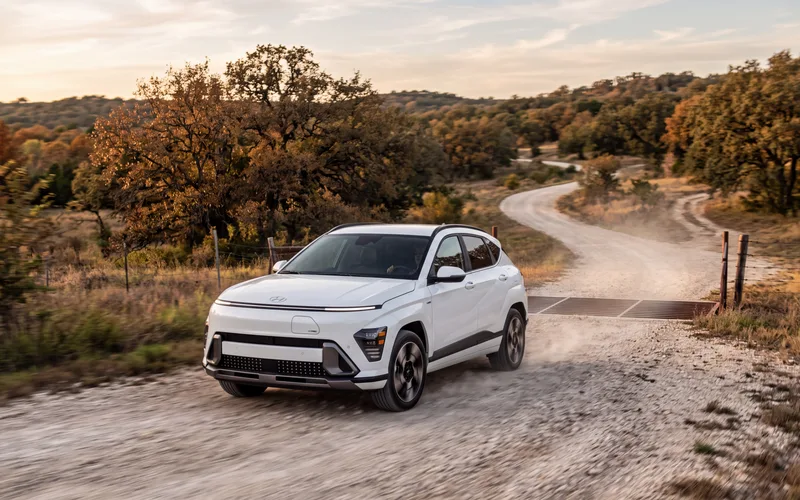 Hyundai KonaSubcompact SUVBetter at: Power and warranty
For similar money you get up to 190 hp, an optional hybrid and a 10-year/100,000-mile powertrain warranty — directly fixing the Trailblazer's three biggest weaknesses.
Compare 1.54D
1.54D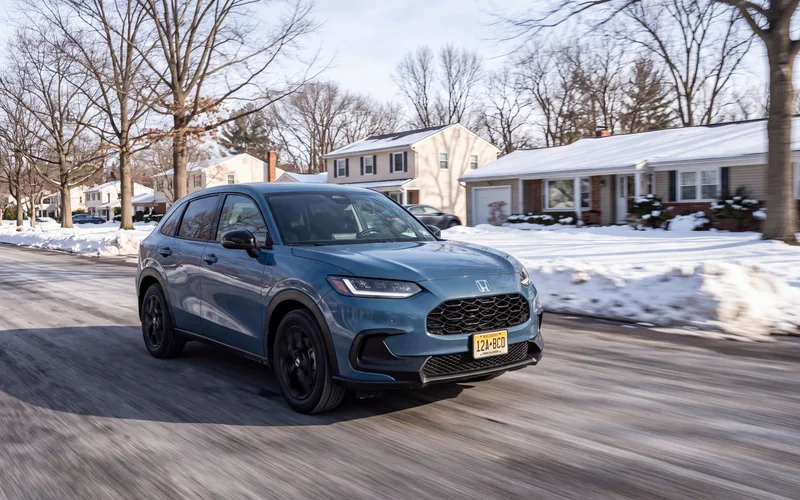 Honda HR-VSubcompact SUVBetter at: Resale value
A quieter, better-built subcompact with stronger predicted reliability and resale, for buyers who plan to keep the car a long time.
Compare 1.21D
1.21D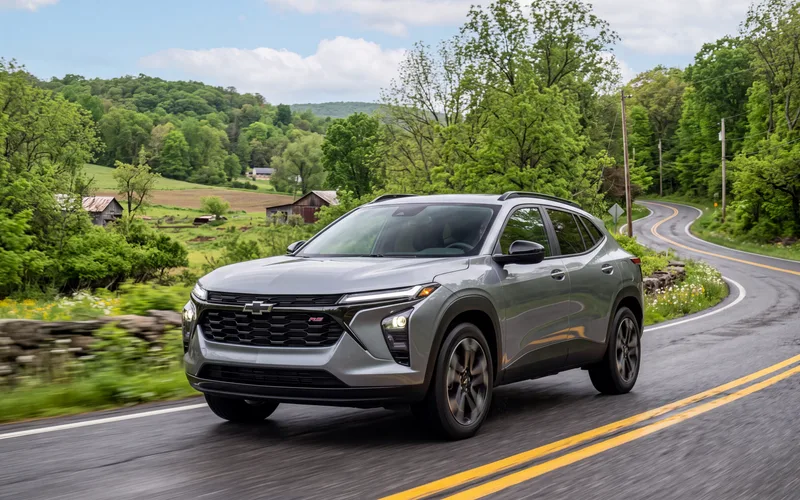 Chevrolet TraxSubcompact SUVBetter at: Price
The same engines and tech in a longer, cheaper package from the same dealer — the obvious pick if you don't need all-wheel drive.
CompareHow it's evolved
6 scored model years · 2021–2026
Subject scores by year
Hover or tap a score to see what moved it versus the year before. A corner mark flags a big swing.
| Year | Performance | Efficiency | Safety | Space | Cost | Reliability | Tech | Use-case | Driving | Value |
|---|---|---|---|---|---|---|---|---|---|---|
| 2026 | 22 | 72 | 54 | 41 | 64 | 67 | 62 | 58 | 52 | 68 |
| 2025 | 22 | 67 | 53 | 41 | 62 | 67 | 62 | 58 | 52 | 70 |
| 2024 | 22 | 66 | 55 | 41 | 61 | 68 | 62 | 58 | 52 | 71 |
| 2023 | 22 | 66 | 57 | 41 | 61 | 69 | 52 | 57 | 52 | 68 |
| 2022 | 22 | 66 | 62 | 41 | 68 | 69 | 53 | 58 | 52 | 66 |
| 2021 | 22 | 62 | 61 | 41 | 67 | 65 | 53 | 58 | 52 | 70 |
Compare two years
Best fit & conditions
Higher scores mean a better fit for that use case. Learn more about use-case fit →
Subject profile
Academic Probation · NHTSA safety recalls
Aug 20, 2026Back over prevention: sensing system: cameraThe rearview camera screen may display a distorted or blank image.
Defect
General Motors, LLC is recalling certain 2024-2025 Buick Envista, 2024-2026 Buick Encore GX, Chevrolet Trailblazer, and 2025 Chevrolet Trax vehicles. The rearview camera screen may display a distorted or blank image.
Risk
A rearview image that does not display correctly reduces the driver's view behind the vehicle, increasing the risk of a crash.
Remedy
Dealers will inspect and replace the rearview camera, if necessary, free of charge. Letters informing owners of the safety risk were mailed September 17, 2026. Another letter will be mailed once the parts are available. Owners may contact Chevrolet customer service at 1-800-222-1020 or Buick customer service at 1-800-521-7300. GM's number for this recall is A262554900. Vehicle Identification Numbers (VINs) involved in this recall became searchable on NHTSA.gov on August 20, 2026.
NHTSA campaign 26V539000 ↗Manufacturer no. A262554900306,511 vehicles potentially affected (all models in the campaign)Owners notified Sep 30, 2026Filed by General Motors, LLCFiled as TRAILBLAZER
4 recalls on other model years of the Trailblazer (2021–2022)
Jun 10, 2021Equipment: mechanical: accessory scissor/screw/bottle jack/lift: standThe emergency jack, if not positioned as directed in the vehicle owner's manual, can fracture while in use.
Defect
General Motors, LLC. (GM) is recalling certain 2020-2022 Buick Encore GX and 2021-2022 Chevrolet Trailblazer vehicles. The emergency jack, if not positioned as directed in the vehicle owner's manual, can fracture while in use.
Risk
A fractured jack can cause the vehicle to collapse, increasing the risk of injury.
Remedy
Dealers will replace the jack, free of charge. Interim owner notification letters informing owner of the safety risk are expected to be mailed July 26, 2021. A second notice will be mailed once remedy parts become available. Owners may contact Buick customer service at 1-800-521-7300 or Chevrolet customer service at 1-800-222-1020. GM's number for this recall is A212335470.
NHTSA campaign 21V440000 ↗Manufacturer no. A212335470135,400 vehicles potentially affected (all models in the campaign)Owners notified Jul 29, 2021Filed by General Motors, LLCFiled as TRAILBLAZERSep 24, 2020Service brakesSensor connection contamination in the electronic brake boost system may cause an interruption of communication between the sensor and the brake boost system.
Defect
General Motors LLC (GM) is recalling certain 2020 Chevrolet Corvette and Cadillac CT4, CT5 and XT4, 2021 Chevrolet Trailblazer, and 2020-2021 Buick Encore GX vehicles. Sensor connection contamination in the electronic brake boost system may cause an interruption of communication between the sensor and the brake boost system.
Risk
If communication with the sensor is interrupted, the electronic brake boost assist could be lost. Extra pedal force will be required to slow and stop the vehicle, increasing the risk of a crash.
Remedy
GM will notify owners, and dealers will replace the electronic brake boost module, free of charge. The recall began December 9, 2020. Owners may contact Chevrolet customer service at 1-800-630-2438, Cadillac customer service at 1-800-333-4223, or Buick customer service at 1-800-521-7300. GM's number for this recall is A202307260.
NHTSA campaign 20V588000 ↗Manufacturer no. A2023072603,677 vehicles potentially affected (all models in the campaign)Owners notified Dec 9, 2020Filed by General Motors LLCFiled as TRAILBLAZERSep 3, 2020Seats · Seats: critical fastenersThe rear attachment bolts of one or both front seats may not have been installed.
Defect
General Motors LLC (GM) is recalling certain 2020 Buick Encore GX and 2021 Chevrolet Trailblazer vehicles. The rear attachment bolts of one or both front seats may not have been installed.
Risk
If an occupied front seat is missing the rear attachment bolts, it may move during a crash, increasing risk of injury to the occupant.
Remedy
GM will notify owners, and dealers will inspect seat attachments for both front seats and install attachment bolts as needed, free of charge. The recall began October 1, 2020. Owners may contact Chevrolet customer service at 1-800-630-2438 or Buick customer service at 1-800-521-7300. GM's number for this recall is A202304380.
NHTSA campaign 20V537000 ↗Manufacturer no. A202304380105 vehicles potentially affected (all models in the campaign)Owners notified Oct 1, 2020Filed by General Motors LLCFiled as TRAILBLAZERMay 21, 2020Equipment: other: labels · TiresThe certification label on these vehicles does not provide the tire size and cold tire pressure information for front and rear tires, as required. As such, these vehicles fail to comply with Federal Motor Vehicle Safety Standard Number 110, "Tire Selection and Rims."
Defect
General Motors LLC (GM) is recalling certain 2021 Chevrolet Trailblazer vehicles factory-equipped with optional 17-inch sport terrain tires. The certification label on these vehicles does not provide the tire size and cold tire pressure information for front and rear tires, as required. As such, these vehicles fail to comply with Federal Motor Vehicle Safety Standard Number 110, "Tire Selection and Rims."
Risk
If drivers are uninformed and overinflate or underinflate their tires, this may increase the risk of a crash.
Remedy
GM will notify owners, and will mail corrected labels for customers to apply, free of charge. The recall began July 1, 2020. Owners may call Chevrolet customer service at 1-800-222-1020. GM's number for this recall is A202304070.
NHTSA campaign 20V295000 ↗Manufacturer no. A20230407020 vehicles potentially affected (all models in the campaign)Owners notified Jul 1, 2020Filed by General Motors LLCFiled as TRAILBLAZER
Source: NHTSA Office of Defects Investigation recall database, model years 2021–2026. Recalls are listed by model year as the manufacturer filed them; whether a specific car is affected depends on its VIN — check a VIN at nhtsa.gov ↗. NHTSA model names matched to this page: TRAILBLAZER.
Detailed scoring by subject
1Performance & PowertrainThe Trailblazer's lowest-graded category.0.00F
The volume LT trim's standard powertrain is the ECOTEC 1.2L turbocharged three-cylinder rated at 137 hp; the 1.3L turbo I3 (155 hp) is the step-up engine, standard on ACTIV and required for AWD. Replaces a placeholder figure that was roughly double the real output.
Peak torque of the volume trim's standard 1.2L turbo three-cylinder is 162 lb-ft, arriving low in the rev range but from a very small displacement.
Edmunds instrumented the 2026 Trailblazer at 9.4 seconds to 60 mph — among the slowest vehicles in any segment, and slow even by subcompact-SUV standards. The 1.3L shaves only a few tenths.
Both engines are small turbo three-cylinders whose thrum is always present and grows loud when worked, and with only 137 hp the powertrain is worked constantly. Reviewers repeatedly call acceleration leisurely and the cabin loud; there is no coarse vibration, but delivery is strained rather than smooth.
FWD models use a CVT that reviewers describe as slick and responsive and a good match to the low-torque engines, avoiding the worst of CVT drone under light load; AWD models get a conventional 9-speed automatic that shifts unobtrusively. Neither is crisp, and the CVT flares audibly under hard throttle.
GM rates every 2026 Trailblazer at 1,000 lbs regardless of engine, drivetrain or trim — the bottom of the SUV normalization band and enough for only a small utility trailer.
AWD is optional across the trim range rather than restricted to the top trim, but it is not standard anywhere and is tied to the 1.3L engine upgrade, adding roughly $2,000–$2,500. The system is a basic on-demand setup with no low range or torque vectoring.
The ACTIV trim adds genuine light-duty hardware — off-road suspension tuning, a functional front skid plate, sport-terrain tires and Terrain Select drive modes — and AWD ACTIV models get about 8 inches of ground clearance. That handles unpaved roads and snow, but there is no low range, locker or underbody armor for real trail work.
Two engines are offered, but they are near-identical small turbocharged three-cylinders separated by 18 hp and 12 lb-ft, and there is no hybrid, PHEV or EV variant anywhere in the 2026 lineup — a real gap now that subcompact rivals like the Kona, Niro and Corolla Cross offer electrified versions.
2Efficiency & RangeThe Trailblazer's best-graded category.2.85B-
Volume LT FWD uses the ECOTEC 1.2L turbo I3 with CVT, EPA-rated 30 mpg combined. Strong for a gas subcompact SUV but no hybrid variant exists to lift it further.
The 1.2T/CVT combination is unusually city-friendly — its 30 mpg city matches its combined figure, ahead of the 1.3T's 29 and the AWD's 26.
31 mpg highway on the volume 1.2T FWD is only mid-pack — the optional 1.3L with the 9-speed automatic actually does better on the highway at 33 mpg.
A 13.2-gallon tank is small even for the subcompact class, so decent MPG still yields only about 400 miles between fills.
At 30 mpg combined and EPA's 15,000 mi/yr assumption the Trailblazer burns about 500 gallons a year — one of the cheaper SUVs in the dataset to feed, though running E85 costs meaningfully more per mile.
Both engines run on regular 87 octane, and the standard 1.2L (LBP) is E85 flex-fuel capable, giving buyers a second fuel option most rivals lack. The small 13.2-gallon tank also keeps each fill cheap, even if it means filling more often.
3SafetyGrades below the middle of the scale.1.62D
NHTSA awards the 2026 Trailblazer a 5-star overall rating, with five stars in both frontal and side crash and four stars for rollover resistance — the top NCAP result and a clear improvement over the placeholder assumption of four stars.
Crashworthiness is solid — Good in small overlap front and top marks across the original IIHS crash battery carried over from the 2024 evaluation — but the Trailblazer earns no 2026 Top Safety Pick award, blocked by its crash-avoidance results under the tightened 2026 criteria. Its 2026 side-impact rating is also assigned from a General Motors–conducted test rather than an IIHS-run one, following a mid-year revision to the side structure and thorax airbag on units built after February 2026.
Chevy Safety Assist is standard on every trim (automatic emergency braking, front pedestrian braking, forward collision alert, lane keep assist with lane departure warning, following distance indicator, IntelliBeam), which covers the core. But blind-spot and rear cross-traffic alert are option-package items on every trim, and adaptive cruise cannot be ordered at all on the LS or LT — the volume trims — so the suite thins out badly exactly where most buyers shop.
The IIHS rates the Trailblazer's standard AEB Poor in the updated vehicle-to-vehicle front crash prevention 2.0 test and Marginal for pedestrian detection — the pedestrian result having slipped from Advanced under the older day-only protocol. This is the single worst element of the car's safety case and the reason it misses a Top Safety Pick despite good crashworthiness.
Side Blind Zone Alert with Lane Change Alert and Rear Cross Traffic Alert are orderable on every trim but standard on none, and they are alert-only — no active steering or braking intervention. Availability across the range keeps this out of the bottom band, but a subcompact with this car's rear sightlines really needs blind-spot monitoring as standard equipment.
Lane Keep Assist with Lane Departure Warning is standard across the range, which is more than some rivals manage, but the system is a nudge-back-from-the-line design only — there is no lane centering offered at any trim or price. Functional as a drift correction, absent as a highway-driving aid.
Adaptive cruise control is locked behind a $995 package available only on the top two trims, so the LS and LT that make up most Trailblazer sales cannot be equipped with it at any price — the base LS does not even carry plain cruise control without an option package. There is no highway assist layer above it.
Super Cruise is not offered on the Trailblazer at any trim — GM reserves it for higher-priced models, and this car does not even offer lane centering, the prerequisite capability. No hands-free option exists.
IIHS rates two headlight variations on the 2026 Trailblazer; the LED projector units on the volume LS and LT trims come in at Acceptable rather than Good, with low beams delivering good visibility on the straightaway and in the curve tests but falling short of a top rating. IntelliBeam automatic high-beam control is standard on every trim, which helps in practice.
Rearward and over-the-shoulder visibility is the Trailblazer's most-criticized everyday flaw — thick rear roof pillars and no third side window turn parking and merging into guesswork. Compensation is thin: an HD rear vision camera is standard but blind-spot monitoring is a paid option and no surround-view camera appears in the volume trims' equipment.
IIHS rates the Trailblazer's LATCH hardware Acceptable for ease of use: two complete lower-anchor sets in the rear outboard positions plus a center tether anchor, workable but requiring some digging. Rear-seat width is the real constraint — this is a subcompact, so three-across is not a realistic proposition and a rear-facing seat squeezes the front passenger.
4Space & ComfortOne of the Trailblazer's weakest categories.0.70F
The Trailblazer is a two-row subcompact SUV seating five across every trim (LS, LT, ACTIV, RS); no third-row or six/seven-seat configuration is offered.
Manufacturer spec is 39.98 in front headroom without the roof opening; the available dual-pane panoramic power sunroof cuts it to 38.3 in. Tall for the class thanks to the boxy roofline.
40.9 in of front legroom is near the bottom of the SUV normalization band — adequate for the subcompact footprint but well short of compact and mid-size crossovers.
38.4 in second-row headroom is mid-band for SUVs and generous for a subcompact; the panoramic sunroof costs about 1.6 in.
39.0 in of second-row legroom is the Trailblazer's standout dimension — better than most subcompact rivals and competitive with compact SUVs, which is why reviewers call the rear seat unusually spacious.
No third row is offered on any 2026 Trailblazer trim — the vehicle is strictly a five-seat, two-row subcompact SUV, so this item scores in the low band by definition.
25.3 cu ft behind the rear seat is large for a subcompact (ahead of HR-V and Kicks) but sits at the very floor of the SUV-wide normalization band, which spans up to full-size three-row utilities.
54.4 cu ft maximum is respectable for the subcompact class but falls just below the 55 cu ft floor of the SUV band, so it scores zero on an absolute SUV scale.
Better than average small-SUV packaging: flat-folding rear seatbacks plus a fold-flat front passenger seatback create a long load floor for items up to roughly eight feet, and there are useful door bins, a covered console, and rear USB ports. Nothing genuinely innovative, and cubby volume is ordinary.
Front seats are supportive and comfortable for most reviewers, though Consumer Reports found the cushion overly soft with the bottom sagging under the driver's hip in corners; adjustability is limited on lower trims (manual seats, no lumbar on LS/LT). The genuinely roomy rear bench is a plus for two adults.
The suspension absorbs typical rough city pavement well for a short-wheelbase subcompact, but reviewers report the body getting jostled and unsettled over undulating or badly broken roads — composed most of the time rather than segment-leading.
The weakest comfort attribute: road noise is pronounced, with a notable rumble over coarse pavement at highway speed, and the three-cylinder engine is audible under load. Acoustic measures are minimal at this price point.
Heated front seats and a heated steering wheel are standard on ACTIV and RS and optional on LT, but absent from the base LS; there are no ventilated seats, no rear climate controls, and single-zone manual climate on lower trims. Remote start is widely available. Key comfort features land on mid trims and up — textbook mid-band.
5Cost of OwnershipMid-pack among this car's ten categories.2.35C+
Replaces placeholder with the real 2026 entry price: the LS FWD with the 137-hp turbo 1.2L three-cylinder opens at $25,095 including the $1,795 destination charge, after GM raised 2026 Trailblazer MSRPs three times (a $600 bump in August 2025 including a $400 destination increase, then $100 across the board in January 2026).
Replaces placeholder. LT is the volume trim and lists at $26,295 delivered in front-drive form, which is well under the $27,000 floor of the SUV normalization band — the Trailblazer is one of the cheapest new SUVs on sale even after three price increases.
Replaces placeholder with a blend of the two published estimates, which bracket the figure fairly widely. Mid-pack for the class: the turbo three-cylinders and the 9-speed/CVT hardware are not cheap to service, and GM's only free visit is the first one.
Replaces placeholder, and drops the score: the Trailblazer's residuals are ordinary-to-weak. Heavy fleet and incentive volume plus a sixth-year-old design without a redesign on the books keep retention near the bottom half of the SUV band.
Replaces placeholder, which had invented a 4-year term. GM's bumper-to-bumper coverage is the 3/36 industry minimum — the weakest tier in the band, and a real disadvantage against Hyundai/Kia rivals in the same segment.
Replaces placeholder, which had invented 7.5 years. GM covers the powertrain for 5 years/60,000 miles — the floor of the band, and half the 10-year/100,000-mile term Hyundai and Kia offer on directly competing subcompact SUVs.
Replaces the placeholder's optimistic 74. Chevrolet includes exactly one scheduled maintenance visit (oil, filter, tire rotation) within the first year/12,000 miles, plus 5 years/60,000 miles of roadside assistance and 8 years of no-cost OnStar Basics with only a 1-month OnStar One trial beyond that. That is short included maintenance with basic roadside — squarely the middle band, and identical to sibling Chevrolet Trax (55).
$26,295 volume-trim price minus its estimated resale value after 5 years (50% retained, or about $13,148) leaves about $13,148 in depreciation. Add the projected $5,900 in 5-year maintenance and repairs, and owning this vehicle for 5 years costs about $19,048 in total.
6Reliability & QualityOne of the Trailblazer's strongest categories.2.50C+
Consumer Reports expects about-average reliability for the 2026 Trailblazer based on 2023-2025 data, and rates it 68/100 overall predicted reliability — third in the subcompact class behind the Crosstrek and HR-V but ahead of the CX-30 and Corolla Cross. U.S. News (88/100, 'Great') and J.D. Power's owner quality-and-reliability scores in the 80s are more generous, so the signals are good-but-mixed rather than top-tier.
Chevrolet finished third among mass-market brands in the J.D. Power 2026 U.S. Vehicle Dependability Study at 178 PP100, behind only Buick and Mini, and was above average in the 2026 IQS at 171 PP100 — though that was ninth overall, down from fifth in 2025. Consumer Reports still places the brand only mid-pack, with its gas models carrying a lineup dragged down by the Blazer EV and redesigned Equinox, so the record is strong but not consistently top-5 across sources.
Recall activity on this generation is concentrated in the 2021 launch year — missing front-seat attachment bolts, electronic brake-boost sensor contamination, a fracturing emergency jack and a tire-label campaign — plus a 2021-2023 emissions recall for an engine control module that failed to clear a code. Later years are much cleaner (RepairPal/NHTSA show zero recalls for 2023) and no 2026-specific campaign has been issued, but CR owner data flags recurring brake and infotainment trouble spots, so this is typical activity rather than a clean sheet.
The volume drivetrain is a small-displacement turbo three — the 1.2L LIH or 1.3L L3T — paired with a CVT in front-drive form (AWD 1.3L gets a nine-speed automatic). Both engines have accumulated reports of turbo oil-seal leaks with oil consumption, intake-valve carbon buildup, start-stop failures and intercooler icing, while the CVT has drawn shudder, hesitation and overheating complaints; CR's 2025 data adds turbocharger and timing-chain problems. The 1.3L carries the lower complaint density of the two, but neither is a proven high-mileage family and independent teardown analyses peg realistic engine life near 120k miles.
Reviewers consistently call out hard plastic surfaces and material quality below subcompact-SUV rivals, with the Mazda CX-30 named as the benchmark the Trailblazer cannot match on interior refinement. Evotex faux leather on ACTIV and RS lifts the top trims, but the volume LT's cloth-and-hard-plastic cabin is the configuration being scored, and KBB owners rate quality the vehicle's weakest attribute.
Chevrolet scored above the mass-market average in the J.D. Power 2026 Initial Quality Study at 171 PP100, and the Trailblazer has been in production since 2021 with the assembly process well settled. Against that, CR owner data on recent model years reports squeaks, rattles, wind noise and weather-stripping/air-and-water-leak complaints — scattered assembly niggles rather than systemic misalignment.
Chevrolet runs one of the densest dealer networks in the US — roughly 2,800 franchised stores, so service is within easy reach almost anywhere including rural markets. Service satisfaction backs the coverage up: Chevrolet beat the mass-market average in the J.D. Power 2026 Customer Service Index overall and specifically in the SUV segment.
The Trailblazer shares its VSS-F platform, Ecotec turbo-three engines and CVT with the Chevy Trax, Buick Encore GX and Envista, so service parts are high-volume, widely stocked and cheap, and routine maintenance costs are low for the class. The offset is that the turbocharger and CVT are the expensive failure items rather than commodity wear parts, and aftermarket depth for these small turbo threes is thinner than for a conventional four-cylinder.
7Technology & InfotainmentMid-pack among this car's ten categories.2.21C
The 2026 Trailblazer carries an 11-inch diagonal HD color touchscreen standard on every trim including the base LS — one of the largest standard screens in the subcompact segment, with no larger option offered.
Chevrolet Infotainment 3 Plus on the 11-inch screen is a clear, tile-based system with crisp graphics, quick phone pairing, and retained physical HVAC and volume controls — easy to live with, but an aging GM interface without the depth or polish of the newest software.
Wireless Apple CarPlay and wireless Android Auto are standard on every trim from the base LS up — no wired-only entry trim and no upcharge, which is the best-case configuration for this item.
Embedded navigation is not offered on the Trailblazer — routing comes from phone projection or OnStar turn-by-turn — and Infotainment 3 Plus voice control is basic command-and-control rather than natural language. Some dealer marketing claims Google built-in, but Chevrolet's own Trailblazer materials list Infotainment 3 Plus without it.
Base audio is a modest six-speaker setup; the step up is a seven-speaker Bose system available on upper trims (standard on RS) — a real upgrade but a small-format one by premium-audio standards.
An 8-inch digital Driver Information Center display is standard across the range, which beats most subcompact rivals for availability, but it is a modest-size cluster display rather than a large fully configurable digital gauge panel.
GM supports over-the-air software updates on the Trailblazer through OnStar connectivity, but on this older global-B electrical architecture that means infotainment and select module updates — not the feature-adding whole-vehicle OTA GM ships on its newer VIP/Ultium platforms.
The myChevrolet app connected by OnStar covers the core set — remote start with climate preset, lock/unlock, vehicle locate, fuel level, tire pressure and oil life — but remote commands are subscription-gated after the trial and there is no phone-as-key on this model.
Front USB-A and USB-C ports with available rear USB ports cover the basics, and wireless phone charging is offered on LT, RS and ACTIV — but there is no household AC outlet and rear-seat power is not standard across the range.
Push-button start is standard from the LS, with keyless open and remote start arriving at LT — so the volume trim has the full convenience set — but there is no hands-free liftgate and no phone-as-key option anywhere in the range.
An HD Rear Vision Camera is standard on all trims and HD Surround Vision (360-degree) plus rear park assist are available on upper trims — competitive for a subcompact, though there is no automated parking and no surround view at the volume price point.
No head-up display is offered on the Trailblazer at any trim or option level for 2026; within Chevrolet, HUD is reserved for Silverado, Colorado, Traverse, Suburban, Equinox and Corvette.
8Use-Case FitMid-pack among this car's ten categories.1.93C-
Unusually roomy back seat for a subcompact (39.0 in rear legroom) and a class-leading 25.3 cu ft behind the second row swallow a full-size stroller, so two car seats plus gear is genuinely easy. Held back by an IIHS 'Acceptable' LATCH ease-of-use rating (lower anchors set too deep in the cushion) and a bench too narrow for three car seats.
NHTSA 5-star overall and Chevy Safety Assist standard on every trim (AEB, front pedestrian braking, forward collision alert, lane keep assist with departure warning, following distance indicator, IntelliBeam) give families a solid floor on the LS/LT trims they actually buy. But the 2026 Trailblazer does not carry an IIHS Top Safety Pick award, and adaptive cruise and Side Blind Zone Alert are both extra-cost — the gaps that keep this out of the upper band.
The rear seat is spacious enough for adults on multi-hour legs and 25.3 cu ft holds a family's luggage with all seats occupied — both above par for the class. Rear amenities are thin (no rear climate zone, limited rear charging on lower trims) and reviewers consistently flag a loud cabin over coarse pavement, which wears on a long day.
Light steering, a small footprint and a standard 11-inch touchscreen with wireless CarPlay/Android Auto make the daily grind simple, and the suspension mutes broken city pavement well. The 137-hp 1.2L turbo three and CVT are the drag: 9.4 sec to 60 mph with audible three-cylinder thrash whenever you ask for a gap in traffic.
30 MPG combined on regular unleaded from the volume 1.2T FWD (31 with the 1.3T FWD) is strong for a non-hybrid SUV and works out near $1,500/yr in fuel, with cheap small-diameter tires and ordinary consumables. Hybrid subcompacts and the AWD Trailblazer's 27 MPG combined are what keep it out of the top band.
A 174-inch length, 71-inch width and a tight 37.3-ft turning circle make this one of the easiest SUVs in the segment to thread through a city, backed by a standard HD rear vision camera. Only the merely-adequate over-shoulder visibility keeps it from the very top.
A 1,000-lb maximum tow rating even with the Trailering Package is barely enough for a small utility trailer, and 137–155 hp from a three-cylinder gives no headroom under load. The one real work asset is the fold-flat front passenger seat, which opens an 8.5-ft load length for flat stock or lumber — unusual at this size.
Consumer Reports rates predicted reliability 68/100 — respectable for a cheap crossover and third in class — but that is ordinary-use reliability, not hard-duty toughness. Small-displacement turbo triples paired with a CVT, plus owner-reported turbocharger, timing-chain and head-gasket claims on the 1.3L, give no fleet track record for abuse.
Better provisioned than most subcompacts thanks to the adjustable cargo floor, 60/40 split-fold rear seat, fold-flat front passenger seat and roof rails from LT up, with GM accessory racks, hitch and all-weather liners available. There is no onboard AC inverter, no cargo tie-down track and no wash-out surface, so it stays a light-duty runabout rather than a work vehicle.
About 396 miles of range from the 13.2-gal tank at 30 MPG combined and a genuinely comfortable highway ride with roomy rear seats make short-to-medium tours pleasant. Endurance is limited by a noisy cabin over coarse pavement, three-cylinder drone when passing, and driver-assist that stops at lane keeping — adaptive cruise is optional and there is no lane centering.
The Activ trim is a credible gravel-road and trailhead vehicle: 8.0 in of ground clearance with AWD, all-terrain tires, a front skid plate and Terrain Select drive modes, plus roof rails for bikes and boxes. The 1,000-lb tow ceiling rules out any camper or toy trailer and there is no onboard power for camp, capping it at soft-roader.
The Trailblazer's standout use-case trait: 25.3 cu ft behind the rear seat and 54.4 cu ft folded lead the subcompact class, and the fold-flat front passenger seat stretches an 8.5-ft load channel that no rival this size offers. Add the adjustable cargo floor, roof rails and available hitch and bulky gear is a non-issue; only the modest roof and tow ratings keep it under 80.
9Driving ExperienceOne of the Trailblazer's weakest categories.1.50D
Consumer Reports' 2026 road test calls the handling dull and a bit clumsy with notable body lean, though the Trailblazer stayed secure and controlled through the track and avoidance-maneuver runs. Ride composure is the redeeming trait — the suspension mutes rough pavement well — so it lands at the bottom of the secure-but-unremarkable band, a step behind its own Trax sibling and roughly level with the Buick Encore GX it shares a platform with.
The electric rack is accurate enough to place the car where you want it but is tuned light and short on feedback — a comfort-first calibration consistent across reviews. Precise-but-numb puts it in the lower half of the middle band, without the vagueness that would drop it into the bottom tier.
Stopping power itself is not faulted — CR's panic-stop and avoidance work raised no complaint — but Edmunds found the pedal overly sensitive and hard to modulate smoothly, an over-servoed tuning that undercuts everyday confidence. No instrumented 60–0 figure was published for the 2026 car, which caps confidence at MEDIUM.
The volume FWD configuration's 137-hp 1.2L turbo triple and CVT are the weakest part of the car: 9.4 seconds to 60 in Edmunds' test, adequate around town but clearly strained on the highway, and early CVT units hesitated or jerked before software revisions. The optional 155-hp 1.3L with the nine-speed automatic (standard on ACTIV/RS and AWD) is meaningfully better at roughly 8.7–8.8 seconds, but the representative trim sits just into the persistent-roughness band.
Both engines are three-cylinders with an audible buzz under load, and Consumer Reports rates the cabin outright loud — a pronounced rumble over coarse pavement and enough highway noise that drivers reach for the volume knob. That is intrusive rather than merely audible-and-inoffensive, putting it in the bottom band alongside the Trax.
36.8 ft curb-to-curb is the figure carried by Chevrolet dealer spec pages and Cars.com for the 2026 range, unchanged from prior years. Tighter than the SUV band midpoint and a real asset in tight parking, though the short wheelbase and small footprint make it a class expectation rather than a standout. KBB lists 37.3 ft, likely a wall-to-wall or AWD-specific measurement, so confidence is MEDIUM rather than HIGH.
The upright, tall-roofed seating position gives a commanding forward view and easy ingress, and the LT's power driver's seat with two-way lumbar helps, but two real faults hold it to the middle band: the front cushion is soft enough to sag and let the driver sink on long stints and in corners, and rear three-quarter visibility is genuinely poor thanks to thick rear pillars and no third side window.
Nothing here invites the long way home: a nine-plus-second 0–60, a droning three-cylinder, light and numb steering, notable body lean and grabby brakes add up to pure appliance. The RS trim's blacked-out styling is cosmetic — there is no chassis or powertrain change behind it — so even the sportiest-looking version drives the same.
10Value & Market PositionOne of the Trailblazer's strongest categories.2.57C+
Every 2026 trim, including the $25,095 base LS, gets an 11-inch touchscreen with wireless Apple CarPlay/Android Auto, an 8.8-inch digital cluster and the six-feature Chevy Safety Assist bundle (AEB, lane keep, forward collision alert, following distance indicator, auto high beams, pedestrian braking) — content rivals often reserve for mid trims. Offset by a genuinely sparse LS otherwise and the 2026 deletion of the spare tire from standard equipment in favor of an inflator kit.
Fair rather than standout: the $25,095–$29,695 spread (incl. $1,795 destination) buys well-equipped tech but only a 137-hp 1.2L turbo three and CVT at the volume end, with Edmunds measuring 9.4 sec 0-60 and calling the Trailblazer one of the more expensive vehicles in its class with unexceptional fuel economy. Three separate MSRP/destination increases within the 2026 model year — driven partly by tariff exposure on the South Korean-built car — eroded the price advantage it once held over rivals.
Unusually wide choice for a subcompact: four trims (LS, LT, ACTIV, RS), two turbo engines (137-hp 1.2L with CVT, 155-hp 1.3L with 9-speed), and front- or all-wheel drive available on every configuration, plus distinct off-road (ACTIV, skid plate and suspension tuning) and sport (RS) flavors, panoramic dual-panel sunroof and two-tone paint options. Only gap is the absence of any hybrid or electrified variant.
A genuine volume player: 75,084 US deliveries in 2025 place it in the top five of the subcompact crossover segment, and Q1 2025 was up 21 percent year-over-year. Held back from a higher score only by the modest 2.9 percent full-year decline and by being outsold within its own showroom by the cheaper Trax.
Chevrolet is a broadly neutral mainstream badge — third among mass-market brands in the J.D. Power 2026 Vehicle Dependability Study at 178 PP100 — with no aspirational halo and no real drag either. The image cost shows up in resale: the Trailblazer retains roughly 47 percent of value at five years, below the market average and behind Honda/Toyota/Subaru rivals in the segment.
Ordinary mainstream-brand support rather than a bargain: August 2026 national programs run to roughly 3.9% APR financing, up to $1,000 cash back and advertised leases from about $289/month, thinner than earlier-2026 offers that added payment deferrals. GM Authority specifically flags Trailblazer leasing as poor value relative to the rest of the Chevy line, so buyers get most of the benefit by financing or paying cash.
Late mid-cycle. The current Trailblazer launched for 2021 and took its facelift for 2024 (new fascia, LED lighting, 11-inch screen, 8.8-inch cluster); 2026 is the sixth model year of the generation and a straight carryover, with only new Apex Red and White Sands paint replacing Nitro Yellow and Crimson, plus the spare-tire deletion. The platform is expected to run through at least 2027, so replacement isn't imminent but the underlying hardware is no longer current.
Well-reviewed and occasionally the pick of a weak class — Edmunds scores it 7.7/10 and named it Best Extra-Small SUV — but it is not a consistent comparison-test winner: U.S. News ranks it only 14th among subcompact SUVs at 8.3/10, and Edmunds itself notes newer rivals have eclipsed it, with criticism of the slow 1.2L powertrain, over-sensitive brakes and unremarkable handling. No 10Best, NACTOY or Car and Driver comparison wins.