
The verdict
A struggling subcompact suv, strong on safety and held back by performance.
Overall 1.61 (D) across 10 graded subjects. Its strongest is safety at 3.16 (B), its weakest performance & powertrain at 0.24 (F). 6 of 10 subjects grade at C− or better.
Jump to scoresStrengths
- Safety
- Value & Market Position
- Efficiency & Range
What holds it back
- Performance & Powertrain
- Reliability & Quality
- Technology & Infotainment
Top alternatives
Cars shoppers cross-shop with the Ford Bronco Sport 2.05C
2.05C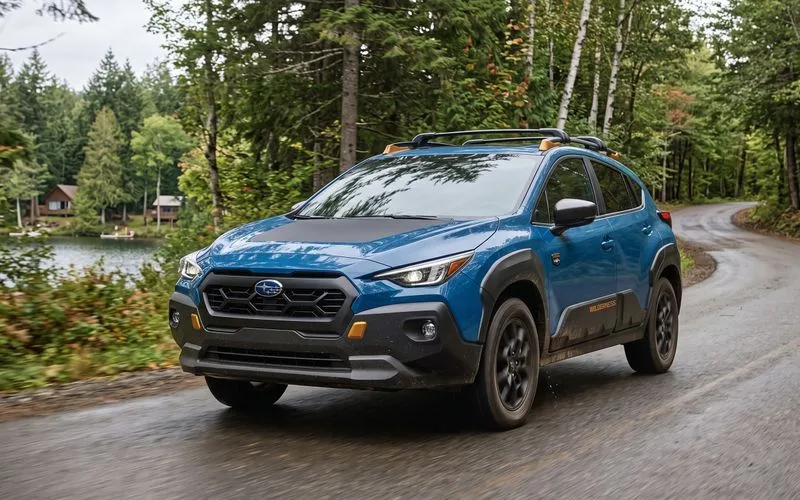 Subaru CrosstrekSubcompact SUVBetter at: Resale value
Delivers the same all-weather, outdoorsy mission with standard AWD but holds its value far better and carries a cleaner reliability record.
Compare 1.95C-
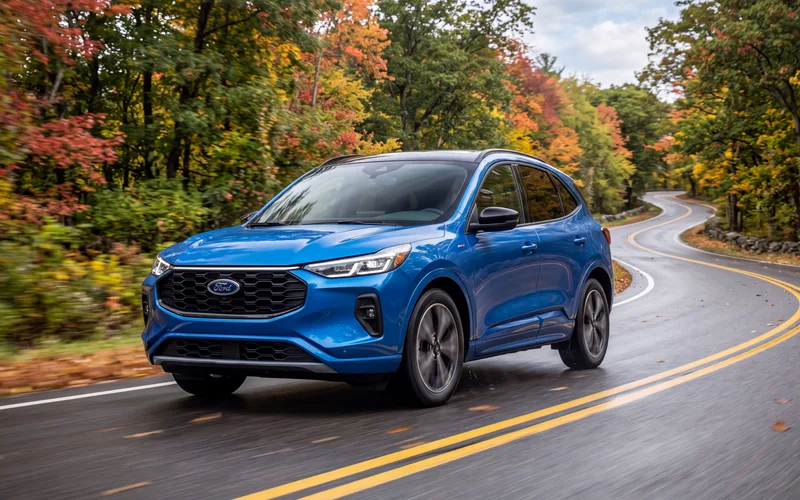 Ford EscapeCompact SUVBetter at: Efficiency
Same Ford platform and dealer, but the hybrid and PHEV options fix the Bronco Sport's weak 27 MPG and coarse three-cylinder for pavement-only buyers.
Compare 1.54D
1.54D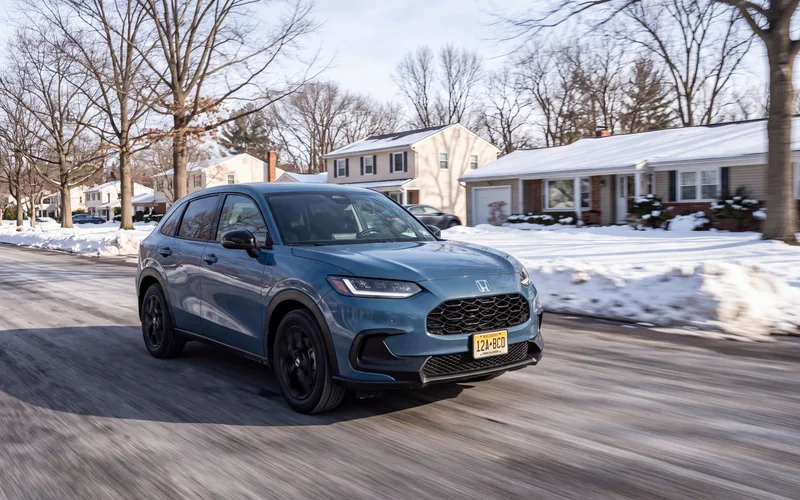 Honda HR-VSubcompact SUVBetter at: Refinement
Quieter, smoother, and far less recall-prone for the shopper who wants a practical small SUV and never intends to go off-road.
CompareHow it's evolved
6 scored model years · 2021–2026
Subject scores by year
Hover or tap a score to see what moved it versus the year before. A corner mark flags a big swing.
| Year | Performance | Efficiency | Safety | Space | Cost | Reliability | Tech | Use-case | Driving | Value |
|---|---|---|---|---|---|---|---|---|---|---|
| 2026 | 34 | 65 | 65 | 46 | 56 | 55 | 67 | 57 | 63 | 63 |
| 2025 | 35 | 65 | 65 | 46 | 56 | 52 | 65 | 57 | 62 | 63 |
| 2024 | 33 | 60 | 70 | 46 | 56 | 47 | 45 | 52 | 61 | 61 |
| 2023 | 33 | 61 | 76 | 46 | 59 | 46 | 45 | 55 | 57 | 60 |
| 2022 | 34 | 58 | 75 | 46 | 62 | 47 | 45 | 54 | 57 | 57 |
| 2021 | 34 | 63 | 76 | 46 | 63 | 42 | 45 | 55 | 63 | 73 |
Compare two years
Best fit & conditions
Higher scores mean a better fit for that use case. Learn more about use-case fit →
Subject profile
Trims & configurations
5 trimsScores above reflect the volume trim. Per-trim specs and scores are rolling out — the full lineup:
Academic Probation · NHTSA safety recalls
May 27, 2026Suspension: front: control arm: lower ball jointThe front lower control arm ball joints may have been incorrectly installed or incorrectly repaired at the vehicle assembly plant, allowing the control arm to disconnect from the front wheel knuckle.
Defect
Ford Motor Company (Ford) is recalling certain 2021-2026 Bronco Sport and 2022-2026 Maverick vehicles. The front lower control arm ball joints may have been incorrectly installed or incorrectly repaired at the vehicle assembly plant, allowing the control arm to disconnect from the front wheel knuckle.
Risk
A detached control arm can cause a loss of vehicle control, increasing the risk of a crash.
Remedy
Owners are advised not to drive their vehicles until the remedy is completed. Dealers will inspect and repair the front lower control arm ball joints as necessary, free of charge.Owner notification letters were mailed September 2, 2026. Owners may contact Ford customer service at 1-866-436-7332. Ford's number for this recall is 26S36. Vehicle Identification Numbers (VINs) involved in this recall became searchable on NHTSA.gov on May 29, 2026.
NHTSA campaign 26V340000 ↗Manufacturer no. 26S364,653 vehicles potentially affected (all models in the campaign)Owners notified Sep 2, 2026Filed by Ford Motor CompanyFiled as BRONCO SPORTOct 10, 2025Equipment: electrical: engine block heaterThe engine block heater may crack and develop a coolant leak, causing it to short circuit when the block heater is plugged in.
Defect
Ford Motor Company (Ford) is recalling certain 2016-2019 Lincoln MKC, 2016-2023 Explorer, 2019-2020 Fusion, 2019-2024 Ranger, 2020-2022 Lincoln Corsair, Escape, 2021-2024 Bronco, Bronco Sport, and 2022-2024 Maverick vehicles. The engine block heater may crack and develop a coolant leak, causing it to short circuit when the block heater is plugged in.
Risk
An electrical short circuit can increase the risk of a fire.
Remedy
Owners are advised not to plug in their block heater until the vehicle is remedied. Dealers will replace the block heater, free of charge. Owners will also have a alternative option to replace engine block heater element with a threaded blanking plug, and remove the block heater electrical cord. Interim letters, notifying owners of the safety risk, were mailed December 3, 2025. Additional letters will be sent once the final remedy is available, anticipated September 2026. Owners may contact Ford customer service at 1-866-436-7332. Ford's number for this recall is 25SA4. Vehicle Identification Numbers (VINs) involved in this recall became searchable on NHTSA.gov on October 15, 2025.
NHTSA campaign 25V685000 ↗Manufacturer no. 25SA459,006 vehicles potentially affected (all models in the campaign)Filed by Ford Motor CompanyFiled as BRONCO SPORTJul 11, 2025Fuel system, gasoline: fuel injection systemA fuel injector may crack and leak fuel inside the engine compartment.
Defect
Ford Motor Company (Ford) is recalling certain 2021-2024 Bronco Sport and 2020-2022 Escape vehicles equipped with 1.5L engines. A fuel injector may crack and leak fuel inside the engine compartment.
Risk
A fuel leak in the presence of an ignition source, such as hot engine or exhaust components, can increase the risk of a fire.
Remedy
Dealers will update the engine control software. In addition, dealers will replace the high-pressure fuel rail assembly and fuel injectors, free of charge. As an interim repair, dealers will update the engine control software, free of charge. Interim owner notification letters notifying owners of the safety risk were mailed August 29, 2025. Second letters will be sent once the final remedy is available, anticipated in July 2026. Owners may contact Ford customer service at 1-866-436-7332. Ford's number for this recall is 25S76. This recall expands and replaces previous recall numbers 22V-859, 24V187, and 25V165. Vehicles previously remedied under 22V-859, 24V187, and 25V165 will need to have the new final remedy performed once it is available.
NHTSA campaign 25V467000 ↗Manufacturer no. 25S76694,271 vehicles potentially affected (all models in the campaign)Filed by Ford Motor CompanyFiled as BRONCO SPORTJun 27, 2025Back over prevention: softwareA software error may cause the rearview camera to display a blank image, or the image may remain on the display after the backing event has ended.
Defect
Ford Motor Company (Ford) is recalling certain 2018-2022 Transit Connect, 2019-2020 MKZ, MKX, Edge, Continental, F-150, Nautilus, Fusion, 2019-2023 Ranger, Mustang, 2020-2021 EcoSport, Expedition, Navigator, 2020-2022 Escape, F-250 SD, Corsair, 2020-2023 Aviator, Transit, 2020-2024 Explorer, 2021-2024 Bronco Sport, and 2022-2024 Maverick vehicles. A software error may cause the rearview camera to display a blank image, or the image may remain on the display after the backing event has ended.
Risk
A rearview camera that displays a blank image can reduce the driver's view behind the vehicle. A rearview image that continues to be displayed after the vehicle is shifted out of reverse may distract the driver. Both of these situations can increase the risk of a crash.
Remedy
Dealers will update the rearview camera software, free of charge. Owner notification letters were mailed September 4, 2025. Owners may contact Ford customer service at 1-866-436-7332. Ford's number for this recall is 25S72.
NHTSA campaign 25V442000 ↗Manufacturer no. 25S72200,237 vehicles potentially affected (all models in the campaign)Owners notified Sep 4, 2025Filed by Ford Motor CompanyFiled as BRONCO SPORTMar 14, 2025Fuel system, gasoline: fuel injection systemA fuel injector may crack and leak fuel inside the engine compartment.
Defect
Ford Motor Company (Ford) is recalling certain 2020-2022 Escape and 2021-2023 Bronco Sport vehicles previously repaired incorrectly under recall numbers 22V-859 or 24V-187. A fuel injector may crack and leak fuel inside the engine compartment.
Risk
A fuel leak in the presence of an ignition source such as hot engine or exhaust components, can increase the risk of a fire.
Remedy
Dealers will update the powertrain control module (PCM) software, free of charge. Owner notification letters were mailed April 22, 2025. Owners may contact Ford customer service at 1-866-436-7332. Ford's number for this recall is 25S21.
NHTSA campaign 25V165000 ↗Manufacturer no. 25S2133,576 vehicles potentially affected (all models in the campaign)Owners notified Apr 22, 2025Filed by Ford Motor CompanyFiled as BRONCO SPORTMar 14, 2025Electrical system: body control module/bcm · Power train: automatic transmission: control module (tcm/pcm/tecm)The body and power train control modules may fail to detect a change in the 12-volt battery state of charge.
Defect
Ford Motor Company (Ford) is recalling certain 2021-2024 Bronco Sport and 2022-2023 Maverick vehicles previously repaired incorrectly under recall number 24V-267. The body and power train control modules may fail to detect a change in the 12-volt battery state of charge.
Risk
An undetected low battery charge can result in a loss of electrical accessories such as hazard lights, or cause a loss of drive power, increasing the risk of a crash.
Remedy
Dealers will recalibrate the body control module and power train control module, free of charge. Owner notification letters were mailed April 23, 2025. Owners may contact Ford customer service at 1-866-436-7332. Ford's number for this recall is 25S26.
NHTSA campaign 25V158000 ↗Manufacturer no. 25S2648,041 vehicles potentially affected (all models in the campaign)Owners notified Apr 23, 2025Filed by Ford Motor CompanyFiled as BRONCO SPORTJan 17, 2025Electrical system: 12v/24v/48v batteryThe 12-volt battery may experience degradation and suddenly fail.
Defect
Ford Motor Company (Ford) is recalling certain 2021-2023 Bronco Sport and 2022-2023 Maverick vehicles. The 12-volt battery may experience degradation and suddenly fail.
Risk
Battery failure can result in a loss of electrical accessories, including the hazard lights, or cause a loss of drive power, increasing the risk of a crash.
Remedy
Dealers will inspect and if necessary, replace the 12-volt battery, free of charge. Owner notification letters were mailed May 2, 2025. Owners may contact Ford customer service at 1-866-436-7332. Ford's number for this recall is 25S02. Vehicles in this recall were previously repaired under 24V-267 and will need to have the new remedy completed.
NHTSA campaign 25V019000 ↗Manufacturer no. 25S02272,817 vehicles potentially affected (all models in the campaign)Owners notified May 2, 2025Filed by Ford Motor CompanyFiled as BRONCO SPORTApr 12, 2024Electrical system: body control module/bcm · Power train: automatic transmission: control module (tcm/pcm/tecm)The body and power train control modules may fail to detect a change in the 12-volt battery state of charge.
Defect
Ford Motor Company (Ford) is recalling certain 2021-2024 Bronco Sport and 2022-2023 Maverick vehicles. The body and power train control modules may fail to detect a change in the 12-volt battery state of charge.
Risk
An undetected low battery charge can result in a loss of electrical accessories such as hazard lights, or cause a loss of drive power, increasing the risk of a crash.
Remedy
Dealers will recalibrate the body control module and power train control module, free of charge. Owner notification letters were mailed on June 4, 2024. Owners may contact Ford customer service at 1-866-436-7332. Ford's number for this recall is 24S24.
NHTSA campaign 24V267000 ↗Manufacturer no. 24S24456,565 vehicles potentially affected (all models in the campaign)Owners notified Jun 4, 2024Filed by Ford Motor CompanyFiled as BRONCO SPORTNov 18, 2022Fuel system, gasoline: fuel injection systemA fuel injector may crack and leak fuel inside the engine compartment.
Defect
Ford Motor Company (Ford) is recalling certain 2020-2023 Escape and 2021-2023 Bronco Sport vehicles equipped with 1.5L engines. A fuel injector may crack and leak fuel inside the engine compartment.
Risk
A fuel leak in the presence of an ignition source such as hot engine or exhaust components, can increase the risk of a fire.
Remedy
Dealers will update the engine control software to include fuel injector leak detection and install a drain tube, free of charge. Interim owner notification letters informing owners of the safety risk were mailed January 9, 2023. Remedy parts are expected to be available in 1st Quarter of 2023. Owner notification letters were mailed February 28, 2023. Owners may contact Ford customer service at 1-866-436-7332. Ford's number for this recall is 22S73. This recall includes all vehicles previously recalled under 22V-191. Vehicles previously remedied under 22V-191 will need to have the new remedy performed.
NHTSA campaign 22V859000 ↗Manufacturer no. 22S73521,746 vehicles potentially affected (all models in the campaign)Owners notified Feb 28, 2023Filed by Ford Motor CompanyFiled as BRONCO SPORTMar 25, 2022Engine and engine cooling: engine: oil/lubricationThe engine oil separator housing may crack and develop an oil leak.
Defect
Ford Motor Company (Ford) is recalling certain 2020-2022 Escape and 2021-2022 Bronco Sport vehicles equipped with 1.5L engines. The engine oil separator housing may crack and develop an oil leak.
Risk
An oil leak in the presence of an ignition source such as hot engine or exhaust components, can increase the risk of a fire.
Remedy
Dealers will inspect the oil separator for damage or oil leaks, and replace the oil separator and seals, as necessary, free of charge. Owner notification letters were mailed April 18, 2022. Owners may contact Ford customer service at 1-866-436-7332. Ford's number for this recall is 22S21.
NHTSA campaign 22V191000 ↗Manufacturer no. 22S21345,451 vehicles potentially affected (all models in the campaign)Owners notified Apr 18, 2022Filed by Ford Motor CompanyFiled as BRONCO SPORTNov 23, 2021Service brakes, hydraulic: foundation components: disc: caliperThe rear brake linings may have been manufactured incorrectly, which can affect braking performance. As such, these vehicles fail to comply with the requirements of Federal Motor Vehicle Safety Standard number 135, "Light Vehicle Brake Systems."
Defect
Ford Motor Company (Ford) is recalling certain 2021-2022 Bronco Sport and Escape vehicles. The rear brake linings may have been manufactured incorrectly, which can affect braking performance. As such, these vehicles fail to comply with the requirements of Federal Motor Vehicle Safety Standard number 135, "Light Vehicle Brake Systems."
Risk
During certain situations, the driver may have to apply more brake pedal force, and the distance required to stop the vehicle may be extended, increasing the risk of a crash.
Remedy
Dealers will replace the front brake pads, free of charge. Owner notification letters were mailed August 17, 2022. Owners may contact Ford customer service at 1-866-436-7332. Ford's number for this recall is 21C31.
NHTSA campaign 21V922000 ↗Manufacturer no. 21C31114,666 vehicles potentially affected (all models in the campaign)Owners notified Aug 17, 2022Filed by Ford Motor CompanyFiled as BRONCO SPORTOct 15, 2021Visibility: sun/moon roof assemblyThe moonroof glass may not have been bonded correctly to the moonroof frame, which could result in the glass panel detaching from the vehicle.
Defect
Ford Motor Company (Ford) is recalling certain 2021 Bronco Sport vehicles. The moonroof glass may not have been bonded correctly to the moonroof frame, which could result in the glass panel detaching from the vehicle.
Risk
A detached glass panel can become a road hazard, and increase the risk of a crash or injury.
Remedy
Dealers will inspect the moonroof glass date code and replace the glass, if necessary, free of charge. Owner notification letters were mailed November 18, 2021. Owners may contact Ford customer service at 1-866-436-7332. Ford's number for this recall is 21S46.
NHTSA campaign 21V809000 ↗Manufacturer no. 21S461,036 vehicles potentially affected (all models in the campaign)Owners notified Nov 18, 2021Filed by Ford Motor CompanyFiled as BRONCO SPORTAug 10, 2021Fuel system, gasoline: delivery: fuel pump: control/drive moduleThe fuel delivery module may leak inside the fuel tank, causing low fuel pressure which could result in an engine stall.
Defect
Ford Motor Company (Ford) is recalling certain 2021 Escape, Lincoln Corsair, and 2021-2022 Bronco Sport vehicles. The fuel delivery module may leak inside the fuel tank, causing low fuel pressure which could result in an engine stall.
Risk
An engine stall increases the risk of a crash.
Remedy
Dealers will replace the fuel delivery module, free of charge. Interim notification letters (remedy not available) were mailed on September 30, 2021. Owner notification letters were mailed on December 14, 2021. Owners may contact Ford customer service at 1-866-436-7332. Ford's number for this recall is 21S38.
NHTSA campaign 21V625000 ↗Manufacturer no. 21S3813,773 vehicles potentially affected (all models in the campaign)Owners notified Dec 14, 2021Filed by Ford Motor CompanyFiled as BRONCO SPORTFeb 16, 2021Suspension: rearThe rear suspension subframe assembly may have loose or missing bolts.
Defect
Ford Motor Company (Ford) is recalling certain 2021 Bronco Sport vehicles. The rear suspension subframe assembly may have loose or missing bolts.
Risk
Loose or missing bolts may affect the vehicle's handling and control, increasing the risk of a crash. It could also reduce the vehicle's performance in a rear impact crash, increasing the risk of injury.
Remedy
Ford will notify owners, and dealers will inspect the rear suspension bolts, and secure or replace the bolts, as necessary, free of charge. The recall began March 10, 2021. Owners may contact Ford customer service at 1-866-436-7332. Ford's number for this recall is 21S04.
NHTSA campaign 21V075000 ↗Manufacturer no. 21S041,638 vehicles potentially affected (all models in the campaign)Owners notified Mar 10, 2021Filed by Ford Motor CompanyFiled as BRONCO SPORTFeb 16, 2021Suspension: front: control armThese vehicles may have been produced with incorrect front lower control arms.
Defect
Ford Motor Company (Ford) is recalling certain 2021 Bronco Sport vehicles. These vehicles may have been produced with incorrect front lower control arms.
Risk
An incorrect lower control arm may affect vehicle handling and control, increasing the risk of a rollover crash.
Remedy
Ford will notify owners, and dealers will inspect and replace the front lower control arms, if necessary, free of charge. The recall began April 9, 2021. Owners may contact Ford customer service at 1-866-436-7332. Ford's number for this recall is 21S03.
NHTSA campaign 21V074000 ↗Manufacturer no. 21S03106 vehicles potentially affected (all models in the campaign)Owners notified Apr 9, 2021Filed by Ford Motor CompanyFiled as BRONCO SPORTJan 15, 2021Power train: driveline: driveshaftAn inadequate amount of lubricant in the rear drive unit may cause seizure of the rear drive axle.
Defect
Ford Motor Company (Ford) is recalling certain 2020-2021 Edge, 2020 Lincoln Nautilus and Ford Escape and 2021 Lincoln Corsair and Ford Bronco Sport vehicles. An inadequate amount of lubricant in the rear drive unit may cause seizure of the rear drive axle.
Risk
If the rear drive unit seizes, there may be a loss of drive and/or a loss of vehicle control, increasing the risk of a crash.
Remedy
Ford will notify owners, and dealers will check the rear drive unit lubricant level. Axles found to have lubricant at the minimum level will be filled to the full level. Axles found to be below the minimum lubricant fill level will be replaced, free of charge. This recall began March 12, 2021. Owners may contact Ford customer service at 1-866-436-7332. Ford's number for this recall is 21S02.
NHTSA campaign 21V011000 ↗Manufacturer no. 21S02147 vehicles potentially affected (all models in the campaign)Owners notified Mar 12, 2021Filed by Ford Motor CompanyFiled as BRONCO SPORT
16 recalls on other model years of the Bronco Sport (2022–2026)
Aug 25, 2026Structure: bodyCertain vehicle joints may be improperly tightened. This can lead to detached parts, unsecured cargo, degraded crash protection, electrical system failure, or a loss of vehicle stability.
Defect
Ford Motor Company (Ford) is recalling certain 2026 Maverick, F-150, and Bronco Sport vehicles. Certain vehicle joints may be improperly tightened. This can lead to detached parts, unsecured cargo, degraded crash protection, electrical system failure, or a loss of vehicle stability.
Risk
Improperly tightened vehicle joints may lead to a loss of vehicle control, electrical failure, or detached parts, increasing the risk of a crash or fire.
Remedy
Dealers will inspect and tighten the vehicle joints or repair and replace the joint retention mechanisms as necessary, free of charge. Owner notifications letters are expected to be mailed September 21, 2026. Owners may contact Ford customer service at 1-866-436-7332. Ford's number for this recall is 26S60. Vehicle Identification Numbers (VINs) involved in this recall became searchable on NHTSA.gov on August 26, 2026.
NHTSA campaign 26V550000 ↗Manufacturer no. 26S6023 vehicles potentially affected (all models in the campaign)Filed by Ford Motor CompanyFiled as BRONCO SPORTAug 25, 2026Engine and engine cooling: engine: hard parts internal/mechanicalThe engine piston domes may have been manufactured incorrectly, which can result in piston dome failure and lead to a loss of drive power.
Defect
Ford Motor Company (Ford) is recalling certain 2026 Explorer, Bronco, Bronco Sport, Mustang, and Ranger vehicles. The engine piston domes may have been manufactured incorrectly, which can result in piston dome failure and lead to a loss of drive power.
Risk
An unexpected loss of drive power increases the risk of a crash.
Remedy
Dealers will inspect the engine pistons and replace the engine long block, if necessary, free of charge. Interim letters, notifying owners of the safety risk, were mailed September 3, 2026. Additional letters will be sent once the remedy is available, anticipated in December 2026. Owners may contact Ford customer service at 1-866-436-7332. Ford's number for this recall is 26S61. Vehicle Identification Numbers (VINs) involved in this recall became searchable on NHTSA.gov on August 28, 2026.
NHTSA campaign 26V548000 ↗Manufacturer no. 26S6110,001 vehicles potentially affected (all models in the campaign)Filed by Ford Motor CompanyFiled as BRONCO SPORTApr 14, 2026Electrical system · Equipment: electrical: engine block heaterThe engine block heater may overheat when the vehicle is parked with the block heater plugged in.
Defect
Ford Motor Company (Ford) is recalling certain 2025 Maverick and 2026 Bronco Sport vehicles equipped with a 1.5L or 2.0L MPC engine and an engine block heater. The engine block heater may overheat when the vehicle is parked with the block heater plugged in.
Risk
An overheated engine block heater can increase the risk of a fire.
Remedy
Owners are advised not to plug in their block heater until the vehicle is remedied. Dealers will replace the block heater, and inspect and replace the electrical cord if necessary, free of charge. Owners will also have an alternative option to replace the engine block heater element with a threaded plug, and remove the block heater electrical cord. Owner notification letters were mailed June 10, 2026. This recall expands previous NHTSA recall number 25V343. Owners may contact Ford customer service at 1-866-436-7332. Ford's number for this recall is 25S52. Vehicle Identification Numbers (VINs) involved in this recall became searchable on NHTSA.gov on April 14, 2026.
NHTSA campaign 26V239000 ↗Manufacturer no. 25S5255 vehicles potentially affected (all models in the campaign)Owners notified Jun 10, 2026Filed by Ford Motor CompanyFiled as BRONCO SPORTMar 31, 2026Air bags: sensor: occupant classification: front passengerThe Occupant Classification Sensor (OCS) unit may fail to correctly detect the presence of an adult or child in the front passenger seat. As such, these vehicles fail to comply with the requirements of Federal Motor Vehicle Safety Standard (FMVSS) number 208, "Occupant Crash Protection."
Defect
Ford Motor Company (Ford) is recalling certain 2025-2026 Bronco Sport and Maverick vehicles. The Occupant Classification Sensor (OCS) unit may fail to correctly detect the presence of an adult or child in the front passenger seat. As such, these vehicles fail to comply with the requirements of Federal Motor Vehicle Safety Standard (FMVSS) number 208, "Occupant Crash Protection."
Risk
Failure to correctly detect a passenger may result in the air bag not deploying as intended, increasing the risk of injury during a crash.
Remedy
Dealers will replace the passenger seat occupant classification sensor, free of charge. Owner notification letters were mailed June 25, 2026. Owners may contact Ford customer service at 1-866-436-7332. Ford's number for this recall is 26C19. Vehicle Identification Numbers (VINs) involved in this recall became searchable on NHTSA.gov on April 2, 2026.
NHTSA campaign 26V201000 ↗Manufacturer no. 26C193,170 vehicles potentially affected (all models in the campaign)Owners notified Jun 25, 2026Filed by Ford Motor CompanyFiled as BRONCO SPORTMar 3, 2026Engine and engine cooling: exhaust system: emission control: gas recirculation valve (egr valve)The exhaust gas recirculation (EGR) valve may fail, resulting in an unexpected loss of drive power.
Defect
Ford Motor Company (Ford) is recalling certain 2025 Ranger, Lincoln Nautilus, Mustang, Maverick, Explorer, Escape, Lincoln Corsair, Bronco Sport, and Bronco vehicles. The exhaust gas recirculation (EGR) valve may fail, resulting in an unexpected loss of drive power.
Risk
An unexpected loss of drive power increases the risk of a crash.
Remedy
Dealers will replace the EGR valves, free of charge. Owner notification letters were mailed July 31, 2026. Owners may contact Ford customer service at 1-866-436-7332. Ford's number for this recall is 26S10. Vehicle Identification Numbers (VINs) involved in this recall became searchable on NHTSA.gov on March 4, 2026.
NHTSA campaign 26V122000 ↗Manufacturer no. 26S1047,804 vehicles potentially affected (all models in the campaign)Owners notified Jul 31, 2026Filed by Ford Motor CompanyFiled as BRONCO SPORTNov 14, 2025Electrical system: instrument cluster/panelThe Instrument Panel Cluster (IPC) may fail at startup.
Defect
Ford Motor Company (Ford) is recalling certain 2025-2026 Bronco and Bronco Sport vehicles. The Instrument Panel Cluster (IPC) may fail at startup.
Risk
An instrument panel display that does not show critical information, such as warning lights or vehicle speed, increases the risk of a crash.
Remedy
The instrument panel cluster software will be updated by a dealer or through an over-the-air (OTA) update, free of charge. Owner notification letters were mailed December 4, 2025. Owners may contact Ford customer service at 1-866-436-7332. Ford's number for this recall is 25SC3.
NHTSA campaign 25V788000 ↗Manufacturer no. 25SC3229,609 vehicles potentially affected (all models in the campaign)Owners notified Dec 4, 2025Filed by Ford Motor CompanyFiled as BRONCO SPORTJun 3, 2025EngineThe cylinder head may have been improperly manufactured, which can cause the ball plugs to fail, resulting in an oil leak.
Defect
Ford Motor Company (Ford) is recalling certain 2023-2025 Escape, and 2025 Bronco Sport vehicles. The cylinder head may have been improperly manufactured, which can cause the ball plugs to fail, resulting in an oil leak.
Risk
An oil leak can result in loss of drive power, increasing the risk of a crash. In addition, an oil leak in the presence of an ignition source such as hot engine or exhaust components, can increase the risk of a fire.
Remedy
Dealers will replace the cylinder head assembly as necessary, free of charge. Owner notification letters were mailed August 8, 2025. Owners may contact Ford customer service at 1-866-436-7332. Ford's number for this recall is 25S61.
NHTSA campaign 25V372000 ↗Manufacturer no. 25S61404 vehicles potentially affected (all models in the campaign)Owners notified Aug 8, 2025Filed by Ford Motor CompanyFiled as BRONCO SPORTMay 23, 2025Electrical system · Equipment: electrical: engine block heaterThe engine block heater may overheat when the vehicle is parked with the block heater plugged in.
Defect
Ford Motor Company (Ford) is recalling certain 2024-2025 Lincoln Nautilus, 2023-2025 Escape, 2023 Lincoln Corsair, 2025 Lincoln Corsair, Maverick, and Bronco Sport vehicles equipped with a 1.5L or 2.0L MPC engine and an engine block heater. The engine block heater may overheat when the vehicle is parked with the block heater plugged in.
Risk
An overheated engine block heater can increase the risk of a fire.
Remedy
Dealers will replace the block heater element and inspect the electrical cord, replacing it if necessary, free of charge. Owners will also have a alternative option to replace engine block heater element with a threaded blanking plug coupled, and remove the block heater electrical cord. Owner notification letters were mailed June 9, 2026. Owners may contact Ford customer service at 1-866-436-7332. Ford's number for this recall is 25S52.
NHTSA campaign 25V343000 ↗Manufacturer no. 25S526,781 vehicles potentially affected (all models in the campaign)Owners notified Jun 9, 2026Filed by Ford Motor CompanyFiled as BRONCO SPORTJan 31, 2025Electrical system: instrument cluster/panelThe Instrument Panel Cluster (IPC) may not illuminate at startup or while driving. As such, these vehicles fail to comply with the requirements of Federal Motor Vehicle Safety Standard numbers 101, "Control and Displays" and 102, "Transmission shift lever sequence, starter interlock, and transmission braking effect" as well as FMVSS numbers 126, 108, 135, 138, 208, and 305.
Defect
Ford Motor Company (Ford) is recalling certain 2025 Bronco Sport, Escape, and Lincoln Corsair vehicles. The Instrument Panel Cluster (IPC) may not illuminate at startup or while driving. As such, these vehicles fail to comply with the requirements of Federal Motor Vehicle Safety Standard numbers 101, "Control and Displays" and 102, "Transmission shift lever sequence, starter interlock, and transmission braking effect" as well as FMVSS numbers 126, 108, 135, 138, 208, and 305.
Risk
An instrument panel display that fails to show critical safety information, such as the speedometer or warning lights, increases the risk of a crash.
Remedy
Dealers will replace the instrument panel cluster, free of charge. Owner notification letters were mailed February 17, 2025. Owners may contact Ford customer service at 1-866-436-7332. Ford's number for this recall is 25C02.
NHTSA campaign 25V049000 ↗Manufacturer no. 25C02298 vehicles potentially affected (all models in the campaign)Owners notified Feb 17, 2025Filed by Ford Motor CompanyFiled as BRONCO SPORTSep 13, 2024Electrical system: body control module/bcm · Power train: automatic transmission: control module (tcm/pcm/tecm)The body and power train control modules may fail to detect a change in the 12-volt battery state of charge.
Defect
Ford Motor Company (Ford) is recalling certain 2024 Bronco Sport vehicles. The body and power train control modules may fail to detect a change in the 12-volt battery state of charge.
Risk
An undetected low battery charge can result in a loss of electrical accessories such as hazard lights, or cause a loss of drive power, increasing the risk of a crash.
Remedy
Dealers will update the body control module and powertrain control module software, free of charge. Owner notification letters were mailed October 23, 2024. Owners may contact Ford customer service at 1-866-436-7332. Ford's number for this recall is 24S60. Vehicles in this recall that were previously recalled for the same issue under 24V-267 will need to have the new remedy performed.
NHTSA campaign 24V683000 ↗Manufacturer no. 24S6076 vehicles potentially affected (all models in the campaign)Owners notified Oct 23, 2024Filed by Ford Motor CompanyFiled as BRONCO SPORTAug 9, 2024Visibility: windshield wiper/washer: motorThe front windshield wiper motor may become inoperative, causing the wipers to fail.
Defect
Ford Motor Company (Ford) is recalling certain 2023-2024 Maverick, Ford Bronco Sport, and Mustang Mach-E vehicles. The front windshield wiper motor may become inoperative, causing the wipers to fail.
Risk
Inoperative windshield wipers can reduce visibility in certain conditions, increasing the risk of a crash.
Remedy
Dealers will inspect and replace the windshield wiper motor as necessary, free of charge. Owner notification letters were mailed on December 6, 2024. Owners may contact Ford customer service at 1-866-436-7332. Ford's number for this recall is 24S51.
NHTSA campaign 24V594000 ↗Manufacturer no. 24S5186,852 vehicles potentially affected (all models in the campaign)Owners notified Dec 6, 2024Filed by Ford Motor CompanyFiled as BRONCO SPORTMar 22, 2024TiresThe tires may have been manufactured incorrectly, which may result in a loss of vehicle handling and control.
Defect
Ford Motor Company (Ford) is recalling certain 2023 Maverick and Bronco Sport vehicles. The tires may have been manufactured incorrectly, which may result in a loss of vehicle handling and control.
Risk
A loss of vehicle handling and control increases the risk of a crash.
Remedy
Dealers will inspect and replace the tires, as necessary, free of charge. Owner notification letters were mailed April 5, 2024. Owners may contact Ford customer service at 1-866-436-7332. Ford's number for this recall is 24S20.
NHTSA campaign 24V223000 ↗Manufacturer no. 24S20115 vehicles potentially affected (all models in the campaign)Owners notified Apr 5, 2024Filed by Ford Motor CompanyFiled as BRONCO SPORTMar 8, 2024Fuel system, gasoline: fuel injection systemA fuel injector may crack and leak fuel inside the engine compartment.
Defect
Ford Motor Company (Ford) is recalling certain 2022-2023 Bronco Sport and 2022 Escape vehicles equipped with 1.5L engines. A fuel injector may crack and leak fuel inside the engine compartment.
Risk
A fuel leak in the presence of an ignition source such as hot engine or exhaust components, can increase the risk of a fire.
Remedy
Dealers will update the engine control software to include fuel injector leak detection and install a drain tube, free of charge. Owner notification letters were mailed on April 24, 2024. Owners may contact Ford customer service at 1-866-436-7332. Ford's number for this recall is 24S16. This recall is an expansion of previous recall number 22V-859.
NHTSA campaign 24V187000 ↗Manufacturer no. 24S1642,652 vehicles potentially affected (all models in the campaign)Owners notified Apr 24, 2024Filed by Ford Motor CompanyFiled as BRONCO SPORTJan 23, 2023Service brakes, hydraulic: antilock/traction control/electronic limited slip: control unit/moduleValves inside the Anti-lock Brake System (ABS) module may have been damaged during manufacturing, causing an internal ABS module leak.
Defect
Ford Motor Company (Ford) is recalling certain 2023 Bronco Sport vehicles. Valves inside the Anti-lock Brake System (ABS) module may have been damaged during manufacturing, causing an internal ABS module leak.
Risk
A leak inside the ABS module can cause an unexpected increase in brake pedal travel or unexpected movement during an Auto Hold event, increasing the risk of a crash.
Remedy
Dealers will replace the ABS Module, free of charge. Owner notification letters were mailed on May 2, 2023. Owners may contact Ford customer service at 1-866-436-7332. Ford's number for this recall is 23S01.
NHTSA campaign 23V021000 ↗Manufacturer no. 23S01801 vehicles potentially affected (all models in the campaign)Owners notified May 2, 2023Filed by Ford Motor CompanyFiled as BRONCO SPORTOct 20, 2022Fuel system, gasoline: delivery: fuel pump: control/drive moduleThe fuel pump control module (FPCM) bracket may not be secured to the fuel tank assembly, which can lead to FPCM failure and cause an engine stall.
Defect
Ford Motor Company (Ford) is recalling certain 2022 Bronco Sport vehicles. The fuel pump control module (FPCM) bracket may not be secured to the fuel tank assembly, which can lead to FPCM failure and cause an engine stall.
Risk
An engine stall can increase the risk of a crash.
Remedy
Dealers will replace the fuel tank, free of charge. Owner notification letters were mailed December 1, 2022. Owners may contact Ford customer service at 1-866-436-7332. Ford's number for this recall is 22S66.
NHTSA campaign 22V787000 ↗Manufacturer no. 22S6626 vehicles potentially affected (all models in the campaign)Owners notified Dec 1, 2022Filed by Ford Motor CompanyFiled as BRONCO SPORTSep 14, 2022Exterior lighting: lighting control moduleThe parking lights may flicker when the headlights are activated. As such, these vehicles fail to comply with the requirements of Federal Motor Vehicle Safety Standard number 108, "Lamps, Reflective Devices, and Associated Equipment."
Defect
Ford Motor Company (Ford) is recalling certain 2022-2023 Bronco Sport and 2022 F-150 vehicles. The parking lights may flicker when the headlights are activated. As such, these vehicles fail to comply with the requirements of Federal Motor Vehicle Safety Standard number 108, "Lamps, Reflective Devices, and Associated Equipment."
Risk
Flickering parking lights can reduce visibility, increasing the risk of a crash.
Remedy
Dealers will replace the LED Driver module, free of charge. Owner notification letters were mailed March 29, 2023. Owners may contact Ford customer service at 1-866-436-7332. Ford's number for this recall is 22C22.
NHTSA campaign 22V686000 ↗Manufacturer no. 22C2286,050 vehicles potentially affected (all models in the campaign)Owners notified Mar 29, 2023Filed by Ford Motor CompanyFiled as BRONCO SPORT
Source: NHTSA Office of Defects Investigation recall database, model years 2021–2026. Recalls are listed by model year as the manufacturer filed them; whether a specific car is affected depends on its VIN — check a VIN at nhtsa.gov ↗. NHTSA model names matched to this page: BRONCO SPORT.
Detailed scoring by subject
1Performance & PowertrainThe Bronco Sport's lowest-graded category.0.24F
The volume launch-year trims (Base, Big Bend, Outer Banks) run the 181 hp 1.5L EcoBoost turbo-three; Badlands and the debut First Edition step up to the 245 hp 2.0L EcoBoost four.
Standard 1.5L EcoBoost produces 190 lb-ft at 3,000 rpm; the Badlands/First Edition-only 2.0L delivers 275 lb-ft, both as launched for the 2021 model year.
Car and Driver's instrumented test of a launch-year 1.5L Outer Banks 4x4 ran 0-60 in 8.2 s; the 2.0L Badlands was substantially quicker at a tested 6.5 s, reflecting the two-engine split at debut.
At launch, reviewers found the standard 1.5L turbo-three adequate but noted some coarseness and low-rpm turbo lag; the optional 2.0L four was praised as notably smoother and stronger but confined to Badlands/First Edition.
The 8-speed automatic, shared across both launch engines, shifts smoothly and decisively for the segment, avoiding the droning or hunting typical of CVT-equipped rivals, though early reviews flagged occasional low-speed shift hesitation.
Ford rated the launch 2021 Bronco Sport at 2,200 lbs max tow with the optional Class II Trailer Tow Package regardless of engine, versus 2,000 lbs for an unequipped model.
4x4 was standard across every 2021 Bronco Sport trim from launch (no FWD-only option, unlike most segment rivals), with selectable G.O.A.T. Modes terrain management; Badlands added a twin-clutch rear drive unit for torque vectoring.
Badlands brought standard HOSS suspension and skid plates, plus the debut Sasquatch package (29-inch all-terrain tires, roughly 8.8 in ground clearance, ~30.4° approach angle) - genuine off-road credibility versus pavement-oriented subcompact SUV rivals.
Only two gasoline engine choices (1.5L and 2.0L EcoBoost, both paired to the same 8-speed auto) at launch, with no hybrid, PHEV, or EV variant offered.
2Efficiency & RangeOne of the Bronco Sport's strongest categories.2.26C
The volume 1.5L EcoBoost AWD trims are EPA-rated 26 MPG combined for the 2021 launch model year; the 2.0L EcoBoost used on Badlands and First Edition trades efficiency for off-road capability and towing.
City rating for the standard 1.5L EcoBoost powertrain used on the volume Base, Big Bend, and Outer Banks trims at launch.
Highway rating for the standard 1.5L EcoBoost powertrain used on the volume Base, Big Bend, and Outer Banks trims at launch.
Computed from Ford's published 16.1-gallon fuel tank capacity, standard across the 2021 launch lineup, against the EPA combined rating for the volume 1.5L EcoBoost trim.
Estimated using the standard EPA annual-cost formula (15,000 mi/yr) applied to the 26 MPG combined rating for the volume 1.5L EcoBoost trim, using the pre-2022 EPA fuel-price assumption (~$2.60/gal) in effect for MY2021 window stickers; not independently verified against a live fueleconomy.gov listing this session.
All 2021 Bronco Sport trims, including both EcoBoost engines, run on regular 87-octane fuel with no premium recommendation or E85/diesel complexity.
3SafetyThe Bronco Sport's best-graded category.3.16B
NHTSA gave the all-new 2021 Bronco Sport a 5-star overall rating in its launch-year testing, with 5-star frontal and side scores and a 4-star rollover result.
The 2021 Bronco Sport launched with an IIHS Top Safety Pick+ award, scoring Good across all six crashworthiness tests (small-overlap front both sides, moderate-overlap front, side, roof strength, head restraints) plus Good headlights — the strongest possible result.
Ford Co-Pilot360 is standard on every 2021 Bronco Sport trim, bundling AEB, lane-keeping, BLIS blind-spot with cross-traffic alert, auto high-beams, and a rear camera; adaptive cruise control is reserved for the optional Co-Pilot360 Assist package on upgraded trims, keeping the suite short of comprehensive.
IIHS rated the 2021 Bronco Sport's standard front crash prevention system Superior in both vehicle-to-vehicle and pedestrian evaluations, avoiding collisions at both 12 and 25 mph — a top-tier result.
BLIS with cross-traffic alert is standard on every 2021 trim, but it is an alert-only system with no active steering or braking intervention.
Lane-Keeping System (warning/keep-assist) is standard, but true lane centering only arrives bundled with the optional Co-Pilot360 Assist package on upgraded trims, and reviewers don't single out the system for smoothness.
Adaptive Cruise Control with Stop-and-Go and Lane Centering is available via the optional Co-Pilot360 Assist package and functionally capable, but it is not standard and no 2021 reviews single out the highway-assist integration as best-in-class.
Ford's BlueCruise hands-free system debuted in the second half of 2021 exclusively on the F-150 and Mustang Mach-E; the Bronco Sport was not offered with BlueCruise at all.
IIHS rated both the standard LED headlights (base/Big Bend) and the LED headlights with signature lighting (Outer Banks/Badlands) Good on the 2021 Bronco Sport, its top tier.
The boxy body and upright windshield give good forward sightlines and headroom, but thick C/D-pillars leave rear-quarter visibility only average per launch reviews.
IIHS rates LATCH ease-of-use Acceptable on the 2021 Bronco Sport — lower anchors sit too deep in the seat bight and upper anchors can be confused with other hardware — a workable but not effortless setup.
4Space & ComfortGrades below the middle of the scale.1.04D
The all-new 2021 Bronco Sport launched as a strict 5-seater across every trim (Base, Big Bend, Outer Banks, Badlands, First Edition) — no third-row option at introduction.
The boxy, upright greenhouse gave the launch-year Bronco Sport class-leading front headroom on non-moonroof trims (Base/Big Bend/Outer Banks), with the optional moonroof cutting it to 39.1 in on upper trims.
Front legroom on the launch-year Bronco Sport was mid-pack for the subcompact SUV segment.
The boxy body-on-crossover shape gave the 2021 Bronco Sport unusually generous rear headroom, unaffected by the optional moonroof, topping the segment's normalization band from launch.
Rear legroom was average for the subcompact SUV class at launch — adequate for adults on shorter trips but trailing longer-wheelbase rivals.
No third row was offered on any 2021 Bronco Sport trim — it launched as a strict two-row, 5-seat SUV. Per the prompt rubric, missing third row scores in the 0-49 band.
Behind-second-row cargo volume trailed the subcompact SUV segment despite the boxy shape, and dropped further on Badlands/First Edition trims because the full-size spare tire eats into underfloor storage.
Max cargo with seats folded was below the SUV normalization band's midpoint at launch, reflecting the model's subcompact footprint.
Launch reviewers immediately called out the oversized center console bin with removable tech tray, available MOLLE panels on Badlands/First Edition door trim, rubberized washable flooring and seatbacks, and an available cargo-area power outlet as standout for the segment.
Launch-year reviewers found the seats supportive and upright with grippy bolstering on Badlands/First Edition, but cushioning ran firm and long-haul plushness was described as adequate rather than exceptional.
Truck-like suspension tuning and available all-terrain tires on Badlands/First Edition traded on-road compliance for off-road capability from the start; launch reviews described the ride as busier over broken pavement than car-based subcompact rivals.
Launch reviewers flagged above-average wind and road noise at highway speed, a byproduct of the boxy aerodynamics and available all-terrain tires — a criticism present from the model's first reviews.
Heated front seats and a heated steering wheel were available from Outer Banks trim up at launch, with dual-zone climate optional on higher trims, but the base trim was comfort-feature-sparse and no ventilated seats or rear climate were offered on any 2021 trim.
5Cost of OwnershipMid-pack among this car's ten categories.2.25C
The 2021 Bronco Sport launched with a Base-trim MSRP of $27,215 including destination, among the lowest entry prices in the subcompact SUV field for its debut year.
Big Bend was the volume/most-popular 2021 trim per Edmunds at $28,720; the lineup ranged from $27,215 (Base) to $38,160 (First Edition launch trim).
Edmunds pegs 5-year scheduled maintenance around $2,000-4,000; the first-model-year 2021 Bronco Sport also carries a notably high recall count and early owner-reported issues (rear brake noise, coolant leaks), pushing blended repair costs above a typical debut model.
With the 2021 model now 5 years old, real-world depreciation data diverges: iSeeCars shows 41.6% depreciation (58.4% retained) while CarEdge shows a steeper 57% depreciation (43% retained); the blended figure sits in the middle of the subcompact SUV band.
Ford's standard 3-year/36,000-mile bumper-to-bumper warranty applied at launch and sits at the low end of the mainstream segment.
5-year/60,000-mile powertrain coverage was standard at launch and remains the shortest in-segment relative to rivals with 7-10 year powertrain warranties.
No factory-included scheduled maintenance plan, but launch buyers received 42,000 FordPass Rewards points at delivery (some reservation holders got a bonus 20,000 points, ~62,000 total) covering roughly the first three services, plus 5-year/60,000-mile complimentary roadside assistance.
$28,720 volume-trim price minus its estimated resale value after 5 years (50% retained, or about $14,360) leaves about $14,360 in depreciation. Add the projected $5,200 in 5-year maintenance and repairs, and owning this vehicle for 5 years costs about $19,560 in total.
6Reliability & QualityOne of the Bronco Sport's weakest categories.0.81F
Consumer Reports gave the all-new 2021 Bronco Sport a predicted reliability score of 1/5, the worst in the segment, driven by owner-reported brake-system, head-gasket, and fit-and-finish problems; J.D. Power's initial-quality survey was more favorable but that measures out-of-box defects, not long-term dependability.
Ford sat in the bottom half of Consumer Reports' brand reliability rankings in the early 2020s while running closer to the industry average in J.D. Power's Vehicle Dependability Study — a mid-to-below-average, mixed-signal brand picture around the Bronco Sport's launch.
The 2021 Bronco Sport has accumulated roughly a dozen NHTSA recalls over its life, including a fire-risk fuel injector recall (1.5L engine), a launch-year front lower control-arm defect (incorrect part, rollover risk), and a later "do not drive" stop-sale order for control-arm ball joints that could disconnect from the wheel knuckle — a pattern of repeated, safety-critical recalls rather than minor administrative fixes.
The standard 1.5L EcoBoost three-cylinder in the 2021 model has a documented history of cylinder-head and head-gasket failures — Ford later traced some to supplier Nemak's cylinder heads having below-spec hardness — alongside dealer reports of engine replacements for overheating and injector leaks; the optional 2.0L EcoBoost has a cleaner but still unproven record.
Reviewers describe hard plastics on the doors and center stack that are commensurate with the roughly-$30,000 price point but not class-leading, offset by durable, easy-clean rubberized surfaces on the dash and door panels and generous, functional interior storage.
As an all-new model, the 2021 Bronco Sport scored well in J.D. Power's Initial Quality Study, but Consumer Reports' owner surveys of this specific model year flagged assembly flaws affecting individual components alongside the brake and head-gasket issues that ended its recommended status.
Ford operates one of the largest dealer networks in the US (~3,000 dealers), giving Bronco Sport owners broad nationwide access to sales and warranty service.
Parts benefit from Ford's dealer/parts scale and heavy component sharing with the Escape, and the new Bronco sub-brand quickly attracted aftermarket support, but the documented 1.5L engine and head-gasket problems mean some early owners face costly out-of-warranty engine repairs.
7Technology & InfotainmentOne of the Bronco Sport's weakest categories.1.02D
Every 2021 Bronco Sport trim — Base through First Edition — shares the same 8-inch SYNC 3 center touchscreen; there is no smaller or larger screen option this launch year.
SYNC 3 on the launch-year Bronco Sport is snappy enough for basic tasks and pairs with physical climate/volume knobs, but the tile-based interface and graphics look dated next to newer touch-first systems, and reviewers note occasional input lag.
SYNC 3 supports Apple CarPlay and Android Auto standard on every trim, but only via USB cable — wireless projection was not introduced on Bronco Sport until the 2025 SYNC 4 update, so 2021 buyers are wired-only.
SYNC 3 offers basic voice commands for phone, audio, and climate, but the Bronco Sport does not carry an embedded turn-by-turn navigation system standard — owners lean on CarPlay/Android Auto maps via their phone instead of a built-in nav app.
Base audio is a modest 6-speaker setup, but an available 10-speaker Bang & Olufsen system with an externally-coupled subwoofer and 560-watt amp is offered on Outer Banks/Badlands from launch, giving upper trims a genuinely premium option.
Base and Big Bend get only a small 4.2-inch display within a mostly analog cluster, while Outer Banks, Badlands, and First Edition step up to a fully configurable 6.5-inch digital cluster — a meaningful split rather than a fleet-wide feature.
SYNC 3 in this generation receives occasional software patches via Wi-Fi/USB and dealer visits, but Ford had not yet extended true whole-vehicle over-the-air updates to Bronco Sport — that capability arrives later with SYNC 4-equipped models.
The FordPass app (via the available FordPass Connect modem) enables remote start, lock/unlock, and vehicle locate; remote start is standard on Outer Banks but optional/fob-based on other trims, so functionality varies by configuration.
USB-A and USB-C ports are available on mid/upper trims, and a wireless charging pad is offered on Outer Banks and Badlands but only bundled into the pricier Lux package rather than standalone or standard.
A factory SecuriCode keypad is available on every trim except Base, and proximity/remote start is standard on Outer Banks, giving most buyers solid keyless convenience even though Base misses out.
A rear-view camera is standard fleet-wide as part of Ford Co-Pilot360, with a 360-degree surround camera available through the optional Co-Pilot360 Assist+ package on higher trims.
No head-up display is offered on any 2021 Bronco Sport trim, including Badlands and First Edition.
8Use-Case FitMid-pack among this car's ten categories.1.70C-
The boxy body and low beltline give good sightlines for spotting car seats, and 36.9 in of rear legroom is decent for a launch-year subcompact SUV, but rear door apertures are tighter than taller-cabin rivals and the standard 60/40 flat-folding rear seat is a simple bench-fold rather than a more flexible setup.
Ford Co-Pilot360 (automatic emergency braking with pedestrian detection, lane-keeping, blind-spot monitoring, auto high-beams, rear camera with washer) is standard on every 2021 trim including the base Base model, and the Bronco Sport earned both a 5-star NHTSA overall rating and IIHS Top Safety Pick+ at launch with good ratings across all six crashworthiness tests, a strong showing for an affordable subcompact SUV.
32.5 cu ft of cargo behind the second row with seats occupied (65.2 cu ft folded) is strong for the segment and useful on family trips, but launch-year reviewers flagged a firmer, occasionally busy ride and modest rear-seat amenities that keep it from excelling at multi-hour comfort versus car-based crossover rivals.
The standard 1.5L EcoBoost three-cylinder is adequate but not effortless around town, with some reviewers noting three-cylinder vibration/noise at launch, and the tall, boxy stance with standard AWD trades some low-speed refinement for its off-road capability, making it a fine but unremarkable daily commuter for a brand-new nameplate.
EPA combined economy is 26 mpg on the standard 1.5L EcoBoost AWD (25 city/28 highway) and drops to 23 mpg combined on the 2.0L EcoBoost AWD, trailing most subcompact SUV rivals (many in the high-20s/low-30s combined) since the Bronco Sport launched with standard AWD and no FWD or hybrid option to boost efficiency.
A tight 18.7 ft turning radius and compact 172.7 in overall length make it easy to place in city driving and tight lots, though at 74.3 in wide without mirrors it is not the narrowest in its class.
Maximum tow rating at launch is 2,200 lbs, available only on Badlands equipped with the optional Class II Trailer Tow Package, with the base 1.5L EcoBoost limited to roughly 2,000 lbs and towing not recommended on the base trim at all — usable for light trailers and small toys but not a meaningful work hauler.
As the model's launch year, the 2021 Bronco Sport carries an unusually rough reliability record: NHTSA logged around 15 recalls including loose/missing rear suspension bolts (rollover risk), rear drive unit seizing, and cracked fuel injectors leaking fuel in the engine bay, and Consumer Reports rates it well below average with owner-reported differential failures — a poor foundation for hard work-duty use.
The signature rubberized, drain-plug-equipped cargo floor and integrated cargo-management tie-down system plus a load-rated roof rack were standout features from launch, giving it a genuinely rich work/gear accessory ecosystem for a subcompact SUV even without body-on-frame ruggedness.
Standard Co-Pilot360 driver-assist tech reduces highway fatigue, but launch-year reviewers noted firmer suspension tuning (especially on off-road-biased Badlands), more road/wind noise than car-based crossovers, and modest highway fuel economy that means more frequent fuel stops on long trips.
Standard AWD with up to seven G.O.A.T. terrain modes, up to 8.8 in of ground clearance with optional 29.5-in all-terrain tires, and the launch-exclusive Badlands HOSS suspension with steeper approach (30.4°) and departure (33.3°) angles made the Bronco Sport a genuine adventure enabler at debut, outclassing most subcompact SUV rivals off-pavement.
A best-in-class 65.2 cu ft of cargo volume with the rear seats folded flat, standard roof rails, and the washable cargo-management floor system gave it exceptional gear-hauling flexibility for the segment right out of the gate, though Badlands trim trims that to 29.4 cu ft behind the raised seat due to its underfloor spare/tire.
9Driving ExperienceMid-pack among this car's ten categories.2.25C
Launch-year reviewers were pleasantly surprised by composed, controlled body motions for a tall, boxy crossover, with the Badlands' Sasquatch package (33-inch tires, twin-clutch rear drive unit) adding genuine off-road grip without ruining on-road manners. Secure and predictable rather than sporty on the standard suspension.
Steering at launch was accurate and confidently weighted enough for daily driving and trail placement, but reviewers consistently noted it communicates little genuine road feel.
A firm, predictable brake pedal gave launch-year testers confidence in everyday stops; the Badlands' more aggressive off-road-biased tires trade a bit of dry-pavement stopping distance for trail grip.
The standard 1.5L EcoBoost turbo-three, paired with the 8-speed automatic, shifts smoothly and responds adequately in everyday driving, but reviewers noted characteristic three-cylinder thrum under light throttle at launch; the optional 2.0L EcoBoost four (Badlands/First Edition) is noticeably stronger and smoother.
Engine noise is audible but inoffensive under normal driving; the 1.5L three-cylinder's inherent low-frequency thrum at partial throttle was the main refinement knock noted by launch-year reviewers, ahead of Ford's later service bulletin addressing boom/vibration complaints on this engine family.
Ford's 2021 launch spec sheets list a 37.4 ft curb-to-curb turning circle, mid-pack for the subcompact SUV segment; this figure has remained unchanged across the generation.
A high seating position and tall greenhouse give a commanding, easy view of the road and trail at launch, with supportive front buckets; reviewers noted limited seat-track travel and thigh support could challenge taller drivers.
Boxy Bronco styling, modular functionality (removable tailgate table, MOLLE panels), and genuine off-road capability — especially the debut Badlands trim's Sasquatch package — gave the launch-year Bronco Sport more personality and adventure appeal than typical subcompact-crossover rivals, even though on-road dynamics are secure rather than thrilling.
10Value & Market PositionOne of the Bronco Sport's strongest categories.2.98B-
Even the base 2021 trim came standard with AWD, an 8-in SYNC 3 touchscreen, and Ford Co-Pilot360 (automatic emergency braking, lane-keeping, auto high-beams) — content many subcompact-SUV rivals reserved for mid or top trims that year.
Genuine twin-clutch rear-drive-unit terrain capability, G.O.A.T. drive modes, and standard AWD undercut the price of comparably equipped compact crossovers, giving it standout content-per-dollar in the subcompact SUV class.
Five well-spaced launch trims (Base, Big Bend, Outer Banks, Badlands, First Edition) ran roughly $26.6K-$34.9K with two engine tiers (1.5L I3 / 2.0L I4), giving buyers a wide spread from work-friendly to loaded off-road-focused configurations.
Reservation demand tied to the Bronco nameplate revival was enormous with long waiting lists, but a delayed launch (customer deliveries slipped from spring to summer 2021) plus the industry-wide semiconductor shortage throttled actual first-year sales volume below underlying demand.
Launching alongside the revived Bronco during peak nostalgia hype gave the Sport an outsized lifestyle halo versus a generic Escape-based crossover, even though it shares no body-on-frame hardware with its bigger sibling.
Launch-year demand combined with constrained production meant negligible factory incentives; dealer markups over MSRP were commonly reported rather than discounts.
First model year of an all-new nameplate and platform (shared C2 architecture with the Escape) — as fresh as a vehicle can be.
Named 2021 North American Truck/Utility of the Year and broadly praised by Car and Driver and MotorTrend for its practical, boxy cargo area, class-leading off-road composure, and design details (Molle panels, cargo tie-downs); knocked for a coarse three-cylinder base engine and firm ride on all-terrain-tire trims.