
The verdict
A struggling subcompact suv, strong on technology and held back by performance.
The 2026 Bronco Sport is the subcompact SUV you buy when you actually want to leave the pavement — 4x4 is standard on every trim, ground clearance runs up to 8.8 inches, and the Badlands trim will genuinely crawl. That capability costs you elsewhere: the 181 hp three-cylinder needs 8.2 seconds to reach 60 mph, the ride is firm and noisy at highway speed, and this generation has been recalled repeatedly, including an 858,000-unit fuel-injector fire campaign. Ford also improved the cabin tech for 2026 — a 13.2-inch SYNC 4 screen and wireless CarPlay are now standard on all four trims, at a reasonable $31,845 to start. Buy it for the trail hardware and the boxy, practical interior; skip it if your driving is 90% commuting, where a hybrid rival will be quieter, quicker, and cheaper to run.
Jump to scoresStrengths
- Standard 4x4 and real off-road hardware
- Gear hauling that punches above the footprint
- 2026 cabin tech is now standard across the board
What holds it back
- The volume engine is slow and coarse
- A heavy, serious recall record
- Cargo hold is small until you fold the seats
Top alternatives
Cars shoppers cross-shop with the Ford Bronco Sport 2.05C
2.05C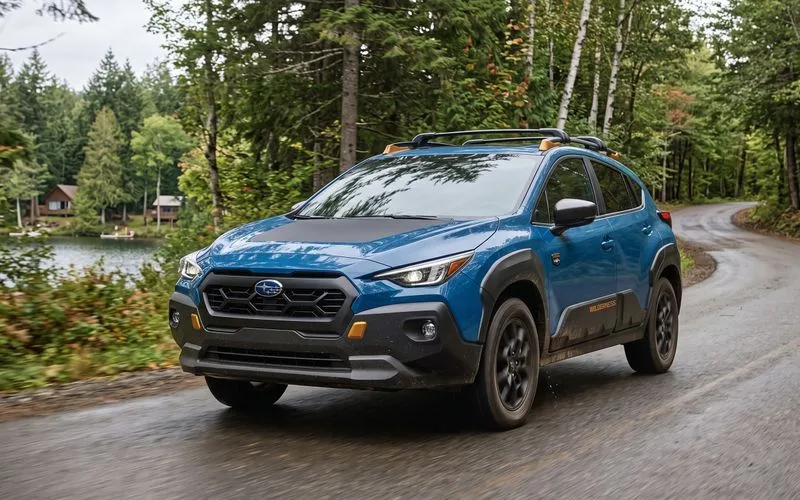 Subaru CrosstrekSubcompact SUVBetter at: Resale value
Delivers the same all-weather, outdoorsy mission with standard AWD but holds its value far better and carries a cleaner reliability record.
Compare 1.95C-
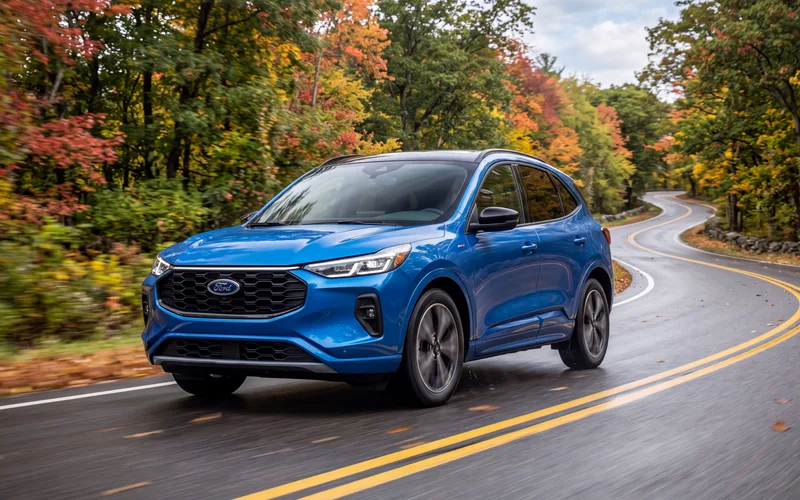 Ford EscapeCompact SUVBetter at: Efficiency
Same Ford platform and dealer, but the hybrid and PHEV options fix the Bronco Sport's weak 27 MPG and coarse three-cylinder for pavement-only buyers.
Compare 1.54D
1.54D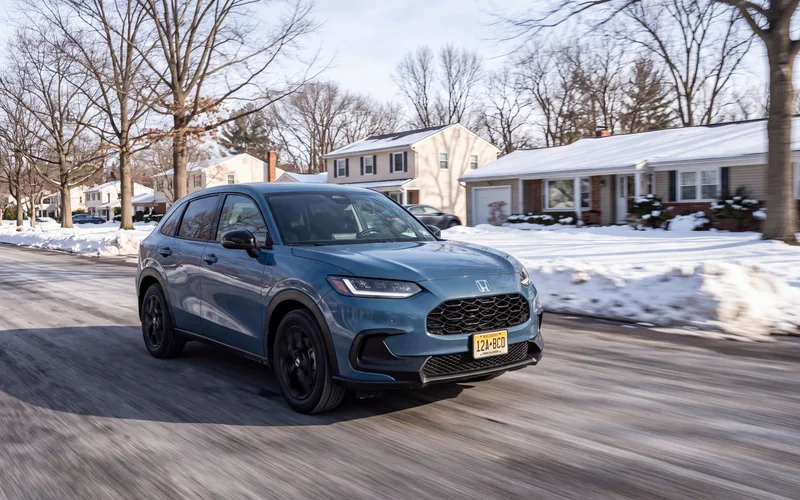 Honda HR-VSubcompact SUVBetter at: Refinement
Quieter, smoother, and far less recall-prone for the shopper who wants a practical small SUV and never intends to go off-road.
CompareHow it's evolved
6 scored model years · 2021–2026
Subject scores by year
Hover or tap a score to see what moved it versus the year before. A corner mark flags a big swing.
| Year | Performance | Efficiency | Safety | Space | Cost | Reliability | Tech | Use-case | Driving | Value |
|---|---|---|---|---|---|---|---|---|---|---|
| 2026 | 34 | 65 | 65 | 46 | 56 | 55 | 67 | 57 | 63 | 63 |
| 2025 | 35 | 65 | 65 | 46 | 56 | 52 | 65 | 57 | 62 | 63 |
| 2024 | 33 | 60 | 70 | 46 | 56 | 47 | 45 | 52 | 61 | 61 |
| 2023 | 33 | 61 | 76 | 46 | 59 | 46 | 45 | 55 | 57 | 60 |
| 2022 | 34 | 58 | 75 | 46 | 62 | 47 | 45 | 54 | 57 | 57 |
| 2021 | 34 | 63 | 76 | 46 | 63 | 42 | 45 | 55 | 63 | 73 |
Compare two years
Best fit & conditions
Higher scores mean a better fit for that use case. Learn more about use-case fit →
Subject profile
Trims & configurations
5 trimsScores above reflect the volume trim. Per-trim specs and scores are rolling out — the full lineup:
Academic Probation · NHTSA safety recalls
Aug 25, 2026Structure: bodyCertain vehicle joints may be improperly tightened. This can lead to detached parts, unsecured cargo, degraded crash protection, electrical system failure, or a loss of vehicle stability.
Defect
Ford Motor Company (Ford) is recalling certain 2026 Maverick, F-150, and Bronco Sport vehicles. Certain vehicle joints may be improperly tightened. This can lead to detached parts, unsecured cargo, degraded crash protection, electrical system failure, or a loss of vehicle stability.
Risk
Improperly tightened vehicle joints may lead to a loss of vehicle control, electrical failure, or detached parts, increasing the risk of a crash or fire.
Remedy
Dealers will inspect and tighten the vehicle joints or repair and replace the joint retention mechanisms as necessary, free of charge. Owner notifications letters are expected to be mailed September 21, 2026. Owners may contact Ford customer service at 1-866-436-7332. Ford's number for this recall is 26S60. Vehicle Identification Numbers (VINs) involved in this recall became searchable on NHTSA.gov on August 26, 2026.
NHTSA campaign 26V550000 ↗Manufacturer no. 26S6023 vehicles potentially affected (all models in the campaign)Filed by Ford Motor CompanyFiled as BRONCO SPORTAug 25, 2026Engine and engine cooling: engine: hard parts internal/mechanicalThe engine piston domes may have been manufactured incorrectly, which can result in piston dome failure and lead to a loss of drive power.
Defect
Ford Motor Company (Ford) is recalling certain 2026 Explorer, Bronco, Bronco Sport, Mustang, and Ranger vehicles. The engine piston domes may have been manufactured incorrectly, which can result in piston dome failure and lead to a loss of drive power.
Risk
An unexpected loss of drive power increases the risk of a crash.
Remedy
Dealers will inspect the engine pistons and replace the engine long block, if necessary, free of charge. Interim letters, notifying owners of the safety risk, were mailed September 3, 2026. Additional letters will be sent once the remedy is available, anticipated in December 2026. Owners may contact Ford customer service at 1-866-436-7332. Ford's number for this recall is 26S61. Vehicle Identification Numbers (VINs) involved in this recall became searchable on NHTSA.gov on August 28, 2026.
NHTSA campaign 26V548000 ↗Manufacturer no. 26S6110,001 vehicles potentially affected (all models in the campaign)Filed by Ford Motor CompanyFiled as BRONCO SPORTMay 27, 2026Suspension: front: control arm: lower ball jointThe front lower control arm ball joints may have been incorrectly installed or incorrectly repaired at the vehicle assembly plant, allowing the control arm to disconnect from the front wheel knuckle.
Defect
Ford Motor Company (Ford) is recalling certain 2021-2026 Bronco Sport and 2022-2026 Maverick vehicles. The front lower control arm ball joints may have been incorrectly installed or incorrectly repaired at the vehicle assembly plant, allowing the control arm to disconnect from the front wheel knuckle.
Risk
A detached control arm can cause a loss of vehicle control, increasing the risk of a crash.
Remedy
Owners are advised not to drive their vehicles until the remedy is completed. Dealers will inspect and repair the front lower control arm ball joints as necessary, free of charge.Owner notification letters were mailed September 2, 2026. Owners may contact Ford customer service at 1-866-436-7332. Ford's number for this recall is 26S36. Vehicle Identification Numbers (VINs) involved in this recall became searchable on NHTSA.gov on May 29, 2026.
NHTSA campaign 26V340000 ↗Manufacturer no. 26S364,653 vehicles potentially affected (all models in the campaign)Owners notified Sep 2, 2026Filed by Ford Motor CompanyFiled as BRONCO SPORTApr 14, 2026Electrical system · Equipment: electrical: engine block heaterThe engine block heater may overheat when the vehicle is parked with the block heater plugged in.
Defect
Ford Motor Company (Ford) is recalling certain 2025 Maverick and 2026 Bronco Sport vehicles equipped with a 1.5L or 2.0L MPC engine and an engine block heater. The engine block heater may overheat when the vehicle is parked with the block heater plugged in.
Risk
An overheated engine block heater can increase the risk of a fire.
Remedy
Owners are advised not to plug in their block heater until the vehicle is remedied. Dealers will replace the block heater, and inspect and replace the electrical cord if necessary, free of charge. Owners will also have an alternative option to replace the engine block heater element with a threaded plug, and remove the block heater electrical cord. Owner notification letters were mailed June 10, 2026. This recall expands previous NHTSA recall number 25V343. Owners may contact Ford customer service at 1-866-436-7332. Ford's number for this recall is 25S52. Vehicle Identification Numbers (VINs) involved in this recall became searchable on NHTSA.gov on April 14, 2026.
NHTSA campaign 26V239000 ↗Manufacturer no. 25S5255 vehicles potentially affected (all models in the campaign)Owners notified Jun 10, 2026Filed by Ford Motor CompanyFiled as BRONCO SPORTMar 31, 2026Air bags: sensor: occupant classification: front passengerThe Occupant Classification Sensor (OCS) unit may fail to correctly detect the presence of an adult or child in the front passenger seat. As such, these vehicles fail to comply with the requirements of Federal Motor Vehicle Safety Standard (FMVSS) number 208, "Occupant Crash Protection."
Defect
Ford Motor Company (Ford) is recalling certain 2025-2026 Bronco Sport and Maverick vehicles. The Occupant Classification Sensor (OCS) unit may fail to correctly detect the presence of an adult or child in the front passenger seat. As such, these vehicles fail to comply with the requirements of Federal Motor Vehicle Safety Standard (FMVSS) number 208, "Occupant Crash Protection."
Risk
Failure to correctly detect a passenger may result in the air bag not deploying as intended, increasing the risk of injury during a crash.
Remedy
Dealers will replace the passenger seat occupant classification sensor, free of charge. Owner notification letters were mailed June 25, 2026. Owners may contact Ford customer service at 1-866-436-7332. Ford's number for this recall is 26C19. Vehicle Identification Numbers (VINs) involved in this recall became searchable on NHTSA.gov on April 2, 2026.
NHTSA campaign 26V201000 ↗Manufacturer no. 26C193,170 vehicles potentially affected (all models in the campaign)Owners notified Jun 25, 2026Filed by Ford Motor CompanyFiled as BRONCO SPORTNov 14, 2025Electrical system: instrument cluster/panelThe Instrument Panel Cluster (IPC) may fail at startup.
Defect
Ford Motor Company (Ford) is recalling certain 2025-2026 Bronco and Bronco Sport vehicles. The Instrument Panel Cluster (IPC) may fail at startup.
Risk
An instrument panel display that does not show critical information, such as warning lights or vehicle speed, increases the risk of a crash.
Remedy
The instrument panel cluster software will be updated by a dealer or through an over-the-air (OTA) update, free of charge. Owner notification letters were mailed December 4, 2025. Owners may contact Ford customer service at 1-866-436-7332. Ford's number for this recall is 25SC3.
NHTSA campaign 25V788000 ↗Manufacturer no. 25SC3229,609 vehicles potentially affected (all models in the campaign)Owners notified Dec 4, 2025Filed by Ford Motor CompanyFiled as BRONCO SPORT
26 recalls on other model years of the Bronco Sport (2021–2025)
Mar 3, 2026Engine and engine cooling: exhaust system: emission control: gas recirculation valve (egr valve)The exhaust gas recirculation (EGR) valve may fail, resulting in an unexpected loss of drive power.
Defect
Ford Motor Company (Ford) is recalling certain 2025 Ranger, Lincoln Nautilus, Mustang, Maverick, Explorer, Escape, Lincoln Corsair, Bronco Sport, and Bronco vehicles. The exhaust gas recirculation (EGR) valve may fail, resulting in an unexpected loss of drive power.
Risk
An unexpected loss of drive power increases the risk of a crash.
Remedy
Dealers will replace the EGR valves, free of charge. Owner notification letters were mailed July 31, 2026. Owners may contact Ford customer service at 1-866-436-7332. Ford's number for this recall is 26S10. Vehicle Identification Numbers (VINs) involved in this recall became searchable on NHTSA.gov on March 4, 2026.
NHTSA campaign 26V122000 ↗Manufacturer no. 26S1047,804 vehicles potentially affected (all models in the campaign)Owners notified Jul 31, 2026Filed by Ford Motor CompanyFiled as BRONCO SPORTOct 10, 2025Equipment: electrical: engine block heaterThe engine block heater may crack and develop a coolant leak, causing it to short circuit when the block heater is plugged in.
Defect
Ford Motor Company (Ford) is recalling certain 2016-2019 Lincoln MKC, 2016-2023 Explorer, 2019-2020 Fusion, 2019-2024 Ranger, 2020-2022 Lincoln Corsair, Escape, 2021-2024 Bronco, Bronco Sport, and 2022-2024 Maverick vehicles. The engine block heater may crack and develop a coolant leak, causing it to short circuit when the block heater is plugged in.
Risk
An electrical short circuit can increase the risk of a fire.
Remedy
Owners are advised not to plug in their block heater until the vehicle is remedied. Dealers will replace the block heater, free of charge. Owners will also have a alternative option to replace engine block heater element with a threaded blanking plug, and remove the block heater electrical cord. Interim letters, notifying owners of the safety risk, were mailed December 3, 2025. Additional letters will be sent once the final remedy is available, anticipated September 2026. Owners may contact Ford customer service at 1-866-436-7332. Ford's number for this recall is 25SA4. Vehicle Identification Numbers (VINs) involved in this recall became searchable on NHTSA.gov on October 15, 2025.
NHTSA campaign 25V685000 ↗Manufacturer no. 25SA459,006 vehicles potentially affected (all models in the campaign)Filed by Ford Motor CompanyFiled as BRONCO SPORTJul 11, 2025Fuel system, gasoline: fuel injection systemA fuel injector may crack and leak fuel inside the engine compartment.
Defect
Ford Motor Company (Ford) is recalling certain 2021-2024 Bronco Sport and 2020-2022 Escape vehicles equipped with 1.5L engines. A fuel injector may crack and leak fuel inside the engine compartment.
Risk
A fuel leak in the presence of an ignition source, such as hot engine or exhaust components, can increase the risk of a fire.
Remedy
Dealers will update the engine control software. In addition, dealers will replace the high-pressure fuel rail assembly and fuel injectors, free of charge. As an interim repair, dealers will update the engine control software, free of charge. Interim owner notification letters notifying owners of the safety risk were mailed August 29, 2025. Second letters will be sent once the final remedy is available, anticipated in July 2026. Owners may contact Ford customer service at 1-866-436-7332. Ford's number for this recall is 25S76. This recall expands and replaces previous recall numbers 22V-859, 24V187, and 25V165. Vehicles previously remedied under 22V-859, 24V187, and 25V165 will need to have the new final remedy performed once it is available.
NHTSA campaign 25V467000 ↗Manufacturer no. 25S76694,271 vehicles potentially affected (all models in the campaign)Filed by Ford Motor CompanyFiled as BRONCO SPORTJun 27, 2025Back over prevention: softwareA software error may cause the rearview camera to display a blank image, or the image may remain on the display after the backing event has ended.
Defect
Ford Motor Company (Ford) is recalling certain 2018-2022 Transit Connect, 2019-2020 MKZ, MKX, Edge, Continental, F-150, Nautilus, Fusion, 2019-2023 Ranger, Mustang, 2020-2021 EcoSport, Expedition, Navigator, 2020-2022 Escape, F-250 SD, Corsair, 2020-2023 Aviator, Transit, 2020-2024 Explorer, 2021-2024 Bronco Sport, and 2022-2024 Maverick vehicles. A software error may cause the rearview camera to display a blank image, or the image may remain on the display after the backing event has ended.
Risk
A rearview camera that displays a blank image can reduce the driver's view behind the vehicle. A rearview image that continues to be displayed after the vehicle is shifted out of reverse may distract the driver. Both of these situations can increase the risk of a crash.
Remedy
Dealers will update the rearview camera software, free of charge. Owner notification letters were mailed September 4, 2025. Owners may contact Ford customer service at 1-866-436-7332. Ford's number for this recall is 25S72.
NHTSA campaign 25V442000 ↗Manufacturer no. 25S72200,237 vehicles potentially affected (all models in the campaign)Owners notified Sep 4, 2025Filed by Ford Motor CompanyFiled as BRONCO SPORTJun 3, 2025EngineThe cylinder head may have been improperly manufactured, which can cause the ball plugs to fail, resulting in an oil leak.
Defect
Ford Motor Company (Ford) is recalling certain 2023-2025 Escape, and 2025 Bronco Sport vehicles. The cylinder head may have been improperly manufactured, which can cause the ball plugs to fail, resulting in an oil leak.
Risk
An oil leak can result in loss of drive power, increasing the risk of a crash. In addition, an oil leak in the presence of an ignition source such as hot engine or exhaust components, can increase the risk of a fire.
Remedy
Dealers will replace the cylinder head assembly as necessary, free of charge. Owner notification letters were mailed August 8, 2025. Owners may contact Ford customer service at 1-866-436-7332. Ford's number for this recall is 25S61.
NHTSA campaign 25V372000 ↗Manufacturer no. 25S61404 vehicles potentially affected (all models in the campaign)Owners notified Aug 8, 2025Filed by Ford Motor CompanyFiled as BRONCO SPORTMay 23, 2025Electrical system · Equipment: electrical: engine block heaterThe engine block heater may overheat when the vehicle is parked with the block heater plugged in.
Defect
Ford Motor Company (Ford) is recalling certain 2024-2025 Lincoln Nautilus, 2023-2025 Escape, 2023 Lincoln Corsair, 2025 Lincoln Corsair, Maverick, and Bronco Sport vehicles equipped with a 1.5L or 2.0L MPC engine and an engine block heater. The engine block heater may overheat when the vehicle is parked with the block heater plugged in.
Risk
An overheated engine block heater can increase the risk of a fire.
Remedy
Dealers will replace the block heater element and inspect the electrical cord, replacing it if necessary, free of charge. Owners will also have a alternative option to replace engine block heater element with a threaded blanking plug coupled, and remove the block heater electrical cord. Owner notification letters were mailed June 9, 2026. Owners may contact Ford customer service at 1-866-436-7332. Ford's number for this recall is 25S52.
NHTSA campaign 25V343000 ↗Manufacturer no. 25S526,781 vehicles potentially affected (all models in the campaign)Owners notified Jun 9, 2026Filed by Ford Motor CompanyFiled as BRONCO SPORTMar 14, 2025Fuel system, gasoline: fuel injection systemA fuel injector may crack and leak fuel inside the engine compartment.
Defect
Ford Motor Company (Ford) is recalling certain 2020-2022 Escape and 2021-2023 Bronco Sport vehicles previously repaired incorrectly under recall numbers 22V-859 or 24V-187. A fuel injector may crack and leak fuel inside the engine compartment.
Risk
A fuel leak in the presence of an ignition source such as hot engine or exhaust components, can increase the risk of a fire.
Remedy
Dealers will update the powertrain control module (PCM) software, free of charge. Owner notification letters were mailed April 22, 2025. Owners may contact Ford customer service at 1-866-436-7332. Ford's number for this recall is 25S21.
NHTSA campaign 25V165000 ↗Manufacturer no. 25S2133,576 vehicles potentially affected (all models in the campaign)Owners notified Apr 22, 2025Filed by Ford Motor CompanyFiled as BRONCO SPORTMar 14, 2025Electrical system: body control module/bcm · Power train: automatic transmission: control module (tcm/pcm/tecm)The body and power train control modules may fail to detect a change in the 12-volt battery state of charge.
Defect
Ford Motor Company (Ford) is recalling certain 2021-2024 Bronco Sport and 2022-2023 Maverick vehicles previously repaired incorrectly under recall number 24V-267. The body and power train control modules may fail to detect a change in the 12-volt battery state of charge.
Risk
An undetected low battery charge can result in a loss of electrical accessories such as hazard lights, or cause a loss of drive power, increasing the risk of a crash.
Remedy
Dealers will recalibrate the body control module and power train control module, free of charge. Owner notification letters were mailed April 23, 2025. Owners may contact Ford customer service at 1-866-436-7332. Ford's number for this recall is 25S26.
NHTSA campaign 25V158000 ↗Manufacturer no. 25S2648,041 vehicles potentially affected (all models in the campaign)Owners notified Apr 23, 2025Filed by Ford Motor CompanyFiled as BRONCO SPORTJan 31, 2025Electrical system: instrument cluster/panelThe Instrument Panel Cluster (IPC) may not illuminate at startup or while driving. As such, these vehicles fail to comply with the requirements of Federal Motor Vehicle Safety Standard numbers 101, "Control and Displays" and 102, "Transmission shift lever sequence, starter interlock, and transmission braking effect" as well as FMVSS numbers 126, 108, 135, 138, 208, and 305.
Defect
Ford Motor Company (Ford) is recalling certain 2025 Bronco Sport, Escape, and Lincoln Corsair vehicles. The Instrument Panel Cluster (IPC) may not illuminate at startup or while driving. As such, these vehicles fail to comply with the requirements of Federal Motor Vehicle Safety Standard numbers 101, "Control and Displays" and 102, "Transmission shift lever sequence, starter interlock, and transmission braking effect" as well as FMVSS numbers 126, 108, 135, 138, 208, and 305.
Risk
An instrument panel display that fails to show critical safety information, such as the speedometer or warning lights, increases the risk of a crash.
Remedy
Dealers will replace the instrument panel cluster, free of charge. Owner notification letters were mailed February 17, 2025. Owners may contact Ford customer service at 1-866-436-7332. Ford's number for this recall is 25C02.
NHTSA campaign 25V049000 ↗Manufacturer no. 25C02298 vehicles potentially affected (all models in the campaign)Owners notified Feb 17, 2025Filed by Ford Motor CompanyFiled as BRONCO SPORTJan 17, 2025Electrical system: 12v/24v/48v batteryThe 12-volt battery may experience degradation and suddenly fail.
Defect
Ford Motor Company (Ford) is recalling certain 2021-2023 Bronco Sport and 2022-2023 Maverick vehicles. The 12-volt battery may experience degradation and suddenly fail.
Risk
Battery failure can result in a loss of electrical accessories, including the hazard lights, or cause a loss of drive power, increasing the risk of a crash.
Remedy
Dealers will inspect and if necessary, replace the 12-volt battery, free of charge. Owner notification letters were mailed May 2, 2025. Owners may contact Ford customer service at 1-866-436-7332. Ford's number for this recall is 25S02. Vehicles in this recall were previously repaired under 24V-267 and will need to have the new remedy completed.
NHTSA campaign 25V019000 ↗Manufacturer no. 25S02272,817 vehicles potentially affected (all models in the campaign)Owners notified May 2, 2025Filed by Ford Motor CompanyFiled as BRONCO SPORTSep 13, 2024Electrical system: body control module/bcm · Power train: automatic transmission: control module (tcm/pcm/tecm)The body and power train control modules may fail to detect a change in the 12-volt battery state of charge.
Defect
Ford Motor Company (Ford) is recalling certain 2024 Bronco Sport vehicles. The body and power train control modules may fail to detect a change in the 12-volt battery state of charge.
Risk
An undetected low battery charge can result in a loss of electrical accessories such as hazard lights, or cause a loss of drive power, increasing the risk of a crash.
Remedy
Dealers will update the body control module and powertrain control module software, free of charge. Owner notification letters were mailed October 23, 2024. Owners may contact Ford customer service at 1-866-436-7332. Ford's number for this recall is 24S60. Vehicles in this recall that were previously recalled for the same issue under 24V-267 will need to have the new remedy performed.
NHTSA campaign 24V683000 ↗Manufacturer no. 24S6076 vehicles potentially affected (all models in the campaign)Owners notified Oct 23, 2024Filed by Ford Motor CompanyFiled as BRONCO SPORTAug 9, 2024Visibility: windshield wiper/washer: motorThe front windshield wiper motor may become inoperative, causing the wipers to fail.
Defect
Ford Motor Company (Ford) is recalling certain 2023-2024 Maverick, Ford Bronco Sport, and Mustang Mach-E vehicles. The front windshield wiper motor may become inoperative, causing the wipers to fail.
Risk
Inoperative windshield wipers can reduce visibility in certain conditions, increasing the risk of a crash.
Remedy
Dealers will inspect and replace the windshield wiper motor as necessary, free of charge. Owner notification letters were mailed on December 6, 2024. Owners may contact Ford customer service at 1-866-436-7332. Ford's number for this recall is 24S51.
NHTSA campaign 24V594000 ↗Manufacturer no. 24S5186,852 vehicles potentially affected (all models in the campaign)Owners notified Dec 6, 2024Filed by Ford Motor CompanyFiled as BRONCO SPORTApr 12, 2024Electrical system: body control module/bcm · Power train: automatic transmission: control module (tcm/pcm/tecm)The body and power train control modules may fail to detect a change in the 12-volt battery state of charge.
Defect
Ford Motor Company (Ford) is recalling certain 2021-2024 Bronco Sport and 2022-2023 Maverick vehicles. The body and power train control modules may fail to detect a change in the 12-volt battery state of charge.
Risk
An undetected low battery charge can result in a loss of electrical accessories such as hazard lights, or cause a loss of drive power, increasing the risk of a crash.
Remedy
Dealers will recalibrate the body control module and power train control module, free of charge. Owner notification letters were mailed on June 4, 2024. Owners may contact Ford customer service at 1-866-436-7332. Ford's number for this recall is 24S24.
NHTSA campaign 24V267000 ↗Manufacturer no. 24S24456,565 vehicles potentially affected (all models in the campaign)Owners notified Jun 4, 2024Filed by Ford Motor CompanyFiled as BRONCO SPORTMar 22, 2024TiresThe tires may have been manufactured incorrectly, which may result in a loss of vehicle handling and control.
Defect
Ford Motor Company (Ford) is recalling certain 2023 Maverick and Bronco Sport vehicles. The tires may have been manufactured incorrectly, which may result in a loss of vehicle handling and control.
Risk
A loss of vehicle handling and control increases the risk of a crash.
Remedy
Dealers will inspect and replace the tires, as necessary, free of charge. Owner notification letters were mailed April 5, 2024. Owners may contact Ford customer service at 1-866-436-7332. Ford's number for this recall is 24S20.
NHTSA campaign 24V223000 ↗Manufacturer no. 24S20115 vehicles potentially affected (all models in the campaign)Owners notified Apr 5, 2024Filed by Ford Motor CompanyFiled as BRONCO SPORTMar 8, 2024Fuel system, gasoline: fuel injection systemA fuel injector may crack and leak fuel inside the engine compartment.
Defect
Ford Motor Company (Ford) is recalling certain 2022-2023 Bronco Sport and 2022 Escape vehicles equipped with 1.5L engines. A fuel injector may crack and leak fuel inside the engine compartment.
Risk
A fuel leak in the presence of an ignition source such as hot engine or exhaust components, can increase the risk of a fire.
Remedy
Dealers will update the engine control software to include fuel injector leak detection and install a drain tube, free of charge. Owner notification letters were mailed on April 24, 2024. Owners may contact Ford customer service at 1-866-436-7332. Ford's number for this recall is 24S16. This recall is an expansion of previous recall number 22V-859.
NHTSA campaign 24V187000 ↗Manufacturer no. 24S1642,652 vehicles potentially affected (all models in the campaign)Owners notified Apr 24, 2024Filed by Ford Motor CompanyFiled as BRONCO SPORTJan 23, 2023Service brakes, hydraulic: antilock/traction control/electronic limited slip: control unit/moduleValves inside the Anti-lock Brake System (ABS) module may have been damaged during manufacturing, causing an internal ABS module leak.
Defect
Ford Motor Company (Ford) is recalling certain 2023 Bronco Sport vehicles. Valves inside the Anti-lock Brake System (ABS) module may have been damaged during manufacturing, causing an internal ABS module leak.
Risk
A leak inside the ABS module can cause an unexpected increase in brake pedal travel or unexpected movement during an Auto Hold event, increasing the risk of a crash.
Remedy
Dealers will replace the ABS Module, free of charge. Owner notification letters were mailed on May 2, 2023. Owners may contact Ford customer service at 1-866-436-7332. Ford's number for this recall is 23S01.
NHTSA campaign 23V021000 ↗Manufacturer no. 23S01801 vehicles potentially affected (all models in the campaign)Owners notified May 2, 2023Filed by Ford Motor CompanyFiled as BRONCO SPORTNov 18, 2022Fuel system, gasoline: fuel injection systemA fuel injector may crack and leak fuel inside the engine compartment.
Defect
Ford Motor Company (Ford) is recalling certain 2020-2023 Escape and 2021-2023 Bronco Sport vehicles equipped with 1.5L engines. A fuel injector may crack and leak fuel inside the engine compartment.
Risk
A fuel leak in the presence of an ignition source such as hot engine or exhaust components, can increase the risk of a fire.
Remedy
Dealers will update the engine control software to include fuel injector leak detection and install a drain tube, free of charge. Interim owner notification letters informing owners of the safety risk were mailed January 9, 2023. Remedy parts are expected to be available in 1st Quarter of 2023. Owner notification letters were mailed February 28, 2023. Owners may contact Ford customer service at 1-866-436-7332. Ford's number for this recall is 22S73. This recall includes all vehicles previously recalled under 22V-191. Vehicles previously remedied under 22V-191 will need to have the new remedy performed.
NHTSA campaign 22V859000 ↗Manufacturer no. 22S73521,746 vehicles potentially affected (all models in the campaign)Owners notified Feb 28, 2023Filed by Ford Motor CompanyFiled as BRONCO SPORTOct 20, 2022Fuel system, gasoline: delivery: fuel pump: control/drive moduleThe fuel pump control module (FPCM) bracket may not be secured to the fuel tank assembly, which can lead to FPCM failure and cause an engine stall.
Defect
Ford Motor Company (Ford) is recalling certain 2022 Bronco Sport vehicles. The fuel pump control module (FPCM) bracket may not be secured to the fuel tank assembly, which can lead to FPCM failure and cause an engine stall.
Risk
An engine stall can increase the risk of a crash.
Remedy
Dealers will replace the fuel tank, free of charge. Owner notification letters were mailed December 1, 2022. Owners may contact Ford customer service at 1-866-436-7332. Ford's number for this recall is 22S66.
NHTSA campaign 22V787000 ↗Manufacturer no. 22S6626 vehicles potentially affected (all models in the campaign)Owners notified Dec 1, 2022Filed by Ford Motor CompanyFiled as BRONCO SPORTSep 14, 2022Exterior lighting: lighting control moduleThe parking lights may flicker when the headlights are activated. As such, these vehicles fail to comply with the requirements of Federal Motor Vehicle Safety Standard number 108, "Lamps, Reflective Devices, and Associated Equipment."
Defect
Ford Motor Company (Ford) is recalling certain 2022-2023 Bronco Sport and 2022 F-150 vehicles. The parking lights may flicker when the headlights are activated. As such, these vehicles fail to comply with the requirements of Federal Motor Vehicle Safety Standard number 108, "Lamps, Reflective Devices, and Associated Equipment."
Risk
Flickering parking lights can reduce visibility, increasing the risk of a crash.
Remedy
Dealers will replace the LED Driver module, free of charge. Owner notification letters were mailed March 29, 2023. Owners may contact Ford customer service at 1-866-436-7332. Ford's number for this recall is 22C22.
NHTSA campaign 22V686000 ↗Manufacturer no. 22C2286,050 vehicles potentially affected (all models in the campaign)Owners notified Mar 29, 2023Filed by Ford Motor CompanyFiled as BRONCO SPORTMar 25, 2022Engine and engine cooling: engine: oil/lubricationThe engine oil separator housing may crack and develop an oil leak.
Defect
Ford Motor Company (Ford) is recalling certain 2020-2022 Escape and 2021-2022 Bronco Sport vehicles equipped with 1.5L engines. The engine oil separator housing may crack and develop an oil leak.
Risk
An oil leak in the presence of an ignition source such as hot engine or exhaust components, can increase the risk of a fire.
Remedy
Dealers will inspect the oil separator for damage or oil leaks, and replace the oil separator and seals, as necessary, free of charge. Owner notification letters were mailed April 18, 2022. Owners may contact Ford customer service at 1-866-436-7332. Ford's number for this recall is 22S21.
NHTSA campaign 22V191000 ↗Manufacturer no. 22S21345,451 vehicles potentially affected (all models in the campaign)Owners notified Apr 18, 2022Filed by Ford Motor CompanyFiled as BRONCO SPORTNov 23, 2021Service brakes, hydraulic: foundation components: disc: caliperThe rear brake linings may have been manufactured incorrectly, which can affect braking performance. As such, these vehicles fail to comply with the requirements of Federal Motor Vehicle Safety Standard number 135, "Light Vehicle Brake Systems."
Defect
Ford Motor Company (Ford) is recalling certain 2021-2022 Bronco Sport and Escape vehicles. The rear brake linings may have been manufactured incorrectly, which can affect braking performance. As such, these vehicles fail to comply with the requirements of Federal Motor Vehicle Safety Standard number 135, "Light Vehicle Brake Systems."
Risk
During certain situations, the driver may have to apply more brake pedal force, and the distance required to stop the vehicle may be extended, increasing the risk of a crash.
Remedy
Dealers will replace the front brake pads, free of charge. Owner notification letters were mailed August 17, 2022. Owners may contact Ford customer service at 1-866-436-7332. Ford's number for this recall is 21C31.
NHTSA campaign 21V922000 ↗Manufacturer no. 21C31114,666 vehicles potentially affected (all models in the campaign)Owners notified Aug 17, 2022Filed by Ford Motor CompanyFiled as BRONCO SPORTOct 15, 2021Visibility: sun/moon roof assemblyThe moonroof glass may not have been bonded correctly to the moonroof frame, which could result in the glass panel detaching from the vehicle.
Defect
Ford Motor Company (Ford) is recalling certain 2021 Bronco Sport vehicles. The moonroof glass may not have been bonded correctly to the moonroof frame, which could result in the glass panel detaching from the vehicle.
Risk
A detached glass panel can become a road hazard, and increase the risk of a crash or injury.
Remedy
Dealers will inspect the moonroof glass date code and replace the glass, if necessary, free of charge. Owner notification letters were mailed November 18, 2021. Owners may contact Ford customer service at 1-866-436-7332. Ford's number for this recall is 21S46.
NHTSA campaign 21V809000 ↗Manufacturer no. 21S461,036 vehicles potentially affected (all models in the campaign)Owners notified Nov 18, 2021Filed by Ford Motor CompanyFiled as BRONCO SPORTAug 10, 2021Fuel system, gasoline: delivery: fuel pump: control/drive moduleThe fuel delivery module may leak inside the fuel tank, causing low fuel pressure which could result in an engine stall.
Defect
Ford Motor Company (Ford) is recalling certain 2021 Escape, Lincoln Corsair, and 2021-2022 Bronco Sport vehicles. The fuel delivery module may leak inside the fuel tank, causing low fuel pressure which could result in an engine stall.
Risk
An engine stall increases the risk of a crash.
Remedy
Dealers will replace the fuel delivery module, free of charge. Interim notification letters (remedy not available) were mailed on September 30, 2021. Owner notification letters were mailed on December 14, 2021. Owners may contact Ford customer service at 1-866-436-7332. Ford's number for this recall is 21S38.
NHTSA campaign 21V625000 ↗Manufacturer no. 21S3813,773 vehicles potentially affected (all models in the campaign)Owners notified Dec 14, 2021Filed by Ford Motor CompanyFiled as BRONCO SPORTFeb 16, 2021Suspension: rearThe rear suspension subframe assembly may have loose or missing bolts.
Defect
Ford Motor Company (Ford) is recalling certain 2021 Bronco Sport vehicles. The rear suspension subframe assembly may have loose or missing bolts.
Risk
Loose or missing bolts may affect the vehicle's handling and control, increasing the risk of a crash. It could also reduce the vehicle's performance in a rear impact crash, increasing the risk of injury.
Remedy
Ford will notify owners, and dealers will inspect the rear suspension bolts, and secure or replace the bolts, as necessary, free of charge. The recall began March 10, 2021. Owners may contact Ford customer service at 1-866-436-7332. Ford's number for this recall is 21S04.
NHTSA campaign 21V075000 ↗Manufacturer no. 21S041,638 vehicles potentially affected (all models in the campaign)Owners notified Mar 10, 2021Filed by Ford Motor CompanyFiled as BRONCO SPORTFeb 16, 2021Suspension: front: control armThese vehicles may have been produced with incorrect front lower control arms.
Defect
Ford Motor Company (Ford) is recalling certain 2021 Bronco Sport vehicles. These vehicles may have been produced with incorrect front lower control arms.
Risk
An incorrect lower control arm may affect vehicle handling and control, increasing the risk of a rollover crash.
Remedy
Ford will notify owners, and dealers will inspect and replace the front lower control arms, if necessary, free of charge. The recall began April 9, 2021. Owners may contact Ford customer service at 1-866-436-7332. Ford's number for this recall is 21S03.
NHTSA campaign 21V074000 ↗Manufacturer no. 21S03106 vehicles potentially affected (all models in the campaign)Owners notified Apr 9, 2021Filed by Ford Motor CompanyFiled as BRONCO SPORTJan 15, 2021Power train: driveline: driveshaftAn inadequate amount of lubricant in the rear drive unit may cause seizure of the rear drive axle.
Defect
Ford Motor Company (Ford) is recalling certain 2020-2021 Edge, 2020 Lincoln Nautilus and Ford Escape and 2021 Lincoln Corsair and Ford Bronco Sport vehicles. An inadequate amount of lubricant in the rear drive unit may cause seizure of the rear drive axle.
Risk
If the rear drive unit seizes, there may be a loss of drive and/or a loss of vehicle control, increasing the risk of a crash.
Remedy
Ford will notify owners, and dealers will check the rear drive unit lubricant level. Axles found to have lubricant at the minimum level will be filled to the full level. Axles found to be below the minimum lubricant fill level will be replaced, free of charge. This recall began March 12, 2021. Owners may contact Ford customer service at 1-866-436-7332. Ford's number for this recall is 21S02.
NHTSA campaign 21V011000 ↗Manufacturer no. 21S02147 vehicles potentially affected (all models in the campaign)Owners notified Mar 12, 2021Filed by Ford Motor CompanyFiled as BRONCO SPORT
Source: NHTSA Office of Defects Investigation recall database, model years 2021–2026. Recalls are listed by model year as the manufacturer filed them; whether a specific car is affected depends on its VIN — check a VIN at nhtsa.gov ↗. NHTSA model names matched to this page: BRONCO SPORT.
Detailed scoring by subject
1Performance & PowertrainThe Bronco Sport's lowest-graded category.0.25F
Volume trims (Big Bend, Heritage, Outer Banks) run the 181 hp 1.5L EcoBoost turbo-three; only Badlands steps up to the 250 hp 2.0L four.
Standard 1.5L EcoBoost produces 190 lb-ft at 3,000 rpm; the Badlands-only 2.0L jumps to 280 lb-ft.
Car and Driver instrumented an Outer Banks 1.5L at 8.2 s; the Badlands 2.0L is significantly quicker at 5.9 s.
The 1.5L turbo-three is adequate but reviewers note some coarseness and turbo lag under hard acceleration; the optional 2.0L four is notably smoother and stronger but confined to Badlands.
The 8-speed automatic (shared across both engines) shifts smoothly and decisively for the segment, without the droning or hunting typical of CVT-equipped rivals.
Ford rates the standard 1.5L Bronco Sport at 2,200 lbs max tow; the 2.0L Badlands raises that to 2,700 lbs when properly equipped.
4x4 is standard across every Bronco Sport trim (not optional or limited to top trims), with selectable G.O.A.T. Modes terrain management; Badlands adds a twin-clutch rear drive unit for torque vectoring.
Badlands trim brings standard HOSS 3.0 suspension, skid plates, and an optional Sasquatch package (8.8 in ground clearance, 31.2° approach angle) — genuine off-road credibility for the segment, well above pavement-only subcompact rivals, though short of the full-size Bronco.
Only two gasoline engine choices (1.5L and 2.0L EcoBoost, both paired to the same 8-speed auto) with no hybrid, PHEV, or EV variant — a narrower lineup than segment rivals now offering electrified options.
2Efficiency & RangeOne of the Bronco Sport's strongest categories.2.38C+
The volume 1.5L EcoBoost trims are EPA-rated 27 MPG combined; the off-road Sasquatch Package and the Badlands-only 2.0L both trade efficiency for capability.
City rating for the standard 1.5L EcoBoost powertrain used on Big Bend, Heritage, and Outer Banks trims.
Highway rating for the standard 1.5L EcoBoost powertrain used on Big Bend, Heritage, and Outer Banks trims.
Computed from Ford's published 16.1-gallon fuel tank capacity (standard AWD across the lineup) against the EPA combined rating for the volume 1.5L EcoBoost trim.
Estimated using the standard EPA annual-cost formula (15,000 mi/yr, current national average regular-fuel price) applied to the 27 MPG combined rating for the volume 1.5L EcoBoost trim; not independently verified against a live fueleconomy.gov listing this session.
All 2026 Bronco Sport trims, including both EcoBoost engines, run on regular 87-octane fuel with no premium recommendation or E85/diesel complexity.
3SafetyOne of the Bronco Sport's strongest categories.2.38C+
NHTSA's 5-star overall rating for the Bronco Sport (5 front, 5 side, 4 rollover) is carried over unchanged into the 2026 model year on this same generation.
The Bronco Sport missed IIHS Top Safety Pick for 2026 after IIHS updated its moderate-overlap and side tests: a Marginal moderate-overlap result (rear-passenger lap belt could slide from pelvis to abdomen) is a meaningful crashworthiness weakness even though small-overlap and headlights remain Good.
Ford Co-Pilot360 is standard on every 2026 Bronco Sport trim, bundling AEB, lane-keeping, BLIS blind-spot with cross-traffic alert, auto high-beams, and a rear camera; adaptive cruise control is offered only as an available upgrade, keeping the suite just short of top-tier.
IIHS rates the standard front pedestrian system Good but the vehicle-to-vehicle front crash prevention only Acceptable, a mid-pack result rather than a top-tier one.
BLIS with cross-traffic alert is standard on every trim, but it is an alert-only system with no active steering or braking intervention described.
Lane-Keeping System (warning/keep-assist) is standard, but true lane centering only arrives bundled with the optional adaptive cruise package, and reviewers don't single out the system for smoothness.
Adaptive Cruise Control with Stop-and-Go and Lane Centering is available and functionally capable, but it is an optional add-on rather than standard, and no reviews call out the highway-assist integration as best-in-class.
Ford's BlueCruise hands-free system is not offered on the Bronco Sport at all, unlike several other Ford/Lincoln models.
IIHS rates the Bronco Sport's headlights Good, its top tier, supporting a strong score for everyday nighttime visibility.
The boxy body and upright windshield give good forward sightlines and headroom, but thick C/D-pillars leave rear-quarter visibility only average per reviewers.
IIHS rates LATCH ease-of-use Acceptable — lower anchors sit too deep in the seat bight and upper anchors can be confused with other hardware — a workable but not effortless setup.
4Space & ComfortOne of the Bronco Sport's weakest categories.1.07D
Bronco Sport is a strict 5-seater across all 2026 trims (Free Wheeling, Big Bend, Heritage, Outer Banks, Badlands, Sasquatch) — no third-row option, standard 60/40-split folding rear bench.
Boxy, upright greenhouse gives the Bronco Sport class-leading front headroom on non-moonroof trims; the optional moonroof cuts it to 39.1 in.
Front legroom is mid-pack for the subcompact SUV segment.
The boxy body-on-crossover shape gives the Bronco Sport unusually generous rear headroom, unaffected by the optional moonroof, topping the segment's normalization band.
Rear legroom is average for the subcompact SUV class — adequate for adults on shorter trips but bested by longer-wheelbase rivals like the VW Taos.
Bronco Sport is a two-row subcompact SUV with no third-row option on any trim — buyers who need a third row must step up to the Explorer or Expedition. Scored per the segment's 'no third row / token seating' band.
Behind-second-row cargo volume trails the subcompact SUV segment despite the boxy shape, and drops further on 2.0L/Sasquatch trims due to the full-size spare and different suspension hardware.
Max cargo with seats folded is below the SUV normalization band's midpoint, reflecting the model's subcompact footprint.
Standout for the segment: oversized center console bin, available MOLLE panels on door trim (Badlands/Sasquatch), rubberized flooring and seatbacks for easy cleanup, and an available cargo-area 400W power outlet.
Seats are supportive and upright with grippy bolstering on Badlands/Sasquatch contour buckets, but cushioning is on the firmer side and reviewers note limited long-haul plushness versus car-based rivals.
Truck-like suspension tuning and available all-terrain tires (Badlands/Sasquatch) trade some on-road compliance for off-road capability; ride is busier over broken pavement than car-based subcompact SUV rivals.
Reviewers consistently flag above-average wind and road noise at highway speed, worsened by boxy aerodynamics and all-terrain tire options — a known segment weakness for this model.
Heated front seats and heated steering wheel are available from Outer Banks trim up, and dual-zone climate is optional, but base trims are comfort-feature-sparse and no ventilated seats or rear climate are offered on any trim.
5Cost of OwnershipMid-pack among this car's ten categories.1.76C-
2026 Big Bend base trim starts at $31,845 including the $1,995 destination charge, a genuinely low entry price for the segment.
Outer Banks is the volume mid-trim balancing comfort/tech upgrades over Big Bend; range across trims runs $31,845 (Big Bend) to $40,265 (Badlands).
CarEdge pegs maintenance alone at $591/yr (~$2,955 over 5 years); RepairPal shows low repair frequency (0.3 shop visits/yr, 15% chance severe), so blended 5-year maintenance+repair lands well below the segment norm.
Estimates diverge sharply — CarEdge projects steep depreciation (43% retained, ~$15,920 residual) while iSeeCars is more favorable (58.4% retained); blended figure still sits toward the weak end of the SUV band.
Ford's standard 3-year/36,000-mile bumper-to-bumper warranty sits at the low end of the mainstream segment, well behind Hyundai/Kia's 5-year coverage.
5-year/60,000-mile powertrain coverage is standard Ford issue and the shortest in-segment relative to rivals with 7–10 year powertrain warranties.
No factory-included scheduled maintenance plan, but FordPass Rewards (42,000 points at purchase, enough to cover roughly the first three services) plus 5-year/60,000-mile complimentary roadside assistance provide a modest offset.
$36,945 volume-trim price minus its estimated resale value after 5 years (47% retained, or about $17,364) leaves about $19,581 in depreciation. Add the projected $4,200 in 5-year maintenance and repairs, and owning this vehicle for 5 years costs about $23,781 in total.
6Reliability & QualityOne of the Bronco Sport's weakest categories.1.69D
The Bronco Sport has climbed steadily in predicted-reliability rankings since its 2021 launch and is now recognized as a segment standout, though it is still a turbocharged small SUV with real recall exposure on this exact powertrain.
Ford shows a split personality: it now leads all mainstream brands on new-vehicle initial quality, but its 3-year-ownership dependability standing remains bottom-third among mainstream brands, which is the more relevant lens for this item's guidance.
This generation carries an unusually heavy and severe recall load for a subcompact SUV, including a fire-risk fuel-injector campaign and multiple loss-of-motive-power/battery recalls affecting hundreds of thousands of units, with at least one repeat recall for an incorrectly performed repair.
The 1.5L EcoBoost "Dragon" three-cylinder lacks the head-gasket weakness of earlier EcoBoost designs, but owner forums and dealer service reports describe fuel-injector, cooling-system, and carbon-buildup issues, and this exact engine/injector combination is the subject of a large fire-risk recall.
Materials are durable and purpose-built (rubberized surfaces, zippered seatback pockets) rather than premium; upper trims add synthetic leather and soft-touch plastics, but reviewers still note utilitarian-feeling surfaces as trim levels and pricing climb.
No pattern of rattles or misalignment reported in current reviews, and Ford's fleet-wide initial-quality gains in 2026 support solid assembly consistency, though cabin noise suppression still trails class leaders.
Ford operates one of the largest dealer and service networks in the US, giving Bronco Sport owners broad nationwide access to service and parts.
As a high-volume nameplate sharing its platform and many components with the Escape, the Bronco Sport benefits from wide parts availability and a mature aftermarket, with routine maintenance costs in line with mainstream compact SUVs.
7Technology & InfotainmentThe Bronco Sport's best-graded category.2.53C+
For 2026 Ford expanded the 13.2-inch SYNC 4 touchscreen to every Bronco Sport trim, replacing the old 8-inch unit that was previously standard only on base Big Bend.
The new SYNC 4 interface adds smartphone-style pinch-to-zoom/swipe gestures, higher resolution, and better brightness versus the outgoing SYNC 3 setup, while Bronco Sport retains physical climate knobs for daily usability.
Wireless Apple CarPlay and Android Auto are standard across every 2026 Bronco Sport trim, with no wired-only or upper-trim gating.
A voice assistant and Connected Navigation ship via the Ford Connectivity Package, which is included as a standard one-year trial for 2026 rather than a paid add-on; functional but many owners will still default to CarPlay/Android Auto navigation.
Base 6-speaker audio is adequate; an optional 10-speaker Bang & Olufsen system with subwoofer is available on Outer Banks (Tech Package+) and standalone on Badlands and is well-regarded for the segment.
Every 2026 trim gets a fully digital, configurable cluster: 8 inches standard on Big Bend, Heritage, and Outer Banks, stepping up to a 12.3-inch unit on Badlands.
The 2026 SYNC 4 upgrade brings wireless/Wi-Fi and FordPass-managed software updates, an improvement over the prior SYNC 3 system, but Bronco Sport does not receive whole-vehicle OTA updates on the scale of Ford's SYNC 4A-equipped models.
The Ford app supports remote start, fuel level checks, and service scheduling, but remote start via app is gated to Big Bend/Heritage requiring the Connectivity Package, while Outer Banks/Badlands get simpler key-fob remote start instead of full app functions.
The 2026 model year drops the available wireless charging pad, a step back versus prior years, leaving USB ports (mix of USB-A/USB-C, exact split unconfirmed) as the main device-power provision.
Factory SecuriCode keypad returns for 2026 as a paid option, and proximity/remote-start capability is standard on Outer Banks/Badlands, but base trims still rely on the app-gated remote start rather than a fuller keyless suite.
A rear-view camera is standard across the lineup per Ford Co-Pilot360, with a 360-degree camera and additional parking aids added via Co-Pilot360 Assist 2.0 available on upper trims like Outer Banks.
A head-up display is not offered on any 2026 Bronco Sport trim, per the order guide.
8Use-Case FitMid-pack among this car's ten categories.1.84C-
Boxy body and low beltline give good visibility for spotting car seats, and 36.9 in of rear legroom is decent for the class, but rear door apertures are tighter than taller-cabin rivals and the standard cloth-trim base seats are simple bench-fold rather than the more flexible setups some competitors offer.
Ford Co-Pilot360 (automatic emergency braking with pedestrian detection, lane-keeping, blind-spot monitoring, auto high-beams) is standard on every 2026 trim including the base Big Bend, a genuine family-safety plus, but the redesigned-test IIHS moderate-overlap front rating of Marginal keeps this from being a top pick despite a 5-star NHTSA overall score.
32.5 cu ft of cargo behind the second row with seats occupied is strong for a subcompact SUV and helps on family trips, but the firm, occasionally choppy ride (more pronounced on Badlands/Sasquatch off-road tires) and modest rear-seat amenities keep it from excelling at multi-hour comfort versus car-based crossover rivals.
The 1.5L EcoBoost three-cylinder is adequate but not effortless around town, and the tall, boxy stance with standard AWD trades some low-speed refinement and NVH smoothness for its off-road capability, making it a fine but not class-leading daily commuter.
EPA combined economy of 27 mpg on the base 1.5L EcoBoost (25/30 city/highway), dropping to 23-24 mpg combined on the 2.0L Badlands or Sasquatch-equipped trims, trails most subcompact SUV rivals (many in the high-20s/low-30s combined) and there is no hybrid option, making per-mile running costs above class average despite regular-fuel compatibility.
A tight 18.2 ft turning radius and compact 173 in overall length make it easy to place in city driving and tight lots, though the 82.2 in width with mirrors extended is on the wider side for the segment.
Maximum tow rating tops out at 2,700 lbs on Badlands with the standard Class II Trailer Tow Package, and other trims need an add-on package just to tow anything over 1,500 lbs — usable for light trailers and small toys but not a meaningful work hauler.
Bronco Sport has carried a below-average reliability reputation across its generation with recall activity on the turbocharged EcoBoost engines, and it is not fleet-proven the way body-on-frame work vehicles are, so hard-use durability is unproven relative to segment norms.
The signature rubberized, drain-plug-equipped cargo floor and integrated MOLLE-style tie-down/cargo-management system plus a rated roof rack give it a genuinely rich work/gear accessory ecosystem for a subcompact SUV, even without body-on-frame ruggedness.
Standard Co-Pilot360 driver-assist tech reduces highway fatigue, but firmer suspension tuning (especially on off-road-biased trims), more road/wind noise than car-based crossovers, and below-average highway fuel economy mean more frequent fuel stops on long trips.
Standard AWD with up to seven G.O.A.T. terrain modes, 8.8 in of ground clearance, and Badlands-exclusive HOSS suspension with true 4x4 low-range/Trail Control make the Bronco Sport a genuine adventure enabler that outclasses most subcompact SUV rivals off-pavement.
A best-in-class 65.2 cu ft of cargo volume with the rear seats folded flat, standard roof rails, and the washable cargo-management floor system give it exceptional gear-hauling flexibility for the segment.
9Driving ExperienceMid-pack among this car's ten categories.2.23C
Composed, planted handling for a tall crossover with controlled body roll; secure and predictable through corners but not sporty. Comfort-tuned trims (Big Bend/Heritage/Outer Banks) corner tidily, while the Badlands' Sasquatch suspension trades some on-road polish for trail composure.
Steering is accurate and fairly weighted, giving a confident sense of control on winding roads and trails, but it doesn't communicate much genuine road feedback.
Firm, predictable brake pedal inspires trust in everyday driving on the volume street-tire trims. The Badlands' off-road-biased tires give up some stopping distance versus more street-focused rivals.
The volume-trim 1.5L EcoBoost three-cylinder (180 hp/200 lb-ft) shifts smoothly through its 8-speed automatic and has adequate everyday response, but Ford has an active service bulletin for a boom/vibration condition tied to the engine's firing frequency and cylinder deactivation under light-to-moderate load. The optional 2.0L EcoBoost (Badlands, 250 hp/280 lb-ft) is markedly stronger and smoother.
Normal EcoBoost injector ticking is audible but inoffensive; the documented boom/vibration complaint at partial throttle on the base 1.5L three-cylinder is the main knock on refinement versus four-cylinder subcompact-SUV rivals.
Ford Bronco Sport turning circle is unchanged for 2026, mid-pack for the subcompact SUV segment.
A high seating position and large windows give a commanding, easy-to-place view for city and trail driving alike, but the power seat lacks travel and thigh support for taller drivers, and light bolstering lets occupants slide around under cornering or off-road articulation.
Boxy Bronco styling and genuine trail capability — best-in-class for a compact/subcompact SUV, especially with the Badlands' Sasquatch package — give it more character and adventure appeal than appliance-like subcompact-crossover rivals, even though on-road dynamics are secure rather than thrilling.
10Value & Market PositionMid-pack among this car's ten categories.2.22C
Every 2026 trim (Big Bend, Heritage, Outer Banks, Badlands) comes standard with 4WD, a 13.2-in SYNC 4 touchscreen, 12.3-in digital cluster, and Ford Co-Pilot360 Assist+ (adaptive cruise, auto emergency braking, blind-spot, lane keeping) — content that rivals like the Honda HR-V, Chevy Trailblazer, and Kona often reserve for mid/upper trims or charge extra for.
Standard AWD and driver-assist tech are strong for the money at a $31,845 base, but owners flag value as the model's weakest attribute and the segment has cheaper front-drive-standard alternatives, keeping this fair-not-standout.
Four well-spaced trims from Big Bend ($31,845) to Badlands ($40,265) cover mainstream and off-road-lean buyers, but only one engine tier per trim group (1.5L EcoBoost on three trims, 2.0L on Badlands) and no hybrid yet limits configuration flexibility versus the widest rivals.
134,493 units sold in calendar 2025, a top-tier volume for the subcompact SUV segment, though down about 3% from the 2024 peak of 138,150 — a steady, strong seller rather than a still-rising one.
Ford is a mainstream brand, but the Bronco Sport borrows off-road styling cues and G.O.A.T.-mode branding from the halo Bronco, giving it a distinct lifestyle image ahead of a generic crossover.
Ford has run regional leases, up to $3,000 cash back, and periodic employee-pricing-for-all events on the Bronco Sport through 2026 — meaningful but not desperation-level incentives.
The Bronco Sport got its first mid-cycle refresh for MY2025 (larger 13.2-in touchscreen, new digital cluster, 360-degree camera, revised styling), so 2026 carries that update forward on a platform in production since 2021; a full redesign isn't expected until around 2030.
Strong safety recognition (IIHS Good ratings, 5-star NHTSA overall) and praise for cabin room and easy controls, but professional road tests are middling (Edmunds 6.3/10) with no major comparison-test wins or 10Best-type awards found for the 2026 model.