
The verdict
A struggling off-road suv, strong on value and held back by reliability.
Overall 1.61 (D) across 10 graded subjects. Its strongest is value & market position at 2.98 (B-), its weakest reliability & quality at 0.71 (F). 5 of 10 subjects grade at C− or better.
Jump to scoresStrengths
- Value & Market Position
- Driving Experience
- Use-Case Fit
What holds it back
- Reliability & Quality
- Efficiency & Range
- Space & Comfort
Top alternatives
Cars shoppers cross-shop with the Ford Bronco 1.84C-
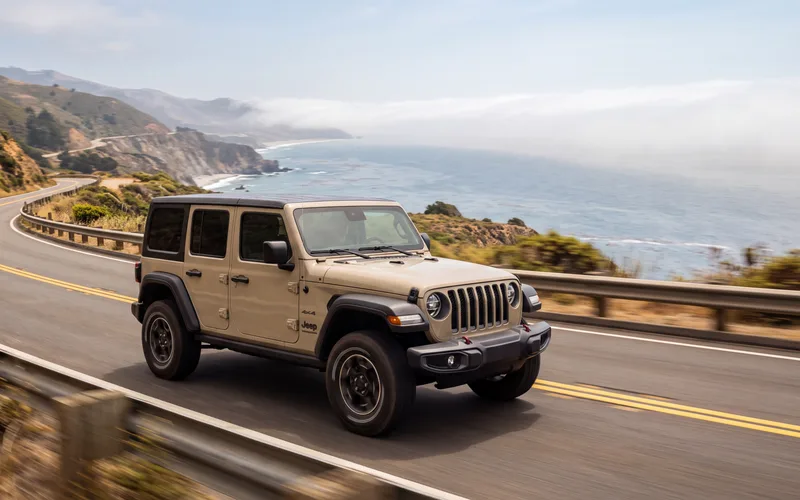 Jeep WranglerOff-Road SUVBetter at: Hardcore off-roading
The direct rival and the more committed trail machine, with an aftermarket and resale story no one else in the segment matches — worth it if pavement manners are secondary.
Compare 2.38C+
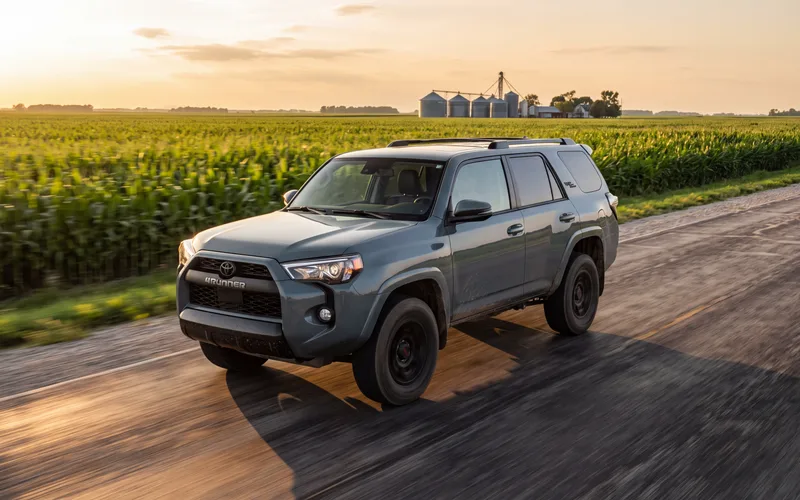 Toyota 4RunnerOff-Road SUVBetter at: Long-term reliability
Trades the Bronco's driving polish for Toyota durability and an available third row, which matters given the Bronco's below-average reliability forecast and 3 yr/36,000 mi warranty.
Compare 1.71C-
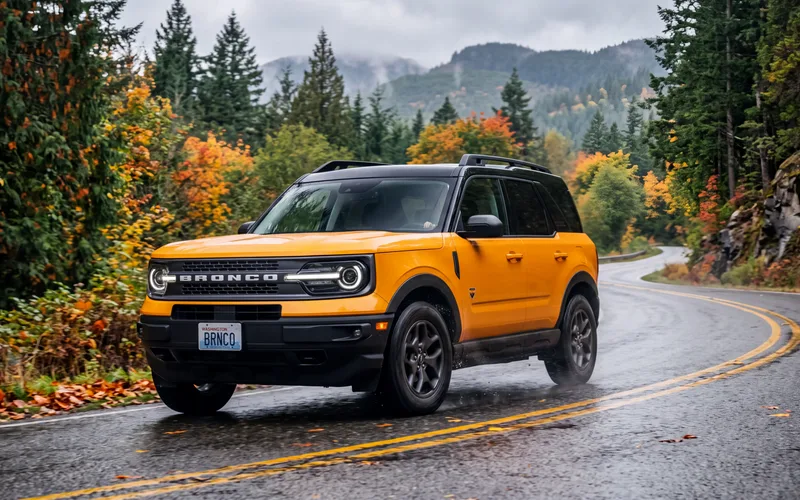 Ford Bronco SportSubcompact SUVBetter at: Efficiency and cost
Costs far less, gets much better mileage, and is rated well above the big Bronco for predicted reliability — enough SUV for buyers who wanted the look more than the locking diffs.
CompareHow it's evolved
6 scored model years · 2021–2026
Subject scores by year
Hover or tap a score to see what moved it versus the year before. A corner mark flags a big swing.
| Year | Performance | Efficiency | Safety | Space | Cost | Reliability | Tech | Use-case | Driving | Value |
|---|---|---|---|---|---|---|---|---|---|---|
| 2026 | 56 | 40 | 59 | 50 | 51 | 51 | 65 | 62 | 70 | 74 |
| 2025 | 56 | 40 | 54 | 50 | 56 | 53 | 67 | 62 | 66 | 69 |
| 2024 | 55 | 40 | 54 | 49 | 50 | 49 | 65 | 62 | 61 | 71 |
| 2023 | 56 | 40 | 46 | 49 | 49 | 45 | 64 | 61 | 68 | 72 |
| 2022 | 51 | 39 | 47 | 49 | 51 | 36 | 64 | 58 | 67 | 72 |
| 2021 | 52 | 46 | 54 | 48 | 56 | 41 | 59 | 60 | 67 | 73 |
Compare two years
Best fit & conditions
Higher scores mean a better fit for that use case. Learn more about use-case fit →
Subject profile
Trims & configurations
7 trimsScores above reflect the volume trim. Per-trim specs and scores are rolling out — the full lineup:
Detailed scoring by subject
1Performance & PowertrainGrades below the middle of the scale.1.48D
The 2.3L EcoBoost turbo I-4 is the standard/volume engine across Base, Big Bend, Black Diamond, Outer Banks, Badlands, Wildtrak, and First Edition trims for launch year 2021; rated 300 hp on premium fuel (275 hp on regular). The 2.7L V6 (330 hp premium/315 hp regular) is optional on most trims.
Base 2.3L EcoBoost I-4 peak torque on premium fuel for the 2021 launch year; the optional 2.7L V6 offers substantially more (415 lb-ft premium/410 lb-ft regular).
Instrumented and manufacturer-adjacent estimates place the volume 2.3L automatic 4x4 in the 7.1–8.4 s range depending on body style and equipment; used the midpoint of that range as the representative figure. Car and Driver's tested 2.7L V6 Sasquatch model ran 0-60 in 6.3 s using a second-gear start.
The 2.3L EcoBoost is torquey but shows mild turbo lag and coarseness under load in launch-year reviews; the optional 2.7L V6 is noticeably smoother and stronger, giving the lineup a wider spread between adequate and refined depending on engine choice.
The available 10-speed automatic (shared architecture with F-150) shifts crisply and rarely hunts; a 7-speed manual (with a crawler first gear) is available on 2.3L models for enthusiasts, though early production units drew some complaints about manual clutch take-up feel.
All 2021 Bronco trims, regardless of engine or door count, are rated to tow up to 3,500 lbs when properly equipped; there was no Raptor trim in the 2021 launch-year lineup to raise this figure (Raptor arrived for model year 2022).
4x4 with a 2-speed transfer case is standard across the entire 2021 Bronco lineup (no 4x2 offered), with Ford's G.O.A.T. Modes terrain management system standard on every trim (5 modes on Base/Big Bend, up to 7 on Badlands/Wildtrak/Sasquatch-equipped trucks) — among the most sophisticated and broadly available 4x4 systems in the segment at launch.
Standard 4x4 delivers strong base clearance; the widely-optioned Sasquatch Package adds 35-inch mud-terrain tires, beadlock-capable 17-inch wheels, electronic-locking front/rear differentials, and a high-clearance suspension (11.6 in ground clearance, 43.2°/37.2° approach/departure angles, 33.5 in water fording). The 2021 launch lineup tops out with Badlands/Wildtrak plus Sasquatch — no Raptor-level hardware was yet available that model year.
The 2021 launch lineup offers just two gas engines (2.3L I-4, 2.7L V6) with no hybrid, PHEV, or EV option and no high-output Raptor variant yet — narrower than later model years once Raptor joined the range.
2Efficiency & RangeOne of the Bronco's weakest categories.1.06D
The 2021 Bronco's boxy off-road shape and low gearing put it near the bottom of the SUV field for efficiency; the 2.7L V6 (19 combined) is worse still.
City economy trails most SUVs due to the Bronco's high frontal area and part-time 4WD driveline drag.
Highway economy is weak versus the SUV segment; the removable-top body and portal-style tires add aero and rolling drag.
The 4-door's larger 20.8-gallon tank (vs. 16.9 gal on the 2-door) offsets the mediocre MPG for mid-pack range; 2-door range is notably shorter at ~355 mi.
Estimated from EPA combined MPG and the standard 15,000 mi/yr assumption; mid-pack for the SUV field, worse than car-like crossovers but better than V8 full-size SUVs.
Both engines run on 87-octane regular, but Ford recommends 91+ premium for best performance (more noticeable towing or in hot weather), so it's not a hard requirement.
3SafetyGrades below the middle of the scale.1.59D
NHTSA's published crash-test program for the redesigned 4-door Bronco groups model years 2022–2025, omitting MY2021 entirely — the new-generation Bronco's debut year was not independently star-rated by NHTSA. The closest verified figure is the following model year's 4-star overall result, used here as the best available estimate for the unchanged launch-generation structure.
IIHS awarded Good ratings in five of the six crashworthiness tests (small overlap front driver/passenger side, moderate overlap front, side, roof strength), with only an Acceptable rating for head restraints/seats — but Marginal headlights and the Acceptable head-restraint result kept the 4-door Bronco out of the Top Safety Pick program entirely.
Pre-collision assist with automatic emergency braking, forward collision warning, and auto high-beams are standard across the range, but blind-spot monitoring, rear cross-traffic alert, lane-keeping, and adaptive cruise control are all optional — unavailable on Base and only offered as options starting at Big Bend or via packages on upper trims — so most of the ADAS suite is locked out of the standard equipment list on every trim.
IIHS rated the Bronco's front crash prevention system Superior for vehicle-to-vehicle performance in both its standard and optional configurations, and Advanced for vehicle-to-pedestrian detection — near the top of IIHS's rating scale despite the system being optional on lower trims.
BLIS blind-spot monitoring with rear cross-traffic alert is unavailable on the base trim and remains an option (not standard) starting at Big Bend, with no evidence of cross-traffic automatic braking at this generation's 2021 launch — alert-only coverage gated behind trim level and options packages.
Reviews are split on tuning quality — Edmunds' long-term test found the lane-keeping system inconsistent, causing the Bronco to 'ping-pong' inside the lane rather than track center, especially in curves, while Motor1's first drive found it did an admirable job with only light intervention. Net take is a functional but unrefined system, and it remains optional rather than standard.
Edmunds' long-term test found the adaptive cruise control 'too aggressive to accelerate, and too conservative about braking,' struggling at times to hold a consistent following distance, while Motor1's first drive described it as well-mannered; the system is also optional, available only via upper-trim packages rather than standard.
BlueCruise hands-free highway driving was not offered on any 2021 Bronco trim or options package — Ford's initial BlueCruise rollout in 2021 was limited to the F-150 and Mustang Mach-E, leaving the Bronco without a hands-free option at launch.
IIHS tested both of the Bronco's headlight options and rated both Marginal — the low beams don't illuminate the road far enough on curves — a factor that by itself disqualified the SUV from a Top Safety Pick award.
The Bronco's upright, boxy greenhouse and tall glass on every side give reviewers-praised sightlines that work well both on-road and off-road, a benefit of its dedicated off-roader design.
LATCH lower anchors are usable but require a bit of extra force to connect, the fixed rear head restraints push convertible/booster seats off the seatback, and taller front-seat occupants must slide their seat forward to fit a rear-facing car seat — workable but with real compromises.
4Space & ComfortOne of the Bronco's weakest categories.1.22D
The 4-door is the volume configuration for the reintroduced 2021 Bronco and seats five across two rows; the 2-door seats four. No third row was offered at launch.
The boxy launch-generation roofline gives above-average front headroom for the SUV band on the hardtop 4-door; soft-top models gain further.
Front legroom is well above the SUV band midpoint, reflecting the Bronco's roomy front footwell; confirmed by owner tape-measure tests matching Ford's published figure.
Boxy proportions yield class-leading second-row headroom, at the top of the SUV band.
Second-row legroom is mid-pack for the SUV band on the 4-door; the 2-door has essentially no usable rear legroom for adults.
No third row is offered on any 2021 Bronco configuration — Ford prioritized off-road geometry and short overhangs over passenger capacity to compete directly with the Wrangler.
Behind-rear-seat cargo is modest against the SUV band — boxy proportions and a swing gate limit floor length versus larger unibody rivals.
Max cargo is mid-pack against the SUV band with rear seats folded.
Launch-year signature feature: hose-out rubberized flooring with up to ten drain plugs (four active, six passive) standard on Black Diamond and Badlands, plus a lockable center console and removable rear carpet — genuinely novel for the segment, though not standard on Base/Big Bend.
Launch reviewers found the seats better bolstered and more supportive on long freeway drives than the Jeep Wrangler's, with cloth standard and marine-grade vinyl or leather on higher trims; solid but not segment-leading.
The new independent front suspension (versus the Wrangler's solid front axle) gives composed, confident freeway manners, but launch reviewers noted the tune is stiff around 35-45 mph in town before smoothing out at higher speed.
Frameless doors, a removable hard/soft top, and off-road tires produced pronounced wind noise at speed in launch reviews, described as loud enough to hinder conversation on the highway.
Heated front seats and a heated steering wheel come standard starting on the Outer Banks trim, but ventilated seats were never offered on any Bronco, and base/mid trims (Base, Big Bend, Black Diamond) had sparse comfort equipment at launch.
5Cost of OwnershipMid-pack among this car's ten categories.1.75C-
The 2-door Base trim opened at $28,500 plus a $1,495 destination charge, a reasonable entry point for an off-road SUV band that runs well above this on the high end.
The 4-door body style and mid-range Black Diamond/Outer Banks trims were the launch-year volume sellers once the Sasquatch package and popular options are added, pushing well above base pricing.
As an all-new nameplate at launch, no long-term maintenance data existed yet; estimate is inferred from segment norms for a body-on-frame off-road SUV with more complex 4x4 hardware than a typical crossover.
Strong launch-year demand, waitlists, and dealer markups for the reintroduced Bronco pointed to well-above-average residuals, though no vehicle had reached the 5-year mark yet at launch to confirm actuals.
Standard Ford bumper-to-bumper coverage, at the low end of the segment band.
Standard Ford powertrain coverage, at the low end of the segment band versus rivals offering longer terms.
Ford included no complimentary scheduled maintenance on the 2021 Bronco; coverage was limited to standard roadside assistance for the warranty term and a FordPass Connect trial.
$38,055 volume-trim price minus its estimated resale value after 5 years (58% retained, or about $22,072) leaves about $15,983 in depreciation. Add the projected $6,200 in 5-year maintenance and repairs, and owning this vehicle for 5 years costs about $22,183 in total.
6Reliability & QualityThe Bronco's lowest-graded category.0.71F
As an all-new nameplate with no track record, Consumer Reports rated the 2021 Bronco's predicted reliability well below average, driven by widely reported hardtop water-leak and low-mileage 2.7L engine-failure complaints surfacing within months of launch. It landed behind rivals with established histories like the Jeep Wrangler and Toyota 4Runner.
Ford ranked exactly at the industry average in J.D. Power's 2021 Initial Quality Study (162 problems per 100 vehicles, tied with the industry mean), an improvement over 2020 but still mid-pack, trailing Ram, Dodge, Kia, Hyundai, Jeep, Chevrolet, and Toyota. Consumer Reports' brand rankings placed Ford similarly in the middle third for 2021.
The 2021 model year was hit by a severe, well-documented quality wave: Ford issued a company-wide letter offering to replace the Webasto molded-in-color hardtop on every early Bronco due to leaks and delamination, issued a TSB (Nov 2021) for A-pillar/windshield-header water leaks from excessive body-seam gaps, and 2021-built units are squarely within the rear shock absorber corrosion recall (2021-2024) and the 2.7L EcoBoost engine-failure population (built May-Oct 2021). This is a systemic, multi-front launch-year recall pattern rather than isolated issues.
The 2.7L EcoBoost V6's low-mileage failures trace directly to a bad batch of valves from a supplier used in Broncos built May 1-Oct 31, 2021 — squarely this model year — with dozens of documented complete engine failures under 10,000 miles and an NHTSA investigation covering roughly 25,538 vehicles. The 2.3L four-cylinder carried over from other Ford applications with no comparable red flags, but the 2.7L's launch-year defect drags down the powertrain family's overall durability reputation for this specific model year.
Reviewers found plastics more abundant and harder than expected for a nearly-$30,000 starting price, concentrated on doors, vents, and the center stack, but generally described the hard plastic as durable and solidly assembled rather than cheap or flimsy — consistent with the model's washable, off-road-oriented design intent.
Launch-year assembly was inconsistent: alongside the hardtop leak/delamination issue, early owners reported flimsy interior trim pieces (e.g. shifter surround not sitting flush) and easily scratched plastic. This is materially worse than the marque's later production years as Ford worked through early-build quality-control problems.
Ford's roughly 3,000-strong US dealer network gave the Bronco broad geographic service access from day one, but the launch-year reservation backlog and hardtop-replacement campaign strained service capacity and wait times, and overall service satisfaction sat mid-pack for the brand.
As a brand-new nameplate in its first model year, factory parts supply was still ramping (compounded by the hardtop-replacement campaign consuming production capacity), though the aftermarket ecosystem grew unusually fast given the model's popularity. RepairPal-tracked Ford repair costs run above the industry average.
7Technology & InfotainmentMid-pack among this car's ten categories.1.94C-
Launch-year 2021 lineup (Base through First Edition) splits the screen by trim tier the same way later model years do — 8-inch on entry trims, 12-inch portrait unit standard from Outer Banks up.
Reviewers praised SYNC 4's layout logic and retained physical climate/volume controls, but early-production 2021 units were widely reported to freeze, reboot, or lose connectivity, prompting Ford Power-Up software fixes within months of launch.
Wireless Apple CarPlay and Android Auto were standard equipment with SYNC 4 across the 2021 Bronco lineup from launch, including the base 8-inch screen.
SYNC 4 voice recognition handled basic commands adequately at launch but was not conversational, and connected navigation was rarely highlighted; most 2021 buyers were expected to default to CarPlay/Android Auto maps.
Base audio was adequate for the segment; a Bang & Olufsen premium sound system was offered as part of upper-trim option packages (Badlands/Wildtrak/Outer Banks/First Edition) but was not fleet-wide standard equipment in the 2021 launch year.
2021 Bronco shipped with a 6.5-inch color LCD gauge cluster standard, stepping up to an 8-inch full-color LCD on Badlands/Wildtrak/Outer Banks/First Edition — a partial digital display rather than a fully configurable full-width cluster.
SYNC 4 supports Ford Power-Up over-the-air software and map updates, which Ford used in fall 2021 to patch the widely reported launch-year infotainment freezing issues — real infotainment-level OTA capability but not whole-vehicle ECU updates.
FordPass covered remote start, lock/unlock, and vehicle locate with a free tier at launch, but early Bronco owners frequently reported app/connectivity reliability issues alongside the broader SYNC 4 launch problems.
USB-A and USB-C ports were available front and rear along with an available 400W (110V) accessory power outlet, useful for camping/adventure use; wireless phone charging was not part of the 2021 launch equipment list.
Standard exterior SecuriCode keypad (a signature Bronco touch) plus available proximity keyless entry and remote start covered the convenience basics well from launch.
Rear camera was standard, with a 360-degree camera system available as part of upper-trim packages (Badlands/Wildtrak/Outer Banks/First Edition) from the 2021 launch.
Ford did not offer a head-up display on any 2021 Bronco trim.
8Use-Case FitOne of the Bronco's strongest categories.2.03C
4-door launch model has real rear doors with LATCH anchors, but high step-in height, body-on-frame ride, and first-year door/glass fitment complaints make everyday car-seat loading more of a chore than in a crossover; 2-door is impractical for car seats.
IIHS rated the 4-door Good in 5 of 6 crashworthiness tests with superior/advanced crash-prevention tech, but Marginal headlights and Acceptable head restraints kept it from Top Safety Pick honors, and blind-spot monitoring/adaptive cruise were optional rather than standard on family-friendly trims in this launch year.
Seats are more supportive than a Wrangler's and dual-zone climate with fast-heating front seats is available, but both the standard soft top and optional hardtop let in significant wind/road noise at highway speed, undercutting multi-hour family comfort.
The 2.3L EcoBoost with 10-speed automatic is smooth and the Bronco rides and steers noticeably better than a Wrangler, but body-on-frame construction, wide off-road tires, and high seating position still add fatigue relative to unibody SUV rivals in daily traffic.
EPA-rated 21 MPG combined for the 2.3L (manual or automatic) and 19 MPG combined for the 2.7L V6 are competitive for a body-on-frame off-roader but still trail most crossover-based SUVs by several MPG, keeping per-mile running costs above average.
The 2-door's compact footprint is easy to place in the city, though the 4-door and any Sasquatch-package fender flares and 35-inch tires widen the vehicle noticeably; a standard backup camera helps offset reduced visibility with the roof/doors installed.
Both 2-door and 4-door tow up to 3,500 lbs with the Class II Trailer Tow Package, and payload ranges from 1,170 lbs (2-door) to 1,370 lbs (4-door) — solid for light-duty work and trailering, though well short of a truck or full-size SUV's capacity.
Body-on-frame construction and available locking differentials support a durable design, but as an all-new first model year the Bronco carries launch-quality risk (production delays, early hardtop and door-fitment complaints reported by owners) with no fleet track record yet.
Launch-year Bronco already offered a large accessory catalog (modular steel bumpers, rock rails, roof racks, auxiliary switch bank) supporting upfitting, though the lack of a bed limits pure jobsite hauling versus a pickup.
21 MPG combined (2.3L) gives reasonable range between fill-ups and seats are supportive for long stints, but persistent wind/road noise with both soft-top and hardtop roofs at highway speed offsets the comfort gains on multi-hour drives.
Available from launch, the Sasquatch package (35-inch tires, front/rear locking differentials, Bilstein shocks, 4.7 axle ratio) delivers 11.5-11.6 in of ground clearance and a best-in-class 33.5 in of water fording, plus removable doors/roof — a genuine segment-leading off-road and adventure proposition.
One-person-removable doors and roof panels, 22.4-83 cu ft of cargo room depending on body style/seats-folded, and a wide factory roof-rack/accessory catalog give the Bronco exceptional gear-hauling flexibility for camping and adventure use.
9Driving ExperienceOne of the Bronco's strongest categories.2.51C+
Launch-year reviews consistently found the Bronco's independent front suspension gave it more composed, better-controlled on-road manners than live-axle rivals like the Wrangler, while the HOSS suspension on Badlands/Wildtrak/First Edition kept body motions in check off-road; still a tall body-on-frame SUV, so it trails car-based crossovers in outright grip and cornering polish.
Electric power-assisted rack-and-pinion steering was widely praised at launch as quicker and better weighted than the Wrangler's recirculating-ball setup, giving the driver more confidence at highway speed even though outright feedback is still muted compared to on-road-focused SUVs.
Instrumented stopping tests on Sasquatch-package (35-inch all-terrain tire) Broncos in 2021 press testing were notably long for the segment, reflecting the compromise of off-road rubber and body-on-frame mass; pedal feel was described as firm and predictable even where distances were long.
Volume-trim 2021 Bronco used the 2.3L EcoBoost I4 (270 hp/310 lb-ft) paired with either a 7-speed manual (with crawler gear) or 10-speed automatic; reviewers found the automatic pairing smooth around town with adequate but unexciting response, some low-rpm turbo lag, and a heavier-than-expected manual clutch.
The base turbo-four is audible and somewhat coarse under load; first-year production units were also widely noted for wind noise and rattles around the removable hardtop panels and door seals, a common complaint in early owner and press feedback.
Volume-trim 4-Door Bronco on standard 32-inch tires has a wider turning circle than the shorter-wheelbase 2-Door; Sasquatch-package 35-inch tires widen it further on both body styles.
Upright, commanding seating position with excellent outward visibility through the boxy greenhouse and low beltline, simple grab-handle-equipped control layout, and easy ingress/egress praised widely at launch; seat adjustability is good but not class-leading on lower trims.
Removable roof panels and doors, open-air character, and strong off-road capability made the debut Bronco one of the most broadly praised new vehicles of 2021 for driving enjoyment both on- and off-road, culminating in MotorTrend's 2021 SUV of the Year award.
10Value & Market PositionThe Bronco's best-graded category.2.98B-
Launch-year base 2-door starts at $28,500 with cloth seats, black steel wheels, LED headlights, and part-time 4WD standard, but items like the 8-inch SYNC 4 touchscreen, marine-grade vinyl "wash-out" flooring, and driver-assist extras are reserved for or bundled into higher trims — competitive entry pricing but not loaded relative to a comparably-priced Wrangler.
For the money, buyers get genuine trail hardware (available Sasquatch package with 35s, front/rear lockers, 4.7:1 crawler ratio), removable doors and roof across the range, and a 7-speed manual with a dedicated crawler gear — reviewers rated it more comfortable and better-handling on-road than the Wrangler while matching or beating its off-road chops, a strong capability-per-dollar story at launch.
Seven trims at launch (Base, Big Bend, Black Diamond, Outer Banks, Badlands, Wildtrak, plus the limited-run First Edition), each offered as 2-door or 4-door, with a 2.3L turbo-four (7-speed manual or 10-speed auto) or 2.7L V6, spanning roughly $28,500 to $59,305 — an unusually wide and well-spaced lineup for a first model year.
Demand at launch was extraordinary: reservations topped 190,000 (over 165,000 still active), so far exceeding Ford's build capacity that Ford paused online reservations entirely in mid-2021 and pushed some builds into the following model year — an emphatic market-acceptance signal even though actual MY2021 deliveries were constrained and the model year abbreviated.
The revival of a 20-plus-year-dormant nameplate generated intense enthusiast excitement ("Bronco Nation") and broad media hype as the flagship of Ford's new rugged-SUV family, positioning it as an aspirational, beloved return rather than a routine model launch.
With demand vastly outstripping supply, chip-shortage and hardtop-quality production delays, and a waitlist stretching over a year, 2021 Broncos routinely sold at or above MSRP with dealer markups rather than any discounting — essentially no deals to be had in the launch year.
This is the first model year of an all-new generation — the Bronco nameplate's first return since 1996 on a brand-new body-on-frame platform — as fresh as a vehicle can be, with no imminent redesign risk for buyers.
Early reviews were largely enthusiastic, with Consumer Reports and others rating the Bronco a better on-road companion than the Wrangler while matching its off-road credibility, but launch-year execution was dinged by real quality problems — hardtop roof-rail and door-glass recalls, reports of a noisy/uninsulated hardtop, and production delays — keeping it from a clean sweep of comparison tests in its debut year.