
The verdict
A struggling off-road suv, strong on value and held back by efficiency.
Overall 1.66 (D) across 10 graded subjects. Its strongest is value & market position at 2.90 (B-), its weakest efficiency & range at 0.67 (F). 5 of 10 subjects grade at C− or better.
Jump to scoresStrengths
- Value & Market Position
- Driving Experience
- Technology & Infotainment
What holds it back
- Efficiency & Range
- Reliability & Quality
- Safety
Top alternatives
Cars shoppers cross-shop with the Ford Bronco 1.84C-
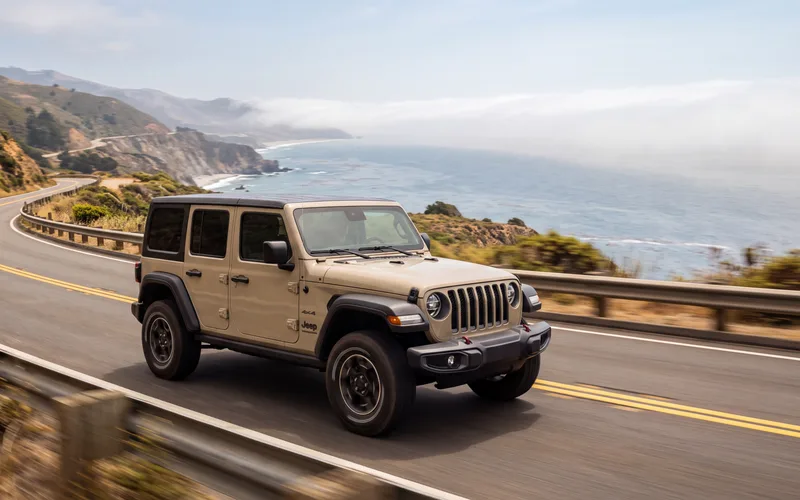 Jeep WranglerOff-Road SUVBetter at: Hardcore off-roading
The direct rival and the more committed trail machine, with an aftermarket and resale story no one else in the segment matches — worth it if pavement manners are secondary.
Compare 2.38C+
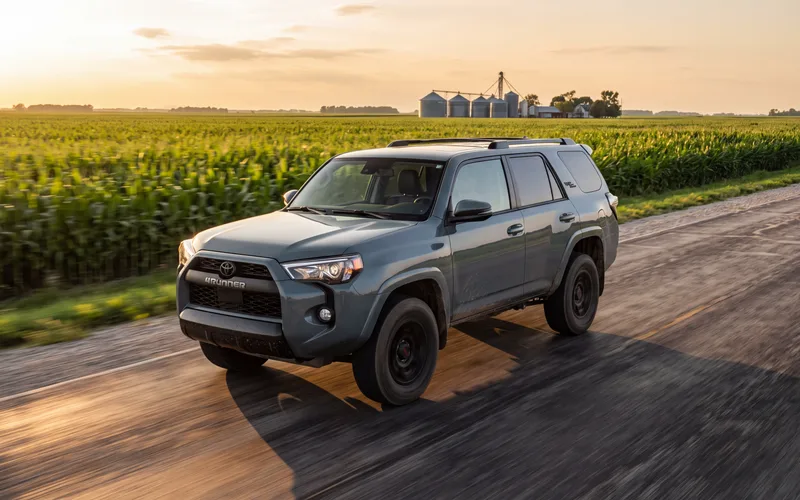 Toyota 4RunnerOff-Road SUVBetter at: Long-term reliability
Trades the Bronco's driving polish for Toyota durability and an available third row, which matters given the Bronco's below-average reliability forecast and 3 yr/36,000 mi warranty.
Compare 1.71C-
 Ford Bronco SportSubcompact SUVBetter at: Efficiency and cost
Costs far less, gets much better mileage, and is rated well above the big Bronco for predicted reliability — enough SUV for buyers who wanted the look more than the locking diffs.
CompareHow it's evolved
6 scored model years · 2021–2026
Subject scores by year
Hover or tap a score to see what moved it versus the year before. A corner mark flags a big swing.
| Year | Performance | Efficiency | Safety | Space | Cost | Reliability | Tech | Use-case | Driving | Value |
|---|---|---|---|---|---|---|---|---|---|---|
| 2026 | 56 | 40 | 59 | 50 | 51 | 51 | 65 | 62 | 70 | 74 |
| 2025 | 56 | 40 | 54 | 50 | 56 | 53 | 67 | 62 | 66 | 69 |
| 2024 | 55 | 40 | 54 | 49 | 50 | 49 | 65 | 62 | 61 | 71 |
| 2023 | 56 | 40 | 46 | 49 | 49 | 45 | 64 | 61 | 68 | 72 |
| 2022 | 51 | 39 | 47 | 49 | 51 | 36 | 64 | 58 | 67 | 72 |
| 2021 | 52 | 46 | 54 | 48 | 56 | 41 | 59 | 60 | 67 | 73 |
Compare two years
Best fit & conditions
Higher scores mean a better fit for that use case. Learn more about use-case fit →
Subject profile
Trims & configurations
7 trimsScores above reflect the volume trim. Per-trim specs and scores are rolling out — the full lineup:
Academic Probation · NHTSA safety recalls
Jul 20, 2026Electrical system: wiring: front underhood · EngineThe engine compartment wiring harness may become damaged and short circuit.
Defect
Ford Motor Company (Ford) is recalling certain 2021-2026 Bronco and Bronco Raptor vehicles. The engine compartment wiring harness may become damaged and short circuit.
Risk
A short circuit in the engine compartment can create heat or spark, increasing the risk of a fire.
Remedy
Dealers will install sheathing over the wiring, free of charge. This is a Phased campaign. Phase 1 will include 2026 Bronco Raptor notified owners on 7/31/2026. Phase 2 will include 2021-2025 Bronco Raptor vehicle will notify owners on or about 8/14/2026. Phase 3 will include 2021-2026 Bronco will notify owners on or about 9/1/2026. Owner notification letters were mailed August 5, 2026. Owners may contact Ford customer service at 1-866-436-7332. Ford's number for this recall is 26S55. Vehicle Identification Numbers (VINs) involved in this recall became searchable on NHTSA.gov on July 23, 2026.
NHTSA campaign 26V468000 ↗Manufacturer no. 26S55565,691 vehicles potentially affected (all models in the campaign)Owners notified Aug 5, 2026Filed by Ford Motor CompanyFiled as BRONCOJun 24, 2026Structure: bodyThe fender flares may not be properly secured and detach from the vehicle.
Defect
Ford Motor Company (Ford) is recalling certain 2022-2026 Bronco vehicles. The fender flares may not be properly secured and detach from the vehicle.
Risk
A detached fender flare can become a road hazard and increase the risk of a crash.
Remedy
Dealers will inspect and repair, or replace the fender flares as necessary, free of charge. Owner notification letters were mailed September 1, 2026. Owners may contact Ford customer service at 1-866-436-7332. Ford's number for this recall is 26S47. Vehicle Identification Numbers (VINs) involved in this recall will be searchable on NHTSA.gov beginning August 7, 2026.
NHTSA campaign 26V403000 ↗Manufacturer no. 26S4736,046 vehicles potentially affected (all models in the campaign)Owners notified Sep 1, 2026Filed by Ford Motor CompanyFiled as BRONCOApr 14, 2026Power train: automatic transmissionThe transmission to transfer case joint may be misaligned due to an incorrectly performed previous repair, which could lead to wear of the transmission output shaft splines and transfer case input splines.
Defect
Ford Motor Company (Ford) is recalling certain 2021-2025 Bronco vehicles. The transmission to transfer case joint may be misaligned due to an incorrectly performed previous repair, which could lead to wear of the transmission output shaft splines and transfer case input splines.
Risk
Excessive wear of the transmission and transfer case splines may result in a loss of drive power or vehicle rollaway, increasing the risk of a crash.
Remedy
Dealers will inspect the transmission to transfer case joint and replace the transmission and transfer case as necessary, free of charge. Owner notification letters were mailed July 9, 2026. Owners may contact Ford customer service at 1-866-436-7332. Ford's number for this recall is 26S26. Vehicle Identification Numbers (VINs) involved in this recall became searchable on NHTSA.gov on April 15, 2026.
NHTSA campaign 26V236000 ↗Manufacturer no. 26S264,922 vehicles potentially affected (all models in the campaign)Owners notified Jul 9, 2026Filed by Ford Motor CompanyFiled as BRONCOMar 3, 2026Back over prevention: softwareThe Accessory Protocol Interface Module (APIM) may overheat and shutdown, which can prevent the rearview camera image from displaying as intended.
Defect
Ford Motor Company (Ford) is recalling certain 2021-2026 Ford Bronco and 2021-2024 Ford Edge vehicles. The Accessory Protocol Interface Module (APIM) may overheat and shutdown, which can prevent the rearview camera image from displaying as intended.
Risk
A rearview camera that fails to display an image can reduce the driverâs view behind the vehicle, increasing the risk of a crash.
Remedy
The APIM software will be updated by a dealer, or through an over-the-air (OTA) update, free of charge. Owner notification letters were mailed April 13, 2026. Owners may contact Ford Customer Service at 1-866-436-7332. Ford's number for this recall is 26S09. Vehicle Identification Numbers (VINs) involved in this recall became searchable on NHTSA.gov on March 5, 2026.
NHTSA campaign 26V124000 ↗Manufacturer no. 26S09849,310 vehicles potentially affected (all models in the campaign)Owners notified Apr 13, 2026Filed by Ford Motor CompanyFiled as BRONCOOct 23, 2025Seats: critical fastenersThe front seats may have a loose or dislodged seat frame height-adjust pivot bolt.
Defect
Ford Motor Company (Ford) is recalling certain 2021-2023 Bronco vehicles. The front seats may have a loose or dislodged seat frame height-adjust pivot bolt.
Risk
A seat with a dislodged bolt may not properly restrain an occupant in a crash, increasing the risk of injury.
Remedy
Dealers will inspect and replace the pivot links and bolts as necessary, free of charge. Owner notification letters were mailed April 28, 2026. Owners may contact Ford customer service at 1-866-436-7332. Ford's number for this recall is 25SB5. Vehicle Identification Numbers (VINs) involved in this recall became searchable on NHTSA.gov beginning October 28, 2025.
NHTSA campaign 25V721000 ↗Manufacturer no. 25SB5163,256 vehicles potentially affected (all models in the campaign)Owners notified Apr 28, 2026Filed by Ford Motor CompanyFiled as BRONCOOct 10, 2025Equipment: electrical: engine block heaterThe engine block heater may crack and develop a coolant leak, causing it to short circuit when the block heater is plugged in.
Defect
Ford Motor Company (Ford) is recalling certain 2016-2019 Lincoln MKC, 2016-2023 Explorer, 2019-2020 Fusion, 2019-2024 Ranger, 2020-2022 Lincoln Corsair, Escape, 2021-2024 Bronco, Bronco Sport, and 2022-2024 Maverick vehicles. The engine block heater may crack and develop a coolant leak, causing it to short circuit when the block heater is plugged in.
Risk
An electrical short circuit can increase the risk of a fire.
Remedy
Owners are advised not to plug in their block heater until the vehicle is remedied. Dealers will replace the block heater, free of charge. Owners will also have a alternative option to replace engine block heater element with a threaded blanking plug, and remove the block heater electrical cord. Interim letters, notifying owners of the safety risk, were mailed December 3, 2025. Additional letters will be sent once the final remedy is available, anticipated September 2026. Owners may contact Ford customer service at 1-866-436-7332. Ford's number for this recall is 25SA4. Vehicle Identification Numbers (VINs) involved in this recall became searchable on NHTSA.gov on October 15, 2025.
NHTSA campaign 25V685000 ↗Manufacturer no. 25SA459,006 vehicles potentially affected (all models in the campaign)Filed by Ford Motor CompanyFiled as BRONCOJul 7, 2025Fuel system, gasoline: delivery: fuel pumpThe low-pressure fuel pump may fail, which can result in an engine stall while driving.
Defect
Ford Motor Company (Ford) is recalling certain 2021-2023 Bronco, Explorer, Lincoln Aviator, F-250 SD, F-350 SD, F-450 SD, F-550 SD, 2021-2022 Lincoln Navigator, Mustang, F-150, and 2022 Expedition vehicles. The low-pressure fuel pump may fail, which can result in an engine stall while driving.
Risk
An engine stall increases the risk of a crash.
Remedy
Dealers will replace the low pressure fuel pump on super duty vehicles and update the powertrain control module (PCM) software on all other affected vehicles, free of charge. Owner notification letters were mailed July 27, 2026. Owners may contact Ford customer service at 1-866-436-7332. Ford's number for this recall is 25S75.
NHTSA campaign 25V455000 ↗Manufacturer no. 25S75850,318 vehicles potentially affected (all models in the campaign)Owners notified Jul 27, 2026Filed by Ford Motor CompanyFiled as BRONCOMay 14, 2025Back over prevention: sensing system: cameraThe 360-degree view camera may not display a rearview image when the vehicle is placed in reverse.
Defect
Ford Motor Company (Ford) is recalling certain 2022-2023 Bronco vehicles. The 360-degree view camera may not display a rearview image when the vehicle is placed in reverse.
Risk
Loss of the rearview camera image can reduce the driver's view of what is behind the vehicle, increasing the risk of a crash.
Remedy
Dealers will replace the rearview camera, free of charge. Owner notification letters were mailed October 8, 2025. Owners may contact Ford Customer Service at 1-866-436-7332. Ford's number for this recall is 23S48. This recall expands previous recall number 23V-598.
NHTSA campaign 25V273000 ↗Manufacturer no. 23S48128,889 vehicles potentially affected (all models in the campaign)Owners notified Oct 8, 2025Filed by Ford Motor CompanyFiled as BRONCOMay 9, 2025Back over prevention: softwareA software error may cause the rearview camera image to delay, freeze, or not display when the vehicle is in reverse.
Defect
Ford Motor Company (Ford) is recalling certain 2021-2024 Bronco, F-150, 2021-2024 Edge, 2022-2025 Escape, F-250, F-350, F-450, F-550, F-600, 2022-2024 Expedition, 2022-2025 Transit, 2021-2023 Mach-E, 2024 Ranger, Mustang, 2021-2023 Lincoln Nautilus, 2022-2024 Navigator, and 2023-2024 Corsair vehicles. A software error may cause the rearview camera image to delay, freeze, or not display when the vehicle is in reverse.
Risk
A frozen or missing rearview camera image can reduce the driver's view behind the vehicle, increasing the risk of a crash.
Remedy
The accessory protocol interface module (APIM) software will be updated by a dealer or through an over-the-air update, free of charge. This will be a phased campaign, with the remedy becoming available in different phases based on model and model years. Interim letters notifying owners of the safety risk were mailed on June 26, 2025. Additional letters will be mailed once the final remedy is available on each phase. Owner notification letters were sent on October 8, 2025. Owners may contact Ford customer service at 1-866-436-7332. Ford's number for this recall is 25S49.
NHTSA campaign 25V315000 ↗Manufacturer no. 25S491,076,138 vehicles potentially affected (all models in the campaign)Owners notified Oct 8, 2025Filed by Ford Motor CompanyFiled as BRONCOJan 17, 2025Suspension: rear: shock absorberThe rear shock absorbers may corrode and fail, resulting in detachment of the external reservoir.
Defect
Ford Motor Company (Ford) is recalling certain 2021-2024 Bronco vehicles. The rear shock absorbers may corrode and fail, resulting in detachment of the external reservoir.
Risk
An external reservoir that detaches from a vehicle can create a road hazard, increasing the risk of a crash.
Remedy
Dealers will replace the rear shock absorbers, as necessary free of charge. Owner notification letters were mailed August 15, 2025. Owners may contact Ford customer service at 1-866-436-7332. Ford's number for this recall is 25S01.
NHTSA campaign 25V025000 ↗Manufacturer no. 25S01149,449 vehicles potentially affected (all models in the campaign)Owners notified Aug 15, 2025Filed by Ford Motor CompanyFiled as BRONCOMar 8, 2024Latches/locks/linkages: doors: lockThe left-side rear door may be opened from the inside of the vehicle when the child safety lock is in the "ON" position.
Defect
Ford Motor Company (Ford) is recalling certain 2023-2024 Bronco 4-door vehicles. The left-side rear door may be opened from the inside of the vehicle when the child safety lock is in the "ON" position.
Risk
A malfunctioning child safety lock that allows a rear door to be opened unintentionally can increase the risk of injury.
Remedy
Dealers will inspect the child safety locks and replace the rear door latch, as necessary, free of charge. Owner notification letters were mailed April 9, 2024. Owners may contact Ford customer service at 1-866-436-7332. Ford's number for this recall is 24S15.
NHTSA campaign 24V189000 ↗Manufacturer no. 24S159,847 vehicles potentially affected (all models in the campaign)Owners notified Apr 9, 2024Filed by Ford Motor CompanyFiled as BRONCOFeb 23, 2024Visibility: glass, side/rearThe rear quarter glass panels may have been improperly installed to the vehicle hard top, which can allow them to detach.
Defect
Ford Motor Company (Ford) is recalling certain 2023-2024 Bronco and Bronco Heritage vehicles. The rear quarter glass panels may have been improperly installed to the vehicle hard top, which can allow them to detach.
Risk
Detached rear glass panels may create a road hazard and increase the risk of a crash.
Remedy
Dealers will inspect and reinstall the rear glass panels on Bronco vehicles. On Bronco Heritage vehicles, dealers will replace the rear left-hand removable quarter glass panel. Repairs will be performed free of charge. Bronco owner notification letters were mailed June 6, 2024. Bronco Heritage owner letters were mailed June 12, 2024. Owners may contact Ford customer service at 1-866-436-7332. Ford's number for this recall is 24S10.
NHTSA campaign 24V142000 ↗Manufacturer no. 24S107,875 vehicles potentially affected (all models in the campaign)Owners notified Mar 27, 2024Filed by Ford Motor CompanyFiled as BRONCOAug 3, 2023Power train: automatic transmission: internal: park pawlThe transmission park system may have been damaged during assembly, which can prevent the parking pawl from fully engaging and result in a vehicle rollaway.
Defect
Ford Motor Company (Ford) is recalling certain 2023 Bronco vehicles. The transmission park system may have been damaged during assembly, which can prevent the parking pawl from fully engaging and result in a vehicle rollaway.
Risk
A vehicle rollaway can increase the risk of a crash.
Remedy
Dealers will replace the transmission, free of charge. Owner notification letters were mailed August 11, 2023. Owners may contact Ford customer service at 1-866-436-7332. Ford's number for this recall is 23S44.
NHTSA campaign 23V546000 ↗Manufacturer no. 23S442 vehicles potentially affected (all models in the campaign)Owners notified Aug 11, 2023Filed by Ford Motor CompanyFiled as BRONCOMay 26, 2023Equipment: other: labelsThe Tire and Loading Information (TREAD) label states the incorrect load carrying capacity, which can result in an overloaded vehicle. As such, these vehicles fail to comply with the requirements of Federal Motor Vehicle Safety Standard number 110, "Tire Selection and Rims."
Defect
Ford Motor Company (Ford) is recalling certain 2022-2023 Bronco, 2023 Super Duty F-250, and 2019-2023 Ranger vehicles. The Tire and Loading Information (TREAD) label states the incorrect load carrying capacity, which can result in an overloaded vehicle. As such, these vehicles fail to comply with the requirements of Federal Motor Vehicle Safety Standard number 110, "Tire Selection and Rims."
Risk
An overloaded vehicle increases the risk of a crash.
Remedy
Ford will mail a new TREAD label to install over the existing label, free of charge. Owners will also have the option to take their vehicle to a Ford or Lincoln dealer to have the new label installed, free of charge. Owner notification letters were mailed July 21, 2023. Owners may contact Ford customer service at 1-866-436-7332. Ford's number for this recall is 23C18.
NHTSA campaign 23V379000 ↗Manufacturer no. 23C1829,607 vehicles potentially affected (all models in the campaign)Owners notified Jul 21, 2023Filed by Ford Motor CompanyFiled as BRONCOMay 18, 2023Seat belts: critical fastenersThe first-row seat belt latch plates may be difficult to access from their stowed position. As such, these vehicles fail to comply with the requirements of Federal Motor Vehicle Safety Standard number 208, "Occupant Crash Protection."
Defect
Ford Motor Company (Ford) is recalling certain 2021-2023 Bronco vehicles built with the 5-Door body style. The first-row seat belt latch plates may be difficult to access from their stowed position. As such, these vehicles fail to comply with the requirements of Federal Motor Vehicle Safety Standard number 208, "Occupant Crash Protection."
Risk
Difficulty accessing the seat belt latches may result in occupants not wearing their seat belts, increasing the risk of injury in a crash.
Remedy
Dealers will add a sliding clip latch stop to the driver and front passenger seat belts, free of charge. Interim owner notification letters notifying owners of the safety risk were mailed July 14, 2023. Owner letters informing owners that parts are available were mailed on October 2, 2023. Owners may contact Ford customer service at 1-866-436-7332. Ford's number for this recall is 23C16.
NHTSA campaign 23V358000 ↗Manufacturer no. 23C16175,550 vehicles potentially affected (all models in the campaign)Owners notified Sep 29, 2023Filed by Ford Motor CompanyFiled as BRONCOApr 20, 2023Wheels: lugs/nuts/bolts/studsThe lug nuts on the driver's side wheels may have been improperly tightened.
Defect
Ford Motor Company (Ford) is recalling certain 2023 Bronco and Ranger vehicles. The lug nuts on the driver's side wheels may have been improperly tightened.
Risk
Loose lug nuts may result in wheel detachment while driving, increasing the risk of a crash.
Remedy
Owners are advised not to drive their vehicles until the remedy is completed. Dealers will inspect, and if necessary, retighten the lug nuts, free of charge. Owner notification letters were mailed May 2, 2023. Owners may contact Ford customer service at 1-866-436-7332. Ford's number for this recall is 23S17.
NHTSA campaign 23V283000 ↗Manufacturer no. 23S171,434 vehicles potentially affected (all models in the campaign)Owners notified May 2, 2023Filed by Ford Motor CompanyFiled as BRONCOMar 8, 2023SteeringInternal damage to the steering gear may require increased steering effort or cause the steering wheel to lock-up.
Defect
Ford Motor Company (Ford) is recalling certain 2023 Bronco Wildtrak and 2022 Bronco Raptor vehicles. Internal damage to the steering gear may require increased steering effort or cause the steering wheel to lock-up.
Risk
A steering wheel that locks-up can result in a complete loss of steering control, increasing the risk of a crash.
Remedy
Owners are advised not to drive their vehicles until the remedy is performed. Dealers will replace the steering gear, free of charge. Owner notification letters were mailed March 31, 2023. Owners may contact Ford customer service at 1-866-436-7332. Ford's number for this recall is 23S09.
NHTSA campaign 23V155000 ↗Manufacturer no. 23S09343 vehicles potentially affected (all models in the campaign)Owners notified Mar 31, 2023Filed by Ford Motor CompanyFiled as BRONCOFeb 10, 2023Power train: automatic transmissionThe transmission may contain a loose bolt which could prevent the transmission from engaging the park gear, although the gear shifter position may indicate that the vehicle has been shifted to "PARK."
Defect
Ford Motor Company (Ford) is recalling certain 2022-2023 F-150, Mustang, Explorer, Bronco, and 2023 Lincoln Aviator vehicles equipped with automatic transmissions. The transmission may contain a loose bolt which could prevent the transmission from engaging the park gear, although the gear shifter position may indicate that the vehicle has been shifted to "PARK."
Risk
The inability to secure the vehicle in the park position can result in a rollaway, increasing the risk of a crash or injury.
Remedy
Dealers will inspect and, if necessary, replace the transmissions, free of charge. Owner notification letters were mailed April 25, 2023. Owners may contact Ford customer service at 1-866-436-7332. Ford's number for this recall is 23S06.
NHTSA campaign 23V070000 ↗Manufacturer no. 23S061,138 vehicles potentially affected (all models in the campaign)Owners notified Apr 25, 2023Filed by Ford Motor CompanyFiled as BRONCO
32 recalls on other model years of the Bronco (2021–2022, 2024–2026)
Sep 9, 2026Air bags: side/window: curtainThe mounting bracket on the right-hand-side side curtain air bag may have a metal burr that can tear the air bag during deployment.
Defect
Ford Motor Company (Ford) is recalling certain 2026 Bronco vehicles. The mounting bracket on the right-hand-side side curtain air bag may have a metal burr that can tear the air bag during deployment.
Risk
A torn air bag may fail to properly restrain an occupant during a crash, increasing the risk of injury.
Remedy
Dealers will increase the space between the bracket and air bag to remove the contact condition, free of charge. Interim letters, notifying owners of the safety risk, are expected to be mailed September 15, 2026. Additional letters will be sent once the remedy is available, anticipated in October 2026. Owners may contact Ford customer service at 1-866-436-7332. Ford's number for this recall is 26S64. Vehicle Identification Numbers (VINs) involved in this recall became searchable on NHTSA.gov on September 10, 2026.
NHTSA campaign 26V580000 ↗Manufacturer no. 26S642,711 vehicles potentially affected (all models in the campaign)Filed by Ford Motor CompanyFiled as BRONCOAug 25, 2026Engine and engine cooling: engine: hard parts internal/mechanicalThe engine piston domes may have been manufactured incorrectly, which can result in piston dome failure and lead to a loss of drive power.
Defect
Ford Motor Company (Ford) is recalling certain 2026 Explorer, Bronco, Bronco Sport, Mustang, and Ranger vehicles. The engine piston domes may have been manufactured incorrectly, which can result in piston dome failure and lead to a loss of drive power.
Risk
An unexpected loss of drive power increases the risk of a crash.
Remedy
Dealers will inspect the engine pistons and replace the engine long block, if necessary, free of charge. Interim letters, notifying owners of the safety risk, were mailed September 3, 2026. Additional letters will be sent once the remedy is available, anticipated in December 2026. Owners may contact Ford customer service at 1-866-436-7332. Ford's number for this recall is 26S61. Vehicle Identification Numbers (VINs) involved in this recall became searchable on NHTSA.gov on August 28, 2026.
NHTSA campaign 26V548000 ↗Manufacturer no. 26S6110,001 vehicles potentially affected (all models in the campaign)Filed by Ford Motor CompanyFiled as BRONCOMay 27, 2026Engine and engine cooling: engine: hard parts internal/mechanicalThe engine may fail, which can result in a loss of drive power.
Defect
Ford Motor Company (Ford) is recalling certain 2025-2026 Explorer, Ranger, and Bronco vehicles. The engine may fail, which can result in a loss of drive power.
Risk
A sudden loss of drive power can increase the risk of a crash.
Remedy
Dealers will replace the engine long block, free of charge. Interim letters, notifying owners of the safety risk, were mailed June 5, 2026. Additional letters will be sent once the remedy is available, anticipated in November 2026. Owners may contact Ford customer service at 1-866-436-7332. Ford's number for this recall is 26S35. Vehicle Identification Numbers (VINs) involved in this recall became searchable on NHTSA.gov on May 28, 2026.
NHTSA campaign 26V343000 ↗Manufacturer no. 26S351,536 vehicles potentially affected (all models in the campaign)Filed by Ford Motor CompanyFiled as BRONCOMay 26, 2026Equipment: other: labelsThe vehicle specifications listed on the tire placard and safety certification labels may be incorrect, including the VIN, capacity weight, seating capacity, front and rear gross axle weight rating (GAWR), tire and rim dimensions, and recommended cold tire pressure. As such, these vehicles fail to comply with the requirements of Federal Motor Vehicle Safety Standard number 110, "Tire Selection and Rims" and 49 CFR Part 567, "Certification."
Defect
Ford Motor Company (Ford) is recalling certain 2026 Ranger and Bronco vehicles. The vehicle specifications listed on the tire placard and safety certification labels may be incorrect, including the VIN, capacity weight, seating capacity, front and rear gross axle weight rating (GAWR), tire and rim dimensions, and recommended cold tire pressure. As such, these vehicles fail to comply with the requirements of Federal Motor Vehicle Safety Standard number 110, "Tire Selection and Rims" and 49 CFR Part 567, "Certification."
Risk
The incorrect tire size, tire pressures, and GAWR listed on the labels can allow the vehicle to be overloaded or have improperly inflated tires, increasing the risk of a crash.
Remedy
Dealers will inspect and if necessary, replace the certification and TREAD labels, free of charge. Owner notification letters were mailed June 3, 2026. Owners may contact Ford customer service at 1-866-436-7332. Ford's number for this recall is 26C24. Vehicle Identification Numbers (VINs) involved in this recall became searchable on NHTSA.gov on May 28, 2026.
NHTSA campaign 26V335000 ↗Manufacturer no. 26C24268 vehicles potentially affected (all models in the campaign)Owners notified Jun 3, 2026Filed by Ford Motor CompanyFiled as BRONCOMay 12, 2026Structure: body: roof and pillarsThe 3-door and 5-door Molded-In-Color (MIC) hardtop roof panels may have been manufactured improperly, which can allow sections of the outer roof panel to separate and detach from the vehicle.
Defect
Ford Motor Company (Ford) is recalling certain 2021-2022 Bronco vehicles. The 3-door and 5-door Molded-In-Color (MIC) hardtop roof panels may have been manufactured improperly, which can allow sections of the outer roof panel to separate and detach from the vehicle.
Risk
A detached section of roof can create a road hazard, increasing the risk of a crash.
Remedy
Dealers will inspect and replace the hard top as necessary, free of charge. Interim letters, notifying owners of the safety risk were mailed May 28, 2026. Additional letters will be sent once the remedy is available, anticipated in November 2026. Owners may contact Ford customer service at 1-866-436-7332. Ford's number for this recall is 26S32. Vehicle Identification Numbers (VINs) involved in this recall became searchable on NHTSA.gov on May 12, 2026.
NHTSA campaign 26V299000 ↗Manufacturer no. 26S3216,200 vehicles potentially affected (all models in the campaign)Filed by Ford Motor CompanyFiled as BRONCOApr 28, 2026Seats: critical fastenersThe front seats may have a loose or dislodged seat frame height-adjust pivot bolt.
Defect
Ford Motor Company (Ford) is recalling certain 2024-2026 Ranger and Bronco vehicles. The front seats may have a loose or dislodged seat frame height-adjust pivot bolt.
Risk
A seat with a dislodged bolt may not properly restrain an occupant in a crash, increasing the risk of injury.
Remedy
Dealers will inspect and replace the pivot links and bolts as necessary, free of charge. Owner notification letters were mailed May 22, 2026. Owners may contact Ford customer service at 1-866-436-7332. Fordâs number for this recall is 26S30. Vehicle Identification Numbers (VINs) involved in this recall became searchable on NHTSA.gov beginning April 30, 2026.
NHTSA campaign 26V268000 ↗Manufacturer no. 26S30179,698 vehicles potentially affected (all models in the campaign)Owners notified May 22, 2026Filed by Ford Motor CompanyFiled as BRONCOMar 3, 2026Engine and engine cooling: exhaust system: emission control: gas recirculation valve (egr valve)The exhaust gas recirculation (EGR) valve may fail, resulting in an unexpected loss of drive power.
Defect
Ford Motor Company (Ford) is recalling certain 2025 Ranger, Lincoln Nautilus, Mustang, Maverick, Explorer, Escape, Lincoln Corsair, Bronco Sport, and Bronco vehicles. The exhaust gas recirculation (EGR) valve may fail, resulting in an unexpected loss of drive power.
Risk
An unexpected loss of drive power increases the risk of a crash.
Remedy
Dealers will replace the EGR valves, free of charge. Owner notification letters were mailed July 31, 2026. Owners may contact Ford customer service at 1-866-436-7332. Ford's number for this recall is 26S10. Vehicle Identification Numbers (VINs) involved in this recall became searchable on NHTSA.gov on March 4, 2026.
NHTSA campaign 26V122000 ↗Manufacturer no. 26S1047,804 vehicles potentially affected (all models in the campaign)Owners notified Jul 31, 2026Filed by Ford Motor CompanyFiled as BRONCODec 18, 2025Back over prevention: sensing system: cameraThe rearview camera image may still be displayed after a backing event has ended. As such, these vehicles fail to comply with the requirements of Federal Motor Vehicle Safety Standard number 111, "Rear Visibility."
Defect
Ford Motor Company (Ford) is recalling certain 2021-2022 Bronco vehicles equipped with 8-inch SYNC infotainment screens that were previously repaired incorrectly under recall number 23V165. The rearview camera image may still be displayed after a backing event has ended. As such, these vehicles fail to comply with the requirements of Federal Motor Vehicle Safety Standard number 111, "Rear Visibility."
Risk
A rearview image that continues to be displayed after the vehicle is shifted out of reverse may distract the driver, increasing the risk of a crash.
Remedy
Dealer will update the SYNC module software ,free of charge. Owner notification letters were mailed January 28, 2026. Owners may contact Ford customer service at 1-866-436-7332. Ford's number for this recall is 25C72. Vehicle Identification Numbers (VINs) involved in this recall will be searchable on NHTSA.gov beginning January 30, 2026.
NHTSA campaign 25V888000 ↗Manufacturer no. 25C7235 vehicles potentially affected (all models in the campaign)Owners notified Jan 28, 2026Filed by Ford Motor CompanyFiled as BRONCODec 1, 2025Service brakes, hydraulic: power assist: electric: control moduleThe Electronic Brake Booster (EBB) module may malfunction while driving or when the driver is utilizing an Advanced Driver Assistance System (ADAS) feature, resulting in a loss of power brake assist.
Defect
Ford Motor Company (Ford) is recalling certain 2025 Lincoln Navigator, F-150, Expedition, Bronco, and Ranger vehicles. The Electronic Brake Booster (EBB) module may malfunction while driving or when the driver is utilizing an Advanced Driver Assistance System (ADAS) feature, resulting in a loss of power brake assist.
Risk
An unexpected loss of power brake assist while driving can extend stopping distance and increase the risk of a crash. Additionally, a loss of power brake assist while ADAS features are engaged can result in the vehicle not braking as expected, increasing the risk of a crash.
Remedy
Dealers will replace the electronic brake booster, free of charge. Owner notification letters were mailed February 26, 2026. Owners may contact Ford customer service at 1-866-436-7332. Ford's number for this recall is 25SD4. Vehicle Identification Numbers (VINs) involved in this recall became searchable on NHTSA.gov on December 3, 2025.
NHTSA campaign 25V823000 ↗Manufacturer no. 25SD4679 vehicles potentially affected (all models in the campaign)Owners notified Feb 26, 2026Filed by Ford Motor CompanyFiled as BRONCONov 14, 2025Electrical system: instrument cluster/panelThe Instrument Panel Cluster (IPC) may fail at startup.
Defect
Ford Motor Company (Ford) is recalling certain 2025-2026 Bronco and Bronco Sport vehicles. The Instrument Panel Cluster (IPC) may fail at startup.
Risk
An instrument panel display that does not show critical information, such as warning lights or vehicle speed, increases the risk of a crash.
Remedy
The instrument panel cluster software will be updated by a dealer or through an over-the-air (OTA) update, free of charge. Owner notification letters were mailed December 4, 2025. Owners may contact Ford customer service at 1-866-436-7332. Ford's number for this recall is 25SC3.
NHTSA campaign 25V788000 ↗Manufacturer no. 25SC3229,609 vehicles potentially affected (all models in the campaign)Owners notified Dec 4, 2025Filed by Ford Motor CompanyFiled as BRONCOOct 10, 2025Visibility: windshieldDuring manufacturing, the windshield may not have been properly bonded to the vehicle, allowing it to detach in a crash. As such, these vehicles fail to comply with the requirements of Federal Motor Vehicle Safety Standard (FMVSS) number 212, "Windshield Mounting."
Defect
Ford Motor Company (Ford) is recalling certain 2025 Bronco and Ranger vehicles. During manufacturing, the windshield may not have been properly bonded to the vehicle, allowing it to detach in a crash. As such, these vehicles fail to comply with the requirements of Federal Motor Vehicle Safety Standard (FMVSS) number 212, "Windshield Mounting."
Risk
In the event of a crash, windshield detachment can increase the risk of injury.
Remedy
Dealers will remove and replace the windshield, free charge. Owner notification letters were mailed October 20, 2025. Owners may contact Ford customer service at 1-866-436-7332. Ford's number for this recall is 25C52. Vehicle Identification Numbers (VINs) involved in this recall became searchable on NHTSA.gov on October 14, 2025.
NHTSA campaign 25V683000 ↗Manufacturer no. 25C529 vehicles potentially affected (all models in the campaign)Owners notified Oct 30, 2025Filed by Ford Motor CompanyFiled as BRONCOSep 11, 2025Fuel system, gasoline: delivery: fuel pumpThe bolts securing the high pressure fuel pump may not be tightened properly, which can result in a fuel leak.
Defect
Ford Motor Company (Ford) is recalling certain 2024 Bronco and Ranger vehicles. The bolts securing the high pressure fuel pump may not be tightened properly, which can result in a fuel leak.
Risk
A fuel leak in the presence of an ignition source increases the risk of a fire.
Remedy
Dealers will replace the high pressure fuel pump mounting bolts, free of charge. Owner notification letters were mailed September 25, 2025. Owners may contact Ford customer service at 1-866-436-7332. Ford's number for this recall is 25S90.
NHTSA campaign 25V597000 ↗Manufacturer no. 25S909 vehicles potentially affected (all models in the campaign)Owners notified Sep 25, 2025Filed by Ford Motor CompanyFiled as BRONCOJul 25, 2025Service brakes, hydraulic: power assist: electric: control module: softwareThe Electronic Brake Booster (EBB) module may malfunction while driving or when the driver is utilizing an Advanced Driver Assistance System (ADAS) feature, resulting in a loss of power brake assist.
Defect
Ford Motor Company (Ford) is recalling certain 2025 Lincoln Navigator, F-150, Expedition, Bronco, and Ranger vehicles. The Electronic Brake Booster (EBB) module may malfunction while driving or when the driver is utilizing an Advanced Driver Assistance System (ADAS) feature, resulting in a loss of power brake assist.
Risk
An unexpected loss of power brake assist while driving can extend stopping distance and increase the risk of a crash. Additionally, a loss of power brake assist while ADAS features are engaged can result in the vehicle not braking as expected, increasing the risk of a crash.
Remedy
The EBB module software will be updated over-the-air (OTA) or by a dealer, free of charge. Owner notification letters were mailed on August 22, 2025. Owners may contact Ford customer service at 1-866-436-7332. Ford's number for this recall is 25S77.
NHTSA campaign 25V488000 ↗Manufacturer no. 25S77312,120 vehicles potentially affected (all models in the campaign)Owners notified Aug 22, 2025Filed by Ford Motor CompanyFiled as BRONCOJun 13, 2025Latches/locks/linkages: doors: lockThe left-hand rear door may be able to be opened from inside the vehicle when the child safety lock is in the "ON" position.
Defect
Ford Motor Company (Ford) is recalling certain 2025 Bronco four-door vehicles. The left-hand rear door may be able to be opened from inside the vehicle when the child safety lock is in the "ON" position.
Risk
A malfunctioning child safety lock that allows a rear door to be opened unintentionally can increase the risk of injury.
Remedy
Dealers will inspect and replace the rear door latch, as necessary, free of charge. Owner notification letters were mailed June 27, 2025. Owners may contact Ford customer service at 1-866-436-7332. Ford's number for this recall is 25S64.
NHTSA campaign 25V397000 ↗Manufacturer no. 25S6427,768 vehicles potentially affected (all models in the campaign)Owners notified Jun 27, 2025Filed by Ford Motor CompanyFiled as BRONCOJun 13, 2025Air bags: frontalThe active vent flap on the passenger side may prevent the air bag from deploying as intended. As such, these vehicles fail to comply with the requirements of Federal Motor Vehicle Safety Standard number 208, "Occupant Crash Protection."
Defect
Ford Motor Company (Ford) is recalling certain 2025 Bronco vehicles. The active vent flap on the passenger side may prevent the air bag from deploying as intended. As such, these vehicles fail to comply with the requirements of Federal Motor Vehicle Safety Standard number 208, "Occupant Crash Protection."
Risk
An air bag that does not deploy as intended increases the risk of injury during a crash.
Remedy
Dealers will replace the passenger air bag module, free of charge. Owner notification letters were mailed October 3, 2025. Owners may contact Ford customer service at 1-866-436-7332. Ford's number for this recall is 25C27.
NHTSA campaign 25V396000 ↗Manufacturer no. 25C272,272 vehicles potentially affected (all models in the campaign)Owners notified Oct 3, 2025Filed by Ford Motor CompanyFiled as BRONCOMay 9, 2025Back over prevention: sensing system: cameraThe rearview camera image may still be displayed after a backing event has ended. As such, these vehicles fail to comply with the requirements of Federal Motor Vehicle Safety Standard number 111, "Rear Visibility."
Defect
Ford Motor Company (Ford) is recalling certain 2021-2022 Bronco vehicles equipped with 8-inch SYNC infotainment screens that were repaired incorrectly under recall 22V-825. The rearview camera image may still be displayed after a backing event has ended. As such, these vehicles fail to comply with the requirements of Federal Motor Vehicle Safety Standard number 111, "Rear Visibility."
Risk
A rearview image that continues to be displayed after the vehicle is shifted out of reverse may distract the driver, increasing the risk of a crash.
Remedy
Dealers will update SYNC module software, free of charge. Owner notification letters were mailed June 18, 2025. Owners may contact Ford customer service at 1-866-436-7332. Ford's number for this recall is 25C14.
NHTSA campaign 25V312000 ↗Manufacturer no. 25C1412,219 vehicles potentially affected (all models in the campaign)Owners notified Jun 18, 2025Filed by Ford Motor CompanyFiled as BRONCOMay 9, 2025Seats: critical fastenersThe bolts that secure the driver's seat frame to the body may be loose or missing. As such, these vehicles fail to comply with the requirements of Federal Motor Vehicle Safety Standard number 207, "Seating Systems."
Defect
Ford Motor Company (Ford) is recalling certain 2025 Ranger and Bronco vehicles. The bolts that secure the driver's seat frame to the body may be loose or missing. As such, these vehicles fail to comply with the requirements of Federal Motor Vehicle Safety Standard number 207, "Seating Systems."
Risk
A seat with loose or missing fasteners may not properly restrain an occupant during a crash, increasing the risk of injury.
Remedy
Dealers will inspect the seat fasteners and tighten or install new fasteners as necessary, free of charge. Owner notification letters were mailed May 23, 2025. Owners may contact Ford customer service at 1-866-436-7332. Ford's number for this recall is 25C16.
NHTSA campaign 25V311000 ↗Manufacturer no. 25C1646 vehicles potentially affected (all models in the campaign)Owners notified May 23, 2025Filed by Ford Motor CompanyFiled as BRONCOMay 9, 2025Suspension: front: control arm: upper ball jointThe front upper control arm ball joint fastener may be missing or tightened improperly, allowing the front upper control arm to detach from the knuckle assembly.
Defect
Ford Motor Company (Ford) is recalling certain 2024-2025 Bronco and Ranger vehicles. The front upper control arm ball joint fastener may be missing or tightened improperly, allowing the front upper control arm to detach from the knuckle assembly.
Risk
A detached control arm can cause a loss of vehicle steering and control, increasing the risk of a crash.
Remedy
Dealers will inspect and tighten, or replace the ball joint fastener as necessary, free of charge. Owner notification letters were mailed May 23, 2025. Owners may contact Ford customer service at 1-866-436-7332. Ford's number for this recall is 25S45.
NHTSA campaign 25V310000 ↗Manufacturer no. 25S454,497 vehicles potentially affected (all models in the campaign)Owners notified May 23, 2025Filed by Ford Motor CompanyFiled as BRONCOMay 9, 2025Suspension: front: control arm: lower armThe front lower control arm fasteners may not have been tightened properly, allowing the control arm to detach from the frame.
Defect
Ford Motor Company (Ford) is recalling certain 2024-2025 Bronco vehicles. The front lower control arm fasteners may not have been tightened properly, allowing the control arm to detach from the frame.
Risk
A detached control arm can cause a loss of vehicle steering and control, increasing the risk of a crash.
Remedy
Owners are advised not to drive their vehicles until they have been repaired. Dealers will inspect and verify that the lower control arm fasteners are tightened properly. If a fastener is loose or missing, the dealer will replace the fastener. Repairs will be performed free of charge. Owner notification letters were mailed June 3, 2025. Owners may contact Ford customer service at 1-866-436-7332. Ford's number for this recall is 25S48.
NHTSA campaign 25V308000 ↗Manufacturer no. 25S483 vehicles potentially affected (all models in the campaign)Owners notified Jun 3, 2025Filed by Ford Motor CompanyFiled as BRONCOMay 9, 2025Latches/locks/linkages: doors: lockThe left-side rear door may be opened from the inside of the vehicle when the child safety lock is in the "ON" position.
Defect
Ford Motor Company (Ford) is recalling certain 2024 Bronco vehicles. The left-side rear door may be opened from the inside of the vehicle when the child safety lock is in the "ON" position.
Risk
A malfunctioning child safety lock that allows a rear door to be opened unintentionally can increase the risk of injury.
Remedy
Dealers will inspect the child safety locks and replace the rear door latch, as necessary, free of charge. Owner notification letters were mailed on May 22, 2025. Owners may contact Ford Customer Service at 1-866-436-7332. Ford's number for this recall is 24S15. This recall expands previous recall number 24V-189.
NHTSA campaign 25V303000 ↗Manufacturer no. 24S152,002 vehicles potentially affected (all models in the campaign)Owners notified May 22, 2025Filed by Ford Motor CompanyFiled as BRONCOApr 18, 2025Suspension: front: control arm: upper ball jointThe front upper control arm ball joint nut may be missing or tightened improperly, allowing the front upper control arm to detach from the knuckle assembly.
Defect
Ford Motor Company (Ford) is recalling certain 2025 Bronco vehicles. The front upper control arm ball joint nut may be missing or tightened improperly, allowing the front upper control arm to detach from the knuckle assembly.
Risk
A detached control arm can cause a loss of vehicle steering and control, increasing the risk of a crash.
Remedy
Owners are advised not to drive their vehicles until they have been repaired. Dealers will inspect and verify that the ball joint fastener is tightened properly. If a fastener is loose or missing, the dealer will replace the ball joint and knuckle assembly. Repairs will be performed free of charge. Owner notification letters are expected to be mailed in April 2025. Owners may contact Ford Customer Service at 1-866-436-7332. Ford's number for this recall is 25S40.
NHTSA campaign 25V260000 ↗Manufacturer no. 25S402 vehicles potentially affected (all models in the campaign)Owners notified May 15, 2025Filed by Ford Motor CompanyFiled as BRONCOMar 14, 2025Power train: automatic transmission: fluid/lubricant: valves/valve bodyThe transmission valve body may have been machined incorrectly, which can cause reverse gear failure, or unexpected forward movement in reverse or neutral gear.
Defect
Ford Motor Company (Ford) is recalling certain 2024-2025 F-150, Bronco, 2024 Ranger, 2025 Mustang, Explorer, and Aviator vehicles. The transmission valve body may have been machined incorrectly, which can cause reverse gear failure, or unexpected forward movement in reverse or neutral gear.
Risk
Unexpected vehicle movement increases the risk of a crash.
Remedy
Dealers will replace the transmission main control valve body, free of charge. Owner notification letters were mailed April 11, 2025. Owners may contact Ford customer service at 1-866-436-7332. Ford's number for this recall is 25S19.
NHTSA campaign 25V164000 ↗Manufacturer no. 25S19269 vehicles potentially affected (all models in the campaign)Owners notified Apr 11, 2025Filed by Ford Motor CompanyFiled as BRONCOOct 16, 2024Suspension: front: control arm: upper ball jointThe front upper control arm ball joint nut may not have been installed or tightened properly, allowing the front upper control arm to detach from the knuckle assembly.
Defect
Ford Motor Company (Ford) is recalling certain 2024 Ranger, and 2024-2025 Bronco vehicles. The front upper control arm ball joint nut may not have been installed or tightened properly, allowing the front upper control arm to detach from the knuckle assembly.
Risk
A detached control arm can cause a loss of vehicle steering and control, increasing the risk of a crash.
Remedy
Dealers will inspect and verify that the ball joint fastener is tightened properly. If a fastener is loose or missing, the dealer will replace the ball joint and knuckle assembly as necessary, free of charge. Owner notification letters were mailed on November 20, 2024. Owners may contact Ford Customer Service at 1-866-436-7332. Ford's number for this recall is 24S64.
NHTSA campaign 24V770000 ↗Manufacturer no. 24S642,416 vehicles potentially affected (all models in the campaign)Owners notified Nov 20, 2024Filed by Ford Motor CompanyFiled as BRONCOAug 23, 2024Engine and engine cooling: engine: hard parts internal/mechanicalThe engine intake valves may break while driving, which can result in engine failure and a loss of drive power.
Defect
Ford Motor Company (Ford) is recalling certain 2021-2022 Bronco, F-150, Edge, Explorer, Lincoln Nautilus, and Lincoln Aviator vehicles equipped with either a 2.7L or 3.0L Nano EcoBoost engine. The engine intake valves may break while driving, which can result in engine failure and a loss of drive power.
Risk
A loss of drive power increases the risk of a crash.
Remedy
Dealers will perform an engine cycle test and replace the engine as necessary, free of charge. Owner notification letters were mailed July 3, 2025. Owners may contact Ford customer service at 1-866-436-7332. Ford's number for this recall is 24S55.
NHTSA campaign 24V635000 ↗Manufacturer no. 24S5590,736 vehicles potentially affected (all models in the campaign)Owners notified Jul 3, 2025Filed by Ford Motor CompanyFiled as BRONCOAug 25, 2023Back over prevention: sensing system: cameraThe rearview camera, or 360-degree view camera if equipped, may not display a rearview image when the vehicle is placed in reverse.
Defect
Ford Motor Company (Ford) is recalling certain 2020-2023 Lincoln Aviator, 2018-2021 Lincoln Navigator, 2022-2023 Ford Transit, and 2021 Ford Bronco vehicles. The rearview camera, or 360-degree view camera if equipped, may not display a rearview image when the vehicle is placed in reverse.
Risk
Loss of the rearview camera image can reduce the driver's rear visibility, increasing the risk of a crash.
Remedy
Dealers will replace the rearview camera, and update the software and wiring as necessary, free of charge. Owner notification letters were mailed November 20, 2023 to Lincoln owners. Ford vehicle owners notification letters were mailed March 4, 2024. Ford remedy parts are anticipated 2nd Quarter 2024. Ford's number for this recall is 23S48.
NHTSA campaign 23V598000 ↗Manufacturer no. 23S48177,402 vehicles potentially affected (all models in the campaign)Owners notified Nov 20, 2023Filed by Ford Motor CompanyFiled as BRONCOMar 10, 2023Back over prevention: sensing system: cameraThe rearview camera image may still be displayed after a backing event has ended. As such, these vehicles fail to comply with the requirements of Federal Motor Vehicle Safety Standard number 111, "Rear Visibility."
Defect
Ford Motor Company (Ford) is recalling certain 2021-2022 Bronco vehicles equipped with 8-inch SYNC infotainment screens that were previously remedied under recall 22V-825. The rearview camera image may still be displayed after a backing event has ended. As such, these vehicles fail to comply with the requirements of Federal Motor Vehicle Safety Standard number 111, "Rear Visibility."
Risk
A rearview image that continues to be displayed after the vehicle is shifted out of reverse may distract the driver, increasing the risk of a crash.
Remedy
The SYNC module software will be updated by a dealer, or through an over-the-air (OTA) update, free of charge. Owner notification letters were mailed on March 28, 2024. Owners may contact Ford customer service at 1-866-436-7332. Ford's number for this recall is 23C05.
NHTSA campaign 23V165000 ↗Manufacturer no. 23C051,651 vehicles potentially affected (all models in the campaign)Owners notified Oct 26, 2023Filed by Ford Motor CompanyFiled as BRONCODec 14, 2022Air bags: sensor: side impactThe right or left side impact sensors may not be properly secured to the vehicle.
Defect
Ford Motor Company (Ford) is recalling certain 2021-2022 Bronco vehicles. The right or left side impact sensors may not be properly secured to the vehicle.
Risk
An improperly secured side impact sensor may cause the air bags to unintentionally deploy, or not to deploy as intended, increasing the risk of injury in a crash.
Remedy
Dealers will inspect the side impact sensor attachments and repair, as necessary, free of charge. Owner notification letters were mailed January 20, 2023. Owners may contact Ford customer service at 1-866-436-7332. Ford's number for this recall is 22S77.
NHTSA campaign 22V928000 ↗Manufacturer no. 22S771,226 vehicles potentially affected (all models in the campaign)Owners notified Jan 20, 2023Filed by Ford Motor CompanyFiled as BRONCONov 3, 2022Back over prevention: sensing system: cameraThe rearview camera image may still be displayed after a backing event has ended. As such, these vehicles fail to comply with the requirements of Federal Motor Vehicle Safety Standard number 111, "Rear Visibility."
Defect
Ford Motor Company (Ford) is recalling certain 2021-2022 Bronco vehicles equipped with rearview camera systems and 8-inch screen displays. The rearview camera image may still be displayed after a backing event has ended. As such, these vehicles fail to comply with the requirements of Federal Motor Vehicle Safety Standard number 111, "Rear Visibility."
Risk
A rearview image that continues to be displayed after the vehicle is shifted out of reverse may distract the driver, increasing the risk of a crash.
Remedy
The SYNC module software will be updated by a dealer, or through an over-the-air (OTA) update, free of charge. Owner notification letters were mailed on March 25, 2024. Owners may contact Ford customer service at 1-866-436-7332. Ford's number for this recall is 22C27.
NHTSA campaign 22V825000 ↗Manufacturer no. 22C2747,046 vehicles potentially affected (all models in the campaign)Owners notified Dec 23, 2022Filed by Ford Motor CompanyFiled as BRONCOJun 24, 2022Visibility: windshieldThe windshield may not have been properly bonded to the vehicle, which could allow it to detach during a crash. As such, these vehicles fail to comply with the requirements of Federal Motor Vehicle Safety Standard number 212, "Windshield Mounting."
Defect
Ford Motor Company (Ford) is recalling certain 2022 Bronco and Ranger vehicles. The windshield may not have been properly bonded to the vehicle, which could allow it to detach during a crash. As such, these vehicles fail to comply with the requirements of Federal Motor Vehicle Safety Standard number 212, "Windshield Mounting."
Risk
A windshield that separates from a vehicle during a crash can increase the risk of injury.
Remedy
Dealers will remove and reinstall the windshield, free of charge. Owner notification letters were mailed July 18, 2022. Owners may contact Ford customer service at 1-866-436-7332. Ford's number for this recall is 22C12.
NHTSA campaign 22V451000 ↗Manufacturer no. 22C1263,294 vehicles potentially affected (all models in the campaign)Owners notified Jul 18, 2022Filed by Ford Motor CompanyFiled as BRONCOJun 10, 2022Latches/locks/linkages: doors: lockThe passenger-side rear door may be opened from inside of the vehicle when the child safety lock is in the "ON" position.
Defect
Ford Motor Company (Ford) is recalling certain four-door 2021-2022 Bronco vehicles. The passenger-side rear door may be opened from inside of the vehicle when the child safety lock is in the "ON" position.
Risk
A malfunctioning child safety lock increases the risk of injury to a child occupant.
Remedy
Dealers will inspect the passenger-side child safety locks door child safety lock and latch, and replace them, if necessary, free of charge. Owner notification letters were mailed June 28, 2022. Owners may contact Ford customer service at 1-866-436-7332. Ford's number for this recall is 22S44.
NHTSA campaign 22V411000 ↗Manufacturer no. 22S4453,103 vehicles potentially affected (all models in the campaign)Owners notified Jun 28, 2022Filed by Ford Motor CompanyFiled as BRONCODec 16, 2021Forward collision avoidance: automatic emergency braking · Forward collision avoidance: sensing system: radarThe cruise control radar module was misaligned during production.
Defect
Ford Motor Company (Ford) is recalling certain 2021 Ranger and Bronco vehicles. The cruise control radar module was misaligned during production.
Risk
A misaligned radar module may prevent the vehicle from maintaining a safe distance from other vehicles when adaptive cruise control is active. In addition, the automatic emergency braking (AEB) system may react slowly, or not react at all, during a pre-collision assist braking event. Any of these scenarios can increase the risk of a crash.
Remedy
Dealers will adjust the angle of the cruise control radar module, free of charge. Owner notification letters were mailed January 21, 2022. Owners may contact Ford customer service at 1-866-436-7332. Ford's number for this recall is 21S52.
NHTSA campaign 21V982000 ↗Manufacturer no. 21S52839 vehicles potentially affected (all models in the campaign)Owners notified Jan 21, 2022Filed by Ford Motor CompanyFiled as BRONCOOct 1, 2021Air bags: frontalDuring passenger air bag deployment, an air bag vent could open prematurely and result in an improper deployment. As such, these vehicles fail to comply with the requirements of Federal Motor Vehicle Safety Standard number 208, "Occupant Crash Protection."
Defect
Ford Motor Company (Ford) is recalling certain 2021 Bronco vehicles. During passenger air bag deployment, an air bag vent could open prematurely and result in an improper deployment. As such, these vehicles fail to comply with the requirements of Federal Motor Vehicle Safety Standard number 208, "Occupant Crash Protection."
Risk
Improper air bag deployment increases the risk of injury during a crash.
Remedy
Dealers will replace the passenger air bag, free of charge. An interim owner notification letter was mailed on November 24, 2021. A second notice announcing the remedy is available was sent on July 8, 2022. Owners may contact Ford customer service at 1-866-436-7332. Ford's number for this recall is 21C23.
NHTSA campaign 21V770000 ↗Manufacturer no. 21C23553 vehicles potentially affected (all models in the campaign)Owners notified Apr 1, 2022Filed by Ford Motor CompanyFiled as BRONCO
Source: NHTSA Office of Defects Investigation recall database, model years 2021–2026. Recalls are listed by model year as the manufacturer filed them; whether a specific car is affected depends on its VIN — check a VIN at nhtsa.gov ↗. NHTSA model names matched to this page: BRONCO.
Detailed scoring by subject
1Performance & PowertrainMid-pack among this car's ten categories.1.75C-
The 2.3L EcoBoost turbo I-4 is the volume engine across Base, Big Bend, Black Diamond, Outer Banks, and the new-for-2023 Heritage Edition trims; unchanged from 2021-2022, rated 300 hp on premium fuel (275 hp on regular).
Base 2.3L EcoBoost I-4 peak torque on premium fuel, unchanged since the 2021 launch; the optional 2.7L V6 and Raptor's 3.0L V6 offer substantially more.
Instrumented tests of the unchanged 2021-2023 generation place the volume 2.3L automatic 4x4 in the 7.1–8.4 s range depending on body style and equipment; used midpoint of that range as the representative figure.
The 2.3L EcoBoost is torquey and adequate but shows mild turbo lag and coarseness under load; the 2.7L V6 is noticeably smoother, and reviewers rate the Raptor's 3.0L V6 as the most refined of the lineup.
The standard 10-speed automatic (10R60, shared with F-150/Mustang) shifts crisply and rarely hunts; a 7-speed manual with a crawler gear remains available on 2.3L/2.7L 2-door and 4-door models for enthusiasts (not offered on Raptor).
Nearly all Bronco trims are rated to tow 3,500 lbs regardless of door count or drivetrain when properly equipped; the Raptor's 3.0L V6 raises that to 4,500 lbs, the model-range max.
4x4 with a 2-speed transfer case is standard across the entire Bronco lineup (no 4x2 offered), with Ford's G.O.A.T. Modes terrain management and up to 7 selectable drive modes depending on trim — among the most sophisticated and broadly available 4x4 systems in the segment.
Standard 4x4 delivers 11.6 in of ground clearance; the widely-optioned Sasquatch Package adds 35-inch tires, beadlock-capable wheels, electronic-locking front/rear differentials, and a high-clearance suspension (43.2°/37.2° approach/departure), while the Raptor trim delivers Baja-truck-level off-road hardware (long-travel suspension, Fox live-valve shocks, 37-inch tires, 13.1 in ground clearance).
Three distinct gas engines (2.3L I-4, 2.7L V6, 3.0L high-output V6 on Raptor) cover mainstream and performance needs, but there is no hybrid, PHEV, or EV option anywhere in the 2023 lineup.
2Efficiency & RangeThe Bronco's lowest-graded category.0.67F
Body-on-frame off-roader with a boxy shape, removable doors/roof, and low-rolling-resistance-unfriendly off-road tires keeps combined MPG near the bottom of the SUV band even on the base 2.3L four-cylinder.
Full-time 4WD hardware, tall stance, and knobby all-terrain tires make stop-and-go city driving the Bronco's weakest efficiency environment.
Brick-like aerodynamics and off-road tire tread keep highway cruising economy low relative to unibody crossover rivals in the SUV band.
The 4-door's larger 20.8-gallon fuel tank offsets its low MPG, delivering roughly mid-pack cruising range for the SUV segment; the 2-door's smaller 16.9-gallon tank trims range further.
At 21 MPG combined and 15,000 mi/yr on regular unleaded, EPA methodology yields roughly $2,750/yr in fuel cost — near the high end of the SUV band, reflecting the Bronco's off-road-focused, aerodynamically inefficient shape.
The volume 2.3L and optional 2.7L engines both run on regular 87-octane unleaded with no premium requirement, keeping per-fill cost low; the performance-oriented 3.0L Raptor engine benefits from premium but doesn't require it.
3SafetyOne of the Bronco's weakest categories.1.08D
The 4-door Bronco's body-on-frame chassis and high center of gravity have carried a 4-star NHTSA overall rating with a 3-star rollover-risk sub-score since this generation launched for MY2021, with no retest specific to 2023.
The 2023 Bronco did not earn IIHS Top Safety Pick: Good ratings in the original moderate-overlap front, side, roof-strength, and head-restraint tests, but Marginal results in pedestrian front crash prevention and Marginal-rated headlights (on both available lighting setups) kept it out of award contention.
Standard equipment on the 2023 Bronco is limited to Pre-Collision Assist with automatic emergency braking and auto high beams; blind-spot monitoring (BLIS) is unavailable on the Base trim entirely and only offered from the Mid package up, while adaptive cruise control is gated to the Lux package on Outer Banks/Badlands/Wildtrak trims only.
IIHS front crash prevention testing for this generation rated pedestrian AEB performance Marginal, offsetting the fact that basic vehicle-to-vehicle AEB is standard equipment.
BLIS blind-spot monitoring with rear cross-traffic alert is available on most trims once the Mid package is added, but it is absent on Base and is alert-only with no automatic braking intervention in this model year.
The optional Lane-Keeping System provides basic steering nudges toward the lane center rather than true lane centering, and is not standard on any trim; no instrumented review of 2023 lane-keeping smoothness was found.
Adaptive cruise control is bundled only in the Lux package, itself restricted to the Outer Banks, Badlands, and Wildtrak trims, and there is no combined highway-assist/lane-centering feature paired with it this model year.
BlueCruise hands-free highway driving was not offered on the Bronco in 2023; forum and Ford technology reporting place its eventual Bronco rollout in later model years.
IIHS testing found the standard LED low beams gave fair visibility only on straightaways and inadequate visibility in all four curve tests, earning a Marginal rating; the available alternate headlight setup also fell short of a Good rating.
The Bronco's upright, boxy greenhouse and large glass area give strong natural sightlines typical of this generation, a consistent strength noted by reviewers since launch.
LATCH lower anchors are present but recessed into the seat bight and take extra effort to connect, and fixed rear head restraints can push convertible/booster seats off the seatback — workable but not effortless, consistent with this generation's rear-seat packaging.
4Space & ComfortGrades below the middle of the scale.1.29D
The 4-door is the volume configuration and seats five across two rows; the 2-door seats four. No third row is offered on either body style.
Boxy roofline gives above-average front headroom for the SUV band on the volume hardtop; soft-top models gain another 2.5 in.
Front legroom is well above the SUV band midpoint, reflecting the Bronco's roomy front footwell; consistent across roof options.
Boxy roofline yields class-leading second-row headroom, at the top of the SUV band on the volume hardtop.
Second-row legroom is mid-pack for the SUV band on the 4-door.
No third row is offered on any 2023 Bronco configuration — Ford prioritized off-road geometry over passenger capacity to compete with the Wrangler.
Behind-rear-seat cargo is modest against the SUV band — boxy proportions and a swing gate limit floor length versus larger unibody rivals.
Max cargo is mid-pack against the SUV band with rear seats folded.
Rubberized, hose-out flooring with front and rear drain plugs, a locking center console, and removable rear carpet are practical off-road-oriented touches, but there's no standout innovation like a giga console or in-bed trunk.
Front seats are nicely cushioned and supportive with two-way lumbar adjustment; cloth seats on base trims are basic but comfortable, with leather-trimmed heated seats on Outer Banks/Wildtrak improving comfort further. Not widely criticized, but not a segment standout.
Truck-based body-on-frame construction gives a firmer, bouncier unladen ride than unibody SUVs, but independent front suspension keeps it composed; Consumer Reports rated it a better daily driver than the solid-axle Wrangler.
A major, recurring criticism: significant tire, wind, and engine noise at highway speed, with wind noise becoming pronounced above 50 mph; the removable hardtop lets in wind noise at nearly all speeds.
Heated front seats come standard on Outer Banks and are optional on Big Bend/Badlands/Wildtrak; a heated steering wheel is available on Outer Banks, Wildtrak, and Badlands via package. No ventilated seats or remote pre-conditioning are offered in 2023, keeping the lineup behind segment leaders.
5Cost of OwnershipGrades below the middle of the scale.1.28D
Entry 2-door Base trim starts at $34,895 MSRP plus Ford's $1,795 destination charge for the 2023 model year.
Big Bend is the best-selling 2023 trim per Edmunds, starting at $38,880 plus destination for the 4-door; typical buyers add packages (Mid Package, upgraded tires) pushing the transaction price toward the low $42k range.
Edmunds' True Cost to Own model places the 2023 Bronco near the top of the SUV cost band, consistent with the model's well-documented early-generation reliability issues and recalls.
The Bronco depreciates well relative to the broader SUV category (iSeeCars pegs category-wide midsize SUV loss at 46.3%, close to the Bronco's 42.6%), aided by strong demand, waitlists, and repeated KBB Best Resale Value Award recognition.
Standard Ford bumper-to-bumper coverage: 3 years or 36,000 miles, matching most mainstream competitors but trailing Hyundai/Kia's 5-year basic coverage.
Standard Ford powertrain coverage: 5 years or 60,000 miles, well behind Hyundai/Kia/Mitsubishi's 10-year/100,000-mile programs.
No complimentary scheduled maintenance is included from the factory; buyers get 5-year/60,000-mile roadside assistance and a FordPass Connect trial, but nothing approaching Toyota's ToyotaCare or luxury-brand maintenance programs.
$42,500 volume-trim price minus its estimated resale value after 5 years (57.4% retained, or about $24,395) leaves about $18,105 in depreciation. Add the projected $8,469 in 5-year maintenance and repairs, and owning this vehicle for 5 years costs about $26,574 in total.
6Reliability & QualityOne of the Bronco's weakest categories.1.01D
Consumer Reports' owner-survey data for the Bronco generation (drawing on 2021-2023 model years) consistently frames the Bronco as less reliable than the average new vehicle, with in-car electronics, cameras/sensors, and body hardware as recurring trouble spots. Third-party aggregation of NHTSA/complaint data puts the 2023 model specifically at 50/100 (mixed reliability), an improvement over the rocky 2021-2022 launch years but still below segment norms.
Ford ranked 22nd of 30 brands in Consumer Reports' 2023 annual reliability survey with a brand score of 40/100, continuing a multi-year below-average run (18th of 28 in 2021, 18th of 24 in 2022). This was before Ford's 2024-2026 quality turnaround, so the brand's standing at the time of the 2023 Bronco was clearly bottom-third rather than mid-pack.
The 2023 model year carries a heavy recall load for a vehicle only in its third year of production, including a serious steering-gear defect on Wildtrak models built Aug 2022-Mar 2023 that could cause increased steering effort or lockup, a loose front-seat height-adjust pivot bolt (163K+ units, 2021-2023), a child-safety-lock defect allowing rear doors to open with the lock engaged (2023-2025), and the long-running APIM overheating issue that kills the rearview camera (2021-2026). Aggregated recall trackers list 27 total recalls for the 2023 model year alone, a systemic pattern rather than isolated issues.
Both available EcoBoost engines carried documented low-mileage failure patterns into 2023: the 2.7L V6's oil-pan/oil-pickup design allowed valve and bearing damage under spirited driving (concentrated in 2021-2022 builds, with reporting noting 'the verdict is still out' on whether 2023 production fixes resolved it), and the 2.3L four-cylinder was prone to coolant intrusion and oil-galley-plug leaks leading to seizing at low mileage across the generation. No clean-sheet redesign occurred for 2023, so the underlying risk carried over even as running changes were applied.
Reviewers of the 2023 Bronco frequently described cabin materials as feeling cheap for the price, especially in upper trims, with excessive wind/road noise contributing to a perceived below-average overall quality feel. The washable, off-road-oriented surfaces trade some perceived richness for ruggedness, which reviewers acknowledged as an intentional design choice rather than a defect.
Contemporary reviews flagged multiple exterior fit-and-finish flaws alongside cabin noise complaints, consistent with Ford's initial-quality standing at the time — J.D. Power's 2023 Initial Quality Study ranked Ford 15th among mainstream brands, well before its 2024-2026 turnaround. This points to inconsistent assembly quality rather than a tight, well-sorted build for this model year.
Ford's dealer network was already one of the largest in the US in 2023 (~3,000 dealers), giving broad geographic access to service, but service satisfaction was middling given the brand's below-average reliability standing and high recall volume of the era straining service departments.
By 2023 the Bronco had already spawned a large off-road aftermarket (bumpers, armor, lift kits, body panels) keeping modification and wear-item parts broadly available, though Ford's brand-wide repair costs run above industry average and the newer platform meant some OEM parts (e.g. recall-related components) saw supply constraints.
7Technology & InfotainmentOne of the Bronco's strongest categories.2.35C+
Unchanged from the 2021 launch generation: the two entry trims (Base, Big Bend) run an 8-inch SYNC display while Black Diamond and every trim above it, including the new-for-2023 Heritage Edition/Heritage Limited Edition, get the 12-inch portrait SYNC 4 unit.
SYNC 4 (on the 12-inch-equipped trims) is consistently praised by reviewers as fast and logically laid out, and even the base 8-inch system keeps physical climate/volume knobs — no change for the 2023 model year.
Wireless Apple CarPlay and Android Auto have been standard across the entire Bronco lineup since the 2021 launch, including the base 8-inch screen, and continue unchanged for 2023.
SYNC/SYNC 4 voice recognition handles basic commands adequately but isn't conversational, and connected navigation (standard with the 12-inch screen, optional with the 8-inch) lags class leaders; most owners default to CarPlay/Android Auto maps.
Base audio is adequate; the 10-speaker B&O premium system (standard on Raptor, available on Badlands/Wildtrak/Outer Banks) is a genuine step up but not offered fleet-wide, and 2023 carries the same lineup as 2022.
Bronco intentionally keeps analog-style gauges with a small central TFT display rather than a full configurable digital cluster through 2023, prioritizing an old-school off-roader feel over screen tech (the full digital cluster didn't arrive until MY2025).
SYNC 4 supports over-the-air software and map updates ('Power-Up'), but Bronco lacks the whole-vehicle OTA scope of GM/Tesla/Rivian platforms; unchanged for 2023.
FordPass covers remote start, lock/unlock, and vehicle locate with a free tier, but reviewers frequently note connectivity hiccups and a less polished experience than rival apps.
USB-A/USB-C ports front and rear plus an available 400W household AC outlet — useful for camping/adventure use — with no wireless charging pad offered on this generation.
Standard exterior SecuriCode keypad (a signature Ford touch) plus available proximity keyless entry and remote start cover the convenience basics well, unchanged for 2023.
Rear camera is standard, with a 360-degree camera system (useful for trail spotting as well as parking) available on Badlands, Wildtrak, Outer Banks, and Raptor.
Ford does not offer a head-up display on any 2023 Bronco trim.
8Use-Case FitMid-pack among this car's ten categories.2.09C
4-door 2023 Bronco has real rear doors and LATCH anchors, but the high step-in height, body-on-frame ride, and boxy-but-narrow rear door openings make everyday car-seat loading more of a chore than in a crossover; 2-door models are worse still.
IIHS rated the Bronco's structure Good across moderate-overlap, small-overlap, and side-impact tests (based on the 2021 test applicable through 2025), and Ford Co-Pilot360 (AEB, blind-spot monitoring, lane-keeping assist, cross-traffic alert) is standard on all 2023 trims, but adaptive cruise control (Co-Pilot360 Assist+) is a paid option on most trims and NHTSA has not published a full overall crash-test rating for this generation, keeping it short of segment-leading family safety credentials.
4-door rear seat has usable legroom for adults on shorter trips, but the standard soft top (wind/road noise), firmer off-road-tuned suspension on Sasquatch-equipped trims, and modest sound insulation make multi-hour family trips noisier and less plush than typical family SUVs.
The standard 2.3L turbo-4 with 10-speed automatic (7-speed manual optional on mid trims) makes stop-and-go traffic manageable, but body-on-frame steering feel, wide off-road tires, and a high seating/step-in position add fatigue relative to crossover rivals in daily commuting.
EPA rates the base 2.3L 4-door at 20/22/21 MPG city/hwy/combined, dropping to roughly 17-18 MPG combined on Sasquatch (35-inch tire) and 2.7L V6 configurations, and further to ~15 MPG combined on the Raptor — trailing most compact/mid-size SUV rivals by several MPG and making per-mile running costs above average for the segment.
4-door Bronco's footprint and wide fender flares/off-road tires make it noticeably harder to place in tight parking than a compact crossover, though a standard backup camera and available parking sensors help offset the bulk.
Non-Raptor 2023 Bronco tows up to 3,500 lbs with the optional Ford tow package (4,500 lbs on the Raptor), with payload in the roughly 1,000-1,200 lb range depending on trim — solid for light-duty work and trailering but well short of a truck or full-size SUV's capacity, and there is no bed for pure hauling.
Body-on-frame construction and available locking differentials support a solid durability case, but the redesigned platform is only in its third model year with some owner-reported early build-quality issues (electrical gremlins, hardtop panel fit) still working through service bulletins, so it remains unproven versus decades-long fleet workhorses.
Factory auxiliary switch bank, modular front/rear bumpers, and roof rack/rock-rail options support light upfitting, and the Ford Performance/aftermarket accessory ecosystem was already well established by 2023, though the lack of a bed limits pure jobsite hauling versus a pickup.
Standard Co-Pilot360 driver aids help on the highway, but ~20-21 MPG combined shortens range between fill-ups and the soft-top/removable-door design adds noticeable wind noise at speed, offsetting otherwise comfortable seats.
The Bronco's core mission: removable doors and roof, available Sasquatch package (35-inch tires, front/rear locking differentials, disconnecting front sway bar), high ground clearance, and water-fording capability make it a genuine segment-leading off-road adventure vehicle in 2023.
Roughly 77 cu ft of cargo volume with the rear seats folded (4-door), removable doors/roof for open-air gear loading, and standard roof rails/rack-ready design give it excellent gear-hauling flexibility, backed by a broad factory and aftermarket accessory ecosystem.
9Driving ExperienceOne of the Bronco's strongest categories.2.58C+
Body-on-frame off-roader with an independent front suspension and solid rear axle; Edmunds found off-road-first SUVs aren't usually known for driving dynamics, but the Bronco is 'a bit better than average' with controlled body roll and a planted feel through corners, ahead of the live-axle Wrangler.
The independent front suspension gives the Bronco weighted, stable steering at freeway speeds that reviewers single out as a genuine strength versus the vaguer, truck-like feel typical of solid-axle rivals like the Wrangler.
Instrumented 60-0 mph panic stop of 146 ft on a Sasquatch-package test unit is long — heavy-duty-pickup territory — and less aggressive-tire Broncos stopped only about 10 ft shorter, still longer than Edmunds would like; pedal feel itself was not faulted.
Volume-trim 2.3L EcoBoost I4 paired with the 10-speed automatic (or 7-speed manual) delivers adequate, unobjectionable response for daily driving but lacks the low-end torque retune later applied to the model; the optional 2.7L V6 is notably smoother and stronger through the rev range.
Base 2.3L four-cylinder is generally quiet and smooth without feeling strained at higher revs, though some owners report noticeable vibration under certain conditions; the optional V6 is quieter at cruise and smoother at idle, implying the standard four is acceptable but not class-leading.
First-generation (2021-on) Bronco chassis and steering architecture carried over unchanged into 2023; volume-trim turning diameter with standard 32-inch tires is tight for the segment, widening with larger off-road tire packages.
Upright seating with strong outward visibility and a large, clear rearview camera display; seats offer better support and adjustability than the Wrangler, though at least one reviewer noted the dashboard can interfere with the driver's right knee.
Removable roof and doors turn the Bronco into a 'street-legal trail toy,' and reviewers describe it as more settled and precise than the Wrangler at normal speeds; the available 7-speed manual on 2.3L trims (including the new-for-2023 Heritage Edition) adds enthusiast engagement.
10Value & Market PositionThe Bronco's best-graded category.2.90B-
Base 2023 Bronco ($34,890) pairs a 300-hp 2.3L EcoBoost I4 with standard forward-collision warning, AEB with pedestrian detection, hill-start assist, hill-descent control, and an 8-inch touchscreen — noticeably more content at the entry price than the Wrangler Sport, which omits keyless entry and A/C convenience items at its base price point.
Solid content-per-dollar across the range — capable off-road hardware (G.O.A.T. modes, available Sasquatch package) and strong daily-drivability at competitive prices, though the range stretches to $69,195 (Heritage Limited) and $86,080 (Raptor), diluting the bargain feel at the top.
Ten distinct trims for 2023 (Base, Big Bend, Black Diamond, Outer Banks, Heritage, Badlands, Everglades, Wildtrak, Heritage Limited, Raptor) spanning $34,890–$86,080, with 2-door/4-door body styles and a choice of 7-speed manual or 10-speed automatic — one of the widest, best-spaced lineups in the segment.
Ford sold 105,665 Broncos in calendar 2023, a strong volume for a niche off-roader and a solid #2 behind the Wrangler's 156,581, with Q1 2023 up 37.6% year-over-year; momentum cooled sharply by Q4 (down 54% to 14,197 units) as backlog demand was worked through.
The revived Bronco nameplate carries a strong enthusiast halo and cult-like following (Bronco6G forums, dedicated owner clubs), reinforced by its 2021 MotorTrend SUV of the Year and NACTOY Utility Vehicle of the Year wins that still color 2023 model perception.
For most of the 2023 model year, Bronco demand still outstripped supply — dealer markups of $10,000–$20,000 over MSRP were common in the preceding years and persisted into early 2023 — with only modest factory incentives (2.9% APR, ~$1,500 customer cash) appearing late in the model year; real buyer-friendly discounting didn't arrive until the 2024 selling season.
The sixth-generation Bronco launched for MY2021, making 2023 its third model year on a current platform — still fresh, with the highest-profile addition (Raptor, added MY2022, and Everglades, added MY2022) keeping the lineup current with no redesign imminent.
Consistently well-reviewed by major outlets — Car and Driver praised its off-road capability and comfortable interior, and Consumer Reports rated the Bronco a better on-road daily driver than the Wrangler with superior handling and ride, backed by the model's 2021 MotorTrend SUV of the Year and NACTOY awards.