

The verdict
A struggling mid-size suv, strong on value and held back by performance.
Overall 1.36 (D) across 10 graded subjects. Its strongest is value & market position at 2.26 (C), its weakest performance & powertrain at 0.50 (F). 3 of 10 subjects grade at C− or better.
Jump to scoresStrengths
- Value & Market Position
- Driving Experience
- Efficiency & Range
What holds it back
- Performance & Powertrain
- Technology & Infotainment
- Reliability & Quality
Top alternatives
Cars shoppers cross-shop with the Ford Edge 2.40C+
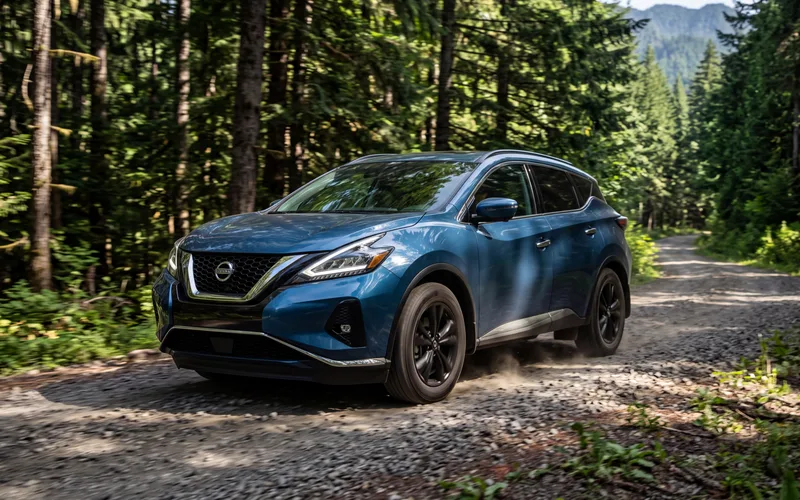 Nissan MuranoMid-Size SUVBetter at: Freshness
The same two-row, comfort-first formula as the Edge but freshly redesigned and still in production, so it comes with a full warranty and a parts-and-support future.
Compare 2.79B-
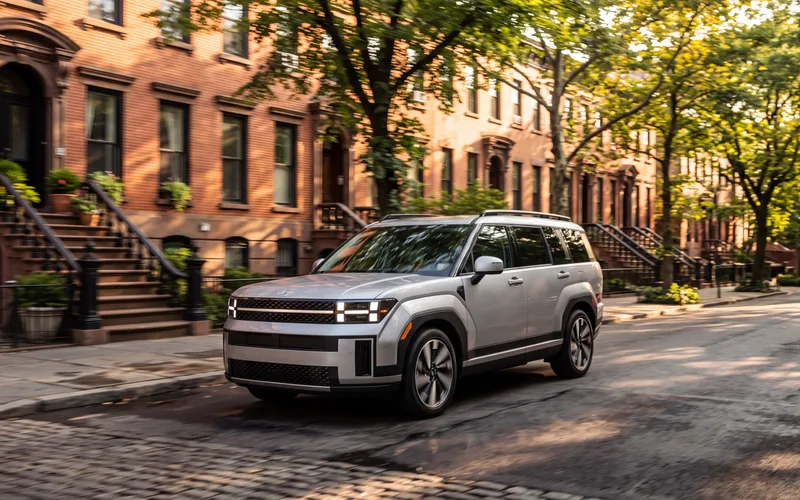 Hyundai Santa FeMid-Size SUVBetter at: Efficiency
A hybrid option in the mid-30s MPG, a bonus third row, and far longer warranty coverage turn every Edge ownership-cost weakness into a strength.
Compare 2.63C+
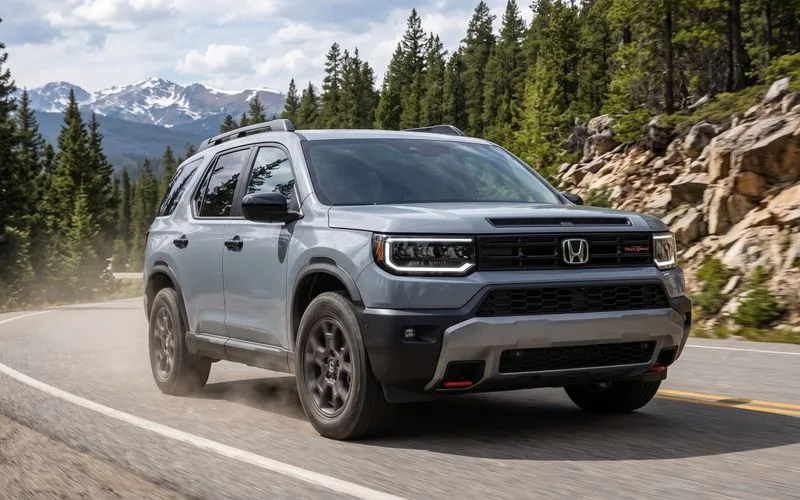 Honda PassportMid-Size SUVBetter at: Cargo & resale
If you want a two-row SUV that hauls gear rather than just people, the Passport adds 10-plus cubic feet of cargo, 5,000 lbs of towing, and much stronger resale value.
CompareHow it's evolved
8 scored model years · 2017–2024
Subject scores by year
Hover or tap a score to see what moved it versus the year before. A corner mark flags a big swing.
| Year | Performance | Efficiency | Safety | Space | Cost | Reliability | Tech | Use-case | Driving | Value |
|---|---|---|---|---|---|---|---|---|---|---|
| 2024 | 39 | 52 | 66 | 55 | 42 | 67 | 64 | 62 | 61 | 54 |
| 2023 | 39 | 52 | 66 | 55 | 43 | 67 | 55 | 56 | 61 | 50 |
| 2022 | 41 | 47 | 66 | 54 | 44 | 63 | 50 | 54 | 61 | 50 |
| 2021 | 40 | 55 | 65 | 56 | 49 | 58 | 65 | 54 | 60 | 51 |
| 2020 | 41 | 52 | 65 | 56 | 54 | 63 | 41 | 54 | 60 | 56 |
| 2019 | 39 | 63 | 65 | 56 | 50 | 55 | 50 | 53 | 60 | 59 |
| 2018 | 38 | 59 | 52 | 54 | 51 | 54 | 44 | 51 | 62 | 58 |
| 2017 | 38 | 59 | 49 | 54 | 51 | 49 | 42 | 50 | 62 | 63 |
Compare two years
Best fit & conditions
Higher scores mean a better fit for that use case. Learn more about use-case fit →
Subject profile
Academic Probation · NHTSA safety recalls
Sep 3, 2025Back over prevention: sensing system: cameraThe rearview camera may display a distorted, inverted, or blank image when the vehicle is in reverse.
Defect
Ford Motor Company (Ford) is recalling certain 2015-2019 Lincoln MKC, Mustang, F-350 SD, F-250 SD, F-450 SD, 2015-2017 Lincoln Navigator, Expedition, 2015-2018 Edge, Transit Connect, 2016-2019 F-550 SD, Transit, 2017-2019 Econoline, and 2019 Ranger vehicles. The rearview camera may display a distorted, inverted, or blank image when the vehicle is in reverse.
Risk
A rearview camera that displays an inverted, distorted, or blank image can reduce the driverâs view behind the vehicle, increasing the risk of a crash.
Remedy
Dealers will inspect and replace the rearview camera as necessary, free of charge. Owner notification letters were mailed January 13, 2026. Ford owners will receive letters in phases, beginning January 2026 and June 2026. Owners may contact Ford customer service at 1-866-436-7332. Ford's number for this recall is 25S89. This recall expands previous NHTSA recall number 25V270. Vehicle Identification Numbers (VINs) involved in this recall will be searchable on NHTSA.gov beginning September 8, 2025.
NHTSA campaign 25V572000 ↗Manufacturer no. 25S891,456,417 vehicles potentially affected (all models in the campaign)Owners notified Jan 13, 2026Filed by Ford Motor CompanyFiled as EDGEAug 22, 2025Service brakes, hydraulic: foundation components: hoses, lines/piping, and fittingsThe rear brake jounce hose may rupture and leak brake fluid.
Defect
Ford Motor Company (Ford) is recalling certain 2016-2018 Lincoln MKX and 2015-2018 Edge vehicles. The rear brake jounce hose may rupture and leak brake fluid.
Risk
A brake fluid leak can extend the distance required to stop the vehicle, increasing the risk of a crash.
Remedy
Dealers will inspect and replace the brake jounce hoses and adjust brake jounce hoses with no damage present, free of charge. Owner notification letters were mailed September 17, 2026. Owners may contact Ford customer service at 1-866-436-7332. Ford's number for this recall is 25S87.
NHTSA campaign 25V544000 ↗Manufacturer no. 25S87499,129 vehicles potentially affected (all models in the campaign)Owners notified Sep 17, 2026Filed by Ford Motor CompanyFiled as EDGEJun 10, 2022Power train: automatic transmission: gear position indication (prndl) · Power train: shift linkage/cable/rodThe bushing that attaches the shifter cable to the transmission may degrade or detach.
Defect
Ford Motor Company (Ford) is recalling certain 2013-2019 Escape, 2013-2018 C-Max, 2013-2016 Fusion, 2013-2021 Transit Connect, and 2015-2018 Edge vehicles. The bushing that attaches the shifter cable to the transmission may degrade or detach.
Risk
A damaged or missing bushing may prevent the vehicle from shifting into the intended gear, and cause the vehicle to move in an unexpected direction. Additionally, the vehicle may roll after the driver selects the 'Park' position. Either scenario increases the risk of a crash or injury.
Remedy
Dealers will replace the under hood shift bushing and add a protective cap over the shift cable bushing, free of charge. Interim owner notification letters, informing owners of the safety risk, were mailed July 1, 2022. Remedy parts are expected to be available in 4th Quarter 2022. Owner notification letters were mailed October 27, 2022. Owners may contact Ford customer service at 1-866-436-7332. Ford's number for this recall is 22S43.
NHTSA campaign 22V413000 ↗Manufacturer no. 22S432,925,968 vehicles potentially affected (all models in the campaign)Owners notified Oct 27, 2022Filed by Ford Motor CompanyFiled as EDGEAug 10, 2020Service brakes · Service brakes, hydraulic: foundation components: hoses, lines/piping, and fittingsThe front brake hoses may rupture prematurely.
Defect
Ford Motor Company (Ford) is recalling certain 2015-2018 Ford Edge and 2016-2018 Lincoln MKX vehicles. The front brake hoses may rupture prematurely.
Risk
A ruptured front brake hose will cause a brake fluid leak, lengthening the distance needed to stop the vehicle, increasing the risk of a crash.
Remedy
Ford will notify owners, and dealers will replace the front brake hoses with the new hoses that have a revised braid material, free of charge. Owner notification letters were mailed on May 13, 2021. Owners may contact Ford customer service at 1-866-436-7332. Ford's number for this recall is 20S42.
NHTSA campaign 20V469000 ↗Manufacturer no. 20S42488,594 vehicles potentially affected (all models in the campaign)Owners notified May 13, 2021Filed by Ford Motor CompanyFiled as EDGEJun 11, 2018Power train: automatic transmission: torque converterOn vehicles with 2.0L gas engines and six-speed automatic transmissions, the torque converter weld studs may have been inadequately welded.
Defect
Ford Motor Company (Ford) is recalling certain 2017-2018 Ford Edge and 2017 Lincoln MKZ vehicles. On vehicles with 2.0L gas engines and six-speed automatic transmissions, the torque converter weld studs may have been inadequately welded.
Risk
If the torque converter weld studs fail, the torque converter will not be connected to the engine flexplate and the vehicle will lose the ability to move, increasing the risk of a crash.
Remedy
Ford will notify owners, and dealers will replace the torque converters, free of charge. The recall began on July 5, 2018. Owners may contact Ford customer service at 1-866-436-7332. Ford's number for this recall is 17S16 (S2). Note: This recall is an expansion of recall 17V-427.
NHTSA campaign 18V390000 ↗Manufacturer no. 17S16 (S2)25 vehicles potentially affected (all models in the campaign)Owners notified Jul 5, 2018Filed by Ford Motor CompanyFiled as EDGEJul 6, 2017Power train: automatic transmission: torque converterOn vehicles with 2.0L gas engines and six-speed automatic transmissions, the torque converter weld studs may have been inadequately welded.
Defect
Ford Motor Company (Ford) is recalling certain 2017 Lincoln MKZ and Ford Edge and Fusion vehicles. On vehicles with 2.0L gas engines and six-speed automatic transmissions, the torque converter weld studs may have been inadequately welded.
Risk
If the torque converter weld studs fail, the torque converter will not be connected to the engine flexplate and the vehicle will lose the ability to move, increasing the risk of a crash.
Remedy
Ford or Lincoln will notify owners, and dealers will replace the torque converters, free of charge. The recall began August 25, 2017. Owners may contact Ford customer service at 1-866-436-7332. Ford's number for this recall is 17S16.
NHTSA campaign 17V427000 ↗Manufacturer no. 17S166,026 vehicles potentially affected (all models in the campaign)Owners notified Aug 25, 2017Filed by Ford Motor CompanyFiled as EDGEMar 27, 2017Structure: body: roof and pillarsThese vehicles may have an improperly welded windshield header, reducing the vehicle's lateral structural integrity. As such, these vehicles fail to comply with the requirements of Federal Motor Vehicle Safety Standard (FMVSS) number 214, "Side Impact Protection."
Defect
Ford Motor Company (Ford) is recalling certain 2017 Edge vehicles equipped with the optional Panoramic Vista Roof. These vehicles may have an improperly welded windshield header, reducing the vehicle's lateral structural integrity. As such, these vehicles fail to comply with the requirements of Federal Motor Vehicle Safety Standard (FMVSS) number 214, "Side Impact Protection."
Risk
If the vehicle has reduced lateral structural integrity, the occupants are at an increased risk of injury in the event of a side-impact crash.
Remedy
Ford will notify owners, and dealers will repair the windshield header, free of charge. The recall began May 18, 2017. Owners may contact Ford customer service at 1-866-436-7332. Ford's number for the recall is 17C05.
NHTSA campaign 17V205000 ↗Manufacturer no. 17C0584 vehicles potentially affected (all models in the campaign)Owners notified May 18, 2017Filed by Ford Motor CompanyFiled as EDGEFeb 27, 2017Air bags: frontal: driver side: inflator moduleIn the event of a crash, the driver's frontal air bag may not fully inflate or the air bag cushion may detach from the air bag module. As such, these vehicles fail to comply with the requirements of Federal Motor Vehicle Safety Standard (FMVSS) number 208, "Occupant Crash Protection."
Defect
Ford Motor Company (Ford) is recalling certain 2016-2017 Ford Edge and Lincoln MKX vehicles and 2017 Lincoln Continental vehicles. In the event of a crash, the driver's frontal air bag may not fully inflate or the air bag cushion may detach from the air bag module. As such, these vehicles fail to comply with the requirements of Federal Motor Vehicle Safety Standard (FMVSS) number 208, "Occupant Crash Protection."
Risk
During deployment, if the air bag does not fully inflate or the cushion detaches, there is an increased risk of injury in the event of a crash.
Remedy
Ford will notify owners, and dealers will replace the driver frontal air bag module, free of charge. The recall began June 16, 2017. Owners may contact Ford customer service at 1-866-436-7332. Ford's number for this recall is 17C02.
NHTSA campaign 17V123000 ↗Manufacturer no. 17C0227,531 vehicles potentially affected (all models in the campaign)Owners notified Jun 16, 2017Filed by Ford Motor CompanyFiled as EDGE
15 recalls on other model years of the Edge (2018–2024)
Mar 3, 2026Back over prevention: softwareThe Accessory Protocol Interface Module (APIM) may overheat and shutdown, which can prevent the rearview camera image from displaying as intended.
Defect
Ford Motor Company (Ford) is recalling certain 2021-2026 Ford Bronco and 2021-2024 Ford Edge vehicles. The Accessory Protocol Interface Module (APIM) may overheat and shutdown, which can prevent the rearview camera image from displaying as intended.
Risk
A rearview camera that fails to display an image can reduce the driverâs view behind the vehicle, increasing the risk of a crash.
Remedy
The APIM software will be updated by a dealer, or through an over-the-air (OTA) update, free of charge. Owner notification letters were mailed April 13, 2026. Owners may contact Ford Customer Service at 1-866-436-7332. Ford's number for this recall is 26S09. Vehicle Identification Numbers (VINs) involved in this recall became searchable on NHTSA.gov on March 5, 2026.
NHTSA campaign 26V124000 ↗Manufacturer no. 26S09849,310 vehicles potentially affected (all models in the campaign)Owners notified Apr 13, 2026Filed by Ford Motor CompanyFiled as EDGEJun 27, 2025Back over prevention: softwareA software error may cause the rearview camera to display a blank image, or the image may remain on the display after the backing event has ended.
Defect
Ford Motor Company (Ford) is recalling certain 2018-2022 Transit Connect, 2019-2020 MKZ, MKX, Edge, Continental, F-150, Nautilus, Fusion, 2019-2023 Ranger, Mustang, 2020-2021 EcoSport, Expedition, Navigator, 2020-2022 Escape, F-250 SD, Corsair, 2020-2023 Aviator, Transit, 2020-2024 Explorer, 2021-2024 Bronco Sport, and 2022-2024 Maverick vehicles. A software error may cause the rearview camera to display a blank image, or the image may remain on the display after the backing event has ended.
Risk
A rearview camera that displays a blank image can reduce the driver's view behind the vehicle. A rearview image that continues to be displayed after the vehicle is shifted out of reverse may distract the driver. Both of these situations can increase the risk of a crash.
Remedy
Dealers will update the rearview camera software, free of charge. Owner notification letters were mailed September 4, 2025. Owners may contact Ford customer service at 1-866-436-7332. Ford's number for this recall is 25S72.
NHTSA campaign 25V442000 ↗Manufacturer no. 25S72200,237 vehicles potentially affected (all models in the campaign)Owners notified Sep 4, 2025Filed by Ford Motor CompanyFiled as EDGEMay 9, 2025Back over prevention: softwareA software error may cause the rearview camera image to delay, freeze, or not display when the vehicle is in reverse.
Defect
Ford Motor Company (Ford) is recalling certain 2021-2024 Bronco, F-150, 2021-2024 Edge, 2022-2025 Escape, F-250, F-350, F-450, F-550, F-600, 2022-2024 Expedition, 2022-2025 Transit, 2021-2023 Mach-E, 2024 Ranger, Mustang, 2021-2023 Lincoln Nautilus, 2022-2024 Navigator, and 2023-2024 Corsair vehicles. A software error may cause the rearview camera image to delay, freeze, or not display when the vehicle is in reverse.
Risk
A frozen or missing rearview camera image can reduce the driver's view behind the vehicle, increasing the risk of a crash.
Remedy
The accessory protocol interface module (APIM) software will be updated by a dealer or through an over-the-air update, free of charge. This will be a phased campaign, with the remedy becoming available in different phases based on model and model years. Interim letters notifying owners of the safety risk were mailed on June 26, 2025. Additional letters will be mailed once the final remedy is available on each phase. Owner notification letters were sent on October 8, 2025. Owners may contact Ford customer service at 1-866-436-7332. Ford's number for this recall is 25S49.
NHTSA campaign 25V315000 ↗Manufacturer no. 25S491,076,138 vehicles potentially affected (all models in the campaign)Owners notified Oct 8, 2025Filed by Ford Motor CompanyFiled as EDGEMar 14, 2025Back over prevention: softwareA software error may cause the rearview camera to display a blank or distorted image when the vehicle is in reverse.
Defect
Ford Motor Company (Ford) is recalling certain 2021-2022 Edge vehicles previously repaired incorrectly under recall number 22V-151. A software error may cause the rearview camera to display a blank or distorted image when the vehicle is in reverse.
Risk
A rearview camera that displays a blank or distorted image can reduce the driver's view of what is behind the vehicle, increasing the risk of a crash.
Remedy
Dealers will update the rearview camera software, free of charge. Owner notification letters were mailed April 25, 2025. Owners may contact Ford customer service at 1-866-436-7332. Ford's number for this recall is 25S28.
NHTSA campaign 25V160000 ↗Manufacturer no. 25S282,290 vehicles potentially affected (all models in the campaign)Owners notified Apr 25, 2025Filed by Ford Motor CompanyFiled as EDGEAug 23, 2024Engine and engine cooling: engine: hard parts internal/mechanicalThe engine intake valves may break while driving, which can result in engine failure and a loss of drive power.
Defect
Ford Motor Company (Ford) is recalling certain 2021-2022 Bronco, F-150, Edge, Explorer, Lincoln Nautilus, and Lincoln Aviator vehicles equipped with either a 2.7L or 3.0L Nano EcoBoost engine. The engine intake valves may break while driving, which can result in engine failure and a loss of drive power.
Risk
A loss of drive power increases the risk of a crash.
Remedy
Dealers will perform an engine cycle test and replace the engine as necessary, free of charge. Owner notification letters were mailed July 3, 2025. Owners may contact Ford customer service at 1-866-436-7332. Ford's number for this recall is 24S55.
NHTSA campaign 24V635000 ↗Manufacturer no. 24S5590,736 vehicles potentially affected (all models in the campaign)Owners notified Jul 3, 2025Filed by Ford Motor CompanyFiled as EDGEAug 25, 2023Exterior lighting: headlightsThe front right headlight may be too bright or aimed incorrectly. As such, these vehicles fail to comply with the requirements of Federal Motor Vehicle Safety Standard number 108, "Lamps, Reflective Devices, and Associated Equipment."
Defect
Ford Motor Company (Ford) is recalling certain 2023 Edge vehicles. The front right headlight may be too bright or aimed incorrectly. As such, these vehicles fail to comply with the requirements of Federal Motor Vehicle Safety Standard number 108, "Lamps, Reflective Devices, and Associated Equipment."
Risk
A headlight that is too bright or aimed incorrectly may cause a glare to other road users, increasing the risk of a crash.
Remedy
Dealers will inspect and replace the right headlight assembly as necessary, free of charge. Owner notification letters were mailed October 9, 2023. Owners may contact Ford customer service at 1-866-436-7332. Ford's number for this recall is 23C26.
NHTSA campaign 23V596000 ↗Manufacturer no. 23C268,523 vehicles potentially affected (all models in the campaign)Owners notified Oct 9, 2023Filed by Ford Motor CompanyFiled as EDGEMar 24, 2023Child seat: vehicle tether anchorThe child seat tether wire welds on the second-row left-side seat back frame may be insufficient, which can reduce the seat's ability to properly restrain a child during a crash. As such, these vehicles fail to comply with the requirements of Federal Motor Vehicle Safety Standard number 225, "Child Restraint Anchorage Systems."
Defect
Ford Motor Company (Ford) is recalling certain 2023 Edge and Lincoln Nautilus vehicles. The child seat tether wire welds on the second-row left-side seat back frame may be insufficient, which can reduce the seat's ability to properly restrain a child during a crash. As such, these vehicles fail to comply with the requirements of Federal Motor Vehicle Safety Standard number 225, "Child Restraint Anchorage Systems."
Risk
A child that is not properly restrained during a crash can have an increased risk of injury.
Remedy
Dealers will replace the left-side second-row seat back frame, free of charge. Owner notification letters were mailed May 11, 2023. Owners may contact Ford customer service at 1-866-436-7332. Ford's number for this recall is 23C09.
NHTSA campaign 23V198000 ↗Manufacturer no. 23C0919 vehicles potentially affected (all models in the campaign)Owners notified May 11, 2023Filed by Ford Motor CompanyFiled as EDGEMar 11, 2022Back over prevention: display function · Back over prevention: softwareA software error may cause the rearview camera to display a blank or distorted image when the vehicle is in reverse.
Defect
Ford Motor Company (Ford) is recalling certain 2021-2022 Edge vehicles. A software error may cause the rearview camera to display a blank or distorted image when the vehicle is in reverse.
Risk
A rearview camera that displays a blank or distorted image can reduce the driver's view of what is behind the vehicle, increasing the risk of a crash.
Remedy
The rearview camera software will be updated by a dealer, or through an over-the-air (OTA) update, free of charge. Owner notification letters were mailed on April 29, 2022. Owners may contact Ford customer service at 1-866-436-7332. Ford's number for this recall is 22S14.
NHTSA campaign 22V151000 ↗Manufacturer no. 22S1478,376 vehicles potentially affected (all models in the campaign)Owners notified Apr 29, 2022Filed by Ford Motor CompanyFiled as EDGEMay 24, 2021Seat belts: front: retractor · Seat belts: pretensionerThe driver's seat belt retractor pretensioner assembly may not function correctly when activated during a crash. As such, these vehicles fail to comply with the requirements of Federal Motor Vehicle Safety Standard (FMVSS) number 208, "Occupant Crash Protection."
Defect
Ford Motor Company (Ford) is recalling certain 2021 Edge vehicles. The driver's seat belt retractor pretensioner assembly may not function correctly when activated during a crash. As such, these vehicles fail to comply with the requirements of Federal Motor Vehicle Safety Standard (FMVSS) number 208, "Occupant Crash Protection."
Risk
A seatbelt assembly that does not function as intended can increase the risk of injury during a crash.
Remedy
Dealers will replace the driver's seat belt retractor pretensioner assembly, free of charge. Owner notification letters were mailed on June 15, 2021. Owners may contact Ford customer service at 1-866-436-7332. Ford's number for this recall is 21C13.
NHTSA campaign 21V377000 ↗Manufacturer no. 21C1382 vehicles potentially affected (all models in the campaign)Owners notified Jun 15, 2021Filed by Ford Motor CompanyFiled as EDGEJan 15, 2021Power train: driveline: driveshaftAn inadequate amount of lubricant in the rear drive unit may cause seizure of the rear drive axle.
Defect
Ford Motor Company (Ford) is recalling certain 2020-2021 Edge, 2020 Lincoln Nautilus and Ford Escape and 2021 Lincoln Corsair and Ford Bronco Sport vehicles. An inadequate amount of lubricant in the rear drive unit may cause seizure of the rear drive axle.
Risk
If the rear drive unit seizes, there may be a loss of drive and/or a loss of vehicle control, increasing the risk of a crash.
Remedy
Ford will notify owners, and dealers will check the rear drive unit lubricant level. Axles found to have lubricant at the minimum level will be filled to the full level. Axles found to be below the minimum lubricant fill level will be replaced, free of charge. This recall began March 12, 2021. Owners may contact Ford customer service at 1-866-436-7332. Ford's number for this recall is 21S02.
NHTSA campaign 21V011000 ↗Manufacturer no. 21S02147 vehicles potentially affected (all models in the campaign)Owners notified Mar 12, 2021Filed by Ford Motor CompanyFiled as EDGESep 23, 2020Back over prevention: sensing system: cameraDue to a poor electrical connection, the rearview camera may intermittently display a blank or distorted image. As such, these vehicles fail to comply with the requirements of Federal Motor Vehicle Safety Standard (FMVSS) number 111, "Rear Visibility."
Defect
Ford Motor Company (Ford) is recalling certain 2020 Ford F-150, F-250, F-350, F-450, F-550, Explorer, Mustang, Transit, Expedition, Escape, Ranger and Edge, and Lincoln Nautilus and Corsair vehicles. Due to a poor electrical connection, the rearview camera may intermittently display a blank or distorted image. As such, these vehicles fail to comply with the requirements of Federal Motor Vehicle Safety Standard (FMVSS) number 111, "Rear Visibility."
Risk
Reduced rearward visibility can increase the risk of a crash.
Remedy
Ford will notify owners, and dealers will replace the rearview camera, free of charge. The recall began November 17, 2020. Remedy became available on February 1, 2021. Owner notification letters were mailed on February 1, 2021. Owners may contact Ford customer service at 1-866-436-7332. Ford's number for this recall is 20C19.
NHTSA campaign 20V575000 ↗Manufacturer no. 20C19620,246 vehicles potentially affected (all models in the campaign)Owners notified Feb 1, 2021Filed by Ford Motor CompanyFiled as EDGESep 10, 2020Power train: automatic transmissionThe start/stop accumulator endcap may have missing or loose bolts.
Defect
Ford Motor Company (Ford) is recalling certain 2019-2020 Edge, Transit Connect and Lincoln MKX and 2020 Escape and Lincoln Corsair vehicles. The start/stop accumulator endcap may have missing or loose bolts.
Risk
Missing or loose bolts on the start stop accumulator endcap could result in a transmission fluid leak and may progress to a loss of transmission function. A transmission fluid leak in the presence of an ignition source may increase the risk of fire.
Remedy
Ford will notify owners, and dealers will replace the start/stop accumulator, free of charge. The recall began September 23, 2020. Owners may contact Ford customer service at 1-866-436-7332. Ford's number for this recall is 20S49.
NHTSA campaign 20V550000 ↗Manufacturer no. 20S4997 vehicles potentially affected (all models in the campaign)Owners notified Sep 23, 2020Filed by Ford Motor CompanyFiled as EDGEOct 25, 2019Seat belts: front: anchorage · Seat belts: front: webbing · Seat belts: pretensionerThe driver-side seat belt pretensioner anchor may have been improperly crimped, possibly resulting in the seat belt webbing detaching from the anchor in the event of a crash.
Defect
Ford Motor Company (Ford) is recalling certain 2019 Edge vehicles. The driver-side seat belt pretensioner anchor may have been improperly crimped, possibly resulting in the seat belt webbing detaching from the anchor in the event of a crash.
Risk
In the event of a crash, seat belt webbing that detaches from the anchor will not properly restrain the driver, increasing their risk of injury.
Remedy
Ford has notified owners, and dealers will inspect and, if necessary, replace the driver's side pretensioner assembly, free of charge. The recall began November 12, 2019. Owners may contact Ford customer service at 1-866-436-7332. Ford's number for this recall is 19S37.
NHTSA campaign 19V766000 ↗Manufacturer no. 19S37366 vehicles potentially affected (all models in the campaign)Owners notified Nov 12, 2019Filed by Ford Motor CompanyFiled as EDGESep 11, 2018Latches/locks/linkages: doors: latchThese vehicles may have door striker bolts that are shorter than intended. Vehicles with shorter door striker bolts fail to comply with the requirements of Federal Motor Vehicle Safety Standard (FMVSS) number 206, "Door Locks and Door Retention Components" potentially resulting in the doors opening in the event of a crash.
Defect
Ford Motor Company (Ford) is recalling certain 2018 Ford Edge and Lincoln MKX vehicles. These vehicles may have door striker bolts that are shorter than intended. Vehicles with shorter door striker bolts fail to comply with the requirements of Federal Motor Vehicle Safety Standard (FMVSS) number 206, "Door Locks and Door Retention Components" potentially resulting in the doors opening in the event of a crash.
Risk
If the doors open in the event of a crash, there is an increased risk of injury.
Remedy
Ford will notify owners, and dealers will replace the door striker bolts, free of charge. The recall began October 18, 2018. Owners may contact Ford customer service at 1-866-436-7332. Ford's number for this recall is 18C06.
NHTSA campaign 18V612000 ↗Manufacturer no. 18C06503 vehicles potentially affected (all models in the campaign)Owners notified Oct 18, 2018Filed by Ford Motor CompanyFiled as EDGEAug 20, 2018Electrical system: alternator/generator/regulator · Electrical system: starter assemblyThe power supply cables at the starter and the alternator may not have been properly secured, possibly resulting in an electrical arc.
Defect
Ford Motor Company (Ford) is recalling certain 2018 Ford Edge, Lincoln MKX, 2019 Ford Flex, and Lincoln MKT vehicles. The power supply cables at the starter and the alternator may not have been properly secured, possibly resulting in an electrical arc.
Risk
An electrical arc can increase the risk of a fire.
Remedy
Ford will notify owners, and dealers will inspect the alternator and starter motor power supply cables to verify that they are properly secured, correcting them as necessary, free of charge. The recall began September 26, 2018. Owners may contact Ford customer service at 1-866-436-7332. Ford's number for this recall is 18S25.
NHTSA campaign 18V548000 ↗Manufacturer no. 18S2587 vehicles potentially affected (all models in the campaign)Owners notified Sep 26, 2018Filed by Ford Motor CompanyFiled as EDGE
Source: NHTSA Office of Defects Investigation recall database, model years 2017–2024. Recalls are listed by model year as the manufacturer filed them; whether a specific car is affected depends on its VIN — check a VIN at nhtsa.gov ↗. NHTSA model names matched to this page: EDGE.
Detailed scoring by subject
1Performance & PowertrainThe Edge's lowest-graded category.0.50F
The SEL, the Edge's best-selling 2017 trim, carries the standard 2.0L EcoBoost turbo I-4 rated 245 hp; Titanium buyers could step up to a 3.5L naturally aspirated V6, while the range-topping Sport used a distinct 2.7L twin-turbo V6. Unchanged from the second generation's 2015 introduction through the 2018 model year.
Peak torque for the standard 2.0L EcoBoost four, paired with a 6-speed automatic across the 2017 lineup (the 8-speed did not arrive until the 2019 refresh).
Instrumented tests of the second-generation Edge's 2.0L EcoBoost AWD (unchanged 2015–2018) cluster in the high-7-second range; the 2.7L twin-turbo Sport is considerably quicker, in the low-6-second range.
The 2.0L EcoBoost four is adequately smooth and torquey around town but shows some turbo lag and coarseness under hard acceleration; the optional 3.5L V6 and especially the Sport's twin-turbo V6 deliver notably stronger, smoother power.
The 6-speed automatic shifts smoothly enough in routine driving but has noticeably fewer ratios and slower kickdown response than newer competitors' 8- and 9-speed units, with occasional hunting on light throttle — a known weak point Ford addressed with an 8-speed only in the 2019 refresh.
The standard 2.0L EcoBoost Edge is rated to tow 1,500 lbs unequipped; adding the trailer tow package on any trim, including the 2.7L-powered Sport, raises the max conventional rating to 3,500 lbs.
AWD is optional on SE, SEL, and Titanium and standard on Sport, with a basic driver-selectable drive mode system (Normal/Sport/Slippery) but no low-range or terrain-specific hardware.
The Edge is a pavement-oriented crossover with modest ~7.9 in ground clearance, no dedicated off-road trim, skid plates, or low-range gearing.
Three gas engine choices for 2017 — the 2.0L EcoBoost I-4, an optional 3.5L V6 on Titanium, and the Sport-exclusive 2.7L twin-turbo V6 — but no hybrid, PHEV, or EV variant was ever offered on the second-generation Edge.
2Efficiency & RangeOne of the Edge's strongest categories.1.99C-
The standard 2.0L EcoBoost I-4 with FWD is the EPA combined-MPG leader of the 2017 lineup; the optional V6s and AWD trade efficiency for power.
EPA city rating for the standard 2.0L EcoBoost FWD configuration.
EPA highway rating for the standard 2.0L EcoBoost FWD configuration.
Calculated from the Edge's 18.0-gallon fuel tank and the volume trim's EPA combined rating; actual range varies with driving conditions and drivetrain.
Estimated using the EPA's standard 15,000 mi/yr assumption and period-typical fuel pricing against the volume trim's 24 mpg combined rating; V6 and AWD configurations would run somewhat higher.
All three 2017 Edge engines, including the EcoBoost turbos, are designed to run on regular 87-octane unleaded with no premium requirement.
3SafetyGrades below the middle of the scale.1.31D
NHTSA gave the 2017 Edge a perfect 5-star overall rating, with 5 stars for frontal and side impact protection; rollover resistance scored 4 stars, typical for the SUV body style.
Good ratings in moderate-overlap front, side, roof strength and head restraint tests, but only Acceptable in the small-overlap front test, and its optional front crash prevention system rated only Basic — together these disqualified the 2017 Edge from any IIHS Top Safety Pick award.
The volume SE trim comes with only a standard rearview camera; AEB/forward collision warning, adaptive cruise, lane-keeping, and blind-spot monitoring are all optional extras confined to the Technology package on SEL/Titanium/Sport trims.
AEB was optional rather than standard, and IIHS rated the 2017-2018 Edge's front crash prevention system only Basic — the lowest tier before Advanced/Superior — reflecting limited-speed autobrake without pedestrian detection.
Blind-spot monitoring with rear cross-traffic alert is alert-only and bundled into the Technology package, unavailable on the base SE trim and optional on SEL/Titanium/Sport.
Lane-keeping system is an alert-and-nudge assist rather than true lane centering, typical of mid-2010s Ford systems, and remains optional rather than standard.
Adaptive cruise control with forward collision warning is available as an option but lacks stop-and-go capability or any integrated highway-assist steering feature — basic radar cruise only.
No hands-free highway driving system existed on the Edge in this generation; Ford's BlueCruise did not arrive until years later.
IIHS testing found good visibility on straightaways but only fair visibility in curves across all four tested configurations, with excessive glare from low beams — a middling result short of a Good rating.
A standard rearview camera helps compensate for typical mid-size SUV sightlines, but no 360-degree camera or blind-spot mirror technology is standard on the volume trim, leaving average visibility overall.
Standard LATCH anchors with the Edge's conventional rear door openings make for workable, if unremarkable, car-seat installation typical of the mid-size SUV segment.
4Space & ComfortGrades below the middle of the scale.1.66D
The 2017 Edge is a two-row, five-passenger mid-size crossover across all trims (SE, SEL, Titanium, Sport) — no third-row or 6/7-seat configuration was offered.
Front headroom is unchanged across the second-generation Edge (2015–2018); 2017 carries the same body and greenhouse, measured without the optional panoramic Vista Roof.
Ample front legroom typical of the mid-size two-row Edge; unchanged for 2017 within the second generation.
Second-row headroom slightly exceeds the front-row figure thanks to the Edge's boxy roofline and tops the mid-size SUV normalization band — a segment strength, unchanged for 2017.
Generous second-row legroom for the segment, aided by the Edge's long wheelbase and lack of a third row to compromise packaging.
The 2017 Edge is strictly a two-row mid-size SUV with no third-row option on any trim (SE/SEL/Titanium/Sport) — buyers wanting three rows had to step up to the Explorer. Scored per the segment's 'no third row / token seating' band.
Behind-second-row cargo volume is mid-pack for a two-row mid-size SUV — no third row to fold, so all capacity sits behind row 2.
Maximum cargo with the 60/40 second row folded flat is competitive but trails larger three-row rivals in this band.
Conventional center console, door bins, and a flat-folding second row cover the basics, but the pre-refresh 2017 layout lacks the redesigned console with added storage that arrived with the 2019 refresh, and there is no standout storage innovation versus rivals.
Front seats are well-bolstered and cozy with optional ventilation on Titanium, but reviewers repeatedly flag flat, unsupportive rear bench cushions clearly optimized for folding flat rather than long-haul comfort — the same seat structure that carried unchanged through 2018 and into the 2019 refresh. Recalibrated down to align with sibling model years and the mid-size SUV rated band.
The standard suspension absorbs larger bumps reasonably well with composed body control, but reviewers found it busier than expected over smaller imperfections with some vertical float over undulations; the Sport trim's stiffer tune and 20/21-inch wheels trade comfort for handling. Same tune carried through 2018 and into 2019 — recalibrated to match the sibling years.
Good cabin sealing keeps wind and road noise to a minimum at highway speed, with the Titanium's acoustic side glass and active noise cancellation further improving isolation — the same NVH package that carried through 2018 and into 2019 and was consistently praised by reviewers. Recalibrated upward to match the sibling years.
Heated front seats are standard on Titanium and available via option groups on SEL, but ventilated front seats, heated rear seats, and a heated steering wheel are bundled in the pricier Equipment Group 301A / Cold Weather Package on Titanium only rather than being broadly standard. Recalibrated up from 48 to reflect that Titanium-trim shoppers can readily option most features.
5Cost of OwnershipGrades below the middle of the scale.1.44D
2017 was a carryover pricing year for this generation ahead of the 2018 bump and 2019 mid-cycle refresh, keeping the Edge SE among the more affordable mid-size SUV entry points.
SEL was the volume-selling 2017 Edge configuration, adding SYNC 3, dual-zone climate control, and additional convenience/tech content over SE while pricing well below Titanium/Sport.
Same generation and mechanicals (carryover 2.0L EcoBoost I4, 3.5L V6, 2.7L EcoBoost V6 on Sport) as the adjacent 2018 model, which RepairPal rates mid-pack for the class (~$611/yr average repair, 3.5/5.0 reliability); projected 5-year cost is estimated in line with that generation.
Weak residuals across this generation of Edge — depreciation studies consistently show the Edge losing value faster than the mid-size SUV class average, the single biggest ownership-cost drag for this vehicle.
Ford's standard basic warranty — the floor of the mainstream segment, matching domestic and Japanese rivals but trailing Hyundai/Kia (5/60) and Mitsubishi (5/60).
Ford's standard 5/60 powertrain floor — again the segment minimum next to Hyundai/Kia's far more generous 10/100 coverage.
No factory-complimentary scheduled maintenance out of the box, and the 2017 Edge predates the FordPass Connect embedded modem (added for 2019); owners get Ford's standard 5-yr/60,000-mi Roadside Assistance and could enroll in FordPass Rewards, but without the later connected-service perks.
$31,860 volume-trim price minus its estimated resale value after 5 years (42% retained, or about $13,381) leaves about $18,479 in depreciation. Add the projected $4,900 in 5-year maintenance and repairs, and owning this vehicle for 5 years costs about $23,379 in total.
6Reliability & QualityOne of the Edge's weakest categories.1.27D
Consumer Reports rated the 2017 Edge's predicted reliability as roughly average for the model year, but owner-reported issues with the 2.0L EcoBoost engine and 6-speed automatic — including a torque-converter recall specific to 2017-18 models — kept it from scoring above the segment mid-point.
Ford's brand dependability standing was near the bottom of the industry through this period — dead last (31st of 33 brands) in J.D. Power's 2016 U.S. Vehicle Dependability Study, improving only to a tie for 26th in the 2017 study, still meaningfully below the industry average PP100.
The 2017 Edge carries a notably heavy recall load for its generation: torque-converter weld-stud failures risking total loss of propulsion (18V390000), an improperly welded windshield header on Panoramic Vista Roof cars that reduces lateral structural integrity, a shifter-cable bushing that can degrade and cause unintended vehicle movement, and a rearview-camera display defect. Eight total NHTSA campaigns touching powertrain, structure, and rollaway risk is worse than typical for the class.
The volume 2.0L EcoBoost/6F35 combination has a documented pattern of transmission and torque-converter failures (subject to its own recall) alongside a separate coolant-into-cylinder engine defect affecting 2015-2018 Edges that typically requires full engine replacement — owners outside warranty report $7,000-$10,000 repair bills. This is a real, recurring problem powertrain rather than an isolated issue.
Reviewers praised generous soft-touch coverage on the dash, doors, and center console above hip level, but consistently criticized the lower center stack and dash trim as cheap-feeling hard plastic — a mixed but overall competitive result for a mainstream mid-size SUV.
No widespread owner complaints about rattles or panel-gap inconsistency surfaced, but the Vista Roof windshield-header weld defect (subject of a 2017-specific structural recall) points to at least one real assembly-quality lapse for that configuration during this model year.
Ford operates one of the largest dealer and service networks in the US, giving Edge owners broad access to service and warranty work, though service-satisfaction surveys typically placed the brand in the middle of the pack during this period rather than among leaders.
RepairPal rates the Edge's overall reliability 3.5/5.0 (11th of 26 midsize SUVs) with an average annual repair cost of $611 — below the all-vehicle average of $652 — and fewer unscheduled shop visits than the segment norm, aided by high production volume and broad aftermarket parts availability.
7Technology & InfotainmentOne of the Edge's weakest categories.0.78F
2017 is the model year Ford brought SYNC 3 to the Edge lineup, replacing MyFord Touch on SEL-and-up trims with an 8-inch capacitive touchscreen while the fleet-oriented base SE kept its 4.2-inch non-touch display. 8.0 in sits near the bottom of the mid-size-SUV norm for this generation.
SYNC 3's debut on the 2017 Edge (SEL and up) was a major usability jump over the sluggish, criticized MyFord Touch it replaced, with quick tile-based menus and retained physical volume/tuning knobs — but the base SE's smaller non-touch display is a clear step down that drags the lineup average, and this was the system's first year on this model.
2017 was the first Edge model year to offer Apple CarPlay and Android Auto at all, bundled with the new SYNC 3 system on SEL (Technology Package) and standard on Titanium/Sport — wired-only, as wireless projection did not yet exist industry-wide, and entirely unavailable on the base SE's non-touch display.
SYNC 3's voice recognition handles basic phone, audio, and climate commands reliably on SEL-and-up trims, and an embedded SYNC 3 Navigation package was optional on those trims, but most buyers of this era defaulted to CarPlay/Android Auto for mapping and the base SE lacks the system entirely.
The standard 6-speaker system is adequate for the segment, while an optional 12-speaker Bang & Olufsen Play premium system (available on Titanium/Sport) was already a standout upgrade in the mid-size SUV class in this generation.
The 2017 Edge uses analog gauges across the lineup with, at most, a small monochrome or color productivity screen between them on higher trims — no fully configurable digital cluster was offered on any trim.
SYNC 3 supports periodic map and software updates via Wi-Fi or USB on SEL-and-up trims, but this is scoped to the infotainment module only, and the 2017 Edge predates the FordPass Connect embedded-modem standardization that arrived for 2019.
FordPass app remote functions (lock/unlock, vehicle locate) were newly available on SYNC 3-equipped 2017 Edge trims, but the SYNC Connect 4G modem enabling remote start over the app was an optional add-on rather than standard equipment, well short of the standard FordPass Connect module that arrived for 2019.
The 2017 Edge offers a modest pair of front USB-A ports standard on SYNC 3-equipped trims, with rear ports and an optional wireless charging pad available on higher trims; USB-C was not yet present on this generation, and the base SE's older head unit offers even less.
Proximity keyless entry with push-button start is standard from SEL up, with remote start available as an option package, though the base SE relies on traditional key-and-fob entry and no phone-as-key feature existed on this generation.
A standard rear-view camera is paired with available front/rear parking sensors and Active Park Assist on higher trims, but the 2017 Edge predates the Ford Co-Pilot360 branding/enhancements introduced for 2019 and does not offer a 360-degree surround-view system.
No head-up display was offered on any 2017 Edge trim, consistent with this generation's feature set across its entire production run.
8Use-Case FitGrades below the middle of the scale.1.37D
Wide door openings and a low load floor make loading kids and stroller gear easy, but the 2017 Edge is a strict two-row, 5-seat crossover with no third-row option, and IIHS rated LATCH ease-of-use only Acceptable for this generation, citing hardware that complicates quick, correct installs.
NHTSA gave the 2017 Edge a full 5-star overall rating (5 front, 5 side, 4 rollover), but IIHS rated front crash prevention only Basic and small-overlap front only Acceptable with no Top Safety Pick award, and key ADAS - adaptive cruise, forward collision warning, blind-spot monitoring, lane-keeping, active park assist - were extra-cost options rather than standard on the family-friendly SE/SEL trims (Ford's Co-Pilot360 suite would not standardize this until the 2019 refresh).
Second-row space is generous and 39.2 cu ft of cargo room behind the rear seats swallows family luggage without folding anything down, but the rear bench is flat and thinly cushioned versus rivals, and there's no way to add capacity for a 6th/7th passenger.
A quiet, well-isolated cabin and the availability of a lighter, cheaper FWD configuration on SE/SEL/Titanium keep the Edge relaxed and easy around town, though the 6-speed automatic (shared across all four trims for 2017) can feel less refined than newer rivals' transmissions, and ride quality turns bouncy over smaller bumps.
The volume 2.0L EcoBoost FWD trims are EPA-rated 20/29/24 mpg city/highway/combined, giving commuters a reasonably efficient configuration, but fuel economy drops to 17/26/20 mpg with the 3.5L V6 and to 17/24/19 mpg on the AWD-only 2.7L Sport, leaving average-for-class per-mile costs once buyers move past the base engine.
At roughly 188 inches long the Edge is more compact than 3-row mid-size SUVs and offers a reasonable turning circle, though a 180-degree front camera and active park assist are optional rather than broadly available, leaving lower-trim buyers with just a standard rearview camera for tight parking.
The 2.0L and 3.5L trims can tow up to 3,500 lbs with the optional Class II Trailer Tow Package, but Ford capped the Sport's 2.7L twin-turbo V6 at just 2,000 lbs since it was not eligible for the tow package, and there's no factory payload/bed capability, so the Edge can handle only a small utility trailer at best regardless of engine.
By 2017 the 2.0L EcoBoost/6-speed and 3.5L V6 powertrains had a few years of in-market service history on this generation, and the 2.7L EcoBoost twin-turbo V6 (introduced for the 2015 Edge Sport) was similarly established, but this generation would go on to accumulate multiple NHTSA recalls over its production run and lacks any fleet-oriented reputation for hard-use durability.
Standard roof-rail side rails accept aftermarket crossbars and racks and a Class II hitch is available on 2.0L/3.5L trims, but there's no onboard power outlet for tools, no washable cargo liner ecosystem, and essentially no upfit market built around this platform.
A quiet cabin and supportive front seats make the Edge a competent highway cruiser, and optional adaptive cruise control reduces fatigue on longer drives, with the FWD 2.0L's 29 mpg highway rating and 18.5-gallon tank yielding roughly 535 miles of highway range, though the thinly cushioned rear seat limits multi-hour comfort for all occupants and adaptive cruise/lane-keeping remain options rather than standard equipment.
AWD is only optional on SE/SEL/Titanium for 2017 (standard only on Sport), so many buyers get a FWD-only crossover with no all-weather traction for gravel roads or campground access, and roughly 8 in of ground clearance with no low-range gearing or off-road-tuned suspension keeps even AWD-equipped Edges pavement-and-light-trail machines rather than true adventure vehicles.
A 60/40 split-fold rear seat, 39.2 cu ft of space behind the second row expanding to 73.4 cu ft with seats down, standard roof-rail side rails, and an available factory hitch make the Edge reasonably adaptable for gear, though there's no underfloor storage well or particularly clever packaging tricks versus segment leaders.
9Driving ExperienceOne of the Edge's strongest categories.2.19C
The second-generation Edge (2015–2018, unchanged for 2017) delivers taut, composed handling for a mid-size crossover — flat cornering and a planted, well-controlled feel that reviewers praised as class-competitive, though it stops short of genuinely engaging.
The electric power steering is well-weighted with natural effort buildup and tracks confidently on the highway, but front-tire road feedback is largely absent; Sport's standard adaptive steering eases parking effort without adding genuine feel.
Instrumented 60-0 mph testing of the unchanged second-generation platform lands in the high-110s of feet, solidly competitive for the class, with reviewers noting a firm, confidence-inspiring pedal aside from mild initial touchiness.
The volume 2.0L EcoBoost four pairs adequately with the carryover 6-speed automatic for smooth low-speed drivability, but the transmission's fewer ratios and occasional hunting on light throttle keep response from feeling fully polished versus rivals with 8- and 9-speed units.
Owners and reviewers describe a quiet, well-isolated cabin on the highway with the 2.0L EcoBoost four audible but inoffensive under hard acceleration; occasional turbo/engine drone under load is the main demerit.
Spec-data sources converge on roughly a 19.6 ft turning radius for the second-generation Edge (unchanged for 2017), yielding an approximate 39.2 ft curb-to-curb diameter — toward the wide end of the mid-size SUV norm given the Edge's footprint.
Low doorsills and wide door openings make ingress/egress easy, and supportive front seats (with optional cooling on higher trims) suit long trips, but a driver's footrest positioned uncomfortably close and thick roof pillars with modest glass area hurt outward visibility.
The volume 2.0L EcoBoost Edge is competent and composed but not exciting — pleasant rather than engaging; numb steering feel and the 6-speed automatic keep it from any 'take the long way home' appeal, an experience mostly reserved for the pricier, twin-turbo V6 Sport trim.
10Value & Market PositionThe Edge's best-graded category.2.26C
Base SE FWD ($28,950) includes SYNC 3 with 8-inch touchscreen, rearview camera, cloth seats, and 18-inch wheels — reasonable but not class-leading; power liftgate, leather, and driver-assist tech require stepping up to SEL/Titanium.
Sport trim's 2.7L EcoBoost V6 (315 hp) delivers near-performance-SUV feel for well under luxury-badge pricing, and the lineup's quiet cabin and ride quality punch above mainstream-price expectations, though top Titanium/Sport trims approach $40K.
Four well-spaced trims (SE, SEL, Titanium, Sport) each offered in FWD or AWD, spanning $28,950–$40,900 — a solid budget-to-loaded spread, though no true entry-luxury or off-road variant exists.
2017 was the Edge's best-ever US sales year at 142,603 units, up 6% from 2016 (134,588) — a clear rising performer within the mid-size two-row SUV field.
Ford carries solid mainstream credibility built on trucks and SUVs, but the Edge nameplate itself lacks a strong aspirational halo compared to Explorer or Escape; perception is neutral-to-positive rather than beloved.
As a high-volume mainstream Ford crossover, the Edge typically carried moderate factory-to-dealer and consumer cash incentives through 2017, especially late in the model year, without steep desperation pricing given strong sales.
The second-generation Edge launched for MY2015; 2017 is its third model year — a mid-cycle point with no major redesign for 2017 (Sport trim/2.7L EcoBoost had already arrived in 2016), ahead of the 2019 refresh.
The 2017 Edge won U.S. News' Best 2-Row SUV for Families and was a finalist for Best 2-Row SUV for the Money, with reviewers praising its quiet cabin and ride, though it wasn't a frequent outright comparison-test winner against segment leaders.