

The verdict
A struggling mid-size suv, strong on reliability and held back by performance.
Overall 1.84 (C-) across 10 graded subjects. Its strongest is reliability & quality at 2.53 (C+), its weakest performance & powertrain at 0.59 (F). 5 of 10 subjects grade at C− or better.
Jump to scoresStrengths
- Reliability & Quality
- Safety
- Driving Experience
What holds it back
- Performance & Powertrain
- Cost of Ownership
- Value & Market Position
Top alternatives
Cars shoppers cross-shop with the Ford Edge 2.40C+
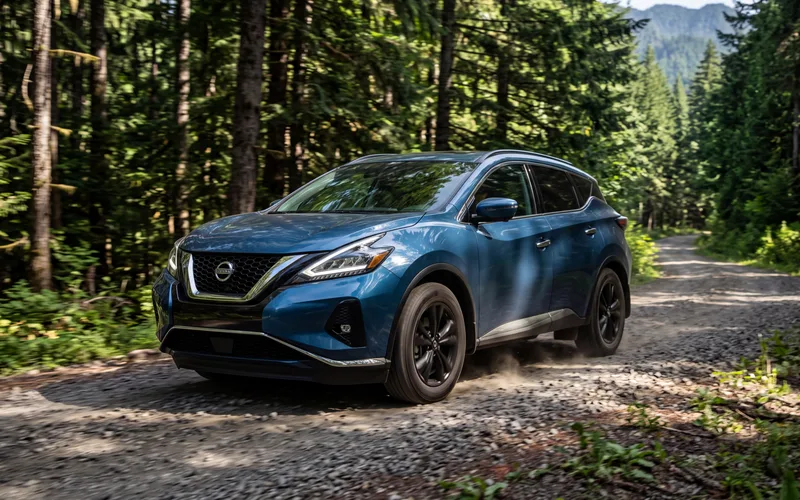 Nissan MuranoMid-Size SUVBetter at: Freshness
The same two-row, comfort-first formula as the Edge but freshly redesigned and still in production, so it comes with a full warranty and a parts-and-support future.
Compare 2.79B-
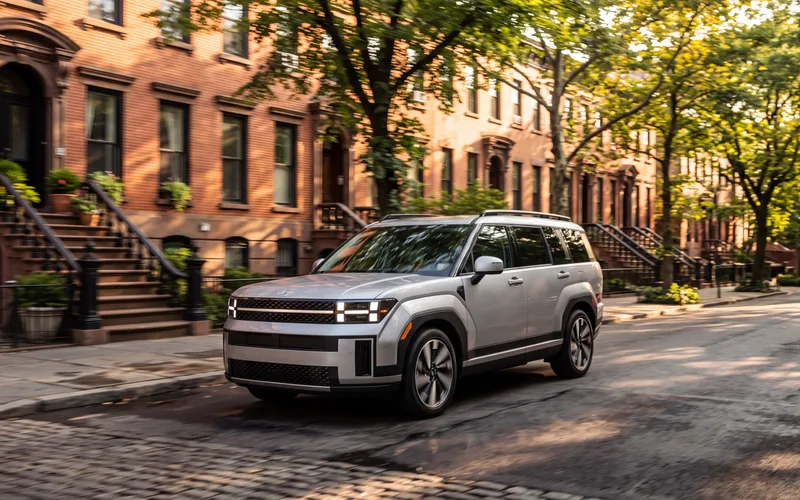 Hyundai Santa FeMid-Size SUVBetter at: Efficiency
A hybrid option in the mid-30s MPG, a bonus third row, and far longer warranty coverage turn every Edge ownership-cost weakness into a strength.
Compare 2.63C+
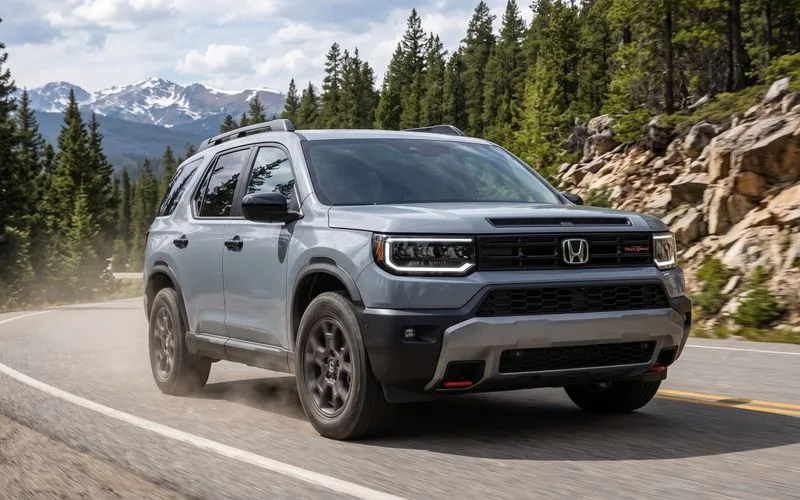 Honda PassportMid-Size SUVBetter at: Cargo & resale
If you want a two-row SUV that hauls gear rather than just people, the Passport adds 10-plus cubic feet of cargo, 5,000 lbs of towing, and much stronger resale value.
CompareHow it's evolved
8 scored model years · 2017–2024
Subject scores by year
Hover or tap a score to see what moved it versus the year before. A corner mark flags a big swing.
| Year | Performance | Efficiency | Safety | Space | Cost | Reliability | Tech | Use-case | Driving | Value |
|---|---|---|---|---|---|---|---|---|---|---|
| 2024 | 39 | 52 | 66 | 55 | 42 | 67 | 64 | 62 | 61 | 54 |
| 2023 | 39 | 52 | 66 | 55 | 43 | 67 | 55 | 56 | 61 | 50 |
| 2022 | 41 | 47 | 66 | 54 | 44 | 63 | 50 | 54 | 61 | 50 |
| 2021 | 40 | 55 | 65 | 56 | 49 | 58 | 65 | 54 | 60 | 51 |
| 2020 | 41 | 52 | 65 | 56 | 54 | 63 | 41 | 54 | 60 | 56 |
| 2019 | 39 | 63 | 65 | 56 | 50 | 55 | 50 | 53 | 60 | 59 |
| 2018 | 38 | 59 | 52 | 54 | 51 | 54 | 44 | 51 | 62 | 58 |
| 2017 | 38 | 59 | 49 | 54 | 51 | 49 | 42 | 50 | 62 | 63 |
Compare two years
Best fit & conditions
Higher scores mean a better fit for that use case. Learn more about use-case fit →
Subject profile
Academic Probation · NHTSA safety recalls
Mar 3, 2026Back over prevention: softwareThe Accessory Protocol Interface Module (APIM) may overheat and shutdown, which can prevent the rearview camera image from displaying as intended.
Defect
Ford Motor Company (Ford) is recalling certain 2021-2026 Ford Bronco and 2021-2024 Ford Edge vehicles. The Accessory Protocol Interface Module (APIM) may overheat and shutdown, which can prevent the rearview camera image from displaying as intended.
Risk
A rearview camera that fails to display an image can reduce the driverâs view behind the vehicle, increasing the risk of a crash.
Remedy
The APIM software will be updated by a dealer, or through an over-the-air (OTA) update, free of charge. Owner notification letters were mailed April 13, 2026. Owners may contact Ford Customer Service at 1-866-436-7332. Ford's number for this recall is 26S09. Vehicle Identification Numbers (VINs) involved in this recall became searchable on NHTSA.gov on March 5, 2026.
NHTSA campaign 26V124000 ↗Manufacturer no. 26S09849,310 vehicles potentially affected (all models in the campaign)Owners notified Apr 13, 2026Filed by Ford Motor CompanyFiled as EDGEMay 9, 2025Back over prevention: softwareA software error may cause the rearview camera image to delay, freeze, or not display when the vehicle is in reverse.
Defect
Ford Motor Company (Ford) is recalling certain 2021-2024 Bronco, F-150, 2021-2024 Edge, 2022-2025 Escape, F-250, F-350, F-450, F-550, F-600, 2022-2024 Expedition, 2022-2025 Transit, 2021-2023 Mach-E, 2024 Ranger, Mustang, 2021-2023 Lincoln Nautilus, 2022-2024 Navigator, and 2023-2024 Corsair vehicles. A software error may cause the rearview camera image to delay, freeze, or not display when the vehicle is in reverse.
Risk
A frozen or missing rearview camera image can reduce the driver's view behind the vehicle, increasing the risk of a crash.
Remedy
The accessory protocol interface module (APIM) software will be updated by a dealer or through an over-the-air update, free of charge. This will be a phased campaign, with the remedy becoming available in different phases based on model and model years. Interim letters notifying owners of the safety risk were mailed on June 26, 2025. Additional letters will be mailed once the final remedy is available on each phase. Owner notification letters were sent on October 8, 2025. Owners may contact Ford customer service at 1-866-436-7332. Ford's number for this recall is 25S49.
NHTSA campaign 25V315000 ↗Manufacturer no. 25S491,076,138 vehicles potentially affected (all models in the campaign)Owners notified Oct 8, 2025Filed by Ford Motor CompanyFiled as EDGEAug 25, 2023Exterior lighting: headlightsThe front right headlight may be too bright or aimed incorrectly. As such, these vehicles fail to comply with the requirements of Federal Motor Vehicle Safety Standard number 108, "Lamps, Reflective Devices, and Associated Equipment."
Defect
Ford Motor Company (Ford) is recalling certain 2023 Edge vehicles. The front right headlight may be too bright or aimed incorrectly. As such, these vehicles fail to comply with the requirements of Federal Motor Vehicle Safety Standard number 108, "Lamps, Reflective Devices, and Associated Equipment."
Risk
A headlight that is too bright or aimed incorrectly may cause a glare to other road users, increasing the risk of a crash.
Remedy
Dealers will inspect and replace the right headlight assembly as necessary, free of charge. Owner notification letters were mailed October 9, 2023. Owners may contact Ford customer service at 1-866-436-7332. Ford's number for this recall is 23C26.
NHTSA campaign 23V596000 ↗Manufacturer no. 23C268,523 vehicles potentially affected (all models in the campaign)Owners notified Oct 9, 2023Filed by Ford Motor CompanyFiled as EDGEMar 24, 2023Child seat: vehicle tether anchorThe child seat tether wire welds on the second-row left-side seat back frame may be insufficient, which can reduce the seat's ability to properly restrain a child during a crash. As such, these vehicles fail to comply with the requirements of Federal Motor Vehicle Safety Standard number 225, "Child Restraint Anchorage Systems."
Defect
Ford Motor Company (Ford) is recalling certain 2023 Edge and Lincoln Nautilus vehicles. The child seat tether wire welds on the second-row left-side seat back frame may be insufficient, which can reduce the seat's ability to properly restrain a child during a crash. As such, these vehicles fail to comply with the requirements of Federal Motor Vehicle Safety Standard number 225, "Child Restraint Anchorage Systems."
Risk
A child that is not properly restrained during a crash can have an increased risk of injury.
Remedy
Dealers will replace the left-side second-row seat back frame, free of charge. Owner notification letters were mailed May 11, 2023. Owners may contact Ford customer service at 1-866-436-7332. Ford's number for this recall is 23C09.
NHTSA campaign 23V198000 ↗Manufacturer no. 23C0919 vehicles potentially affected (all models in the campaign)Owners notified May 11, 2023Filed by Ford Motor CompanyFiled as EDGE
19 recalls on other model years of the Edge (2017–2022)
Sep 3, 2025Back over prevention: sensing system: cameraThe rearview camera may display a distorted, inverted, or blank image when the vehicle is in reverse.
Defect
Ford Motor Company (Ford) is recalling certain 2015-2019 Lincoln MKC, Mustang, F-350 SD, F-250 SD, F-450 SD, 2015-2017 Lincoln Navigator, Expedition, 2015-2018 Edge, Transit Connect, 2016-2019 F-550 SD, Transit, 2017-2019 Econoline, and 2019 Ranger vehicles. The rearview camera may display a distorted, inverted, or blank image when the vehicle is in reverse.
Risk
A rearview camera that displays an inverted, distorted, or blank image can reduce the driverâs view behind the vehicle, increasing the risk of a crash.
Remedy
Dealers will inspect and replace the rearview camera as necessary, free of charge. Owner notification letters were mailed January 13, 2026. Ford owners will receive letters in phases, beginning January 2026 and June 2026. Owners may contact Ford customer service at 1-866-436-7332. Ford's number for this recall is 25S89. This recall expands previous NHTSA recall number 25V270. Vehicle Identification Numbers (VINs) involved in this recall will be searchable on NHTSA.gov beginning September 8, 2025.
NHTSA campaign 25V572000 ↗Manufacturer no. 25S891,456,417 vehicles potentially affected (all models in the campaign)Owners notified Jan 13, 2026Filed by Ford Motor CompanyFiled as EDGEAug 22, 2025Service brakes, hydraulic: foundation components: hoses, lines/piping, and fittingsThe rear brake jounce hose may rupture and leak brake fluid.
Defect
Ford Motor Company (Ford) is recalling certain 2016-2018 Lincoln MKX and 2015-2018 Edge vehicles. The rear brake jounce hose may rupture and leak brake fluid.
Risk
A brake fluid leak can extend the distance required to stop the vehicle, increasing the risk of a crash.
Remedy
Dealers will inspect and replace the brake jounce hoses and adjust brake jounce hoses with no damage present, free of charge. Owner notification letters were mailed September 17, 2026. Owners may contact Ford customer service at 1-866-436-7332. Ford's number for this recall is 25S87.
NHTSA campaign 25V544000 ↗Manufacturer no. 25S87499,129 vehicles potentially affected (all models in the campaign)Owners notified Sep 17, 2026Filed by Ford Motor CompanyFiled as EDGEJun 27, 2025Back over prevention: softwareA software error may cause the rearview camera to display a blank image, or the image may remain on the display after the backing event has ended.
Defect
Ford Motor Company (Ford) is recalling certain 2018-2022 Transit Connect, 2019-2020 MKZ, MKX, Edge, Continental, F-150, Nautilus, Fusion, 2019-2023 Ranger, Mustang, 2020-2021 EcoSport, Expedition, Navigator, 2020-2022 Escape, F-250 SD, Corsair, 2020-2023 Aviator, Transit, 2020-2024 Explorer, 2021-2024 Bronco Sport, and 2022-2024 Maverick vehicles. A software error may cause the rearview camera to display a blank image, or the image may remain on the display after the backing event has ended.
Risk
A rearview camera that displays a blank image can reduce the driver's view behind the vehicle. A rearview image that continues to be displayed after the vehicle is shifted out of reverse may distract the driver. Both of these situations can increase the risk of a crash.
Remedy
Dealers will update the rearview camera software, free of charge. Owner notification letters were mailed September 4, 2025. Owners may contact Ford customer service at 1-866-436-7332. Ford's number for this recall is 25S72.
NHTSA campaign 25V442000 ↗Manufacturer no. 25S72200,237 vehicles potentially affected (all models in the campaign)Owners notified Sep 4, 2025Filed by Ford Motor CompanyFiled as EDGEMar 14, 2025Back over prevention: softwareA software error may cause the rearview camera to display a blank or distorted image when the vehicle is in reverse.
Defect
Ford Motor Company (Ford) is recalling certain 2021-2022 Edge vehicles previously repaired incorrectly under recall number 22V-151. A software error may cause the rearview camera to display a blank or distorted image when the vehicle is in reverse.
Risk
A rearview camera that displays a blank or distorted image can reduce the driver's view of what is behind the vehicle, increasing the risk of a crash.
Remedy
Dealers will update the rearview camera software, free of charge. Owner notification letters were mailed April 25, 2025. Owners may contact Ford customer service at 1-866-436-7332. Ford's number for this recall is 25S28.
NHTSA campaign 25V160000 ↗Manufacturer no. 25S282,290 vehicles potentially affected (all models in the campaign)Owners notified Apr 25, 2025Filed by Ford Motor CompanyFiled as EDGEAug 23, 2024Engine and engine cooling: engine: hard parts internal/mechanicalThe engine intake valves may break while driving, which can result in engine failure and a loss of drive power.
Defect
Ford Motor Company (Ford) is recalling certain 2021-2022 Bronco, F-150, Edge, Explorer, Lincoln Nautilus, and Lincoln Aviator vehicles equipped with either a 2.7L or 3.0L Nano EcoBoost engine. The engine intake valves may break while driving, which can result in engine failure and a loss of drive power.
Risk
A loss of drive power increases the risk of a crash.
Remedy
Dealers will perform an engine cycle test and replace the engine as necessary, free of charge. Owner notification letters were mailed July 3, 2025. Owners may contact Ford customer service at 1-866-436-7332. Ford's number for this recall is 24S55.
NHTSA campaign 24V635000 ↗Manufacturer no. 24S5590,736 vehicles potentially affected (all models in the campaign)Owners notified Jul 3, 2025Filed by Ford Motor CompanyFiled as EDGEJun 10, 2022Power train: automatic transmission: gear position indication (prndl) · Power train: shift linkage/cable/rodThe bushing that attaches the shifter cable to the transmission may degrade or detach.
Defect
Ford Motor Company (Ford) is recalling certain 2013-2019 Escape, 2013-2018 C-Max, 2013-2016 Fusion, 2013-2021 Transit Connect, and 2015-2018 Edge vehicles. The bushing that attaches the shifter cable to the transmission may degrade or detach.
Risk
A damaged or missing bushing may prevent the vehicle from shifting into the intended gear, and cause the vehicle to move in an unexpected direction. Additionally, the vehicle may roll after the driver selects the 'Park' position. Either scenario increases the risk of a crash or injury.
Remedy
Dealers will replace the under hood shift bushing and add a protective cap over the shift cable bushing, free of charge. Interim owner notification letters, informing owners of the safety risk, were mailed July 1, 2022. Remedy parts are expected to be available in 4th Quarter 2022. Owner notification letters were mailed October 27, 2022. Owners may contact Ford customer service at 1-866-436-7332. Ford's number for this recall is 22S43.
NHTSA campaign 22V413000 ↗Manufacturer no. 22S432,925,968 vehicles potentially affected (all models in the campaign)Owners notified Oct 27, 2022Filed by Ford Motor CompanyFiled as EDGEMar 11, 2022Back over prevention: display function · Back over prevention: softwareA software error may cause the rearview camera to display a blank or distorted image when the vehicle is in reverse.
Defect
Ford Motor Company (Ford) is recalling certain 2021-2022 Edge vehicles. A software error may cause the rearview camera to display a blank or distorted image when the vehicle is in reverse.
Risk
A rearview camera that displays a blank or distorted image can reduce the driver's view of what is behind the vehicle, increasing the risk of a crash.
Remedy
The rearview camera software will be updated by a dealer, or through an over-the-air (OTA) update, free of charge. Owner notification letters were mailed on April 29, 2022. Owners may contact Ford customer service at 1-866-436-7332. Ford's number for this recall is 22S14.
NHTSA campaign 22V151000 ↗Manufacturer no. 22S1478,376 vehicles potentially affected (all models in the campaign)Owners notified Apr 29, 2022Filed by Ford Motor CompanyFiled as EDGEMay 24, 2021Seat belts: front: retractor · Seat belts: pretensionerThe driver's seat belt retractor pretensioner assembly may not function correctly when activated during a crash. As such, these vehicles fail to comply with the requirements of Federal Motor Vehicle Safety Standard (FMVSS) number 208, "Occupant Crash Protection."
Defect
Ford Motor Company (Ford) is recalling certain 2021 Edge vehicles. The driver's seat belt retractor pretensioner assembly may not function correctly when activated during a crash. As such, these vehicles fail to comply with the requirements of Federal Motor Vehicle Safety Standard (FMVSS) number 208, "Occupant Crash Protection."
Risk
A seatbelt assembly that does not function as intended can increase the risk of injury during a crash.
Remedy
Dealers will replace the driver's seat belt retractor pretensioner assembly, free of charge. Owner notification letters were mailed on June 15, 2021. Owners may contact Ford customer service at 1-866-436-7332. Ford's number for this recall is 21C13.
NHTSA campaign 21V377000 ↗Manufacturer no. 21C1382 vehicles potentially affected (all models in the campaign)Owners notified Jun 15, 2021Filed by Ford Motor CompanyFiled as EDGEJan 15, 2021Power train: driveline: driveshaftAn inadequate amount of lubricant in the rear drive unit may cause seizure of the rear drive axle.
Defect
Ford Motor Company (Ford) is recalling certain 2020-2021 Edge, 2020 Lincoln Nautilus and Ford Escape and 2021 Lincoln Corsair and Ford Bronco Sport vehicles. An inadequate amount of lubricant in the rear drive unit may cause seizure of the rear drive axle.
Risk
If the rear drive unit seizes, there may be a loss of drive and/or a loss of vehicle control, increasing the risk of a crash.
Remedy
Ford will notify owners, and dealers will check the rear drive unit lubricant level. Axles found to have lubricant at the minimum level will be filled to the full level. Axles found to be below the minimum lubricant fill level will be replaced, free of charge. This recall began March 12, 2021. Owners may contact Ford customer service at 1-866-436-7332. Ford's number for this recall is 21S02.
NHTSA campaign 21V011000 ↗Manufacturer no. 21S02147 vehicles potentially affected (all models in the campaign)Owners notified Mar 12, 2021Filed by Ford Motor CompanyFiled as EDGESep 23, 2020Back over prevention: sensing system: cameraDue to a poor electrical connection, the rearview camera may intermittently display a blank or distorted image. As such, these vehicles fail to comply with the requirements of Federal Motor Vehicle Safety Standard (FMVSS) number 111, "Rear Visibility."
Defect
Ford Motor Company (Ford) is recalling certain 2020 Ford F-150, F-250, F-350, F-450, F-550, Explorer, Mustang, Transit, Expedition, Escape, Ranger and Edge, and Lincoln Nautilus and Corsair vehicles. Due to a poor electrical connection, the rearview camera may intermittently display a blank or distorted image. As such, these vehicles fail to comply with the requirements of Federal Motor Vehicle Safety Standard (FMVSS) number 111, "Rear Visibility."
Risk
Reduced rearward visibility can increase the risk of a crash.
Remedy
Ford will notify owners, and dealers will replace the rearview camera, free of charge. The recall began November 17, 2020. Remedy became available on February 1, 2021. Owner notification letters were mailed on February 1, 2021. Owners may contact Ford customer service at 1-866-436-7332. Ford's number for this recall is 20C19.
NHTSA campaign 20V575000 ↗Manufacturer no. 20C19620,246 vehicles potentially affected (all models in the campaign)Owners notified Feb 1, 2021Filed by Ford Motor CompanyFiled as EDGESep 10, 2020Power train: automatic transmissionThe start/stop accumulator endcap may have missing or loose bolts.
Defect
Ford Motor Company (Ford) is recalling certain 2019-2020 Edge, Transit Connect and Lincoln MKX and 2020 Escape and Lincoln Corsair vehicles. The start/stop accumulator endcap may have missing or loose bolts.
Risk
Missing or loose bolts on the start stop accumulator endcap could result in a transmission fluid leak and may progress to a loss of transmission function. A transmission fluid leak in the presence of an ignition source may increase the risk of fire.
Remedy
Ford will notify owners, and dealers will replace the start/stop accumulator, free of charge. The recall began September 23, 2020. Owners may contact Ford customer service at 1-866-436-7332. Ford's number for this recall is 20S49.
NHTSA campaign 20V550000 ↗Manufacturer no. 20S4997 vehicles potentially affected (all models in the campaign)Owners notified Sep 23, 2020Filed by Ford Motor CompanyFiled as EDGEAug 10, 2020Service brakes · Service brakes, hydraulic: foundation components: hoses, lines/piping, and fittingsThe front brake hoses may rupture prematurely.
Defect
Ford Motor Company (Ford) is recalling certain 2015-2018 Ford Edge and 2016-2018 Lincoln MKX vehicles. The front brake hoses may rupture prematurely.
Risk
A ruptured front brake hose will cause a brake fluid leak, lengthening the distance needed to stop the vehicle, increasing the risk of a crash.
Remedy
Ford will notify owners, and dealers will replace the front brake hoses with the new hoses that have a revised braid material, free of charge. Owner notification letters were mailed on May 13, 2021. Owners may contact Ford customer service at 1-866-436-7332. Ford's number for this recall is 20S42.
NHTSA campaign 20V469000 ↗Manufacturer no. 20S42488,594 vehicles potentially affected (all models in the campaign)Owners notified May 13, 2021Filed by Ford Motor CompanyFiled as EDGEOct 25, 2019Seat belts: front: anchorage · Seat belts: front: webbing · Seat belts: pretensionerThe driver-side seat belt pretensioner anchor may have been improperly crimped, possibly resulting in the seat belt webbing detaching from the anchor in the event of a crash.
Defect
Ford Motor Company (Ford) is recalling certain 2019 Edge vehicles. The driver-side seat belt pretensioner anchor may have been improperly crimped, possibly resulting in the seat belt webbing detaching from the anchor in the event of a crash.
Risk
In the event of a crash, seat belt webbing that detaches from the anchor will not properly restrain the driver, increasing their risk of injury.
Remedy
Ford has notified owners, and dealers will inspect and, if necessary, replace the driver's side pretensioner assembly, free of charge. The recall began November 12, 2019. Owners may contact Ford customer service at 1-866-436-7332. Ford's number for this recall is 19S37.
NHTSA campaign 19V766000 ↗Manufacturer no. 19S37366 vehicles potentially affected (all models in the campaign)Owners notified Nov 12, 2019Filed by Ford Motor CompanyFiled as EDGESep 11, 2018Latches/locks/linkages: doors: latchThese vehicles may have door striker bolts that are shorter than intended. Vehicles with shorter door striker bolts fail to comply with the requirements of Federal Motor Vehicle Safety Standard (FMVSS) number 206, "Door Locks and Door Retention Components" potentially resulting in the doors opening in the event of a crash.
Defect
Ford Motor Company (Ford) is recalling certain 2018 Ford Edge and Lincoln MKX vehicles. These vehicles may have door striker bolts that are shorter than intended. Vehicles with shorter door striker bolts fail to comply with the requirements of Federal Motor Vehicle Safety Standard (FMVSS) number 206, "Door Locks and Door Retention Components" potentially resulting in the doors opening in the event of a crash.
Risk
If the doors open in the event of a crash, there is an increased risk of injury.
Remedy
Ford will notify owners, and dealers will replace the door striker bolts, free of charge. The recall began October 18, 2018. Owners may contact Ford customer service at 1-866-436-7332. Ford's number for this recall is 18C06.
NHTSA campaign 18V612000 ↗Manufacturer no. 18C06503 vehicles potentially affected (all models in the campaign)Owners notified Oct 18, 2018Filed by Ford Motor CompanyFiled as EDGEAug 20, 2018Electrical system: alternator/generator/regulator · Electrical system: starter assemblyThe power supply cables at the starter and the alternator may not have been properly secured, possibly resulting in an electrical arc.
Defect
Ford Motor Company (Ford) is recalling certain 2018 Ford Edge, Lincoln MKX, 2019 Ford Flex, and Lincoln MKT vehicles. The power supply cables at the starter and the alternator may not have been properly secured, possibly resulting in an electrical arc.
Risk
An electrical arc can increase the risk of a fire.
Remedy
Ford will notify owners, and dealers will inspect the alternator and starter motor power supply cables to verify that they are properly secured, correcting them as necessary, free of charge. The recall began September 26, 2018. Owners may contact Ford customer service at 1-866-436-7332. Ford's number for this recall is 18S25.
NHTSA campaign 18V548000 ↗Manufacturer no. 18S2587 vehicles potentially affected (all models in the campaign)Owners notified Sep 26, 2018Filed by Ford Motor CompanyFiled as EDGEJun 11, 2018Power train: automatic transmission: torque converterOn vehicles with 2.0L gas engines and six-speed automatic transmissions, the torque converter weld studs may have been inadequately welded.
Defect
Ford Motor Company (Ford) is recalling certain 2017-2018 Ford Edge and 2017 Lincoln MKZ vehicles. On vehicles with 2.0L gas engines and six-speed automatic transmissions, the torque converter weld studs may have been inadequately welded.
Risk
If the torque converter weld studs fail, the torque converter will not be connected to the engine flexplate and the vehicle will lose the ability to move, increasing the risk of a crash.
Remedy
Ford will notify owners, and dealers will replace the torque converters, free of charge. The recall began on July 5, 2018. Owners may contact Ford customer service at 1-866-436-7332. Ford's number for this recall is 17S16 (S2). Note: This recall is an expansion of recall 17V-427.
NHTSA campaign 18V390000 ↗Manufacturer no. 17S16 (S2)25 vehicles potentially affected (all models in the campaign)Owners notified Jul 5, 2018Filed by Ford Motor CompanyFiled as EDGEJul 6, 2017Power train: automatic transmission: torque converterOn vehicles with 2.0L gas engines and six-speed automatic transmissions, the torque converter weld studs may have been inadequately welded.
Defect
Ford Motor Company (Ford) is recalling certain 2017 Lincoln MKZ and Ford Edge and Fusion vehicles. On vehicles with 2.0L gas engines and six-speed automatic transmissions, the torque converter weld studs may have been inadequately welded.
Risk
If the torque converter weld studs fail, the torque converter will not be connected to the engine flexplate and the vehicle will lose the ability to move, increasing the risk of a crash.
Remedy
Ford or Lincoln will notify owners, and dealers will replace the torque converters, free of charge. The recall began August 25, 2017. Owners may contact Ford customer service at 1-866-436-7332. Ford's number for this recall is 17S16.
NHTSA campaign 17V427000 ↗Manufacturer no. 17S166,026 vehicles potentially affected (all models in the campaign)Owners notified Aug 25, 2017Filed by Ford Motor CompanyFiled as EDGEMar 27, 2017Structure: body: roof and pillarsThese vehicles may have an improperly welded windshield header, reducing the vehicle's lateral structural integrity. As such, these vehicles fail to comply with the requirements of Federal Motor Vehicle Safety Standard (FMVSS) number 214, "Side Impact Protection."
Defect
Ford Motor Company (Ford) is recalling certain 2017 Edge vehicles equipped with the optional Panoramic Vista Roof. These vehicles may have an improperly welded windshield header, reducing the vehicle's lateral structural integrity. As such, these vehicles fail to comply with the requirements of Federal Motor Vehicle Safety Standard (FMVSS) number 214, "Side Impact Protection."
Risk
If the vehicle has reduced lateral structural integrity, the occupants are at an increased risk of injury in the event of a side-impact crash.
Remedy
Ford will notify owners, and dealers will repair the windshield header, free of charge. The recall began May 18, 2017. Owners may contact Ford customer service at 1-866-436-7332. Ford's number for the recall is 17C05.
NHTSA campaign 17V205000 ↗Manufacturer no. 17C0584 vehicles potentially affected (all models in the campaign)Owners notified May 18, 2017Filed by Ford Motor CompanyFiled as EDGEFeb 27, 2017Air bags: frontal: driver side: inflator moduleIn the event of a crash, the driver's frontal air bag may not fully inflate or the air bag cushion may detach from the air bag module. As such, these vehicles fail to comply with the requirements of Federal Motor Vehicle Safety Standard (FMVSS) number 208, "Occupant Crash Protection."
Defect
Ford Motor Company (Ford) is recalling certain 2016-2017 Ford Edge and Lincoln MKX vehicles and 2017 Lincoln Continental vehicles. In the event of a crash, the driver's frontal air bag may not fully inflate or the air bag cushion may detach from the air bag module. As such, these vehicles fail to comply with the requirements of Federal Motor Vehicle Safety Standard (FMVSS) number 208, "Occupant Crash Protection."
Risk
During deployment, if the air bag does not fully inflate or the cushion detaches, there is an increased risk of injury in the event of a crash.
Remedy
Ford will notify owners, and dealers will replace the driver frontal air bag module, free of charge. The recall began June 16, 2017. Owners may contact Ford customer service at 1-866-436-7332. Ford's number for this recall is 17C02.
NHTSA campaign 17V123000 ↗Manufacturer no. 17C0227,531 vehicles potentially affected (all models in the campaign)Owners notified Jun 16, 2017Filed by Ford Motor CompanyFiled as EDGE
Source: NHTSA Office of Defects Investigation recall database, model years 2017–2024. Recalls are listed by model year as the manufacturer filed them; whether a specific car is affected depends on its VIN — check a VIN at nhtsa.gov ↗. NHTSA model names matched to this page: EDGE.
Detailed scoring by subject
1Performance & PowertrainThe Edge's lowest-graded category.0.59F
The volume SEL/ST-Line trims use the 2.0L turbo I-4 making 250 hp, unchanged since the 2019 refresh; the ST's 2.7L V6 tops the range at 335 hp.
Peak torque for the volume 2.0L I-4; the ST's 2.7L twin-turbo V6 offers substantially more.
The 2.0L/8-speed AWD powertrain has been unchanged since 2019; instrumented tests of that generation consistently land around 7.5 s, used here as the representative figure for the volume trim. The ST's 2.7L V6 is markedly quicker.
The 2.0L turbo I-4 is adequate but unremarkable, with some low-rpm turbo lag typical of the segment; the 2.7L V6 in the ST is notably smoother and stronger, but it's a low-volume trim.
The 8-speed automatic (introduced for the 2019 refresh) delivers competent, adequately quick shifts but reviewers noted occasional hesitant kickdowns; the ST's 7-speed wet-clutch automatic behaves more decisively.
Max towing across the lineup is 3,500 lbs, achieved with the Class II Trailer Tow Package (standard on ST, optional on other trims); unequipped 2.0L models are limited to 1,500 lbs.
Ford's Intelligent AWD is standard across every 2023 Edge trim (no FWD-only option), with selectable drive modes (Normal/Slippery/Sand), though it lacks low-range or locking hardware — a broadly available but not especially sophisticated system.
The Edge is a unibody crossover with no off-road trim, skid plates, or low-range gearing and modest ground clearance; it's designed strictly for pavement and light-duty conditions.
Just two gas engines are offered (2.0L I-4 and 2.7L V6 on the ST) with no hybrid, PHEV, or EV variant anywhere in the lineup.
2Efficiency & RangeGrades below the middle of the scale.1.47D
2023 is the Edge's final US model year, running the same carryover 2.0L EcoBoost FWD/AWD and 2.7L EcoBoost V6 (ST) powertrains as prior years with unchanged EPA ratings; combined figure lands near the bottom of the mid-size SUV field, which increasingly includes hybrids.
Consistent across SE/SEL/ST-Line/Titanium trims with the 2.0L EcoBoost engine; the ST drops to 19 city with the 2.7L V6.
Highway rating is the Edge's relative strength versus its mediocre city number, consistent across the 2.0L trim lineup.
Range calculated from the 18.5-gallon fuel tank and EPA combined MPG for the volume 2.0L FWD trim; dealer marketing materials cite up to 518 miles using the highway-only figure.
Estimated from EPA combined MPG (~21-24) at 15,000 mi/yr and EPA's assumed regular-gas price; higher than efficiency-focused rivals with hybrid options, in line with other ICE-only mid-size SUVs.
The volume 2.0L EcoBoost trims run on regular 87-octane unleaded with no premium recommendation; only the range-topping ST's 2.7L V6 recommends (not requires) 91-octane premium for peak output.
3SafetyOne of the Edge's strongest categories.2.44C+
NHTSA's full 5-star overall rating for the 2023 Edge, carried over unchanged from prior model years on the same crash structure.
All performed crashworthiness tests scored Good, but the Edge did not earn a Top Safety Pick award because its standard-trim headlights rated Poor, disqualifying it despite otherwise strong structural results.
Ford Co-Pilot360 (AEB with pedestrian detection, blind-spot monitoring, rear cross-traffic alert, lane-keeping assist, auto high-beams) is standard on every 2023 Edge trim, but adaptive cruise control and lane centering require the optional Co-Pilot360 Assist+ package starting on SEL.
IIHS rated the standard front crash prevention system 'Advanced' for vehicle-to-pedestrian detection, a solid but not top-tier result one step below Superior.
Blind Spot Information System (BLIS) with cross-traffic alert is standard fleet-wide, but it is alert-only with no automated braking intervention.
Standard lane-keeping assist provides basic warning/correction; true lane-centering only comes bundled with the Co-Pilot360 Assist+ adaptive cruise package, and reviewers describe it as functional rather than refined on this aging platform.
Co-Pilot360 Assist+ adds stop-and-go adaptive cruise with lane centering and evasive steering assist, standard from SEL up and optional on SE, but reviewers note nothing standout versus segment leaders this late in the model's life cycle.
BlueCruise is not offered on the Edge; Ford's hands-free system was limited to Mustang Mach-E, F-150/Lightning, and Expedition through the Edge's final model years.
IIHS rated headlights Poor on most trims; only the ST with the 401A package and Titanium with the 301A package achieved the second-highest Acceptable rating, unchanged from the surrounding model years.
Reviewers note thick roof pillars and modest glass area hamper sightlines; a standard rearview camera and optional 180-degree front camera partially offset the blind zones.
Full LATCH hardware (two lower-anchor sets plus a center tether) is present, but IIHS rated ease-of-use only Acceptable, citing lower anchors set too deep and tether hardware that can be confused for anchors.
4Space & ComfortGrades below the middle of the scale.1.67D
The 2023 Edge is a two-row, five-passenger mid-size crossover with no third-row option across SE, SEL, ST-Line, and Titanium trims.
Standard front headroom for the volume SEL trim without the panoramic vista roof, which trims headroom slightly on equipped units.
Front legroom figure is unchanged for the final 2023 model year of the current-generation Edge.
Second-row headroom is generous for the mid-size SUV segment thanks to the Edge's boxy roofline.
Second-row legroom is a segment strength, aided by the 60/40 split-fold reclining rear bench.
The Edge has no third-row seating option in any trim for 2023, unlike three-row mid-size rivals such as the Explorer or Highlander.
Cargo volume behind the second row is mid-pack for a two-row mid-size crossover.
Maximum cargo volume with the 60/40 second row folded flat is competitive among two-row mid-size SUVs.
Useful but unremarkable storage: a sizable front console with armrest bin, underfloor cargo compartments, and cargo-area switches to fold the rear seatbacks, without any standout innovation like a giga-console.
Front seats are supportive and comfortable, especially in leather-trimmed Titanium spec with 10-way power adjustment, but reviewers note the second-row bench could use more cushion padding for long trips.
The suspension absorbs larger bumps well but reviewers describe some bounciness over smaller pavement imperfections, keeping ride quality average rather than segment-leading.
Reviewers consistently praise the Edge's quiet cabin with good isolation from wind, road, and engine noise, a highlight relative to segment rivals.
Dual-zone automatic climate control is standard across the lineup, with heated front seats and a heated steering wheel widely available and ventilated front seats, heated rear seats, and remote start reserved for upper Titanium/Lux-package trims.
5Cost of OwnershipOne of the Edge's weakest categories.0.87F
2023 carried the Edge's mid-cycle-refresh lineup largely unchanged from 2022 aside from minor package shuffling. SE AWD anchors the range well above compact rivals like Escape since Ford standardized AWD across all Edge trims starting with the 2022 model year.
SEL was the volume 2023 Edge configuration — adds SYNC 3 infotainment, heated front seats, and additional Co-Pilot360 driver-assist content over SE. Sits above mid-size rivals like Explorer XLT and Blazer RS as-equipped given the Edge's higher pricing floor.
Better than mid-pack for mid-size SUVs — the 2.0L EcoBoost four is mechanically simple and well-proven, keeping projected repair costs low relative to the segment.
Weak residuals, among the worst in the mid-size SUV class — an aging platform nearing end of production accelerates depreciation beyond what fleet/rental exposure alone would explain. This is the single biggest ownership-cost drag on the Edge.
Ford's standard basic warranty — the floor of the mainstream segment, matching domestic and Japanese rivals but trailing Hyundai/Kia (5/60) and Mitsubishi (5/60).
Ford's standard 5/60 powertrain floor — again the segment minimum next to Hyundai/Kia's far more generous 10/100 coverage.
Ford offers no complimentary scheduled maintenance for the 2023 Edge — owners pay from the first service interval. Roadside assistance is bundled with the 3/36 basic warranty, and FordPass Connect provides a limited connected-services trial, but there's no ongoing perk beyond that.
$40,840 volume-trim price minus its estimated resale value after 5 years (44% retained, or about $17,970) leaves about $22,870 in depreciation. Add the projected $5,357 in 5-year maintenance and repairs, and owning this vehicle for 5 years costs about $28,227 in total.
6Reliability & QualityThe Edge's best-graded category.2.53C+
The 2023 Edge is Ford's most mature Edge model year (final year of production) and posts above-average marks: J.D. Power rates it 80/100 for quality and reliability, Consumer Reports named the 2023 Edge among the most reliable three-year-old midsize SUVs based on its subscriber survey, and Kelley Blue Book owner feedback shows 80% would recommend it with 65% rating it 5 stars.
Ford's brand-wide dependability was weak through most of the 2023 Edge's ownership window: J.D. Power's 2023 Vehicle Dependability Study dropped Ford to 29th of all brands (249 PP100), improving only to 23rd in 2024, while Consumer Reports rated Ford an average performer in its 2024 reliability survey. The trend is improving but the multi-year track record over this car's life remains mid-pack at best.
The 2023 Edge has only a handful of recalls, none touching powertrain safety: a front-right headlight aim/brightness recall (Oct 2023), an insufficient-weld recall affecting second-row child-seat tether anchors (Mar 2023), and a later rearview-camera display software fix addressable via dealer or OTA update. All are minor, isolated issues with straightforward fixes rather than a systemic pattern.
The 2.0L EcoBoost inline-4 (volume engine) is in its final production year of a run dating to 2015; earlier examples (2016-2020) suffered documented coolant-intrusion and turbo issues, but the design matured over the generation and owner reports indicate the powertrain is good for 200,000+ miles with proper maintenance by this final model year. No new engine-family defect emerged for 2023 specifically.
Reviewers describe a cabin with plenty of hard black plastic offset by padded upper dash, door panels, and armrests that lend a reasonably premium feel for a mainstream mid-size SUV, but note the design is dated and doesn't fully match the price on higher trims.
Consumer Reports called interior fit and finish 'unimpressive,' citing misaligned dashboard pieces on test vehicles — a scattered but real assembly-consistency complaint rather than a top-tier result.
Ford operates one of the largest dealer and service networks in the US (~3,000 dealers), giving Edge owners broad geographic access to service, though satisfaction surveys place the brand's service experience in the middle of the pack rather than among leaders.
RepairPal pegs Ford's average annual repair cost at $775 (above the industry average, brand ranked 21st of 32 for reliability), but the Edge's CD4 platform is shared across several Ford/Lincoln models and the car had a long production run, keeping common-wear parts and independent-shop familiarity normal despite the nameplate's 2023 discontinuation.
7Technology & InfotainmentMid-pack among this car's ten categories.1.70C-
The 2023 Edge carried over the 2021 mid-cycle refresh's split infotainment setup: SE and SEL (the volume trims) keep the 8-inch SYNC 3 touchscreen, while ST-Line and Titanium get the larger 12-inch SYNC 4 unit.
SYNC 3 on the volume SE/SEL trims is mature and reasonably quick but visually dated next to SYNC 4; ST-Line/Titanium buyers get the noticeably snappier SYNC 4 tile UI with retained physical climate controls.
Ford rolled wireless Apple CarPlay and Android Auto out standard across the Edge lineup by the 2023 model year, so both SYNC 3 and SYNC 4 trims offer wireless projection with no tiered restriction.
SYNC 3's voice control is functional but basic, and native navigation is an optional package on SE/SEL; only ST-Line/Titanium buyers with SYNC 4 get the more natural-language voice assistant and standard connected nav.
Standard 6-speaker audio is unremarkable, but the optional 12-speaker B&O Play premium system (available on upper trims) is a genuine step up in line with segment norms.
The volume SE/SEL trims retain analog gauges flanked by a small configurable productivity screen rather than a full digital cluster; a larger reconfigurable digital cluster is limited to ST-Line/Titanium.
SYNC 3 supports only limited map/infotainment updates, while SYNC 4 (upper trims) adds broader over-the-air update capability; overall OTA scope trails Ford's newer SYNC 4A-only models.
The FordPass app provides free remote start, lock/unlock, and vehicle locate, with a Wi-Fi hotspot and richer connected services requiring the optional FordPass Connect modem and subscription.
The Edge offers a modest mix of USB-A ports with wireless charging available on upper trims, but lacks the abundant USB-C-everywhere setups found on newer competitors.
Proximity keyless entry with push-button start is standard on SEL and above, with hands-free power liftgate available on upper trims; SE may require an options package for full convenience.
A rear-view camera is standard across the lineup, but the 360-degree surround camera and enhanced park assist are reserved for the Titanium trim rather than broadly available.
Ford did not offer a head-up display on any 2023 Edge trim, a notable omission versus rivals that make one available even on volume trims.
8Use-Case FitMid-pack among this car's ten categories.1.77C-
Wide door openings and a low load floor make loading kids and strollers easy, and LATCH anchors are straightforward to use, but the Edge is a strict two-row, 5-seat crossover with no third-row option, capping its usefulness for larger families versus 3-row mid-size SUV rivals.
Ford Co-Pilot360 (automatic emergency braking, lane-keeping, blind-spot monitoring, rear cross-traffic alert) is standard across every 2023 Edge trim including the base SE, and NHTSA rated the vehicle 5 stars overall, giving families strong safety at the entry price point.
Second-row space is generous for a two-row crossover and 39.2 cu ft of cargo room behind the rear seats swallows a family's luggage without folding anything down, but rear-seat amenities (vents, USB placement) are basic on lower trims and there's no way to add capacity for a 6th/7th passenger.
The 2.0L EcoBoost with 8-speed automatic is smooth and unobtrusive around town, with a comfortable, well-damped ride and good outward visibility that make it an easy, low-fatigue daily driver; the ST's stiffer tune trades away some of that comfort for the sportier trim.
21/28/24 mpg city/highway/combined for the volume 2.0L trims is mid-pack for a gas-only mid-size crossover with no hybrid option, and the 2.7L V6 ST drops further to 19/25 mpg, so running costs are average rather than a strength.
At roughly 188 inches long the Edge is more compact than 3-row mid-size SUVs, with a reasonable turning circle and available 360-degree camera and active park assist on higher trims that ease tight parking, though it's still noticeably larger than a compact crossover in the city.
Maximum tow rating is just 3,500 lbs (Class II package, standard on ST, optional on SEL/Titanium AWD) and there's no factory payload/cargo-bed capability, so the Edge can handle a small utility trailer or light gear but isn't a meaningful work tool.
Consumer Reports and J.D. Power data put the 2023 Edge among the more reliable mid-size SUVs of its model year, but it's a passenger-oriented unibody crossover with no fleet/commercial trim heritage or hard-use reputation to speak of.
Standard roof-rail side rails accept aftermarket crossbars and racks and a hitch is available, but there's no onboard power outlet for tools, no washable cargo liner ecosystem, and essentially no upfit market built around this platform.
A quiet cabin, supportive seats, and available adaptive cruise control make the Edge a competent highway cruiser, and an 18-gallon tank paired with 28 mpg highway gives roughly 500 miles of highway range between fill-ups on the volume 2.0L trims.
AWD is available across most trims and roughly 8 inches of ground clearance lets the Edge handle gravel roads, snow, and rough campground access, but there's no low-range gearing or off-road-tuned suspension, so it's a pavement-and-light-trail crossover rather than a true adventure vehicle.
60/40 split-folding rear seats open up to 73.4 cu ft with the second row down, and standard roof rails plus an available hitch let owners add roof boxes or a small trailer, giving solid flexibility for gear even without a third row to fold.
9Driving ExperienceOne of the Edge's strongest categories.2.08C
The CD4-platform Edge, carried over largely unchanged since its 2019 refresh, delivers secure, flat cornering with decent grip but no real enthusiasm for 2023; the ST's stiffer tuning and 335 lb-ft V6 sharpen response somewhat without transforming the car's character.
Steering is accurate enough for the segment but light and largely numb on-center, typical of Ford's comfort-oriented EPAS tuning for this platform; the ST's slightly heavier calibration doesn't add meaningful feedback.
Pedal feel is firm and predictable with no notable fade complaints in reviews; the ST's larger rotors and calipers add reassurance for its extra power, though instrumented 60-0 distances are mid-pack for the segment.
The 2.0L EcoBoost I-4 paired with the 8-speed automatic (introduced in the 2019 refresh) is generally smooth in normal driving but reviewers noted occasional hesitant downshifts and mild turbo lag under quick throttle inputs; the 2.7L V6 ST is markedly more responsive and refined.
The 2.0L turbo-four is quiet and well-isolated at cruise but becomes coarse and vocal under hard acceleration; the 2.7L V6 in the ST is noticeably smoother and more pleasant-sounding at all engine speeds.
The Edge's turning diameter has been consistent across the 2019-2024 generation at roughly 38.7 ft, on the wider end for a mid-size two-row crossover.
A raised seating position, generous adjustment range, good outward visibility, and Ford's straightforward SYNC 4 touchscreen/control layout are consistently praised as user-friendly, with only modest thick-pillar blind spots noted.
The Edge is a competent, comfort-focused appliance rather than an engaging drive; the ST trim's extra power and firmer tuning add some enthusiast appeal, but reviewers still rank it behind more dynamically tuned rivals.
10Value & Market PositionOne of the Edge's weakest categories.1.35D
Base SE trim includes Ford Co-Pilot360 (automatic emergency braking, blind-spot monitoring, lane-keeping, rear cross-traffic alert), 8-inch SYNC 3 touchscreen, dual-zone climate moves to SEL. Competitive but not class-leading for a mainstream mid-size crossover in 2023.
Reasonable content for the roughly $36K-$43K MSRP span, but the Edge's 2015-generation platform and infotainment trail newer mid-size rivals (Nissan Murano, Hyundai Santa Fe) in tech and refinement, keeping it mid-pack rather than a standout.
Four trims (SE, SEL, ST-Line, Titanium) with FWD or AWD, all sharing the 2.0L EcoBoost I4 after the 335-hp ST performance model and its 2.7L V6 were dropped for 2023; no hybrid option, narrowing the range versus rivals that offer hybrid or V6 choices.
Edge sales had been sliding for years as buyers shifted to Escape, Explorer, and crossover EVs; Ford confirmed 2023 as the Edge's final model year with production ending in September 2023, which further softened demand for the outgoing nameplate.
Ford's brand equity is buoyed by F-150, Bronco, and Mustang halo products, giving it solid mainstream credibility, but the Edge itself carries little of that halo and is a middling nameplate within the lineup.
With production winding down and the model being discontinued, dealers offered notable incentives and negotiating room to clear remaining 2023 Edge inventory, benefiting buyers willing to purchase an outgoing model.
The Edge's current generation dates to 2015 with a 2019 refresh, making 2023 the tail end of an eight-year-old platform; Ford confirmed this as the final model year with no successor planned, the maximum freshness penalty.
Reviewers described the 2023 Edge as competent but unexciting and dated versus newer mid-size crossovers, rarely topping comparison tests against the Honda Passport, Hyundai Santa Fe, or Nissan Murano, and it received no major industry awards in its final year.