
The verdict
A struggling compact truck, strong on efficiency and held back by performance.
The 2026 Maverick is the cheapest new pickup in America and the only one that returns 42 MPG in the city, which is why it outsells every other small truck roughly five to one. Starting at $28,145 with a hybrid powertrain, a 13.2-inch touchscreen and wireless CarPlay standard on even the base XL, it is an outstanding value — MotorTrend named it 2026 Truck of the Year. The catch is that it is a truck mostly in shape: 4,000 lbs of towing with the optional package, 1,500 lbs of payload, a 4'5" bed and 191 hp mean it hauls mulch and bikes, not a loaded car trailer. Buy it as an efficient small car with a bed attached, and it is close to unbeatable; buy it expecting mid-size truck capability and you will be disappointed.
Jump to scoresStrengths
- Fuel economy no other pickup comes close to
- The lowest price of entry in the truck market
- A critical and commercial runaway hit
What holds it back
- Towing and payload are light-duty only
- Modest power by truck standards
- The bed is very small, and there is only one
Top alternatives
Cars shoppers cross-shop with the Ford Maverick 1.99C-
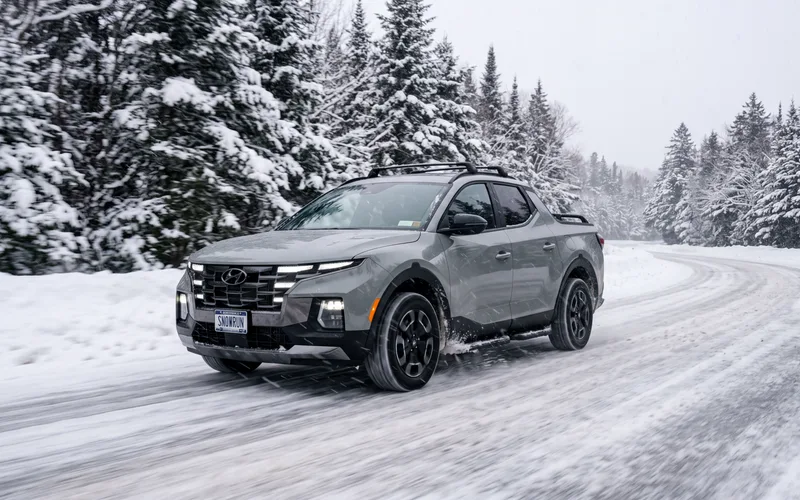 Hyundai Santa CruzCompact TruckBetter at: Towing & warranty
The only other compact unibody pickup, with 5,000 lbs of towing and a much longer warranty if you can live without a hybrid option.
Compare 1.87C-
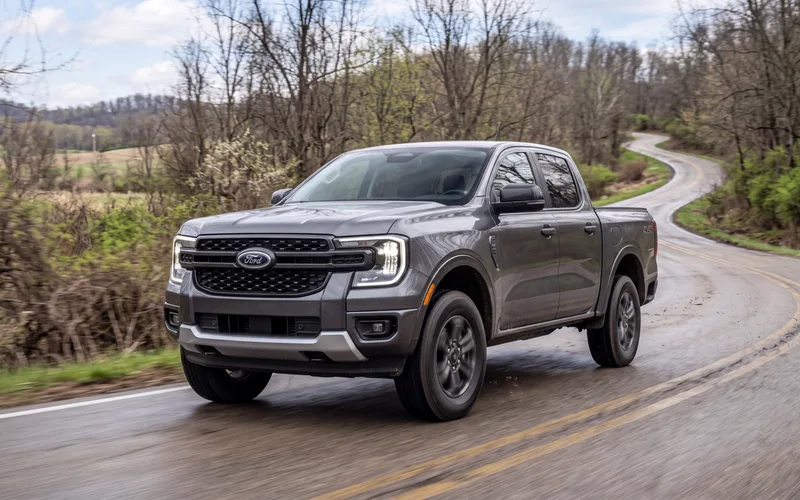 Ford RangerMid-Size TruckBetter at: Real truck capability
Ford's own mid-size truck delivers roughly 7,500 lbs of towing and a real 5-foot bed for buyers who find the Maverick's limits too tight.
Compare 2.19C
2.19C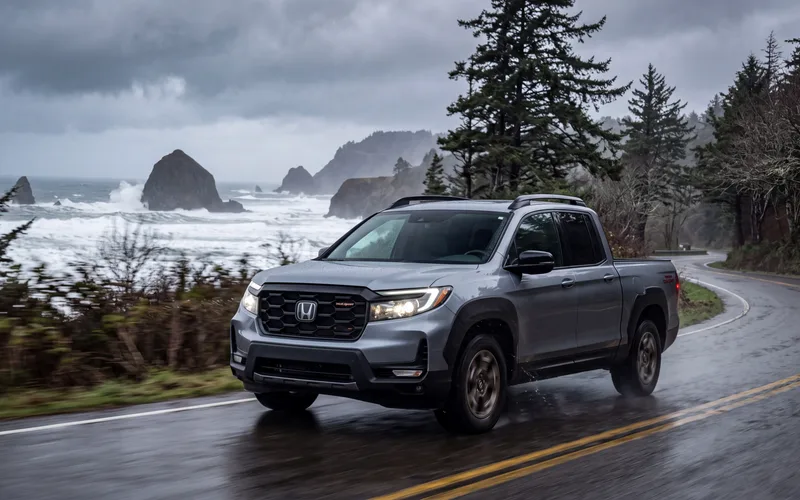 Honda RidgelineMid-Size TruckBetter at: Comfort & space
A quieter, roomier unibody pickup with a lockable in-bed trunk for shoppers who want the Maverick's civility with more space and comfort.
CompareSubject scores by year
Hover or tap a score to see what moved it versus the year before. A corner mark flags a big swing.
| Year | Performance | Efficiency | Safety | Space | Cost | Reliability | Tech | Use-case | Driving | Value |
|---|---|---|---|---|---|---|---|---|---|---|
| 2026 | 34 | 87 | 55 | 48 | 65 | 61 | 67 | 69 | 66 | 80 |
| 2025 | 35 | 87 | 54 | 48 | 58 | 58 | 66 | 69 | 70 | 77 |
| 2024 | 34 | 74 | 53 | 45 | 67 | 62 | 40 | 69 | 66 | 74 |
| 2023 | 30 | 87 | 53 | 46 | 72 | 56 | 39 | 68 | 69 | 76 |
| 2022 | 30 | 86 | 48 | 46 | 68 | 49 | 39 | 61 | 68 | 78 |
Compare two years
Best fit & conditions
Higher scores mean a better fit for that use case. Learn more about use-case fit →
Subject profile
Trims & configurations
5 trimsScores above reflect the volume trim. Per-trim specs and scores are rolling out — the full lineup:
Academic Probation · NHTSA safety recalls
Aug 25, 2026Structure: bodyCertain vehicle joints may be improperly tightened. This can lead to detached parts, unsecured cargo, degraded crash protection, electrical system failure, or a loss of vehicle stability.
Defect
Ford Motor Company (Ford) is recalling certain 2026 Maverick, F-150, and Bronco Sport vehicles. Certain vehicle joints may be improperly tightened. This can lead to detached parts, unsecured cargo, degraded crash protection, electrical system failure, or a loss of vehicle stability.
Risk
Improperly tightened vehicle joints may lead to a loss of vehicle control, electrical failure, or detached parts, increasing the risk of a crash or fire.
Remedy
Dealers will inspect and tighten the vehicle joints or repair and replace the joint retention mechanisms as necessary, free of charge. Owner notifications letters are expected to be mailed September 21, 2026. Owners may contact Ford customer service at 1-866-436-7332. Ford's number for this recall is 26S60. Vehicle Identification Numbers (VINs) involved in this recall became searchable on NHTSA.gov on August 26, 2026.
NHTSA campaign 26V550000 ↗Manufacturer no. 26S6023 vehicles potentially affected (all models in the campaign)Filed by Ford Motor CompanyFiled as MAVERICKMay 27, 2026Suspension: front: control arm: lower ball jointThe front lower control arm ball joints may have been incorrectly installed or incorrectly repaired at the vehicle assembly plant, allowing the control arm to disconnect from the front wheel knuckle.
Defect
Ford Motor Company (Ford) is recalling certain 2021-2026 Bronco Sport and 2022-2026 Maverick vehicles. The front lower control arm ball joints may have been incorrectly installed or incorrectly repaired at the vehicle assembly plant, allowing the control arm to disconnect from the front wheel knuckle.
Risk
A detached control arm can cause a loss of vehicle control, increasing the risk of a crash.
Remedy
Owners are advised not to drive their vehicles until the remedy is completed. Dealers will inspect and repair the front lower control arm ball joints as necessary, free of charge.Owner notification letters were mailed September 2, 2026. Owners may contact Ford customer service at 1-866-436-7332. Ford's number for this recall is 26S36. Vehicle Identification Numbers (VINs) involved in this recall became searchable on NHTSA.gov on May 29, 2026.
NHTSA campaign 26V340000 ↗Manufacturer no. 26S364,653 vehicles potentially affected (all models in the campaign)Owners notified Sep 2, 2026Filed by Ford Motor CompanyFiled as MAVERICKMar 31, 2026Air bags: sensor: occupant classification: front passengerThe Occupant Classification Sensor (OCS) unit may fail to correctly detect the presence of an adult or child in the front passenger seat. As such, these vehicles fail to comply with the requirements of Federal Motor Vehicle Safety Standard (FMVSS) number 208, "Occupant Crash Protection."
Defect
Ford Motor Company (Ford) is recalling certain 2025-2026 Bronco Sport and Maverick vehicles. The Occupant Classification Sensor (OCS) unit may fail to correctly detect the presence of an adult or child in the front passenger seat. As such, these vehicles fail to comply with the requirements of Federal Motor Vehicle Safety Standard (FMVSS) number 208, "Occupant Crash Protection."
Risk
Failure to correctly detect a passenger may result in the air bag not deploying as intended, increasing the risk of injury during a crash.
Remedy
Dealers will replace the passenger seat occupant classification sensor, free of charge. Owner notification letters were mailed June 25, 2026. Owners may contact Ford customer service at 1-866-436-7332. Ford's number for this recall is 26C19. Vehicle Identification Numbers (VINs) involved in this recall became searchable on NHTSA.gov on April 2, 2026.
NHTSA campaign 26V201000 ↗Manufacturer no. 26C193,170 vehicles potentially affected (all models in the campaign)Owners notified Jun 25, 2026Filed by Ford Motor CompanyFiled as MAVERICKMar 17, 2026Visibility: sun/moon roof assemblyThe moonroof glass may not have been bonded correctly to the moonroof frame, which could result in the glass panel detaching from the vehicle.
Defect
Ford Motor Company (Ford) is recalling certain 2025-2026 Maverick vehicles. The moonroof glass may not have been bonded correctly to the moonroof frame, which could result in the glass panel detaching from the vehicle.
Risk
A detached glass panel may become a road hazard, increasing the risk of a crash.
Remedy
Dealers will inspect the moonroof glass and replace the glass if necessary, free of charge. Owner notification letters were mailed April 17, 2026. Owners may contact Ford customer service at 1-866-436-7332. Ford's number for this recall is 26S18. Vehicle Identification Numbers (VINs) involved in this recall became searchable on NHTSA.gov on March 18, 2026.
NHTSA campaign 26V157000 ↗Manufacturer no. 26S18323 vehicles potentially affected (all models in the campaign)Owners notified Apr 17, 2026Filed by Ford Motor CompanyFiled as MAVERICKFeb 20, 2026Electrical system: integrated trailer brake control · Exterior lighting: tail lightsWhen towing a trailer, the integrated trailer module (ITRM) may lose communication with the vehicle, possibly causing a loss of brake and turn signal lights, or a loss of brake function. As such, these vehicles fail to comply with the requirements of Federal Motor Vehicle Safety Standard number 108, " Lamps, Reflective Devices, and Associated Equipment."
Defect
Ford Motor Company (Ford) is recalling certain 2021-2026 F-150, 2022-2026 F-250 SD, F-350 SD, F-450 SD, F-550 SD, Maverick, 2024-2026 Ranger, 2023-2026 F-600 SD, 2022-2027 Lincoln Navigator, Expedition, and 2026 E-Transit vehicles. When towing a trailer, the integrated trailer module (ITRM) may lose communication with the vehicle, possibly causing a loss of brake and turn signal lights, or a loss of brake function. As such, these vehicles fail to comply with the requirements of Federal Motor Vehicle Safety Standard number 108, " Lamps, Reflective Devices, and Associated Equipment."
Risk
Trailer lights or brakes that do not function can reduce the driverâs ability to control the trailer and decrease the trailers visibility to other road users, increasing the risk of a crash.
Remedy
The integrated trailer module software will be updated by a dealer, or through an over-the-air (OTA) update, free of charge. Owner notification letters were mailed March 25, 2026. Owners may contact Ford customer service at 1-866-436-7332. Ford's number for this recall is 26C10. Vehicle Identification Numbers (VINs) involved in this recall will be searchable on NHTSA.gov beginning March 17, 2026.
NHTSA campaign 26V104000 ↗Manufacturer no. 26C104,381,878 vehicles potentially affected (all models in the campaign)Owners notified Mar 25, 2026Filed by Ford Motor CompanyFiled as MAVERICKDec 18, 2025Structure: interior panels: dashboardThe instrument panel cover may separate when the air bag deploy.
Defect
Ford Motor Company (Ford) is recalling certain 2025-2026 Maverick vehicles. The instrument panel cover may separate when the air bag deploy.
Risk
An instrument panel cover separation can cause pieces of the cover to strike occupants, increasing the risk injury during a crash.
Remedy
Dealers will replace the instrument panel cover, free of charge. Owner notification letters were mailed March 25, 2026. Owners may contact Ford customer service at 1-866-436-7332. Ford's number for this recall is 25SE7. Vehicle Identification Numbers (VINs) involved in this recall became searchable on NHTSA.gov on December 19, 2025.
NHTSA campaign 25V884000 ↗Manufacturer no. 25SE76,897 vehicles potentially affected (all models in the campaign)Owners notified Mar 25, 2026Filed by Ford Motor CompanyFiled as MAVERICKDec 12, 2025Power train: automatic transmission: internal: park pawlThe integrated park module may fail to lock into the park position when the driver shifts into park. As such, these vehicles fail to comply with the requirements of Federal Motor Vehicle Safety Standard (FMVSS) number 114, "Theft Protection and Rollaway Prevention."
Defect
Ford Motor Company (Ford) is recalling certain 2022-2026 F-150 Lightning BEV, 2024-2026 Mustang Mach-E, and 2025-2026 Maverick vehicles. The integrated park module may fail to lock into the park position when the driver shifts into park. As such, these vehicles fail to comply with the requirements of Federal Motor Vehicle Safety Standard (FMVSS) number 114, "Theft Protection and Rollaway Prevention."
Risk
A loss of park function can allow the vehicle to rollaway, increasing the risk of a crash.
Remedy
The park module software will be updated over-the-air (OTA) or by a dealer, free of charge. Owner notification letters were mailed February 3, 2026. Owners may contact Ford customer service at 1-866-436-7332. Ford's number for this recall is 25C69. Vehicle Identification Numbers (VINs) involved in this recall will be searchable on NHTSA.gov beginning January 26, 2026.
NHTSA campaign 25V863000 ↗Manufacturer no. 25C69272,645 vehicles potentially affected (all models in the campaign)Owners notified Feb 3, 2026Filed by Ford Motor CompanyFiled as MAVERICK
39 recalls on other model years of the Maverick (2022–2025)
Apr 14, 2026Electrical system · Equipment: electrical: engine block heaterThe engine block heater may overheat when the vehicle is parked with the block heater plugged in.
Defect
Ford Motor Company (Ford) is recalling certain 2025 Maverick and 2026 Bronco Sport vehicles equipped with a 1.5L or 2.0L MPC engine and an engine block heater. The engine block heater may overheat when the vehicle is parked with the block heater plugged in.
Risk
An overheated engine block heater can increase the risk of a fire.
Remedy
Owners are advised not to plug in their block heater until the vehicle is remedied. Dealers will replace the block heater, and inspect and replace the electrical cord if necessary, free of charge. Owners will also have an alternative option to replace the engine block heater element with a threaded plug, and remove the block heater electrical cord. Owner notification letters were mailed June 10, 2026. This recall expands previous NHTSA recall number 25V343. Owners may contact Ford customer service at 1-866-436-7332. Ford's number for this recall is 25S52. Vehicle Identification Numbers (VINs) involved in this recall became searchable on NHTSA.gov on April 14, 2026.
NHTSA campaign 26V239000 ↗Manufacturer no. 25S5255 vehicles potentially affected (all models in the campaign)Owners notified Jun 10, 2026Filed by Ford Motor CompanyFiled as MAVERICKMar 3, 2026Engine and engine cooling: exhaust system: emission control: gas recirculation valve (egr valve)The exhaust gas recirculation (EGR) valve may fail, resulting in an unexpected loss of drive power.
Defect
Ford Motor Company (Ford) is recalling certain 2025 Ranger, Lincoln Nautilus, Mustang, Maverick, Explorer, Escape, Lincoln Corsair, Bronco Sport, and Bronco vehicles. The exhaust gas recirculation (EGR) valve may fail, resulting in an unexpected loss of drive power.
Risk
An unexpected loss of drive power increases the risk of a crash.
Remedy
Dealers will replace the EGR valves, free of charge. Owner notification letters were mailed July 31, 2026. Owners may contact Ford customer service at 1-866-436-7332. Ford's number for this recall is 26S10. Vehicle Identification Numbers (VINs) involved in this recall became searchable on NHTSA.gov on March 4, 2026.
NHTSA campaign 26V122000 ↗Manufacturer no. 26S1047,804 vehicles potentially affected (all models in the campaign)Owners notified Jul 31, 2026Filed by Ford Motor CompanyFiled as MAVERICKDec 18, 2025Power train: automatic transmission: control module (tcm/pcm/tecm)The Hybrid Powertrain Control Module (HPCM) software may cause the vehicle to shift into neutral unexpectedly, causing a loss of drive power.
Defect
Ford Motor Company (Ford) is recalling certain 2022-2024 Maverick Hybrid and 2020 Escape Hybrid vehicles. The Hybrid Powertrain Control Module (HPCM) software may cause the vehicle to shift into neutral unexpectedly, causing a loss of drive power.
Risk
A loss of drive power increases the risk of a crash.
Remedy
Dealers will update the HPCM software, free of charge. Owner notification letters were mailed February 12, 2026. Owners may contact Ford customer service at 1-866-436-7332. Ford's number for this recall is 24S33. Vehicle Identification Numbers (VINs) involved in this recall will be searchable on NHTSA.gov beginning January 15, 2026. This is an expansion of Recalls 24V330 (24S33) and 25V133 (25S16).
NHTSA campaign 25V881000 ↗Manufacturer no. 24S3387 vehicles potentially affected (all models in the campaign)Owners notified Feb 12, 2026Filed by Ford Motor CompanyFiled as MAVERICK HYBRIDDec 1, 2025EngineThe cylinder head may have been improperly manufactured, which can cause the ball plugs to fail, resulting in an oil leak.
Defect
Ford Motor Company (Ford) is recalling certain 2026 Explorer, Mustang, Lincoln Corsair, and 2025 Maverick vehicles. The cylinder head may have been improperly manufactured, which can cause the ball plugs to fail, resulting in an oil leak.
Risk
An oil leak in the presence of an ignition source such as hot engine or exhaust components increases the risk of a fire. In addition, the loss of oil can result in engine seizure and loss of motive power, increasing the risk of a crash.
Remedy
Dealers will replace the cylinder head assembly, free of charge. All affected vehicles are still within dealership inventory and therefore no owner notification letters will be mailed. Owners may contact Ford customer service at 1-866-436-7332. Ford's number for this recall is 25SD3. Vehicle Identification Numbers (VINs) involved in this recall became searchable on NHTSA.gov on November 24, 2025.
NHTSA campaign 25V828000 ↗Manufacturer no. 25SD36 vehicles potentially affected (all models in the campaign)Filed by Ford Motor CompanyFiled as MAVERICKNov 14, 2025Electronic stability control (esc) · Service brakes, hydraulic: power assistThe cover for the electric brake booster's ECU may cause the printed circuit board to overheat and result in a loss of vehicle stability control systems (anti-lock braking, electronic stability control, and traction control) or a loss of brake power assist.
Defect
Ford Motor Company (Ford) is recalling certain 2025 Maverick and Escape vehicles. The cover for the electric brake booster's ECU may cause the printed circuit board to overheat and result in a loss of vehicle stability control systems (anti-lock braking, electronic stability control, and traction control) or a loss of brake power assist.
Risk
Loss of vehicle stability control or brake power assist can increase the risk of a crash.
Remedy
Dealers will replace the electric brake booster, free of charge. Owner notification letters were mailed on November 28, 2025. Owners may contact Ford customer service at 1-866-436-7332. Ford's number for this recall is 25SC6. Vehicle Identification Numbers (VINs) involved in this recall became searchable on NHTSA.gov on November 17, 2025.
NHTSA campaign 25V787000 ↗Manufacturer no. 25SC62 vehicles potentially affected (all models in the campaign)Owners notified Nov 28, 2025Filed by Ford Motor CompanyFiled as MAVERICKOct 10, 2025Equipment: electrical: engine block heaterThe engine block heater may crack and develop a coolant leak, causing it to short circuit when the block heater is plugged in.
Defect
Ford Motor Company (Ford) is recalling certain 2016-2019 Lincoln MKC, 2016-2023 Explorer, 2019-2020 Fusion, 2019-2024 Ranger, 2020-2022 Lincoln Corsair, Escape, 2021-2024 Bronco, Bronco Sport, and 2022-2024 Maverick vehicles. The engine block heater may crack and develop a coolant leak, causing it to short circuit when the block heater is plugged in.
Risk
An electrical short circuit can increase the risk of a fire.
Remedy
Owners are advised not to plug in their block heater until the vehicle is remedied. Dealers will replace the block heater, free of charge. Owners will also have a alternative option to replace engine block heater element with a threaded blanking plug, and remove the block heater electrical cord. Interim letters, notifying owners of the safety risk, were mailed December 3, 2025. Additional letters will be sent once the final remedy is available, anticipated September 2026. Owners may contact Ford customer service at 1-866-436-7332. Ford's number for this recall is 25SA4. Vehicle Identification Numbers (VINs) involved in this recall became searchable on NHTSA.gov on October 15, 2025.
NHTSA campaign 25V685000 ↗Manufacturer no. 25SA459,006 vehicles potentially affected (all models in the campaign)Filed by Ford Motor CompanyFiled as MAVERICKJun 27, 2025Back over prevention: softwareA software error may cause the rearview camera to display a blank image, or the image may remain on the display after the backing event has ended.
Defect
Ford Motor Company (Ford) is recalling certain 2018-2022 Transit Connect, 2019-2020 MKZ, MKX, Edge, Continental, F-150, Nautilus, Fusion, 2019-2023 Ranger, Mustang, 2020-2021 EcoSport, Expedition, Navigator, 2020-2022 Escape, F-250 SD, Corsair, 2020-2023 Aviator, Transit, 2020-2024 Explorer, 2021-2024 Bronco Sport, and 2022-2024 Maverick vehicles. A software error may cause the rearview camera to display a blank image, or the image may remain on the display after the backing event has ended.
Risk
A rearview camera that displays a blank image can reduce the driver's view behind the vehicle. A rearview image that continues to be displayed after the vehicle is shifted out of reverse may distract the driver. Both of these situations can increase the risk of a crash.
Remedy
Dealers will update the rearview camera software, free of charge. Owner notification letters were mailed September 4, 2025. Owners may contact Ford customer service at 1-866-436-7332. Ford's number for this recall is 25S72.
NHTSA campaign 25V442000 ↗Manufacturer no. 25S72200,237 vehicles potentially affected (all models in the campaign)Owners notified Sep 4, 2025Filed by Ford Motor CompanyFiled as MAVERICKJun 9, 2025Air bags: sensor: occupant classification: status indicator lamp/lightThe air bag indicator light on the dashboard may be loose or dislodged, and not visible to occupants. As such, these vehicles fail to comply with the requirements of Federal Motor Vehicle Safety Standard (FMVSS) number 208, "Occupant Crash Protection."
Defect
Ford Motor Company (Ford) is recalling certain 2025 Maverick vehicles. The air bag indicator light on the dashboard may be loose or dislodged, and not visible to occupants. As such, these vehicles fail to comply with the requirements of Federal Motor Vehicle Safety Standard (FMVSS) number 208, "Occupant Crash Protection."
Risk
The air bag indicator light may fail to warn occupants of a deactivated air bag, increasing the risk of injury in a crash.
Remedy
Dealers will install air bag indicator light retaining clips, free of charge. Owner notification letters were mailed June 24, 2025. Owners may contact Ford customer service at 1-866-436-7332. Ford's number for this recall is 25C17.
NHTSA campaign 25V350000 ↗Manufacturer no. 25C1763,898 vehicles potentially affected (all models in the campaign)Owners notified Jun 24, 2025Filed by Ford Motor CompanyFiled as MAVERICKMay 23, 2025EngineIn the event of an engine failure, engine oil and fuel vapor may be released into the engine compartment and accumulate near ignition sources such as hot engine or exhaust components, possibly resulting in an engine compartment fire.
Defect
Ford Motor Company (Ford) is recalling certain 2020-2023 Escape, 2021-2023 Corsair, and 2022-2023 Maverick vehicles equipped with 2.5L HEV or PHEV engines that were repaired incorrectly under recall 23V380. In the event of an engine failure, engine oil and fuel vapor may be released into the engine compartment and accumulate near ignition sources such as hot engine or exhaust components, possibly resulting in an engine compartment fire.
Risk
An engine compartment fire increases the risk of injury.
Remedy
Owners are advised to park and shut off the engine as quickly as possible if they hear unexpected engine noises, notice a reduction in vehicle power, or see smoke. Dealers will update the powertrain control module software, free of charge. Owner notification letters were mailed June 27, 2025. Owners may contact Ford customer service at 1-866-436-7332. Ford's number for this recall is 25S54.
NHTSA campaign 25V345000 ↗Manufacturer no. 25S541,809 vehicles potentially affected (all models in the campaign)Owners notified Jun 27, 2025Filed by Ford Motor CompanyFiled as MAVERICKMay 23, 2025Electrical system · Equipment: electrical: engine block heaterThe engine block heater may overheat when the vehicle is parked with the block heater plugged in.
Defect
Ford Motor Company (Ford) is recalling certain 2024-2025 Lincoln Nautilus, 2023-2025 Escape, 2023 Lincoln Corsair, 2025 Lincoln Corsair, Maverick, and Bronco Sport vehicles equipped with a 1.5L or 2.0L MPC engine and an engine block heater. The engine block heater may overheat when the vehicle is parked with the block heater plugged in.
Risk
An overheated engine block heater can increase the risk of a fire.
Remedy
Dealers will replace the block heater element and inspect the electrical cord, replacing it if necessary, free of charge. Owners will also have a alternative option to replace engine block heater element with a threaded blanking plug coupled, and remove the block heater electrical cord. Owner notification letters were mailed June 9, 2026. Owners may contact Ford customer service at 1-866-436-7332. Ford's number for this recall is 25S52.
NHTSA campaign 25V343000 ↗Manufacturer no. 25S526,781 vehicles potentially affected (all models in the campaign)Owners notified Jun 9, 2026Filed by Ford Motor CompanyFiled as MAVERICKMar 14, 2025Electrical system: body control module/bcm · Power train: automatic transmission: control module (tcm/pcm/tecm)The body and power train control modules may fail to detect a change in the 12-volt battery state of charge.
Defect
Ford Motor Company (Ford) is recalling certain 2021-2024 Bronco Sport and 2022-2023 Maverick vehicles previously repaired incorrectly under recall number 24V-267. The body and power train control modules may fail to detect a change in the 12-volt battery state of charge.
Risk
An undetected low battery charge can result in a loss of electrical accessories such as hazard lights, or cause a loss of drive power, increasing the risk of a crash.
Remedy
Dealers will recalibrate the body control module and power train control module, free of charge. Owner notification letters were mailed April 23, 2025. Owners may contact Ford customer service at 1-866-436-7332. Ford's number for this recall is 25S26.
NHTSA campaign 25V158000 ↗Manufacturer no. 25S2648,041 vehicles potentially affected (all models in the campaign)Owners notified Apr 23, 2025Filed by Ford Motor CompanyFiled as MAVERICKFeb 28, 2025Power train: automatic transmission: control module (tcm/pcm/tecm)The Hybrid Powertrain Control Module (HPCM) software may cause the vehicle to shift into neutral unexpectedly, causing a loss of drive power.
Defect
Ford Motor Company (Ford) is recalling certain 2022-2024 Maverick, 2022 Escape, and 2021-2022 Lincoln Corsair vehicles previously repaired incorrectly under recall number 24V-330. The Hybrid Powertrain Control Module (HPCM) software may cause the vehicle to shift into neutral unexpectedly, causing a loss of drive power.
Risk
A loss of drive power increases the risk of a crash.
Remedy
Dealers will update the HPCM software, free of charge. Owner notification letters were mailed April 11, 2025. Owners may contact Ford customer service at 1-866-436-7332. Ford's number for this recall is 25S16.
NHTSA campaign 25V133000 ↗Manufacturer no. 25S16207 vehicles potentially affected (all models in the campaign)Owners notified Apr 11, 2025Filed by Ford Motor CompanyFiled as MAVERICKFeb 28, 2025Electrical system: integrated trailer brake controlDue to a software error, a towed trailer equipped with an electric or electric-over hydraulic brake system may not brake.
Defect
Ford Motor Company (Ford) is recalling certain 2021-2022 F-150, 2022 Maverick, Expedition, Lincoln Navigator, F-250, F-350, F-450, and F-550 vehicles previously repaired incorrectly under recall number 22V-193. Due to a software error, a towed trailer equipped with an electric or electric-over hydraulic brake system may not brake.
Risk
Loss of trailer brake functionality can extend the distance required to stop, increasing the risk of a crash.
Remedy
Dealers will update the integrated trailer brake control module software, free of charge. Owner notification letters were mailed April 11, 2025. Owners may contact Ford customer service at 1-866-436-7332. Ford's number for this recall is 25S18.
NHTSA campaign 25V132000 ↗Manufacturer no. 25S1510,952 vehicles potentially affected (all models in the campaign)Owners notified Apr 11, 2025Filed by Ford Motor CompanyFiled as MAVERICKFeb 28, 2025Electrical system: body control module/bcm · Power train: automatic transmission: control module (tcm/pcm/tecm)The body and power train control modules may fail to detect a change in the 12-volt battery state of charge.
Defect
Ford Motor Company (Ford) is recalling certain 2022 Maverick vehicles previously repaired incorrectly under recall number 24V-590. The body and power train control modules may fail to detect a change in the 12-volt battery state of charge.
Risk
An undetected low battery charge can result in a loss of electrical accessories such as hazard lights, or cause a loss of drive power, increasing the risk of a crash.
Remedy
Dealers will update the power train control module software, free of charge. Owner notification letters were mailed April 11, 2025. Owners may contact Ford customer service at 1-866-436-7332. Ford's number for this recall is 25S13.
NHTSA campaign 25V127000 ↗Manufacturer no. 25S132 vehicles potentially affected (all models in the campaign)Owners notified Apr 11, 2025Filed by Ford Motor CompanyFiled as MAVERICKFeb 28, 2025Service brakes, hydraulic: antilock/traction control/electronic limited slip: control unit/moduleUnder certain circumstances, the Antilock Brake System (ABS) module may cause the brake lights to illuminate without the driver applying the brakes. As such, these vehicles fail to comply with the requirements of Federal Motor Vehicle Safety Standard number 108, "Lamps, Reflective Devices, and Associated Equipment."
Defect
Ford Motor Company (Ford) is recalling certain 2022 Maverick vehicles previously repaired incorrectly under recall number 24V-730. Under certain circumstances, the Antilock Brake System (ABS) module may cause the brake lights to illuminate without the driver applying the brakes. As such, these vehicles fail to comply with the requirements of Federal Motor Vehicle Safety Standard number 108, "Lamps, Reflective Devices, and Associated Equipment."
Risk
Unintended illumination of the brake lights may confuse other drivers, increasing the risk of a crash.
Remedy
Dealers will update the software in the ABS module, free of charge. Owner notification letters were mailed April 14, 2025. Owners may contact Ford customer service at 1-866-436-7332. Ford's number for this recall is 25C07.
NHTSA campaign 25V124000 ↗Manufacturer no. 25C07141 vehicles potentially affected (all models in the campaign)Owners notified Apr 14, 2025Filed by Ford Motor CompanyFiled as MAVERICKFeb 28, 2025Electrical system: instrument cluster/panelThe instrument panel cluster may not properly illuminate warning lights or gauges. As such, these vehicles fail to comply with the requirements of Federal Motor Vehicle Safety Standard numbers 101, "Control and Displays," and 102, "Transmission shift position sequence, starter interlock, and transmission braking effect" as well as FMVSS numbers 105, 108, and 208.
Defect
Ford Motor Company (Ford) is recalling certain 2022-2023 Maverick Hybrid vehicles previously repaired incorrectly under recall number 24V-140. The instrument panel cluster may not properly illuminate warning lights or gauges. As such, these vehicles fail to comply with the requirements of Federal Motor Vehicle Safety Standard numbers 101, "Control and Displays," and 102, "Transmission shift position sequence, starter interlock, and transmission braking effect" as well as FMVSS numbers 105, 108, and 208.
Risk
An instrument panel that does not illuminate critical safety information, such as the speedometer or warning lights, can increase the risk of a crash.
Remedy
Dealers will update the instrument panel cluster software, free of charge. Owner notification letters were mailed April 9, 2025. Owners may contact Ford customer service at 1-866-436-7332. Ford's number for this recall is 25C06.
NHTSA campaign 25V123000 ↗Manufacturer no. 25C06933 vehicles potentially affected (all models in the campaign)Owners notified Apr 9, 2025Filed by Ford Motor CompanyFiled as MAVERICKFeb 14, 2025Electrical system: body control module: software · Exterior lighting: tail lightsThe body control module (BCM) may inadvertently deactivate one or both rear tail lights.
Defect
Ford Motor Company (Ford) is recalling certain 2022-2024 Maverick vehicles previously repaired incorrectly under recall number 24V-293. The body control module (BCM) may inadvertently deactivate one or both rear tail lights.
Risk
Rear tail lights that fail to illuminate can reduce the vehicle's visibility to other drivers, increasing the risk of a crash.
Remedy
Dealers will update the body control module software, free of charge. Owner notification letters were mailed March 28, 2025. Owners may contact Ford customer service at 866-436-7332. Ford's number for this recall is 25S07.
NHTSA campaign 25V095000 ↗Manufacturer no. 25S072,711 vehicles potentially affected (all models in the campaign)Owners notified Mar 26, 2025Filed by Ford Motor CompanyFiled as MAVERICKFeb 14, 2025Electrical system: body control module: software · Exterior lighting: turn signalIn the event that one of the rear turn signals stops working, the vehicle will not adjust the turn signal flash rate frequency to warn the driver that a turn signal has failed. As such, these vehicles fail to comply with the requirements of Federal Motor Vehicle Safety Standard number 108, "Lamps, Reflective Devices, and Associated Equipment."
Defect
Ford Motor Company (Ford) is recalling certain 2022-2024 Maverick vehicles previously repaired incorrectly under recall number 23V-848. In the event that one of the rear turn signals stops working, the vehicle will not adjust the turn signal flash rate frequency to warn the driver that a turn signal has failed. As such, these vehicles fail to comply with the requirements of Federal Motor Vehicle Safety Standard number 108, "Lamps, Reflective Devices, and Associated Equipment."
Risk
A nonfunctioning exterior turn signal cannot notify other drivers that the vehicle is turning, increasing the risk of a crash.
Remedy
Dealers will update the body control module software, free of charge. Owner notification letters were mailed March 27, 2025. Owners may contact Ford customer service at 866-436-7332. Ford's number for this recall is 25C04.
NHTSA campaign 25V094000 ↗Manufacturer no. 25C041,635 vehicles potentially affected (all models in the campaign)Owners notified Mar 27, 2025Filed by Ford Motor CompanyFiled as MAVERICKJan 17, 2025Electrical system: 12v/24v/48v batteryThe 12-volt battery may experience degradation and suddenly fail.
Defect
Ford Motor Company (Ford) is recalling certain 2021-2023 Bronco Sport and 2022-2023 Maverick vehicles. The 12-volt battery may experience degradation and suddenly fail.
Risk
Battery failure can result in a loss of electrical accessories, including the hazard lights, or cause a loss of drive power, increasing the risk of a crash.
Remedy
Dealers will inspect and if necessary, replace the 12-volt battery, free of charge. Owner notification letters were mailed May 2, 2025. Owners may contact Ford customer service at 1-866-436-7332. Ford's number for this recall is 25S02. Vehicles in this recall were previously repaired under 24V-267 and will need to have the new remedy completed.
NHTSA campaign 25V019000 ↗Manufacturer no. 25S02272,817 vehicles potentially affected (all models in the campaign)Owners notified May 2, 2025Filed by Ford Motor CompanyFiled as MAVERICKOct 18, 2024Child seat: vehicle tether anchorThe second-row child seat tether anchors may not properly secure a child seat, due to incomplete thread engagement. As such, these vehicles fail to comply with the requirements of Federal Motor Vehicle Safety Standard number 225, "Child Restraint Anchorage Systems."
Defect
Ford Motor Company (Ford) is recalling certain 2024 Maverick vehicles. The second-row child seat tether anchors may not properly secure a child seat, due to incomplete thread engagement. As such, these vehicles fail to comply with the requirements of Federal Motor Vehicle Safety Standard number 225, "Child Restraint Anchorage Systems."
Risk
A child seat that is not secured properly increases the risk of injury in the event of a crash.
Remedy
Dealers will repair the tether anchorage points, free of charge. Owner notification letters were mailed December 4, 2024. Owners may contact Ford customer service at 1-866-436-7332. Ford's number for this recall is 24C33.
NHTSA campaign 24V778000 ↗Manufacturer no. 24C336 vehicles potentially affected (all models in the campaign)Owners notified Dec 4, 2024Filed by Ford Motor CompanyFiled as MAVERICKSep 13, 2024Back over prevention: softwareThe rearview camera image may freeze when the vehicle is in reverse.
Defect
Ford Motor Company (Ford) is recalling certain 2022-2024 Ford Maverick vehicles equipped with Connected Touch Radios (CTR). The rearview camera image may freeze when the vehicle is in reverse.
Risk
An inoperative rearview camera display can reduce the driver's rear visibility, increasing the risk of a crash.
Remedy
Dealers will update the Connected Touch Radio (CTR) software, free of charge. Owner notification letters were mailed on March 21, 2025. Owners may contact Ford customer service at 1-866-436-7332. Ford's number for this recall is 24S59.
NHTSA campaign 24V684000 ↗Manufacturer no. 24S59273,701 vehicles potentially affected (all models in the campaign)Owners notified Mar 21, 2025Filed by Ford Motor CompanyFiled as MAVERICKAug 9, 2024Visibility: windshield wiper/washer: motorThe front windshield wiper motor may become inoperative, causing the wipers to fail.
Defect
Ford Motor Company (Ford) is recalling certain 2023-2024 Maverick, Ford Bronco Sport, and Mustang Mach-E vehicles. The front windshield wiper motor may become inoperative, causing the wipers to fail.
Risk
Inoperative windshield wipers can reduce visibility in certain conditions, increasing the risk of a crash.
Remedy
Dealers will inspect and replace the windshield wiper motor as necessary, free of charge. Owner notification letters were mailed on December 6, 2024. Owners may contact Ford customer service at 1-866-436-7332. Ford's number for this recall is 24S51.
NHTSA campaign 24V594000 ↗Manufacturer no. 24S5186,852 vehicles potentially affected (all models in the campaign)Owners notified Dec 6, 2024Filed by Ford Motor CompanyFiled as MAVERICKAug 9, 2024Electrical system: body control module/bcm · Power train: automatic transmission: control module (tcm/pcm/tecm)The body and power train control modules may fail to detect a change in the 12-volt battery state of charge.
Defect
Ford Motor Company (Ford) is recalling certain 2022 Maverick vehicles previously repaired under recall number 24V-267. The body and power train control modules may fail to detect a change in the 12-volt battery state of charge.
Risk
An undetected low battery charge can result in a loss of electrical accessories such as hazard lights, or cause a loss of drive power, increasing the risk of a crash.
Remedy
Dealers will recalibrate the body control module and power train control module, free of charge. Owner notification letters were mailed August 26, 2024. Owners may contact Ford customer service at 1-866-436-7332. Ford's number for this recall is 24S50.
NHTSA campaign 24V590000 ↗Manufacturer no. 24S50757 vehicles potentially affected (all models in the campaign)Owners notified Aug 26, 2024Filed by Ford Motor CompanyFiled as MAVERICKMay 10, 2024Power train: automatic transmission: control module (tcm/pcm/tecm)The Hybrid Powertrain Control Module (HPCM) software may cause the vehicle to shift into neutral unexpectedly, causing a loss of drive power.
Defect
Ford Motor Company (Ford) is recalling certain 2022-2024 Maverick, 2020-2022 Escape, and 2021-2022 Lincoln Corsair vehicles. The Hybrid Powertrain Control Module (HPCM) software may cause the vehicle to shift into neutral unexpectedly, causing a loss of drive power.
Risk
A loss of drive power increases the risk of a crash.
Remedy
Dealers will update the HPCM software, free of charge. Owner notification letters were mailed May 22, 2024. Owners may contact Ford customer service at 1-866-436-7332. Ford's number for this recall is 24S33.
NHTSA campaign 24V330000 ↗Manufacturer no. 24S339,312 vehicles potentially affected (all models in the campaign)Owners notified May 22, 2024Filed by Ford Motor CompanyFiled as MAVERICKApr 26, 2024Electrical system: body control module: software · Exterior lighting: tail lightsThe Body Control Module (BCM) may inadvertently deactivate one or both rear tail lights.
Defect
Ford Motor Company (Ford) is recalling certain 2022-2024 Maverick vehicles. The Body Control Module (BCM) may inadvertently deactivate one or both rear tail lights.
Risk
Rear tail lights that fail to illuminate can reduce the vehicle's visibility to other drivers, increasing the risk of a crash.
Remedy
Dealers will update the BCM software, free of charge. Owner notification letters were mailed May 10, 2024. Owners may contact Ford customer service at 1-866-436-7332. Ford's number for this recall is 24S24.
NHTSA campaign 24V293000 ↗Manufacturer no. 24S27242,669 vehicles potentially affected (all models in the campaign)Owners notified May 10, 2024Filed by Ford Motor CompanyFiled as MAVERICKApr 12, 2024Electrical system: body control module/bcm · Power train: automatic transmission: control module (tcm/pcm/tecm)The body and power train control modules may fail to detect a change in the 12-volt battery state of charge.
Defect
Ford Motor Company (Ford) is recalling certain 2021-2024 Bronco Sport and 2022-2023 Maverick vehicles. The body and power train control modules may fail to detect a change in the 12-volt battery state of charge.
Risk
An undetected low battery charge can result in a loss of electrical accessories such as hazard lights, or cause a loss of drive power, increasing the risk of a crash.
Remedy
Dealers will recalibrate the body control module and power train control module, free of charge. Owner notification letters were mailed on June 4, 2024. Owners may contact Ford customer service at 1-866-436-7332. Ford's number for this recall is 24S24.
NHTSA campaign 24V267000 ↗Manufacturer no. 24S24456,565 vehicles potentially affected (all models in the campaign)Owners notified Jun 4, 2024Filed by Ford Motor CompanyFiled as MAVERICKApr 12, 2024Equipment: other: labelsThe tire and loading information label may state the incorrect vehicle capacity, tire pressure, and spare tire size. As such, these vehicles fail to comply with the requirements of Federal Motor Vehicle Safety Standard number 110, "Tire Selection and Rims."
Defect
Ford Motor Company (Ford) is recalling certain 2024 Maverick vehicles. The tire and loading information label may state the incorrect vehicle capacity, tire pressure, and spare tire size. As such, these vehicles fail to comply with the requirements of Federal Motor Vehicle Safety Standard number 110, "Tire Selection and Rims."
Risk
Incorrect tire and capacity information may result in the vehicle being overloaded, increasing the risk of a crash.
Remedy
Ford will mail new labels, free of charge. Owner notification letters were mailed May 1, 2024. Owners may contact Ford customer service at 1-866-436-7332. Ford's number for this recall is 24C08.
NHTSA campaign 24V266000 ↗Manufacturer no. 24C089 vehicles potentially affected (all models in the campaign)Owners notified May 1, 2024Filed by Ford Motor CompanyFiled as MAVERICKMar 22, 2024TiresThe tires may have been manufactured incorrectly, which may result in a loss of vehicle handling and control.
Defect
Ford Motor Company (Ford) is recalling certain 2023 Maverick and Bronco Sport vehicles. The tires may have been manufactured incorrectly, which may result in a loss of vehicle handling and control.
Risk
A loss of vehicle handling and control increases the risk of a crash.
Remedy
Dealers will inspect and replace the tires, as necessary, free of charge. Owner notification letters were mailed April 5, 2024. Owners may contact Ford customer service at 1-866-436-7332. Ford's number for this recall is 24S20.
NHTSA campaign 24V223000 ↗Manufacturer no. 24S20115 vehicles potentially affected (all models in the campaign)Owners notified Apr 5, 2024Filed by Ford Motor CompanyFiled as MAVERICKMar 8, 2024Fuel system, gasoline: storage: tank assemblyThe fuel tanks may have an open pinch joint between the two molds, which can allow fuel to leak.
Defect
Ford Motor Company (Ford) is recalling certain 2024 Maverick vehicles. The fuel tanks may have an open pinch joint between the two molds, which can allow fuel to leak.
Risk
A fuel leak in the presence of an ignition source increases the risk of a vehicle fire.
Remedy
Owners are advised to park and shut off the engine immediately if a fuel leak is detected or the Malfunction Indicator Lamp illuminates. Dealers will replace the fuel tanks, free of charge. Owner notification letters were mailed on July 10, 2024. Owners may contact Ford customer service at 1-866-436-7332. Ford's number for this recall is 24S17.
NHTSA campaign 24V185000 ↗Manufacturer no. 24S17217 vehicles potentially affected (all models in the campaign)Owners notified Jul 10, 2024Filed by Ford Motor CompanyFiled as MAVERICKFeb 23, 2024Electrical system: instrument cluster/panelThe Instrument Panel Cluster may not properly illuminate warning lights or gauges. As such, these vehicles fail to comply with the requirements of Federal Motor Vehicle Safety Standard numbers 101, "Control and Displays," and 102, "Transmission shift position sequence, starter interlock, and transmission braking effect" as well as FMVSS numbers 105, 108, and 208.
Defect
Ford Motor Company (Ford) is recalling certain 2022-2023 Maverick Hybrid vehicles. The Instrument Panel Cluster may not properly illuminate warning lights or gauges. As such, these vehicles fail to comply with the requirements of Federal Motor Vehicle Safety Standard numbers 101, "Control and Displays," and 102, "Transmission shift position sequence, starter interlock, and transmission braking effect" as well as FMVSS numbers 105, 108, and 208.
Risk
An instrument panel that does not illuminate critical safety information, such as the speedometer or warning lights, can increase the risk of a crash.
Remedy
Dealers will update the instrument panel cluster software, free of charge. Owner notification letters were mailed March 26, 2024. Owners may contact Ford customer service at 1-866-436-7332. Ford's number for this recall is 24C01.
NHTSA campaign 24V140000 ↗Manufacturer no. 24C0162,813 vehicles potentially affected (all models in the campaign)Owners notified Mar 26, 2024Filed by Ford Motor CompanyFiled as MAVERICKDec 15, 2023Electrical system: body control module: software · Exterior lighting: turn signal: bulbsIn the event that one of the rear turn signals stops working, the vehicle will not adjust the turn signal flash rate frequency to warn the driver that a turn signal is not working correctly. As such, these vehicles fail to comply with the requirements of Federal Motor Vehicle Safety Standard number 108, "Lamps, Reflective Devices, and Associated Equipment."
Defect
Ford Motor Company (Ford) is recalling certain 2022-2024 Maverick vehicles. In the event that one of the rear turn signals stops working, the vehicle will not adjust the turn signal flash rate frequency to warn the driver that a turn signal is not working correctly. As such, these vehicles fail to comply with the requirements of Federal Motor Vehicle Safety Standard number 108, "Lamps, Reflective Devices, and Associated Equipment."
Risk
A nonfunctioning exterior turn signal will not notify other drivers that the vehicle is turning, increasing the risk of a crash.
Remedy
Dealers will update the body control module software, free of charge. Owner notification letters were mailed January 16, 2024. Owners may contact Ford customer service at 1-866-436-7332. Ford's number for this recall is 23C41.
NHTSA campaign 23V848000 ↗Manufacturer no. 23C41189,814 vehicles potentially affected (all models in the campaign)Owners notified Jan 16, 2024Filed by Ford Motor CompanyFiled as MAVERICKMay 26, 2023EngineIn the event of an engine failure, engine oil and fuel vapor may be released into the engine compartment and accumulate near ignition sources such as hot engine or exhaust components, possibly resulting in an engine compartment fire.
Defect
Ford Motor Company (Ford) is recalling certain 2020-2023 Escape, 2022-2023 Maverick, and 2021-2023 Corsair vehicles equipped with 2.5L HEV or PHEV engines. In the event of an engine failure, engine oil and fuel vapor may be released into the engine compartment and accumulate near ignition sources such as hot engine or exhaust components, possibly resulting in an engine compartment fire.
Risk
An engine compartment fire increases the risk of injury.
Remedy
Owners are advised to park and shut off the engine as quickly as possible if they hear unexpected engine noises, notice a reduction in vehicle power, or see smoke. Dealers will replace the engine long-block in 2023 Escape and Corsair vehicles. For the other vehicles, dealers will update the powertrain control module software. If a connecting rod bearing failure is detected, dealers will replace the engine long-block. All inspections and repairs will be performed free of charge. Owner notification letters were mailed on June 14, 2024. Owners may contact Ford customer service at 1-866-436-7332. Ford's number for this recall is 23S27. This recall expands and replaces recall number 22V-484. Vehicles previously repaired under 22V-484 will need to have the new remedy completed.
NHTSA campaign 23V380000 ↗Manufacturer no. 23S27125,322 vehicles potentially affected (all models in the campaign)Owners notified May 3, 2024Filed by Ford Motor CompanyFiled as MAVERICKMar 10, 2023Exterior lighting: tail lightsA missing electrical circuit may cause the trailer taillights to not illuminate as intended when utilizing the vehicle trailer tow electrical connector. As such, these vehicles fail to comply with the requirements of Federal Motor Vehicle Safety Standard number 108, " Lamps, Reflective Devices, and Associated Equipment."
Defect
Ford Motor Company (Ford) is recalling certain 2023 Maverick vehicles. A missing electrical circuit may cause the trailer taillights to not illuminate as intended when utilizing the vehicle trailer tow electrical connector. As such, these vehicles fail to comply with the requirements of Federal Motor Vehicle Safety Standard number 108, " Lamps, Reflective Devices, and Associated Equipment."
Risk
Trailer taillights that do not illuminate as intended can increase the risk of a crash.
Remedy
Dealers will add an electrical circuit to the engine bay wiring harness, free of charge. Owner notification letters were mailed June 9, 2023. Owners may contact Ford customer service at 1-866-436-7332. Ford's number for this recall is 23C04.
NHTSA campaign 23V160000 ↗Manufacturer no. 23C042,716 vehicles potentially affected (all models in the campaign)Owners notified Jun 9, 2023Filed by Ford Motor CompanyFiled as MAVERICKSep 30, 2022Exterior lighting: brake lights · Service brakes, hydraulic: antilock/traction control/electronic limited slip: control unit/moduleUnder certain circumstances, the Antilock Brake System (ABS) module may cause the brake lights to illuminate without the driver applying the brakes. As such, these vehicles fail to comply with the requirements of Federal Motor Vehicle Safety Standard number 108, "Lamps, Reflective Devices, and Associated Equipment."
Defect
Ford Motor Company (Ford) is recalling certain 2022 Maverick vehicles. Under certain circumstances, the Antilock Brake System (ABS) module may cause the brake lights to illuminate without the driver applying the brakes. As such, these vehicles fail to comply with the requirements of Federal Motor Vehicle Safety Standard number 108, "Lamps, Reflective Devices, and Associated Equipment."
Risk
Unintended illumination of the brake lights may confuse other drivers, increasing the risk of a crash.
Remedy
Dealers will update the software in the ABS module, free of charge. Owner notification letters were mailed November 9, 2022. Owners may contact Ford customer service at 1-866-436-7332. Ford's number for this recall is 22C24.
NHTSA campaign 22V730000 ↗Manufacturer no. 22C2411,239 vehicles potentially affected (all models in the campaign)Owners notified Nov 9, 2022Filed by Ford Motor CompanyFiled as MAVERICKAug 8, 2022Air bags: side/window: curtainThe side-curtain air bags may not deploy properly. As such, these vehicles fail to comply with the requirements of Federal Motor Vehicle Safety Standard number 226, "Ejection Mitigation."
Defect
Ford Motor Company (Ford) is recalling certain 2022 Maverick vehicles. The side-curtain air bags may not deploy properly. As such, these vehicles fail to comply with the requirements of Federal Motor Vehicle Safety Standard number 226, "Ejection Mitigation."
Risk
Improper deployment of an air bag increases the risk of injury in a crash.
Remedy
Dealers will replace the left and right side-curtain air bag modules with a new design, free of charge. Owner notification letters were mailed January 30, 2023. Owners may contact Ford customer service at 1-866-436-7332. Ford's number for this recall is 22C20.
NHTSA campaign 22V594000 ↗Manufacturer no. 22C2064,974 vehicles potentially affected (all models in the campaign)Owners notified Jan 30, 2023Filed by Ford Motor CompanyFiled as MAVERICKJul 7, 2022Engine and engine cooling · Structure: body: bumpers: active shutters/grill · Structure: frame and members: underbody shieldsIn the event of an engine failure, engine oil and fuel vapor may be released into the engine compartment and accumulate near ignition sources such as hot engine or exhaust components, possibly resulting in an engine compartment fire.
Defect
Ford Motor Company (Ford) is recalling certain 2020-2022 Escape, 2021-2022 Lincoln Corsair, and 2022 Maverick vehicles equipped with 2.5L HEV or PHEV engines. In the event of an engine failure, engine oil and fuel vapor may be released into the engine compartment and accumulate near ignition sources such as hot engine or exhaust components, possibly resulting in an engine compartment fire.
Risk
An engine compartment fire increases the risk of injury.
Remedy
Owners are advised to park and shut off the engine as quickly as possible if they hear unexpected engine noises, notice a reduction in vehicle power, or see smoke. Dealers will modify the under engine shield and active grille shutter, free of charge. Owner notification letters were mailed August 19, 2022. Owners may contact Ford customer service at 1-866-436-7332. Ford's number for this recall is 22S47.
NHTSA campaign 22V484000 ↗Manufacturer no. 22S47100,689 vehicles potentially affected (all models in the campaign)Owners notified Aug 19, 2022Filed by Ford Motor CompanyFiled as MAVERICKMar 25, 2022Electrical system: integrated trailer brake controlDue to a software error, a towed trailer equipped with an electric or electric-over hydraulic brake system may not brake.
Defect
Ford Motor Company (Ford) is recalling certain 2021-2022 F-150, 2022 Maverick, Expedition, Lincoln Navigator, F-250, F-350, F-450, and F-550 vehicles. Due to a software error, a towed trailer equipped with an electric or electric-over hydraulic brake system may not brake.
Risk
Loss of trailer brake functionality could result in extended stopping distance, increasing the risk of a crash.
Remedy
Dealers will update the integrated trailer brake control module software, free of charge. Owner notification letters were mailed April 22, 2022. Owners may contact Ford customer service at 1-866-436-7332. Ford's number for this recall is 22S17.
NHTSA campaign 22V193000 ↗Manufacturer no. 22S17391,836 vehicles potentially affected (all models in the campaign)Owners notified Apr 22, 2022Filed by Ford Motor CompanyFiled as MAVERICKDec 16, 2021Seat belts: rear/other: anchorageThe rear seat belt buckles may not be properly attached to the rear floor assembly. As such, these vehicles fail to comply with the requirements of Federal Motor Vehicle Safety Standard numbers 208, "Occupant Crash Protection," and 210, "Seat Belt Assembly Anchorages."
Defect
Ford Motor Company (Ford) is recalling certain 2021-2022 Mustang Mach-E and 2022 Maverick vehicles. The rear seat belt buckles may not be properly attached to the rear floor assembly. As such, these vehicles fail to comply with the requirements of Federal Motor Vehicle Safety Standard numbers 208, "Occupant Crash Protection," and 210, "Seat Belt Assembly Anchorages."
Risk
Improperly attached seat belts may not adequately restrain an occupant in a crash, increasing the risk of injury.
Remedy
Dealers will repair the rear seat belt buckle attachments, free of charge. Owner notification letters were mailed January 28, 2022. Owners may contact Ford customer service at 1-866-436-7332. Ford's number for this recall is 21C36.
NHTSA campaign 21V979000 ↗Manufacturer no. 21C362,622 vehicles potentially affected (all models in the campaign)Owners notified Jan 28, 2022Filed by Ford Motor CompanyFiled as MAVERICKDec 16, 2021Fuel system, gasoline: storageThe fuel tank may have been damaged by drill holes during the installation of the spray-in bed-liner. As such, these vehicles fail to comply with the requirements of Federal Motor Vehicle Safety Standard number 301, "Fuel System Integrity."
Defect
Ford Motor Company (Ford) is recalling certain 2022 Maverick vehicles. The fuel tank may have been damaged by drill holes during the installation of the spray-in bed-liner. As such, these vehicles fail to comply with the requirements of Federal Motor Vehicle Safety Standard number 301, "Fuel System Integrity."
Risk
A damaged fuel tank may result in a fuel leak, increasing the risk of a fire.
Remedy
Dealers will inspect and replace the fuel tank as necessary, free of charge. Interim owner notification letters were mailed on January 28, 2022. Owner notification letters were mailed on March 15, 2022. Owners may contact Ford customer service at 1-866-436-7332. Ford's number for this recall is 21C35.
NHTSA campaign 21V976000 ↗Manufacturer no. 21C355,456 vehicles potentially affected (all models in the campaign)Owners notified Mar 15, 2022Filed by Ford Motor CompanyFiled as MAVERICK
Source: NHTSA Office of Defects Investigation recall database, model years 2022–2026. Recalls are listed by model year as the manufacturer filed them; whether a specific car is affected depends on its VIN — check a VIN at nhtsa.gov ↗. NHTSA model names matched to this page: MAVERICK, MAVERICK HYBRID.
Detailed scoring by subject
1Performance & PowertrainThe Maverick's lowest-graded category.0.21F
Volume trim (XLT) runs the standard hybrid system at 191 net hp; the EcoBoost gas engine offered across the lineup and standard on Lobo/Tremor tops out at 250 hp. Both are modest against the truck band, which spans to full/heavy-duty outputs.
Hybrid engine torque figure carried over from prior model years unchanged for 2026; well below the truck band floor, reflecting the Maverick's unibody compact-truck positioning rather than traditional truck torque.
Volume FWD hybrid configuration is a mid-7-second truck; AWD and EcoBoost variants are meaningfully quicker, so the model-range spread is wide.
The hybrid system draws consistent praise for seamless engine/motor handoffs and smooths out the EcoBoost's turbo vibration, but reviewers still flag sluggish CVT response under harder throttle inputs.
Hybrid eCVT delivery is smooth and unobtrusive in normal driving per reviewers, though it can feel slow to respond to sudden throttle demands; Lobo's switch to a 7-speed automatic with paddle shifters improves engagement on the EcoBoost side.
Even at its maximum with the optional tow package, the Maverick's rating sits well below mid-size and full-size truck norms, reflecting its unibody compact-truck architecture.
Payload is solid for a compact unibody truck but low against the truck normalization band, which is anchored on body-on-frame haulers.
The 4K Tow Package bundles an integrated trailer brake controller, transmission cooler and stronger cooling fan, and Pro Trailer Backup Assist with camera-guided hitching is standard on Lobo/Lariat — a solid core set, but backup assist and premium aids aren't standard across the whole lineup.
AWD is optional on XL/XLT, standard on Lariat, and Lobo/Tremor get an Advanced AWD system with a twin-clutch rear-drive unit capable of sending nearly all torque to one rear wheel — genuinely sophisticated hardware, though the base trims remain FWD by default.
The dedicated Tremor trim brings real off-road hardware for the segment — 9.1 in ground clearance, 30.7° approach/19.9° departure angles, skid plates and an off-road-tuned suspension with the twin-clutch AWD system — genuine credibility for a compact truck, though it lacks locking differentials or the clearance of larger off-road trucks.
Two distinct powertrains — a standard full hybrid and an optional turbo gas EcoBoost — cover mainstream efficiency and performance needs, but there's no PHEV or full-EV variant.
2Efficiency & RangeThe Maverick's best-graded category.3.94A+
The 2.5L hybrid CVT FWD powertrain is now standard on XL/XLT/Lariat and is the class-leading efficiency figure for compact trucks.
42 city MPG is at the very top of the compact-truck normalization band, driven by the hybrid's electric-assist stop-and-go efficiency.
35 highway MPG remains segment-leading even though hybrids typically gain less on the highway than in the city.
Range is mid-pack for the truck segment because the Maverick's small ~13.8-gallon tank offsets its class-leading MPG; multiple dealer sources round this to "about 500 miles."
Lowest annual fuel cost among mainstream compact/mid-size trucks thanks to 38 MPG combined; the optional EcoBoost costs roughly $640/yr more to run.
The volume hybrid trim runs on regular 87-octane gas with no home-charging complexity; the optional 2.0L EcoBoost also runs on 87 octane but recommends 91 premium to reach its full 250 hp/280 lb-ft rating.
3SafetyOne of the Maverick's weakest categories.1.66D
NHTSA has not published a fresh overall rating specific to MY2026 as of mid-2026; the unchanged 2022-2026 generation's most recent official rating (2025 Maverick PU/CC) is 4 stars overall, with 5-star frontal (5 driver/4 passenger) and 4-star rollover.
The 2026 Maverick missed IIHS Top Safety Pick under the tighter 2026 criteria (a Good result is now required, not Acceptable) — it scored Marginal in the updated moderate overlap front test, with the rear-seat dummy showing elevated head/abdominal injury risk. Front crash prevention (superior) and most other crashworthiness tests remain solid, but the marginal rear-occupant result and no-award outcome keep it out of the top band.
Ford Co-Pilot360 is standard fleet-wide: Pre-Collision Assist w/ AEB (pedestrian detection, forward collision warning, dynamic brake support, AEB oncoming), Lane-Keeping System, Intersection Assist, and auto LED high-beams. But blind-spot monitoring/cross-traffic is optional on the volume XL/XLT trims (standard only on Lobo/Lariat/Tremor), and adaptive cruise is unavailable below Lariat/Lobo/Tremor — key items locked to upper trims.
IIHS front crash prevention testing rates the Maverick Superior for vehicle-to-vehicle and Advanced for daytime pedestrian detection, but only Basic for nighttime pedestrian detection — strong daytime performance held back from the top tier by weaker night/pedestrian results.
Blind-spot monitoring with cross-traffic alert and trailer coverage is part of the optional Co-Pilot360 package on XL and XLT (the volume trims) and standard only on Lobo, Lariat, and Tremor. It's alert-based, without active steering intervention — available on most of the range but not standard on the highest-volume trims.
Lane-Keeping Alert/Aid is standard across the lineup, but true lane-centering is bundled into the Co-Pilot360 Assist 2.0 package — standard on Lariat/Tremor, optional on Lobo, unavailable on XL/XLT. Base lane keeping is functional but unremarkable per owner/reviewer feedback.
Where fitted (Co-Pilot360 Assist 2.0: standard on Lariat/Tremor, optional on Lobo), adaptive cruise adds stop-and-go, lane centering, and predictive speed assist — a capable system. But it is not offered at all on XL or XLT, the two highest-volume trims, a real gap versus rivals that offer ACC across the range.
Ford's official BlueCruise vehicle lineup for MY2026 covers Mustang Mach-E, F-150, F-150 Lightning, Expedition, and Explorer — the Maverick is not on it at any trim. No hands-free highway driving option exists on the Maverick.
IIHS rates the Maverick's headlights Acceptable across the two headlight variants tested for the 2022-2026 generation — good on the straightaway left side, only fair on the right and most curves, with the sharp-left curve scored inadequate. No trim reaches a Good rating.
Owner and forum feedback describes generally good outward sightlines with some complaints about the front A-pillars, a standard reversing camera fleet-wide, and an available 360-degree camera system on upper trims (e.g. Lariat) that compensates for blind zones.
Lower LATCH anchors are partially exposed and reasonably easy to find, but the top tether anchors sit awkwardly behind the seatback and are difficult to access — reviewers report a failing grade for forward-facing convertible-seat installs, and the compact crew-cab's tight rear legroom/upright seating makes rear-facing installs harder, especially for taller front occupants.
4Space & ComfortOne of the Maverick's weakest categories.1.20D
Maverick is SuperCrew-only for 2026 with a 5-passenger 60/40 rear bench; no reduced-capacity configuration is offered.
Mid-pack front headroom for the truck band; unchanged from prior model years.
Front legroom sits mid-band for trucks — adequate for average-height drivers but shy of full-size pickups.
Rear headroom is competitive for a compact truck, benefiting from the SuperCrew cab's boxy roofline.
Rear legroom trails larger crew-cab trucks by a wide margin — a known compromise of the Maverick's compact unibody platform, with hybrid models losing another inch to battery packaging.
The Maverick offers only one bed length, and it is the shortest in the segment — a deliberate tradeoff for its compact unibody footprint and easy garage fit.
Bed volume is at the low end of the truck band, consistent with the short bed; FLEXBED slots and accessories partially offset raw capacity.
The FLEXBED's molded 2x4 slots, standard bed power outlets (400W, up to 2,400W Pro Power Onboard on hybrid), removable rear seat cushions with underseat storage, and a usable front console are class-standard clever-storage touches, though not quite class-leading like a frunk or giga-console.
Reviewers note supportive bolstering and comfortable power seats on upper trims (Lariat ActiveX), but base-trim manual seats and generally short thigh support keep it from top-tier comfort.
Reviews consistently call the Maverick's ride civilized and composed for a small pickup, ranking behind only the larger, pricier Ridgeline in the segment.
Noise isolation is a recurring weak point — wind and tire noise become intrusive above 70 mph on gas models, a byproduct of cost-conscious construction; the hybrid is noticeably quieter than the gas turbo.
Heated front seats and a heated steering wheel are Lariat-trim exclusives, and ventilated seats are not offered at all on any trim — comfort equipment is thin outside the top trim.
5Cost of OwnershipMid-pack among this car's ten categories.2.40C+
Entry XL trim starts at $28,145 with destination — among the lowest starting prices of any new truck sold in the US, a core part of the Maverick's value proposition.
XLT is the volume trim — adds 17-inch wheels and upgraded interior over XL for a modest premium, still well under compact-truck-segment norms.
Industry estimates place 5-year maintenance/repair cost in the $3,000-$6,000 range; the standard hybrid powertrain's regenerative braking further reduces brake wear versus gas-only compact trucks.
The 2026 Maverick won KBB's Best Resale Value Award for its class at 54.1% retention — strong in absolute terms, but the compact-truck normalization band (50-75%) is anchored to the segment's best-in-class retainers, so this lands in the lower part of the truck band.
Standard Ford bumper-to-bumper coverage — shortest in the truck normalization band, matching every other Ford in the dataset.
Core powertrain coverage is the Ford-standard 5-year/60,000-mile term — the bottom of the truck band — though hybrid-specific components (battery, motor) get an extended 8-year/100,000-mile term.
No factory-included scheduled maintenance plan; owners get standard 5-year/60,000-mile Ford Roadside Assistance and can redeem FordPass Rewards points toward early service visits, but there's no multi-year free-maintenance program like some rivals offer.
$30,645 volume-trim price minus its estimated resale value after 5 years (54.1% retained, or about $16,579) leaves about $14,066 in depreciation. Add the projected $4,500 in 5-year maintenance and repairs, and owning this vehicle for 5 years costs about $18,566 in total.
6Reliability & QualityMid-pack among this car's ten categories.2.13C
Consumer Reports has given the Maverick average-to-below-average predicted reliability in recent model years, with owner-reported problem areas concentrated in in-car electronics/climate control rather than the powertrain; J.D. Power has not yet published a model-specific 3-year dependability study for the current generation.
Ford has ranked mid-to-below-average among mainstream brands in both J.D. Power's Vehicle Dependability Study and Consumer Reports' brand reliability rankings over the last several survey cycles, driven largely by infotainment (SYNC) and electrical-system complaints across the lineup.
The Maverick generation has accumulated an above-typical number of NHTSA recalls since its 2022 launch, including a rearview-camera display issue, an AWD driveshaft that could separate and cause loss of drive/control, and early-build powertrain/electrical actions — more recall activity than a clean-record truck, though none rose to a mass-fire-risk scale.
The standard hybrid powertrain (2.5L Atkinson-cycle four plus eCVT) is a carryover of Ford's Escape/Fusion Hybrid system with a multi-year track record and no systemic durability red flags; the optional 2.0L EcoBoost turbo shared with Escape/Bronco Sport is newer to this application and has a more mixed long-term reputation than the hybrid.
Reviewers consistently praise the Maverick's clever, functional cabin (washable rubber flooring, FLEXBED-style storage tricks) but note hard plastics dominate given its budget-truck price point — competitive for the segment rather than upscale.
No widespread panel-gap, rattle, or assembly complaints have been reported for the Maverick beyond scattered issues typical of the segment; build quality is generally regarded as solid for a value-priced unibody truck.
Ford operates one of the largest dealer and service networks in the US (~3,000 dealerships), giving Maverick owners broad access to service and parts nationwide.
Maverick shares parts bins with high-volume Ford models (Escape, Bronco Sport), keeping parts abundant and reasonably priced; RepairPal-style estimates place Ford's average annual repair cost close to the industry average.
7Technology & InfotainmentMid-pack among this car's ten categories.2.56C+
For 2026 Ford makes the 13.2-inch SYNC 4 touchscreen standard across the entire Maverick lineup, up from a smaller base display in prior model years — a meaningful step for a compact truck where rivals often reserve larger screens for upper trims.
SYNC 4 is a fast, well-laid-out system with strong reviewer sentiment, but the Maverick still retains physical climate controls rather than a fully touch-first layout — usable and modern without cracking the segment's top tier.
Wireless Apple CarPlay and Android Auto are standard on every 2026 trim, including the base XL — best-in-class availability that puts it ahead of many mid-size and full-size truck rivals that gate this to upper trims.
SYNC 4 with Enhanced Voice Recognition and connected navigation is functional and standard, but most owners still default to CarPlay/Android Auto for maps rather than Ford's native nav.
Base six-speaker audio on XL/XLT/Lobo is adequate but unremarkable; the 8-speaker Bang & Olufsen system (with subwoofer and HD Radio) is standard on Lariat and Tremor and available as an add-on for Lobo, giving a real premium option without it being universal.
An 8.0-inch digital instrument cluster is now standard on every 2026 trim rather than limited to upper grades — crisp and consistent, though the 8-inch size is modest next to larger clusters offered on some full-size truck rivals.
Ford's OTA infrastructure covers whole-vehicle modules (infotainment, and even powertrain/trailer-module updates, as demonstrated by 2026 recall campaigns delivered wirelessly to Maverick owners) rather than just maps — a genuine feature-adding capability, though not as expansive as leading EV-native OTA programs.
The FordPass app covers core remote functions (start/stop, lock/unlock, locate, vehicle status) via FordPass Connect, but remote start itself is withheld from the base XL trim and only standard from Lobo up — a gate that keeps this from the top tier.
Wireless phone charging was deleted from the entire 2026 Maverick lineup with no trim offering it, a step back from prior model years and from segment norms — owners needing wireless charging must add a third-party pad.
Proximity keyless entry is standard across the lineup, but push-button remote start is withheld on the base XL and only becomes standard from Lobo up, keeping full keyless convenience from being universal.
A standard rear camera plus available front/rear parking sensors and a 360-degree camera via Co-Pilot360 Assist 2.0 (standard on Lariat/Tremor, optional on Lobo) give solid mid-to-upper-tier parking assistance, short of surround-view being standard fleet-wide.
No head-up display is offered on any 2026 Maverick trim in official Ford materials or dealer spec sheets reviewed — a feature absent from this nameplate entirely, consistent with its compact-truck/value positioning.
8Use-Case FitOne of the Maverick's strongest categories.2.70B-
Crew-cab-only body gives two full LATCH positions plus a center tether, and the rear bench flips up for hidden storage, but the top tether anchors sit behind the folding seatback making a large convertible seat fiddly to install.
Ford Co-Pilot360 (AEB, lane-keeping, auto high beams, rear camera) is standard fleet-wide, but the IIHS gave the 2026 Maverick only a Marginal moderate-overlap front rating (rear dummy injury risk) and the fuller Co-Pilot360 package with blind-spot/cross-traffic is a paid add-on on base XL/XLT.
35.9 in rear legroom is workable for short-to-medium trips but tight for taller passengers on long hauls, hybrid models lose another inch to the battery pack, and cargo is bed-only (no covered trunk) so gear and luggage compete with rear-seat space on family trips.
Unibody Escape/Bronco Sport-derived platform gives car-like low-speed manners, a smooth CVT hybrid powertrain, and a compact footprint that's noticeably easier to live with in traffic than a body-on-frame mid-size truck.
The standard hybrid's 38 mpg combined (42 city/35 hwy manufacturer estimate) is best-in-class for any pickup and rivals compact-crossover economy, giving the Maverick an exceptionally low per-mile commuting cost for a truck.
At roughly 200 in overall length the Maverick is the smallest pickup sold in the US, making it noticeably easier to park and maneuver than mid-size or full-size trucks; a standard rearview camera helps, though blind-spot monitoring is extra on base trims.
Standard tow rating is only 2,000 lbs, rising to 4,000 lbs with the optional 4K Tow Package, and payload tops out around 1,500 lbs — well below mid-size rivals like the Ranger/Tacoma/Frontier (6,000-7,000+ lbs tow) and even the Santa Cruz's 5,000 lb max, so it handles light duty but not serious work loads.
Built on Ford's C2 unibody platform shared with the Escape/Bronco Sport rather than a body-on-frame work-truck chassis, so it lacks the fleet-proven heavy-duty reputation of traditional compact/mid-size trucks even though the powertrains themselves are well-proven from Ford's crossover lineup.
The FLEXBED system brings up to 10 tie-down points, DIY-friendly slots for dividers/organizers, a multi-position tailgate, and a 400-watt 110V bed outlet — a genuinely rich, work-friendly feature set for a bed this small.
Strong hybrid fuel economy stretches range between fuel stops, but rear-seat space is tight for multi-hour trips, the ride is competent rather than plush, and full Co-Pilot360 driver-assist coverage (blind spot, adaptive tech) is trim-gated rather than standard on the volume XLT.
The Tremor trim adds 9.1 in of ground clearance, a 30.8-degree approach angle, off-road-tuned suspension, a locking rear differential, and available twin-clutch AWD, giving the Maverick genuine light-duty trail and gravel-road capability plus a 110V bed outlet for camping gear.
The open 4.5 ft FlexBed with 10 tie-downs, bed dividers, and available bed extender handles bikes, coolers, and building materials well, but the bed is shorter than mid-size truck beds and there's no covered cargo area for weatherproof gear storage.
9Driving ExperienceMid-pack among this car's ten categories.2.45C+
The volume XLT/Lariat hybrid rides on the car-like Escape/Bronco Sport unibody platform: secure, tidy, and easy to place, but body roll and unremarkable grip keep it in the 'secure but unremarkable' band. The halo Lobo trim (lowered sport suspension, torque-vectoring AWD rear diff, quicker steering) is genuinely engaging, but it is not the representative trim.
Standard-trim steering is light and easy at parking speeds but numb on-center with little road feedback, typical of the Escape-based rack-and-pinion setup. The Lobo gets specific quicker, sport-tuned steering that reviewers praised, but that is trim-specific, not the volume calibration.
No instrumented 60-0 stopping distance was found for the 2026 model year; Edmunds' overall 7.6/10 'Very Good' rating and absence of reported braking complaints suggest adequate, unremarkable pedal feel on the volume hybrid, consistent with the segment. The Lobo adds upgraded brake hardware, again trim-specific.
The standard 2.5L hybrid (191 hp/155 lb-ft) with eCVT is calibrated for smooth, low-drama in-town driving and merges onto highways without strain, per reviewer consensus. The EcoBoost/Lobo powertrain is likewise well-sorted with its 8-speed automatic. Falls short of top marks due to CVT droning under hard throttle noted below.
The hybrid's CVT produces coarse, droning engine noise under hard acceleration — the most consistently cited drawback of the powertrain — versus the smoother, sweeter-sounding optional EcoBoost turbo. Inoffensive at steady cruise but intrusive when pushed.
Ford's official 2026 Maverick technical specifications sheet lists a 40.0 ft curb-to-curb turning diameter, at the tight end of the compact-truck normalization band, reflecting the Maverick's compact unibody footprint and city-friendly maneuverability.
Car-like seating height, good sightlines, and compact city-friendly dimensions make the Maverick easy to place and live with daily; the redesigned cabin (larger 13.2-inch touchscreen, digital cluster) improves control layout versus the prior generation.
The volume hybrid trim is pleasant, efficient, and easy to drive but not exciting — a competent commuter that happens to be a truck. The Lobo trim is a genuine outlier, described by reviewers as feeling 'more like a hot hatch than a truck,' and the Maverick lineup made Car and Driver's 2026 10Best Trucks and SUVs list, but that halo doesn't carry to the representative trim's score.
10Value & Market PositionOne of the Maverick's strongest categories.3.41B+
2026 XL now comes with the hybrid powertrain standard across the lineup plus a 13.2-inch touchscreen, digital cluster, wireless CarPlay/Android Auto, and Co-Pilot360 driver assist at a ~$28,145 starting price — well ahead of what rivals like the Santa Cruz include at base.
Unibody efficiency, standard hybrid, F-150-derived trailering tech, and a starting price roughly $27-28K deliver capability and content per dollar few rivals match — reinforced by MotorTrend explicitly citing value as one of six winning criteria for its 2026 Truck of the Year award.
Five well-spaced trims (XL, XLT, Lobo, Lariat, Tremor) span work-grade to street-performance (Lobo) to off-road (Tremor), with both FWD EcoBoost and AWD hybrid powertrain choices returning for 2026 — a wider spread than most compact-truck rivals offer.
The Maverick is the dominant compact/small-truck sales leader by a wide margin, posting a record 155,051 US sales in 2025 and outselling the Hyundai Santa Cruz roughly 5-to-1; H1 2026 volume (81,711 units) is off slightly year-over-year but hybrid sales set a new record, confirming continued strong demand.
Ford's truck heritage (F-150 halo) carries over, and the Maverick has built its own cult following as an affordable, practical do-it-all pickup, though it doesn't carry the aspirational cachet of a full-size F-150 or Rivian.
High demand keeps incentives modest — occasional regional lease deals and up to $2,000 cash back plus conquest/military/first-responder programs have appeared through 2026, but no standing nationwide manufacturer lease deal (e.g., none in June 2026), consistent with a still sought-after model that doesn't need to be discounted heavily.
The current generation launched for 2022 and received a mid-cycle styling refresh for 2025; 2026 carries that same platform and look forward with only minor equipment updates (new paint colors, returning FWD EcoBoost option) — current and recently refreshed, but not an all-new generation.
The Maverick was named MotorTrend's 2026 Truck of the Year (beating three GM EV rivals), has won a Car and Driver 10Best award every year since 2023, and the Lobo variant took North American Truck of the Year — an exceptional, consistent awards and comparison-test record.