

The verdict
A struggling compact truck, strong on ownership and held back by performance.
The 2026 Hyundai Santa Cruz is a crossover with a bed, and that is exactly how you should shop it. It drives, parks and rides like a compact SUV — a 38.4-ft turning circle, independent rear suspension, a 12.3-inch touchscreen and a nearly complete safety suite standard on the $31,800 base SE — and Hyundai's 5-year/60,000-mile bumper-to-bumper, 10-year/100,000-mile powertrain warranty and three years of free maintenance are the best ownership package in the segment. But the truck math is thin: the bed is just 52 inches and 27 cubic feet, the smallest on sale, the volume 191-hp engine tows only 3,500 lbs (5,000 lbs needs the $40K-plus turbo trims), and at 23 MPG combined with no hybrid on offer it gives away roughly 15 MPG to a Ford Maverick Hybrid. Buy it if you want a small, well-equipped daily driver that can occasionally haul mulch or a dirt bike — not if the bed is the reason you're buying.
Jump to scoresStrengths
- Big-screen tech and safety gear standard on every trim
- The best warranty and included-maintenance package in the segment
- Drives and parks like a compact crossover, not a pickup
What holds it back
- The engine and tow ratings most buyers actually get are modest
- The smallest bed on sale — plywood needs the tailgate down
- The back seat is the tightest in the segment
Top alternatives
Cars shoppers cross-shop with the Hyundai Santa Cruz 1.81C-
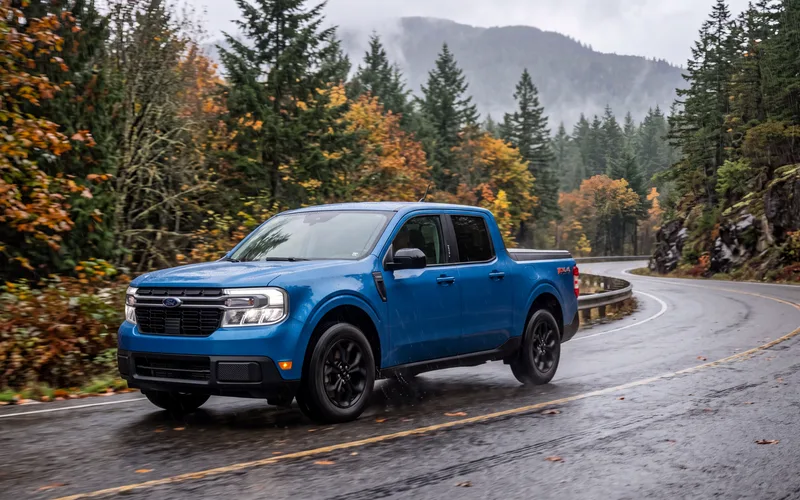 Ford MaverickCompact TruckBetter at: Fuel economy
Costs several thousand less to start, includes a standard full hybrid worth roughly 15 MPG more, and has a bigger bed and better resale — the default cross-shop for anyone considering a Santa Cruz.
Compare 2.19C
2.19C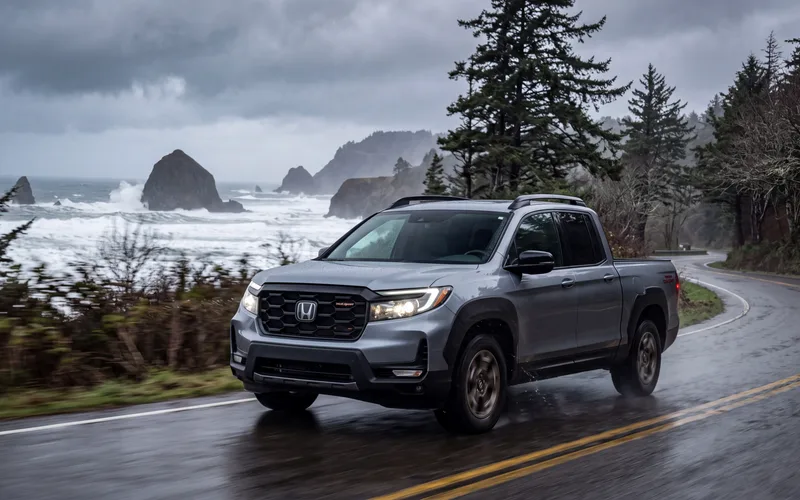 Honda RidgelineMid-Size TruckBetter at: Space and safety
Same unibody-truck philosophy but with a 64-in bed, a genuinely spacious crew cab, a 5-star NHTSA rating and a current IIHS Top Safety Pick.
Compare 2.12C
2.12C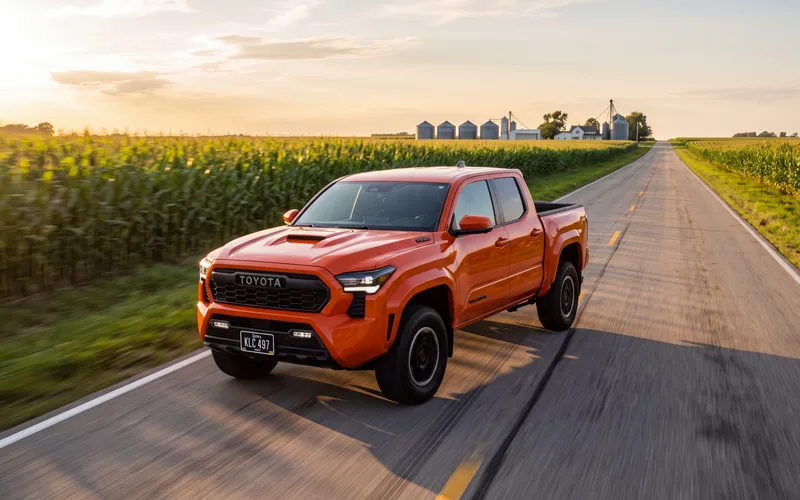 Toyota TacomaMid-Size TruckBetter at: Truck capability
The step up for buyers who discover the Santa Cruz's 3,500-lb base tow rating and 4.3-ft bed aren't enough, with class-leading resale to offset the higher price.
CompareSubject scores by year
Hover or tap a score to see what moved it versus the year before. A corner mark flags a big swing.
| Year | Performance | Efficiency | Safety | Space | Cost | Reliability | Tech | Use-case | Driving | Value |
|---|---|---|---|---|---|---|---|---|---|---|
| 2026 | 30 | 61 | 65 | 46 | 79 | 68 | 74 | 69 | 71 | 69 |
| 2025 | 29 | 68 | 67 | 48 | 82 | 70 | 68 | 66 | 72 | 69 |
| 2024 | 29 | 57 | 67 | 48 | 90 | 73 | 57 | 67 | 70 | 66 |
| 2023 | 29 | 57 | 66 | 48 | 88 | 65 | 50 | 58 | 67 | 68 |
| 2022 | 28 | 57 | 51 | 48 | 88 | 60 | 49 | 57 | 67 | 66 |
Compare two years
Best fit & conditions
Higher scores mean a better fit for that use case. Learn more about use-case fit →
Subject profile
Academic Probation · NHTSA safety recalls
May 18, 2026Forward collision avoidance: automatic emergency brakingSoftware in the front cameras may cause the forward collision avoidance system to activate prematurely and unexpectedly apply the brakes.
Defect
Hyundai Motor America (Hyundai) is recalling certain 2025-2026 Santa Cruz, Tucson, Tucson Hybrid, and Tucson Plug-In Hybrid Electric (PHEV) vehicles. Software in the front cameras may cause the forward collision avoidance system to activate prematurely and unexpectedly apply the brakes.
Risk
Unexpected braking increases the risk of a crash.
Remedy
Dealers will update the front camera software, free of charge. Owner notification letters are expected to be mailed July 17, 2026. Owners may contact Hyundai customer service at 1-855-371-9460. Hyundai's number for this recall is 302. Vehicle Identification Numbers (VINs) involved in this recall became searchable on NHTSA.gov on May 20, 2026.
NHTSA campaign 26V316000 ↗Manufacturer no. 302423,062 vehicles potentially affected (all models in the campaign)Owners notified Jun 22, 2026Filed by Hyundai Motor AmericaFiled as SANTA CRUZJan 26, 2026Electrical system: instrument cluster/panelDue to a software error, the instrument panel display may fail. As such, these vehicles fail to comply with the requirements of Federal Motor Vehicle Safety Standard (FMVSS) number 101, "Controls and Displays."
Defect
Hyundai Motor America (Hyundai) is recalling certain 2025-2026 Tucson Hybrid, Tucson Plug-In Hybrid Electric (PHEV), 2026 IONIQ 5, Santa Cruz, Kona, Palisade, Palisade Hybrid, Santa Fe, Santa Fe Hybrid, Sonata, Sonata Hybrid, and Tucson vehicles. Due to a software error, the instrument panel display may fail. As such, these vehicles fail to comply with the requirements of Federal Motor Vehicle Safety Standard (FMVSS) number 101, "Controls and Displays."
Risk
An instrument panel display that fails to show critical safety information, such as the speedometer or warning lights, increases the risk of a crash.
Remedy
The instrument panel display software will be updated over-the-air (OTA) or by a dealer, free of charge. Owner notification letters were mailed March 24, 2026. Owners may contact Hyundai's customer service at 855-371-9460. Hyundai's number for this recall is 293. Vehicle Identification Numbers (VINs) involved in this recall became searchable on NHTSA.gov on January 28, 2026.
NHTSA campaign 26V047000 ↗Manufacturer no. 29341,651 vehicles potentially affected (all models in the campaign)Owners notified Mar 24, 2026Filed by Hyundai Motor AmericaFiled as SANTA CRUZNov 20, 2025Air bags: side/window: curtainThe side curtain air bags may not have been installed properly, which can cause the air bags not to deploy as intended.
Defect
Hyundai Motor America (Hyundai) is recalling certain 2025 Tucson, 2025-2026 Santa Cruz, Santa Fe, Santa Fe Hybrid, and 2026 Genesis GV70 vehicles. The side curtain air bags may not have been installed properly, which can cause the air bags not to deploy as intended.
Risk
Side curtain air bags that do not deploy as intended increase the risk of injury in a crash.
Remedy
Dealers will reinstall the side curtain air bags, free of charge. Owner notification letters were mailed beginning December 29, 2025. Owners may contact Hyundai customer service at 1-855-371-9460. Hyundai's numbers for this recall are 289 and 029G. Vehicle Identification Numbers (VINs) involved in this recall became searchable on NHTSA.gov on November 22, 2025.
NHTSA campaign 25V809000 ↗Manufacturer no. 289 (H); 029G (G)258 vehicles potentially affected (all models in the campaign)Owners notified Dec 29, 2025Filed by Hyundai Motor AmericaFiled as SANTA CRUZ
6 recalls on other model years of the Santa Cruz (2022–2025)
Nov 20, 2024Electrical system: wiringThe console extension wiring assembly may be routed improperly, allowing the transmission to be shifted out of Park without applying the brake pedal.
Defect
Hyundai Motor America (Hyundai) is recalling certain 2025 Tucson and Santa Cruz vehicles. The console extension wiring assembly may be routed improperly, allowing the transmission to be shifted out of Park without applying the brake pedal.
Risk
A transmission that can shift out of Park without applying the brake pedal can result in a vehicle roll away, increasing the risk of a crash.
Remedy
Owners are advised to use the parking brake when parking the vehicle. Dealers will reroute the console extension wiring assembly, free of charge. Owner notification letters were mailed December 17, 2024. Owners may contact Hyundai customer service at 1-855-371-9460. Hyundai's number for this recall is 273.
NHTSA campaign 24V877000 ↗Manufacturer no. 27342,465 vehicles potentially affected (all models in the campaign)Owners notified Dec 17, 2024Filed by Hyundai Motor AmericaFiled as SANTA CRUZJun 5, 2024Steering: electric power assist systemThe circuit board in the motor-driven power steering assembly may short circuit, resulting in a loss of power steering assist.
Defect
Hyundai Motor America (Hyundai) is recalling certain 2024 Tucson and Santa Cruz vehicles. The circuit board in the motor-driven power steering assembly may short circuit, resulting in a loss of power steering assist.
Risk
A loss of power steering assist can increase the risk of a crash.
Remedy
Dealers will replace the motor-driven power steering electric power pack, free of charge. Owner notification letters were mailed July 11, 2024. Owners may contact Hyundai customer service at 1-855-371-9460. Hyundai's number for this recall is 261.
NHTSA campaign 24V412000 ↗Manufacturer no. 261795 vehicles potentially affected (all models in the campaign)Owners notified Jul 11, 2024Filed by Hyundai Motor AmericaFiled as SANTA CRUZMar 17, 2023Trailer hitchesWater accumulation on the tow hitch harness module printed circuit board (PCB) may cause an electrical short, which can result in a fire.
Defect
Hyundai Motor America (Hyundai) is recalling certain 2019-2023 Santa Fe, 2021-2023 Santa Fe HEV, 2022-2023 Santa Fe Plug-in HEV and Santa Cruz vehicles potentially equipped with a tow hitch harness installed as original equipment, or purchased as an accessory through a Hyundai dealership. Water accumulation on the tow hitch harness module printed circuit board (PCB) may cause an electrical short, which can result in a fire.
Risk
A fire while parked or driving can increase the risk of injury.
Remedy
Owners are advised to park their vehicles outside and away from structures until the remedy is completed. Dealers will install a new fuse and wire extension kit as necessary, free of charge. Owner notification letters were mailed starting May 16, 2023. Owners may contact Hyundai customer service at 1-855-371-9460. Hyundai's number for this recall is 244. This recall is an expansion of previous recall number 22V-633.
NHTSA campaign 23V181000 ↗Manufacturer no. 244584,784 vehicles potentially affected (all models in the campaign)Owners notified May 16, 2023Filed by Hyundai Motor AmericaFiled as SANTA CRUZJan 31, 2023Structure: body: roof and pillars · Structure: critical fastenersThe roof moldings may detach.
Defect
Hyundai Motor America (Hyundai) is recalling certain 2022 Tucson and 2022-2023 Santa Cruz vehicles. The roof moldings may detach.
Risk
A detached roof molding could become a road hazard, increasing the risk of a crash.
Remedy
Dealers will inspect and replace, or secure the roof moldings, as necessary, free of charge. Owner notification letters were mailed March 30, 2023. Owners may contact Hyundai customer service at 1-855-371-9460. Hyundai's number for this recall is 241.
NHTSA campaign 23V038000 ↗Manufacturer no. 24116,104 vehicles potentially affected (all models in the campaign)Owners notified Mar 30, 2023Filed by Hyundai Motor AmericaFiled as SANTA CRUZOct 6, 2022Power train: automatic transmissionThe vehicle's "fail-safe" limited-mobility drive mode may be impaired, when prompted by a transmission oil pump malfunction, which can result in a complete loss of drive power.
Defect
Hyundai Motor Company (Hyundai) is recalling certain 2021-2022 Santa Fe, Sonata, Veloster N, 2022 Santa Cruz, Elantra N, and Kona N vehicles. The vehicle's "fail-safe" limited-mobility drive mode may be impaired, when prompted by a transmission oil pump malfunction, which can result in a complete loss of drive power.
Risk
Loss of drive power increases the risk of a crash.
Remedy
Dealers will inspect and replace the transmission, as necessary. Dealers will also update the transmission control unit software. All repairs will be performed free of charge. Owner notification letters were mailed January 10, 2023. Owners may contact Hyundai customer service at 1-855-371-9460. Hyundai's number for this recall is 236.
NHTSA campaign 22V746000 ↗Manufacturer no. 23656,148 vehicles potentially affected (all models in the campaign)Owners notified Jan 10, 2023Filed by Hyundai Motor AmericaFiled as SANTA CRUZMar 28, 2022Engine and engine cooling: engine: gasoline: turbo/supercharger · Engine and engine cooling: engine: oil/lubrication: pipes, hoses, and fittingsThe oil supply pipe to the turbocharger may crack, which could result in an oil leak in the engine compartment.
Defect
Hyundai Motor America (Hyundai) is recalling certain 2022 Santa Fe and Santa Cruz vehicles. The oil supply pipe to the turbocharger may crack, which could result in an oil leak in the engine compartment.
Risk
An oil leak in the presence of an ignition source such as hot engine or exhaust components, can increase the risk of a fire.
Remedy
Dealers will replace the turbocharger oil supply pipe, free of charge. Owner notification letters were mailed May 26, 2022. Owners may contact Hyundai customer service at 1-855-371-9460. Hyundai's number for this recall 222.
NHTSA campaign 22V197000 ↗Manufacturer no. 22216 vehicles potentially affected (all models in the campaign)Owners notified May 26, 2022Filed by Hyundai Motor AmericaFiled as SANTA CRUZ
Source: NHTSA Office of Defects Investigation recall database, model years 2022–2026. Recalls are listed by model year as the manufacturer filed them; whether a specific car is affected depends on its VIN — check a VIN at nhtsa.gov ↗. NHTSA model names matched to this page: SANTA CRUZ.
Detailed scoring by subject
1Performance & PowertrainThe Santa Cruz's lowest-graded category.0.00F
The volume SE/SEL trims run the naturally aspirated 2.5L four; even the optional turbo's 281 hp sits near the bottom of a truck normalization band anchored on body-on-frame full-size output, so the unibody Santa Cruz scores very low here regardless of engine.
Standard-engine torque falls below the truck band floor of 230 lb-ft, reflecting a crossover-derived powertrain tuned for daily driving rather than sustained hauling; the turbo's 311 lb-ft clears the floor but remains modest for the class.
The naturally aspirated volume configuration is decidedly unhurried against a truck band that tops out at 2.5 s; the turbo is genuinely quick for a compact truck but is not the standard powertrain on the volume trims.
The turbo engine delivers strong, largely lag-free mid-range thrust and earns consistent praise, but the volume 2.5L NA gets buzzy and strained when worked hard with a load or a grade, and the turbo's low-speed tip-in can be uneven — competitive rather than polished.
The SE/SEL's conventional 8-speed torque-converter automatic is smooth and unobtrusive, but the turbo trims' 8-speed wet dual-clutch draws repeated criticism for hesitation and low-speed jerkiness in parking maneuvers and stop-and-go traffic — the most-cited drivetrain complaint on this nameplate.
5,000 lbs properly equipped matches the unibody Honda Ridgeline and beats the Ford Maverick's 4,000 lbs, but sits far below the body-on-frame mid-size and full-size trucks that anchor the top of the truck band.
Max payload is respectable for a compact unibody pickup and edges out the Maverick and Ridgeline, but it is well under the truck band's 3,400 lb ceiling set by heavy-duty-capable haulers.
Trailer sway control is standard and the turbo's factory tow package adds a hitch, wiring harness and self-leveling rear suspension, but there is no factory integrated trailer brake controller, no trailer backup or steering assist, no trailer camera views and no onboard scales — a thin toolkit even against unibody rivals.
HTRAC all-wheel drive is optional on SE and SEL and standard on XRT and Limited, with a center-coupling lock and snow/mud/sand terrain modes — broad availability and reasonable sophistication for the class, but there is no low range or true part-time 4WD hardware.
The XRT adds all-terrain tires, unique bumper treatment and downhill brake control on top of roughly 8.6 inches of ground clearance, but there is no locking differential, no meaningful skid plating, no suspension lift and no low range — light-duty trail and unpaved-road duty only, short of the Maverick Tremor or Ridgeline TrailSport.
Two distinct gas engines — a naturally aspirated 2.5L and a 2.5L turbo — cover the value and performance ends of the lineup, but there is no hybrid, plug-in hybrid or electric option, a real gap in a segment where the Ford Maverick sells a standard full hybrid.
2Efficiency & RangeOne of the Santa Cruz's weakest categories.2.11C
The volume SE/SEL trims use the naturally aspirated 2.5L GDI four (191 hp) with an 8-speed torque-converter automatic; 2026 is a carryover of the 2025 facelift, which revised the styling and interior but not the powertrains, so the refreshed car's EPA ratings hold.
City economy is the Santa Cruz's weakest EPA figure — with no hybrid assist, the ~3,700-lb unibody truck is only mid-pack among trucks and far behind the standard-hybrid Ford Maverick's 42 MPG city.
Highway is the Santa Cruz's strongest fuel-economy metric — the crossover-based unibody platform and car-like aerodynamics give it a clear edge over body-on-frame mid-size trucks, and the turbo actually rates a touch higher than the base engine on the highway cycle.
Computed from EPA combined economy and the Santa Cruz's 18.0-gallon fuel tank. Range is a genuine weak point in the truck segment: respectable MPG is offset by a small tank, leaving it well short of the 600-plus-mile figures full-size trucks post on 26-36 gallon tanks.
At EPA's 15,000 mi/yr assumption the base Santa Cruz burns roughly 650 gallons of regular; running costs land below every body-on-frame mid-size truck but roughly $900/yr above a hybrid Maverick.
Every 2026 Santa Cruz engine, including the 281-hp turbo, is specified for regular 87-octane unleaded - premium is optional for maximum output on the 2.5T but never required, and there is no diesel, E85, or charging infrastructure to plan around.
3SafetyMid-pack among this car's ten categories.2.42C+
The Santa Cruz carries a 4-star NHTSA overall rating for its NX4-derived unibody pickup structure, a step below the mechanically related Tucson's 5 stars; the 2025 facelift did not alter the crash structure, so 2026 carries the rating forward.
The Santa Cruz earned a Top Safety Pick early in its run and posts Good results in the legacy crashworthiness tests, but the updated moderate-overlap front (rear-passenger) and updated side tests are the weak legs, and the tightened 2026 award criteria — which require a Good updated moderate overlap result — most likely put it outside the current award list, as they did for the rival Maverick.
Hyundai SmartSense is close to complete on the base SE — forward collision-avoidance assist with pedestrian, cyclist and junction-turning detection, lane keeping and lane following (centering), driver attention warning, high beam assist, blind-spot and rear cross-traffic collision warning, and full stop-and-go Smart Cruise Control are all standard rather than trim-gated. That is the single biggest safety separator from the Maverick, which locks blind-spot monitoring and adaptive cruise behind option packages and upper trims.
The Santa Cruz uses the same Hyundai FCA hardware and calibration as the Tucson, which handles daytime vehicle-to-vehicle and pedestrian scenarios competently but lands mid-pack rather than Superior under the tougher current IIHS front crash prevention protocol, where higher closing speeds and nighttime pedestrian tests expose the system.
Warning-level blind-spot and rear cross-traffic coverage is standard on every trim — unusual in this segment — with active braking intervention, Safe Exit Warning and the camera-based Blind-Spot View Monitor arriving on upper trims. There is no trailer-aware blind-spot extension, which matters on a truck even at a 5,000 lb maximum tow rating.
Lane Keeping Assist and Lane Following Assist are standard across the range and hold the center competently on marked highways; reviewers of the NX4-family systems describe them as usable and non-intrusive but note mild wander on curves and faded markings versus the best-in-class systems.
Full-speed-range Smart Cruise Control with stop-and-go is standard on every trim, including the base SE — a real advantage over the compact-truck rivals that reserve adaptive cruise for upper trims — and Highway Driving Assist on SEL and above combines it with lane centering smoothly. It stops short of the top band because there is no lane-change assist or machine-learning cruise variant here.
No hands-free highway system is offered on the Santa Cruz at any trim. Highway Driving Assist is a hands-on lane-centering aid with a torque-sensing wheel check, not a BlueCruise or Super Cruise equivalent.
The 2025 facelift made LED projector headlamps standard with auto high-beam assist across the range, but measured reach and glare control are adequate rather than strong, with the better-rated setup tied to upper trims — so the volume SE/SEL buyer gets the weaker lamps.
A low hood and car-like seating height give the Santa Cruz much better forward and quartering sightlines than a body-on-frame pickup, but the rakish roofline, thick C-pillars and small rear window compromise the over-shoulder and straight-back view, and the bed with a raised tonneau blocks it further. The surround-view monitor that would compensate is restricted to the top trim.
The Santa Cruz has two sets of lower anchors and three tether anchors in the second row, but its cab is short for the class at roughly 36.5 inches of rear legroom, with an upright backrest and short seat cushion — a rear-facing seat behind a tall driver is a genuine squeeze, and three-across is not realistic. Better than the tighter Maverick, well short of the Ridgeline's crew cab.
4Space & ComfortOne of the Santa Cruz's weakest categories.1.03D
The Santa Cruz is offered exclusively as a five-seat crew cab; there is no extended-cab or bench-front configuration on any 2026 trim. Re-scored from the placeholder 3.6-seat figure.
Tucson-derived cabin gives adequate but unremarkable front headroom — well short of the tall, upright cabs of body-on-frame trucks that anchor the top of the truck band. Sunroof-equipped upper trims lose a full inch.
Front legroom is car-like rather than truck-like and sits near the bottom of the truck normalization band (41–45 in), behind the Ford Maverick's 42.6 in and far behind mid- and full-size crew cabs.
At 37.6 in the second row falls below the floor of the truck normalization band (38–41 in) — the sloping roofline that gives the Santa Cruz its crossover look costs real rear head clearance, and taller adults brush the headliner.
36.5 in is usable for adults on shorter trips but sits in the lower third of the truck band (33–45 in); it edges the Maverick's 35.9 in yet trails every mid-size crew cab. The upright backrest angle compounds the tightness.
The Santa Cruz has the shortest bed of any truck in the dataset — roughly four feet, below the 54 in floor of the truck band, so it scores zero regardless of which published figure is used. Sheets of plywood require the tailgate down.
27 cu ft falls below the 30 cu ft floor of the truck normalization band — the smallest bed volume in the segment, and that figure already counts the under-floor trunk. Score is zero on the band, though the item understates how usable the space is day to day.
Genuinely clever for the segment: a lockable, weather-sealed under-bed trunk with a drain plug, a standard-on-most-trims lockable tonneau cover, bed utility rails and tie-downs, plus flip-up rear seat cushions with under-seat bins. Held just short of the top band because in-cabin console and door storage is merely ordinary and there is no Pro Power-style export outlet.
Front seats are the Tucson's and are comfortable and well-bolstered for long stints, with power adjustment and lumbar on mid trims up. The second row is the limiter: short cushions, an upright fixed backrest and modest legroom make it a kids-and-short-trips space, which caps this at mid-band.
Unibody construction with fully independent rear suspension makes this one of the two most composed rides in the truck set alongside the Ridgeline — no unladen rear-axle patter, no body-on-frame head toss over broken pavement. Kept out of the 90s because 20-in wheels on Limited/XRT trims add impact harshness and the truck-rate rear springs are firmer than the Tucson's.
Quieter than any body-on-frame rival thanks to the unibody structure and sealed cabin, but road noise on coarse surfaces is noticeable and the 2.5T turbo four sounds coarse under hard acceleration. Above segment average without approaching library-quiet.
Typical Hyundai value: heated front seats available from low in the range, dual-zone automatic climate with rear vents on SEL and up, heated steering wheel and ventilated front seats on upper trims, plus remote start with climate pre-conditioning. Short of the top band only because ventilation and the heated wheel require stepping up and there are no rear heated seats.
5Cost of OwnershipThe Santa Cruz's best-graded category.3.34B+
Entry SE FWD lands near $31,800 with destination — a little above the Ford Maverick but well under any body-on-frame mid-size truck, so it scores high against the truck band (25,000–80,000). Figure is derived, not read off a 2026 order guide: the MY2025 SE FWD opened at roughly $29,750 + $1,395 destination, and Hyundai's 2026 destination charge on Tucson-platform vehicles is $1,475.
SEL is the volume trim and most buyers add HTRAC AWD (~$1,500), putting a typically equipped example near $35,800 — still comfortably in the lower third of the truck price band. The turbo XRT and Limited trims push well past $40K but sell in much smaller numbers.
Shares the Tucson's platform, 2.5L engine family and Alabama assembly, so running costs track that vehicle closely; the first three years of scheduled service are covered by Hyundai Complimentary Maintenance, which pulls the 5-year figure down. The turbo trims' 8-speed dual-clutch transmission is the main cost risk above the naturally aspirated SE/SEL.
Retention is respectable in absolute terms and typical of the Hyundai lineup, but this is the weakest part of the Santa Cruz's cost case: the truck normalization band (50–75%) is anchored to body-on-frame trucks that retain exceptionally well, so a low-50s figure sits just above the floor. The Maverick, which won its class KBB resale award at 54.1%, beats it here.
Hyundai's standard 5-year/60,000-mile bumper-to-bumper coverage tops the truck normalization band (3–5 yr) and beats every domestic rival's 3-year term — a structural advantage over the Maverick, Ranger, Colorado and Frontier.
The 10-year/100,000-mile powertrain term maxes out the truck band (5–10 yr) and is double the 5-year coverage offered by Ford, GM, Toyota and Nissan on their trucks. Note the term halves for second owners, which is part of why it does not translate into a resale advantage.
A genuinely top-tier package for the segment: 3 years/36,000 miles of complimentary factory-scheduled maintenance (oil changes, tire rotations, multi-point inspections), 5 years of unlimited-mileage roadside assistance, and Bluelink+ connected services at no subscription cost. That is multi-year included maintenance plus meaningful perks, placing it in the 80–100 band; the Maverick, by contrast, includes no scheduled maintenance at all.
$35,800 volume-trim price minus its estimated resale value after 5 years (52% retained, or about $18,616) leaves about $17,184 in depreciation. Add the projected $5,300 in 5-year maintenance and repairs, and owning this vehicle for 5 years costs about $22,484 in total.
6Reliability & QualityMid-pack among this car's ten categories.2.58C+
The 2026 Santa Cruz is a mature point in its run rather than a fresh design — the fifth US model year of the nameplate and the second year of the 2025 facelift — and it shares its NX4-derived platform, 2.5L Smartstream engines and most hard parts with the Tucson and Santa Fe, so the mechanical package has accumulated real owner data. Predicted-reliability signals sit around average rather than strong: the naturally aspirated volume drivetrain is a low-risk pairing, but owner complaints on this generation cluster on the turbo trims' dual-clutch low-speed manners and on infotainment/electronics gremlins, which is what keeps this out of the upper band.
Hyundai sits solidly mid-pack on multi-year dependability — typically at or modestly above industry average in J.D. Power's Vehicle Dependability Study and mid-field in Consumer Reports' brand rankings — a genuine improvement on the brand's 2010s standing but still short of Toyota, Lexus or Honda. The brand's initial-quality showing is consistently stronger than its long-term dependability standing, which is the pattern this score reflects.
The Santa Cruz's recall exposure comes mostly from broad Hyundai-wide campaigns rather than defects unique to the truck — it has been swept into the ABS/hydraulic-module fire-risk actions and the seat-belt pretensioner and trailer-hitch wiring campaigns that hit multiple NX4-family models — which is elevated activity by segment standards without being a systemic mechanical failure. Its low sales volume also means a thinner field record than the Tucson's, so the absence of a model-specific defect theme is weaker evidence here than it would be on a high-volume nameplate.
The volume configuration is the conservative one and that is the score's foundation: the 191-hp 2.5L Smartstream naturally aspirated four drives through a conventional 8-speed torque-converter automatic, hardware shared across the Tucson, Santa Fe and Sonata with several model years of field time and no systemic failure theme. The score is held below the Tucson's because the trims buyers cross-shop for capability — XRT and Limited with the 281-hp 2.5L turbo — pair that engine with an 8-speed wet dual-clutch whose low-speed hesitation and shudder are the generation's most-cited drivetrain complaint and whose long-term durability record is still comparatively short.
The 2025 facelift reworked the cabin around a dual 12.3-inch display layout with improved dash materials and retained physical climate and volume controls, and reviewers generally rate the result as one of the better-presenting interiors among compact and mid-size pickups. It sits below the Tucson's cabin, though, because the truck's utility brief brings more hard-wearing, hard-touch plastic on the lower doors, console sides and rear cabin, with the genuinely rich surfaces reserved for Limited.
Assembly quality is a relative Hyundai strength — the brand consistently outperforms its long-term dependability standing in initial-quality measures — and a second year of the facelifted body means the tooling is settled with no widespread panel-gap or misalignment theme. It lands a shade under the Tucson because a unibody pickup adds a bed, tailgate and tonneau interface that give rattles and wind noise more places to originate, and scattered owner reports of bed and rear-cabin trim noise are the generation's recurring niggle.
Hyundai's US network gives comfortable metro and suburban coverage, and the ownership package around it — complimentary maintenance plus long powertrain coverage — is a real support advantage. It is materially thinner than Ford, Chevrolet, Toyota or Honda, which matters more for a truck than for a commuter car: a Maverick owner has roughly three times as many service points, and rural coverage is where the gap shows.
Mechanically the Santa Cruz is cheap to keep: its platform, 2.5L engines, 8-speed automatic and most suspension and electrical hardware are shared with the Tucson, Santa Fe and Kia Sportage, some of the highest-volume component families in the US market, so OEM parts are plentiful and normally priced. The drag is truck-specific: bed, tailgate, tonneau and body panels are unique to a low-volume nameplate, and the accessory and repair aftermarket is a fraction of what a Tacoma, Colorado or even Maverick owner can draw on.
7Technology & InfotainmentOne of the Santa Cruz's strongest categories.3.04B
The 2025 Santa Cruz facelift replaced the old 8.0-in standard / 10.25-in optional split with a single 12.3-inch center touchscreen standard across the entire lineup including base SE, and 2026 carries that forward; it reads modest only because the truck normalization band stretches to 18.5 in to accommodate full-size rivals' oversized displays.
The Santa Cruz runs Hyundai's ccNC-generation software, which is quick and logically organized, and the facelift kept physical climate knobs, a volume knob and hard shortcut keys rather than burying them in the touchscreen — a combination reviewers rate among the best mainstream truck interfaces.
Wireless Apple CarPlay and Android Auto are standard on every trim including base SE, and the facelift removed Hyundai's old quirk where choosing the navigation-equipped large screen forced wired-only projection — best-in-class availability for a pickup.
Connected navigation with live traffic is standard with the 12.3-in system and the natural-language assistant handles climate, audio and destination entry conversationally — genuinely good, though short of the Google built-in systems appearing in GM trucks.
The standard six-speaker system is adequate but unremarkable, and the Bose eight-speaker premium upgrade is reserved for the top Limited trim — competent rather than a class standout, and unavailable to the volume SEL buyer.
A 12.3-inch fully digital configurable cluster is standard on every trim as the left half of the panoramic curved display, and it doubles as the screen for the Blind-Spot View Monitor camera feed — well ahead of trucks that still fit a partial digital strip between analog dials.
The ccNC platform supports over-the-air infotainment and map updates and Hyundai extends OTA to a number of vehicle control modules, but the Santa Cruz does not get the regular feature-adding whole-vehicle updates that define the top band.
Bluelink+ bundles remote start with climate preconditioning, remote lock/unlock, vehicle locate and alerts at no recurring subscription cost — a real advantage over FordPass Connect on the rival Maverick, which gates remote start by trim; Digital Key 2 phone-as-key is offered on Limited.
USB-C data and charge ports front and rear are standard and a wireless charging pad is fitted from SEL upward; the available in-bed 115V AC power outlet adds genuine jobsite/campsite utility the Tucson cannot offer, though it is not standard equipment on the volume trim.
Proximity entry with push-button start and remote start are standard from SEL up and Digital Key 2 turns a phone or smartwatch into the key on Limited; the pickup body means there is no power or hands-free liftgate, just a lockable damped tailgate, which keeps it out of the top band.
Surround View Monitor and the Blind-Spot View Monitor camera feed are available on Limited, with front and rear parking distance warning and reverse parking collision avoidance on upper trims — useful for a truck, but the 360-degree system does not reach the volume SEL trim.
No head-up display is offered on any Santa Cruz trim — unlike the mechanically related Tucson, which fits one on Limited — so even the top-trim buyer cannot get the feature; the 12.3-in digital cluster is the only driver-facing display.
8Use-Case FitMid-pack among this car's ten categories.2.69C+
Crew-cab-only body with two full LATCH lower-anchor sets, three top tethers, wide rear door openings and a car-like step-in height that is far easier on small kids than any body-on-frame pickup; flip-up rear seat cushions expose under-seat bins and the lockable, drainable under-bed trunk swallows a stroller in the weather. The limiter is cabin size — 36.5 in rear legroom with an upright backrest and a segment-worst 37.6 in rear headroom make a rear-facing seat behind a tall driver a genuine squeeze, and three-across is not realistic.
The standard-equipment story is the best in the compact-truck segment and it lands exactly where this item aims — on the trims families actually buy. Base SE already includes forward collision-avoidance with pedestrian, cyclist and junction-turning detection, lane keeping and lane following, blind-spot and rear cross-traffic warning, rear occupant alert and full stop-and-go adaptive cruise, none of it option-packaged. Crash credentials are the weak leg: 4-star NHTSA overall rather than 5, and the tightened 2026 IIHS criteria most likely leave it off the award list.
The unibody ride and sealed cabin make it a far more civil long-haul family vehicle than a leaf-sprung mid-size truck, dual-zone climate with second-row vents arrives on SEL and rear USB-C ports are standard, and the covered, lockable bed plus the weatherproof under-bed trunk mean luggage never competes with rear-seat space. Held to mid-band by the second row itself: short cushions, a fixed upright backrest and the segment's lowest rear headroom get tiring past a couple of hours, and there are no rear climate controls, heated rear seats or rear entertainment at any price.
This is the Santa Cruz's strongest mission. The Tucson-derived unibody chassis, light steering, compliant independent rear suspension and the volume SE/SEL's smooth conventional 8-speed automatic make it behave like a compact crossover in traffic, and full-range Smart Cruise Control with stop-and-go is standard on every trim rather than trim-gated. Two things keep it out of the top band: the heavily raked rear glass and thick C-pillars give a poorer over-shoulder view than the Ridgeline's airy cab, and the 2.5T trims' 8-speed wet dual-clutch is widely criticised for low-speed hesitation and creep.
Roughly 24 mpg combined for the volume front-drive 2.5L on regular unleaded beats every body-on-frame truck and the Ridgeline's 21 mpg, and three years of complimentary scheduled maintenance plus ordinary crossover consumables keep the running-cost floor low. But the absence of any hybrid option is the decisive gap in this segment — the Maverick's standard full hybrid returns roughly 38 mpg combined, which is well over half again the Santa Cruz's per-mile economy, and AWD or the turbo drops the Hyundai to about 22–23 mpg.
At roughly 195.7 in long the Santa Cruz is the shortest pickup on sale in the US — shorter even than the Maverick — and its crossover-derived turning circle of about 38 ft threads garages and parallel spots that defeat every mid-size truck. Forward sightlines over the low hood are good. It falls short of the top band because rearward visibility is genuinely poor for the class (raked backlight, thick C-pillars, raised tonneau) and the surround-view camera that would offset that is restricted to the top Limited trim.
Light-to-moderate duty only, and the placeholder score badly overstated it. The 5,000 lb maximum tow rating requires the 2.5T and the factory tow package — the volume SE/SEL tops out at 3,500 lbs — while payload of up to 1,753 lbs is the best of the unibody trucks. What caps it is the bed: at roughly 52 in and 27 cu ft it is the smallest in the entire dataset, so plywood, drywall and long stock all require the tailgate down, and the naturally aspirated 191 hp engine on the trims most buyers take is short of breath with a trailer or a grade.
Nothing here is built for abuse. The chassis is the Tucson's unibody with an independent rear end rather than a work-truck frame, there is no fleet or commercial variant and no jobsite track record for a nameplate only in its fifth model year, and the 8-speed wet dual-clutch on the turbo trims is an open durability question under repeated heavy-load cycles. The offsetting arguments are real but partial: the 2.5L engine family is well proven across Hyundai's crossover lineup, and the 10-year/100,000-mile powertrain warranty is the longest in the segment.
The factory bed kit is good for the size: a lockable, weather-sealed and drainable under-bed trunk, a lockable roll-type tonneau on most trims, adjustable bed utility rails with cleats and tie-down points, bed lighting, and a composite-lined bed that hoses out. Two things hold it below the Maverick and Ridgeline — the 115V AC bed outlet is reserved for upper trims rather than standard on the volume SEL, and there is no multi-position or dual-action tailgate. The aftermarket upfit ecosystem for racks, caps and service bodies is also thin next to any body-on-frame truck.
A competent mile-eater for the class: composed unibody ride, comfortable Tucson-derived front seats, standard stop-and-go adaptive cruise paired with Highway Driving Assist lane centering from SEL up, and roughly 430–450 miles of range from the 18.8-gallon tank on the volume powertrain. It stops short of the top band because road noise on coarse surfaces is noticeable, the turbo four is coarse when worked, there is no hands-free highway system and no head-up display at any trim, and the tight second row limits how well it carries four-plus people for a full day.
Solidly in the gravel-road-and-bike-rack band. HTRAC all-wheel drive with a center-coupling lock and snow/mud/sand modes is available across the range and standard on XRT and Limited, the XRT adds all-terrain tires and downhill brake control over roughly 8.6 in of clearance, the 5,000 lb tow rating covers a small camper or toy trailer, and the in-bed 115V outlet plus the weather-sealed lockable trunk are genuinely useful at a campsite. But there is no locking differential, no low range, no skid plating and no suspension lift on any trim, which is exactly the hardware the Maverick Tremor brings.
The cargo strategy is the cleverest thing about this truck. A lockable, drainable under-bed trunk holds valuables or ice out of the weather, the standard-on-most-trims lockable roll tonneau turns the whole bed into secure dry storage — something the open-bedded Maverick simply cannot do — and adjustable bed rails, tie-down cleats, fold-up rear seat cushions with under-seat bins and available roof side rails and crossbars cover the rest. The single hard limit keeps it out of the top band: at roughly 4.3 ft the bed is the shortest in the segment, so bikes, long kayaks and lumber ride with the tailgate down.
9Driving ExperienceOne of the Santa Cruz's strongest categories.2.79B-
The Santa Cruz is a unibody pickup built on the Tucson platform with multi-link independent rear suspension on every trim, so it corners with crossover composure rather than pickup float — the most agile-feeling truck in the compact class and clearly ahead of body-on-frame mid-sizers. Held out of the 80+ band by noticeable body roll, modest grip from the all-season tires, and a ride that turns busy over broken pavement on the Limited's 20-inch wheels.
Hyundai's motor-driven power steering is accurate, consistently weighted, and light enough to make the truck easy to place in parking lots, but it transmits little genuine road feedback and is numb on-center — precise rather than communicative. Squarely in the 'precise enough but numb' band.
Stopping power and pedal feel are adequate and untroubled in normal driving, with no fade or tuning complaints reported for the generation, but instrumented 70-0 mph results for the turbo trim land around the segment average rather than ahead of it. No 2026-specific instrumented test was available to confirm, so this is a carry-forward judgment.
The volume SEL's naturally aspirated 2.5L (191 hp) with a conventional 8-speed torque-converter automatic is smooth and predictable but slow to respond when loaded or merging. The optional 2.5T's 8-speed wet dual-clutch is quick once moving but the most consistently criticized part of the truck: low-speed hesitation and lurch in stop-and-go traffic. Averaging a smooth-but-lethargic base and a fast-but-jerky turbo lands this mid-band.
Hyundai's 2.5-liter four is coarse and droning when worked hard, and the naturally aspirated version has to be worked hard often given 191 hp in a roughly two-ton truck. Well isolated at steady highway cruise with no vibration through the controls, but the engine note under load is the weakest part of the truck's refinement.
At roughly 38.4 ft curb-to-curb the Santa Cruz turns tighter than any other pickup in the dataset — tighter than the Ford Maverick's 40.0 ft — and falls below the bottom of the truck normalization band, so it scores out at the ceiling. This is the compact unibody footprint's clearest everyday advantage.
Car-like step-in height makes ingress and egress far easier than a body-on-frame truck, forward sightlines are good, and the facelifted cabin pairs its dual 12.3-inch curved displays with retained physical climate and volume controls — a better layout than screen-only rivals. Marked down for a small rear window and over-shoulder visibility compromised by the bed and tonneau cover.
The Santa Cruz has real character — distinctive styling, genuine agility, and a turbo version quick enough to be entertaining — and the enthusiast press generally treats it as the fun alternative for buyers who don't need a real truck. The volume naturally aspirated SEL scored here is pleasant and easy rather than exciting, which keeps it out of the top band.
10Value & Market PositionMid-pack among this car's ten categories.2.64C+
Base-trim content is the Santa Cruz's strongest value argument: the 2025 facelift made the dual 12.3-inch curved display (touchscreen + digital cluster), wireless Apple CarPlay/Android Auto, and a near-complete Hyundai SmartSense suite — forward collision-avoidance with pedestrian/cyclist/junction-turn detection, lane keeping and lane following, blind-spot and rear cross-traffic warning, and full stop-and-go Smart Cruise Control — standard on the base SE, and 2026 carries that forward. Rivals charge real money for parity: the Maverick gates blind-spot monitoring and adaptive cruise behind option packages and upper trims. Layered on top is Hyundai's 5 yr/60,000 mi basic and 10 yr/100,000 mi powertrain warranty, 3 yr/36,000 mi complimentary maintenance and no-cost Bluelink+, none of which the domestic rivals match.
Fair value rather than a segment bargain. The content-per-dollar case is genuinely strong — standard big-screen tech, standard ADAS, class-leading warranty and included maintenance — and the 5,000 lb turbo tow rating beats the Maverick's 4,000 lb. What holds it to the middle of the band is the price of entry and the missing powertrain: at roughly $31,800 to start and about $35,800 for a typically equipped SEL AWD, the Santa Cruz opens several thousand above a Maverick that includes a full hybrid as standard, and no electrified Santa Cruz exists at any price. Buyers shopping capability-per-dollar also get a short 4.3-ft bed and less towing than any body-on-frame mid-sizer costing similar money.
Reasonable choice with clear gaps. Four trims (SE, SEL, XRT, Limited) span roughly $31.8K to $43K with two distinct engines and a FWD/AWD choice on the lower half of the range — more mechanical variety than the Ridgeline offers. But there is exactly one body configuration: crew cab, 4.3-ft bed, no extended cab, no long bed. There is no electrified option, no work-grade fleet trim below the SE, and the XRT is an appearance-and-tires package rather than a hardware off-roader. Budget flexibility is narrower than the Maverick's five-trim ladder, which reaches from a sub-$28K work truck to the Lobo street and Tremor off-road variants.
The Santa Cruz has never converted critical interest into volume. It moved 25,499 US units in 2025 against the Ford Maverick's record 155,051 — roughly a 5-to-1 gap within the same compact-truck space — and it also trails the mid-size Tacoma, Colorado, Frontier, Ranger and Ridgeline. Volume has been broadly flat across the generation rather than collapsing, and the 2025 facelift did not move it materially, so this reads as a stable low-volume niche product rather than a model in free fall; that stability is what keeps it off the floor of the band.
Neutral brand perception, with a handicap specific to this segment. Hyundai's overall image has improved substantially — a strong design reputation, an industry-best warranty and an EV halo from the Ioniq line — and the badge no longer drags on a purchase the way it did a decade ago. But the brand sits only mid-pack on long-term dependability, and in the pickup market it has no heritage at all: truck shoppers weighing Ford, Toyota or Chevrolet badge equity get nothing comparable from Hyundai, and the Santa Cruz's unibody, car-derived positioning is polarizing with traditional truck buyers on top of that. Resale reflects the neutral standing rather than any premium.
This is where the Santa Cruz's weak sales become a buyer advantage. Low volume and unhurried inventory turn mean Hyundai supports the truck with regular national APR and lease programs and dealers negotiate readily — a markedly better buying environment than the Maverick, which stays in demand and often goes a month with no manufacturer lease offer, or the Tacoma, which routinely transacts at MSRP. It stops short of the top of the band because the discounting reflects soft demand rather than a healthy model being sold cheaply, and heavy incentives feed back into the weak residuals scored in cat5.
Current and recently refreshed, but not new. The Santa Cruz launched for MY2022 and received a substantial mid-cycle facelift for 2025 — revised front and rear styling, a reworked cabin built around the dual 12.3-inch curved display, and updated equipment — with 2026 a carryover year on the same platform, body and powertrains. That leaves the truck five model years into its generation with its major update just behind it, so redesign risk for a 2026 buyer is low over the next couple of years, though the underlying N3 unibody architecture and 2.5L engine family date to the original launch.
Well-reviewed but habitually the runner-up. Reviewers consistently praise the styling, the car-like ride and handling, the facelifted cabin and the standard tech and safety content, and the Santa Cruz was a North American Truck of the Year finalist at launch — losing to the Maverick. That pattern has held: in compact-truck comparison tests it is regularly the recommended alternative rather than the winner, with critics pointing to the short 4.3-ft bed, the coarse base 2.5L, the turbo trims' dual-clutch low-speed manners, and prices that climb past $40K on upper trims. No major award has landed for the current generation, and the 2025 facelift drew solid rather than enthusiastic notices.