

The verdict
A capable mid-size luxury sedan, strong on safety and held back by efficiency.
The 2021 Genesis G80 is the strongest case yet that a mid-size luxury sedan doesn't need a German badge: a 5-star NHTSA rating, IIHS Top Safety Pick+, and a segment-leading 10-year/100,000-mile powertrain warranty come standard on a $47,700 base car loaded with a 14.5-in touchscreen and a full suite of driver-assist tech. The tradeoffs are real — 26 MPG combined on premium-only fuel, a middling 13.1 cu ft trunk with no folding rear seats, and steering that reviewers call numb next to a 5 Series — so this is a comfort-first cruiser, not a driver's car or a family hauler. Buyers cross-shopping the E-Class or A6 on content-per-dollar will find the G80 hard to beat; buyers who want sharp handling or three-row flexibility should look elsewhere.
Jump to scoresStrengths
- Class-leading crash safety and standard driver-assist tech
- Exceptional warranty coverage and content-per-dollar
- Polished driver-assist suite
What holds it back
- Below-average efficiency, and it drinks premium
- Tight cargo space with no folding rear seats
- Not built for work or hauling duty
Top alternatives
Cars shoppers cross-shop with the Genesis G80 3.27B+
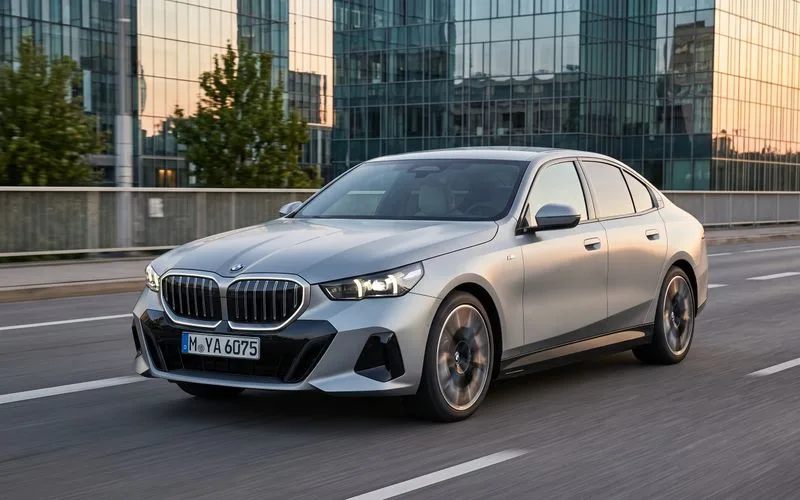 BMW 5 SeriesMid-Size Luxury SedanBetter at: Driving dynamics
The closest direct rival at almost the same money, and it beats the G80 on driving engagement, trunk space, hands-free highway assist and resale value.
Compare 3.11B
3.11B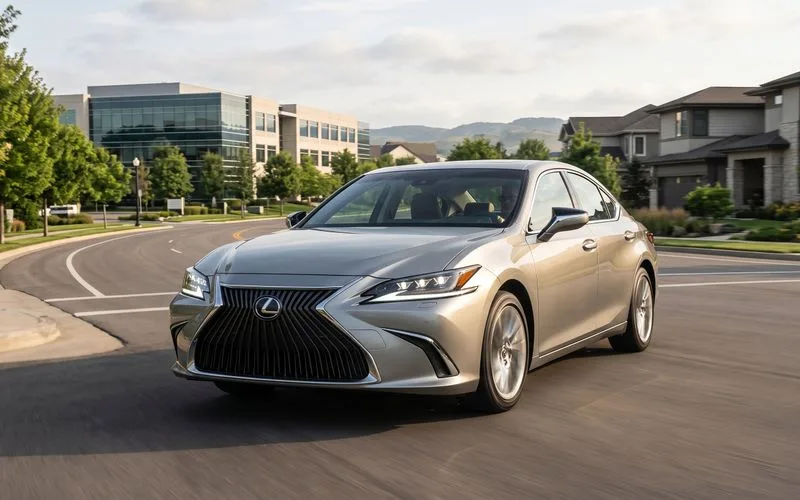 Lexus ESMid-Size Luxury SedanBetter at: Running costs
A hybrid powertrain at roughly 43 MPG on regular fuel and the best resale in the segment make it far cheaper to own, if you can live with front-wheel drive and a less special cabin.
Compare 2.87B-
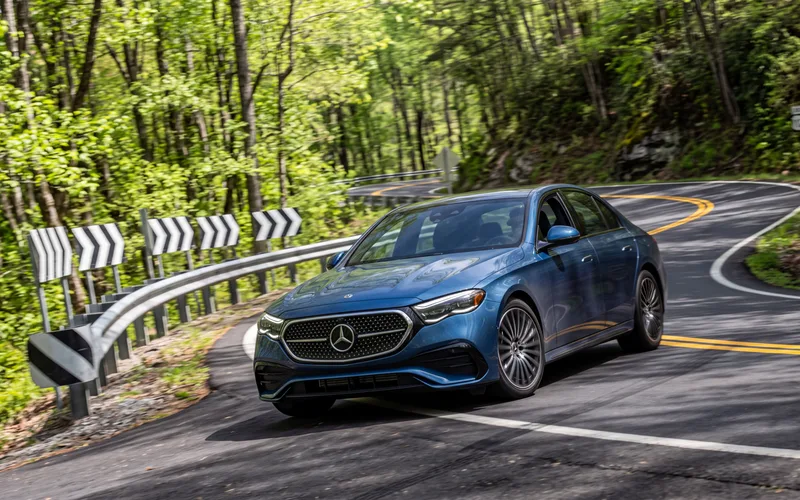 Mercedes-Benz E-ClassMid-Size Luxury SedanBetter at: Brand prestige
For buyers who want the luxury badge and the brand cachet the Genesis emblem still lacks, with comparable comfort — at a higher price and a much higher repair bill.
CompareHow it's evolved
10 scored model years · 2017–2026
Subject scores by year
Hover or tap a score to see what moved it versus the year before. A corner mark flags a big swing.
| Year | Performance | Efficiency | Safety | Space | Cost | Reliability | Tech | Use-case | Driving | Value |
|---|---|---|---|---|---|---|---|---|---|---|
| 2026 | 65 | 37 | 83 | 75 | 33 | 78 | 86 | 59 | 71 | 79 |
| 2025 | 64 | 25 | 74 | 76 | 33 | 71 | 81 | 55 | 70 | 75 |
| 2024 | 65 | 29 | 82 | 74 | 48 | 69 | 70 | 56 | 68 | 73 |
| 2023 | 65 | 33 | 80 | 72 | 49 | 66 | 69 | 55 | 67 | 74 |
| 2022 | 60 | 30 | 82 | 74 | 46 | 71 | 63 | 48 | 67 | 73 |
| 2021 | 58 | 31 | 83 | 72 | 58 | 68 | 65 | 49 | 61 | 76 |
| 2020 | 54 | 25 | 77 | 74 | 62 | 74 | 46 | 45 | 65 | 67 |
| 2019 | 55 | 25 | 76 | 74 | 57 | 71 | 46 | 45 | 65 | 69 |
| 2018 | 55 | 30 | 74 | 70 | 64 | 66 | 50 | 49 | 65 | 70 |
| 2017 | 54 | 28 | 76 | 69 | 66 | 60 | 46 | 48 | 64 | 72 |
Compare two years
Best fit & conditions
Higher scores mean a better fit for that use case. Learn more about use-case fit →
Subject profile
Detailed scoring by subject
1Performance & PowertrainOne of the G80's weakest categories.1.91C-
Second-generation (RG3) G80 launched for 2021 with a 2.5L turbo I4 as the standard/volume engine and an optional 3.5L twin-turbo V6.
Peak torque for the standard 2.5T engine; the optional 3.5T twin-turbo V6 makes 391 lb-ft.
Instrumented/manufacturer-cited 0-60 for the base 2.5T RWD; the 3.5T twin-turbo is markedly quicker.
The 2.5T delivers smooth, linear power with minimal turbo lag and refined NVH typical of Genesis's luxury positioning, though it lacks the effortless shove of the optional 3.5T; reviewers described it as competent rather than exciting.
The 8-speed automatic shifts smoothly and unobtrusively with well-judged ratios for both the 2.5T and 3.5T, rarely hunting; reviewers praised its calibration as a strong point of the redesigned G80.
HTRAC AWD is an optional upgrade (~$3,150) across both 2.5T and 3.5T trims rather than standard, with basic torque-split operation and no low-range or terrain modes — typical for a luxury sedan, not sophisticated off-road-oriented hardware.
2021 G80 offers exactly two gas powertrains (2.5T I4, 3.5T twin-turbo V6) with no hybrid, PHEV, or EV variant that model year — the electrified Electrified G80 did not arrive until 2023.
2Efficiency & RangeThe G80's lowest-graded category.0.00F
EPA combined rating for the standard 2.5T RWD configuration, the volume trim.
EPA city rating for the 2.5T RWD volume trim.
EPA highway rating for the 2.5T RWD volume trim.
EPA-derived total range on a full 17.2-gallon tank for the 2.5T RWD volume trim.
EPA annual fuel cost estimate at 15,000 mi/yr and current fuel price assumptions for the 2.5T RWD volume trim.
Both the 2.5T and 3.5T engines require premium unleaded gasoline across all trims, adding a real per-fill cost premium over regular-fuel rivals.
3SafetyThe G80's best-graded category.3.67A-
NHTSA's full evaluation of the all-new second-generation (RG3) G80 for its 2021 launch year returned a 5-star overall result, with 5 stars in both the frontal and side crash tests and a 5-star rollover rating.
The launch-year 2021 G80 holds IIHS Top Safety Pick+ with Good ratings across every crashworthiness test — driver- and passenger-side small overlap front, moderate overlap front, side, roof strength and head restraints — with no build-date qualifier limiting the award, unlike later model years that carried a mid-cycle rear seatbelt revision caveat. That clean sweep of Good results plus the top award places it near the top of the band.
The base 2021 G80 2.5T ships standard with Forward Collision-Avoidance Assist (with junction crossing/turning), Blind-Spot Collision-Avoidance Assist, Rear Cross-Traffic Collision-Avoidance Assist, Safe Exit Assist, Smart Cruise Control and the full Highway Driving Assist II suite (adaptive cruise, lane keeping, lane centering, machine-learning-tuned lane-change assist) as launch equipment — nothing this criterion asks about is trim-gated. HDA II being pulled from later 2022 production for chip-shortage reasons does not affect the 2021 model year, which launched with it intact.
IIHS rated the standard front crash prevention system Superior in both the vehicle-to-vehicle test (avoiding collisions at 12 and 25 mph) and the vehicle-to-pedestrian test (avoiding or substantially slowing across all three low/higher-speed scenarios). IIHS did not introduce a separate nighttime pedestrian evaluation until 2023, so no night-specific result exists for this launch-year car; scored near the top of the band on the best available (and best possible at the time) results rather than penalized for a test that didn't yet exist.
Blind-Spot Collision-Avoidance Assist and Rear Cross-Traffic Collision-Avoidance Assist both intervene (corrective braking/steering) rather than merely alert, and both are standard on the base 2.5T along with Safe Exit Assist. It falls just short of the very top because the camera-based Blind-Spot View Monitor — a live feed of the blind spot into the instrument cluster — is an optional feature across the lineup rather than standard on the volume trim in 2021.
Lane Keeping Assist and lane centering are part of the standard Highway Driving Assist II suite at launch, and road tests describe it holding highway lanes with minimal driver correction over long stretches. It stays out of the very top of the band because the same tests note the lane-centering behavior will occasionally ping-pong the car side to side within the lane, a rough edge typical of this generation of the technology.
Smart Cruise Control is full-speed-range with stop-and-go, standard at launch alongside Highway Driving Assist II's machine-learning-tuned following behavior and signal-initiated automatic lane changes — reviewers single it out as one of the more polished systems in the class, working flawlessly in stop-and-go traffic. It sits just below the top because it remains a hands-on system with no higher tier of automation to step up to.
No 2021 G80 trim offers hands-free highway driving. Highway Driving Assist II explicitly requires hands on the wheel at all times and disengages after repeated ignored prompts to retake control — it is a hands-on Level 2 system, not a supervised hands-free one like Super Cruise or FSD.
IIHS rates the 2021 G80's standard LED projector headlights Acceptable, uniformly across trims — no upgrade path to a Good-rated unit existed in this launch year (the micro-lens array headlights arrive later with the 2024 facelift). Uniform Acceptable across the range is the textbook middle band: no volume-trim penalty, but no Good-rated option either.
Reviewers describe the low dashboard and large glass area giving clear forward sightlines, but the low-riding sedan silhouette leaves genuine blind spots over the rear quarters, mitigated only by an optional (not standard) blind-spot camera feed. That mixed picture — good forward visibility, real rear-quarter blind zones only partly compensated on the volume trim — lands squarely in the middle band.
IIHS rates the 2021 G80's LATCH ease of use Acceptable, and hands-on car-seat testing found the anchors workable if requiring some muscle through stiff leather cushions, with clearly marked top tethers. Working strongly in its favor are a roomy rear seat and rear doors that open wide for easy loading; as with most sedans in the class, the outboard seats are large enough that it does not comfortably fit three car seats across.
4Space & ComfortOne of the G80's strongest categories.2.89B-
Standard 5-passenger seating across both 2.5T and 3.5T trims for the 2021 model year.
Second-generation RG3 G80 carries generous front headroom for the mid-size luxury sedan segment.
Mid-pack front legroom for a mid-size luxury sedan on the M3 platform.
Above-average second-row headroom for the segment despite the sedan's sloping roofline.
Competitive second-row legroom on the 118.5-in wheelbase, comfortable for adults on medium trips.
Average trunk volume for a mid-size luxury sedan; no fold-down rear seats limit usable volume further.
Center console and door storage are competitive, but rear seats don't fold — only a narrow center pass-through accommodates skis or long, thin items.
Heated leatherette-trimmed front seats are comfortable on every trim, and the Prestige package's Ergo Motion 7-chamber massage seat is a genuine long-haul highlight.
Multiple reviews describe the ride as smooth and well-isolated at all speeds, with only occasional brittleness over sharply cracked pavement.
Reviewers consistently note excellent wind, road and powertrain noise suppression at highway speed, with only minor road-noise intrusion mentioned.
Heated front seats are standard, ventilated front seats and heated rear seats arrive on mid/AWD trims, and massage is Prestige-only — a rich but trim-gated comfort suite.
5Cost of OwnershipMid-pack among this car's ten categories.1.93C-
All-new RG3-generation G80 launched for MY2021; base 2.5T RWD is the entry point of the range.
Volume configuration is the 2.5T with AWD ($3,150) and Prestige package (~$8,900), landing near CarEdge's typically-equipped average for the 2021 model year.
Industry estimate for annual upkeep extrapolated to a 5-year total; first 3 years/36,000 miles are covered by complimentary maintenance, which lowers realized owner spend below this figure.
The 2021 model year is now 5 years old, so this is realized market data rather than a forecast.
Standard Genesis new-vehicle bumper-to-bumper coverage, unchanged across the 2021 lineup.
Genesis's headline powertrain warranty is best-in-class for a mainstream luxury sedan and was a core part of the brand's value pitch at launch.
3 years/36,000 miles of complimentary scheduled maintenance, Genesis Roadside Assistance, and the brand's signature valet pickup-and-delivery service program for service visits meaningfully exceed typical luxury-segment coverage.
$57,839 volume-trim price minus its estimated resale value after 5 years (51.8% retained, or about $29,961) leaves about $27,878 in depreciation. Add the projected $3,525 in 5-year maintenance and repairs, and owning this vehicle for 5 years costs about $31,403 in total.
6Reliability & QualityMid-pack among this car's ten categories.2.62C+
J.D. Power gave the 2021 G80 a predicted reliability score of 86/100 ("Great") and the model won a segment award in J.D. Power's 2021 U.S. Vehicle Dependability Study, but Consumer Reports rates the Genesis brand near the bottom of its predicted-reliability list, so model-level and brand-level signals diverge.
J.D. Power's 2021 Vehicle Dependability Study put combined Korean brands (Hyundai/Kia/Genesis) well ahead of the industry average and specifically recognized the G80, but Consumer Reports dropped Genesis 13 places in its brand rankings for 2021 and placed it near the bottom overall — a genuinely mixed multi-year picture.
The 2021 G80 has accumulated multiple safety recalls tied to this generation, including a high-pressure fuel tube leak (2021 2.5T models), a separate fuel pipe/fuel rail leak, a fuel pump failure that can cause loss of drive power, and a front seat-belt pretensioner that can explode on deployment — several of these are fire- or injury-risk issues rather than minor administrative recalls.
The 2021 G80's Smartstream 2.5T inline-4 and 3.5T V6 turbo engines are newer designs without the high-mileage track record of the outgoing naturally aspirated Lambda/Tau engines, and no systemic engine failure pattern (of the type that affected earlier Hyundai/Kia Theta II GDI engines) has emerged for this generation as of scoring time, but the powertrains are still too new for a proven long-term reputation.
Reviewers consistently praised the G80's cabin materials as class-leading for the price, with soft-touch surfaces and open-pore wood even on base trims, and optional Nappa leather on 3.5T models.
Professional reviewers described assembly as excellent with tight, uniform panel gaps, but owner reports include scattered rattles (moonroof, trunk trim panel clips) — solid overall with some noted complaints, consistent with the mid-high band.
Genesis's standalone dealer network was still smaller and less dense than established luxury rivals in 2021, but the brand differentiated with its Genesis Service Valet program — complimentary pickup/delivery and a loaner vehicle for every service visit for 3 years/36,000 miles — which offsets thinner physical coverage with a strong ownership experience.
RepairPal puts average annual repair/maintenance cost for Genesis models at roughly half the luxury full-size average, and Edmunds projects most Genesis models to run under $1,000/year in repairs once out of warranty — parts and service pricing benefit from shared Hyundai Motor Group componentry.
7Technology & InfotainmentMid-pack among this car's ten categories.2.40C+
The 14.5-in widescreen display is one of the largest in the segment and standard across the 2021 G80 range.
The large, sharp display plus console dial and handwriting-recognition pad are well liked, though the menu structure draws mixed feedback next to the very best systems.
The 2021 G80 supports Apple CarPlay and Android Auto only via a wired USB connection across every trim; wireless projection wasn't added to the G80 until later model years.
Built-in navigation and voice recognition are functional but unremarkable, and most owners default to phone projection for daily use.
The available 21-speaker Lexicon premium audio system is a genuine highlight, and the base system is solid for the class.
A crisp 12.3-in 3D digital instrument cluster is available but reserved for upper trims rather than standard across the lineup.
The 2021 G80 supports infotainment/map software updates but lacks the broader whole-vehicle OTA scope Genesis expanded in later model years.
Genesis Connected Services provides remote start, climate control and vehicle locate, with digital key added via the Prestige package.
USB charging ports are standard front and rear, but wireless phone charging is limited to the Prestige package rather than broadly available.
Proximity smart entry and push-button start are standard, with phone-as-key digital key access added on the Prestige package.
A rear camera is standard, and the Prestige package adds a surround-view monitor, camera-based blind-spot view monitor, and Remote Smart Parking Assist.
A 12-in head-up display is available but limited to upper trims rather than standard across the range.
8Use-Case FitOne of the G80's weakest categories.1.25D
Rear doors open wide enough for car seats and LATCH anchors in the outboard rear seats are easily accessible, but the trunk lacks a fold-down rear seat, limiting stroller and gear flexibility.
IIHS named the 2021 G80 a Top Safety Pick+, and forward collision-avoidance with pedestrian detection, blind-spot collision warning and lane-keep assist are standard across every trim, including the entry 2.5T.
Above-average rear headroom (38.1 in) and legroom (38.7 in) plus a quiet, smooth ride suit multi-hour family trips, though rear-seat entertainment and folding flexibility trail some rivals.
Reviewers describe the G80 as relaxed and effortless in traffic, with a smooth ride and quiet cabin that reduce daily driving fatigue.
Both the turbocharged 2.5T and 3.5T engines require premium fuel and post mid-pack EPA combined figures for the class, giving average rather than low running costs.
A 38.1 ft turning circle is on the larger side for the segment, though the standard rear camera and optional Prestige surround-view monitor ease tight parking.
As a luxury sedan with no published towing or payload rating, the G80 is neither marketed nor suited for work duty.
The G80 is engineered as a comfort-oriented luxury sedan rather than for fleet or work abuse, though its Hyundai Motor Group powertrains have a reasonable reliability track record.
There are no tie-downs, onboard power outlets for tools, or upfit provisions on this luxury sedan.
A quiet cabin, comfortable ride and standard Highway Driving Assist II (adaptive cruise plus lane centering) make the G80 an excellent highway cruiser with real gas range between fill-ups.
HTRAC AWD is available for foul-weather traction, but low sedan ground clearance and the absence of roof rails or a rack ecosystem limit genuine off-pavement or gear-hauling use.
A 13.1 cu ft trunk with a ski pass-through is the only flexibility on offer — rear seats do not fold and there are no roof rails or hitch options.
9Driving ExperienceMid-pack among this car's ten categories.2.13C
Composed and secure but not engaging: reviewers note noticeable body roll and a clear priority on comfort over cornering sharpness versus rivals like the E-Class or 5 Series.
Steering is accurate enough at speed, but reviewers consistently describe it as light on weight and short on real feedback.
No major complaints surfaced about brake feel or fade in period reviews; stopping performance appears adequate for the segment without standing out.
Both the 300-hp 2.5T and 375-hp 3.5T engines pair with a well-calibrated 8-speed automatic for smooth, refined power delivery.
Reviewers note minimal engine noise reaching the cabin under normal driving, reinforcing the G80's cruiser character.
A 38.1 ft turning circle is on the larger side for a mid-size sedan, common to the rear/all-wheel-drive M3 platform.
Power-adjustable seats (up to 16-way on Prestige) and a telescoping wheel give a wide adjustment range with good sightlines and logically placed controls.
The G80 is explicitly tuned as a comfort-first cruiser rather than a driver's car, so it satisfies but rarely excites behind the wheel.
10Value & Market PositionOne of the G80's strongest categories.3.15B
The base 2.5T RWD at $47,700 already includes leatherette upholstery, a 14.5-in navigation system or 10.25-in display, forward collision avoidance, blind-spot collision avoidance, lane-keep assist, adaptive cruise, and a suite of driver-assist features that German rivals (BMW 5 Series, Mercedes E-Class, Audi A6) charge extra for.
Reviewers repeatedly framed the all-new 2021 G80 as offering German-rival-matching design, tech and performance for meaningfully less money, a signature Genesis positioning.
Four powertrain/drive combinations (2.5T RWD/AWD, 3.5T RWD/AWD) plus Advanced and Prestige option packages give a reasonable spread, though there is no true stripped work-spec or ultra-loaded flagship tier the way some German rivals offer.
The all-new G80 sold in the low thousands of units annually in the US, well behind established midsize luxury sedan leaders (E-Class, 5 Series), consistent with Genesis's still-small overall US footprint in 2021.
Genesis was still building brand equity in 2021 — well-regarded for quality and design but not yet the aspirational household name its German rivals are; initial skepticism about a Hyundai-owned luxury marque was fading but not gone.
As a newer entrant trying to build volume, Genesis dealers commonly offered competitive lease deals and incentives on the G80 to draw shoppers away from established German nameplates.
2021 is the first model year of the all-new second-generation (RG3) G80, riding on the new M3 platform with an entirely new design language shared with the GV80 — as fresh as a nameplate gets.
The redesigned G80 earned an IIHS Top Safety Pick+ and broadly favorable press (Motor1, Forbes calling it a legitimate luxury-sedan contender), ranking among the top handful of midsize luxury sedans in 2021 comparisons without capturing a marquee COTY-level award that year.