

The verdict
A capable mid-size luxury sedan, strong on technology and held back by ownership.
The 2026 E-Class is the mid-size luxury sedan to buy if you value hush and screen real estate over lap times or a sensible budget. Its 14.4-inch OLED, class-benchmark cabin materials, and among-the-quietest-in-segment interior make it a superb 500-mile highway machine, and 4MATIC AWD comes standard on the volume trim. The bill is brutal: $63,750 to start, roughly $71,000 as most people option one, premium-only fuel at 27 MPG combined, and about $47,140 gone to depreciation and upkeep over five years. It also lost its IIHS Top Safety Pick award for 2026 and puts adaptive cruise and lane centering in an optional package, both of which sting at this price.
Jump to scoresStrengths
- Best-in-class technology, standard rather than optional
- Cabin materials and quietness are the segment benchmark
- A genuinely great long-distance car
What holds it back
- Five-year ownership cost is close to the worst in the catalog
- Thirsty, and it only drinks premium
- Small trunk and tight rear legroom for a mid-size sedan
Top alternatives
Cars shoppers cross-shop with the Mercedes-Benz E-Class 3.27B+
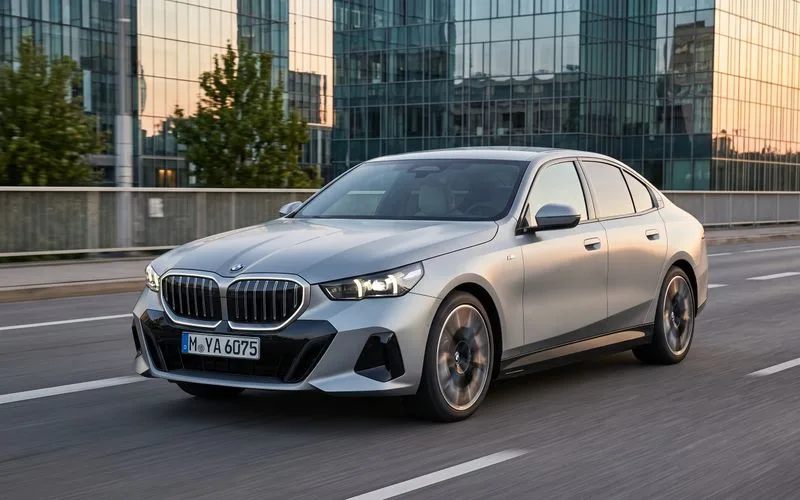 BMW 5 SeriesMid-Size Luxury SedanBetter at: Driving dynamics
Same money and prestige, but sharper to drive, with standard adaptive cruise and a trunk nearly half again as large (18.4 vs 12.7 cu ft).
Compare 3.21B+
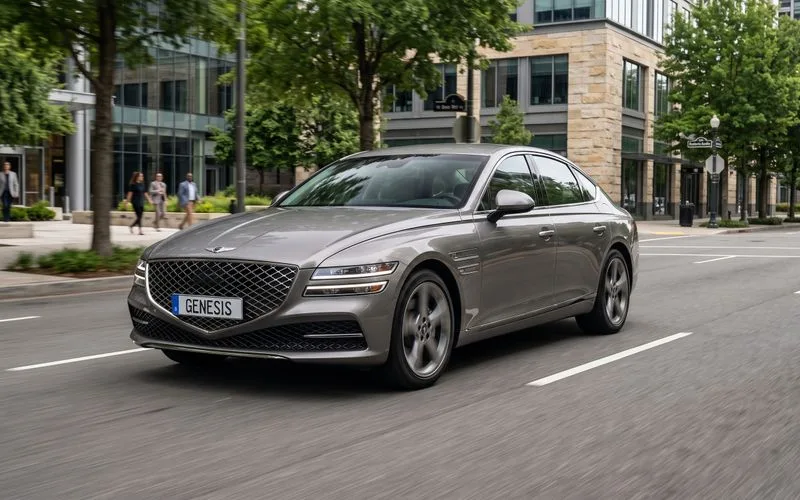 Genesis G80Mid-Size Luxury SedanBetter at: Value per dollar
Far more standard equipment for less money, more rear legroom, and included scheduled maintenance that blunts the German ownership-cost problem.
Compare 3.11B
3.11B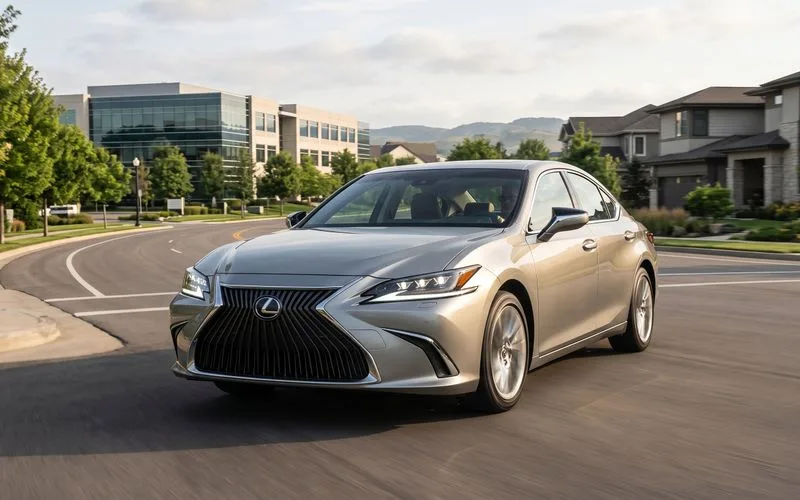 Lexus ESMid-Size Luxury SedanBetter at: Ownership cost
Trades cabin richness and AWD breadth for top-tier reliability, regular-fuel hybrid economy, and repair bills a fraction of the E-Class's.
CompareHow it's evolved
10 scored model years · 2017–2026
Subject scores by year
Hover or tap a score to see what moved it versus the year before. A corner mark flags a big swing.
| Year | Performance | Efficiency | Safety | Space | Cost | Reliability | Tech | Use-case | Driving | Value |
|---|---|---|---|---|---|---|---|---|---|---|
| 2026 | 61 | 47 | 73 | 67 | 11 | 71 | 86 | 55 | 74 | 77 |
| 2025 | 61 | 36 | 72 | 65 | 11 | 69 | 83 | 53 | 69 | 78 |
| 2024 | 59 | 36 | 72 | 74 | 13 | 68 | 83 | 56 | 76 | 74 |
| 2023 | 57 | 24 | 77 | 65 | 18 | 71 | 69 | 55 | 69 | 68 |
| 2022 | 56 | 23 | 76 | 66 | 21 | 71 | 69 | 55 | 69 | 68 |
| 2021 | 58 | 26 | 75 | 66 | 30 | 66 | 68 | 55 | 68 | 69 |
| 2020 | 56 | 26 | 73 | 65 | 30 | 68 | 59 | 54 | 67 | 68 |
| 2019 | 55 | 23 | 72 | 64 | 30 | 67 | 57 | 52 | 67 | 69 |
| 2018 | 55 | 23 | 72 | 65 | 28 | 66 | 57 | 53 | 66 | 70 |
| 2017 | 51 | 24 | 72 | 64 | 29 | 63 | 56 | 51 | 67 | 71 |
Compare two years
Best fit & conditions
Higher scores mean a better fit for that use case. Learn more about use-case fit →
Subject profile
Academic Probation · NHTSA safety recalls
May 1, 2026Electrical system: instrument cluster/panelThe infotainment control unit may reset while the vehicle is in motion and cause the instrument panel display to go blank.
Defect
Mercedes-Benz USA, LLC (MBUSA) is recalling certain 2024-2026 AMG GT, C-Class, E-Class, SL, CLE, and GLC vehicles. The infotainment control unit may reset while the vehicle is in motion and cause the instrument panel display to go blank.
Risk
An instrument panel display that fails to show critical safety information, such as the speedometer and warning lights, increases the risk of a crash.
Remedy
Dealers will update the infotainment control unit software, free of charge. Owner notification letters were mailed June 29, 2026. MBUSA's number for this recall is 2026050004. Owners may contact MBUSA customer service at 1-800-367-6372. Vehicle Identification Numbers (VINs) involved in this recall will be searchable on NHTSA.gov beginning May 8, 2026.
NHTSA campaign 26V281000 ↗Manufacturer no. 2026050004144,049 vehicles potentially affected (all models in the campaign)Owners notified Jun 29, 2026Filed by Mercedes-Benz USA, LLCFiled as AMG E 53 4MATIC+, AMG E 53 4MATIC+ WAGON, AMG E 53 E 4MATIC+, E 350, E 350 4MATIC, E 450 4MATIC, E 450 4MATIC ALL-TERRAIN
68 recalls on other model years of the E-Class (2017–2025)
Apr 3, 2026Power train: driveline: universal jointThe drive shaft universal joint may break, resulting in a sudden loss of drive power.
Defect
Mercedes-Benz USA, LLC (MBUSA) is recalling certain 2018 E 400 4MATIC Sedan, E 400 4MATIC Wagon, E 400 4MATIC Cabriolet, E 400 4MATIC Coupe, 2018-2020 Maybach S 560 4MATIC, S 560 4MATIC Coupe, S 450 4MATIC, 2019-2020 E 450 4MATIC Sedan, E 450 4MATIC Wagon, E 450 4MATIC Coupe, and E 450 4MATIC Cabriolet vehicles. The drive shaft universal joint may break, resulting in a sudden loss of drive power.
Risk
A sudden loss of drive power increases the risk of a crash.
Remedy
Dealers will inspect and replace the drive shaft as necessary, free of charge. Interim letters, notifying owners of the safety risk, were mailed May 22, 2026. Additional letters will be sent once the remedy is available. Owners may contact MBUSA customer service at 1-800-367-6372. Vehicle Identification Numbers (VINs) involved in this recall will be searchable on NHTSA.gov beginning April 10, 2026.
NHTSA campaign 26V216000 ↗24,092 vehicles potentially affected (all models in the campaign)Filed by Mercedes-Benz USA, LLCFiled as E 400 4MATIC, E 400 4MATIC CABRIOLET, E 400 4MATIC COUPE, E 400 4MATIC WAGON, E 450 4MATIC, E 450 4MATIC CABRIOLET, E 450 4MATIC COUPE, E 450 4MATIC WAGONDec 12, 2025Electrical system: wiringThe transmission wiring harness may be routed too close to the front driveshaft, which can result in wiring harness damage and cause a loss of drive power.
Defect
Mercedes-Benz USA, LLC (MBUSA) is recalling certain AMG E 53 4MATIC+ WAGON vehicles. The transmission wiring harness may be routed too close to the front driveshaft, which can result in wiring harness damage and cause a loss of drive power.
Risk
A loss of drive power can increase the risk of a crash.
Remedy
Dealers will inspect the transmission wiring harness routing and repair it, if necessary, free of charge. Owner notification letters were mailed February 6, 2026. Owners may contact MBUSA customer service at 1-800-367-6372. Vehicle Identification Numbers (VINs) involved in this recall will be searchable on NHTSA.gov beginning December 19, 2025. MBUSA's number for this recall is 2026010001.
NHTSA campaign 25V865000 ↗Manufacturer no. 2026010001117 vehicles potentially affected (all models in the campaign)Owners notified Feb 6, 2026Filed by Mercedes-Benz USA, LLCFiled as AMG E 53 4MATIC+ WAGONApr 11, 2025Electrical system: wiringThe 12-Volt and 48-Volt ground connections for the electrical wiring harness may not be secured properly, resulting in the ground connections overheating.
Defect
Mercedes-Benz USA, LLC (MBUSA) is recalling certain 2024 E 350 4MATIC, E 450 4MATIC All-Terrain, and E 450 4MATIC vehicles. The 12-Volt and 48-Volt ground connections for the electrical wiring harness may not be secured properly, resulting in the ground connections overheating.
Risk
Overheated ground connections can increase the risk of a fire.
Remedy
Dealers will inspect and repair the 12-Volt and 48-Volt ground connections as necessary, free of charge. Owner notification letters were mailed May 7, 2025. Owners may contact MBUSA customer service at 1-800-367-6372.
NHTSA campaign 25V240000 ↗14 vehicles potentially affected (all models in the campaign)Owners notified May 7, 2025Filed by Mercedes-Benz USA, LLCFiled as E 350, E 450Jan 17, 2025TiresThe tires were incorrectly marked with the wrong maximum inflation pressure and may not meet the strength requirements for the stated pressure. As such, these vehicles fail to comply with the requirements of Federal Motor Vehicle Safety Standard (FMVSS) number 139, "New Pneumatic Radial Tires for Light Vehicles."
Defect
Mercedes-Benz USA, LLC (MBUSA) is recalling certain 2018 E 400 Cabriolet, E 400 Coupe, 2019 E 450 Cabriolet, and E 450 Coupe vehicles. The tires were incorrectly marked with the wrong maximum inflation pressure and may not meet the strength requirements for the stated pressure. As such, these vehicles fail to comply with the requirements of Federal Motor Vehicle Safety Standard (FMVSS) number 139, "New Pneumatic Radial Tires for Light Vehicles."
Risk
Tires inflated to an incorrect maximum pressure may have insufficient strength, allowing the tires to fail and increasing the risk of a crash.
Remedy
Dealers will inspect and replace the tires as necessary, free of charge. Owner notification letters were mailed March 7, 2025. Owners may contact MBUSA customer service at 1-800-367-6372. MBUSA's number for this recall is 2025010008.
NHTSA campaign 25V023000 ↗Manufacturer no. 2025010008165 vehicles potentially affected (all models in the campaign)Owners notified Mar 7, 2025Filed by Mercedes-Benz USA, LLCFiled as E 400, E 450Dec 18, 2024Power train: axle assembly · Suspension: rearThe camber strut bracket may have been improperly welded onto the rear axle carrier, possibly resulting in separation of the bracket from the rear axle carrier.
Defect
Mercedes-Benz USA, LLC (MBUSA) is recalling certain 2025 E 350, E 350 4MATIC, E 450 4MATIC, and E450 4MATIC station wagon vehicles. The camber strut bracket may have been improperly welded onto the rear axle carrier, possibly resulting in separation of the bracket from the rear axle carrier.
Risk
Rear axle carrier failure can cause a sudden loss of vehicle handling and control, increasing the risk of a crash.
Remedy
Owners are advised not to drive their vehicles until the remedy has been performed. Dealers will replace the rear axle carrier, free of charge. Owner notification letters were mailed January 22, 2025. Owners may contact MBUSA customer service at 1-800-367-6372. MBUSA's number for this recall is 2024120015.
NHTSA campaign 24V941000 ↗Manufacturer no. 202412001517 vehicles potentially affected (all models in the campaign)Owners notified Jan 22, 2025Filed by Mercedes-Benz USA, LLCFiled as E 350, E 350 4MATIC, E 450 4MATIC, E 450 4MATIC ALL-TERRAINSep 13, 2024Back over prevention: automatic system braking · Equipment: electrical: infotainment: software · Parking brake: electrical: control module: softwareA software error in the MBUX multimedia system may deactivate certain vehicle systems, including the cross-traffic alert that applies the brakes automatically in certain driving situations.
Defect
Mercedes-Benz USA, LLC (MBUSA) is recalling certain 2024 CLE 300 Convertible, CLE 300 Coupe, CLE 450 Convertible, CLE 450 Coupe, E 350, E 450 Station Wagon, E 450, and AMG CLE 53 Coupe vehicles. A software error in the MBUX multimedia system may deactivate certain vehicle systems, including the cross-traffic alert that applies the brakes automatically in certain driving situations.
Risk
An automatic emergency braking system that does not function as intended can increase the risk of a crash.
Remedy
Dealers will update the MBUX multimedia system software and parking control unit settings, free of charge. Owner notification letters were mailed November 1, 2024. This is a phased recall, phase 1 owner letters will be mailed November 12, 2024, November 1, 2024, and January 14, 2025. Owners may contact MBUSA customer service at 1-800-367-6372.
NHTSA campaign 24V688000 ↗2,025 vehicles potentially affected (all models in the campaign)Owners notified Nov 1, 2024Filed by Mercedes-Benz USA, LLCFiled as E 350, E 450Jun 14, 2024Electrical system: wiringThe transmission wiring harness connection might not have been correctly wired during a prior recall repair, and during production. which can expose the electrical connector to corrosion, and result in an electrical short-circuit.
Defect
Mercedes-Benz USA, LLC (MBUSA) is recalling certain 2019-2021 CLS 53 4MATIC, 2019-2023 E 53 4MATIC Cabriolet, E 53 4MATIC Coupe, E 53 4MATIC Sedan, 2021-2024 GT 43 4MATIC, and 2019-2025 GT 53 4MATIC vehicles. The transmission wiring harness connection might not have been correctly wired during a prior recall repair, and during production. which can expose the electrical connector to corrosion, and result in an electrical short-circuit.
Risk
An electrical short circuit can increase the risk of a fire.
Remedy
Dealers will replace the two-part wiring harness and connector, free of charge. Interim letters, notifying owners of the safety risk, were mailed August 9, 2024. A second notice will be sent once the final remedy is available. Owners may contact MBUSA customer service at 1-877-496-3691. MBUSA's number for this recall is 2024100002/3. This recall supersedes recall 22V-533. Vehicles repaired under the prior recall will still need to have the new remedy performed.
NHTSA campaign 24V445000 ↗Manufacturer no. 2024100002/322,422 vehicles potentially affected (all models in the campaign)Owners notified Nov 15, 2024Filed by Mercedes-Benz USA, LLCFiled as AMG E53Mar 22, 2024Electrical system: wiringThe transmission wiring harness may be routed too close to the driveshaft, which can result in wiring harness damage and cause a loss of drive power.
Defect
Mercedes-Benz USA, LLC (MBUSA) is recalling certain 2024 E350 4Matic, E450 4Matic All-Terrain, and E450 4Matic vehicles. The transmission wiring harness may be routed too close to the driveshaft, which can result in wiring harness damage and cause a loss of drive power.
Risk
A loss of drive power can increase the risk of a crash.
Remedy
Dealers will check the transmission wiring harness routing and correct it, if necessary, free of charge. Owner notification letters were mailed May 17, 2024. Owners may contact MBUSA customer service at 1-800-367-6372. MBUSA's number for this recall is 2024040007.
NHTSA campaign 24V224000 ↗Manufacturer no. 2024MMNNNN396 vehicles potentially affected (all models in the campaign)Owners notified May 17, 2024Filed by Mercedes-Benz USA, LLCFiled as E 350, E 450Feb 16, 2024Electrical system: wiring: fuses and circuit breakersThe 80-Amp fuses may have been manufactured incorrectly, which can cause the fuses to fail.
Defect
Mercedes-Benz USA, LLC (MBUSA) is recalling certain 2023-2024 C300, AMG C43, S580e, S580, Maybach S580, Maybach S680, AMG SL43, AMGSL63, GLC300, EQE350, EQE500, EQS450, EQS580, AMG EQS, 2023 S500, AMG SL55, AMG EQE, 2024 E350, E450, AMG C63e S, CLE300 Coupe, CLE450 Coupe, and GLC300 Coupe vehicles. The 80-Amp fuses may have been manufactured incorrectly, which can cause the fuses to fail.
Risk
An 80-Amp fuse that fails can result in a sudden loss of drive power or a loss of critical safety functions such as the restraint systems or instrument cluster, increasing the risk of a crash or injury. Additionally, there could be an increased risk of a fire.
Remedy
Dealers will replace the main fuse boxes, free of charge. Owner notification letters were mailed April 5, 2024. Owners may contact MBUSA customer service at 1-800-367-6372. MBUSA's number for this recall is 2024030008.
NHTSA campaign 24V115000 ↗Manufacturer no. 202403000831,848 vehicles potentially affected (all models in the campaign)Owners notified Apr 5, 2024Filed by Mercedes-Benz USA, LLCFiled as E 350, E 450Feb 9, 2024Electrical system: wiringThe 48-volt ground cable connection located in the engine compartment may not be tightened properly and may result in the ground cable overheating.
Defect
Mercedes-Benz USA, LLC (MBUSA) is recalling certain 2021-2023 CLS450, E450, E450 All-Terrain, AMG E53, AMG GT43, AMG GT53, and 2021 AMG CLS53 vehicles. The 48-volt ground cable connection located in the engine compartment may not be tightened properly and may result in the ground cable overheating.
Risk
An overheated ground cable increases the risk of a fire.
Remedy
Dealers will inspect the 48-volt ground cable connection and repair it as necessary, free of charge. Owner notification letters were mailed March 22, 2024. Owners may contact MBUSA customer service at 1-800-367-6372. MBUSA's number for this recall is 2024MMNNNN.
NHTSA campaign 24V100000 ↗Manufacturer no. 2024MMNNNN12,191 vehicles potentially affected (all models in the campaign)Owners notified Mar 22, 2024Filed by Mercedes-Benz USA, LLCFiled as AMG E53, E 450Dec 21, 2023Fuel system, gasoline: delivery: fuel pumpPlease refer to MBUSA's recall report for specific vehicle details. The fuel pump may shutdown, causing a loss of drive power.
Defect
Mercedes-Benz USA, LLC (MBUSA) is recalling certain 2021-2024 GLE, GLS, C-Class, E-Class, S-Class, SL, GLC, CLS, AMG GT, and G-Class vehicles. Please refer to MBUSA's recall report for specific vehicle details. The fuel pump may shutdown, causing a loss of drive power.
Risk
A loss of drive power can increase the risk of a crash.
Remedy
Dealers will replace the fuel pump, free of charge. Owner notification letters were mailed on June 28, 2024. Owner notification letters will be mailed in phases, on February 23, 2024, April 19, 2024, June 28, 2024, August 9, 2024, October 1, 2024, and December 2, 2024. Owners may contact MBUSA customer service at 1-800-367-6372. This recall is an expansion of NHTSA recall number 23V-445.
NHTSA campaign 23V880000 ↗79,676 vehicles potentially affected (all models in the campaign)Owners notified Feb 23, 2024Filed by Mercedes-Benz USA, LLCFiled as AMG E53, AMG E63, E 350, E 450Aug 11, 2023Electrical system: adas: blindspot: sensorsDue to a software error, the exit warning system audio and visual warnings may fail to alert occupants about approaching vehicles.
Defect
Mercedes-Benz USA, LLC (MBUSA) is recalling certain 2023 E450, E350, AMG E63 S, AMG E53, CLS450, AMG GT53, and AMG GT43 vehicles. Due to a software error, the exit warning system audio and visual warnings may fail to alert occupants about approaching vehicles.
Risk
Failure to alert occupants of an approaching vehicle can increase the risk of a crash or injury.
Remedy
Dealers will update the exit warning system software, free of charge. Owner notification letters were mailed September 8, 2023. Owners may contact MBUSA customer service at 1-800-367-6372. MBUSA's number for this recall is 2023080005.
NHTSA campaign 23V574000 ↗Manufacturer no. 2023080005880 vehicles potentially affected (all models in the campaign)Owners notified Sep 8, 2023Filed by Mercedes-Benz USA, LLCFiled as AMG E53, AMG E63 S, E 350, E 450Jun 26, 2023Fuel system, gasoline: delivery: fuel pumpPlease refer to MBUSA's recall report for specific vehicle details. The fuel pump may shutdown, which can result in a loss of drive power.
Defect
Mercedes-Benz USA, LLC (MBUSA) is recalling certain 2021-2023 C-Class, E-Class, S-Class, CLS, SL, GT, GLC, GLE, GLS, and G-Class vehicles. Please refer to MBUSA's recall report for specific vehicle details. The fuel pump may shutdown, which can result in a loss of drive power.
Risk
A loss of drive power can increase the risk of a crash.
Remedy
Dealers will replace the fuel pump, free of charge. Owner notification letters were mailed on June 14, 2024. Owners may contact MBUSA customer service at 1-800-367-6372. MBUSA's number for this recall is 2023070012.
NHTSA campaign 23V445000 ↗Manufacturer no. 2023070012143,551 vehicles potentially affected (all models in the campaign)Owners notified Sep 29, 2023Filed by Mercedes-Benz USA, LLCFiled as AMG E53, AMG E63 S, E 350, E 450Sep 30, 2022Electrical system: 12v/24v/48v batteryThe 12-Volt battery in the trunk may not be properly secured, which, in the event of a crash, can cause electrical connection failure, disabling various safety features including, emergency call (eCall) system, electric seat adjustment, hazard warning lights, and automatic door locks.
Defect
Mercedes-Benz USA, LLC (MBUSA) is recalling certain 2019-2022 CLS450 Coupe and AMG E53, 2019-2021 AMG CLS53 Coupe, and 2021-2022 E450 vehicles. The 12-Volt battery in the trunk may not be properly secured, which, in the event of a crash, can cause electrical connection failure, disabling various safety features including, emergency call (eCall) system, electric seat adjustment, hazard warning lights, and automatic door locks.
Risk
The inability to operate safety features (eCall system, hazard lights, electric seats, or automatic door locks) can increase the risk of injury during a crash.
Remedy
Dealers will secure the 12V battery, free of charge. Owner notification letters were mailed January 20, 2023. Owners may contact MBUSA customer service at 1-800-367-6372. MBUSA's number for this recall is 2022100009.
NHTSA campaign 22V733000 ↗Manufacturer no. 202210000919,968 vehicles potentially affected (all models in the campaign)Owners notified Jan 20, 2023Filed by Mercedes-Benz USA, LLCFiled as AMG E53, E 450Jul 22, 2022Electrical system: wiringThe transmission wiring harness may be misrouted, which can expose the electrical connector to corrosion, and result in an electrical short-circuit.
Defect
Mercedes-Benz USA, LLC (MBUSA) is recalling certain 2021-2022 AMG GT43, 2019-2022 AMG E53, E53 Coupe, E53 Cabriolet, AMG GT53, and 2019-2021 AMG CLS53 vehicles. The transmission wiring harness may be misrouted, which can expose the electrical connector to corrosion, and result in an electrical short-circuit.
Risk
An electrical short-circuit can increase the risk of a fire.
Remedy
Dealers will inspect and repair the electrical connector, as necessary. Dealers will also reroute the harness and install an additional bracket. All repairs will be performed free of charge. Owner notification letters were mailed October 14, 2022. Owners may contact MBUSA customer service at 1-800-367-6372. MBUSA's number for this recall is 2022080010.
NHTSA campaign 22V533000 ↗Manufacturer no. 202208001016,977 vehicles potentially affected (all models in the campaign)Owners notified Oct 14, 2022Filed by Mercedes-Benz USA, LLCFiled as AMG E53May 20, 2022Communication: auto crash notification · Electrical system: softwarePlease refer to MBUSA's recall report for specific vehicle model details. An error in the communication module's SIM card software can cause a mobile network connection failure, disabling the emergency call (eCall) system.
Defect
Mercedes-Benz USA, LLC (MBUSA) is recalling certain 2017-2022 CLA-Class, GLA-Class, GLE-Class, GLS-Class, SLC-Class, A-Class, AMG GT-Class, C-Class, E-Class, S-Class, SL-Class, GLC-Class, CLS-Class, GLB-Class, and G-Class vehicles. Please refer to MBUSA's recall report for specific vehicle model details. An error in the communication module's SIM card software can cause a mobile network connection failure, disabling the emergency call (eCall) system.
Risk
A disabled eCall system would prevent a vehicle occupant from contacting the emergency services call center in an emergency, potentially delaying emergency responders and increasing the risk of injury.
Remedy
The communication module software will be updated through an Over-the-Air (OTA) update or by a dealer, free of charge. Owner notification letters were mailed July 8, 2022. Owner notification letters will be mailed in phases, on July 8, 2022, May 17, 2024, July 29, 2024, and September 27, 2024. Owners may contact MBUSA customer service at 1-800-367-6372. MBUSA's numbers are for this recall is 2022060005 and 2023110006.
NHTSA campaign 22V365000 ↗Manufacturer no. See Recall Schedule242,722 vehicles potentially affected (all models in the campaign)Owners notified Jul 8, 2022Filed by Mercedes-Benz USA, LLCFiled as AMG E53, AMG E63, E 300, E 350, E 450Apr 8, 2022Back over prevention: display functionPlease refer to MBUSA's recall report for specific vehicle model details. The rearview camera may not display the rearview image due to a software error. As such, these vehicles fail to comply with the requirements of Federal Motor Vehicle Safety Standard number 111, "Rear Visibility."
Defect
Mercedes-Benz USA, LLC (MBUSA) is recalling certain 2018-2021 CLA-Class, GLE/GLS-Class, A-Class, C-Class, E-Class, E-Class Coupe/Convertible, GLA/GLB-Class, GLC-Class, and CLS-Class vehicles. Please refer to MBUSA's recall report for specific vehicle model details. The rearview camera may not display the rearview image due to a software error. As such, these vehicles fail to comply with the requirements of Federal Motor Vehicle Safety Standard number 111, "Rear Visibility."
Risk
An inoperable rearview camera display reduces the driver's rear view, increasing the risk of a crash.
Remedy
Dealers will update the rearview camera software, free of charge. Owner notification letters were mailed July 15, 2022. Owners may contact MBUSA customer service at 1-800-367-6372. MBUSA's number for this recall is 2022060007.
NHTSA campaign 22V232000 ↗Manufacturer no. 2022060007126,443 vehicles potentially affected (all models in the campaign)Owners notified Jul 15, 2022Filed by Mercedes-Benz USA, LLCFiled as AMG E53, E 300, E 350, E 400, E 450Mar 25, 2022Steering: steering wheel/handle barDue to a software error in the hand detection control unit, the hands-off detection might not detect when the driver's hands are away from the steering wheel when using the Active Distance Assist DISTRONIC system.
Defect
Mercedes-Benz USA, LLC (MBUSA) is recalling certain 2021-2022 C-Class, E-Class, S-Class, SL, EClass Coupe/Convertible, CLS, AMG GT 4-doors Coupe, and EQS vehicles with a heated leather steering wheel. Due to a software error in the hand detection control unit, the hands-off detection might not detect when the driver's hands are away from the steering wheel when using the Active Distance Assist DISTRONIC system.
Risk
Deactivated hands-off detection will prevent DISTRONIC system features from functioning, including warnings to grab the steering wheel and calling first responders as part of the Active Emergency Stop Assist, which can increase the risk of a crash or injury.
Remedy
Dealers will update the hand detection control unit software for the DISTRONIC system, free of charge. Owner notification letters were mailed May 6, 2022. Owners may contact MBUSA customer service at 1-800-367-6372. MBUSA's number for this recall is 2022040010.
NHTSA campaign 22V189000 ↗Manufacturer no. 20220400108,396 vehicles potentially affected (all models in the campaign)Owners notified May 9, 2022Filed by Mercedes-Benz USA, LLCFiled as AMG E53, AMG E63S, E 350, E 450Dec 13, 2021Fuel system, gasoline: fuel injection system: fuel rail · Fuel system, gasoline: fuel injection system: injectorsDuring the manufacturing process, particles may have been trapped between the fuel rail and injectors, which can cause a fuel leak.
Defect
Mercedes-Benz USA, LLC (MBUSA) is recalling certain 2019 AMG G63, C300, E300, G550, AMG GT63, AMG GT53, 2019-2020 A220, GLA250, GLC300, 2016 C300, 2020 AMG A35, AMG C43, AMG C63, CLA250, E350, E450, GLB250, GLE450, GLS450, GLS580, S560, and SL550 vehicles equipped with a gasoline engine. During the manufacturing process, particles may have been trapped between the fuel rail and injectors, which can cause a fuel leak.
Risk
A fuel leak in the presence of an ignition source, such as hot engine or exhaust components, can increase the risk of a fire.
Remedy
Dealers will replace the fuel rail and fuel injectors, free of charge. Owner notification letters were mailed April 22, 2022. Owners may contact MBUSA customer service at 1-800-367-6372. MBUSA's number for the recall is 2022030003.
NHTSA campaign 21V961000 ↗Manufacturer no. 2022030003139 vehicles potentially affected (all models in the campaign)Owners notified Apr 22, 2022Filed by Mercedes-Benz USA, LLCFiled as E 300, E 350, E 450Jul 12, 2021Air bags: sensor: side impactThe side crash sensor connectors may come loose, which could delay the activation of air bags and seatbelts during a side impact crash.
Defect
Mercedes-Benz USA, LLC (MBUSA) is recalling certain 2021 CLS450, AMG E53, AMG CLS53, E350, E450, AMG GT43, AMG GT53, 2020 S450, S560, G550, AMG GLC63, 2020-2021 GLC300, and AMG G63 vehicles. The side crash sensor connectors may come loose, which could delay the activation of air bags and seatbelts during a side impact crash.
Risk
Air bags and seatbelts that don't function as intended can increase the risk of injury during a crash.
Remedy
Dealers will inspect and replace as necessary, the side impact crash sensors, free of charge. Owner notification letters were mailed on September 3, 2021. Owners may contact MBUSA customer service at 1-800-367-6372. MBUSA's number for this recall is 2021070032/33.
NHTSA campaign 21V527000 ↗Manufacturer no. 2021070032/33542 vehicles potentially affected (all models in the campaign)Owners notified Sep 3, 2021Filed by Mercedes-Benz USA, LLCFiled as AMG E53, E 350, E 450Jun 25, 2021Seat belts: rear/other: retractorThe rear seat belt automatic locking retractors may deactivate early, which can prevent the child restraint system from securing properly. As such, these vehicles fail to comply with the requirements of Federal Motor Vehicle Safety Standard number 208, "Occupant Crash Protection."
Defect
Mercedes-Benz, LLC (MBUSA) is recalling certain 2021 G550, AMG G63, E350, E450, AMG CLS53, AMG E53, AMG GT43, AMG GT53, AMG GT63, 2021-2022 CLS450, and AMG E63 vehicles. The rear seat belt automatic locking retractors may deactivate early, which can prevent the child restraint system from securing properly. As such, these vehicles fail to comply with the requirements of Federal Motor Vehicle Safety Standard number 208, "Occupant Crash Protection."
Risk
An unsecured child restraint system can increase the risk of injury during a crash.
Remedy
Dealers will inspect, and replace as necessary, the rear seat belt assemblies, free of charge. Owners notified of the voluntary recall campaign by an interim letter on August 13, 2021. A final letter was mailed on September 24, 2021. Owners may contact MBUSA customer service at 1-800-367-6372.
NHTSA campaign 21V483000 ↗Manufacturer no. 20210800214,917 vehicles potentially affected (all models in the campaign)Owners notified Sep 24, 2021Filed by Mercedes-Benz USA, LLCFiled as AMG E53, AMG E63, E 350, E 450May 28, 2021Seats: mid/rear assembly: head restraintThe rear headrests may be incorrectly mounted to the seatbacks.
Defect
Mercedes-Benz USA, LLC (MBUSA) is recalling certain 2021 C300 Cabriolet, C43 AMG Cabriolet, C63 AMG Cabriolet, C63 AMG S Cabriolet, E450 Cabriolet, and E53 AMG Cabriolet vehicles. The rear headrests may be incorrectly mounted to the seatbacks.
Risk
Incorrectly mounted headrests could move or detach from the seat during a crash, increasing the risk of injury.
Remedy
Dealers will inspect the rear seatback guide bushings and replace them if necessary, free of charge. Owner notification letters were mailed July 16, 2021. Owners may contact MBUSA customer service at 1-800-367-6372. MBUSA's number for this recall is 2021060010.
NHTSA campaign 21V406000 ↗Manufacturer no. 2021060010218 vehicles potentially affected (all models in the campaign)Owners notified Jul 16, 2021Filed by Mercedes-Benz USA, LLCFiled as AMG E53, E 450May 14, 2021Back over prevention: sensing system: camera · Electrical system: softwarePlease refer to MBUSA's recall report for specific vehicle model details. The MBUX multimedia system software may cause the display to remain black, or reboot after startup. This could result in the rearview camera image not displaying properly. As such, these vehicles fail to comply with the requirements of Federal Motor Vehicle Safety Standard (FMVSS) number 111, "Rear Visibility."
Defect
Mercedes-Benz USA, LLC (MBUSA) is recalling certain 2019-2021 CLA-Class, GLE/GLS-Class, A-Class, E-Class, E-Class Coupe and Convertible, GLA/GLB-Class, GLC-Class, CLS-Class, and AMG GT-Class 4-door Coupe vehicles. Please refer to MBUSA's recall report for specific vehicle model details. The MBUX multimedia system software may cause the display to remain black, or reboot after startup. This could result in the rearview camera image not displaying properly. As such, these vehicles fail to comply with the requirements of Federal Motor Vehicle Safety Standard (FMVSS) number 111, "Rear Visibility."
Risk
A backup camera that displays a blank image reduces the driver's rear view, increasing the risk of a crash or injury.
Remedy
The multimedia system software will be updated by a dealer, or through an over-the-air (OTA) update, free of charge. Owner notification letters were mailed beginning June 28, 2021. Owners may contact MBUSA customer service at 1-800-367-6373. MBUSA's number for this recall is 2021050012.
NHTSA campaign 21V354000 ↗Manufacturer no. 2021050012343,191 vehicles potentially affected (all models in the campaign)Owners notified Jun 28, 2021Filed by Mercedes-Benz USA, LLCFiled as AMG E53, AMG E63S, E 350, E 450Apr 1, 2021Air bags: sensor: occupant classification · Seat belts: pretensioner · SeatsPlease refer to MBUSA's recall report for specific vehicle model details. A faulty electrical contact within the seat position switch may prevent the driver and passenger air bags and seat belt force limiters from properly activating during a crash.
Defect
Mercedes-Benz USA, LLC (MBUSA) is recalling certain 2021 C-Class, E-Class, E-Class Coupe and Convertible, GLC, CLS, AMG GT 4-door Coupe and G-Class vehicles. Please refer to MBUSA's recall report for specific vehicle model details. A faulty electrical contact within the seat position switch may prevent the driver and passenger air bags and seat belt force limiters from properly activating during a crash.
Risk
Air bags and seat belts that do not perform properly in a crash can increase the risk of injury.
Remedy
MBUSA will notify owners, and dealers will replace the seat position switches, free of charge. Owner letters were mailed May 21, 2021. Owners may contact MBUSA customer service at 1-800-367-6372. MBUSA's number for this recall is 2021040016.
NHTSA campaign 21V230000 ↗Manufacturer no. 20210400168,634 vehicles potentially affected (all models in the campaign)Owners notified May 21, 2021Filed by Mercedes-Benz USA, LLCFiled as AMG E53, E 350, E 450Apr 1, 2021Back over prevention: sensing system: camera · Back over prevention: warnings: external/pedestrian alertThe parking control unit may fail to display the rearview camera image and cause the parking sensors to misidentify or fail to detect objects.
Defect
Mercedes-Benz USA, LLC (MBUSA) is recalling certain 2021 E350, E450, E450 Wagon, and AMG E63 vehicles. The parking control unit may fail to display the rearview camera image and cause the parking sensors to misidentify or fail to detect objects.
Risk
An inoperative rearview camera display and/or parking sensors can reduce the driver's view and awareness of what is behind the vehicle, increasing the risk of a crash.
Remedy
All affected vehicles are still within MBUSA's control. MBUSA will replace the parking control unit, free of charge. The recall began April 8, 2021. Owner may contact MBUSA customer service at 1-800-367-6372.
NHTSA campaign 21V228000 ↗6 vehicles potentially affected (all models in the campaign)Owners notified Apr 8, 2021Filed by Mercedes-Benz USA, LLCFiled as AMG E63, E 350, E 450Mar 26, 2021Electrical system: starter assembly · Electrical system: wiringThe starter motor positive cable may not have been installed correctly, potentially allowing the power supply harness wires to chafe.
Defect
Mercedes-Benz USA, LLC. (MBUSA) is recalling certain 2018-2021 E63S AMG, E63S AMG Wagon, 2019-2021 AMG GT63 4-door, and AMG GT63S 4-door vehicles. The starter motor positive cable may not have been installed correctly, potentially allowing the power supply harness wires to chafe.
Risk
Damaged wires may cause a short circuit and result in a vehicle stall, increasing the risk of a crash. Also, a short circuit can increase the risk of a fire.
Remedy
MBUSA will notify owners, and dealers will inspect and, as necessary, correct the screw connections and position of the positive cable, free of charge. Owner letters were mailed May 18, 2021. Owners may contact MBUSA customer service at 1-800-367-6372. MBUSA's number for this recall is 2021040013.
NHTSA campaign 21V217000 ↗Manufacturer no. 2021040013493 vehicles potentially affected (all models in the campaign)Owners notified May 18, 2021Filed by Mercedes-Benz USA, LLCFiled as AMG E63SMar 26, 2021Seats · Seats: front assembly: power adjustThe passenger seat limiter may allow the seat to be positioned too close to the air bag.
Defect
Mercedes-Benz USA, LLC (MBUSA) is recalling certain 2021 E350, E450, E450 Wagon, E63S AMG, 2020 E63S AMG Wagon, and 2020-2021 E53 AMG vehicles. The passenger seat limiter may allow the seat to be positioned too close to the air bag.
Risk
A seat too close to the air bag increases the risk of injury in the event of a crash necessitating the deployment of the frontal passenger air bag.
Remedy
MBUSA will notify owners, and dealers will recalibrate the passenger seat limiter, free of charge. The recall began April 29, 2021. Owners may contact MBUSA customer service at 1-800-367-6372. MBUSA's number for this recall is 2021040002.
NHTSA campaign 21V216000 ↗Manufacturer no. 2021040002109 vehicles potentially affected (all models in the campaign)Owners notified Apr 29, 2021Filed by Mercedes-Benz USA, LLCFiled as AMG E53, AMG E63S, E 350, E 450, E63 AMGFeb 12, 2021Communication · Communication: auto crash notificationOn June 18, 2021, an additional 9 vehicles were added, including certain 2021 GLA250, GLC300, 2018 S450, E400, and 2017 CLA250 vehicles. The communication module might have been inadvertently deactivated during a service visit, which could have disabled the Emergency Call (eCall) function.
Defect
Mercedes-Benz USA, LLC (MBUSA) is recalling certain 2017-2019 C300, E300, 2018-2020 CLA250, 2020 CLS450, AMG E53, AMG GT53, GLE450, 2018 AMG E63, AMG GTA, 2017-2020 GLA250, GLC300, 2019 GLC350, AMG GLC43, 2017-2018 GLE350, 2019 AMG GLC 43, GLC350, GLE400, 2017 GLS450, S550, C300 Cabrio, and 2018-2019 S560 vehicles. On June 18, 2021, an additional 9 vehicles were added, including certain 2021 GLA250, GLC300, 2018 S450, E400, and 2017 CLA250 vehicles. The communication module might have been inadvertently deactivated during a service visit, which could have disabled the Emergency Call (eCall) function.
Risk
A disabled eCall system would prevent a vehicle occupant from contacting emergency services through the call center in an emergency, potentially delaying emergency responders and increasing the risk of injury.
Remedy
MBUSA will notify owners, and dealers will inspect the communication module and activate it, if necessary, free of charge. The recall began March 31, 2021. Letters for the owners of the 9 additional vehicles were mailed July 9, 2021. Owners may contact MBUSA customer service at 1-800-367-6372. MBUSA's number for this recall is 2021030005.
NHTSA campaign 21V072000 ↗Manufacturer no. 202103000567 vehicles potentially affected (all models in the campaign)Owners notified Mar 31, 2021Filed by Mercedes-Benz USA, LLCFiled as AMG E53, AMG E63, E 300, E 400, E300Feb 5, 2021Communication: auto crash notification · Electrical system: softwarePlease refer to the Part 573 report for specific vehicle model details. The software design of the communication module may fail to communicate the correct vehicle location for the emergency call system (eCall) in the event of a crash.
Defect
Mercedes-Benz USA, LLC (MBUSA) is recalling certain 2016 - 2021 CLA-Class, GLA-Class, GLE-Class, GLS-Class, SLC-Class, A-Class, GT-Class, C-Class, E-Class, S-Class, CLS-Class, SL-Class, B-Class, GLB-Class, GLC-Class, and G-Class vehicles. Please refer to the Part 573 report for specific vehicle model details. The software design of the communication module may fail to communicate the correct vehicle location for the emergency call system (eCall) in the event of a crash.
Risk
Failure of the eCall system may result in emergency responders being dispatched to the wrong location, increasing the risk of injury following a crash.
Remedy
MBUSA will notify owners, and the communication module software will be updated by a dealer, or through an over-the-air (OTA) update, free of charge. The recall began March 12, 2021. Owners may contact MBUSA customer service at 1-877-762-8267. MBUSA's number for this recall is 2021020025.
NHTSA campaign 21V058000 ↗Manufacturer no. 20210200251,292,258 vehicles potentially affected (all models in the campaign)Owners notified Mar 12, 2021Filed by Mercedes-Benz USA, LLCFiled as AMG E43, AMG E53, AMG E63, E 300, E 350, E 350 E, E 400, E 450, E300, E400, E550Oct 30, 2020SeatsThe front passenger seat may be missing the mechanical seat adjustment range limit stop, allowing the seat to move outside of the acceptable range in relation to the air bag.
Defect
Mercedes-Benz USA, LLC. (MBUSA) is recalling certain 2021 E350 and E450, 2019-2021 AMG E53 and 2020-2021 AMG E63 vehicles. The front passenger seat may be missing the mechanical seat adjustment range limit stop, allowing the seat to move outside of the acceptable range in relation to the air bag.
Risk
If the front passenger seat is adjusted beyond the acceptable range in relation to the air bag, there could be an increased risk of injury in the event of a crash with air bag deployment.
Remedy
MBUSA will notify owners, and dealers will inspect for the mechanical seat adjustment range limitation for the front passenger seat and install it if necessary, free of charge. The recall began December 18, 2020. Owners may contact MBUSA customer service at 1-800-368-6372. MBUSA's number for this recall is 2020110013.
NHTSA campaign 20V673000 ↗Manufacturer no. 20201100131,337 vehicles potentially affected (all models in the campaign)Owners notified Dec 18, 2020Filed by Mercedes-Benz USA, LLC.Filed as AMG E53, AMG E63, E 350, E 450, E63 AMGJul 31, 2020Electrical system: software · Seat belts: front: warning light/devicesThe software in the replaced instrument cluster may cause the seat belt warning system to not operate properly, only displaying a solid warning light if either the driver or passenger seat belt is unfastened, instead of a blinking light with an audible tone.
Defect
Mercedes-Benz USA, LLC. (MBUSA) is recalling certain 2019 C300, C300 Coupe, CLS450, E450 Coupe and S450, 2017-2019 E300, 2018 E400 Coupe, E400 Stationwagon, and 2018-2019 S560 vehicles that have previously had the instrument cluster replaced. The software in the replaced instrument cluster may cause the seat belt warning system to not operate properly, only displaying a solid warning light if either the driver or passenger seat belt is unfastened, instead of a blinking light with an audible tone.
Risk
Without the audible tone and blinking warning light to remind the front seat occupants that their seat belts are not buckled, they may forget to buckle their seat belt, increasing their risk of injury in the event of a crash.
Remedy
MBUSA will notify owners, and dealers will update the instrument cluster software, free of charge. The recall began September 8, 2020. Owners may contact MBUSA customer service at 1-800-367-6372. MBUSA's number for this recall is 2020080015.
NHTSA campaign 20V449000 ↗Manufacturer no. 202008001556 vehicles potentially affected (all models in the campaign)Owners notified Sep 8, 2020Filed by Mercedes-Benz USA, LLC.Filed as E 300, E 400, E 450, E300Jun 22, 2020Engine and engine cooling: engine: gasoline: turbo/superchargerThe screws that retain the turbocharger oil feed and return lines may not have been properly tightened, possibly resulting in an oil leak.
Defect
Mercedes-Benz USA, LLC. (MBUSA) is recalling certain 2020 C300, E350, and GLC300 vehicles equipped with turbocharged 4-cylinder gasoline engines. The screws that retain the turbocharger oil feed and return lines may not have been properly tightened, possibly resulting in an oil leak.
Risk
An oil leak in the presence of an ignition source such as hot engine or exhaust components can increase the risk of a fire.
Remedy
MBUSA will notify owners, and dealers will inspect the turbocharger oil lines and tighten them as necessary, free of charge. The recall began August 17, 2020. Owners may contact MBUSA customer service at 1-800-367-6372. MBUSA's number for this recall is 2020070017.
NHTSA campaign 20V364000 ↗Manufacturer no. 202007001790 vehicles potentially affected (all models in the campaign)Owners notified Aug 17, 2020Filed by Mercedes-Benz USA, LLC.Filed as E 350Jun 5, 2020Seats: mid/rear assemblyThe left-rear seatback latch may not be strong enough to withstand certain loads. If cargo were to strike the left-rear seatback, the latch may fail.
Defect
Mercedes-Benz USA, LLC. (MBUSA) is recalling certain 2020 E450, AMG E63S, GLC300, AMG GLC43, AMG GLC63, AMG GT53, and AMG GT63 vehicles equipped with rear seatbacks that can be electrically unlatched. The left-rear seatback latch may not be strong enough to withstand certain loads. If cargo were to strike the left-rear seatback, the latch may fail.
Risk
In the event of a crash, if the left-rear seatback latch fails, it can increase the risk of injury.
Remedy
MBUSA will notify owners, and dealers will replace the left-rear seatback latch, free of charge. The recall began August 17, 2020. Owners may contact MBUSA customer service at 1-800-367-6372. MBUSA's number for this recall is 2020070004.
NHTSA campaign 20V328000 ↗Manufacturer no. 20200700041,352 vehicles potentially affected (all models in the campaign)Owners notified Aug 17, 2020Filed by Mercedes-Benz USA, LLC.Filed as AMG E63S, E 450Apr 21, 2020Seat belts: front: webbingThe front left seatbelt may be improperly installed, potentially allowing the seatbelt to contact sharp metal components and damage the seatbelt webbing.
Defect
Mercedes-Benz USA, LLC. (MBUSA) is recalling certain 2020 E450 Coupe vehicles. The front left seatbelt may be improperly installed, potentially allowing the seatbelt to contact sharp metal components and damage the seatbelt webbing.
Risk
A damaged seatbelt may not properly restrain an occupant, increasing the risk of injury in the event of a crash.
Remedy
MBUSA will notify owners, and dealers will inspect and reroute the front left seatbelt as necessary, or replace it if the webbing is damaged, free of charge. The recall began May 22,2020. Owners may contact MBUSA customer service at 1-800-367-6372. MBUSA's number for this recall is 2020050001.
NHTSA campaign 20V228000 ↗Manufacturer no. 20200500016 vehicles potentially affected (all models in the campaign)Owners notified May 22, 2020Filed by Mercedes-Benz USA, LLC.Filed as E 450Feb 7, 2020CommunicationAn electrical circuit inside the Emergency Call System (eCall) communication module may be damaged, potentially relaying an inaccurate vehicle location.
Defect
Mercedes-Benz USA, LLC. (MBUSA) is recalling certain 2020 C300 Cabrio, C300 Cabrio 4MATIC, C300 Coupe, C43 AMG Cabrio 4MATIC, C43 AMG Coupe 4MATIC, C63S AMG Cabrio, CLS53 AMG 4MATIC, E350, E350 4MATIC, E450 Cabrio, E450 Cabrio 4MATIC, E450 Coupe, E450 Coupe 4MATIC, E450 4MATIC, E53 AMG Cabrio 4MATIC, GLC300 Coupe 4MATIC, GLC300, GLC300 4MATIC, GLC63 AMG Coupe 4MATIC, AMG GT63 4-Door 4MATIC, and AMG GT63S 4-Door 4MATIC vehicles. An electrical circuit inside the Emergency Call System (eCall) communication module may be damaged, potentially relaying an inaccurate vehicle location.
Risk
An inaccurate vehicle location may delay emergency responders, increasing the risk of injury.
Remedy
MBUSA will notify owners, and dealers will replace the communication module, free of charge. The recall began April 14, 2020. Owners may contact MBUSA customer service at 1-800-367-6372. MBUSA's number for this recall is 2020030016.
NHTSA campaign 20V068000 ↗Manufacturer no. 2020030016239 vehicles potentially affected (all models in the campaign)Owners notified Apr 14, 2020Filed by Mercedes-Benz USA, LLC.Filed as AMG E53, E 350, E 450Jan 27, 2020Engine and engine cooling: engine: gasoline: turbo/superchargerThe oil feed line to the turbocharger may leak.
Defect
Mercedes-Benz USA, LLC. (MBUSA) is recalling certain 2018-2019 E63 AMG 4MATIC, E63S AMG 4MATIC Wagon, S63 AMG Cabrio 4MATIC, S63 AMG Coupe 4MATIC, and S63 AMG 4MATIC and 2019 G63 AMG 4MATIC, AMG GT63 4MATIC, AMG GT63S 4MATIC vehicles equipped with 4.0L 8-cylinder gasoline turbocharged engines. The oil feed line to the turbocharger may leak.
Risk
An oil leak in the presence of an ignition source such as hot engine or exhaust components can increase the risk of a fire.
Remedy
MBUSA will notify owners, and dealers will replace the oil feed line to the turbocharger, free of charge. The recall began March 20, 2020. Owners may contact MBUSA customer service at 1-800-367-6372. MBUSA's number for this recall is 2020020023.
NHTSA campaign 20V048000 ↗Manufacturer no. 20200200232,518 vehicles potentially affected (all models in the campaign)Owners notified Mar 20, 2020Filed by Mercedes-Benz USA, LLC.Filed as AMG E63, AMG E63SDec 6, 2019Air bags: frontalThe incorrect driver air bag and software version may have been installed.
Defect
Mercedes-Benz USA, LLC. (MBUSA) is recalling certain 2019 E53 AMG 4MATIC, E63 AMG 4MATIC Wagon, and E63S AMG 4MATIC Wagon vehicles. The incorrect driver air bag and software version may have been installed.
Risk
Incorrect driver air bag and software version can cause the restraint systems to not function as intended during a crash, increasing the risk of injury.
Remedy
MBUSA will notify owners, and dealers will inspect and, as necessary, replace the driver's air bag and update the air bag software, free of charge. The recall began April 16, 2020. Owners may contact MBUSA customer service at 1-800-367-6372. MBUSA's number for this recall is 2020030001/2.
NHTSA campaign 19V868000 ↗Manufacturer no. 2020030001/299 vehicles potentially affected (all models in the campaign)Owners notified Apr 16, 2020Filed by Mercedes-Benz USA, LLC.Filed as AMG E53, AMG E63S, E63Nov 1, 2019Seat beltsAlthough correctly fastened, the front seat belts may be inaccurately detected as being unfastened, which may cause the electric PRE-SAFE®-function and the pretensioner to be deactivated.
Defect
Mercedes-Benz USA, LLC. (MBUSA) is recalling certain 2018 E400 Wagon 4MATIC, E400 4MATIC, E43 AMG 4MATIC, 2018-2019 E63S AMG 4MATIC Wagon, E63 AMG 4MATIC Wagon, E300, E300 4MATIC, GLC63S Coupe AMG 4MATIC, 2019 CLS450, CLS450 4MATIC, CLS53 AMG 4MATIC, E450 Wagon, E53 AMG 4MATIC, GLC300, GLC63 AMG Coupe 4MATIC, G550 4MATIC, G63 AMG, GLC300 Coupe 4MATIC, GLC300 4MATIC, GLC350e 4MATIC, GLC43 AMG Coupe 4MATIC, GLC43 AMG 4MATIC, GLC63 AMG 4MATIC, GT63 AMG four-door 4MATIC, and GT63S AMG four-door 4MATIC vehicles. Although correctly fastened, the front seat belts may be inaccurately detected as being unfastened, which may cause the electric PRE-SAFE®-function and the pretensioner to be deactivated.
Risk
The electric PRE-SAFE®-function and the seat belt pretensioners may not deploy during a crash, increasing the risk of injury.
Remedy
MBUSA will notify owners, and dealers will inspect the front seat belt buckles, replacing them as necessary, free of charge. The recall began March 13, 2020. Owners may contact MBUSA customer service at 1-800-367-6372. MBUSA's number for this recall is 2020020017.
NHTSA campaign 19V788000 ↗Manufacturer no. 202002001729,720 vehicles potentially affected (all models in the campaign)Owners notified Mar 13, 2020Filed by Mercedes-Benz USA, LLC.Filed as AMG E53, AMG E63S, E 300, E 400, E 450, E43 AMGSep 23, 2019Structure: bodyThe rear spoiler may detach.
Defect
Mercedes-Benz USA, LLC. (MBUSA) is recalling certain 2019 E450 4MATIC Wagon, 2017-2018 E400 4MATIC Wagon, and 2018-2019 E63S 4MATIC Wagon vehicles. The rear spoiler may detach.
Risk
If the spoiler detaches while driving, it can become a road hazard, increasing the risk of a crash.
Remedy
MBUSA will notify owners, and dealers will inspect and correct the mounting of the spoiler, as necessary, free of charge. The recall began October 18, 2019. Owners may contact MBUSA customer service at 1-800-367-6372. Note: This recall is an expansion of NHTSA recall number 18V-849. MBUSA's number for this recall is 2019090008.
NHTSA campaign 19V676000 ↗Manufacturer no. 20190900084,765 vehicles potentially affected (all models in the campaign)Owners notified Oct 18, 2019Filed by Mercedes-Benz USA, LLC.Filed as E 400, E 450, E400, E63SJul 19, 2019Forward collision avoidance: sensing system: radarA software error in the radar sensor control unit may impair the functionality of the Active Brake Assist.
Defect
Mercedes-Benz USA, LLC. (MBUSA) is recalling certain 2019 C300 Cabrio, C300A Cabrio 4MATIC, C300 Coupe, C300 Coupe 4MATIC, C300, C300 4MATIC, C43 AMG Cabrio 4MATIC, C43 AMG Coupe 4MATIC, C43 AMG 4MATIC, C63 AMG Cabrio, C63S AMG Cabrio, C63 AMG Coupe, C63S AMG Coupe, C63 AMG, C63S AMG, CLS450, CLS450 4MATIC, CLS53 AMG 4MATIC, E300, E300 4MATIC, E450 Cabrio, E450 Cabrio 4MATIC, E450 Coupe, E450 Coupe 4MATIC, E450 Wagon 4MATIC, E450 4MATIC, E53 AMG Cabrio 4MATIC, E53 AMG Coupe 4MATIC, E53 AMG 4MATIC, E63S AMG 4MATIC, E63S AMG Wagon 4MATIC, S450, S450 4MATIC, S560 Cabrio, S560 Coupe 4MATIC, S560, S560 4MATIC, S560 4MATIC Maybach, S63 AMG Cabrio 4MATIC, S63 AMG Coupe 4MATIC, S63 AMG 4MATIC, S65 AMG Cabrio, S65 AMG, and AMG GT53 Coupe 4MATIC vehicles, and 2020 GLC300 Coupe 4MATIC, GLE350 4MATIC, and GLE450 4MATIC vehicles equipped with the Driver Assistance Package. A software error in the radar sensor control unit may impair the functionality of the Active Brake Assist.
Risk
An impaired Active Brake Assist may not automatically apply partial or full braking as expected, increasing the risk of a crash.
Remedy
MBUSA will notify owners, and dealers will update the radar sensor control unit software, free of charge. The recall began September 13, 2019. Owners may contact MBUSA customer service at 1-800-367-6372. MBUSA's number for this recall is 2019080008.
NHTSA campaign 19V540000 ↗Manufacturer no. 20190800081,957 vehicles potentially affected (all models in the campaign)Owners notified Sep 13, 2019Filed by Mercedes-Benz USA, LLC.Filed as AMG E53, AMG E63S, E 300, E 450Feb 26, 2019SeatsThe seatbacks of the front seats may not properly lock on the right side of the seat.
Defect
Mercedes-Benz USA, LLC (Mercedes) is recalling certain 2017-2018 Mercedes-Benz C300 Cabriolet, C300 Coupe, AMG C43 Coupe, C300 4MATIC Cabriolet, C300 4MATIC Coupe, AMG C43 Cabriolet, AMG C63 Cabriolet, AMG C63 Coupe, AMG C63 S Cabriolet and AMG C63 S Coupe vehicles and 2018 Mercedes-Benz E400 Coupe, E400 Cabriolet, E400 4MATIC Cabriolet and E400 4MATIC Coupe vehicles. The seatbacks of the front seats may not properly lock on the right side of the seat.
Risk
If the seatback does not properly lock, in the event of a crash, the seatbacks may fold forward, increasing the risk of injury.
Remedy
Mercedes will notify owners, and dealers will inspect the locking of the seatback on the affected vehicles and replace the seatback lock, as necessary, free of charge. An interim owner letter was mailed on April 12, 2019 to notify owners. Owners will receive a second notification when the remedy is available. Owners may contact Mercedes-Benz customer service at 1-800-367-6372. MBUSA's number for this recall is 2019040007.
NHTSA campaign 19V130000 ↗Manufacturer no. 201904000722,637 vehicles potentially affected (all models in the campaign)Owners notified Jul 12, 2019Filed by Mercedes-Benz USA, LLC.Filed as E 400Jan 9, 2019Air bags: frontal: passenger side: inflator moduleMercedes-Benz USA, LLC (MBUSA) is recalling certain 2014 C250, C300 4Matic, C350, C63 AMG, E350 4Matic Coupe, E350 Cabrio, E350 Coupe, SLS AMG Cabrio, SLS AMG Coupe, 2014-2015 C250 Coupe, C350 4Matic Coupe, C350 Coupe, C63 AMG Coupe, GLK 350, GLK250 BlueTec 4Matic, GLK350 RWD, 2015-2017 E400 4Matic Coupe, E400 Cabrio, E400 Coupe, 2014-2017 E550 Cabrio, and 2014-2016 E550 Coupe vehicles sold, or ever registered, in the states of AL, CA, FL, GA, HI, LA, MS, SC, TX, PR, AS, GU, the MP, and VI or "Zone A." Additionally, MBUSA is recalling certain 2012-2014 C250, E350 4Matic Coupe, SLS AMG Cabrio, 2012-2015 C250 Coupe, C350 4Matic Coupe, C350 Coupe, C63 AMG Coupe, 2011 C300, 2011-2014 C300 4Matic, C350, C63 AMG, E350 Cabrio, E350 Coupe, SLS AMG Coupe, 2015-2016 E400 4Matic Coupe, E400 Cabrio, E400 Coupe, 2011-2016 E550 Cabrio, E550 Coupe, 2011-2015 GLK350 4Matic, GLK350 RWD, and 2013-2015 GLK250 BlueTec 4Matic vehicles ever registered in the states of AZ, AR, DE, DC, IL, IN, KS, KY, MD, MO, NE, NV, NJ, NM, NC, OH, OK, PA, TN, VA, and WV or "Zone B." MBUSA is also recalling certain 2012-2014 C250, E350 4Matic Coupe, SLS AMG Cabrio 2012-2015 C250 Coupe, C350 4Matic Coupe, C350 Coupe, C63 AMG Coupe, 2010-2011 C300, 2010-2014 C300 4Matic, C350, C63 AMG, E350 Coupe, 2011-2014 E350 Cabrio, SLS AMG Coupe, 2015-2016 E400 4Matic Coupe, E400 Cabrio, E400 Coupe, 2016-2017 E550 Cabrio, 2010-2016 E550 Coupe, 2010-2015 GLK350 4Matic, GLK350 RWD, and 2013-2015 GLK250 BlueTec 4Matic vehicles ever registered in the states of AK, CO, CT, ID, IA, ME, MA, MI, MN, MO, NH, NY, ND, OR, RI, SD, UT, VT, WA, WI and WY or "Zone C." These vehicles are equipped with air bag inflators assembled as part of the passenger frontal air bag modules that may explode due to propellant degradation occurring after long-term exposure to high absolute humidity, temperature and temperature cycling.
Defect
Mercedes-Benz USA, LLC (MBUSA) is recalling certain 2014 C250, C300 4Matic, C350, C63 AMG, E350 4Matic Coupe, E350 Cabrio, E350 Coupe, SLS AMG Cabrio, SLS AMG Coupe, 2014-2015 C250 Coupe, C350 4Matic Coupe, C350 Coupe, C63 AMG Coupe, GLK 350, GLK250 BlueTec 4Matic, GLK350 RWD, 2015-2017 E400 4Matic Coupe, E400 Cabrio, E400 Coupe, 2014-2017 E550 Cabrio, and 2014-2016 E550 Coupe vehicles sold, or ever registered, in the states of AL, CA, FL, GA, HI, LA, MS, SC, TX, PR, AS, GU, the MP, and VI or "Zone A." Additionally, MBUSA is recalling certain 2012-2014 C250, E350 4Matic Coupe, SLS AMG Cabrio, 2012-2015 C250 Coupe, C350 4Matic Coupe, C350 Coupe, C63 AMG Coupe, 2011 C300, 2011-2014 C300 4Matic, C350, C63 AMG, E350 Cabrio, E350 Coupe, SLS AMG Coupe, 2015-2016 E400 4Matic Coupe, E400 Cabrio, E400 Coupe, 2011-2016 E550 Cabrio, E550 Coupe, 2011-2015 GLK350 4Matic, GLK350 RWD, and 2013-2015 GLK250 BlueTec 4Matic vehicles ever registered in the states of AZ, AR, DE, DC, IL, IN, KS, KY, MD, MO, NE, NV, NJ, NM, NC, OH, OK, PA, TN, VA, and WV or "Zone B." MBUSA is also recalling certain 2012-2014 C250, E350 4Matic Coupe, SLS AMG Cabrio 2012-2015 C250 Coupe, C350 4Matic Coupe, C350 Coupe, C63 AMG Coupe, 2010-2011 C300, 2010-2014 C300 4Matic, C350, C63 AMG, E350 Coupe, 2011-2014 E350 Cabrio, SLS AMG Coupe, 2015-2016 E400 4Matic Coupe, E400 Cabrio, E400 Coupe, 2016-2017 E550 Cabrio, 2010-2016 E550 Coupe, 2010-2015 GLK350 4Matic, GLK350 RWD, and 2013-2015 GLK250 BlueTec 4Matic vehicles ever registered in the states of AK, CO, CT, ID, IA, ME, MA, MI, MN, MO, NH, NY, ND, OR, RI, SD, UT, VT, WA, WI and WY or "Zone C." These vehicles are equipped with air bag inflators assembled as part of the passenger frontal air bag modules that may explode due to propellant degradation occurring after long-term exposure to high absolute humidity, temperature and temperature cycling.
Risk
An inflator explosion may result in sharp metal fragments striking the passenger or other occupants resulting in serious injury or death.
Remedy
MBUSA will notify owners, and dealers will replace the passenger frontal air bag module, free of charge. The recall began March 29, 2019. Owners may contact MBUSA customer service at 1-800-367-6372.
NHTSA campaign 19V010000 ↗288,779 vehicles potentially affected (all models in the campaign)Owners notified Mar 29, 2019Filed by Mercedes-Benz USA, LLC.Filed as E400, E550Dec 7, 2018SteeringMercedes-Benz USA, LLC (MBUSA) is recalling one 2018 Mercedes-Benz E400 Coupe and one C300 4Matic Coupe. The steering coupling may not have been correctly locked during manufacturing.
Defect
Mercedes-Benz USA, LLC (MBUSA) is recalling one 2018 Mercedes-Benz E400 Coupe and one C300 4Matic Coupe. The steering coupling may not have been correctly locked during manufacturing.
Risk
If the steering connection was not properly locked, the mechanical connection between the steering wheel and steering rack may come loose, reducing steering ability and increasing the risk of a crash.
Remedy
MBUSA will notify owners, and dealers will inspect the steering coupling and lock it correctly if necessary, free of charge. The recall began January 18, 2019. Owners may contact MBUSA customer service at 1-800-367-6372. MBUSA's number for this recall is 2018120010.
NHTSA campaign 18V872000 ↗Manufacturer no. 20181200102 vehicles potentially affected (all models in the campaign)Owners notified Jan 18, 2019Filed by Mercedes-Benz USA, LLC.Filed as E 400Nov 29, 2018Steering: rack and pinion: rackA locknut in the steering rack may break under high load, possibly causing the steering to become stuck in one position.
Defect
Mercedes-Benz USA, LLC (MBUSA) is recalling certain 2015-2016 Mercedes Benz C300, 2017-2019 C300 Cabrio, C300 Coupe, C63 Cabrio, 2015 C63S AMG, 2018-2019 C300, C350e, C63 AMG, C63S AMG Cabrio, 2018 C63 AMG Cabrio, C63 AMG Coupe, C63S AMG, C63S AMG Coupe, E300, E400 Cabrio, E400 Coupe, 2019 CLS450, E450 Cabrio, and E450 Coupe rear-wheel drive vehicles. A locknut in the steering rack may break under high load, possibly causing the steering to become stuck in one position.
Risk
A car that cannot be properly steered has an increased risk of a crash.
Remedy
MBUSA will notify owners, and dealers will replace the steering rack, free of charge. The recall began August 23, 2019. Owners may contact MBUSA customer service at 1-800-367-6372. MBUSA's number for this recall is 2019080012.
NHTSA campaign 18V850000 ↗Manufacturer no. 20190800126,373 vehicles potentially affected (all models in the campaign)Owners notified Aug 23, 2019Filed by Mercedes-Benz USA, LLC.Filed as E 300, E 400, E 450Nov 29, 2018Structure: bodyThe affected vehicles have a tailgate mounted spoiler that may not be properly attached and therefore could detach while driving.
Defect
Mercedes-Benz USA, LLC (MBUSA) is recalling certain 2019 Mercedes-Benz E450 4Matic Wagon and E63S AMG Wagon vehicles. The affected vehicles have a tailgate mounted spoiler that may not be properly attached and therefore could detach while driving.
Risk
If the tailgate mounted spoiler detaches while driving, it can become a road hazard, increasing the risk of a crash.
Remedy
MBUSA will notify owners, and dealers will inspect and correct the mounting of the spoiler, as necessary, free of charge. The recall began December 19, 2018. Owners may contact MBUSA customer service at 1-800-367-6372. MBUSA's number for this recall is 2018120002.
NHTSA campaign 18V849000 ↗Manufacturer no. 201812000216 vehicles potentially affected (all models in the campaign)Owners notified Dec 19, 2018Filed by Mercedes-Benz USA, LLC.Filed as AMG E63S, E 450Nov 27, 2018Seat beltsA correctly fastened seatbelt may be inaccurately detected as being unfastened, preventing the seat belt pre-tensioners from activating in the event of a crash.
Defect
Mercedes-Benz USA, LLC (MBUSA) is recalling certain 2019 C300 4Matic Cabriolet, C43 AMG Cabriolet, C300 Cabriolet, C300 Coupe, C300 4Matic Coupe, C43 AMG Coupe, E450 Coupe, E53 AMG Cabriolet, S450, S560, E450 Cabriolet, E450 4Matic Cabriolet, E450 4Matic Coupe, E53 AMG Coupe, S450 4Matic, S560 4Matic, S63 AMG and S65 AMG vehicles and Mercedes-Mayback S650 and S560 4 Matic vehicles. A correctly fastened seatbelt may be inaccurately detected as being unfastened, preventing the seat belt pre-tensioners from activating in the event of a crash.
Risk
If the seat belt tensioning does not activate in the event of a crash, it can increase the risk of injury.
Remedy
MBUSA will notify owners, and dealers will replace the seat belt buckles, free of charge. The recall began March 18, 2019. Owners may contact MBUSA customer service at 1-800-367-6372. MBUSA's number for this recall is 2019020012.
NHTSA campaign 18V839000 ↗Manufacturer no. 20190200124,969 vehicles potentially affected (all models in the campaign)Owners notified Mar 18, 2019Filed by Mercedes-Benz USA, LLC.Filed as AMG E53, E 450Oct 29, 2018Electrical system: softwareThe Central Powertrain Controller (CPC) control unit could reset while driving, possibly causing an engine stall.
Defect
Mercedes-Benz USA, LLC (MBUSA) is recalling certain 2019 Mercedes-Benz C300, C300 4Matic, C300 4Matic Cabrio, C300 4Matic Coupe, C300 Coupe, C300 Cabrio, C43 AMG, C43 AMG Cabrio, C43 AMG Coupe, CLS450, CLS450 4Matic, CLS53 AMG 4Matic, E53 AMG 4Matic, E450 4Matic, E450 4Matic Coupe, E53 AMG 4Matic Coupe, G550, and G63 AMG vehicles. The Central Powertrain Controller (CPC) control unit could reset while driving, possibly causing an engine stall.
Risk
An engine stall can increase the risk of a crash.
Remedy
MBUSA will notify owners, and dealers will update the CPC control unit software, free of charge. The recall began April 12, 2019. Owners may contact MBUSA customer service at 1-800-367-6372. MBUSA's number for this recall is 2019030012.
NHTSA campaign 18V761000 ↗Manufacturer no. 2019030012119 vehicles potentially affected (all models in the campaign)Owners notified Apr 12, 2019Filed by Mercedes-Benz USA, LLC.Filed as AMG E53, E 450Oct 15, 2018Electrical system: 12v/24v/48v battery: cablesThe cover for the starter battery may not cover the live positive electrical wire, and in certain crashes, the vehicle's strut brace may deform and short circuit the battery.
Defect
Mercedes-Benz USA, LLC (MBUSA) is recalling certain 2018 Mercedes-Benz C300 4Matic Coupe, C300 4Matic Cabrio, E300, E300 4Matic, C300, C300 4Matic, C300 Coupe and C300 Cabrio vehicles. The cover for the starter battery may not cover the live positive electrical wire, and in certain crashes, the vehicle's strut brace may deform and short circuit the battery.
Risk
If the battery is shorted, the emergency door unlocking would be deactivated for an outside responder and the short circuit could increase the risk of a fire.
Remedy
MBUSA will notify owners, and dealers will replace the positive pole cover, free of charge. The recall began November 27, 2018. Owners may contact MBUSA customer service at 1-800-367-6372. MBUSA's number for this recall is 2018110002.
NHTSA campaign 18V725000 ↗Manufacturer no. 20181100024,073 vehicles potentially affected (all models in the campaign)Owners notified Nov 27, 2018Filed by Mercedes-Benz USA, LLC.Filed as E 300Sep 11, 2018Seats: front assembly: power adjustThe front passenger seat can be adjusted beyond its intended limit.
Defect
Mercedes-Benz USA, LLC (MBUSA) is recalling certain 2018 Mercedes-Benz E63S AMG 4MATIC vehicles. The front passenger seat can be adjusted beyond its intended limit.
Risk
If the passenger seat is adjusted beyond its intended limit, the occupant may have an increased risk of injury in the event of a crash.
Remedy
MBUSA will notify owners, and dealers will inspect the adjustment range, and if needed, install a mechanical adjustment range limitation or update the seat control unit software, free of charge. The recall began October 31, 2018. Owners may contact MBUSA customer service at 1-800-367-6372. MBUSA's number for this recall is 2018090013.
NHTSA campaign 18V609000 ↗Manufacturer no. 201809001322 vehicles potentially affected (all models in the campaign)Owners notified Oct 31, 2018Filed by Mercedes-Benz USA, LLC.Filed as AMG E63SAug 3, 2018Air bags: sensor: occupant classificationThe Occupant Classification System (OCS) may not be properly calibrated, resulting in the front passenger air bag not being deactivated if a child seat is in the front seat.
Defect
Mercedes-Benz USA, LLC (MBUSA) is recalling certain 2018 Mercedes-Benz E300, E300 4Matic, E43 AMG 4Matic, E400 4Matic, E63S AMG 4Matic+, and 2019 CLS450 4Matic vehicles. The Occupant Classification System (OCS) may not be properly calibrated, resulting in the front passenger air bag not being deactivated if a child seat is in the front seat.
Risk
If a child seat is in the front seat and the passenger air bag is not deactivated, in the event of a crash, it can increase the risk of injury.
Remedy
MBUSA will notify owners, and dealers will replace the front passenger seat cushion, free of charge. The recall began November 26, 2018. Owners may contact MBUSA customer service at 1-800-367-6372.
NHTSA campaign 18V515000 ↗Manufacturer no. 2018100004345 vehicles potentially affected (all models in the campaign)Owners notified Nov 26, 2018Filed by Mercedes-Benz USA, LLC.Filed as AMG E63S, E 300, E 400, E43 AMGAug 3, 2018Child seat: latch strapThe child seat anchoring system (ISOFIX) in these vehicles may not have been properly installed. As a result, in the event of a crash, the ISOFIX console may partially detach from the car body.
Defect
Mercedes-Benz USA, LLC (MBUSA) is recalling certain 2018 Mercedes-Benz E400 Cabrio and E400 4Matic Cabrio vehicles. The child seat anchoring system (ISOFIX) in these vehicles may not have been properly installed. As a result, in the event of a crash, the ISOFIX console may partially detach from the car body.
Risk
If the ISOFIX console partially detaches in a crash, it can increase the risk of injury for a child in a child seat.
Remedy
MBUSA will notify owners, and dealers will inspect the ISOFIX console, and replace it if necessary, free of charge. The recall began September 28, 2018. Owners may contact MBUSA customer service at 1-800-367-6372. MBUSA's number for this recall is 2018080015.
NHTSA campaign 18V513000 ↗Manufacturer no. 201808001539 vehicles potentially affected (all models in the campaign)Owners notified Sep 28, 2018Filed by Mercedes-Benz USA, LLC.Filed as E 400Apr 27, 2018Exterior lighting: headlightsThe headlight horizontal adjustment screws on these vehicles may not be properly sealed behind a non-removable sealing cap to keep headlights from being readjusted. As such, these vehicles fail to comply with the requirements of Federal Motor Vehicle Safety Standard (FMVSS) number 108, "Lamps, Reflective Devices, and Associated Equipment."
Defect
Mercedes-Benz USA, LLC. (MBUSA) is recalling certain 2017 Mercedes-Benz E300 4Matic, E300, E43 AMG, and E400 vehicles. The headlight horizontal adjustment screws on these vehicles may not be properly sealed behind a non-removable sealing cap to keep headlights from being readjusted. As such, these vehicles fail to comply with the requirements of Federal Motor Vehicle Safety Standard (FMVSS) number 108, "Lamps, Reflective Devices, and Associated Equipment."
Risk
If the headlight's horizontal aim is altered, a misaimed headlight may lead to an insufficiently illuminated roadway, which may increase the risk of a crash.
Remedy
MBUSA will notify owners, and dealers will retrofit the sealing caps for the headlights, free of charge. The recall is expected to begin in June 2018. Owners may contact MBUSA customer service at 1-800-367-6372. MBUSA's number for this recall is 2018050012.
NHTSA campaign 18V271000 ↗Manufacturer no. 201805001242 vehicles potentially affected (all models in the campaign)Owners notified Jun 8, 2018Filed by Mercedes-Benz USA, LLC.Filed as AMG E43, E300, E400Mar 29, 2018SeatsThe seatbacks of the front seats may not properly lock on the right side of the seat.
Defect
Mercedes-Benz USA, LLC (MBUSA) is recalling certain 2017-2018 C43 AMG 4Matic Coupe, C300 Coupe, C300 4Matic Coupe, C300 4Matic Cabriolet, C300 Cabriolet, C43 AMG 4Matic Cabriolet and C63S AMG Cabriolet, 2017 C63 AMG Cabriolet, C63S AMG Coupe and C63 AMG Coupe, 2018 E400 Coupe and E400 4Matic Coupe vehicles. The seatbacks of the front seats may not properly lock on the right side of the seat.
Risk
If the seatback does not properly lock, in the event of a crash, the seatbacks may fold forward, increasing the risk of injury.
Remedy
MBUSA will notify owners, and dealers will inspect the locking of the seatbacks, replacing the seatbacks lock, as necessary, free of charge. The recall is expected to begin May 25, 2018. Owners may contact MBUSA customer service at 1-800-367-6372. MBUSA's number for this recall is 2018040007.
NHTSA campaign 18V207000 ↗Manufacturer no. 20180400073,088 vehicles potentially affected (all models in the campaign)Owners notified Jun 8, 2018Filed by Mercedes-Benz USA, LLC.Filed as E 400Mar 6, 2018Exterior lighting: headlightsThese vehicles may have misadjusted headlights, possibly resulting in the low beam headlights insufficiently illuminating the roadway. As such, these vehicles fail to comply with the requirements of Federal Motor Vehicle Safety Standard (FMVSS) number 108, "Lamps, Reflective Devices, and Associated Equipment."
Defect
Mercedes-Benz USA, LLC. (MBUSA) is recalling certain 2017 E300 4Matic, E300, and E43 AMG vehicles fitted with LED headlights. These vehicles may have misadjusted headlights, possibly resulting in the low beam headlights insufficiently illuminating the roadway. As such, these vehicles fail to comply with the requirements of Federal Motor Vehicle Safety Standard (FMVSS) number 108, "Lamps, Reflective Devices, and Associated Equipment."
Risk
An insufficiently illuminated roadway may increase the risk of a crash.
Remedy
MBUSA will notify owners, and dealers will inspect the headlamp adjustment, adjusting it as necessary, free of charge. The recall began on April 3, 2018. Owners may contact MBUSA customer service at 1-800-367-6372. MBUSA's number for this recall is 2018030005.
NHTSA campaign 18V151000 ↗Manufacturer no. 201803000528 vehicles potentially affected (all models in the campaign)Owners notified Apr 3, 2018Filed by Mercedes-Benz USA, LLC.Filed as AMG E43, E300Mar 6, 2018Seats: front assembly: reclinerThe backrest rail and backrest fitting may not be properly welded on the driver and front passenger seats.
Defect
Mercedes-Benz USA, LLC. (MBUSA) is recalling certain 2018 Mercedes Benz C43 AMG, C63S AMG, E63 S AMG Sedan, and E63S AMG Stationwagon vehicles fitted with AMG performance seats. The backrest rail and backrest fitting may not be properly welded on the driver and front passenger seats.
Risk
The incorrect welding may result in the seats failing in the event of a crash, increasing the risk of injury.
Remedy
MBUSA will notify owners, and dealers will inspect the welds of the backrest frames, replacing the backrests as necessary, free of charge. The recall is expected to begin May 4, 2018. Owners may contact MBUSA customer service at 1-800-367-6372. MBUSA's number for this recall is 2018060001.
NHTSA campaign 18V150000 ↗Manufacturer no. 201806000199 vehicles potentially affected (all models in the campaign)Owners notified Jul 6, 2018Filed by Mercedes-Benz USA, LLC.Filed as AMG E63SNov 14, 2017Steering: electric power assist systemA transistor within the power steering control unit may overheat resulting in the power steering system being disabled.
Defect
Mercedes-Benz USA, LLC (MBUSA) is recalling certain 2017 E300, S65 AMG Coupe, S550, S65 AMG Cabriolet, S550 Cabriolet, S550e, S65 AMG, and Mercedes-Maybach S600 vehicles. A transistor within the power steering control unit may overheat resulting in the power steering system being disabled.
Risk
If the power steering assist is unexpectedly disabled, it may increase the risk of a crash.
Remedy
MBUSA will notify owners, and dealers will inspect the steering rack, replace it as necessary, free of charge. The recall is expected to begin in January 2018. Owners may contact MBUSA customer service at 1-877-496-3691.
NHTSA campaign 17V714000 ↗Manufacturer no. 201712000972 vehicles potentially affected (all models in the campaign)Owners notified Feb 9, 2018Filed by Mercedes-Benz USA, LLC.Filed as E300Oct 6, 2017Air bags: frontalMercedes-Benz USA, LLC. (MBUSA) is recalling these vehicles: 2014-2018 CLA250, CLA250 4Matic, CLA45 AMG 4Matic, 2015-2018 GLA250, GLA250 4Matic, GLA45 AMG 4Matic, C300 4Matic, C63S AMG, 2012-2014 C250, C350, C300 4Matic, E550 4Matic, 2013-2014 C63 AMG, 2012-2015 C250 Coupe, C350 Coupe, C63 AMG Coupe, 2013-2015 C350 4Matic Coupe, GLK250 4Matic BlueTec, GLK350, GLK350 4Matic, 2016-2017 C350e, C43 AMG, 2015 C400 4Matic, 2016-2018 C63 AMG, GLC300, GLC300 4Matic, 2017-2018 C300 Coupe, C300 4Matic Coupe, C43 AMG, C63 AMG Coupe, C63S AMG Coupe, C300 Cabriolet, C300 4Matic Cabriolet, C43 AMG Cabriolet, C63 AMG Cabriolet, C63S AMG Cabriolet, GLC300 4Matic Coupe, GLC43 AMG, GLC43 AMG Coupe, 2014 E350 Coupe, E350 4Matic Coupe, E350 Cabriolet, E400 Hybrid, 2015-2017 E400 Coupe, E400 4Matic Coupe, E400 Cabriolet, 2014-2017 E550 Coupe, E550 Cabriolet, B250e, 2014-2016 E250 BlueTec, E63 AMG 4Matic Wagon, 2012-2013 E350 BlueTec, 2012-2016 E350, E350 4Matic, 2015-2016 E400, E400 4Matic, 2012 E63 AMG, 2014-2015 E250 4Matic BlueTec, 2013-2016 E350 Wagon, 2017 GLC300d 4Matic, and 2018 GLC350e 4Matic. The driver's air bag may unexpectedly deploy due to insufficient grounding of the steering components if an electrostatic discharge occurs and the air bag clockspring is broken.
Defect
Mercedes-Benz USA, LLC. (MBUSA) is recalling these vehicles: 2014-2018 CLA250, CLA250 4Matic, CLA45 AMG 4Matic, 2015-2018 GLA250, GLA250 4Matic, GLA45 AMG 4Matic, C300 4Matic, C63S AMG, 2012-2014 C250, C350, C300 4Matic, E550 4Matic, 2013-2014 C63 AMG, 2012-2015 C250 Coupe, C350 Coupe, C63 AMG Coupe, 2013-2015 C350 4Matic Coupe, GLK250 4Matic BlueTec, GLK350, GLK350 4Matic, 2016-2017 C350e, C43 AMG, 2015 C400 4Matic, 2016-2018 C63 AMG, GLC300, GLC300 4Matic, 2017-2018 C300 Coupe, C300 4Matic Coupe, C43 AMG, C63 AMG Coupe, C63S AMG Coupe, C300 Cabriolet, C300 4Matic Cabriolet, C43 AMG Cabriolet, C63 AMG Cabriolet, C63S AMG Cabriolet, GLC300 4Matic Coupe, GLC43 AMG, GLC43 AMG Coupe, 2014 E350 Coupe, E350 4Matic Coupe, E350 Cabriolet, E400 Hybrid, 2015-2017 E400 Coupe, E400 4Matic Coupe, E400 Cabriolet, 2014-2017 E550 Coupe, E550 Cabriolet, B250e, 2014-2016 E250 BlueTec, E63 AMG 4Matic Wagon, 2012-2013 E350 BlueTec, 2012-2016 E350, E350 4Matic, 2015-2016 E400, E400 4Matic, 2012 E63 AMG, 2014-2015 E250 4Matic BlueTec, 2013-2016 E350 Wagon, 2017 GLC300d 4Matic, and 2018 GLC350e 4Matic. The driver's air bag may unexpectedly deploy due to insufficient grounding of the steering components if an electrostatic discharge occurs and the air bag clockspring is broken.
Risk
If the driver air bag inadvertently deploys, it can increase the risk of injury and a crash.
Remedy
MBUSA will notify owners, and dealers will add sufficient grounding to the steering components, free of charge. The recall began in December 6, 2017. Owners may contact MBUSA customer service at 1-877-496-3691.
NHTSA campaign 17V627000 ↗Manufacturer no. 2017110011495,290 vehicles potentially affected (all models in the campaign)Owners notified Dec 6, 2017Filed by Mercedes-Benz USA, LLC.Filed as E400, E550Sep 19, 2017Steering: electric power assist systemMercedes-Benz USA, LLC. (MBUSA) is recalling one 2017 C43 AMG, one E300 4Matic sedan, one GLC300, and one E43 AMG 4Matic sedan. These vehicles have electrical power steering control units with improperly welded contact pins.
Defect
Mercedes-Benz USA, LLC. (MBUSA) is recalling one 2017 C43 AMG, one E300 4Matic sedan, one GLC300, and one E43 AMG 4Matic sedan. These vehicles have electrical power steering control units with improperly welded contact pins.
Risk
The improperly welded pins may lose contact, deactivating the power steering assist and increasing the risk of a crash.
Remedy
MBUSA will notify owners, and dealers will replace the electric power steering rack, free of charge. The recall is expected to begin November 10, 2017. Owners may contact MBUSA customer service at 1-877-496-3691.
NHTSA campaign 17V574000 ↗4 vehicles potentially affected (all models in the campaign)Owners notified Nov 10, 2017Filed by Mercedes-Benz USA, LLC.Filed as AMG E43, E300Apr 11, 2017Structure: body: roof and pillarsThe affected vehicles have a roof mounted spoiler that may not be properly attached and thus may detach while driving.
Defect
Mercedes-Benz USA, LLC. (MBUSA) is recalling certain 2016-2017 E300 and 2017 E300 4MATIC vehicles. The affected vehicles have a roof mounted spoiler that may not be properly attached and thus may detach while driving.
Risk
If the roof-mounted spoiler detaches while driving, it can become a road hazard, increasing a risk of a crash.
Remedy
MBUSA will notify owners, and dealers will inspect the roof spoilers, replacing them as necessary, free of charge. The recall began June 9, 2017. Owners may contact MBUSA customer service at 1-800-367-6372.
NHTSA campaign 17V246000 ↗411 vehicles potentially affected (all models in the campaign)Owners notified Jun 9, 2017Filed by Mercedes-Benz USA, LLC.Filed as E300Apr 11, 2017Electrical system: instrument cluster/panel · Electrical system: softwareThe software for the widescreen instrument cluster may cause the instrument cluster to not display anything on vehicle on startup, or the display may reset while driving. As such, these vehicles fail to comply with the requirements of Federal Motor Vehicle Safety Standard (FMVSS) number 101, "Control and Displays."
Defect
Mercedes-Benz USA, LLC. (MBUSA) is recalling certain 2017 E300 and E300 4MATIC vehicles. The software for the widescreen instrument cluster may cause the instrument cluster to not display anything on vehicle on startup, or the display may reset while driving. As such, these vehicles fail to comply with the requirements of Federal Motor Vehicle Safety Standard (FMVSS) number 101, "Control and Displays."
Risk
Without the instrument cluster displaying important information such as the vehicle's speed, there would be an increased risk of a crash.
Remedy
MBUSA will notify owners, and dealers will update the instrument cluster display software, free of charge. The recall began late May 2017. Owners may contact MBUSA customer service at 1-800-367-6372.
NHTSA campaign 17V245000 ↗15 vehicles potentially affected (all models in the campaign)Owners notified May 19, 2017Filed by Mercedes-Benz USA, LLC.Filed as E300Apr 11, 2017Steering: electric power assist systemThe affected vehicles have an electric power steering connector that may be insufficiently sealed, allowing water to enter the control unit.
Defect
Mercedes-Benz USA, LLC. (MBUSA) is recalling certain 2016 GLE300d 4Matic, E400 4Matic Coupe, GL63 AMG, GLE350, GLE350 4Matic, GLE350d 4Matic, GLE400 4Matic, GLE43 AMG Coupe 4Matic, GLE550e 4Matic, GLE63 AMG 4Matic, GLE63S AMG 4Matic and GLE63S AMG Coupe 4Matic vehicles, 2017 E300 4Matic and GLS63 AMG 4Matic vehicles, and 2016-2017 GL350 4Matic BlueTec, GL450 4Matic, and GL550 4Matic vehicles. The affected vehicles have an electric power steering connector that may be insufficiently sealed, allowing water to enter the control unit.
Risk
If water enters the power steering control unit, the power steering assist may be deactivated, increasing the risk of a crash.
Remedy
MBUSA will notify owners, and dealers will replace the connector and inspect the electric power steering rack, replacing the rack as necessary. These repairs will be performed free of charge. Remedy parts are currently unavailable. Interim notices informing owners of the safety risk are expected to be mailed June 30, 2017. Owners will receive a second notice when remedy parts become available. Owners may contact MBUSA customer service at 1-800-367-6372.
NHTSA campaign 17V241000 ↗Manufacturer no. 201705001358,323 vehicles potentially affected (all models in the campaign)Owners notified Sep 29, 2017Filed by Mercedes-Benz USA, LLC.Filed as E300Mar 14, 2017Air bags: frontal: sensor/control module-inactiveThe front passenger air bag may not deploy properly if a front seat passenger is sitting on the edge of the seat or is laying in the seat with the seat reclined. As such, these vehicles fail to comply with the requirements of Federal Motor Vehicle Safety Standard (FMVSS) number 208, "Occupant Crash Protection."
Defect
Mercedes-Benz USA LLC, (MBUSA) is recalling certain 2017 E300 and E300 4Matic vehicles. The front passenger air bag may not deploy properly if a front seat passenger is sitting on the edge of the seat or is laying in the seat with the seat reclined. As such, these vehicles fail to comply with the requirements of Federal Motor Vehicle Safety Standard (FMVSS) number 208, "Occupant Crash Protection."
Risk
In the event of a crash that necessitates air bag deployment, if the air bag does not deploy as intended, there would be an increased risk of occupant injury.
Remedy
MBUSA will notify owners, and dealers will update the air bag control module software, free of charge. The recall began April 13, 2017. Owner's can contact MBUSA customer service at 1-800-367-6372.
NHTSA campaign 17V176000 ↗65 vehicles potentially affected (all models in the campaign)Owners notified Apr 13, 2017Filed by Mercedes-Benz USA, LLC.Filed as E300Feb 23, 2017Electrical system: starter assembly · Engine and engine cooling: engineIn the event that the engine or transmission cannot turn over, the starting current limiter may overheat from the repeated attempts of the starter motor attempting to start the vehicle.
Defect
Mercedes-Benz USA, LLC. (MBUSA) is recalling certain 2015-2017 C300 4Matic, C300, CLA250, CLA250 4Matic and CLA45 AMG vehicles, 2017 C300 4Matic Cabrio, C300 4Matic Coupe, C300 Cabrio, C300 Coupe, E300, E300 4Matic, E400 4Matic Wagon, E43 AMG 4Matic, GLA250, GLA250 4Matic and GLC300 4Matic Coupe vehicles and 2016 C350e and GLC300 vehicles and 2016-2017 C450 4Matic AMG Sport and GLC300 4Matic vehicles. In the event that the engine or transmission cannot turn over, the starting current limiter may overheat from the repeated attempts of the starter motor attempting to start the vehicle.
Risk
If the starting current limiter overheats, the surrounding components can melt, increasing the risk of a fire.
Remedy
MBUSA will notify owners, and dealers will install an additional fuse in the electrical line to the starter, free of charge. The recall began August 31, 2017. Owners may contact MBUSA customer service at 1-800-367-6372. MBUSA's number for this recall is 2017080002.
NHTSA campaign 17V114000 ↗Manufacturer no. 2017080002307,629 vehicles potentially affected (all models in the campaign)Owners notified Aug 31, 2017Filed by Mercedes-Benz USA, LLC.Filed as AMG E43, E300, E400Feb 8, 2017Air bags: frontal: passenger side: inflator moduleThe pelvis air bag or the front passenger air bag inflator initiator may fail to ignite in the event of a crash.
Defect
Mercedes-Benz USA, LLC (MBUSA) is recalling certain 2017 CLA250, CLA250 4Matic, E400 Coupe, E400 4Matic Coupe, E550 Coupe, E400 Cabriolet, E550 Cabriolet, E300, E300 4Matic, E400 Wagon, GLA250, and GLA250 4Matic vehicles. The pelvis air bag or the front passenger air bag inflator initiator may fail to ignite in the event of a crash.
Risk
If the pelvis airbag or the front passenger airbag does not deploy as intended in the event of a crash, the occupants have an increased risk of injury.
Remedy
MBUSA will notify owners, and dealers will replace the affected air bag modules, free of charge. The recall began March 2017. Owners may contact MBUSA customer service at 1-800-367-6372.
NHTSA campaign 17V080000 ↗2,112 vehicles potentially affected (all models in the campaign)Owners notified May 26, 2017Filed by Mercedes-Benz USA, LLC.Filed as E300, E400, E550Feb 8, 2017Power train: automatic transmission: control module (tcm/pcm/tecm)The affected vehicles may have a damaged steering column-mounted shift lever module. If the internal circuit board is damaged, moving the shift lever will not select a transmission gear.
Defect
Mercedes-Benz USA, LLC (MBUSA) is recalling certain 2017 E300 and E300 4Matic vehicles. The affected vehicles may have a damaged steering column-mounted shift lever module. If the internal circuit board is damaged, moving the shift lever will not select a transmission gear.
Risk
If the vehicle does not move forward or backward as selected by the driver with the shift lever, there is an increased risk of a crash.
Remedy
MBUSA will notify owners, and dealers will replace the steering column-mounted shift lever module, free of charge. The recall began April 2017. Owners may contact MBUSA customer service at 1-800-367-6372.
NHTSA campaign 17V078000 ↗73 vehicles potentially affected (all models in the campaign)Owners notified Mar 31, 2017Filed by Mercedes-Benz USA, LLC.Filed as E300Feb 8, 2017Air bags: sensor: occupant classificationThe front passenger occupant detection control unit may have been incorrectly installed. As a result, the front passenger seat occupant may be misclassified. For example, an adult may be misclassified as a child seat, causing the front passenger air bag to be deactivated in the event of a crash.
Defect
Mercedes-Benz USA, LLC (MBUSA) is recalling certain 2017 E300, E300 4Matic, and E43 AMG vehicles. The front passenger occupant detection control unit may have been incorrectly installed. As a result, the front passenger seat occupant may be misclassified. For example, an adult may be misclassified as a child seat, causing the front passenger air bag to be deactivated in the event of a crash.
Risk
If the passenger front air bag does not deploy as intended in the event of a crash, it can increase the risk of a injury.
Remedy
MBUSA will notify owners, and dealers will inspect the routing of the pressure hose of the seat occupancy detection control unit and replace the pressure hose and seat occupancy detection mat if necessary, free of charge. The recall began March 2017. Owners may contact MBUSA customer service at 1-800-367-6372.
NHTSA campaign 17V076000 ↗Manufacturer no. 201703000312,456 vehicles potentially affected (all models in the campaign)Owners notified Mar 17, 2017Filed by Mercedes-Benz USA, LLC.Filed as AMG E43, E300Nov 17, 2016Structure: frame and members: underbody shieldsOn the affected vehicles, there may be insufficient clearance between the left catalytic converter and the composite underbody panel.
Defect
Mercedes-Benz USA, LLC (MBUSA) is recalling certain model year 2017 E400 4Matic Coupe, E400 Convertible, E550 Coupe and E550 Convertible vehicles manufactured June 7, 2016, to September 8, 2016. On the affected vehicles, there may be insufficient clearance between the left catalytic converter and the composite underbody panel.
Risk
The insufficient clearance may cause the panel to melt, increasing the risk of a fire.
Remedy
MBUSA will notify owners, and dealers will inspect and replace the underbody panel, as necessary, free of charge. The recall began December 2016. Owners may contact Mercedes customer service at 1-800-367-6372.
NHTSA campaign 16V831000 ↗Manufacturer no. 2016110008799 vehicles potentially affected (all models in the campaign)Owners notified Dec 16, 2016Filed by Mercedes-Benz USA, LLC.Filed as E400, E550Oct 19, 2016Fuel system, gasoline · Fuel system, gasoline: delivery: fuel pumpIn the affected vehicles, the rear bench seat frame may contact and damage the wiring harness for the fuel pump, fuel tank pressure sensor or fuel level gauge.
Defect
Mercedes-Benz USA, LLC. (MBUSA) is recalling certain model year 2017 E300 Sedan and E300 Sedan 4Matic vehicles manufactured December 10, 2015, to June 30, 2016. In the affected vehicles, the rear bench seat frame may contact and damage the wiring harness for the fuel pump, fuel tank pressure sensor or fuel level gauge.
Risk
Damage to the fuel pump wiring may result in an engine stall, increasing the risk of a crash.
Remedy
MBUSA has notified owners, and dealers will modify the routing of the affected wiring harness, repairing it as necessary, free of charge. The recall began October 28, 2016. Owners may contact MBUSA customer service at 1-800-367-6372.
NHTSA campaign 16V758000 ↗Manufacturer no. 20161000016,858 vehicles potentially affected (all models in the campaign)Owners notified Oct 28, 2016Filed by Mercedes-Benz USA, LLC.Filed as E300
Source: NHTSA Office of Defects Investigation recall database, model years 2017–2026. Recalls are listed by model year as the manufacturer filed them; whether a specific car is affected depends on its VIN — check a VIN at nhtsa.gov ↗. NHTSA model names matched to this page: AMG E 53 4MATIC+, AMG E 53 4MATIC+ WAGON, AMG E 53 E 4MATIC+, AMG E43, AMG E53, AMG E63, AMG E63 S, AMG E63S, E 300, E 350, E 350 4MATIC, E 350 E, E 400, E 400 4MATIC, E 400 4MATIC CABRIOLET, E 400 4MATIC COUPE, E 400 4MATIC WAGON, E 450, E 450 4MATIC, E 450 4MATIC ALL-TERRAIN, E 450 4MATIC CABRIOLET, E 450 4MATIC COUPE, E 450 4MATIC WAGON, E300, E400, E43 AMG, E550, E63, E63 AMG, E63S.
Detailed scoring by subject
1Performance & PowertrainMid-pack among this car's ten categories.2.10C
E 350 volume trim uses a 2.0L turbo I4 with 48V mild-hybrid assist rated at 255 hp; E 450 3.0L I6 mild-hybrid produces 375 hp; AMG E 53 PHEV climbs to 577 hp (604 hp with Race Start).
E 350's 2.0L turbo I4 makes 295 lb-ft from 2,000–3,200 rpm; E 450 I6 mild-hybrid makes 369 lb-ft; AMG E 53 PHEV peaks at 553 lb-ft.
Mercedes quotes 6.1 s for the E 350 volume trim (RWD and 4MATIC), 4.4 s for the E 450 4MATIC, and 3.7 s for the AMG E 53 PHEV.
Reviewers consistently praise the E-Class powertrains: the 48V ISG smooths starts and low-load transitions on the E 350's 2.0L turbo, while the E 450's inline-six is a benchmark for smoothness in the segment. Only minor lag noted at low rpm before the ISG assists.
The Mercedes 9G-TRONIC 9-speed automatic is a segment benchmark — smooth, decisive shifts, imperceptible at cruise and quick to kick down. AMG SPEEDSHIFT MCT 9G in the E 53 adds even sharper response.
4MATIC AWD is optional on the E 350 (E 350 4MATIC), standard on E 450 4MATIC and AMG E 53 4MATIC+. AMG variant adds fully variable torque distribution. AWD availability is essentially universal across the lineup.
US 2026 lineup offers three distinct powertrains: a 2.0L turbo I4 mild-hybrid (E 350), a 3.0L turbo I6 mild-hybrid (E 450), and a plug-in-hybrid AMG E 53 with ~43 mi of EV range — solid electrified breadth, though no non-AMG PHEV option and no full EV (that role goes to the separate EQE Sedan).
2Efficiency & RangeOne of the E-Class's weakest categories.1.13D
EPA combined MPG for the volume E 350 4MATIC trim; mild-hybrid 2.0L turbo I4 with 48V ISG.
EPA city MPG for the volume E 350 4MATIC trim.
EPA highway MPG for the volume E 350 4MATIC trim.
Calculated from EPA combined MPG and manufacturer 17.4-gallon fuel capacity for the E 350 4MATIC.
Derived from EPA 5-year fuel cost estimate on premium fuel at 15,000 mi/yr for the E 350 4MATIC.
Premium unleaded (91+ octane) is required across the gas E-Class lineup — a persistent operating-cost penalty vs. regular-fuel mid-size sedans; no E85, diesel, or non-AMG plug-in option to soften it.
3SafetyGrades above the middle of the scale.2.97B-
NHTSA has not published overall crash-test results for the W214 E-Class (2024+). Inferred at 4.5 stars — the platform earns Good IIHS small-overlap and side ratings but the Marginal rear-passenger result on the updated IIHS moderate overlap suggests some frontal-restraint risk that keeps this below a clean 5-star inference.
The 2026 E-Class lost its prior IIHS Top Safety Pick award after earning a Marginal rating on the updated moderate overlap front test — the rear-passenger lap belt slid from the pelvis onto the abdomen, raising abdominal injury risk. Other crashworthiness results are strong (Good small overlap front and Good side), and headlights and front crash prevention still rate Good, but the Marginal rear-occupant finding is a notable step down for a car that historically topped this class.
Standard on every 2026 E-Class: Active Brake Assist (AEB with pedestrian detection), Blind Spot Assist with Exit Warning, Attention Assist, PRE-SAFE, PARKTRONIC with Active Parking Assist, and — unlike the C-Class — a Surround View 360 camera. Active Distance Assist DISTRONIC (adaptive cruise), Active Steering Assist / lane centering, Active Blind Spot Assist (with braking), and rear cross-traffic remain bundled in the optional Driver Assistance Package on the volume E 350 trim.
The 2026 E-Class earns a Good rating for its optional front crash prevention system in the updated IIHS vehicle-to-vehicle and vehicle-to-pedestrian tests. Standard Active Brake Assist covers vehicles and pedestrians; the optional Active Brake Assist with Turning and Cross-Traffic Function adds intersection-turn and cross-traffic scenarios.
Blind Spot Assist and Exit Warning are standard on every E-Class. The Driver Assistance Package upgrades to Active Blind Spot Assist (with braking intervention) and adds rear cross-traffic alert with braking. Coverage is comprehensive when optioned; alert-only at base.
Active Steering Assist (Driver Assistance Package) delivers smooth, confident lane centering with route-based curve prediction — reviewers describe it as one of the more refined systems in class. Base trims get lane departure warning only.
Active Distance Assist DISTRONIC provides full-range adaptive cruise with stop-and-go, and route-based speed adaptation reads speed limits, curves, and roundabouts. Reviewers call the system smooth and natural in traffic; the sole knock is that it requires the optional Driver Assistance Package rather than being standard.
Mercedes' Level 3 Drive Pilot hands-free system is offered only on the S-Class and EQS in California and Nevada. The E-Class is not on the Drive Pilot roster — the Driver Assistance Package is hands-on only, with driver-attention monitoring.
IIHS rates the 2026 E-Class's standard LED headlights Good for forward visibility, with the optional Digital Light / Multibeam LED setup also performing well. Good on the base configuration is a strong result and is one of the award-qualifying pieces the car still holds.
The E-Class's three-box sedan roofline gives cleaner rear-quarter sightlines than the fastback CLA, and unlike the C-Class the Surround View 360 camera is standard on every trim — a meaningful visibility aid in tight parking. Rising beltline and thick C-pillars still create some rear blind zones addressed by the standard Blind Spot Assist.
The E-Class is roomier than the C-Class in the rear with taller door openings and more generous outboard shoulder space, making car-seat installation easier. IIHS historically rated the prior-generation E-Class LATCH ease-of-use Good; the W214 keeps the two full outboard sets plus a center top tether typical of Mercedes sedans.
4Space & ComfortMid-pack among this car's ten categories.2.51C+
Standard 5-passenger layout with 2 front and 3 rear seats across E 350, E 350 4MATIC, and E 450 4MATIC trims.
Carryover W214-generation dimension for the 2026 E-Class sedan; near the middle of the luxury sedan norm.
W214 front legroom is competitive but not class-leading; identical across E 350 and E 450 trims.
Rear headroom is strong for a mid-size luxury sedan, thanks to the taller W214 roofline.
Rear legroom trails key rivals (BMW 5 Series 36.5 in, Audi A6 37.4 in, Genesis G80 38.7 in) despite E-Class's mid-size positioning.
Trunk volume is modest for the segment — smaller than BMW 5 Series (17.6 cu ft) and Audi A6 (13.7 cu ft). Battery packaging further reduces PHEV cargo.
Sensibly sized center console with wireless charging pad, adequate door pockets, and a covered bin under the armrest; nothing genuinely innovative like a fold-flat surface or frunk. MBUX Superscreen (optional) does not aid storage.
Mercedes multicontour front seats with 4-way lumbar are exemplary; ENERGIZING comfort package adds massage and heating. Rear bench is well-cushioned though slightly firm on long trips. Consistently ranked among the best in the segment.
Standard steel-spring suspension is composed and compliant; optional AIRMATIC air suspension (E 450, E 53) delivers plush, S-Class-like ride. Very good body control without harshness. Some testers note firmness on 20-inch AMG wheels.
Acoustic laminated front glass standard, additional acoustic side glass optional. Consistently rated one of the quietest cabins in the mid-size luxury segment at highway speed. Slight tire roar on optional 20/21-in wheels.
Standard dual-zone climate, heated front seats, and heated steering wheel; Warmth & Comfort package adds ventilated front seats, heated rear seats, and heated armrests; ENERGIZING Air Control includes fragrance atomizer and PM2.5 filter. Four-zone climate optional. Remote pre-conditioning via mercedes me app.
5Cost of OwnershipThe E-Class's lowest-graded category.0.00F
The W214 E-Class opens with the E 350 4MATIC in the US (no RWD variant for this generation) at $62,600 base + $1,150 destination = $63,750 for 2026, up modestly from 2025's $61,900. Sits well above the sedan normalization ceiling ($55K), so lands at the floor.
The volume-selling configuration is the E 350 4MATIC with the near-mandatory Premium Package (Burmester audio, 360° camera) and Exclusive Trim adding open-pore wood and softer nappa leather, typically landing between $69K and $73K as delivered. E 450 4MATIC transactions run $77K–$82K.
German mid-size luxury sedans carry heavy dealer-service pricing (Service A/B $500–$800 each) and jump into material repair spend in years 4–5 as coverage lapses. The E-Class's larger inline-six option, air suspension on many builds, and MBUX/infotainment electronics push M&R above the C-Class. Edmunds True Cost to Own and CarEdge project E-Class 5-year M&R near the top of the sedan band.
The E-Class historically depreciates ~50–55% over 5 years — heavy initial discounts, high option content that doesn't retain value, and softening mid-size luxury sedan demand as buyers migrate to GLE/GLS SUVs. Loosely tracks the BMW 5 Series and Audi A6.
Mercedes-Benz New Vehicle Limited Warranty is 4 years / 50,000 miles for all 2026 E-Class models. Mid-pack among luxury brands (matches BMW and Audi; trails Genesis's 5-yr/60k).
Mercedes does not offer a separate extended powertrain warranty; both basic and powertrain coverage end at 4 years / 50,000 miles, below the sedan normalization floor of 5 years. The E 350e PHEV (where offered) gets the federally mandated 10 yr / 100k mi high-voltage battery coverage.
Mercedes bundles the first Service A visit (1 yr / 10,000 mi) plus 4 years of roadside assistance and a Mercedes me Connect trial (remote start, geofencing, in-car voice assistant). No included scheduled maintenance beyond the first visit — weaker than Jaguar EliteCare, Volvo, and Genesis (all 3+ years included service), on par with BMW's current program.
$71,000 volume-trim price minus its estimated resale value after 5 years (46% retained, or about $32,660) leaves about $38,340 in depreciation. Add the projected $8,800 in 5-year maintenance and repairs, and owning this vehicle for 5 years costs about $47,140 in total.
6Reliability & QualityGrades above the middle of the scale.2.83B-
Consumer Reports has held the W214 E-Class near or slightly below average since its 2024 launch, citing infotainment/electronics complaints around the MBUX Superscreen and 48V mild-hybrid integration. Mechanical package is more proven than the C-Class but still trails the BMW 5 Series and best-in-class Genesis/Lexus. Slight bump over the C-Class (62) reflects a somewhat more mature owner base and stronger initial-quality signals on the mid-size platform.
Mercedes-Benz consistently lands in the lower half of J.D. Power VDS and Consumer Reports brand rankings — not bottom-tier like Alfa Romeo or Land Rover, but well behind Lexus, Toyota, and Buick, and marginally behind BMW. Same brand baseline as the C-Class.
W214 has picked up several typical-for-new-gen recalls since 2024 (48V ISG/electrical, eCall/emergency-call software, seatbelt tensioner, and MBUX software updates) but nothing systemic to powertrain or safety. Slightly cleaner than the newer C-Class (68) — no fire or major safety campaigns.
E 350 uses the M254 2.0T I4 with 48V integrated starter-generator (newer, mild-hybrid complexity is the main hedge); E 450 4MATIC's M256 3.0L inline-six turbo with 48V is well-regarded and has been in service since 2018 with a solid high-mileage record. The 9G-Tronic 9-speed automatic is a proven, mature transmission. Slight bump over the C-Class (70) reflects the M256's more established track record.
The W214 cabin is class-benchmark for mid-size luxury sedans: MBUX Superscreen option (three integrated displays), backlit trim, Nappa leather, open-pore wood, and top-shelf switchgear. Reviewers consistently rate it at or above the BMW 5 Series and Audi A6 on tactile richness, and the E-Class shares much of the S-Class's material palette.
Assembly at Mercedes' Sindelfingen plant delivers tight panel gaps, low rattle rates, and premium tactile feel. Early W214 units have had a handful of MBUX freeze/reboot complaints but mechanical assembly and finish are consistently strong in reviewer long-term testing.
~380 Mercedes-Benz dealers across all 50 US states — denser than BMW (~340) and Audi (~300), covers all major metros and most secondary markets. Luxury service satisfaction sits mid-pack among luxury brands in J.D. Power CSI. Brand-level baseline matches the C-Class.
Mercedes parts are among the most expensive in the industry and largely dealer-sourced; the mid-size platform's additional complexity (48V system on M256, air suspension on many builds, MBUX Superscreen electronics) pushes out-of-warranty repair spend above the smaller C-Class. Independent-shop aftermarket exists but is thinner than for mainstream brands.
7Technology & InfotainmentThe E-Class's best-graded category.3.87A+
The W214 E-Class has a standard 14.4-inch portrait OLED touchscreen, with the optional MBUX Superscreen adding a 12.3-inch passenger display.
MBUX third-generation with Zero Layer UI is fast, sharp, and well-organized, though reviewers note heavy reliance on touch controls (climate/steering-wheel controls are haptic touch surfaces that can be finicky).
Wireless Apple CarPlay and wireless Android Auto are standard across all E-Class trims.
'Hey Mercedes' natural-language assistant is among the best in the segment for contextual, conversational queries, paired with excellent native navigation featuring AR overlay and live traffic.
A Burmester 3D surround system (17 speakers, 730W) is available as an option or standard on Pinnacle trims, with the flagship Burmester 4D 5.1 system available as well; base system is respectable.
A 12.3-inch fully digital driver display is standard, with multiple configurable views (Classic, Sport, Discreet, Assistance) and crisp, high-resolution graphics.
MBUX supports over-the-air updates for infotainment, navigation, and select vehicle functions, though the scope is not yet as broad as Tesla or Rivian's whole-vehicle updates.
The Mercedes me connect app offers remote start, lock/unlock, vehicle status, and Apple Wallet Digital Key support; some advanced features remain behind subscription tiers after the trial period.
USB-C ports are standard front and rear (typically four USB-C total), with a fast wireless phone charger standard as part of the Premium package and 12V outlets included.
KEYLESS-GO with hands-free trunk, push-button start, and Apple Wallet Digital Key with UWB support are standard or widely available; remote start via Mercedes me app.
360-degree Surround View system with high-resolution imagery, front/rear parking sensors, and Parking Assist with Active Parking Assist are widely available; PARKTRONIC standard.
A large color Head-Up Display is available as an option (typically bundled with the Pinnacle trim or Driver Assistance Package) but is not standard on the volume E350.
8Use-Case FitOne of the E-Class's weakest categories.1.66D
Taller W214 roofline gives usable 38.2 in rear headroom and easier car-seat installs than the C-Class, with two full outboard LATCH sets. Working against it: 35.8 in rear legroom is tight for a rear-facing seat behind a taller driver (trails BMW 5 Series 37.4 in and Audi A6 37.4 in) and the 12.7 cu ft trunk (further reduced by the PHEV battery) is stroller-plus-groceries territory rather than stroller-plus-family-luggage.
The 2026 E-Class lost IIHS Top Safety Pick status — the updated moderate overlap front test rates Marginal after the rear-passenger lap belt slid onto the abdomen, though small overlap, side, headlights, and front crash prevention are all Good. Standard Active Brake Assist, Blind Spot Assist, Attention Assist, and Surround View 360 (unlike the C-Class) help, but Active Distance Assist DISTRONIC and Active Steering Assist remain in the ~$1,950 Driver Assistance Package that most family buyers add. Notably behind sibling C-Class (still TSP+) and BMW 5 Series (TSP+ with standard ACC).
Class-leading cabin quietness (acoustic laminated front glass standard), among the best front seats in the mid-size luxury segment, and available 4-zone climate, heated rear seats, and ENERGIZING Air Control make this a genuinely refined multi-hour family cruiser. The 12.7 cu ft trunk pinches four-person luggage, and rear amenities are optional rather than standard — but the cabin comfort headroom over the C-Class is real.
48V mild-hybrid smooths off-line starts, the 9G-TRONIC is a segment benchmark for unobtrusive shifts, and standard wireless CarPlay/Android Auto on the 14.4 in OLED plus 12.3 in digital cluster make daily use easy. Reviewers ding the MBUX Superscreen's touch-heavy climate/HVAC controls and haptic steering-wheel switches, keeping this a hair below the class-easiest.
Volume E 350 4MATIC is 4MATIC-only in the US (no RWD option this generation), returns ~22/31/26 MPG on required premium fuel, and carries ~$2,900/yr EPA fuel cost. Mercedes 5-year maintenance and repair projects ~$8,800 with Service A/B $500–$800 each visit — comparable to the C-Class and materially worse than the BMW 530i RWD (28 MPG). Mid-size luxury German sedans commuting on premium are a well-above-average per-mile cost proposition.
At ~194 in long with a ~37.5 ft turning circle, the E-Class is a hair shorter and tighter-turning than the 199 in BMW 5 Series. Critically, Surround View 360 is standard on every trim (the C-Class puts it in the optional Parking Package), and Blind Spot Assist plus PARKTRONIC front/rear sensors are standard — a real advantage in urban parking. Active Parking Assist automates parallel/perpendicular maneuvers when optioned.
The E-Class has no US tow rating, no bed, and a modest 12.7 cu ft trunk (smaller in PHEV). This is a luxury tourer, not a work tool — squarely in the 0-49 'not meaningfully work-capable' band. Nudged up from a prior 10 for internal consistency with the equally-untowable BMW 5 Series (22) and Audi A6 (20) — trunk-volume differences don't matter when nothing tows.
Nappa leather (with the Exclusive Trim option adding open-pore wood), MBUX Superscreen glass display, standard 19 in and optional 20/21 in performance-oriented wheels, and optional AIRMATIC air suspension are aimed at boulevard duty. Complex 48V mild-hybrid electronics on both engines and the electronics-heavy cabin make it a poor fit for hard-use fleet abuse.
No factory 110V AC outlet, USB-C ports only, no roof-rail option, no factory tow-hitch offering, and no upfit ecosystem. The sedan trunk shape and low decklid rule out ladder- or long-box-shaped loads. Nudged up from 10 to match the BMW 5 Series (12) — the two share an identical zero-upfit-ecosystem profile.
This is the mission the E-Class was built for. Class-leading cabin quietness, benchmark multi-contour front seats with 4-way lumbar (ENERGIZING massage optional), and optional Active Distance Assist DISTRONIC with route-based speed adaptation reduce fatigue. Gas E 350 4MATIC pairs a ~21 gal tank with ~26 MPG combined for ~540 mi highway range between stops. Trails the 5 Series slightly on standard ADAS (DISTRONIC is optional on E-Class vs standard ACC on 5 Series) but beats it on cabin isolation and seat endurance.
4MATIC AWD is standard across the entire US 2026 lineup — a real advantage over the BMW 5 Series where xDrive is optional on 530i. But ~5.5 in ground clearance, no factory roof-rail option, no US tow rating, and low-profile 19–21 in wheels keep this pavement-bound. AWD helps in snow and light gravel roads; that's the ceiling. Raised from 30 to match the BMW 5 Series (42) since standard-vs-optional 4MATIC is a wash against near-identical clearance/rails/tow constraints.
40/20/40 split-folding rear seatback with a ski pass-through is standard, and there's a small underfloor bin. The 12.7 cu ft trunk trails the BMW 5 Series (18.4 cu ft) and Audi A6 (14.6 cu ft), PHEV packaging shrinks it further, and there's no factory hitch or roof-rail option to bolt on bike/cargo carriers. A step up from the C-Class (11.6 cu ft) but still one of the smallest trunks in mid-size luxury. Nudged up from 34 to reduce the gap vs A6 (50) for a 1.9 cu ft trunk difference.
9Driving ExperienceOne of the E-Class's strongest categories.3.02B
W214 chassis is composed and secure with good body control, especially with the optional AIRMATIC air suspension and rear-axle steering, but tuning is comfort-biased rather than sporting. Reviewers place it a step behind the BMW 5 Series and Genesis G80 for cornering engagement.
Mercedes electric power steering in the E-Class is accurate and consistent off-center but delivers little road feedback and feels artificially light. Rear-axle steering aids maneuverability but does not add feel.
Confident, fade-resistant brakes with progressive pedal feel; mild-hybrid ISG regen blending is generally seamless. Instrumented 70–0 mph stops in the low-160-ft range are competitive for the segment.
48-volt ISG mild-hybrid masks turbo lag and makes stop/start virtually imperceptible; the 9G-TRONIC executes shifts smoothly at all engine loads. The inline-six E450 is exemplary; the E350's 2.0T is very well-calibrated for its output.
Cabin isolation is excellent and the inline-six is refined; the E350's 2.0T can sound slightly coarse and drone under full-throttle acceleration, keeping it a notch below best-in-class.
Manufacturer-published curb-to-curb turning diameter for the standard-steering E-Class Sedan; drops meaningfully with the optional rear-axle steering.
Wide seat/wheel adjustment range, excellent long-haul seat support, and clear sightlines from the raised beltline. Points deducted for the touch-heavy MBUX Superscreen migrating HVAC and driver-aid controls into screens/haptic sliders.
A refined, capable cruiser rather than a canyon carver — the E450 with air suspension is genuinely engaging on a favorite road, but the E350 volume trim is more competent than fun. Sits behind BMW 5 Series and Genesis G80 on enthusiast enjoyment.
10Value & Market PositionOne of the E-Class's strongest categories.3.26B+
E350 standard kit includes the 14.4-inch MBUX central OLED, 12.3-inch driver display, wireless Apple CarPlay/Android Auto, LED headlights, power front seats with memory, and a full active-safety suite (DISTRONIC adaptive cruise, Active Blind Spot, Active Lane Keep, Active Steering Assist). Ventilated seats, Burmester 4D audio, head-up display, Digital Light headlamps, and the passenger MBUX Superscreen remain option-pack items, leaving standard equipment competitive with the BMW 5 Series and Audi A6 but trailing the Genesis G80's loaded-base approach.
E350 opens around $63K with a 255-hp 2.0T mild hybrid — competitive but not a bargain, with option packages walking transaction prices past $75K quickly. BMW 5 Series matches on money with sharper dynamics, and Genesis G80 significantly undercuts on content-per-dollar with far more standard equipment for less money.
Broad lineup: E350 (RWD or 4MATIC, 2.0T mild hybrid), E450 4MATIC (3.0L I6 with 48V EQ Boost), and the newly-added E450e 4MATIC plug-in hybrid, with the AMG E53 Hybrid slotting in above — good spread across efficiency, luxury, and performance, though the top-shelf AMG E63 has yet to arrive.
E-Class remains one of the top-selling mid-size luxury sedans in the US, historically trading segment leadership with the BMW 5 Series at roughly 20-30K US units per year, though the segment continues shrinking as buyers migrate to GLE and other SUVs.
Mercedes-Benz is a consistent top-tier aspirational luxury brand and the E-Class is the executive sedan icon — the three-pointed star carries strong halo appeal, and E-Class ownership signals success in a way few rivals match, backed by decades of brand equity and strong resale.
Mid-cycle W214 (in market since MY2024) has normalized inventory with competitive MBFS lease programs on the E350 and end-of-quarter deals commonly available, though outright cash on the hood is limited and buyers still transact close to MSRP on optioned examples.
Current W214 generation launched for MY2024, so 2026 is only year three — the MBUX Superscreen tech, EQ Boost powertrains, and interior design remain current, and the newly-added E450e PHEV variant for MY2026 further extends freshness with no redesign risk in sight for several years.
W214 E-Class has drawn strong-but-not-glowing reviews — praised for its plush cabin, superb refinement, quiet highway manners, and cutting-edge MBUX Superscreen tech, but critiqued for gimmicky in-car apps (TikTok, selfie camera), a firmer ride than expected, and dynamics that trail the BMW 5 Series. Rarely wins segment comparison tests outright (BMW 5 Series and Genesis G80 typically lead) but consistently ranks in the top tier.