

The verdict
A capable mid-size luxury sedan, strong on technology and held back by efficiency.
The 2025 G80 is the mid-size luxury sedan for buyers who care more about how a car feels than what badge is on it. A $58,350 base 2.5T comes with all-wheel drive, a 27-inch OLED dashboard, heated front and rear seats, wireless CarPlay and nearly every driver-assist feature Genesis makes — content BMW and Mercedes still charge for — wrapped in a cabin reviewers say needs no apology next to the Germans. The catch is the back half of the ownership math: 24 MPG combined on premium fuel works out to $3,250 a year, and the G80 gives back roughly 59% of its value in five years, so the up-front bargain largely evaporates by the time you sell it. Lease it or keep it a decade on the 10-year powertrain warranty, and it makes sense; trade it at five years and it's an expensive way to save money.
Jump to scoresStrengths
- A cabin that genuinely beats its price
- Safety and driver-assist gear that isn't behind a trim wall
- The best warranty and service package in the class
What holds it back
- Depreciation eats the value advantage
- Thirsty for a four-cylinder, and it wants premium
- No 2025 IIHS award — and the miss is about back-seat safety
Top alternatives
Cars shoppers cross-shop with the Genesis G80 3.27B+
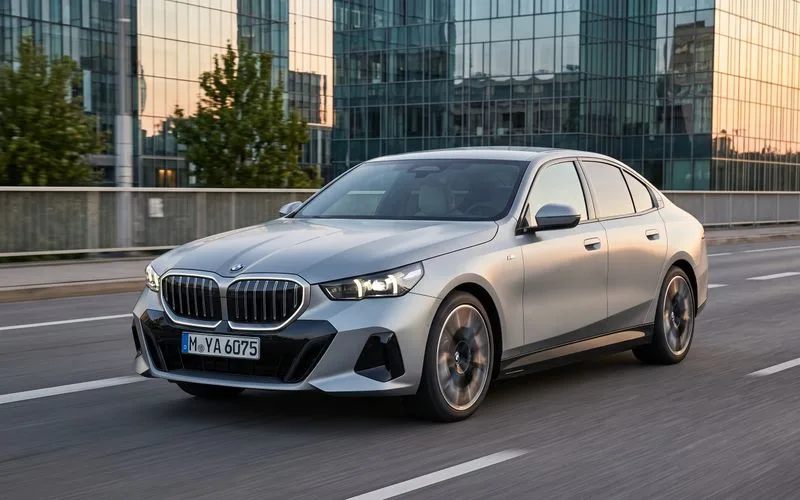 BMW 5 SeriesMid-Size Luxury SedanBetter at: Driving dynamics
The closest direct rival at almost the same money, and it beats the G80 on driving engagement, trunk space, hands-free highway assist and resale value.
Compare 3.11B
3.11B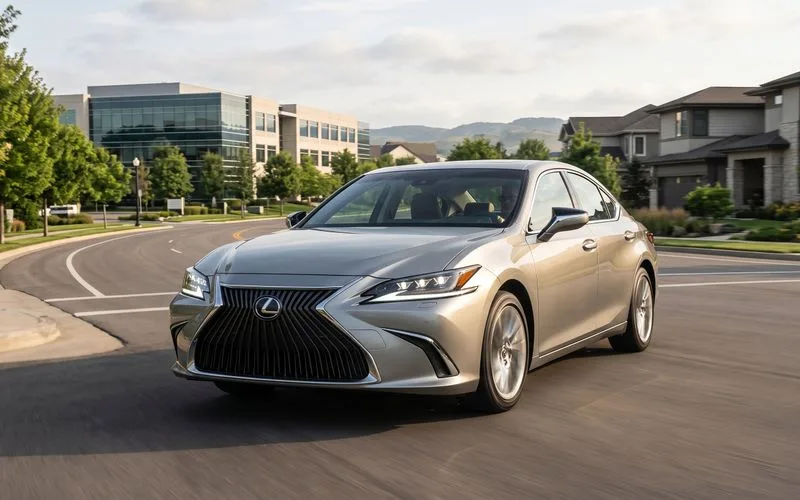 Lexus ESMid-Size Luxury SedanBetter at: Running costs
A hybrid powertrain at roughly 43 MPG on regular fuel and the best resale in the segment make it far cheaper to own, if you can live with front-wheel drive and a less special cabin.
Compare 2.87B-
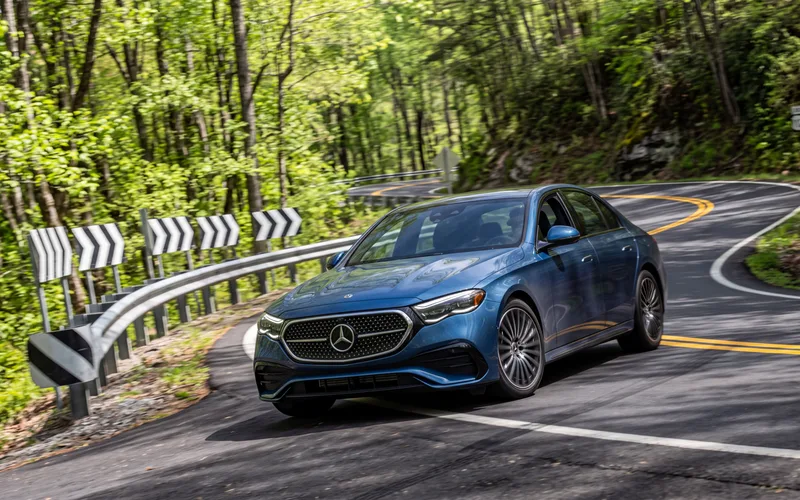 Mercedes-Benz E-ClassMid-Size Luxury SedanBetter at: Brand prestige
For buyers who want the luxury badge and the brand cachet the Genesis emblem still lacks, with comparable comfort — at a higher price and a much higher repair bill.
CompareHow it's evolved
10 scored model years · 2017–2026
Subject scores by year
Hover or tap a score to see what moved it versus the year before. A corner mark flags a big swing.
| Year | Performance | Efficiency | Safety | Space | Cost | Reliability | Tech | Use-case | Driving | Value |
|---|---|---|---|---|---|---|---|---|---|---|
| 2026 | 65 | 37 | 83 | 75 | 33 | 78 | 86 | 59 | 71 | 79 |
| 2025 | 64 | 25 | 74 | 76 | 33 | 71 | 81 | 55 | 70 | 75 |
| 2024 | 65 | 29 | 82 | 74 | 48 | 69 | 70 | 56 | 68 | 73 |
| 2023 | 65 | 33 | 80 | 72 | 49 | 66 | 69 | 55 | 67 | 74 |
| 2022 | 60 | 30 | 82 | 74 | 46 | 71 | 63 | 48 | 67 | 73 |
| 2021 | 58 | 31 | 83 | 72 | 58 | 68 | 65 | 49 | 61 | 76 |
| 2020 | 54 | 25 | 77 | 74 | 62 | 74 | 46 | 45 | 65 | 67 |
| 2019 | 55 | 25 | 76 | 74 | 57 | 71 | 46 | 45 | 65 | 69 |
| 2018 | 55 | 30 | 74 | 70 | 64 | 66 | 50 | 49 | 65 | 70 |
| 2017 | 54 | 28 | 76 | 69 | 66 | 60 | 46 | 48 | 64 | 72 |
Compare two years
Best fit & conditions
Higher scores mean a better fit for that use case. Learn more about use-case fit →
Subject profile
Detailed scoring by subject
1Performance & PowertrainMid-pack among this car's ten categories.2.35C+
The volume 2.5T trim carries the Smartstream 2.5-liter turbocharged inline-four rated at 300 hp, unchanged for 2025 within the facelifted RG3 generation; the optional 3.5T V6 raises the model-range maximum to 375 hp.
Peak torque of the 2.5-liter turbo four is 311 lb-ft, available low in the rev range, which is competitive for a mid-size luxury sedan's base engine.
Instrumented tests of the mechanically identical 2.5T AWD cluster between 5.5 and 5.9 seconds, so 5.7 s is the fair consensus for the volume trim; the 3.5T V6 drops to roughly 5.0 s.
The 2.5T is quiet, well-isolated and pulls cleanly from low revs with only mild turbo lag off idle, but reviewers consistently note the four-cylinder's sound and character fall short of the six-cylinder rivals in this class.
All 2025 G80s use the same paddle-shift eight-speed torque-converter automatic, which reviewers describe as smooth and decisive with sensible ratio choices and no hunting — a conventional automatic remains an advantage over the CVTs and abrupt dual-clutches found elsewhere.
For 2025 every US-market gas G80 is all-wheel drive — fueleconomy.gov lists only AWD variants — so AWD is standard rather than an option, with a rear-biased electronically controlled setup and (on Sport trims) an electronic limited-slip differential; there is no low range or terrain hardware, which is appropriate for the segment but caps the score.
The 2025 G80 nameplate offers three genuinely distinct powertrains — the 300 hp 2.5T four, the 375 hp 3.5T V6, and the fully electric Electrified G80 — which covers mainstream, performance and zero-emission buyers within one body.
2Efficiency & RangeThe G80's lowest-graded category.0.00F
EPA rates the volume 2.5T AWD at 24 MPG combined — middling for a gas mid-size sedan, reflecting the G80's near-4,200 lb curb weight and standard all-wheel drive.
20 MPG in the city is weak against a sedan field that includes hybrids in the high 30s and low 40s; with no hybrid assist on the gas G80, stop-and-go driving is where the weight and AWD losses show most.
29 MPG highway is the gas G80's best case — the eight-speed automatic's tall top gears help at a cruise — but it still trails the segment's more efficient entries.
A 17.2-gallon tank at the EPA combined rating yields roughly 413 miles of total range, which is respectable touring distance even though the economy behind it is unremarkable.
The EPA's annual figure is high because it combines only-adequate economy with premium-grade pricing — the fuel-grade premium is what pushes this above most gas sedans rather than the consumption alone.
Genesis recommends 91-octane premium for full output but the owner's manual explicitly permits 87-octane regular, so owners have a cheaper fallback — the catch is that the EPA ratings and the advertised 300 hp assume premium, so the flexibility comes at a real cost.
3SafetyGrades above the middle of the scale.3.04B
The 2025 G80 carries NHTSA's top overall result with five stars in every individual test, including a 10.1% rollover probability typical of a low-slung sedan.
Three of four IIHS crashworthiness tests come back Good, but the 2025 G80 earns only Marginal in the updated moderate overlap front test — a rear-passenger protection result that costs it any Top Safety Pick award for this model year. Genesis fixed it for 2026: the TSP+ that circulates in press coverage applies only to 2026 cars built after June 2025, not to a 2025 G80.
Genesis locks nothing important behind a trim wall: the base 2.5T AWD already includes forward collision-avoidance assist with pedestrian/cyclist and junction-turning logic, smart cruise control with stop-and-go, lane following and lane keeping assist, Highway Driving Assist 2, blind-spot collision-avoidance, rear cross-traffic collision-avoidance, rear automatic braking, safe exit assist, driver attention warning and high-beam assist. Only the camera aids (surround-view and blind-spot view monitors) step up to Sport Prestige, which is a convenience gap rather than a safety one.
The pedestrian front crash prevention result is Good — the stronger half of the pair, and it banks the high-beam-assist credit — but the tougher updated vehicle-to-vehicle 2.0 evaluation lands only at Acceptable, which is mid-pack among luxury sedans rather than class-leading. Standard rear AEB is a genuine extra most rivals charge for.
Blind-spot and rear cross-traffic systems are collision-AVOIDANCE versions on every trim — they brake or steer rather than only chiming — and safe exit assist is standard, which holds a rear door shut against approaching traffic. Sport Prestige adds the camera-feed Blind-Spot View Monitor in the cluster, so the intervention is standard and the visual aid is the upsell.
Lane Following Assist plus Highway Driving Assist 2 give confident, non-pinballing centering that reviewers were happy to leave engaged for long stretches, but the calibration is conservative — at least one tester found it unsure of itself through a long highway sweeper and wanting the driver to take the corner.
Smart Cruise Control operates the full speed range with stop-and-go and is standard for the first time across the 2025 line, and HDA2 integrates it with lane centering and assisted lane changes cleanly enough that testers covered highway miles without touching the pedals. It falls short of the very best only in the conservative steering calibration noted above.
Genesis offers no hands-free highway system on the 2025 G80 — HDA2 is explicitly hands-on and nags for steering-wheel contact, so there is no BlueCruise/Super Cruise equivalent at any price. It tolerates hands-off for a few miles before warning, which is a detection lag rather than a feature.
IIHS rates the headlights Acceptable, and usefully that single rating covers every trim rather than leaving the volume car on a worse unit — but Acceptable means measurable glare or inadequate reach in some scenarios, and the 2024 facelift's micro-lens-array hardware did not lift the result to Good. High-beam assist is standard and earned credit in the pedestrian AEB test.
Sightlines are ordinary for a modern executive sedan — a low seating position, a high beltline and a tapering rear glass leave real over-the-shoulder blind zones — and the camera compensation that would offset them is not standard: the Surround View Monitor and the Blind-Spot View Monitor both start at Sport Prestige, leaving the volume 2.5T and 2.5T Advanced with a reversing camera and parking sensors only.
IIHS rates LATCH ease of use Acceptable rather than Good: the lower anchors sit too deep in the seat bight and take digging to reach. Once past that, the G80 is a good place for a car seat — wide rear door openings and generous rear legroom for a mid-size sedan — but three across remains a squeeze on a sedan bench.
4Space & ComfortOne of the G80's strongest categories.3.17B
The 2025 G80 is a conventional five-passenger mid-size luxury sedan — front buckets plus a three-place rear bench with folding center armrest on all five US trims; no four-seat executive package is offered here.
41.1 in without a sunroof is generous for the class, but the panoramic roof that comes standard from the 2.5T Advanced trim upward cuts it to 39.4 in — still adequate, and the RG3 body was untouched by the 2025 facelift.
42.2 in of front legroom is mid-pack for a mid-size luxury sedan — enough for tall drivers, but the wide console and the new crystal shift dial eat into knee space rather than adding any.
38.2 in of rear headroom is good for the segment despite the fastback-influenced roofline, though the near-universal panoramic roof trims it to 37.6 in and six-footers sit aware of the headliner.
38.7 in on a 118.5-in wheelbase is one of the G80's clearest packaging wins — ahead of the BMW 5 Series, E-Class and A6 on paper, and reviewers single the back seat out as genuinely accommodating.
13.1 cu ft is the G80's weakest space measurement — well-shaped and easy to load through the power trunk, but small against a 5 Series (~18 cu ft) or Lexus ES, and the pass-through rather than a full folding bench caps long-item hauling.
Everyday stowage is competent rather than inventive: a heated covered console bin, decent door pockets, four USB-C ports and a rear-seat pass-through, but the rotary shift dial and adjacent infotainment controller consume most of the console and the bin underneath is shallow. No frunk, no fold-flat rear floor, and wireless charging only appears higher in the range.
Front seats are a repeated high point — power multi-way adjustment with 4-way power lumbar and a driver's cushion extender, heated front AND rear seats standard on the base trim, ventilation from the Advanced up, and Ergo Motion massage with power bolsters higher in the range. Rear seats are supportive with generous legroom; the fixed backrest angle keeps them just short of class-best.
Tuned comfort-first and effective at it — camera-fed Road Preview adaptive damping lets the car pre-load for broken pavement, and reviewers describe it as pothole-absorbing rather than merely soft. It sits just below the outright ride champions: one direct comparison put the Mercedes E 350 marginally comfier, and the 20-inch Sport setups trade some plushness for firmer edge response.
Isolation is a signature strength — laminated acoustic glass, heavy sound deadening and active noise control give it a hush reviewers rank with or above pricier German rivals. The volume 2.5T four-cylinder is the only real intrusion, sounding coarser than an inline-six when extended.
Comfort equipment is rich and mostly standard rather than optioned — heated front and rear seats and a heated steering wheel come on the $57,100 base 2.5T, and the volume 2.5T Advanced adds three-zone automatic climate, ventilated front seats, a power rear sunshade and a panoramic roof. Remote climate pre-conditioning runs through the Genesis app. Content-per-dollar here comfortably beats the German mid-size sedans, which paywall most of it.
5Cost of OwnershipOne of the G80's weakest categories.0.16F
The 2025 facelift dropped the rear-drive entry car in the US, so every G80 opens as the AWD 2.5T at $57,100 plus $1,250 freight — a $2,700 increase over 2024. That clears the framework's $55,000 sedan ceiling and scores 0, the same outcome as every German rival in this segment, all of which the G80 still undercuts.
The 2.5T Advanced is the volume configuration — Edmunds recommends the 2.5T powertrain for most buyers, and the Advanced grade adds the panoramic roof, upgraded audio and comfort content most G80 buyers order for about $4,800 over the base car. At $63,150 it clears the framework's $58,000 sedan ceiling and scores 0, landing between a typically equipped BMW 530i xDrive and Mercedes E 350 4MATIC.
The two major published estimates bracket this figure: Edmunds True Cost to Own puts 5-year maintenance at $6,074 plus $763 of repairs, while KBB's 5-Year Cost to Own puts maintenance at $7,674 plus $706 of repairs. Genesis covers scheduled service for the first 3 years/36,000 miles, so the bill is heavily back-loaded — Edmunds flags maintenance alone exceeding $3,300 in year four, once the complimentary plan lapses. Hyundai-group mechanicals keep repair exposure far below the German mid-size set, but luxury labor rates, 19–20 inch tires and turbocharged hardware keep it above a Lexus ES.
Depreciation is where the G80's value proposition unwinds. Three independent estimates cluster in the high-30s to mid-40s: KBB projects $22,475 residual on a $58,595 car (38%), CarEdge 59% depreciation (41% retained), and iSeeCars 54.1% depreciation (45.9% retained) — the last of which is still slightly worse than the 53.6% average loss for the luxury mid-size class. A thin US brand history, shrinking luxury-sedan demand, a lease-heavy mix and persistent factory support all push transaction prices below sticker from day one, and the 10-year powertrain warranty halves on resale rather than following the car.
Genesis carries the Hyundai-group 5-year/60,000-mile new-vehicle limited warranty brand-wide, topping the framework's 3–5 year sedan band. That is a full year and 10,000 miles more than BMW, Mercedes, Audi and Lexus offer in this class — a bankable advantage on a car whose out-of-warranty repairs will cost luxury money.
The 10-year/100,000-mile original-owner powertrain warranty tops the framework's 5–10 year sedan band outright and doubles the four-year terms the German rivals offer. It is the strongest structural argument for buying rather than leasing a G80 — but it does not transfer, which is part of why the resale line above is so weak.
This is the best ownership-perks package in the mid-size luxury sedan class. Genesis bundles 3 years/36,000 miles of complimentary scheduled maintenance with Genesis Service Valet — a technician collects the car and leaves a loaner, so routine service costs neither money nor a dealer trip — plus 5 years of unlimited-mileage roadside assistance and a multi-year Genesis Connected Services trial. None of BMW, Mercedes or Audi include scheduled maintenance at all in this segment; the score stops short of the ceiling because the maintenance term is three years rather than the four-to-five some brands have offered.
$63,150 volume-trim price minus its estimated resale value after 5 years (41% retained, or about $25,892) leaves about $37,259 in depreciation. Add the projected $7,500 in 5-year maintenance and repairs, and owning this vehicle for 5 years costs about $44,759 in total.
6Reliability & QualityGrades above the middle of the scale.2.80B-
Consumer Reports rates the 2025 G80 specifically as having "about average reliability compared to other cars from the same model year" — and CR's own comparison has the 2025 car outperforming the BMW 5 Series. That is a genuinely better verdict than the 2026 G80, which CR drops to "less reliable than the average new car," so this score is year-specific and should not be carried forward. J.D. Power's predicted-reliability score of 80/100 for the 2025 G80 sits in that publisher's "Average" band (70–80), corroborating the middle placement. Scored above the Mercedes C-Class (69.4) and near the BMW 3 Series (72.9), well below the Lexus IS (86.1), because the brand-level signal underneath the model rating has weakened and in-car electronics remain the dominant owner complaint.
Genesis's two dependability signals point in opposite directions and the long-term one is deteriorating. Initial quality is excellent — 151 PP100 and second overall in the J.D. Power 2026 IQS — but that measures 90 days. On three-year dependability Genesis scored 208 PP100 in the 2026 VDS, which is third among premium brands yet *below* the 204 PP100 industry average, and a steep slide from the 144 PP100 that put it second in 2023. Consumer Reports is harsher still: 21st of 26 brands at 33/100, with not one of the seven rated Genesis models earning an average-or-better predicted-reliability score. A brand that is top-two on day 90 and below-average at year three is the definition of mid-pack over an ownership cycle, so this sits in the middle band rather than the 80+ the "consistently top-5" tier requires. This materially corrects the 82 carried in the knowledge-only G80/G90 scorecards, which leaned on IQS alone.
Two NHTSA campaigns touch the 2025 G80 — a fuel leak at the fuel-pipe/fuel-rail connection and an instrument-panel display software failure. Two campaigns is a modest absolute count, but the fuel-line item is a fire-risk defect rather than a convenience fix, and the display recall is part of a brand-wide pattern: six Genesis models carry electrical-system recalls affecting instrument-panel visibility, which is the same in-car-electronics weakness CR's owner survey flags. Nothing here indicates a systemic engine, transmission or structural defect, so this lands in the typical-activity band but toward its lower half rather than the quiet end of the segment.
The volume 2025 G80 runs the 2.5L Smartstream T-GDI four (300 hp / 311 lb-ft) with the 8-speed automatic and standard AWD. That engine is a clear improvement on the notorious Theta II family and has no systemic failure mode on record, but it is not a proven high-mileage design either: documented issues across the family include abnormal oil consumption traced to piston-ring design on 2021–early-2023 units, loose connecting-rod bolts that can seize an engine, and Integrated Thermal Management Module failures as early as 30,000 miles. The 2025 build sits past the piston-ring window, and the 3.5L Lambda III twin-turbo V6 on upper trims has accumulated broader group service without a systemic fault, but the family's short track record plus general turbo-GDI carbon and oil-consumption history keeps this out of the proven-powertrain top band. The 10-year/100,000-mile powertrain warranty backs the risk for an original owner.
The cabin is the G80's signature strength and the 2025 facelift pushed it further: a new dashboard, center stack and center console built around a 27-inch OLED panel that merges the instrument cluster and infotainment display. Edmunds describes virtually every surface as covered in leather or open-pore wood with high materials quality and generous soft-touch plastics, and concludes that materials and interior design "don't require justification when purchasing a G80 over German competitors." That is class-leading for the price in a segment where rivals start near $60,000; the score stops short of the very top only because the redesigned rotary infotainment controller draws consistent usability criticism.
Assembly consistency is a real strength, and the hardest evidence available says so directly: Genesis placed second overall and second among premium brands in the J.D. Power 2026 Initial Quality Study at 151 PP100, ahead of Lexus. Panel gaps, alignment and interior assembly draw few complaints from reviewers. What holds this below the top of the band is that the problems owners do report cluster in electronics rather than hardware — CR identifies in-car electronics as the brand's largest trouble spot, and the 2025 car carries a software recall for instrument-panel display failure, which is exactly the category that dominates initial-quality scoring industry-wide.
Coverage is the weak link. Genesis operates roughly 85 dedicated standalone retail facilities in the US — against roughly 240 dedicated Lexus stores and 350–380 Mercedes-Benz and BMW dealerships — with the rest of the lineup sold through 200-plus independent retailers that are typically Hyundai-affiliated, so a buyer outside a major metro may have no dedicated Genesis service point nearby. The offset is substantial and standard rather than optional: every new Genesis includes complimentary Service Valet for 3 years/36,000 miles, which collects the car, performs scheduled maintenance or warranty repair, and returns it, which removes most of the density penalty for owners inside the valet radius. Network growth is real but recent (84 facilities as of early 2026, up about 12% year over year), so the footprint disadvantage is still the current condition.
Running costs are genuinely low for a luxury sedan because the mechanical hardware is shared across the Hyundai group: RepairPal puts Genesis brand average annual maintenance at $524, and Edmunds projects roughly $845 in the first year after the factory warranty expires — under $1,000/yr, cheap for the class — while CarEdge estimates a 19.65% chance of a major repair in five years, about 9% better than segment peers. Three years/36,000 miles of complimentary scheduled maintenance and the 10-year/100,000-mile powertrain warranty defer most early spending. What caps this below the top band is that the parts the G80 does not share are expensive and dealer-only: the 27-inch OLED display assembly, Genesis-specific body panels, trim and glass have essentially no aftermarket, and brand volume is too low to have produced one.
7Technology & InfotainmentThe G80's best-graded category.3.51A-
The 2025 facelift's headline change replaced the old split 12.3-in cluster / 14.5-in infotainment pair with one 27-in LG OLED panel running from behind the wheel to over the center stack — and it is standard on the $57,100 base car, not an upper-trim upgrade.
The ccNC-generation software is logically laid out and Genesis deliberately reinstated physical knobs for volume, tuning and temperature for 2025 — a genuine usability win over the touch-only direction the segment took. It falls short of the best because reviewers flag sluggish animations between views, unresponsive steering-wheel controls, and HVAC icons spaced tightly enough to invite mis-taps, with the rotary controller sitting confusingly close to the shift dial.
The 2025 G80 is the first Genesis to make wireless Apple CarPlay and Android Auto standard equipment, on every trim including the base 2.5T — a direct fix for the brand's most persistent owner complaint.
Genesis navigation is standard on every trim, renders well across the 27-in panel and receives over-the-air map updates through Connected Services. Voice recognition handles nav, climate and media commands reliably but is command-driven rather than a true natural-language assistant, so many owners still default to phone projection.
The base 2.5T ships a 12-speaker system — already better than most segment base audio — and Bang & Olufsen premium audio becomes standard from the volume 2.5T Advanced upward, so the trim buyers actually take already has the good system rather than a paid option.
A 12.3-inch 3D digital cluster is built into the standard 27-inch OLED panel on every trim — crisp, configurable, and with no analog or partial-digital variant offered anywhere in the range.
The 2025 G80 is on Genesis's OTA-capable ccNC platform and has demonstrably received feature-adding updates in the field — including the rollout that enabled wireless phone projection on cars delivered without it — plus over-the-air navigation map updates. It stops short of the top band because coverage is infotainment, maps and connected services rather than whole-vehicle ECU flashing, and updates require an active Genesis Connected Services subscription.
Genesis Connected Services is complimentary to the first owner and covers the full remote set — remote start with climate pre-conditioning, lock/unlock, vehicle locate and status, stolen-vehicle recovery, enhanced roadside and Genesis Pay, with smartwatch control. Digital Key 2 phone-as-key exists but is gated to upper trims rather than standard, which is what keeps this out of the top band.
Four USB-C ports are standard across front and rear for 2025 — the changeover from USB-A is a real generational improvement — but wireless phone charging is not on the base 2.5T and sources disagree on whether the volume 2.5T Advanced includes it, with dealer trim charts placing it at Sport Prestige. There is no household AC outlet.
Proximity entry, push-button start, remote start via fob and app, and a power open/close trunk are all in place from the volume trim, and Prestige trims add motorized soft-close doors. Digital Key 2 phone-as-key is offered but sits on upper trims rather than being standard, which is the one thing separating it from the top of the band.
Rear camera, front and rear parking sensors and Parking Distance Warning are standard, and the hardware higher up is excellent — a four-camera Surround View Monitor, Blind-Spot View Monitor, Parking Collision-Avoidance Assist and Remote Smart Parking Assist 2. But none of that reaches the volume 2.5T or 2.5T Advanced: it starts at Sport Prestige, roughly $6,500 further up, which is exactly the 'rear camera + sensors standard; 360 on top trims' pattern.
The G80's 12-inch color head-up display is very good — one reviewer called it 'absolutely fantastic' — but it is restricted to the Sport Prestige trims and is not available at all on the 2.5T or the volume 2.5T Advanced, so most buyers never see it.
8Use-Case FitOne of the G80's weakest categories.1.68D
The back seat itself is a strength — 38.7 in of legroom and 57.1 in of shoulder room make three-across and rear-facing seats genuinely workable, and heated rear seats are standard from the base car. What holds it mid-band is the hardware and the trunk: IIHS rates the LATCH anchors only Acceptable with the lower anchors set too deep in the cushions, and a 13.1 cu ft trunk is tight for a stroller plus a week's gear.
The standard-equipment story is excellent — forward and rear automatic braking, Highway Driving Assist 2, Smart Cruise with stop-and-go, blind-spot and rear cross-traffic avoidance, Safe Exit Assist and Advanced Rear Occupant Alert on every trim, plus a 5-star NHTSA overall. It is pulled down from the top band by IIHS: the updated moderate-overlap front test came back Marginal on 2025 cars built after October 2024, with rear-passenger head/neck and restraint kinematics both Marginal, and seat belt reminders also Marginal — so no 2025 Top Safety Pick, and the weak result is specifically about back-seat occupants.
For four people on a long day this is close to ideal: a very quiet cabin, heated rear seats standard, three-zone climate and a power rear sunshade from the volume Advanced trim, 38.7 in of rear legroom, and four USB-C ports. The one real constraint is luggage — 13.1 cu ft with the seats occupied is modest, and there are no rear screens or rear-seat entertainment.
A relaxing commuter: the 2.5T's torque plateau from 1,650 rpm and a near-imperceptible 8-speed automatic make stop-and-go effortless, Smart Cruise with Stop & Go and Highway Driving Assist 2 are standard on every trim, and the cabin is quiet enough to arrive unfatigued. Light, filtered steering that is a liability on a back road is an asset here.
24 MPG combined from the volume 2.5T AWD is unremarkable for a four-cylinder, and it requires premium fuel — EPA puts annual fuel cost at $3,250. Add $60k-car insurance, luxury-brand consumables and 19-inch tires and the per-mile cost is well above average even before the G80's steep depreciation is counted. Complimentary scheduled maintenance offsets a little of it.
At 196.7 in long and 118.5 in between the axles with a 38.1 ft curb-to-curb circle, the G80 is a big car in a tight garage, and the rear-wheel steering that shortens the circle by more than a foot is exclusive to the 3.5T Sport Prestige. The volume 2.5T Advanced also does without the Surround View Monitor and Remote Smart Parking Assist, so it relies on a rear camera and sensors alone.
The G80 carries no US tow rating, has no bed, and offers 13.1 cu ft of trunk behind a pass-through rather than a folding bench. It is an executive sedan and is not meaningfully work-capable beyond carrying a laptop bag and a sample case.
The underlying Hyundai M3 platform, Smartstream 2.5T and 8-speed automatic are proven volume hardware, and a 10-year/100,000-mile powertrain warranty backs them. But everything a work vehicle abuses is wrong here: leatherette or Nappa surfaces, low-profile 19- and 20-inch tires, a low air dam, and no washable or fleet-spec interior option.
There is no bed, no roof rail, no factory hitch, no onboard AC power outlet and no tie-down provision beyond a trunk hook. The aftermarket upfit ecosystem for a mid-size luxury sedan is effectively nonexistent.
This is what the G80 is built for. A very quiet cabin, seats with ventilation and Ergo Motion massage, Highway Driving Assist 2 standard on every trim, and a 19.3-gallon tank against 29 highway MPG for roughly 550 highway miles between stops. Only the 2.5T's coarser note under hard throttle keeps it off the very top.
Every US G80 is all-wheel drive, which makes it genuinely capable on snow and a well-graded gravel road, and heated rear seats and a strong heater help in winter. Beyond that it is pavement-bound: sedan ground clearance, low-profile performance tires on 19- and 20-inch wheels, no roof rails, no hitch, no AC outlet for camping.
13.1 cu ft handles four people's suitcases and little more. The rear seat offers a center pass-through for skis rather than a folding bench, so long or bulky items have nowhere to go, and with no roof rails and no hitch there is no way to add capacity outside the car.
9Driving ExperienceGrades above the middle of the scale.2.74B-
Secure and well-damped rather than engaging. The RG3 chassis is tuned comfort-first, carries 4,211 lb in base 2.5T form and 4,453 lb as a 3.5T Sport, and leans on isolation over tie-down body control; the rear-wheel steering and e-LSD that sharpen it are exclusive to the 3.5T Sport Prestige and not part of the volume configuration. Composed and confidence-inspiring, without the poise of a 5 Series or E-Class.
Well-judged for what the car is — accurate, stable on-center and, in The Drive's words, 'exquisitely weighted' for daily driving. It stays mid-band because the weighting is the whole story: the rack filters out surface texture almost entirely, and the Sport trims add effort without adding feedback.
Better equipped than the class norm: four-piston monobloc front calipers are standard on the base 2.5T for 2025, with upgraded performance brakes on Sport Prestige. Pedal feel is firm and progressive with no fade complaints in testing, and 70–0 mph stops for the 3.5T land in the mid-160-foot range — good for a heavy luxury sedan, short of class-leading.
The 8-speed automatic shifts almost imperceptibly and picks sensible gears, tip-in is clean, and the 2.5T's 311 lb-ft plateau from 1,650 rpm masks most turbo lag off idle. Auto stop/start restarts are well isolated. Only mild low-rpm hesitation from the four-cylinder keeps it off the top band; the 3.5T V6 is smoother still.
At cruise the drivetrain is essentially inaudible behind the acoustic glass and active noise control — one of the quieter cabins in the segment. The mark against it is the volume 2.5T: extended hard, the four-cylinder turns gruff and slightly thrashy in a way the inline-sixes in its German rivals do not, and it is the engine most G80 buyers take.
38.1 ft on a 118.5-in wheelbase is on the wide side for a mid-size sedan — manageable but noticeably worse than a compact in a parking structure. The 2025 facelift added rear-wheel steering that shortens it by more than a foot, but only on the 3.5T Sport Prestige, so the volume 2.5T does without.
A genuine strength: wide-range power seat and column adjustment with 4-way power lumbar and a cushion extender, a low cowl with clear forward sightlines, easy ingress, and — notably for 2025 — physical console knobs reinstated for volume, tuning and temperature. Marked down because the 27-inch panel puts some functions at a long reach, HVAC icons are cramped enough to invite mis-taps, and the infotainment dial sits close enough to the shift dial to cause confusion.
Deeply pleasant, not exciting. The volume 2.5T is adequate and characterless, the steering is numb by design, and the car's appeal is in how little it asks of you rather than what it gives back. The 3.5T Sport Prestige with rear-wheel steering and an e-LSD is quick and genuinely more entertaining, but it is a $77,000 outlier, not the configuration most people drive.
10Value & Market PositionOne of the G80's strongest categories.3.11B
The G80 is the standard-equipment benchmark of the mid-size luxury sedan class: the $58,350 base 2.5T includes standard all-wheel drive, the new-for-2025 27-inch OLED display, heated power front seats, a 12-speaker audio system, wireless Apple CarPlay/Android Auto and a near-complete driver-assist suite — blind-spot detection, lane-departure prevention and rear automatic braking are standard, content BMW and Mercedes still bill for in packages. It falls short of the top band only because the panoramic roof, Bang & Olufsen audio and rear-wheel steering are reserved for trims $10,000–$20,000 higher.
At $58,350 delivered with AWD standard, plus 5 yr/60,000 mi bumper-to-bumper, a 10-year powertrain warranty and three years of included maintenance, the G80 still buys German-rival cabin quality and refinement for less than a comparably equipped 5 Series or E-Class. But the 2025 facelift added $2,700 to the base price and deleted the cheaper rear-drive car, and reviewers now say the gap has narrowed — and the steep depreciation documented in cat5 claws back a meaningful share of the up-front saving.
Five gas trims across two engines — 2.5T in Standard, Advanced and Sport Prestige grades, 3.5T V6 in Sport Advanced and Sport Prestige — span $58,350 to $78,250, with the Electrified G80 alongside for a final year. Breadth is only adequate, though: all-wheel drive is now the sole drivetrain (the rear-drive car is gone for 2025), Genesis sells trims rather than à la carte options, and there is no hybrid or plug-in rung between the gas and electric ends.
The G80 is a low-volume, declining seller. US sales peaked at 6,031 in 2021 — the generation's first full year — and have slid to 4,155 in 2024 and 3,849 in 2025, roughly a tenth of a Lexus ES and a small fraction of a 5 Series, with quarterly volume flat near 900 units. The Electrified variant did so little business (140 units in 2024, 77 in the first half of 2025) that Genesis pulled it after 2025. Buyers who find it like it; very few find it.
Genesis has earned genuine credibility in under a decade — repeated top-of-industry finishes in JD Power initial-quality and APEAL studies, widely admired design, and a concierge-style ownership experience including valet service pickup. What it still lacks is badge equity: cross-shoppers respect the car but fewer aspire to the emblem, and that gap shows up directly in the segment-trailing residuals and the discounting scored below.
Soft sedan demand and a brand still buying share make the G80 one of the more negotiable cars in its class: subvented lease programs, sub-4% APR financing and $1,000 conquest/loyalty bonuses run routinely, and end-of-model-year stock discounts harder still. That is a real buyer benefit rather than desperation pricing — the car is not being dumped, it simply is not a supply-constrained badge — and it is the flip side of the weak sales trajectory above.
2025 is the freshest the RG3 G80 gets in the US: it is the model year the facelift landed here, bringing Micro Lens Array two-line headlamps, revised front and rear fascias with hidden exhaust outlets, new wheels, a 27-inch OLED display replacing the separate cluster and screen, the CCIC software, a crystal shift-by-wire selector and a new colour palette. The underlying M3-platform generation dates to MY2021, so this is a refreshed mid-cycle car rather than a new one — but a buyer in 2025 gets current styling and cabin tech with no imminent replacement.
Reviews are consistently warm rather than decisive. Edmunds credits the 2025 car with "the same levels of luxury and refinement as its rivals, though it's not as exciting to drive," and Car and Driver has it "creeping ever closer to its German competition" — praise for interior design, materials, quietness and standard content, criticism of steering feel and chassis engagement. It carries a 2025 IIHS Top Safety Pick+, though the updated moderate-overlap front test returns only Marginal and headlights Acceptable, so even the safety credential is qualified. A strong second or third in comparison tests, rarely the winner.