

The verdict
A strong mid-size luxury sedan, strong on technology and held back by ownership.
The 2026 Genesis G80 is the mid-size luxury sedan that gives you the most car for the money: a hushed, beautifully built cabin, a standard 27-inch OLED display, the entire driver-assist suite on every trim, and a 10-year/100,000-mile powertrain warranty with three years of free maintenance — for roughly $60,300 to start, a little under a BMW 530i or Mercedes E 350. What you give up is efficiency and resale. The volume 2.5T turbo-four manages just 25 MPG combined on recommended premium (about $2,600 a year), the 13.1 cu ft trunk is small for a car this size, and the G80 is projected to keep only about 42% of its value after five years — the weakest number on its scorecard. Buy it if you plan to keep it and value quiet comfort over driving thrills; lease it or look elsewhere if depreciation and fuel bills matter most.
Jump to scoresStrengths
- Every safety feature is standard, on every trim
- Class-leading warranty and free maintenance
- A 27-inch OLED and tech that isn't paywalled
What holds it back
- Thirsty, and it wants premium fuel
- Depreciation is the worst part of owning one
- A small trunk for a big sedan
Top alternatives
Cars shoppers cross-shop with the Genesis G80 3.27B+
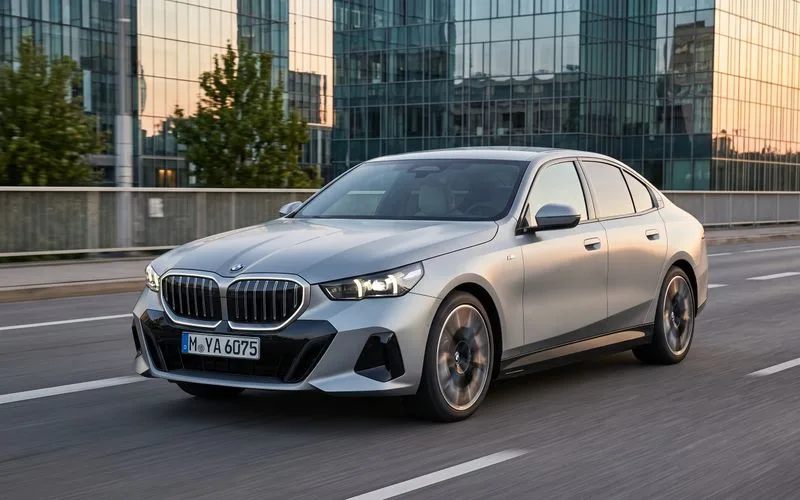 BMW 5 SeriesMid-Size Luxury SedanBetter at: Driving dynamics
The closest direct rival at almost the same money, and it beats the G80 on driving engagement, trunk space, hands-free highway assist and resale value.
Compare 3.11B
3.11B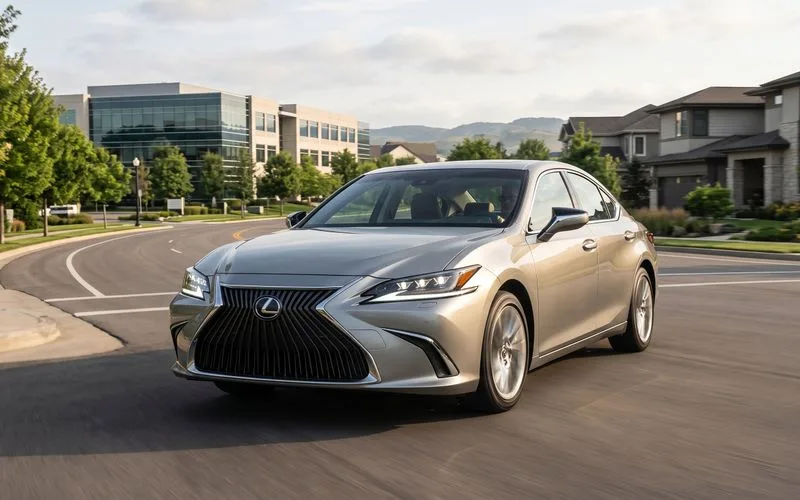 Lexus ESMid-Size Luxury SedanBetter at: Running costs
A hybrid powertrain at roughly 43 MPG on regular fuel and the best resale in the segment make it far cheaper to own, if you can live with front-wheel drive and a less special cabin.
Compare 2.87B-
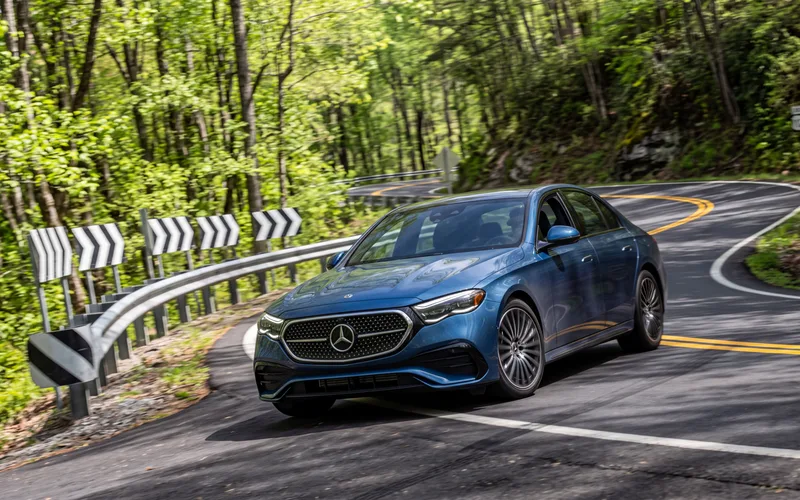 Mercedes-Benz E-ClassMid-Size Luxury SedanBetter at: Brand prestige
For buyers who want the luxury badge and the brand cachet the Genesis emblem still lacks, with comparable comfort — at a higher price and a much higher repair bill.
CompareHow it's evolved
10 scored model years · 2017–2026
Subject scores by year
Hover or tap a score to see what moved it versus the year before. A corner mark flags a big swing.
| Year | Performance | Efficiency | Safety | Space | Cost | Reliability | Tech | Use-case | Driving | Value |
|---|---|---|---|---|---|---|---|---|---|---|
| 2026 | 65 | 37 | 83 | 75 | 33 | 78 | 86 | 59 | 71 | 79 |
| 2025 | 64 | 25 | 74 | 76 | 33 | 71 | 81 | 55 | 70 | 75 |
| 2024 | 65 | 29 | 82 | 74 | 48 | 69 | 70 | 56 | 68 | 73 |
| 2023 | 65 | 33 | 80 | 72 | 49 | 66 | 69 | 55 | 67 | 74 |
| 2022 | 60 | 30 | 82 | 74 | 46 | 71 | 63 | 48 | 67 | 73 |
| 2021 | 58 | 31 | 83 | 72 | 58 | 68 | 65 | 49 | 61 | 76 |
| 2020 | 54 | 25 | 77 | 74 | 62 | 74 | 46 | 45 | 65 | 67 |
| 2019 | 55 | 25 | 76 | 74 | 57 | 71 | 46 | 45 | 65 | 69 |
| 2018 | 55 | 30 | 74 | 70 | 64 | 66 | 50 | 49 | 65 | 70 |
| 2017 | 54 | 28 | 76 | 69 | 66 | 60 | 46 | 48 | 64 | 72 |
Compare two years
Best fit & conditions
Higher scores mean a better fit for that use case. Learn more about use-case fit →
Subject profile
Academic Probation · NHTSA safety recalls
Jan 16, 2026Electrical system: instrument cluster/panelDue to a software error, the instrument panel display may fail. As such, these vehicles fail to comply with the requirements of Federal Motor Vehicle Safety Standard (FMVSS) number 101, "Controls and Displays."
Defect
Hyundai Motor America (Hyundai) is recalling certain Genesis 2025-2026 G80, GV80, 2026 G80 "Electrified," GV60, GV70 "Electrified" and GV70 vehicles. Due to a software error, the instrument panel display may fail. As such, these vehicles fail to comply with the requirements of Federal Motor Vehicle Safety Standard (FMVSS) number 101, "Controls and Displays."
Risk
An instrument panel display that fails to show critical safety information, such as the speedometer or fuel gauge, increases the risk of a crash.
Remedy
Owners are advised to disable the high definition (HD) radio feature until the recall remedy has been performed. The audio video navigation software will be updated over-the-air (OTA) or inspected and updated by a dealer, free of charge. Owner notification letters were mailed beginning February 17, 2026. Owners may contact Genesis customer service at 844-340-9741. Hyundai's number for this recall is 031G. Vehicle Identification Numbers (VINs) involved in this recall became searchable on NHTSA.gov beginning January 17, 2026.
NHTSA campaign 26V019000 ↗Manufacturer no. 031G83,877 vehicles potentially affected (all models in the campaign)Owners notified Feb 17, 2026Filed by Hyundai Motor AmericaFiled as G80, G80 ELECTRIFIED
14 recalls on other model years of the G80 (2017–2025)
Oct 8, 2026Seats: front assembly: power adjustThe front power seat motors may overheat due to a stuck power seat control switch, which can result in a fire while parked or driving.
Defect
Hyundai Motor America (Genesis) is recalling certain 2015-2016 Hyundai Genesis, and 2017-2020 Genesis G80 vehicles. The front power seat motors may overheat due to a stuck power seat control switch, which can result in a fire while parked or driving.
Risk
A fire increases the risk of injury.
Remedy
Owners are advised to park their vehicles outdoors and away from other vehicles or structures until the repair has been performed. The remedy is currently under development. Owner notification letters are expected to be mailed December 7, 2026. Owners of Hyundai vehicles may contact Hyundai customer service at 1-855-371-9460. Genesis owners may contact Genesis customer service at 844-340-9741. Hyundai recall number for this recall is 308 and Genesis' recall number is 035G. Vehicle Identification Numbers (VINs) involved in this recall became searchable on NHTSA.gov beginning October 13, 2026.
NHTSA campaign 26V664000 ↗Manufacturer no. 308/035G94,622 vehicles potentially affected (all models in the campaign)Filed by Hyundai Motor AmericaFiled as G80Apr 10, 2026Fuel system, gasoline: delivery: hoses, lines/piping, and fittingsFuel may leak at the pipe connection between the fuel pipe and fuel rail.
Defect
Hyundai Motor America (Genesis) is recalling certain Genesis 2022-2026 GV70, 2023-2025 G90, 2021-2025 G80, and GV80 vehicles. Fuel may leak at the pipe connection between the fuel pipe and fuel rail.
Risk
A fuel leak increases the risk of a fire.
Remedy
Dealers will inspect and tighten, or replace the fuel pipe as necessary, free of charge. Owner notification letters were mailed beginning July 20, 2026. Owners may contact Genesis customer service at 844-340-9741. Genesis' number for this recall is 033G. Vehicle Identification Numbers (VINs) involved in this recall became searchable on NHTSA.gov beginning April 11, 2026.
NHTSA campaign 26V229000 ↗Manufacturer no. 033G94,760 vehicles potentially affected (all models in the campaign)Owners notified Jul 20, 2026Filed by Hyundai Motor AmericaFiled as G80Feb 19, 2025Electrical system: instrument cluster/panelDue to a software error, the instrument panel display may fail. As such, these vehicles fail to comply with the requirements of Federal Motor Vehicle Safety Standard (FMVSS) number 101, "Controls and Displays."
Defect
Hyundai Motor America (Hyundai) is recalling certain Genesis 2023-2024 G80, GV80, 2025 GV70 and 2023-2025 GV70 "Electrified" vehicles. Due to a software error, the instrument panel display may fail. As such, these vehicles fail to comply with the requirements of Federal Motor Vehicle Safety Standard (FMVSS) number 101, "Controls and Displays."
Risk
An instrument panel display that fails to show critical safety information, such as the speedometer or warning lights, increases the risk of a crash.
Remedy
Dealers will inspect and update the instrument panel display software, as necessary, free of charge. Owner notification letters were mailed March 26, 2025. Owners may contact Genesis customer service at 844-340-9741. Hyundai's number for this recall is 026G.
NHTSA campaign 25V105000 ↗Manufacturer no. 026G32,594 vehicles potentially affected (all models in the campaign)Owners notified Mar 26, 2025Filed by Hyundai Motor AmericaFiled as G80Apr 19, 2024Fuel system, gasoline: delivery: fuel pumpThe fuel pump may fail, which can result in a loss of drive power.
Defect
Hyundai Motor America (Hyundai) is recalling certain 2022-2023 Genesis GV70, GV80, G80, and G90 vehicles. The fuel pump may fail, which can result in a loss of drive power.
Risk
A loss of drive power can increase the risk of a crash.
Remedy
Dealers will inspect and replace the fuel pump assembly, free of charge. Owner notification letters were mailed June 7, 2024. Owners may contact Hyundai customer service at 1-855-371-9460. Hyundai's number for this recall is 022G. This recall is an expansion of recall number 23V-630.
NHTSA campaign 24V282000 ↗Manufacturer no. 022G31,440 vehicles potentially affected (all models in the campaign)Owners notified Jun 7, 2024Filed by Hyundai Motor AmericaFiled as G80Mar 8, 2024Engine and engine cooling: engine: gasoline: turbo/superchargerThe left turbocharger oil feed pipe may deteriorate and leak oil.
Defect
Hyundai Motor America (Hyundai) is recalling certain 2018-2020 Genesis G80, 2017-2022 G90, and 2019-2022 G70 vehicles equipped with a 3.3-liter V6 turbocharged engine. The left turbocharger oil feed pipe may deteriorate and leak oil.
Risk
An oil leak in the presence of hot engine components can increase the risk of an engine compartment fire.
Remedy
Dealers will replace the left turbocharger oil feed pipe, free of charge. Owner notification letters were mailed May 3, 2024. Owners may contact Hyundai customer service at 1-855-371-9460. Hyundai's number for this recall is 019G. This recall expands and replaces recall number 19V-538. Vehicles previously repaired under 19V-538 will need to have the new remedy completed.
NHTSA campaign 24V191000 ↗Manufacturer no. 019G28,439 vehicles potentially affected (all models in the campaign)Owners notified May 3, 2024Filed by Hyundai Motor AmericaFiled as G80Feb 13, 2024Electrical system: starter assembly: solenoidWater may enter the starter solenoid and cause an electrical short, which can result in an engine compartment fire while parked or driving.
Defect
Hyundai Motor America (Hyundai) is recalling certain 2015-2016 Genesis, 2017-2019 Genesis G80, Genesis G90, and 2019 Genesis G70 vehicles. Water may enter the starter solenoid and cause an electrical short, which can result in an engine compartment fire while parked or driving.
Risk
An engine compartment fire while parked or driving can increase the risk of injury.
Remedy
Owners are advised to park outside and away from structures until the recall repair is complete. Dealers will install a remedy relay kit in the engine junction box, free of charge. Owner notification letters were mailed July 15, 2024. Owners may contact Hyundai customer service at 1-855-371-9460. Hyundai's numbers for this recall are 254(H) and 018G(G).
NHTSA campaign 24V107000 ↗Manufacturer no. 254 (H), 018G (G)90,907 vehicles potentially affected (all models in the campaign)Owners notified Jul 15, 2024Filed by Hyundai Motor AmericaFiled as G80Sep 11, 2023Fuel system, gasoline: delivery: fuel pumpThe fuel pump may fail, which can result in a loss of drive power.
Defect
Hyundai Motor America (Hyundai) is recalling certain 2021-2022 Genesis G80, GV80, and 2022 Genesis GV70 vehicles. The fuel pump may fail, which can result in a loss of drive power.
Risk
A loss of drive power can increase the risk of a crash.
Remedy
Dealers will replace the fuel pump, free of charge. Owner notification letters were mailed November 8, 2023. Owners may contact Hyundai customer service at 1-855-371-9460. Hyundai's number for this recall is 016G.
NHTSA campaign 23V630000 ↗Manufacturer no. 016G19,272 vehicles potentially affected (all models in the campaign)Owners notified Nov 8, 2023Filed by Hyundai Motor AmericaFiled as G80Feb 16, 2023Seat belts: front · Seat belts: pretensionerIn the event of a crash, the front driver-side and/or passenger-side seat belt pretensioners may explode upon deployment.
Defect
Hyundai Motor America (Hyundai) is recalling certain 2020-2023 Genesis GV80, 2021-2023 Genesis G80, 2022-2023 Genesis GV70, and 2023 Genesis GV60 vehicles. In the event of a crash, the front driver-side and/or passenger-side seat belt pretensioners may explode upon deployment.
Risk
An exploding seat belt pretensioner can project metal fragments into the vehicle, strike vehicle occupants, and result in injury.
Remedy
Dealers will secure the seat belt pretensioners with a cap, free of charge. Owner notification letters were mailed April 14, 2023. For GV60 owners, Interim notification letters, notifying owners of the safety risk, were mailed April 14, 2023. A second notice will be sent once the final remedy is available. Owners may contact Hyundai customer service at 1-855-371-9460. Hyundai's number for this recall is 012G. This recall supersedes and expands recall number 21V-796. Vehicles previously repaired under recall 21V-796 will need to have the new remedy completed.
NHTSA campaign 23V094000 ↗Manufacturer no. 012G65,517 vehicles potentially affected (all models in the campaign)Owners notified Apr 14, 2023Filed by Hyundai Motor AmericaFiled as G80Oct 31, 2022Seat belts: front · Seat belts: pretensionerIn the event of a crash, the front driver-side and/or passenger-side seat belt pretensioners may explode upon deployment.
Defect
Hyundai Motor America (Hyundai) is recalling certain 2023 Genesis G80 Electric, 2021-2022 Santa Fe Hybrid, and 2022-2023 Santa Fe Plug-In Hybrid vehicles. In the event of a crash, the front driver-side and/or passenger-side seat belt pretensioners may explode upon deployment.
Risk
An exploding seat belt pretensioner can project metal fragments into the vehicle, strike vehicle occupants, and result in injury.
Remedy
Dealers will secure the seat belt pretensioners with a cap, free of charge. Owner notification letters were mailed December 14, 2022. Owners may contact Hyundai customer service at 1-855-371-9460. Hyundai's number for this recall is 238/011G. This recall is an expansion of recall numbers 22V-354 and 22V-458.
NHTSA campaign 22V816000 ↗Manufacturer no. 238/011G14,933 vehicles potentially affected (all models in the campaign)Owners notified Dec 14, 2022Filed by Hyundai Motor AmericaFiled as G80 ELECTRIFIEDMar 24, 2021Fuel system, gasoline: delivery: hoses, lines/piping, and fittingsThe fuel tube connecting the high pressure fuel pump to the fuel rail may not seal properly, which could allow fuel to leak.
Defect
Hyundai Motor America (Hyundai) is recalling certain 2021 Genesis G80 and GV80 vehicles equipped with 2.5-litre turbo engines. The fuel tube connecting the high pressure fuel pump to the fuel rail may not seal properly, which could allow fuel to leak.
Risk
A fuel leak in the presence of an ignition source can increase the risk of a fire.
Remedy
Hyundai will notify owners, and dealers will replace the high pressure fuel tube, free of charge. Owner notification letters were mailed on May 24, 2021. Owners may contact Hyundai customer service at 1-855-371-9460. Hyundai's number for this recall is 008G.
NHTSA campaign 21V208000 ↗Manufacturer no. 008G147 vehicles potentially affected (all models in the campaign)Owners notified May 21, 2021Filed by Hyundai Motor AmericaFiled as G80Mar 10, 2021Service brakes, hydraulic: antilock/traction control/electronic limited slip: control unit/moduleThe Anti-Lock Brake System (ABS) module could malfunction and short circuit.
Defect
Hyundai Motor America (Hyundai) is recalling certain 2015-2016 Genesis and 2017-2020 Genesis G80 vehicles. The Anti-Lock Brake System (ABS) module could malfunction and short circuit.
Risk
An electrical short circuit inside the ABS module could cause an engine compartment fire while parked or driving.
Remedy
Owners are advised to park outside and away from structures until the remedy is complete. Hyundai will notify owners, and dealers will replace the ABS module fuse, free of charge. Owner notification letters were mailed July 6, 2021. Owners can contact Hyundai customer service at 1-855-371-9460. Hyundai's numbers for this recall are 201 and 006G.
NHTSA campaign 21V160000 ↗Manufacturer no. 201/006G94,646 vehicles potentially affected (all models in the campaign)Owners notified Jul 6, 2021Filed by Hyundai Motor AmericaFiled as G80Jul 19, 2019Engine and engine cooling: engine: gasoline: turbo/supercharger · Engine and engine cooling: exhaust system: manifold/header/muffler/tail pipeThe turbocharger oil supply pipe may have a loose seal, causing oil to leak onto the exhaust manifold.
Defect
Hyundai Motor America (Hyundai) is recalling certain 2018 Genesis G80 and 2017-2018 Genesis G90 vehicles equipped with 3.3 liter turbocharged engines. The turbocharger oil supply pipe may have a loose seal, causing oil to leak onto the exhaust manifold.
Risk
Oil leaking onto the exhaust manifold increases the risk of a fire.
Remedy
Hyundai will notify owners, and dealers will replace the turbocharger oil supply pipe, free of charge. The recall began October 3, 2019. Owners may contact Hyundai customer service at 1-855-371-9460. Hyundai's number for this recall is 003G.
NHTSA campaign 19V538000 ↗Manufacturer no. 003G8,059 vehicles potentially affected (all models in the campaign)Owners notified Oct 3, 2019Filed by Hyundai Motor AmericaFiled as G80Jul 27, 2018Air bags: sensor: occupant classificationThe Occupant Classification System (OCS) may incorrectly detect that an adult is in the passenger seat, even if the seat is unoccupied. In the event of a crash, if a child or infant is in the seat, the front passenger air bag may deploy instead of being deactivated.
Defect
Hyundai Motor America (Hyundai) is recalling certain 2018 Genesis G80 vehicles. The Occupant Classification System (OCS) may incorrectly detect that an adult is in the passenger seat, even if the seat is unoccupied. In the event of a crash, if a child or infant is in the seat, the front passenger air bag may deploy instead of being deactivated.
Risk
In the event of a crash, if the front passenger air bag deploys instead of being deactivated when a child or infant are in the front passenger seat, it can increase the risk of injury.
Remedy
Hyundai will notify owners, and dealers will reprogram the OCS, free of charge. The recall began August 24, 2018. Owners may contact Hyundai customer service at 1-855-371-9460. Hyundai's number for this recall is 002G.
NHTSA campaign 18V496000 ↗Manufacturer no. 002G3,305 vehicles potentially affected (all models in the campaign)Owners notified Aug 24, 2018Filed by Hyundai Motor AmericaFiled as G80May 10, 2018Visibility: glass, side/rear · Visibility: windshieldThe windshield and rear window on these vehicles may have been installed with incorrect primer, potentially reducing the glass bonding strength.
Defect
Hyundai Motor America (Hyundai) is recalling certain 2018 Hyundai Genesis G80 and Genesis G90 vehicles. The windshield and rear window on these vehicles may have been installed with incorrect primer, potentially reducing the glass bonding strength.
Risk
If the glass bonding strength is reduced over time, the windshield and rear window may detach while driving, increasing the risk of a crash.
Remedy
Hyundai will notify owners, and dealers will replace the front and rear glass, free of charge. The recall began on July 6, 2018. Owners may contact Hyundai customer service at 1-855-371-9460. Hyundai's number for this recall is 001G.
NHTSA campaign 18V305000 ↗Manufacturer no. 001G37 vehicles potentially affected (all models in the campaign)Owners notified Jul 6, 2018Filed by Hyundai Motor AmericaFiled as G80
Source: NHTSA Office of Defects Investigation recall database, model years 2017–2026. Recalls are listed by model year as the manufacturer filed them; whether a specific car is affected depends on its VIN — check a VIN at nhtsa.gov ↗. NHTSA model names matched to this page: G80, G80 ELECTRIFIED.
Detailed scoring by subject
1Performance & PowertrainMid-pack among this car's ten categories.2.37C+
The volume 2.5T trim uses Genesis's Smartstream 2.5L turbo I4 rated at 300 hp, unchanged since the RG3 G80 launched for 2021 and carried through the 2025 facelift into 2026. The 3.5L twin-turbo V6 Sport trims make 375 hp. Mid-band output for a mid-size luxury sedan — below the Audi A6's 362 hp V6 but well clear of the 255 hp four-cylinder base engines in the BMW 530i and Mercedes E 350.
The 2.5T delivers 311 lb-ft across a broad 1,650–4,000 rpm plateau, giving the volume G80 easy part-throttle response despite the modest displacement. Above the 295 lb-ft of the BMW 530i and Mercedes E 350 four-cylinders, below the Audi A6 55 TFSI's 406 lb-ft V6.
Instrumented tests of the RG3 G80 2.5T AWD cluster around 5.8–6.0 s, so 5.9 s is the representative figure for the volume trim. Competitive with the 6.1 s Mercedes E 350 and 5.9 s BMW 530i xDrive, but a full second behind the Audi A6 55 TFSI quattro's 4.5 s.
The G80's calling card is isolation — reviewers consistently rate its NVH suppression among the best in the mid-size luxury class, and the 3.5T V6 is genuinely smooth and linear. The volume 2.5T is quiet at cruise but is still a four-cylinder in a segment where BMW and Mercedes offer inline-sixes; it shows mild off-idle lag and gets audibly strained when pushed hard, which keeps this just below the 80-point tier its rivals occupy.
Genesis pairs both gas engines with a conventional 8-speed torque-converter automatic that is smooth, unobtrusive at cruise, and quick to find the right gear without hunting — closer in character to the Mercedes 9G-TRONIC than to a dual-clutch. It shifts a touch less crisply than the ZF 8HP in the BMW 5 Series under hard use, and its paddle-shift manual mode is functional rather than engaging.
HTRAC electronically controlled AWD is standard or near-universal across the US G80 range, with a rear-biased torque split, drive-mode-linked distribution, and torque vectoring — a mature system on par with BMW xDrive and Mercedes 4MATIC in this segment. It stops short of the top band because there is no low range or terrain hardware and the system is tuned purely for on-road traction, as befits the body style.
Three genuinely distinct powertrains live under the single G80 nameplate: the 2.5L turbo I4, the 3.5L twin-turbo V6, and the fully electric Electrified G80 — unlike BMW and Mercedes, who split their EVs into separate i5 and EQE nameplates. That in-nameplate gas-to-BEV span is broader than the Audi A6's gas-only US range. What holds it out of the top band is the complete absence of any hybrid or plug-in-hybrid middle step, which both the 5 Series (550e) and E-Class (AMG E 53 PHEV) offer.
2Efficiency & RangeOne of the G80's weakest categories.0.45F
The volume 2.5T turbo-four with standard AWD returns roughly 25 MPG combined — a conventional 8-speed automatic with no hybrid assist, which leaves the G80 near the bottom of the mid-size luxury sedan field against the hybridized Lexus ES and the electrified BMW i5 and Mercedes EQE.
22 MPG city reflects a roughly 4,300 lb sedan on standard all-wheel drive with only auto stop-start to help in traffic — there is no electric creep or regenerative braking on the gas cars, so stop-and-go running is where the G80 gives up the most ground to hybrid rivals.
30 MPG highway is the G80's best showing — tall top-gear cruising and good aerodynamics make it a competent long-distance sedan — but it still trails the segment's electrified entries and even efficiency-focused mainstream mid-sizers by a wide margin.
A 19.3-gallon tank paired with the 25 MPG combined rating yields roughly 483 miles of mixed-driving range, stretching to about 580 miles at a steady highway pace — respectable touring range that partly offsets the mediocre economy, and well clear of the ~282-mile Electrified G80.
At 25 MPG combined the G80 burns about 600 gallons over a 15,000-mile year, and because Genesis calls for premium to reach the rated 300 hp that works out near $2,600 annually — mediocre economy and premium-grade fuel compound, putting running costs among the highest in the class outside the V8 and full-size flagships.
Genesis recommends 91-octane premium for both the 2.5T and 3.5T to make their rated output, but neither engine requires it — regular unleaded is permitted with reduced power, so owners have a cost escape hatch that premium-required rivals like the Audi A4 and A6 do not offer. The Electrified G80 sidesteps the question entirely with home charging.
3SafetyOne of the G80's strongest categories.3.66A-
The second-generation (RG3) G80 carries a 5-star NHTSA overall rating, with 5 stars in both the frontal and side barrier tests; the structure and restraint package were unchanged by the 2025 facelift and carry into 2026. A 5-star overall is effectively table stakes among mid-size luxury sedans, so this is a par result rather than a differentiator.
The RG3 G80 has been a strong IIHS performer through this generation, earning Top Safety Pick+ in its early years on the strength of Good crashworthiness results across the board. What keeps this at the low end of the top band rather than higher is that IIHS has twice raised the bar since — the tougher updated side test and the updated moderate overlap front test that grades rear-passenger protection — and the G80's standing against the current criteria could not be confirmed this run.
Standard-safety content is the G80's single strongest suit and the main reason it out-scores most of its German rivals here. Every trim ships with Forward Collision-Avoidance Assist (including pedestrian/cyclist and junction-turning logic), Lane Keeping and Lane Following Assist, Highway Driving Assist II, Smart Cruise Control with stop-and-go, Blind-Spot Collision-Avoidance Assist, Rear Cross-Traffic Collision-Avoidance Assist, Safe Exit Assist, Driver Attention Warning, a surround-view monitor and 10 airbags — a comprehensive suite with nothing meaningful paywalled to upper trims, in a segment where BMW and Mercedes still option away blind-spot monitoring and highway assist.
The G80's Forward Collision-Avoidance Assist is a well-equipped system on paper — camera-plus-radar fusion with pedestrian, cyclist and junction-turning coverage — and it performed well under the older IIHS front crash prevention protocol. It lands mid-band rather than high because IIHS replaced that test in 2024 with a far harder higher-speed evaluation that has knocked many well-regarded systems down to Marginal, and the G80's result under the new protocol could not be confirmed.
This is best-in-class coverage. Blind-Spot Collision-Avoidance Assist does not merely warn — it applies corrective steering/braking intervention — and it is paired with the Blind-Spot View Monitor, which projects a live camera feed of the target lane into the gauge cluster when you signal, plus Rear Cross-Traffic Collision-Avoidance Assist with autonomous braking and Safe Exit Assist to stop occupants opening a door into traffic. All standard, and a genuinely more complete package than the alert-only systems common in the segment.
Lane Following Assist centering within Highway Driving Assist II is smooth and confidently centered on marked highways, and HDA II adds signal-initiated automatic lane changes — a step past most rivals' plain centering. Reviewers rate it among the better hands-on systems, though it is calibrated conservatively and hands back sooner than the best when lane markings fade or in tight construction zones, which keeps it out of the top of the band.
Smart Cruise Control with Machine Learning is one of the more polished implementations in the class — full-speed-range with stop-and-go, and the machine-learning mode adapts following distance and acceleration to the owner's own driving style, which reviewers find makes it feel notably less robotic than rivals. Integrated with HDA II it also uses navigation data to slow for curves and interchanges. It sits just below the top of the band only because it remains a hands-on system with no hands-free step above it.
There is no hands-free driving option on the US G80 at any trim or price. Highway Driving Assist II is explicitly a hands-on system — it monitors steering-wheel torque and nags, then disengages, if you let go. That is a real competitive gap in this segment, where the BMW 5 Series offers Highway Assistant, Cadillac offers Super Cruise and Tesla offers supervised FSD; the small non-zero score reflects a capable hands-on assist rather than any hands-free capability.
Every G80 gets the signature two-line LED headlamps with High Beam Assist standard, and the adaptive Intelligent Front-lighting System on upper trims steers the beam into corners. Genesis's advantage here is uniformity — unlike rivals that reserve the good lamps for option packages, the G80 fits capable LED units across the range — but IIHS has rated some Hyundai group lamps merely Acceptable for glare, and the 2026 trim-by-trim ratings were not verified.
Natural sightlines are merely average — the G80's high beltline, steeply raked rear glass and thick rear pillars create real over-the-shoulder blind zones, a fashionable-sedan compromise. What lifts it above mid-pack is the camera compensation, which is thorough and standard: a high-resolution surround-view monitor, the Blind-Spot View Monitor feeding the gauge cluster on signal, and front/rear parking sensors with reverse braking, so nearly every obscured zone has a screen covering it.
The G80 is a workable but unremarkable car-seat platform. Rear legroom is generous for the class and the rear doors open wide, so loading a seat is easy, but the outboard lower anchors sit buried in the seat-bight upholstery and take some digging — the usual luxury-sedan pattern that draws Acceptable rather than Good LATCH ease-of-use marks. As a five-seat sedan with a contoured centre position and a raised transmission tunnel, three-across is impractical.
4Space & ComfortGrades above the middle of the scale.3.12B
The G80 is a conventional five-passenger mid-size luxury sedan; every 2026 trim (2.5T Advanced/Sport Advanced/Sport Prestige, 3.5T) seats five with a three-place rear bench and folding center armrest.
Second-generation (RG3) G80 front headroom of 41.0 in, unchanged by the 2025 facelift, which was a styling/infotainment update on a carryover body. Real-world headroom is lower on most US cars because the panoramic roof is standard or near-standard.
42.5 in of front legroom is mid-pack for a mid-size luxury sedan — enough for tall drivers but not a standout, and the wide console intrudes slightly on knee space.
The G80's fastback-influenced roofline costs rear headroom: 37.4 in is adequate but the tapering rear glass makes six-footers aware of the headliner, and the panoramic roof trims it further.
38.7 in of rear legroom on a 118.5-in wheelbase is genuinely strong for the class — comfortably ahead of the BMW 5 Series, Mercedes E-Class and Audi A6 on paper, and one of the G80's clearest packaging wins.
At 13.1 cu ft the trunk is the G80's weakest space measurement — usable and well-shaped, but small next to a BMW 5 Series (~18 cu ft) or Lexus ES, and rear-seat folding is limited, which caps long-item hauling.
Everyday storage is competent rather than clever: a standard wireless charging pad, decent door bins and a covered console bin, but the rotary shifter and adjacent rotary infotainment controller eat console real estate and the bin itself is shallow. No standout packaging tricks — no frunk on the gas cars, no fold-flat rear floor.
Front seats are a repeated high point: multi-way power adjustment with extendable thigh support, heating and ventilation standard, and Ergo Motion massage/air-cell bolstering on Prestige trims. Rear seats are supportive with generous legroom; the fixed backrest angle and lower roofline keep them just short of best-in-class.
The G80 is tuned comfort-first: adaptive damping with camera-based Road Preview on higher trims reads the pavement ahead and keeps the body settled over broken surfaces. Sport trims on 20-inch wheels trade some of that plushness for firmer edge response, which is why this sits below the outright ride champions of the class.
Isolation is one of the G80's signature strengths — double-laminated acoustic glass, extensive sound deadening and active noise cancellation give it a hush that reviewers regularly rank with or above German rivals costing more. The 2.5T's four-cylinder is the only real intrusion, sounding coarser than a six under hard throttle.
Comfort equipment is rich and, crucially, mostly standard rather than optioned: heated and ventilated front seats, heated steering wheel, multi-zone automatic climate control, rear window sunshade and remote start with climate pre-conditioning. Upper trims add heated rear seats and massage. Content-per-dollar here beats the German mid-size sedans, which paywall much of it.
5Cost of OwnershipThe G80's lowest-graded category.0.16F
The facelifted RG3 G80 dropped the rear-drive entry car, so every US G80 now opens as the 2.5T AWD Standard in the high-$50,000s before destination. That places it above the framework's $55,000 sedan ceiling, scoring 0 — the same outcome as the BMW 5 Series ($60,875), Audi A6 ($60,895) and Mercedes E-Class ($63,750) in this dataset, all of which the G80 undercuts only slightly.
The 2.5T Advanced is the volume configuration — it adds the panoramic roof, upgraded audio and driver-assist content most G80 buyers order, and lands roughly $6,000–$7,000 above the Standard. At ~$67,000 it clears the framework's $58,000 sedan ceiling and scores 0, essentially tied with the 530i xDrive ($67,875) and A6 Premium Plus ($68,900) and a little under a typically-equipped E 350 4MATIC ($71,000).
Genesis covers scheduled maintenance for the first 3 years/36,000 miles, so most of the five-year bill is deferred to years four and five plus unscheduled repairs. Hyundai-group mechanicals and strong dependability results keep repair exposure well below the German mid-size set — the 5 Series ($8,700), E-Class ($8,800) and A6 ($9,200) all cost roughly $3,000 more across the same window — while luxury parts, 19–20 inch tires and turbocharged powertrains keep it above the Lexus ES ($5,300).
Depreciation is where the G80's value proposition unwinds. The brand's short US history, thin luxury-sedan demand, lease-heavy mix and persistent factory incentives mean transaction prices sit well below sticker from day one, and five-year-old cars have consistently tracked among the steeper depreciators in the segment. That puts the G80 a few points under the German mid-size trio (46–47%) and well behind the Lexus ES (53%), and because this item carries weight 3 it drags the category score more than any other line here.
Genesis carries the Hyundai-group 5-year/60,000-mile new-vehicle limited warranty across its US line, which tops the framework's 3–5 year sedan band. That is a full year and 10,000 miles more than every German rival in this segment as well as the Lexus ES — a real, bankable advantage for a car that will otherwise cost more to fix than a mainstream sedan.
The 10-year/100,000-mile original-owner powertrain warranty tops the framework's 5–10 year sedan band outright. Against the four-year powertrain terms Audi, BMW and Mercedes offer in this class it is a decisive advantage and the strongest structural argument for buying rather than leasing a G80 — though the term halves to 5 yr / 60,000 mi on resale, which is part of why the residual line above is so weak.
This is the best ownership-perks package in the mid-size luxury sedan class. Genesis bundles 3 years/36,000 miles of complimentary scheduled maintenance with Genesis Service Valet — a technician collects the car and leaves a loaner, so routine service costs the owner neither money nor a dealer trip — plus 5 years of roadside assistance and a multi-year Genesis Connected Services trial. It clears the Hyundai Sonata's already-strong 85 on the strength of the valet program, and sits far above the German rivals, none of which include scheduled maintenance at all.
$67,000 volume-trim price minus its estimated resale value after 5 years (42% retained, or about $28,140) leaves about $38,860 in depreciation. Add the projected $5,900 in 5-year maintenance and repairs, and owning this vehicle for 5 years costs about $44,760 in total.
6Reliability & QualityGrades above the middle of the scale.3.30B+
The 2026 G80 is a late-cycle car in the RG3 generation (launched MY2021, facelifted for MY2025), so the mechanical package is well shrunk-in and predicted reliability lands above the mid-size luxury average — but Consumer Reports has generally placed the G80 around average-to-above-average rather than at the Lexus ES tier, with electronics and infotainment the usual complaint area. Scored below the Lexus ES (84.8) and near the other Genesis sedans, above the German mid-size field.
Genesis has repeatedly been the top-ranked premium brand — and at times the top-ranked brand overall — in J.D. Power's U.S. Initial Quality Study, and it sits in the upper group of the Vehicle Dependability Study alongside Lexus. Consumer Reports brand rankings place Genesis more mid-pack, which keeps this below a clean top-5-everywhere score.
The RG3 G80 has drawn a run of Hyundai-group campaigns over the generation, including fire-risk recalls tied to the Idle Stop & Go electric oil pump controller and a seat-belt pretensioner campaign, plus assorted electrical and software bulletins. Nothing points to a systemic engine or structural defect, but the volume and fire-risk nature of the campaigns sits above the quiet end of the segment.
The volume 2.5L Smartstream turbo-four and the 3.5L Lambda III twin-turbo V6 are newer designs than the troubled legacy Theta II family, and the 3.5T in particular has accumulated broad high-mileage service across the Hyundai-group lineup without a systemic failure mode; the 8-speed automatic is a known quantity. Turbo-GDI carbon and oil-consumption history across the group, plus the shorter track record of the Electrified G80's drive unit, keep this out of the proven-family top band. The 10-year/100,000-mile powertrain warranty backs the risk.
The G80's cabin is the model's signature strength and is routinely called class-leading for the money by reviewers — quilted leather, open-pore wood, knurled metal switchgear and genuinely soft-touch coverage well down the doors and console, with the MY2025 facelift's wide integrated display raising perceived quality further. Materials read at or above the price-matched German and Japanese rivals.
Assembly consistency is a strong point, supported by Genesis's repeated top-tier showing in J.D. Power's Initial Quality Study; panel gaps and interior alignment draw few complaints. Scattered reports of infotainment and electronic-feature glitches — the dominant IQS problem category industry-wide — keep this short of the top of the band.
Genesis runs a materially smaller US retail footprint than the German luxury brands or Lexus, and a meaningful share of it is still co-located with or adjacent to Hyundai stores, so coverage is thinner outside major metros. Service satisfaction itself scores well, and Genesis Service Valet — complimentary pickup and delivery with a loaner during the maintenance period — substantially offsets the density gap for most owners.
Powertrain and chassis hardware is shared broadly with Hyundai-group volume models, so mechanical parts are cheaper and more available than the German mid-size luxury norm, and Genesis includes 3 years/36,000 miles of complimentary scheduled maintenance. Genesis-specific trim, glass and the facelift's large display assembly are dealer-only and expensive, and the aftermarket is thin compared with mainstream sedans, which caps this below the top band.
7Technology & InfotainmentThe G80's best-graded category.3.85A+
The facelifted RG3 G80 carries a single 27-inch curved OLED spanning the gauge cluster and the center touch area, standard across the 2026 lineup; it replaced the pre-refresh 14.5-inch touchscreen plus separate 12.3-inch cluster. Value follows the same whole-panel convention used for the Cadillac CT5's 33-inch combined display.
Genesis's newer-generation system on the 27-inch panel is quick, cleanly laid out, and — unusually for the class — keeps physical climate controls plus a console rotary controller alongside touch input, which reviewers consistently reward. It falls short of BMW iDrive/MBUX only on menu depth and on how far the right side of the wide panel sits from the driver.
Wireless Apple CarPlay and Android Auto came to the G80 with the refresh's new-generation head unit, resolving the long-standing Hyundai/Genesis limitation that restricted nav-equipped cars to wired projection only. Confidence is LOW because this is exactly the sort of year- and head-unit-specific detail that needs a live 2026 spec sheet to confirm.
Server-assisted natural-language voice handles climate, navigation, and media commands well, and the native navigation is genuinely good with connected traffic and over-the-air map updates. It is a tier below the conversational assistants in the E-Class and 5 Series, and many owners still default to phone projection for search.
The Lexicon 21-speaker premium system is a strong performer that reviewers rank near the top of the mid-size luxury class, and it reaches the volume Advanced trim rather than being reserved for the flagship spec. It sits just below the Bang & Olufsen setup in the G90 and Burmester 4D in the E-Class.
The cluster is the left portion of the standard 27-inch OLED — full-digital, high-resolution, configurable, and standard on every trim, with the Blind-Spot View Monitor camera feed rendered directly in it. No analog or partial-digital fallback exists anywhere in the lineup.
Genesis delivers over-the-air updates for infotainment software and navigation maps, and the newer electrical architecture extends OTA to some additional vehicle controllers, but this is not the routine whole-vehicle, feature-adding cadence of BMW, Mercedes, or Tesla. Scored in the upper part of the infotainment-only band rather than the top band.
Genesis Connected Services covers remote start with climate, lock/unlock, vehicle locate, alerts, and stolen-vehicle assistance, and Digital Key 2 adds smartphone-as-key with key sharing and an NFC card key. It is complimentary for three years before moving to a subscription, and the app is dependable if less polished than the German rivals'.
Standard wireless phone charging plus USB-C ports for both front and rear passengers cover the daily cases well. The gas G80 has no household AC outlet or vehicle-to-load capability, which keeps it out of the top band.
Proximity entry, push-button start, fob and app remote start, and a hands-free power trunk are standard, and Digital Key 2 adds UWB smartphone-as-key with sharing plus an NFC card key. This is a complete keyless suite with nothing meaningful gated behind a top trim.
The Surround View Monitor is high-resolution and pairs with the class-distinctive Blind-Spot View Monitor, front and rear sensors, and Parking Collision-Avoidance Assist; Remote Smart Parking Assist can move the car in and out of a space from outside. The 360 camera and remote parking are trim-gated rather than standard on the base 2.5T, which holds it below the top of the band.
A large, bright head-up display with navigation and driver-assist prompts is offered and reaches the volume Advanced trim, so most G80 buyers get it. It is not standard on the entry 2.5T Standard, which keeps it out of the highest band.
8Use-Case FitOne of the G80's weakest categories.1.97C-
Rear legroom of 38.7 in on a long 118.5-in wheelbase (cat4.1.5) is genuinely good for car-seat duty — more than the 5 Series (37.4 in) — and the rear doors open wide onto a low sill. What holds the G80 to the middle band is the trunk: 13.1 cu ft (cat4.2.1) is the second-smallest in this peer group, so a full-size stroller plus a weekly shop is a real squeeze where the 5 Series (18.4) and ES (16.8) are untroubled. Add the sedan constants — decklid rather than hatch, no third row, LATCH anchors recessed in the seat bight (cat3.3.3 = 72), tether-only middle position — and the sloping roofline (37.4 in rear headroom) that makes you stoop to buckle a child in.
This is the strongest part of the G80's family case and the clearest advantage over the German rivals: Genesis ships the entire ADAS suite as standard on the base 2.5T rather than gating it behind packages (cat3.2.1 = 95, the highest in this peer group) — forward collision-avoidance with pedestrian, cyclist and junction-turning detection, HDA II, stop-and-go smart cruise, blind-spot collision-avoidance with the Blind-Spot View Monitor, rear cross-traffic avoidance with braking, Safe Exit Assist and rear occupant alert. A family buying the cheapest G80 gets all of it, which is exactly what this item rewards. Held out of the low 90s because the IIHS award carried by the RG3 generation predates the updated moderate-overlap and pedestrian test regimes and no 2026-specific award is confirmed (cat3.1.2 = 84).
Four-up touring plays to the G80's core strengths — cabin quietness rates 88, ride quality 86 and front seat comfort 88 in cat4, with multi-zone automatic climate standard and heated rear seats plus Ergo Motion massage on upper trims (cat4.3.4 = 90). Rear passengers get 38.7 in of legroom and USB-C charging. The deduction is squarely the item's "luggage space with seats occupied" clause: 13.1 cu ft will not take four adults' bags for a week, and the sloping roofline's 37.4 in of rear headroom is tight for taller teenagers on a long day. No rear-seat entertainment provision is offered.
A genuinely relaxing commuter. The G80 isolates better than almost anything at the price (quietness 88, ride 86, seat comfort 88), the 8-speed automatic shifts smoothly without hunting (cat1.1.5 = 83), and full-range stop-and-go smart cruise with navigation-based HDA II is standard rather than optional (cat3.2.5 = 86), so crawling traffic is largely handed off. Genesis also kept physical climate controls alongside the 27-in OLED and pairs them with a console rotary controller, which reviewers rate among the more intuitive luxury interfaces (cat7.1.2 = 86) — a real daily-use advantage over touch-everything rivals. Short of the 90s because the volume 2.5T four is the one coarse note in an otherwise hushed car, described as laggy off the line and grainier than the V6 (cat1.1.4 = 79), and there is no one-pedal mode on the gas car.
The weakest link in the G80's ownership case for a high-mileage commuter. The volume 2.5T AWD returns roughly 25 MPG combined and wants premium, working out near $2,600 a year at 15,000 miles — thirstier than the A6 (~28 MPG) and far off the ES 300h's ~43 MPG on regular for about $1,450. Two things keep it above the German pair rather than below: Genesis specifies premium as recommended rather than required, so regular is usable at reduced output, and the consumables side is genuinely cheap for a luxury car — 3 yr/36,000 mi complimentary scheduled maintenance, Hyundai-group mechanical parts, and a projected 5-year maintenance-and-repair bill around $5,900 against $9,200 for the A6 and $8,800 for the E-Class.
Better in town than most of its rivals. At roughly 196.7 in long the G80 is shorter than the 5 Series (199.2 in) and well short of the redesigned ES (~202 in), so it fits garages and parallel spots that defeat the bigger cars in the class. The camera and sensor package is a real strength — Surround View Monitor, the Blind-Spot View Monitor that puts a live feed of the blind side in the cluster, Parking Collision-Avoidance Assist and Remote Smart Parking Assist on upper trims (cat7.3.2 = 87, the best in this peer group). Points come off for sightlines rather than size: the high beltline and fast roofline restrict the rear three-quarter view (cat3.3.2 = 76), and the 20-inch Sport setups widen the turning circle.
Genesis publishes no US tow rating for the G80, there is no bed, and payload provision ends at a 13.1 cu ft trunk — the second-smallest in this peer group and smaller than the A6's 14.6. The 2.5T's 311 lb-ft (391 lb-ft in the 3.5T V6) means the car is untroubled by a full load, but with a decklid aperture rather than a liftgate, long or bulky items simply will not go in. Firmly in the "not meaningfully work-capable" band — this is a luxury sedan and nothing about the 2026 configuration changes that.
Mechanically the G80 is more work-tolerant than the German mid-size luxury sedans without approaching the Lexus benchmark. The structural advantages are real: major mechanicals are shared with high-volume Hyundai-group models, so parts are cheap and widely available, and the 10 yr/100,000 mi original-owner powertrain warranty is the most confident durability statement in the class. Against that, the 2.5T/8-speed combination has no fleet or taxi record to speak of, predicted reliability is merely average-to-above (cat6.1.1 = 78), and the RG3 recall history includes an electric oil-pump fire-risk campaign and a seat-belt pretensioner recall (cat6.1.3 = 68). Everything above the chassis — Nappa leather, a 27-inch OLED panel, 19- and 20-inch wheels — is the opposite of wear-friendly, and no vinyl or rubber-floor option exists.
Essentially nothing on offer: no factory hitch, no bed, no roof rails or crossbar provision, no washable surfaces, and — confirmed in this vehicle's tech scoring — no household AC outlet anywhere in the gas G80, only USB-C ports and a 12V socket. Cargo access is a decklid onto a carpeted trunk floor with a handful of tie-down hooks, and no upfitter ecosystem exists for the nameplate. The hands-free smart trunk is a genuine convenience but is not a work feature. Bottom of the band alongside the other luxury sedans.
An excellent interstate car and the G80's best use case. The comfort trio is right at the top of the class — cabin quietness 88 on double-laminated acoustic glass and active noise cancellation, ride quality 86 with camera-fed Preview Electronic Control Suspension on upper trims, and front seats rated 88 with Ergo Motion massage to break up a long stint. Roughly 483 miles of combined range and near 580 at the highway rating means one fuel stop on most travel days despite the mediocre MPG, because the tank is a usable 19.3 gallons. Navigation-based HDA II with full-range smart cruise is standard and reviewers rate the lane centering smooth rather than ping-ponging. The single deduction: Genesis offers no hands-free highway mode at any price (cat3.2.6 = 15), where the 5 Series can be optioned with Highway Assistant.
Pavement-bound, with one real asset. HTRAC all-wheel drive is offered across the US G80 range with a variable front/rear torque split and is the configuration most buyers take, which makes snow and wet gravel a non-event — but it is an availability rather than universal standard equipment, so it does not earn the A6's quattro-standard credit. Past that the provisions run out: roughly 5 in of ground clearance, no published tow rating for even a small trailer or bike hauler, no factory roof rails or crossbar mounts, no 110V outlet for camp power, and low-profile all-seasons on 19- or 20-inch wheels. A dirt forest road and a trunk-lip bike rack are the honest limit.
The G80's most consistent practical weakness. At 13.1 cu ft the trunk is small for a car this long — behind the A6 (14.6), ES (16.8) and 5 Series (18.4), and only marginally clear of the E-Class — and the Electrified G80 gives up a little more to battery packaging. The hands-free smart trunk makes the opening easy to use, but it is a fixed decklid aperture rather than a hatch, there are no roof rails or hitch for overflow, and in-cabin stowage is explicitly modest (cat4.2.5 = 62), with the rotary shifter and rotary controller eating console volume. Rear seatback folding on the volume trim is unconfirmed for 2026 — a pass-through or 60/40 split depending on trim rather than a full 40/20/40 — and that uncertainty is the main reason this is not scored higher. Normal suitcases are fine; skis, flat-pack furniture and long gear are not.
9Driving ExperienceGrades above the middle of the scale.2.78B-
The RG3 G80 is tuned comfort-first: well-damped body control, secure high-speed composure and roughly 0.85–0.86 g of lateral grip, but it leans toward isolation rather than engagement and carries 4,200+ lb (over 5,000 lb in Electrified form). Competent and confidence-inspiring without the tied-down agility of a BMW 5 Series or the poise of the E-Class — squarely 'secure but unremarkable' for the segment.
Accurate and consistently weighted with good on-center stability, but the electric rack is light and filters out almost all surface texture — the most commonly cited dynamic weakness of the car. Sport trims firm the effort without adding meaningful feedback.
Firm, progressive pedal with consistent response and no fade complaints in testing; 70–0 mph stops in the mid-160-foot range for the 3.5T are good for a heavy luxury sedan. Not class-leading — the Electrified G80's regen blending is smooth but its extra ~800 lb lengthens stops.
The 8-speed automatic shifts almost imperceptibly and holds sensible gears, tip-in is clean, and auto stop/start restarts are among the better-isolated in the class. Only mild low-rpm turbo lag from the volume 2.5T keeps it from the top of the band; the Electrified G80's single-speed delivery is seamless.
Exceptional isolation at cruise — acoustic glass and active road-noise cancellation on upper trims make it one of the quieter cabins in the segment — but the volume 2.5T four-cylinder turns gruff and slightly thrashy when extended, a step behind the inline-sixes in the 5 Series and E-Class. The 3.5T V6 and the near-silent Electrified drivetrain both rate higher; the four-cylinder volume trim sets this number.
Mid-pack for a mid-size luxury sedan on the RG3's ~118.5-in wheelbase — maneuverable enough for parking structures but with no rear-wheel steering to shrink it the way the G90 and 7 Series can. Larger wheel/tire packages on Sport and Prestige trims widen the circle by roughly a foot.
A genuine strength: wide-range power seat and column adjustment, excellent front seats (Ergo Motion with massage on upper trims), a low cowl with good forward sightlines, and easy ingress despite the low roofline. Marked down for the post-facelift shift toward touch-capacitive climate controls and the long reach across the 27-inch panoramic display, which the retained rotary controller only partly offsets.
The G80 is a soothing, effortless cruiser rather than a car you take the long way home in — the volume 2.5T is adequate but characterless and the numb steering blunts any sense of connection. The 3.5T Sport with its e-LSD and firmer tune is genuinely quick and more entertaining, but it is not the volume configuration and still trails a 540i or E 450 for driver appeal.
10Value & Market PositionOne of the G80's strongest categories.3.34B+
The G80 remains the standard-equipment benchmark of the mid-size luxury sedan class: even the base 2.5T Standard bundles the post-facelift 27-inch OLED display, heated and ventilated power front seats, leather upholstery, panoramic roof, Lexicon audio, wireless Apple CarPlay/Android Auto, and the full Highway Driving Assist 2 / forward-collision / blind-spot-view driver-assist suite — content BMW, Mercedes and Audi still bill for in packages costing several thousand dollars. Ownership extras (complimentary scheduled maintenance, valet service pickup) reinforce the include-it-all approach; the score stops short of the ceiling only because the very top content (Nappa leather, rear-seat comfort package, active noise cancellation) still requires the 3.5T Sport Prestige.
At roughly $59–62K to start and about $78K fully loaded, the G80 delivers German-rival cabin materials, ride refinement and equipment for something like $8–12K less than a comparably equipped 5 Series, E-Class or A6, and the 375-hp 3.5T V6 undercuts the six-cylinder Germans on price by a wide margin. The one rival that beats it on raw content-per-dollar is the Lexus ES, which opens far lower with a hybrid powertrain standard — that, plus weaker resale than the established luxury badges, keeps this out of the very top band.
The lineup covers the essentials — 2.5T turbo-four in Standard and Advanced grades, 3.5T twin-turbo V6 in Sport Advanced and Sport Prestige, with rear- and all-wheel drive — plus the battery-electric Electrified G80 sitting alongside as a single well-equipped variant. Breadth is narrower than the class leaders, though: Genesis sells trims rather than options, so there is little à la carte flexibility, and there is no plug-in hybrid or conventional hybrid rung between the gas and electric ends of the range.
The G80 is a mid-pack seller on a downward trajectory: US volume peaked in the low-to-mid teens of thousands early in this generation and has drifted toward the high single digits as Genesis buyers migrate to the GV70 and GV80 and the luxury sedan segment shrinks overall. It trails the Lexus ES, BMW 5 Series and Mercedes E-Class by a wide margin and now sits closer to the Audi A6 end of the class, though acceptance among the buyers it does reach is strong.
Genesis has built genuine credibility in under a decade — repeated top-of-industry finishes in JD Power initial-quality and APEAL studies, widely praised design language, and a concierge-style ownership experience — but it still lacks the badge equity that drives a lot of luxury purchases, and resale values trail BMW, Mercedes and especially Lexus. Cross-shoppers respect the car; fewer of them aspire to the emblem, which is precisely the gap that forces the discounting scored below.
Soft sedan demand and a brand still buying share make the G80 one of the more negotiable cars in the class: subsidized lease programs, low-APR financing and meaningful dealer discounts off MSRP are routinely available, and outgoing model-year stock is discounted harder still. That is a clear buyer benefit rather than desperation pricing — the car is not being dumped, it simply is not a supply-constrained badge — though it is the flip side of the weak sales trajectory above.
This generation launched for model year 2021 and took a substantial facelift for 2024 — revised two-line lighting front and rear, a reworked cabin and the 27-inch OLED display — so 2026 is a late-mid-cycle year: current and visually up to date, but riding a six-year-old platform with a full redesign plausibly one to two years out. Buyers get proven hardware rather than the newest architecture, and should expect a replacement generation within a lease and a half.
Reviews are consistently warm — critics single out the interior design and materials, ride isolation, quietness and value, and the car has collected interior-design honors, best-buy nods and repeated IIHS Top Safety Pick+ recognition. It is rarely the outright winner of a comparison test, though: against a 5 Series it gives up steering feel and chassis polish, and against a Lexus ES it gives up efficiency and running costs, so it typically finishes a strong second or third rather than first.