

The verdict
A mixed-report full-size truck, strong on driving and held back by ownership.
Overall 2.48 (C+) across 10 graded subjects. Its strongest is driving experience at 3.11 (B), its weakest cost of ownership at 0.00 (F). 8 of 10 subjects grade at C− or better.
Jump to scoresStrengths
- Driving Experience
- Performance & Powertrain
- Technology & Infotainment
What holds it back
- Cost of Ownership
- Reliability & Quality
- Value & Market Position
Top alternatives
Cars shoppers cross-shop with the GMC Hummer EV 2.44C+
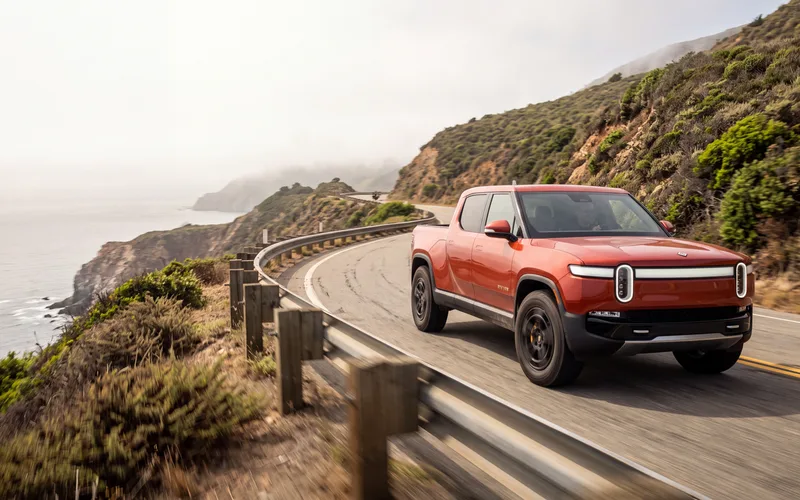 Rivian R1TFull-Size TruckBetter at: All-around value
It delivers nearly the same adventure capability with better range, better manners and a far friendlier price, making it the default choice for most Hummer cross-shoppers.
Compare 2.60C+
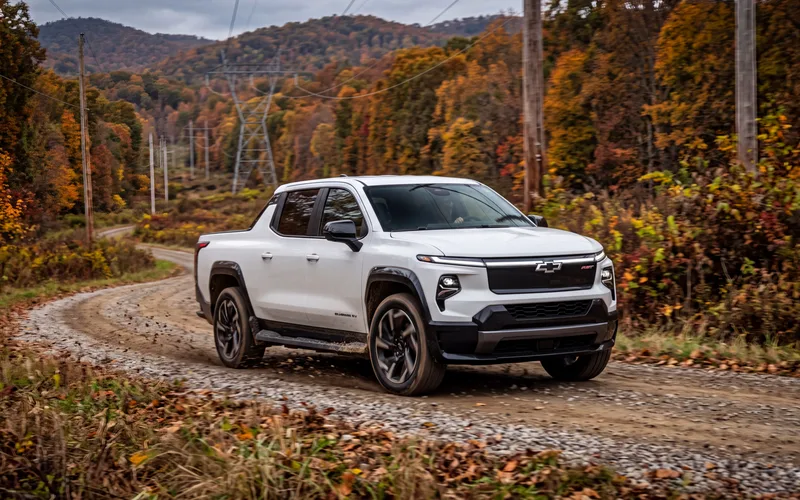 Chevrolet Silverado EVFull-Size TruckBetter at: Truck capability
Same GM electric hardware for roughly $30,000 less, with over 10,000 lbs of towing, a longer bed and much better efficiency.
Compare 2.21C
2.21C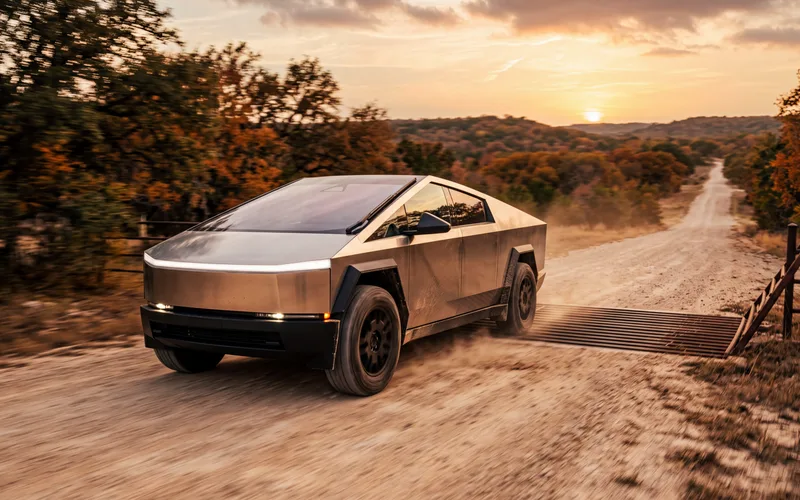 Tesla CybertruckFull-Size TruckBetter at: Road-trip charging
Equally attention-grabbing but cheaper, more efficient, and backed by the Supercharger network for real road-trip use.
CompareHow it's evolved
4 scored model years · 2023–2026
Subject scores by year
Hover or tap a score to see what moved it versus the year before. A corner mark flags a big swing.
| Year | Performance | Efficiency | Safety | Space | Cost | Reliability | Tech | Use-case | Driving | Value |
|---|---|---|---|---|---|---|---|---|---|---|
| 2026 | 71 | 67 | 70 | 70 | 14 | 54 | 71 | 68 | 75 | 61 |
| 2025 | 71 | 67 | 70 | 70 | 14 | 52 | 71 | 68 | 75 | 61 |
| 2024 | 71 | 68 | 62 | 59 | 15 | 50 | 73 | 68 | 75 | 62 |
| 2023 | 71 | 68 | 63 | 59 | 11 | 47 | 73 | 58 | 66 | 58 |
Compare two years
Best fit & conditions
Higher scores mean a better fit for that use case. Learn more about use-case fit →
Subject profile
Detailed scoring by subject
1Performance & PowertrainOne of the Hummer EV's strongest categories.2.83B-
3X tri-motor is the volume trim after the Edition 1 sold out; 2X entry dual-motor lists 570 hp. Both are at or above the truck-segment 800 hp normalization cap.
Combined motor torque of the Ultium tri-motor powertrain used for apples-to-apples comparison; GMC's headline 11,500 lb-ft is wheel torque including reduction gearing, not comparable to ICE crank torque.
3X tri-motor volume trim runs to 60 mph in the low-3s with Watts to Freedom launch mode engaged; 2X is closer to 5 seconds. Edition 1's 3.0 s claim no longer applies as it is no longer in the lineup.
Ultium tri-motor delivery is silent and instantaneous with no lag or coarseness; reviewers universally cite the EV powertrain as one of the Hummer's strongest attributes. Deducted a few points because the ~9,000+ lb mass slightly blunts initial hit relative to lighter EV trucks.
Single-speed direct-drive EV gearboxes at each axle produce seamless power delivery with no shifts to hunt or clunk. One-pedal driving and regen modes behave predictably.
Class III hitch limits max tow to 7,500 lbs — modest for a full-size truck because the ~9,000+ lb curb weight consumes most of the GCWR headroom. Well below ICE full-size rivals and the Silverado EV/Ram 1500 REV.
Payload is squeezed by the enormous curb weight against the medium-duty GVWR ceiling. Near the bottom of the truck normalization band; this is the Hummer EV's biggest utility weakness.
Standard integrated trailer brake controller, tow/haul mode, hitch guidance and multi-camera views including rear view during towing. Lacks the advanced trailer profile library and In-Vehicle Trailering App maturity of the Sierra/Silverado ICE trucks, and no Super Cruise trailer-tow support.
e4WD standard on every Hummer EV trim; 3X adds a third motor for true torque vectoring and locking front/rear e-diffs. CrabWalk 4-wheel steering and dedicated Terrain modes elevate the drivetrain sophistication well above class norms.
Adaptive air suspension with Extract Mode raises ground clearance to ~15.9 in with 35-in tires, 44.3° / 33.7° approach/departure angles, underbody armor, front and rear e-lockers, CrabWalk, and Terrain Mode. Genuinely elite off-road hardware — beyond Raptor/TRX credentials on paper.
EV-only architecture with two motor configurations (dual-motor 2X and tri-motor 3X). No gas, diesel, hybrid, or PHEV option — a deliberate single-powertrain lineup. Buyers who need range flexibility have no alternative within the model.
2Efficiency & RangeMid-pack among this car's ten categories.2.54C+
2025 is a carry-over year — Wikipedia records no refresh between the EV3X's 2023 introduction and 2025, and the 3X still ships with the 20-module (~173 kWh) Ultium pack as standard. EPA certified that volume configuration at 52 MPGe combined. It remains the least efficient EV sold in the US at 65 kWh/100 mi, a direct consequence of a ~9,000 lb curb weight and a shape with no aerodynamic ambition.
58 MPGe in the city is this truck's strongest number — regenerative braking and one-pedal driving claw back a real share of what it costs to move nine thousand pounds away from every stop light. It still sits at the bottom of the EV field, where 90+ MPGe city is ordinary.
46 MPGe highway is the worst figure in the electric-pickup field and the number that governs how the truck actually road-trips: the flat face and 35-inch all-terrains dominate above 60 mph, so highway range falls well short of the combined rating. The mud-terrain Extreme Off-Road configuration drops to 43 MPGe.
312 EPA miles out of the ~173 kWh standard pack — a battery larger than two Ioniq 5s that yields ordinary range, because efficiency, not capacity, is the binding constraint here. It trails every serious EV-truck rival, and the mud-terrain off-road build gives back another 23 miles. The optional 24-module pack lifts GM's own estimate to 363 mi but is not the volume configuration and is offered only on the 3X.
The headline 350 kW figure GMC advertises for the Pickup belongs to the 24-module battery; the volume 3X on the standard 20-module pack accepts 300 kW. That is still near the top of the EV-truck field — an 800V architecture doing what 400V rivals cannot — and it is the one place the enormous pack works in the owner's favor, since 300 kW into a 173 kWh battery buys back a lot of miles per minute.
GM publishes a 20–80% time and a miles-per-minute claim rather than a 10–80% figure, so this is derived — but the 10–80% window is strictly larger than the published 42-minute 20–80% one, and the extra 10→20% segment is ~17 kWh even at near-peak power, which puts the real number near 46 minutes. That is among the longest sessions in the segment, simply because the battery is enormous; the consolation is what the minutes buy — roughly 190 miles, more than most EVs gain in a full session. Corrected upward from the prior scorecard's 43 min, which was internally inconsistent with GM's own 42-minute 20–80% figure (it implied the 10→20% slice took about a minute, which would require over 1,000 kW).
The EPA label puts home-charging energy at $1,450 a year — roughly a third of what a gas full-size truck costs to fuel, but still the most expensive EV pickup to keep charged, about 40% more per mile than an F-150 Lightning.
There is no fuel grade to think about and every mile is far cheaper than gasoline, and the onboard AC module refills the pack overnight — EPA lists 11.2 hours at 240V, which is a full charge of a pack nearly twice the size of a normal EV's. What holds the score below the EV leaders is appetite rather than inconvenience: 65 kWh/100 mi is the highest consumption of any EV on sale, so the electricity bill runs meaningfully above a Lightning's or a Silverado EV's, and reaching the quoted 19.2 kW Level 2 rate needs a 100A circuit most garages do not have. Scored beneath the Silverado EV (80) and F-150 Lightning (92), which offer the same convenience without the draw.
3SafetyGrades above the middle of the scale.2.73B-
NHTSA has not crash-tested the 2025 Hummer EV Pickup; its GVWR sits above the ~10,000-lb NCAP cutoff, so no star rating exists. Placeholder value assumed at the segment midpoint pending any future test.
IIHS has not tested the 2025 Hummer EV — it exceeds their vehicle testing class thresholds and no crashworthiness ratings exist. Sheer mass (~9,000 lb curb) benefits occupant protection in most collisions, but the absence of any formal award or crashworthiness data forces a neutral, untested score.
Buick/GMC Pro Safety Plus is standard across all 2025 Hummer EV trims: Forward Collision Alert, Automatic Emergency Braking, Front Pedestrian Braking, Lane Keep Assist with Lane Departure Warning, IntelliBeam auto high beams, and Following Distance Indicator, plus standard adaptive cruise control and Rear Park Assist. Blind Zone Alert with trailer-aware coverage is standard on EV3X.
GM's radar+camera AEB with pedestrian detection is capable in reviews, but the Hummer's ~9,000-lb mass extends stopping distances materially and no IIHS front crash prevention testing exists to verify nighttime or vulnerable-road-user performance.
Blind Zone Alert with Lane Change Alert is standard on EV3X (optional on EV2X) and includes trailer-aware coverage; Rear Cross Traffic Braking with active intervention and Reverse Automatic Braking are available. The active-braking cross-traffic system elevates coverage above alert-only rivals.
Basic Lane Keep Assist is standard; on Super Cruise-equipped trims the lane centering is among the smoothest and most confident systems reviewers evaluate. The regular LKA is functional but the real strength is Super Cruise-grade centering on 3X.
Full-speed-range adaptive cruise with stop-and-go is standard, and Super Cruise on EV3X delivers a highly integrated highway assist that reviewers rate above competing hands-on systems. Behavior in traffic is refined, though the vehicle's mass shows in slightly earlier braking commands.
Super Cruise is standard on EV3X (available on EV2X) with automatic lane change, hands-free trailering, and coverage of ~750,000 miles of North American compatible roads — one of the two most mature production hands-free systems, comparable to Ford BlueCruise but with broader mapped coverage.
LED headlamps with IntelliBeam automatic high beams are standard across the 2025 range and reviewers praise the projector reach for a truck. No IIHS headlight rating exists (untested class), preventing a higher score.
Natural sightlines are poor: extremely high beltline, thick A/B/C pillars, tall hood that hides low obstacles, and a small rear window blocked in part by the removable Infinity Roof T-tops. GMC compensates aggressively with UltraVision — 18 camera views including underbody/transparent-hood views — which reviewers say partially rescues low-speed visibility but does not solve the highway blind zones.
The 2025 Hummer EV Pickup has a full crew-cab rear bench with LATCH anchors at outboard positions and generous rear-door openings and legroom that ease seat installation. However, the extreme ride height means loading a child requires lifting the seat and child well above shoulder level, and the rigid, heavily contoured rear bench cushions can complicate tight base attachment.
4Space & ComfortGrades above the middle of the scale.2.71B-
Hummer EV Pickup is offered exclusively as a 5-passenger crew cab across 2X, 3X and Omega Edition trims for 2025; Edition 1 sold out before 2025.
Tall, upright cabin delivers class-leading front headroom for a full-size truck; Infinity Roof panels can be removed but published spec is with panels installed. Unchanged since 2022 launch.
Wide flat-floor Ultium architecture yields generous front legroom near the top of the full-size truck range; unchanged for 2025.
Boxy roofline preserves strong rear headroom — among the best in class for a crew-cab pickup. Carryover for 2025.
Battery-pack floor and packaging constraints hold rear legroom to mid-pack — comfortably adult-usable but well short of Silverado 1500 crew cab (43.4 in) or Rivian R1T (~43.8 in).
Hummer EV Pickup uses a single fixed 5-foot cargo box — shortest in the full-size class, dictated by wheelbase packaging around the massive Ultium battery. Single-piece tailgate only (no MultiPro).
5-foot bed with generous width and depth yields mid-pack cargo volume; the 11.3 cu ft lockable frunk adds practical storage but is measured separately. Well below F-150 / Silverado 1500 5.5-ft crew-cab beds (~62 cu ft).
Genuinely innovative: 11.3 cu ft lockable eTrunk (frunk) with drain, removable Infinity Roof sky panels with dedicated frunk storage bag, deep center console, and bed-mounted 120V outlets. Falls short of Rivian's Gear Tunnel for outright cleverness.
Front seats are power-adjustable with heat, ventilation and massage on 3X and Omega Edition; wide cushions praised for long-haul comfort. Rear bench is flat and slightly upright — a mild weak point that keeps this below the class best.
Adaptive air suspension plus 4-wheel steering deliver a surprisingly composed ride for a 9,000+ lb truck; body motions are well controlled and unladen ride is far smoother than any leaf-sprung full-size. Sheer mass telegraphs sharp expansion joints and the 35-inch (37s on 3X) off-road tires add secondary jiggle.
Silent EV powertrain and thick laminated glass yield a quiet highway cabin; aggressive off-road tires generate more road roar than a Silverado EV or Rivian R1T on all-seasons, and the removable Infinity Roof adds mild wind noise vs a fixed roof.
Standard heated + ventilated front seats, heated rear seats, heated steering wheel, and dual-zone auto climate across the range; 3X adds massage front seats and premium leather. Remote pre-conditioning via myGMC app; Infinity Roof provides an open-air option no rival full-size offers.
5Cost of OwnershipThe Hummer EV's lowest-graded category.0.00F
The 2025 Hummer EV Pickup opens with the 2X trim; higher-spec 3X pushes to roughly $105k, and remaining Edition 1 inventory was ~$110k+. Well above the truck-segment MSRP band ceiling.
The 3X is the mid/volume configuration most buyers order for tri-motor drive and full feature content. Well above the truck-segment volume-trim price band ceiling.
EV drivetrain eliminates oil and transmission service, but the Hummer's ~9,000 lb curb weight and 35" all-terrain tires wear fast and cost $400–$700 each to replace, offsetting much of the EV savings.
Hummer EV depreciation has been steep — high transaction price, EV-tax-credit pressure on the used market, and softening luxury-EV demand put 5-year retention well below the truck-segment band floor.
GM standard bumper-to-bumper coverage; at the floor of the truck-segment band, matching Chevy/Ford/Ram.
Federally mandated 8-year/100k EV battery coverage applies; GM's separate powertrain warranty on non-EV parts is 5 yr / 60k. Using the EV battery/drivetrain term as the meaningful powertrain figure for an all-electric truck.
Coverage is modest: one included scheduled maintenance visit, 3-year OnStar/connected-services trial, 5-year Super Cruise trial on equipped trims, and Ultium Charge 360 access with limited third-party charging credits. Better than nothing, but no multi-year included maintenance program.
$105,545 volume-trim price minus its estimated resale value after 5 years (40% retained, or about $42,218) leaves about $63,327 in depreciation. Add the projected $5,800 in 5-year maintenance and repairs, and owning this vehicle for 5 years costs about $69,127 in total.
6Reliability & QualityOne of the Hummer EV's weakest categories.1.48D
Consumer Reports has rated the Hummer EV pickup below average in predicted reliability across its first three model years, with owner-reported problems concentrated in in-car electronics, drive system, and power equipment. The 9,000-lb curb weight stresses tires, bushings, and brakes, and the 2025 model still lacks the multi-year track record other EV trucks are beginning to establish. Early build issues have not yet fully worked out of the fleet.
GMC sits mid-pack in J.D. Power Vehicle Dependability Study and Consumer Reports brand rankings — typically in the middle third of the industry, better than sibling Chevrolet but well behind Lexus, Toyota, and Buick leaders. GM's Ultium-based EVs are still building their own track record separate from ICE brand history.
The Hummer EV has accumulated multiple recalls since 2022, including a 2023 stop-sale for a battery-pack seal that could allow water intrusion into Ultium modules (affecting SUV and pickup), a tailgate/CargoCam CHMSL recall, and several software recalls for the infotainment and driver display. Recall frequency for the 2025 model year is above what a mature nameplate would show and shows a still-immature engineering picture.
The Ultium platform and the triple-motor Hummer EV drive units are still relatively new (in production since late 2021) and unproven at high mileage. GM's earlier LG-cell battery fires on the Bolt EV hurt confidence in its EV battery pedigree; Ultium modules avoid those cells but shipped with the 2023 seal defect. No red-flag design flaws are known in the 2025 drive units, but there is no long-mileage track record either.
The 2025 Hummer EV pickup cabin is competent — leather upholstery on higher trims, real metal accents, and a large 13.4-inch touchscreen — but reviewers consistently note the interior does not feel commensurate with a $100k+ price. Many switches and plastics are shared with less expensive GM trucks, and the design leans utilitarian rather than luxurious.
Assembly at Factory Zero is generally solid, with tight panel gaps expected at this price, but reports of scattered rattles, misaligned trim, and cargo-tunnel water intrusion have persisted through 2025 builds. GM has tightened processes as volume ramped, but J.D. Power Initial Quality Study scores for the model remain below the segment average.
GMC has roughly 1,700 US dealers giving strong geographic coverage, but only a subset are certified Hummer EV service centers, and complex EV-specific repairs (battery pack, drive units) require enrolled facilities. Owner reports on forums cite long waits and truck-shuttle programs for major EV work in 2025.
A full Ultium pack replacement runs into six figures out of warranty, drive-unit swaps are dealer-only, and body panels for a low-volume $100k+ truck carry premium pricing with limited stock. Aftermarket support is essentially nonexistent versus mainstream trucks. Insurance loss data through 2025 continues to reflect very high repair severity.
7Technology & InfotainmentOne of the Hummer EV's strongest categories.2.79B-
2025 Hummer EV Pickup uses the same 13.4-inch diagonal center touchscreen fitted since launch on the Ultium platform; no larger 17.7-inch unit is offered as on Silverado EV.
GM's Google Built-In system on the Ultium platform is fast and visually distinctive — Unreal Engine graphics render truck animations and off-road overlays with no perceptible lag. Menus are deep given the number of drive modes, CrabWalk, Watts to Freedom and off-road controls, but reviewers rate the underlying software among the better native systems.
GM excludes Apple CarPlay and Android Auto from its Ultium EVs, including the 2025 Hummer EV, in favor of Google Built-In. Owners who prefer phone projection are out of luck across every trim — a real minus regardless of how good Google Built-In is on its own.
Google Built-In means Google Assistant natural-language voice and native Google Maps with EV-aware routing (charger stops based on state of charge) — best-in-class replacement for the missing phone projection.
14-speaker Bose Performance Series audio is standard on Edition 1, 3X and 2X trims for 2025 — a premium system with dedicated subwoofer and headliner speakers that reviewers consistently rate as very good for the segment.
12.3-inch full-digital reconfigurable driver display standard on every 2025 trim, with truck-specific readouts (drive-mode graphics, off-road pitch/roll, EV energy flow). Crisp resolution and multiple layouts.
Ultium vehicles get full-vehicle OTA updates through GM's Vehicle Intelligence Platform — GMC has pushed feature-adding updates to Hummer EV since 2022 (drive-mode refinements, Super Cruise trailering, charging behavior). Not quite Rivian- or Tesla-frequency but genuinely whole-vehicle.
myGMC app plus Energy Assist covers remote lock/unlock, remote climate precondition, charge scheduling and monitoring, vehicle locator and diagnostics. Phone-as-key is available. Some remote features are behind a subscription after the trial (OnStar Connected Services).
Eleven USB-C ports throughout the cabin (front, rear seats, cargo area), wireless charging pad up front, plus integrated PowerBase with 120V household outlets in the bed and available V2H bidirectional charging via GM Energy PowerShift Charger. Among the best power-out setups in any truck.
Proximity keyless entry with push-button start standard, remote start/precondition via myGMC app, and GM Digital Key allows an iPhone or Android phone to act as the key and to be shared. The electric locking tailgate is remote-operable; no power tailgate.
UltraVision camera system provides up to 18 views including HD surround-view, front and rear underbody 'transparent trail' cameras for off-road, and multi-angle trailer views. Front and rear parking sensors standard. Class-leading camera package unchanged for 2025.
Head-up display is not offered on the 2025 Hummer EV Pickup on any trim — the tall dash and prominent 12.3-inch driver-display cluster substitute, but no HUD projection is available. A gap versus rivals like Ford F-150 and Silverado EV (though R1T also skips HUD).
8Use-Case FitMid-pack among this car's ten categories.2.62C+
Crew-cab layout with wide-opening rear doors and full LATCH anchors, but the ~15.9 in Extract Mode / ~11.9 in normal ground clearance and running-board-required step-in height turn every car-seat load into a lift. Flat, upright rear bench complicates tight base attachment, and 40.9 in of rear legroom is only mid-pack for a full-size truck.
Buick/GMC Pro Safety Plus (AEB, LKA, adaptive cruise, IntelliBeam) is standard on every 2025 trim and Super Cruise is standard on the volume 3X, but the Hummer's ~10,550 lb GVWR exceeds NHTSA/IIHS test cutoffs so no formal crash data exists. Extremely tall hood and thick pillars degrade forward visibility of small pedestrians despite UltraVision cameras.
Heated rear seats, dual-zone climate, wide cabin, Bose 14-speaker audio and removable Infinity Roof panels give a distinctive road-trip experience, but 314 mi EPA range on the volume 3X forces frequent charging stops on long trips and the flat rear bench is a step behind Rivian R1T for multi-hour comfort. No rear-seat entertainment provisions.
Silent Ultium powertrain, adaptive air suspension, one-pedal driving and Super Cruise on 3X make freeway commuting genuinely relaxing, and 4-wheel steering shrinks the turning circle to sedan-like figures. Undermined by poor natural outward visibility (tall beltline, thick pillars, Infinity Roof gaps), 86.7 in width and ~9,000+ lb mass that make lane discipline and low-speed traffic more work than in a Silverado EV.
Home-charging energy cost is roughly $1,800/yr per EPA — cheap versus any gas full-size truck — but insurance (~$3,500–$4,500/yr full coverage), fast-wearing 35-in ATs at $400–$700 each, and ~$100k replacement value pull all-in per-mile commuting cost well above segment average and behind the Silverado EV / R1T on total commuter math.
4-wheel steering including CrabWalk drops the turning circle to ~35.4 ft (better than many sedans) and UltraVision provides up to 18 camera views, which meaningfully rescues low-speed maneuvering. Nothing rescues the raw footprint though: 216.7 in long, 86.7 in wide excluding mirrors, and it simply will not fit in many urban spaces or parking structures.
Massive torque and standard e4WD, but 7,500 lb Class III towing and ~1,300 lb payload are modest for a full-size truck — well below Silverado EV (10,000+ lb tow), Ram 1500 REV, and even most ICE Silverados. Fixed 60-in short bed and range that drops 40–50% under tow further cap real-world work usefulness.
Luxury-oriented interior with premium leather and complex components (adaptive air suspension, 4-wheel steering, tri-motor drivetrain, aluminum body) that are all expensive to repair after work abuse. No GM Fleet program, no fleet track record, and 35–37-in tires wear fast under load — the opposite of a work-hardened truck.
Standout onboard power story: integrated 3 kW PowerStation with 120V household outlets in the bed, 11 USB-C ports, and optional GM Energy PowerShift bidirectional V2H — a jobsite generator in truck form. Held back by single-piece tailgate (no MultiPro), short 60-in bed, and a thin aftermarket upfit ecosystem compared to Sierra/Silverado 1500.
Silent Ultium powertrain, adaptive air suspension, wide comfortable front seats and Super Cruise hands-free (standard on 3X, with the largest mapped-road network in North America) make the 2025 Hummer a genuinely relaxed cruiser. 314 mi EPA range plus 800V / 350 kW DC fast charging handles road trips, but the range trails every serious EV-truck rival and 35-in tire roar intrudes at highway speeds.
Legitimately elite off-road credentials: adaptive air suspension with Extract Mode (~15.9 in clearance), 35-in (2X) or 37-in (3X) tires, front and rear e-lockers, CrabWalk 4-wheel steering, 44.3° approach / 33.7° departure, underbody armor, ~32 in water fording, plus removable Infinity Roof T-tops and bed-mounted 120V outlets for camp use. Only the Rivian R1T on 20-in-plus off-road tires rivals it, and none exceed it.
11.3 cu ft lockable eTrunk (frunk) plus 52.3 cu ft in the bed, standard Class III hitch, roof-rack provisions and removable Infinity Roof panels give real flexibility for adventure loads. The 60-in bed is the shortest in the full-size class though — long lumber, kayaks and rooftop tent + gear combinations are more compromised than in a Silverado EV or R1T.
9Driving ExperienceThe Hummer EV's best-graded category.3.11B
The 2025 Hummer EV Pickup's ~9,000+ lb curb weight overwhelms its chassis; standard adaptive air suspension and 4-wheel steering keep it composed at low speeds, but reviewers consistently describe pronounced body roll and quick-onset understeer at the limit. Well behind the Rivian R1T (85) despite comparably sophisticated hardware — the mass is the ceiling.
Quick-ratio electric power steering is direct and predictable on-center, with standard rear-wheel steering adding an unusual but manageable stability feel at speed. Weighting is well-tuned but feedback is muted — a class-typical result for a Big Three EV pickup, on par with Silverado EV / F-150 Lightning.
Six-piston Brembo front calipers and large rotors produce confident initial bite, but the mass produces long stops (~146 ft from 60 mph in instrumented tests) and regen blending is smooth but not best-in-class. Pedal feel is consistent and easy to modulate.
Tri-motor 3X (830 hp) architecture delivers instantaneous torque with no driveline lash, no shifts and no stop/start hiccups. Watts to Freedom launch mode is a party trick (~3.0-sec 0–60), and normal-mode tip-in is well calibrated for a 9,000+ lb truck. Trails only the Rivian R1T's slightly crisper calibration.
Motors themselves are near-silent, but the standard 35-in Goodyear Wrangler Territory MT off-road tires generate noticeable road roar at highway speed and some pattern noise around town. Cabin is otherwise well-isolated with typical EV serenity.
Standard 4-wheel steering (which also enables CrabWalk diagonal driving) shrinks the curb-to-curb turning circle to roughly 37 ft — remarkably tight for a truck this size and near the top of the truck-segment normalization band.
Tall H-point and short hood give a commanding view forward, and both seat and wheel offer wide adjustment ranges. However, the extreme overall width (~93.7 in with mirrors folded) and length compromise placement in tight lots, thick A-pillars pinch forward-quarter sightlines, and step-in is high without running boards.
Absurd straight-line thrust (Watts to Freedom), CrabWalk diagonal driving, Extract Mode ride-height adjust, and pure theater make it genuinely entertaining — but sheer mass and width limit back-road driving joy. Below the Rivian R1T (85) on enthusiast recommendation; ahead of the ICE Sierra 1500 as pure spectacle.
10Value & Market PositionOne of the Hummer EV's weakest categories.2.13C
The 2025 2X trim (~$99,995 MSRP) ships loaded: adaptive air suspension, four-wheel steering with CrabWalk, removable Infinity Roof panels, 13.4-inch infotainment, 12.3-inch driver display, Extract Mode, 800V DC fast charging, bidirectional PowerBase charging (added MY24), and the full active-safety suite. 3X adds Super Cruise and extra performance software. Content is exceptional in absolute terms, though calibrated against price rather than raw dollars.
At ~$100K-$120K, the 2025 Hummer EV commands a heavy premium versus Rivian R1T Dual/Tri ($72-95K), Silverado EV RST ($75-95K), and Cybertruck AWD ($80-100K) — rivals that deliver comparable or better range and efficiency for less. Content is generous but the dollars-per-feature math is unfavorable relative to the segment.
Only one cab (crew) and one bed length (~5 ft), with the pickup lineup narrowed to 2X and 3X for 2025 (Edition 1 sold out prior); limited Omega Edition and 3X Carbon Fiber Edition add flavor but not real choice. Buyers cannot spec a work-truck base, extended cab, or long bed as F-150 or Silverado 1500 shoppers can.
GM cut Factory Zero Hummer EV output twice through 2024-2025; combined pickup+SUV US sales tracked roughly 12-13k for 2024, well below original ~40k/yr targets, with pickup share the smaller portion. Slow-selling halo rather than a volume player, and 2025 saw further production slowdowns before the 2026 model year.
The Hummer sub-brand still carries genuine cultural cachet and the EV relaunch produced a real halo effect for GMC's premium positioning. Offset by polarizing ~9,000-lb footprint and efficiency criticism that has cooled enthusiast image since the 2022 launch peak.
Slow sales through 2024-2025 pushed GMC to advertise lease specials that passed through the $7,500 commercial-lease EV credit, plus GM Employee Pricing and periodic dealer discounts on aged inventory. Not desperation pricing, but meaningful buyer benefit versus 2022-2023 when Hummer EVs traded above MSRP.
Ultium-based current generation launched as a 2022 model, placing 2025 in its fourth model year — mid-cycle. Rolling updates (bidirectional PowerBase charging in MY24, expanded Super Cruise coverage, revised trim structure) keep the platform current, though no full refresh has arrived and it remains ahead of ICE full-size peers on platform tech.
Won 2022 MotorTrend Truck of the Year at launch with strong praise for engineering, four-wheel steering, and straight-line performance. Recent comparison tests through 2024-2025 place it behind Rivian R1T on livability and efficiency; it rarely wins current EV-truck head-to-heads, so reception is respectable but no longer segment-defining.