

The verdict
A mixed-report full-size truck, strong on efficiency and held back by ownership.
The 2026 Cybertruck is the most capable-feeling and most technologically advanced pickup you can buy, and the riskiest one to own. For about $81,400 delivered you get 600 hp, a 4.1-second 0-60, 11,000 lbs of towing, the best payload of any electric truck at 2,500 lbs, and roughly $1,300 a year in electricity where a gas half-ton burns three times that. The bill comes due on the ownership side: it has been among the fastest-depreciating vehicles in America (roughly 30% of sticker left after five years), insurance runs near $3,900 a year, Consumer Reports rates predicted reliability far below average, and the stainless body means a fender-bender goes to one of very few certified shops. Buy it because you want this specific truck; do not buy it expecting a rational financial case.
Jump to scoresStrengths
- Running costs that embarrass every gas pickup
- The best tech package in any truck, standard
- Effortless, seamless power delivery
What holds it back
- The worst money story of any truck on sale
- Reliability and build quality are the weakest in the segment
- One configuration, and familiar equipment simply isn't offered
Top alternatives
Cars shoppers cross-shop with the Tesla Cybertruck 2.44C+
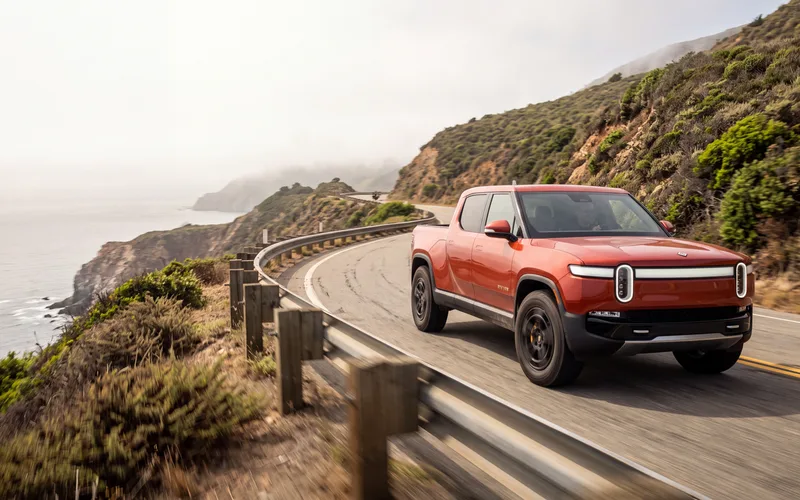 Rivian R1TFull-Size TruckBetter at: Resale value
Similar money buys a better-built, better-riding electric truck with dramatically stronger resale, if you can live with less payload and a smaller charging network.
Compare 2.60C+
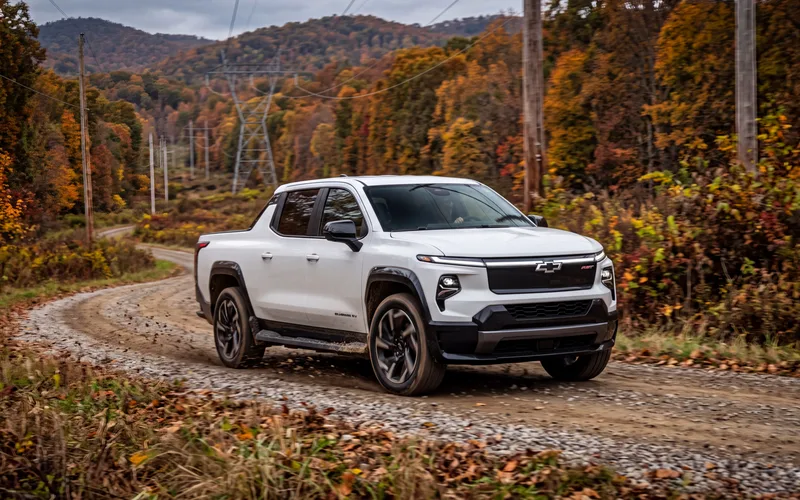 Chevrolet Silverado EVFull-Size TruckBetter at: Range and towing
Rated at 493 miles and 12,500 lbs of towing with a midgate and proper trailering aids, it's the electric truck that can actually do a full workday of towing.
Compare 2.33C+
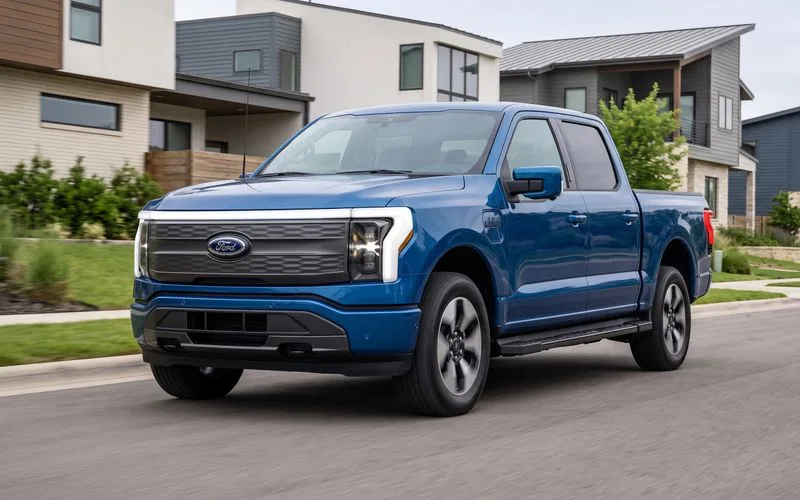 Ford F-150 LightningFull-Size TruckBetter at: Service access
Matches the Cybertruck's efficiency in a conventional truck body with normal controls and a nationwide dealer network behind it, usually for less money.
CompareProduction history
Best fit & conditions
Higher scores mean a better fit for that use case. Learn more about use-case fit →
Subject profile
Trims & configurations
3 trimsScores above reflect the volume trim. Per-trim specs and scores are rolling out — the full lineup:
Academic Probation · NHTSA safety recalls
Apr 21, 2026Service brakes, hydraulic: foundation components: disc: rotor · Wheels: lugs/nuts/bolts/studsThe brake rotor stud holes may crack and allow the stud to separate from the wheel hub.
Defect
Tesla, Inc. (Tesla) is recalling certain 2024-2026 Cybertruck vehicles equipped with 18-inch steel wheels. The brake rotor stud holes may crack and allow the stud to separate from the wheel hub.
Risk
Wheel stud separation can cause a loss of vehicle control, increasing the risk of a crash.
Remedy
Tesla Service will replace the front and rear brake rotors, hubs, and lug nuts, free of charge. Owner notification letters were mailed June 20, 2026. Owners may contact Tesla customer service at 1-877-798-3752. Tesla's number for this recall is SB-26-33-003.
NHTSA campaign 26V255000 ↗Manufacturer no. SB-26-33-003173 vehicles potentially affected (all models in the campaign)Owners notified Jun 20, 2026Filed by Tesla, Inc.Filed as CYBERTRUCKOct 14, 2025Electrical system: software · Exterior lightingThe vehicle controller software may cause the front parking lights to be too bright and exceed the maximum light output, adversely affecting the vision of other drivers. As such, these vehicles fail to comply with the requirements of Federal Motor Vehicle Safety Standard (FMVSS) number 108, "Lamps, Reflective Devices, and Associated Equipment."
Defect
Tesla, Inc. (Tesla) is recalling certain 2024-2026 Cybertruck vehicles operating software prior to 2025.38.3. The vehicle controller software may cause the front parking lights to be too bright and exceed the maximum light output, adversely affecting the vision of other drivers. As such, these vehicles fail to comply with the requirements of Federal Motor Vehicle Safety Standard (FMVSS) number 108, "Lamps, Reflective Devices, and Associated Equipment."
Risk
Parking lights that are too bright can reduce visibility of oncoming drivers, increasing the risk of a crash.
Remedy
Tesla released an over-the-air (OTA) software update, free of charge. Owner notification letters were mailed December 12, 2025. Owners may contact Tesla customer service at 1-877-798-3752. Tesla's number for this recall is SB-25-00-008.
NHTSA campaign 25V699000 ↗Manufacturer no. SB-25-00-00863,619 vehicles potentially affected (all models in the campaign)Owners notified Dec 12, 2025Filed by Tesla, Inc.Filed as CYBERTRUCK
9 recalls on other model years of the Cybertruck (2024–2025)
Oct 27, 2025Exterior lightingAn incorrect surface primer may have been used to attach the lightbar to the windshield, causing the light bar to loosen and detach.
Defect
Tesla, Inc. (Tesla) is recalling certain 2024 Cybertruck vehicles equipped with a service-installed off-road light bar accessory. An incorrect surface primer may have been used to attach the lightbar to the windshield, causing the light bar to loosen and detach.
Risk
A detached light bar may fall, creating a road hazard for other vehicles and increasing the risk of a crash.
Remedy
Tesla Service will inspect the light bar and install an additional mechanical attachment or replace the light bar using tape to adhere the light bar to the windshield as well as an additional mechanical attachment as necessary, free of charge. Owner notification letters were mailed April 9, 2026. Owners may contact Tesla customer service at 1-877-798-3752. Tesla's number for this recall is SB-25-90-001.
NHTSA campaign 25V735000 ↗Manufacturer no. SB-25-90-0016,197 vehicles potentially affected (all models in the campaign)Owners notified Apr 9, 2026Filed by Tesla, Inc.Filed as CYBERTRUCKMar 18, 2025Structure: bodyThe light bar can delaminate and detach from the vehicle.
Defect
Tesla, Inc. (Tesla) is recalling certain 2024-2025 Cybertruck vehicles. The light bar can delaminate and detach from the vehicle.
Risk
A detached light bar can become a road hazard, increasing the risk of a crash.
Remedy
Tesla service will replace the cant rail assembly, free of charge. Owner notification letters were mailed September 19, 2025. Owners may contact Tesla customer service at 1-877-798-3752. Tesla's number for this recall is SB-25-10-001.
NHTSA campaign 25V170000 ↗Manufacturer no. SB-25-10-00146,096 vehicles potentially affected (all models in the campaign)Owners notified Sep 19, 2025Filed by Tesla, Inc.Filed as CYBERTRUCKDec 17, 2024Tires: pressure monitoring and regulating systemsThe tire pressure monitoring system (TPMS) warning light may not remain illuminated between drive cycles, failing to warn the driver of low tire pressure. As such, these vehicles fail to comply with the requirements of Federal Motor Vehicle Safety Standard number 138, "Tire Pressure Monitoring Systems."
Defect
Tesla, Inc. (Tesla) is recalling certain 2024 Cybertruck, 2017-2025 Model 3, and 2020-2025 Model Y vehicles. The tire pressure monitoring system (TPMS) warning light may not remain illuminated between drive cycles, failing to warn the driver of low tire pressure. As such, these vehicles fail to comply with the requirements of Federal Motor Vehicle Safety Standard number 138, "Tire Pressure Monitoring Systems."
Risk
Driving with improperly inflated tires increases the risk of a crash.
Remedy
Tesla released an over-the-air (OTA) software update, free of charge. Owner notification letters were mailed February 15, 2025. Owners may contact Tesla customer service at 1-877-798-3752. Tesla's number for this recall is SB-24-00-018.
NHTSA campaign 24V935000 ↗Manufacturer no. SB-24-00-018696,281 vehicles potentially affected (all models in the campaign)Owners notified Feb 15, 2025Filed by Tesla, Inc.Filed as CYBERTRUCKNov 5, 2024Electrical system: propulsion system: inverterA fault in the drive inverter may cause a loss of drive power to the wheels.
Defect
Tesla, Inc. (Tesla) is recalling certain 2024 Cybertruck vehicles. A fault in the drive inverter may cause a loss of drive power to the wheels.
Risk
A loss of drive power can increase the risk of a crash.
Remedy
Tesla service will replace the drive inverter, free of charge. Owner notification letters were mailed January 4, 2025. Owners may contact Tesla customer service at 1-877-798-3752. Tesla's number for this recall is SB-24-40-009.
NHTSA campaign 24V832000 ↗Manufacturer no. SB-24-40-0092,431 vehicles potentially affected (all models in the campaign)Owners notified Jan 4, 2025Filed by Tesla, Inc.Filed as CYBERTRUCKSep 26, 2024Back over prevention: softwareThe rearview camera image may be delayed after shifting into reverse. As such, these vehicles fail to comply with the requirements of Federal Motor Vehicle Safety Standard (FMVSS) number 111, "Rear Visibility."
Defect
Tesla, Inc. (Tesla) is recalling certain 2024 Cybertruck vehicles. The rearview camera image may be delayed after shifting into reverse. As such, these vehicles fail to comply with the requirements of Federal Motor Vehicle Safety Standard (FMVSS) number 111, "Rear Visibility."
Risk
A delayed rearview image reduces the driver's view of what is behind the vehicle, increasing the risk of a crash.
Remedy
Tesla released an over-the-air (OTA) software update, free of charge. Owner notification letters were mailed November 25, 2024. Owners may contact Tesla customer service at 1-877-798-3752. Tesla's number for this recall is SB-24-00-016.
NHTSA campaign 24V718000 ↗Manufacturer no. SB-24-00-01627,185 vehicles potentially affected (all models in the campaign)Owners notified Nov 25, 2024Filed by Tesla, Inc.Filed as CYBERTRUCKJun 19, 2024Structure: bodyThe trunk bed trim sail applique could have been improperly adhered and can loosen.
Defect
Tesla, Inc. (Tesla) is recalling certain 2024 Cybertruck vehicles. The trunk bed trim sail applique could have been improperly adhered and can loosen.
Risk
A loose applique can detach from the vehicle, creating a road hazard for following motorists and increasing the risk of a crash.
Remedy
Tesla service will apply adhesion promoter and pressure sensitive tape or replace missing applique as necessary, free of charge. Owner notification letters were mailed August 18, 2024. Owners may contact Tesla customer service at 1-877-798-3752. Tesla's number for this recall is SB-24-12-006.
NHTSA campaign 24V457000 ↗Manufacturer no. SB-24-12-00612,150 vehicles potentially affected (all models in the campaign)Owners notified Aug 18, 2024Filed by Tesla, Inc.Filed as CYBERTRUCKJun 19, 2024Visibility: windshield wiper/washer: motorExcessive electrical current can cause the front windshield wiper motor controller to fail.
Defect
Tesla, Inc. (Tesla) is recalling certain 2024 Cybertruck vehicles. Excessive electrical current can cause the front windshield wiper motor controller to fail.
Risk
Windshield wiper failure can reduce visibility, increasing the risk of a crash.
Remedy
Tesla service will replace the wiper motor, free of charge. Owner notification letters were mailed October 1, 2024. Owners may contact Tesla customer service at 1-877-798-3752. Tesla's number for this recall is SB-24-17-006.
NHTSA campaign 24V456000 ↗Manufacturer no. SB-24-17-00611,688 vehicles potentially affected (all models in the campaign)Owners notified Oct 1, 2024Filed by Tesla, Inc.Filed as CYBERTRUCKApr 17, 2024Vehicle speed control: accelerator pedalThe accelerator pedal pad may dislodge and cause the pedal to become trapped by the interior trim.
Defect
Tesla, Inc. (Tesla) is recalling certain 2024 Cybertruck vehicles. The accelerator pedal pad may dislodge and cause the pedal to become trapped by the interior trim.
Risk
A trapped accelerator pedal can cause the vehicle to accelerate unintentionally, increasing the risk of a crash.
Remedy
Tesla service will replace or repair the accelerator pedal assembly, free of charge. Owner notification letters were mailed June 18, 2024. Owners may contact Tesla customer service at 1-877-798-3752. Tesla's number for this recall is SB-24-33-003.
NHTSA campaign 24V276000 ↗Manufacturer no. SB-24-33-0033,878 vehicles potentially affected (all models in the campaign)Owners notified Jun 18, 2024Filed by Tesla, Inc.Filed as CYBERTRUCKJan 30, 2024Electrical system: instrument cluster/panelAn incorrect font size is displayed on the instrument panel for the Brake, Park, and Antilock Brake System (ABS) warning lights. As such, these vehicles fail to comply with the requirements of Federal Motor Vehicle Safety Standard number 105, "Hydraulic and Electric Brake Systems" and 135, "Light Vehicle Brake Systems."
Defect
Tesla, Inc. (Tesla) is recalling certain 2012-2023 Model S, 2016-2024 Model X, 2017-2023 Model 3, 2019-2024 Model Y, and 2024 Cybertruck vehicles. An incorrect font size is displayed on the instrument panel for the Brake, Park, and Antilock Brake System (ABS) warning lights. As such, these vehicles fail to comply with the requirements of Federal Motor Vehicle Safety Standard number 105, "Hydraulic and Electric Brake Systems" and 135, "Light Vehicle Brake Systems."
Risk
Warning lights with a smaller font size can make critical safety information on the instrument panel difficult to read, increasing the risk of a crash.
Remedy
Tesla began releasing an over-the-air (OTA) software update, free of charge. Owners may contact Tesla customer service at 1-877-798-3752. Tesla's number for this recall is SB-24-00-003.
NHTSA campaign 24V051000 ↗Manufacturer no. SB-24-00-0032,193,869 vehicles potentially affected (all models in the campaign)Owners notified Feb 21, 2024Filed by Tesla, Inc.Filed as CYBERTRUCK
Source: NHTSA Office of Defects Investigation recall database, model years 2024–2026. Recalls are listed by model year as the manufacturer filed them; whether a specific car is affected depends on its VIN — check a VIN at nhtsa.gov ↗. NHTSA model names matched to this page: CYBERTRUCK.
Detailed scoring by subject
1Performance & PowertrainOne of the Cybertruck's strongest categories.2.94B-
Scored on the dual-motor All-Wheel Drive trim, the volume configuration since launch and the middle rung of the lineup. 600 hp clears every gas half-ton comfortably but sits below the Hummer EV 3X (830 hp) and the tri-motor Cyberbeast halo above it in Tesla's own range.
Tesla publishes only wheel torque, which includes the axle reduction gearing and is not comparable to a crank figure, so the combined motor torque is derived from the published wheel torque and the drive-unit reduction ratio. Handled the same way as the Hummer EV entry (1,046 lb-ft motor torque vs 11,500 lb-ft marketed wheel torque) so the two remain comparable.
Tesla's claim for the dual-motor AWD, with instrumented tests landing at or just under it despite a curb weight near 6,800 lbs. Quicker than every gas half-ton and the Silverado EV LT, though the Cyberbeast's 2.6 s is the figure that actually leads the segment.
Dual-motor BEV delivery with no lag, no shift interruption and no combustion coarseness, and Tesla's throttle calibration is among the most linear and predictable in the class. Scored level with the Silverado EV (92) and just under the Hummer EV (93); the Cybertruck's lighter curb weight offsets the GM trucks' more polished NVH isolation.
Single-speed reduction gear per axle — nothing to hunt for and no shift shock. Tesla's one-pedal regen calibration is the class reference point and stays predictable under load, placing it just above the Silverado EV (93) and just below the Hummer EV (95).
11,000 lbs is competitive with a well-equipped gas half-ton and far clear of the Hummer EV's 7,500 lbs, but short of the Silverado EV LT (12,500 lbs) and the Ram 1500 REV's 14,000 lb target. As with every BEV truck, towing range collapses much harder than on a gas or diesel rival — a penalty that belongs in cat2, not here.
The strongest payload rating of any electric pickup on sale — well above the Silverado EV (~1,800 lbs) and nearly double the Hummer EV (~1,300 lbs) — because the stainless exoskeleton keeps curb weight far below its Ultium rivals. Still only mid-pack against a truck band set by heavy-duty-adjacent gas trucks. The prior placeholder value of 2,942 lbs overstated it.
Factory-integrated hitch with a built-in trailer brake controller, Trailer Mode that reconfigures the camera views and driver aids, and genuinely useful trailer-aware range estimation and charge-stop routing in the navigation. Held below the Silverado EV (86) and Ram 1500 REV (82) by the absence of trailer backup steering assist, onboard scales, a trailer profile library and transparent-trailer view; lands just below the Hummer EV (75).
Dual-motor AWD is standard on the volume trim and the Cyberbeast adds a second rear motor for true torque vectoring, with locking front and rear differentials, rear-wheel steering and adaptive air suspension supporting it. No two-speed transfer case or low range keeps it below the Hummer EV (94); it sits above the Silverado EV and Ram REV (84 each) on the strength of the lockers and four-wheel steer.
Real hardware for a BEV truck: adaptive air suspension with roughly 17 in of ground clearance at maximum lift, locking differentials front and rear, underbody armor over the pack, 35-in all-terrain tires as standard, and dedicated Overland and Baja modes. Well ahead of the Silverado EV (65) and Ram 1500 REV (66), but the mass, the lack of a low range, the vulnerable stainless bodywork and the absence of a spare tire keep it clear of the Hummer EV (95) and the gas Ram 1500 (87).
One powertrain type only — a single-speed BEV drivetrain — with buyer choice limited to motor count (dual-motor AWD or tri-motor Cyberbeast) rather than powertrain type. No gas, hybrid, PHEV or range-extended option exists or is planned. Scored a point or two above the Silverado EV (44), Ram 1500 REV (44) and Hummer EV (45) because the motor-count spread covers a genuinely wider performance range, but it is the same structural limitation.
2Efficiency & RangeThe Cybertruck's best-graded category.3.04B
EPA rates the 2026 Cybertruck AWD at 79 MPGe combined (43 kWh/100 mi), the best combined figure of any full-size electric pickup in this dataset — well clear of the Silverado EV (68) and Hummer EV (52), and the flat-sided body's 0.335 drag coefficient is the reason a 6,600-lb truck posts it. Re-verified against fueleconomy.gov for 2026; unchanged from the previous run.
85 MPGe city is the Cybertruck's strongest cycle, as regenerative braking recovers most of what a three-ton truck spends accelerating. Against the ev-truck band it lands near the top without clamping, behind only the lighter R1T.
Highway is the weakest cycle for any EV, but 72 MPGe is the second-best highway figure among electric full-size trucks here — the flat-sided body hides a 0.335 drag coefficient, the lowest of any production pickup, so the highway penalty is smaller than the shape suggests.
325 miles sits just below the middle of the ev-truck range band (230–430 mi) and is the Cybertruck's real efficiency weakness: it is efficient per mile but short-legged per stop, and worse under tow. The February 2026 lineup restructure did not change it — the new $69,990 base Dual Motor AWD, the $79,990 Premium AWD and the outgoing AWD all rate 325 mi — and no longer-range configuration is orderable, the Long Range RWD having been discontinued in September 2025 and the bed-mounted range extender cancelled with deposits refunded.
Tesla quotes 325 kW peak DC charging on every 2026 configuration including the new base Dual Motor AWD, near the top of the truck band and second only to the 350 kW Silverado EV and Hummer EV among electric pickups here. The 816V split pack reconfigures to 400V for compatibility with the broader Supercharger fleet, where the peak falls to about 250 kW.
The headline 325 kW peak holds for barely a minute and the 4680 pack tapers hard — ~290 kW at 20% state of charge, ~143 kW at 50%, ~95 kW at 80% — so the session average is only about 130 kW and 10–80% takes roughly 35 minutes. That is mid-pack: better than the Silverado EV and Hummer EV, level with the Rivian R1T, and far off the ~20 minutes an 800V Hyundai/Kia platform manages.
EPA puts annual energy cost at $950 — roughly a third of what a gas full-size truck burns and among the lowest of any electric pickup, a direct consequence of the class-leading 79 MPGe. Identical on the new base Dual Motor AWD.
No fuel-grade question at all, cheap overnight home charging, and native NACS access to the Supercharger network — the most reliable and widely deployed US fast-charging network, with no adapter needed, which is a genuine advantage over every rival electric pickup. Held short of the top of the band because a 123 kWh pack still needs the better part of a night on a home Level 2 circuit and the truck's 43 kWh/100 mi consumption makes road-trip Supercharging expensive per mile.
3SafetyMid-pack among this car's ten categories.2.37C+
NHTSA has no NCAP overall star rating on file for the Cybertruck; unlike the Hummer EV it sits under the 10,000-lb NCAP cutoff (GVWR ~8,000-9,000 lb by trim), so eligibility is not the barrier — it simply has not been published. Scored at the segment-neutral 4.0 stars used for the other untested electric full-size trucks in this set.
No IIHS crashworthiness ratings or award for the Cybertruck, and unlike the other untested EV trucks it carries documented structural concerns rather than a clean absence of data — which is the prompt's 'untested with known concerns' band.
Tesla does not tier driver-assist by trim: AEB, forward collision warning, lane departure avoidance, Autosteer lane centering and Traffic-Aware Cruise Control are standard on every Cybertruck, which is broader standard content than most full-size trucks offer at any price.
No IIHS front crash prevention result exists for the Cybertruck, and the camera-only Tesla Vision stack has a mixed record on the harder updated pedestrian and nighttime protocols; ~6,600 lb of mass also lengthens achievable stopping distances.
Blind-spot coverage is standard but alert-only and camera-derived, with no active steering intervention, no conventional rear cross-traffic braking, and — a real miss on a truck rated to tow five figures — no trailer-aware blind-spot extension.
Autosteer remains among the smoothest and most confident lane-centering systems on sale, holding center without the ping-ponging that reviewers flag on most truck systems — the clearest safety-tech strength in the Cybertruck's favor.
Traffic-Aware Cruise Control is full-speed-range with stop-and-go and integrates tightly with Autosteer into a genuine highway assist, but documented phantom-braking behavior on the camera-only stack keeps it out of the top band.
FSD (Supervised) on the Cybertruck's AI4 hardware permits hands-off operation under cabin-camera attention monitoring and is not geofenced to mapped highways, so road coverage far exceeds BlueCruise or Super Cruise — but it is a costly option rather than standard, and it operates under an open federal investigation.
No IIHS headlight rating exists for the Cybertruck, auto high beam is standard but there is no adaptive matrix beam, and the full-width light bar was the subject of a federal brightness non-compliance recall.
Natural sightlines are the worst in the segment — the rear-view mirror looks into a covered bed rather than out of the vehicle, the pillars are exceptionally thick and the beltline and hood are very high — and while the camera suite is comprehensive, a rearview-camera delay recall undercuts the case that cameras fully compensate.
The five-seat cabin has wide-opening rear doors, a flat floor and generous rear width that make seat installation and three-across attempts easier than in most crew cabs, but a tall step-in height makes lifting a child and seat into position awkward.
4Space & ComfortMid-pack among this car's ten categories.2.48C+
The Cybertruck is sold only as a five-passenger crew cab; there is no single-cab, extended-cab, front-bench or six-seat configuration, so seating is fixed across the 2026 lineup. That matches every full-size electric rival (Silverado EV, Hummer EV, R1T) and trails the six-seat front-bench configurations offered on gas F-150, Silverado 1500 and Ram 1500.
The roofline peaks directly above the front seats, so despite the Cybertruck standing only 70.5 in tall — roughly 5–7 in lower than a Silverado EV or F-150 SuperCrew — front occupants get competitive if not class-leading headroom. Tesla does not publish interior dimensions, so this is a third-party figure.
The 143.0 in wheelbase and flat skateboard floor give a generous front footwell, but the Cybertruck gives up about an inch to the roomiest full-size electrics (Silverado EV 44.8 in, Hummer EV 44.4 in). Reviewers consistently describe the front cabin as airy rather than tight.
This is the Cybertruck's clearest packaging compromise: the single-crease roof falls away sharply behind row one toward the bed, and the battery floor sits high, so rear headroom lands near the bottom of the full-size band despite the truck's exterior bulk. Physically consistent with a 70.5 in overall height — 6.5 in lower than a Silverado EV (39.9 in rear headroom) and 10 in lower than a Hummer EV (38.6 in).
Rear legroom is genuinely good and routinely praised, with a reclined backrest angle that beats the upright benches in most trucks, but it trails the best-in-class figures from the Silverado EV (44.3 in) and gas half-tons. Combined with the tight rear headroom, the back seat reads as spacious for legs and snug for heads.
Tesla sells a single 6-foot 'Vault', which splits the difference between the 5-ft-11-in Silverado EV and the 5-ft Hummer EV but falls well short of the 8-ft long boxes that define the top of the full-size band. There is no midgate, so unlike the Silverado EV the bed cannot be extended into the cabin.
Deep, straight, composite-lined bed walls and the lockable powered tonneau make the volume unusually usable, and 67 cu ft clears both the Silverado EV (60.4) and the Hummer EV (52.3) despite the modest 6-ft length. Only the R1T's bed-plus-gear-tunnel packaging beats it among electric trucks.
One of the most inventive storage packages in any truck: a lockable powered tonneau that turns the bed into a secure vault, a 7.1 cu ft frunk, under-bed and under-rear-seat compartments, fold-flat rear seats, an enormous center console bin, and bed outlets (120V and 240V) fed by Powershare bidirectional power that can also back up a house. It gives up ground only to the Silverado EV's Multi-Flex midgate and the R1T's gear tunnel, each of which solves a problem the Cybertruck cannot.
Broad, well-padded front buckets with heating and ventilation standard, and a rear bench that reviewers single out as comfortable and adult-friendly thanks to its reclined backrest. Held back by flat cushions with limited lateral support, no rear-seat cushion adjustment, and complaints about heat load through the fixed full-length glass roof on hot days.
The standard adaptive air suspension is composed on smooth pavement and keeps the nearly 7,000 lb body flat, but the Cybertruck is the least settled of the electric full-size trucks over broken surfaces — stiff-sidewall 35-in tires and high unsprung mass produce noticeable head toss and impact harshness that reviewers return to repeatedly, and the steer-by-wire rack amplifies the sense of busyness.
No engine or transmission noise, acoustic laminated glass and a low 0.34 drag coefficient keep wind noise well suppressed for a vehicle this square. Road roar from the 35-in all-terrain tires and some resonance off the flat stainless panels are the main intrusions at highway speed — quiet for a full-size truck, but not the library the Silverado EV is.
Essentially every comfort feature is standard rather than optional: heated and ventilated front seats, heated rear seats, heated steering wheel, a rear touchscreen with its own climate control, HEPA cabin filtration, and app-based remote pre-conditioning with Camp and Dog modes that hold cabin temperature indefinitely. Trim level changes nothing, which is the point.
5Cost of OwnershipThe Cybertruck's lowest-graded category.0.00F
With the Long Range RWD pulled from the US configurator in late 2025, the dual-motor All-Wheel Drive becomes the entry Cybertruck, and roughly $81,400 delivered sits just past the $80,000 ceiling of the truck band — so the item floors at 0. The $79,990 sticker was deliberately set at the federal truck price cap for the 30D credit, and that credit lapsed on 30 September 2025, so the number now stands with no offset behind it. A floored score does understate how close this is to the boundary: the Cybertruck is expensive, but it is not Hummer EV expensive.
With a two-trim lineup, the All-Wheel Drive is simultaneously the entry and the volume configuration — the Cyberbeast is a low-volume halo, and the bare stainless finish most buyers take is the no-cost option, so a typical build adds little over the base sticker. That lands near the top of the truck price band: a comparably equipped F-150 Lariat or Silverado LTZ undercuts it by $20,000-plus, and even a Rivian R1T Dual Large is close enough to make this a straight product comparison rather than a value one.
The best line in an otherwise punishing category, and for the usual EV reasons: no oil, no spark plugs, no transmission service, no exhaust, and one-pedal regenerative braking that leaves friction pads largely untouched even on a truck this heavy. Tesla publishes no fixed service intervals — only cabin filters, brake-fluid testing, tire rotation and a periodic A/C desiccant service. The offsets are unusually large for an EV, though: 35-inch LT-rated tires on a ~6,900 lb truck wear fast and cost roughly $1,500–$2,000 a set with limited fitment choice, out-of-warranty stainless-steel body and glass work is expensive and restricted to a thin certified-shop network, and the Cybertruck's early service record has been heavy on trim, drive-unit and 12V-system attention. Landing near the Silverado EV and Hummer EV rather than at the low end of the EV range reflects that.
This is the item that defines the Cybertruck's ownership case, and it is the weakest residual outlook of any vehicle in this dataset. First-year depreciation has run at or near the worst in the industry — Foundation Series trucks that stickered near $100,000 were trading in the $60,000s inside twelve months — and the pressures behind it have not eased: collapsing sales volume against built inventory, factory discounting and promotional financing that reprice the used fleet overnight, the removal of the $69,990 RWD variant, the loss of both the new and used federal EV credits, a dense recall record, and a buyer pool narrowed by the truck's polarizing design. Working slightly in the buyer's favour is that the remaining AWD starts from a lower sticker than the Foundation trucks that set the early depreciation record. Worth stating plainly: the truck band floors at 50% retention, and no defensible projection for this vehicle — anywhere from the mid-20s to the mid-40s — clears it, so the 0 here is robust to a very wide error bar.
Four years and 50,000 miles is mid-band: better than the 3-year/36,000-mile terms Ford, GM and Ram still offer on their pickups, and short of Rivian's 5-year/60,000-mile coverage. The mileage cap is the real constraint — 50,000 miles is thin for a truck, and thinner still for one whose owners are buying into cheap per-mile running costs.
Eight years is the term every EV sold in the US carries, so the duration is competitive rather than distinguishing — but the Cybertruck gets Tesla's most generous mileage cap at 150,000 miles, 30,000 more than a Model Y Long Range, and the explicit 70% capacity-retention floor converts vague degradation risk into a contractual guarantee. Because the normalization band reads years only, none of that mileage advantage reaches the score.
Tesla includes no complimentary scheduled maintenance of any kind — service is condition-based and owner-paid — and there is no standing free-charging entitlement. What comes with the truck is roadside assistance for the 4-year/50,000-mile basic term, a short Premium Connectivity trial before the roughly $10/month subscription, and substantive over-the-air updates. The Cybertruck does carry two genuine hardware perks its stablemates do not: the Powershare bidirectional adapter and mobile connector are included rather than optional, so vehicle-to-load is usable out of the box (full home backup still needs a Tesla gateway and Wall Connector at extra cost). That is enough to sit at the same floor-of-the-band level as the Model Y rather than below it, but well behind Rivian's charging-and-adventure perks or the included-maintenance programs at Genesis and BMW. Free-Supercharging and 0% APR offers have appeared repeatedly on Cybertruck inventory, but they are inventory-clearing promotions, not part of the standard offer, and should not be counted on.
$81,380 volume-trim price minus its estimated resale value after 5 years (30% retained, or about $24,414) leaves about $56,966 in depreciation. Add the projected $5,800 in 5-year maintenance and repairs, and owning this vehicle for 5 years costs about $62,766 in total.
6Reliability & QualityOne of the Cybertruck's weakest categories.0.58F
The Cybertruck is the weakest-scoring vehicle in Tesla's lineup on predicted reliability and one of the weakest in the market: Consumer Reports has rated it well below average and declined to recommend it, citing owner-reported trouble in body hardware, drive system, in-car electronics, power equipment and climate. Firmly in the below-average band and near its floor, well under every other truck in this dataset including the other unproven EV pickups.
Brand-level item, so it is held consistent with the other 2026 Tesla scorecards in this dataset (Model 3/S 54, Model Y 48): Tesla sits below the industry average in the major multi-year dependability studies, carried by the Model 3 and Model Y while the S, X and now Cybertruck pull the brand down. Bottom of the mid-pack band.
This generation has drawn roughly eight to nine NHTSA campaigns in its first eighteen months on well under 100,000 vehicles built — an exceptional rate — and crucially most required physical remedies rather than the OTA software fixes that soften Tesla's recall count elsewhere. Repeated and structural in nature, which is the definition of the sub-49 band.
Tesla's permanent-magnet and induction drive units are a proven, long-lived family and the single-speed layout has no clutch, belt or multi-speed gearbox to wear, which sets a floor. But almost everything around them in this truck is new and unproven: an ~800V-class structural pack architecture Tesla had not shipped before, a 48-volt low-voltage system, steer-by-wire in its first mass-production application, and a new inverter that has already been recalled twice for power-loss failures. Newer powertrain with real red flags — mid band, not the 79-84 the Model 3/S/Y earn on proven hardware.
Judged relative to price, which for a Luxury-class truck spanning roughly the $70k-$100k+ band is a demanding bar. The cabin is coherent and the large center and rear screens, synthetic-leather seating and open airy architecture present well, but the minimalist brief leaves broad expanses of hard plastic and exposed structural surfaces in the lower cabin, and reviewers consistently rate it below a Rivian R1T or a loaded domestic truck's top trim for material richness at the money. Middle of the competitive band.
Assembly consistency is this vehicle's signature criticism. The 30X cold-rolled stainless exoskeleton is difficult to fit to tight tolerance and early trucks drew widespread documented panel-gap and alignment complaints, plus owner reports of surface corrosion specking on the bare stainless. The ~46,000-unit exterior trim recall was itself an adhesive/assembly failure, and J.D. Power's Initial Quality Study places Tesla well above the industry problems-per-100 average. Frequent misalignment plus a systemic assembly recall puts this in the sub-49 band.
Same roughly 200-location company-owned US network and mobile-service fleet the other Teslas are scored against, but the Cybertruck is worse served by it: mobile service cannot address the body, panel and exoskeleton work this truck actually needs, and Cybertruck-specific jobs were concentrated at a subset of centers, producing long waits. Scored a notch under the Model Y's 50 for that reason — sparse coverage with a mixed-to-poor service reputation.
The worst repair economics of any truck in this dataset and worse than any other Tesla scored here. Stainless exoskeleton panels cannot be worked with conventional bodyshop technique, very few collision shops are certified and equipped for the vehicle, owners reported multi-week to multi-month waits on body panels, large structural castings turn moderate rear damage into a high-cost repair, there is effectively no aftermarket, and insurers priced the truck accordingly. Expensive, slow and dealer-only — bottom of the band.
7Technology & InfotainmentGrades above the middle of the scale.2.86B-
The Cybertruck's 18.5-inch landscape center display is the largest screen Tesla fits to any vehicle and is standard across AWD and Cyberbeast — it tops the full-size truck normalization band outright. The previous placeholder value of 16.3 in was wrong.
Tesla's UI remains the responsiveness benchmark — instant map panning, no boot lag, best-in-class graphics on a huge panel — but the Cybertruck concentrates nearly every function into it, and reviewers consistently penalize the steering-wheel turn-signal buttons and touchscreen-first drive selection versus the physical-control balance in a Ram or Silverado.
Tesla does not offer Apple CarPlay or Android Auto in any form — wired or wireless — on the Cybertruck or any other model. This is an absence by design, not an omission on lower trims, so it lands in the bottom band.
Tesla's native navigation with automatic Supercharger route planning, live stall availability and battery preconditioning is the strongest EV nav in the segment, and voice commands cover most vehicle functions. The Grok conversational assistant added by software update is capable at general queries but its vehicle-command coverage has been limited.
Tesla's in-house audio is unbranded but consistently rated among the best factory systems at the price, and the Cybertruck's sealed, thick-glassed cabin gives it a quiet platform to work from. The Cyberbeast adds speakers over the AWD's already-strong standard setup, so even the volume trim is well equipped.
The Cybertruck has no driver-facing gauge display of any kind — speed, range and driver-assist visualization all live on the left edge of the center touchscreen. That panel is crisp and configurable, but as a measure of instrument-cluster provision this is the bottom band: there is nothing in the driver's forward sightline.
Tesla defines the top of this item: frequent whole-vehicle over-the-air releases that have materially changed the Cybertruck since launch, touching powertrain calibration, driver assistance, charging behavior and infotainment features rather than just maps.
The Tesla app is the benchmark for this item — phone-as-key is the primary key, and remote climate, lock/unlock, locate, charge scheduling and limits, Sentry camera viewing and remote start are all included with no subscription for core functions.
Best in the segment. Beyond USB-C at both rows and wireless phone charging up front, Powershare provides 120V and 240V outlets in the bed plus cabin outlets, with bidirectional export capable of running tools or backing up a house — capability the gas full-size trucks can't match and that exceeds the other EV trucks' generator packages.
Phone-as-key is the standard primary key with walk-up unlock, backed by NFC key cards; the truck has no mechanical door handles at all, and the powered tonneau plus power frunk and tailgate are operable from the app or the screen. Deduction only for the electronic-release doors' dependence on vehicle power.
Camera hardware is strong — a full surround suite including a front bumper camera, valuable given the tall blunt nose, and a rear camera that substitutes for a mirror view blocked by the tonneau. It falls short of the GM trucks because Tesla deleted ultrasonic sensors fleet-wide, so proximity alerts are vision-derived and less precise at low speed, and there is no trailering camera suite of the kind GM offers.
No head-up display is offered on the Cybertruck at any trim or as an option. This matters more here than on most trucks because there is also no instrument cluster, leaving the driver with no forward-sightline information source at all.
8Use-Case FitGrades above the middle of the scale.2.70B-
The five-seat crew cab has rear doors that swing to near 90 degrees, a completely flat rear floor and the widest rear bench in the segment, so seat installation and three-across attempts are easier than in most crew cabs, and the lockable powered tonneau turns the bed into a weatherproof stroller vault. Against that, step-in height is high enough that lifting a child into a seat is awkward until the air suspension drops to Entry height, and the tapering roofline (38.7 in rear headroom, the worst in the truck set) crowds tall boosters.
Every ADAS feature families care about is standard rather than trim-gated — Autopilot, lane centering, adaptive cruise, cabin-radar child-presence detection — and there is no cheap trim that strips them out, which is the usual failure mode this item punishes. What holds it in the lower half is that the crash credentials families shop on simply do not exist: the Cybertruck carries no NHTSA overall rating and no IIHS crashworthiness results, blind-spot monitoring is alert-only with no trailer-aware extension or cross-traffic braking, and outward visibility is the worst in the segment.
Rear-seat amenities are genuinely strong for a pickup: a dedicated 9.4 in second-row touchscreen with its own climate control and streaming, heated rear seats, HEPA filtration, a reclined bench reviewers rate as adult-friendly, and a 67 cu ft lockable weatherproof vault that swallows a family's luggage with all five seats occupied. It falls short of the electric-truck benchmarks because the ride is the least settled in the class over broken pavement, rear headroom is tight for tall adults, and the fixed glass roof loads the cabin with heat on long summer legs.
Mechanically it is a relaxing commuter: silent, instant-torque one-pedal driving, an air suspension that self-lowers at speed and at entry, steer-by-wire with a variable ratio that needs well under a full turn lock-to-lock, and Autopilot doing the stop-and-go work in traffic. The friction is ergonomic rather than dynamic — the worst outward visibility in the segment, an impact-harsh ride on rough city surfaces, an 86.6 in body that fills a lane, and control consolidation onto the screen and wheel buttons that takes real acclimation.
Energy cost per commuting mile is outstanding for a full-size truck — roughly 66 MPGe combined and about $1,300 a year at home-charging rates, versus three times that for a gas half-ton — and there are no oil changes or exhaust-side consumables. It is kept out of the top band by the consumables that are not cheap: standard 35 in all-terrain tires wearing against nearly 7,000 lbs are a large recurring bill, and insurance runs well above the segment.
Rear-axle steering and the quick steer-by-wire rack give it a turning circle that shames most half-tons and make low-speed threading far less work than the footprint suggests, and the 360-degree camera suite is comprehensive. But it is one of the widest trucks on sale at 86.6 in of body (wider still across the mirrors) on a 223.7 in length, which is a real problem in older garages and structured parking, and the natural sightlines behind it are the worst in the segment — with the tonneau closed there is no through-vehicle rear view at all, so parking is camera-dependent rather than camera-assisted.
On paper it is a real work truck — 11,000 lbs of towing, a 2,500 lb payload that is the best of any electric pickup, and a drivetrain that pulls a heavy trailer with none of the downshift drama of a gas half-ton — and the 6 ft bed takes 4x8 sheet goods flat between the wheel wells with the tailgate down. What keeps it well below the gas half-tons is duty cycle rather than capacity: towing near the rating collapses range to roughly a third of the EPA figure, which turns a routine tow-and-return workday into a charging exercise, and there is only one bed length with no 8 ft or regular-cab option.
This is the Cybertruck's weakest use-case dimension by a wide margin. The stainless exoskeleton genuinely resists dents and corrosion and the composite bed is tough, but there is no fleet track record of any kind, the recall and fit-and-finish history is the worst in the truck set, body repair on structural stainless is expensive with a thin certified-shop network, there is no spare tire, and there is no vinyl-floor work trim — the cheapest Cybertruck is still an $80,000 luxury vehicle with a glass roof.
Onboard power is class-leading and is the whole argument here: 120V and 240V outlets in the bed fed by Powershare bidirectional output up to 11.5 kW will run corded tools or a small site all day, and the lockable powered tonneau makes the 67 cu ft bed a secure, weatherproof tool vault that no gas half-ton matches without an aftermarket cap. Bed lighting, rail tie-downs, an integrated tailgate ramp and washable composite surfaces round it out. It stops short of the top band because the upfit ecosystem barely exists — no factory ladder rack or service-body provision, drilling or welding the stainless exoskeleton is not a practical option, and the tonneau rails limit over-bed racking.
The road-trip case rests on the charging network rather than the range: 325 mi EPA is only mid-pack against a gas truck's tank, and a loaded Cybertruck at 75 mph will do meaningfully less, but Supercharger coverage and a fast 10-80% stop make the stops short and predictable in a way no other electric truck's route planning quite matches. The cabin is quiet, the ADAS reduces highway fatigue, and the lockable vault handles a week's luggage. Marks come off for the harsh ride over broken interstate, flat seat cushions on hour five, and solar heat load through the fixed glass roof.
The hardware is real: adaptive air suspension lifting to roughly 17 in, locking differentials front and rear, 35 in all-terrain tires standard, underbody battery armor and dedicated Overland and Baja modes, plus 11,000 lbs of tow rating for boats and toys. For camping it is close to ideal — Camp mode holds cabin climate indefinitely, the 240V bed outlet runs anything, and the rear seats fold flat. It is held out of the top band by weight on soft ground, the absence of a low range and of any spare tire, stainless bodywork that is expensive to damage on a trail, and the basic problem that the backcountry has no chargers.
Among the most flexible gear-haulers in the segment: a 67 cu ft bed that the powered tonneau converts into locked, dry, enclosed storage — the single best secure-cargo solution in any pickup — plus a 7.1 cu ft frunk, under-bed and under-seat compartments, fold-flat rear seats and a standard hitch, for roughly 120.9 cu ft of total stowage. The limits are the 6 ft bed with no longer option, sloped bed sides that pinch usable width up top, reduced vertical clearance with the tonneau closed, and no factory roof-rail or gear-tunnel equivalent.
9Driving ExperienceOne of the Cybertruck's strongest categories.3.04B
Standard adaptive air suspension plus up to ~10 degrees of rear-wheel steering give the dual-motor AWD (the 2026 volume configuration) far better body control and low-speed agility than its ~6,600–6,900 lb curb weight suggests, but all-terrain rubber caps grip in the low-0.8 g range and reviewers describe early understeer and heavy directional changes at the limit. Comfortably ahead of the Hummer EV Pickup (58) and the conventional full-size trucks, well short of the Rivian R1T (92).
The Cybertruck's steer-by-wire system has no mechanical link to the front wheels and uses a very quick variable ratio, so it never needs hand-over-hand inputs — genuinely useful in parking lots, but the weighting is synthesized and feedback is essentially absent, and the rate of response takes real acclimation on the highway. Below the Hummer EV's conventional quick-ratio rack (70) on feel.
Stopping distances are strong for the weight and tire type — instrumented 70-0 mph runs land near 180 ft on the factory all-terrains — but the brake-by-wire pedal blending friction and regenerative braking draws recurring criticism for inconsistent travel and a soft initial bite, and repeated hard stops heat-soak quickly given the mass.
Dual- and tri-motor drive units deliver instant, entirely stepless thrust with no shifts, stop/start, or driveline shunt — the Cyberbeast runs 0–60 mph in about 2.6 seconds and the volume AWD in roughly 4.1. Torque delivery and one-pedal calibration are among the best in any pickup; the only demerit is abrupt tip-in in the sportiest drive mode.
The powertrain itself is near-silent — no engine noise, minimal inverter whine even under full throttle, and no vibration through the controls. Scored below the best EVs only because at speed the all-terrain tire roar and wind noise off the flat stainless panels and near-vertical windshield are more intrusive than in the R1T or Silverado EV.
Standard rear-axle steering of up to ~10 degrees shrinks the turning circle to roughly 43.5 ft despite a 143.1 in wheelbase — near mid-size-truck maneuverability from a full-size footprint, and a large correction to the placeholder's segment-generic 49.4 ft.
Forward sightlines are excellent — a tall, upright seating position behind an enormous single-pane windshield — and seat and wheel adjustment range is generous. Everything else works against the driver: rearward vision through the bed is effectively camera-only, the thick sail pillars create large blind spots, the ~80 in body width makes lane and parking placement hard, turn signals are wheel-mounted buttons rather than a stalk (awkward mid-corner given the quick steer-by-wire ratio), and there is no instrument cluster, so every readout lives on the low-mounted center screen.
Supercar-quick acceleration, novel rear-steer agility, and genuine road presence make it an event to drive, and no rival pickup draws more attention. It falls short of the enthusiast benchmark because the steering tells the driver nothing, the mass is always present, and there is no aural character to enjoy — impressive rather than involving, and behind the R1T on the take-the-long-way-home test.
10Value & Market PositionOne of the Cybertruck's weakest categories.2.15C
There is effectively one specification level: the $79,990 All-Wheel Drive arrives with adaptive air suspension, rear-wheel steering, powered tonneau, 18.5-in center and 9.4-in rear touchscreens, heated/ventilated front and heated rear seats, and the Powershare bidirectional adapter — content that costs thousands extra on a Silverado EV or F-150 Lightning. Held below the mid-80s because Full Self-Driving is an $8,000 add-on, the standard Autopilot suite is thinner than Ford's or GM's hands-free systems, and there is no CarPlay/Android Auto at any price.
Raw capability per dollar is the strongest card in the electric-truck field: roughly 600 hp, ~325 mi of EPA range, ~11,000 lb towing, air suspension and rear-wheel steering for $79,990, and 845 hp with a 2.6-second 0-60 claim for $99,990 — where a comparably quick Hummer EV starts near $98,000. Marked down from the 80s rather than up because the ownership side of value is poor: industry-worst first-year depreciation, bottom-of-field predicted reliability, and a recall record dense enough to erode what the sticker saves.
This is close to a take-it-or-leave-it lineup: two powertrain trims for 2026 (All-Wheel Drive and Cyberbeast) after the $69,990 Long Range RWD was pulled from the US configurator on weak demand, one body — crew cab with a fixed ~6-ft vault — no cab, bed, wheelbase or battery choices, and a paint palette that is bare stainless plus wraps. Scored below the Hummer EV, which at least layers 2X/3X and special editions over its single crew-cab body, and far below the F-150's three cabs, three beds and ten-plus trims.
The Cybertruck was the best-selling electric pickup in the US in 2024 at roughly 39,000 units, then fell sharply through 2025 to something on the order of half that as inventory built and Tesla reassigned line capacity — a trajectory squarely in the 'declining sharply' band. Absolute volume still clears the Hummer EV and the not-yet-launched Ram 1500 REV, but it sits an order of magnitude under the F-150 and far below where a nameplate with a claimed 250,000-unit annual capacity was expected to land.
Tesla still carries a real technology halo and one of the most loyal owner bases in the industry, but on this model the image is a net drag: the Cybertruck has posted among the steepest first-year depreciation of any new vehicle, brand favorability eroded through 2025 amid the polarization surrounding the company, and the truck's visibility has attracted vandalism reporting that mainstream truck buyers actively price in. Scored below the neutral-70 band that Chevrolet, GMC and Ram hold here, and well below Toyota's 84 resale-backed reading.
Scored on buyer benefit, this is the model's strongest item. Slow sales and standing inventory have made the Cybertruck one of the most discounted new trucks in America — Tesla has layered promotional and 0%-range APR, free Supercharging, FSD transfers and direct inventory price cuts running into five figures on top of a fixed, no-haggle sticker. The offset is that the $7,500 federal clean-vehicle credit expired on 30 September 2025, so a 2026 buyer gets none of it; that loss applies to every EV here and does not separate this truck from its rivals.
2026 is the third model year of the single generation that launched in November 2023, and the underlying architecture is still the most novel in the segment — a 48-volt low-voltage system, full steer-by-wire with rear-axle steering, an 800-volt-class pack and an ethernet-ring data backbone that no rival matches. Held under the high-80s because there was no substantive 2026 refresh beyond the trim-ladder shuffle, and the buyer-facing risk here is less an imminent redesign than uncertainty over how long a slow-selling nameplate stays in production.
Aggregate reviewer verdicts are the weakest of any truck in this dataset: the Cybertruck loses comparison tests to the Rivian R1T and F-150 Lightning, and the recurring criticisms — panel-fit and build-quality lapses, poor outward visibility, a firm and busy ride, touchscreen-only controls, and delivered price and capability well short of the 2019 promises — recur across Car and Driver, MotorTrend, Edmunds and Consumer Reports alike. It holds no Truck of the Year and no Consumer Reports recommendation, offset only partly by genuine praise for straight-line speed, aerodynamic efficiency, steer-by-wire and the off-road hardware.