
The verdict
A mixed-report full-size truck, strong on efficiency and held back by ownership.
The 2026 Silverado EV is the most usable electric pickup on sale if you can stomach the money: 493 miles of EPA range on the volume LT, 12,500 lbs of towing, 775 lb-ft the instant you touch the pedal, and a 10.2 kW PowerBase outlet system that runs a jobsite without a generator. The Multi-Flex Midgate turns a short 5'11" bed into nearly 11 feet of load floor, and the back seat (44.3 in of legroom) is the roomiest in any full-size truck. The catch is ownership cost — a mid-$70K volume trim, roughly $2,950/yr to insure, an estimated 42% resale at five years, and a payload rating (about 1,800 lbs) below a gas Silverado. Buy it for range, quiet, and power export; don't buy it expecting the money back.
Jump to scoresStrengths
- Range and energy cost no gas truck can touch
- A generator on wheels
- The Midgate makes a short bed behave like a long one
What holds it back
- The money is brutal — price, insurance and resale all point the wrong way
- No CarPlay, no Android Auto, no head-up display
- Payload and bed length fall short of a work truck
Top alternatives
Cars shoppers cross-shop with the Chevrolet Silverado EV 2.33C+
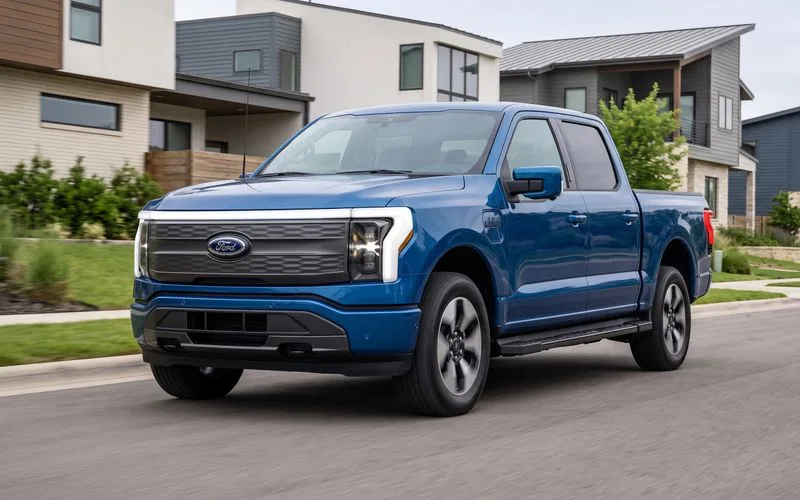 Ford F-150 LightningFull-Size TruckBetter at: Value
Costs meaningfully less, keeps CarPlay and Android Auto, carries more payload and depreciates less badly — as long as you can live with roughly 320 miles of range instead of 493.
Compare 2.44C+
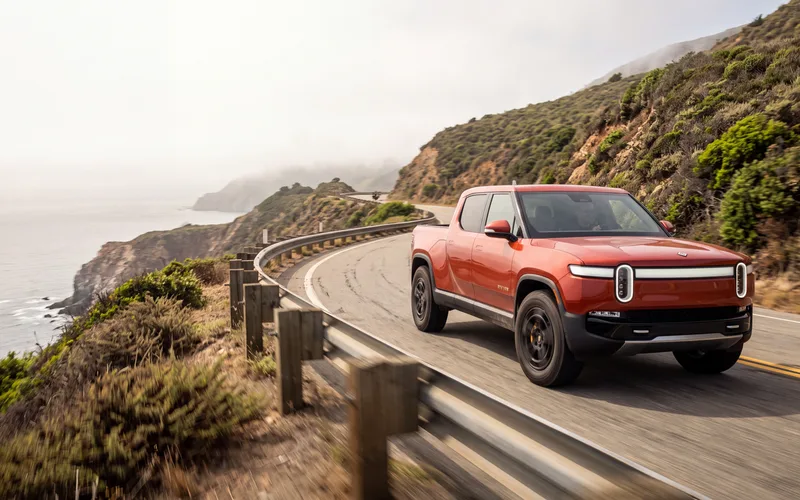 Rivian R1TFull-Size TruckBetter at: Driving polish
Rides and drives noticeably better with a nicer cabin and stronger resale, for shoppers who want an electric truck that feels premium rather than one that maximizes range and outlets.
Compare 2.41C+
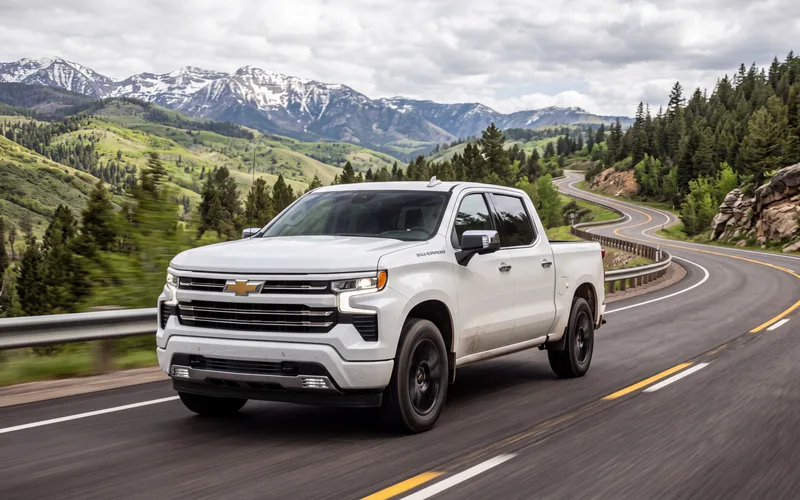 Chevrolet Silverado 1500Full-Size TruckBetter at: Work capability
Half the price, more payload, real bed and cab choices, and no charging to plan around — the default answer for anyone who works the truck hard or road-trips beyond charger coverage.
CompareSubject scores by year
Hover or tap a score to see what moved it versus the year before. A corner mark flags a big swing.
| Year | Performance | Efficiency | Safety | Space | Cost | Reliability | Tech | Use-case | Driving | Value |
|---|---|---|---|---|---|---|---|---|---|---|
| 2026 | 69 | 77 | 69 | 75 | 21 | 55 | 73 | 74 | 72 | 71 |
| 2025 | 71 | 77 | 74 | 74 | 18 | 56 | 77 | 73 | 75 | 69 |
| 2024 | 69 | 79 | 71 | 71 | 15 | 50 | 77 | 70 | 73 | 60 |
Compare two years
Best fit & conditions
Higher scores mean a better fit for that use case. Learn more about use-case fit →
Subject profile
Academic Probation · NHTSA safety recalls
Jul 30, 2026Tires: temporary/emergency spare tire · WheelsA manufacturing defect may result in the steel wheels cracking at the disc vent holes.
Defect
General Motors, LLC (GM) is recalling certain 2026 Chevrolet Silverado EV and GMC Sierra EV vehicles. A manufacturing defect may result in the steel wheels cracking at the disc vent holes.
Risk
A cracked wheel may lead to disc separation and a loss of control, increasing the risk of a crash.
Remedy
Dealers will inspect and replace the wheels as necessary, free of charge. Owner notification letters were mailed September 23, 2026. Owners may contact GMC customer service at 1-800-462-8782 and Chevrolet customer service at 1-800-222-1020. GM's number for this recall is N262556920. Vehicle Identification Numbers (VINs) involved in this recall became searchable on NHTSA.gov on July 30, 2026.
NHTSA campaign 26V496000 ↗Manufacturer no. N262556920952 vehicles potentially affected (all models in the campaign)Owners notified Sep 23, 2026Filed by General Motors, LLCFiled as SILVERADO EVJul 30, 2026Electrical system: propulsion system: traction batteryThe high voltage battery may have an improperly secured internal module component.
Defect
General Motors, LLC is recalling certain 2026 Cadillac Escalade IQ, Escalade IQL, GMC Sierra EV, Chevrolet Silverado EV, and 2022 GMC Hummer EV Pickup vehicles. The high voltage battery may have an improperly secured internal module component.
Risk
A loose component may move and damage the high voltage battery, increasing the risk of a fire.
Remedy
Dealers will replace the high voltage battery, free of charge. Owner notification letters were mailed August 24, 2026. Owners may contact Cadillac customer service at 1-800-333-4223, GMC customer service at 1-800-462-8782, and Chevrolet customer service at 1-800-222-1020. GM's number for this recall is N262562600. Vehicle Identification Numbers (VINs) involved in this recall became searchable on NHTSA.gov on July 30, 2026.
NHTSA campaign 26V494000 ↗Manufacturer no. N26256260011 vehicles potentially affected (all models in the campaign)Owners notified Aug 24, 2026Filed by General Motors, LLCFiled as SILVERADO EVFeb 26, 2026Equipment: other: owners/service/other manualGeneral Motors has decided that certain 2027 Chevrolet Bolt EV, 2025-2026 Cadillac OPTIQ, Chevrolet Colorado, Equinox EV, GMC Canyon, 2026 Buick Enclave, Envision, Cadillac CT5, Escalade, Escalade ESV, Escalade IQ, Escalade IQL, LYRIQ, VISTIQ, Chevrolet Blazer EV, Corvette Convertible, Corvette Coupe, Corvette Convertible E-Ray, Equinox, Silverado 1500, 2500, 3500, Silverado EV, Suburban 1500, Tahoe, Traverse, GMC Acadia, Hummer EV Pickup, Hummer EV SUV, Sierra 1500, 2500, 3500, Sierra EV, Terrain, Yukon, and Yukon XL vehicles. The radio may not have been set to the correct status to download the electronic owner's manual during production. As such, these vehicles fail to comply with the requirements of Federal Motor Vehicle Safety Standard number 208, âOccupant Protection.â
Defect
General Motors has decided that certain 2027 Chevrolet Bolt EV, 2025-2026 Cadillac OPTIQ, Chevrolet Colorado, Equinox EV, GMC Canyon, 2026 Buick Enclave, Envision, Cadillac CT5, Escalade, Escalade ESV, Escalade IQ, Escalade IQL, LYRIQ, VISTIQ, Chevrolet Blazer EV, Corvette Convertible, Corvette Coupe, Corvette Convertible E-Ray, Equinox, Silverado 1500, 2500, 3500, Silverado EV, Suburban 1500, Tahoe, Traverse, GMC Acadia, Hummer EV Pickup, Hummer EV SUV, Sierra 1500, 2500, 3500, Sierra EV, Terrain, Yukon, and Yukon XL vehicles. The radio may not have been set to the correct status to download the electronic owner's manual during production. As such, these vehicles fail to comply with the requirements of Federal Motor Vehicle Safety Standard number 208, âOccupant Protection.â
Risk
Without an owner's manual to consult, owners may not know how to safely use and operate the vehicle, increasing the risk of injury in a crash.
Remedy
Dealers will reset the vehicle radio, which will facilitate automatic download of the electronic ownerâs manual, free of charge. Owner notification letters were mailed April 16, 2026. Owners may contact GM customer service at 1-866-467-9700, Chevrolet customer service at 1-800-222-1020 or Cadillac customer service at 1-800-333-4223. The manufacturer's number for this recall is N252540430. Vehicle Identification Numbers (VINs) involved in this recall became searchable on NHTSA.gov on February 26, 2026.
NHTSA campaign 26V114000 ↗Manufacturer no. N2525404305,861 vehicles potentially affected (all models in the campaign)Owners notified Apr 16, 2026Filed by General Motors, LLCFiled as SILVERADO EVSep 11, 2025Electronic stability control (esc): control module: softwareAfter experiencing an electronic stability control (ESC) system malfunction, the ESC malfunction warning light may not illuminate on the next key cycle. As such, these vehicles fail to comply with the requirements of Federal Motor Vehicle Safety Standard number 126, "Electronic Stability Control Systems."
Defect
General Motors, LLC (GM) is recalling certain 2026 Chevrolet Silverado EV and GMC Sierra EV electric vehicles. After experiencing an electronic stability control (ESC) system malfunction, the ESC malfunction warning light may not illuminate on the next key cycle. As such, these vehicles fail to comply with the requirements of Federal Motor Vehicle Safety Standard number 126, "Electronic Stability Control Systems."
Risk
An indicator light that does not illuminate may fail to warn the driver of an ESC system issue, increasing the risk of a crash.
Remedy
The EBCM software will be updated by a dealer, or through an over-the-air (OTA) software update, free of charge. Owner notification letters were mailed October 15, 2025. Owners may contact Chevrolet customer service at 1-800-222-1020, or GMC customer service at 1-800-462-8782. GM's number for this recall is N252515340.
NHTSA campaign 25V594000 ↗Manufacturer no. N2525153401,191 vehicles potentially affected (all models in the campaign)Owners notified Oct 15, 2025Filed by General Motors, LLCFiled as SILVERADO EV
5 recalls on other model years of the Silverado EV (2024–2025)
Jan 16, 2025Seat belts: rear/other: anchorage · Seats: mid/rear assemblyThe bolt that secures the rear center seat belt assembly to the seat structure may not have been properly tightened.
Defect
General Motors, LLC (GM) is recalling certain 2024 Chevrolet Silverado EV and 2024-2025 GMC Sierra EV pickup trucks. The bolt that secures the rear center seat belt assembly to the seat structure may not have been properly tightened.
Risk
An improperly secured seat belt assembly may not restrain an occupant as intended, increasing the risk of injury in a crash.
Remedy
GM will tighten the bolt that attaches the center seat belt assembly to the rear seat structure, free of charge. All affected vehicles are still in dealer inventory and, therefore, no owner letters will be mailed. Owners may contact GM customer service at 1-888-988-7267, or Chevrolet customer service at 1-800-222-1020. GM's number for this recall is N242489901.
NHTSA campaign 25V015000 ↗Manufacturer no. N2424899015 vehicles potentially affected (all models in the campaign)Filed by General Motors, LLCFiled as SILVERADO EVDec 18, 2024Electrical system: body control module/bcm · Forward collision avoidance: warnings: external/pedestrian alertThe pedestrian alert sound system may not produce sound at a sufficient volume. As such, these vehicles fail to comply with the requirements of Federal Motor Vehicle Safety Standard (FMVSS) number 141, "Minimum Sound Requirements for Hybrid and Electric Vehicles."
Defect
General Motors LLC (GM) is recalling certain 2025 Chevrolet Silverado EV work trucks. The pedestrian alert sound system may not produce sound at a sufficient volume. As such, these vehicles fail to comply with the requirements of Federal Motor Vehicle Safety Standard (FMVSS) number 141, "Minimum Sound Requirements for Hybrid and Electric Vehicles."
Risk
A vehicle that fails to make sufficient sound may result in pedestrians being unaware of an approaching vehicle, increasing the risk of injury.
Remedy
Dealers will update the software in the body control module (BCM), free of charge. Owner notification letters were mailed January 22, 2025. Owners may contact Chevrolet customer service at 1-800-222-1020. GM's number for this recall is N242483530.
NHTSA campaign 24V937000 ↗Manufacturer no. N24248353046 vehicles potentially affected (all models in the campaign)Owners notified Jan 22, 2025Filed by General Motors, LLCFiled as SILVERADO EVMay 9, 2024Electrical system: propulsion system · Electrical system: wiringThe electric motors in the rear drive units may have insufficiently insulated wires that can contact each other, resulting in a loss of drive power.
Defect
General Motors, LLC (GM) is recalling certain 2024 Cadillac Lyriq, Chevrolet Blazer EV, Chevrolet Silverado EV, GMC Hummer EV SUV, and GMC Sierra EV vehicles. The electric motors in the rear drive units may have insufficiently insulated wires that can contact each other, resulting in a loss of drive power.
Risk
A loss of drive power increases the risk of a crash.
Remedy
Dealers will replace the rear drive unit, free of charge. Owner notification letters were mailed May 16, 2024. Owners may contact Chevrolet customer service at 1-800-222-1020; Cadillac customer service at 1-800-458-8006; Hummer customer service at 1-800-732-5493; or GMC customer service at 1-800-462-8782. GM's number for this recall is N242447080.
NHTSA campaign 24V320000 ↗Manufacturer no. N24244708010 vehicles potentially affected (all models in the campaign)Owners notified May 16, 2024Filed by General Motors, LLCFiled as SILVERADO EVFeb 8, 2024Seat belts: rear/otherAn incorrect seat belt bezel on the second-row center seat belt may damage or tear the seat belt in the event of a crash.
Defect
General Motors (GM) is recalling certain 2024 Chevrolet Silverado EV vehicles. An incorrect seat belt bezel on the second-row center seat belt may damage or tear the seat belt in the event of a crash.
Risk
A torn or damaged seat belt may not properly restrain an occupant in a crash, increasing the risk of injury.
Remedy
Do not allow passengers to sit in the second-row center seat until remedied. Dealers will replace the second-row center seat belt bezel, free of charge. Owner notification letters were mailed March 13, 2024. Owners may contact Chevrolet customer service at 1-800-222-1020. GM's number for this recall is N242430730.
NHTSA campaign 24V087000 ↗Manufacturer no. N242430730338 vehicles potentially affected (all models in the campaign)Owners notified Mar 13, 2024Filed by General Motors, LLCFiled as SILVERADO EVNov 22, 2023Seat belts: front: anchorageThe left or right front seat belt buckle attachment bolts may not be tightened properly.
Defect
General Motors, LLC (GM) is recalling certain 2023-2024 GMC Hummer EV pick up, 2024 GMC Hummer EV SUV, and 2024 Chevrolet Silverado EV vehicles. The left or right front seat belt buckle attachment bolts may not be tightened properly.
Risk
An improperly tightened seat belt buckle may not restrain an occupant as intended, increasing the risk of injury during a crash.
Remedy
Dealers will tighten the left and right front seat belt buckle attachment bolts, free of charge. Owner notification letters were mailed December 21, 2023. Owners may contact GMC customer service at 1-833-EVCHEVY (1-833-382-4389) (TTY 711 / 1-800-833-2438) /1-833-HUMMER-EV (1-833-486-6373) (TTY 711 / 1-800-833-2438). GM's number for this recall is N232419280.
NHTSA campaign 23V786000 ↗Manufacturer no. N232419280115 vehicles potentially affected (all models in the campaign)Owners notified Dec 21, 2023Filed by General Motors, LLCFiled as SILVERADO EV
Source: NHTSA Office of Defects Investigation recall database, model years 2024–2026. Recalls are listed by model year as the manufacturer filed them; whether a specific car is affected depends on its VIN — check a VIN at nhtsa.gov ↗. NHTSA model names matched to this page: SILVERADO EV.
Detailed scoring by subject
1Performance & PowertrainOne of the Silverado EV's weakest categories.2.68C+
Scored on the LT, the volume retail trim for 2026; the dual-motor eAWD Ultium powertrain is common to the whole lineup with output tiered by trim and battery. Well above any gas full-size half-ton but short of the RST halo and the Hummer EV 3X.
Instant full-torque delivery from the dual-motor setup puts the Silverado EV near the top of the truck torque band — roughly double the 5.3L V8 Silverado 1500's 383 lb-ft.
Chevrolet quotes the LT at under six seconds despite a curb weight near 8,500 lbs; the RST's Wide Open Watts mode drops it to roughly 4.5 s. Quick for a full-size truck but blunted by mass relative to lighter EV rivals.
Single-gear dual-motor EV delivery: no lag, no shift interruption, no engine coarseness under load, and near-silent operation. Sits just below the Hummer EV (93) — same Ultium hardware, marginally less theatrical calibration.
Single-speed reduction gear — nothing to hunt or shift. Regen-on-Demand paddle and one-pedal driving are well calibrated and predictable, though very heavy regen can feel abrupt when loaded.
Best-in-lineup rating leads every other EV pickup and beats most half-ton gas trucks on paper, though real-world towing range collapses far harder than a diesel or V8 — a limitation captured in cat2, not here.
The battery pack eats most of the GVWR headroom, so payload lands well under a comparably equipped gas Silverado 1500 (~2,260 lbs max). Still meaningfully better than the Hummer EV's ~1,300 lbs, but this is the Silverado EV's weakest capability metric.
Carries GM's full trailering suite — integrated trailer brake controller, up to 14 camera views including transparent-trailer, trailer profiles, hitch guidance and the Trailering app — plus Super Cruise rated for towing. Scored alongside the Silverado 1500 (87); no trailer-backup steering knob keeps it just short of the very top.
Dual-motor eAWD is standard on every trim with independent front/rear torque control and available four-wheel steering — broader standard availability than the gas Silverado. Held below the Hummer EV (94) by the absence of a low range and locking differentials.
The 2026 Trail Boss adds a genuine off-road trim — lift, 35-inch all-terrains, off-road drive mode and underbody protection — but without lockers, low range, or any answer to roughly 9,000 lbs of curb weight it stays well short of a ZR2 (Silverado 1500 scored 85) or the Hummer EV (95).
One powertrain type only — dual-motor Ultium EV — with breadth limited to output tiers and two battery sizes (Extended Range and Max Range). Buyers wanting gas, diesel or hybrid must cross-shop the separate Silverado 1500 nameplate. Scored in line with the Hummer EV (45), a single EV powertrain in two motor configurations.
2Efficiency & RangeThe Silverado EV's best-graded category.3.25B+
EPA rates the 2026 volume retail configuration — the non-WT (LT) Extended Range with the standard 11.5 kW onboard charger — at 68 MPGe combined, or 49.5 kWh/100 mi. That is strong for a 8,500 lb full-size electric pickup and lands mid-upper in the EV-truck band. Prior run used an unverified ~66 MPGe estimate; this is the retrieved EPA figure.
Regenerative braking makes the city cycle the Silverado EV's strongest, at 75 MPGe and a 446-mile city range. Prior run carried an unverified ~70 MPGe estimate; the retrieved EPA figure is higher, so the item moves up.
Highway is the weakest EV cycle — 61 MPGe against 75 in the city — but the Silverado EV's aerodynamic, forward-cab BT1 body holds up better at speed than a conversion pickup, and the 367-mile highway range is still the best in the electric full-size class. Value unchanged from the prior run, now confirmed against EPA rather than estimated.
The volume LT Extended Range carries a 170 kWh (173 kWh usable) Ultium pack rated at 410 miles — still the longest-legged mainstream electric pickup configuration, roughly 100 miles clear of a Cybertruck AWD. The prior run credited this trim with the 493-mile figure, which EPA assigns to the Max Range pack rather than to the volume Extended Range truck, so the score corrects downward.
The 800V Ultium architecture accepts up to 350 kW, the highest rate any production pickup takes and the top of the truck band. GM quotes 100 miles of range added in about 10 minutes, and an instrumented session on an LT Extended Range hit the full 350 kW.
Chevrolet quotes 40 minutes for 10–80% on a 350 kW charger and independent testing matched it. High peak power does not make this a quick stop: 70% of a 170 kWh pack is ~120 kWh of energy, so the Silverado EV takes noticeably longer than a small-battery EV even at class-leading kW — a mid-band result despite the 350 kW headline.
EPA puts annual energy cost at $1,100 — about a third of what a gas full-size truck burns, and EPA credits the truck with $5,500 saved over five years versus the average new vehicle. Prior run estimated $1,250 from consumption math; the published EPA figure is lower, so the item gains.
Cheap overnight home charging with no fuel-grade question at all, plus the fastest public charging in the segment and access to both CCS and Tesla Superchargers by adapter. Held below the top of the band because a 170 kWh pack is genuinely slow to refill at home — EPA lists 18.6 hours on 240V for this configuration — so a buyer without a high-amperage circuit or the optional 19.2 kW charger feels the pack size every night.
3SafetyGrades above the middle of the scale.2.70B-
No NHTSA NCAP overall star rating has been published for the Silverado EV; crew-cab configurations sit at or above NCAP's 10,000-lb GVWR testing ceiling, the same reason the Hummer EV carries no rating. Scored at the segment-neutral midpoint rather than credited or penalized.
IIHS has published no crashworthiness results or award status for the Silverado EV, so there is neither a Top Safety Pick to credit nor a Marginal/Poor result to penalize. Held at the midpoint, matching the treatment of the equally untested Hummer EV.
Chevy Safety Assist (AEB, front pedestrian braking, forward collision alert, lane keep assist with departure warning, IntelliBeam, following-distance indicator) is standard across the Silverado EV range, and unlike the gas Silverado 1500 full-speed-range adaptive cruise is standard rather than trim-locked. Blind-zone and rear cross-traffic coverage is the one piece that thins out on the fleet-oriented WT, which keeps this below the best-in-class marks.
GM's camera-plus-radar AEB hardware is competent and includes pedestrian detection, but there is no IIHS front crash prevention rating on file and the Silverado EV's ~8,500-9,100 lb mass materially lengthens real stopping distances, which caps what any AEB system can achieve.
Blind Zone Steering Assist provides active intervention rather than alert-only, rear cross-traffic braking is available, and GM's advanced trailering package extends the blind-zone envelope along the trailer — genuinely relevant on a truck rated to tow five figures. Falls short of top marks because the intervention-capable content is not uniform across the WT.
Baseline lane keep assist with departure warning is standard and behaves like the rest of GM's fleet — reactive rather than polished — but the Super Cruise centering layer that sits above it is consistently rated among the steadiest in the class, and it is far more broadly fitted here than on the gas Silverado.
Full-speed-range adaptive cruise with stop-and-go is standard across the lineup rather than an upper-trim add-on, and it hands off cleanly into Super Cruise for highway assist. The integration is the strong part; the underlying ACC calibration is competent rather than exceptional.
Super Cruise is the most mature hands-free system on sale, covers roughly 750,000 miles of mapped North American roads, adds automatic lane change, and — unusually — remains available while towing a trailer, which is the exact use case a full-size pickup buyer cares about. Fitment on the Silverado EV is broad, with the fleet-spec WT the main gap.
LED headlamps with IntelliBeam auto high beams are standard and the EV's lighting hardware is a newer design than the gas Silverado's Marginal-to-Acceptable units, but with no IIHS headlight evaluation on file there is nothing to credit above a cautious mid-band score.
The Silverado EV carries the tall beltline, long frunk-lengthened nose and thick pillars endemic to full-size electric pickups, so natural sightlines are mediocre and forward blind zones are large. HD Surround Vision with its multi-view camera array and transparent-trailer view compensates well at low speed and while hitching, which lifts it above the worst of the class.
The crew-cab-only body gives an unusually roomy rear compartment with wide-opening doors, a flat floor and more rear legroom than the gas Silverado 1500, so seats go in easily and three-across is realistic. The penalty is step-in height — loading a child into a truck this tall is a reach without the running boards.
4Space & ComfortOne of the Silverado EV's strongest categories.3.07B
The Silverado EV is sold exclusively as a five-seat crew cab with bucket front seats and a three-across rear bench — no regular/double cab and no 40/20/40 front bench, so it gives up the 6-passenger option the gas Silverado 1500 offers on WT/Custom.
The Ultium skateboard battery raises the cabin floor, so despite standing 78.4 in tall the Silverado EV gives up more than two inches of front headroom to the body-on-frame Silverado 1500 (43.0 in). Adequate but among the tighter figures in the full-size class.
The bespoke EV cab stretches front legroom past the Silverado 1500 (44.5 in) and level with the Rivian R1T (44.8 in) — near the top of the truck band. What the battery floor costs in headroom it hands back in stretch-out room.
Same battery-floor penalty as the front row, plus a rear seatback shaped around the Multi-Flex Midgate mechanism. Slightly under the Silverado 1500 (40.1 in) and Hummer EV (40.3 in), and the sloped roofline over the rear glass is the limiting factor for taller adults.
The standout passenger-space number: integrating the bed into the body let Chevrolet push the cab rearward, and the resulting back seat beats the Silverado 1500 (43.4 in), F-150 SuperCrew (43.6 in) and Hummer EV (40.9 in) outright. Genuine three-adult comfort on long trips.
One bed length only, and at 5'11" it is short by full-size standards — no 6'6" or 8'2" box the way the Silverado 1500 offers. The Multi-Flex Midgate recovers a lot of that in practice (10'10" of pass-through load floor), but this item measures the bed floor of the volume configuration, and the midgate credit is taken in 4.2.5.
Deep bed walls make up for the short floor, landing it above the Hummer EV (52.3 cu ft) and F-150 (52.8 cu ft) and just under the Silverado 1500 short box (62.9 cu ft). Counting the eTrunk, total lockable/open cargo volume clears 70 cu ft.
The most inventive cargo package in the segment short of the R1T's gear tunnel: the Multi-Flex Midgate folds the rear bulkhead and seatback for a ~9 ft pass-through load floor, the Multi-Flex Tailgate adds six configurations including a load stop and standing work surface, the 10.7 cu ft eTrunk is lockable and drainable, and PowerBase supplies up to 10.2 kW across ten outlets including 240V.
Broadly praised chairs with long cushions and good over-the-road support, helped by the class-leading rear legroom; the RST adds ventilation and more adjustment while the WT and lower LT builds get flatter, less bolstered cushions. Placed just under the Hummer EV (82) — same GM seat architecture, wider trim spread pulls the volume LT down slightly.
Roughly 8,500 lbs of curb weight over a long 145.7-in wheelbase produces a settled, unbothered ride that never gets the empty-bed patter of a leaf-sprung half-ton — the Silverado EV's clearest comfort win over the Silverado 1500 (65). Held short of the air-sprung R1T (81) by ponderous body motions over big inputs and by the RST's 24-inch wheels on broken pavement.
No engine, laminated acoustic glass and a heavy, sealed body make this one of the quietest trucks sold; the fixed roof avoids the wind rustle the Hummer EV's removable Infinity Roof panels introduce (78). Wide tires and a tall, blunt body still let in measurable road and wind noise at highway speed, keeping it under the R1T (90).
The volume LT arrives with heated front seats, heated steering wheel and dual-zone automatic climate, with ventilated fronts and heated rear seats moving up the range; the EV-specific win is app-based remote preconditioning that can heat or cool the cabin on shore power without spending range. The fleet WT is deliberately sparse, which is the main thing holding it below the Hummer EV (92).
5Cost of OwnershipThe Silverado EV's lowest-graded category.0.00F
The Work Truck is the entry point and the only Silverado EV that lands under $60k; every retail-oriented trim is far above it. Replaces a placeholder estimate of $62,129, so the score moves up modestly.
Retail volume sits on the LT with the Extended Range battery, which is a mid-$70k truck — near the top of the full-size band and the single biggest drag on this vehicle's ownership score. Replaces a placeholder estimate of $65,451, so the score drops sharply.
This is the Silverado EV's clear ownership strength: an electric drivetrain removes oil changes, spark plugs, transmission and exhaust service entirely, and one-pedal regen braking stretches pad life well past a gas truck's. Replaces a placeholder estimate of $8,517, so the score rises steeply.
Electric full-size pickups are the steepest-depreciating mainstream segment in the US market, and the expiration of the $7,500 federal clean-vehicle credit on 2025-09-30 reset used EV pricing downward while leaving new MSRPs high. At ~42% the truck falls below the bottom of the segment band and scores zero on the heaviest-weighted item in this category. Replaces a placeholder estimate of 66%, so the score collapses.
GM's standard 3-year/36,000-mile bumper-to-bumper term sits at the bottom of the 3–5 year band, matching Ford and Chevrolet's gas trucks but trailing the Korean makes. Replaces a placeholder estimate of 4.7 years, so the score drops to zero.
The EV battery and drive-unit coverage is materially longer than the 5-year/60,000-mile powertrain term on the gas Silverado, which is the one place the electric truck's warranty beats its combustion sibling. Replaces a placeholder estimate of 8.4 years, a small downward correction.
Scored mid-band: no complimentary scheduled maintenance, but a real EV-specific perk package — roadside assistance for the basic warranty term, an OnStar/connected-services trial, and GM's home-charging installation offer, which carries more cash value than the connected-services trials most rivals stop at. Replaces a placeholder estimate of 66.
$75,500 volume-trim price minus its estimated resale value after 5 years (42% retained, or about $31,710) leaves about $43,790 in depreciation. Add the projected $5,600 in 5-year maintenance and repairs, and owning this vehicle for 5 years costs about $49,390 in total.
6Reliability & QualityOne of the Silverado EV's weakest categories.1.71C-
Consumer Reports has held GM's Ultium-based EVs at or below average in predicted reliability since the platform launched, and the Silverado EV carries the same drive-unit, battery-management and Google-built-in software stack that produced the Blazer EV software debacle and repeated OTA fixes across the family. 2026 is the fourth model year of the nameplate, so the fleet-only WT launch problems are behind it and the LT/RST/Trail Boss lineup is settled — but no model year has yet posted an above-average owner-survey result, and the 8,500–9,100-lb curb weight compounds wear on tires, brakes and suspension. Lands just above the Hummer EV and clearly below the gas Silverado 1500.
Identical brand assessment to the gas Silverado 1500: J.D. Power's Vehicle Dependability Study puts Chevrolet at or slightly above industry-average PP100, while Consumer Reports' brand rankings park it in the lower third of mainstream brands — and the EV launches (Blazer EV software, Bolt battery fires) are a meaningful part of what drags that CR number down, which makes the brand signal more directly relevant to this truck than to a V8 Silverado.
The Silverado EV has accumulated campaigns at a faster clip than a mature nameplate since its 2023 launch, most of them software — rearview-camera/display compliance, propulsion and brake-control calibration, and Ultium battery-management updates issued across the whole GM EV family. GM increasingly remediates these over the air rather than by dealer visit, which lowers the ownership pain, but the frequency itself is the signal: above-typical activity, on par with the Hummer EV and worse than the gas Silverado's already-mediocre record. No systemic fire or drive-unit defect is known for the 2026 build, which keeps it out of the failing band.
Ultium drive units and pouch-cell packs have been in production only since 2021 with no high-mileage durability record, and GM's EV battery pedigree still carries the Bolt EV LG-cell fire recall in living memory. Against that, the Silverado EV's dual-motor arrangement has no known systemic failure mode, the EV powertrain has vastly fewer wear items than the DFM V8s that hold the gas Silverado back, and the 8-year/100,000-mile battery warranty covers the expensive part. Newer-and-unproven rather than known-bad — mid-band, essentially level with the Hummer EV that shares the hardware.
The dash architecture — 17.7-inch center screen plus 11-inch cluster — presents well, and RST adds better leather and stitched surfaces. But price class is the problem: the volume WT and LT trims wear hard plastics on door tops, lower dash and console essentially carried over from the gas Silverado, and reviewers routinely note the cabin does not read as $70k-plus material quality against a Rivian R1T or Sierra EV Denali. Scores slightly below its own gas sibling because the same materials have to justify a much higher window sticker.
Factory Zero assembly is competent — panel gaps and body fit are competitive with the gas trucks, and the fixed midgate/Multi-Flex tailgate has not drawn the alignment complaints that dog the Hummer's cargo tunnel. The drag here is software rather than sheetmetal: infotainment freezes, phantom warning messages and charging-session faults dominate owner complaints and are exactly what J.D. Power's Initial Quality Study counts as defects, keeping GM's EVs below segment-average IQS. Solid build, glitchy execution.
Chevrolet's roughly 2,900–3,000 US franchised dealers are the widest safety net any EV truck buyer can have — nothing Rivian or Tesla operates comes close in rural truck country, and this is the biggest reliability-adjacent advantage the Silverado EV holds over its direct EV rivals. It falls short of the gas Silverado's mark because high-voltage work routes to EV-certified stores rather than every Chevy service bay, a fraction of dealers opted out of the EV certification program, and owner reports cite long waits and limited technician depth for pack or drive-unit repairs.
Routine maintenance is genuinely cheap — no oil changes, no DFM lifters, long brake life from regen — but this item measures parts and repair exposure, and that is where an EV truck gets punished. An out-of-warranty Ultium pack is a five-figure-plus proposition, drive units and the battery-integrated structure are dealer-only, and collision-repair severity is high enough that modest damage near the pack pushes toward a total loss. Aftermarket support is nearly nonexistent versus the gas Silverado's enormous ecosystem. Ahead of the Hummer EV only because volume is higher and more body and interior parts are shared with mainstream Chevrolet trucks.
7Technology & InfotainmentGrades above the middle of the scale.2.95B-
The Silverado EV's 17.7-inch diagonal freestanding center touchscreen is the largest fitted to any GM truck and among the largest in the full-size pickup class — standard on the LT and RST trims that make up retail volume. Corrected from the placeholder 16.8 in.
GM's Google built-in system on the Ultium platform is quick and legible, and the 17.7-inch landscape screen gives map, media and energy panes room to coexist without menu-diving. Marked down from the top band because the EV moves more climate and vehicle settings into the screen than the gas Silverado does, and the sheer feature count (drive modes, charging, trailering, Midgate) makes some settings hard to find first time.
GM has deliberately excluded Apple CarPlay and Android Auto from its Ultium EVs, and the Silverado EV ships without phone projection on every trim in favor of Google built-in. However good the native stack is, buyers who want to mirror their phone simply cannot — the same deduction applied to the Hummer EV.
Google built-in supplies Google Assistant natural-language voice and Google Maps as factory navigation with EV-aware routing that plans charging stops against state of charge and trailer load — the strongest OEM voice/nav stack in the segment and the direct offset to the missing phone projection.
A Bose premium system is available and standard at the top of the range, and an EV cabin's low noise floor flatters it; the volume LT trim gets a competent but unremarkable base system, so the lineup as a whole sits above the gas Silverado 1500 without reaching the Hummer EV's standard 14-speaker Bose Performance Series.
An 11-inch reconfigurable full-digital driver display is standard, with EV-specific layouts for energy flow, range-to-empty under load, charging state and Super Cruise status. Crisp and well-organized, marginally smaller than the 12.3-inch unit in the Hummer EV and gas Silverado.
Built on GM's Vehicle Intelligence Platform, the Silverado EV receives genuine whole-vehicle over-the-air updates — Super Cruise road-network expansions, charging and drive-mode refinements, infotainment features — not maps-only patches. Cadence still trails Tesla and Rivian, which keeps it out of the very top band.
The myChevrolet app plus Energy Assist covers remote lock/unlock, cabin preconditioning, charge scheduling and monitoring, public-charger routing and payment, vehicle locate and diagnostics, and GM Digital Key lets a phone act as (and share) the key. Some remote commands fall behind an OnStar plan after the included trial, which is what separates it from a 90+.
Best-in-class power export: PowerBase offboard power delivers up to 10.2 kW across multiple 120V outlets in the bed and cab plus a 240V outlet, and GM Energy's bidirectional hardware can back-feed a house. USB-C ports front and rear and a wireless charging pad round it out. This comfortably beats the Hummer EV's 3 kW PowerStation and the gas Silverado's 400W outlet.
Proximity entry and push-button start are standard, remote preconditioning runs through myChevrolet, GM Digital Key provides shareable phone-as-key, and the power tailgate plus the electrically released Multi-Flex Midgate add remote-operated access no rival matches. Held below 90 by the connected-services subscription behind some remote commands.
GM's advanced trailering camera package carries over: HD Surround Vision, bed view, and Transparent Trailer view that effectively sees through a towed trailer, with up to 14 views available. Front and rear park assist are fitted on volume trims. Strong, though without the Hummer EV's underbody 'transparent trail' off-road cameras.
No head-up display appears on the Silverado EV order guide on any trim — the truck relies on its 11-inch driver display and the very large center screen instead. This mirrors the Hummer EV, which also skips HUD, and is a real gap against the gas Silverado's High Country HUD. Scored slightly above the Hummer EV's 20 only because the larger center screen partly compensates; flagged LOW pending order-guide verification.
8Use-Case FitOne of the Silverado EV's strongest categories.3.02B
Crew cab is the only body style, and its 44.3 in of rear legroom is the most in the full-size segment — rear-facing seats fit behind tall adults with room to spare, and the flat floor plus wide near-square door openings make three-across workable. The 10.7 cu ft lockable, weatherproof eTrunk is a genuine family advantage over an open bed for strollers and diaper bags. Held back by pickup step-in height that makes running boards effectively mandatory for lifting a toddler in, and by LATCH anchors that are usable but not class-leading.
The standard-equipment story is strong for a truck: Chevy Safety Assist (AEB, forward collision alert, front pedestrian braking, lane keep assist, IntelliBeam) plus Rear Seat Reminder on every trim, and Super Cruise hands-free available across the retail range — better standard ADAS than the gas Silverado 1500 gives at family price points. The gap is credentials: neither NHTSA nor IIHS has published crash results for the Silverado EV, so families are buying an unrated 9,000-lb vehicle, and the trims carrying the full safety kit start around $75,000.
Second-row space is close to limousine-grade at 44.3 in of legroom, with rear vents, rear USB-C and heated outboard seats on LT and above, and the cabin is notably quiet at cruise because there is no engine. Up to 493 miles of range means fewer stops than most gas trucks, and luggage rides in the lockable frunk plus a coverable bed. Two real drags: there is no Apple CarPlay or Android Auto for the back-seat content routine most families run on, and when a stop does come it is a 20-plus-minute charge rather than five minutes at a pump.
In stop-and-go this is the easiest full-size truck to live with: silent dual-motor delivery with no shift hunting, well-calibrated one-pedal driving plus a Regen on Demand paddle, and Super Cruise — the best hands-free system sold — turning the freeway leg of a commute into supervision rather than work. Available four-wheel steering shrinks the low-speed footprint meaningfully. What keeps it out of the 80s is sheer mass and length: roughly 9,000 lbs and about 233 in of truck still has to be threaded through traffic, and the missing CarPlay/Android Auto is felt most on the daily drive.
Per-mile energy cost is the best in the full-size truck segment — roughly $1,250 a year at home-charging rates versus about $3,000 for a V8 Silverado — and consumables are cheap, with no oil changes and regen sparing the brakes. The offsets are real though: full-coverage insurance runs near $2,950 a year, heavy truck tires on large-diameter wheels are expensive to replace, and any commuter relying on public DC fast charging rather than a home outlet gives back most of the energy saving.
This is a crew-cab-only truck roughly 233 in long on a 145.7 in wheelbase, one of the longest pickups on sale — structured garages, urban parallel spots and older parking decks are a genuine problem. Available four-wheel steering and up to 14 camera views including a bird's-eye and transparent-trailer feed take a lot of the guesswork out, but four-wheel steering is not standard across the range and there is no CrabWalk-style trick to fall back on.
On paper this is the most capable electric pickup sold — 12,500 lbs of towing with the Max Trailering Package, 10,000 lbs on the WT and RST, and 775 lb-ft available instantly for pulling away under load. Two things stop it short of being a serious work tool: payload tops out near 1,800 lbs (about 1,440 on the fleet WT), well under a comparably equipped gas Silverado 1500 because the pack consumes the GVWR headroom; and towing a heavy trailer roughly halves usable range, turning a routine work day into a charging problem. The 5'11" bed is short for work duty until the Midgate is folded, which costs the rear seats.
There is a real fleet proposition here that the Hummer EV lacks — a purpose-built Work Truck trim with wear-friendly surfaces, and roughly 2,900 Chevrolet dealers, by far the widest service net available to an EV truck buyer in rural work country. Against that, the Ultium drive units and pouch packs have no high-mileage record, the nameplate has taken campaigns at a fast clip since launch (mostly software, including propulsion and brake-control calibrations), and an out-of-warranty pack is a five-figure event. Unproven under hard use rather than fragile.
This is the Silverado EV's standout use case and the best onboard-power story in any pickup: PowerBase offers up to ten outlets across the bed, cabin and eTrunk with 10.2 kW of total export including a 240V bed outlet — enough to run corded jobsite tools or a small site all day without a generator. Add the Multi-Flex Tailgate's six configurations with integrated step and load stop, the Midgate for long material, twelve fixed bed tie-downs with bed lighting, a lockable weatherproof front trunk for tools, and GM Energy PowerShift for vehicle-to-site backup, and the work-feature list is deeper than anything else in the segment.
The mile-eating case is the strongest in the segment: 493 EPA miles on the volume LT Extended Range is more usable range than most gas half-tons carry in a tank, the 800V architecture takes DC fast charging at rates that restore a large chunk of it in a short stop, and Super Cruise covers the largest mapped hands-free network in North America — exactly the fatigue reduction this item rewards. The cabin is quiet with no engine to drone and the front seats hold up over hours. Marks come off for a ride that is good rather than plush on the volume trim's coils, and for cold-weather and headwind range loss a gas truck does not suffer.
New for 2026, the Trail Boss finally gives the Silverado EV a real off-road trim — suspension lift, 35-inch all-terrains, an off-road drive mode and underbody protection — on top of standard eAWD, a 12,500-lb tow rating for toys, and camp power that beats any generator. But there is no low range and no locking differential, roughly 9,000 lbs sinks into soft ground in a way a gas truck does not, and the further you get from pavement the further you are from a charger. Capable on gravel, forest roads and trailheads; not a substitute for a ZR2.
The Multi-Flex Midgate is the segment's best answer to bulky gear: a nominally short 5'11" bed opens into roughly nine feet of load floor through the cab, and about 10'10" with the tailgate down, so 4x8 sheets, surfboards, kayaks and dirt bikes go inside a truck that still parks like a crew cab. Backing it up are a lockable 10.7 cu ft weatherproof front trunk, a tailgate with six configurations, twelve fixed tie-downs and a standard hitch. The only real cost is that using the Midgate takes the rear seats out of service.
9Driving ExperienceGrades above the middle of the scale.2.88B-
The Ultium skateboard puts roughly 8,500 lbs very low in the chassis, and the coil-sprung multi-link rear (with adaptive air ride available on upper trims) gives the Silverado EV markedly better body control and none of the empty-bed rear-axle patter of the leaf-sprung Silverado 1500. Composed and planted rather than agile — the 145.7-in wheelbase and full-size width mean it changes direction deliberately, and the 2026 Trail Boss trades some composure for its lift and 35-inch all-terrains.
Accurate and consistent but heavily isolated — GM's electric rack gives the Silverado EV the light, feedback-free weighting typical of the brand's trucks. Four-Wheel Steer transforms low-speed maneuverability and tightens the arc noticeably, but it also makes the rear end shift under the driver in ways that take acclimation.
Regen blending is a genuine strength — one-pedal driving and the Regen on Demand steering-wheel paddle are well calibrated and hand off to the friction brakes without the step-change other EV trucks show. Physics still dominate: stopping an ~8,500-lb truck from 60 mph takes well over 140 ft, and repeated hard stops or long grade descents load the friction brakes hard once regen saturates.
Dual-motor eAWD through a single-speed reduction gear: no lag, no shift interruption, no stop/start shudder, and 775 lb-ft available from zero. Tip-in is progressive rather than the abrupt off-the-line surge some EV trucks use, and the volume LT still reaches 60 mph in roughly 5.7 seconds at 8,500 lbs.
Effectively silent under load with no engine noise and no driveline vibration through the controls, and the heavy sealed body plus laminated acoustic glass keeps motor whine and road roar out of the cabin. Only the 2026 Trail Boss, on 35-inch all-terrains, introduces meaningful tire noise.
Four-Wheel Steer is what makes this number work — on a 145.7-in wheelbase the Silverado EV would otherwise need roughly a 50-ft circle, but rear steering pulls it in to about the same arc as a shorter Silverado 1500 Crew Cab Short Box. Mid-pack for the truck band: far tighter than a Rivian R1T or Cybertruck, nowhere near the short-wheelbase Hummer EV.
Commanding sightlines, long-cushion seats with wide adjustment, and a 17.7-in center screen plus 11-in cluster that put information where the driver wants it. Two things hold it back: the battery floor costs more than two inches of front headroom versus a Silverado 1500 (40.9 in), and no trim offers a head-up display, so the big center screen absorbs functions that belong in the driver's sightline. The 233-in length and full-size width also make placement in tight spaces a learned skill.
Instant 775 lb-ft, the silent-and-quick contrast with a V8 half-ton, and the party trick of the Multi-Flex Midgate give it real character, and the RST's Wide Open Watts mode is genuinely entertaining. But this truck is engineered around range, towing and refinement — enthusiast recommendations in the EV-pickup space still go to the Rivian R1T, and the volume LT is satisfying rather than exciting.
10Value & Market PositionGrades above the middle of the scale.2.79B-
The volume LT arrives well-equipped for an electric full-size truck — 17.7-inch center touchscreen with Google built-in, 11-inch cluster, Chevy Safety Assist, the 10.2 kW PowerBase offboard power system with vehicle-to-home capability, and the Multi-Flex Midgate — but Super Cruise is an extra on lower trims and the fleet-oriented WT is deliberately spartan, so it lands competitive rather than class-leading. Re-scored down from the placeholder 83, which overstated base-trim generosity.
Capability per dollar is real — class-leading EPA range (roughly 490 miles on the Max Range WT, ~440 on RST), up to ~12,500 lb towing and 350 kW charging — but the volume LT opens in the mid-$70Ks and the RST near $100K, and MY2026 buyers get no federal clean-vehicle credit after its September 30, 2025 termination, so net out-of-pocket rose year over year. A gas Silverado 1500 does most truck work for roughly half the money, and the Rivian R1T undercuts the LT while driving better.
The trim ladder is reasonably wide — WT, LT, the new-for-2026 Trail Boss, and RST, layered over a menu of battery/range choices spanning roughly $60K to $100K — but every Silverado EV is a dual-motor AWD crew cab with one bed length. There is no cab or bed choice at all, which is the defining flexibility of the full-size segment. The placeholder 94 was badly out of line with that single-body-style reality.
Within the electric pickup subsegment the Silverado EV has been a leader, outselling the F-150 Lightning across much of 2025 and helping GM hold the #2 US EV position, but absolute volume is in the tens of thousands against 500K-plus for the gas Silverado, and the post-credit EV market contraction that began in Q4 2025 sent GM to slow EV output and book EV capacity charges. Strong in a shrinking niche, with a negative trajectory into 2026 — the placeholder 91 read like a gas-Silverado score.
Chevrolet is a top-tier domestic truck brand and the Silverado nameplate carries real equity and loyalty, which the EV inherits. What pulls it below the gas Silverado's 74 is EV-specific image softness among traditional truck buyers and the sharp segment-wide depreciation on electric trucks, which erodes the ownership proposition regardless of how the badge is regarded.
Scored on buyer benefit, this is the model's strongest value item: with the federal credit gone and EV inventory sitting, GM has been layering large cash allowances and subsidized lease programs onto the Silverado EV, and the trucks are genuinely negotiable. That said, the discounting reflects slow demand rather than confidence, and it only partly offsets the lost $7,500 — the placeholder 67 understated how available the deals are.
This is the model's best card: the BT1/Ultium generation launched for MY2024, so 2026 is year three of a purpose-built electric platform with no replacement on the horizon. The lineup has also been actively developed rather than left to coast — LT trims broadened the range for 2025 and the Trail Boss joins for 2026 — and the underlying tech (800V-class architecture, up to 350 kW DC fast charging, NACS charging access) is current.
Reviews are consistently positive on the things that make it distinctive — range that no rival approaches, the Multi-Flex Midgate, PowerBase export power, straight-line thrust and towing capacity — while recurring criticism centers on the roughly 8,500-9,000 lb curb weight, sheer size, price, and interior materials that trail the sticker. In direct electric-pickup comparisons the Rivian R1T usually takes the win on polish and dynamics, so this is a well-reviewed truck that is rarely the outright pick.