

The verdict
A struggling compact suv, strong on reliability and held back by performance.
Overall 1.21 (D) across 10 graded subjects. Its strongest is reliability & quality at 2.17 (C), its weakest performance & powertrain at 0.00 (F). 3 of 10 subjects grade at C− or better.
Jump to scoresStrengths
- Reliability & Quality
- Efficiency & Range
- Use-Case Fit
What holds it back
- Performance & Powertrain
- Space & Comfort
- Technology & Infotainment
Top alternatives
Cars shoppers cross-shop with the GMC Terrain 2.13C
2.13C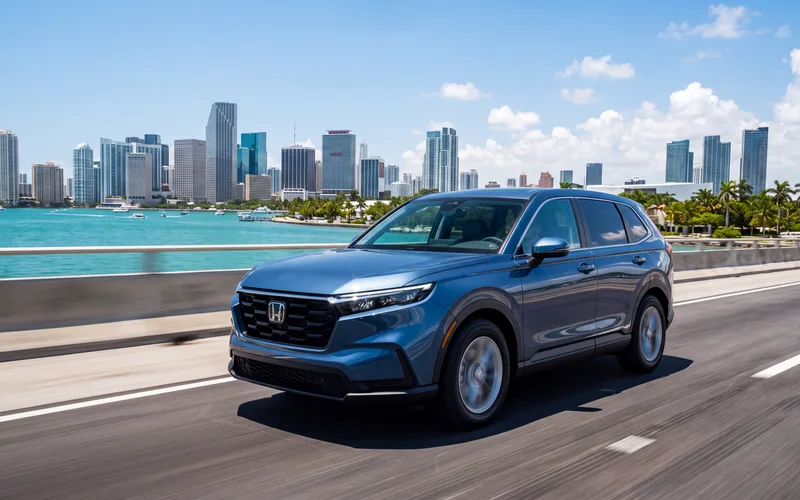 Honda CR-VCompact SUVBetter at: Cargo and efficiency
It solves the Terrain's two biggest problems at once — nearly 10 cu ft more cargo behind the back seat and a hybrid that returns about 40 MPG — while holding its value far better.
Compare 1.71C-
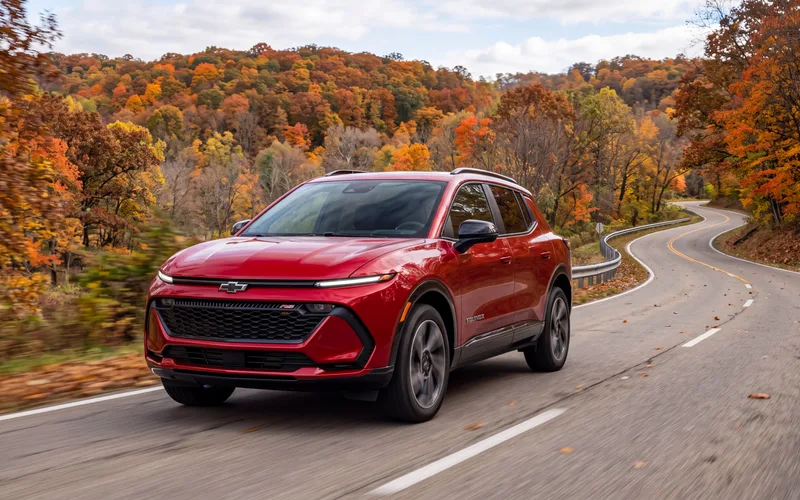 Chevrolet EquinoxCompact SUVBetter at: Price
Mechanically the identical vehicle for $2,000–4,000 less, so the only question is whether GMC's styling, Denali interior and AT4 hardware are worth the premium.
Compare 2.56C+
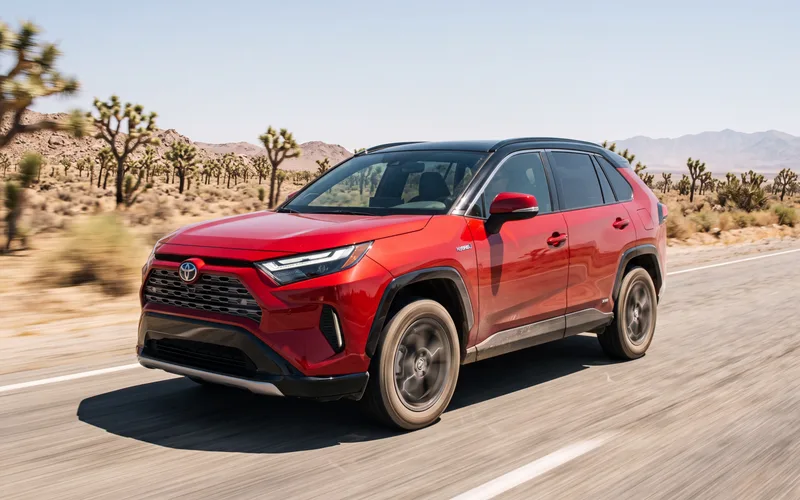 Toyota RAV4Compact SUVBetter at: Resale value
Tows 3,500 lbs against the Terrain's 1,500, offers a hybrid, and leads the class in five-year resale and long-term reliability.
CompareHow it's evolved
4 scored model years · 2023–2026
Subject scores by year
Hover or tap a score to see what moved it versus the year before. A corner mark flags a big swing.
| Year | Performance | Efficiency | Safety | Space | Cost | Reliability | Tech | Use-case | Driving | Value |
|---|---|---|---|---|---|---|---|---|---|---|
| 2026 | 27 | 66 | 62 | 48 | 53 | 61 | 71 | 57 | 56 | 68 |
| 2025 | 25 | 66 | 59 | 48 | 54 | 59 | 70 | 54 | 57 | 63 |
| 2024 | 23 | 60 | 51 | 44 | 49 | 62 | 47 | 57 | 52 | 55 |
| 2023 | 23 | 59 | 51 | 44 | 51 | 59 | 54 | 52 | 53 | 54 |
Compare two years
Best fit & conditions
Higher scores mean a better fit for that use case. Learn more about use-case fit →
Subject profile
Academic Probation · NHTSA safety recalls
Dec 21, 2023Structure: body: doorThe door strikers may fracture, resulting in the door opening unexpectedly.
Defect
General Motors, LLC (GM) is recalling certain 2024 Chevrolet Blazer, Blazer EV, Equinox, and GMC Terrain vehicles. The door strikers may fracture, resulting in the door opening unexpectedly.
Risk
A door opening while the vehicle is being driven can increasing the risk of injury or a crash.
Remedy
Dealers will replace all four door strikers and attaching bolts, free of charge. Owner notification letters were mailed January 24, 2024. Owners may contact Chevrolet customer service at 1-800-222-1020 and GMC customer service at 1-800-462-8782. GM's number for this recall is N232429911.
NHTSA campaign 23V869000 ↗Manufacturer no. N232429911265 vehicles potentially affected (all models in the campaign)Owners notified Jan 24, 2024Filed by General Motors, LLCFiled as TERRAIN
13 recalls on other model years of the Terrain (2017–2023, 2026)
Feb 26, 2026Equipment: other: owners/service/other manualGeneral Motors has decided that certain 2027 Chevrolet Bolt EV, 2025-2026 Cadillac OPTIQ, Chevrolet Colorado, Equinox EV, GMC Canyon, 2026 Buick Enclave, Envision, Cadillac CT5, Escalade, Escalade ESV, Escalade IQ, Escalade IQL, LYRIQ, VISTIQ, Chevrolet Blazer EV, Corvette Convertible, Corvette Coupe, Corvette Convertible E-Ray, Equinox, Silverado 1500, 2500, 3500, Silverado EV, Suburban 1500, Tahoe, Traverse, GMC Acadia, Hummer EV Pickup, Hummer EV SUV, Sierra 1500, 2500, 3500, Sierra EV, Terrain, Yukon, and Yukon XL vehicles. The radio may not have been set to the correct status to download the electronic owner's manual during production. As such, these vehicles fail to comply with the requirements of Federal Motor Vehicle Safety Standard number 208, âOccupant Protection.â
Defect
General Motors has decided that certain 2027 Chevrolet Bolt EV, 2025-2026 Cadillac OPTIQ, Chevrolet Colorado, Equinox EV, GMC Canyon, 2026 Buick Enclave, Envision, Cadillac CT5, Escalade, Escalade ESV, Escalade IQ, Escalade IQL, LYRIQ, VISTIQ, Chevrolet Blazer EV, Corvette Convertible, Corvette Coupe, Corvette Convertible E-Ray, Equinox, Silverado 1500, 2500, 3500, Silverado EV, Suburban 1500, Tahoe, Traverse, GMC Acadia, Hummer EV Pickup, Hummer EV SUV, Sierra 1500, 2500, 3500, Sierra EV, Terrain, Yukon, and Yukon XL vehicles. The radio may not have been set to the correct status to download the electronic owner's manual during production. As such, these vehicles fail to comply with the requirements of Federal Motor Vehicle Safety Standard number 208, âOccupant Protection.â
Risk
Without an owner's manual to consult, owners may not know how to safely use and operate the vehicle, increasing the risk of injury in a crash.
Remedy
Dealers will reset the vehicle radio, which will facilitate automatic download of the electronic ownerâs manual, free of charge. Owner notification letters were mailed April 16, 2026. Owners may contact GM customer service at 1-866-467-9700, Chevrolet customer service at 1-800-222-1020 or Cadillac customer service at 1-800-333-4223. The manufacturer's number for this recall is N252540430. Vehicle Identification Numbers (VINs) involved in this recall became searchable on NHTSA.gov on February 26, 2026.
NHTSA campaign 26V114000 ↗Manufacturer no. N2525404305,861 vehicles potentially affected (all models in the campaign)Owners notified Apr 16, 2026Filed by General Motors, LLCFiled as TERRAINMay 11, 2023Child seat: vehicle latch anchorThe four rear-seat lower child seat LATCH anchorage bars may have excessive powder coating, which could prevent a child seat from being installed with the anchorage bars. As such, these vehicles fail to comply with the requirements of Federal Motor Vehicle Safety Standard number 225, "Child Restraint Anchorage Systems."
Defect
General Motors, LLC (GM) is recalling certain 2020-2023 Chevrolet Equinox and GMC Terrain vehicles. The four rear-seat lower child seat LATCH anchorage bars may have excessive powder coating, which could prevent a child seat from being installed with the anchorage bars. As such, these vehicles fail to comply with the requirements of Federal Motor Vehicle Safety Standard number 225, "Child Restraint Anchorage Systems."
Risk
The inability to install a child seat with the LATCH anchorage bars could result in an unsecured child seat, increasing the risk of injury in a crash.
Remedy
Owners are advised to install child seats using the vehicle's rear seat belts until the remedy is complete. Dealers will inspect the latch anchorage bars, and remove and replace the finish, as necessary, free of charge. Owner notification letters were mailed June 2, 2023. Owners may contact Chevrolet customer service at 1-800-222-1020 or GMC customer service at 1-800-462-8782. GM's number for this recall is N232403240.
NHTSA campaign 23V339000 ↗Manufacturer no. N232403240668,187 vehicles potentially affected (all models in the campaign)Owners notified Jun 2, 2023Filed by General Motors, LLCFiled as TERRAINJan 19, 2023Fuel system, gasoline: delivery: fuel pump: control/drive moduleThe fuel pump module may not consistently provide sufficient fuel to the engine, resulting in an engine stall.
Defect
General Motors, LLC (GM) is recalling certain 2021-2022 Chevrolet Equinox and 2022 GMC Terrain vehicles. The fuel pump module may not consistently provide sufficient fuel to the engine, resulting in an engine stall.
Risk
An engine stall increases the risk of a crash.
Remedy
Dealers will replace the fuel pump module, free of charge. Owner notification letters were mailed June 5, 2023. Owners may contact Chevrolet customer service at 1-800-222-1020 or GMC customer service at 1-800-462-8782. GM's number for this recall is N222372310.
NHTSA campaign 23V013000 ↗Manufacturer no. N22237231023,323 vehicles potentially affected (all models in the campaign)Owners notified Jun 5, 2023Filed by General Motors, LLCFiled as TERRAIN NADec 15, 2022Air bags: sensor: occupant classification: front passengerThe Occupant Classification System may not properly disable the front passenger air bag when there is a small child or child restraint detected in the seat.
Defect
General Motors, LLC (GM) is recalling certain 2023 Chevrolet Equinox and GMC Terrain vehicles equipped with ventilated front passenger seats. The Occupant Classification System may not properly disable the front passenger air bag when there is a small child or child restraint detected in the seat.
Risk
In the event of a crash, a front passenger air bag that deploys with a child or infant in the front passenger seat can increase their risk of injury.
Remedy
Dealers will replace the passenger presence system, free of charge. Owner notification letters were mailed January 24, 2023. Owners may contact Chevrolet customer service at 1-800-222-1020 or GMC customer service at 1-800-462-8782. GM's number for this recall is N222388911.
NHTSA campaign 22V929000 ↗Manufacturer no. N2223889119 vehicles potentially affected (all models in the campaign)Owners notified Jan 24, 2023Filed by General Motors, LLCFiled as TERRAINSep 29, 2022SeatsThe driver's seat may have a stripped or loose bolt at the seat frame height-adjust pivot.
Defect
General Motors, LLC (GM) is recalling certain 2022-2023 Chevrolet Equinox and 2022 GMC Terrain vehicles. The driver's seat may have a stripped or loose bolt at the seat frame height-adjust pivot.
Risk
A seat with a missing or loose bolt may not properly restrain the occupant in a crash, increasing the risk of injury.
Remedy
Dealers will inspect the driver's seat and replace the seat cushion frame, if necessary, free of charge. Owner notification letters were mailed on November 4, 2022. Owners may contact Chevrolet customer service at 1-800-222-1020 or GMC customer service at 1-800-462-8782. GMC's number for this recall is N222377890.
NHTSA campaign 22V724000 ↗Manufacturer no. N2223778906,895 vehicles potentially affected (all models in the campaign)Owners notified Nov 4, 2022Filed by General Motors, LLCFiled as TERRAINMar 8, 2022Exterior lighting: headlightsA reflection caused by the headlight housings may illuminate areas above the vehicle and outside of the driver's view with excessively bright light. As such, these vehicles fail to comply with the requirements of Federal Motor Vehicle Safety Standard number 108, "Lamps, Reflective Devices, and Associated Equipment."
Defect
General Motors, LLC (GM) is recalling certain 2010-2017 GMC Terrain vehicles. A reflection caused by the headlight housings may illuminate areas above the vehicle and outside of the driver's view with excessively bright light. As such, these vehicles fail to comply with the requirements of Federal Motor Vehicle Safety Standard number 108, "Lamps, Reflective Devices, and Associated Equipment."
Risk
The bright reflection may cause a glare for other drivers, reducing their visibility and increasing the risk of a crash.
Remedy
Dealers will install headlamp appliques, free of charge. Owner notification letters were mailed September 8, 2022. Owners may contact GMC customer service at 1-800-462-8782. GM's number for this recall is N222363740.
NHTSA campaign 22V137000 ↗Manufacturer no. N222363740740,581 vehicles potentially affected (all models in the campaign)Owners notified Sep 8, 2022Filed by General Motors, LLCFiled as TERRAINAug 5, 2021Tires · Tires: tread/beltThe tires may have been manufactured with an insufficient amount of curative agent, which could cause tread separation.
Defect
General Motors, LLC (GM) is recalling certain 2021-2022 Chevrolet Equinox and GMC Terrain vehicles equipped with certain Hankook tires. The tires may have been manufactured with an insufficient amount of curative agent, which could cause tread separation.
Risk
Tread separation can result in a loss of vehicle control, increasing the risk of a crash.
Remedy
Dealers will inspect the tire DOT numbers, and replace any affected tires, free of charge. Owner notification letters were mailed on August 31, 2021. Owners may contact GMC customer service at 1-800-462-8782; and Chevrolet customer service at 1-800-222-1020. GM's number for this recall is N212343560.
NHTSA campaign 21V612000 ↗Manufacturer no. N2123435609,597 vehicles potentially affected (all models in the campaign)Owners notified Aug 31, 2021Filed by General Motors, LLCFiled as TERRAIN, TERRAIN NAOct 29, 2020Power train: automatic transmissionThe start/stop accumulator endcap may have missing bolts.
Defect
General Motors LLC (GM) is recalling certain 2018-2019 Chevrolet Cruze and Buick LaCrosse, 2018-2020 Chevrolet Equinox, Chevrolet Traverse and GMC Terrain, 2018 Chevrolet Malibu, 2019-2020 Buick Encore, Buick Enclave, Cadillac XT4, Chevrolet Blazer and GMC Acadia, and 2020 Cadillac XT6 vehicles. The start/stop accumulator endcap may have missing bolts.
Risk
Missing bolts on the start-stop accumulator endcap could result in a transmission oil leak and may progress to a loss of propulsion, increasing the risk of a crash. A transmission fluid leak in the presence of an ignition source may increase the risk of fire.
Remedy
GM will notify owners, and dealers will inspect the start-stop transmission accumulator and replace it if any bolts are missing, free of charge. The recall began December 15, 2020. Owners may contact GMC customer service at 1-888-988-7267, Buick Customer service at 1-866-608-8080, Chevrolet customer service at 1-800-222-1020 or Cadillac customer service at 1-800-458-8006. GM's number for this recall is N202313440.
NHTSA campaign 20V668000 ↗Manufacturer no. N202313440194,105 vehicles potentially affected (all models in the campaign)Owners notified Dec 15, 2020Filed by General Motors LLCFiled as TERRAINMar 7, 2019SeatsThe rear-right seat may have insufficient welds on the head-restraint bracket.
Defect
General Motors LLC (GM) is recalling certain Chevrolet Equinox and GMC Terrain vehicles. The rear-right seat may have insufficient welds on the head-restraint bracket.
Risk
In the event of a crash, the insufficient welds may result in an increased risk of injury for an occupant seated in the rear-right position.
Remedy
GM will notify owners, and dealers will replace the rear-right seatback frame, free of charge. The recall began April 15, 2019. Owners may contact Chevrolet customer service at 1-800-222-1020 or GMC customer service at 1-800-462-8782. GM's number for this recall is N192209550.
NHTSA campaign 19V184000 ↗Manufacturer no. N192209550120 vehicles potentially affected (all models in the campaign)Owners notified Apr 15, 2019Filed by General Motors LLCFiled as TERRAINAug 30, 2018Service brakes, hydraulic: foundation components: disc: caliperThe rear brake caliper pistons may have an insufficient coating causing gas pockets to form, potentially reducing rear brake performance.
Defect
General Motors LLC (GM) is recalling certain 2018-2019 Chevrolet Equinox, Impala, Cruze, Volt and Bolt EV vehicles, GMC Terrain vehicles, Buick Lacrosse and Regal vehicles, Cadillac XTS and XTS Professional vehicles and 2018 Chevrolet Malibu vehicles. The rear brake caliper pistons may have an insufficient coating causing gas pockets to form, potentially reducing rear brake performance.
Risk
A reduction of braking performance can increase the risk of a crash.
Remedy
GM will notify owners, and dealers will bleed the vehicle's brake system, free of charge. The recall began October 11, 2018. Owners may contact Buick customer service at 1-800-521-7300, Cadillac customer service at 1-800-458-8006, Chevrolet customer service at 1-800-222-1020, or GMC customer service at 1-800-462-8782. GM's number for this recall is 18279.
NHTSA campaign 18V576000 ↗Manufacturer no. 18279210,628 vehicles potentially affected (all models in the campaign)Owners notified Oct 11, 2018Filed by General Motors LLCFiled as TERRAINMay 31, 2018Fuel system, gasoline: delivery: fuel pumpThe high pressure fuel pump may detach from its mounting flange, possibly resulting in the pump damaging the high pressure fuel line.
Defect
General Motors LLC (GM) is recalling certain 2015-2018 GMC Canyon, 2016-2017 Buick Envision, 2016-2018 Chevrolet Colorado and Malibu, 2017-2018 GMC Acadia, 2018 Buick LaCrosse, Cadillac ATS, Chevrolet Equinox, and GMC Terrain vehicles. The high pressure fuel pump may detach from its mounting flange, possibly resulting in the pump damaging the high pressure fuel line.
Risk
A damaged fuel line can create a fuel leak, increasing the risk of a fire.
Remedy
GM will notify owners, and dealers will replace the high pressure fuel pump, and high pressure fuel pipe, free of charge. The recall began July 2, 2018. Owners may contact Buick customer service at 1-800-521-7300, Cadillac customer service at 1-800-458-8006, Chevrolet customer service at 1-800-222-1020, or GMC customer service at 1-800-462-8782. GM's number for this recall is 18188.
NHTSA campaign 18V358000 ↗Manufacturer no. 18188 18268895 vehicles potentially affected (all models in the campaign)Owners notified Jul 2, 2018Filed by General Motors LLCFiled as TERRAINMay 24, 2018Air bags: air bag/restraint control moduleThe sensing diagnostic module (SDM) that senses a crash and deploys the necessary air bags may not power down correctly when the vehicle is shut off, causing it to be inoperative when the vehicle is restarted.
Defect
General Motors LLC (GM) is recalling certain 2018 GMC Terrain vehicles. The sensing diagnostic module (SDM) that senses a crash and deploys the necessary air bags may not power down correctly when the vehicle is shut off, causing it to be inoperative when the vehicle is restarted.
Risk
If the SDM becomes inoperative, it will not detect a crash or command the necessary air bag deployment, increasing the risk of injury in the event of a crash.
Remedy
GM will notify owners, and dealers will reprogram the SDM with updated software, free of charge. The recall began June 29, 2018. Owners may contact GMC customer service at 1-800-462-8782. GM's number for this recall is 18179.
NHTSA campaign 18V340000 ↗Manufacturer no. 1817988,503 vehicles potentially affected (all models in the campaign)Owners notified Jun 29, 2018Filed by General Motors LLCFiled as TERRAINAug 22, 2017Power train: driveline: driveshaftThe right front intermediate driveshaft may fracture and separate while driving.
Defect
General Motors LLC (GM) is recalling certain 2018 Chevrolet Equinox and GMC Terrain vehicles and 2017-2018 GMC Acadia vehicles. The right front intermediate driveshaft may fracture and separate while driving.
Risk
If the front right intermediate drive shaft assembly separates while driving, the vehicle will lose propulsion, increasing the risk of a crash. If the assembly separates while parked on a grade, without the park brake engaged, the vehicle may move unintentionally, increasing the risk of a vehicle roll-away.
Remedy
GM will notify owners, and dealers will replace the right front intermediate drive shaft assembly, free of charge. The recall began August 25, 2017. Owners may contact GMC customer service at 1-800-462-8782 or Chevrolet customer service at 1-800-222-1020. GM's number for this recall is 17329.
NHTSA campaign 17V516000 ↗Manufacturer no. 173292,905 vehicles potentially affected (all models in the campaign)Owners notified Aug 25, 2017Filed by General Motors LLCFiled as TERRAIN
Source: NHTSA Office of Defects Investigation recall database, model years 2017–2026. Recalls are listed by model year as the manufacturer filed them; whether a specific car is affected depends on its VIN — check a VIN at nhtsa.gov ↗. NHTSA model names matched to this page: TERRAIN, TERRAIN NA.
Detailed scoring by subject
1Performance & PowertrainThe Terrain's lowest-graded category.0.00F
2024 is the final year of the second-generation Terrain and it carries a single engine — the GM 1.5L LYX turbo I4 — rated at 170 hp @ 5,600 rpm across every trim. Well below segment norms; even mainstream rivals like RAV4 (203 hp), CR-V (190 hp) and Tucson (187 hp) all out-punch it, and the redesigned 2025 Terrain adds no more power.
Peak torque of 203 lb-ft @ 2,000–4,000 rpm is identical across every 2024 Terrain trim. Modest for the SUV segment but a strong point relative to the small displacement — the flat torque plateau helps drivability from a stop even if outright thrust is limited.
Instrumented tests of the 1.5T + 9-speed Terrain place 0–60 mph in the 9.0–9.5 s range, with the AWD AT4 near 9.3 s. Among the slowest volume compact SUVs on the market and effectively unchanged from the 2018 launch of this generation.
The 1.5L LYX turbo is competent around town thanks to its low-rpm torque, but reviewers consistently note noticeable turbo lag off idle and a coarse, thrashy character when asked to accelerate hard on highway merges or grades. Below-average refinement for the segment as most rivals (CR-V hybrid, RAV4, Tucson) run smoother, more responsive powertrains.
GM's Hydra-Matic 9T50 9-speed automatic replaced the earlier 6-speed and generally shifts smoothly in cruise, but reviewers cite occasional hesitation and gear-hunting when calling for kickdown passing power — a symptom of pairing so many ratios with a modest 170 hp engine. Middle of the pack.
The 2024 Terrain carries a modest 1,500 lb max tow rating, adequate for a small utility trailer or personal watercraft but well below more capable compact SUVs like the Escape 2.0T (3,500 lbs) or Bronco Sport (2,200 lbs). GMC does not market the Terrain as a tow vehicle.
For 2024, AWD is optional on SLE and SLT and standard on both AT4 and Denali, so it's widely available across the range. System is a conventional driver-selectable single-speed AWD (must be manually engaged) with no low range and no torque vectoring — hardware sophistication trails class leaders.
The AT4 trim gives the Terrain a mild off-road personality with standard AWD, all-terrain tires, hill descent control, red recovery hooks, and skid plate styling, but ground clearance remains a modest ~7.9 in and there are no lockers, no low range, and only 170 hp on tap. Pavement-oriented crossover with a light-duty gravel/snow trim — a step above a base Escape/CR-V, well short of Bronco Sport Badlands or a Wrangler-class hardware set.
The 2024 Terrain is offered with a single 1.5L turbo I4 — no larger gas option, no hybrid, no PHEV and no EV variant. Take-it-or-leave-it lineup near the bottom of the compact SUV segment as electrified rivals (RAV4 Hybrid/Prime, CR-V Hybrid, Sportage Hybrid/PHEV, Tucson Hybrid/PHEV, Escape Hybrid/PHEV) proliferate.
2Efficiency & RangeOne of the Terrain's strongest categories.2.03C
2024 is the final year of the second-generation Terrain (2018-2024). Only the 1.5L turbo I4 (LYX, 170 hp / 203 lb-ft) with 9-speed automatic remains — the 2.0T and 1.6L diesel were dropped years earlier and no hybrid was ever offered. EPA-rated 27 MPG combined for FWD, 26 MPG AWD — mid-pack for the compact-SUV band and well behind hybrid-standard rivals (RAV4 Hybrid ~40, CR-V Hybrid ~37).
25 MPG city (FWD) with the 1.5T and 9-speed automatic is unremarkable for the segment — the small turbo has stop-start but no hybrid assist, so stop-and-go traffic pulls the average down materially compared to hybrid rivals. AWD gives up another 1 MPG in the city cycle.
30 MPG highway (FWD) with the 1.5T is roughly segment-average for a non-hybrid compact SUV — the small-displacement turbo cruises efficiently at part throttle, but the Terrain's tall boxy body and modest aero prevent a class-leading number. AWD trims lose 2 MPG on the highway cycle.
A 14.9-gallon fuel tank combined with 27 MPG combined (FWD) yields ~402 miles of theoretical range — mid-pack for the SUV band and one of the Terrain's more competitive efficiency attributes. AWD drops range to ~387 mi.
At 27 MPG combined on regular unleaded and the EPA's standard 15k-mi/yr / 55-city split, annual fuel cost is roughly $2,000 for the FWD volume trim — reasonable for a non-hybrid compact SUV but notably higher than hybrid-standard alternatives (~$1,350/yr for RAV4 Hybrid). AWD trims add ~$100/yr.
The 1.5L turbo LYX is engineered for regular 87-octane unleaded across all 2024 trims — no premium requirement, no diesel option remains, no charging infrastructure needed. Straightforward gas-station fuel keeps operating friction low, placing this at the top end of the 80-100 band.
3SafetyGrades below the middle of the scale.1.44D
The second-generation Terrain (2018-2024) earned a 4-star overall NHTSA rating, with 4-star frontal crash and 5-star side crash results. NHTSA carried the rating forward on the final 2024 model year without re-testing.
The aging second-generation 2024 Terrain earns Good in the original moderate overlap, small overlap driver and passenger tests, roof strength and head restraints, but was not retested under IIHS's stricter updated side crash protocol and holds no Top Safety Pick or TSP+ designation for 2024. Headlight limitations and lack of an updated side rating keep it out of award territory.
GMC Pro Safety Plus is standard across every 2024 Terrain trim (SLE, SLT, AT4, Denali): automatic emergency braking, front pedestrian braking, forward collision alert, lane keep assist with lane departure warning, following distance indicator and IntelliBeam auto high beams. Adaptive cruise control, blind-spot monitoring and rear cross-traffic alert remain trim/package-gated rather than standard, trailing Toyota Safety Sense 3.0 and Honda Sensing which include ACC and BSM more broadly.
GM's second-generation AEB with front pedestrian braking is standard on the 2024 Terrain and posts Superior daytime vehicle-to-vehicle results, but pedestrian and nighttime performance under updated IIHS protocols has been the weak link versus Toyota, Honda, and Subaru systems on the same testing round. Hardware is a single forward camera without the second-gen radar seen on newer platforms.
Lane Change Alert with Side Blind Zone Alert and Rear Cross Traffic Alert are alert-only and are optional or trim-gated on the 2024 Terrain — not standard on the volume SLE trim. Coverage is adequate once equipped, but the base-trim omission is behind rivals like the Hyundai Tucson and Kia Sportage that make BSM standard.
Lane keep assist with lane departure warning is standard across all 2024 Terrain trims and functions competently, but the second-gen Terrain does not offer a true hands-on lane-centering mode — the LKA is reactive, nudging at the line rather than actively centering. That lands well behind Honda Sensing centering, Toyota Lane Trace Assist, or Hyundai Lane Following Assist.
Full-speed-range adaptive cruise control is optional only on AT4 and Denali via the Driver Convenience II package on the 2024 Terrain; SLE and SLT buyers get only standard cruise control. There is no dedicated highway-assist mode on the second-generation platform, and ACC availability trails the segment where TSS 3.0 and Honda Sensing include it standard.
Super Cruise is not offered on the second-generation 2024 Terrain — GM's hands-free system did not expand into the compact-SUV segment until the redesigned 2025 model. No hands-free driving option exists on any 2024 Terrain trim.
The 2024 Terrain uses LED reflector headlights with standard IntelliBeam auto high beams; IIHS ratings for the second-generation Terrain headlights have ranged from Marginal on lower trims to Acceptable on Denali projector lighting, and are a chronic weak point that has helped keep the Terrain out of TSP contention. Better than a Poor rating but well behind Good-across-the-range rivals like the Subaru Forester and Mazda CX-5.
The upright second-generation Terrain has fairly generous glass and a tall driving position with a standard HD rear-view camera and an available HD Surround Vision 360-degree camera on Denali to compensate for the thicker C-pillar. Forward and side sightlines are competitive; rear three-quarter view is average and the surround camera is trim-gated.
The 2024 Terrain has two outboard LATCH lower-anchor positions and three top tethers — standard for the compact-SUV class. Rear door aperture and rear-seat foot space are adequate for rear-facing seats, but IIHS previously rated the second-gen Terrain's LATCH ease of use as Marginal-to-Acceptable due to deeply set lower anchors, and three-across installations are tight in the segment footprint.
4Space & ComfortOne of the Terrain's weakest categories.0.92F
2024 is the final year of the second-generation Terrain and it is exclusively a five-passenger, two-row compact SUV — no third row is offered on any trim. Buyers needing three rows step up to the GMC Acadia.
The Gen 2 Terrain (2018-2024) carries 40.0 in of front headroom without a sunroof, dropping to 39.7 in with the available panoramic sunroof (standard on Denali). Mid-pack for the compact SUV band.
Front legroom of 40.9 in is unchanged from the 2018 launch of the second-generation platform and sits near the bottom of the compact SUV band — CR-V (41.3 in), RAV4 (41.0 in) and Tucson (41.4 in) offer more, and the redesigned 2025 Terrain adds only about 0.8 in.
Second-row headroom of 38.5 in on the Gen 2 Terrain is competitive for the compact SUV segment — adult heads clear comfortably thanks to the upright roofline, with only a modest sunroof penalty.
Second-row legroom of 39.7 in is a real strength: fits two adults behind two adults and lands near the top of the compact SUV normalization band, edging out the redesigned 2025 Terrain (39.5 in) and matching Grand Cherokee-class space in the class below.
The 2024 Terrain is a two-row compact SUV with no third row offered on any trim — a straightforward near-zero-usability outcome. Three-row shoppers move to the GMC Acadia.
Cargo volume behind the second row sits near the lower end of the compact SUV normalization band — CR-V (~39 cu ft), RAV4 (~37 cu ft), and Tucson (~38 cu ft) all offer meaningfully more. This is one of the Terrain's weakest interior metrics and unchanged over the second-generation run.
Maximum cargo volume with the second-row seat folded is modest for the segment — the load floor is essentially flat with the sliding-and-folding rear seat (a Gen 2 Terrain hallmark) but total volume trails CR-V (~76 cu ft) and RAV4 (~69 cu ft) noticeably.
The Gen 2 Terrain's push-button-shifter dash design frees up center-console real estate for a large open storage tray with USB ports, and the fold-flat front passenger seat (SLT and up) doubles as an extended load surface for long items. Door bins and glove box are average, and there is no wireless charging on lower trims; nothing genuinely innovative but the flat-floor console idea is a small distinguishing touch.
SLT and above get 8-way power driver seat with lumbar; Denali adds heated/ventilated perforated leather fronts that reviewers describe as comfortable for daily commutes but a touch flat on long hauls. Second-row bench is upright and reasonably padded but the sliding-and-folding mechanism gives it a firm feel — adults are fine for short trips, less so cross-country. Middle of the pack for the compact SUV segment.
The Terrain rides on a single passive suspension tune across all trims — no adaptive dampers on any 2024 configuration. Reviewers describe the ride as compliant enough on smooth pavement but noticeably busy over broken surfaces, particularly on Denali's 19-inch wheels; the AT4's 17-inch all-terrain tires actually soften the ride the most. Body control is adequate but the platform trails newer compact SUV rivals for both comfort and composure.
The Gen 2 Terrain's cabin is quiet enough around town but road and wind noise become intrusive at highway speed, and the 1.5L turbo I4 turns coarse and audible under hard acceleration. Active noise cancellation and acoustic glass are not part of the outgoing generation's spec, so the redesigned 2025 Terrain notably improves in this area. Below-average for the segment.
Heated front seats and heated steering wheel are standard on SLT and up; dual-zone automatic climate is standard from SLT; ventilated fronts and heated second-row outboard seats are Denali-only. Remote start with cabin pre-conditioning is standard across the range. Rear vents are present but there is no separate rear climate zone. Competitive equipment for a mainstream compact SUV, though nothing standout.
5Cost of OwnershipGrades below the middle of the scale.1.31D
2024 is the final year of the second-generation Terrain and the SL trim has been dropped, so SLE FWD becomes the entry point at $29,000 MSRP plus $1,395 destination = $30,395. Below the compact-SUV segment mid-band and effectively unchanged from the outgoing 2023 pricing.
2024 mix skews toward SLT AWD and AT4 as the Terrain's volume trims. SLT AWD lists around $34,600 MSRP + destination = ~$36k as-equipped, with AT4 AWD near $37k and Denali AWD topping out around $42k. Roughly $1k below the 2025 redesign at equivalent trim.
Estimated from Edmunds/CarEdge compact-SUV class data for GM 1.5T-class powertrains. The 1.5L LYX turbo I4 has documented long-term concerns (timing chain, thermostat, PCV) that lift maintenance versus naturally-aspirated Japanese rivals, and the final year of a generation carries added risk of TSBs against aging tooling.
Last-year-of-generation Terrains historically retain a couple of points less than mid-cycle years since the redesigned successor is on dealer lots at the same time. KBB/ALG residual projections put GM compact SUVs at ~45-50% of MSRP after 5 years; the 2024 sits near the low end and well behind Toyota RAV4 / Honda CR-V (56-60%).
GM's standard bumper-to-bumper coverage is 3 years / 36,000 miles — the industry floor. Substantially behind Hyundai/Kia/Genesis (5/60k) and the 5-year Mitsubishi/VinFast programs.
GM's standard powertrain coverage is 5 years / 60,000 miles — bottom of the industry alongside Ford, dwarfed by Hyundai/Kia (10/100k) and Mitsubishi (10/100k).
GM eliminated its 1-visit complimentary maintenance program for 2024 model-year GMC/Chevy/Buick vehicles, so the 2024 Terrain includes only 5-yr/60k roadside assistance and a 3-month OnStar & Connected Services Premium trial — no oil changes. Trails Toyota (2yr/25k ToyotaCare), Hyundai/Kia (3yr/36k), and even the 2023 Terrain which still had 1 maintenance visit.
$35,995 volume-trim price minus its estimated resale value after 5 years (45% retained, or about $16,198) leaves about $19,797 in depreciation. Add the projected $5,800 in 5-year maintenance and repairs, and owning this vehicle for 5 years costs about $25,597 in total.
6Reliability & QualityThe Terrain's best-graded category.2.17C
2024 is the seventh and final model year of the 2nd-generation Terrain, a mature nameplate with substantial owner-survey data. Consumer Reports has consistently rated the Terrain around 2-3/5 for predicted reliability in recent years, and J.D. Power VDS places GMC near industry average. Mature build avoids the first-year penalty that hits the redesigned 2025.
GMC sits in the lower-middle of Consumer Reports brand reliability rankings and near industry average in J.D. Power VDS — well behind Toyota/Lexus/Honda but not bottom-tier. Comparable to sibling GM brands Chevrolet and Buick.
The 2nd-gen Terrain (2018-2024) has accumulated a moderate list of NHTSA recalls including headlight illumination (daytime running lamp) issues, airbag control module concerns, and shifter/park-assist software items — nothing catastrophic or systemic to powertrain safety. As the final year of the generation, 2024 benefits from the most refined build with fewer new issues than earlier MYs.
The GM 1.5L LSY turbocharged I4 (170 hp) has been in service across Terrain/Equinox/Malibu/Envision since 2018 and carries documented turbo actuator and oil consumption TSBs, though not a widespread engine failure pattern. The paired Hydra-Matic 9T50 9-speed automatic (used from 2020 on) is a proven GM transverse unit. Neither red-flag nor bulletproof.
Reviewers of the 2nd-gen Terrain cite competitive but unremarkable materials — soft-touch dash surfaces on upper trims, hard plastics on doors and lower cabin. The Denali trim adds leather, contrast stitching, and metallic accents that read appropriately upscale for the price, while volume SLE/SLT trims are middle-of-the-pack for the compact SUV segment. Notably, the outgoing 2nd-gen was actually praised for materials versus the downgraded 2025 3rd-gen.
Seventh-year build of the 2nd-gen Terrain from GM's San Luis Potosí (Mexico) plant is a mature, refined product — reviewers do not report widespread rattle, misalignment, or squeak complaints. J.D. Power Initial Quality Study places GMC around industry average. No first-year launch effects to contend with.
GMC is sold and serviced through the combined Buick-GMC dealer channel — roughly 1,900+ US points, providing broad nationwide coverage in urban and rural markets alike. J.D. Power Customer Service Index places GMC around industry average — not top-tier for service experience but reliably available.
As the final year of a seven-year generation, the 2024 Terrain benefits from a fully stocked parts pipeline and mature aftermarket support. The 1.5T LSY engine and 9-speed transmission are shared broadly across Chevrolet Equinox/Malibu and Buick Envision, keeping parts abundant. RepairPal-class annual repair cost for the Terrain historically sits in the $550-575 range — typical for a mainstream compact SUV.
7Technology & InfotainmentOne of the Terrain's weakest categories.1.15D
Final-year second-generation 2024 Terrain carries the 8-inch color touchscreen infotainment display as standard equipment on every trim (SLE, SLT, AT4, Denali); no larger option is offered.
Runs GM's aging Chevrolet/GMC Infotainment 3 system: menu structure is logical and physical volume/tune knobs plus a home-screen button remain, but graphics, processor speed, and screen resolution are noticeably behind newer segment entries. Reviewers consistently describe it as functional-but-dated.
Wireless Apple CarPlay and wireless Android Auto are standard on every 2024 Terrain trim, a genuine strength versus rivals like the 2024 CR-V and RAV4 that still restrict wireless projection to upper trims.
Voice recognition is GM's legacy command-based system (not natural language) and connected navigation is a subscription-gated OnStar service on higher trims rather than embedded turn-by-turn maps. Most owners default to CarPlay/Android Auto for both voice and navigation.
Six-speaker system standard on SLE/SLT is unremarkable; a seven-speaker Bose Premium audio upgrade is available on SLT and standard on Denali and provides respectable but not class-leading sound for the compact SUV segment.
Instrument panel remains an analog speedometer/tachometer flanking a small color driver information display (about 4.2 inches). No full-digital cluster is offered on any 2024 Terrain trim, including Denali.
The second-generation Terrain platform predates GM's VIP (Vehicle Intelligence Platform) electrical architecture, so over-the-air capability is limited to occasional infotainment/maps updates via OnStar rather than the whole-vehicle OTAs the 2025 redesign enables.
myGMC app supports remote start, lock/unlock, vehicle status, and locate, but the useful remote features are gated behind an OnStar Remote Access subscription after the trial expires. No phone-as-key on the 2024 Terrain.
Front row offers a USB-A and USB-C port with rear-row USB-A/USB-C standard; wireless phone charging is optional on SLT and standard on AT4/Denali. No 120V household outlet is offered.
Keyless entry with push-button start and remote start are standard on every 2024 Terrain trim; a hands-free power liftgate is standard on SLT and above. No phone-as-key is offered.
HD rear-view camera is standard; rear park assist standard on SLT and above; HD Surround Vision 360-degree camera is available only on AT4 and Denali. No automated parking assist is offered.
No head-up display is offered on any 2024 Terrain trim, including Denali — a gap versus the 2025 redesign, which added HUD as a Denali feature.
8Use-Case FitOne of the Terrain's strongest categories.1.84C-
Second-gen Terrain gives 39.7 in of rear legroom on a 107.3-in wheelbase — enough space for rear-facing seats behind average parents — with two outboard LATCH and top tethers standard. What holds it below CR-V-class benchmarks is the 29.6 cu ft hold behind row two, which is stroller-hostile once a family adds groceries and a diaper bag.
NHTSA rates the 2024 Terrain 5-star overall and GMC Pro Safety (AEB with pedestrian braking, forward collision alert, lane keep assist, IntelliBeam, following distance indicator, Teen Driver) is standard on every trim. The gap for families is that GMC Pro Safety Plus — blind-spot monitor and rear cross-traffic alert, which most rivals include by default — is standard only on AT4/Denali and costs extra on the family-priced SLE/SLT, and IIHS did not award the 2024 Terrain Top Safety Pick.
Denali is available for 2024 with heated and ventilated leather front seats, heated steering wheel and an 8-inch color driver display — a genuine step up for long family drives — and rear HVAC vents are standard across trims. Ceilings are the modest 29.6 cu ft cargo hold behind row 2 (well behind CR-V's 39.3), no rear climate zone or rear-seat entertainment, and no heated outboard second-row option.
The 175-hp 1.5T through a 9-speed automatic is smooth in low-speed traffic and steps off cleanly at commuting pace — a real driving-manners advantage over the 2025 redesign's droney CVT. Standard rear camera, GMC Pro Safety and Teen Driver ease daily use, but adaptive cruise control is only available on higher trims (part of the Driver Alert Package on SLT+), leaving the volume SLE without the modern stop-and-go crutch that Sportage/CR-V/RAV4 buyers get standard.
EPA 26 MPG combined FWD / 25 MPG combined AWD on regular unleaded runs about $1,900/yr in fuel — average for a non-hybrid compact SUV and thoroughly beaten by hybrid-standard CR-V Hybrid (~40 mpg, ~$1,300/yr) and RAV4 Hybrid (~39 mpg). GMC offers no hybrid, PHEV or EV Terrain for 2024, and consumables/service costs sit at typical GM compact-SUV levels.
Compact footprint (182.3 in long × 72.4 in wide on a 107.3-in wheelbase) is easy to place in urban settings, the upright greenhouse gives good forward sightlines and HD Rear Vision plus rear park assist are available. Deducts: no 360° surround-view camera is offered on the 2nd-gen Terrain at any trim, and rear three-quarter view is average through the tall D-pillar.
With the trailering package, SLT, AT4 and Denali tow up to 3,500 lb — respectable in the compact SUV segment and comparable to RAV4 and Escape 2.0T — though the base SLE is limited to 1,500 lb and the 175-hp 1.5T is thin on torque headroom under load. No pickup bed and no factory upfit path keep the ceiling well below any body-on-frame or midsize alternative.
The GM 1.5T LSY paired with the Hydra-Matic 9T50 nine-speed has multiple years of production and a broadly acceptable reliability track record (J.D. Power quality score around 88/100 for 2024). AT4 adds a front steel skid plate and all-terrain tires for light abuse, but the platform is a light-duty crossover with soft-touch interior surfaces and no fleet or commercial variant.
Cargo tie-downs are standard, roof rails ride with SLT and above, and the folding front passenger seat lets the Terrain swallow items up to eight feet long — a genuinely handy work feature for a compact CUV. Ceilings are hard: no factory 120V/inverter outlet, no ProPower Onboard-style accessory power, no factory hitch (dealer-installed only), and no work-focused upfit program.
About 437-mi theoretical range (15.6 gal × 28 MPG hwy FWD) is solid for a gas compact SUV, the 9-speed cruises smoothly at freeway pace, and Denali brings heated/ventilated seats, heated steering and a stiffer B-pillar acoustic package that reduces highway fatigue. Ceilings are the modest 1.5T's audible strain on grades and the fact that ACC is optional rather than standard on volume SLE/SLT trims.
The 2024 AT4 trim is a genuine light-duty adventure package: standard AWD, Traction Select with off-road mode, Hill Descent Control, front steel skid plate, dark-finish AT4 fascia and Goodyear Sport Terrain all-terrain tires — content that vanished on the Elevation-only 2025 launch. It still isn't a Bronco Sport Badlands or Crosstrek Wilderness (no locking diffs, only about an inch of extra ride height), but it's clearly more capable than a base CUV.
The folding front passenger seat plus 60/40 folding rear seat lets the Terrain carry items up to eight feet long — a real flexibility win — and roof rails are standard on SLT and above. Raw cargo volume is still a limit (29.6 cu ft behind row 2, 63.3 cu ft max, well below CR-V's 39.3/76.5 and RAV4's ~37/~69), and there is no factory hitch or accessory ecosystem beyond dealer options.
9Driving ExperienceGrades below the middle of the scale.1.51D
The 2018–2024 Terrain sits on GM's D2XX compact-utility platform tuned firmly toward comfort — the chassis is secure and predictable but body control is soft and early understeer arrives well before segment leaders. AWD is a single-speed on-demand system with no torque vectoring, so cornering ability is honest but uneventful — mid-pack, close to the same-platform Chevrolet Equinox and below driver-focused rivals like the Mazda CX-5 or VW Tiguan.
Electric power steering is light around town and accurate enough for parking-lot duty, but delivers essentially no road feedback and stays overly light on center at highway speeds. Adequate for a family commuter, uninspiring for anyone who values steering communication.
Four-wheel disc brakes deliver linear, easy-to-modulate pedal feel with no fade complaints in normal driving; independent instrumented 60–0 stops for the 2024 Terrain and shared-platform Equinox typically fall in the 120–130 ft range — average for the compact SUV segment. No brake-by-wire or regenerative complications on this non-electrified powertrain.
The 1.5L LYX turbo I4 shows noticeable turbo lag off idle before the boost arrives, and the Hydra-Matic 9T50 9-speed automatic occasionally hesitates or hunts between lower gears when kickdown is requested — combining to make highway merges and grade pulls feel labored. Auto stop/start restarts are acceptably smooth. Middle-of-the-road calibration, well behind well-sorted hybrids or torque-rich turbos.
The 1.5T is subdued at light throttle and cruise, but turns coarse and thrashy above about 4,000 rpm — audible on highway merges, on-ramp acceleration, and any grade pull, made more noticeable because the small engine spends time near redline moving a ~3,500 lb crossover. Denali adds active noise cancellation and extra acoustic isolation but cannot mask the engine when worked.
GMC lists a 38.7 ft curb-to-curb turning diameter for the 2024 Terrain across trims — average for the compact SUV segment, slightly tighter than the redesigned 2025 Terrain thanks to the shorter 107.3-in wheelbase.
Tall SUV seating with good forward visibility over the squared-off hood, physical climate controls, and 8-way power driver seat on SLT and above. The pushbutton PRNDL shifter on the dash remains polarizing — some drivers adapt quickly, others find it counterintuitive vs. a conventional lever. Rear-quarter visibility is average due to thick C-pillars, offset by standard rear-view camera.
The 2024 Terrain is a comfortable, competent commuter with zero enthusiast pretensions — 170 hp fed through a 9-speed auto with numb steering and a soft, isolation-tuned suspension leaves nothing to reward hard driving. The AT4 adds all-terrain tires and cosmetic ruggedness but no dynamic changes, and no performance variant exists. Reviewers consistently describe it as a forgettable appliance in the segment.
10Value & Market PositionGrades below the middle of the scale.1.68D
Standard equipment carries over from the 2022 refresh: 8-inch color touchscreen with wireless Apple CarPlay/Android Auto, LED headlights, and the Chevy/GMC Safety Assist bundle (Automatic Emergency Braking, Forward Collision Alert, Lane Keep Assist with Lane Departure Warning, Front Pedestrian Braking, Following Distance Indicator, IntelliBeam auto high-beams) standard across all trims. That safety-tech baseline is above segment norms, but the 8-inch center screen and 4.2-inch driver info display look small next to CR-V/RAV4/Tucson rivals that had migrated to 10.25–12.3-inch screens by 2024, and Denali adds relatively little (heated steering wheel, memory seats) versus the price step.
2024 SLE FWD started at roughly $30,000 and Denali AWD topped out near $40,000, which is on-market pricing but no bargain given a single 175-hp 1.5T powertrain and no hybrid or higher-output option. RAV4 Hybrid, CR-V Hybrid, Tucson Hybrid and Sportage Hybrid all deliver meaningfully better powertrains and fuel economy for similar or slightly higher money, and the platform-mate Chevrolet Equinox typically undercut Terrain by $1,500–$2,500 for the same drivetrain. Denali interior quality is a genuine step up in the segment, keeping this from being poor value.
Four-trim lineup — SLE, SLT, AT4, Denali — with FWD or AWD on most trims (AT4 and Denali AWD-only) covers a reasonable price ladder and even offers a soft-roader flavor via the AT4. But the entire range runs a single 1.5L turbo four with the 9-speed automatic — no hybrid, no PHEV, no higher-output option. That's a meaningful gap versus RAV4 (gas + hybrid + prime PHEV + Woodland/TRD), CR-V (gas + hybrid + Sport Touring) and Tucson/Sportage (gas + hybrid + PHEV).
Terrain was one of GMC's top-selling nameplates in 2024 with roughly 90,000–100,000 US units for the calendar year, second only to the Sierra 1500 in the brand's mix and comfortably ahead of Acadia. In the broader compact-SUV field it's a mid-pack performer — well behind RAV4 (~450K), CR-V (~360K) and platform-mate Equinox (~200K), but ahead of niche players like the CX-50 or Solterra. Steady demand into the model's final year signals healthy market acceptance.
GMC's 'Professional Grade' positioning and the Denali sub-brand give the marque real cachet above mainstream rivals and consistently deliver higher transaction prices and residuals than platform-mate Chevrolet. That halo is strongest in trucks and full-size SUVs and weakest in the compact-crossover space, where cross-shoppers still view Terrain as an Equinox rebadge — but Denali trim demand keeps brand pull meaningfully positive here.
As the final year of the outgoing 2nd generation with the all-new 2025 already announced, GM ran genuine incentives to clear 2024 stock through the back half of the year — cash allowances typically $1,500–$3,500, subvented lease offers, and 3.9–4.9% APR financing programs on Terrain. Buyers routinely transacted at 5–10% below MSRP by mid-model-year, which is real negotiability without desperation pricing.
MY2024 is the final year of the 2nd-generation Terrain launched for 2018, with only the mid-cycle 2022 refresh (new front end, 1.5T + 9-speed, updated infotainment) between then and now. The all-new 3rd generation was already announced for 2025 with a completely new platform, interior, tech stack and Super Cruise availability — buyers of a 2024 are stepping into a soon-to-be-superseded vehicle with meaningful residual-value risk.
Reviews across Car and Driver, MotorTrend, Edmunds, KBB and Consumer Reports consistently rate the 2024 Terrain in the lower half of the compact-SUV pack — praise for the roomy cabin, easy driving manners and Denali interior polish is offset by criticism of the underpowered 175-hp 1.5T, dated infotainment, so-so fuel economy without a hybrid, and cheaper interior materials on lower trims. It doesn't win comparison tests and picked up no NACTOY or MotorTrend SUV-of-the-Year honors.