

The verdict
A struggling compact suv, strong on technology and held back by performance.
Overall 1.59 (D) across 10 graded subjects. Its strongest is technology & infotainment at 2.75 (B-), its weakest performance & powertrain at 0.00 (F). 6 of 10 subjects grade at C− or better.
Jump to scoresStrengths
- Technology & Infotainment
- Efficiency & Range
- Value & Market Position
What holds it back
- Performance & Powertrain
- Space & Comfort
- Use-Case Fit
Top alternatives
Cars shoppers cross-shop with the GMC Terrain 2.13C
2.13C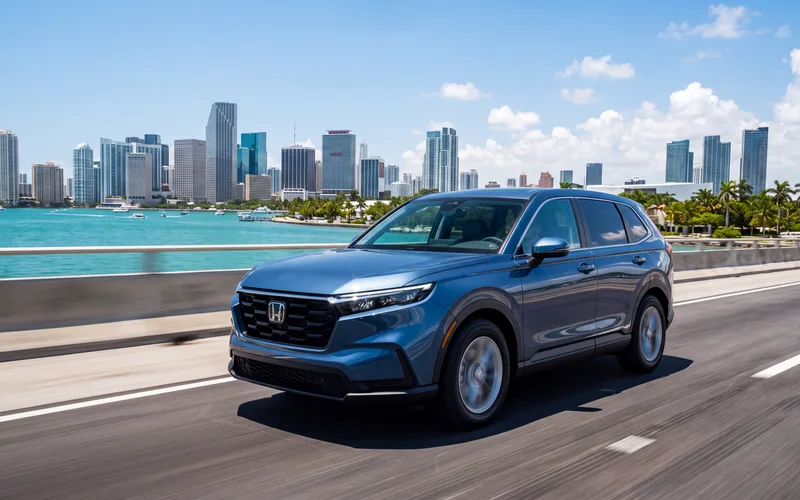 Honda CR-VCompact SUVBetter at: Cargo and efficiency
It solves the Terrain's two biggest problems at once — nearly 10 cu ft more cargo behind the back seat and a hybrid that returns about 40 MPG — while holding its value far better.
Compare 1.71C-
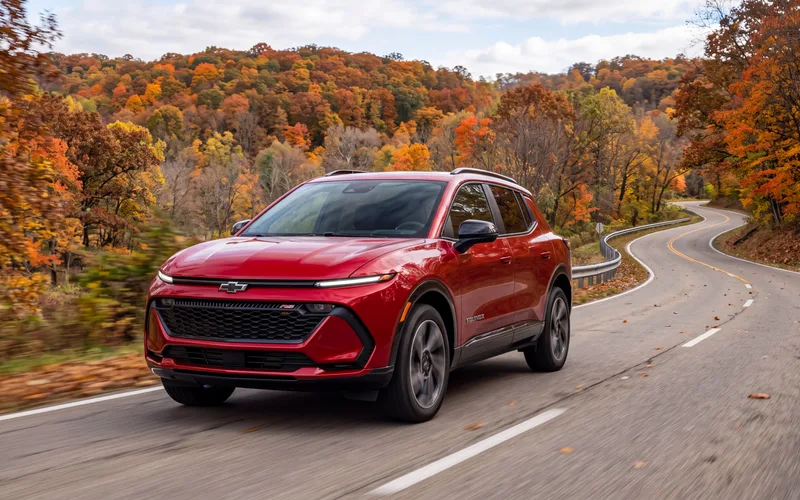 Chevrolet EquinoxCompact SUVBetter at: Price
Mechanically the identical vehicle for $2,000–4,000 less, so the only question is whether GMC's styling, Denali interior and AT4 hardware are worth the premium.
Compare 2.56C+
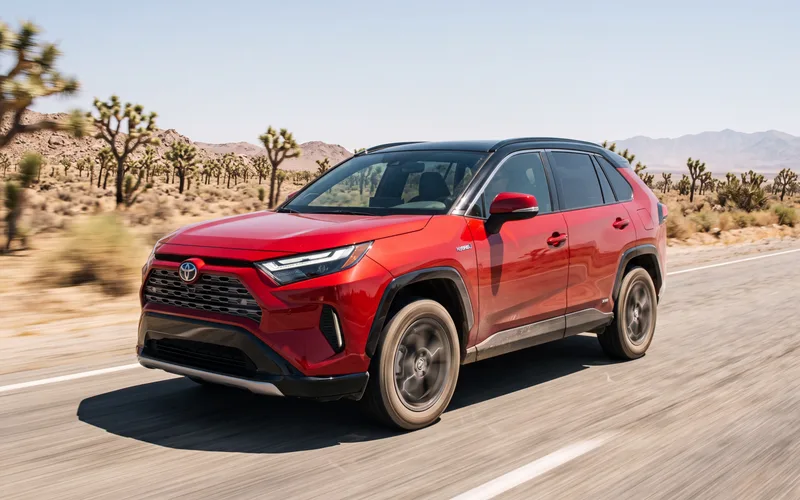 Toyota RAV4Compact SUVBetter at: Resale value
Tows 3,500 lbs against the Terrain's 1,500, offers a hybrid, and leads the class in five-year resale and long-term reliability.
CompareHow it's evolved
4 scored model years · 2023–2026
Subject scores by year
Hover or tap a score to see what moved it versus the year before. A corner mark flags a big swing.
| Year | Performance | Efficiency | Safety | Space | Cost | Reliability | Tech | Use-case | Driving | Value |
|---|---|---|---|---|---|---|---|---|---|---|
| 2026 | 27 | 66 | 62 | 48 | 53 | 61 | 71 | 57 | 56 | 68 |
| 2025 | 25 | 66 | 59 | 48 | 54 | 59 | 70 | 54 | 57 | 63 |
| 2024 | 23 | 60 | 51 | 44 | 49 | 62 | 47 | 57 | 52 | 55 |
| 2023 | 23 | 59 | 51 | 44 | 51 | 59 | 54 | 52 | 53 | 54 |
Compare two years
Best fit & conditions
Higher scores mean a better fit for that use case. Learn more about use-case fit →
Subject profile
Academic Probation · NHTSA safety recalls
No NHTSA safety recall is on record for the 2025 GMC Terrain. Other model years of the Terrain have 14 — listed below.
14 recalls on other model years of the Terrain (2017–2024, 2026)
Feb 26, 2026Equipment: other: owners/service/other manualGeneral Motors has decided that certain 2027 Chevrolet Bolt EV, 2025-2026 Cadillac OPTIQ, Chevrolet Colorado, Equinox EV, GMC Canyon, 2026 Buick Enclave, Envision, Cadillac CT5, Escalade, Escalade ESV, Escalade IQ, Escalade IQL, LYRIQ, VISTIQ, Chevrolet Blazer EV, Corvette Convertible, Corvette Coupe, Corvette Convertible E-Ray, Equinox, Silverado 1500, 2500, 3500, Silverado EV, Suburban 1500, Tahoe, Traverse, GMC Acadia, Hummer EV Pickup, Hummer EV SUV, Sierra 1500, 2500, 3500, Sierra EV, Terrain, Yukon, and Yukon XL vehicles. The radio may not have been set to the correct status to download the electronic owner's manual during production. As such, these vehicles fail to comply with the requirements of Federal Motor Vehicle Safety Standard number 208, âOccupant Protection.â
Defect
General Motors has decided that certain 2027 Chevrolet Bolt EV, 2025-2026 Cadillac OPTIQ, Chevrolet Colorado, Equinox EV, GMC Canyon, 2026 Buick Enclave, Envision, Cadillac CT5, Escalade, Escalade ESV, Escalade IQ, Escalade IQL, LYRIQ, VISTIQ, Chevrolet Blazer EV, Corvette Convertible, Corvette Coupe, Corvette Convertible E-Ray, Equinox, Silverado 1500, 2500, 3500, Silverado EV, Suburban 1500, Tahoe, Traverse, GMC Acadia, Hummer EV Pickup, Hummer EV SUV, Sierra 1500, 2500, 3500, Sierra EV, Terrain, Yukon, and Yukon XL vehicles. The radio may not have been set to the correct status to download the electronic owner's manual during production. As such, these vehicles fail to comply with the requirements of Federal Motor Vehicle Safety Standard number 208, âOccupant Protection.â
Risk
Without an owner's manual to consult, owners may not know how to safely use and operate the vehicle, increasing the risk of injury in a crash.
Remedy
Dealers will reset the vehicle radio, which will facilitate automatic download of the electronic ownerâs manual, free of charge. Owner notification letters were mailed April 16, 2026. Owners may contact GM customer service at 1-866-467-9700, Chevrolet customer service at 1-800-222-1020 or Cadillac customer service at 1-800-333-4223. The manufacturer's number for this recall is N252540430. Vehicle Identification Numbers (VINs) involved in this recall became searchable on NHTSA.gov on February 26, 2026.
NHTSA campaign 26V114000 ↗Manufacturer no. N2525404305,861 vehicles potentially affected (all models in the campaign)Owners notified Apr 16, 2026Filed by General Motors, LLCFiled as TERRAINDec 21, 2023Structure: body: doorThe door strikers may fracture, resulting in the door opening unexpectedly.
Defect
General Motors, LLC (GM) is recalling certain 2024 Chevrolet Blazer, Blazer EV, Equinox, and GMC Terrain vehicles. The door strikers may fracture, resulting in the door opening unexpectedly.
Risk
A door opening while the vehicle is being driven can increasing the risk of injury or a crash.
Remedy
Dealers will replace all four door strikers and attaching bolts, free of charge. Owner notification letters were mailed January 24, 2024. Owners may contact Chevrolet customer service at 1-800-222-1020 and GMC customer service at 1-800-462-8782. GM's number for this recall is N232429911.
NHTSA campaign 23V869000 ↗Manufacturer no. N232429911265 vehicles potentially affected (all models in the campaign)Owners notified Jan 24, 2024Filed by General Motors, LLCFiled as TERRAINMay 11, 2023Child seat: vehicle latch anchorThe four rear-seat lower child seat LATCH anchorage bars may have excessive powder coating, which could prevent a child seat from being installed with the anchorage bars. As such, these vehicles fail to comply with the requirements of Federal Motor Vehicle Safety Standard number 225, "Child Restraint Anchorage Systems."
Defect
General Motors, LLC (GM) is recalling certain 2020-2023 Chevrolet Equinox and GMC Terrain vehicles. The four rear-seat lower child seat LATCH anchorage bars may have excessive powder coating, which could prevent a child seat from being installed with the anchorage bars. As such, these vehicles fail to comply with the requirements of Federal Motor Vehicle Safety Standard number 225, "Child Restraint Anchorage Systems."
Risk
The inability to install a child seat with the LATCH anchorage bars could result in an unsecured child seat, increasing the risk of injury in a crash.
Remedy
Owners are advised to install child seats using the vehicle's rear seat belts until the remedy is complete. Dealers will inspect the latch anchorage bars, and remove and replace the finish, as necessary, free of charge. Owner notification letters were mailed June 2, 2023. Owners may contact Chevrolet customer service at 1-800-222-1020 or GMC customer service at 1-800-462-8782. GM's number for this recall is N232403240.
NHTSA campaign 23V339000 ↗Manufacturer no. N232403240668,187 vehicles potentially affected (all models in the campaign)Owners notified Jun 2, 2023Filed by General Motors, LLCFiled as TERRAINJan 19, 2023Fuel system, gasoline: delivery: fuel pump: control/drive moduleThe fuel pump module may not consistently provide sufficient fuel to the engine, resulting in an engine stall.
Defect
General Motors, LLC (GM) is recalling certain 2021-2022 Chevrolet Equinox and 2022 GMC Terrain vehicles. The fuel pump module may not consistently provide sufficient fuel to the engine, resulting in an engine stall.
Risk
An engine stall increases the risk of a crash.
Remedy
Dealers will replace the fuel pump module, free of charge. Owner notification letters were mailed June 5, 2023. Owners may contact Chevrolet customer service at 1-800-222-1020 or GMC customer service at 1-800-462-8782. GM's number for this recall is N222372310.
NHTSA campaign 23V013000 ↗Manufacturer no. N22237231023,323 vehicles potentially affected (all models in the campaign)Owners notified Jun 5, 2023Filed by General Motors, LLCFiled as TERRAIN NADec 15, 2022Air bags: sensor: occupant classification: front passengerThe Occupant Classification System may not properly disable the front passenger air bag when there is a small child or child restraint detected in the seat.
Defect
General Motors, LLC (GM) is recalling certain 2023 Chevrolet Equinox and GMC Terrain vehicles equipped with ventilated front passenger seats. The Occupant Classification System may not properly disable the front passenger air bag when there is a small child or child restraint detected in the seat.
Risk
In the event of a crash, a front passenger air bag that deploys with a child or infant in the front passenger seat can increase their risk of injury.
Remedy
Dealers will replace the passenger presence system, free of charge. Owner notification letters were mailed January 24, 2023. Owners may contact Chevrolet customer service at 1-800-222-1020 or GMC customer service at 1-800-462-8782. GM's number for this recall is N222388911.
NHTSA campaign 22V929000 ↗Manufacturer no. N2223889119 vehicles potentially affected (all models in the campaign)Owners notified Jan 24, 2023Filed by General Motors, LLCFiled as TERRAINSep 29, 2022SeatsThe driver's seat may have a stripped or loose bolt at the seat frame height-adjust pivot.
Defect
General Motors, LLC (GM) is recalling certain 2022-2023 Chevrolet Equinox and 2022 GMC Terrain vehicles. The driver's seat may have a stripped or loose bolt at the seat frame height-adjust pivot.
Risk
A seat with a missing or loose bolt may not properly restrain the occupant in a crash, increasing the risk of injury.
Remedy
Dealers will inspect the driver's seat and replace the seat cushion frame, if necessary, free of charge. Owner notification letters were mailed on November 4, 2022. Owners may contact Chevrolet customer service at 1-800-222-1020 or GMC customer service at 1-800-462-8782. GMC's number for this recall is N222377890.
NHTSA campaign 22V724000 ↗Manufacturer no. N2223778906,895 vehicles potentially affected (all models in the campaign)Owners notified Nov 4, 2022Filed by General Motors, LLCFiled as TERRAINMar 8, 2022Exterior lighting: headlightsA reflection caused by the headlight housings may illuminate areas above the vehicle and outside of the driver's view with excessively bright light. As such, these vehicles fail to comply with the requirements of Federal Motor Vehicle Safety Standard number 108, "Lamps, Reflective Devices, and Associated Equipment."
Defect
General Motors, LLC (GM) is recalling certain 2010-2017 GMC Terrain vehicles. A reflection caused by the headlight housings may illuminate areas above the vehicle and outside of the driver's view with excessively bright light. As such, these vehicles fail to comply with the requirements of Federal Motor Vehicle Safety Standard number 108, "Lamps, Reflective Devices, and Associated Equipment."
Risk
The bright reflection may cause a glare for other drivers, reducing their visibility and increasing the risk of a crash.
Remedy
Dealers will install headlamp appliques, free of charge. Owner notification letters were mailed September 8, 2022. Owners may contact GMC customer service at 1-800-462-8782. GM's number for this recall is N222363740.
NHTSA campaign 22V137000 ↗Manufacturer no. N222363740740,581 vehicles potentially affected (all models in the campaign)Owners notified Sep 8, 2022Filed by General Motors, LLCFiled as TERRAINAug 5, 2021Tires · Tires: tread/beltThe tires may have been manufactured with an insufficient amount of curative agent, which could cause tread separation.
Defect
General Motors, LLC (GM) is recalling certain 2021-2022 Chevrolet Equinox and GMC Terrain vehicles equipped with certain Hankook tires. The tires may have been manufactured with an insufficient amount of curative agent, which could cause tread separation.
Risk
Tread separation can result in a loss of vehicle control, increasing the risk of a crash.
Remedy
Dealers will inspect the tire DOT numbers, and replace any affected tires, free of charge. Owner notification letters were mailed on August 31, 2021. Owners may contact GMC customer service at 1-800-462-8782; and Chevrolet customer service at 1-800-222-1020. GM's number for this recall is N212343560.
NHTSA campaign 21V612000 ↗Manufacturer no. N2123435609,597 vehicles potentially affected (all models in the campaign)Owners notified Aug 31, 2021Filed by General Motors, LLCFiled as TERRAIN, TERRAIN NAOct 29, 2020Power train: automatic transmissionThe start/stop accumulator endcap may have missing bolts.
Defect
General Motors LLC (GM) is recalling certain 2018-2019 Chevrolet Cruze and Buick LaCrosse, 2018-2020 Chevrolet Equinox, Chevrolet Traverse and GMC Terrain, 2018 Chevrolet Malibu, 2019-2020 Buick Encore, Buick Enclave, Cadillac XT4, Chevrolet Blazer and GMC Acadia, and 2020 Cadillac XT6 vehicles. The start/stop accumulator endcap may have missing bolts.
Risk
Missing bolts on the start-stop accumulator endcap could result in a transmission oil leak and may progress to a loss of propulsion, increasing the risk of a crash. A transmission fluid leak in the presence of an ignition source may increase the risk of fire.
Remedy
GM will notify owners, and dealers will inspect the start-stop transmission accumulator and replace it if any bolts are missing, free of charge. The recall began December 15, 2020. Owners may contact GMC customer service at 1-888-988-7267, Buick Customer service at 1-866-608-8080, Chevrolet customer service at 1-800-222-1020 or Cadillac customer service at 1-800-458-8006. GM's number for this recall is N202313440.
NHTSA campaign 20V668000 ↗Manufacturer no. N202313440194,105 vehicles potentially affected (all models in the campaign)Owners notified Dec 15, 2020Filed by General Motors LLCFiled as TERRAINMar 7, 2019SeatsThe rear-right seat may have insufficient welds on the head-restraint bracket.
Defect
General Motors LLC (GM) is recalling certain Chevrolet Equinox and GMC Terrain vehicles. The rear-right seat may have insufficient welds on the head-restraint bracket.
Risk
In the event of a crash, the insufficient welds may result in an increased risk of injury for an occupant seated in the rear-right position.
Remedy
GM will notify owners, and dealers will replace the rear-right seatback frame, free of charge. The recall began April 15, 2019. Owners may contact Chevrolet customer service at 1-800-222-1020 or GMC customer service at 1-800-462-8782. GM's number for this recall is N192209550.
NHTSA campaign 19V184000 ↗Manufacturer no. N192209550120 vehicles potentially affected (all models in the campaign)Owners notified Apr 15, 2019Filed by General Motors LLCFiled as TERRAINAug 30, 2018Service brakes, hydraulic: foundation components: disc: caliperThe rear brake caliper pistons may have an insufficient coating causing gas pockets to form, potentially reducing rear brake performance.
Defect
General Motors LLC (GM) is recalling certain 2018-2019 Chevrolet Equinox, Impala, Cruze, Volt and Bolt EV vehicles, GMC Terrain vehicles, Buick Lacrosse and Regal vehicles, Cadillac XTS and XTS Professional vehicles and 2018 Chevrolet Malibu vehicles. The rear brake caliper pistons may have an insufficient coating causing gas pockets to form, potentially reducing rear brake performance.
Risk
A reduction of braking performance can increase the risk of a crash.
Remedy
GM will notify owners, and dealers will bleed the vehicle's brake system, free of charge. The recall began October 11, 2018. Owners may contact Buick customer service at 1-800-521-7300, Cadillac customer service at 1-800-458-8006, Chevrolet customer service at 1-800-222-1020, or GMC customer service at 1-800-462-8782. GM's number for this recall is 18279.
NHTSA campaign 18V576000 ↗Manufacturer no. 18279210,628 vehicles potentially affected (all models in the campaign)Owners notified Oct 11, 2018Filed by General Motors LLCFiled as TERRAINMay 31, 2018Fuel system, gasoline: delivery: fuel pumpThe high pressure fuel pump may detach from its mounting flange, possibly resulting in the pump damaging the high pressure fuel line.
Defect
General Motors LLC (GM) is recalling certain 2015-2018 GMC Canyon, 2016-2017 Buick Envision, 2016-2018 Chevrolet Colorado and Malibu, 2017-2018 GMC Acadia, 2018 Buick LaCrosse, Cadillac ATS, Chevrolet Equinox, and GMC Terrain vehicles. The high pressure fuel pump may detach from its mounting flange, possibly resulting in the pump damaging the high pressure fuel line.
Risk
A damaged fuel line can create a fuel leak, increasing the risk of a fire.
Remedy
GM will notify owners, and dealers will replace the high pressure fuel pump, and high pressure fuel pipe, free of charge. The recall began July 2, 2018. Owners may contact Buick customer service at 1-800-521-7300, Cadillac customer service at 1-800-458-8006, Chevrolet customer service at 1-800-222-1020, or GMC customer service at 1-800-462-8782. GM's number for this recall is 18188.
NHTSA campaign 18V358000 ↗Manufacturer no. 18188 18268895 vehicles potentially affected (all models in the campaign)Owners notified Jul 2, 2018Filed by General Motors LLCFiled as TERRAINMay 24, 2018Air bags: air bag/restraint control moduleThe sensing diagnostic module (SDM) that senses a crash and deploys the necessary air bags may not power down correctly when the vehicle is shut off, causing it to be inoperative when the vehicle is restarted.
Defect
General Motors LLC (GM) is recalling certain 2018 GMC Terrain vehicles. The sensing diagnostic module (SDM) that senses a crash and deploys the necessary air bags may not power down correctly when the vehicle is shut off, causing it to be inoperative when the vehicle is restarted.
Risk
If the SDM becomes inoperative, it will not detect a crash or command the necessary air bag deployment, increasing the risk of injury in the event of a crash.
Remedy
GM will notify owners, and dealers will reprogram the SDM with updated software, free of charge. The recall began June 29, 2018. Owners may contact GMC customer service at 1-800-462-8782. GM's number for this recall is 18179.
NHTSA campaign 18V340000 ↗Manufacturer no. 1817988,503 vehicles potentially affected (all models in the campaign)Owners notified Jun 29, 2018Filed by General Motors LLCFiled as TERRAINAug 22, 2017Power train: driveline: driveshaftThe right front intermediate driveshaft may fracture and separate while driving.
Defect
General Motors LLC (GM) is recalling certain 2018 Chevrolet Equinox and GMC Terrain vehicles and 2017-2018 GMC Acadia vehicles. The right front intermediate driveshaft may fracture and separate while driving.
Risk
If the front right intermediate drive shaft assembly separates while driving, the vehicle will lose propulsion, increasing the risk of a crash. If the assembly separates while parked on a grade, without the park brake engaged, the vehicle may move unintentionally, increasing the risk of a vehicle roll-away.
Remedy
GM will notify owners, and dealers will replace the right front intermediate drive shaft assembly, free of charge. The recall began August 25, 2017. Owners may contact GMC customer service at 1-800-462-8782 or Chevrolet customer service at 1-800-222-1020. GM's number for this recall is 17329.
NHTSA campaign 17V516000 ↗Manufacturer no. 173292,905 vehicles potentially affected (all models in the campaign)Owners notified Aug 25, 2017Filed by General Motors LLCFiled as TERRAIN
Source: NHTSA Office of Defects Investigation recall database, model years 2017–2026. Recalls are listed by model year as the manufacturer filed them; whether a specific car is affected depends on its VIN — check a VIN at nhtsa.gov ↗. NHTSA model names matched to this page: TERRAIN, TERRAIN NA.
Detailed scoring by subject
1Performance & PowertrainThe Terrain's lowest-graded category.0.00F
The 2025 Terrain is the launch year of the third-generation model and uses GM's 1.5L LSY turbo I4 rated at 175 hp @ 5,600 rpm across every trim; no optional higher-output engine is offered. Output is well below the SUV segment norm.
Peak torque of 203 lb-ft @ 2,000–4,000 rpm is the single figure across every 2025 Terrain trim and drivetrain — there is no alternate engine to raise the ceiling. Sits in the bottom third of the SUV normalization band.
No dedicated 2025 Terrain instrumented tests were captured in this pass. Estimate is anchored to the 2025 Chevrolet Equinox 1.5T AWD, which independent instrumented tests place at roughly 8.5–8.8 s; the Terrain shares the drivetrain and is within ~50 lb of the Equinox's curb weight.
The 1.5T is adequate for around-town driving but reviewers of the shared-platform 2025 Equinox consistently flag coarse, buzzy behavior under load with mild turbo lag off the line; grade climbs and highway merges expose the modest output. Middle of the segment — not rough enough for the sub-50 band, well short of an 80+ smooth mid-luxury delivery.
FWD Terrains use GM's continuously variable transmission and AWD trims get an 8-speed conventional automatic; the CVT is prone to droning under hard throttle while the 8-speed is generally smooth with occasional hunting between low gears. Middle-of-segment behavior overall.
The 2025 Terrain carries the 1,500-lb tow rating shared with its Equinox platform mate when properly equipped with the available trailering package. Near the bottom of the SUV normalization band — enough for a small utility trailer, not for boats or campers.
For the 2025 launch year the Terrain arrived with the Elevation and Denali trims (AT4 followed later in the cycle), so AWD is optional on Elevation and standard on Denali — widely available but not fleet-standard. System is a conventional single-speed AWD with front bias; no low range, no torque-vectoring rear axle, which caps this above segment average but well short of the 80+ band.
The 2025 launch lineup is pavement-oriented (Elevation, Denali) — the more capable AT4 sub-brand trim, which adds all-terrain tires, +1 in ride height, off-road mode, hill-descent control, recovery hooks and underbody protection, was not part of the initial 2025 rollout. Without the AT4 the Terrain is a conventional compact crossover with modest ground clearance and no dedicated off-road hardware, placing it below segment mid-band and well below Bronco Sport/TrailSport-class rivals.
The 2025 Terrain is offered exclusively with the 1.5L turbo I4; there is no hybrid, PHEV or EV variant (the Chevrolet Equinox EV is sold as a separate Chevrolet model, not as a Terrain). Take-it-or-leave-it powertrain sits near the bottom of the segment as electrified compact crossovers proliferate.
2Efficiency & RangeOne of the Terrain's strongest categories.2.45C+
MY2025 is the launch year of the redesigned third-generation Terrain on GM's VSS-F/C1XX-derived platform (shared with the redesigned Chevy Equinox). A single 1.5L turbo I4 (LSY) is offered — no hybrid — and EPA combined economy lands at 28 MPG for the FWD Elevation volume trim (26 MPG AWD). Mid-pack for the compact-SUV band and well behind hybrid-standard rivals (RAV4 Hybrid ~39, CR-V Hybrid ~37).
FWD city rating of 26 MPG places the redesigned Terrain below segment leaders — the 1.5L turbo with stop-start has no hybrid assist, and the CVT-with-simulated-steps calibration is tuned for smoothness over city-cycle efficiency. AWD drops another 1 MPG in city driving.
30 MPG highway (FWD) is the redesigned Terrain's best number and roughly segment-average for a non-hybrid compact SUV — the small-displacement turbo cruises efficiently at part throttle, but frontal area and taller ride height prevent a class-leading figure.
A 15.6-gallon fuel tank combined with 28 MPG combined (FWD) yields a theoretical ~437-mile range — mid-upper part of the SUV range band and one of the Terrain's stronger efficiency-category attributes. AWD drops range to ~406 mi.
At 28 MPG combined on regular unleaded and the EPA's standard 15k-mi/yr / 55-city split, annual fuel cost sits near $1,875 for the FWD Elevation — reasonable for a non-hybrid compact SUV but noticeably higher than hybrid-standard alternatives (~$1,300/yr for RAV4 Hybrid). AWD trims add roughly $125/yr.
The 1.5L turbo LSY is engineered for regular 87-octane unleaded across all trims — no premium requirement, no diesel, no charging infrastructure to source. Straightforward gas-station fuel keeps operating friction low, placing this at the top end of the 80–100 band.
3SafetyMid-pack among this car's ten categories.1.94C-
The 2025 GMC Terrain is the launch year of the redesigned third-generation model on GM's new compact-SUV architecture shared with the redesigned Chevrolet Equinox. NHTSA had not published an overall star rating for the new Terrain during the 2025 model year, so a mid-4-star estimate is used pending real testing.
The redesigned 2025 Terrain was not tested by IIHS during its launch model year and holds no Top Safety Pick designation. The related redesigned Chevrolet Equinox has posted mixed early results in the updated small overlap and moderate overlap protocols, so a low-middle score is appropriate until formal Terrain results land.
Every 2025 Terrain (Elevation launch trim, then AT4 and Denali added later in the model year) includes GMC Pro Safety Plus standard: automatic emergency braking, front pedestrian braking, forward collision alert, lane keep assist with lane departure warning, following distance indicator, and IntelliBeam auto high beams. Adaptive cruise control and blind-spot monitoring with rear cross-traffic alert are notably absent from base — they remain trim-gated to AT4/Denali or the Advanced Safety Package option, which trails Honda Sensing, Toyota Safety Sense 3.0 and Hyundai SmartSense in comprehensiveness at the base trim.
GM's current-generation AEB system with front pedestrian braking is standard and generally posts Adequate to Superior daytime results in IIHS front-crash-prevention testing on related crossovers, but nighttime pedestrian performance and higher-speed intervention have historically been the weaker link versus Toyota, Honda and Subaru systems. No Terrain-specific IIHS FCP results were published during 2025.
Lane Change Alert with Side Blind Zone Alert and Rear Cross Traffic Alert are alert-only (no active steering intervention) and are packaged rather than standard on the Elevation launch trim — buyers must step to AT4/Denali (both of which arrived later in the 2025 model year) or add the Advanced Safety Package. Coverage is competitive once equipped, but the trim gating and launch-year availability drag the item down.
Lane keep assist with lane departure warning is standard on all trims and functions competently, but true hands-on lane centering is only available bundled with adaptive cruise on higher trims. Reviewers of the launch Elevation trim describe the base LKA as reactive rather than proactive — it nudges at the line rather than actively centering, so it trails systems like Honda Sensing centering or Hyundai's Highway Driving Assist.
Full-speed-range adaptive cruise with stop-and-go is optional on Elevation (Advanced Safety Package) and standard on AT4 and Denali. GM's current ACC calibration is smooth and confident in traffic on similar crossovers, but base-trim buyers get only standard cruise, and there is no dedicated highway-assist mode below the Super Cruise tier — which was late-arriving on the 2025 Denali.
Super Cruise is available on the top Denali trim of the 2025 Terrain — GM's expansion of the system into the compact-SUV class — but Denali availability arrived late in the 2025 model year and the Elevation launch trim did not offer the system. Super Cruise itself remains one of the most mature hands-free highway systems on the market with ~750,000 mi of mapped North American divided highways and hands-free lane change; the limited/late availability on the 2025 Terrain caps the score.
The redesigned 2025 Terrain uses LED reflector low/high beams as standard with IntelliBeam auto high-beam assist across the range; Denali adds more capable projector LEDs with signature lighting. Formal IIHS headlight ratings for the redesigned Terrain were not published during 2025, and comparable GM crossover implementations have typically earned Acceptable on volume trims and Good on top trims — enough for a low-to-mid 60s.
The upright, boxy 2025 Terrain has fairly generous glass and a tall driving position with an available HD Surround Vision 360-degree camera plus a standard HD rear-view camera to compensate for chunky C-pillars. Forward and side sightlines are good; rear three-quarter view is average due to the rising beltline, and the camera systems substantially close the gap on higher trims — but the Elevation launch trim relies on the rearview camera only.
Two outboard LATCH positions with lower anchors and three upper tethers is standard, in line with segment norms. The redesigned Terrain's rear door aperture is wider than the outgoing generation and rear-seat foot space is adequate for rear-facing seats, though the tighter compact-SUV footprint makes three-across installations difficult — a familiar compact-SUV compromise, not a Terrain-specific weakness.
4Space & ComfortOne of the Terrain's weakest categories.1.18D
The 2025 Terrain is the launch year of the redesigned generation and is offered exclusively as a five-passenger, two-row compact SUV; there is no seven-seat option. Well below the SUV normalization band's upper end.
Front headroom on the redesigned 2025 Terrain is competitive for the compact SUV segment; the available panoramic sunroof (standard on Denali) trims about 0.6 in from the cloth-roof figure.
Front legroom is slightly improved over the prior-generation Terrain but sits mid-pack for the compact SUV segment. Elevation and Denali share the same seating hard points.
Second-row headroom is one of the redesigned Terrain's stronger interior metrics thanks to the squarer, upright greenhouse — adult heads clear comfortably.
Second-row legroom is a real strength: 39.5 in comfortably fits two adults behind two adults and lands near the top of the compact SUV band, riding on a 108.1-in wheelbase that is slightly longer than the platform-mate Equinox.
The 2025 Terrain is a two-row compact SUV with no third row offered on any trim — a straightforward zero-usability outcome. Three-row shoppers step up to the GMC Acadia.
Cargo volume behind the second row is essentially unchanged from the prior generation and sits near the lower end of the compact SUV normalization band — CR-V (~39 cu ft) and RAV4 (~37 cu ft) offer meaningfully more.
Maximum cargo volume with the second-row seat folded is modest for the compact SUV segment; the flat load floor is a plus but total volume trails CR-V (~76 cu ft) and RAV4 (~69 cu ft) noticeably.
The redesign brings a larger center console with a sliding armrest, a phone shelf with wireless charging, deep door bins, and a two-tier console tray; nothing genuinely innovative (no frunk, no Pro Power outlets) but everyday storage is competitive for the segment.
Denali front seats gain 8-way power adjustment with heat/ventilation and are praised for daily comfort; Elevation cloth seats are supportive but flatter and less bolstered. Second-row bench is upright and firm — fine for around-town use, less so on long-haul trips.
Ride is composed on smooth pavement with the Elevation's 18-inch wheels but Denali's 19-inch wheels turn broken pavement busy; the softer-riding AT4 with all-terrain tires was not part of the 2025 launch, so the range trends firmer than a mid-2026 comparison. No adaptive damping is offered — a single passive tune spans the launch trims.
The redesign added an acoustic-laminated windshield with active noise cancellation on Denali; wind and road noise at highway speed are competitive for the segment, though the 1.5T becomes audibly coarse under hard throttle. Not library-quiet but noticeably better than the prior generation.
Heated front seats and heated steering wheel are standard on Elevation and up; dual-zone automatic climate is standard on Denali (single-zone auto on Elevation); ventilated fronts and heated 2nd-row outboard are Denali-only. Remote start with cabin pre-conditioning is standard. Rear vents are standard but there is no separate rear climate zone.
5Cost of OwnershipGrades below the middle of the scale.1.66D
The 2025 Terrain is the launch year of the third-generation model; GMC opened the lineup with Elevation FWD at $30,395 MSRP plus $1,395 destination, totaling $31,790. That price sits well below the SUV segment mid-band.
The 2025 launch mix skewed heavily to Elevation AWD, whose MSRP starts at $32,395 + $1,395 destination = $33,790 and typically transacts around $35,000-$35,500 with common option packages. Denali AWD lifts the top of the walk to ~$44k.
Estimated from Edmunds/CarEdge compact-SUV class data for turbo-four powertrains. GM's 1.5L LSY turbo I4 has documented long-term concerns (timing chain, thermostat) that lift maintenance versus naturally-aspirated Japanese rivals; a first-year-of-generation launch also carries mild recall/TSB risk. Below premium-brand peers.
KBB/ALG residual projections put GM compact SUVs at ~46-52% of MSRP after 5 years. First-year-of-generation Terrains typically sit mid-pack — well behind Toyota RAV4 / Honda CR-V (56-60%) but tracking the Chevy Equinox twin, and helped by a Denali-heavy trim mix.
GM's standard bumper-to-bumper coverage is 3 years / 36,000 miles — the industry floor. Substantially behind Hyundai/Kia/Genesis (5/60k) and the 5-year Mitsubishi/VinFast programs.
GM's standard powertrain coverage is 5 years / 60,000 miles — bottom of the industry alongside Ford, dwarfed by Hyundai/Kia (10/100k) and Mitsubishi (10/100k).
GMC's included package is thin: one complimentary first-visit maintenance (oil change / tire rotation / multi-point inspection), 5-yr/60k roadside assistance, and a short 3-month OnStar & Connected Services Premium trial. Beats brands offering nothing but well below Toyota (2yr/25k ToyotaCare) and Hyundai/Kia (3yr/36k) programs.
$35,290 volume-trim price minus its estimated resale value after 5 years (49% retained, or about $17,292) leaves about $17,998 in depreciation. Add the projected $5,700 in 5-year maintenance and repairs, and owning this vehicle for 5 years costs about $23,698 in total.
6Reliability & QualityMid-pack among this car's ten categories.2.00C
2025 is the launch year of the third-generation Terrain, so no owner-reported dependability data exists at the model-year level. Historical Terrain (prior gen) tracked average-to-below-average at Consumer Reports and GMC sits mid-pack in J.D. Power dependability; brand-new redesigns on shared GM compact platforms typically dip in initial reliability, warranting a below-segment estimate.
GMC consistently ranks in the lower-middle of Consumer Reports brand reliability rankings and mid-pack in J.D. Power VDS. Not a Toyota/Lexus/Honda peer but not bottom-tier either — similar to Chevrolet and Buick within the GM family.
First-year launch models on GM's redesigned compact SUV platform typically accumulate several early software/electrical TSBs and a couple of small-population recalls; the 2025 Terrain has already seen recall/stop-sale activity (software and safety-system related) shared with the platform-mate Chevrolet Equinox. Prior-gen Terrain (2018–2024) had 5+ NHTSA recalls including headlight illumination and airbag control module issues, so the nameplate history is average-at-best.
The 1.5L turbocharged LSY four-cylinder paired with an 8-speed automatic (AWD) or CVT (FWD) has been in GM's compact lineup since roughly 2018. The LSY has documented turbo actuator issues and some oil consumption complaints, though refinements have been made; the CVT is new to the Terrain for 2025 and unproven long-term. Not a red-flag powertrain but not bulletproof either.
Reviewers of the redesigned 2025 Terrain flagged extensive hard plastics on the doors, dash, and lower cabin — a downgrade versus the outgoing model and behind segment leaders like the Mazda CX-5, Honda CR-V, and Hyundai Tucson. The Denali trim upgrades soft-touch coverage and stitching, but the volume Elevation trim reads as budget for the price point.
Assembly on early third-gen units is competent overall with no widespread rattle complaints, but first-year GM launches out of Ramos Arizpe (Mexico) typically see scattered initial-quality issues (trim alignment, shifter/console area feel) that show up in year-one J.D. Power IQS results. Expect a slight first-year dip versus the eventual mid-cycle norm.
GMC operates through the combined Buick-GMC dealer network of roughly 1,900+ US dealers, providing broad nationwide coverage. Service satisfaction sits around industry average in J.D. Power Customer Service Index rankings among mainstream brands.
GM shares many components (1.5T engine, 8-speed transmission, electrical modules) across Chevrolet Equinox, Buick Envision, and Terrain, keeping parts abundant and reasonably priced. First-year body panels and interior trim can be intermittently backordered in the initial months post-launch, and the redesigned third-gen has less aftermarket support than the outgoing model. RepairPal-style annual repair costs for the Terrain historically sit in the $550s — typical for a mainstream compact SUV.
7Technology & InfotainmentThe Terrain's best-graded category.2.75B-
The redesigned third-generation 2025 Terrain launched with an 11.3-inch center touchscreen on the Elevation volume trim (and AT4 when that trim joined mid-cycle); the top Denali steps up to the 15-inch portrait display shared with the new Equinox EV/Blazer EV family.
New-for-2025 Google Built-In system is quick and logically laid out, and reviewers of the launch Elevation trim praise its responsiveness; the trade-off is heavy reliance on the portrait touchscreen for HVAC and vehicle-settings tasks with fewer physical shortcuts than segment leaders.
Gas 2025 Terrain retains wireless Apple CarPlay and wireless Android Auto standard on every trim — GM's decision to drop phone projection applies only to its EV lineup, not the ICE Terrain that launched for 2025.
Google Built-In brings Google Assistant natural-language voice control and native Google Maps with live traffic — one of the best embedded nav/voice stacks in the segment. A three-year Google Built-In subscription is included at launch; renewal is required thereafter.
6-speaker system is standard on Elevation and unremarkable; an 8-speaker Bose Premium system is available on Denali (which released later in the 2025 model year) and delivers respectable but not class-leading sound for a mainstream compact SUV. Launch-year Elevation buyers had no premium audio path until upper trims arrived.
11-inch reconfigurable digital gauge cluster is standard on every 2025 Terrain trim — a clear step above segment peers like the 2025 RAV4 and CR-V that still use partial-digital or smaller displays on volume trims.
Third-gen Terrain rides on GM's VIP electrical architecture, which enables periodic whole-vehicle OTA updates to infotainment, driver-assist, and control modules. Scope trails Tesla/Rivian's cadence and feature-adding OTAs, but is credible whole-vehicle OTA — with launch-year cadence still ramping.
myGMC app supports remote start, lock/unlock, vehicle status, and locate, but core remote features require an active OnStar Remote Access subscription after the trial expires — subscription gating drags the score below unlocked competitors. No phone-as-key on the 2025 Terrain.
Multiple USB-C ports across front and rear rows are standard; wireless phone charging is optional on Elevation and standard on Denali (and AT4 once it went on sale). No 120V household outlet on the gas Terrain.
Keyless entry with push-button start and remote start standard across the 2025 lineup; hands-free power liftgate available on upper trims (AT4/Denali once released). No phone-as-key on the gas Terrain.
HD rear-view camera and rear park assist standard; HD Surround Vision (360-degree) camera and front park assist available on AT4/Denali once those trims released later in the 2025 model year. No automated parking. Elevation launch buyers were limited to the rearview camera only.
Head-up display is restricted to the Denali trim, which arrived later in the 2025 model year — Elevation and AT4 buyers cannot option it, so most 2025 Terrain buyers don't have access to a HUD.
8Use-Case FitOne of the Terrain's weakest categories.1.63D
Redesigned 3rd-gen Terrain gives 39.2 in of rear legroom on a 107.5-in wheelbase with a wide rear-door aperture, easily fitting rear-facing seats behind average-height parents; two outboard LATCH anchors and three top tethers are standard. What drags it below CR-V-class benchmarks is the 29.8 cu ft cargo hold behind row two — stroller-hostile once a family adds groceries or a diaper bag.
The 2025 Elevation launch trim ships with an unusually complete standard suite for a mainstream compact SUV: AEB with pedestrian and cyclist detection, adaptive cruise control, blind-spot warning, rear cross-traffic warning, reverse AEB, lane keep assist, IntelliBeam and rear-seat reminder are all included — matching Toyota Safety Sense 3.0 / Honda Sensing coverage. Ceiling is limited by no IIHS Top Safety Pick or NHTSA rating yet for the redesigned model, and Elevation-only means families can't upgrade to Denali's rear outboard heated seats or higher-content safety bundles.
Rear-seat space is a genuine plus (39.2 in legroom, 39.2 in headroom) and rear HVAC vents are standard, but the 2025 is Elevation-only — no Denali heated-outboard second row, no rear climate zone, no rear-seat entertainment, no ventilated fronts. Cargo behind row 2 is just 29.8 cu ft (well behind CR-V's 39.3), which pinches once luggage plus a stroller are aboard on longer trips.
Upright seating, standard adaptive cruise control, HD rear camera and IntelliBeam make the Elevation a competent daily driver, and Buckle-to-Drive / Teen Driver add family-focused touches. The 175-hp 1.5T through a CVT (FWD) is reviewer-noted as droney under load and the AWD's 8-speed shifts smoothly but modestly, and with no Super Cruise available on any 2025 trim, the top-of-segment hands-free ceiling of the 2026 Denali isn't available yet.
EPA 27 MPG combined FWD / 25 MPG combined AWD on regular unleaded lands at about $1,900/yr in fuel — average for a non-hybrid compact SUV, but firmly beaten by hybrid-standard rivals like CR-V Hybrid (~40 mpg, ~$1,300/yr) and RAV4 Hybrid (~39 mpg). No hybrid, PHEV or EV Terrain variant is offered for 2025, and consumables/service costs sit at typical GM compact-SUV levels.
Compact footprint (181.0 in long × 74.5 in wide on a 107.5-in wheelbase) is easy to place in urban settings, the upright greenhouse gives good forward sightlines, and HD Rear Vision plus rear park assist are standard. The 360° HD Surround Vision camera and front park assist that ride with 2026's AT4/Denali trims aren't available in the 2025 Elevation-only launch, and rear three-quarter view is average through the chunky C-pillar.
Tow rating is just 800 lb FWD / 1,500 lb AWD with the trailering package — among the very lowest in the compact SUV segment, well behind Sportage/Tucson (2,000–2,500 lb), Escape 2.0T (3,500 lb) and RAV4 (up to 3,500 lb). The 175-hp 1.5T has thin torque headroom for loaded duty, there's no pickup bed, and with no AT4 in 2025 there isn't even a hint of a work-oriented variant.
Light-duty crossover chassis with the updated GM 1.5T LSY and, on FWD, a CVT that's new to the platform and has no long-term track record yet. Interior surfaces skew soft-touch and cloth rather than wipe-down; AT4's skid plates and recovery hooks (which help this score on 2026) aren't in the 2025 lineup, and no fleet or commercial trim exists. Should endure light service duty but isn't built for abuse.
Cargo tie-downs and USB-C outlets are standard and a dealer-installed hitch is available, but there's no factory bed, no 120V/inverter outlet, nothing like Silverado's ProPower Onboard, and no work-focused upfit ecosystem. Roof rails ride with AT4/Denali content that's unavailable in 2025 — the Elevation doesn't get them standard. Bottom-of-segment for work-oriented provisions.
Approx. 437-mi theoretical range (15.6 gal × 28 MPG hwy FWD) is solid for a gas compact SUV, and standard adaptive cruise plus IntelliBeam meaningfully reduces highway fatigue on the launch Elevation. Ceiling is limited by no Super Cruise availability in 2025, no adaptive damping, and the 1.5T is coarse at freeway climbs per early first-drive coverage.
The Terrain's real adventure trim — AT4, with raised ride height, all-terrain tires, off-road mode, hill-descent, skid plating and red recovery hooks — is not available for 2025 and doesn't arrive until 2026. The Elevation is a straight paved-road CUV with available AWD, standard ground clearance, and no factory roof rails, well behind Bronco Sport / Forester Wilderness / Crosstrek even in this year's segment.
60/40 split-folding rear seat and flat load floor cover normal weekend gear, but roof rails aren't standard on Elevation (AT4/Denali content not available in 2025) and only a dealer hitch is offered — no factory roof-box or accessory program. Raw volume is a real limit: 29.8 cu ft behind row 2 and 63.5 cu ft max sit well below CR-V (39.3 / 76.5) and RAV4 (~37 / ~69).
9Driving ExperienceMid-pack among this car's ten categories.1.84C-
The redesigned 2025 Terrain sits on GM's VSS-F architecture (shared with the Equinox) with a tauter chassis than the outgoing model; body control is improved but front-drive-biased AWD, no torque vectoring, and no adaptive dampers cap cornering ability. Reviewers describe secure, predictable handling with early understeer at the limit — solidly mid-pack for the compact SUV segment, close to the Equinox and below driver-focused rivals like the Mazda CX-50 or VW Tiguan.
Electric power steering is light and accurate around town with the expected on-center weight build for GM crossovers of this generation, but delivers little road feedback and remains numb on center at highway speeds. Precise enough for daily use, uninspiring for enthusiast driving.
Four-wheel disc brakes with an easy-to-modulate pedal deliver confident, fade-free stops in normal driving; no instrumented 60–0 numbers specific to the 2025 Terrain are on hand, but shared-platform Equinox tests fall around 120–125 ft — average for the compact SUV segment. No brake-by-wire or regenerative blending complications on this non-electrified powertrain.
The 1.5L turbo I4 exhibits noticeable tip-in lag before the turbo spools, and the FWD CVT tends to flare revs under hard throttle while the AWD 8-speed occasionally hunts between the low gears on grades. Auto stop/start restarts are smooth. Overall calibration is workmanlike but not polished — well short of a well-sorted hybrid or a torque-rich turbo six.
At light throttle the 1.5T is subdued and the acoustic windshield keeps cruising quiet, but the engine turns coarse and buzzy above 4,000 rpm — audible on grade climbs and highway merges. Denali's active noise cancellation helps at cruise but cannot mask the powertrain when pushed.
The 2025 Terrain rides on the same 108.1-in-wheelbase VSS-F platform as the redesigned Chevrolet Equinox and shares its curb-to-curb turning circle of about 38.4 ft — average for the compact SUV segment; the longer wheelbase vs. the outgoing Terrain slightly worsens the low-speed maneuvering figure.
Tall SUV seating position with good forward visibility over the squared-off hood; the redesign moves the shifter to a column stalk (freeing console space and eliminating the polarizing pushbutton layout), retains physical rotary volume and tune knobs, and Denali adds 8-way power adjustment with lumbar. Rear-quarter visibility is average due to thicker C-pillars, offset by standard rear camera and available 360° view.
The 2025 Terrain is a comfortable, competent commuter with no enthusiast pretensions — 175 hp fed through a CVT or 8-speed auto with numb steering and a suspension tuned for isolation leaves nothing to reward hard driving. Reviewers describe it as a straightforward appliance in the segment; the more capable AT4 with all-terrain hardware was not part of the 2025 launch lineup, so no character-adding variant is available.
10Value & Market PositionOne of the Terrain's strongest categories.2.25C
The 2025 launch Elevation trim comes standard with an 11-inch color touchscreen and 11-inch digital instrument cluster running Google Built-In, wireless Apple CarPlay/Android Auto, LED lighting, and the GMC Pro Safety Plus suite (AEB, lane keep, blind-spot, rear cross-traffic, adaptive cruise). Denali adds a 15-inch portrait touchscreen, head-up display, panoramic roof and Super Cruise availability. Content-per-price is solid for the segment though the drivetrain is a single 1.5T rather than a hybrid.
Elevation FWD at $31,790 delivered a big-screen infotainment cabin and a strong safety-tech baseline against Compact SUV rivals starting around the same price. But the Terrain runs roughly $2,000-$3,000 above an equivalently equipped Chevrolet Equinox on the same platform with the same 175-hp 1.5T, and Denali AWD at ~$43,790 competes against RAV4 Limited and CR-V Sport Touring hybrids that offer meaningfully better powertrains. Fair value, particularly on Denali interior quality, but not a bargain.
The 2025 launch lineup was intentionally narrow: only Elevation and Denali were available at start of production, with the more capable AT4 off-road trim delayed until later in the model year. Powertrain choice is a single 1.5L turbo four across every trim — no hybrid, PHEV or higher-output option. FWD/AWD is the only real config lever, well below segment peers like the RAV4 (gas + hybrid + PHEV + Woodland/TRD trims) or CR-V (gas + hybrid + Sport/EX-L/Sport Touring).
As the first-year launch of a redesigned model with a narrow trim rollout, 2025 Terrain US volume was modest — GM reported roughly 45,000-55,000 CY2025 units as the changeover from the outgoing 2nd gen played out. That places it in the mid-pack of compact SUVs, well behind RAV4 (400K+), CR-V (350K+), and Equinox (~200K), but ahead of niche entries like the CX-50 or Solterra. Early demand for the Denali trim was strong and reflects a healthy launch reception even at low absolute volume.
GMC's 'Professional Grade' positioning and the Denali sub-brand punch above the mainstream compact-SUV brand set — Denali carries genuine cachet against RAV4, CR-V and Tucson badges, and the marque generally shows better residual and loyalty than platform-mate Chevrolet. That said, the compact-crossover segment is where GMC's truck-halo pull is weakest, and cross-shoppers still perceive Terrain as an Equinox rebadge more than in the full-size truck category.
As a first-year redesign, GMC held incentives tighter than on the outgoing 2nd gen — cash allowances of ~$500-$1,500 on Elevation and lease-support programs, with Denali stock generally moving at or near MSRP during the launch quarters. Not desperation pricing, but buyers had less negotiation room than on either the outgoing Terrain or the segment's aging holdouts.
MY2025 is the launch year of the all-new third-generation Terrain, riding a fresh GM VSS-F architecture with a new interior, current-gen Google Built-In infotainment, updated driver-assist stack and Super Cruise availability on Denali. This is as fresh as a compact SUV can be — no meaningful redesign risk for at least six model years.
Early reviews from Car and Driver, MotorTrend and Edmunds praised the Denali interior quality, big-screen infotainment and design leap over the outgoing model, but flagged the 175-hp 1.5T as underpowered versus segment norms and criticized the lack of any hybrid option. Terrain doesn't win comparison tests against RAV4 Hybrid, CR-V Hybrid or Sportage Hybrid, and no NACTOY or MotorTrend SUV-of-the-Year honors landed. A well-received redesign, but not the class benchmark.