

The verdict
A mixed-report mid-size suv, strong on value and held back by ownership.
The 2026 Prologue is Honda's badge on GM's Ultium hardware, and it plays to the strengths that combination allows: a 5-star NHTSA rating, standard Honda Sensing and wireless CarPlay on every trim, a genuinely quiet 294-mile EV that costs about $750 a year to charge at home. Honda's own chassis tuning makes it ride better than the Chevrolet Blazer EV it shares a plant with, and the 2026 charging package — standard portable kit plus a free home charger with a $1,250 install credit — takes most of the sting out of EV setup costs. Where it falls down is cargo and charging speed: 25.2 cubic feet behind the back seat is the smallest hold in the mid-size class, and 150 kW peak means a 10–80% stop runs about 39 minutes versus roughly 20 for an 800-volt Ioniq 5. Buy it for a quiet, well-equipped, heavily discounted family EV; skip it if you road-trip often, haul a lot of stuff, or plan to keep it long enough for the ~43% five-year resale to hurt.
Jump to scoresStrengths
- Google-powered tech that its Chevy twin doesn't get
- 5-star crash rating with the full safety kit on the base trim
- Cheap to run, and Honda pays for the home charger
What holds it back
- The smallest cargo hold in the mid-size class
- Steep depreciation and a short bumper-to-bumper warranty
- Slow fast-charging on a 400-volt platform
Top alternatives
Cars shoppers cross-shop with the Honda Prologue 2.74B-
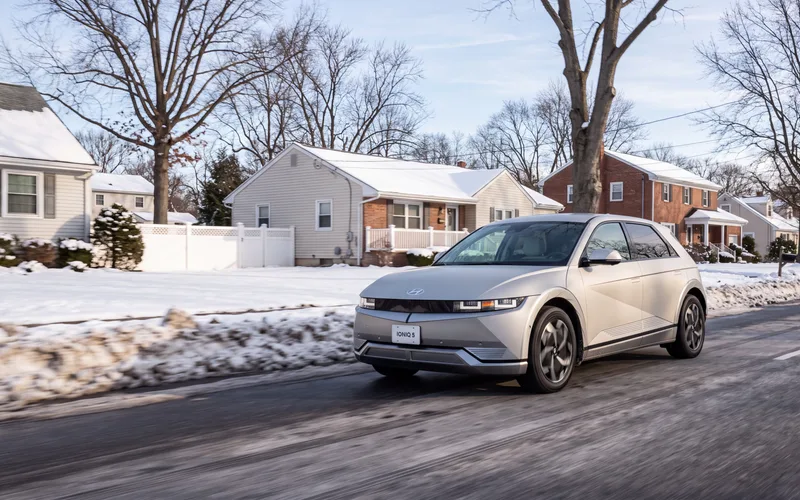 Hyundai Ioniq 5Compact SUVBetter at: Fast charging
If you charge in public or take road trips, its 800-volt pack cuts a fast-charge stop roughly in half and it carries a much longer warranty.
Compare 2.18C
2.18C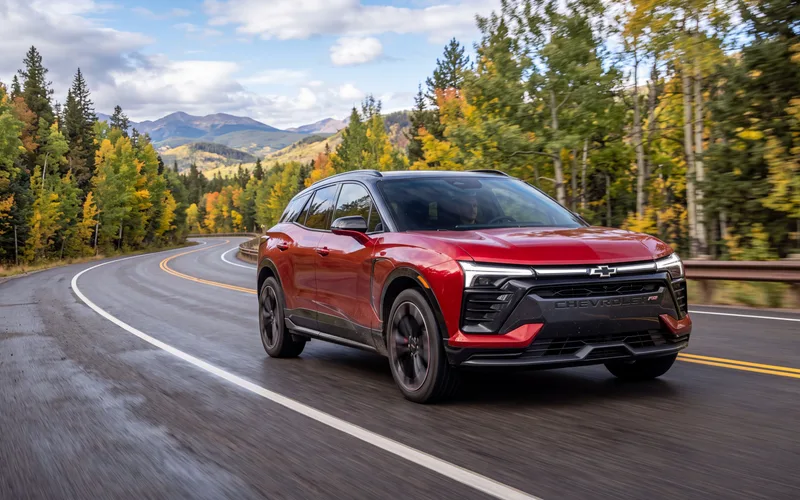 Chevrolet Blazer EVMid-Size SUVBetter at: Hands-free driving
The same hardware for less money, with Super Cruise hands-free driving and a head-up display the Prologue can't be optioned with.
Compare 2.60C+
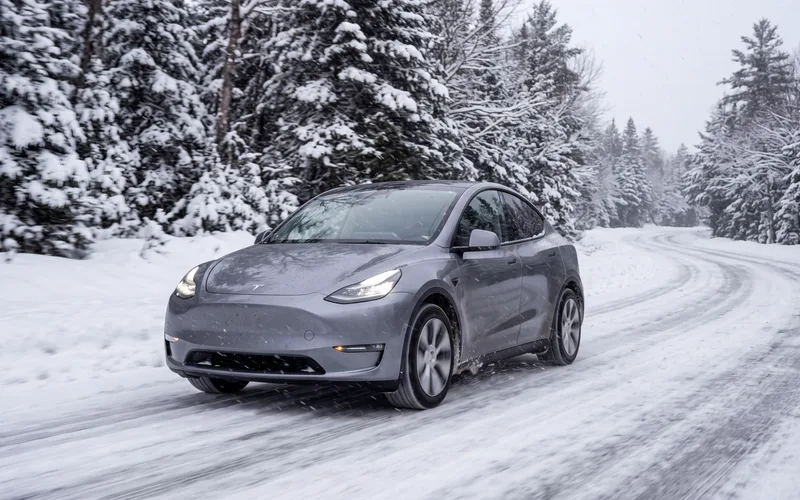 Tesla Model YCompact SUVBetter at: Range & charging network
More range, better efficiency and the Supercharger network built in, if you can live without CarPlay and a dealer service bay.
CompareSubject scores by year
Hover or tap a score to see what moved it versus the year before. A corner mark flags a big swing.
| Year | Performance | Efficiency | Safety | Space | Cost | Reliability | Tech | Use-case | Driving | Value |
|---|---|---|---|---|---|---|---|---|---|---|
| 2026 | 48 | 60 | 73 | 49 | 43 | 68 | 75 | 71 | 67 | 78 |
| 2025 | 47 | 60 | 73 | 47 | 35 | 66 | 72 | 60 | 66 | 74 |
| 2024 | 46 | 59 | 72 | 48 | 36 | 58 | 74 | 65 | 63 | 71 |
Compare two years
Best fit & conditions
Higher scores mean a better fit for that use case. Learn more about use-case fit →
Subject profile
Academic Probation · NHTSA safety recalls
No NHTSA safety recall is on record for the 2026 Honda Prologue. Other model years of the Prologue have 3 — listed below.
3 recalls on other model years of the Prologue (2024–2025)
May 14, 2026Back over prevention: sensing system: cameraThe rearview camera screen may display a distorted or blank image.
Defect
American Honda Motor Company (Honda) is recalling certain 2024-2025 Honda Prologue and 2024 Acura ZDX vehicles. The rearview camera screen may display a distorted or blank image.
Risk
A rearview image that does not display correctly reduces the driver's view behind the vehicle, increasing the risk of a crash or injury.
Remedy
Dealers will replace the rearview camera, free of charge. Interim letters, notifying owners of the safety risk, were mailed July 7, 2026. Additional letters will be sent once the remedy is available, anticipated in late 2026. Owners may contact Honda's customer service at 1-888-234-2138. Honda's numbers for this recall are DO5 and RO6. The information in your report suggests that Honda (American Honda Motor Co.) may have been aware of this issue more than five business days before filing a report with NHTSA. Please be reminded that under Federal law, this agency is to be notified of all safety defect and/or noncompliance decisions within five business days. 49 CFR 573.6 Significant civil penalties can be assessed for this violation.
NHTSA campaign 26V306000 ↗Manufacturer no. DO5, RO659,887 vehicles potentially affected (all models in the campaign)Filed by Honda (American Honda Motor Co.)Filed as PROLOGUEFeb 26, 2026Back over prevention: software · Electrical system: instrument cluster/panelDue to a software error, the instrument panel display may fail. Additionally, a software error may cause the rearview camera to display a blank screen when the vehicle is in reverse. As such, these vehicles fail to comply with the requirements of Federal Motor Vehicle Safety Standard (FMVSS) numbers 101, "Control and Displays," 111, "Rear Visibility," and 305, "Electric-Powered Vehicles."
Defect
Honda (American Honda Motor Co.) is recalling certain 2024 Acura ZDX and Prologue vehicles. Due to a software error, the instrument panel display may fail. Additionally, a software error may cause the rearview camera to display a blank screen when the vehicle is in reverse. As such, these vehicles fail to comply with the requirements of Federal Motor Vehicle Safety Standard (FMVSS) numbers 101, "Control and Displays," 111, "Rear Visibility," and 305, "Electric-Powered Vehicles."
Risk
An instrument panel display that fails to show critical safety information, such as the speedometer or warning lights, increases the risk of a crash or injury. Additionally, the loss of the rearview camera image can reduce the driver's rear visibility, increasing the risk of a crash or injury.
Remedy
Dealers will update the vehicle radio control module software, free of charge. Owner letters were mailed April 22, 2026. Owners may contact Honda's customer service at 1-888-234-2138. Honda's numbers for this recall are TNL and XNK. Vehicle Identification Numbers (VINs) involved in this recall will be searchable on NHTSA.gov beginning March 4, 2026.
NHTSA campaign 26V112000 ↗Manufacturer no. TNL, XNK65,135 vehicles potentially affected (all models in the campaign)Owners notified Apr 20, 2026Filed by Honda (American Honda Motor Co.)Filed as PROLOGUEJul 18, 2024Suspension: front: control arm: lower armThe right front lower control arm may contain a manufacturing defect that can cause it to fracture.
Defect
Honda (American Honda Motor Co.) is recalling certain 2024 Prologue vehicles. The right front lower control arm may contain a manufacturing defect that can cause it to fracture.
Risk
A right front lower control arm fracture can cause loss of vehicle control, increasing the risk of a crash.
Remedy
Dealers will inspect and replace the right front lower control arm as necessary, free of charge. Owner notification letters were mailed September 3, 2024. Owners may contact Honda customer service at 1-888-234-2138. Honda's number for this recall is PIY.
NHTSA campaign 24V540000 ↗Manufacturer no. PIY39 vehicles potentially affected (all models in the campaign)Owners notified Sep 3, 2024Filed by Honda (American Honda Motor Co.)Filed as PROLOGUE
Source: NHTSA Office of Defects Investigation recall database, model years 2024–2026. Recalls are listed by model year as the manufacturer filed them; whether a specific car is affected depends on its VIN — check a VIN at nhtsa.gov ↗. NHTSA model names matched to this page: PROLOGUE.
Detailed scoring by subject
1Performance & PowertrainOne of the Prologue's weakest categories.1.20D
Volume trim is the Touring AWD; 2026 refresh bumped dual-motor output over the 2024–25 288 hp rating. Range: 220 hp base FWD to 300 hp AWD.
Peak torque for the AWD volume trim per Honda spec sheet; FWD single-motor lists 236 lb-ft.
Manufacturer- and instrumented-test range for the dual-motor Prologue AWD; FWD is roughly two seconds slower.
EV powertrain delivers immediate, linear torque with no shift interruptions; reviewers consistently praise the Ultium powertrain's smoothness and quiet operation in the Prologue.
Single-speed direct-drive gear reduction — no shifts to time, no hunting, no CVT drone. Regen paddles allow driver-adjustable braking without interruption.
Light-duty tow rating typical of the Ultium mid-size EV platform; the Prologue lacks a heavy-tow package and is well below ICE mid-size SUV norms.
Dual-motor AWD available on every trim as a $3k option (standard on Elite); no low-range or terrain modes, but AWD delivers meaningful power/traction upgrade with basic drive-mode selection.
Pavement-oriented crossover with ~8 in ground clearance, no skid plates, lockers, or off-road drive modes; no rugged trim variant offered.
EV only — a single electric powertrain type offered in FWD single-motor or AWD dual-motor configuration; no hybrid, PHEV, or ICE option.
2Efficiency & RangeMid-pack among this car's ten categories.2.07C
Graded within the electric class (65–125 MPGe for EV SUVs), the AWD Prologue's 99 MPGe combined is mid-pack — respectable for a 4,900-lb crossover on GM's 400-volt Ultium pack, but behind the aero-led Tesla Model Y and the 800-volt Korean cars. 2026 is a carry-over year for the powertrain: Honda's own spec table repeats the 2025 figures exactly.
City is the Prologue's strongest cycle — one-pedal driving with the steering-wheel regen paddle recovers most stop-and-go energy — but 108 MPGe only reaches the middle of the 70–140 MPGe electric-SUV city band, with the rear induction motor of the AWD costing 5 MPGe against the front-drive car.
The 18-MPGe drop from city to highway is the usual EV pattern for a tall crossover on 19-inch all-seasons, and it is why EPA's highway-cycle range trails the 294-mile combined sticker. Against the 60–110 MPGe electric-SUV highway band this is the Prologue's best relative showing of the three cycles.
294 miles from the 85 kWh Ultium pack is an honest day's driving but only just below the middle of the 200–400 mile electric-SUV band, and the gap to the 327-mile Acura ZDX and the Model Y on the same architecture-class money is the Prologue's clearest efficiency shortfall. Unchanged for 2026 — the same pack and gearing carry over. Note the Wikipedia article still quotes the 2024 launch ratings (296 FWD / 273 AWD); the 2026 EPA figures are higher and are what Honda and fueleconomy.gov publish for this model year.
Corrected from 155 kW to Honda's own published figure: the 2026 model-year press release states DC fast charging "at rates up to 150 kW," which outranks the 155 kW quoted by Wikipedia and by secondhand dealer pages. Either way it is the ceiling of the 400-volt Ultium architecture the Prologue shares with the Chevrolet Blazer EV — bottom third of the 70–320 kW band, roughly half what an 800-volt Hyundai Ioniq 5 or Kia EV6 accepts, and below the 190 kW the larger 102 kWh Ultium pack in the Acura ZDX and Cadillac Lyriq allows. The correction also aligns the Prologue with the mechanically identical Blazer EV already scored at 150 kW.
Honda publishes only a 20–80% window — 35 minutes, identical across every trim and drive configuration — which works out to about 87 kW average over 51 kWh despite the 150 kW peak, so the pack tapers early and hard. Adding the 10–20% segment at near-peak power puts 10–80% at roughly 39 minutes, a bottom-of-band result against the 17–45 minute range and the same figure as the mechanically identical Blazer EV. On a road trip that is a sit-down meal, not the 18–25 minute stop an 800-volt rival allows. MEDIUM because the 10–80% window is not a number Honda itself quotes.
At roughly 34 kWh/100 mi the AWD Prologue draws about 5,100 kWh a year on EPA's 15,000-mile standard, landing in the strong end of the $500–1,500 electric-SUV band and roughly a third of what a comparably sized gas Passport costs to feed. The caveat is that this assumes home charging — at typical public DC rates of $0.45–0.55/kWh the same mileage runs past $2,400.
There is no fuel grade to think about, and Level 2 charging recovers 34.1 miles per hour on a 240V circuit — a full pack overnight. 2026 is the best version of this story the Prologue has had: the portable charging kit is now standard, and buyers choose either a complimentary wall-mounted home charger with a $1,250 installation credit (up from $500) plus an extended service warranty, or a $500 sales credit instead — so the usual EV entry cost is largely covered. Held out of the top band because the car still ships a CCS1 port, making Tesla Supercharger access a $225 Honda-approved NACS adapter to buy and carry, and because anyone without a garage falls back on the comparatively slow DC sessions scored at 2.2.4/2.2.5 — not double-counted here.
3SafetyOne of the Prologue's strongest categories.2.96B-
NHTSA awarded the 2026 Prologue its top 5-star overall safety rating, with 5 stars in frontal and side crash tests. Real-world crash performance replaces the prior placeholder.
IIHS results (carried forward on the 2024–2026 generation, EX AWD tested) are Good in updated moderate-overlap and updated side tests, with Acceptable in small-overlap front. Not a 2026 Top Safety Pick — unlike Passport/HR-V/Civic on Honda's 2026 IIHS list, the Prologue was not named.
Honda Sensing is standard across all trims (EX/Touring/Elite) and bundles AEB with pedestrian braking, ACC with Low-Speed Follow, LKAS, traffic sign recognition, blind-spot with steering assist, and rear cross-traffic braking — a comprehensive suite at the base trim.
IIHS awarded a Good rating in the front crash prevention vehicle-to-vehicle test; pedestrian AEB is included via Honda Sensing but the Prologue is not among the 2026 Honda models singled out for strongest night-pedestrian performance.
Blind Spot Information with steering assist and Rear Cross Traffic Braking (active brake intervention, not alert-only) are standard on every trim via Honda Sensing — stronger than alert-only rivals in this segment.
Reviewers repeatedly flag missing lane-centering assist as the Prologue's biggest ADAS gap: the standard LKAS delivers only a gentle corrective nudge after drift rather than continuous centering, well behind Blazer EV/Ioniq 5/Mach-E systems.
Full-speed-range ACC with Low-Speed Follow works smoothly on the highway but reviewers note quick stop-and-go time-outs, a large following gap that invites cut-ins, and no automatic slowing for curves — capable but rough-edged next to segment leaders.
The Prologue rides on GM's Ultium platform but Honda did not license Super Cruise; no hands-free highway system is offered on any trim, a notable gap versus its Blazer EV / Lyriq siblings.
IIHS rates the Prologue's LED headlights Acceptable for forward visibility (good straightaway and curve visibility, but some low-beam glare). LED auto high-beam headlights are standard across trims.
Thick A- and C-pillars, a wide hood, a high beltline, and a small rear window create significant blind spots on the volume EX trim. A surround-view camera is Elite-only; lower trims get a rear camera only, and reviewers repeatedly flag visibility as a weak point.
Two full LATCH sets on the outboard rear seats plus a top-tether anchor for the center position, wide-opening rear doors, and a flat rear floor make installation straightforward; reviewers noted that lower-anchor covers protrude enough to slightly compromise seatback comfort but not access.
4Space & ComfortOne of the Prologue's weakest categories.1.27D
The 2026 Prologue is a two-row, five-passenger mid-size EV SUV across every trim (EX, Sport, Touring, Elite). Honda has not offered a three-row Prologue configuration.
Honda's published spec sheet lists 38.1 in of front headroom for the base roof; panoramic-moonroof trims drop to 37.3 in. On the low end of the mid-size SUV band because the Ultium battery floor raises the H-point.
42.0 in of front legroom is competitive for the segment though not class-leading versus mid-size SUV rivals like the Palisade or Highlander.
Second-row headroom of 38.6 in is solid and well above the segment floor — the flat EV floor helps package rear occupants comfortably.
38.5 in of second-row legroom is a strong figure and one of the Prologue's packaging wins — reviewers routinely call out the roomy back seat.
The Prologue is a strictly two-row, five-seat mid-size EV SUV — no third row is offered on any trim. Per the framework, absence of any third row anchors this near the floor.
25.2 cu ft behind the second row is a notable weak spot — at the very bottom of the mid-size SUV band and a frequent criticism in reviews. The Prologue also lacks a front trunk (frunk).
57.7 cu ft with the 60/40 second row folded sits near the bottom of the mid-size SUV band — the sloping roofline and battery-thick floor eat into vertical cargo space.
Competent but not innovative: sizeable center console with sliding armrest, standard wireless-charging pad, door bins, and rear USB-C outlets. No frunk and none of the standout tricks (Ford Pro Power, Rivian gear tunnel) that anchor the top of this rubric.
Reviewers consistently praise the Prologue's front seats — well-bolstered, 8-way power on Touring and up, with heated/ventilated leather-trimmed seating on Elite. The rear bench cushion is flat but the roomy footwell offsets it on longer trips.
Honda's chassis tuning of the Ultium platform is a clear step up from its Blazer EV sibling — the ride is compliant over broken pavement with well-controlled body motions, though 21-inch wheels on Elite add some firmness.
Silent electric powertrain, acoustic front glass, and active noise cancellation on upper trims make the Prologue genuinely quiet at highway speeds — some tire roar creeps in on coarse pavement, especially with the 21-inch wheels.
Standard heat pump (a range-preserving win in cold weather), dual-zone automatic climate, heated front seats and heated steering wheel from Touring up, ventilated front seats and heated rear outboard seats on Elite, plus remote pre-conditioning through HondaLink. EX misses the heated wheel that some rivals offer as standard.
5Cost of OwnershipThe Prologue's lowest-graded category.0.84F
Honda cut Prologue pricing sharply for 2025 to combat slow initial demand; 2026 base EX FWD is expected to hold near $47,400 + destination. Premium price class but competitive within mid-size EV SUVs.
Touring is the volume trim, adding heated leatherette, wireless charging, HUD, and Bose audio. Elite AWD tops out near $59,000. Aggressive lease deals often bring effective transaction prices well below MSRP.
EV drivetrain eliminates oil changes, extends brake life via regen braking, and reduces moving parts vs ICE Passport/Pilot. Ultium platform is still young but tracking well; tire wear elevated by ~5,200 lb curb weight.
EV depreciation remains steep across the market; Prologue's heavy incentives and lease deals hurt residuals further. Honda brand equity provides modest support vs pure-EV startups but Ultium platform is not a resale differentiator.
Honda's standard New Vehicle Limited Warranty is 3 years / 36,000 miles, unchanged for the Prologue. Trails Hyundai/Kia (5/60) and Genesis (5/60).
The federal-mandated 8/100 EV battery warranty is the relevant powertrain coverage for a BEV. Matches most competitors (Ioniq 5, ID.4, Mach-E) but lags Hyundai's 10/100 combustion powertrain warranty.
Honda's EV Bonus offers a home charging installation credit or public charging credit alternative, plus 3-year roadside assistance and HondaLink trial. Meaningful perks package but lacks free scheduled maintenance (unlike Toyota's ToyotaCare or Hyundai's 3-yr complimentary maintenance).
$53,850 volume-trim price minus its estimated resale value after 5 years (43% retained, or about $23,156) leaves about $30,695 in depreciation. Add the projected $4,200 in 5-year maintenance and repairs, and owning this vehicle for 5 years costs about $34,895 in total.
6Reliability & QualityMid-pack among this car's ten categories.2.57C+
Prologue is a first-generation Honda EV riding on GM's Ultium platform whose siblings (Blazer EV, Lyriq) suffered a high-profile 2023 stop-sale for software; Consumer Reports predicted reliability has landed below average for early Prologue years, though 2025 OTA fixes have stabilized the drive-quality complaints.
Honda remains a consistently top-tier mainstream brand for long-term dependability in Consumer Reports and J.D. Power studies; the Prologue is slightly downweighted from the Honda ICE baseline because it is a GM-built vehicle wearing a Honda badge.
The 2024 Prologue has drawn multiple NHTSA recalls in its first year including instrument-cluster software (blank display), tire-pressure sensor programming, and low-voltage systems; Ultium-family TSB volume has also been elevated, though no fire-risk or crash-safety pattern.
The GM Ultium battery/motor family is only ~4 years into production with limited high-mileage data; the LG-supplied NCMA cells and Ultium Drive units have no widespread failure pattern yet, but this is the first Honda-branded application and long-term track record is unproven.
Reviewers describe the Prologue cabin as more premium than the Chevrolet Blazer EV it shares hardware with — Honda-specified soft-touch surfaces, real-stitch dash, and higher-grade seat materials on Touring/Elite — though Ioniq 5 and Ariya remain the class benchmarks for material creativity.
Assembled at GM's Ramos Arizpe, Mexico plant rather than a Honda facility; build quality is generally solid but reviewers and owner forums note occasional trim rattles and inconsistent panel fit versus Honda-plant vehicles.
Honda's ~1,000-dealer nationwide network with strong service satisfaction is a genuine advantage, but Prologue EV service capability is uneven — dealers required to certify a smaller subset of technicians for high-voltage work, and some rural dealers still lack DC fast-charge diagnostic tooling.
First-generation Prologue has had documented long lead times for Ultium-specific parts (battery modules, drive units, high-voltage harnesses) that must flow through Honda's supply chain despite sharing hardware with GM; body panels and glass in particular have shown multi-month backorders after collisions.
7Technology & InfotainmentOne of the Prologue's strongest categories.3.07B
Honda specifies an 11.3-inch center touchscreen as standard across all Prologue trims (EX, Touring, Elite) — one shared screen size across the lineup.
Prologue runs a Google Built-in interface (Google Maps, Assistant, Play) layered with Honda's UI — reviewers praise its snappy response, logical layout, and retention of physical climate and volume controls, though the graphics package trails Hyundai/Kia E-GMP rivals.
Wireless Apple CarPlay and Android Auto are standard on every Prologue trim — a deliberate divergence from the platform-mate Chevrolet Blazer EV, which omits phone projection entirely.
Google Assistant handles natural-language voice commands and Google Maps is the native turn-by-turn nav with live traffic and EV-aware routing (charger stops, state-of-charge planning) — among the strongest OEM implementations available.
Standard 8-speaker setup is adequate; Touring and Elite step up to a 12-speaker Bose premium system that reviewers describe as clean and well-balanced without reaching Meridian or Bang & Olufsen benchmark levels.
An 11-inch fully digital driver-information cluster is standard on every trim, with configurable layouts and clear EV energy readouts.
The Prologue supports over-the-air updates for infotainment, Google apps, and select vehicle software modules — Honda has issued rolling improvements to the platform, though scope trails Tesla/Rivian whole-vehicle OTA cadence.
HondaLink app handles remote start/climate pre-conditioning, lock/unlock, charge scheduling and monitoring, and vehicle locate — solid EV-focused feature set, though no digital-key (phone-as-key) support and premium remote services eventually become subscription-gated.
USB-C ports for both rows, a wireless phone-charging pad standard on all trims, and 12V outlets — but no household-style AC outlet or vehicle-to-load capability, which is a miss versus Ioniq 5/EV9.
Proximity smart entry with push-button start is standard across the lineup, plus remote start through HondaLink; hands-free power liftgate is on upper trims. No phone-as-key (UWB digital key) is offered.
Rear-view camera is standard and Honda Sensing includes low-speed braking, but front and rear parking sensors plus a multi-view/360-degree camera are Touring/Elite content rather than base — image resolution is good but not class-leading.
Honda does not offer a head-up display on any 2026 Prologue trim — a notable omission given the platform-mate Chevrolet Blazer EV includes one on upper trims.
8Use-Case FitGrades above the middle of the scale.2.78B-
Ultium EV skateboard delivers a completely flat rear floor and 39.4 in rear legroom, and wide-opening doors make car-seat loading straightforward. Standard 2 outboard LATCH sets (typical for 5-seat) and 60/40 folding rear seats cover the basics. Downsides: 5-seat only (no 3rd row) so families of 3+ kids run out of positions, and the 25.2 cu ft cargo hold behind row 2 is average — meaningfully smaller than 3-row EV rivals or the outgoing Passport.
Honda Sensing is standard on all trims (adaptive cruise, LKAS, forward-collision warning with pedestrian detection, road-departure mitigation), plus blind-spot monitoring and rear cross-traffic on EX and up — a strong ADAS baseline at family price points. IIHS testing of the 2024–2026 Prologue rates crashworthiness broadly favorably but scores small-overlap front only 'Acceptable', so it doesn't currently carry TOP SAFETY PICK+ status; NHTSA has not published an overall star rating.
Quiet EV cabin, 39.4 in rear legroom and 283–308 mi EPA range make multi-hour interstate segments comfortable and drama-free. Rear vents, USB-C ports and a 120V household outlet (Elite) keep kids and gadgets happy. Two caveats: the mid/top trims' panoramic roof lowers the headliner ~1.5 in and taller rear passengers notice it, and 25.2 cu ft cargo is tighter than a Kia EV9 or Ioniq 9 for family luggage.
Instant EV torque, near-silent city operation, and adjustable regen with true one-pedal driving make stop-and-go effortless. Standard Honda Sensing (adaptive cruise with LKAS), Google Built-in with well-integrated Maps, and wireless CarPlay/Android Auto on the 11.3-in screen mean the everyday interface is genuinely modern. Only knocks are the 192.0 in length and the slightly GM-flavored ergonomics that some Honda buyers notice.
EPA 104 MPGe combined on FWD (113/94), 99 MPGe on AWD Touring, and 95 MPGe on Elite AWD — near-best-in-class per-mile energy cost among mid-size EV SUVs, and dramatically cheaper than any ICE rival. MSRP $39,900–$50,400 sits well under the $80k SUV cap for the federal Clean Vehicle Credit, keeping the $7,500 point-of-sale rebate on the table where the customer qualifies.
At 192.0 in long and 78.3 in wide the Prologue is a genuine mid-size footprint — bigger than a CR-V or Rogue and larger than most urban commuter EVs. Standard rearview camera, plus surround-view / 360-degree camera on Touring and up, and good outward visibility from the tall glasshouse offset the size. No rear-wheel steering, and reviewers note the shared GM platform doesn't feel especially nimble in tight lots.
Max tow rating is just 1,500 lb (properly equipped) — enough for a small utility trailer or two jetskis, but well short of the 3,500 lb an iX handles or the 5,000 lb a Passport pulls. No bed, no serious payload story, 57.7 cu ft max cargo. This is a family/commuter EV — not a work tool.
Built on GM's Ultium platform by GM, sold under Honda's warranty and dealer network — mixed provenance means the fleet track record isn't Honda-typical yet, and early owner surveys have flagged infotainment/software gripes shared with the Blazer EV. Cabin is carpeted throughout with no washable-surface option; suitable for daily family duty, not for jobsite abuse.
Elite trim adds a 120V household outlet in the rear seat area that can power tools or a small appliance during outages, and roof rails plus a factory hitch (with the tow package) are available. But there's no true V2L cargo outlet like Ioniq 5/EV9 offer, no bidirectional V2H, no upfit ecosystem, carpeted cargo floor, and the 1,500 lb tow limit rules out a serious trailer.
308 mi EPA on Touring FWD, 294 mi on Touring AWD, and 283 mi on Elite AWD are strong numbers for the segment, and 150 kW peak DC fast charging takes the pack from 10–80% in roughly 35 minutes. Standard Honda Sensing (adaptive cruise, LKAS) reduces highway fatigue, Google Maps handles EV route planning natively, and reviewers uniformly praise the quiet, composed interstate ride.
Dual-motor AWD (300 hp / 355 lb-ft) is available across all trims and standard on Elite, ground clearance of 8.1 in on AWD handles dirt roads and light snow, and roof rails plus a factory hitch (small tow rating) enable bike/kayak carriers. But there's no dedicated off-road drive mode, no all-terrain tire option, no serious skid protection, and the 1,500 lb tow limit shuts out most adventure trailers. A capable soft-roader, not an off-roader.
25.2 cu ft behind row 2 expanding to 57.7 cu ft with the 60/40 seats folded is notably smaller than a similarly-sized BMW iX (35.5/77.9) or Mustang Mach-E (29.7/59.7) — the sloping roofline and Ultium battery packaging cost real cubes. Roof rails and a small factory hitch add flexibility on top, but the Prologue has no frunk (motor + electronics occupy that space) and no underfloor storage bin in the cargo hold.
9Driving ExperienceMid-pack among this car's ten categories.2.50C+
Low-mounted battery keeps body roll in check and the Prologue is secure in emergency-maneuver testing, but reviewers consistently call the handling uninspired — Consumer Reports and Motor1 note it navigates curves more like a truck than a Honda, and the stiffened suspension does not add real cornering reward. Sits below segment EV rivals (Ioniq 5, Mach-E, EV9) but a notch above its Blazer EV cousin thanks to Honda-specific spring/damper tuning.
Steering is the Prologue's biggest dynamic weakness — reviewers call it vague, slow off-center, and 'gloopy', with weight that feels quick initially but adds no feedback as lock increases. Well below the Honda norm and below segment average for EV crossovers.
Consumer Reports specifically calls out a 'normal-feeling brake pedal' — a real positive for an EV with heavy regen blending — and braking is described as predictable. No fade or long-stop complaints in reviews, though no standout instrumented advantage.
Single-motor FWD (220 hp / 243 lb-ft) and dual-motor AWD (300 hp / 355 lb-ft) EV drivetrains deliver characteristic EV immediacy with no stop/start or shift roughness. Multiple reviews describe power delivery as smooth and refined; nothing suggests calibration flaws.
EV drivetrain with good sound insulation; Consumer Reports and other reviewers highlight quiet operation as a Prologue strength alongside its comfortable ride. No droning or intrusive whine reported.
Manufacturer-published curb-to-curb turning diameter. On the wider end of the mid-size SUV band, reflecting the Prologue's 192-inch length and shared Ultium architecture.
Positives include abundant headroom, a wide left footrest, and unobstructed gauge sightlines. Downsides: the wide hard-plastic center console intrudes on right-knee space, the seat won't drop low enough for tall drivers, and a low rear window with thick pillars significantly obstructs the rearward view (Elite trim's surround-view camera helps).
Comfort-first calibration that reviewers say 'diverges from Honda heritage' — pleasant and refined but not a car enthusiasts would recommend for driving enjoyment. Vague steering and remote handling are the biggest reasons it never quite lives up to the badge.
10Value & Market PositionThe Prologue's best-graded category.3.33B+
Even the base EX trim includes an 11.3-inch touchscreen with Google Built-in, wireless Apple CarPlay/Android Auto, full Honda Sensing ADAS suite, heated front seats, 19-inch wheels, and a heat pump — competitive kit for the ~$48k EV segment but not class-leading versus Ioniq 5/EV6.
Starting near $48k with ~296 mi RWD range and Ultium 85 kWh pack, the Prologue is priced above the Chevy Blazer EV and VW ID.4 for similar hardware, though below Mustang Mach-E Premium and Ioniq 9. Honda badge tax is real, though ADAS content and cabin quality justify most of the gap.
2026 adds a Performance variant to the existing EX/Touring/Elite lineup, with RWD and AWD available on most trims. Not as broad as legacy Honda ICE lineups but well-spaced for an EV — buyers can pick range-focused RWD, mainstream AWD, or the new performance-focused build.
The Prologue became one of the best-selling non-Tesla EVs in the US within its first year (~33k units in 2024), consistently ranking top-5 non-Tesla EV in Cox Automotive/Kelley Blue Book reports through 2025 — a strong debut trajectory for Honda's first serious EV.
Honda commands strong mainstream brand equity for reliability and resale, which halos the Prologue despite it being an Ultium-platform GM-built vehicle. Not aspirational like premium EVs, but the Honda badge reassures cross-shoppers wary of unproven EV brands.
Honda has run aggressive Prologue lease programs (widely reported in the $249–$399/month range with modest down) that pass through the $7,500 commercial EV lease credit, making it one of the best-priced EV leases in the segment. Purchase incentives and dealer discounts also common.
Launched for 2024 on GM's current Ultium architecture and refreshed for 2026 with the new Performance trim, updated content, and range refinements. Well within the fresh window with no near-term redesign expected.
MotorTrend named the Prologue a 2024 SUV of the Year finalist; Car and Driver, Edmunds, and KBB reviews praise ride quality, quiet cabin, and value while docking it for its non-Honda infotainment quirks and slower DC fast-charge peak. Well-reviewed but not a consistent comparison-test winner.