

The verdict
A mixed-report mid-size suv, strong on value and held back by ownership.
The 2025 Prologue is a calm, roomy, easy-to-live-with electric SUV. It has a whisper-quiet cabin, limo-like rear legroom, a 5-star NHTSA rating, and Google built-in software that still supports wireless CarPlay. The 2025 update raised range to 294 miles (AWD) and 308 miles (FWD) at unchanged prices, and deep discounts made it a strong deal. Its weaknesses are a small cargo hold, slow 150 kW fast charging, a 1,500-lb tow limit and steep depreciation, which gets worse now that Honda is ending the nameplate after 2026.
Jump to scoresStrengths
- Best-in-class phone and Google integration
- Serene, smooth and quiet to drive
- Strong crash ratings and standard safety tech
What holds it back
- Small cargo hold for its size
- Slow fast-charging stops
- Steep depreciation on an orphaned nameplate
Top alternatives
Cars shoppers cross-shop with the Honda Prologue 2.74B-
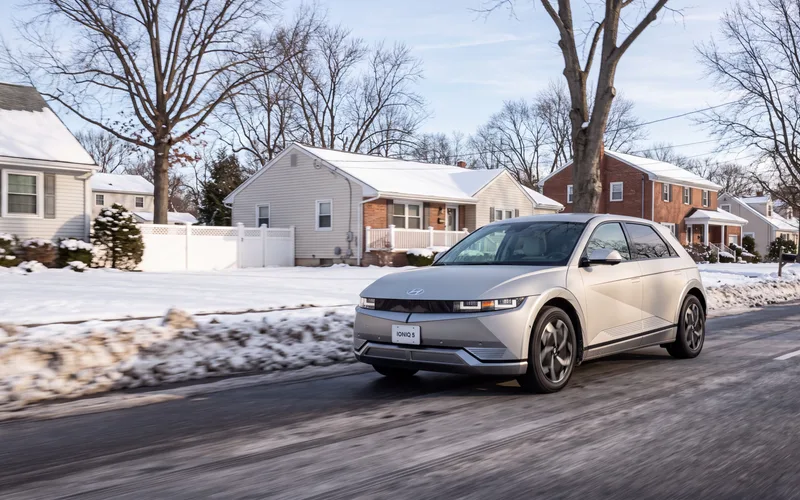 Hyundai Ioniq 5Compact SUVBetter at: Fast charging
If you charge in public or take road trips, its 800-volt pack cuts a fast-charge stop roughly in half and it carries a much longer warranty.
Compare 2.18C
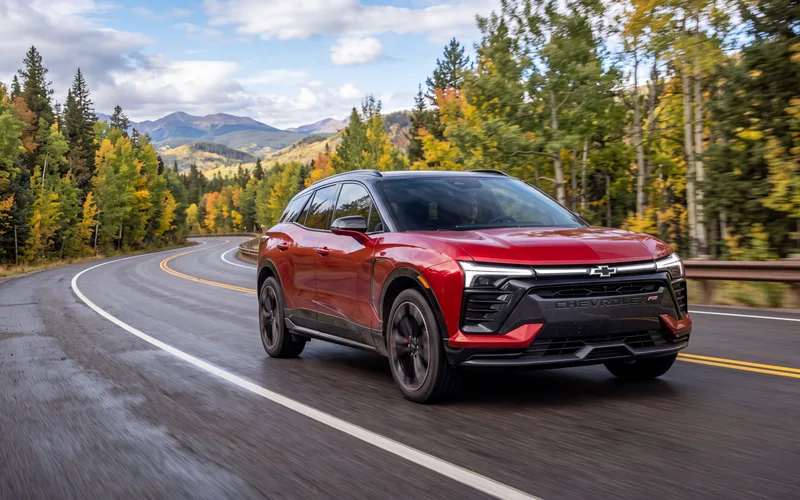 Chevrolet Blazer EVMid-Size SUVBetter at: Hands-free driving
The same hardware for less money, with Super Cruise hands-free driving and a head-up display the Prologue can't be optioned with.
Compare 2.60C+
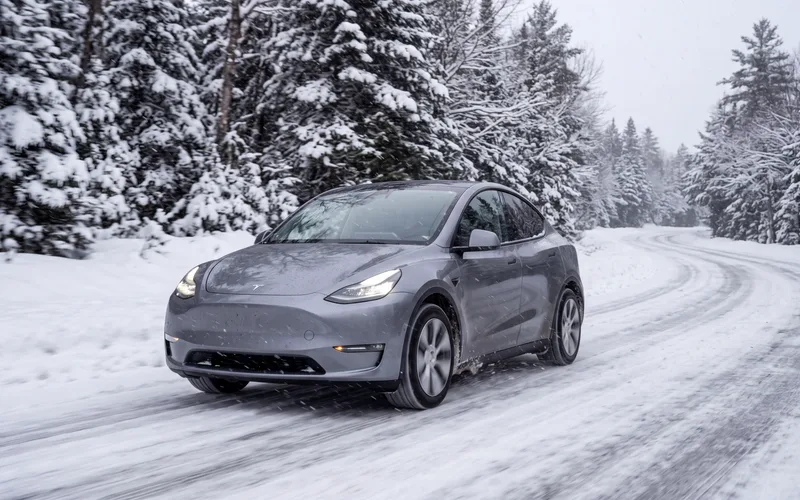 Tesla Model YCompact SUVBetter at: Range & charging network
More range, better efficiency and the Supercharger network built in, if you can live without CarPlay and a dealer service bay.
CompareSubject scores by year
Hover or tap a score to see what moved it versus the year before. A corner mark flags a big swing.
| Year | Performance | Efficiency | Safety | Space | Cost | Reliability | Tech | Use-case | Driving | Value |
|---|---|---|---|---|---|---|---|---|---|---|
| 2026 | 48 | 60 | 73 | 49 | 43 | 68 | 75 | 71 | 67 | 78 |
| 2025 | 47 | 60 | 73 | 47 | 35 | 66 | 72 | 60 | 66 | 74 |
| 2024 | 46 | 59 | 72 | 48 | 36 | 58 | 74 | 65 | 63 | 71 |
Compare two years
Best fit & conditions
Higher scores mean a better fit for that use case. Learn more about use-case fit →
Subject profile
Academic Probation · NHTSA safety recalls
May 14, 2026Back over prevention: sensing system: cameraThe rearview camera screen may display a distorted or blank image.
Defect
American Honda Motor Company (Honda) is recalling certain 2024-2025 Honda Prologue and 2024 Acura ZDX vehicles. The rearview camera screen may display a distorted or blank image.
Risk
A rearview image that does not display correctly reduces the driver's view behind the vehicle, increasing the risk of a crash or injury.
Remedy
Dealers will replace the rearview camera, free of charge. Interim letters, notifying owners of the safety risk, were mailed July 7, 2026. Additional letters will be sent once the remedy is available, anticipated in late 2026. Owners may contact Honda's customer service at 1-888-234-2138. Honda's numbers for this recall are DO5 and RO6. The information in your report suggests that Honda (American Honda Motor Co.) may have been aware of this issue more than five business days before filing a report with NHTSA. Please be reminded that under Federal law, this agency is to be notified of all safety defect and/or noncompliance decisions within five business days. 49 CFR 573.6 Significant civil penalties can be assessed for this violation.
NHTSA campaign 26V306000 ↗Manufacturer no. DO5, RO659,887 vehicles potentially affected (all models in the campaign)Filed by Honda (American Honda Motor Co.)Filed as PROLOGUE
2 recalls on other model years of the Prologue (2024)
Feb 26, 2026Back over prevention: software · Electrical system: instrument cluster/panelDue to a software error, the instrument panel display may fail. Additionally, a software error may cause the rearview camera to display a blank screen when the vehicle is in reverse. As such, these vehicles fail to comply with the requirements of Federal Motor Vehicle Safety Standard (FMVSS) numbers 101, "Control and Displays," 111, "Rear Visibility," and 305, "Electric-Powered Vehicles."
Defect
Honda (American Honda Motor Co.) is recalling certain 2024 Acura ZDX and Prologue vehicles. Due to a software error, the instrument panel display may fail. Additionally, a software error may cause the rearview camera to display a blank screen when the vehicle is in reverse. As such, these vehicles fail to comply with the requirements of Federal Motor Vehicle Safety Standard (FMVSS) numbers 101, "Control and Displays," 111, "Rear Visibility," and 305, "Electric-Powered Vehicles."
Risk
An instrument panel display that fails to show critical safety information, such as the speedometer or warning lights, increases the risk of a crash or injury. Additionally, the loss of the rearview camera image can reduce the driver's rear visibility, increasing the risk of a crash or injury.
Remedy
Dealers will update the vehicle radio control module software, free of charge. Owner letters were mailed April 22, 2026. Owners may contact Honda's customer service at 1-888-234-2138. Honda's numbers for this recall are TNL and XNK. Vehicle Identification Numbers (VINs) involved in this recall will be searchable on NHTSA.gov beginning March 4, 2026.
NHTSA campaign 26V112000 ↗Manufacturer no. TNL, XNK65,135 vehicles potentially affected (all models in the campaign)Owners notified Apr 20, 2026Filed by Honda (American Honda Motor Co.)Filed as PROLOGUEJul 18, 2024Suspension: front: control arm: lower armThe right front lower control arm may contain a manufacturing defect that can cause it to fracture.
Defect
Honda (American Honda Motor Co.) is recalling certain 2024 Prologue vehicles. The right front lower control arm may contain a manufacturing defect that can cause it to fracture.
Risk
A right front lower control arm fracture can cause loss of vehicle control, increasing the risk of a crash.
Remedy
Dealers will inspect and replace the right front lower control arm as necessary, free of charge. Owner notification letters were mailed September 3, 2024. Owners may contact Honda customer service at 1-888-234-2138. Honda's number for this recall is PIY.
NHTSA campaign 24V540000 ↗Manufacturer no. PIY39 vehicles potentially affected (all models in the campaign)Owners notified Sep 3, 2024Filed by Honda (American Honda Motor Co.)Filed as PROLOGUE
Source: NHTSA Office of Defects Investigation recall database, model years 2024–2026. Recalls are listed by model year as the manufacturer filed them; whether a specific car is affected depends on its VIN — check a VIN at nhtsa.gov ↗. NHTSA model names matched to this page: PROLOGUE.
Detailed scoring by subject
1Performance & PowertrainOne of the Prologue's weakest categories.1.16D
2025 is a change year: Honda raised dual-motor AWD output from 288 hp (2024) to 300 hp and the FWD single motor from 212 to 220 hp. The volume EX/Touring AWD's 300 hp sits in the lower-middle of the SUV band — adequate, not strong, for a ~5,000-lb crossover.
Dual-motor torque rose for 2025 and arrives instantly from rest, which is what makes the Prologue feel quicker than its horsepower suggests.
Honda publishes no 0–60 figure; independent figures put the 2025 dual-motor car at about 6 seconds, mid-pack for mid-size SUVs and quicker than most gas rivals at the price.
Ultium dual-motor delivery is immediate, linear and near-silent, with no lag or transitions; it lacks the extra punch of sportier EV rivals but never feels coarse.
Single-speed reduction gear — no shifts, no hunting, no drone — with a steering-wheel regen paddle and one-pedal mode for adjustable deceleration.
A light-duty rating far below the 3,500–5,000 lbs typical of gas mid-size SUVs such as Honda's own Passport; fine for a small utility trailer only.
Dual-motor AWD is offered on EX and Touring and standard on Elite, and is the volume configuration; it adds real traction and power but no low range, torque vectoring or terrain-specific modes.
Pavement-oriented crossover with modest clearance, no skid plates, lockers or off-road trim; light gravel and snow-covered roads are its limit.
One battery (85 kWh) in two motor layouts — single-motor FWD or dual-motor AWD; no hybrid, PHEV or gas alternative under the Prologue name.
2Efficiency & RangeMid-pack among this car's ten categories.2.05C
Mid-pack for an electric mid-size SUV: respectable for a heavy 400-volt Ultium crossover, behind the most aero-efficient rivals. 2025 efficiency improved alongside the range bump over the 2024 launch ratings.
City is the strongest cycle thanks to regenerative braking and one-pedal driving, but still only mid-band among electric SUVs.
Typical EV city-to-highway drop for a tall crossover; relative to the electric-SUV highway band it is the Prologue's best of the three cycles.
2025 is the range-bump year: the same 85 kWh pack now rates 294 miles AWD and 308 FWD, up from the 2024 launch ratings the Wikipedia article still quotes (296 FWD). Still only middle-of-band for electric SUVs.
The 400-volt Ultium ceiling shared with the Chevrolet Blazer EV — bottom third of the band and about half what 800-volt Hyundai/Kia rivals accept. Honda's figure (150 kW) is used over the 155 kW quoted secondhand.
Honda quotes only a 20–80% time of 35 minutes (~87 kW average over ~51 kWh, showing early taper); adding the 10–20% segment near peak power gives roughly 39 minutes, near the slow end of the band. MEDIUM because the 10–80% window is derived, not a Honda figure.
At 34 kWh/100 mi the AWD Prologue costs a fraction of a gas mid-size SUV to run on EPA's 15,000-mile home-charging assumption; public DC charging would cost considerably more.
No fuel-grade concerns, and an 11.5 kW onboard charger refills the pack overnight on Level 2 at 34.1 miles per hour of charging; Honda bundled home/public charging incentives at launch. Held out of the top band because the 2025 car uses a CCS1 port (Tesla Supercharger access needs an adapter) and DC sessions are slow.
3SafetyOne of the Prologue's strongest categories.2.92B-
NHTSA rates the 2025 Prologue 5 stars overall with 5-star frontal and side results; rollover is 4 stars on AWD, typical for a tall SUV.
Good in driver-side small overlap, updated moderate overlap and updated side tests, but Acceptable in passenger-side small overlap and Acceptable headlights keep it off the 2025 Top Safety Pick list.
Honda Sensing is standard on EX, Touring and Elite, bundling AEB with pedestrian detection, ACC with low-speed follow, lane keeping, blind-spot information and rear cross-traffic braking — a full suite on the base/volume EX trim.
IIHS rates the updated vehicle-to-vehicle front crash prevention Good (collision avoided in most scenarios), but pedestrian AEB only Acceptable, holding it below the top band.
Blind-spot information and rear cross-traffic alert with automatic braking are standard on every trim, giving active intervention rather than alert-only coverage.
Lane departure warning and lane-keep assist are standard, but reviewers note the system only nudges the car back after drift rather than offering continuous lane centering, trailing Ultium siblings and Ioniq 5 / Mach-E rivals.
Full-speed ACC with low-speed follow is standard and smooth at highway speed, but there is no combined highway-assist centering and reviewers note stop-and-go time-outs and generous following gaps.
Despite sharing GM's Ultium platform, the Prologue does not offer Super Cruise or any other hands-free highway system on any 2025 trim.
The single LED projector headlight system used on all trims is rated Acceptable by IIHS; auto high-beam is available.
Thick pillars, a high beltline and a small rear window create blind zones; the surround-view camera is limited to the top Elite trim, so the volume EX relies on a rear camera alone.
IIHS rates the LATCH hardware Good overall, with full sets in two rear positions plus a tether-only center seat; the wide-opening rear doors and flat floor make installs easy.
4Space & ComfortOne of the Prologue's weakest categories.1.13D
Two-row, five-passenger layout on every 2025 trim; no third-row option.
Average front headroom for a mid-size SUV; the Touring/Elite panoramic roof costs 1.4 in.
Front legroom is a touch below segment average despite the long 121.8-in wheelbase.
Adequate rear headroom without the glass roof; the moonroof trims are noticeably tighter.
The 121.8-in Ultium wheelbase gives limo-like rear legroom for a two-row SUV, a standout strength.
No third row is offered on any trim, so the Prologue has no third-row seating at all.
Cargo space behind the rear seat is small for a 192-in-long mid-size SUV; the band floor clamps it to zero.
Max cargo trails gas mid-size two-row rivals; the sloping roofline and Ultium floor limit it.
Open floating center console with a large pass-through bin and an underfloor cargo tray are useful, but there is no frunk and 110V power is Elite-only.
Front seats are supportive and the rear bench benefits from huge legroom, though the base EX has cloth with manual passenger adjustment and the low floor limits thigh support in back.
Honda-specific springs and dampers make the Prologue smoother than the Blazer EV, though sharper impacts thump through at low speed, especially on the Elite 21s.
Reviewers describe the cabin as serene with excellent wind and tire noise suppression at highway speed.
Heated front seats, dual-zone climate and remote start are standard, but heated wheel and ventilated seats are reserved for the top Elite trim.
5Cost of OwnershipThe Prologue's lowest-graded category.0.33F
2025 pricing carried over unchanged from 2024; the entry EX single-motor FWD is the cheapest Prologue. Destination rose from $1,450 to $1,495 during the model year.
Touring is treated as the volume trim (adds leather-trimmed seats, Bose audio, wireless charging, 21-in. wheels); Touring AWD runs $56,195. Heavy 2025 lease and cash incentives put typical transaction prices well below MSRP.
No oil changes and regen-reduced brake wear keep scheduled upkeep low; repairs concentrate in years 3–5 once the 3/36 basic warranty lapses. Comparable to the sister Equinox EV ($4,345) and below the Blazer EV ($5,803) on the same KBB methodology.
EV depreciation is steep, and the Prologue's residuals are further pressured by deep 2025 discounting, the end of the $7,500 federal credit in September 2025, and Honda's July 2026 announcement that the model ends after MY2026.
Honda's standard New Vehicle Limited Warranty applies; trails Hyundai/Kia's 5/60 on the Ioniq 5 and EV6.
For a BEV the 8-year/100,000-mile battery and EV-component coverage is the relevant powertrain warranty; matches Blazer EV, ID.4 and Mach-E, short of Hyundai/Kia's 10/100.
Every 2025 Prologue includes a choice of charging package (11.5 kW home charger + $500 install credit + $100 EVgo credit; portable kit + $250 install + $300 EVgo; or $750 EVgo), plus 60 kWh at Electrify America and 3/36 roadside. Meaningful charging perks, but no complimentary scheduled maintenance.
$53,195 volume-trim price minus its estimated resale value after 5 years (35% retained, or about $18,618) leaves about $34,577 in depreciation. Add the projected $4,223 in 5-year maintenance and repairs, and owning this vehicle for 5 years costs about $38,800 in total.
6Reliability & QualityMid-pack among this car's ten categories.2.47C+
Consumer Reports rates the 2025 Prologue as less reliable than the average 2025 vehicle. This year is a carry-over of the first-generation GM Ultium-based car, and early owner data is mixed: complaints center on steering and CV-axle clunks, electrical faults and 'Service High Voltage System' warnings rather than on battery failures.
Honda remains a top-five brand for reliability in Consumer Reports' rankings. The score is held just below the top band because this GM-engineered, GM-built EV shares little hardware with the Honda products behind that ranking.
One NHTSA campaign covers MY2025, a rearview-camera hardware replacement. That is lighter than MY2024, which also carried an instrument-cluster/camera software recall and a front control-arm recall. Ultium-family TSBs for CV axles and high-voltage warnings are a recurring pattern, but nothing so far points to fire or powertrain failure.
The Ultium battery and drive units are still young, with limited high-mileage data. Owner records show few pack or motor failures, but 'Reduced Acceleration' and high-voltage service warnings and early CV-axle replacements keep this below a proven powertrain.
The cabin is a step up from the Blazer EV it shares hardware with, using Honda-specified soft-touch surfaces and trim. It still trails the Ioniq 5 and Ariya for richness and design at a similar price.
It is built by GM at Ramos Arizpe, Mexico, alongside the Blazer EV. Assembly is generally solid, but owners report front-end clicking and popping, rattles and scattered trim-fit issues more often than on Honda-plant products.
Honda's roughly 1,000 US dealers give dense coverage and good general service satisfaction. EV-certified technicians and high-voltage tooling are uneven across that network, especially at rural stores.
Ultium-specific parts (drive units, high-voltage components, unique body panels) come through Honda's supply chain from GM, and owners have reported multi-week backorders. EV collision repairs also run above segment average, and there is little aftermarket.
7Technology & InfotainmentOne of the Prologue's strongest categories.2.89B-
A standard 11.3-inch landscape touchscreen is mid-pack for the class.
Google built-in software is fast and familiar, with physical climate controls retained below the screen; reviewers rate it among the better mainstream interfaces.
Unlike its GM Ultium siblings, the Prologue keeps wireless Apple CarPlay and Android Auto, standard on every trim.
Google Assistant and Google Maps with EV routing are built in as standard, the best-in-class combination for natural voice and navigation.
Base EX gets a 6-speaker system; a 12-speaker Bose system is available on upper trims and is well regarded but not class-leading.
An 11-inch fully digital cluster is standard on every trim, crisp but with limited configurability.
The GM Ultium electrical architecture supports over-the-air updates for infotainment and vehicle modules, though Honda has used it sparingly versus GM and Tesla.
HondaLink connected by OnStar offers remote lock, climate and charge monitoring, but no phone-as-key and services after trial are subscription-gated.
Two USB-C ports up front and two in the rear plus a Qi wireless charger come standard; a 110V outlet is Elite-only.
Smart entry, push-button start and fob remote start are standard and a hands-free power tailgate is available, but no phone-as-key is offered.
Rear camera and rear park sensors are standard, front sensors arrive on Touring, and the Surround Vision camera is Elite-only.
A head-up display is available, but only on the top Elite trim.
8Use-Case FitMid-pack among this car's ten categories.2.03C
Vast 39.4-in rear legroom, wide rear doors and Good-rated LATCH hardware make car seats easy, though the cargo area is shallow for strollers plus gear.
Five-star NHTSA overall rating and Honda Sensing with rear-seat reminder standard on all trims, but no 2025 IIHS award, and front sensors and surround view cost extra.
A quiet cabin, roomy rear seat and rear USB-C ports make long trips pleasant, but rear climate amenities are thin and luggage space with seats up is modest.
Smooth instant EV torque, adjustable regen with a one-pedal mode and a quiet, soft ride make stop-and-go traffic effortless.
At 99 MPGe and roughly $750/yr in EPA energy cost, home-charged commuting is very cheap per mile.
A 192-in length and thick pillars make it a big city vehicle; the 39.6-ft turning circle is reasonable for the wheelbase but surround view is Elite-only.
A 1,500-lb tow rating and a shallow cargo hold make it unsuitable for meaningful work duty.
The Ultium platform is new with early software-related recalls and the cabin is family-oriented, giving no fleet track record for hard use.
Beyond a 110V cabin outlet on the Elite, there is no exportable power, tie-down system or upfit ecosystem.
A quiet, comfortable cabin and 294-mile EPA range suit touring, but 150-kW peak charging (35 min 20–80%) and no lane centering add fatigue on long trips.
Available AWD and about 8 in of ground clearance handle gravel and snow, but the 1,500-lb tow limit and lack of V2L or off-road hardware limit adventure use.
60/40 fold-flat rear seats help, but at 57.7 cu ft max it swallows less bulky gear than most mid-size SUVs.
9Driving ExperienceMid-pack among this car's ten categories.2.48C+
Low battery mass keeps it planted and secure, but reviewers find the handling uninspired with little of the agility of gas Hondas.
Steering is accurately weighted and precise but transmits essentially no road feel.
Regen blending is smooth with a regen-on-demand paddle and one-pedal mode; the friction brakes stop competently if without standout feel.
The Ultium dual-motor drive is seamless and linear with strong low-speed response and no driveline shunt.
Motor noise is nearly inaudible under load; the only intrusion is the pedestrian-warning sound at city speeds.
A 39.6-ft turning diameter is respectable given the 121.8-in wheelbase but slightly worse than the SUV midpoint.
Good seat and wheel adjustment with physical climate controls and a column shifter, but thick pillars and a small rear window hurt sightlines.
Quick enough at about 6 s to 60 but the numb steering and comfort tuning make it a pleasant appliance rather than a driver’s car.
10Value & Market PositionThe Prologue's best-graded category.3.05B
The EX includes an 11-in. touchscreen with wireless Apple CarPlay/Android Auto, Honda Sensing suite, heated front seats, heat pump and a charging package in the MSRP — competitive for a ~$49k mid-size EV, though the Ioniq 5 and Equinox EV match it for less.
For 2025 range rose to 308 mi (FWD) / 294 mi (AWD) at unchanged prices, sharpening value against the Blazer EV and ID.4; at sticker it carries a modest Honda premium over the GM twin, but widely discounted transaction prices closed that gap.
Three trims (EX, Touring, Elite) with FWD or AWD on EX/Touring — five configurations, one battery. Reasonable spread from $48.9k to $59.4k but no range/battery or performance options.
39,194 sold in 2025, up 19% on 2024, ranking among the top three to five non-Tesla EVs before December sales collapsed after the federal credit ended.
The Honda badge reassures mainstream EV shoppers, but being a GM-built Ultium product and Honda's 2026 retreat from US EVs dilutes the halo for this particular model.
Through 2025 the Prologue was one of the most heavily discounted EVs — the $7,500 lease credit passed through, sub-$300 leases and large cash allowances — making it a strong buyer deal even after the federal credit lapsed in September.
Only the second model year of a generation launched for 2024 with a 2025 range update, but the run is short: Honda confirmed production ends with MY2026 and no successor, leaving 2025 buyers in an orphaned nameplate.
Reviewers consistently praise ride comfort, quiet cabin, roomy interior and the 2025 range bump, while knocking its 150 kW DC peak, heft and GM-sourced interior; well regarded but rarely a comparison-test winner over the Ioniq 5 or EV9.