
The verdict
A mixed-report compact suv, strong on safety and held back by space.
The 2026 Mustang Mach-E is a fast, well-equipped, genuinely fun electric crossover that has aged into the value end of the EV market — $37,795 to start, $43,595 for the volume Premium AWD, 300 miles of range and 4.2 seconds to 60 mph. Safety and infotainment are its standout subjects: five NHTSA stars, a 2026 IIHS Top Safety Pick, Co-Pilot360 Assist 2.0 standard on every trim, and a 15.5-inch SYNC 4A screen with wireless CarPlay. What it is not is a practical SUV — 29.7 cu ft behind the rear seats is near the bottom of the compact-SUV class, there is no US tow rating at all, and the once-standard front trunk is now a $495 option. Add 150 kW charging that trails the 800-volt Koreans by a wide margin and roughly 41% resale retention after five years, and this is a car to buy on discount and drive, not one to buy as an investment or a hauler.
Jump to scoresStrengths
- Safety tech that isn't gated behind the expensive trims
- The best screen and phone integration in the segment
- Seriously quick, and it handles better than a crossover should
What holds it back
- It carries far less than a compact SUV should
- Steep depreciation — this is the single biggest cost of owning one
- Slow road-trip charging on aging 400-volt hardware
Top alternatives
Cars shoppers cross-shop with the Ford Mustang Mach-E 2.60C+
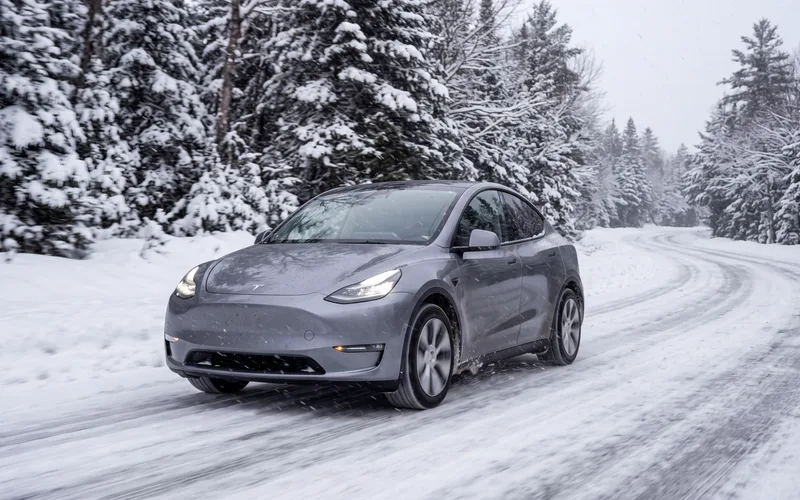 Tesla Model YCompact SUVBetter at: Road trips
More range, much faster charging and native Supercharger access make it the better long-distance EV for similar money.
Compare 2.74B-
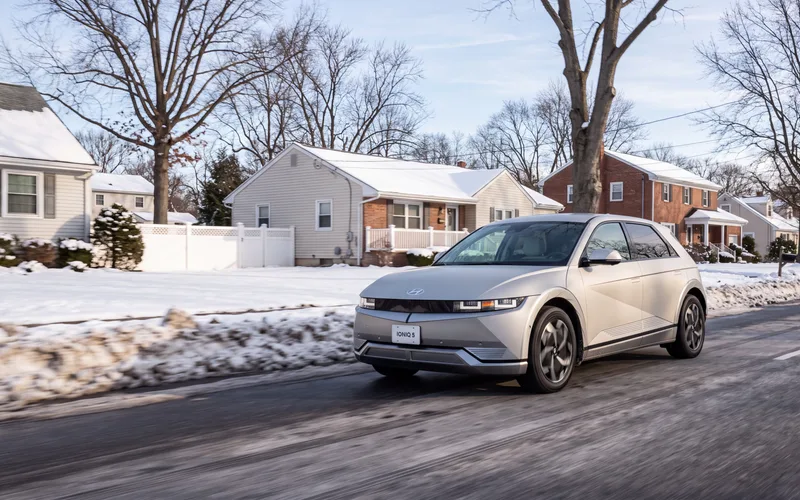 Hyundai Ioniq 5Compact SUVBetter at: Charging speed
800-volt charging does 10–80% in under 20 minutes versus the Mach-E's 36, with a roomier cabin and longer warranty.
Compare 2.06C
2.06C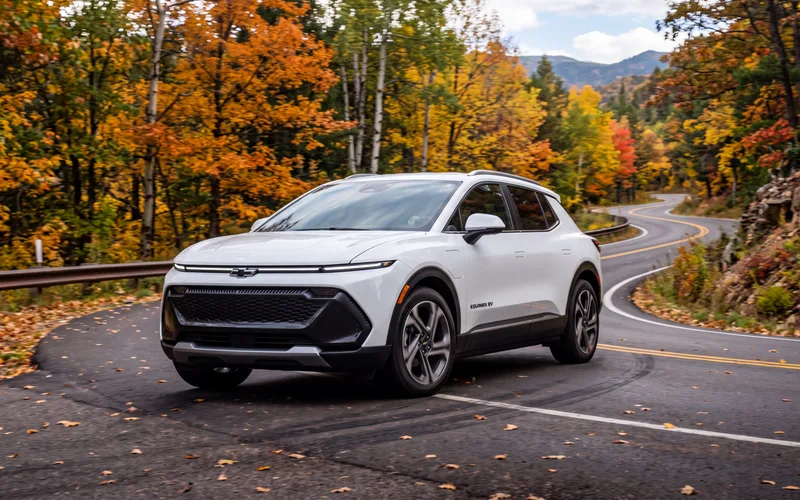 Chevrolet Equinox EVCompact SUVBetter at: Value
More range and more space for less money, if you want an affordable electric crossover rather than a quick one.
CompareHow it's evolved
6 scored model years · 2021–2026
Subject scores by year
Hover or tap a score to see what moved it versus the year before. A corner mark flags a big swing.
| Year | Performance | Efficiency | Safety | Space | Cost | Reliability | Tech | Use-case | Driving | Value |
|---|---|---|---|---|---|---|---|---|---|---|
| 2026 | 59 | 62 | 86 | 44 | 48 | 66 | 77 | 61 | 77 | 64 |
| 2025 | 57 | 62 | 87 | 47 | 46 | 64 | 78 | 61 | 76 | 69 |
| 2024 | 56 | 62 | 84 | 44 | 42 | 65 | 77 | 63 | 76 | 67 |
| 2023 | 52 | 57 | 83 | 44 | 39 | 49 | 77 | 61 | 75 | 65 |
| 2022 | 53 | 57 | 83 | 44 | 43 | 43 | 80 | 60 | 75 | 73 |
| 2021 | 53 | 57 | 78 | 45 | 40 | 45 | 78 | 58 | 75 | 78 |
Compare two years
Best fit & conditions
Higher scores mean a better fit for that use case. Learn more about use-case fit →
Subject profile
Trims & configurations
4 trimsScores above reflect the volume trim. Per-trim specs and scores are rolling out — the full lineup:
Academic Probation · NHTSA safety recalls
Dec 18, 2025Exterior lighting: lighting control moduleThe Light Driver Control Module B (LDCMB) may fail, preventing the turn signals, daytime running lights, low beam, and high beam headlights from illuminating. As such, these vehicles fail to comply with the requirements of Federal Motor Vehicle Safety Standard number 108, "Lamps, Reflective Devices, and Associated Equipment."
Defect
Ford Motor Company (Ford) is recalling certain 2025-2026 Mustang Mache E vehicles. The Light Driver Control Module B (LDCMB) may fail, preventing the turn signals, daytime running lights, low beam, and high beam headlights from illuminating. As such, these vehicles fail to comply with the requirements of Federal Motor Vehicle Safety Standard number 108, "Lamps, Reflective Devices, and Associated Equipment."
Risk
A loss of exterior lighting can reduce the driver's visibility and the visibility of the vehicle to other drivers, increasing the risk of a crash.
Remedy
Ford will release an over-the-air (OTA) update or dealers will update the LDCMB software, free of charge. Owner notification letters were mailed January 28, 2026. Owners may contact Ford customer service at 1-866-436-7332. Ford's number for this recall is 25C71. Vehicle Identification Numbers (VINs) involved in this recall will be searchable on NHTSA.gov beginning January 12, 2026.
NHTSA campaign 25V885000 ↗Manufacturer no. 25C7145,047 vehicles potentially affected (all models in the campaign)Owners notified Jan 28, 2026Filed by Ford Motor CompanyFiled as MUSTANG MACH EDec 12, 2025Power train: automatic transmission: internal: park pawlThe integrated park module may fail to lock into the park position when the driver shifts into park. As such, these vehicles fail to comply with the requirements of Federal Motor Vehicle Safety Standard (FMVSS) number 114, "Theft Protection and Rollaway Prevention."
Defect
Ford Motor Company (Ford) is recalling certain 2022-2026 F-150 Lightning BEV, 2024-2026 Mustang Mach-E, and 2025-2026 Maverick vehicles. The integrated park module may fail to lock into the park position when the driver shifts into park. As such, these vehicles fail to comply with the requirements of Federal Motor Vehicle Safety Standard (FMVSS) number 114, "Theft Protection and Rollaway Prevention."
Risk
A loss of park function can allow the vehicle to rollaway, increasing the risk of a crash.
Remedy
The park module software will be updated over-the-air (OTA) or by a dealer, free of charge. Owner notification letters were mailed February 3, 2026. Owners may contact Ford customer service at 1-866-436-7332. Ford's number for this recall is 25C69. Vehicle Identification Numbers (VINs) involved in this recall will be searchable on NHTSA.gov beginning January 26, 2026.
NHTSA campaign 25V863000 ↗Manufacturer no. 25C69272,645 vehicles potentially affected (all models in the campaign)Owners notified Feb 3, 2026Filed by Ford Motor CompanyFiled as MUSTANG MACH E
20 recalls on other model years of the Mustang Mach-E (2021–2025)
Sep 9, 2026Electrical system: propulsion system: traction battery: management system/energy control module (bms/becm): softwareThe battery energy control module software may cause an incorrect state of charge to display in the vehicle, or lead to an increased risk of a high voltage battery fire after repeated DC Fast Charging cycles.
Defect
Ford Motor Company (Ford) is recalling certain 2023-2025 Mustang Mache E vehicles that received a new Battery Energy Control Module (BECM) during a prior repair. The battery energy control module software may cause an incorrect state of charge to display in the vehicle, or lead to an increased risk of a high voltage battery fire after repeated DC Fast Charging cycles.
Risk
An inaccurate state-of-charge reading can lead to an unexpected loss of drive power, increasing the risk of crash. Additionally, a high voltage battery fire increases the risk of injury.
Remedy
Dealers will update the BECM software, free of charge. Interim letters, notifying owners of the safety risk, were mailed September 18, 2026. Additional letters will be sent once the remedy is available, anticipated in December 2026. Owners may contact Ford customer service at 1-866-436-7332. Ford's number for this recall is 26S68. Vehicle Identification Numbers (VINs) involved in this recall became searchable on NHTSA.gov on September 9, 2026.
NHTSA campaign 26V582000 ↗Manufacturer no. 26S6886 vehicles potentially affected (all models in the campaign)Filed by Ford Motor CompanyFiled as MUSTANG MACH EJul 28, 2026Structure: exterior trimThe rear side quarter window glass trim may be improperly secured, which can allow it to detach.
Defect
Ford Motor Company (Ford) is recalling certain 2023-2025 Mustang Mach E vehicles. The rear side quarter window glass trim may be improperly secured, which can allow it to detach.
Risk
Detached trim pieces can create a road hazard, increasing the risk of a crash.
Remedy
Dealers will inspect and replace the quarter window glass assemblies, as necessary, free of charge. Interim letters, notifying owners of the safety risk, were mailed September 14, 2026. Additional letters will be sent once the remedy is available. Owners may contact Ford customer service at 1-866-436-7332. Ford's number for this recall is 26S56. Vehicle Identification Numbers (VINs) involved in this recall will be searchable on NHTSA.gov beginning September 7, 2026.
NHTSA campaign 26V487000 ↗Manufacturer no. 26S5686,543 vehicles potentially affected (all models in the campaign)Filed by Ford Motor CompanyFiled as MUSTANG MACH EJun 30, 2026Power train: driveline: differential unitThe rear differential pinion shaft may fracture.
Defect
Ford Motor Company (Ford) is recalling certain 2021-2023 Mustang Mach E vehicles. The rear differential pinion shaft may fracture.
Risk
Differential pinion shaft fracture may result in a loss of drive power, or unintended vehicle movement if the vehicle is in park without the parking brake applied, increasing the risk of a crash.
Remedy
Dealers will repair or replace the rear differential assembly as necessary, free of charge. Interim letters, notifying owners of the safety risk, were mailed July 13, 2026. Additional letters will be sent once the remedy is available, anticipated in late December 2026. Owners may contact Ford customer service at 1-866-436-7332. Ford's number for this recall is 26S50.
NHTSA campaign 26V417000 ↗Manufacturer no. 26S5042,784 vehicles potentially affected (all models in the campaign)Filed by Ford Motor CompanyFiled as MUSTANG MACH EAug 8, 2025Exterior lighting: lighting control moduleThe LED Driver Modules may contain a burnt diode, which can cause the low-beam and high-beam headlights, daytime running lights, front position lights, and front turn signals to fail in the affected headlight. On Nautilus vehicles only, this condition may also cause the rear tail light, rear turn signal, and rear position light to fail. As such, these vehicles fail to comply with the requirements of Federal Motor Vehicle Safety Standard number 108, "Lamps, Reflective Devices, and Associated Equipment."
Defect
Ford Motor Company (Ford) is recalling certain 2025 Lincoln Nautilus, Mustang Mach E, and Mustang vehicles. The LED Driver Modules may contain a burnt diode, which can cause the low-beam and high-beam headlights, daytime running lights, front position lights, and front turn signals to fail in the affected headlight. On Nautilus vehicles only, this condition may also cause the rear tail light, rear turn signal, and rear position light to fail. As such, these vehicles fail to comply with the requirements of Federal Motor Vehicle Safety Standard number 108, "Lamps, Reflective Devices, and Associated Equipment."
Risk
Exterior lighting failure can reduce visibility for the driver and other road users, increasing the risk of a crash.
Remedy
Dealers will inspect and replace the LED Driver Modules, as necessary, free of charge. Owner notification letters were mailed September 22, 2025. Owners may contact Ford customer service at 1-866-436-7332. Ford's number for this recall is 25C39.
NHTSA campaign 25V519000 ↗Manufacturer no. 25C393,270 vehicles potentially affected (all models in the campaign)Owners notified Sep 22, 2025Filed by Ford Motor CompanyFiled as MUSTANG MACH EAug 8, 2025Service brakes, hydraulic: antilock/traction control/electronic limited slip: control unit/moduleAn Over-The-Air (OTA) update to the Anti-lock Braking System (ABS) may result in a loss of power brake assist, ABS, Electronic Stability Control, Traction Control, and driver assistance features.
Defect
Ford Motor Company (Ford) is recalling certain 2021 Mach-E vehicles that were repaired incorrectly under recall 24V777. An Over-The-Air (OTA) update to the Anti-lock Braking System (ABS) may result in a loss of power brake assist, ABS, Electronic Stability Control, Traction Control, and driver assistance features.
Risk
A loss of power brake assist can increase the distance required to stop the vehicle. Additionally, a disabled antilock brake system and/or stability control system can result in a loss of vehicle control. Either of these scenarios can increase the risk of a crash.
Remedy
Dealers will update the ABS calibration software, free of charge. Owner notification letters were mailed September 18, 2025. Owners may contact Ford customer service at 1-866-436-7332. Ford's number for this recall is 25S81.
NHTSA campaign 25V513000 ↗Manufacturer no. 25S818 vehicles potentially affected (all models in the campaign)Owners notified Sep 18, 2025Filed by Ford Motor CompanyFiled as MUSTANG MACH EJun 27, 2025Electrical system: propulsion system: traction battery: management system/energy control module (bms/becm)The high voltage battery main contactors may overheat.
Defect
Ford Motor Company (Ford) is recalling certain 2022 Mustang Mach E vehicles equipped with an extended range battery. The high voltage battery main contactors may overheat.
Risk
An overheated high voltage battery contactor can result in a loss of drive power, increasing the risk of a crash.
Remedy
Dealers will replace the high voltage battery junction box, free of charge. Owner notification letters were mailed July 10, 2025. Owners may contact Ford Customer Service at 1-866-436-7332. Ford's number for this recall is 23S56. This recall is an expansion of previous NHTSA recall number 23V687.
NHTSA campaign 25V441000 ↗Manufacturer no. 23S56239 vehicles potentially affected (all models in the campaign)Owners notified Jul 10, 2025Filed by Ford Motor CompanyFiled as MUSTANG MACH EJun 13, 2025Electrical system: body control module: software · Latches/locks/linkages: doors: latchIn the event of a low battery charge, the electronic door latches may remain locked once the driver or front passenger exits and shuts the door, possibly trapping someone who is unable to use the inside door release handles, such as a child in the back seat.
Defect
Ford Motor Company (Ford) is recalling certain 2021-2025 Mustang Mach E vehicles. In the event of a low battery charge, the electronic door latches may remain locked once the driver or front passenger exits and shuts the door, possibly trapping someone who is unable to use the inside door release handles, such as a child in the back seat.
Risk
The inability to enter or exit the vehicle in an emergency increases the risk of injury.
Remedy
Dealers will update the Powertrain Control Module (PCM) and the Secondary On-Board Diagnostic Control Module C (SOBDMC) software, free of charge. Owner notification letters were mailed to 2021-2025 Mustang Mach-E owners September 12, 2025. Additionally, Owner notification letters were mailed to 2024-2025 Mustang Mach-E owners July 10, 2025. Owners may contact Ford customer service at 1-866-436-7332. Ford's number for this recall is 25S65.
NHTSA campaign 25V404000 ↗Manufacturer no. 25S65197,432 vehicles potentially affected (all models in the campaign)Owners notified Jul 10, 2025Filed by Ford Motor CompanyFiled as MUSTANG MACH EJun 13, 2025Power train: automatic transmission: internal: park pawlThe park rod may fail to engage when the vehicle is placed in the park (P) position. As such, these vehicles fail to comply with the requirements of Federal Motor Vehicle Safety Standard (FMVSS) number 114, "Theft Protection and Rollaway Prevention."
Defect
Ford Motor Company (Ford) is recalling certain 2025 Mustang Mach E vehicles. The park rod may fail to engage when the vehicle is placed in the park (P) position. As such, these vehicles fail to comply with the requirements of Federal Motor Vehicle Safety Standard (FMVSS) number 114, "Theft Protection and Rollaway Prevention."
Risk
A park rod that fails to engage can result in a vehicle rollaway, increasing the risk of a crash.
Remedy
Dealers will replace the transmission park rod assembly, free of charge. Owner notification letters were mailed October 3, 2025. Owners may contact Ford Customer Service at 1-866-436-7332. Ford's number for this recall is 25C25.
NHTSA campaign 25V394000 ↗Manufacturer no. 25C25276 vehicles potentially affected (all models in the campaign)Owners notified Oct 3, 2025Filed by Ford Motor CompanyFiled as MUSTANG MACH EMay 9, 2025Back over prevention: softwareA software error may cause the rearview camera image to delay, freeze, or not display when the vehicle is in reverse.
Defect
Ford Motor Company (Ford) is recalling certain 2021-2024 Bronco, F-150, 2021-2024 Edge, 2022-2025 Escape, F-250, F-350, F-450, F-550, F-600, 2022-2024 Expedition, 2022-2025 Transit, 2021-2023 Mach-E, 2024 Ranger, Mustang, 2021-2023 Lincoln Nautilus, 2022-2024 Navigator, and 2023-2024 Corsair vehicles. A software error may cause the rearview camera image to delay, freeze, or not display when the vehicle is in reverse.
Risk
A frozen or missing rearview camera image can reduce the driver's view behind the vehicle, increasing the risk of a crash.
Remedy
The accessory protocol interface module (APIM) software will be updated by a dealer or through an over-the-air update, free of charge. This will be a phased campaign, with the remedy becoming available in different phases based on model and model years. Interim letters notifying owners of the safety risk were mailed on June 26, 2025. Additional letters will be mailed once the final remedy is available on each phase. Owner notification letters were sent on October 8, 2025. Owners may contact Ford customer service at 1-866-436-7332. Ford's number for this recall is 25S49.
NHTSA campaign 25V315000 ↗Manufacturer no. 25S491,076,138 vehicles potentially affected (all models in the campaign)Owners notified Oct 8, 2025Filed by Ford Motor CompanyFiled as MUSTANG MACH EFeb 28, 2025Electrical system: propulsion system: traction battery: management system/energy control module (bms/becm): softwareThe high voltage battery main contactors may overheat.
Defect
Ford Motor Company (Ford) is recalling certain 2021-2022 Mustang Mach-E vehicles previously repaired incorrectly under recall number 22V-412. The high voltage battery main contactors may overheat.
Risk
An overheated high voltage battery contactor may cause the vehicle to lose drive power, increasing the risk of a crash.
Remedy
Dealers will update the on-board software, free of charge. Owner notification letters were mailed April 11, 2025. Owners may contact Ford customer service at 1-866-436-7332. Ford's number for this recall is 25S14.
NHTSA campaign 25V130000 ↗Manufacturer no. 25S14626 vehicles potentially affected (all models in the campaign)Owners notified Apr 11, 2025Filed by Ford Motor CompanyFiled as MUSTANG MACH EOct 18, 2024Service brakes, hydraulic: antilock/traction control/electronic limited slip: control unit/moduleAn Over-The-Air (OTA) update to the Anti-lock Braking System (ABS) may result in a loss of power brake assist, ABS, Electronic Stability Control, Traction Control, and driver assistance features.
Defect
Ford Motor Company (Ford) is recalling certain 2021 Mach-E vehicles. An Over-The-Air (OTA) update to the Anti-lock Braking System (ABS) may result in a loss of power brake assist, ABS, Electronic Stability Control, Traction Control, and driver assistance features.
Risk
A loss of power brake assist can extend the distance required to stop the vehicle. Additionally, a disabled antilock brake system and/or stability control system can result in a loss of vehicle control. Either of these scenarios can increase the risk of a crash.
Remedy
Dealers will update the ABS calibration, free of charge. Owner notification letters were mailed November 5, 2024. Owners may contact Ford customer service at 1-866-436-7332. Ford's number for this recall is 24S65.
NHTSA campaign 24V777000 ↗Manufacturer no. 24S6550 vehicles potentially affected (all models in the campaign)Owners notified Nov 5, 2024Filed by Ford Motor CompanyFiled as MUSTANG MACH EAug 9, 2024Visibility: windshield wiper/washer: motorThe front windshield wiper motor may become inoperative, causing the wipers to fail.
Defect
Ford Motor Company (Ford) is recalling certain 2023-2024 Maverick, Ford Bronco Sport, and Mustang Mach-E vehicles. The front windshield wiper motor may become inoperative, causing the wipers to fail.
Risk
Inoperative windshield wipers can reduce visibility in certain conditions, increasing the risk of a crash.
Remedy
Dealers will inspect and replace the windshield wiper motor as necessary, free of charge. Owner notification letters were mailed on December 6, 2024. Owners may contact Ford customer service at 1-866-436-7332. Ford's number for this recall is 24S51.
NHTSA campaign 24V594000 ↗Manufacturer no. 24S5186,852 vehicles potentially affected (all models in the campaign)Owners notified Dec 6, 2024Filed by Ford Motor CompanyFiled as MUSTANG MACH EOct 13, 2023Electrical system: propulsion system: traction battery: management system/energy control module (bms/becm)The high voltage battery main contactors may overheat.
Defect
Ford Motor Company (Ford) is recalling certain 2021-2022 Mustang Mach-E vehicles equipped with an extended range battery. The high voltage battery main contactors may overheat.
Risk
An overheated high voltage battery contactor can result in a loss of drive power, increasing the risk of a crash.
Remedy
Dealers will replace the high voltage battery junction box, free of charge. Owner notification letters were mailed December 29, 2023. Owners may contact Ford customer service at 1-866-436-7332. Ford's number for this recall is 23S56. Vehicles included in this recall that were previously repaired under recall 22V-412 will need to have the new remedy completed.
NHTSA campaign 23V687000 ↗Manufacturer no. 23S5634,762 vehicles potentially affected (all models in the campaign)Owners notified Dec 29, 2023Filed by Ford Motor CompanyFiled as MUSTANG MACH EAug 26, 2022Power train: axle assembly: axle shaftThe right-rear axle half shafts may have been manufactured improperly, allowing the half shaft stem to break under load.
Defect
Ford Motor Company (Ford) is recalling certain 2022 Mustang Mach-E vehicles. The right-rear axle half shafts may have been manufactured improperly, allowing the half shaft stem to break under load.
Risk
A broken half shaft can cause a loss of drive power, or a rollaway could occur while parked if the electronic parking brake is not engaged. Either of these scenarios can increase the risk of a crash.
Remedy
Dealers will inspect the serial number, and replace the right-rear half shaft, as necessary, free of charge. Owner notification letters were mailed September 19, 2022. Owners may contact Ford customer service at 1-866-436-7332. Ford's number for this recall is 22S55.
NHTSA campaign 22V646000 ↗Manufacturer no. 22S551,175 vehicles potentially affected (all models in the campaign)Owners notified Sep 19, 2022Filed by Ford Motor CompanyFiled as MUSTANG MACH EJun 10, 2022Electrical system: propulsion system: traction battery: management system/energy control module (bms/becm): softwareThe high voltage battery main contactors may overheat.
Defect
Ford Motor Company (Ford) is recalling certain 2021-2022 Mustang Mach-E vehicles. The high voltage battery main contactors may overheat.
Risk
An overheated high voltage battery contactor may cause the vehicle to lose drive power, increasing the risk of a crash.
Remedy
Dealers will update the on-board software, free of charge. Owner notification letters were mailed on July 8, 2022. Owners may contact Ford customer service at 1-866-436-7332. Ford's number for this recall is 22S41.
NHTSA campaign 22V412000 ↗Manufacturer no. 22S4148,924 vehicles potentially affected (all models in the campaign)Owners notified Jul 8, 2022Filed by Ford Motor CompanyFiled as MUSTANG MACH EMay 13, 2022Power train: automatic transmission: control module: software · Vehicle speed controlThe powertrain control module (PCM) functional safety software may fail to detect a software error, resulting in unintended acceleration, unintended deceleration, or a loss of drive power.
Defect
Ford Motor Company (Ford) is recalling certain 2021 Mustang Mach-E vehicles equipped with all-wheel drive. The powertrain control module (PCM) functional safety software may fail to detect a software error, resulting in unintended acceleration, unintended deceleration, or a loss of drive power.
Risk
Unintended acceleration, unintended deceleration, or a loss of drive power increases the risk of a crash.
Remedy
The PCM software will be updated by a dealer, or through an over-the-air (OTA) update, free of charge. Owner notification letters were mailed June 9, 2022. Owners may contact Ford customer service at 1-800-436-7332. Ford's number for this recall is 22S29.
NHTSA campaign 22V333000 ↗Manufacturer no. 22S29464 vehicles potentially affected (all models in the campaign)Owners notified Jun 9, 2022Filed by Ford Motor CompanyFiled as MUSTANG MACH EDec 16, 2021Seat belts: rear/other: anchorageThe rear seat belt buckles may not be properly attached to the rear floor assembly. As such, these vehicles fail to comply with the requirements of Federal Motor Vehicle Safety Standard numbers 208, "Occupant Crash Protection," and 210, "Seat Belt Assembly Anchorages."
Defect
Ford Motor Company (Ford) is recalling certain 2021-2022 Mustang Mach-E and 2022 Maverick vehicles. The rear seat belt buckles may not be properly attached to the rear floor assembly. As such, these vehicles fail to comply with the requirements of Federal Motor Vehicle Safety Standard numbers 208, "Occupant Crash Protection," and 210, "Seat Belt Assembly Anchorages."
Risk
Improperly attached seat belts may not adequately restrain an occupant in a crash, increasing the risk of injury.
Remedy
Dealers will repair the rear seat belt buckle attachments, free of charge. Owner notification letters were mailed January 28, 2022. Owners may contact Ford customer service at 1-866-436-7332. Ford's number for this recall is 21C36.
NHTSA campaign 21V979000 ↗Manufacturer no. 21C362,622 vehicles potentially affected (all models in the campaign)Owners notified Jan 28, 2022Filed by Ford Motor CompanyFiled as MUSTANG MACH ESep 14, 2021Visibility: fixed panaramic roof/sky light assemblyThe vehicle's panoramic roof glass panel may not have been properly bonded to the vehicle, which could allow it to detach.
Defect
Ford Motor Company (Ford) is recalling certain 2021 Mustang Mach-E vehicles. The vehicle's panoramic roof glass panel may not have been properly bonded to the vehicle, which could allow it to detach.
Risk
A roof panel that separates from a vehicle can become a road hazard, increasing the risk of a crash or injury.
Remedy
Dealers will apply additional urethane adhesive, free of charge. Owner notification letters were mailed October 29, 2021. Owners may contact Ford customer service at 1-866-436-7332. Ford's number for this recall is 21S42.
NHTSA campaign 21V712000 ↗Manufacturer no. 21S4213,544 vehicles potentially affected (all models in the campaign)Owners notified Oct 29, 2021Filed by Ford Motor CompanyFiled as MUSTANG MACH ESep 14, 2021Visibility: windshield · Visibility: windshield: critical fastenersThe windshield may not have been properly bonded to the vehicle, which could allow it to detach. As such, these vehicles fail to comply with the requirements of Federal Motor Vehicle Safety Standard number 212, "Windshield Mounting."
Defect
Ford Motor Company (Ford) is recalling certain 2021 Mustang Mach-E vehicles. The windshield may not have been properly bonded to the vehicle, which could allow it to detach. As such, these vehicles fail to comply with the requirements of Federal Motor Vehicle Safety Standard number 212, "Windshield Mounting."
Risk
A windshield that separates from a vehicle during a crash can increase the risk of injury.
Remedy
Dealers will remove and reinstall the windshield, free of charge. Owner notification letters were mailed on October 29, 2021. Owners may contact Ford customer service at 1-866-436-7332. Ford's number for this recall is 21C22.
NHTSA campaign 21V711000 ↗Manufacturer no. 21C2217,692 vehicles potentially affected (all models in the campaign)Owners notified Oct 29, 2021Filed by Ford Motor CompanyFiled as MUSTANG MACH EMar 5, 2021Structure: frame and members · Suspension: subframe/mounting bracketThe front subframe bolts may not have been tightened properly during assembly, which could result in loose bolts.
Defect
Ford Motor Company (Ford) is recalling certain 2021 Mustang Mach-E vehicles. The front subframe bolts may not have been tightened properly during assembly, which could result in loose bolts.
Risk
Loose subframe bolts may reduce the vehicle's performance in a crash, increasing the risk of injury.
Remedy
Ford will notify owners, and dealers will inspect the front subframe bolts and tighten them as necessary, free of charge. The recall began April 2, 2021. Owners may contact Ford customer service at 1-866-436-7332. Ford's number for this recall is 21S09.
NHTSA campaign 21V140000 ↗Manufacturer no. 21S091,258 vehicles potentially affected (all models in the campaign)Owners notified Apr 2, 2021Filed by Ford Motor CompanyFiled as MUSTANG MACH E
Source: NHTSA Office of Defects Investigation recall database, model years 2021–2026. Recalls are listed by model year as the manufacturer filed them; whether a specific car is affected depends on its VIN — check a VIN at nhtsa.gov ↗. NHTSA model names matched to this page: MUSTANG MACH E.
Detailed scoring by subject
1Performance & PowertrainOne of the Mustang Mach-E's weakest categories.2.00C
Premium is the volume trim; with the AWD Extended Range battery (its most commonly ordered configuration) it makes 370 hp, well up from the 266 hp base RWD Standard Range output.
Premium eAWD Extended Range delivers 500 lb-ft; instant EV torque means even the base 317 lb-ft RWD feels strong, and GT/Rally with the Performance Upgrade reaches 700 lb-ft.
Premium eAWD Extended Range hits 60 mph in 4.2 s; the base RWD Standard Range is closer to 5.8 s, while the GT with the Performance & Handling Package drops to 3.3 s.
Single-motor and dual-motor EV drivetrains deliver immediate, linear power with no lag or hesitation; reviewers consistently praise the Mach-E's smooth, quiet power delivery across trims.
Single-speed direct-drive EV transmission with no shifting, hunting, or drone — seamless by nature of the powertrain, though it lacks the manual-mode engagement some rivals simulate.
Ford does not publish a US tow rating for any 2026 Mach-E trim and does not recommend the vehicle for towing; European Extended Range models are rated to tow up to ~2,200 lbs, but that rating does not apply in the US market this site covers.
eAWD (dual-motor) is optional on Select and Premium and standard on GT/Rally, with GT/Rally adding adaptive torque vectoring between axles; it's widely available but not standard across the whole range.
The Mach-E is fundamentally a pavement-oriented crossover; even the Rally variant only adds a 0.8-in lift, motor skid plating, and MagneRide dampers on street-biased all-season tires — no low-range, lockers, or serious clearance.
The Mach-E is battery-electric only — no gas, hybrid, or PHEV option — so despite multiple battery sizes and motor configurations, it's a single powertrain type, take-it-or-leave-it for buyers who don't want an EV.
2Efficiency & RangeMid-pack among this car's ten categories.2.18C
Premium eAWD Extended Range remains the volume configuration for 2026 and EPA rates it 104 MPGe combined (32.3 kWh/100 mi). 2026 is the sixth year of the GE1-platform first generation with no powertrain change, so the figure carries over from 2025.
City MPGe benefits from regenerative braking in stop-and-go driving, but at 110 MPGe the Mach-E sits mid-pack among electric compact SUVs, where lighter 800-volt rivals clear 120.
Highway MPGe falls below the city figure as it does for every EV — aerodynamic load replaces regen opportunity — but 98 MPGe holds up well against electric SUV rivals.
300 miles is solid for a compact electric SUV and unchanged for 2026 — no pack or gearing change — but it trails the RWD Extended Range's 320-mile lineup max, the Model Y AWD's 327 and the Ioniq 5's best configurations.
The GE1 platform is a 400-volt architecture that peaks at 150 kW, carried into 2026 unchanged — well behind the 800-volt Korean rivals (Ioniq 5, EV6) that accept 230+ kW, and behind the Model Y on a Supercharger.
Ford's quoted 36.2 minutes reflects the flatter charging curve introduced for MY2024 on pack hardware unchanged since, and is still slow in absolute terms against 800-volt competitors that do the same fill in under 20 minutes.
EPA-listed annual energy cost for the AWD Extended Range configuration at 15,000 mi/yr and average residential electricity rates — cheap in absolute terms, mid-pack within the EV class, and unchanged for 2026.
No fuel grade to worry about: 240V Level 2 home charging covers daily use cheaply (EPA lists a 10.2-hour full charge on 240V for the extended-range pack), and the heat pump standard since MY2025 limits the cold-weather energy penalty. The deduction is for the charge port — the 2026 Mach-E still ships CCS1, so Tesla Supercharger access needs Ford's separate NACS adapter (~$200 through dealers).
3SafetyThe Mustang Mach-E's best-graded category.3.86A+
NHTSA overall crash-test rating for the Mach-E is five stars, at the top of the suv normalization band.
Named a 2026 IIHS Top Safety Pick with Good ratings across small-overlap front, moderate-overlap front, side, and headlight tests — the award tier stopped short of Top Safety Pick+ but crashworthiness is uniformly Good.
Ford Co-Pilot360 Assist 2.0 is standard on every 2026 trim (Select through Rally), bundling AEB, adaptive cruise with stop-and-go, lane centering, blind-spot monitoring, and rear cross-traffic alert with no trim gating.
IIHS rates front crash prevention Good for vehicle-to-vehicle and Good for pedestrian detection in both day and night scenarios on Co-Pilot360-equipped 2025-2026 models.
BLIS blind-spot monitoring and rear cross-traffic alert are standard on every trim, though coverage is alert-based rather than intervention-based; no trailer-aware extension is relevant since the Mach-E isn't towing-rated.
Co-Pilot360 Assist 2.0's lane-centering is standard and functional, keeping the Mach-E centered smoothly in most conditions, though it isn't reviewers' top pick for the segment.
Standard adaptive cruise with stop-and-go pairs with available BlueCruise 1.5 hands-free highway assist including automatic lane change, covering 130,000+ miles of North American Blue Zone highways.
BlueCruise 1.5 is available on the 2026 Mach-E (standard on some trims, requires Technology Package on others) with driver-monitoring camera and broad Blue Zone coverage across nearly all US/Canada controlled-access highways.
IIHS rates the Mach-E's headlights Good, and automatic high-beam control is standard across the range.
Forward sightlines are clean, but the fastback roofline and thick rear quarter panels create real blind zones over the shoulder and out back; the standard backup camera and available 360 camera help but don't fully offset it.
Lower LATCH anchors sit behind upholstery slits but are workable once located, and roughly 38 in of rear legroom eases rear-facing installs; IIHS rates ease-of-use only Acceptable because the top tether anchors can be confused with other hardware.
4Space & ComfortThe Mustang Mach-E's lowest-graded category.0.95F
The Mach-E is a strict two-row, 5-passenger compact SUV across Select/Premium/GT; Ford has never offered a third-row or 6/7-seat configuration.
Manufacturer spec sheet figure for the standard-roof configuration on the volume Premium trim.
Manufacturer-published front legroom, consistent across trims.
Manufacturer-published second-row headroom for the standard-roof configuration.
Manufacturer-published second-row legroom, mid-pack for a compact SUV but roomier than most given the Mach-E's long wheelbase.
No third row is offered in any Mach-E configuration — it's a fixed 5-seat, two-row layout, so this scores at the bottom of the band by definition.
Manufacturer-published cargo volume behind the second row; toward the low end for the compact-SUV segment band.
Manufacturer-published max cargo with second row folded, excluding the frunk; near the bottom of the SUV max-cargo band.
Deep center-console bin, large door pockets, and a big media shelf remain useful, but for 2026 Ford made the front-trunk pass-through a paid $495 option (previously standard), which dents the car's signature storage advantage and shrank the frunk to 2.6 cu ft after adding a heat pump.
Front seats are generally plush but reviewers note they lack side bolstering and thigh support; rear seatback is comfortable but the flat, firm bottom cushion limits longer-trip comfort.
Base/Eco-tuned RWD models ride comfortably for daily driving, but the sportier suspension tune gets busy over rough pavement and the GT is notably stiffer with limited suspension travel.
Electric powertrain keeps mechanical noise low, but reviewers still note some wind and road noise intrusion at highway speed relative to segment-best EVs.
Dual-zone automatic climate control is standard fleet-wide, but heated/ventilated ActiveX front seats and the heated steering wheel are gated to Premium and GT — the base Select trim gets none of them.
5Cost of OwnershipOne of the Mustang Mach-E's weakest categories.1.19D
Entry Select RWD trim starts at $37,795 for the 2026 model year, a modest EV-segment price that scores well against the compact SUV band.
Premium AWD is the volume configuration most Mach-E buyers select for the added range and standard all-wheel drive.
As an EV, the Mach-E carries no oil changes or exhaust/transmission service, keeping projected 5-year maintenance and repair spend well below the segment average.
The Mach-E depreciates faster than the average SUV, a pattern common to first-generation mainstream EVs facing rapid price cuts and battery-life uncertainty among used buyers.
Ford's standard New Vehicle Limited Warranty of 3 years/36,000 miles sits at the bottom of the mainstream-brand band.
Ford backs the Mach-E's battery and drive unit for 8 years/100,000 miles with a guaranteed minimum 70% capacity retention, longer than the conventional 5-year/60,000-mile powertrain norm.
No complimentary scheduled maintenance is included, but Ford bundles standard roadside assistance for the warranty term plus a time-limited BlueOval Charge Network public-charging perk (3 years from warranty start, FordPass Rewards enrollment required) - modest perks rather than a real maintenance program.
$43,595 volume-trim price minus its estimated resale value after 5 years (41% retained, or about $17,874) leaves about $25,721 in depreciation. Add the projected $4,669 in 5-year maintenance and repairs, and owning this vehicle for 5 years costs about $30,390 in total.
6Reliability & QualityMid-pack among this car's ten categories.2.43C+
Third-party predicted-reliability trackers put the 2026 Mach-E around 71/100 ('Good'), with only 2 recalls and 0 owner complaints logged so far for the model year; historically CR/JDP signals on the Mach-E have been more mixed than this figure alone suggests.
Ford ranked average among all brands in the 2025 Consumer Reports reliability study (multi-year dependability), even though it topped JD Power's 2026 Initial Quality Study (a different, out-of-box-defects metric) — the CR long-term standing is the more relevant signal for this item.
The Mach-E generation carries a notably heavy recall load: a 197,432-vehicle electronic door-latch recall (2021-2025 MY, can trap occupants), the 25C69 rollaway-risk recall for the integrated park module spanning 2024-2026 MY, and a separate LED driver-module headlight-failure recall on 2025 MY cars — a pattern of repeated safety-relevant campaigns rather than isolated minor issues.
The Mach-E's high-voltage battery has held up better than early skeptics predicted — wholesale pack failures are rare and typical 3-year degradation is a modest 5-10%, backed by an 8-year/100,000-mile battery and drive-unit warranty; most owner complaints by 2026 are software/OTA-related rather than hard-part powertrain failures.
Reviewers consistently praise the 2026 cabin's soft-touch surfaces, ActiveX synthetic leather, and fabric speaker bar as feeling upscale for a Premium-class compact SUV, though harder plastics remain in some lower-touch zones typical of the segment.
Reviewers note tight panel gaps and an absence of squeaks/rattles reflecting years of production refinement, but outlets have flagged 'meaningful quality-control asterisks' on the Mach-E generation, and the recall pattern (latches, park module) points to assembly/software QC gaps that keep this below top-tier.
Ford's dealer network is among the largest and most established in the US, giving the Mach-E broad nationwide service access; EV-specific service (high-voltage-certified technicians) is now well built out across the network after several model years on sale.
Routine maintenance is cheap and simple (no oil changes, no transmission service — average estimated cost $105-516, ~$185 typical), but out-of-warranty repairs to the battery, screens, or driver-assist hardware can run into four figures and require dealer-level EV parts, keeping this at a normal rather than best-in-class band.
7Technology & InfotainmentOne of the Mustang Mach-E's strongest categories.3.25B+
The Mach-E's signature vertical 15.5-inch touchscreen is standard on every trim, at the top of the compact SUV normalization band.
SYNC 4A's card-based interface and physical volume knob are praised as smartphone-fluid and among the best in the segment, with only minor post-startup software stutters noted by reviewers.
Wireless Apple CarPlay and Android Auto are standard across all 2026 Mach-E trims and reviewers describe the integration as virtually flawless.
SYNC 4A includes native voice control and navigation, but reviewers note the assistant struggles with complex commands, so most owners lean on phone projection instead.
A 6-speaker system is standard on the base trim, with a 10-speaker B&O Beosonic system by Bang & Olufsen (including subwoofer) standard on Premium and GT — solid but not class-leading against segment rivals with larger branded systems.
A 10.2-inch digital instrument cluster is standard fleet-wide, clean and legible but modest in size versus some segment rivals' larger configurable clusters.
Ford Power-Up delivers whole-vehicle OTA updates (SYNC, BlueCruise, charging behavior) rather than maps-only, though owner forums report an uneven update cadence in recent years.
The FordPass app offers remote start/lock, vehicle locate, phone-as-key digital key, and EV-specific charge scheduling/monitoring at no extra cost.
USB-C ports are present under the display and at the rear seat, but output is capped around 5V/3A (15W) with no USB Power Delivery fast charging, and the wireless charging pad is gated to the Technology package rather than standard.
4-Door Intelligent Access with push-button start, a SecuriCode keypad, and phone-as-key are standard, covering the full keyless convenience suite.
A rear camera is standard, but the front/rear/side/top-down surround-view camera is gated to the optional Technology package on Select and Premium rather than being widely standard.
Ford does not offer a factory windshield head-up display on the Mustang Mach-E at any trim; the active aftermarket market for bolt-on HUD units and owner forum threads about installing them corroborate the absence of a factory option.
8Use-Case FitMid-pack among this car's ten categories.2.09C
Rear legroom (38.1 in) and headroom (38.3 in) are workable for car seats, but LATCH ease-of-use is only Acceptable per IIHS, and 2026 made the frunk pass-through a paid $495 option, trimming a stroller/gear-loading advantage the Mach-E used to have standard.
5-star NHTSA overall rating and 2026 IIHS Top Safety Pick status pair with Ford Co-Pilot360 Assist 2.0 (AEB, adaptive cruise, lane centering, blind-spot, rear cross-traffic) standard on every trim including the base Select — no safety-tech gating at the family-friendly price point.
Cargo behind the rear seats is a modest 29.7 cu ft and Consumer Reports flags a flat, firm rear seat cushion that limits longer-trip comfort; heated seats and heated steering wheel are also withheld from the base Select trim, so the most affordable configuration road-trips less comfortably.
Smooth EV power delivery, one-pedal driving, and available BlueCruise hands-free highway assist make traffic and commuting relaxed; Consumer Reports notes the Eco/Premium suspension tune rides comfortably day to day, though the sportier GT tune gets busier over rough pavement.
99 MPGe combined on the volume Premium eAWD Extended Range configuration drives an estimated ~$750/yr fuel cost at 15k mi/yr — well below any gas SUV and competitive among electric rivals.
A roughly 39.7-ft turning diameter and compact-SUV footprint are unremarkable rather than class-leading for tight city parking; available 360-degree camera and standard rear camera help offset the fastback's thick rear pillars and tighter over-shoulder sightlines.
Ford does not give the Mustang Mach-E an official North American tow rating on any trim; aftermarket hitch makers offer unofficial 3,500-lb/525-lb-tongue hardware, but with no factory rating, no towing mode, and modest max cargo (59.7 cu ft), it is not a meaningfully work-capable vehicle.
Predicted reliability sits at a 'Good' 71/100 for 2026 (best year 2024 at 74/100), but recalls around door latches and software have followed the car into the 2026 model year alongside owner-reported EV battery and climate-system complaints — solid for a daily crossover but unproven for hard/fleet use.
Ford offers no onboard power-export feature on the Mach-E (unlike its own F-150 Lightning), no tie-down/upfit ecosystem is marketed, and the once-standard frunk pass-through — the car's best work-adjacent storage trick — is now a paid option shrunk to 2.6 cu ft for 2026.
300 mi EPA range on the volume Premium eAWD Extended Range trim plus NACS access to the Tesla Supercharger network and available BlueCruise hands-free driving make for a strong mile-eater, though Consumer Reports dings the front seats for lacking bolster/thigh support and notes some highway wind/road noise.
Ground clearance of about 5.7 in (5.3 in on the lowered GT) is well below typical SUV/crossover off-road clearance, there's no low-range or off-road drive mode, and no standard roof rails are offered given the fastback styling — dual-motor AWD helps in snow/gravel but this is a pavement-focused crossover.
29.7 cu ft behind the rear seats and 59.1-59.7 cu ft with them folded are toward the bottom of the compact-SUV cargo band, the frunk is now a paid $495 option at just 2.6 cu ft, and no roof rails/crossbars are offered from the factory to expand bulky-gear capacity.
9Driving ExperienceOne of the Mustang Mach-E's strongest categories.3.20B+
Reviewers consistently cite taut, agile handling with quick steering and minimal body lean for the volume Premium trim; the low center of gravity from the battery pack keeps body control composed through corners, placing it among the better-handling compact EV SUVs even if it stops short of the GT's dedicated performance tuning.
The steering rack is accurately geared and quick, with a naturally heavier, athletic weighting in the sportier drive mode, but reviewers note it filters out genuine road feedback — precise rather than communicative.
Consumer Reports and outlet testing describe competent, confidence-inspiring mechanical stopping power, and the one-pedal regenerative braking system blends smoothly with friction brakes across drive modes without a grabby or artificial pedal feel; no instrumented 60-0/70-0 distance was located for the 2026 Premium trim specifically.
Single- and dual-motor EV powertrains deliver instant, linear torque with no shift shock or turbo lag; Edmunds-measured 0-60 times of 6.5s (RWD standard range) to 5.2-5.3s (extended-range AWD) reflect responsive, well-calibrated throttle tuning typical of Ford's EV drive units.
As a battery-electric SUV the Mach-E is inherently near-silent under most driving, with motor whine present but not intrusive under hard acceleration; broader road/wind noise complaints in some reviews relate to cabin insulation rather than the drivetrain itself.
Ford and third-party spec aggregators list a consistent curb-to-curb turning circle of roughly 11.6 m across Mach-E configurations, converting to about 38.1 ft, mid-pack for the compact SUV segment.
The driving position offers a commanding crossover view with intuitive pedal alignment, powered seat adjustment even on lower trims, and supportive ActiveX seating; the fastback roofline's steeply raked rear window does create notable rear blind spots.
The volume Premium trim is engaging on a twisty road thanks to instant torque and tidy chassis responses, though the genuinely enthusiast-grade thrills (3.7s 0-60, strong lateral grip) are concentrated in the GT trim rather than the mainstream configuration being scored here.
10Value & Market PositionMid-pack among this car's ten categories.2.29C
2026 actually de-contents versus 2025: Ford dropped the standard front trunk, removed front seatback map pockets entirely, and shuffled several features from standard to optional packages to cut costs. Base Select ($37,795, 260-mi RWD) still gets a 13.2-in touchscreen and adaptive cruise, but the trend line is fewer standard goodies, not more.
GT's new Performance & Handling Package (700 lb-ft, 3.3s 0-60) is genuine performance-per-dollar at ~$53,395, but with the $7,500 federal EV credit gone since Sept 30, 2025 and 2026 content trimmed, overall value versus gas compact SUVs and versus EV rivals like the ID.4 or Ioniq 5 is fair rather than standout.
Three core trims (Select, Premium, GT) each offer RWD or AWD and standard or Extended Range battery, plus a GT Performance & Handling Package and new California Special appearance package on GT — a reasonably wide spread from a $37,795 260-mile RWD Select to a 480-hp GT, though the lineup is narrower than in past model years (no Mach-E 4 or Rally trim for 2026).
Mach-E moved 7,032 units in Q2 2026, keeping it among the top five best-selling EVs nationally, but it's now essentially Ford's sole remaining EV crossover after the brand's US EV sales fell 57% in H1 2026 post-tax-credit — a steady mid-pack seller propped up by a shrinking EV lineup rather than outright demand strength.
Ford is a mainstream, broadly trusted American brand and the Mustang badge draws strong recognition and enthusiasm, though borrowing the pony-car name for an EV crossover remains a point of controversy among purists — net effect is a solid but not aspirational-luxury image.
Ford is running 0% APR with financing bonuses up to $4,000, $1,000 cash back, Employee Pricing for All, and either a complimentary home charger or a $2,000 rebate — real buyer-facing savings — though lease cash is thin outside ZEV states, keeping it short of the top band.
The Mach-E launched for 2021 and has only had incremental updates since (2024 headlights, 2025 heat pump); Ford has pushed the full redesign back to around 2030, and 2026 actually removes some standard content rather than adding it — squarely mid-cycle and not cutting-edge, though not facing imminent replacement either.
U.S. News rates the 2026 Mach-E 9.2/10 and it's a finalist for Best Compact Electric SUV for Families, with reviewers (Forbes, Edmunds) praising its driving character and 281-mile GT range in real-world testing; it's consistently well-reviewed but is no longer the default comparison-test winner against newer rivals like the Ioniq 5 or ID.4.