

The verdict
A mixed-report compact luxury sedan, strong on technology and held back by ownership.
The 2026 Polestar 2 is the enthusiast's electric sedan — the 2024 switch to rear-wheel drive gave the volume Long Range Single Motor 299 hp, 361 lb-ft, 320 miles of EPA range and a chassis reviewers routinely rate more engaging than a Tesla Model 3's, wrapped in a beautifully built Scandinavian cabin running the best native infotainment in the business. What you pay for that is a punishing ownership equation: roughly $53,400 to start (closer to $57,900 once you add the Plus Pack for a heat pump), about 31% of that money left after five years, two dozen retail locations nationwide, and long waits for collision parts built in China. Rear seat space is genuinely tight at 35.4 inches of legroom, there's no head-up display and no hands-free highway system at any price. Lease it, love driving it, and let someone else eat the depreciation — buying one to keep is a much harder case to make.
Jump to scoresStrengths
- Cheap to run, and by a wide margin
- The best built-in infotainment in any EV
- Rear-drive chassis that out-drives its rivals
What holds it back
- Resale value that falls through the floor
- Expensive for what you get, and the good stuff is behind a pack
- No head-up display, no hands-free driving, small screen
Top alternatives
Cars shoppers cross-shop with the Polestar Polestar 2 3.00B
3.00B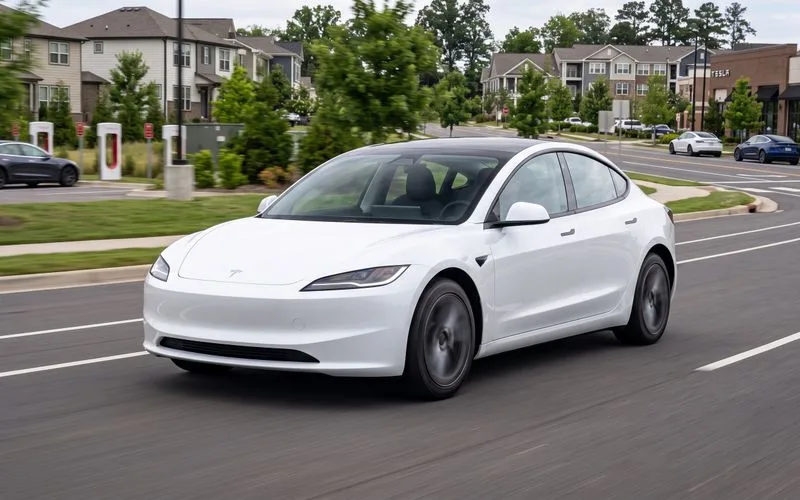 Tesla Model 3Mid-Size Luxury SedanBetter at: Value and resale
More range for roughly $10,000 less, native Supercharger access, and resale that holds 43% at five years instead of 31% — the ownership math simply isn't close.
Compare 2.73B-
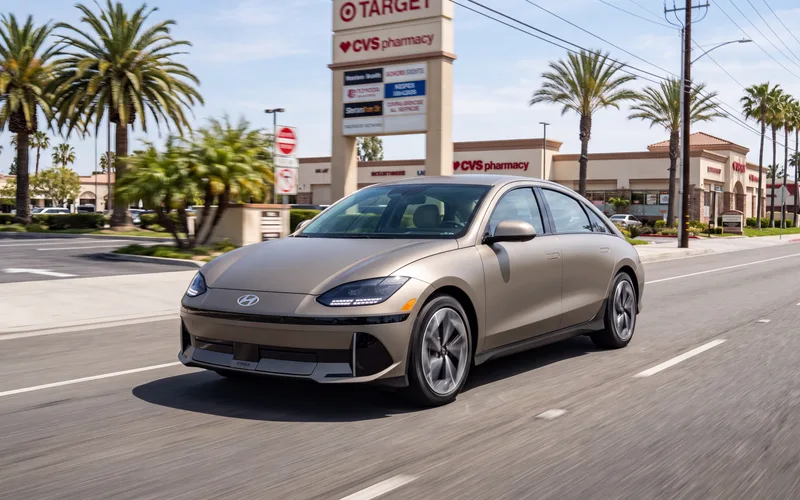 Hyundai Ioniq 6Mid-Size SedanBetter at: Charging speed
342 miles, 800-volt charging at 350 kW and a 10-year battery warranty for about $14,000 less, with a real dealer network behind it.
Compare 3.00B
3.00B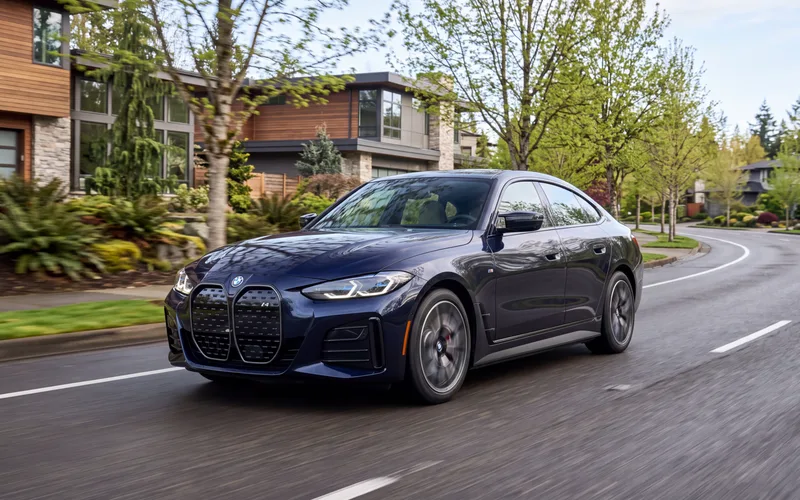 BMW i4Compact Luxury SedanBetter at: Long-term ownership
Costs more up front but pays it back with 340 US dealers, stronger predicted reliability, a real trim ladder and much steadier resale.
CompareHow it's evolved
6 scored model years · 2021–2026
Subject scores by year
Hover or tap a score to see what moved it versus the year before. A corner mark flags a big swing.
| Year | Performance | Efficiency | Safety | Space | Cost | Reliability | Tech | Use-case | Driving | Value |
|---|---|---|---|---|---|---|---|---|---|---|
| 2026 | 63 | 68 | 72 | 60 | 25 | 59 | 78 | 53 | 76 | 59 |
| 2025 | 82 | 68 | 71 | 61 | 21 | 52 | 71 | 54 | 81 | 69 |
| 2024 | 66 | 69 | 64 | 60 | 48 | 53 | 67 | 60 | 76 | 66 |
| 2023 | 53 | 61 | 67 | 63 | 46 | 53 | 71 | 57 | 77 | 68 |
| 2022 | 54 | 62 | 61 | 62 | 42 | 50 | 69 | 59 | 77 | 72 |
| 2021 | 78 | 59 | 76 | 61 | 31 | 50 | 68 | 59 | 80 | 72 |
Compare two years
Best fit & conditions
Higher scores mean a better fit for that use case. Learn more about use-case fit →
Subject profile
Academic Probation · NHTSA safety recalls
No NHTSA safety recall is on record for the 2026 Polestar Polestar 2. Other model years of the Polestar 2 have 7 — listed below.
7 recalls on other model years of the Polestar 2 (2021–2025)
Sep 15, 2025Back over prevention: softwareThe rearview camera image may not display when the vehicle is placed in reverse.
Defect
Polestar Automotive USA, Inc. (Polestar) is recalling certain 2021-2025 Polestar 2 vehicles. The rearview camera image may not display when the vehicle is placed in reverse.
Risk
A rearview camera image that does not display reduces the driver's view of what is behind the vehicle, increasing the risk of a crash.
Remedy
Dealers will update the vehicle software, free of charge. Owner letters were mailed June 4, 2026. Owners may contact Polestar's customer service at 1-800-806-2504. Polestar's number for this recall is RP1069. Vehicle Identification Numbers (VINs) involved in this recall will be searchable on NHTSA.gov beginning April 20, 2026. This recall replaces previous NHTSA recalls 24V477 and 25V280. Vehicles previously repaired under those recalls will need to have the new remedy performed.
NHTSA campaign 25V615000 ↗Manufacturer no. RP106927,816 vehicles potentially affected (all models in the campaign)Owners notified Jun 12, 2026Filed by Polestar Automotive USA, Inc.Filed as POLESTAR 2Jul 2, 2025Service brakes · Service brakes, hydraulic: power assist: electric: control module: softwareIn certain driving scenarios while coasting down a hill and using "One Pedal Drive," the vehicle may lose brake function.
Defect
Polestar Automotive USA, Inc. (Polestar) is recalling certain 2021 and 2024 Polestar 2 vehicles. In certain driving scenarios while coasting down a hill and using "One Pedal Drive," the vehicle may lose brake function.
Risk
A loss of brake function increases the risk of a crash.
Remedy
Owners are advised not to use "One Pedal Drive" until the repair has been completed. Polestar has released an over-the-air (OTA) software update, free of charge. Owner notification letters were mailed July 18, 2025. Owners may contact Polestar's customer service at 1-800-806-2504. Polestar's number for this recall is RP1061.
NHTSA campaign 25V409000 ↗Manufacturer no. RP10612 vehicles potentially affected (all models in the campaign)Owners notified Jul 18, 2025Filed by Polestar Automotive USA, Inc.Filed as POLESTAR 2Apr 25, 2025Back over prevention: softwareThe rearview camera image may not display when the vehicle is placed in reverse. As such, these vehicles fail to comply with the requirements of Federal Motor Vehicle Safety Standard number 111, "Rear Visibility."
Defect
Polestar Automotive USA, Inc. (Polestar) is recalling certain 2021-2025 Polestar 2 vehicles. The rearview camera image may not display when the vehicle is placed in reverse. As such, these vehicles fail to comply with the requirements of Federal Motor Vehicle Safety Standard number 111, "Rear Visibility."
Risk
A rearview camera image that does not display reduces the driver's view of what is behind the vehicle, increasing the risk of a crash.
Remedy
Dealers will update the vehicle software, free of charge. Owner notification letters were mailed June 20, 2025. Owners may contact Polestar's customer service at 1-800-806-2504. Polestar's number for this recall is RP1056. Vehicles in this recall that were previously repaired under 24V-477 will need to have the new remedy completed.
NHTSA campaign 25V280000 ↗Manufacturer no. RP105627,816 vehicles potentially affected (all models in the campaign)Owners notified Jun 20, 2025Filed by Polestar Automotive USA, Inc.Filed as POLESTAR 2Dec 18, 2024Air bags: frontal: driver side: inflator moduleThe clamps may be improperly crimped on the driver's side inner far side air bag module (FSAB), which can cause the air bag to deploy improperly.
Defect
Polestar Automotive USA, Inc. (Polestar) is recalling certain 2024 Polestar 2 electric vehicles. The clamps may be improperly crimped on the driver's side inner far side air bag module (FSAB), which can cause the air bag to deploy improperly.
Risk
An air bag that deploys improperly may not protect the driver as intended during a crash, increasing the risk of injury.
Remedy
Dealers will replace the driver's side inner FSAB, free of charge. Owner notification letters were mailed January 17, 2025. Owners may contact Polestar customer service at 1-800-806-2504. Polestar's number for this recall is RP1044.
NHTSA campaign 24V939000 ↗Manufacturer no. RP10447 vehicles potentially affected (all models in the campaign)Owners notified Jan 17, 2025Filed by Polestar Automotive USA, Inc.Filed as POLESTAR 2Jun 26, 2024Back over prevention: sensing system: camera · Equipment: electrical: infotainment: softwareThe Infotainment Head Unit (IHU) software may prevent the rearview camera image from displaying. As such, these vehicles fail to comply with the requirements of Federal Motor Vehicle Safety Standard number 111, "Rear Visibility."
Defect
Polestar Automotive USA, Inc. (Polestar) is recalling certain 2021-2024 Polestar 2 vehicles. The Infotainment Head Unit (IHU) software may prevent the rearview camera image from displaying. As such, these vehicles fail to comply with the requirements of Federal Motor Vehicle Safety Standard number 111, "Rear Visibility."
Risk
A rearview camera image that does not display decreases the driver's visibility, increasing the risk of a crash.
Remedy
Polestar has released an over-the-air IHU software update, free of charge. Owner notification letters were mailed August 9, 2024. Owners may contact Polestar customer service at 1-800-806-2504. Polestar's number for this recall is RP1016.
NHTSA campaign 24V477000 ↗Manufacturer no. RP101625,825 vehicles potentially affected (all models in the campaign)Owners notified Aug 9, 2024Filed by Polestar Automotive USA, Inc.Filed as POLESTAR 2Jul 12, 2023Suspension: front: control arm: lower ball jointThe front left lower ball joint may have been incorrectly installed, allowing the control arm to disconnect from the steering knuckle.
Defect
Polestar Automotive USA, Inc. (Polestar) is recalling certain 2023 Polestar 2 vehicles. The front left lower ball joint may have been incorrectly installed, allowing the control arm to disconnect from the steering knuckle.
Risk
The control arm disconnecting from the steering knuckle can cause a loss of steering, increasing the risk of a crash.
Remedy
Dealers will inspect and replace the ball joint fastening bolt as necessary, free of charge. Owner notification letters were mailed August 10, 2023. Owners may contact Polestar customer service at 1-800-806-2504. Polestar's number for this recall is R10245.
NHTSA campaign 23V476000 ↗Manufacturer no. R102453 vehicles potentially affected (all models in the campaign)Owners notified Aug 10, 2023Filed by Polestar Automotive USA, Inc.Filed as POLESTAR 2Feb 24, 2021Electrical system: propulsion system: traction battery: management system/energy control module (bms/becm): softwareThe Battery Energy Control Module (BECM) microprocessor may reset and cause the high voltage system to disconnect.
Defect
Polestar Automotive USA, Inc. (Polestar) is recalling certain 2021-2022 Polestar 2 vehicles. The Battery Energy Control Module (BECM) microprocessor may reset and cause the high voltage system to disconnect.
Risk
A disconnected high voltage system can cause a loss of drive power, increasing the risk of a crash.
Remedy
Polestar will notify owners, and the software will be updated by a dealer, or through an over-the-air (OTA) update, free of charge. Owner notification letters were mailed April 23, 2021. Owners may contact Polestar customer service at 1-800-806-2504. Polestar's number for this recall is R10079.
NHTSA campaign 21V110000 ↗Manufacturer no. R100793,457 vehicles potentially affected (all models in the campaign)Owners notified Apr 23, 2021Filed by Polestar Automotive USA, Inc.Filed as POLESTAR 2
Source: NHTSA Office of Defects Investigation recall database, model years 2021–2026. Recalls are listed by model year as the manufacturer filed them; whether a specific car is affected depends on its VIN — check a VIN at nhtsa.gov ↗. NHTSA model names matched to this page: POLESTAR 2.
Detailed scoring by subject
1Performance & PowertrainMid-pack among this car's ten categories.2.26C
Scored on the Long Range Single Motor, the entry and volume configuration of the two-configuration 2026 lineup. Its 220 kW (299 hp) rear-mounted permanent-magnet motor is the output the MY2024 hardware update introduced when the car switched from front- to rear-wheel drive, and it carries over unchanged for 2026 — respectable for a compact luxury sedan but well short of the dual-motor cars and of the sedan band's ceiling.
The single rear motor produces 490 N·m (361 lb-ft) from zero rpm, a strong figure for the sedan band and the main reason the car feels considerably quicker in traffic than its 299 hp rating suggests. The dual-motor cars add a front motor for a combined 740 N·m (546 lb-ft).
Polestar's own 0–60 mph claim for the Long Range Single Motor is 5.9 seconds, and instrumented tests of the rear-drive car have generally come in a couple of tenths quicker, so this is a conservative reading. That places it mid-pack for the sedan band — comfortably ahead of mainstream compact sedans, with the dual-motor cars in the low fours.
Instant, silent, entirely linear delivery with no lag, no gear steps and no hybrid handoffs — and the MY2024 switch to a new rear permanent-magnet motor made the single-motor car noticeably stronger and smoother off the line than the earlier front-drive version. Held just below the BMW i4 and Tesla Model 3 because the Polestar 2 rides on the older 400-volt CMA platform and lets through more road and motor noise than the newest premium EV sedans.
A single-speed reduction gear means there is nothing to hunt for, shift through or drone, and Polestar's selectable one-pedal drive (off / low / standard) plus a creep on-off toggle gives the driver real control over how the car decelerates. Scored alongside the best EV sedans and just below the i4 only because regen strength is set through a menu rather than on paddles.
Dual-motor AWD is a straightforward one-step-up choice rather than a top-trim-only lock, but it is the upper of only two configurations and the volume Single Motor is rear-drive only. Operation is a rear-biased electronic front/rear torque split — the front motor can be decoupled entirely for efficiency — with no low range or terrain modes, which is the right answer for a pavement sedan but not a sophisticated one.
Battery-electric only — no gas, hybrid or PHEV alternative exists on this nameplate — and within EV the choice is narrower than its rivals': two configurations (299 hp RWD, 421 hp AWD) on a single battery size, with the Performance Pack a chassis-and-tune option rather than a distinct third powertrain. That is one fewer meaningful step than the BMW i4's three and two fewer than the Ioniq 6's four, and the Standard Range battery that once anchored the bottom of the range is no longer offered in the US.
2Efficiency & RangeMid-pack among this car's ten categories.2.60C+
Re-verified this run and unchanged. There is no US-market 2026 Polestar 2 — Polestar stopped taking US orders for the 2 after MY2025 under the Chinese-build tariffs, and fueleconomy.gov's 2026 Polestar listing contains only the Polestar 3 and Polestar 4. The final US configuration is the 476 hp Long Range Dual Motor with Performance Pack on 20-inch wheels, Öhlins dampers and Continental performance rubber: a genuinely thirsty EV at 91 MPGe combined, behind the BMW i4 (109 in this dataset), Ioniq 6 (122) and Model 3 (138). The MY2026 global refresh does not change this — it re-packs only the Standard Range single motor (LG 69 kWh → CATL 70 kWh) and leaves the Long Range 82 kWh powertrain alone.
City leads highway by the usual EV margin thanks to regenerative braking and selectable one-pedal drive, but 95 MPGe is a weak city figure for a compact luxury EV — permanent all-wheel drive, a ~4,900 lb curb weight and performance tires all cost energy in stop-and-go running. Scored against other EVs, not the fleet.
Highway remains the Polestar 2's weaker discipline: a 0.278 drag coefficient is respectable but the tall, liftback-derived body and wide performance rubber make it less slippery at 70 mph than the low-slung Ioniq 6 or Model 3. The city-to-highway drop is smaller than most EVs' precisely because the city number is already low.
254 miles from the 82 kWh pack is the shortest range of any premium EV sedan in this dataset, trailing the BMW i4 (301), Audi e-tron GT (300), Mercedes EQE (267), Ioniq 6 (342) and Model 3 (363) — the Performance Pack's 20-inch wheels and sticky tires cost roughly 24 miles against the 278-mile dual motor on 19s that the US market did not receive. Polestar publishes the same 254-mile figure as the EPA, so there is no trim ambiguity to hide behind; secondhand 'up to 278 miles' figures in 2026 preview coverage describe a configuration never sold here.
205 kW is a solid mid-pack peak for a 400-volt car — well clear of the 155 kW the pre-2025 dual motor managed on the older 78 kWh CATL pack, but a step behind the 800-volt Hyundai Ioniq 6 (350 kW) and Porsche Taycan. The MY2026 global update explicitly leaves the Long Range pack's charging hardware untouched, so the figure carries forward intact.
28 minutes is competitive for a 400-volt EV and better than the 34 minutes the older dual-motor pack needed, though the 800-volt cars in this segment do it in 18–20. In practice the short 254-mile range means the car reaches a charger more often than its rivals do, which blunts the benefit of a decent charge curve.
Still cheap against any 476 hp gas sedan, but no bargain among EVs: $850/yr is $200 above the single-motor car the US lost and above the BMW i4, Ioniq 6 and Model 3. Owners on a time-of-use overnight rate will beat the EPA figure; anyone leaning on public DC fast charging will not come close to it.
No fuel grade to worry about, and the 11 kW onboard AC charger makes overnight Level 2 home charging entirely routine — the cheapest way to run the car and the one most owners use. Held level with the BMW i4 rather than the Ioniq 6 or Model 3 because the 400-volt architecture, 205 kW peak and CCS port needing a purchased NACS adapter for Supercharger access make road-trip charging a step slower and less convenient than the segment's best. Unchanged this run: none of that hardware moved, and the Plug & Charge standardization in the MY2026 global refresh does not reach a car the US never received.
3SafetyOne of the Polestar 2's strongest categories.2.87B-
NHTSA has published no NCAP overall star rating for the Polestar 2 in any model year, so the 2026 carryover car has no US crash-test score to cite. Estimated at 4.5 stars from the Euro NCAP 5-star result and the strong crash record of the Volvo CMA platform the car shares.
The Polestar 2 posted Good results across the legacy IIHS crashworthiness battery and took a Top Safety Pick early in its run, but it has not been retested under the updated side and moderate-overlap protocols and carries no current-year award. Scored in the middle band: solid but unverified against today's tests.
Polestar 2 inherits Volvo's safety stack and makes it standard rather than optional: City Safety AEB with pedestrian, cyclist and large-animal detection, lane keeping aid, run-off-road mitigation, driver alert and Pilot Assist (adaptive cruise plus lane centering) on every car. The Pilot Pack content — BLIS with steer assist, rear cross-traffic alert with brake support and the 360-degree camera — became standard US equipment with the MY2024 update and carries over for 2026.
Volvo City Safety earned Superior ratings in the legacy IIHS vehicle-to-vehicle and daytime pedestrian front-crash-prevention evaluations, and Euro NCAP scored the car well on vulnerable road user protection. It has not been run through the harder 2024 updated front crash prevention test that adds night and higher-speed scenarios, so nighttime performance is unconfirmed.
Coverage is active rather than alert-only — BLIS adds a steering intervention when the driver drifts toward an occupied blind spot, and rear cross-traffic alert brakes autonomously rather than just chiming. Both are standard on the 2026 car, which puts it at the top of the compact luxury band.
Pilot Assist centers the car predictably and without the ping-ponging that afflicts weaker systems, but reviewers consistently describe it as conservative — it drops out at faded markings and hands back more readily than the best-in-class systems from BMW and Tesla.
Pilot Assist bundles full-speed-range adaptive cruise with stop-and-go into the lane centering function, and the regen-blended deceleration is smooth in traffic. It is a capable, well-integrated system rather than a standout, with the same conservative calibration that limits the centering score.
No hands-free highway driving is offered on any 2026 Polestar 2. Pilot Assist is a hands-on system that requires continuous steering-wheel torque, so the car sits in the bottom band against rivals with BlueCruise, Super Cruise, BMW Highway Assistant or FSD (Supervised).
Pixel LED headlights with adaptive high beam are standard on the post-update US car, which is stronger hardware than most of the compact luxury field offers on a volume trim. The score is held below the top band because the only published IIHS headlight evaluation of the Polestar 2 returned Acceptable rather than Good, and the Pixel LED setup has not been re-rated.
The fastback roofline, high beltline and shallow rear glass make the over-the-shoulder and rearward view a recurring reviewer complaint, and the thick C-pillars leave real blind zones. The standard 360-degree camera and active blind-spot system compensate at parking speeds but do not fix the sightlines themselves.
Two outboard LATCH positions with three top tethers are workable, but the Polestar 2's rear compartment is tight for the class and the tall battery-tunnel floor hump plus modest rear legroom make rear-facing seats a squeeze on front-seat space. Anchors sit in the seat bight and take some digging.
4Space & ComfortMid-pack among this car's ten categories.2.05C
The Polestar 2 is a five-seat, five-door fastback in every US trim — there is no 4-seat or extended-seating variant, so the volume trim and the range max are the same.
The CMA platform's raised, battery-carrying floor plus the fixed panoramic roof costs front headroom; 37.2 in is near the bottom of the compact-luxury-sedan band and tall drivers sit closer to the glass than in a BMW i4 or Mercedes C-Class.
Front legroom of 42.2 in is mid-pack for the segment — adequate for tall drivers, but the wide, tall battery tunnel between the front footwells makes the space feel narrower than the number suggests.
The fastback roofline cuts into second-row headroom; at 36.8 in, adults over about six feet brush the headliner, a consistent complaint in reviews of this body style.
35.4 in of rear legroom is genuinely tight for a car priced against the BMW i4 and Tesla Model 3, and the tall battery floor forces a knees-up seating position that makes the shortfall feel worse than the raw figure.
Behind-the-rear-seat volume of 14.3 cu ft is modest against the segment's 10–20 cu ft band, though the sedan trunk metric undersells the car — the hatchback tailgate and 38.7 cu ft folded capacity make it far more useful than a conventional trunk of the same size.
Better than average for the class thanks to genuine hatchback flexibility: a powered liftgate, fold-flat 60/40 rear seats, an underfloor bin with a cable tray, integrated grocery hooks and a fold-out bag holder, plus a small frunk for charging cables. Held back by a modest center console, shallow door bins and no standout innovation.
Front seats are a clear strength — Volvo-derived, well-bolstered, with extendable thigh support and widely praised over long stints in WeaveTech or Nappa trim. The score is pulled down by the rear bench, where the high battery floor produces a knees-up posture with little under-thigh support.
Firm is the defining word: the passive-damper car is composed and well-controlled but busy over broken pavement on its 19- and 20-inch wheels, and the Performance Pack's manually adjustable Öhlins dampers are stiffer still with no on-the-fly adjustment. Body control is good; compliance is not.
No engine noise and solid Volvo-derived body sealing make the cabin serene at a cruise, and measured highway sound levels sit at the quiet end of the compact luxury EV set. Tire roar on coarse pavement is the main intrusion, and acoustic glass is not fitted all round.
Solid rather than lavish: heated front seats and app-based remote pre-conditioning are standard, and the Plus pack adds a heat pump, heated rear seats, heated wheel and washer nozzles, plus the panoramic roof and Harman Kardon audio. The notable gap for a luxury-priced car is that ventilated seats are not offered at all, and the heat pump — a real range and comfort item on an EV — is pack-only rather than standard.
5Cost of OwnershipThe Polestar 2's lowest-graded category.0.00F
Scored on the Long Range Single Motor, the entry and volume configuration of the two-configuration 2026 lineup. Extrapolated from the last well-established US pricing for the post-MY2024 car — $49,900 plus $1,400 destination at MY2024, rising roughly $2,000 across MY2025 — which puts a 2026 opening price in the low-$50,000s delivered. That is cheaper than the BMW i4 eDrive40 but still near the top of a sedan band scaled from mainstream compacts, so it scores in single digits.
The Polestar 2 has no trim ladder — buyers configure a two-motor choice plus option packs — and the car most people actually take delivery of is the Single Motor with the Plus Pack, which bundles the heat pump, panoramic roof and Harman Kardon audio and is close to mandatory in cold climates for the heat pump alone. At roughly $57,900 delivered that lands at the very top of the sedan band and scores zero, the same outcome as the BMW i4 eDrive40 with its Premium Package.
An EV drivetrain removes essentially every scheduled wear item a combustion luxury sedan racks up — no oil, plugs, belts or transmission service — and regenerative braking stretches pad life well past 60,000 miles. Held above the mainstream-EV figures rather than at the very top because Polestar parts and labor price at Volvo premium-brand rates and the service network is the thinnest of any brand in this dataset, so the repairs half of the estimate carries more risk than the maintenance half.
This is the item that decides the category. The Polestar 2 has been among the fastest-depreciating vehicles sold in the US across multiple years of published retention studies, and every structural factor still points the same way for a 2026 car: heavy early lease and fleet volume feeding the used market, a 400-volt platform that ages against newer 800-volt rivals, a tiny and shrinking dealer footprint that thins out used demand, and persistent doubt about the brand's US future and financial position — the one thing a used-EV buyer weighs most heavily. At roughly 31% it falls below the sedan band floor of 35% and scores zero.
Polestar's US new-vehicle limited warranty runs 4 years or 50,000 miles, exactly level with the BMW i4 and Tesla Model 3 in this dataset and a step past the 3 yr / 36,000 mi that several luxury brands still offer. Mid-band — better than the shortest luxury coverage, well short of Hyundai's 5 yr / 60,000 mi.
The high-voltage battery and drive system carry 8 years or 100,000 miles with a 70% state-of-health floor — the EV market standard and the same coverage the BMW i4 and rear-drive Tesla Model 3 offer, with none of the extra margin Hyundai's 10 yr / 100,000 mi provides. Adequate rather than reassuring on a car whose resale case already depends on used buyers trusting the pack.
Polestar bundles scheduled maintenance and roadside assistance into the ownership package for the early years, Google built-in arrives with a complimentary connected-data period, and public-charging credit promotions run on and off — a better-than-average package that would sit in the 80s on paper. Marked down to the low 70s because the practical value is blunted by the thinnest service network of any brand in this dataset: service runs through a small set of authorized Volvo retailers and Polestar Spaces, so an owner outside a metro area may drive hours to redeem free maintenance, and the charging credits are quarter-to-quarter promotions rather than a dependable term of sale.
$57,900 volume-trim price minus its estimated resale value after 5 years (31% retained, or about $17,949) leaves about $39,951 in depreciation. Add the projected $4,300 in 5-year maintenance and repairs, and owning this vehicle for 5 years costs about $44,251 in total.
6Reliability & QualityOne of the Polestar 2's weakest categories.1.96C-
Third-party predicted reliability for the Polestar 2 has run average-to-below-average, and the owner-reported trouble spots are consistent across the nameplate's life: in-car electronics and the Android Automotive infotainment stack, 12-volt battery drain, charge-port and charging-session faults, and scattered drive-system warnings. The offsetting caveat is sample size — Polestar's US volume is small enough that predicted-reliability readings for it carry wider error bars than for the German and Korean rivals in this segment.
Polestar has no multi-year dependability standing to point to — it is unranked in the J.D. Power VDS and unranked as a brand by Consumer Reports because US volume never reached the reporting threshold, so there is no track record either way. What can be read across is the engineering and manufacturing parentage: Volvo, which supplies the CMA platform and the safety and electrical architecture, sits below the industry average in Consumer Reports brand reliability and mid-to-lower in J.D. Power dependability. An unranked brand behind a below-average parent lands below mid-pack.
Recall activity has been busy for a nameplate of this volume, and unlike Tesla's software-heavy recall list it is not all remotely remediable. The most serious campaign in the car's history was an inverter-software defect that could cause a sudden loss of drive power on early cars — a stall-risk defect, not a convenience item — alongside rearview-camera display noncompliance, a panoramic-roof bonding campaign, and a run of restraint- and electrical-system campaigns, several shared with the Volvo models built on the same platform. TSB traffic skews heavily toward infotainment and high-voltage-system software. The mitigating factor for a 2026 buyer is that the MY2024 update replaced the drive-unit and inverter hardware implicated in the worst of it.
Mixed, and squarely in the 'newer powertrain, no current red flags' band. In its favor: the 82 kWh pack uses mainstream large-format cells from a tier-one supplier, real-world degradation reports on high-mileage Polestar 2s have been unremarkable, and there is no systemic pack-failure pattern of the kind that defines the E-GMP ICCU story. Against it: the permanent-magnet rear drive unit and silicon-carbide inverter that define the 2026 car are Polestar's own newer design, introduced with the MY2024 update, so by 2026 they carry roughly three model years of field exposure at low volume — thin evidence either way — and the pre-update car's inverter defect is a reminder that this drivetrain family has already produced one loss-of-propulsion campaign.
A genuine strength and one of the reasons the car reviews well. The cabin is Scandinavian-minimalist rather than lavish, but the execution is honest: WeaveTech vegan upholstery with reconstructed-wood or Nappa-leather upgrades, consistent soft-touch coverage in high-touch zones, and switchgear that feels properly damped rather than cost-engineered. Where it gives ground to the Audi A4 and BMW i4 is richness of detail and lower-cabin plastics — reviewers routinely note the interior is beautifully designed but materially a step behind the German benchmarks at a comparable price.
Physical assembly is solid — the car is built on Volvo's CMA line at Geely's Luqiao plant alongside the XC40, and reviewers consistently report tight, even panel gaps, a structurally rigid feel, and low wind and road noise. What holds the score out of the top band is not hardware but software: the Android Automotive system has drawn persistent owner complaints about glitches, laggy boots and connectivity dropouts across the nameplate's life, and initial-quality problems reported by owners land disproportionately in that column.
The weakest structural element of Polestar ownership and one of the two items that pull this category down. Polestar sells direct through a couple of dozen 'Polestar Space' retail locations nationwide — coverage that leaves large parts of the country with no retail presence at all — and leans on Volvo Retail dealers to perform warranty and service work. That arrangement gives it more physical service points than the Space count suggests, but not every Volvo store is Polestar-certified, so owners outside major metros routinely drive well past the nearest Volvo sign to reach a shop that can take the car. Compounding it for a 2026 buyer is brand-continuity risk: with the China-built Polestar 2 squeezed by US tariffs and Polestar's US strategy pivoting to the Polestar 3 and 4, the long-run depth of support behind this specific nameplate is a live question rather than a theoretical one.
Close to worst-case on every dimension this item measures. Parts are dealer-only and flow from Chinese production through a small US distribution channel, and long collision-parts backorders on low-volume Polestars are a repeated owner complaint — weeks-to-months waits are not unusual. The certified collision-repair network is thin, the aluminum-intensive body and high-voltage architecture demand specialist procedures and equipment, and aftermarket support for a nameplate at this volume is effectively nonexistent, so there is no independent-parts pressure holding prices down. Insurers price this in: elevated repair severity is part of why the car's collision premiums sit mid-pack despite a modest replacement cost, and it raises the total-loss rate on otherwise repairable damage.
7Technology & InfotainmentThe Polestar 2's best-graded category.3.27B+
The Polestar 2 has carried the same 11.15-inch portrait-orientation center display since launch, and the MY2024 facelift changed the exterior and powertrain but not the screen hardware. It is standard across the range with no larger option, which is small for a 2026 luxury EV sedan.
The Polestar 2 runs Android Automotive OS with Google built-in, and it remains one of the most consistently praised native infotainment systems in the segment — fast, logically laid out, and largely free of the menu depth that afflicts rivals. Points come off for climate control living entirely on the touchscreen and for the modest screen area, not for software quality.
Polestar added Apple CarPlay to the Polestar 2 by over-the-air update after launch and followed with Android Auto, so both projection systems are supported wirelessly on a car whose native OS is already Google-based. Scored just below the top band because the capability arrived retroactively via software and early releases drew bug reports rather than shipping clean from day one.
Google Assistant handles natural-language requests natively and native Google Maps includes EV routing with charging stops and battery-aware range projection. This is the reference implementation for built-in maps and voice in the segment — most owners have no reason to reach for phone projection.
The optional Harman Kardon premium system (13 speakers, roughly 600 W) is well regarded and the standard system is competent rather than special. It scores in the top band on premium availability but below rivals offering Bowers & Wilkins or Burmester tiers, and the good system is option-pack-gated rather than standard.
A 12.3-inch full-digital driver display is standard on every Polestar 2, with native Google Maps able to render directly in the cluster. Crisp and well organized, though less configurable than BMW's or Audi's equivalents.
Polestar ships regular whole-vehicle over-the-air releases that have added genuine features to cars already in owners' hands — Apple CarPlay support, powertrain and range refinements, one-pedal-drive tuning. This is real feature delivery, not maps-only patching, and sits close to Tesla's cadence.
The Polestar app covers the core set — remote lock/unlock, climate preconditioning, charge scheduling and monitoring, vehicle locate — with no recurring subscription, which is a real advantage over the German rivals. It falls short of the top band on polish and on phone-as-key: Polestar's digital key rollout has centered on the Polestar 3 and 4 rather than the 2.
USB-C ports are provided front and rear on the current generation and a wireless charging pad is available, but the pad is bundled into an option pack rather than standard, port counts are modest, and the Polestar 2 offers no household outlet or vehicle-to-load power — a gap against Hyundai/Kia EVs that ship V2L.
Proximity key entry is standard and the Polestar 2 dispenses with a start button entirely — a seat sensor wakes the car when the driver sits down, which is genuinely slicker than push-button start. Held out of the upper band because the power tailgate with hands-free opening is option-pack content and phone-as-key is not established on this model.
A 360-degree surround-view camera, front and rear parking sensors, and automated park assist are all offered and well executed, but they arrive through the option packs rather than as standard equipment, so a base-spec 2026 Polestar 2 gets rear camera and sensors only.
The Polestar 2 has never offered a head-up display in any trim or option pack, and none was added with the facelift — the larger Polestar 3 and 4 get one, but the 2 does not. Scored in the bottom band as a feature simply not on the menu at any price.
8Use-Case FitOne of the Polestar 2's weakest categories.1.57D
The liftback tailgate and 38.7 cu ft of seats-folded space make stroller duty easier than a trunk-lid rival, but the CMA platform's battery floor forces a knees-up rear bench with only 35.4 in of legroom and 36.8 in of headroom, and the narrow rear door aperture plus high sill make wrestling a rear-facing seat in awkward.
The Volvo-derived safety hardware is generous and standard — AEB with pedestrian/cyclist detection, blind-spot with steer assist, rear cross-traffic alert with brake, and Pilot Assist on every trim, so families do not have to option up. What holds it back is the absence of any US crash-test result (no NHTSA star rating, no IIHS award) and no rear-occupant reminder system.
A quiet EV cabin, rear vents and rear USB-C, and a hatch that swallows a family's bags make it a competent medium-haul car, but the firm damping on the 19/20-inch wheels, the cramped raised rear bench and the lack of any rear entertainment or rear climate zone put it well behind an i4 or Ioniq 6 for a full car of four on a long day.
Strong commuter fundamentals: instant, seamless single-motor response, genuinely well-calibrated one-pedal driving with creep off, near-silent low-speed running, phone-as-key entry and the excellent Google-built-in interface. The firm ride over broken pavement, thick-pillar visibility and touchscreen-first climate controls are the recurring annoyances.
At 111 MPGe combined the Long Range Single Motor is among the most efficient cars in the luxury-sedan set, and with no oil, plugs, belts or exhaust in the service book the per-mile consumable bill is minimal. The deduction is for wide, expensive low-rolling-resistance tires (20-inch on Plus/Performance cars) and a high insurance premium that both land on the commuter.
The footprint is genuinely compact for a luxury sedan and a 360-degree camera is available, but the 39 ft turning circle is one of the worst in the segment and the letterbox rear window plus wide rear pillars mean you lean on the cameras rather than your eyes in a tight garage.
There is no bed, no meaningful payload headroom and only a light accessory tow bar rated for a bike rack or a small utility trailer — and using it drops EV range sharply. The hatch opening is the one genuinely useful work feature, letting it carry samples or tools a trunk-lid sedan could not.
The Volvo CMA architecture underneath is sound and the EV drivetrain has few wear items, but this is a luxury-finished car with soft upholstery, no wear-friendly rubber-floor trim option and a fleet-hostile service footprint; it has no work-fleet track record to lean on.
Essentially nothing here: no household or vehicle-to-load outlet, no bed rails or work-oriented tie-down system beyond the standard cargo hooks and net, a carpeted load floor, and no upfit ecosystem. A reversible cargo mat and the accessory load carriers are the extent of it.
320 miles of EPA range in the rear-drive Long Range car is a real touring figure and the cabin is quiet and low-fatigue at highway speed, but Pilot Assist is a competent hands-on system rather than a hands-free one, the ride stays firm on coarse surfaces, and roughly 200 kW peak DC charging is merely adequate next to 800-volt rivals.
Dual Motor AWD, an accessory tow bar for a hitch bike rack and factory load carriers cover gravel-road and trailhead duty, but ground clearance is car-low, there is no V2L for camp power, no all-terrain tire option and no off-pavement drive modes — this is a paved-road car that tolerates a forest-service road, not an adventure enabler.
The liftback body is the Polestar 2's practicality trump card over its trunk-lid rivals — a wide hatch aperture, 60/40 folding rear seats opening 38.7 cu ft, an underfloor bin, a small frunk for charge cables, plus available roof carriers and a hitch. The raw volume is still modest and the sloping roofline caps how tall an object you can load.
9Driving ExperienceOne of the Polestar 2's strongest categories.3.19B
The rear-drive-biased chassis introduced with the 2024 rework and carried into 2026 gives the Polestar 2 genuine balance and tight body control on a low-slung, battery-in-the-floor structure; it is one of the better-handling EV sedans, though roughly 4,400-4,800 lb curb weights and a firm, non-adjustable standard damper tune keep it a notch below the sharpest compact luxury sedans.
Steering is quick, accurate and consistently weighted, with three selectable effort settings (Light/Standard/Firm), but feedback is the car's most-cited dynamic weakness - reviewers describe it as precise yet largely mute off-center.
Regen-to-friction blending is among the better-executed in the EV field - the pedal stays linear across the handoff and one-pedal driving is selectable in three levels - but the volume Long Range Single Motor uses standard front calipers hauling down a heavy car, so stopping power is competent rather than class-leading.
Single-speed EV drive with no shift events and no engine stop/start, plus instant, cleanly metered throttle response; on the Long Range Dual Motor the asynchronous front motor fully disconnects when it is not needed and re-engages without a perceptible driveline shunt.
Near-silent at cruise with no vibration through the controls, and only a faint motor whine under hard acceleration. Held just below the segment's best because what noise does reach the cabin comes from tires and road surface on the larger wheel packages rather than from the drivetrain.
Polestar publishes an 11.5 m curb-to-curb turning circle for the Polestar 2, which converts to 37.7 ft - mid-pack for a compact sedan and unchanged for 2026.
A low, well-supported sport-sedan driving position with a good wheel, a real driver display and retained column stalks, but rearward visibility is poor behind the high beltline, thick C-pillars and shallow liftback glass, and most climate and vehicle settings live in the portrait touchscreen.
Rear-drive balance, strong instant thrust and a taut chassis make this the enthusiast's pick among mainstream EV sedans - it is routinely recommended over the Tesla Model 3 on driving character - but numb steering and the absence of any real aural event stop it short of the top band.
10Value & Market PositionMid-pack among this car's ten categories.1.97C-
The base Long Range Single Motor is competently rather than generously equipped for a low-$50,000s luxury EV: the 11.15-inch portrait display with Google built-in, wireless Apple CarPlay, the digital cluster, LED headlights, vegan WeaveTech upholstery, heated front seats, a power tailgate and the core Volvo-derived driver-assist suite all arrive standard. What holds it below the class average is what does not — the heat pump sits inside the Plus Pack, and on an EV at this price that is a genuine content omission rather than a luxury upcharge, since a buyer in a cold state effectively has to spend the pack to get usable winter range. Harman Kardon audio, pixel LED headlights and the upgraded interior trims are optional as well, so the car most people actually want is several thousand dollars past the advertised entry price.
On paper the raw numbers are competitive — roughly 299 hp, 361 lb-ft and 320 miles of EPA range from a rear-drive car in the low $50,000s undercuts a BMW i4 eDrive40 on price while nearly matching it on range, and the interior materials and build quality punch at or above the price. Two things pull it back to mid-band: a Tesla Model 3 Long Range delivers more range for roughly $10,000 less, which is the comparison most cross-shoppers actually run, and the 400-volt architecture with its roughly 205 kW peak charging is now a generation behind the 800-volt Korean and Audi/Porsche rivals, so the per-dollar case erodes the moment charging speed enters the calculation. Heavy street discounting improves the real transaction math considerably, but that benefit is scored under 10.2.3 and is offset by the worst resale retention in this dataset.
There is no trim ladder at all. The Polestar 2 offers exactly two configurations — Long Range Single Motor (rear-drive) and Long Range Dual Motor (all-wheel drive) — and everything else is bought through a short list of option packs: Plus, Pilot, Performance and the interior and wheel choices. That is deliberate and it keeps configuration simple, but it gives a buyer almost no way to shape the car to a budget: there is no cheaper standard-range entry point, no stripped base variant and no loaded flagship trim, so the usable price spread is narrow and the steps between rungs are coarse. The prior placeholder score of 84 described a lineup this car has never had.
This is the weakest item in the category and one of the weakest market positions of any sedan in the dataset. Polestar 2 US volume peaked early in the model's life and has fallen steeply since, as the brand redirected its US effort toward the South Carolina-built Polestar 3 and, later, the Polestar 4 — and the Polestar 2's Chinese assembly leaves it exposed to the Section 301 tariff on Chinese-built EVs, which structurally caps how hard Polestar can push it here. A 2026 buyer is looking at a low-volume car late in its life with a clearly declining trajectory and a credible chance this is its last US model year, which is the bottom-band description the scoring guidance gives.
Polestar has real design credibility and a clean, well-regarded product identity, and the Volvo/Geely engineering parentage gives the badge more substance than a startup nameplate normally carries. Against that sits everything that actually moves satisfaction and resale: minimal US brand awareness outside EV-enthusiast circles, a direct-sales footprint of only a couple dozen Spaces so most Americans have never seen one, and a well-publicized run of financial distress — heavy losses, going-concern and delisting coverage, and repeated dependence on Geely funding — that used-car buyers price in directly. This scorecard's own cat5 finding of roughly 31% five-year retention, the worst in the dataset, is the market putting a number on that image problem.
Scored as buyer benefit, this is the Polestar 2's single strongest card and the reason the category does not land lower still. Everything that hurts the car commercially — thin demand, an end-of-life model, inventory that turns slowly, a brand under pressure to move units — converts directly into leverage for someone actually signing, and end-of-run clearance typically produces the deepest discounts a nameplate ever sees. The one real subtraction is that federal support is gone: the Polestar 2 never qualified for the $7,500 purchase credit as a Chinese-built vehicle, and the commercial-lease pass-through Polestar had been using to deliver it synthetically ended with the credit's expiry on 30 September 2025, so the discounts now come out of Polestar's own margin rather than the Treasury's.
Two forces pull in opposite directions and land this just above the bottom band. In its favor, the MY2024 update was a genuinely substantial mid-cycle overhaul rather than a trim shuffle — the single-motor car switched from front- to rear-drive with a new permanent-magnet motor, gained a larger battery and materially better range and efficiency, and picked up the restyled SmartZone nose — so the mechanical package a 2026 buyer gets is only about two years old. Against that, the underlying CMA platform dates to 2017 and this generation launched for MY2021, making 2026 its sixth year, and the 400-volt electrical architecture is the part that most visibly shows its age against 800-volt rivals. Redesign risk is the sharper concern: rather than facing a replacement, the Polestar 2 is a late-life model with no announced successor and a real prospect that its US run ends here — a different but equally material uncertainty for a buyer.
The Polestar 2 is a well-liked car that almost never wins the comparison test — the textbook description of this item's middle band. Reviewers have consistently praised its build quality and interior materials, its tied-down chassis and unusually natural steering for an EV, and the Google built-in infotainment, widely treated as the best native system in any EV when it launched and still reviewing well. The MY2024 rear-drive conversion drew particularly strong write-ups for turning the car's weakest metric, efficiency and range, into a competitive one. The recurring criticisms are structural and were never fixed: a tight rear seat and small trunk for the footprint, a firm ride, and charging speed that now reads slow. It has collected finalist placings and design recognition rather than the outright hardware — no Car and Driver 10Best, no NACTOY win — and as the oldest car in most current comparison fields it is increasingly the sentimental pick rather than the recommended one.