
The verdict
A mixed-report mid-size sedan, strong on safety and held back by performance.
The 2025 Ioniq 6 is one of the most efficient and fastest-charging EVs you can buy. The volume SE Long Range RWD gets 132 MPGe and 342 miles of EPA range, charges from 10 to 80% in about 18 minutes on an 800-volt fast charger, and carries a 2025 IIHS Top Safety Pick+ and Hyundai's 10-year battery warranty. You give up practicality for that slippery shape: the trunk is only 11.2 cu ft, rear riders sit knees-up under a low roof, and the view out the back is poor. Resale is weak, too, so it makes the most sense bought at a discount or as a used car. It is also the last regular Ioniq 6 sold in the US.
Jump to scoresStrengths
- Exceptional efficiency and very low running costs
- Road-trip-ready range and ultra-fast charging
- Top-tier crash protection with standard driver aids
What holds it back
- Small trunk and almost no utility
- Cramped, knees-up rear seat
- Steep depreciation
Top alternatives
Cars shoppers cross-shop with the Hyundai Ioniq 6 3.00B
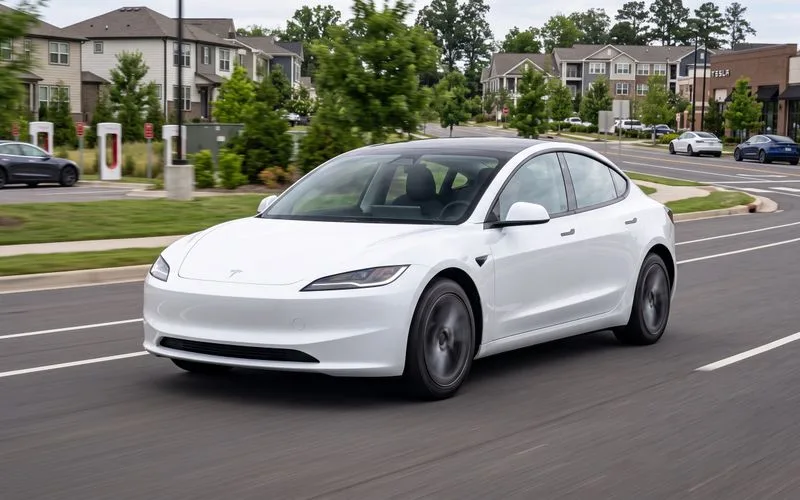 Tesla Model 3Mid-Size Luxury SedanBetter at: Range & resale
More range, stronger resale and the deepest charging network, for similar or less money — the case against the Ioniq 6 on pure EV fundamentals.
Compare 2.46C+
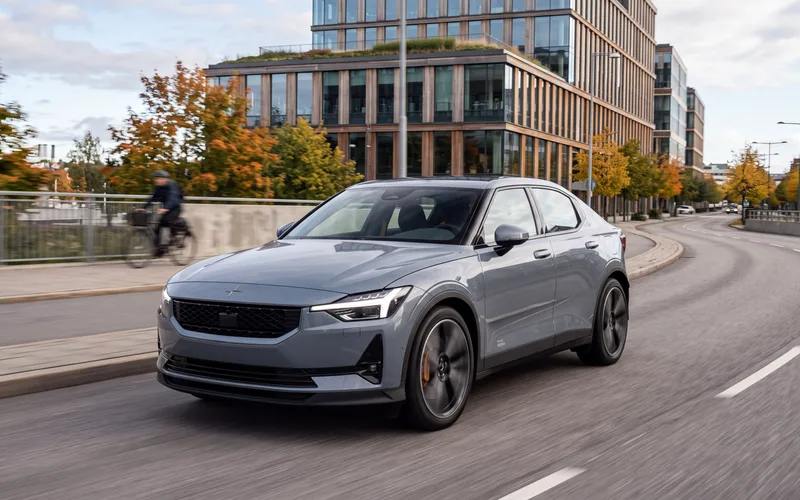 Polestar Polestar 2Compact Luxury SedanBetter at: Cargo access
A near-identical EV fastback pitch but with a hatchback opening, which fixes the Ioniq 6's biggest day-to-day frustration.
Compare 2.56C+
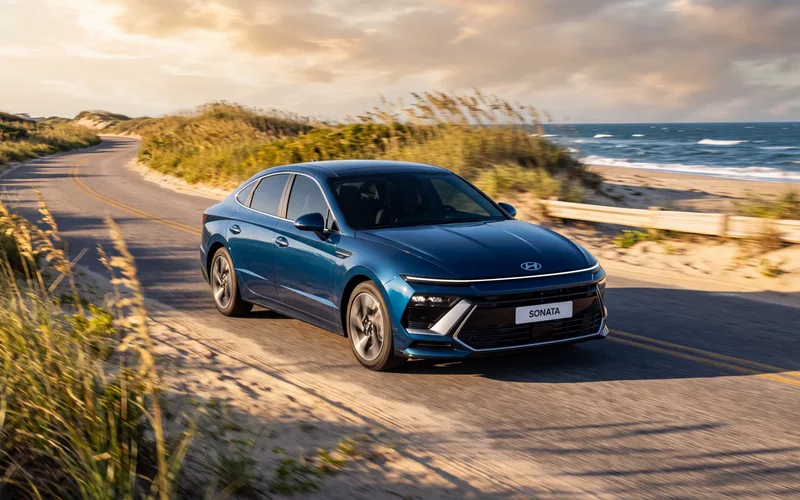 Hyundai SonataMid-Size SedanBetter at: Price & practicality
Same warranty and showroom for thousands less, with a usable trunk and better resale — the right call if home charging isn't realistic.
CompareSubject scores by year
Hover or tap a score to see what moved it versus the year before. A corner mark flags a big swing.
| Year | Performance | Efficiency | Safety | Space | Cost | Reliability | Tech | Use-case | Driving | Value |
|---|---|---|---|---|---|---|---|---|---|---|
| 2026 | 56 | 76 | 77 | 68 | 60 | 68 | 79 | 55 | 68 | 75 |
| 2025 | 54 | 77 | 80 | 63 | 57 | 66 | 69 | 57 | 70 | 69 |
| 2024 | 55 | 78 | 79 | 68 | 61 | 64 | 67 | 57 | 71 | 74 |
| 2023 | 54 | 78 | 80 | 66 | 57 | 63 | 70 | 56 | 69 | 75 |
Compare two years
Best fit & conditions
Higher scores mean a better fit for that use case. Learn more about use-case fit →
Subject profile
Academic Probation · NHTSA safety recalls
Apr 6, 2026Seat belts: front: anchorageThe driver and passenger seat belt anchors may detach.
Defect
Hyundai Motor America (Hyundai) is recalling certain 2023-2025 Hyundai Ioniq 6, 2023-2026 Genesis G90, 2024-2026 Hyundai Santa Fe, and Hyundai Santa Fe Hybrid vehicles. The driver and passenger seat belt anchors may detach.
Risk
A detached seat belt anchor will not adequately restrain the seat occupant, increasing the risk of injury in a crash.
Remedy
Dealers will inspect and reinforce or replace the seat belt anchors, as necessary, free of charge. Owner notification letters were mailed beginning May 29, 2026. Owners may contact Hyundai customer service at 1-855-371-9460 and Genesis customer service at 844-340-9741. Hyundai's numbers for this recall are 298 and 032G. Vehicle Identification Numbers (VINs) involved in this recall became searchable on NHTSA.gov April 8, 2026.
NHTSA campaign 26V218000 ↗Manufacturer no. 298-032G294,448 vehicles potentially affected (all models in the campaign)Owners notified May 29, 2026Filed by Hyundai Motor AmericaFiled as IONIQ 6Sep 11, 2025Electrical system: propulsion system: charging: portThe charging port door panel may detach.
Defect
Hyundai Motor America (Hyundai) is recalling certain 2023-2025 IONIQ 6 electric vehicles. The charging port door panel may detach.
Risk
A detached charging port door panel can create a road hazard for other vehicles, increasing the risk of a crash.
Remedy
Dealers will apply an adhesive on the charging port door assembly, free of charge. Owner notification letters were mailed beginning October 10, 2025. Owners may contact Hyundai customer service at 1-855-371-9460. Hyundai's number for this recall is 282. Vehicle Identification Numbers (VINs) involved in this recall became searchable on NHTSA.gov on September 13, 2025.
NHTSA campaign 25V606000 ↗Manufacturer no. 28231,042 vehicles potentially affected (all models in the campaign)Owners notified Oct 10, 2025Filed by Hyundai Motor AmericaFiled as IONIQ 6Nov 18, 2024Electrical system: 12v/24v/48v battery · Electrical system: propulsion system: charging: module: softwareThe Integrated Charging Control Unit (ICCU) may become damaged and stop charging the 12-volt battery, which can result in a loss of drive power.
Defect
Hyundai Motor America (Hyundai) is recalling certain 2022-2024 IONIQ 5, 2023-2025 IONIQ 6, Genesis GV60, Genesis GV70 "Electrified," and Genesis G80 "Electrified" vehicles. The Integrated Charging Control Unit (ICCU) may become damaged and stop charging the 12-volt battery, which can result in a loss of drive power.
Risk
A loss of drive power increases the risk of a crash.
Remedy
Dealers will inspect and replace the ICCU and its fuse, as necessary. In addition, dealers will update the ICCU software. All repairs will be performed free of charge. Owner notification letters were mailed December 20, 2024. Owners may contact Hyundai customer service at 1-855-371-9460 or Genesis customer service at 1-844-340-9741. Hyundai's numbers for this recall are 272 (Hyundai) and 025G (Genesis). This recall expands and replaces previous recall number 24V-204. Vehicles previously repaired under recall 24V-204 will need to have the new remedy completed.
NHTSA campaign 24V868000 ↗Manufacturer no. 272 (H), 025G (G)145,642 vehicles potentially affected (all models in the campaign)Owners notified Dec 20, 2024Filed by Hyundai Motor AmericaFiled as IONIQ 6
3 recalls on other model years of the Ioniq 6 (2023–2024)
Apr 19, 2024Power train: driveline: differential unitThe differential gear bolts in the gear drive unit may not be tightened properly, which can result in a loss of drive power or cause the differential to lock up.
Defect
Hyundai Motor America (Hyundai) is recalling certain 2024 IONIQ 6 vehicles. The differential gear bolts in the gear drive unit may not be tightened properly, which can result in a loss of drive power or cause the differential to lock up.
Risk
A loss of drive power or differential lock up can increase the risk of a crash.
Remedy
Dealers will replace the gear drive unit, free of charge. Owner notification letters were mailed June 17, 2024. Owners may contact Hyundai customer service at 1-855-371-9460. Hyundai's number for this recall is 259.
NHTSA campaign 24V283000 ↗Manufacturer no. 2592 vehicles potentially affected (all models in the campaign)Owners notified Jun 17, 2024Filed by Hyundai Motor AmericaFiled as IONIQ 6Mar 15, 2024Electrical system: 12v/24v/48v battery · Electrical system: propulsion system: charging: module: softwareThe Integrated Charging Control Unit (ICCU) may become damaged and stop charging the 12-Volt battery, which can result in a loss of drive power.
Defect
Hyundai Motor America (Hyundai) is recalling certain 2022-2024 IONIQ 5, 2023-2024 IONIQ 6, Genesis GV60, Genesis GV70 "Electrified," and Genesis G80 "Electrified" vehicles. The Integrated Charging Control Unit (ICCU) may become damaged and stop charging the 12-Volt battery, which can result in a loss of drive power.
Risk
A loss of drive power increases the risk of a crash.
Remedy
This recall is replaced by NHTSA recall number 24V-868. Vehicles already repaired under this recall will need to have the new remedy completed. Dealers will inspect and replace the ICCU and its fuse, as necessary. In addition, dealers will update the ICCU software. All repairs will be performed free of charge. Owner notification letters were mailed April 22, 2024. Owners may contact Hyundai customer service at 1-855-371-9460. Hyundai's number for this recall is 257/021G.
NHTSA campaign 24V204000 ↗Manufacturer no. 257/021G99,055 vehicles potentially affected (all models in the campaign)Owners notified Apr 22, 2024Filed by Hyundai Motor AmericaFiled as IONIQ 6Feb 1, 2024Power train: driveline: driveshaftThe rear inner driveshaft may have been improperly heat-treated, allowing it to break under load and resulting in a loss of drive power.
Defect
Hyundai Motor America (Hyundai) is recalling certain 2023 IONIQ 5, IONIQ 6, and Genesis GV60 vehicles. The rear inner driveshaft may have been improperly heat-treated, allowing it to break under load and resulting in a loss of drive power.
Risk
A loss of drive power increases the risk of a crash.
Remedy
Dealers will replace the rear inner driveshaft, free of charge. Owner notification letters were mailed March 29, 2024. Owners may contact Hyundai customer service at 1-855-371-9460. Hyundai's numbers for this recall are 253(H), 017G(G).
NHTSA campaign 24V065000 ↗Manufacturer no. 253 (H), 017G (G)1,165 vehicles potentially affected (all models in the campaign)Owners notified Mar 29, 2024Filed by Hyundai Motor AmericaFiled as IONIQ 6
Source: NHTSA Office of Defects Investigation recall database, model years 2023–2026. Recalls are listed by model year as the manufacturer filed them; whether a specific car is affected depends on its VIN — check a VIN at nhtsa.gov ↗. NHTSA model names matched to this page: IONIQ 6.
Detailed scoring by subject
1Performance & PowertrainThe Ioniq 6's lowest-graded category.1.64D
The volume configuration is the 77.4 kWh Long Range RWD single-motor car at 225 hp, modest against the sedan band. 2025 is a carry-over year of the pre-facelift first generation, so there is no N variant yet and the range tops out at the 320-hp dual-motor AWD.
The single rear motor produces 350 N·m (258 lb-ft) instantly from rest — mid-pack in the sedan band; the dual-motor AWD nearly doubles it.
Instrumented testing of the Long Range RWD beat Hyundai's conservative claim by more than a second; the drivetrain is unchanged from the tested 2023 car through 2025.
The 800-volt E-GMP single-motor powertrain delivers power immediately and silently with no lag or transitions; held just below premium German EVs only for slightly more intrusive road and wind noise.
Single-speed reduction gear with nothing to hunt; paddle-adjustable regen plus i-Pedal one-pedal mode is among the best-executed systems of its kind, blending smoothly into the friction brakes.
Dual-motor AWD is optional on the Long Range trims (not on the Standard Range), with a simple electronic torque split and a motor-disconnect for efficiency but no terrain hardware; choosing it costs range.
Battery-electric only with three configurations — 53 kWh Standard Range RWD, 77.4 kWh Long Range RWD and Long Range AWD — covering mainstream needs but no hybrid/gas or performance variant in 2025.
2Efficiency & RangeOne of the Ioniq 6's strongest categories.3.21B+
The slippery streamliner body and single rear motor make the Long Range RWD one of the most efficient EVs sold in the US; 20-inch wheels on upper trims cost about 16% of that.
Regen recovers most low-speed energy, so city is the strongest cycle.
The ~0.21 Cd body keeps highway consumption unusually low for an EV of this size.
342 EPA miles from a 77.4 kWh pack is strong for the class, though the SEL and Limited trims on 20-inch wheels drop to 291.
Hyundai quotes 350 kW charger compatibility rather than a car-side peak, but the 800-volt pack accepts roughly 230–240 kW at the top of its curve — well above 400-volt rivals near 150 kW.
Eighteen minutes is a manufacturer figure and about as quick as fast charging gets; the 2025 car uses a native CCS1 port, so it reaches that on 800V CCS stations without an adapter.
Among the cheapest cars of any kind to fuel at EPA assumptions, a direct result of its 132 MPGe rating.
No fuel grade to think about, a 10.9 kW onboard charger refills at home overnight, and 800V CCS charging is among the fastest available; held slightly below the NACS-equipped 2026 car because Supercharger access needs an adapter.
3SafetyThe Ioniq 6's best-graded category.3.42B+
NHTSA rates the 2025 Ioniq 6 five stars overall in both RWD and AWD form, with five-star side and rollover results. The one soft spot is a four-star overall frontal rating.
The 2025 Ioniq 6 earned a 2025 Top Safety Pick+, the tougher version of the award that requires Good in the updated moderate-overlap test (which checks rear-passenger protection) and the updated side test. It scores Good on every crashworthiness test, so it lands near the top of the sedan field, alongside the best of the segment.
Hyundai SmartSense is standard on every 2025 trim from SE Standard Range up. It includes forward collision-avoidance with pedestrian and cyclist detection, lane keeping and Lane Following Assist centering, blind-spot and rear cross-traffic collision-avoidance with braking, Safe Exit Assist, stop-and-go adaptive cruise and Highway Driving Assist. Only the camera-based aids (surround view and the blind-spot view monitor) and HDA2 are held back for upper trims.
The standard Forward Collision-Avoidance Assist is rated Good by IIHS for pedestrian front crash prevention, which the 2025 TSP+ also requires. The system covers cyclists and junction turning as well. A score in the 80s would need a confirmed result in the updated higher-speed vehicle-to-vehicle test, and that result did not appear on the IIHS page.
Blind-Spot and Rear Cross-Traffic Collision-Avoidance Assist are standard on every trim and brake on their own rather than only warning. Safe Exit Assist is standard too. The Blind-Spot View Monitor camera is Limited-only, which matters because the over-shoulder view is poor.
Lane Following Assist is standard on every trim, so all versions get real lane centering. SEL and Limited add HDA2 with assisted lane changes. Reviewers count Hyundai's tuning among the better mainstream systems but note wander on faded lane markings.
Smart Cruise Control with Stop & Go and Highway Driving Assist are standard. HDA2 on the SEL and Limited trims adds lane changes and works down to a stop. The package is well integrated, but braking can feel late and abrupt when closing on slower traffic.
No trim offers hands-free driving. HDA and HDA2 both require hands on the wheel and use a torque sensor to check, so nothing here compares with BlueCruise or Super Cruise.
Every trim gets the same LED projector headlights with High Beam Assist, and IIHS rates them Acceptable. That clears the TSP+ requirement but falls short of a Good rating.
The streamliner shape combines a high beltline, a shallow and steeply raked rear window, and thick C-pillars. The result is a letterbox rear view and large over-shoulder blind zones. The surround-view and blind-spot camera feeds that would compensate are Limited-only.
IIHS rates LATCH ease of use Acceptable: both outboard rear seats have full LATCH hardware and seats attach fairly easily. The long wheelbase and flat floor leave room for rear-facing seats, but the low, sloping roofline narrows the door opening and makes loading awkward.
4Space & ComfortMid-pack among this car's ten categories.2.26C
Every 2025 Ioniq 6 trim (SE Standard Range, SE, SEL, Limited) is a five-passenger sedan; there is no alternative seating layout.
The volume SE Long Range has no sunroof and gets a generous 40.2 in of front headroom; the Limited's tilt-and-slide glass roof cuts that to 38.3 in.
Hyundai US publishes 45.4 in maximum front legroom (the same basis as its 34.7 in rear figure); KBB reports a 42.3 in 'practical' measurement. The maximum figure is used for consistency with the published rear figure.
The streamliner roofline drops sharply over the rear bench, leaving 36.9 in of rear headroom — below a conventional three-box mid-size sedan, and tall adults brush the headliner.
Despite the 116.1-in wheelbase, the US-published SAE rear legroom is only 34.7 in, and the raised battery floor gives rear riders a knees-up posture; on-paper space is behind the Accord and Camry.
The fastback shape and conventional trunk lid (not a hatch) limit the boot to 11.2 cu ft, well below the 15–17 cu ft typical of mid-size sedans; the frunk is only cable-sized.
The bridge-type center console leaves a large open bin underneath on the flat floor and the console houses USB-C and wireless charging, but door pockets are small (window switches moved to the console free no space), the trunk opening is narrow, and there is no sliding console as in the Ioniq 5. V2L power is a genuine plus.
Front seats are supportive and slim-backed, with a Relaxation Comfort recline on upper trims, but the rear bench is low with poor thigh support due to the high battery floor — a recurring criticism.
Generally composed and stable thanks to the low center of gravity, but tuned on the firm side and sharp impacts come through on 20-in wheels; the volume SE on 18-in wheels rides better.
The 0.21–0.22 Cd body and silent drivetrain keep wind noise low at highway speeds; coarse-pavement tire roar is the main intrusion, more noticeable than in luxury EV sedans.
Dual-zone climate, heat pump and remote preconditioning via Bluelink are broadly available, with heated front seats and heated wheel from mid trims; ventilated front seats and heated rear seats are Limited-only.
5Cost of OwnershipOne of the Ioniq 6's weakest categories.1.86C-
The entry SE Standard Range RWD opens just under $39,100 delivered, which puts it in the middle of the sedan band. That is costly next to a gas mid-sizer and reasonable for an EV. In model year 2025 the $7,500 federal lease pass-through was still in force, so many buyers paid well under this figure.
This scorecard's efficiency and range figures (342 mi, 18-inch wheels) are built on the SE Long Range RWD, which is the volume configuration. At about $44,000 delivered it sits in the upper-middle of the sedan band.
As an EV it needs no oil, plugs, belts or transmission service, so scheduled work is mostly tire rotations, filters and brake fluid. Hyundai's 3 yr/36k complimentary maintenance and 5 yr/60k basic warranty absorb much of the early cost. Tires on a heavy, torquey sedan are the main expense.
Depreciation is the Ioniq 6's real ownership cost. Heavy new-car discounting, the $7,500 lease credit and the late-2025 expiry of federal EV credits all pushed used prices down, so the car holds value poorly next to gas sedans and the Tesla Model 3.
Hyundai's 5-year/60,000-mile new-vehicle warranty tops the sedan band and beats the 3–4 year terms most rivals offer.
Ten years/100,000 miles on the electric drive system and the high-voltage battery is the best coverage in the segment. The full term applies to the original owner only.
The package includes 3 years/36,000 miles of free scheduled maintenance and 5 years of unlimited-mileage roadside assistance, plus a Bluelink connected-services trial. It also comes with an EV charging perk, either a home-charger bundle or a public-charging credit, and Hyundai's 2025 program of complimentary NACS adapters for Ioniq owners. That clears the 80+ bar.
$44,045 volume-trim price minus its estimated resale value after 5 years (36% retained, or about $15,856) leaves about $28,189 in depreciation. Add the projected $3,600 in 5-year maintenance and repairs, and owning this vehicle for 5 years costs about $31,789 in total.
6Reliability & QualityMid-pack among this car's ten categories.2.43C+
Consumer Reports predicts about-average reliability for the 2025 Ioniq 6, both against the average new car and against other 2025 models, built on owner data from the 2023 and 2024 cars. That is better than the below-average reading on the launch year, but owners still report in-car electronics, electrical and 12V system complaints, so the score stays mid-band.
Hyundai is solidly mid-pack on multi-year dependability. It sits around or a little above industry average in J.D. Power VDS and mid-field in Consumer Reports brand rankings, and it does better on initial quality than on long-term dependability.
NHTSA lists three recalls for the 2025 Ioniq 6. Two are serious: the platform-wide ICCU campaign (12V charging failure that can cause loss of drive power) and an April 2026 recall for seat-belt anchors that can detach, which is a restraint-system defect. The third is a charging-port door panel that can come off. Fewer recalls than the 2023 car's five, but the severity mix keeps it at the bottom of the typical band.
The 800V E-GMP drive units and 77.4 kWh pack have no systemic motor or battery-degradation failure pattern across a large fleet spanning several nameplates and both brands. The ICCU is still a real failure point inside this powertrain. A 2025 build gets the revised calibrations and inspection remedy, so it scores between the launch-year car and the 2026 car.
The cabin is design-led: a flat floor, dual 12.3-inch displays, recycled textiles and relaxation front seats put it well above Hyundai's mainstream sedans. For a premium-priced car, though, reviewers flag hard, hollow plastics low in the cabin, and 2025 still has the pre-facelift console and switchgear.
Hyundai's assembly quality is a strength, and the Ioniq 6 has no widespread rattle, squeak or panel-gap complaints. The charging-port door panel recall (the panel can detach) is a hardware-retention defect that covers the 2025 build, so it is held level with the launch year.
Hyundai's roughly 830–870 US dealers give dense coverage, and 3 years/36,000 miles of complimentary maintenance comes with the car. Not every store is equipped for high-voltage EV service, and owners going through the ICCU and seat-belt campaigns have reported service waits.
E-GMP parts are shared across a high-volume family at mainstream Hyundai prices, and the 10 yr/100k battery warranty covers the biggest ownership risk. On the other side, high-voltage components are dealer-only, the aftermarket is thin, ICCU parts have been backordered, and collision repair costs more than for a typical mid-size sedan.
7Technology & InfotainmentMid-pack among this car's ten categories.2.65C+
Every 2025 trim gets the 12.3-in navigation touchscreen as half of the dual-panel display; no larger screen is offered.
Hyundai's pre-ccNC software is quick and logically laid out with hard shortcut keys and a volume knob, but the climate controls are a touch-capacitive panel and the window switches live on the console — usable, short of best-in-class.
Apple CarPlay and Android Auto are standard but wired-only on every 2025 trim, even the Limited — a notable gap when most Hyundais have gone wireless.
Embedded navigation is standard and shows charging stations and supports battery conditioning, and voice recognition handles nav/climate/media, but it is command-based rather than natural-language and EV route planning is basic.
The base 6-speaker system is ordinary; the Limited's 8-speaker Bose system with external amp is a pleasant upgrade but modest next to premium-priced EV rivals.
A 12.3-in full-digital cluster is standard on all trims, with clear EV readouts; Blind-Spot View Monitor feeds appear on the Limited.
The 2025 car supports over-the-air updates for navigation and infotainment software, with limited controller updates; feature-adding whole-vehicle OTA came with the ccNC system in 2026.
Bluelink covers remote start/climate preconditioning, charge scheduling and charge limits, lock/unlock and locate; Digital Key 2 is available on upper trims. Some remote features are subscription-based after the trial period.
USB-C in both rows, a 15 W wireless pad on volume trims, and vehicle-to-load power (interior outlet plus exterior adapter) that can run household appliances.
Proximity key with push-button start is standard, remote climate via app, and Digital Key 2 (phone as key) is available on upper trims rather than standard.
A rear camera and rear parking sensors are standard; Surround View Monitor, Blind-Spot View Monitor and reverse parking collision-avoidance are reserved for the Limited.
A head-up display is new standard equipment on the 2025 Limited, showing navigation and ADAS cues, but it is unavailable on the SE and SEL trims most buyers choose.
8Use-Case FitOne of the Ioniq 6's weakest categories.1.82C-
Full LATCH in both outboard positions and a long wheelbase help, but the sloping roofline narrows rear door openings, rear legroom is 34.7 in, and the 11.2 cu ft trunk struggles with a stroller plus groceries.
IIHS 2025 Top Safety Pick+ and NHTSA 5-star overall, with SmartSense (including Safe Exit Assist and rear occupant alert) standard on every trim; only camera aids are held back for the Limited.
Quiet cabin, rear USB-C and up to 342 miles of range help, but the knees-up rear seat, limited rear headroom and a small trunk make four-up luggage trips tight.
Smooth, silent single-motor drive, i-Pedal one-pedal driving and stop-and-go adaptive cruise make traffic effortless; poor rear visibility is the main annoyance.
One of the most efficient EVs sold, so home-charged commuting costs are very low; tires wear somewhat faster than a gas sedan but there is no oil or brake service burden.
A 191-in length and 38.8-ft turning circle are average, and the letterbox rear window and thick C-pillars hurt rear sightlines; surround view is Limited-only.
No US tow rating and a small sedan trunk with a narrow opening — not meaningfully work-capable.
The E-GMP drivetrain has few wear items, but integrated charging control unit (ICCU) failures have prompted recalls across E-GMP models and the car has no fleet or hard-use pedigree.
V2L provides useful onboard AC power for tools, but there is no hitch, no roof-rack provision and no work-oriented upfit ecosystem.
Up to 342 miles of range, 800-V DC charging (10–80% in about 18 minutes on a 350 kW charger), a quiet cabin and Highway Driving Assist make it a strong mile-eater; the firm ride and rear-seat posture hold it back.
Optional dual-motor AWD and V2L for camping power help, but low ground clearance, no roof rails and no tow rating keep it pavement-oriented.
60/40 folding rear seatbacks help with long items, but the 11.2 cu ft trunk behind a narrow sedan lid, a tiny frunk, and no roof rails or hitch make bulky gear hard to carry.
9Driving ExperienceOne of the Ioniq 6's strongest categories.2.72B-
The low, battery-in-floor center of gravity gives secure, flat cornering and good stability, but the efficiency-focused tires and ~4,300-lb curb weight limit outright grip and agility.
Accurate and reasonably weighted, with adjustable effort via drive modes, but it transmits little road feel.
Regen blending is smooth and i-Pedal allows predictable one-pedal stops; stopping distances are average for a heavy EV on eco tires, and pedal feel is slightly soft at the top of travel.
The 225-hp single rear motor delivers instant, seamless torque with no transitions or lag; calibration is consistent across drive modes.
Near-silent motor with only a faint whine under hard acceleration; no vibration through the controls. Optional synthetic driving sound can be switched off.
The long 116.1-in wheelbase produces a fairly wide 38.8-ft turning diameter for a sedan.
A good range of seat and wheel adjustment and a clear dual-screen layout, but window switches sit on the center console, climate controls are touch-sensitive, and the sloping roofline and thick pillars compromise sightlines and rear ingress.
Brisk (6.2 s 0–60 tested for Long Range RWD), balanced and rear-drive, but tuned for efficiency rather than engagement; the AWD version is notably quicker.
10Value & Market PositionGrades above the middle of the scale.2.70B-
Even the entry SE comes with twin 12.3-inch displays, the full Hyundai SmartSense driver-assist suite including Highway Driving Assist, vehicle-to-load power and 800V ultra-fast charging, content that several EV rivals charge extra for. It stops short of 80 because heated rear seats, a power trunk and the larger wheels and premium audio are reserved for SEL and Limited.
At $44,045 the volume SE Long Range RWD delivers a 342-mile EPA range, 132 MPGe, 800V charging and a 10-year battery warranty. With the $7,500 lease pass-through and factory cash available through most of the model year, transaction prices undercut a Model 3 Long Range. Weak resale (~36% at 5 years) keeps it from the top band.
The lineup has four trims (SE Standard Range, SE, SEL, Limited) and two battery sizes, with AWD available on the three Long Range trims. That spans about $39k to $56k, which is a reasonable spread. However, options are bundled into trims, and there was no N Line or performance tier for 2025.
The Ioniq 6 was a niche, shrinking seller. US sales fell each year after launch, and weak demand led Hyundai to drop the regular car from the US lineup for 2026. It sold at a small fraction of the Tesla Model 3's volume and of Hyundai's own Ioniq 5.
Hyundai's Ioniq sub-brand has real design and engineering credibility after back-to-back World Car of the Year wins. It is a respected badge but not an aspirational one to EV shoppers, and the car's polarizing streamliner shape narrowed its appeal.
Scored as buyer benefit, deals were strong. Throughout the 2025 model year leases carried the $7,500 commercial-credit pass-through, Hyundai stacked factory cash and low-APR offers, and dealers discounted below MSRP to clear slow-moving inventory. Those deals reflect soft demand rather than a healthy market.
The 2025 car is the third year of the CE1 generation and largely a carry-over. It is also the last model year of the regular Ioniq 6 in the US: the facelifted car with the larger battery and native NACS port never came here except as the Ioniq 6 N. A buyer gets a car that is current on tech (800V E-GMP) but orphaned in its lineup.
This is one of the most decorated EVs of its generation. Reviewers consistently praise its efficiency, charging speed and ride, and in 2025 KBB ranked it the #1 electric car. It rarely wins comparison tests against the Model 3 outright, though: reviewers cite tight rear headroom, a small trunk opening and poor rear visibility.