

The verdict
A struggling compact truck, strong on ownership and held back by performance.
The 2023 Santa Cruz is basically a Tucson crossover with a small open bed. That makes it one of the cheapest and most comfortable ways into a pickup: the volume SEL is $29,525, and Hyundai's 5-year/10-year warranty is the best in the segment. The trade-off is real truck ability. The 191-hp base engine feels strained with a load, the bed is about four feet long, and the SEL tows only 3,500 lbs. Buy it for commuting and weekend gear, not for hauling.
Jump to scoresStrengths
- Low price and the best warranty in the class
- Cheap to run and maintain
- Rides and parks like a crossover
What holds it back
- Tiny bed by truck standards
- Base engine is short of breath
- Volume trim misses key safety and tech features
Top alternatives
Cars shoppers cross-shop with the Hyundai Santa Cruz 1.81C-
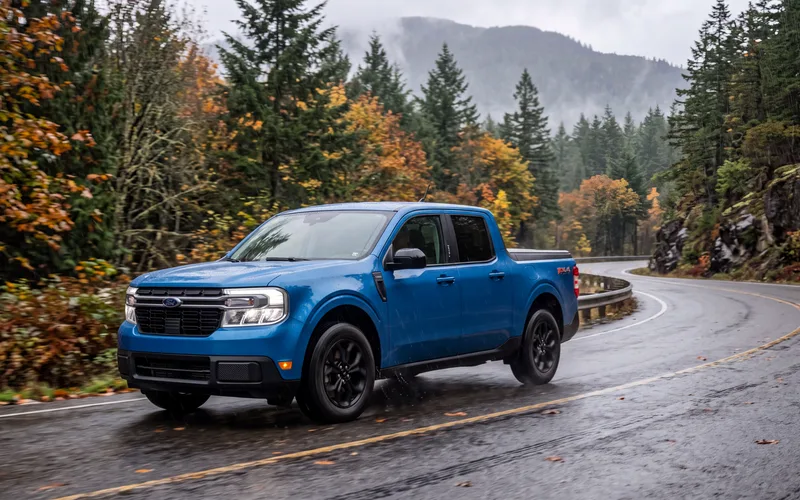 Ford MaverickCompact TruckBetter at: Fuel economy
Costs several thousand less to start, includes a standard full hybrid worth roughly 15 MPG more, and has a bigger bed and better resale — the default cross-shop for anyone considering a Santa Cruz.
Compare 2.19C
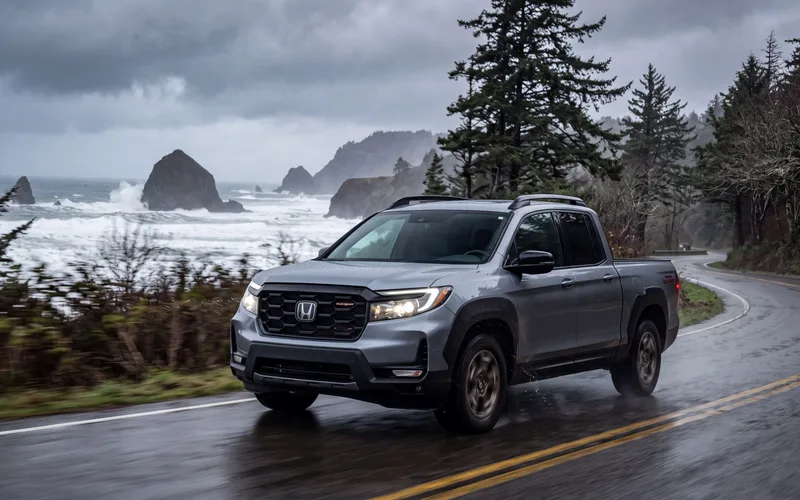 Honda RidgelineMid-Size TruckBetter at: Space and safety
Same unibody-truck philosophy but with a 64-in bed, a genuinely spacious crew cab, a 5-star NHTSA rating and a current IIHS Top Safety Pick.
Compare 2.12C
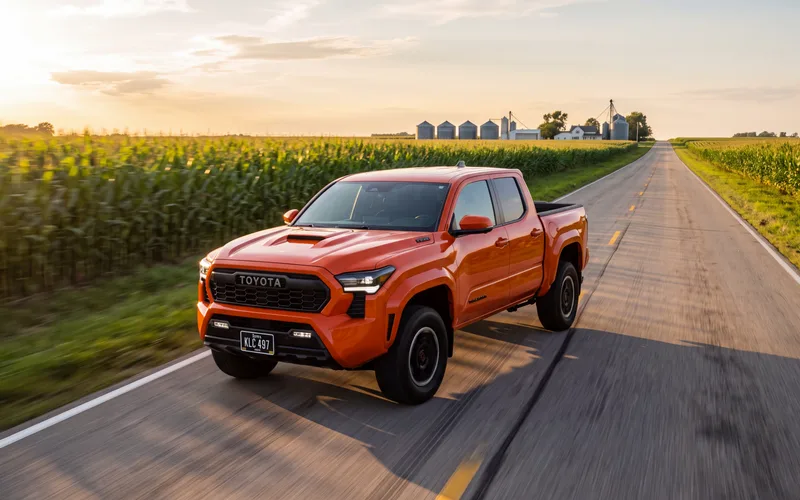 Toyota TacomaMid-Size TruckBetter at: Truck capability
The step up for buyers who discover the Santa Cruz's 3,500-lb base tow rating and 4.3-ft bed aren't enough, with class-leading resale to offset the higher price.
CompareSubject scores by year
Hover or tap a score to see what moved it versus the year before. A corner mark flags a big swing.
| Year | Performance | Efficiency | Safety | Space | Cost | Reliability | Tech | Use-case | Driving | Value |
|---|---|---|---|---|---|---|---|---|---|---|
| 2026 | 30 | 61 | 65 | 46 | 79 | 68 | 74 | 69 | 71 | 69 |
| 2025 | 29 | 68 | 67 | 48 | 82 | 70 | 68 | 66 | 72 | 69 |
| 2024 | 29 | 57 | 67 | 48 | 90 | 73 | 57 | 67 | 70 | 66 |
| 2023 | 29 | 57 | 66 | 48 | 88 | 65 | 50 | 58 | 67 | 68 |
| 2022 | 28 | 57 | 51 | 48 | 88 | 60 | 49 | 57 | 67 | 66 |
Compare two years
Best fit & conditions
Higher scores mean a better fit for that use case. Learn more about use-case fit →
Subject profile
Academic Probation · NHTSA safety recalls
Mar 17, 2023Trailer hitchesWater accumulation on the tow hitch harness module printed circuit board (PCB) may cause an electrical short, which can result in a fire.
Defect
Hyundai Motor America (Hyundai) is recalling certain 2019-2023 Santa Fe, 2021-2023 Santa Fe HEV, 2022-2023 Santa Fe Plug-in HEV and Santa Cruz vehicles potentially equipped with a tow hitch harness installed as original equipment, or purchased as an accessory through a Hyundai dealership. Water accumulation on the tow hitch harness module printed circuit board (PCB) may cause an electrical short, which can result in a fire.
Risk
A fire while parked or driving can increase the risk of injury.
Remedy
Owners are advised to park their vehicles outside and away from structures until the remedy is completed. Dealers will install a new fuse and wire extension kit as necessary, free of charge. Owner notification letters were mailed starting May 16, 2023. Owners may contact Hyundai customer service at 1-855-371-9460. Hyundai's number for this recall is 244. This recall is an expansion of previous recall number 22V-633.
NHTSA campaign 23V181000 ↗Manufacturer no. 244584,784 vehicles potentially affected (all models in the campaign)Owners notified May 16, 2023Filed by Hyundai Motor AmericaFiled as SANTA CRUZJan 31, 2023Structure: body: roof and pillars · Structure: critical fastenersThe roof moldings may detach.
Defect
Hyundai Motor America (Hyundai) is recalling certain 2022 Tucson and 2022-2023 Santa Cruz vehicles. The roof moldings may detach.
Risk
A detached roof molding could become a road hazard, increasing the risk of a crash.
Remedy
Dealers will inspect and replace, or secure the roof moldings, as necessary, free of charge. Owner notification letters were mailed March 30, 2023. Owners may contact Hyundai customer service at 1-855-371-9460. Hyundai's number for this recall is 241.
NHTSA campaign 23V038000 ↗Manufacturer no. 24116,104 vehicles potentially affected (all models in the campaign)Owners notified Mar 30, 2023Filed by Hyundai Motor AmericaFiled as SANTA CRUZ
7 recalls on other model years of the Santa Cruz (2022, 2024–2026)
May 18, 2026Forward collision avoidance: automatic emergency brakingSoftware in the front cameras may cause the forward collision avoidance system to activate prematurely and unexpectedly apply the brakes.
Defect
Hyundai Motor America (Hyundai) is recalling certain 2025-2026 Santa Cruz, Tucson, Tucson Hybrid, and Tucson Plug-In Hybrid Electric (PHEV) vehicles. Software in the front cameras may cause the forward collision avoidance system to activate prematurely and unexpectedly apply the brakes.
Risk
Unexpected braking increases the risk of a crash.
Remedy
Dealers will update the front camera software, free of charge. Owner notification letters are expected to be mailed July 17, 2026. Owners may contact Hyundai customer service at 1-855-371-9460. Hyundai's number for this recall is 302. Vehicle Identification Numbers (VINs) involved in this recall became searchable on NHTSA.gov on May 20, 2026.
NHTSA campaign 26V316000 ↗Manufacturer no. 302423,062 vehicles potentially affected (all models in the campaign)Owners notified Jun 22, 2026Filed by Hyundai Motor AmericaFiled as SANTA CRUZJan 26, 2026Electrical system: instrument cluster/panelDue to a software error, the instrument panel display may fail. As such, these vehicles fail to comply with the requirements of Federal Motor Vehicle Safety Standard (FMVSS) number 101, "Controls and Displays."
Defect
Hyundai Motor America (Hyundai) is recalling certain 2025-2026 Tucson Hybrid, Tucson Plug-In Hybrid Electric (PHEV), 2026 IONIQ 5, Santa Cruz, Kona, Palisade, Palisade Hybrid, Santa Fe, Santa Fe Hybrid, Sonata, Sonata Hybrid, and Tucson vehicles. Due to a software error, the instrument panel display may fail. As such, these vehicles fail to comply with the requirements of Federal Motor Vehicle Safety Standard (FMVSS) number 101, "Controls and Displays."
Risk
An instrument panel display that fails to show critical safety information, such as the speedometer or warning lights, increases the risk of a crash.
Remedy
The instrument panel display software will be updated over-the-air (OTA) or by a dealer, free of charge. Owner notification letters were mailed March 24, 2026. Owners may contact Hyundai's customer service at 855-371-9460. Hyundai's number for this recall is 293. Vehicle Identification Numbers (VINs) involved in this recall became searchable on NHTSA.gov on January 28, 2026.
NHTSA campaign 26V047000 ↗Manufacturer no. 29341,651 vehicles potentially affected (all models in the campaign)Owners notified Mar 24, 2026Filed by Hyundai Motor AmericaFiled as SANTA CRUZNov 20, 2025Air bags: side/window: curtainThe side curtain air bags may not have been installed properly, which can cause the air bags not to deploy as intended.
Defect
Hyundai Motor America (Hyundai) is recalling certain 2025 Tucson, 2025-2026 Santa Cruz, Santa Fe, Santa Fe Hybrid, and 2026 Genesis GV70 vehicles. The side curtain air bags may not have been installed properly, which can cause the air bags not to deploy as intended.
Risk
Side curtain air bags that do not deploy as intended increase the risk of injury in a crash.
Remedy
Dealers will reinstall the side curtain air bags, free of charge. Owner notification letters were mailed beginning December 29, 2025. Owners may contact Hyundai customer service at 1-855-371-9460. Hyundai's numbers for this recall are 289 and 029G. Vehicle Identification Numbers (VINs) involved in this recall became searchable on NHTSA.gov on November 22, 2025.
NHTSA campaign 25V809000 ↗Manufacturer no. 289 (H); 029G (G)258 vehicles potentially affected (all models in the campaign)Owners notified Dec 29, 2025Filed by Hyundai Motor AmericaFiled as SANTA CRUZNov 20, 2024Electrical system: wiringThe console extension wiring assembly may be routed improperly, allowing the transmission to be shifted out of Park without applying the brake pedal.
Defect
Hyundai Motor America (Hyundai) is recalling certain 2025 Tucson and Santa Cruz vehicles. The console extension wiring assembly may be routed improperly, allowing the transmission to be shifted out of Park without applying the brake pedal.
Risk
A transmission that can shift out of Park without applying the brake pedal can result in a vehicle roll away, increasing the risk of a crash.
Remedy
Owners are advised to use the parking brake when parking the vehicle. Dealers will reroute the console extension wiring assembly, free of charge. Owner notification letters were mailed December 17, 2024. Owners may contact Hyundai customer service at 1-855-371-9460. Hyundai's number for this recall is 273.
NHTSA campaign 24V877000 ↗Manufacturer no. 27342,465 vehicles potentially affected (all models in the campaign)Owners notified Dec 17, 2024Filed by Hyundai Motor AmericaFiled as SANTA CRUZJun 5, 2024Steering: electric power assist systemThe circuit board in the motor-driven power steering assembly may short circuit, resulting in a loss of power steering assist.
Defect
Hyundai Motor America (Hyundai) is recalling certain 2024 Tucson and Santa Cruz vehicles. The circuit board in the motor-driven power steering assembly may short circuit, resulting in a loss of power steering assist.
Risk
A loss of power steering assist can increase the risk of a crash.
Remedy
Dealers will replace the motor-driven power steering electric power pack, free of charge. Owner notification letters were mailed July 11, 2024. Owners may contact Hyundai customer service at 1-855-371-9460. Hyundai's number for this recall is 261.
NHTSA campaign 24V412000 ↗Manufacturer no. 261795 vehicles potentially affected (all models in the campaign)Owners notified Jul 11, 2024Filed by Hyundai Motor AmericaFiled as SANTA CRUZOct 6, 2022Power train: automatic transmissionThe vehicle's "fail-safe" limited-mobility drive mode may be impaired, when prompted by a transmission oil pump malfunction, which can result in a complete loss of drive power.
Defect
Hyundai Motor Company (Hyundai) is recalling certain 2021-2022 Santa Fe, Sonata, Veloster N, 2022 Santa Cruz, Elantra N, and Kona N vehicles. The vehicle's "fail-safe" limited-mobility drive mode may be impaired, when prompted by a transmission oil pump malfunction, which can result in a complete loss of drive power.
Risk
Loss of drive power increases the risk of a crash.
Remedy
Dealers will inspect and replace the transmission, as necessary. Dealers will also update the transmission control unit software. All repairs will be performed free of charge. Owner notification letters were mailed January 10, 2023. Owners may contact Hyundai customer service at 1-855-371-9460. Hyundai's number for this recall is 236.
NHTSA campaign 22V746000 ↗Manufacturer no. 23656,148 vehicles potentially affected (all models in the campaign)Owners notified Jan 10, 2023Filed by Hyundai Motor AmericaFiled as SANTA CRUZMar 28, 2022Engine and engine cooling: engine: gasoline: turbo/supercharger · Engine and engine cooling: engine: oil/lubrication: pipes, hoses, and fittingsThe oil supply pipe to the turbocharger may crack, which could result in an oil leak in the engine compartment.
Defect
Hyundai Motor America (Hyundai) is recalling certain 2022 Santa Fe and Santa Cruz vehicles. The oil supply pipe to the turbocharger may crack, which could result in an oil leak in the engine compartment.
Risk
An oil leak in the presence of an ignition source such as hot engine or exhaust components, can increase the risk of a fire.
Remedy
Dealers will replace the turbocharger oil supply pipe, free of charge. Owner notification letters were mailed May 26, 2022. Owners may contact Hyundai customer service at 1-855-371-9460. Hyundai's number for this recall 222.
NHTSA campaign 22V197000 ↗Manufacturer no. 22216 vehicles potentially affected (all models in the campaign)Owners notified May 26, 2022Filed by Hyundai Motor AmericaFiled as SANTA CRUZ
Source: NHTSA Office of Defects Investigation recall database, model years 2022–2026. Recalls are listed by model year as the manufacturer filed them; whether a specific car is affected depends on its VIN — check a VIN at nhtsa.gov ↗. NHTSA model names matched to this page: SANTA CRUZ.
Detailed scoring by subject
1Performance & PowertrainThe Santa Cruz's lowest-graded category.0.00F
The volume SE/SEL runs the naturally aspirated 2.5L four; even the optional turbo's 281 hp sits near the bottom of a truck band anchored on body-on-frame full-size output, so the unibody Santa Cruz scores very low here.
Standard-engine torque falls below the truck band floor of 230 lb-ft — a crossover-derived engine tuned for daily driving rather than hauling; the turbo's 311 lb-ft clears the floor but stays modest for a truck.
The naturally aspirated volume configuration is slow against a truck band that tops out at 2.5 s; the turbo is genuinely quick for a compact pickup but is not the volume powertrain.
The volume 2.5L NA is smooth around town but gets buzzy and strained when worked hard with a load or on grades; the turbo is punchy with little lag. Competitive rather than polished, and the volume engine pulls this below the 2.5T's reputation.
The SE/SEL's conventional 8-speed torque-converter automatic is smooth and unobtrusive, but the turbo trims' 8-speed wet dual-clutch draws repeated criticism for low-speed hesitation and jerkiness in parking and stop-and-go traffic.
5,000 lbs properly equipped matches the Honda Ridgeline and beats the Ford Maverick's 4,000 lbs, but sits far below body-on-frame mid-size and full-size trucks that anchor the band.
Max payload is respectable for a compact unibody pickup and edges out the Maverick and Ridgeline, but it is well under the truck band's 3,400-lb ceiling.
Trailer sway control is standard and the 2.5T tow setup adds self-leveling rear suspension, but there is no factory integrated trailer brake controller, no trailer backup assist, no trailer camera views and no onboard scales.
HTRAC AWD is optional on SE and SEL and standard on Night, XRT and Limited, with a center-coupling lock and snow/mud/sand modes — broad availability, but no low range or part-time 4WD hardware.
The XRT trim, new for 2023, adds all-terrain-look styling and tires on top of ~8.6 in of ground clearance, but there is no locking differential, skid plating, lift or low range — light trail and unpaved-road duty only.
Two gas engines — the 2.5L NA and the 2.5L turbo — cover the value and performance ends, but there is no hybrid, plug-in or EV option while the rival Maverick sells a standard hybrid.
2Efficiency & RangeMid-pack among this car's ten categories.1.82C-
The volume SE/SEL uses the naturally aspirated 2.5L GDI with an 8-speed automatic; 23 MPG combined is good for a truck but well short of the hybrid Maverick.
City economy improved by 1 MPG over the 2022 rating for the FWD 2.5L and is strong against gas trucks, though far behind the hybrid Maverick.
The crossover-based unibody platform gives a clear highway edge over body-on-frame mid-size trucks; the turbo DCT actually rates a touch higher on the highway cycle.
Computed from EPA combined economy and the 17.7-gallon tank; respectable MPG is offset by a small tank, leaving it well short of the 600-plus-mile figures full-size trucks post.
EPA's current-price estimate at 15,000 mi/yr; lower than body-on-frame mid-size trucks but well above a hybrid Maverick.
Both 2023 Santa Cruz engines, including the 281-hp turbo, run on regular 87-octane unleaded; no premium, diesel or charging requirement.
3SafetyMid-pack among this car's ten categories.2.48C+
NHTSA rates the 2023 Santa Cruz five stars overall in both FWD and AWD form, with five-star frontal and side results and a four-star rollover rating typical of a tall unibody pickup.
Every IIHS crashworthiness test the 2023 Santa Cruz was put through came back Good — driver and passenger small overlap, original moderate overlap, roof strength and head restraints — but it carries no 2023 award: the 2022 Top Safety Pick did not carry over under the tougher 2023 criteria, held back in part by the Poor halogen headlights on the volume trims.
For 2023 Hyundai made Blind-Spot Collision-Avoidance Assist, Rear Cross-Traffic Collision-Avoidance Assist and Safe Exit Warning standard on every trim, on top of FCA with pedestrian/cyclist detection, Lane Keeping Assist, Lane Following Assist and driver attention warning. The one real gap on the scored SEL is adaptive cruise, which is reserved for the SEL Premium and Limited.
The standard FCA system aced IIHS's original vehicle-to-vehicle test (Superior) and daytime pedestrian test (Superior) and earned Advanced at night, but it rates only Marginal under the tougher vehicle-to-vehicle 2.0 protocol with higher speeds and offset/motorcycle targets.
From 2023 the active versions — Blind-Spot Collision-Avoidance Assist and Rear Cross-Traffic Collision-Avoidance Assist with braking — plus Safe Exit Warning are standard on every trim including the scored SEL, which is generous for the segment. There is no trailer-aware blind-spot extension, and the camera-based Blind-Spot View Monitor is a Limited-only feature.
Lane Keeping Assist and Lane Following Assist (camera-based centering) are standard on every 2023 trim, so even the SEL centers itself on marked roads; owners and reviewers describe it as competent but prone to mild wander on curves and faded lines, short of the class-leading systems.
The scored SEL has only conventional cruise control — Smart Cruise Control with stop-and-go is limited to the SEL Premium and Limited, and the navigation-based Highway Driving Assist to the Limited. The system is well regarded where fitted, but the volume buyer does not get it.
No hands-free highway system is offered on any 2023 Santa Cruz; Highway Driving Assist on the Limited is a hands-on lane-centering aid with steering-wheel torque checks.
The halogen projector headlights on the SE, SEL and Night — the volume trims, including the scored SEL — are rated Poor by IIHS; only the SEL Premium and Limited's LED projectors earn Good. High beam assist is standard, but the lamps most buyers get are the weakest grade.
A low hood and crossover-like seating position give good forward and quartering sightlines for a pickup, but the raked rear glass, thick C-pillars and bed/tonneau limit the rear view. The SEL has a rearview camera but not the surround-view or blind-spot cameras reserved for the Limited.
IIHS rates the LATCH hardware Acceptable, with two complete LATCH positions and a tether-only center seat. The compact crew cab's upright rear bench and limited legroom make rear-facing seats a squeeze and three-across unrealistic.
4Space & ComfortOne of the Santa Cruz's weakest categories.1.20D
The 2023 Santa Cruz is sold only as a five-seat crew cab; there is no extended-cab or front-bench configuration on any trim.
Hyundai's published 40.7 in of front headroom is mid-band for a truck — adequate for tall drivers in the SEL, which has no sunroof eating into it.
Front legroom is crossover-like rather than truck-like and sits near the bottom of the truck band (41–45 in), trailing the Maverick and every mid-size crew cab.
Hyundai's published 40.1 in of rear headroom is generous on paper for a compact crew cab, landing in the upper part of the truck band.
36.5 in is usable for adults on shorter trips but sits in the lower third of the truck band (33–45 in); it edges the Maverick yet trails every mid-size crew cab, and the upright backrest compounds the tightness.
The roughly four-foot bed is the shortest in the truck set and below the 54 in band floor, so it scores zero whichever published length is used; 4x8 sheets need the tailgate down.
27 cu ft falls below the 30 cu ft floor of the truck band — the smallest bed in the segment even counting the under-floor trunk.
The lockable, drainable under-bed trunk is standard and genuinely clever, joined by bed rails/cleats and under-rear-seat bins; but on the scored SEL the integrated tonneau cover and in-bed 115V outlet are upper-trim/optional features, and cabin console and door storage is ordinary.
Tucson-derived front seats are supportive, and the SEL adds a power driver's seat with lumbar; the short-cushioned, upright rear bench makes the back a kids-and-short-trips space, capping this at mid-band.
The unibody Tucson-based platform with independent multi-link rear suspension gives a far more settled ride than body-on-frame rivals, and the SEL's 18-in wheels soften impacts compared with the 20-in turbo trims; rear springs are firmer than the Tucson's.
Wind and structural isolation are good for a pickup, but road noise on coarse surfaces is noticeable and the naturally aspirated 2.5L drones when worked hard; above truck average without being quiet.
The SEL gets heated front seats and remote start, but dual-zone automatic climate, ventilated seats and a heated wheel sit on the turbo-only SEL Premium/Limited trims, and there are no rear heated seats.
5Cost of OwnershipThe Santa Cruz's best-graded category.4.00A+
The entry SE FWD opened at $25,700 before destination for MY2023, one of the lowest entry prices of any pickup on sale that year and near the floor of the truck band. The figure matches the March 2023 Hyundai price sheet and several retail sources.
This is the representative SEL with the naturally aspirated 2.5L and FWD, priced at $28,190 plus $1,335 destination. That puts it in the bottom tenth of the truck price band. The turbo Night, SEL Premium and Limited trims run $8,000–12,000 higher.
Running costs are low for a pickup. The small 2.5L GDI four is the simplest engine in the lineup, and three years of factory maintenance are included. CarEdge's model-level estimate of about $3,057 is lower still.
The 2023 has held value better than the later Hyundai average. It bought into the tight 2022–23 used market and still retained about 71% at three years old, so a five-year figure near 60% is reasonable. That is in the lower half of the truck band, behind the body-on-frame mid-size trucks and the Maverick.
Hyundai's 5-year/60,000-mile basic coverage tops the truck band and beats the 3-year terms of Ford, GM, Nissan and Toyota.
Hyundai's 10-year/100,000-mile powertrain coverage is double the domestic and Japanese truck norm, though it shortens for second owners.
Multi-year included maintenance plus useful perks: 3 years/36,000 miles of scheduled service, 5 years of unlimited-mileage roadside assistance, and a Bluelink connected-services trial. It sits slightly below the 2026 package because in 2023 Bluelink was a time-limited trial, not the later no-cost Bluelink+.
$29,525 volume-trim price minus its estimated resale value after 5 years (60% retained, or about $17,715) leaves about $11,810 in depreciation. Add the projected $4,508 in 5-year maintenance and repairs, and owning this vehicle for 5 years costs about $16,318 in total.
6Reliability & QualityMid-pack among this car's ten categories.2.40C+
The two main sources disagree on 2023, the nameplate's second model year and a carry-over from the 2022 launch. J.D. Power rates its quality and reliability as Great, but Consumer Reports rates the first two Santa Cruz years below par and adds engine-cooling complaints for 2023. That puts it in the mixed-signal middle of the band, below the facelifted later years that CR rates as much more dependable.
Hyundai is a mid-pack brand on multi-year dependability. It sits around the industry average in J.D. Power's VDS and mid-field in Consumer Reports' brand rankings. That is a clear improvement on its 2010s standing, but it still trails Toyota, Lexus and Honda. This score reflects the brand's standing around 2023, a little below the 2026 scorecard.
The 2023 model year has only two NHTSA campaigns, and neither involves the powertrain. One is a tow-hitch harness fire risk shared with the Santa Fe, which carries a park-outside advisory until repaired. The other is detaching roof moldings, shared with the 2022 Tucson. For a second-year model that is typical activity, but the fire-risk campaign keeps it out of the top band.
The scored SEL uses the 191-hp 2.5L Smartstream naturally aspirated GDI four and a conventional 8-speed automatic. That is the generation's lower-risk drivetrain, and it is shared with the Tucson and Santa Fe. In 2023, though, the combination had only a few years of field time. Consumer Reports' flag on engine cooling for this year and the turbo trims' dual-clutch complaints hold the score in the middle band.
The cabin is the pre-facelift Tucson-derived design, with an 8-inch screen on SE/SEL and the Tucson's touch-capacitive center stack. Its materials are competitive for the price. However, the SEL has plenty of hard plastic on the lower doors and console, and reviewers criticized the touch-panel controls. That puts it below the 2025 facelift, which gained a dual 12.3-inch display and physical controls.
Assembly quality is a relative Hyundai strength. J.D. Power rates the 2023's quality as Great, and the Santa Cruz has led its class in initial quality. The roof-molding recall and scattered owner reports of bed and tailgate rattles are the blemishes.
Hyundai's US network covers metro and suburban areas comfortably and is backed by complimentary maintenance and a 10-year/100k powertrain warranty. It is materially thinner than Ford's or Toyota's, which matters for a truck owner outside metro areas.
Most mechanical parts are shared with the high-volume Tucson, Santa Fe and Sportage family, so wear and drivetrain parts are plentiful and normally priced. The bed, tailgate and body panels are unique to a low-volume nameplate, and the aftermarket is thin next to Tacoma or Maverick.
7Technology & InfotainmentOne of the Santa Cruz's weakest categories.1.31D
The scored SEL uses the 8-inch display, at the floor of a truck band that stretches to 18.5 in; the 10.25-in navigation screen is reserved for the turbo-only SEL Premium and Limited.
The 8-inch Hyundai head unit is simple and quick, with physical volume/tuning knobs and conventional climate controls on the SEL; it is small and basic rather than polished, and the upper trims' glossy touch-panel climate controls drew criticism.
Wireless CarPlay and Android Auto are standard with the 8-inch screen on SE, SEL, Night and XRT — including the scored SEL — but the navigation-equipped 10.25-in unit on SEL Premium and Limited reverts to wired-only projection.
The SEL has no native navigation — maps come via phone projection — and its voice control is basic phone/media commands; native nav with Bluelink voice destination search is limited to SEL Premium and Limited.
The SEL's standard six-speaker system with SiriusXM is adequate but plain; the Bose premium system is Limited-only.
The SEL keeps analog gauges with a small 4.2-in color TFT between them; the 10.25-in fully digital cluster is reserved for the top trims.
The 8-inch head unit on the SEL has no meaningful over-the-air update path; the 10.25-in navigation unit's map/software updates in this generation were largely via Hyundai's Navigation Updater/dealer rather than true OTA.
Bluelink comes on the SEL with remote start/climate, lock/unlock and vehicle locate, but it was complimentary only for a trial period before requiring a subscription in 2023, and Digital Key is upper-trim only.
The SEL relies on USB-A ports front and rear; wireless phone charging and the in-bed 115V outlet are upper-trim features, so the volume buyer gets an adequate but dated setup.
Proximity key with push-button start and remote engine start are standard on the scored SEL, with phone-as-key Digital Key on SEL Premium and Limited; the base SE keeps a conventional key, and the tailgate is manual on every trim.
The SEL has a rearview camera and rear cross-traffic collision avoidance, but Surround View Monitor and Blind-Spot View Monitor are Limited-only and parking sensors are upper-trim.
No head-up display is offered on any 2023 Santa Cruz trim.
8Use-Case FitMid-pack among this car's ten categories.1.87C-
Four doors and two complete LATCH positions make it workable for one or two kids, but 36.5 in of rear legroom and an upright bench make rear-facing seats a squeeze, and an open bed is a poor home for a stroller without the optional tonneau.
Five-star NHTSA overall and Good IIHS crash results, plus newly standard blind-spot and rear cross-traffic collision avoidance and Safe Exit Warning for 2023, are strong; the SEL's Poor-rated halogen headlights and lack of adaptive cruise hold it back.
A smooth, car-like ride helps, but tight rear legroom, rear amenities limited to USB ports and vents, and a small open bed for luggage make it a medium-trip family vehicle at best.
Essentially a Tucson with a bed: light controls, a smooth conventional 8-speed automatic on the 2.5L, and a compliant ride make it easy in traffic, though the base engine feels strained merging with a load.
22/26/23 mpg is fine for a pickup but clearly trails the Maverick Hybrid's ~37 mpg combined, and is no better than the Tucson-derived crossovers it competes with for commuters.
At 195.7 in long with a 39.6 ft turning circle it is the easiest truck in the set to park, though the SEL has only a rear camera — surround view is Limited-only.
The SEL 2.5L tows 3,500 lbs and carries about 1,400–1,700 lbs, but the four-foot bed and the strained base engine under load make it a light-duty tool for DIY and recreation, not real work.
Built on a crossover platform with no fleet track record and a car-like cabin; the conventional 8AT in the SEL avoids the DCT concerns of the turbo trims, but it is unproven under hard use.
Bed cleats, the lockable in-bed trunk and a damped tailgate help, but the SEL lacks the integrated tonneau and in-bed outlet of upper trims and the rack/upfit aftermarket is thin compared with the Maverick's FITS ecosystem.
Comfortable ride and decent front seats, and ~460 miles of highway range from a 17.7-gal tank, but the SEL has no adaptive cruise and the engine drones at highway speed.
8.6 in of ground clearance and optional HTRAC AWD with a center lock handle gravel and snow, and the open bed swallows bikes and dirty gear, but the FWD SEL is pavement-biased with no skid plates or low range.
An open bed handles tall or dirty gear an SUV can't, with a lockable underfloor trunk and under-rear-seat bins, but the bed is short, unsecured on the SEL without a tonneau, and the rear seat only flips up rather than folding flat.
9Driving ExperienceOne of the Santa Cruz's strongest categories.2.55C+
The unibody Tucson platform and independent rear suspension give it crossover-like body control and grip that no body-on-frame truck matches; the SEL's 18-in tires and soft tuning keep it secure rather than sporty.
Electric power steering is accurate and well-weighted for a pickup but conveys little road feel.
Four-wheel discs and a light curb weight (~3,700 lbs for the SEL FWD) give competitive stops for the truck class with a progressive pedal, though not exceptional distances.
The 2.5L with a conventional 8-speed automatic shifts smoothly and avoids the turbo trims' low-speed DCT hesitation, but its 191 hp and 181 lb-ft feel short of breath on grades or loaded.
Quiet at a cruise, but the naturally aspirated four becomes buzzy and loud when pushed for merges or climbs.
A 39.6 ft turning diameter beats the truck band's best (40 ft), reflecting its compact crossover footprint.
A crossover-like seating position with a power driver's seat and lumbar on the SEL and physical controls is comfortable for most; rearward sightlines through the small cab glass and bed are limited.
Nimble and pleasant, but the base 2.5L's modest pace (~8.8 s to 60) makes the SEL forgettable next to the punchy 2.5T trims.
10Value & Market PositionOne of the Santa Cruz's strongest categories.2.57C+
Competitive-plus equipment at base. The pre-facelift SE has an 8-inch touchscreen with wireless CarPlay/Android Auto, forward collision avoidance and lane keeping, but blind-spot monitoring and adaptive cruise are reserved for the SEL and above. The SEL volume trim adds blind-spot and rear cross-traffic warning, a sliding rear window and heated seats at about $29.5K. That is richer than a comparably priced Maverick XLT, but short of the near-complete standard suite the 2025 facelift brought.
Fair-to-good value. At $27–31K for SE/SEL the content, warranty and included maintenance are strong per dollar, and the turbo trims offer 5,000 lb towing. Against that, it costs more than the Maverick, which had a standard hybrid at about $23–24K for MY2023, and the base 191-hp 2.5L and 4.3-ft bed give less capability per dollar than the trim prices suggest.
Reasonable choice with gaps. Five trims (SE, SEL, new-for-2023 Night, SEL Premium, Limited) cover two engines, with FWD or AWD on the lower trims, from about $27K to $42K. There is only one body (crew cab, 4.3-ft bed), no electrified option and no work trim, and the turbo trims cluster above $37K, leaving a gap in the middle.
Sales were steady but modest. US volume was flat from 2022 to 2023 at about 36,500 units, far behind the Maverick, whose 2023 sales were roughly 2.5 times higher. In hindsight 2023 was the generation's peak, before the decline to about 25,500 by 2025.
Neutral brand perception. Hyundai's design and warranty reputation was rising in 2023, but the brand has no pickup heritage and the unibody 'sport adventure vehicle' positioning polarizes traditional truck buyers. Resale is middling rather than premium.
Occasional modest incentives that grew through the model year. Early 2023 still had tight supply and some dealer markups. As Santa Cruz inventory built in the second half, Hyundai added cash and low-APR offers and dealers negotiated more readily, a better buying environment than the backordered Maverick.
This is a new generation, in only its second model year. It is built on the current Tucson (N3) platform, the 2025 facelift was two years away, and 2023 added the Night trim. The only aging items are the 8-inch base screen and the analog-plus-display cluster on lower trims.
Well reviewed but rarely the pick. Critics praise its styling, car-like ride and handling, and its tech. It was a 2022 North American Truck of the Year finalist but lost to the Maverick, and comparison tests generally prefer the Maverick on value and the Ridgeline on utility. Reviewers cite the small bed, the coarse base engine and the DCT's low-speed manners.