

The verdict
A capable mid-size suv, strong on safety and held back by efficiency.
The 2026 Santa Fe is the value pick among three-row family SUVs: a $36,650 starting price buys three rows, a 277-hp turbo four, a 12.3-inch touchscreen with wireless CarPlay, a full safety suite, an IIHS Top Safety Pick+ rating and the longest powertrain warranty in the mainstream market. Its boxy shape pays off inside, with class-leading 42.3 inches of second-row legroom, and the big news for 2026 is that Hyundai finally swapped the recall-plagued dual-clutch transmission for a conventional automatic that drives smoothly at low speed. The catch is fuel: the gas 2.5T manages only 20 mpg city and 24 combined, about $2,600 a year, so the $1,000-ish hybrid upgrade is close to a no-brainer. Four open recalls on a single model year — including one whose fix is a complete engine replacement — are the real asterisk on an otherwise easy recommendation.
Jump to scoresStrengths
- Best-in-class safety credentials, standard on the cheapest trim
- The boxy shape buys real interior space
- Warranty and running costs no rival matches
What holds it back
- The gas engine is genuinely thirsty
- An alarming recall record for one model year
- You can carry people or luggage, not both
Top alternatives
Cars shoppers cross-shop with the Hyundai Santa Fe 2.56C+
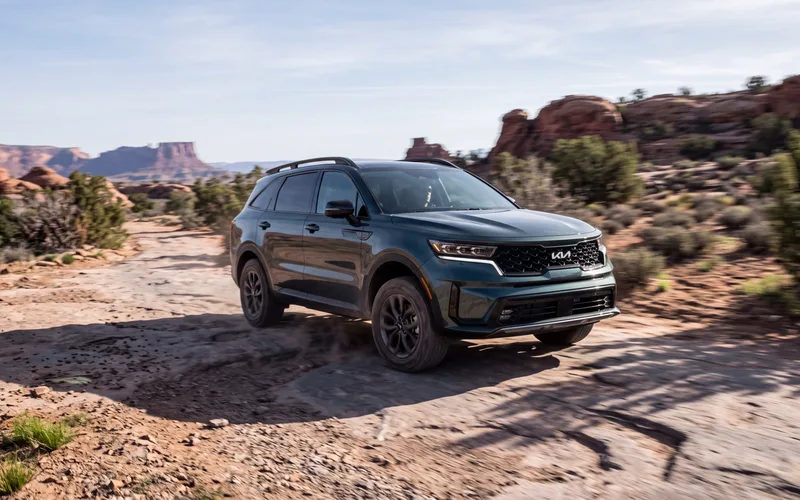 Kia SorentoMid-Size SUVBetter at: Resale value
Same platform, powertrains and warranty in a slightly smaller package, with better resale and a US plug-in hybrid option the Santa Fe lacks.
Compare 2.56C+
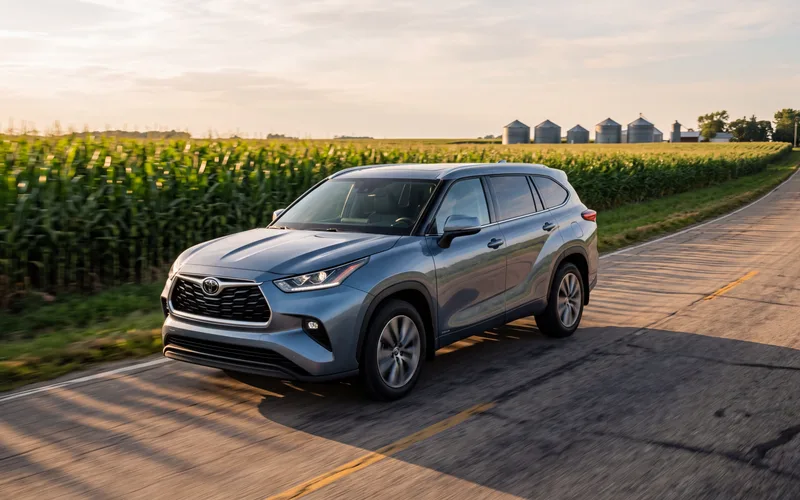 Toyota HighlanderMid-Size SUVBetter at: Long-term value
Costs thousands more with less standard equipment, but buys Toyota's reliability record, stronger resale and included maintenance.
Compare 2.43C+
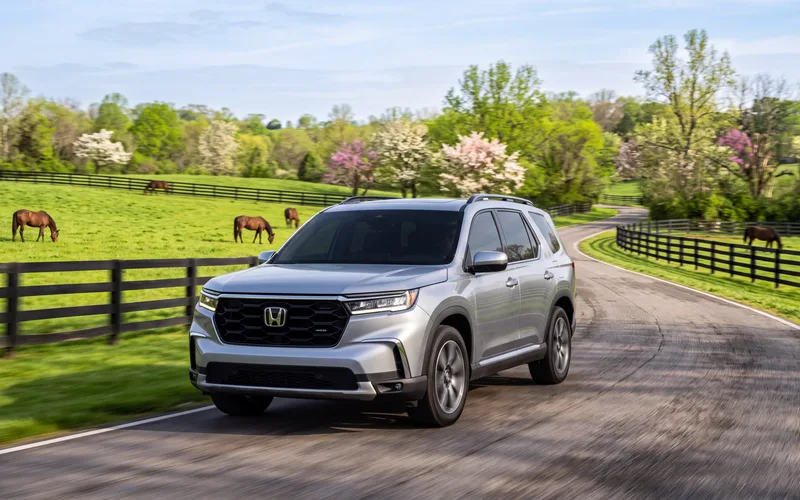 Honda PilotMid-Size SUVBetter at: Cargo space
The choice when the Santa Fe's 14.6 cu ft behind the third row and knees-up back seat aren't enough for a real seven-person family.
CompareHow it's evolved
10 scored model years · 2017–2026
Subject scores by year
Hover or tap a score to see what moved it versus the year before. A corner mark flags a big swing.
| Year | Performance | Efficiency | Safety | Space | Cost | Reliability | Tech | Use-case | Driving | Value |
|---|---|---|---|---|---|---|---|---|---|---|
| 2026 | 53 | 50 | 82 | 74 | 69 | 66 | 78 | 68 | 63 | 80 |
| 2025 | 50 | 49 | 73 | 73 | 75 | 63 | 76 | 65 | 60 | 80 |
| 2024 | 50 | 49 | 71 | 73 | 74 | 61 | 76 | 64 | 60 | 78 |
| 2023 | 32 | 61 | 80 | 56 | 82 | 61 | 56 | 59 | 59 | 70 |
| 2022 | 31 | 61 | 81 | 56 | 82 | 57 | 56 | 57 | 61 | 69 |
| 2021 | 32 | 50 | 71 | 58 | 83 | 56 | 54 | 53 | 58 | 64 |
| 2020 | 31 | 57 | 76 | 55 | 81 | 65 | 47 | 56 | 56 | 68 |
| 2019 | 32 | 56 | 80 | 56 | 80 | 59 | 46 | 56 | 63 | 75 |
| 2018 | 29 | 48 | 57 | 62 | 70 | 50 | 50 | 57 | 63 | 64 |
| 2017 | 42 | 35 | 57 | 61 | 73 | 50 | 32 | 56 | 58 | 67 |
Compare two years
Best fit & conditions
Higher scores mean a better fit for that use case. Learn more about use-case fit →
Subject profile
Trims & configurations
5 trimsScores above reflect the volume trim. Per-trim specs and scores are rolling out — the full lineup:
Academic Probation · NHTSA safety recalls
Apr 6, 2026Seat belts: front: anchorageThe driver and passenger seat belt anchors may detach.
Defect
Hyundai Motor America (Hyundai) is recalling certain 2023-2025 Hyundai Ioniq 6, 2023-2026 Genesis G90, 2024-2026 Hyundai Santa Fe, and Hyundai Santa Fe Hybrid vehicles. The driver and passenger seat belt anchors may detach.
Risk
A detached seat belt anchor will not adequately restrain the seat occupant, increasing the risk of injury in a crash.
Remedy
Dealers will inspect and reinforce or replace the seat belt anchors, as necessary, free of charge. Owner notification letters were mailed beginning May 29, 2026. Owners may contact Hyundai customer service at 1-855-371-9460 and Genesis customer service at 844-340-9741. Hyundai's numbers for this recall are 298 and 032G. Vehicle Identification Numbers (VINs) involved in this recall became searchable on NHTSA.gov April 8, 2026.
NHTSA campaign 26V218000 ↗Manufacturer no. 298-032G294,448 vehicles potentially affected (all models in the campaign)Owners notified May 29, 2026Filed by Hyundai Motor AmericaFiled as SANTA FE, SANTA FE HYBRIDJan 26, 2026Electrical system: instrument cluster/panelDue to a software error, the instrument panel display may fail. As such, these vehicles fail to comply with the requirements of Federal Motor Vehicle Safety Standard (FMVSS) number 101, "Controls and Displays."
Defect
Hyundai Motor America (Hyundai) is recalling certain 2025-2026 Tucson Hybrid, Tucson Plug-In Hybrid Electric (PHEV), 2026 IONIQ 5, Santa Cruz, Kona, Palisade, Palisade Hybrid, Santa Fe, Santa Fe Hybrid, Sonata, Sonata Hybrid, and Tucson vehicles. Due to a software error, the instrument panel display may fail. As such, these vehicles fail to comply with the requirements of Federal Motor Vehicle Safety Standard (FMVSS) number 101, "Controls and Displays."
Risk
An instrument panel display that fails to show critical safety information, such as the speedometer or warning lights, increases the risk of a crash.
Remedy
The instrument panel display software will be updated over-the-air (OTA) or by a dealer, free of charge. Owner notification letters were mailed March 24, 2026. Owners may contact Hyundai's customer service at 855-371-9460. Hyundai's number for this recall is 293. Vehicle Identification Numbers (VINs) involved in this recall became searchable on NHTSA.gov on January 28, 2026.
NHTSA campaign 26V047000 ↗Manufacturer no. 29341,651 vehicles potentially affected (all models in the campaign)Owners notified Mar 24, 2026Filed by Hyundai Motor AmericaFiled as SANTA FE, SANTA FE HYBRIDNov 20, 2025Air bags: side/window: curtainThe side curtain air bags may not have been installed properly, which can cause the air bags not to deploy as intended.
Defect
Hyundai Motor America (Hyundai) is recalling certain 2025 Tucson, 2025-2026 Santa Cruz, Santa Fe, Santa Fe Hybrid, and 2026 Genesis GV70 vehicles. The side curtain air bags may not have been installed properly, which can cause the air bags not to deploy as intended.
Risk
Side curtain air bags that do not deploy as intended increase the risk of injury in a crash.
Remedy
Dealers will reinstall the side curtain air bags, free of charge. Owner notification letters were mailed beginning December 29, 2025. Owners may contact Hyundai customer service at 1-855-371-9460. Hyundai's numbers for this recall are 289 and 029G. Vehicle Identification Numbers (VINs) involved in this recall became searchable on NHTSA.gov on November 22, 2025.
NHTSA campaign 25V809000 ↗Manufacturer no. 289 (H); 029G (G)258 vehicles potentially affected (all models in the campaign)Owners notified Dec 29, 2025Filed by Hyundai Motor AmericaFiled as SANTA FE, SANTA FE HYBRIDAug 25, 2025Engine and engine cooling: critical fastenersThe connecting rod bolts in the engine may have been improperly tightened, which can cause a loss of drive power and engine damage, possibly resulting in an oil leak.
Defect
Hyundai Motor America (Hyundai) is recalling certain 2025-2026 Tucson and Santa Fe vehicles. The connecting rod bolts in the engine may have been improperly tightened, which can cause a loss of drive power and engine damage, possibly resulting in an oil leak.
Risk
A loss of drive power increases the risk of a crash. An oil leak in the presence of hot engine components can increase the risk of an engine compartment fire.
Remedy
Dealers will replace the engine, free of charge. Owner notification letters were mailed October 23, 2025. Owners may contact Hyundai customer service at 1-855-371-9460. Hyundai's number for this recall is 281.
NHTSA campaign 25V549000 ↗Manufacturer no. 28129 vehicles potentially affected (all models in the campaign)Owners notified Oct 23, 2025Filed by Hyundai Motor AmericaFiled as SANTA FE
29 recalls on other model years of the Santa Fe (2017–2025)
Nov 20, 2025Back over prevention: display functionThe rearview camera may not have been installed properly, which can damage the wiring harness and cause the rearview camera image not to display. As such, these vehicles fail to comply with the requirements of Federal Motor Vehicle Safety Standard (FMVSS) number 111, "Rear Visibility."
Defect
Hyundai Motor America (Hyundai) is recalling certain 2024-2025 Santa Fe and Santa Fe Hybrid vehicles. The rearview camera may not have been installed properly, which can damage the wiring harness and cause the rearview camera image not to display. As such, these vehicles fail to comply with the requirements of Federal Motor Vehicle Safety Standard (FMVSS) number 111, "Rear Visibility."
Risk
A rearview image that does not display reduces the driver's view behind the vehicle, increasing the risk of a crash.
Remedy
Dealers will replace the camera wiring harness, free of charge. Owner notification letters were mailed beginning January 15, 2026. Owners may contact Hyundai customer service at 1-855-371-9460. Hyundai's number for this recall is 288. Vehicle Identification Numbers (VINs) involved in this recall became searchable on NHTSA.gov on November 22, 2025.
NHTSA campaign 25V808000 ↗Manufacturer no. 288143,472 vehicles potentially affected (all models in the campaign)Owners notified Jan 15, 2026Filed by Hyundai Motor AmericaFiled as SANTA FE, SANTA FE HYBRIDOct 2, 2025Electrical system: starter assemblyThe B+ positive terminal cover on the starter motor assembly may be improperly installed, which can cause an electrical short during a crash.
Defect
Hyundai Motor America (Hyundai) is recalling certain 2024-2025 Santa Fe vehicles. The B+ positive terminal cover on the starter motor assembly may be improperly installed, which can cause an electrical short during a crash.
Risk
An electrical short increases the risk of a fire.
Remedy
Dealers will inspect and reinstall the starter motor terminal cover, as necessary, free of charge. Owner notification letters were mailed beginning October 22, 2025. Owners may contact Hyundai customer service at 1-855-371-9460. Hyundai's number for this recall is 285. Vehicle Identification Numbers (VINs) involved in this recall became searchable on NHTSA.gov on October 4, 2025.
NHTSA campaign 25V659000 ↗Manufacturer no. 285135,386 vehicles potentially affected (all models in the campaign)Owners notified Oct 22, 2025Filed by Hyundai Motor AmericaFiled as SANTA FENov 21, 2024Back over prevention: sensing system: cameraDue to a damaged printed circuit board, the rearview camera image may fail to display. As such, these vehicles fail to comply with the requirements of Federal Motor Vehicle Safety Standard number 111, "Rear Visibility."
Defect
Hyundai Motor America (Hyundai) is recalling certain 2021-2022 Santa Fe, Santa Fe HEV, Elantra, Elantra HEV and 2022 Elantra N and Santa Fe PHEV vehicles. Due to a damaged printed circuit board, the rearview camera image may fail to display. As such, these vehicles fail to comply with the requirements of Federal Motor Vehicle Safety Standard number 111, "Rear Visibility."
Risk
A rearview image that does not display reduces the driver's visibility and increases the risk of a crash.
Remedy
Dealers will replace the rearview camera, free of charge. Owner notification letters were mailed January 14, 2025. Owners may contact Hyundai customer service at 1-855-371-9460. Hyundai's number for this recall is 271.
NHTSA campaign 24V879000 ↗Manufacturer no. 271226,118 vehicles potentially affected (all models in the campaign)Owners notified Jan 14, 2025Filed by Hyundai Motor AmericaFiled as SANTA FE, SANTA FE HYBRID, SANTA FE PLUG-IN HYBRIDNov 7, 2024Electrical system: wiring: switches/knobs/buttons · Visibility: sun/moon roof assemblyThe overhead console rear sunshade switch knob may not be fully recessed, which can result in unintentional closing of the sunshade. As such, these vehicles fail to comply with the requirements of Federal Motor Vehicle Safety Standard number 118, "Power-Operated Window, Partition and Roof Panel Systems."
Defect
Hyundai Motor America (Hyundai) is recalling certain 2024 Santa Fe and Santa Fe Hybrid vehicles. The overhead console rear sunshade switch knob may not be fully recessed, which can result in unintentional closing of the sunshade. As such, these vehicles fail to comply with the requirements of Federal Motor Vehicle Safety Standard number 118, "Power-Operated Window, Partition and Roof Panel Systems."
Risk
A sunshade that closes unexpectedly can increase the risk of injury.
Remedy
Dealers will replace the switch knobs, free of charge. Owner notification letters were mailed December 2, 2025. Owners may contact Hyundai customer service at 1-855-371-9460. Hyundai's number for this recall is 270.
NHTSA campaign 24V843000 ↗Manufacturer no. 27034,964 vehicles potentially affected (all models in the campaign)Owners notified Dec 2, 2024Filed by Hyundai Motor AmericaFiled as SANTA FE, SANTA FE HYBRIDJul 26, 2024Air bags · Electrical system: wiringThe main floor wiring harness may chafe against the passenger-side second-row bench seat assembly and become damaged, which can cause the air bags to deploy unintentionally or prevent the air bags from deploying in a crash.
Defect
Hyundai Motor America (Hyundai) is recalling certain 2024 Santa Fe and Santa Fe HEV vehicles. The main floor wiring harness may chafe against the passenger-side second-row bench seat assembly and become damaged, which can cause the air bags to deploy unintentionally or prevent the air bags from deploying in a crash.
Risk
An air bag that deploys unintentionally can increase the risk of an injury. An air bag that does not deploy as intended can increase the risk of injury in a crash.
Remedy
Dealers will inspect and repair, or replace the wiring harness as necessary, free of charge. Owner notification letters were mailed August 22, 2024. Owners may contact Hyundai customer service at 1-855-371-9460. Hyundai's number for this recall is 265.
NHTSA campaign 24V561000 ↗Manufacturer no. 26549,719 vehicles potentially affected (all models in the campaign)Owners notified Aug 22, 2024Filed by Hyundai Motor AmericaFiled as SANTA FE, SANTA FE HYBRIDJul 11, 2024Power train: automatic transmission: control module: softwareA software error in the transmission control unit may result in a vehicle roll away when the vehicle is in PARK.
Defect
Hyundai Motor America (Hyundai) is recalling certain 2024 Santa Fe vehicles. A software error in the transmission control unit may result in a vehicle roll away when the vehicle is in PARK.
Risk
A vehicle roll away increases the risk of a crash or injury.
Remedy
Owners are advised to use the emergency parking brake after parking their vehicles. Hyundai will release an over-the-air (OTA) software update for the transmission control unit. In addition, dealers will inspect and replace the dual clutch transmission, as necessary. All repairs will be performed free of charge. Owner notification letters were mailed beginning August 26, 2024. Owners may contact Hyundai customer service at 1-855-371-9460. Hyundai's number for this recall is 263.
NHTSA campaign 24V529000 ↗Manufacturer no. 26312,349 vehicles potentially affected (all models in the campaign)Owners notified Aug 26, 2024Filed by Hyundai Motor AmericaFiled as SANTA FEApr 2, 2024Back over prevention: softwareThe rearview camera image may be obstructed by a trailer parking assist message. As such, these vehicles fail to comply with the requirements of Federal Motor Vehicle Safety Standard number 111, "Rear Visibility."
Defect
Hyundai Motor America (Hyundai) is recalling certain 2024 Santa Fe vehicles. The rearview camera image may be obstructed by a trailer parking assist message. As such, these vehicles fail to comply with the requirements of Federal Motor Vehicle Safety Standard number 111, "Rear Visibility."
Risk
An obstructed rearview camera image reduces rearward visibility and increases the risk of a crash or injury.
Remedy
Hyundai will release an over-the-air (OTA) software update. Owner notification letters were mailed beginning May 31, 2024. Owners may contact Hyundai customer service at 1-855-371-9460. Hyundai's number for this recall is 258.
NHTSA campaign 24V246000 ↗Manufacturer no. 25818,206 vehicles potentially affected (all models in the campaign)Owners notified May 31, 2024Filed by Hyundai Motor AmericaFiled as SANTA FEMar 17, 2023Trailer hitchesWater accumulation on the tow hitch harness module printed circuit board (PCB) may cause an electrical short, which can result in a fire.
Defect
Hyundai Motor America (Hyundai) is recalling certain 2019-2023 Santa Fe, 2021-2023 Santa Fe HEV, 2022-2023 Santa Fe Plug-in HEV and Santa Cruz vehicles potentially equipped with a tow hitch harness installed as original equipment, or purchased as an accessory through a Hyundai dealership. Water accumulation on the tow hitch harness module printed circuit board (PCB) may cause an electrical short, which can result in a fire.
Risk
A fire while parked or driving can increase the risk of injury.
Remedy
Owners are advised to park their vehicles outside and away from structures until the remedy is completed. Dealers will install a new fuse and wire extension kit as necessary, free of charge. Owner notification letters were mailed starting May 16, 2023. Owners may contact Hyundai customer service at 1-855-371-9460. Hyundai's number for this recall is 244. This recall is an expansion of previous recall number 22V-633.
NHTSA campaign 23V181000 ↗Manufacturer no. 244584,784 vehicles potentially affected (all models in the campaign)Owners notified May 16, 2023Filed by Hyundai Motor AmericaFiled as SANTA FE, SANTA FE HYBRID, SANTA FE PLUG-IN HYBRIDJan 25, 2023Fuel system, gasoline: storage: tank assemblyThe fuel tank may have been improperly molded, which can result in a fuel leak.
Defect
Hyundai Motor America (Hyundai) is recalling certain 2022 Santa Fe Plug-In Hybrid vehicles. The fuel tank may have been improperly molded, which can result in a fuel leak.
Risk
A fuel leak in the presence of an ignition source can increase the risk of a fire.
Remedy
Dealers will inspect and replace the fuel tank, as necessary, free of charge. Owner notification letters were mailed March 20, 2023. Owners may contact Hyundai customer service at 1-855-371-9460. Hyundai's number for this recall is 240.
NHTSA campaign 23V028000 ↗Manufacturer no. 240326 vehicles potentially affected (all models in the campaign)Owners notified Mar 20, 2023Filed by Hyundai Motor AmericaFiled as SANTA FE PLUG-IN HYBRIDOct 31, 2022Seat belts: front · Seat belts: pretensionerIn the event of a crash, the front driver-side and/or passenger-side seat belt pretensioners may explode upon deployment.
Defect
Hyundai Motor America (Hyundai) is recalling certain 2023 Genesis G80 Electric, 2021-2022 Santa Fe Hybrid, and 2022-2023 Santa Fe Plug-In Hybrid vehicles. In the event of a crash, the front driver-side and/or passenger-side seat belt pretensioners may explode upon deployment.
Risk
An exploding seat belt pretensioner can project metal fragments into the vehicle, strike vehicle occupants, and result in injury.
Remedy
Dealers will secure the seat belt pretensioners with a cap, free of charge. Owner notification letters were mailed December 14, 2022. Owners may contact Hyundai customer service at 1-855-371-9460. Hyundai's number for this recall is 238/011G. This recall is an expansion of recall numbers 22V-354 and 22V-458.
NHTSA campaign 22V816000 ↗Manufacturer no. 238/011G14,933 vehicles potentially affected (all models in the campaign)Owners notified Dec 14, 2022Filed by Hyundai Motor AmericaFiled as SANTA FE HYBRID, SANTA FE PLUG-IN HYBRIDOct 27, 2022Service brakes, hydraulic: antilock/traction control/electronic limited slip: control unit/moduleThe Anti-Lock Brake System (ABS) module could malfunction and cause an electrical short, which could result in an engine compartment fire while parked or driving.
Defect
Hyundai Motor America (Hyundai) is recalling certain 2018 Santa Fe Sport vehicles. The Anti-Lock Brake System (ABS) module could malfunction and cause an electrical short, which could result in an engine compartment fire while parked or driving.
Risk
An engine compartment fire while parked or driving can increase the risk of injury.
Remedy
Owners are advised to park outside and away from structures until the recall repair is complete. Dealers will replace the ABS multi-fuse, free of charge. Owner notification letters were mailed November 16, 2022. Owners may contact Hyundai customer service at 1-855-371-9460. Hyundai's number for this recall is 237. This recall is an expansion of recall 22V-056.
NHTSA campaign 22V810000 ↗Manufacturer no. 23744,396 vehicles potentially affected (all models in the campaign)Owners notified Nov 16, 2022Filed by Hyundai Motor AmericaFiled as SANTA FE SPORTOct 6, 2022Power train: automatic transmissionThe vehicle's "fail-safe" limited-mobility drive mode may be impaired, when prompted by a transmission oil pump malfunction, which can result in a complete loss of drive power.
Defect
Hyundai Motor Company (Hyundai) is recalling certain 2021-2022 Santa Fe, Sonata, Veloster N, 2022 Santa Cruz, Elantra N, and Kona N vehicles. The vehicle's "fail-safe" limited-mobility drive mode may be impaired, when prompted by a transmission oil pump malfunction, which can result in a complete loss of drive power.
Risk
Loss of drive power increases the risk of a crash.
Remedy
Dealers will inspect and replace the transmission, as necessary. Dealers will also update the transmission control unit software. All repairs will be performed free of charge. Owner notification letters were mailed January 10, 2023. Owners may contact Hyundai customer service at 1-855-371-9460. Hyundai's number for this recall is 236.
NHTSA campaign 22V746000 ↗Manufacturer no. 23656,148 vehicles potentially affected (all models in the campaign)Owners notified Jan 10, 2023Filed by Hyundai Motor AmericaFiled as SANTA FEMar 28, 2022Engine and engine cooling: engine: gasoline: turbo/supercharger · Engine and engine cooling: engine: oil/lubrication: pipes, hoses, and fittingsThe oil supply pipe to the turbocharger may crack, which could result in an oil leak in the engine compartment.
Defect
Hyundai Motor America (Hyundai) is recalling certain 2022 Santa Fe and Santa Cruz vehicles. The oil supply pipe to the turbocharger may crack, which could result in an oil leak in the engine compartment.
Risk
An oil leak in the presence of an ignition source such as hot engine or exhaust components, can increase the risk of a fire.
Remedy
Dealers will replace the turbocharger oil supply pipe, free of charge. Owner notification letters were mailed May 26, 2022. Owners may contact Hyundai customer service at 1-855-371-9460. Hyundai's number for this recall 222.
NHTSA campaign 22V197000 ↗Manufacturer no. 22216 vehicles potentially affected (all models in the campaign)Owners notified May 26, 2022Filed by Hyundai Motor AmericaFiled as SANTA FEFeb 3, 2022Service brakes, hydraulic: antilock/traction control/electronic limited slip: control unit/moduleThe Anti-Lock Brake System (ABS) module could malfunction and cause an electrical short, which could result in an engine compartment fire.
Defect
Hyundai Motor America (Hyundai) is recalling certain 2016-2018 Santa Fe, 2017-2018 Santa Fe Sport, 2019 Santa Fe XL, and 2014-2015 Tucson vehicles. The Anti-Lock Brake System (ABS) module could malfunction and cause an electrical short, which could result in an engine compartment fire.
Risk
An engine compartment fire while parked or driving can increase the risk of injury.
Remedy
Owners are advised to park outside and away from structures until the recall repair is complete. Dealers will replace the ABS multi-fuse, as necessary, free of charge. Owner notification letters were mailed May 31, 2022. Owners may contact Hyundai customer service at 1-855-371-9460. Hyundai's number for this recall is 218.
NHTSA campaign 22V056000 ↗Manufacturer no. 218357,348 vehicles potentially affected (all models in the campaign)Owners notified May 31, 2022Filed by Hyundai Motor AmericaFiled as SANTA FE, SANTA FE SPORT, SANTA FE XLDec 28, 2021Visibility: windshieldDuring manufacturing, the windshield may not have been properly bonded to the vehicle, allowing it to detach in a crash.
Defect
Hyundai Motor America (Hyundai) is recalling certain 2020-2021 Santa Fe, 2021 Sonata, and Elantra vehicles. During manufacturing, the windshield may not have been properly bonded to the vehicle, allowing it to detach in a crash.
Risk
A windshield that detaches from a vehicle during a crash can increase the risk of injury.
Remedy
Dealers will remove and reinstall the front windshield panel, free of charge. Owner notification letters were mailed June 20, 2022. Owners may contact Hyundai customer service at 1-855-371-9460. Hyundai's number for this recall is 216.
NHTSA campaign 21V00M000 ↗Manufacturer no. 21626,413 vehicles potentially affected (all models in the campaign)Owners notified Jun 20, 2022Filed by Hyundai Motor AmericaFiled as SANTA FEDec 28, 2021Electrical system: instrument cluster/panelThe instrument cluster liquid-crystal display (LCD) may invert the image on the screen upon vehicle startup, making the display illegible. As such, these vehicles fail to comply with the requirements of Federal Motor Vehicle Safety Standard number 101, "Controls and Displays."
Defect
Hyundai Motor America (Hyundai) is recalling certain 2022 Santa Fe HEV and Santa Fe PHEV vehicles. The instrument cluster liquid-crystal display (LCD) may invert the image on the screen upon vehicle startup, making the display illegible. As such, these vehicles fail to comply with the requirements of Federal Motor Vehicle Safety Standard number 101, "Controls and Displays."
Risk
An illegible instrument cluster will not show information such as vehicle speed or safety system warnings, which can increase the risk of a crash.
Remedy
Dealers will replace the instrument cluster, free of charge. Owner notification letters were mailed February 23, 2022. Owners may contact Hyundai customer service at 1-855-371-9460. Hyundai's number for this recall is 217.
NHTSA campaign 21V00K000 ↗Manufacturer no. 217714 vehicles potentially affected (all models in the campaign)Owners notified Feb 23, 2022Filed by Hyundai Motor AmericaFiled as SANTA FE HYBRID, SANTA FE PLUG-IN HYBRIDJul 9, 2021Fuel system, gasoline: delivery: hoses, lines/piping, and fittingsFuel may leak at the pipe connection between the high-pressure fuel pump and fuel rail.
Defect
Hyundai Motor America (Hyundai) is recalling certain 2021-2022 Santa Fe and Sonata vehicles equipped with 2.5L turbocharged engines. Fuel may leak at the pipe connection between the high-pressure fuel pump and fuel rail.
Risk
A fuel leak increases the risk of a fire.
Remedy
Dealers will inspect and tighten, or replace the fuel pipe as necessary, free of charge. Owner notification letters were mailed on September 3, 2021. Owners may contact Hyundai customer service at 1-855-371-9460. Hyundai's number for this recall is 207.
NHTSA campaign 21V524000 ↗Manufacturer no. 20715,752 vehicles potentially affected (all models in the campaign)Owners notified Sep 3, 2021Filed by Hyundai Motor AmericaFiled as SANTA FEMay 3, 2021Fuel system, gasoline: delivery: hoses, lines/piping, and fittingsThe fuel pipe connecting the high pressure fuel pump to the fuel rail may not have been tightened properly.
Defect
Hyundai Motor America (Hyundai) is recalling certain 2021 Santa Fe vehicles equipped with 2.5-litre Turbo engines. The fuel pipe connecting the high pressure fuel pump to the fuel rail may not have been tightened properly.
Risk
An insufficiently tightened fuel pipe may leak fuel, increasing the risk of a fire.
Remedy
Dealers inspected and tightened the fuel pipe connection, free of charge. The affected vehicles have been repaired and therefore no owner notification letters will be sent. Owners may contact Hyundai customer service at 1-855-371-9460. Hyundai's number for this recall is 206.
NHTSA campaign 21V308000 ↗Manufacturer no. 2062 vehicles potentially affected (all models in the campaign)Owners notified May 3, 2021Filed by Hyundai Motor AmericaFiled as SANTA FEMar 17, 2021Air bags: air bag/restraint control module · Air bags: sensor: occupant classification: front passengerThe Occupant Detection System (ODS) module may not deactivate the air bag upon detection of a child restraint system in the front passenger seat. As such, these vehicles fail to comply with the requirements of Federal Motor Vehicle Safety Standard (FMVSS) number 208, "Occupant Crash Protection."
Defect
Hyundai Motor America (Hyundai) is recalling certain 2021 Santa Fe vehicles. The Occupant Detection System (ODS) module may not deactivate the air bag upon detection of a child restraint system in the front passenger seat. As such, these vehicles fail to comply with the requirements of Federal Motor Vehicle Safety Standard (FMVSS) number 208, "Occupant Crash Protection."
Risk
In the event of a crash, deployment of the front passenger air bag, with a child in that seat, can increase the risk of injury to the child.
Remedy
Hyundai will notify owners, and dealers will replace the ODS module, free of charge. All affected vehicles have been remedied as of May 12, 2021. Owners may contact Hyundai customer service at 1-855-371-9460. Hyundai's number for this recall is 202.
NHTSA campaign 21V185000 ↗Manufacturer no. 20210 vehicles potentially affected (all models in the campaign)Owners notified May 12, 2021Filed by Hyundai Motor AmericaFiled as SANTA FEOct 11, 2018Air bags: side/windowThe Side Curtain Air Bag (SCAB) mounting bolts may interfere with and damage the air bags during deployment.
Defect
Hyundai Motor America (Hyundai) is recalling certain 2019 Hyundai Santa Fe vehicles. The Side Curtain Air Bag (SCAB) mounting bolts may interfere with and damage the air bags during deployment.
Risk
In the event of a crash, if the air bags become damaged during deployment they may not inflate properly, increasing the risk of injury.
Remedy
Hyundai will notify owners, and dealers will install a protective cover over the SCAB installation bolts, free of charge. The recall began December 3, 2018. Owners may contact Hyundai customer service at 1-855-371-9460. Hyundai's number for this recall is 177.
NHTSA campaign 18V715000 ↗Manufacturer no. 1778,204 vehicles potentially affected (all models in the campaign)Owners notified Dec 3, 2018Filed by Hyundai Motor AmericaFiled as SANTA FEFeb 17, 2018Steering: steering wheel/handle barThe steering wheel assembly may break, possibly resulting in the steering wheel separating from the steering column while driving.
Defect
Hyundai Motor America (Hyundai) is recalling certain 2018 Hyundai Santa Fe and Santa Fe Sport vehicles. The steering wheel assembly may break, possibly resulting in the steering wheel separating from the steering column while driving.
Risk
A steering wheel separation while driving can cause a loss of vehicle control and increase the risk of a crash.
Remedy
Hyundai will notify owners, and dealers will check the production lot number of the steering wheel assembly, replacing it as necessary, free of charge. The recall began on March 26, 2018. Owners may contact Hyundai customer service at 1-855-371-9460. Hyundai's number for this recall is 173.
NHTSA campaign 18V118000 ↗Manufacturer no. 17341,070 vehicles potentially affected (all models in the campaign)Owners notified Mar 26, 2018Filed by Hyundai Motor AmericaFiled as SANTA FEDec 13, 2017Air bags: side/windowThe side curtain air bags on these vehicles have a component that may detach during deployment of the inflatable curtain air bag.
Defect
Hyundai Motor America (Hyundai) is recalling certain 2018 Santa Fe Sport vehicles. The side curtain air bags on these vehicles have a component that may detach during deployment of the inflatable curtain air bag.
Risk
If the component detaches during deployment, the curtain air bag may not inflate properly during a crash, increasing the risk of injury. Additionally, if the detached component were to enter the vehicle occupant compartment, there could be an increased risk of occupant injury.
Remedy
Hyundai will notify owners, and dealers will replace the driver and passenger side curtain air bags, free of charge. The recall is expected to begin February 9, 2018. Owners may contact Hyundai customer service at 1-855-671-3059. Hyundai's number for this recall is 171.
NHTSA campaign 17V801000 ↗Manufacturer no. 1711,209 vehicles potentially affected (all models in the campaign)Owners notified Feb 5, 2018Filed by Hyundai Motor AmericaFiled as SANTA FE SPORTSep 20, 2017Engine and engine cooling: engineThe crankshaft assemblies may have been produced with surface irregularities in the crankshaft pin, causing engine bearing wear.
Defect
Hyundai Motor America (Hyundai) is recalling certain 2017 Santa Fe vehicles equipped with 3.3L engines. The crankshaft assemblies may have been produced with surface irregularities in the crankshaft pin, causing engine bearing wear.
Risk
The engine bearing wear may cause the vehicle to stall, increasing the risk of a crash.
Remedy
Hyundai will notify all owners, and dealers will inspect and replace the engine, as necessary, free of charge. The recall began November 6, 2017. Owners may contact Hyundai customer service at 1-855-371-9460. Hyundai's number for this recall is 168.
NHTSA campaign 17V578000 ↗Manufacturer no. 168420 vehicles potentially affected (all models in the campaign)Owners notified Nov 6, 2017Filed by Hyundai Motor AmericaFiled as SANTA FESep 20, 2017Suspension: front: springs: coil springsThe front coil springs may have been improperly manufactured and, as a result, may fracture under certain loads while driving.
Defect
Hyundai Motor America (Hyundai) is recalling certain 2018 Santa Fe Sport vehicles. The front coil springs may have been improperly manufactured and, as a result, may fracture under certain loads while driving.
Risk
If the coil spring fractures, it can puncture the tire, causing a loss of vehicle control and increasing the risk of a crash.
Remedy
All of the affected vehicles are currently unsold on dealer lots. Dealers will replace both front coil springs, free of charge prior to the vehicle's sale. The recall began November 6, 2017. Owners may contact Hyundai customer service at 1-855-371-9460. Hyundai's number for this recall is 167.
NHTSA campaign 17V577000 ↗Manufacturer no. 167197 vehicles potentially affected (all models in the campaign)Owners notified Nov 6, 2017Filed by Hyundai Motor AmericaFiled as SANTA FE SPORTJun 5, 2017Seat belts: front: anchorageIn the affected vehicles, the bolt for the driver's seat belt anchor might not have been sufficiently tightened during assembly.
Defect
Hyundai Motor America (Hyundai) is recalling certain 2017 Santa Fe Sport vehicles. In the affected vehicles, the bolt for the driver's seat belt anchor might not have been sufficiently tightened during assembly.
Risk
If the bolt was not sufficiently tightened, driver's seat belt may come unanchored in a collision, increasing the risk of injury to the occupant.
Remedy
Hyundai will notify owners and dealers will verify that the driver's seatbelt anchor is properly secured, free of charge. The recall began July 7, 2017. Owner's may contact Hyundai customer service at 1-800-633-5151. Hyundai's number for the recall is 165.
NHTSA campaign 17V365000 ↗Manufacturer no. 16517,160 vehicles potentially affected (all models in the campaign)Owners notified Jul 7, 2017Filed by Hyundai Motor AmericaFiled as SANTA FE SPORTJun 5, 2017Latches/locks/linkages: hood: latchIn the affected vehicles, the secondary hood latch actuating cable may corrode and bind, causing the secondary hood latch to remain in the unlatched position when the hood is closed.
Defect
Hyundai Motor America (Hyundai) is recalling certain 2013-2017 Santa Fe and Santa Fe Sport vehicles. In the affected vehicles, the secondary hood latch actuating cable may corrode and bind, causing the secondary hood latch to remain in the unlatched position when the hood is closed.
Risk
If the hood is not securely closed or the primary latch is inadvertently released and the secondary latch is not engaged, the hood could unexpectedly open while driving, increasing the risk of a vehicle crash.
Remedy
Hyundai will notify owners, and dealers will replace the secondary latch cable, free of charge. The recall began on August 4, 2017. Owner's may contact Hyundai customer service at 1-855-671-3059. Hyundai's number for the recall is 163.
NHTSA campaign 17V358000 ↗Manufacturer no. 163437,400 vehicles potentially affected (all models in the campaign)Owners notified Aug 4, 2017Filed by Hyundai Motor AmericaFiled as SANTA FE, SANTA FE SPORTMar 6, 2017Tires: pressure monitoring and regulating systemsThe affected vehicles have a tire pressure monitoring system (TPMS) that may not have been set in the correct mode during vehicle assembly, and therefore will not provide an appropriate warning in the event of an underinflated tire. As such, these vehicles fail to comply with the requirements of Federal Motor Vehicle Safety Standard (FMVSS) number 138, "Tire Pressure Monitoring Systems."
Defect
Hyundai Motor America (Hyundai) is recalling certain 2017 Santa Fe Sport vehicles. The affected vehicles have a tire pressure monitoring system (TPMS) that may not have been set in the correct mode during vehicle assembly, and therefore will not provide an appropriate warning in the event of an underinflated tire. As such, these vehicles fail to comply with the requirements of Federal Motor Vehicle Safety Standard (FMVSS) number 138, "Tire Pressure Monitoring Systems."
Risk
An underinflated inflated tire can increase the risk of a crash.
Remedy
Hyundai will notify owners, and dealers will replace the TPMS sensors, free of charge. The recall began March 31, 2017. Owners may contact Hyundai customer service at 1-800-633-5151. Hyundai's number for the recall is 159.
NHTSA campaign 17V142000 ↗Manufacturer no. 159190 vehicles potentially affected (all models in the campaign)Owners notified Mar 21, 2017Filed by Hyundai Motor AmericaFiled as SANTA FENov 21, 2016Electrical system: wiring · Trailer hitchesThe affected vehicles may be equipped with an accessory trailer hitch wiring harness that, due to a malfunction of the tow hitch module, may result, in the trailer brake lights being constantly illuminated. As such, these vehicles fail to comply with the requirements of Federal Motor Vehicle Safety Standard (FMVSS) number 108, " Lamps, Reflective Devices, and Associated Equipment."
Defect
Hyundai Motor America (Hyundai) is recalling certain model year 2016-2017 Tucson vehicles manufactured May 19, 2015, to November 14, 2016, and 2017 Santa Fe vehicles manufactured November 28, 2015, to November 14, 2016. The affected vehicles may be equipped with an accessory trailer hitch wiring harness that, due to a malfunction of the tow hitch module, may result, in the trailer brake lights being constantly illuminated. As such, these vehicles fail to comply with the requirements of Federal Motor Vehicle Safety Standard (FMVSS) number 108, " Lamps, Reflective Devices, and Associated Equipment."
Risk
If the trailer brake lights stay illuminated while being used, other drivers may be confused, increasing the risk of a crash.
Remedy
Hyundai will notify owners, and dealers will replace the affected accessory trailer hitch wiring harnesses, free of charge. The recall is expected to begin January 13, 2017. Owners may contact Hyundai customer service at 1-800-633-5151. Hyundai's number for this recall is 153.
NHTSA campaign 16V842000 ↗Manufacturer no. 1536,172 vehicles potentially affected (all models in the campaign)Owners notified Jan 13, 2017Filed by Hyundai Motor AmericaFiled as SANTA FEMar 10, 2016Seat belts: front: warning light/devicesIn the affected vehicles, the wires in the front seat belt buckle harnesses may be damaged by the seat's height adjuster mechanism, resulting in a failure to provide an audible warning when front seat occupants do not fasten their seat belts. As such, these vehicles fail to comply with the requirements of the Federal Motor Vehicle Safety Standard (FMVSS) number 208, "Occupant Crash Protection."
Defect
Hyundai Motor America (Hyundai) is recalling certain model year 2016-2017 Santa Fe vehicles manufactured September 1, 2015 to February 12, 2016. In the affected vehicles, the wires in the front seat belt buckle harnesses may be damaged by the seat's height adjuster mechanism, resulting in a failure to provide an audible warning when front seat occupants do not fasten their seat belts. As such, these vehicles fail to comply with the requirements of the Federal Motor Vehicle Safety Standard (FMVSS) number 208, "Occupant Crash Protection."
Risk
Without a warning to remind the front seat occupants that their seat belts are not buckled, they may forget to buckle their seat belt, increasing their risk of injury in the event of a crash.
Remedy
Hyundai will notify owners, and dealers will inspect and reroute the wires in the front seat belt buckle harnesses to their proper locations, as necessary, free of charge. The recall began on April 27, 2016. Owners may contact Hyundai customer service at 1-800-633-5151. Hyundai's number for this recall is 141.
NHTSA campaign 16V145000 ↗Manufacturer no. 14134,200 vehicles potentially affected (all models in the campaign)Owners notified Apr 27, 2016Filed by Hyundai Motor AmericaFiled as SANTA FE
Source: NHTSA Office of Defects Investigation recall database, model years 2017–2026. Recalls are listed by model year as the manufacturer filed them; whether a specific car is affected depends on its VIN — check a VIN at nhtsa.gov ↗. NHTSA model names matched to this page: SANTA FE, SANTA FE HYBRID, SANTA FE PLUG-IN HYBRID, SANTA FE SPORT, SANTA FE XL.
Detailed scoring by subject
1Performance & PowertrainOne of the Santa Fe's weakest categories.1.54D
Every gas 2026 Santa Fe — including the volume SEL — uses the same 2.5L turbo four rated 277 hp at 5,800 rpm; the 1.6T hybrid alternative makes 231 hp combined. There is no naturally-aspirated base engine in the US lineup, so the volume trim gets the strong number.
The 2.5T's 311 lb-ft (422 Nm) is on tap from roughly 1,700 rpm and holds to 4,000, which is why the Santa Fe feels stronger in traffic than its class-average horsepower suggests. Hybrid trims trade down slightly to 271 lb-ft.
Consumer Reports' instrumented 2026 Santa Fe road test recorded 6.7 seconds to 60 mph on the 277-hp turbo — quick for a three-row mainstream mid-sizer. Lighter FWD gas trims run closer to 6.3 s and the heavier XRT AWD 7.2 s, with the hybrid roughly a second off the pace.
The 2.5T's low, broad torque plateau gives immediate, lag-free response in normal driving, and the 2026 switch away from the dual-clutch removed the low-speed stumble that dogged this generation's launch. It stops short of the top band because the four-cylinder gets audibly coarse when worked hard and the hybrid's engine-to-motor handoffs are noticeable, if not objectionable.
2026 is the change year: Hyundai replaced the 8-speed wet dual-clutch with a conventional 8-speed torque-converter automatic on all 2.5T models, and reviewers describe the result as smooth and unobtrusive with the old creep-speed hesitation gone. The hybrid is unaffected — it keeps its 6-speed automatic, a real geared box rather than a CVT, so there is no drone; the pairing lands short of 80 only because the hybrid's 6-speed is a gear or two short of rivals and its shift logic is tuned for economy rather than decisiveness.
Properly equipped with trailer brakes, the 2026 XRT is rated at 4,500 lbs — above most mainstream three-row crossovers; the rest of the gas range tops out at 3,500 lbs, and unbraked trailers are capped at 1,650 lbs on every trim.
HTRAC all-wheel drive is a roughly $1,800 option on every gas and hybrid trim from the base SE upward and is standard on the XRT, so no buyer is locked out of it by price tier. It sits mid-band rather than higher because the system is a transverse, on-demand setup with no low range or locking differential, and the mud/snow/sand Terrain Mode that would lift it is XRT-exclusive for 2026 rather than available across the range.
The XRT is a genuine light-duty off-road package rather than an appearance trim: Continental TerrainContact all-terrains on 18-inch wheels lift ground clearance 1.3 in to 8.3 in, with improved 19.3° approach, 21.8° departure and 19.1° breakover angles, tow hooks and the new Terrain Mode. There is still no low range, no locker and no meaningful underbody armor, so it sits mid-band — capable on gravel, snow and forest roads, not on trails.
US buyers choose between the 277-hp 2.5T gas engine and the 231-hp 1.6T hybrid, with the hybrid offered on every trim except the gas-only XRT for only about $1,100–$1,350 more — two well-differentiated choices covering performance and efficiency, and both available FWD or AWD. It falls short of the top band because the plug-in hybrid sold in Europe is not offered here, there is no EV variant, and the promised extended-range EREV version is not on sale for 2026.
2Efficiency & RangeThe Santa Fe's lowest-graded category.1.31D
The volume configuration is the 277-hp 2.5L turbo four, which for 2026 traded its 8-speed dual-clutch for a conventional 8-speed torque-converter automatic; EPA still rates it 24 mpg combined FWD, 23 AWD. The optional 1.6T hybrid is far thriftier at 34–36 mpg combined but remains the minority build.
City economy is the turbo four's weak point at 20 mpg — a 2.5-liter turbo hauling a three-row body has no electric assist to lean on in stop-and-go. The hybrid nearly doubles it, which is the whole argument for stepping up to it.
Highway is the gas Santa Fe's better side at 29 mpg FWD, helped by the fifth generation's 0.29 drag coefficient and the new torque-converter automatic's relaxed top-gear cruising. That is mid-pack rather than class-leading for a mid-size three-row.
A 17.7-gallon tank at the EPA's 24 mpg combined works out to roughly 425 miles between fills — respectable but not a standout, since Hyundai did not enlarge the tank to offset the turbo four's thirst. The hybrid shares the same tank and stretches past 600 miles.
At the EPA's 2026 assumptions — 15,000 miles a year and $4.15/gallon regular — the gas Santa Fe burns about $2,600 of fuel annually, on the expensive side of the mid-size field. The hybrid cuts roughly $870 a year off that, recovering its ~$1,450 price premium in under two years of typical use.
Despite being turbocharged, the 2.5T asks only for 87-octane regular, so none of the fuel bill is a premium surcharge. The only caveat is Hyundai's standard advice to stay at or below E10.
3SafetyThe Santa Fe's best-graded category.3.57A-
The 2026 Santa Fe carries NHTSA's top 5-star overall rating, with 5 stars in both frontal and side crash and 4 stars for rollover (17.4% rollover probability) — a typical result for a tall three-row crossover.
The 2026 Santa Fe is a confirmed IIHS Top Safety Pick+ — the institute's highest award — with Good ratings in all three crashworthiness tests it was run through: small overlap front, the updated moderate overlap front (the test that exposed rear-passenger protection across three-row SUVs) and the updated side test. Held just short of the top of the band only because headlights rate Acceptable rather than Good.
Every item on the core list — forward AEB with pedestrian, cyclist and junction-turning detection, Smart Cruise Control with Stop & Go, Lane Keeping Assist, Lane Following Assist, blind-spot monitoring and Rear Cross-Traffic Collision-Avoidance Assist — is standard on the $35,050 base SE, along with High Beam Assist, driver attention warning, Safe Exit Assist and front/rear parking sensors. Short of the very top of the band because Highway Driving Assist and the active blind-spot intervention are reserved for XRT and above.
Raised from 85: this run resolved the front crash prevention grades left open previously — IIHS rates the Santa Fe's standard system Good in both the pedestrian evaluation (which includes nighttime scenarios under the current protocol) and the tougher vehicle-to-vehicle 2.0 test, not merely Acceptable in the latter. Junction-turning detection extends coverage to left-turn-across-path crashes most systems still miss.
Blind-spot monitoring and Rear Cross-Traffic Collision-Avoidance Assist are standard on every trim, and Safe Exit Assist guards the rear doors against passing traffic. But the volume trims get alert-level blind-spot warning: the full Blind-Spot Collision-Avoidance Assist that actually intervenes is Calligraphy-only, and the Blind-Spot View Monitor camera feed is limited to Limited and Calligraphy. That trim gating is what keeps it out of the top band.
Lane Following Assist and Lane Keeping Assist are both standard from the SE up, and Hyundai's centering is among the better mainstream implementations — reviewers describe the steering assistance as natural rather than intrusive or vague, holding the middle of the lane without the ping-ponging that afflicts weaker systems.
Smart Cruise Control with Stop & Go is standard on every trim and pairs with standard Lane Following Assist for a competent full-speed-range highway package that reviewers praise for holding a buffer without lurching. The properly integrated Highway Driving Assist, however, starts at XRT, and HDA 2 with signal-initiated automatic lane changes is Calligraphy-only — so the volume SEL buyer gets good ACC rather than the full highway-assist experience.
No hands-free highway driving is offered on the Santa Fe at any trim. Even the range-topping HDA 2 is explicitly hands-on: release the wheel for a few seconds and the cluster warns "Keep hands on steering wheel," then repeats with an audible alert and deactivates. There is no answer here to Ford BlueCruise, GM Super Cruise or Nissan ProPILOT Assist 2.0. Scored just above the floor because the hands-on assist itself is capable.
IIHS rates the Santa Fe's headlights Acceptable — the second-highest grade, one step short of Good — and that rating applies to the standard lighting across the whole range rather than only to a top trim (2026 TSP+ requires Acceptable-or-better headlights on every trim). Placed in the upper half of the middle band: uniformly Acceptable with High Beam Assist standard beats the common Good-on-Limited/Marginal-on-base split, but it is still not a Good rating.
The boxy fifth-generation body gives a tall, upright greenhouse and a deep windshield, but reviewers consistently flag thick pillars and a small rear window as real obstructions. Camera compensation is thorough — surround-view, a camera rearview mirror and the blind-spot camera feed — but all of it lives on Limited and Calligraphy, so the volume trims live with the sightlines as-is.
The Santa Fe offers an unusually generous four complete sets of LATCH connectors — both second-row outboard positions plus two in the third row — inside wide rear door openings on a 110.8-in wheelbase, so fitting multiple seats is genuinely easy. IIHS still docks it to Acceptable for ease of use because the lower anchors sit too deep in the seat bight, a long-running Hyundai trait.
4Space & ComfortGrades above the middle of the scale.3.03B
The fifth-generation (MX5) Santa Fe is a three-row SUV in North America for 2026; three-row seating is standard on every trim, with the volume SE/SEL/XRT seating seven via a second-row bench and Calligraphy seating six on standard captain's chairs.
The boxy MX5 roofline delivers 41.1 in of front headroom without the sunroof, near the top of the mid-size SUV range; sunroof-equipped trims give up 0.9 in. Carried over unchanged for 2026.
44.4 in of front legroom sits at the top of the mid-size SUV band and is identical on gas and hybrid for 2026.
The fifth generation's raised roofline gives 40.6 in of second-row headroom, above the top of the SUV normalization band; the panoramic roof costs 1.0 in. Unchanged for 2026.
42.3 in of second-row legroom on the volume gas trims is class-leading for a mid-size three-row SUV — the MX5 generation added 35 mm over the prior car — while hybrids give up 0.8 in to battery packaging.
A genuinely usable kids-and-teens third row — 37.7 in headroom (+2.7 in over the previous generation), 30.0 in legroom, 53.5 in shoulder room, 10 degrees of recline and a deliberately wide tailgate opening — but the low cushion leaves adults knees-up, so it stays short-trip only.
With the third row folded the Santa Fe offers 40.5 cu ft — competitive for a mid-size three-row of this footprint but well short of the Telluride/Traverse class of larger three-rows; only 14.6 cu ft survives with all three rows up.
79.6 cu ft maximum, helped by the squared-off body and the wide tailgate opening the MX5 generation was designed around; mid-pack against larger three-row rivals. Total interior volume is 166.6 cu ft.
One of the segment's better-thought-out cabins for stowage — dual glove boxes, a deep two-level console with a multi-direction lid usable from both rows, a UV-C sterilization tray and column-mounted shifter freeing space for two wireless pads. Raised for 2026: the dual wireless chargers are now standard on XRT, Limited and Calligraphy rather than top-trim-only, and every row gets high-wattage USB-C (third-row ports from SEL up).
Front seats are broad and comfortable — Nappa-trimmed with a relaxation function at the top of the range — and the second row is supportive, nicely padded and roomy with good under-seat foot space, but testers rate them competent for the class rather than standout long-haul chairs.
Tuned softer than the mid-size norm and rides steadily over broken pavement without float — a genuine strength of the car, though it stops short of the plushest in class.
Quiet at highway cruise despite the squared-off body — the MX5 shape drops the drag coefficient to 0.29 — with the main complaint being coarse engine noise from the 2.5T under hard acceleration rather than wind or road roar; the hybrid is markedly more serene when running on electric.
Heated front seats, dual-zone automatic climate and third-row air vents arrive by the volume SEL trim, and Limited adds ventilated front seats, a heated steering wheel and heated second-row seats; the richest kit still sits behind Limited and Calligraphy rather than being standard fleet-wide.
5Cost of OwnershipGrades above the middle of the scale.2.70B-
The fifth-generation (MX5) Santa Fe carries over into 2026 with the SE FWD as the entry point at $35,050 plus $1,600 destination. That undercuts most three-row mid-size rivals — roughly $2,300 below a 2026 Pathfinder S and $5,600 below a Highlander LE — and lands well under its own Palisade.
SEL is the volume trim and most Santa Fes leave with HTRAC AWD, putting the typical transaction at roughly $41,000 delivered ($37,590 + $1,800 AWD + $1,600 destination). The hybrid carries only about a $1,000 premium over the equivalent gas trim, so choosing the HEV barely moves this figure.
Published service-cost data puts the Santa Fe near the cheap end of the mid-size SUV class, and the 5-year/60,000-mile bumper-to-bumper warranty absorbs nearly all repair exposure inside the window. The estimate is nudged above the raw published figures because 2026 is the first model year with no complimentary maintenance, so the owner now pays for every oil change and tire rotation from day one.
Retention is middling — respectable for Hyundai and roughly at the mid-size SUV class average, but well behind Toyota's three-rows and its own Kia Sorento cousin. Sources disagree by about seven points, with iSeeCars the most favorable and KBB the least.
Hyundai's 5-year/60,000-mile new-vehicle limited warranty tops the normalization band and runs two years longer than the Toyota/Honda/Nissan norm — a direct advantage over every mainstream three-row rival except Kia.
The 10-year/100,000-mile powertrain term maxes out the band, and the 1.6T hybrid's high-voltage battery carries matching 10-year/100,000-mile coverage. The catch is that it is an original-owner benefit — resale buyers drop to 5 yr/60,000 mi — which is part of why resale retention doesn't reflect the warranty's headline strength.
2026 is the year Hyundai's free-maintenance advantage disappeared: the Complimentary Maintenance Program ended for model-year 2026 and newer vehicles, so a 2026 Santa Fe buyer pays for scheduled service from the first oil change — unlike a 2025 buyer, who got 3 years/36,000 miles free. What remains is 5 years of unlimited-mileage roadside assistance and complimentary Bluelink+ connected services for the original owner, which is squarely 'basic roadside only' territory. Toyota (2 yr/25,000 mi ToyotaCare) and Chevrolet now beat Hyundai on this line.
$40,990 volume-trim price minus its estimated resale value after 5 years (50% retained, or about $20,495) leaves about $20,495 in depreciation. Add the projected $3,700 in 5-year maintenance and repairs, and owning this vehicle for 5 years costs about $24,195 in total.
6Reliability & QualityMid-pack among this car's ten categories.2.45C+
Signals are good-but-mixed: J.D. Power rates the 2026 Santa Fe 81/100 for quality & reliability (high for the class) while Consumer Reports predicts only about-average reliability for the 2026 Santa Fe Hybrid, based on 2024–2025 owner data for this fifth-generation (MX5) car. The 2026 switch away from the 8-speed DCT removes the generation's biggest reported trouble spot, but that change is too new to appear in survey data yet.
Hyundai sits in the upper-middle of the industry rather than the top tier: 8th of all brands on Consumer Reports' 2026 Brand Report Card (top third for predicted reliability, ahead of Ford, Chevrolet and VW), but 198 PP100 in the 2026 J.D. Power Vehicle Dependability Study — just below the industry average and behind sibling Kia at 193. Hyundai is strongest in early ownership and fades somewhat by year three.
Unusually heavy recall activity for a single model year, and the defects are not trivial: NHTSA lists four recalls against the 2026 Santa Fe, including improperly torqued engine connecting rod bolts on the 2.5L Theta engine whose remedy is full engine replacement, seat belt anchors that may detach, side curtain airbags installed incorrectly, and an instrument-cluster software failure fixed OTA. The wider MX5 generation adds a 135,386-unit starter-motor fire-risk recall (MY2024–25) and a 2024 DCT recall requiring transmission replacement, so this is a pattern rather than one bad batch.
2026 is a genuine durability upgrade on the gas car — Hyundai dropped the troubled 8-speed wet dual-clutch for a conventional 8-speed torque-converter automatic on the 2.5 T-GDi, a mechanically simpler unit that removes the generation's known low-speed shudder and the DCT failure recall, at the cost of about 1 mpg. Working against that: the 2.5L Theta direct-injection four is the subject of the connecting-rod-bolt engine-replacement recall, and the 1.6 T-GDi Smartstream hybrid four, while generally good for 150,000+ miles, carries known GDI carbon-buildup, oil-consumption and cooling-sensitivity vulnerabilities and has no deep high-mileage record in hybrid duty yet.
One of the Santa Fe's strongest suits — reviewers consistently describe a cabin that presents above its price, with quality switchgear and a materials mix that invites comparison to vehicles several thousand dollars dearer, escalating from cloth on SE through synthetic leather on SEL/XRT to quilted Nappa, wood trim and an eco-suede headliner on Calligraphy. Hard plastics remain in the lower and low-touch zones, which keeps it short of class-leading.
Assembly is generally solid and Hyundai Motor Group placed second overall in the 2026 J.D. Power Initial Quality Study with five model-level segment wins — but the Santa Fe was not among them, and two of its 2026 recalls are outright assembly-line defects at the Montgomery, Alabama plant: side curtain airbags not installed properly and seat belt anchors that may detach. Those are build-consistency failures, not design choices, and they pull an otherwise well-screwed-together cabin down to mid-pack.
Coverage is dense and nationwide — roughly 855–860 franchised US Hyundai dealers as of 2026 — and the ownership package behind it is class-leading, with a 10-year/100,000-mile powertrain warranty that is the longest of any non-luxury brand. Service satisfaction itself is mid-pack rather than a standout; Hyundai did not appear among the leaders in J.D. Power's 2026 Customer Service Index, where MINI topped the mass-market brands.
Running costs are meaningfully below segment norms and parts supply is broad — the Santa Fe is a high-volume, US-built (Montgomery, Alabama) nameplate with three decades of aftermarket support. RepairPal puts average annual repair and maintenance at $515 against $573 for midsize SUVs and $652 fleet-wide, with unscheduled shop visits at 0.2/year versus a 0.4 segment average. The turbo and hybrid hardware keeps it from the very top of the band.
7Technology & InfotainmentOne of the Santa Fe's strongest categories.3.27B+
The fifth-generation (MX5) Santa Fe carries a 12.3-inch center touchscreen on all US trims for 2026 — there is no smaller base screen, which is unusual in the mainstream mid-size class.
Hyundai's ccNC software is crisp and quick with a logical, restrained layout and retained physical volume/tune knobs, but the climate panel is capacitive touch with no haptic feedback — a repeated reviewer complaint that forces eyes off the road.
Wireless Apple CarPlay and Android Auto are standard from the base SE upward with no wired-only entry trim, and the screen supports a three-way split so projection can share the display with native functions.
Hyundai's connected-car voice assistant handles natural-language climate, audio and navigation commands competently and Bluelink delivers OTA map updates, but native navigation is not standard on the base SE — it arrives on upper trims — and most owners default to phone projection.
A 12-speaker Bose premium system is a genuinely good upgrade but is reserved for Limited and Calligraphy; SE, SEL and XRT buyers get an unremarkable six-speaker base setup.
The full Panoramic Curved Display — a 12.3-inch digital cluster fused with the 12.3-inch touchscreen under one glass — is crisp and configurable but only standard on Limited and Calligraphy; the volume SEL and the SE/XRT pair the big touchscreen with a small partial-digital gauge display.
The Santa Fe runs Hyundai's ccOS architecture with genuine whole-vehicle OTA updates plus a Bluelink Store that delivers purchasable in-car features over the air — broader than maps-only, though the cadence of feature-adding updates is still modest next to EV-native rivals.
MyHyundai with Bluelink is a polished app with remote start and climate preconditioning, lock/unlock, locate and vehicle status, and Bluelink+ is included with purchase rather than being a subscription upsell; Digital Key 2 phone-as-key is available from SEL up.
Six USB outlets spread across all three rows, an available 110V household outlet, and a redesigned center console built around wireless charging — dual pads on Calligraphy — make this one of the better-provisioned cabins in the class.
Proximity keyless entry, push-button start and a hands-free smart power liftgate are all standard on the base SE, and Digital Key 2 Premium adds shareable phone-as-key from SEL upward — full keyless convenience with nothing important paywalled to the top trim.
Rear camera with parking guidance plus front and rear parking sensors are standard, and Limited and Calligraphy add Surround View Monitor, Blind-Spot View Monitor and Remote Smart Parking Assist — real parking automation rather than just extra cameras — but none of that reaches the volume SEL.
A large 12-inch windshield-projected head-up display is offered, but only on the range-topping Calligraphy — it is unavailable on the SE, SEL, XRT and even the Limited, so no volume-trim buyer can get it.
8Use-Case FitMid-pack among this car's ten categories.2.60C+
The boxy MX5 body buys class-leading second-row space (42.3 in legroom, 40.6 in headroom) behind tall, square door openings, and three-row seating is standard on every trim with a power-folding third row operable from the cargo hold. Held back from the top band by IIHS-rated Acceptable LATCH (lower anchors set too deep) and only 14.6 cu ft behind row three for a stroller.
Top crash credentials on both major US programs plus a genuinely complete ADAS suite on the base SE — forward collision avoidance with pedestrian/cyclist/junction detection, adaptive cruise with stop & go, lane centering, blind-spot warning, rear cross-traffic avoidance, Safe Exit Assist and Advanced Rear Occupant Alert are all standard, so families do not have to trim up for safety. Only Acceptable-rated headlights keep it out of the very top.
Rows one and two are excellent for long hauls — third-row air vents from SEL up, USB outlets in all three rows, a 110V household outlet, dual wireless chargers on upper trims and seats Consumer Reports found comfortable with a soft, settled ride. The compromise is the back: 30.0 in of third-row legroom with a knees-up seating position, and 14.6 cu ft of cargo when all seven seats are occupied forces a people-versus-luggage choice on a full family trip.
The headline 2026 change targets exactly this use case: the 8-speed dual-clutch was replaced with a conventional torque-converter 8-speed on the 2.5T, eliminating the low-speed hesitation and uneven power delivery that reviewers flagged on earlier cars. Add standard stop-and-go adaptive cruise, standard lane centering, light steering and a settled ride and it is a genuinely relaxing commuter; touch-only climate controls with no haptic feedback are the remaining daily annoyance.
The volume gas SEL is thirsty for a modern midsize crossover at 24/23 mpg combined FWD/AWD — roughly $2,600 a year in fuel — and the hybrid alternative undershoots its own EPA number badly in long-term testing. Cheap consumables partly rescue the score: 87 octane, below-average repair costs and a 10-year powertrain warranty.
At 190.2 in long on a 110.8 in wheelbase it is compact for a three-row SUV (over six inches shorter than a Palisade), and the upright boxy body makes the corners easy to place — Consumer Reports credits its 'maneuverable size.' A 37.9 ft turning circle is only average, though, and Edmunds notes thick pillars and a small rear window; the surround-view camera that fixes it is an upper-trim item, not standard.
A unibody family crossover with 3,500 lbs of towing on the trims most buyers take — the 4,500 lb rating is limited to the gas-only XRT — and about 1,300 lbs of payload. That covers a small utility trailer or a pair of jet skis and nothing beyond; body-on-frame and truck-based midsize rivals (Pathfinder 6,000 lbs, Grand Cherokee 6,200, Durango up to 8,700) are in a different tier for real work.
No fleet or trade reputation to speak of — this is a family crossover — but the underpinnings should tolerate light duty: the Smartstream 2.5T is a well-established engine, the 2026 switch to a torque-converter automatic removes the dual-clutch that was the weak link under load and heat, and Hyundai's 10-year/100,000-mile powertrain coverage backs it. Unproven under sustained hard use, and the interior is trimmed for families rather than abuse.
There are real provisions — a 110V/120V household outlet, USB power at all three rows, cargo tie-downs, underfloor storage and standard roof side rails with a factory-accessory crossbar system — but nothing aimed at trades: no washable surfaces, no bed, no ladder-rack or upfitter ecosystem, and a unibody with no frame to mount to.
A capable mile-eater: comfortable seats over a ride Consumer Reports calls steady and slightly softer than the class norm, a cabin that stays quiet at highway speed despite the slab-sided styling, and standard stop-and-go adaptive cruise plus lane centering — with Highway Driving Assist on XRT/Limited and HDA2 above that — to take the edge off long stints. Range is 425 miles as a 2.5T and roughly 635 miles as a hybrid on the same 17.7-gallon tank.
Well set up for the campsite rather than the trail: the XRT adds 1.3 in of lift to 8.3 in of clearance on Continental TerrainContact A/T tires with Snow/Mud/Sand modes and the 4,500 lb tow rating, HTRAC AWD is a $1,800 option on every other trim, and the flat-folding seats, 120V outlet and standard roof rails make it a credible camper. It is explicitly not an off-roader, and the XRT is gas-only — no hybrid version of the adventure trim.
The tailgate was engineered around cargo — struts repositioned and taillights moved below them to widen the opening — feeding a flat, square 40.5 cu ft hold behind row two and 79.6 cu ft with everything folded, plus underfloor storage, standard roof rails and hitch availability. The one real limit is the 14.6 cu ft behind the third row, small for a seven-seater.
9Driving ExperienceOne of the Santa Fe's weakest categories.2.27C
Fifth-gen (MX5) Santa Fe is tuned for comfortable cruising rather than cornering: body roll is restrained in normal driving but obvious when pushed, and reviewers call the handling composed yet aloof. Structural rigidity and chassis tuning give it more composure than the typical three-row SUV, placing it mid-pack among mid-size rivals rather than near class leaders like the CX-90.
Steering is accurate and naturally weighted — light at parking speeds, building weight with pace and settling on-center on the highway — but it transmits little genuine road feedback, which is the norm for the segment.
Panic-stop distances test as average for the mid-size class with no fade complaints; pedal feel is progressive in the 2.5T, and the hybrid's regen-to-friction handoff is well blended without the grabbiness that hurts some hybrid rivals. Adequate rather than a standout.
The headline 2026 change: the 2.5T's 8-speed wet dual-clutch was replaced with a conventional 8-speed torque-converter automatic in July 2025, removing the low-speed hesitation, creep shudder and rollaway-recall baggage that defined the outgoing car. The 231-hp 1.6T hybrid carries over unchanged with its 6-speed torque-converter automatic, whose motor-assisted shifts and engine-start transitions are among the smoother hybrid calibrations in the segment.
Cruising refinement is good — the boxy body's 0.29 Cd and added sound deadening keep wind and road noise well suppressed at highway speed — but the four-cylinder turbo turns coarse and unpleasant under hard acceleration, and the XRT's all-terrain tires hum. The hybrid is the quieter of the two powertrains.
Curb-to-curb turning diameter is 37.9 ft across the 2026 lineup (SE through Calligraphy, gas and hybrid, 18/20/21-inch wheels), a consequence of the 110.8-inch wheelbase — mid-pack for a mid-size three-row SUV.
The boxy fifth-gen packaging pays off here: an upright, commanding seating position with abundant headroom and knee room, large glass for good sightlines, and retained physical climate controls alongside the dual 12.3-inch curved display. Two demerits keep it out of the top band — testers struggle to find a wheel position that clears the instrument cluster, and the column-mounted rotary shifter sits where the wiper stalk normally lives.
Quick enough (277 hp / 311 lb-ft in the 2.5T, roughly 6.5–7.0 sec to 60 mph) and thoroughly pleasant, but there is no reward for driving it hard — numb steering, comfort-biased damping and a coarse engine note mean reviewers recommend it on practicality, never on character.
10Value & Market PositionOne of the Santa Fe's strongest categories.3.44B+
The $34,800 SE opens with three rows, a 12.3-inch touchscreen with wireless CarPlay/Android Auto, full LED lighting, hands-free power liftgate and the 277-hp turbo four — content that costs thousands more in a Pilot or Grand Highlander — and for 2026 AEB with junction-turning/oncoming detection plus full-speed adaptive cruise became available across the whole lineup. Hyundai's 10-yr/100k-mile powertrain warranty is included value no mainstream rival matches.
A standard-three-row, 277-hp turbo mid-size SUV starting at $34,800 undercuts the Grand Highlander and Pilot by several thousand dollars for comparable equipment, and the hybrid opens at $37,750 — cheap access to a boxy, cargo-heavy package widely singled out as the segment's bang-for-buck pick. Loaded Calligraphy trims near $50k are still priced under equivalent Toyota/Honda flagships.
Five gas trims (SE, SEL, XRT, Limited, Calligraphy) and four hybrid trims (SE, SEL, Limited, Calligraphy), FWD standard with HTRAC AWD a $1,800 option on most, spanning $34,800 to roughly $50,050 — plus a genuinely differentiated off-road XRT with standard AWD, +1.3-in ride height, all-terrain tires and new-for-2026 Terrain Mode. Wide and evenly spaced; the only gap is no PHEV for the US.
The fifth-generation redesign drove a nameplate-record 142,404 US sales in 2025, up about 26% year over year, and 2026 is holding that level with 64,003 units through June against 65,078 in the same period of 2025. That is top-tier mid-size SUV volume and a healthy plateau rather than a decline, though it sits behind the very largest sellers in the class.
Hyundai has moved decisively from budget badge to design- and tech-led mainstream brand, with resale values now running above industry average and closing on Honda and Toyota — the 2025 Santa Fe took second in its class for J.D. Power's Best-in-Class Residual Value. It still lacks the automatic-resale halo of a Toyota or the enthusiast pull of a premium badge, so the brand is a neutral-to-mild positive rather than a driver of the purchase.
Hyundai Motor Finance is running 0% APR for 24–60 months and 1.9% for 72 months on the Santa Fe, with lease cash on top, and KBB Fair Purchase Pricing sits $1,390–$1,700 below MSRP depending on trim. That is real, broadly available buyer benefit from a healthy seller — support rather than desperation pricing.
The boxy fifth-generation MX5 Santa Fe went on sale in North America in March 2024, so 2026 is only the third model year of the cycle with no replacement in sight. Rather than a carry-over year, 2026 brings a substantive fix — the recall-plagued 8-speed DCT is replaced by a conventional 8-speed torque-converter automatic on the 2.5T — plus wider ADAS availability and the XRT's new Terrain Mode.
Reviewers rank it at the very top of the mid-size class — U.S. News scores it 9.3/10 and #2 among midsize SUVs, KBB gives it a 4.7 expert rating, it holds IIHS Top Safety Pick+, and it takes the win in head-to-head comparisons against the Kia Sorento. It is a consistent shortlist car and awards finalist, but not a Car and Driver 10Best or NACTOY winner, which keeps it just short of the top band.